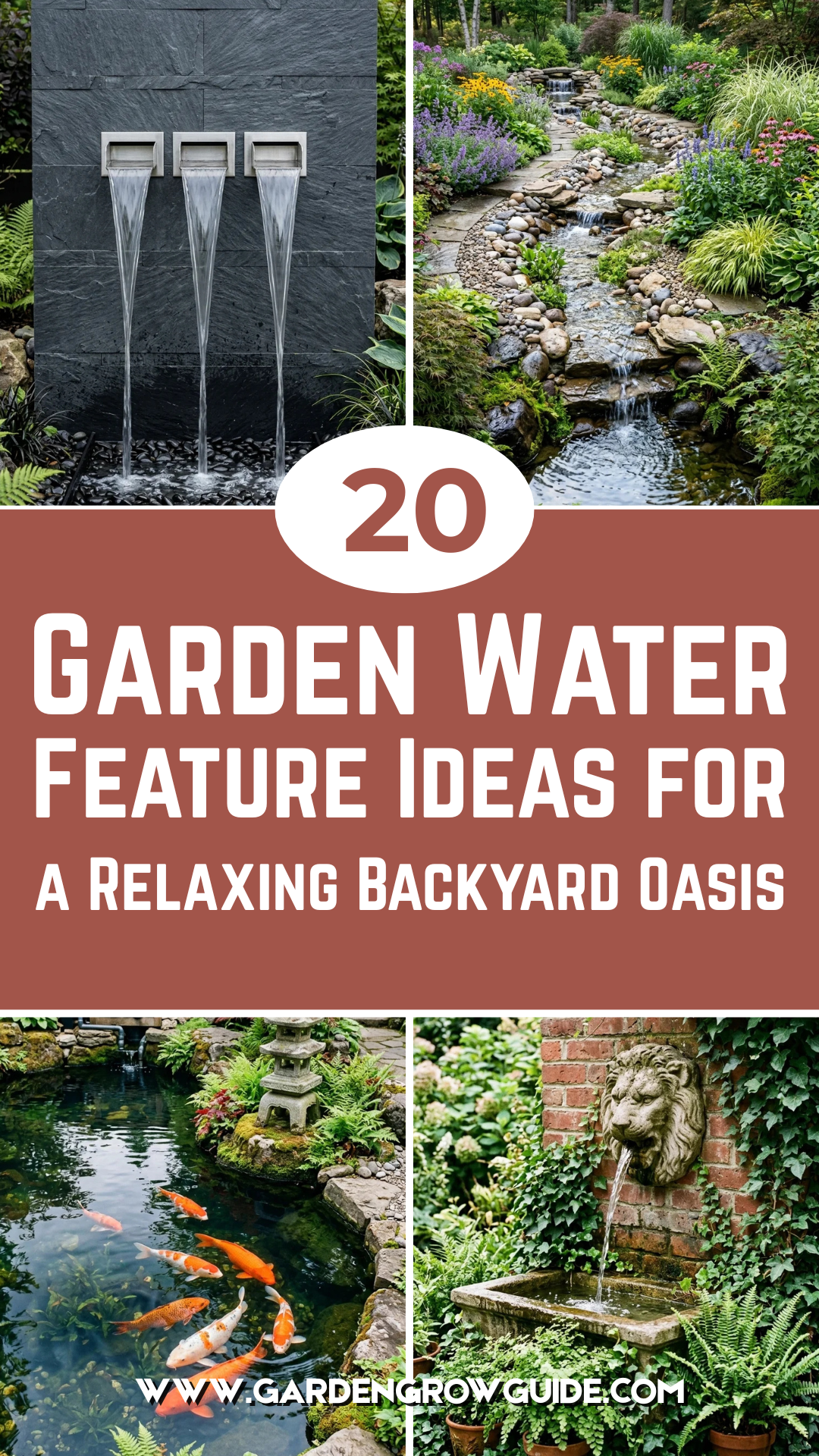
The sound of gently moving water has a transformative effect on the human psyche. It masks the intrusive noise of urban life, lowers cortisol levels, and creates a focal point that breathes life into any landscape. Whether you have a sprawling estate or a compact urban patio, integrating a water feature can elevate your outdoor space from a simple yard to a restorative sanctuary. From the minimalist elegance of a modern spout to the wild beauty of a natural pond, these twenty ideas provide inspiration for every style and budget.
1. Tiered Fountains
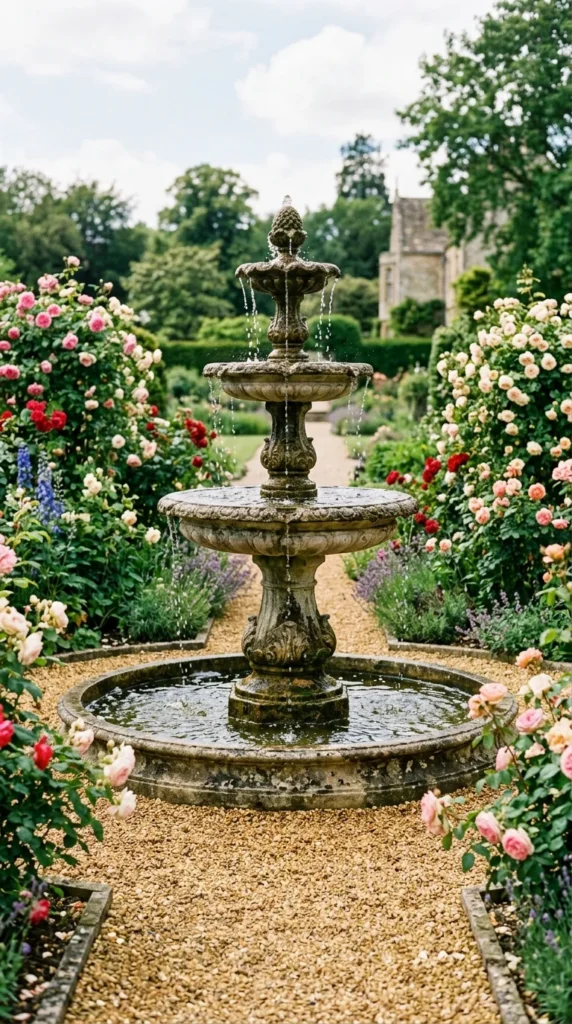
Tiered fountains are the epitome of classical garden design. They rely on gravity to move water through multiple levels, creating a rhythmic splashing sound that is particularly effective at drowning out background noise. These features work exceptionally well as centerpieces in formal gardens or at the end of a long walkway. Available in materials ranging from cast stone and concrete to lightweight resin, tiered fountains can be scaled to fit anything from a grand driveway to a quiet corner nook.
2. Natural Ponds
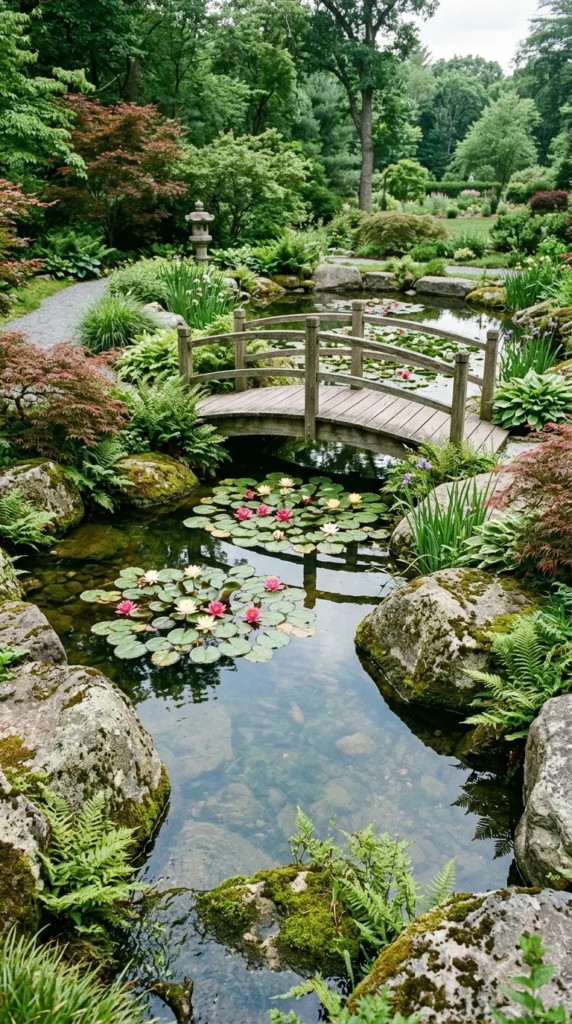
For those who wish to invite biodiversity into their backyard, a natural pond is the ultimate choice. Unlike chlorinated pools, natural ponds utilize aquatic plants and filtration systems to maintain water clarity. They provide a habitat for dragonflies, frogs, and birds, turning your garden into a living ecosystem. Incorporating varying depths allows for a diverse range of flora, such as deep-water lilies and shallow-water marsh marigolds, ensuring the pond looks beautiful year-round.
3. Wall Fountains
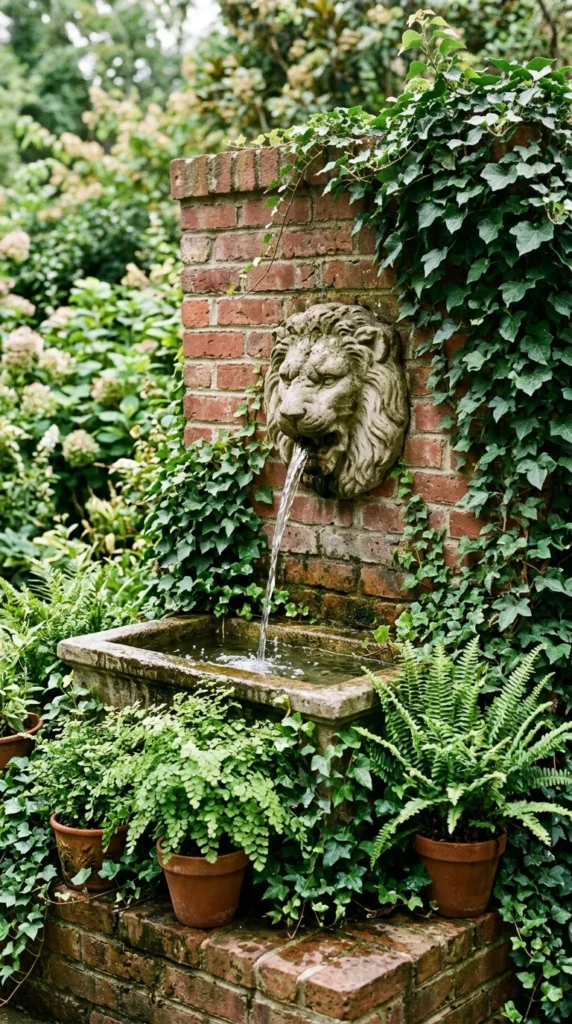
Wall fountains are the perfect solution for homeowners with limited square footage. By utilizing vertical space, these features provide the sensory benefits of water without encroaching on patio or lawn areas. They are often used in Mediterranean or courtyard-style gardens to add a touch of old-world charm. A wall fountain can serve as a sophisticated backdrop for an outdoor dining area, providing a constant, soothing soundtrack to evening meals.
4. Bubbling Rocks
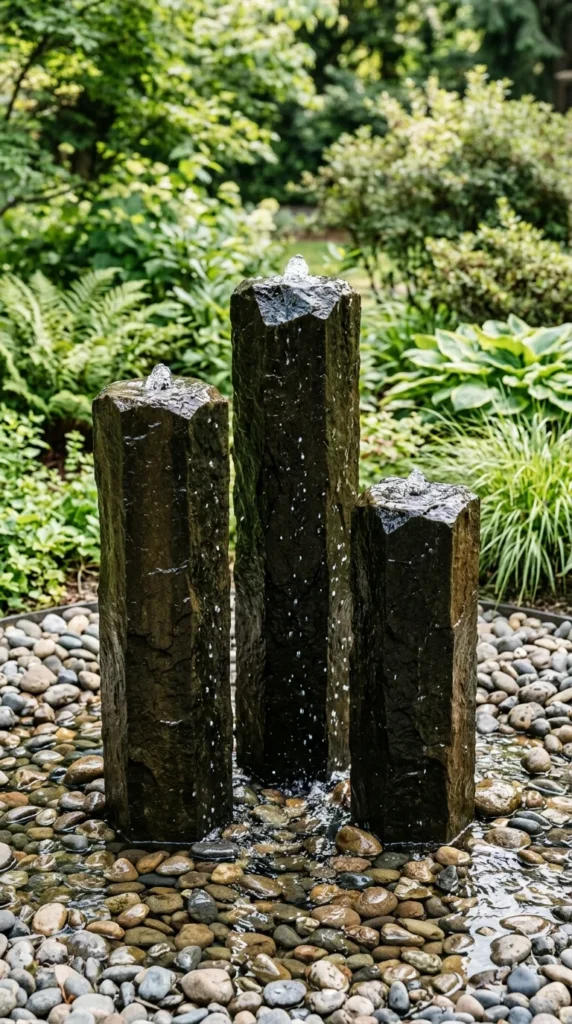
Bubbling rocks, often referred to as basalt columns, offer a rugged and organic aesthetic. These features consist of natural stones that have been bored through the center to allow a pump to push water out of the top. The water clings to the side of the stone, darkening its color and highlighting its natural texture before disappearing into a hidden underground reservoir. This “pondless” design is low-maintenance and safe for families with small children.
5. Stream Beds
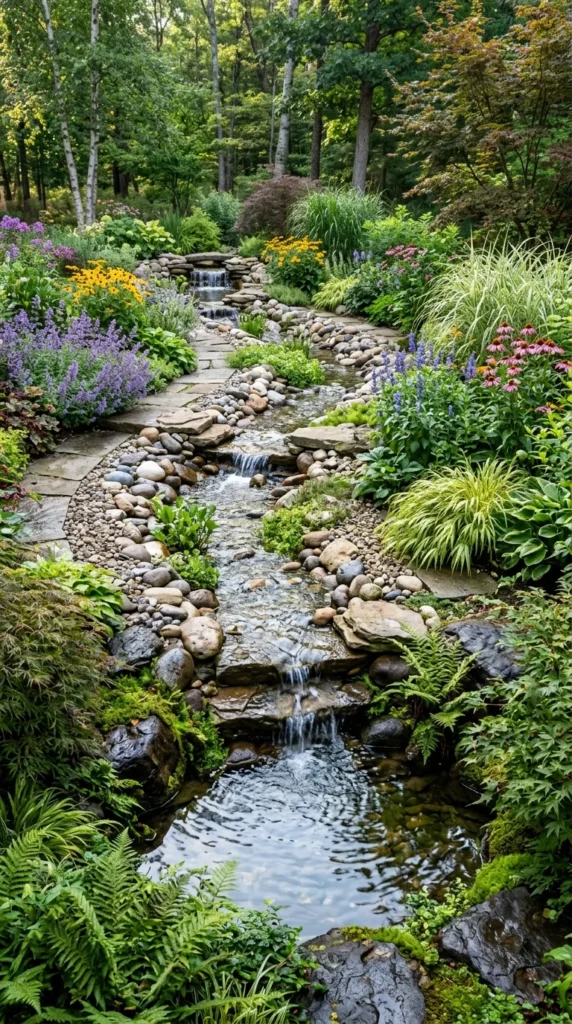
A dry or active stream bed mimics the look of a mountain brook. By using a liner and a recirculating pump, you can create a winding path of water that travels across your property. To make the stream look authentic, use a mix of rock sizes—from large “anchor” boulders to fine gravel—and plant moisture-loving species like mosses and Siberian iris along the banks. The movement of water over pebbles creates a delicate, high-pitched tinkling sound that is incredibly peaceful.
6. Modern Spouts
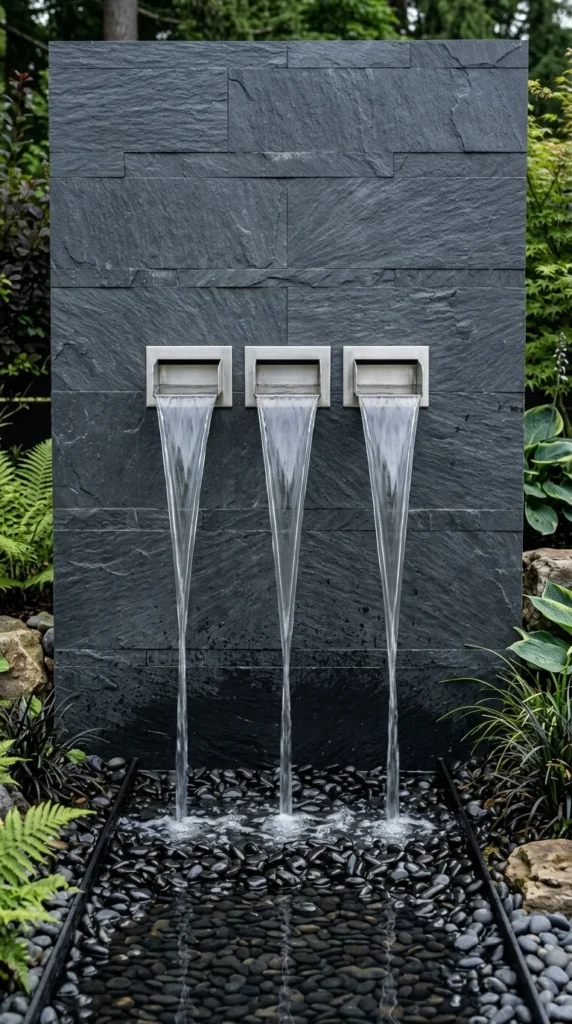
For contemporary homes, modern spouts or “scuppers” offer a clean and architectural look. These features emphasize geometry and precision, often using materials like stainless steel, copper, or matte-black finished metals. The water typically falls in a “sheer descent,” creating a solid curtain of water that looks like a pane of glass. This style is particularly effective when integrated into retaining walls or modern pool designs.
7. Koi Ponds
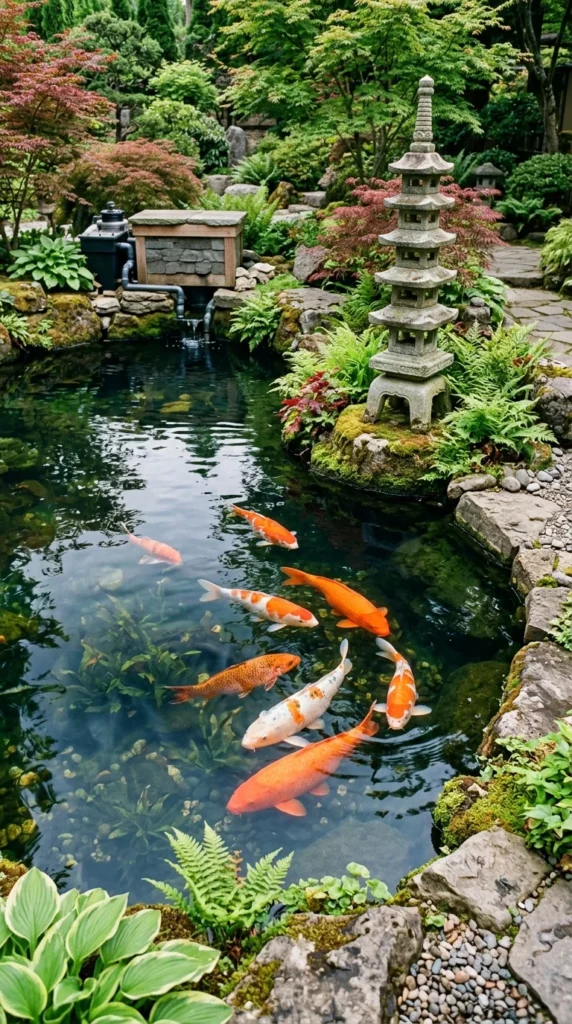
Koi ponds are a specific type of water feature dedicated to the husbandry of Nishikigoi (ornamental carp). These ponds require more depth (usually at least three feet) and more robust filtration than standard garden ponds to keep the fish healthy and the water clear. Watching the graceful, rhythmic movement of koi is a form of “living meditation.” These ponds often include Japanese-inspired elements like stone lanterns and bridges to complete the aesthetic.
8. Solar Fountains
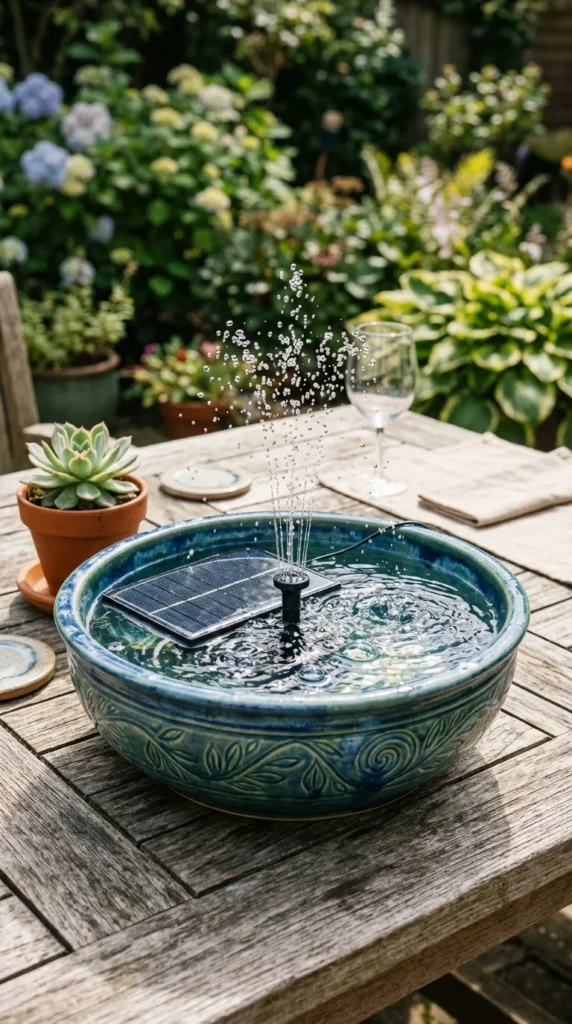
If you want a water feature without the hassle of electrical wiring, solar fountains are an excellent entry-level option. These self-contained units use a small solar panel to power a pump. While they only operate when the sun is shining (unless they have a battery backup), they are incredibly easy to install and move. They are ideal for birdbaths or small patio containers, providing a quick way to add movement to a static space.
9. Bird Baths
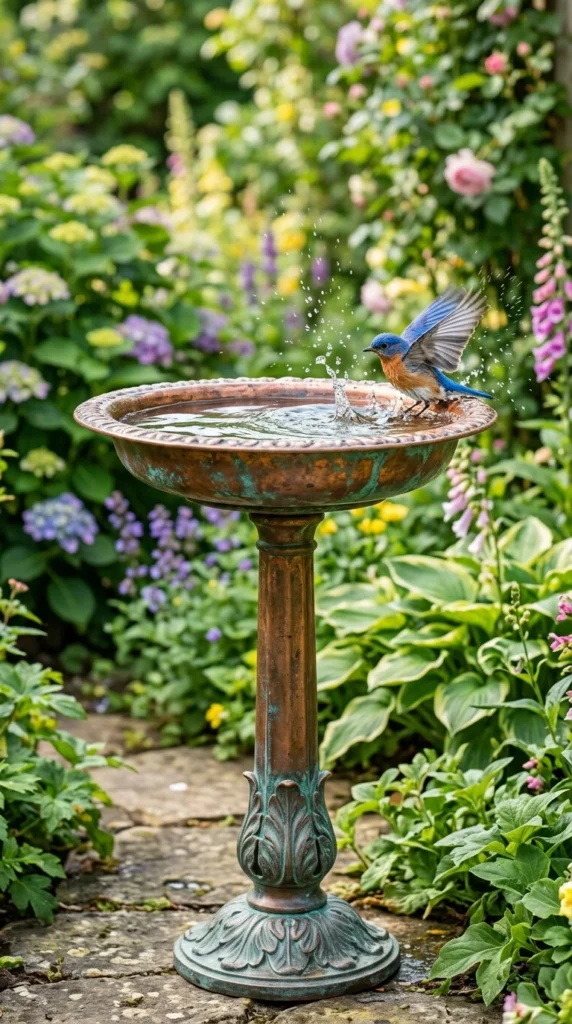
The simplest form of water feature, a birdbath, is a classic addition to any landscape. While traditional models are static, adding a “wiggler” or a small pump can create ripples that prevent mosquitoes from breeding and attract more birds with the sound of moving water. Birdbaths come in a vast array of materials, including glazed ceramic, cast iron, and carved stone, allowing them to double as garden sculpture.
10. Water Walls
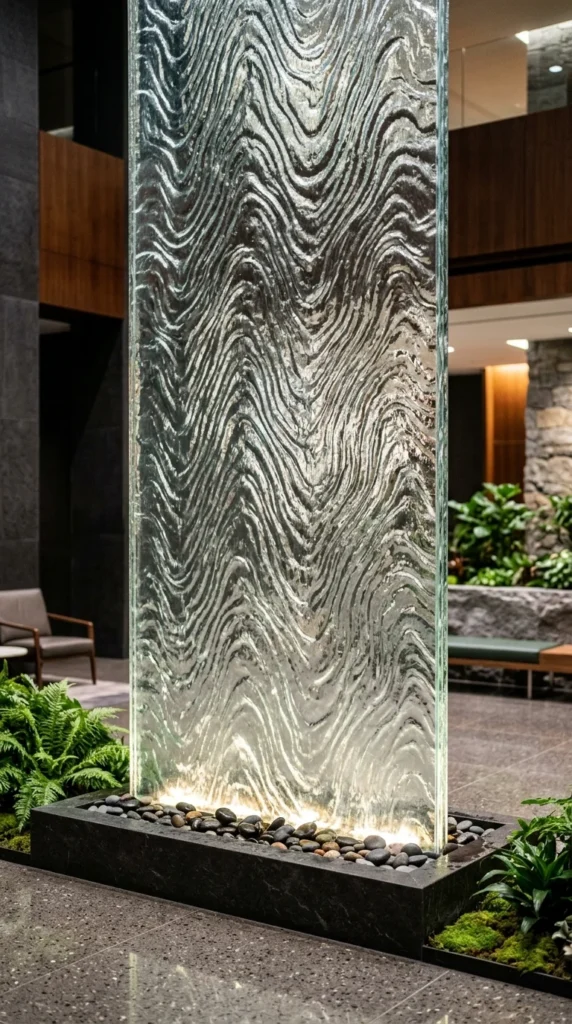
A water wall is a dramatic vertical feature where water cascades down a flat surface—usually glass, slate, or stainless steel. Because the water stays in contact with the surface, it creates a visual shimmer without much splashing, making it an excellent choice for indoor-outdoor transition spaces or areas near seating where you want to avoid mist. When backlit with LEDs, water walls become stunning light features at night.
11. Container Ponds
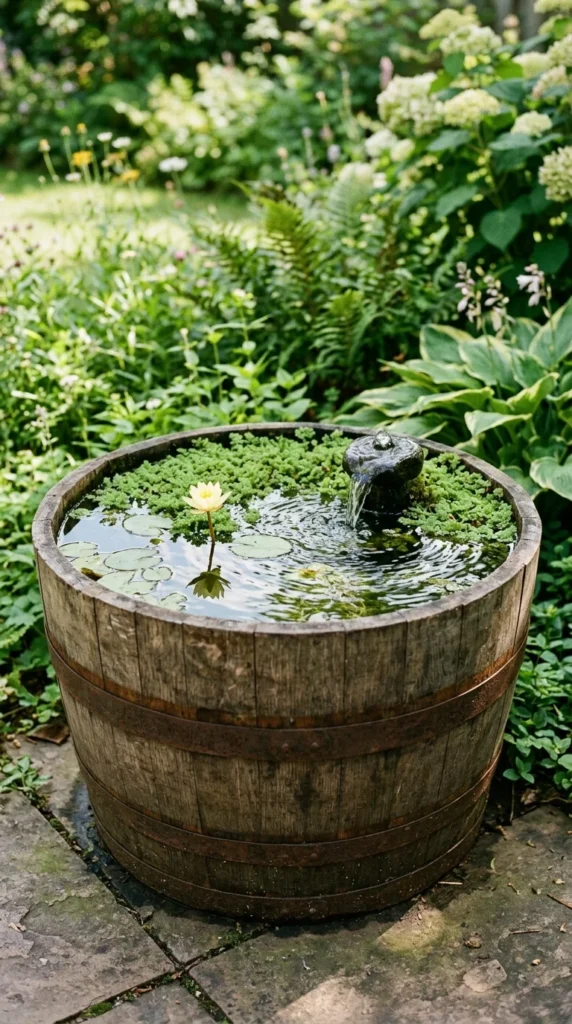
Often called “patio ponds,” container ponds allow those with balconies or small decks to enjoy aquatic gardening. Any waterproof vessel can be transformed into a pond, from galvanized steel troughs to glazed ceramic pots. By adding a mix of oxygenating plants and a small pump, you can create a miniature ecosystem. These are particularly great for experimenting with exotic aquatic plants that might be too invasive for a large natural pond.
12. Infinity Edges
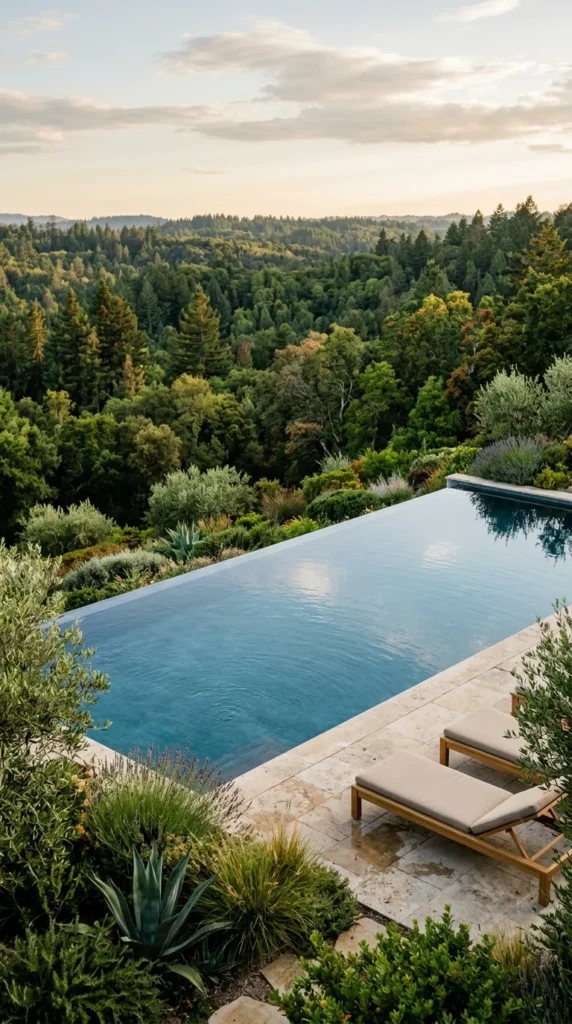
While commonly associated with high-end swimming pools, the infinity edge (or “vanishing edge”) concept can be applied to smaller garden basins. The water flows over a weir that is slightly lower than the other sides, creating the illusion that the water is merging with the horizon. This design requires precision engineering but results in a breathtaking, sophisticated look that expands the visual boundaries of the garden.
13. Rain Chains
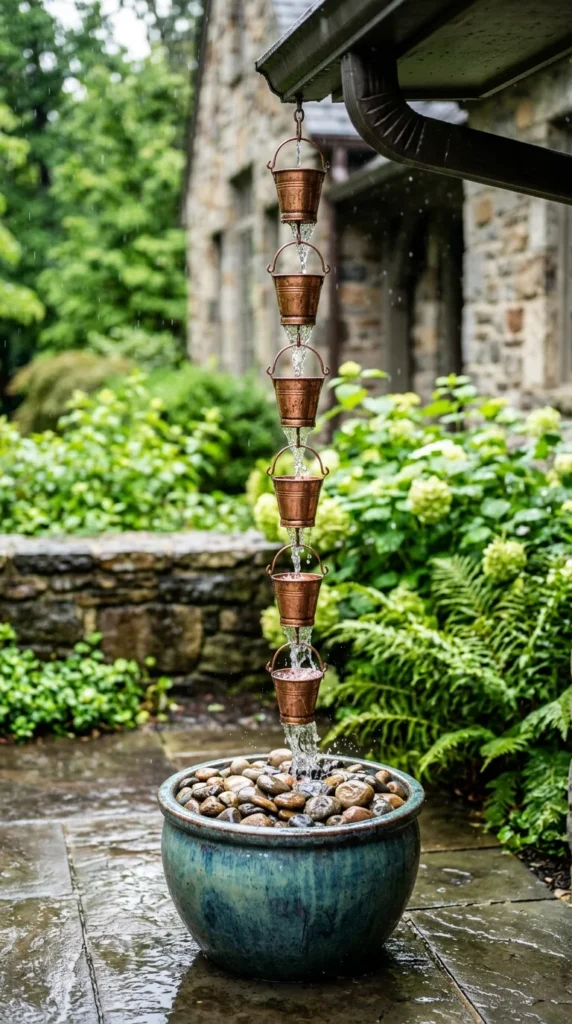
Originating in Japan, rain chains (kusari-doi) are a beautiful alternative to traditional closed downspouts. They turn a functional necessity—moving water away from your roof—into a visual and auditory experience. During a rainstorm, the water follows the chain down in a series of drips or pours. Even when it’s not raining, the metallic links serve as an elegant vertical architectural element in the garden.
14. Bamboo Accents
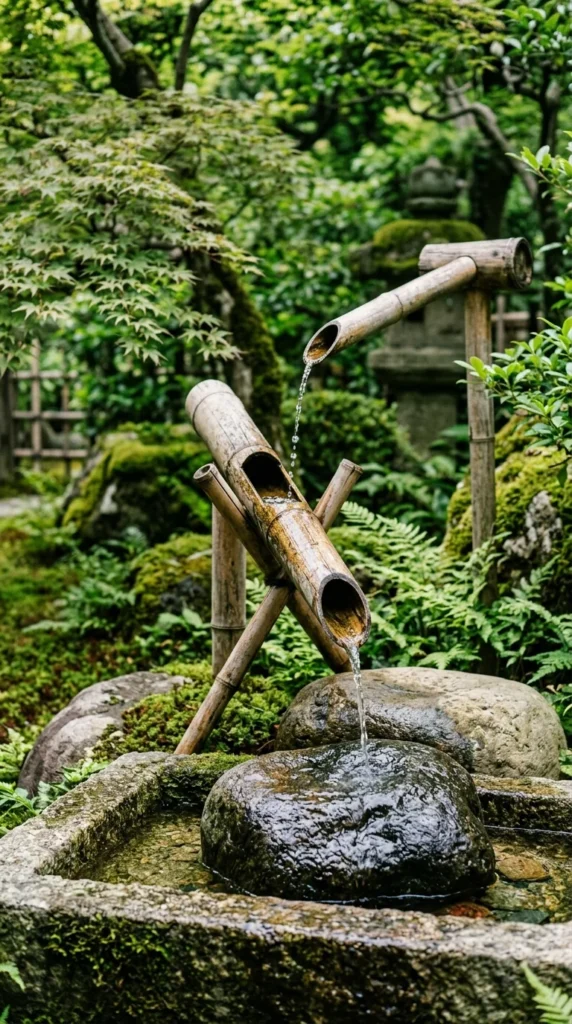
In Zen gardens, bamboo water features provide a sense of tranquility and a connection to nature. The most famous is the “shishi-odoshi,” or deer scarer, which uses a pivoting bamboo tube that fills with water, tips over, and then strikes a stone with a hollow “clack” as it empties. This rhythmic sound was originally intended to startle animals away from crops but is now used for its meditative quality.
15. Sculptural Pieces
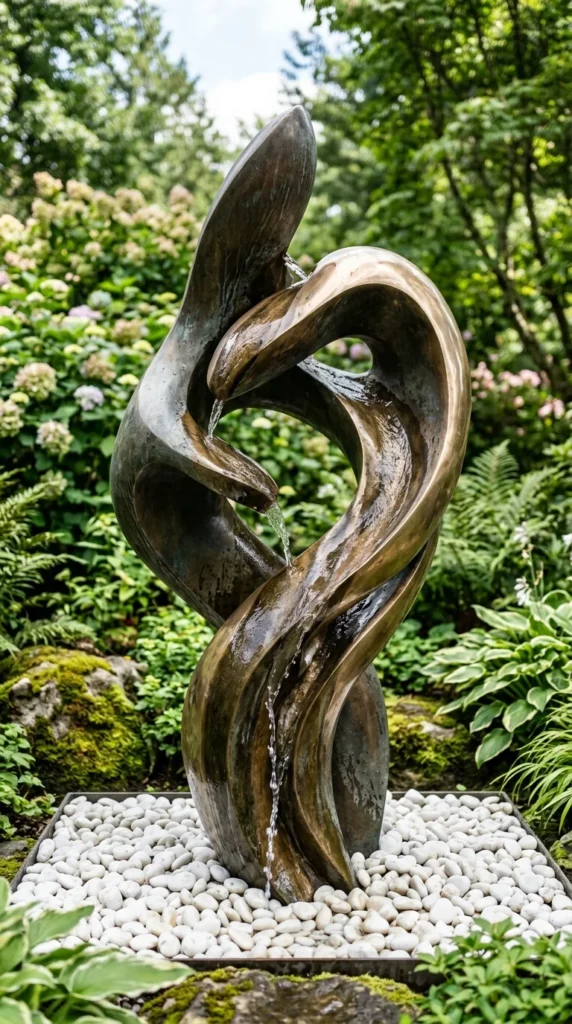
If you want your water feature to be a work of art, consider a sculptural fountain. These pieces use water to enhance the form of a sculpture, whether it’s a contemporary metal swirl or a realistic bronze figure. The water can flow over the surface to create a “skin” of movement or shoot from the sculpture into a basin. This turns the water feature into a year-round focal point that remains attractive even when the pump is turned off.
16. Pot Fountains
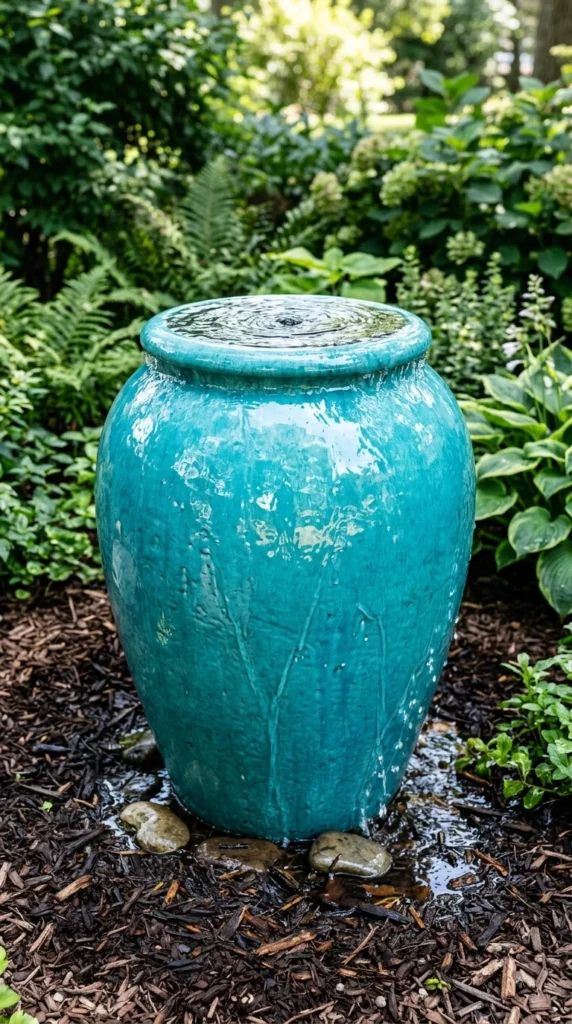
Pot fountains (or “disappearing pots”) are popular for their simplicity and vibrant colors. A large decorative pot is placed atop a hidden reservoir. Water is pumped up through the center and allowed to overflow the rim, cascading down the colorful glazed sides. This highlights the pottery’s craftsmanship and provides a consistent, gentle sound. Using multiple pots of different heights can create a more complex visual arrangement.
17. Pondless Waterfalls
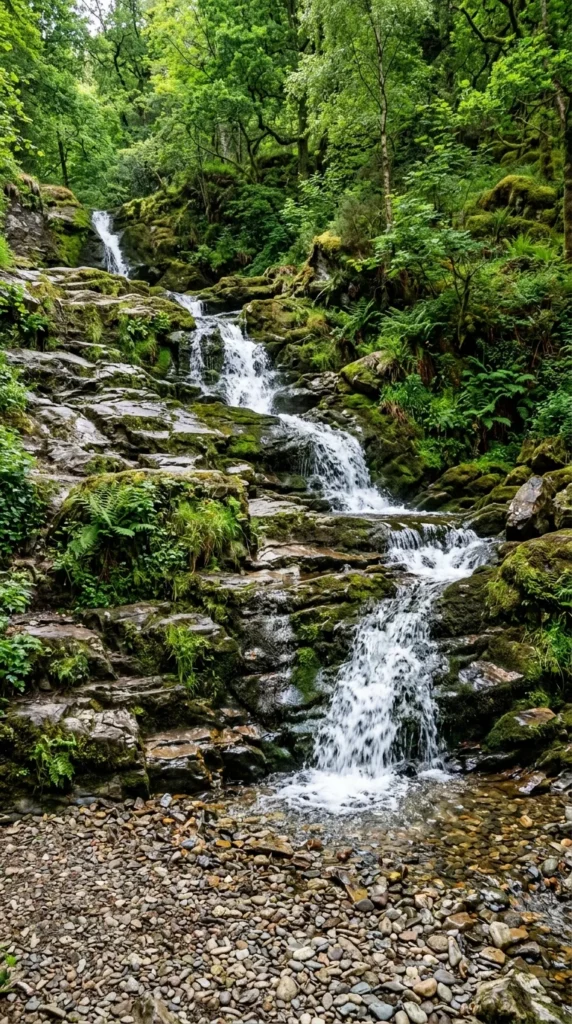
A pondless waterfall offers the drama and sound of a large cascade without the maintenance or safety concerns of an open pond. The water “disappears” into a sub-grade basin filled with rock and gravel, where the pump is located. This is an ideal choice for families with toddlers or for those who want a waterfall without the need to manage fish or aquatic plants. It’s a high-impact feature that works well on sloped terrain.
18. Moats
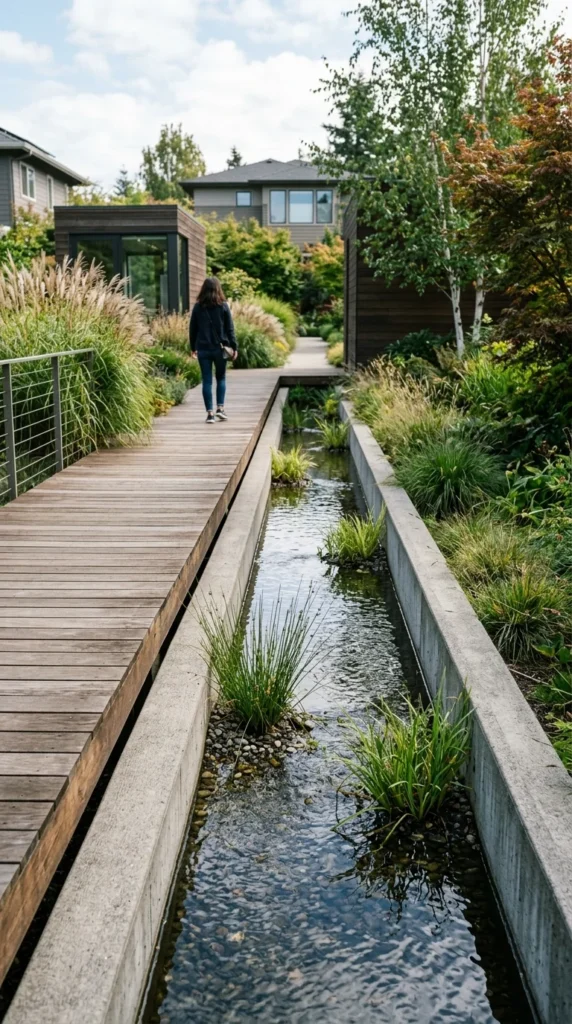
A garden moat or “rill” is a narrow, shallow channel of water that follows a straight or slightly curved path. Rills are used to draw the eye toward a specific view or to divide different sections of a garden. They have a very formal, architectural feel and are excellent for adding a sense of movement to a flat landscape. Often, rills end in a small pool or return to a hidden pump system.
19. Reflecting Pools
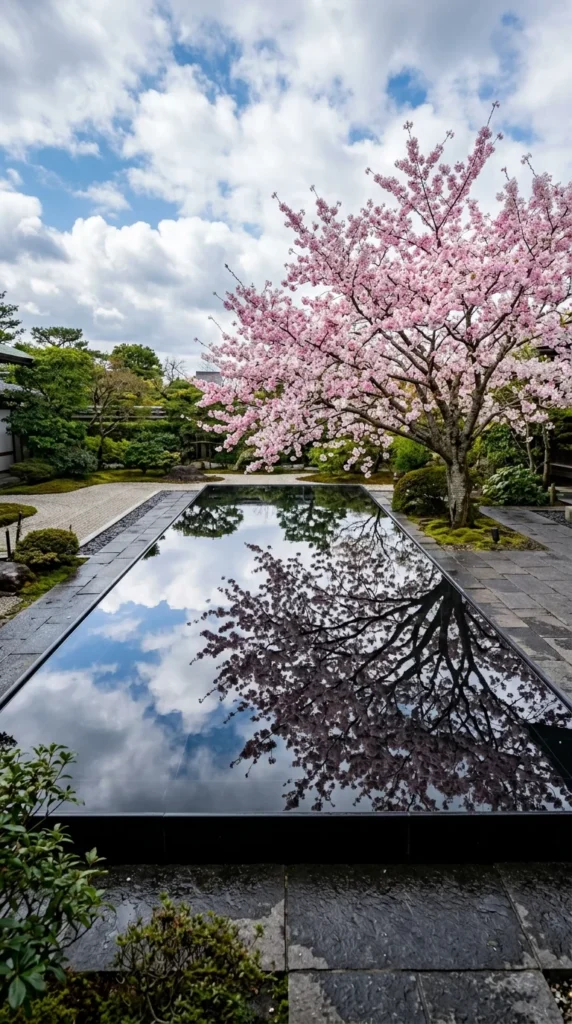
Not all water features need to move. A reflecting pool is designed to be perfectly still, acting as a mirror for the sky, trees, and architecture. By painting the bottom of the pool black or using dark tiles, you increase the depth of the reflection. These pools create a profound sense of stillness and are best placed in wind-protected areas of the garden where the surface can remain undisturbed.
20. Fire & Water Combos
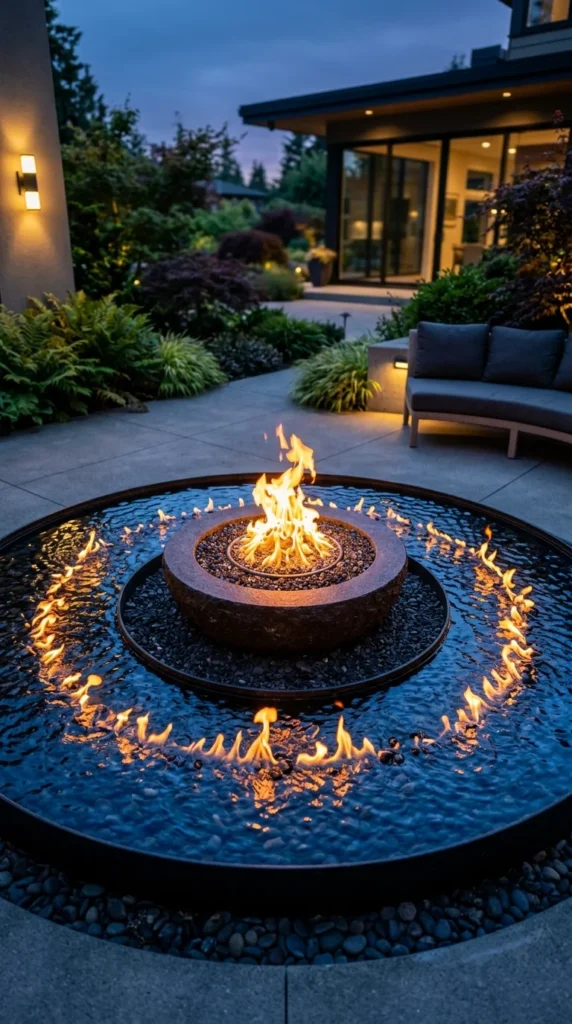
For the ultimate backyard statement, consider a feature that combines the opposing elements of fire and water. This often involves a central fire pit or “fire bowl” surrounded by a moat or spilling water. The reflection of the dancing flames in the moving water creates a mesmerizing visual effect, especially at night. It’s a sophisticated way to extend the usability of your outdoor space into the cooler evening hours.