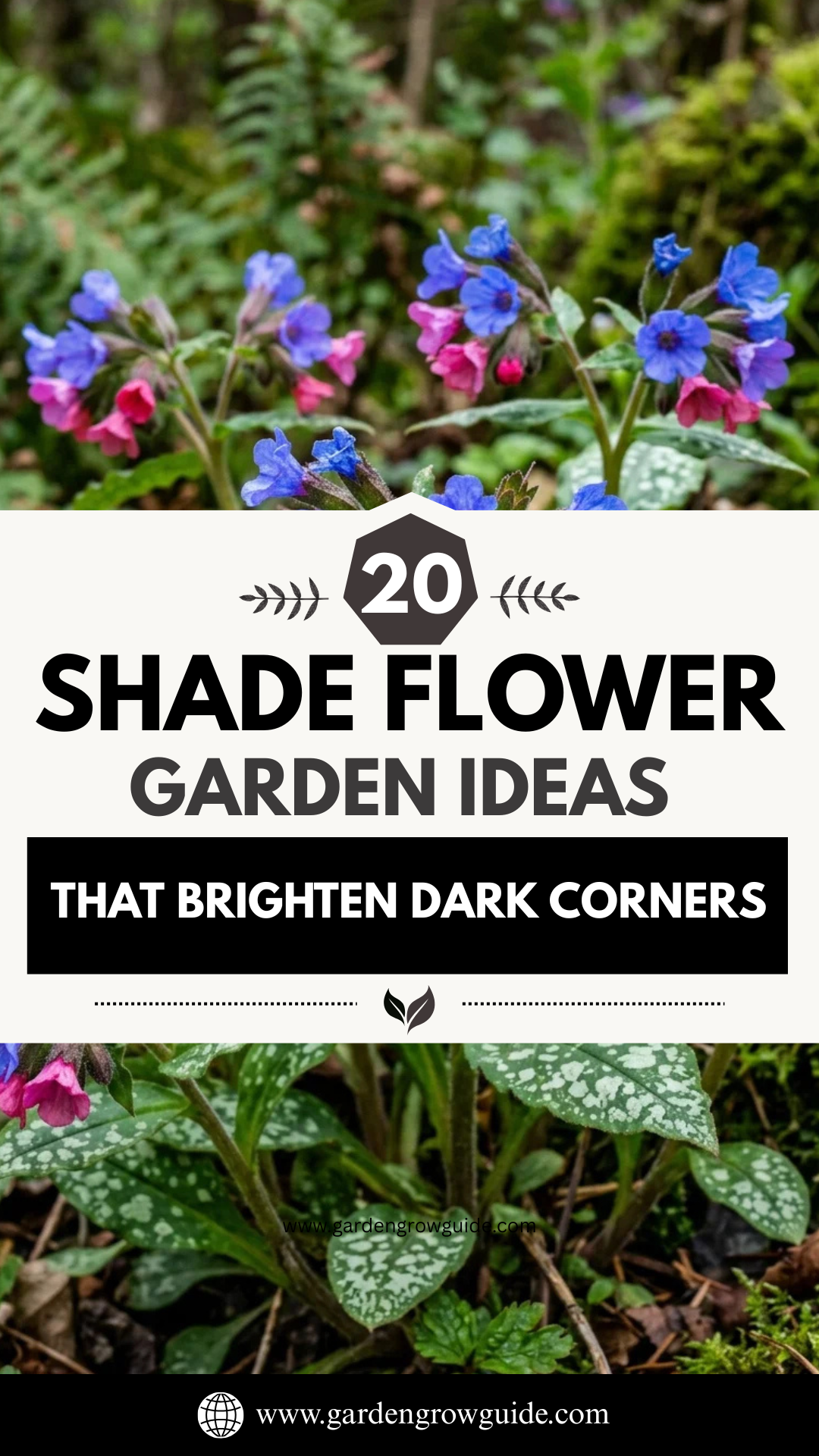
Transforming a shadowy corner of your yard into a vibrant sanctuary is one of the most rewarding challenges a gardener can face. While many associate “shade” with “dull,” the reality is that some of the most intricate textures and sophisticated color palettes thrive away from the harsh midday sun. Shade gardens offer a cool retreat during hot summer months and provide an opportunity to play with subtle hues and luminous foliage that would otherwise be washed out by direct sunlight.
To successfully brighten a dark corner, the strategy involves more than just selecting plants that tolerate low light. It requires a blend of light-reflecting foliage, varied textures, and strategic pops of color. Whether you are dealing with the dappled shade under a canopy of trees or the deep, consistent shade on the north side of a building, these twenty ideas will help you cultivate a thriving, luminous landscape.
1. Hostas
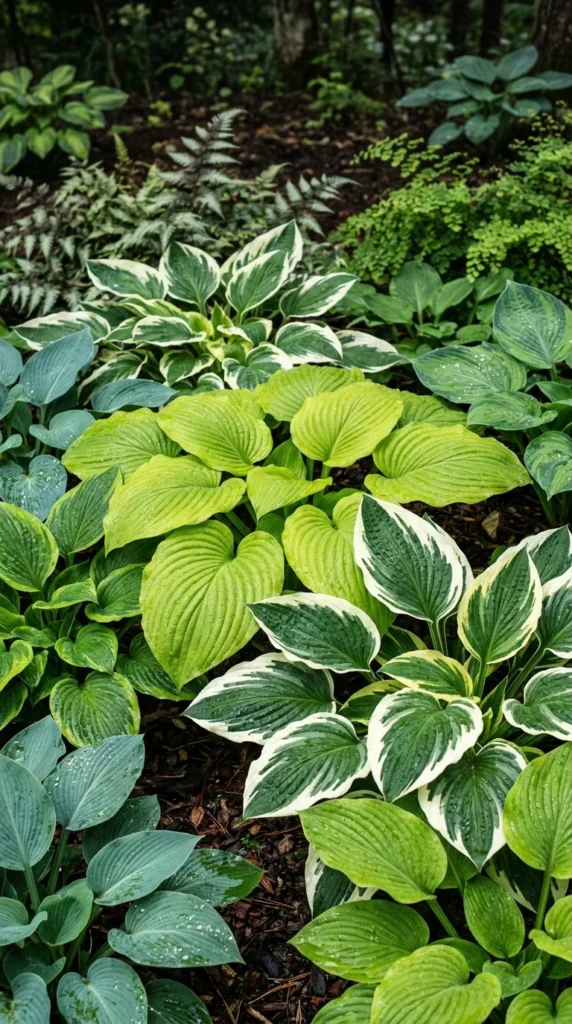
Hostas are the undisputed royalty of the shade garden. Available in thousands of cultivars, they range from tiny “mouse ears” to giants that span several feet. To brighten a dark corner, look specifically for variegated varieties with white or cream edges, or those with chartreuse (lime green) leaves. These lighter colors act like organic mirrors, catching what little light is available and reflecting it back into the shadows. They are hardy, dependable, and their thick foliage provides excellent ground cover that suppresses weeds.
2. Bleeding Heart
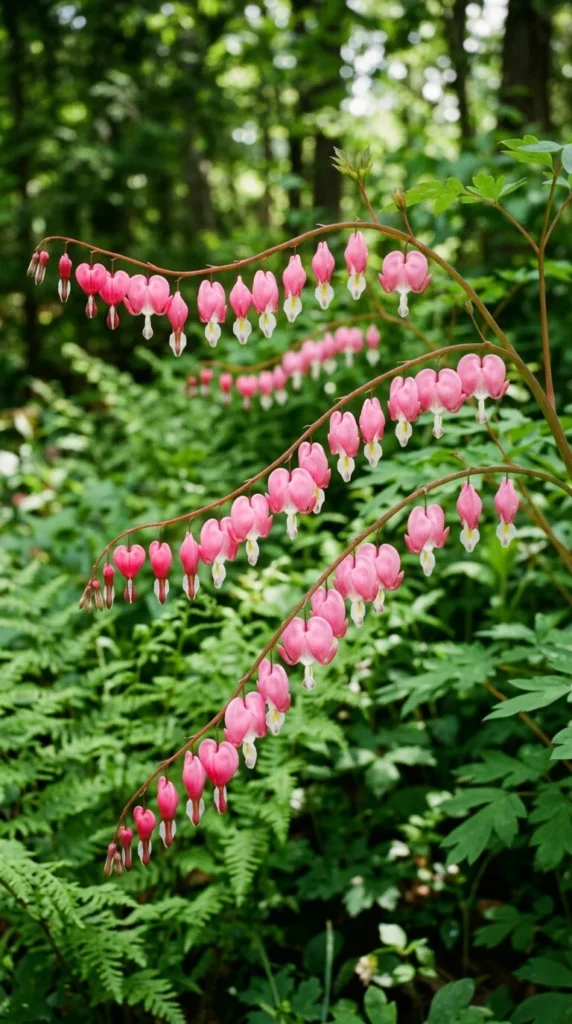
Lamprocapnos spectabilis, commonly known as Bleeding Heart, brings an air of Victorian romance to shaded areas. These plants are beloved for their unique, heart-shaped blossoms that dangle gracefully from arching stems in late spring. The white variety (Alba) is particularly effective at illuminating dark spots. They prefer moist, well-drained soil and pair beautifully with ferns and hostas. Note that they often go dormant in the heat of summer, so plant them near later-blooming perennials to fill the gap.
3. Astilbe
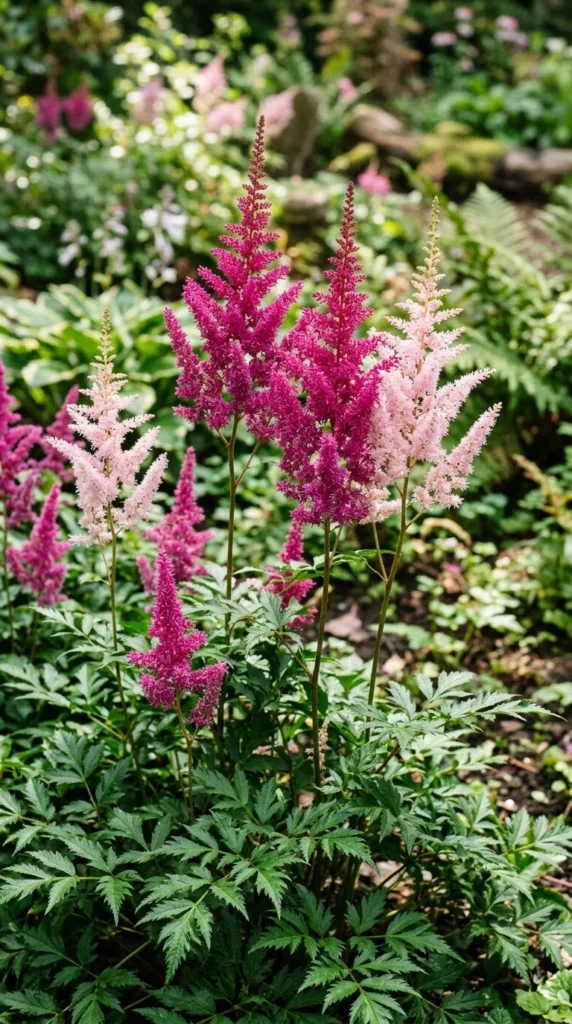
If you want architectural interest and vertical pops of color, Astilbe is your best friend. These perennials produce tall, plume-like flower spikes that look like fluffy wands. They thrive in damp, shady spots where other plants might struggle with “wet feet.” Because they come in various heights and colors—ranging from pure white and soft peach to deep crimson—you can layer them to create depth in a corner. Their fern-like foliage remains attractive even after the blooms have faded.
4. Begonias
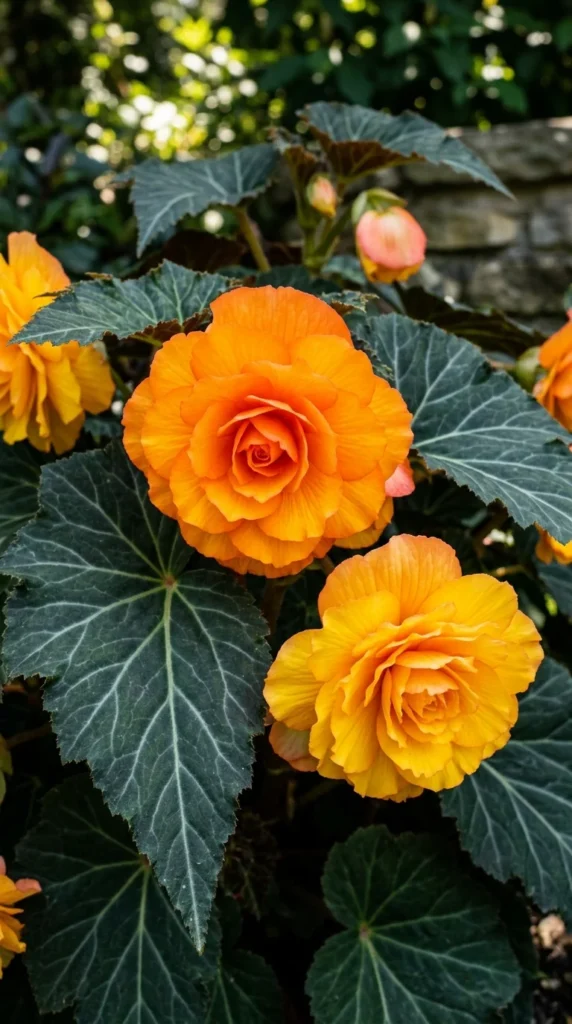
Begonias are versatile powerhouses for the shade. Tuberous begonias offer large, rose-like blooms in neon shades that seem to glow in low light, while Rex begonias are prized for their metallic, swirling leaf patterns. For a dark corner, the “Nonstop” series is particularly effective, providing constant color from early summer until the first frost. They work exceptionally well in containers or hanging baskets, allowing you to move them around to find the perfect pocket of light.
5. Coral Bells
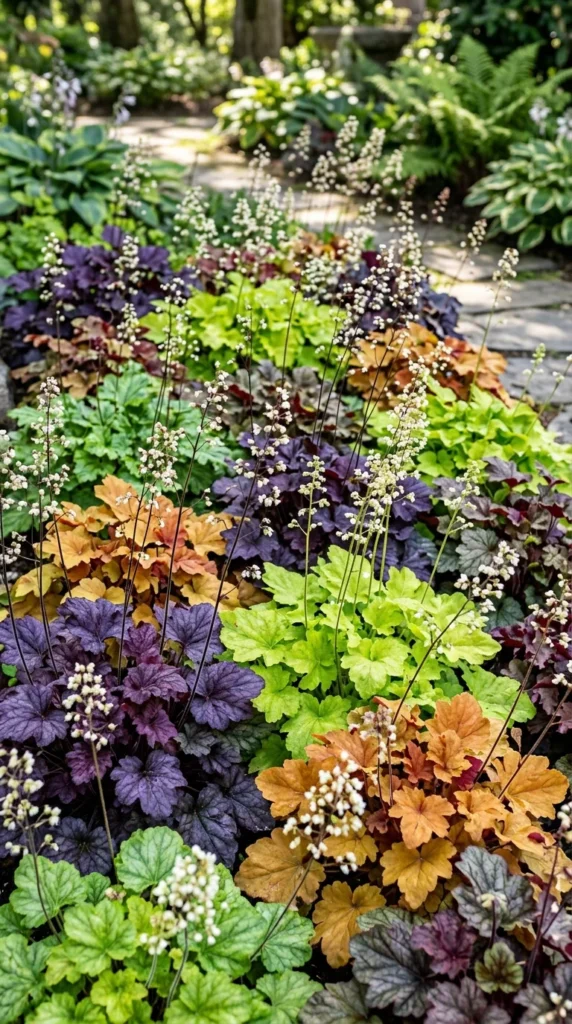
While many plants are grown for their flowers, Heuchera (Coral Bells) is grown for its spectacular foliage. In the shade, where flowers can sometimes be sparse, the multi-colored leaves of Heuchera provide year-round interest. From “Electric Lime” to “Midnight Rose,” these plants offer every color imaginable. To brighten a corner, choose the lime or silver-veined varieties. They form neat mounds, making them perfect for edging a shaded path or filling the front of a border.
6. Hydrangeas
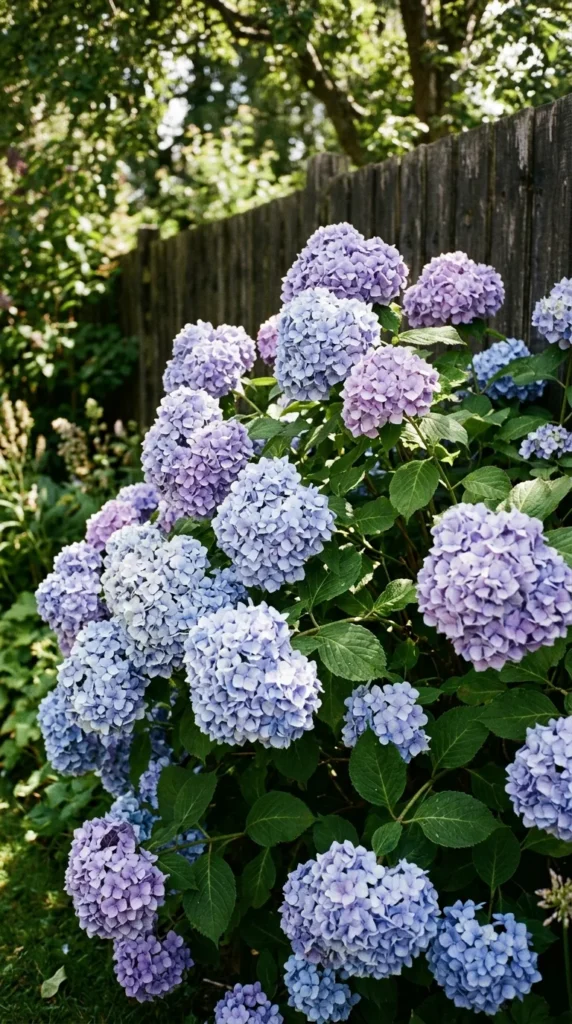
Hydrangeas are the heavy hitters of the shade garden. While some varieties like the sun, the Mophead and Lacecap varieties (Hydrangea macrophylla) thrive in morning sun and afternoon shade. Their massive flower heads act as focal points that draw the eye into the depths of a garden. White varieties, like the “Annabelle” (Hydrangea arborescens), are particularly striking in the evening, as the white blossoms appear to glow as the sun sets.
7. Fuchsia
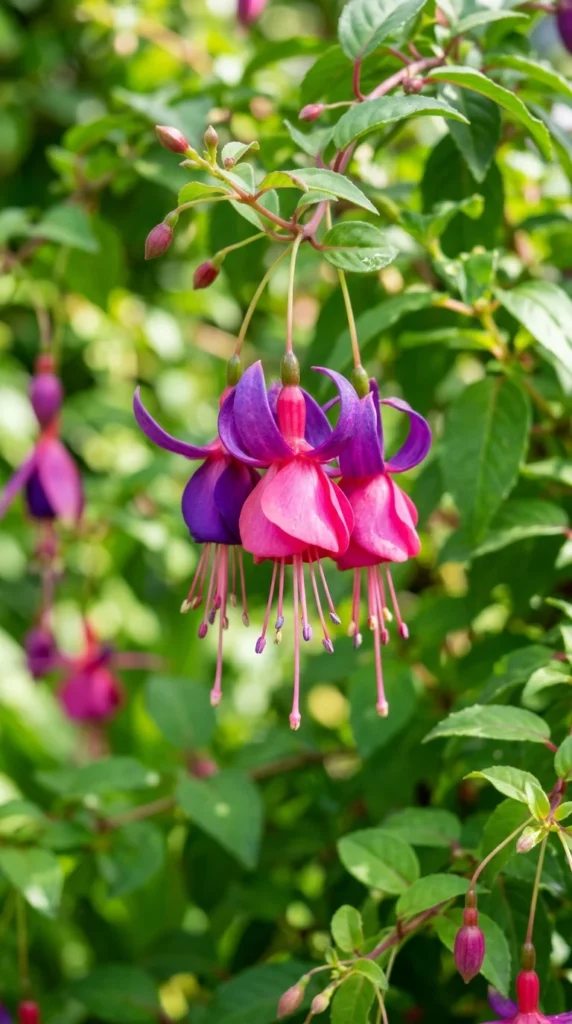
Fuchsias are the jewels of the shade. Often grown in hanging baskets, their pendant flowers come in stunning bicolors of purple, pink, red, and white. Because they prefer cooler temperatures and indirect light, they are perfect for shaded porches or hanging from the branches of a large tree. Their exotic shape adds a tropical feel to temperate gardens, and they are a favorite of hummingbirds, bringing movement and life to the quiet corners of your yard.
8. Impatiens
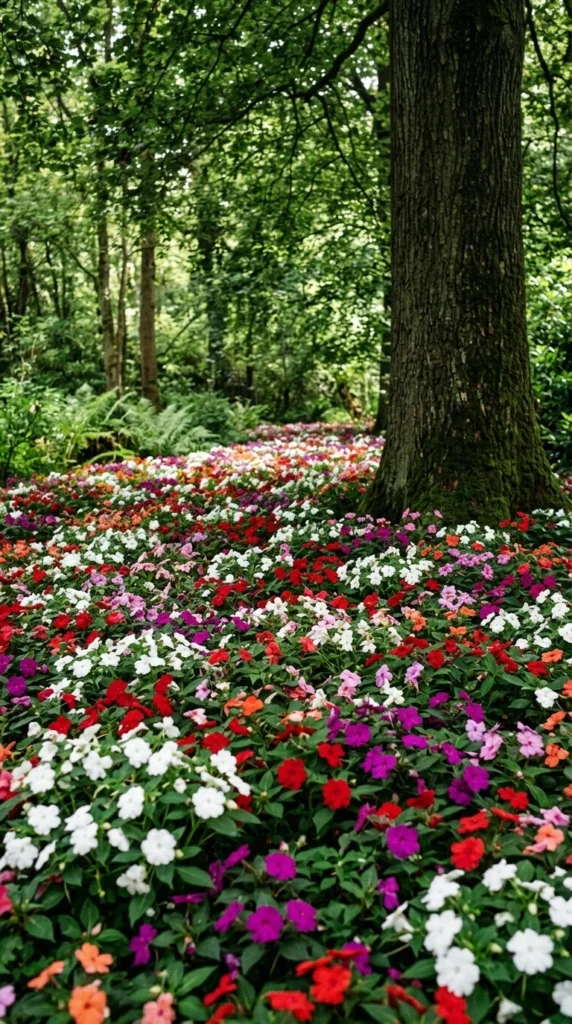
Commonly known as “Busy Lizzies,” Impatiens are the go-to annual for instant, reliable color in the shade. They are incredibly prolific bloomers and can quickly fill in gaps to create a literal carpet of color. In dark corners, massing white or pale pink Impatiens can create the illusion of a pool of light on the ground. They require consistent moisture but are otherwise very low-maintenance, making them ideal for beginner gardeners.
9. Hellebores
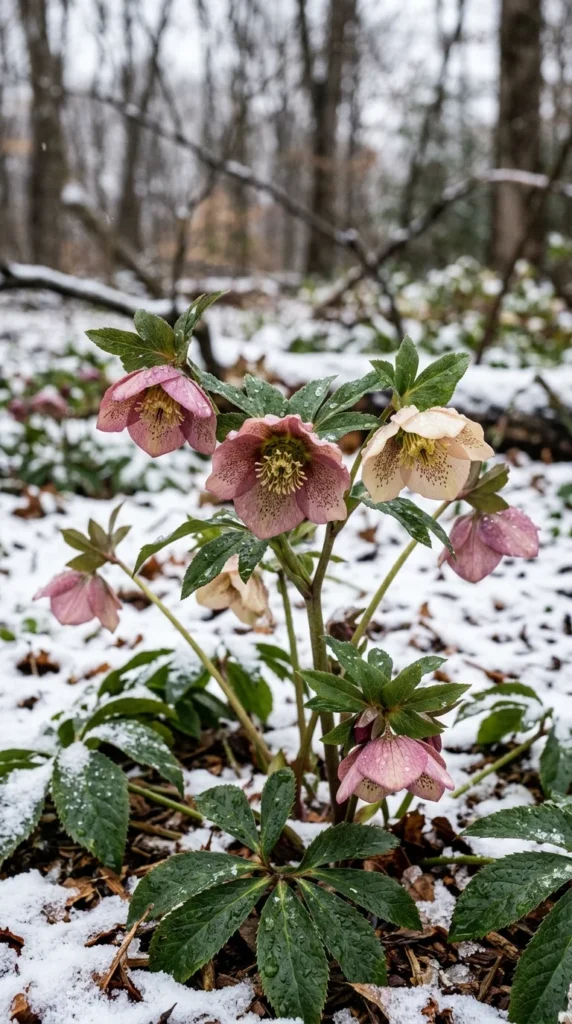
Often called the “Lenten Rose,” Hellebores are the heroes of the early spring (and sometimes late winter) garden. They bloom when most other plants are still dormant, providing much-needed color during the grayest months. Their leathery, evergreen leaves provide structure throughout the year. Because the flowers often face downward, consider planting them on a slope or in a raised bed where their intricate interior patterns can be easily seen.
10. Japanese Forest Grass
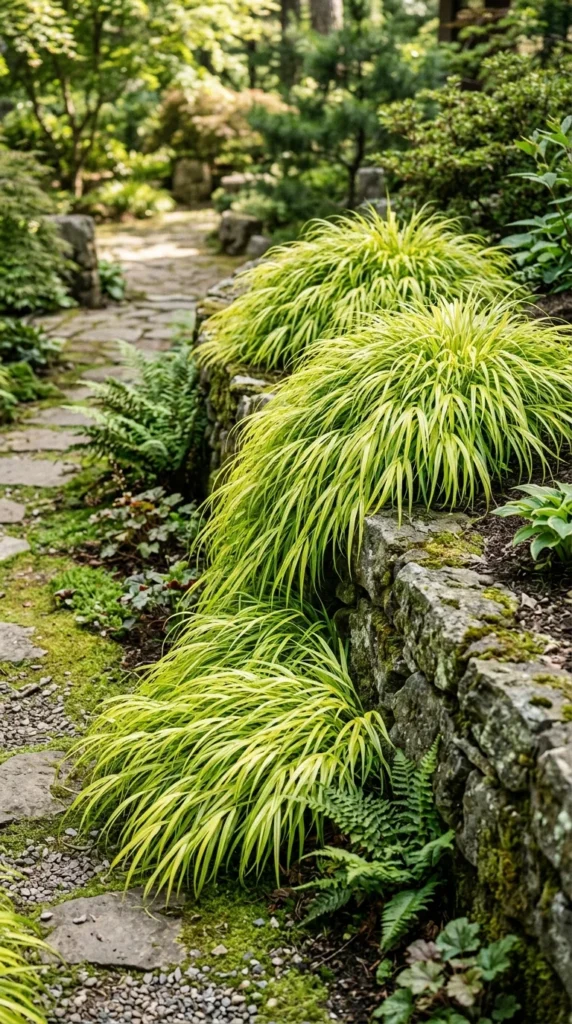
Texture is just as important as color in a shade garden, and Hakonechloa (Japanese Forest Grass) provides it in spades. This slow-growing ornamental grass forms cascading mounds that look like a golden waterfall. The “Aureola” variety, with its yellow and green stripes, is particularly effective at lighting up a dark corner. It moves gracefully in the slightest breeze, adding a dynamic, flowing element to an otherwise static garden space.
11. Ferns
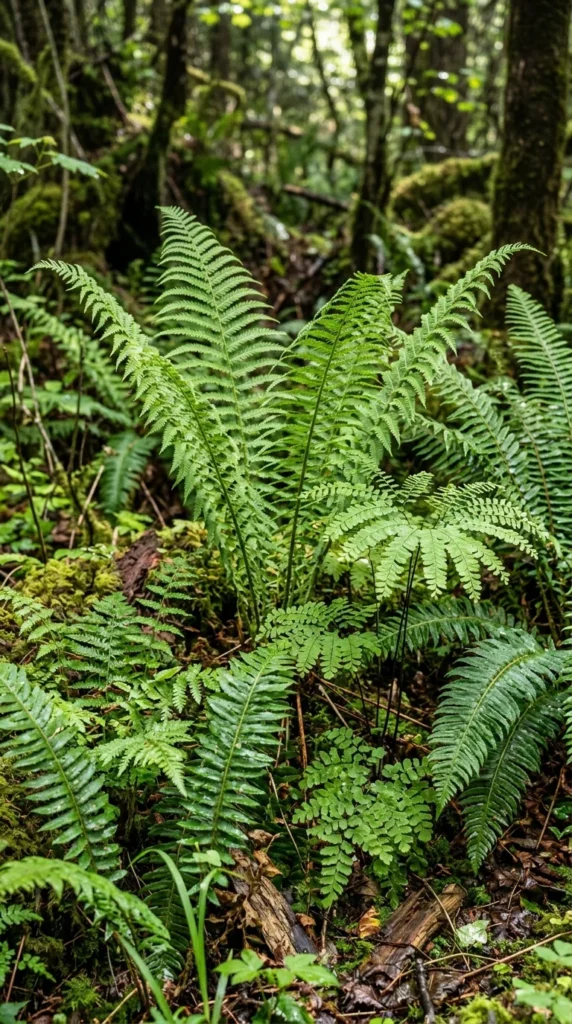
Ferns are the quintessential shade plant, evoking the feeling of a lush, ancient forest. While they don’t produce flowers, their intricate fronds offer a diversity of form that is unmatched. The Japanese Painted Fern, with its silver and burgundy hues, is a standout for adding a metallic sheen to dark areas. Ostrich ferns provide height and drama, while Maidenhair ferns offer a delicate, airy texture that softens the edges of rocks or structures.
12. Primrose
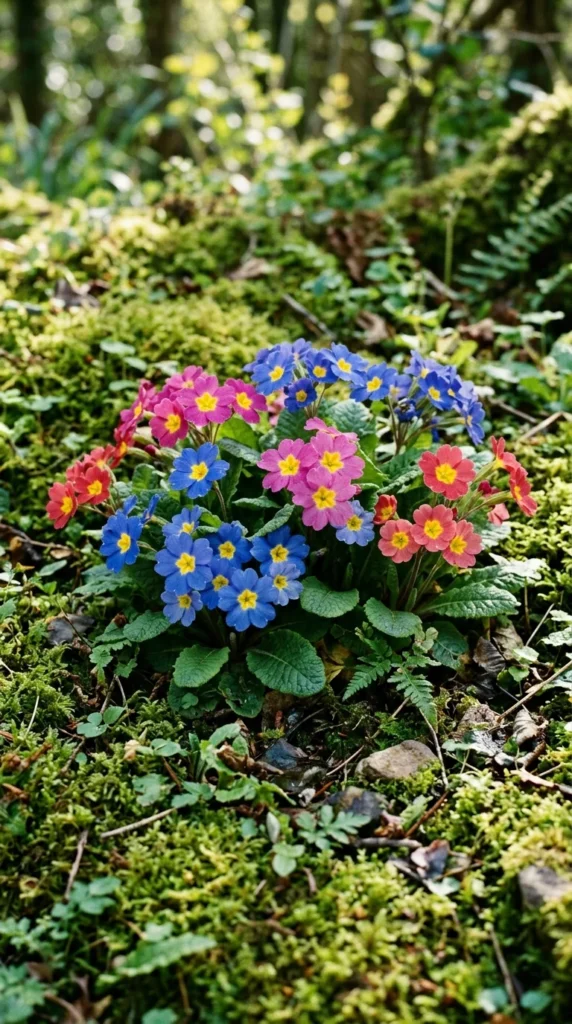
Primroses are one of the first signs of spring, offering cheerful, saturated colors when the rest of the garden is just waking up. They thrive in damp, cool, shaded spots and are perfect for tucking into the crevices of a stone wall or along a shaded walkway. Their crinkled green leaves and bright, often “eyed” flowers provide a charming, cottage-garden aesthetic to even the gloomiest corners.
13. Foxglove
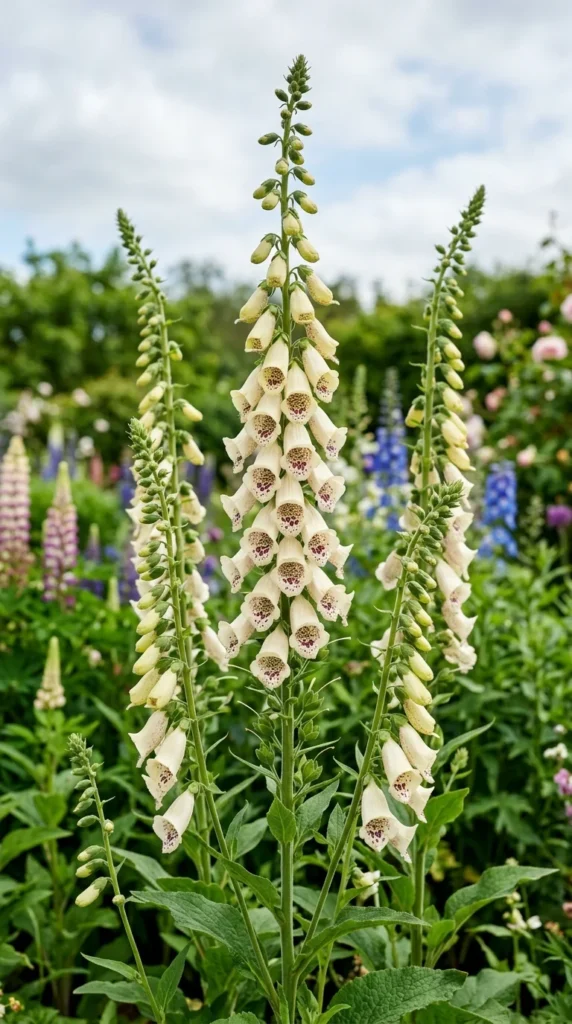
For vertical drama and a touch of whimsy, Foxgloves (Digitalis) are unsurpassed. These tall biennials produce towers of bell-shaped flowers that come in white, cream, pink, and purple. They are famous for the spots inside their bells, which serve as landing strips for bees. Because they can grow quite tall, they are perfect for the back of a shade border, providing a colorful backdrop for shorter hostas and ferns.
14. Lily of the Valley
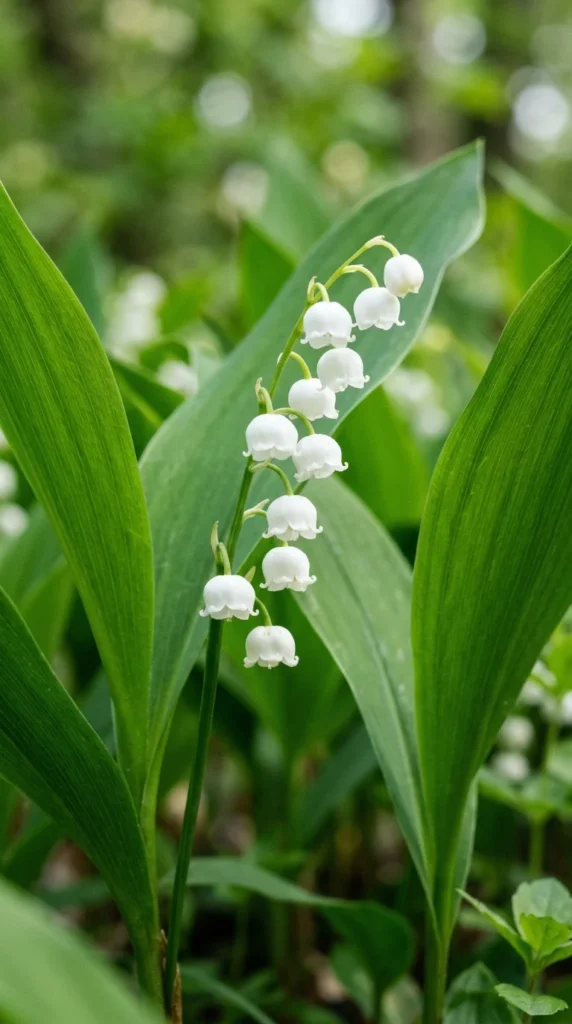
While small in stature, Lily of the Valley makes a big impact with its intoxicating fragrance and delicate white bells. It functions as an excellent groundcover for difficult, shady spots where grass won’t grow. The pure white flowers stand out sharply against their broad, deep green leaves, creating a clean and classic look. Be aware that it is a vigorous spreader, so it’s best used in contained areas or places where it can roam freely.
15. Toad Lily
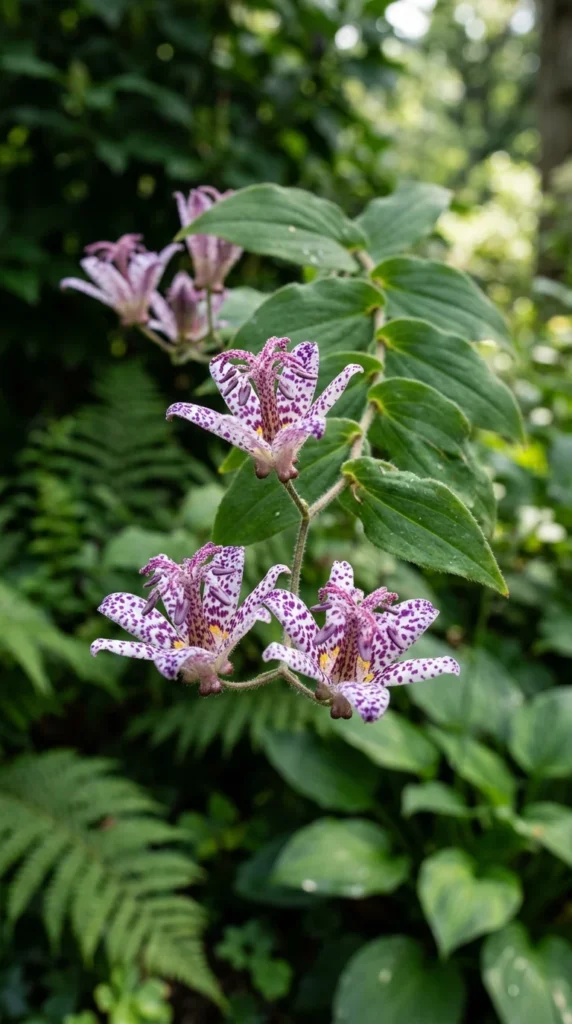
Tricyrtis, or Toad Lily, is a late-season star. When most shade perennials have finished blooming, the Toad Lily opens its unique, orchid-like flowers. The blossoms are typically white or pale lavender with heavy purple spotting. Because the flowers are relatively small and intricate, plant them near a path where they can be appreciated up close. They add a touch of the exotic to the woodland garden and are remarkably hardy.
16. Caladium
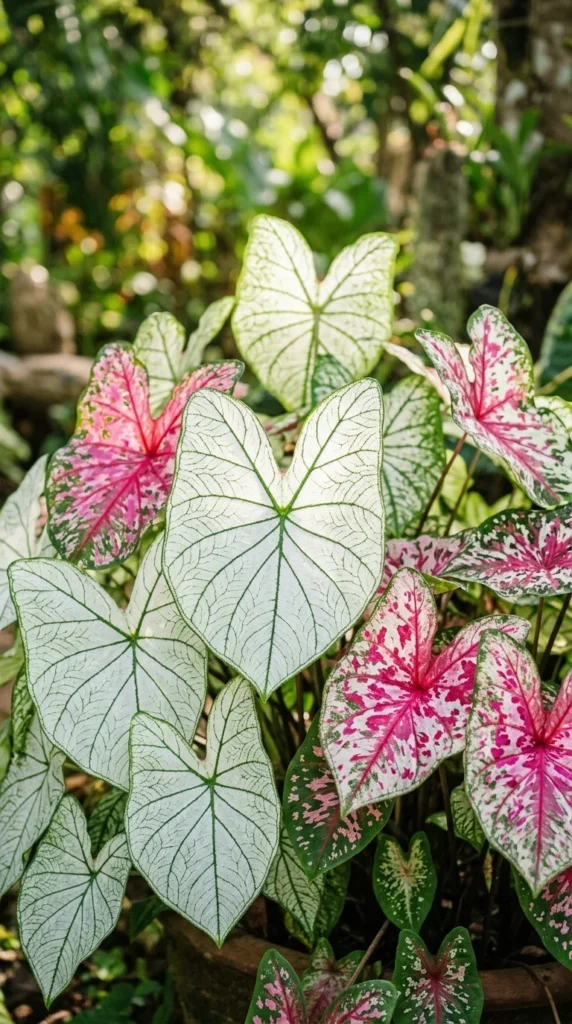
In many regions, Caladiums are grown as summer tubers, providing some of the most vibrant foliage colors available. Their large, heart-shaped leaves come in combinations of white, pink, red, and green. The “White Christmas” variety, with its nearly all-white leaves and green veins, is like a lightbulb for a dark corner. They love the heat and humidity of summer and can be grown in pots or directly in the ground to fill in gaps with tropical flair.
17. Dead Nettle
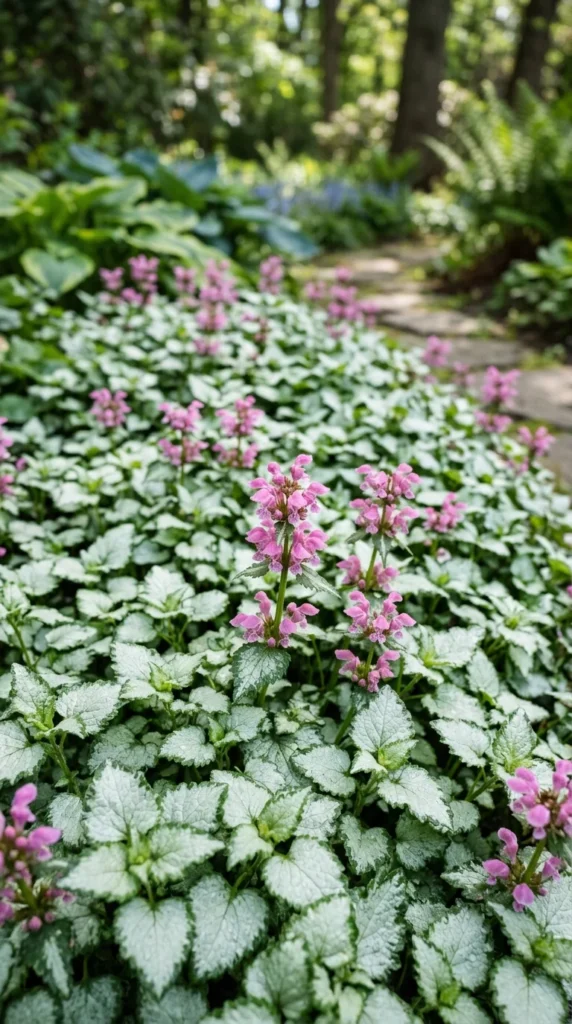
Lamium, or Dead Nettle, is a fantastic choice for a low-maintenance groundcover. Most varieties feature silver or variegated foliage that shimmers in the shade. The silver leaves act as a brilliant reflector, brightening the ground layer of your garden. It’s a tough plant that can handle dry shade once established and produces charming little flowers in shades of pink, white, or purple in late spring.
18. Jacob’s Ladder
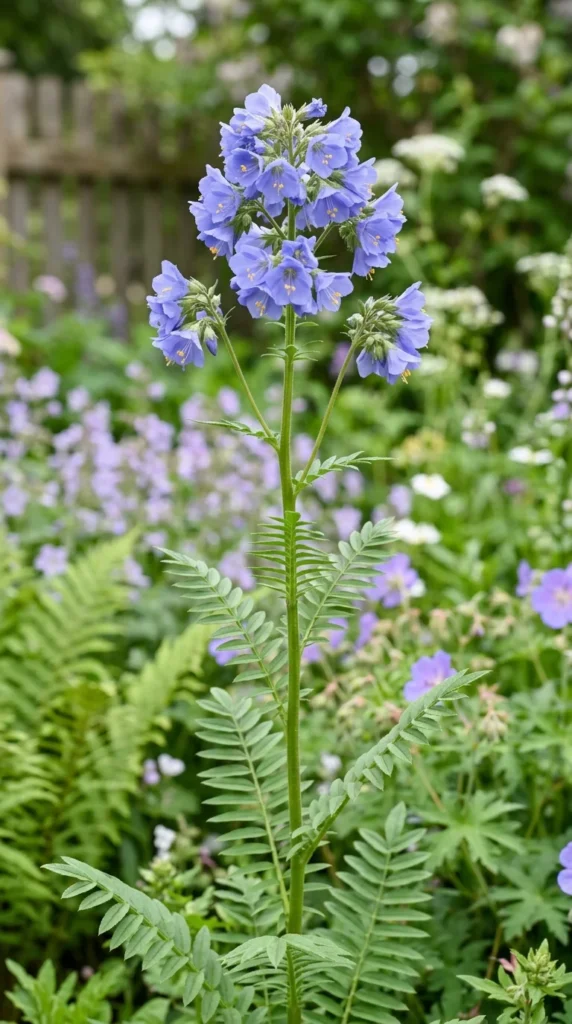
Polemonium, commonly known as Jacob’s Ladder, gets its name from its unique foliage, where leaflets are arranged in pairs like the rungs of a ladder. This plant offers a soft, airy texture and clusters of blue or white flowers that seem to float above the foliage. It’s a classic woodland plant that prefers cool, moist conditions. The variegated varieties, with white-edged leaves, are especially effective at adding light to a shaded border.
19. Columbine
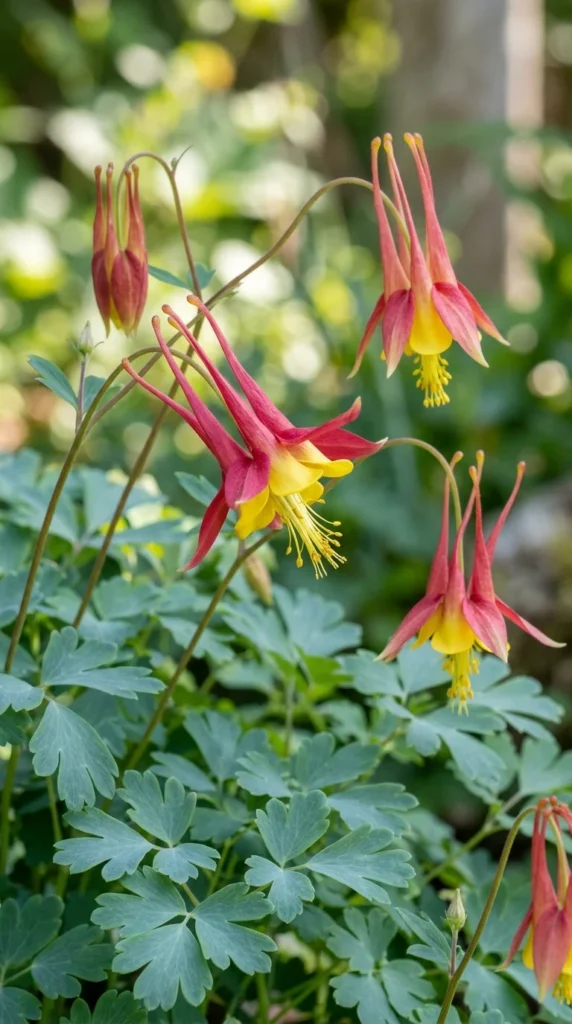
Columbine (Aquilegia) brings a sense of wild, natural beauty to the shade. Their flowers are architectural marvels, featuring long “spurs” that stick out from the back of the bloom. They come in a wide array of colors, including bicolors that pop against dark backgrounds. Columbines are short-lived perennials but often self-seed, popping up in unexpected places and giving the garden a relaxed, lived-in feel.
20. Lungwort
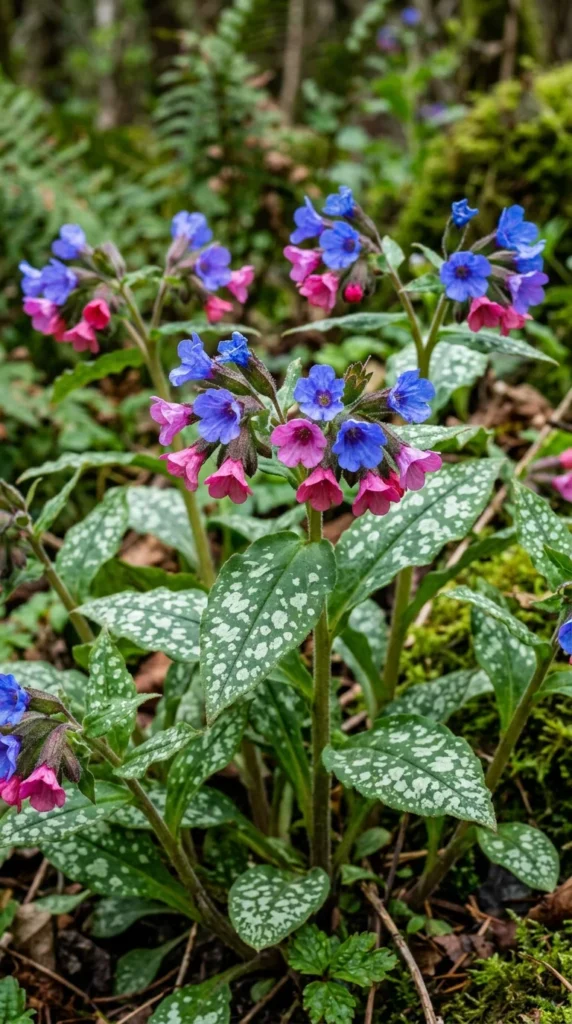
Pulmonaria, or Lungwort, is one of the most underrated plants for the shade. Its most striking feature is its foliage—green leaves covered in silver spots or splotches that look like they’ve been splashed with paint. In early spring, it produces clusters of flowers that often change color from pink to blue as they age, providing a multi-colored display on a single plant. It is deer-resistant and thrives in the cool, moist conditions of a shaded corner.
Design Tips for Shaded Spaces
To truly make these plants shine, consider the following design principles:
- Layer for Depth: Just like a sunny border, a shade garden needs layers. Use tall plants like Foxgloves or Ostrich Ferns at the back, medium plants like Hostas and Astilbe in the middle, and low groundcovers like Lamium or Primrose at the front.
- Embrace Variegation: In the shade, solid green leaves can blend together into a dark mass. Use variegated plants (those with white, cream, or yellow markings) to break up the green and create visual “hot spots.”
- Play with Texture: When colors are more subtle, texture becomes the star. Contrast the feathery fronds of a fern with the broad, waxy leaves of a Hosta or the architectural spikes of an Astilbe.
- Reflective Accents: Beyond plants, use hardscaping to your advantage. A light-colored stone path, a white-painted bench, or a glass birdbath can catch and bounce light into the darkest areas.
- Focus on Moisture: Many shade-loving plants are native to forest floors where the soil is rich in organic matter and stays consistently moist. Adding a layer of mulch or compost annually will help retain that moisture and keep your shade plants lush and healthy.