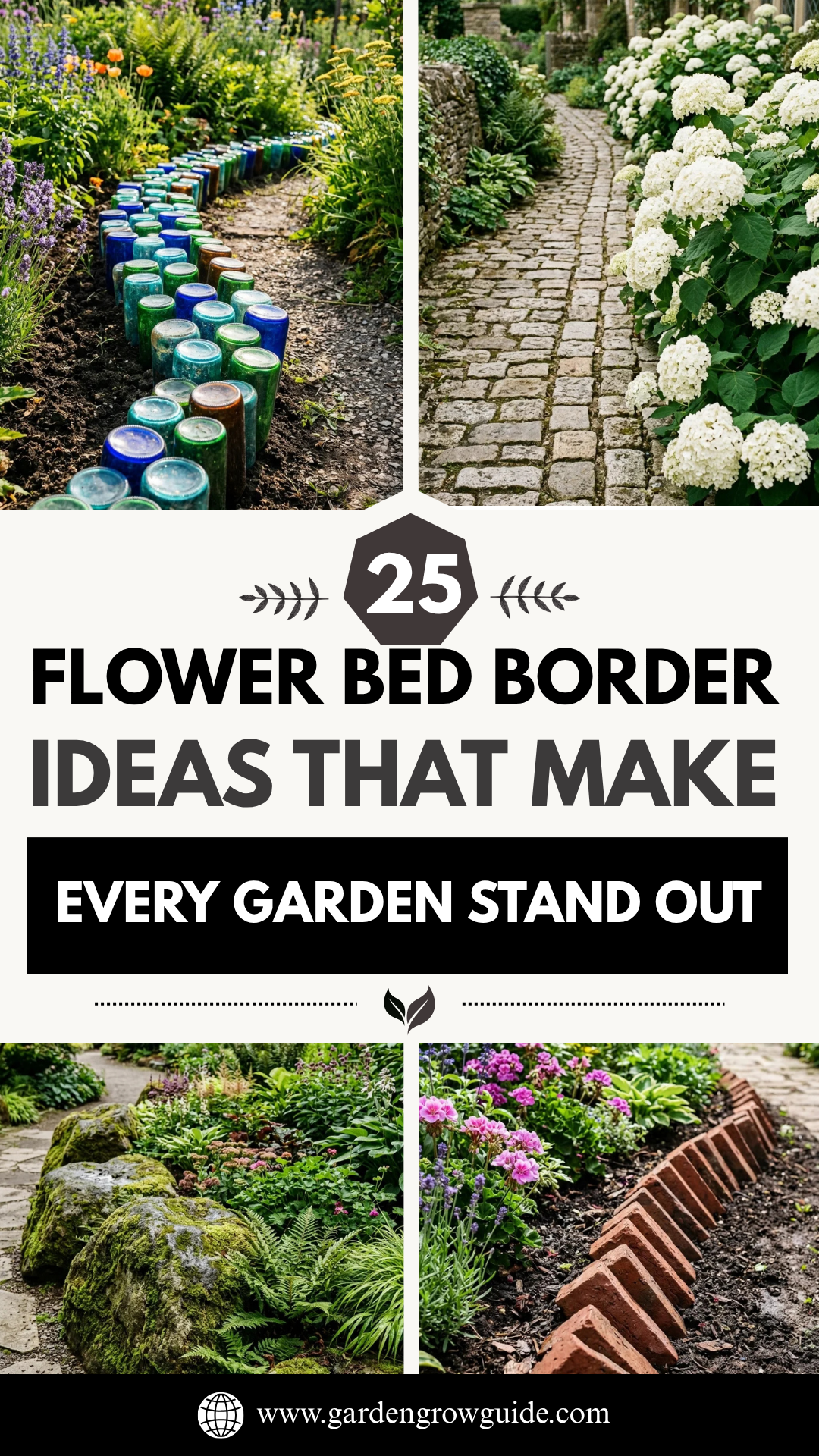
A garden without a border is like a painting without a frame. Flower bed edging serves both a functional and aesthetic purpose: it prevents grass from creeping into your blooms, keeps mulch from washing away during heavy rain, and provides a crisp, clean line that instantly elevates the curb appeal of your home. Whether you prefer the rustic charm of natural wood or the sleek, modern lines of Corten steel, the right border can transform an ordinary backyard into a professional-grade landscape.
1. Natural Stone
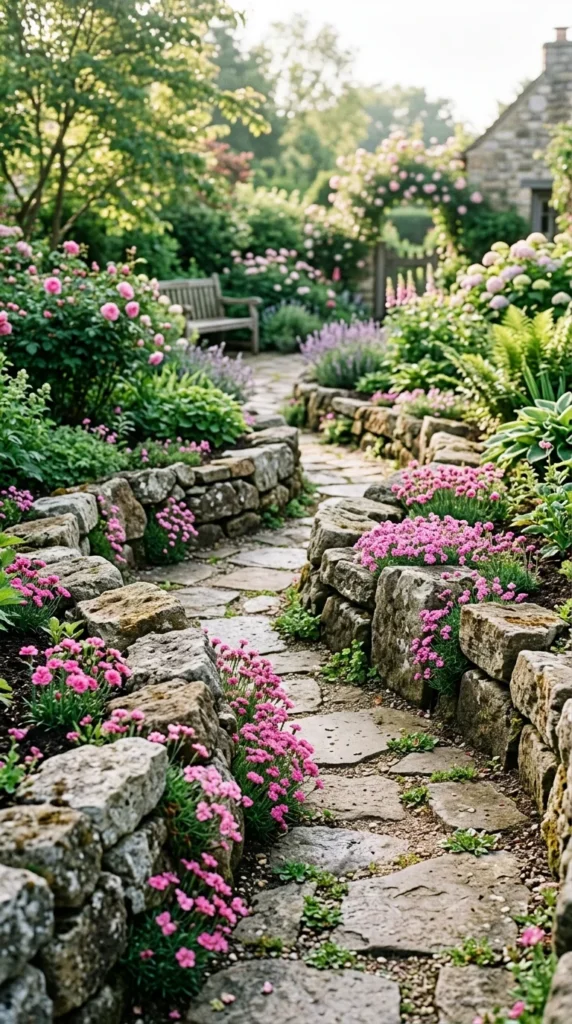
Natural stone is perhaps the most timeless choice for garden edging. By using indigenous rocks found on your property or sourced from a local quarry, you create a seamless transition between the cultivated garden and the surrounding environment. Large fieldstones or flat flagstones can be dry-laid (stacked without mortar) to create a rugged, organic look that gains character as moss and small succulents begin to grow in the gaps.
2. Red Brick
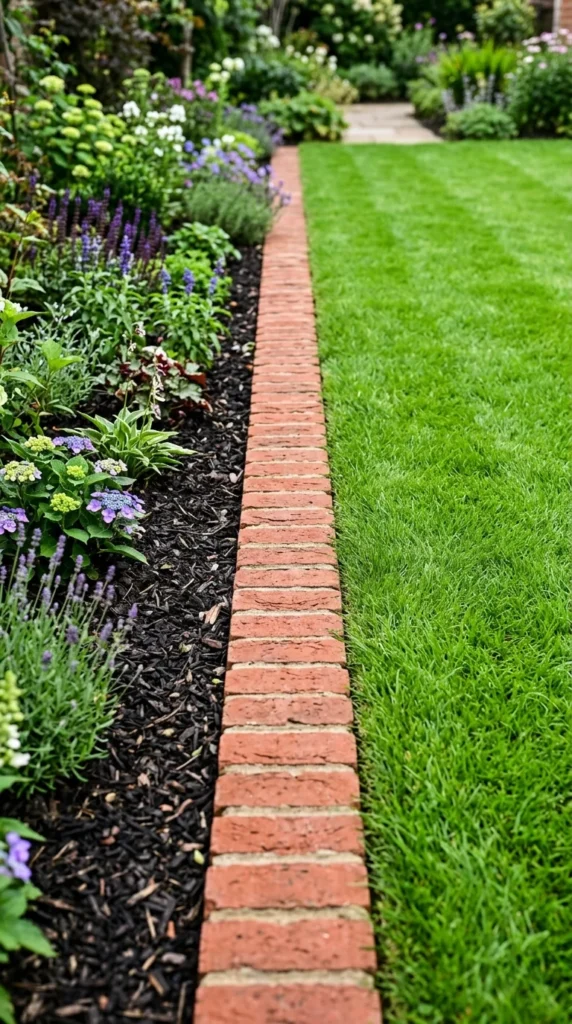
Bricks offer a classic, formal aesthetic that complements traditional home architectures like Colonial or Victorian styles. You can lay them flat for a wide, mower-friendly edge, or set them upright for a more distinct barrier. For a weathered, “secret garden” feel, use reclaimed bricks with slight imperfections and varying shades of deep red and burnt orange.
3. Woven Willow
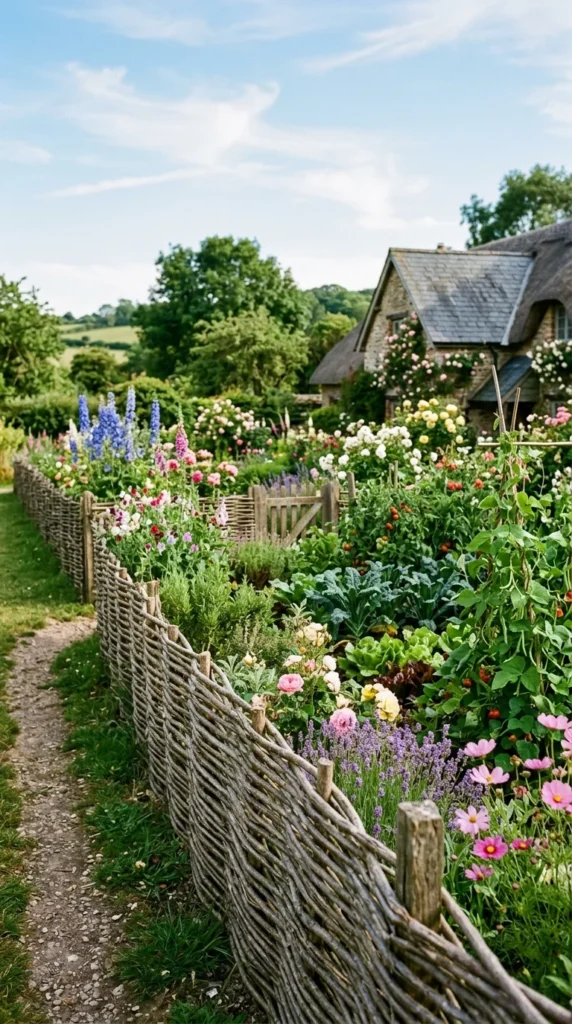
Also known as wattle, woven willow or hazel branches provide a charming, eco-friendly border. This technique has been used for centuries and is perfect for cottage gardens or “shabby chic” outdoor spaces. While wattle fences are not permanent structures and will eventually decompose, they add a beautiful, hand-crafted texture that looks stunning when paired with wildflowers and climbing roses.
4. Metal Strips
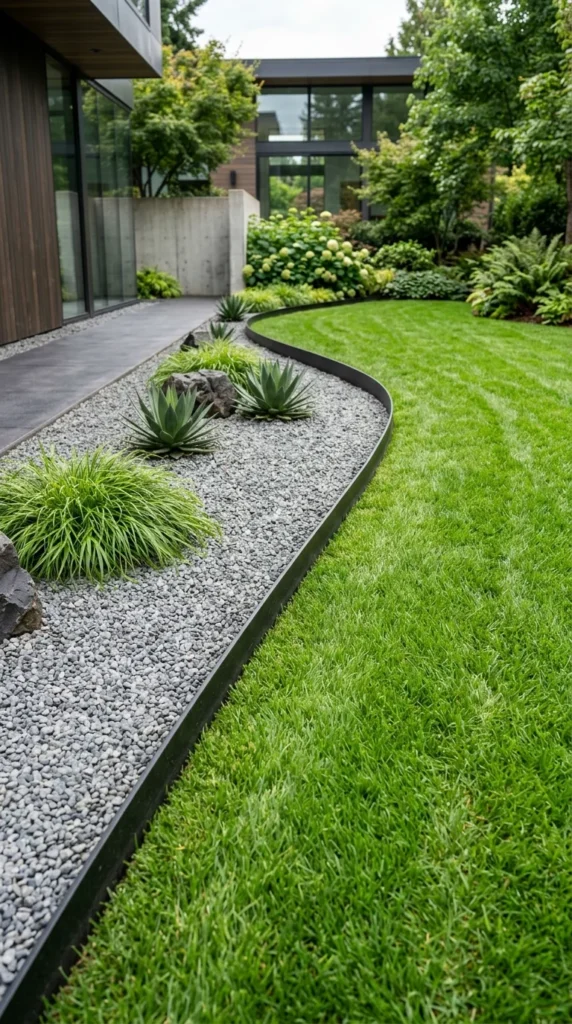
For those who love a modern, clean-lined look, thin metal edging is the gold standard. Usually made from aluminum or steel, these strips are flexible enough to create dramatic curves or perfectly straight lines. They are nearly invisible, allowing the plants to take center stage while providing a permanent root barrier that prevents invasive grass species from entering the flower bed.
5. Log Slices
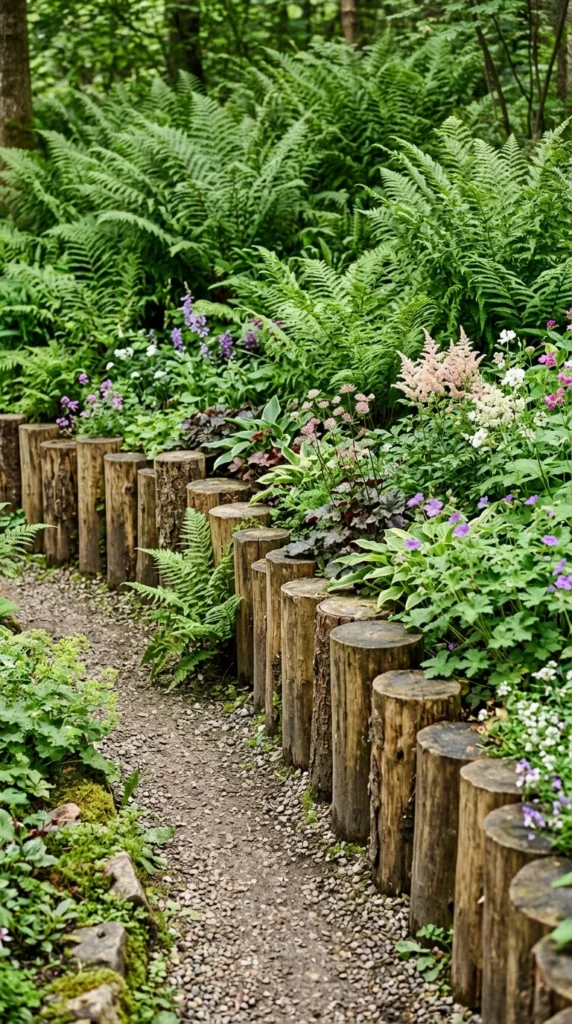
Using vertical log slices of varying heights creates a whimsical, woodland-themed border. This is an excellent way to repurpose fallen limbs or tree trunks from your own yard. By staggering the heights of the logs, you add vertical interest and a sense of movement to the garden. It is recommended to use rot-resistant wood like cedar or black locust to ensure the border lasts for several seasons.
6. Boxwood Hedge
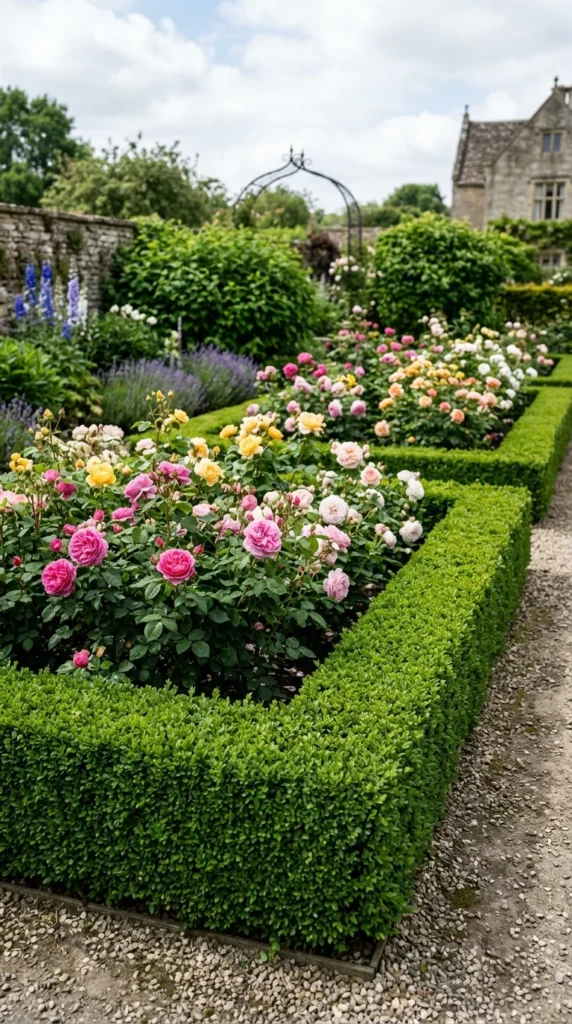
A “living border” is the height of formal garden design. Low-growing evergreen shrubs like Buxus (Boxwood) can be sheared into tight, rectangular shapes or soft globes. This creates a permanent structural element that looks just as good in the winter as it does in the summer. It requires regular trimming, but the result is a sophisticated, “stately home” appearance.
7. Flagstone Pavers
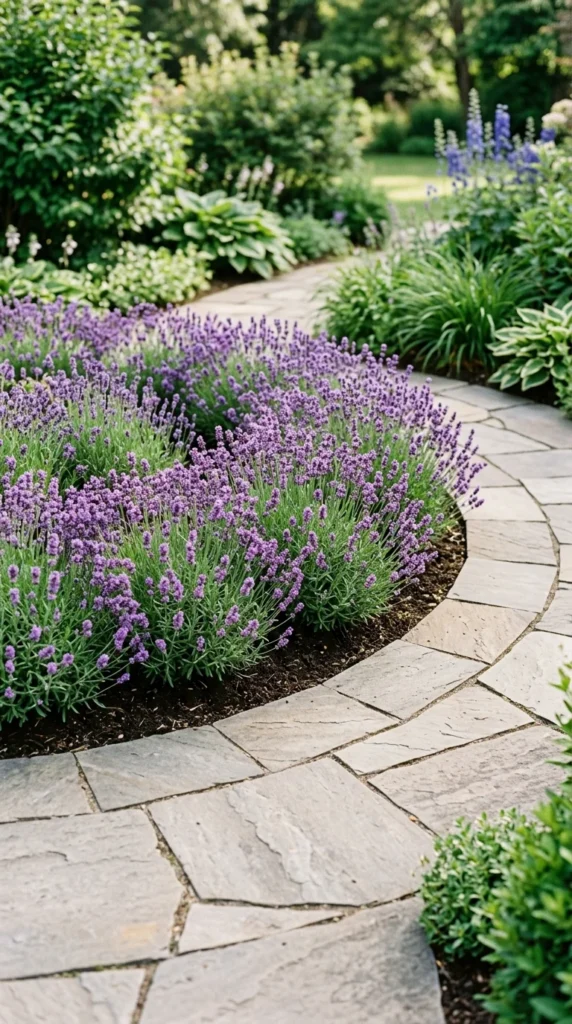
Flagstones provide a wide, flat surface that is incredibly practical for maintenance. When laid flush with the grass, they act as a “mowing strip,” allowing you to run the wheels of your lawnmower directly over the stone. This eliminates the need for string trimming and creates a very tidy, professional finish.
8. Glass Bottles
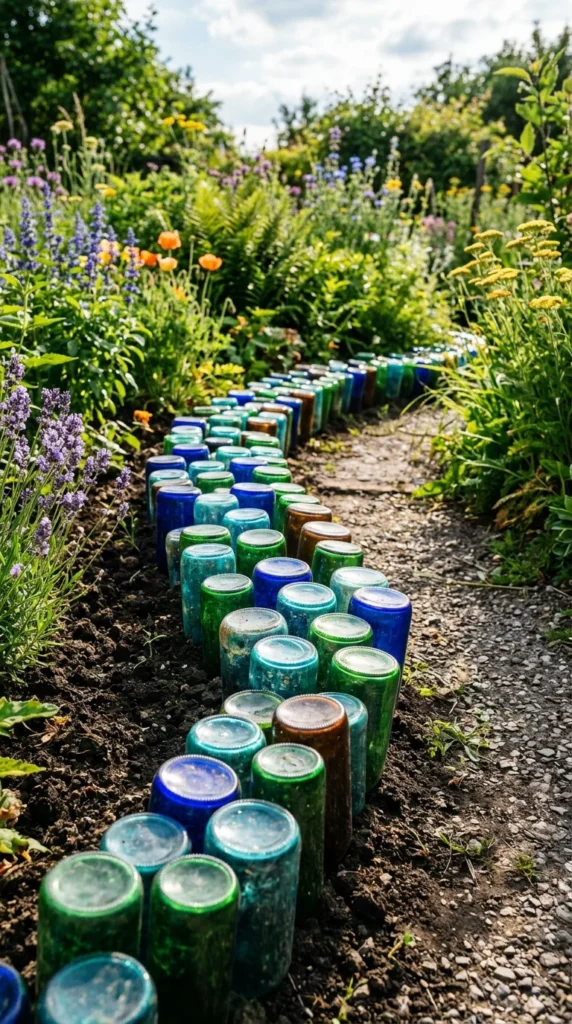
For a creative and recycled approach, upturned glass bottles make a vibrant, mosaic-like border. When the sun hits the glass, the border glows with jewel tones. This is a popular choice for eclectic or artistic gardens. Using bottles of the same color creates a more uniform look, while a mix of greens, browns, and blues offers a fun, bohemian vibe.
9. River Rocks
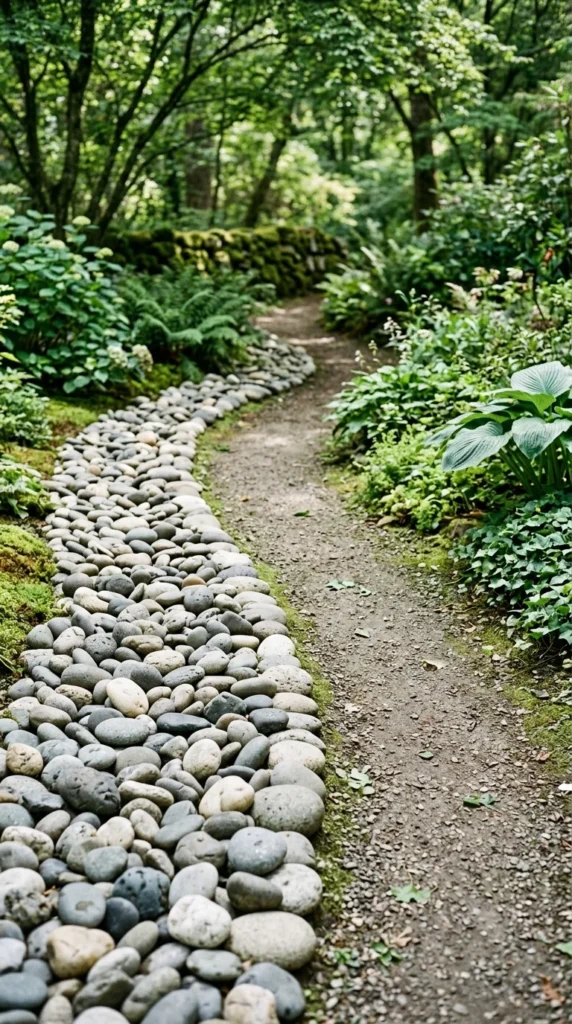
Smooth river rocks bring a sense of tranquility and Zen to the garden. They are particularly effective in “dry creek bed” designs where the border helps direct the flow of rainwater. The contrast between the smooth, cool-toned stones and the soft texture of green foliage creates a visually soothing environment.
10. Railway Sleepers
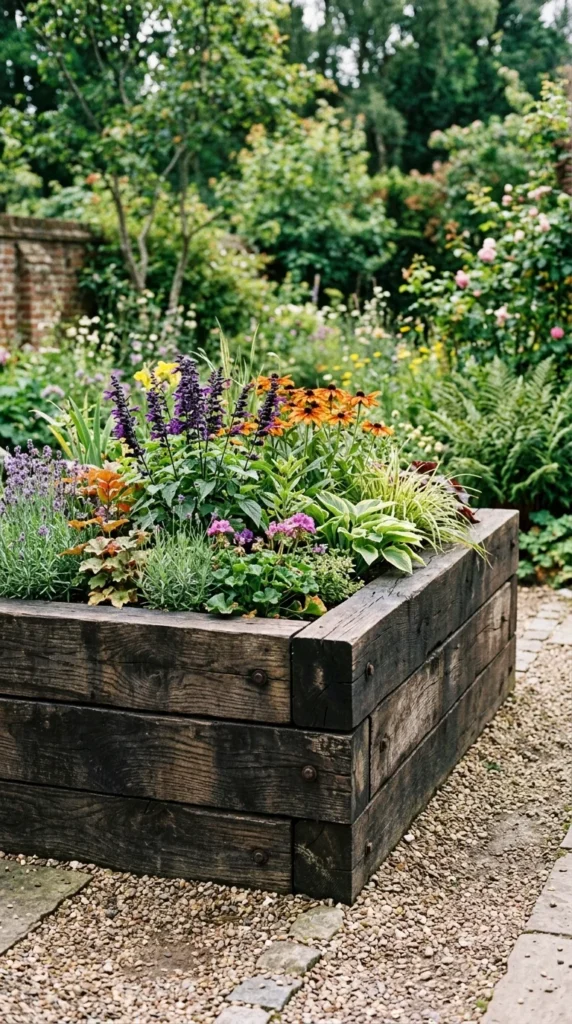
If you want to create raised beds or define a large, flat area, railway sleepers (or large timber beams) are an excellent choice. They provide a sense of scale and permanence. The thick wood acts as a bench in some areas and can help level out sloped gardens by creating terraced flower beds.
11. Terra Cotta
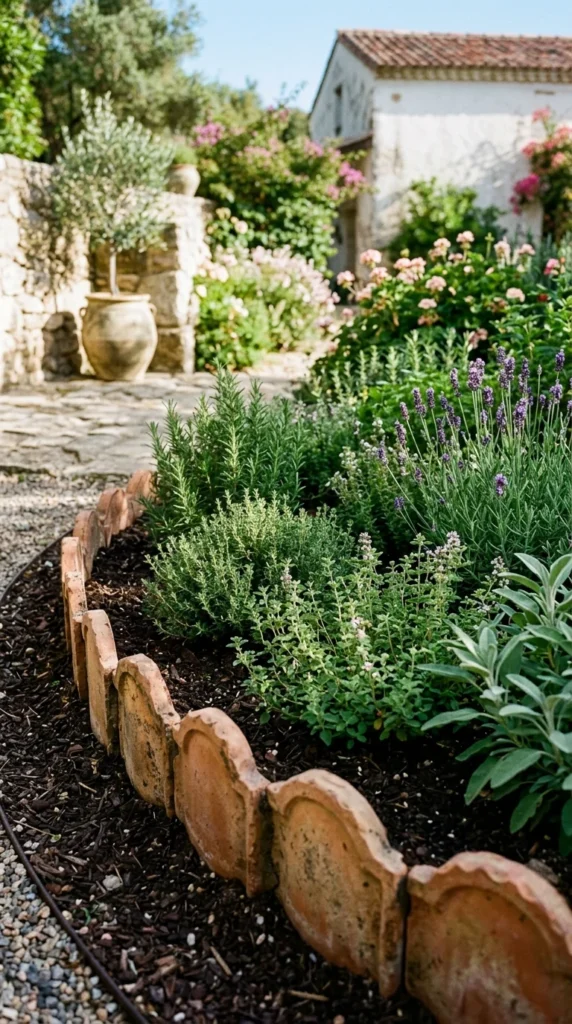
Terra cotta edging tiles, often featuring scalloped or rope-twist designs, add a Mediterranean or European flair to the garden. The warm, earthy orange hue of the clay contrasts beautifully with green herbs and silvery foliage like Sage or Artemisia. These are best used in climates that do not experience heavy “freeze-thaw” cycles, as the clay can crack in extreme cold.
12. Ornamental Grasses
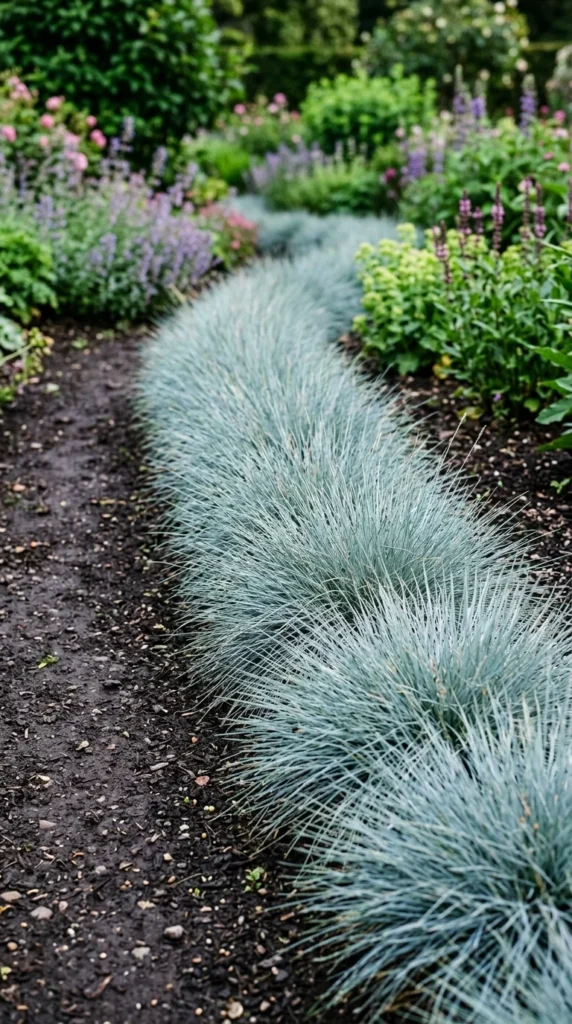
Not all borders need to be hardscapes. Using low-growing, clumping ornamental grasses like Blue Fescue or Mondo Grass creates a soft, textured transition. These plants maintain their shape well and provide a fuzzy, tactile edge that softens the transition between the lawn and the flower bed.
13. Cobblestones
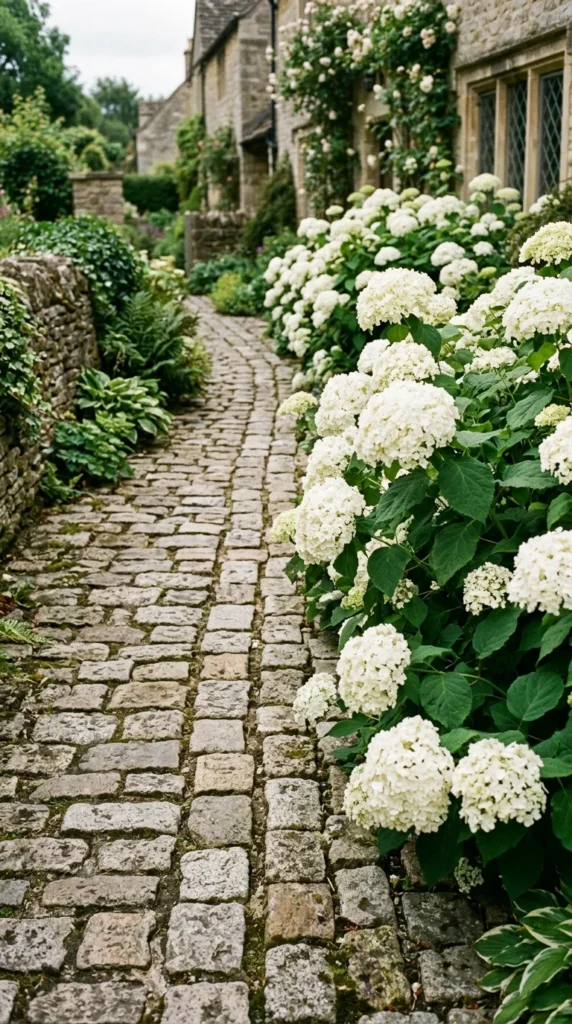
Cobblestones offer an old-world charm that is difficult to replicate with modern materials. Because they are individual blocks, they are perfect for creating tight circles around trees or following the winding path of a flower bed. Their durability is unmatched, often lasting for decades without shifting or eroding.
14. Concrete Blocks
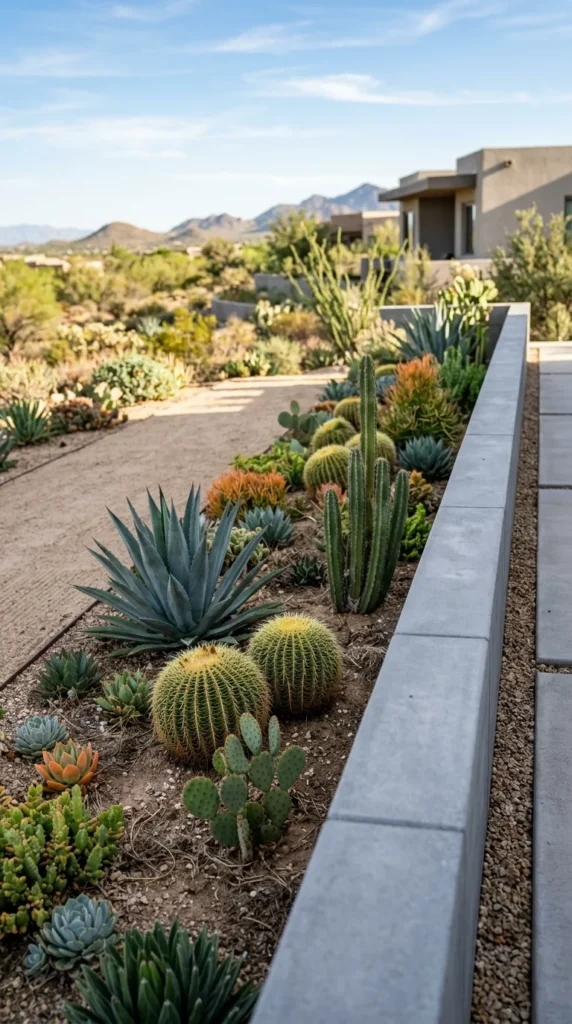
Modern landscaping often utilizes smooth, pre-cast concrete blocks. These provide a clean, architectural look that fits perfectly with mid-century modern or contemporary home designs. They can be stacked to create different levels or laid end-to-end for a simple, understated boundary.
15. Seashells
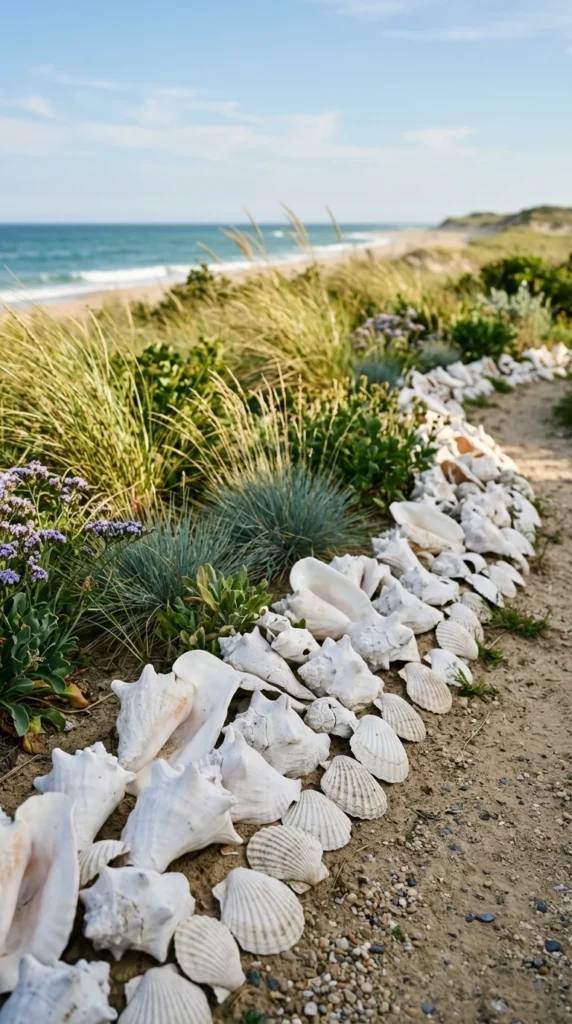
Perfect for coastal homes or beach-themed landscapes, large seashells create a unique and light-reflecting border. Using white shells provides a high-contrast edge against dark mulch or soil, highlighting the garden’s shape even in low light. Over time, the shells break down slightly, adding calcium to the soil.
16. Cedar Planks
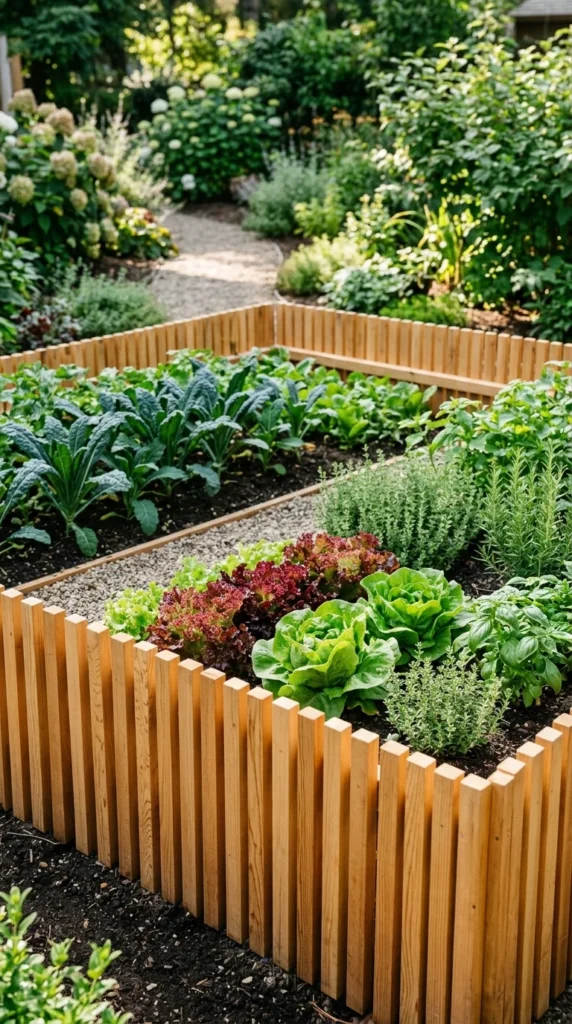
Cedar is naturally rot-resistant and has a beautiful grain that holds up well against the elements. Using thin planks of cedar to create a “picket fence” style border or a simple flat edge adds a touch of craftsmanship to the garden. As the wood ages, it turns a graceful silvery-grey, or it can be stained to maintain its original warmth.
17. Diagonal Brick
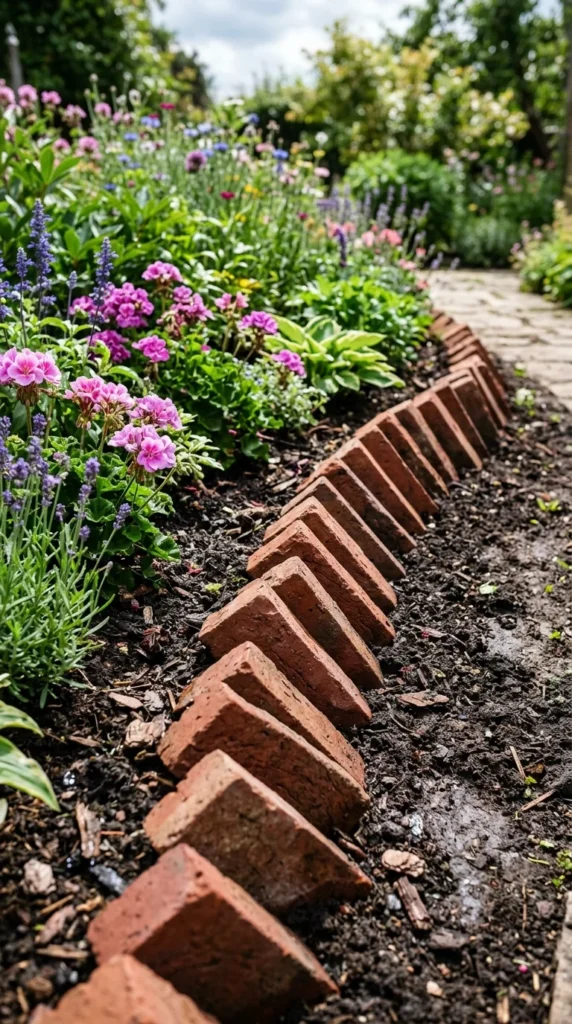
A variation on the classic brick edge, the diagonal (or sawtooth) layout adds a decorative, historical touch. By burying the bricks halfway at an angle, you create a serrated line that adds visual energy and a bit of flair. This was a popular technique in colonial American gardens and remains a favorite for DIY enthusiasts.
18. Lavender Hedge
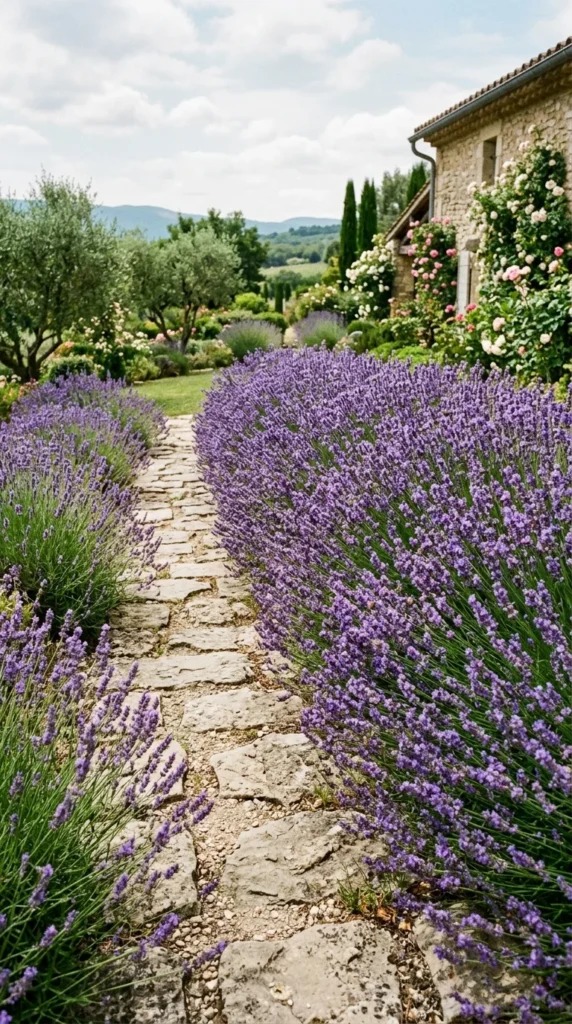
Lavender serves as a sensory border, providing beautiful color, a pleasant scent, and a magnet for pollinators. While it requires more maintenance than stone (pruning is essential to keep it from becoming woody), a lavender border defines the space with soft, billowy texture and a cooling color palette.
19. Boulder Accents
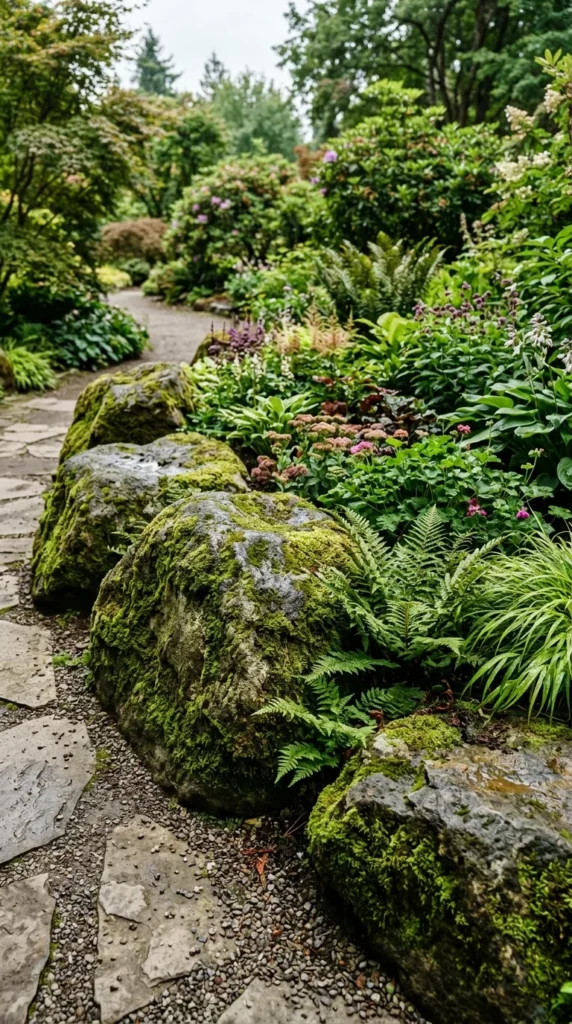
For large-scale landscapes, small stones can look cluttered. Instead, use massive boulders placed at intervals to define the edge of a garden bed. This “anchor” technique creates a sense of age and stability. Filling the gaps between boulders with low-growing groundcovers like creeping thyme completes the natural look.
20. Recycled Plates
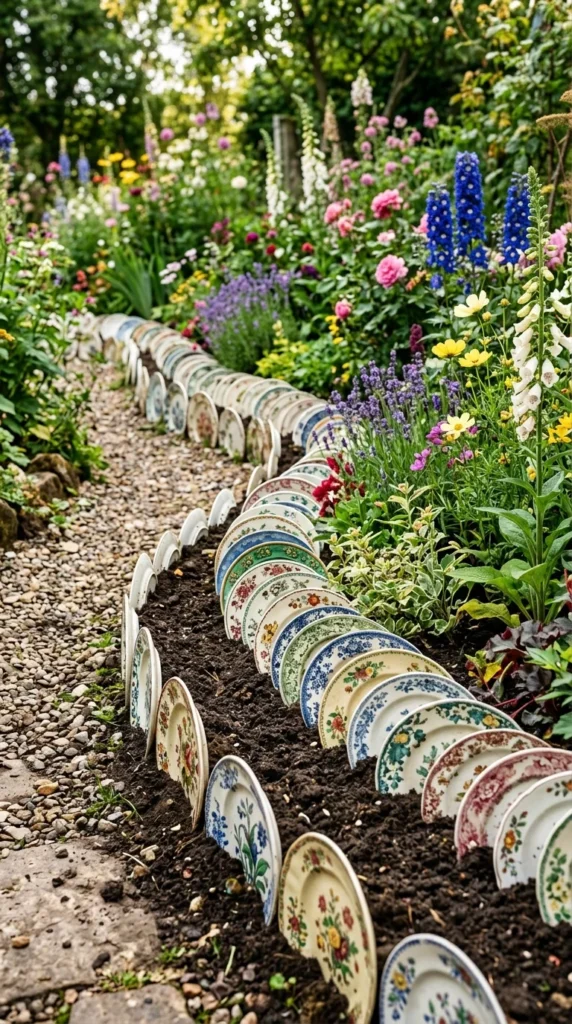
In “shabby chic” or eclectic cottage gardens, vintage ceramic plates can be used to create a colorful, upright border. This is a fantastic way to display mismatched china or heirloom pieces that have chips or cracks. The varied patterns and colors add a personalized, artistic touch that serves as a great conversation starter.
21. Steel Edging
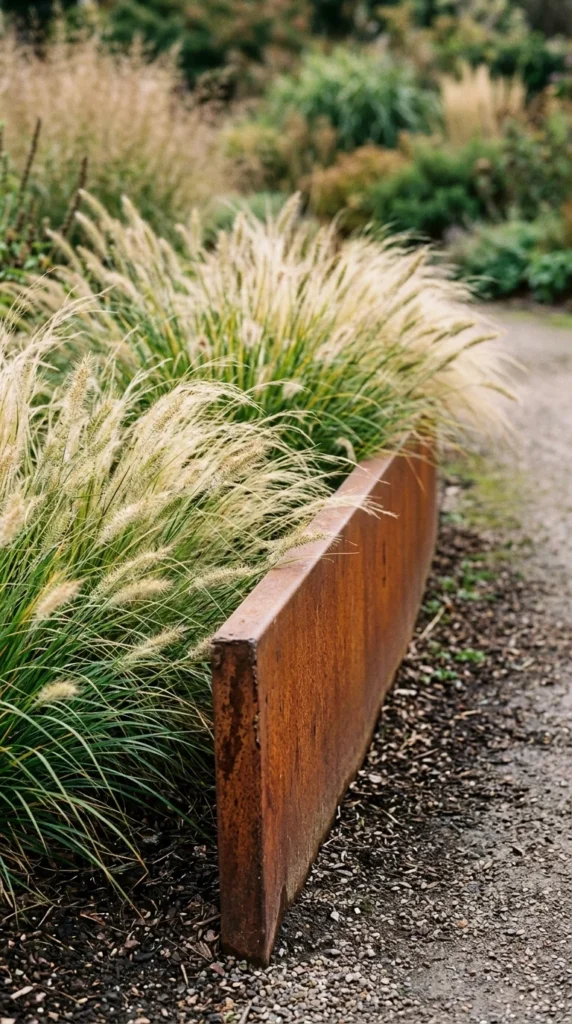
Corten steel (or weathering steel) is a favorite among landscape architects. It develops a protective layer of rust that turns a deep, rich orange-brown over time. This industrial look provides a striking contrast to the soft textures of plants and never needs to be painted or treated against rot.
22. Rubber Borders
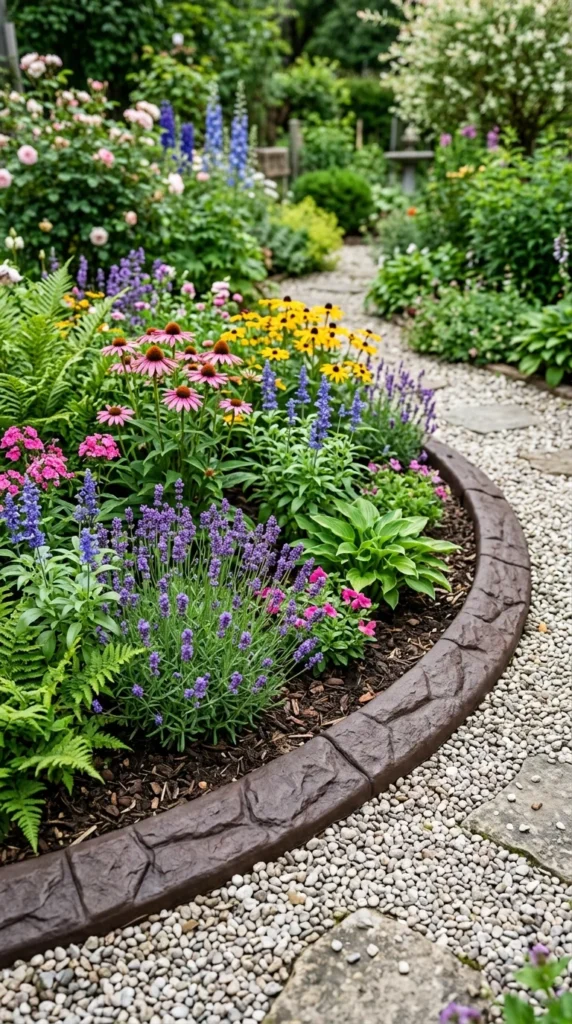
For a budget-friendly and eco-conscious option, recycled rubber edging is an excellent choice. Often made from old tires, these borders are incredibly flexible and easy to install. Many modern versions are molded to look like stacked stone or wood, providing a high-end look at a fraction of the weight and cost.
23. Stone Gabions
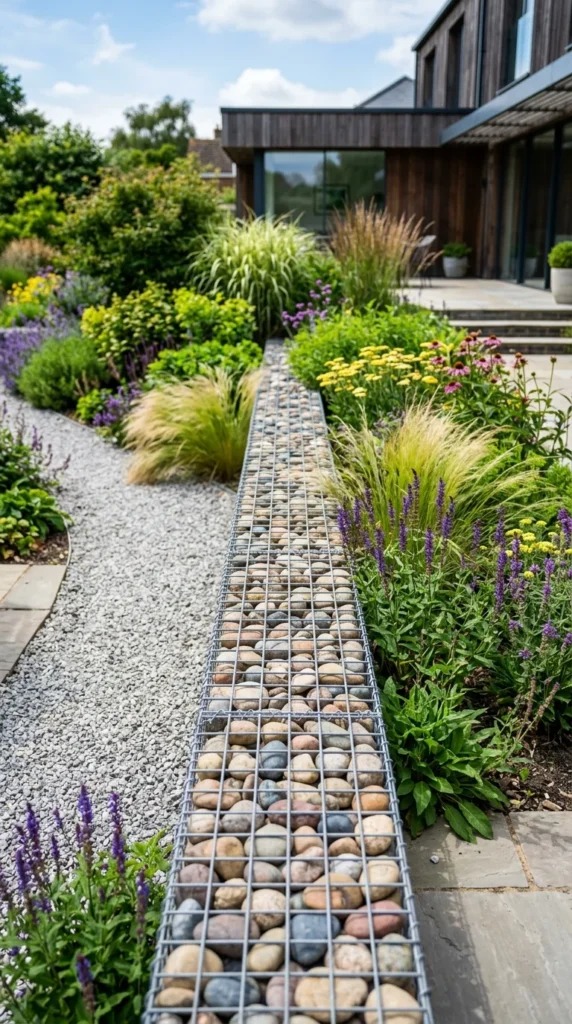
Gabions are wire baskets filled with rocks or stones. While often used for large retaining walls, “mini” gabions make for a stunning, modern garden border. They offer an architectural, industrial-meets-natural aesthetic and provide excellent drainage while staying perfectly in place.
24. Scalloped Edging
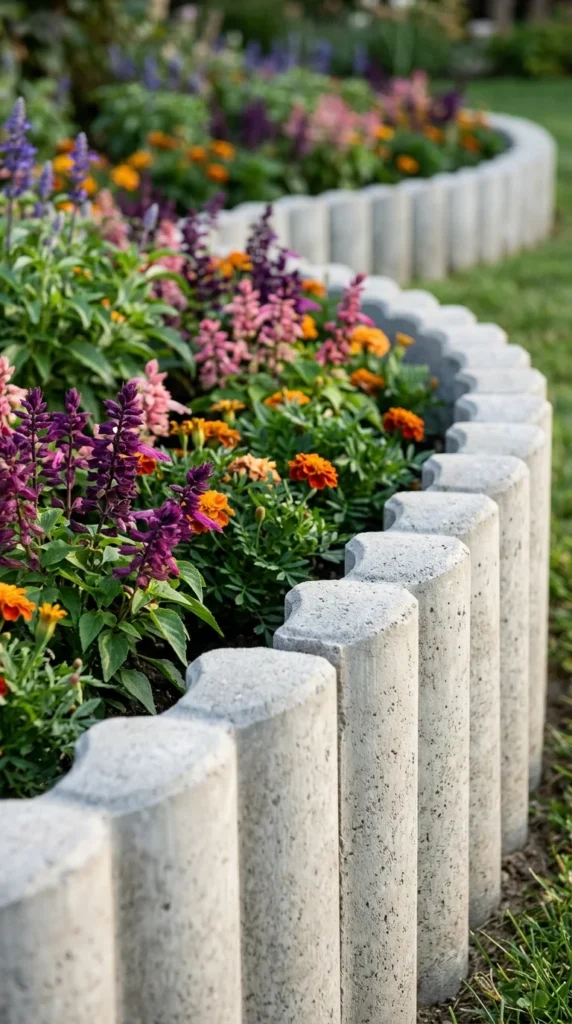
Scalloped concrete edging is a classic DIY favorite. These pre-cast sections are easy to drop into a shallow trench and provide a neat, repetitive pattern that guides the eye along the garden’s perimeter. They are available in various colors, from charcoal grey to sandy beige, to match any exterior.
25. Bamboo Poles
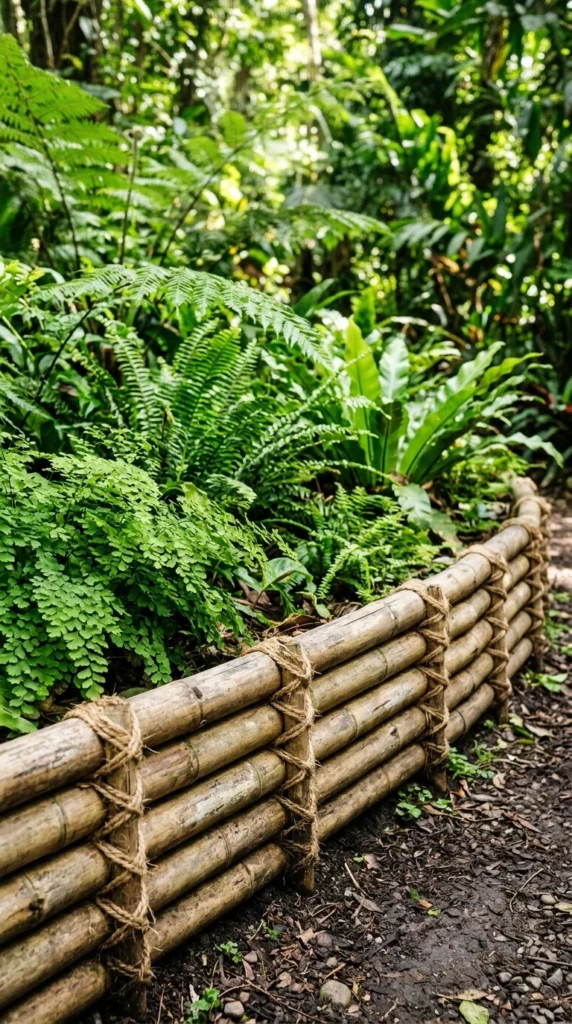
Bamboo brings a tropical or East Asian influence to the landscape. Using short lengths of bamboo lashed together horizontally or driven into the ground vertically creates a lightweight, sustainable border. It is an ideal choice for Zen gardens or poolside landscapes where a “resort” feel is desired.