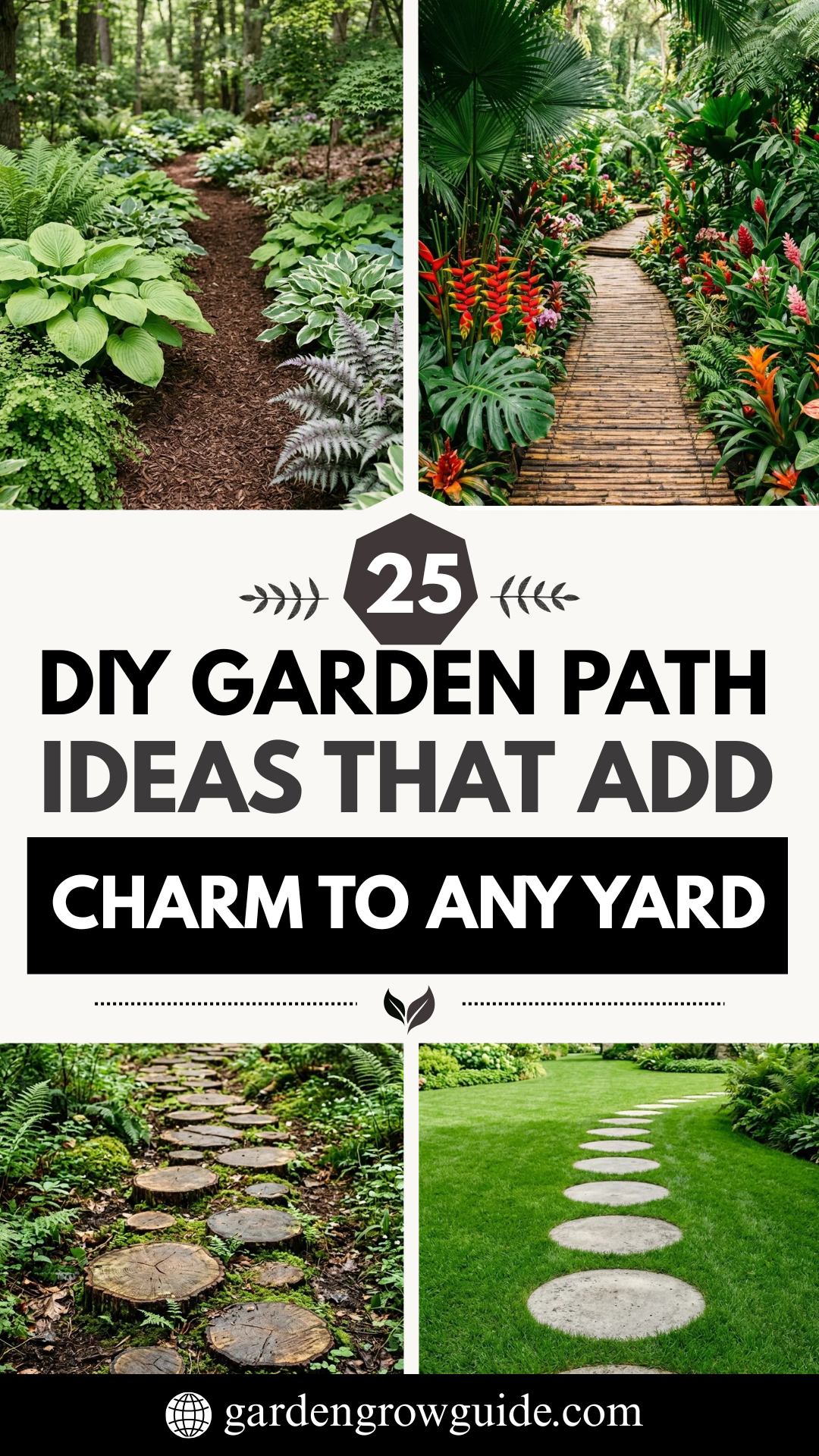
A garden path is more than just a way to get from point A to point B; it is the backbone of your landscape design. It defines the flow of your outdoor space, protects your plants from foot traffic, and adds a layer of texture and personality to your yard. Whether you are looking for a rustic woodland trail or a sleek modern walkway, these 25 DIY garden path ideas offer something for every budget and skill level.
1. Flagstone
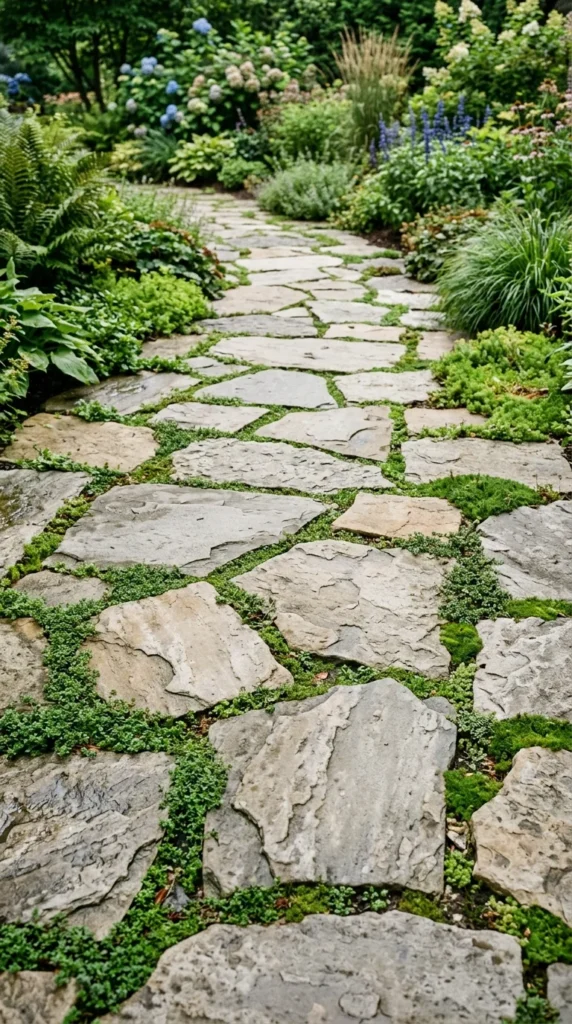
Flagstone is the gold standard for natural-looking garden paths. These large, flat slabs of stone come in various colors, from earthy tans to cool blues. Because they are heavy, they often stay in place with minimal intervention, though digging a shallow trench and filling it with sand can help level them. The beauty of flagstone lies in its irregularity, which creates an organic, “always been there” feel.
2. Mulch
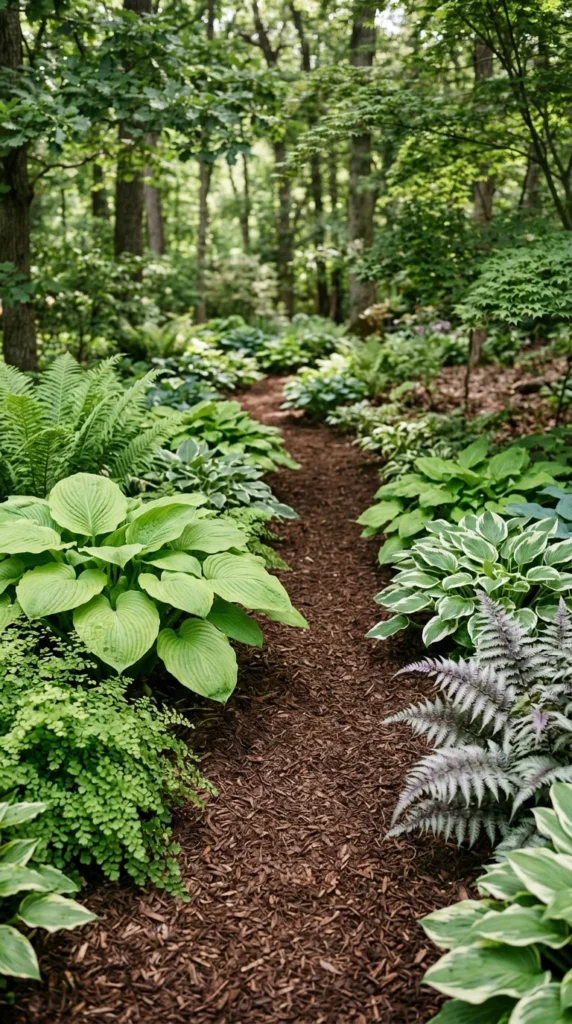
For those on a tight budget or looking for a temporary solution, mulch is an excellent choice. It is soft underfoot, suppresses weeds, and enriches the soil as it decomposes over time. Pine bark, cedar chips, or cypress mulch are popular options. To keep the path looking tidy, use a plastic or metal garden edging to prevent the mulch from spilling into your flower beds.
3. Gravel
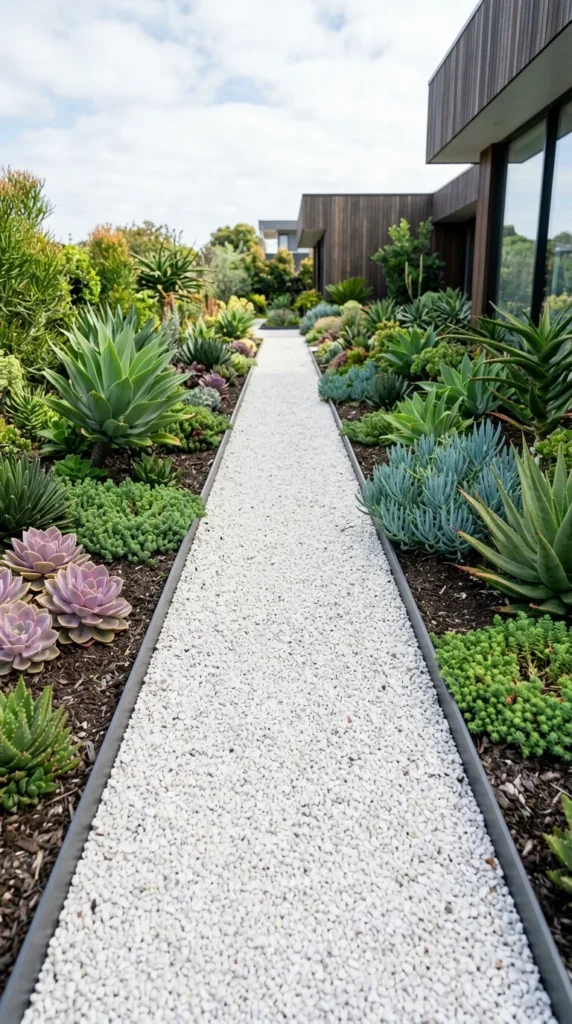
Gravel is incredibly versatile and provides excellent drainage. Whether you choose crushed limestone, pea gravel, or decomposed granite, the sound of crunching stone creates a sensory experience in the garden. It is one of the easiest materials to install—simply clear the grass, lay down landscape fabric to prevent weeds, and pour the gravel on top.
4. Bricks
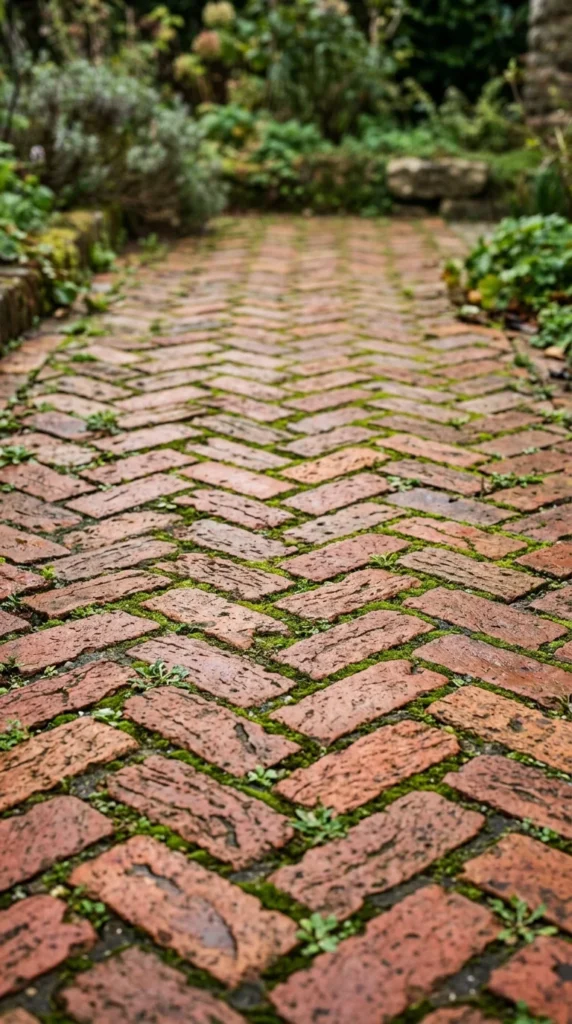
Using reclaimed or new bricks offers a timeless, traditional look. You can arrange them in various patterns, such as basketweave, herringbone, or a simple running bond. Bricks are durable and provide a flat, stable surface that is easy to walk on even in wet weather. If you use salvaged bricks, you add a layer of historic charm and sustainability to your yard.
5. Wood Slices
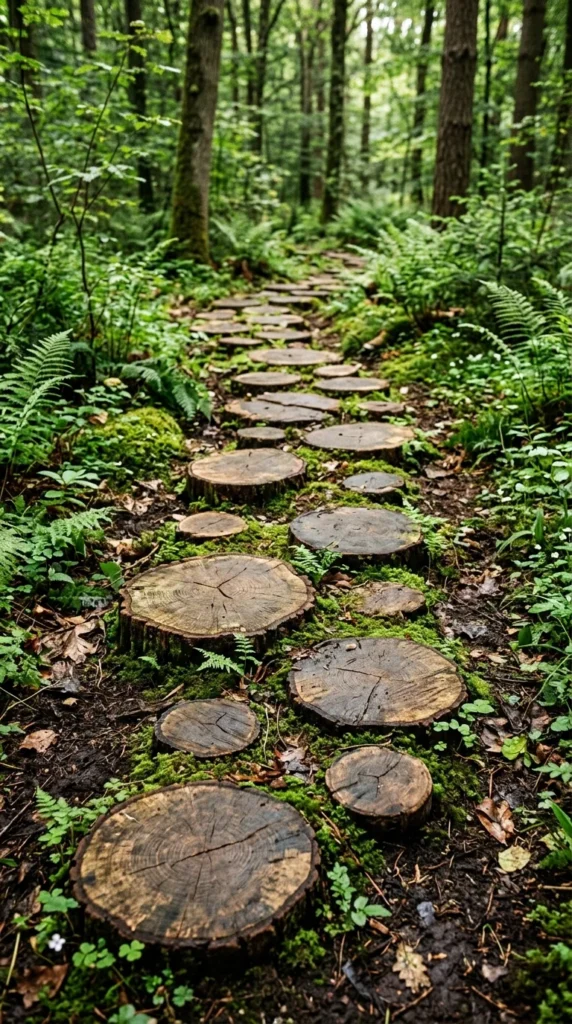
Also known as “log rounds,” wood slices create a whimsical, rustic path that feels right at home in a cottage or woodland garden. You can source these from fallen trees on your property or buy them pre-cut. To prevent rot, it is essential to treat the wood with a sealant and set them on a bed of gravel to encourage drainage.
6. Stepping Stones
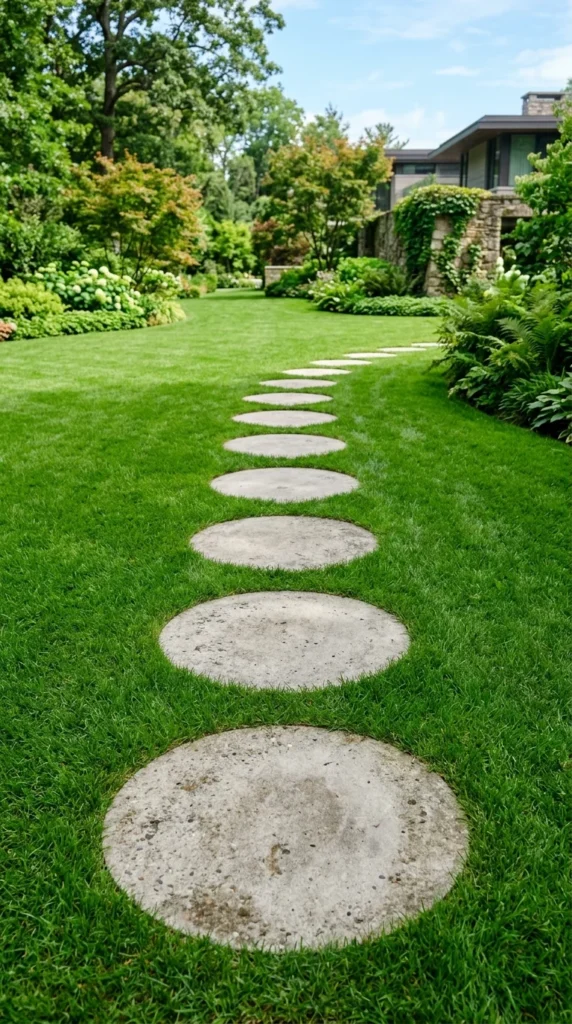
Stepping stones are the ultimate low-effort DIY path. Instead of building a solid walkway, you place individual stones at a comfortable walking pace. This allows the grass or groundcover to grow around the stones, softening the look of the landscape. You can use natural stone, pre-cast concrete, or even large flat river rocks.
7. Mosaics
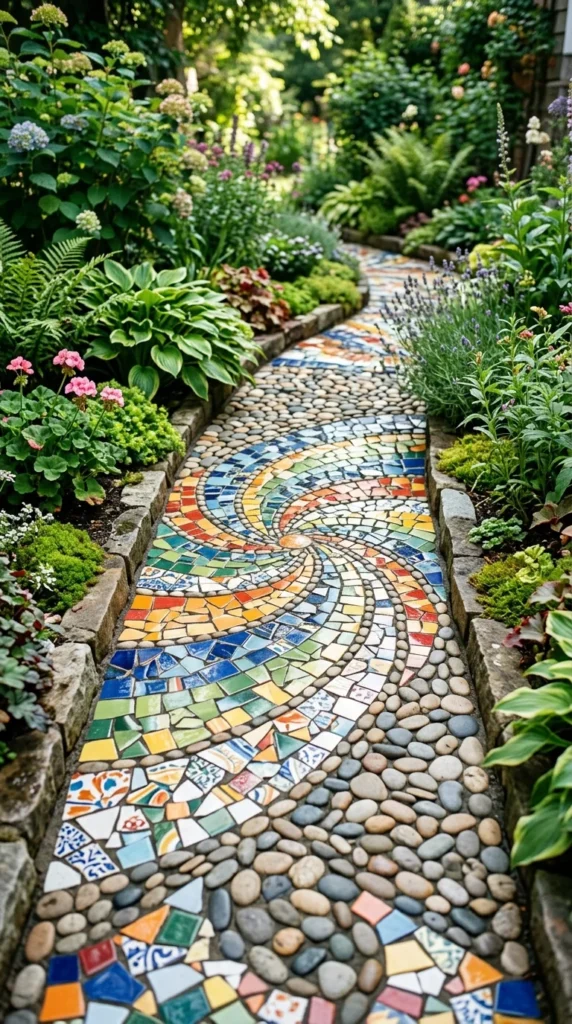
If you have an artistic flair, a mosaic path turns your walkway into a piece of art. Using broken ceramic tiles, glass beads, and smooth river pebbles, you can create intricate patterns or pictures. This is usually done by setting the pieces into a wet concrete base, ensuring they are level so the path remains safe for walking.
8. Pallets
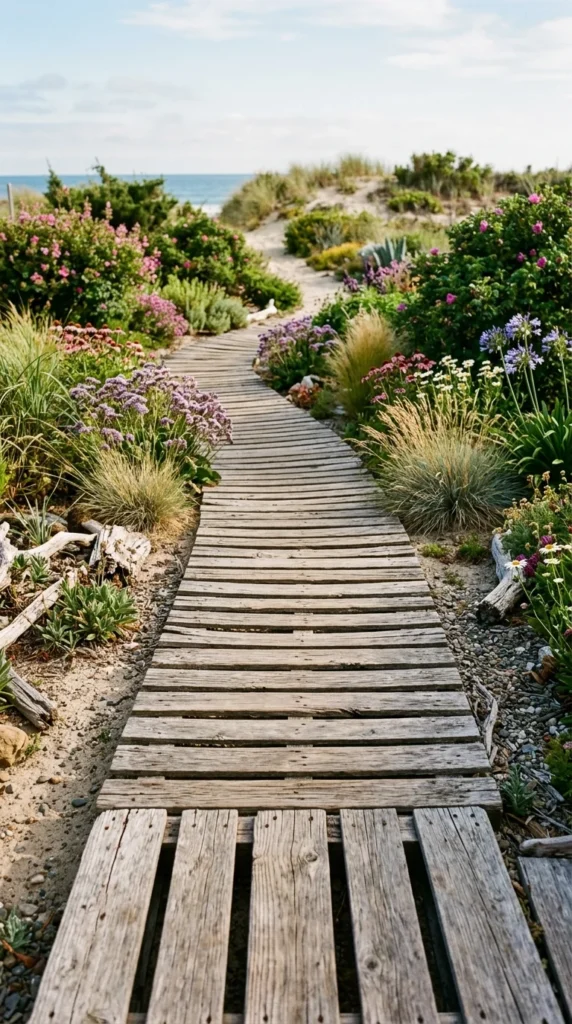
Upcycling shipping pallets is a cost-effective way to build a boardwalk-style path. This works particularly well in areas with uneven ground or poor drainage. By dismantling the pallets and laying the planks across a frame or directly on a bed of gravel, you create a sturdy, elevated surface that adds a touch of industrial-chic to your yard.
9. River Rocks
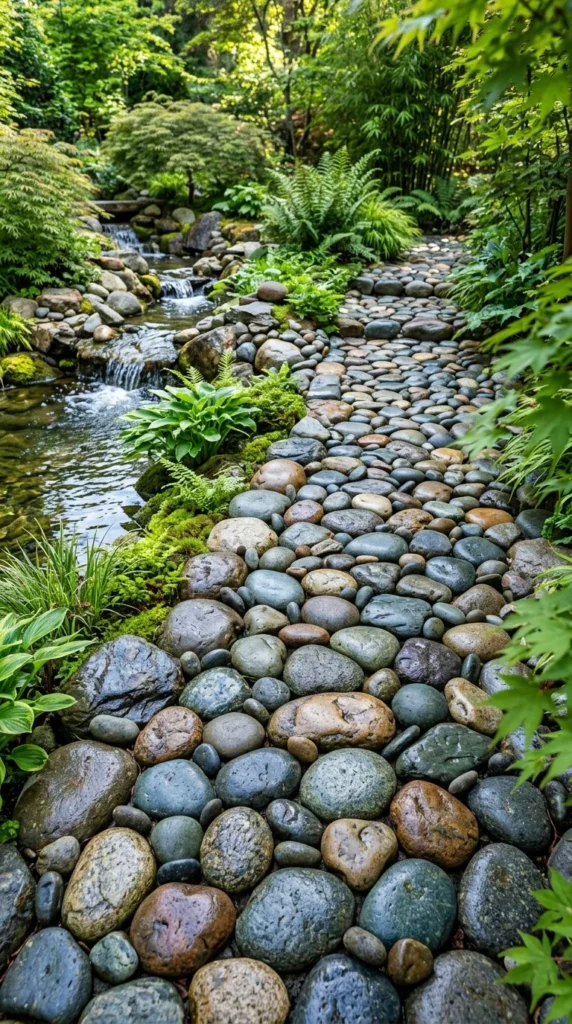
River rocks are smooth, rounded stones that come in various shades of gray, tan, and blue. When packed tightly together, they create a beautiful, textured surface. While they can be a bit uneven to walk on, they are perfect for decorative paths or areas where you want to slow down and enjoy the scenery.
10. Concrete Pavers
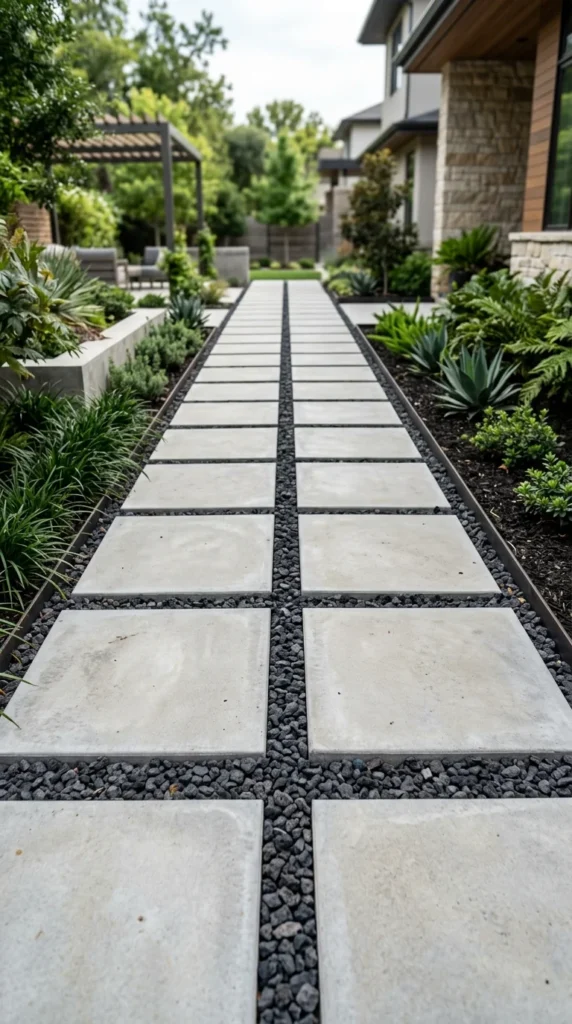
For a modern, architectural look, large-format concrete pavers are the way to go. These come in perfect squares or rectangles and provide a clean, minimalist aesthetic. You can space them out with grass or decorative pebbles in between to create a striking geometric pattern that complements contemporary home designs.
11. Cobblestones
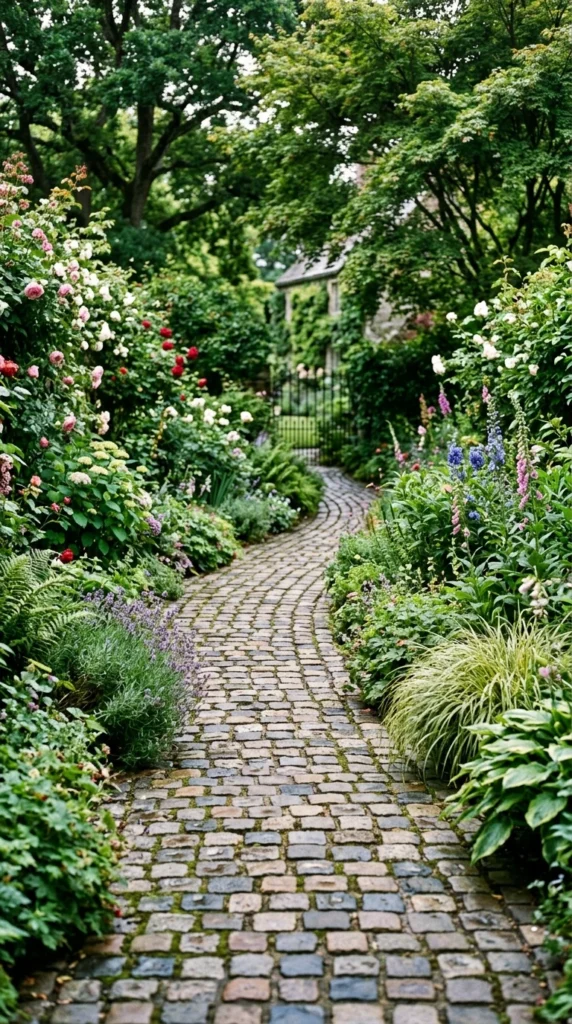
Cobblestones evoke the feeling of old European streets. While they require a bit more effort to level, the result is a incredibly durable and charming path. The small size of the stones allows you to create tight curves and intricate designs that are difficult to achieve with larger slabs.
12. Checkerboard
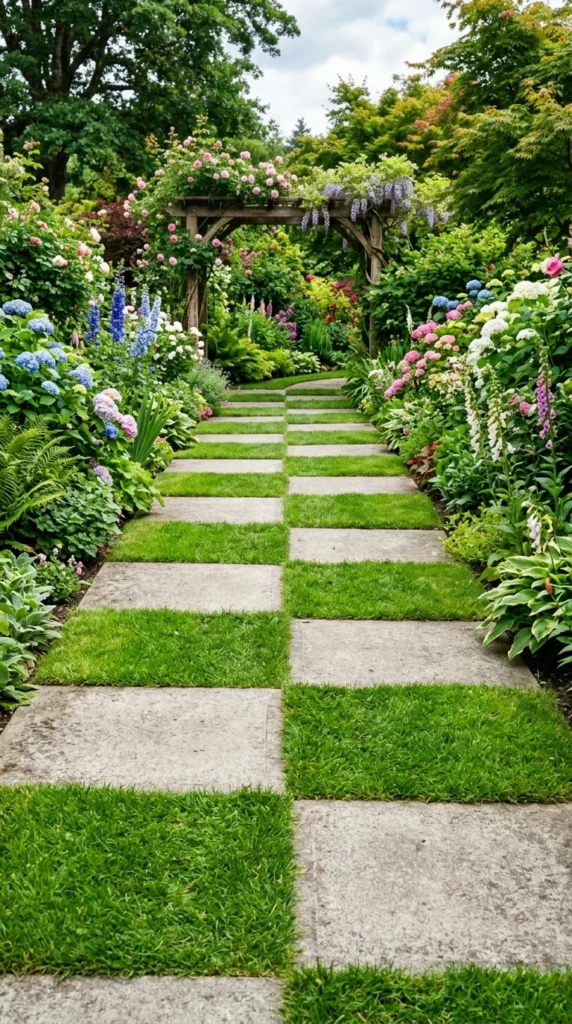
A checkerboard path is a bold design choice that adds a sense of playfulness to the yard. By alternating square pavers with squares of turf or low-growing groundcover like Irish Moss, you create a living tapestry. This style works best in flat areas where the geometry can be truly appreciated.
13. Seashells
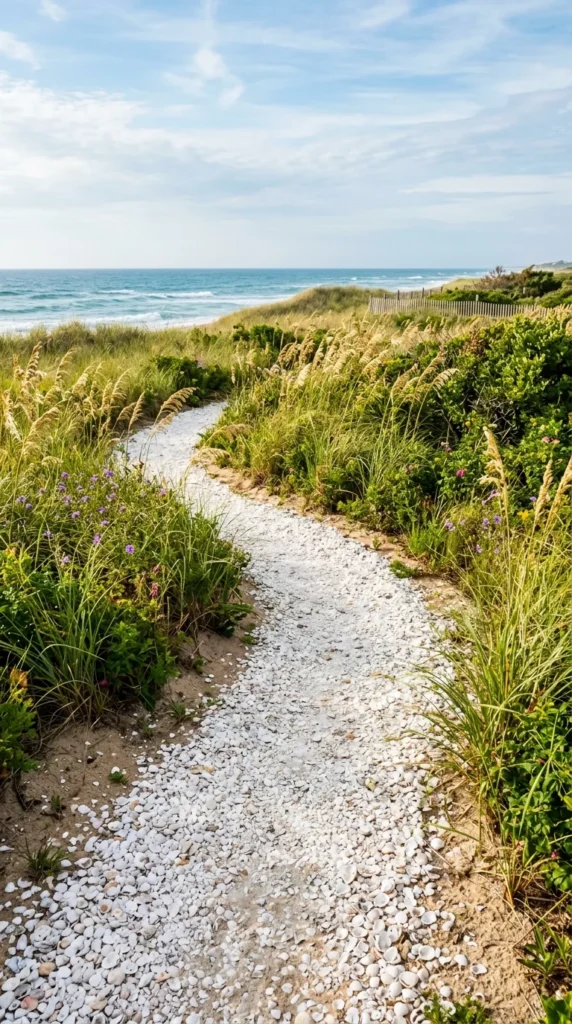
Common in coastal regions, crushed seashells offer a unique texture and a bright, reflective quality. They are sustainable and provide excellent drainage. Over time, the shells break down slightly, creating a more compact and stable walking surface. They are perfect for a beach-themed garden or a bright, sunny backyard.
14. Slate Chips
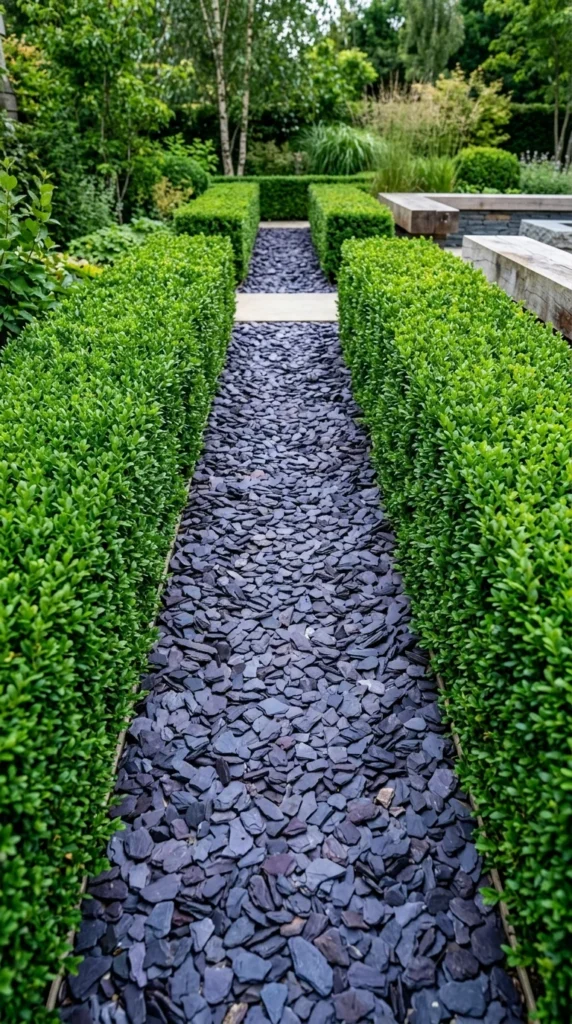
Slate chips, also known as slate mulch, provide a sleek and sophisticated look. The flat, thin pieces of stone lock together better than rounded gravel, making it easier to walk on. The dark colors of slate—ranging from charcoal to deep plum—provide a stunning contrast against green foliage and bright flowers.
15. Railway Sleepers
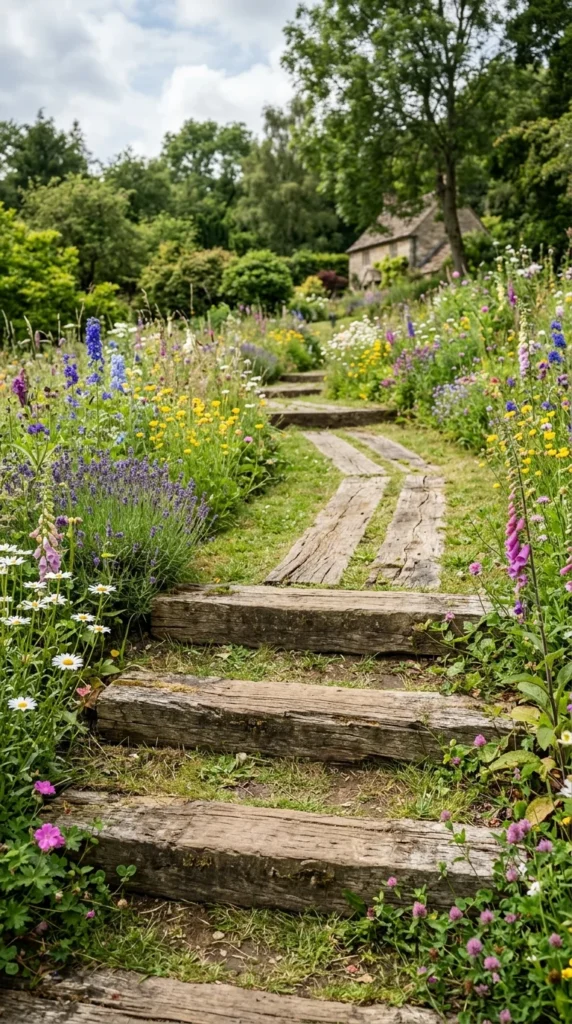
Railway sleepers (or large timber beams) are perfect for creating structural paths, especially on sloped terrain. They can be used to build wide, shallow steps or laid flat into the ground. Their heavy, chunky appearance provides a sense of permanence and strength to the garden design.
16. Stenciled Concrete
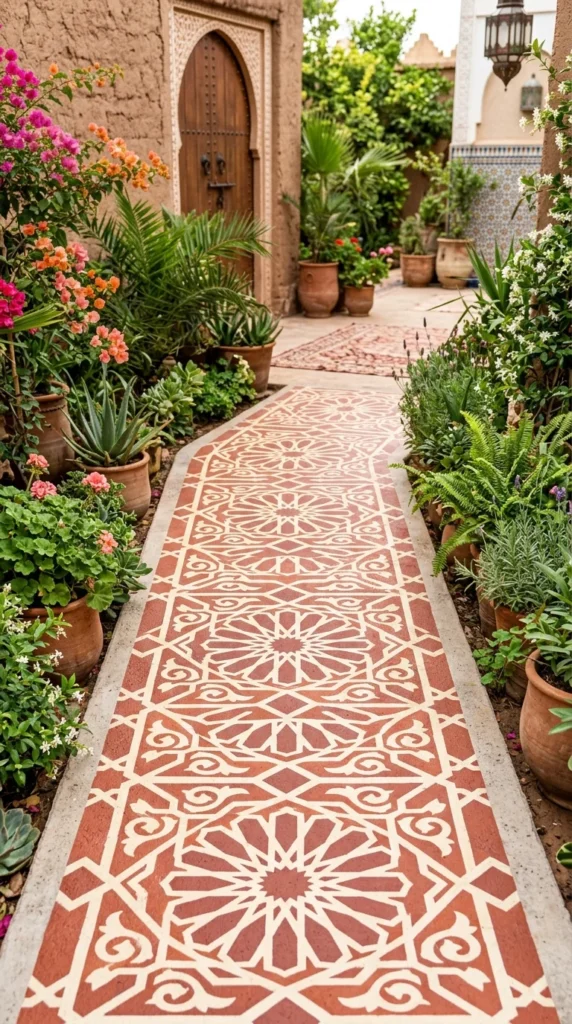
If you already have a plain concrete path, you don’t need to tear it up to add charm. Using outdoor masonry paint and large stencils, you can mimic the look of expensive tiles or bricks. This is a budget-friendly way to completely transform the “curb appeal” of your backyard without heavy construction.
17. Pea Shingle
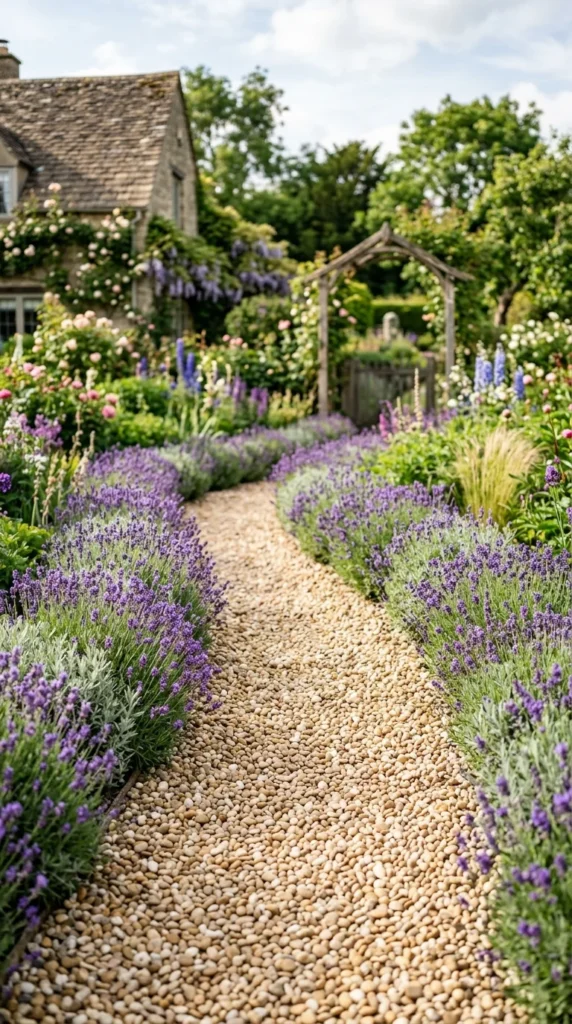
Pea shingle consists of very small, smooth stones that are comfortable enough to walk on barefoot. It has a softer, more informal look than crushed gravel and is often used in English cottage gardens. It works best when contained by a sturdy edge to prevent the small stones from migrating into the grass.
18. Bamboo Mats
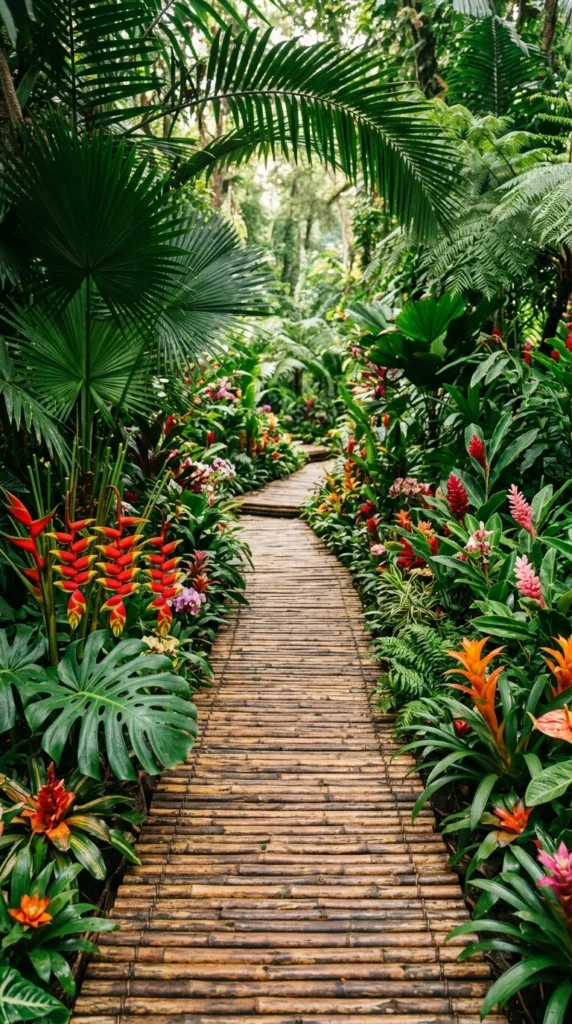
For a Zen or tropical-themed garden, bamboo mats or rolls can be laid down to create a temporary or seasonal path. It provides an organic, textured surface that blends seamlessly with exotic plantings. However, bamboo can become slippery when wet, so this is best used in dry climates or as a decorative accent.
19. Glass Bottles
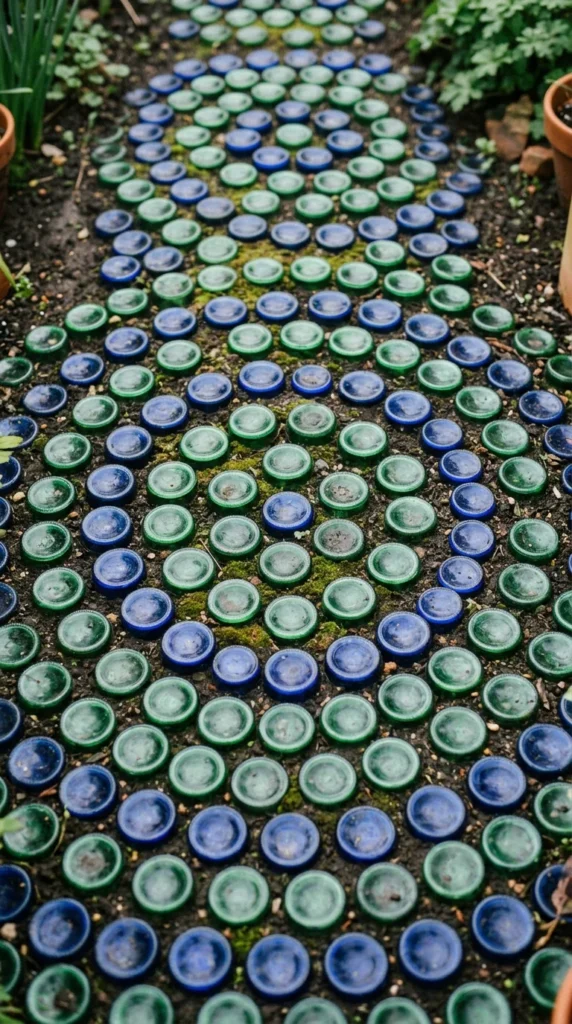
This is an eco-friendly and highly creative DIY project. By burying empty wine or soda bottles neck-down into the soil, the circular bottoms create a colorful, glowing path. When the light hits the glass, the path sparkles. It is a fantastic way to recycle and create a conversation piece in your garden.
20. Granite Sets
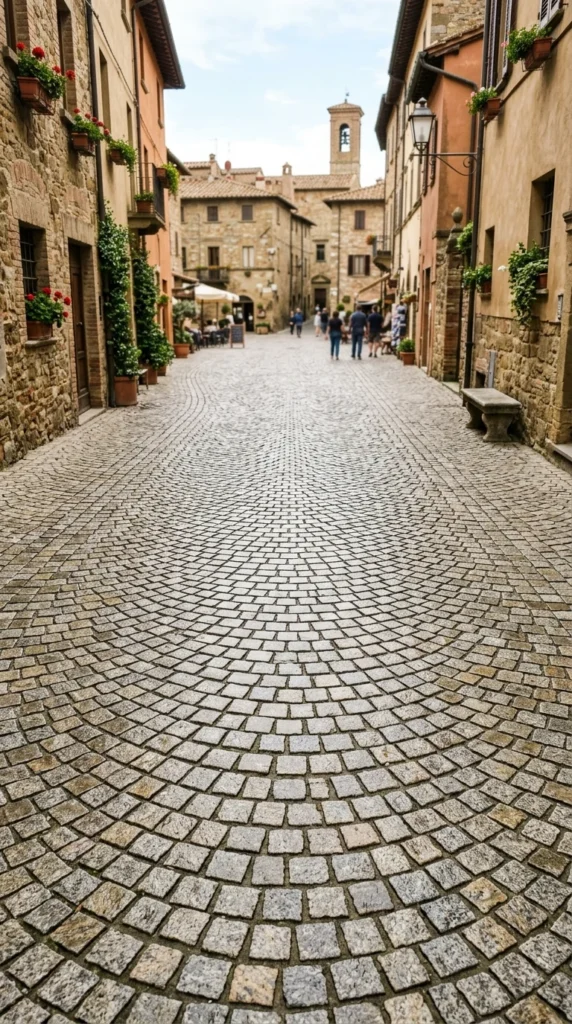
Granite sets are small, incredibly tough blocks of stone. They are often used to create fan or arc patterns. While the installation is labor-intensive because each small block must be leveled, the resulting path is virtually indestructible and adds a high-end, formal feel to any property.
21. Bark Chips
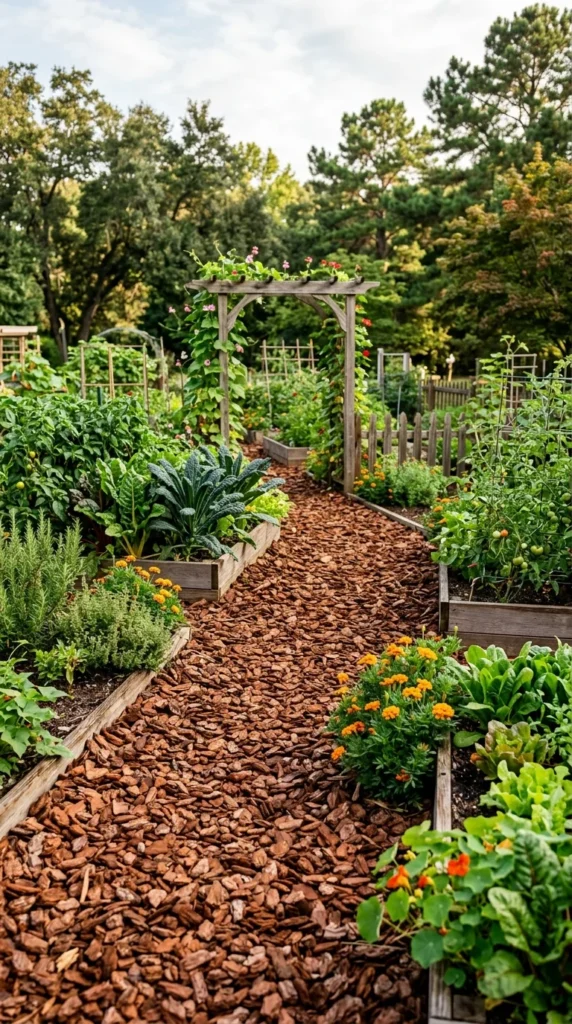
Bark chips are larger and chunkier than standard mulch. They provide a very soft, cushioned surface that is ideal for children’s play areas or informal garden trails. The deep reddish-brown color provides a warm, natural aesthetic that looks particularly beautiful in the autumn.
22. Pebble Tiles
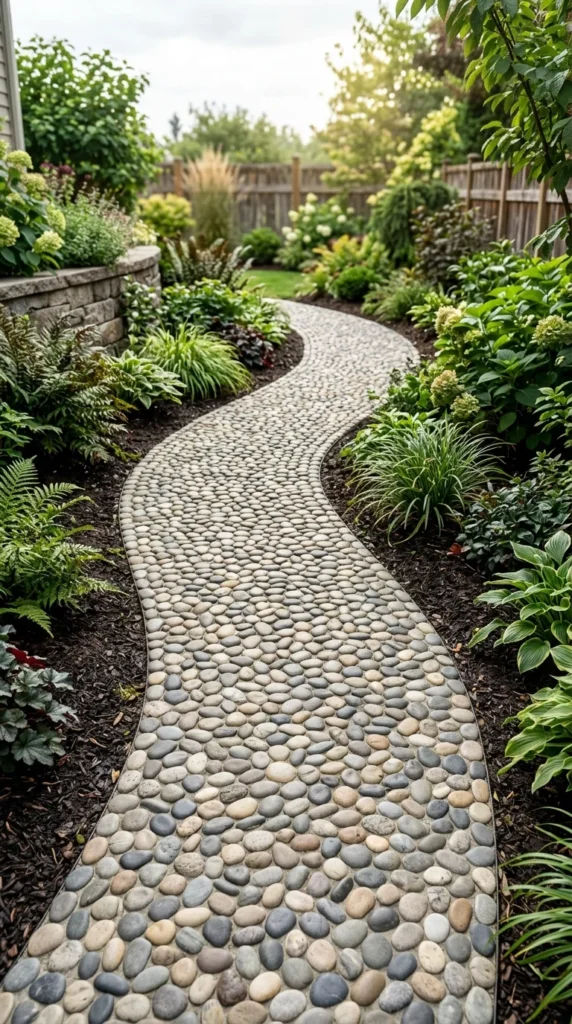
If you love the look of a pebble path but want an easier installation, pebble tiles are the answer. These are sheets of stones glued to a mesh backing, much like bathroom floor tiles. You can lay them onto a leveled sand or concrete base for a professional-looking finish with a fraction of the effort of hand-setting each stone.
23. Painted Rocks
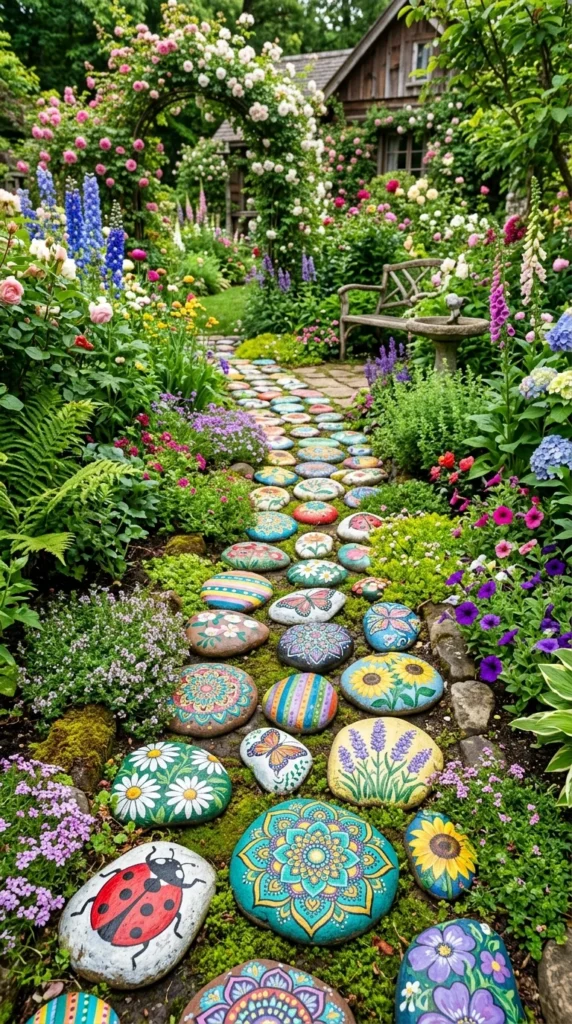
Perfect for a family project, a painted rock path adds a splash of color and whimsy. Each stone can be a unique piece of art. This idea is particularly popular for “secret gardens” or paths leading to a child’s playhouse. Use outdoor-grade acrylic paint and a clear sealant to ensure the designs survive the elements.
24. Grass Gaps
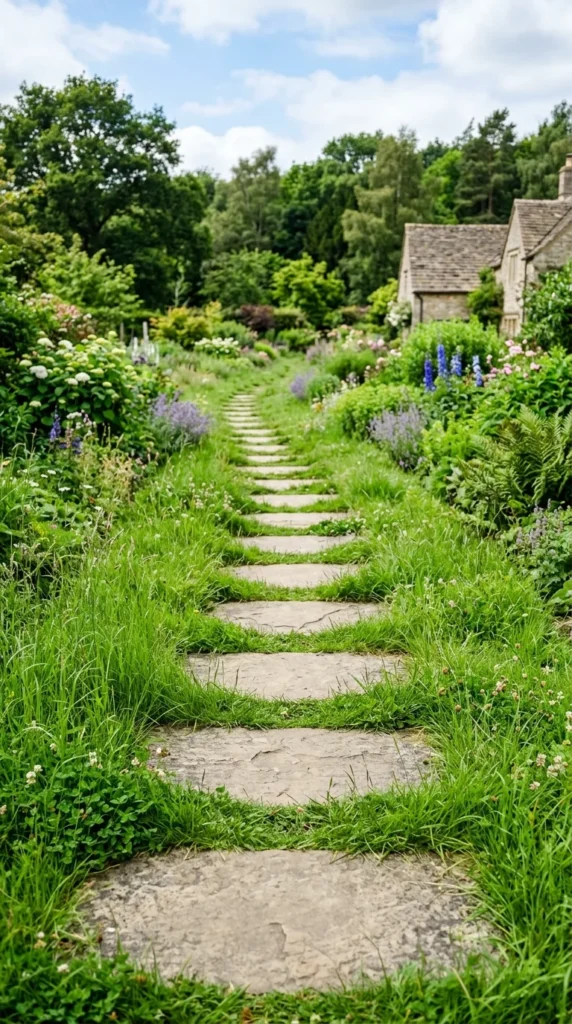
This “deconstructed” path style focuses on the negative space. Instead of filling the gaps between stones with sand or gravel, you allow the lawn to grow through. This creates a soft, integrated look that blurs the line between the hardscape and the garden. It requires a bit more maintenance (trimming the grass between the stones), but the visual payoff is worth it.
25. Terracotta Shards
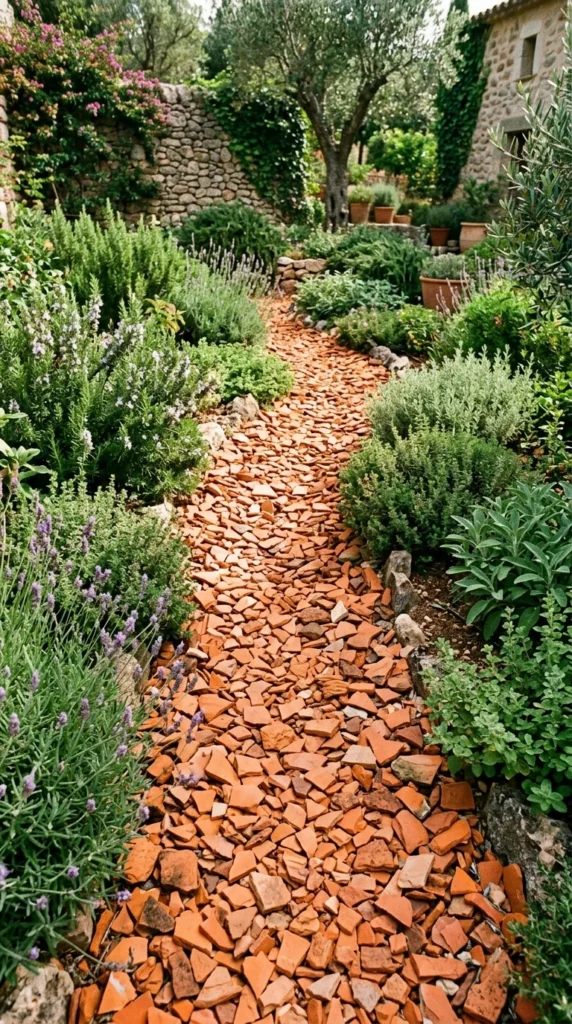
Don’t throw away your broken garden pots! Crushed terracotta shards create a stunning, bright orange path that contrasts beautifully with green herbs like rosemary and thyme. It gives the garden a Mediterranean or Southwestern vibe. Like gravel, it provides excellent drainage and a satisfying sound when walked upon.