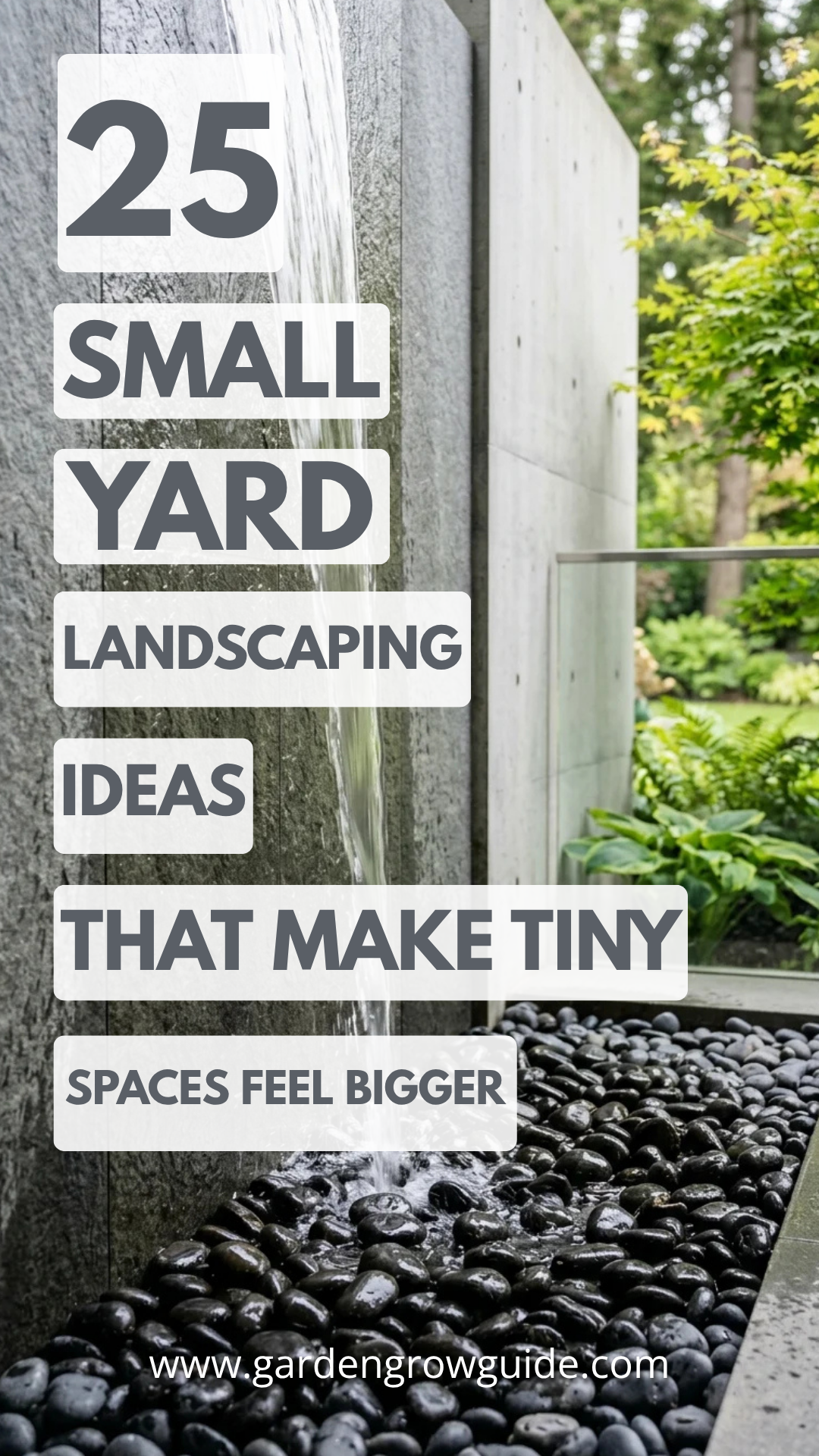
Having a small backyard doesn’t mean you have to compromise on style or functionality. In fact, limited square footage often inspires the most creative and intimate outdoor designs. By using strategic layout choices, vertical elements, and optical illusions, you can transform a cramped patch of grass into an expansive-feeling retreat. The key is to draw the eye upward, create distinct “rooms,” and choose plants that offer maximum impact without taking up too much floor space.
1. Vertical Gardens
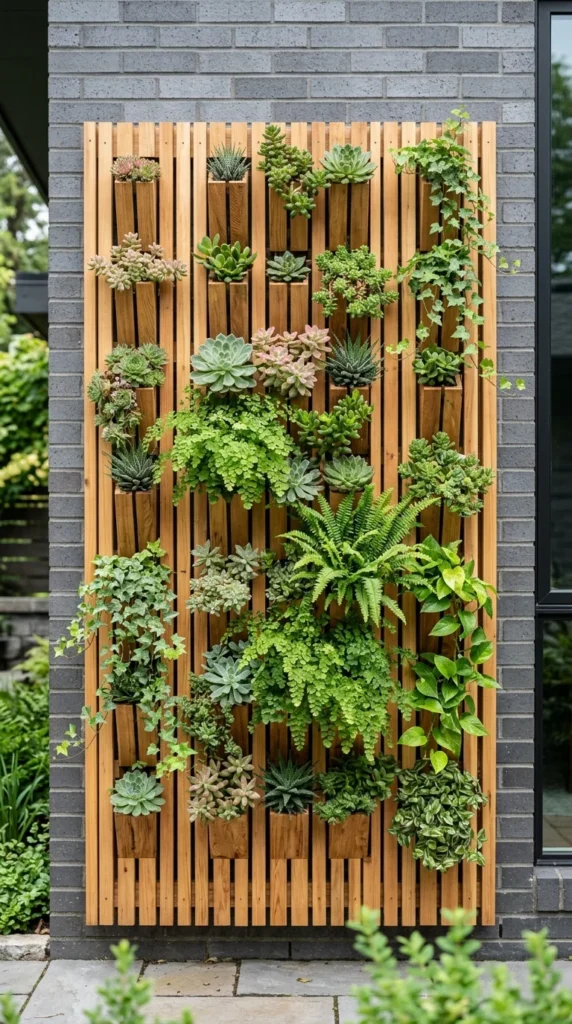
When floor space is at a premium, the only way to go is up. Vertical gardens allow you to pack a significant amount of greenery into a small footprint. You can use wall-mounted planters, repurposed wooden pallets, or sophisticated living wall systems. By covering a fence or wall in foliage, you soften the boundaries of your yard, making the perimeter feel more like a lush forest and less like a boxed-in enclosure.
2. Diagonal Pathways
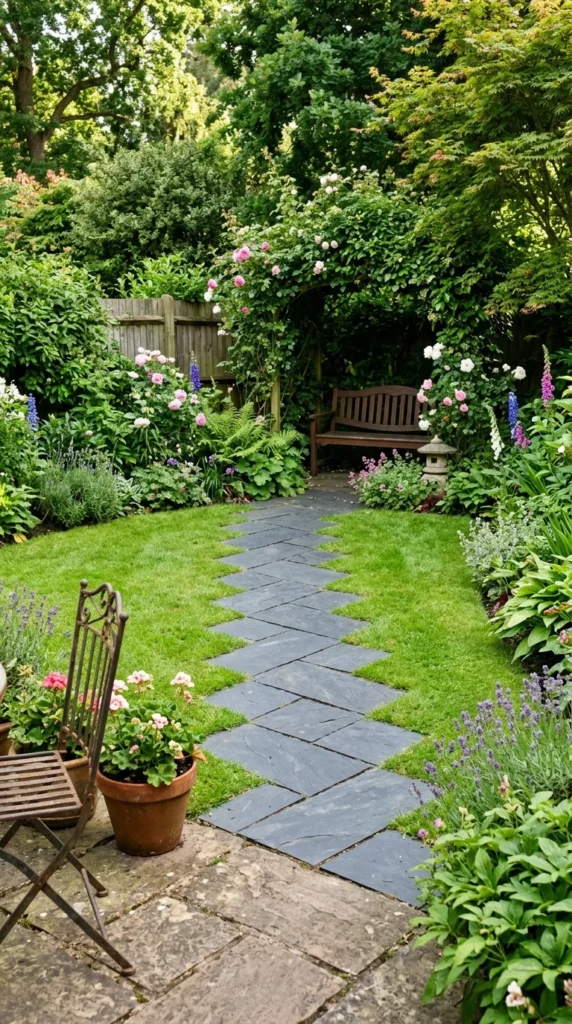
The longest distance between two points in a square or rectangular yard is the diagonal. By laying a path or decking at a 45-degree angle to the house, you lead the eye across the widest part of the space. This subtle trick of perspective makes the yard appear significantly deeper and wider than it actually is. Use large-scale pavers to reduce the number of grout lines, which further helps to declutter the visual field.
3. Mirrored Walls
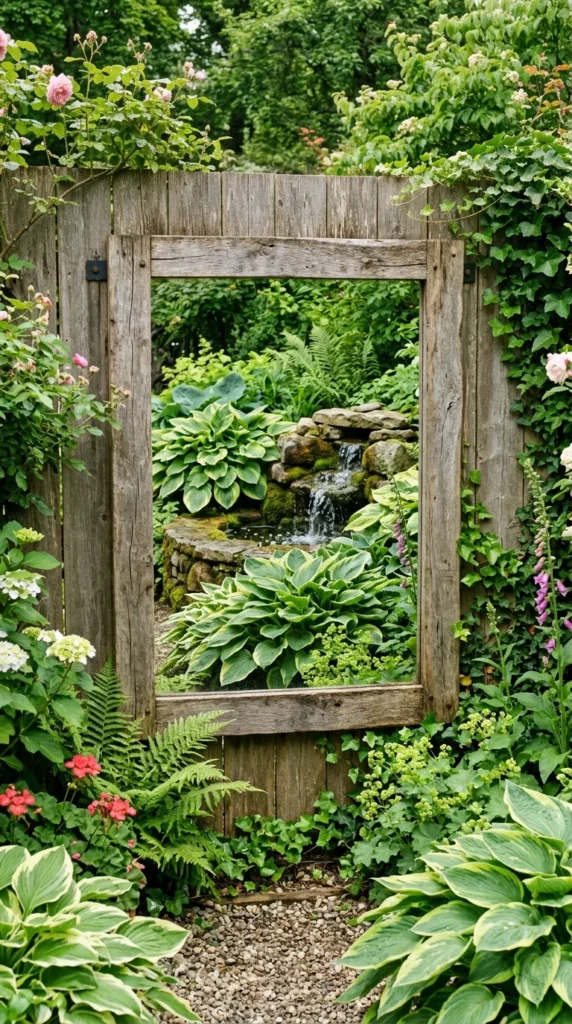
Mirrors aren’t just for interiors. A strategically placed outdoor mirror can double the perceived depth of a small garden. Whether you choose a large panel to mimic a “secret gate” or smaller decorative mirrors to bounce light into shady corners, reflections break up solid boundaries. Be sure to place mirrors where they won’t confuse birds or reflect direct, intense sunlight that could scorch plants.
4. Built-in Seating
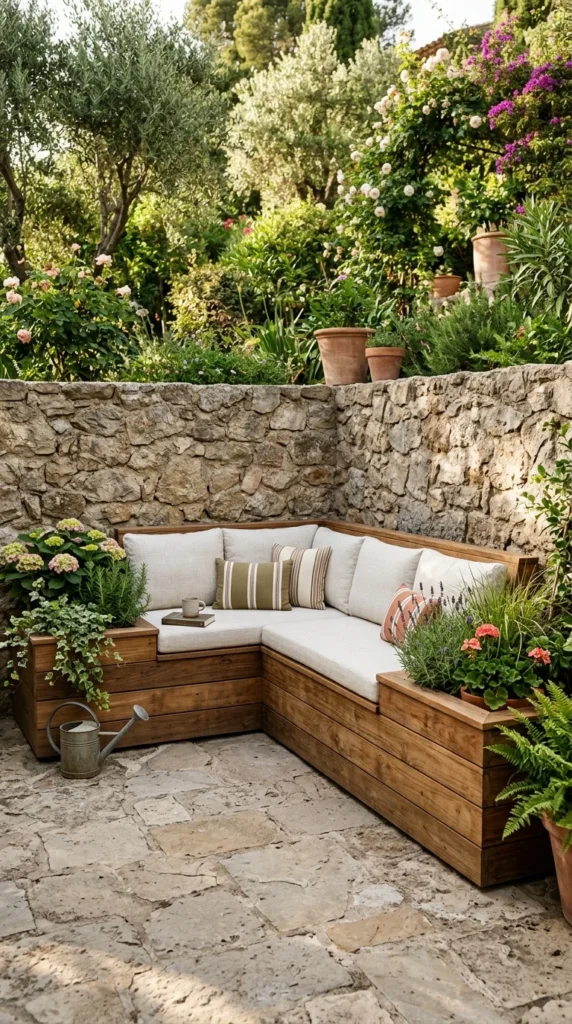
Bulky patio furniture can quickly swallow a small yard. Built-in seating, such as benches integrated into a deck or atop a retaining wall, saves valuable floor space. These “perimeters” provide plenty of room for guests while keeping the center of the yard open and airy. Many built-in benches can also double as storage units for cushions and gardening tools.
5. Tiered Planters
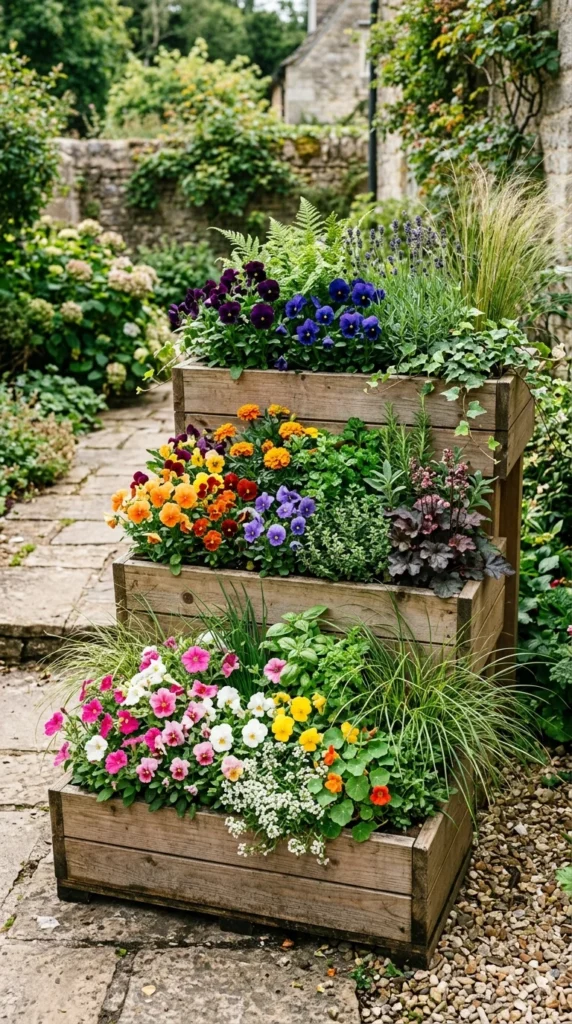
Creating different levels is a classic trick for making a space feel larger. Tiered planters allow you to display a variety of plants in a compact area. By staggering heights, you create visual layers that add complexity to the landscape. This approach is particularly effective for herb gardens or flower beds near a patio where you want to enjoy the fragrance and color at eye level.
6. Dwarf Varieties
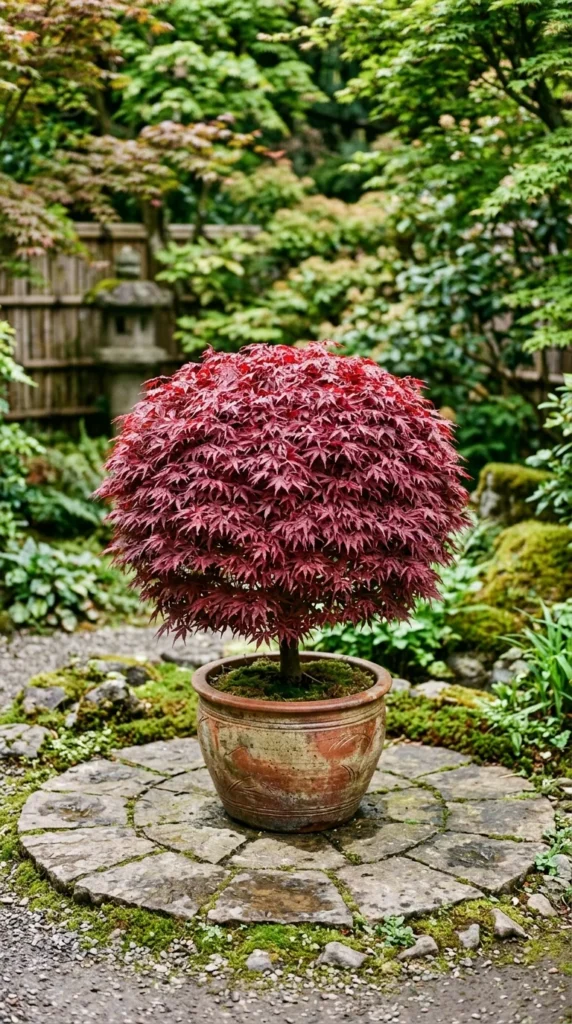
Standard-sized trees can easily overwhelm a tiny yard, blocking light and making the space feel claustrophobic. Opt for dwarf or “columnar” varieties of your favorite trees and shrubs. Many species, including Japanese Maples, Crabapples, and various conifers, have been bred to stay small. These “miniatures” provide the architectural structure of a tree without the massive canopy.
7. Hanging Baskets
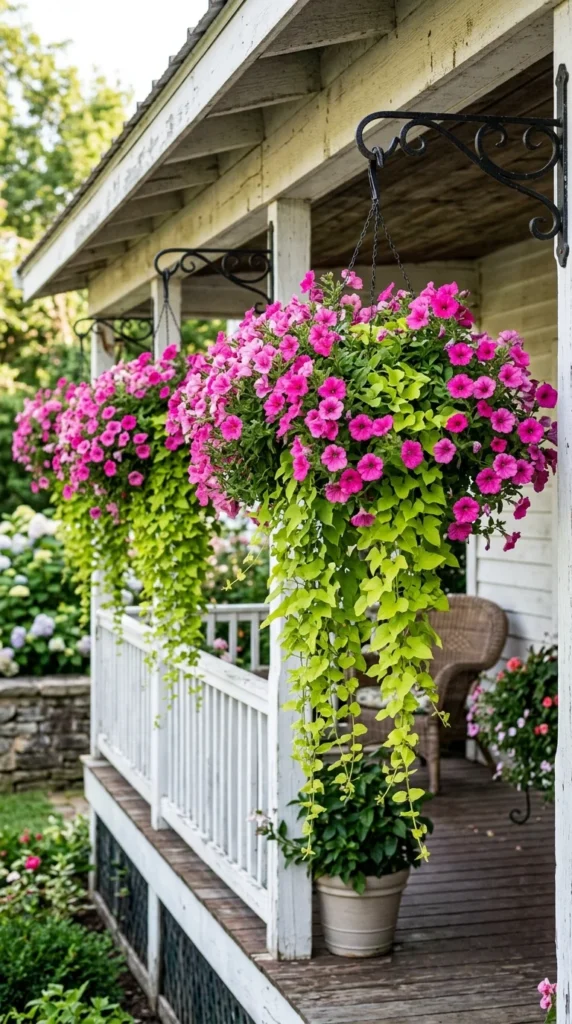
Hanging baskets utilize the “ceiling” of your outdoor space. By suspending plants from eaves, pergolas, or tree branches, you add splashes of color and texture at eye level without using any ground space. This keeps the ground clear for foot traffic or furniture while ensuring the yard feels lush and fully decorated.
8. Lighting Layers
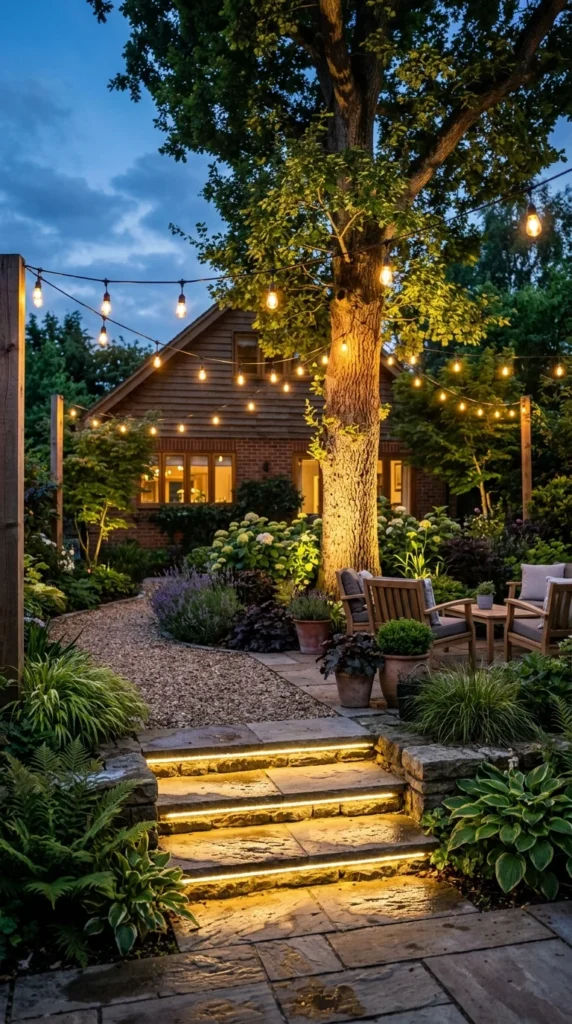
Good lighting can make a yard feel expansive after the sun goes down. Instead of one bright floodlight, use layers of light. Uplighting trees, path lights for safety, and string lights for ambiance create a sense of depth. When the back of the yard is softly lit, the boundaries recede into the shadows, making the space feel like it goes on forever.
9. Monochromatic Palette
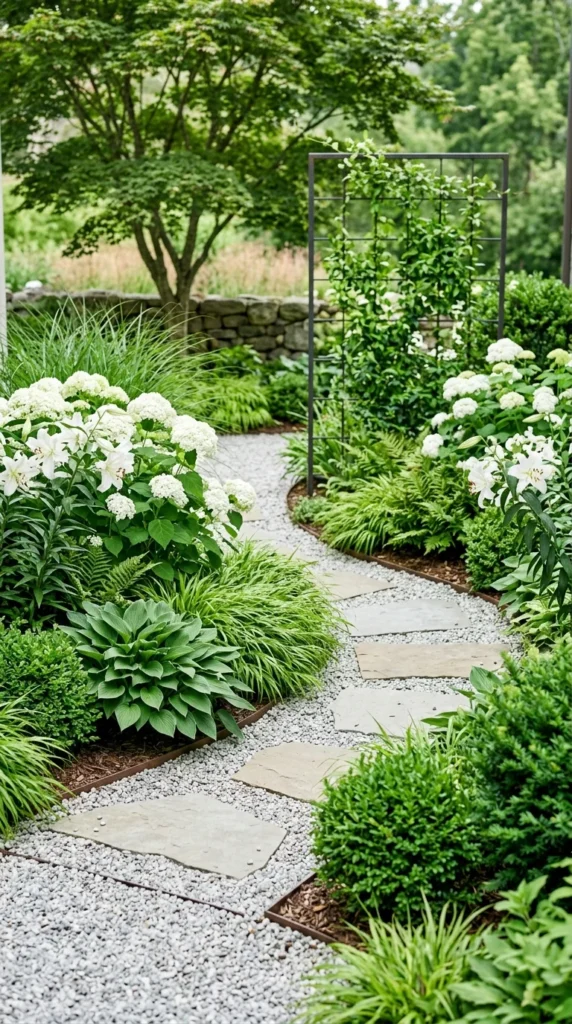
A riot of many different colors can make a small space feel cluttered and chaotic. Using a monochromatic or limited color palette creates a sense of harmony and continuity. White flowers and light-colored foliage are particularly effective as they “glow” in low light, making the yard feel brighter and more open. Stick to two or three colors to keep the design cohesive.
10. Pocket Patios
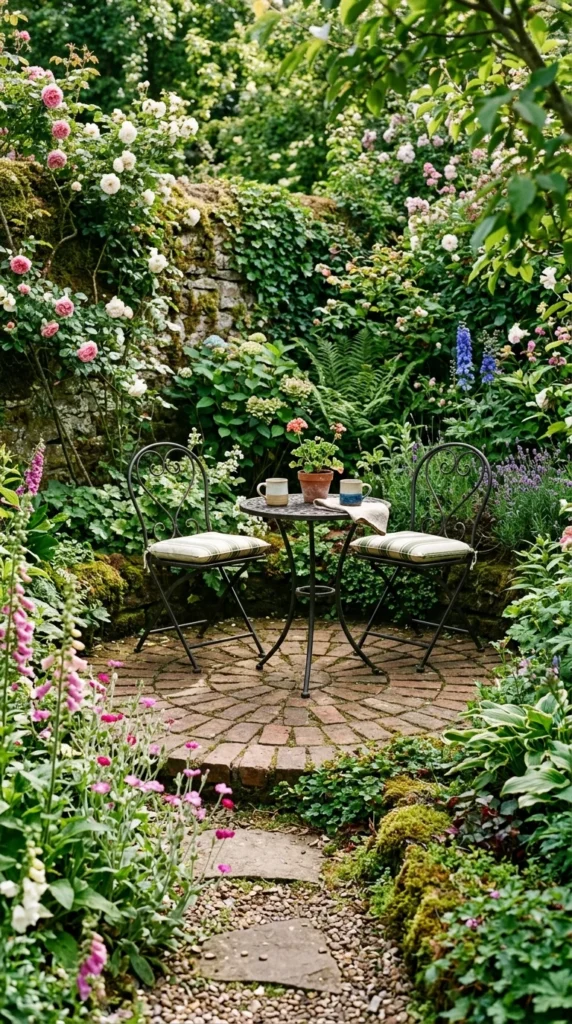
If you don’t have room for a massive deck, create a “pocket patio.” This is a small, dedicated area for a specific activity, like a morning coffee spot or a reading nook. By carving out a distinct zone for a small table and chairs, you give the yard a sense of purpose and make the surrounding greenery feel like a private sanctuary.
11. Water Features
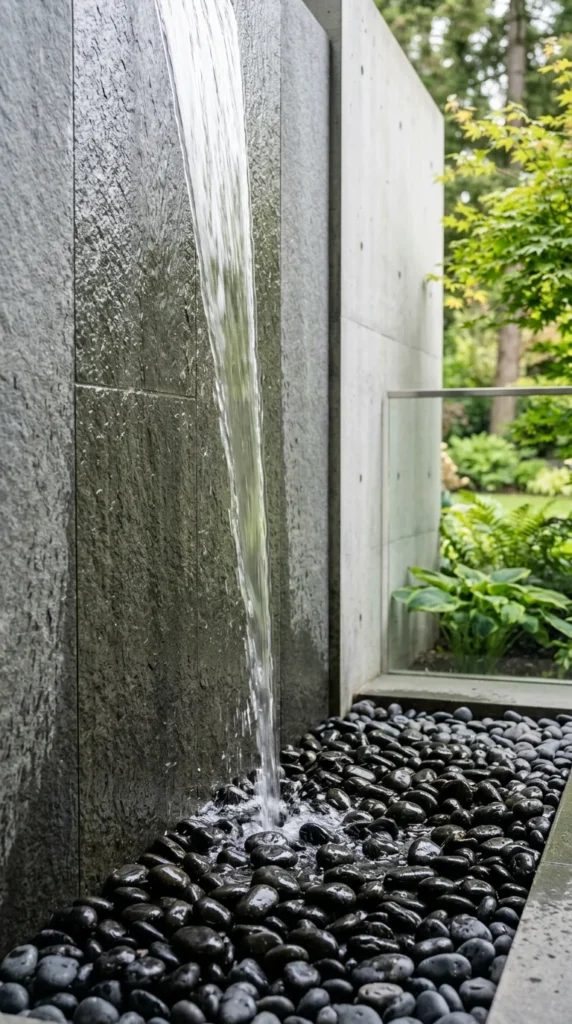
The sound of trickling water is incredibly relaxing, but it also serves a functional purpose in small yards: it masks neighborhood noise. A wall-mounted fountain or a small bubbling urn takes up very little space but adds a sense of luxury and movement. The reflection of light on the water’s surface also adds a bright, shimmering quality that opens up the area.
12. Container Clusters
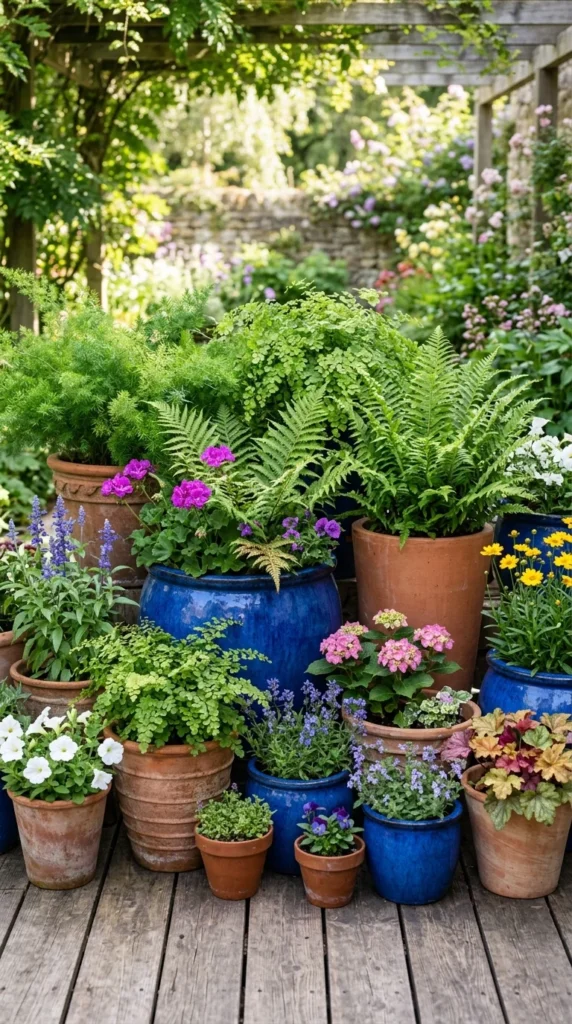
Instead of scattered pots, group your containers into clusters. This creates a focal point and leaves the rest of the space clear. Mix and match different heights and shapes of pots to create a mini-landscape. Container gardening also allows you to move plants around to find the best light or to clear space for a gathering.
13. Trellis Screens
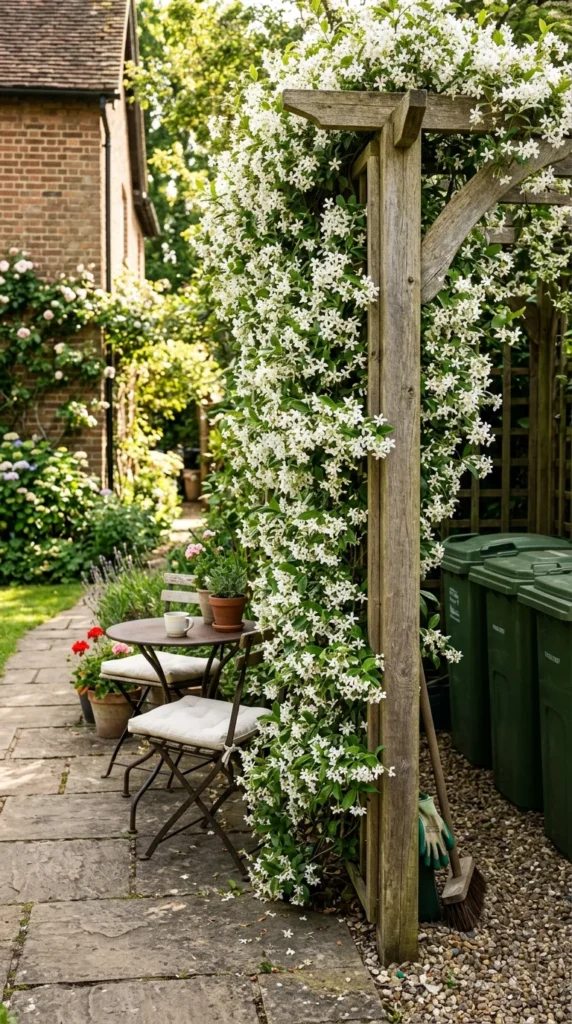
Trellises are perfect for creating “walls” without the weight of a solid fence. They provide privacy and a place for climbing plants to grow while allowing light and air to pass through. Using a trellis to screen off a less attractive part of the yard (like a compost bin or AC unit) helps keep the focus on the beautiful elements of the garden.
14. Low-Profile Furniture
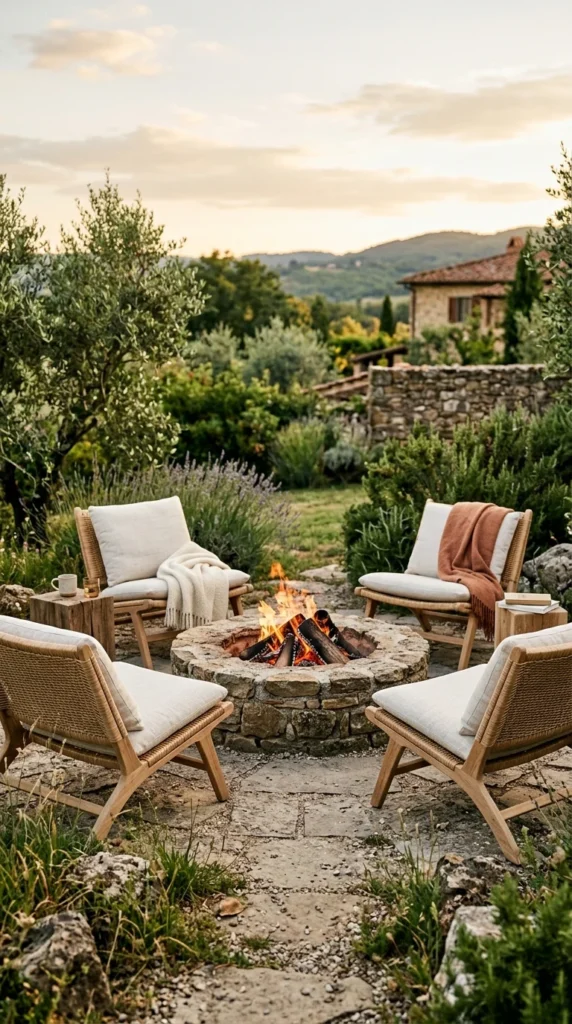
Furniture that sits low to the ground keeps the sightlines open. High-backed chairs and bulky tables can act as visual roadblocks. By choosing low-profile sofas, chairs, and coffee tables, you maintain an unobstructed view across the yard, which trickles the brain into thinking the area is larger.
15. Garden Zoning
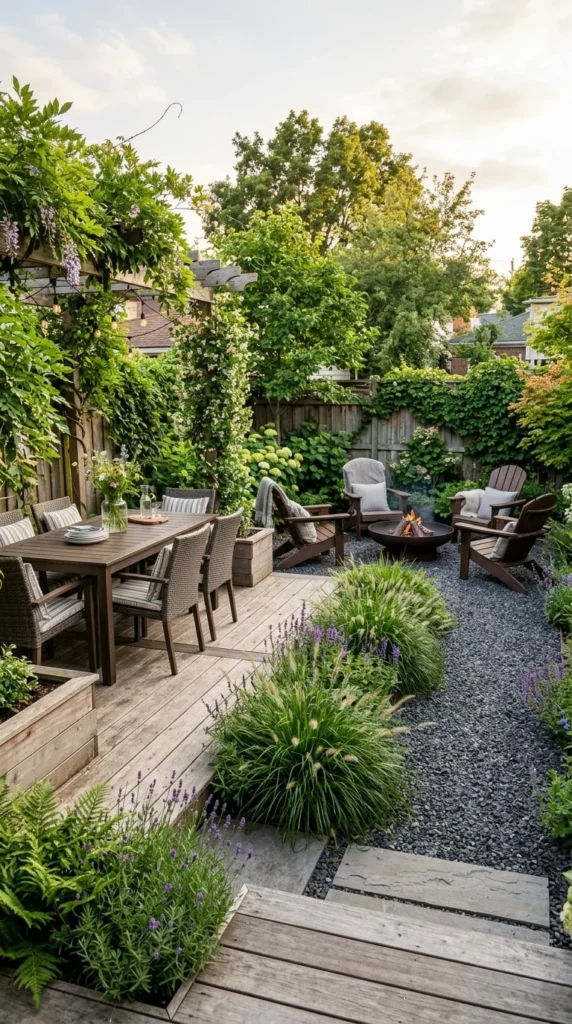
Even the smallest yard can be divided into “zones.” Use different materials—like a transition from wood decking to gravel—or low hedges to define areas for dining, lounging, or gardening. Zoning creates a journey through the space; when you have to move from one “room” to another, the yard feels much more substantial.
16. Synthetic Turf
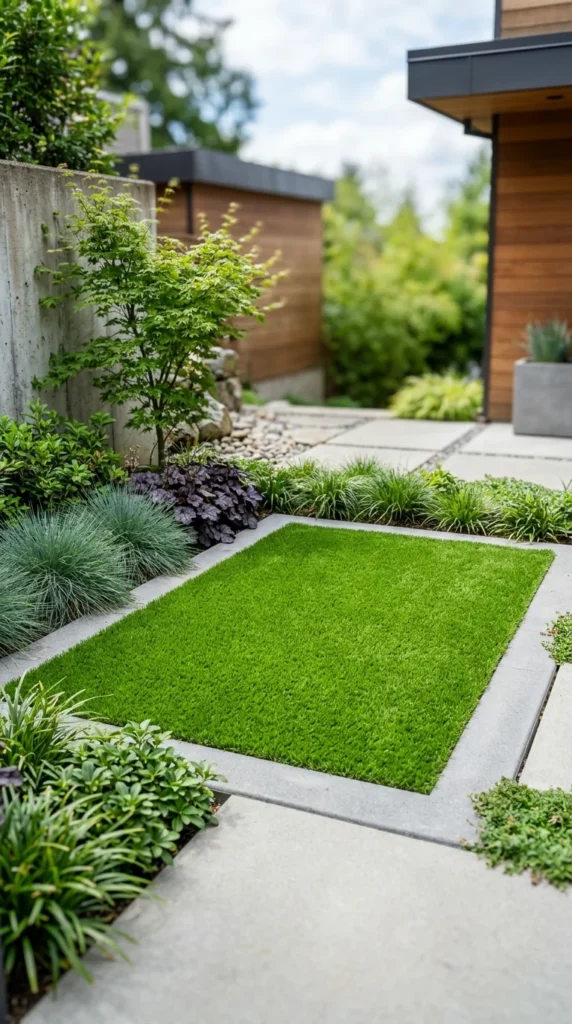
In very small spaces, real grass can be difficult to maintain and often looks patchy. High-quality synthetic turf stays perfectly green and manicured year-round with zero maintenance. It provides a clean, consistent color that acts as a neutral “rug” for the rest of your landscaping, helping the yard look tidy and organized.
17. Floating Decks
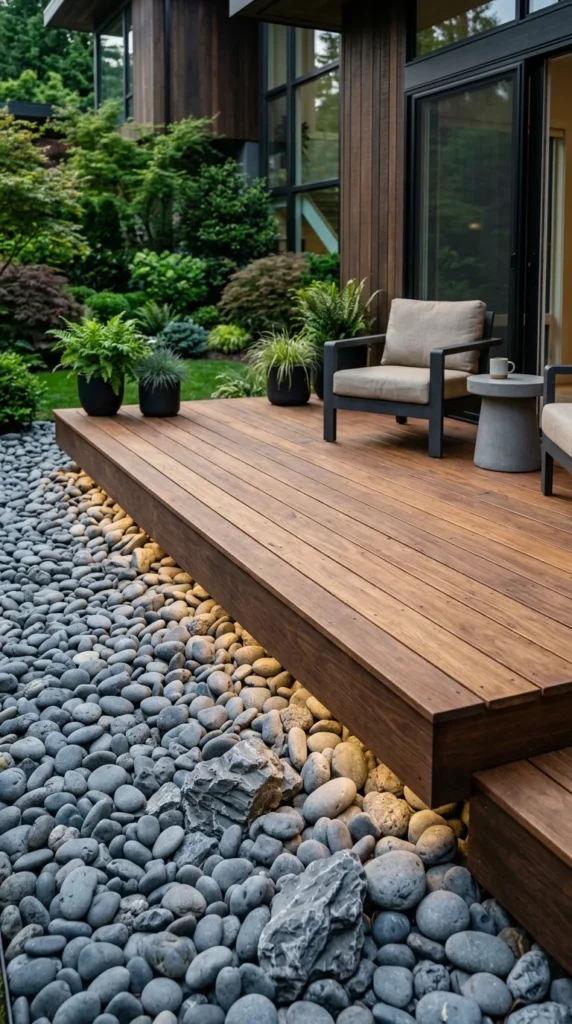
A floating deck is a platform built just slightly above the ground without visible supports. This creates a “weightless” look that is much less imposing than a traditional raised deck. The shadow line underneath the deck adds depth, and the level surface provides a stable area for furniture without the need for heavy foundations.
18. Climbing Vines
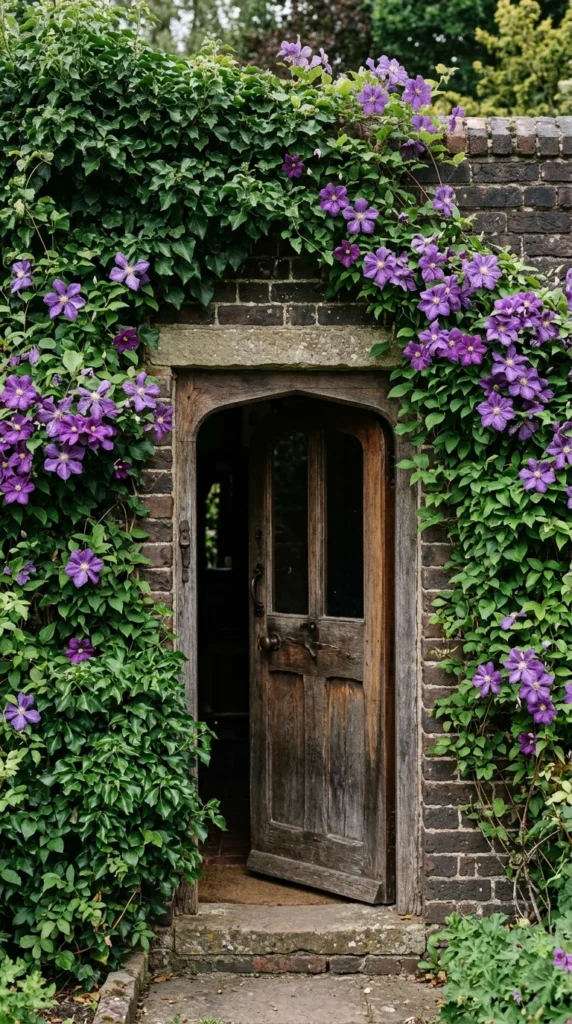
Vines are the ultimate space-savers. They provide a massive amount of leaf surface area while occupying only a few inches of soil at the base. Species like Clematis, Wisteria, or Star Jasmine can cover an entire wall or fence, providing a lush backdrop that makes the yard feel like a hidden grotto.
19. Gravel Patios
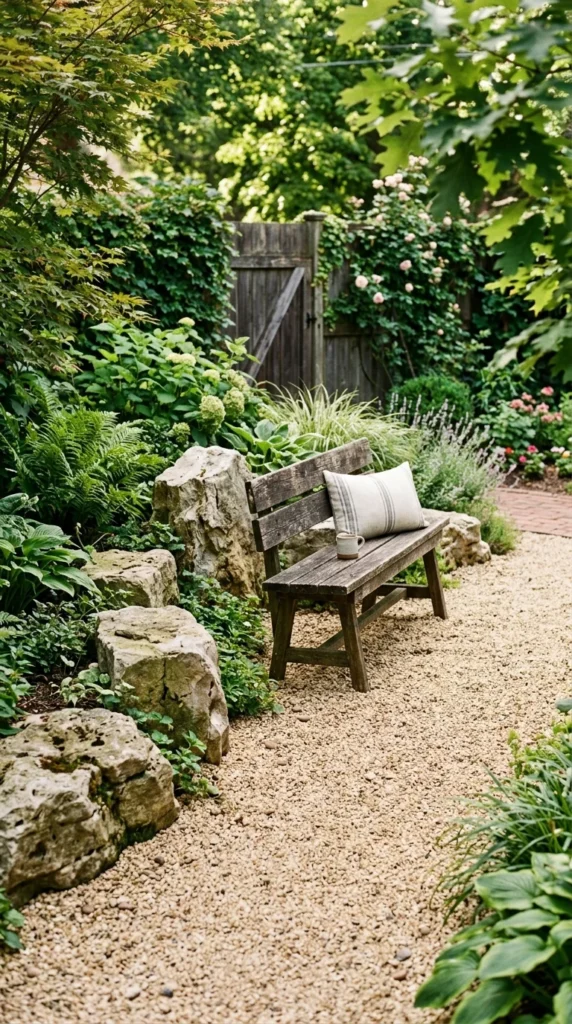
Gravel is an excellent choice for small yards because it is permeable, affordable, and flexible. Unlike a rigid concrete patio, gravel can flow into any shape or corner. It provides a satisfying crunch underfoot and creates a relaxed, Mediterranean vibe. Using light-colored gravel helps reflect light, brightening up the entire space.
20. Herb Spirals
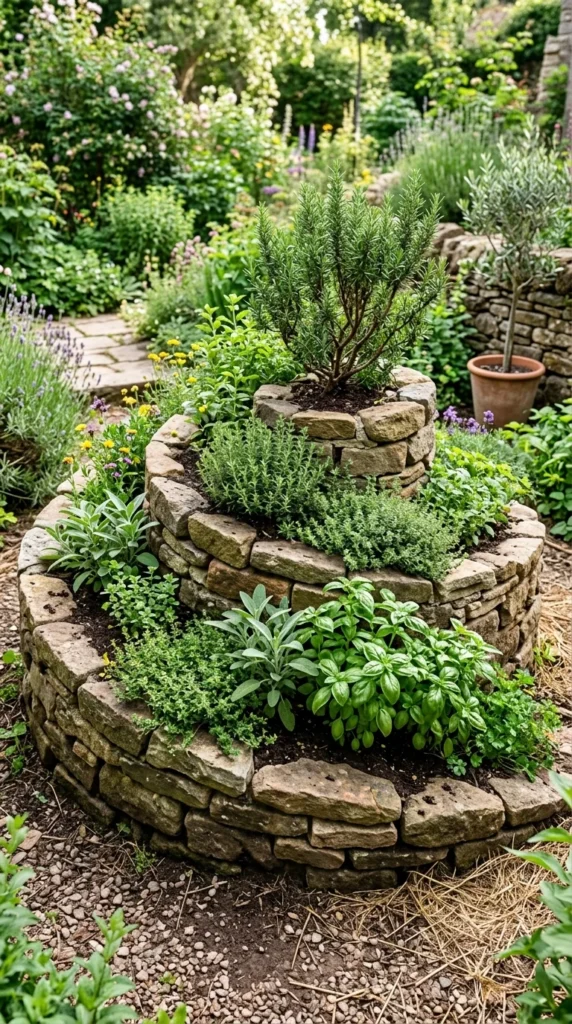
An herb spiral is a vertical gardening technique that uses a winding stone or brick path to create different microclimates for herbs. It allows you to grow a wide variety of plants in a footprint of only a few feet. It adds architectural interest and height to the garden while keeping your culinary essentials within easy reach.
21. Window Boxes
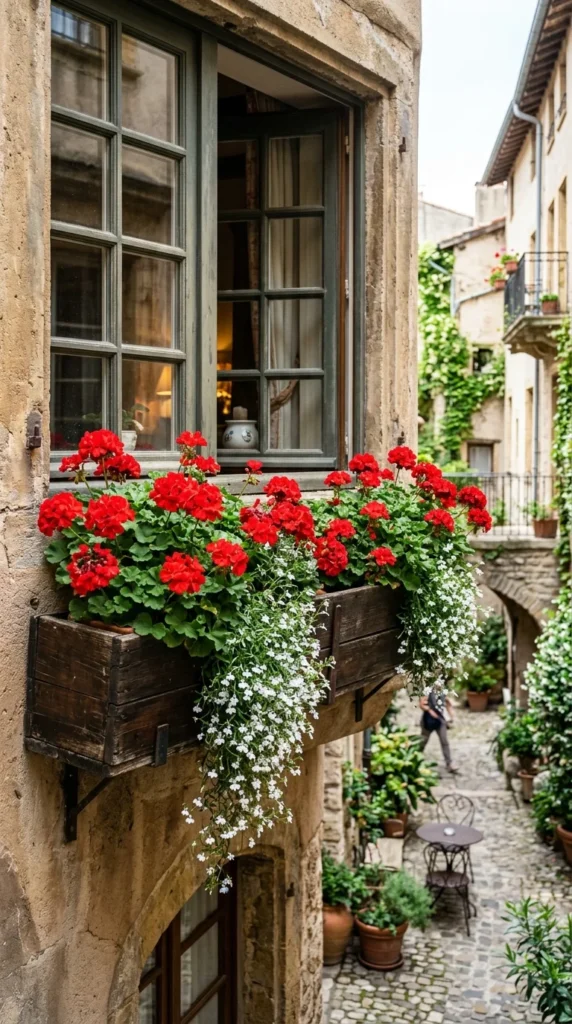
If you have no ground space at all, window boxes are your best friend. They bring the garden right up to the house. By planting intensely colored flowers in window boxes, you draw the eye toward the architecture of the home, making the exterior feel integrated with the landscape.
22. Pergola Accents
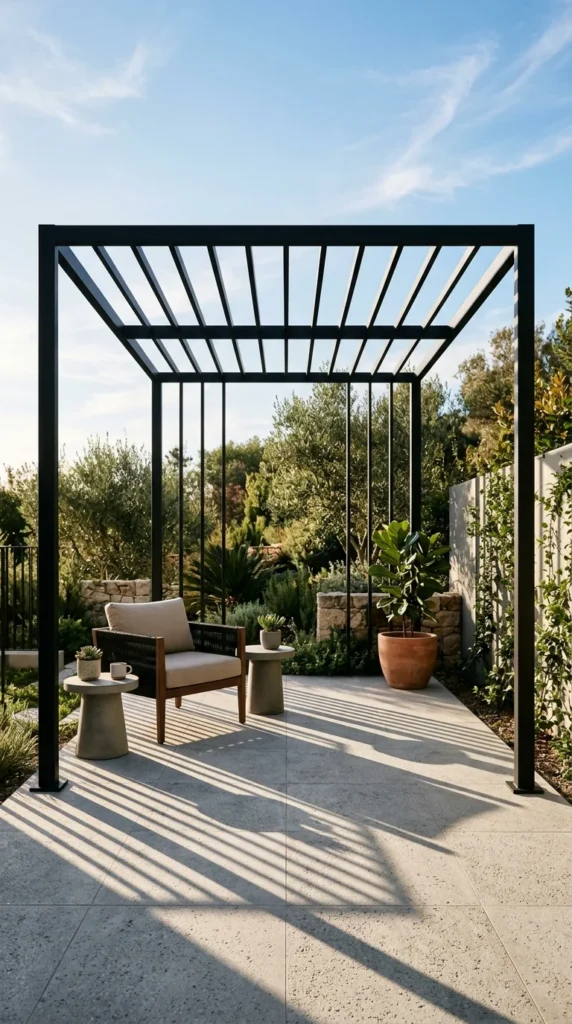
A pergola provides a sense of enclosure and “roofing” without blocking the sky. It defines an outdoor room and provides a structure for lights and climbing plants. In a small yard, a pergola can create a sense of scale, making the outdoor space feel like a legitimate extension of the indoor living area.
23. Foldable Furniture
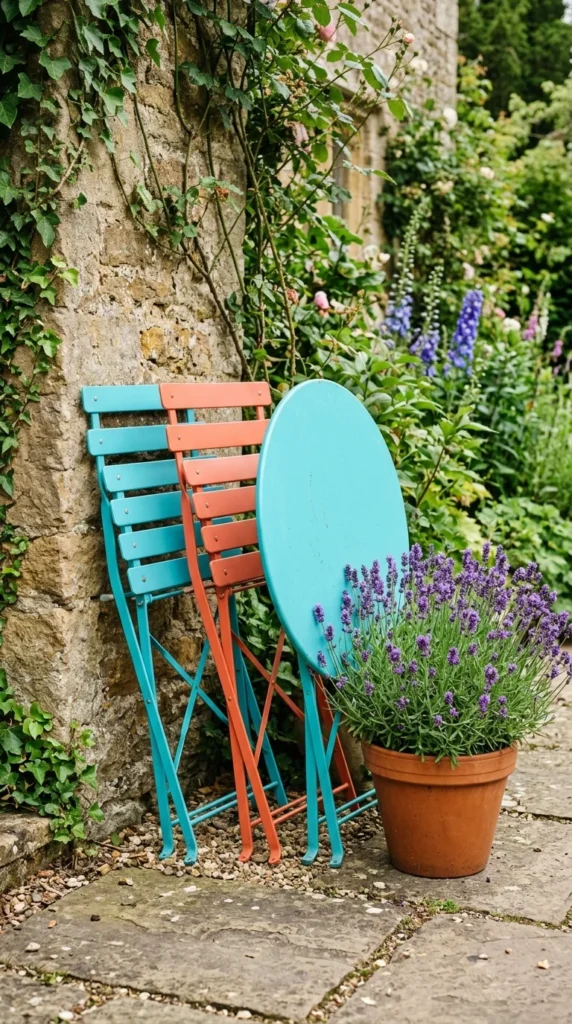
Flexibility is key in tiny spaces. Foldable or stackable furniture allows you to change the configuration of your yard in seconds. If you need space for a yoga session or a gardening project, you can simply tuck the chairs away. Look for high-quality metal or teak options that are both durable and stylish.
24. Bold Textures
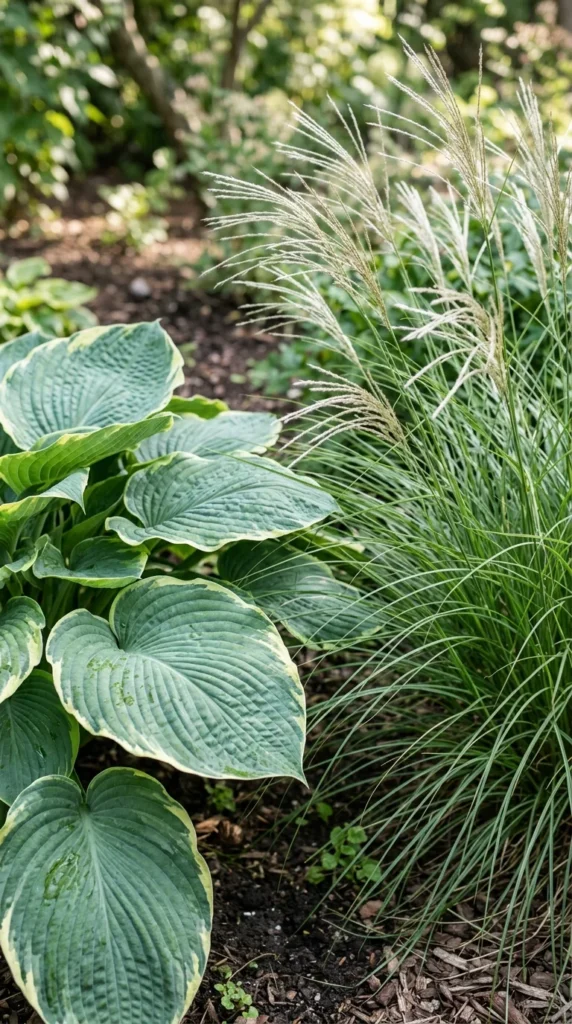
Using plants with large, bold leaves (like Hostas or Elephant Ears) next to plants with fine, delicate textures (like Ferns or Japanese Forest Grass) creates visual contrast. This contrast adds “visual weight” and complexity to the garden. When there is a lot to look at in terms of texture, the brain perceives the space as being more intricate and larger than it is.
25. Hidden Storage
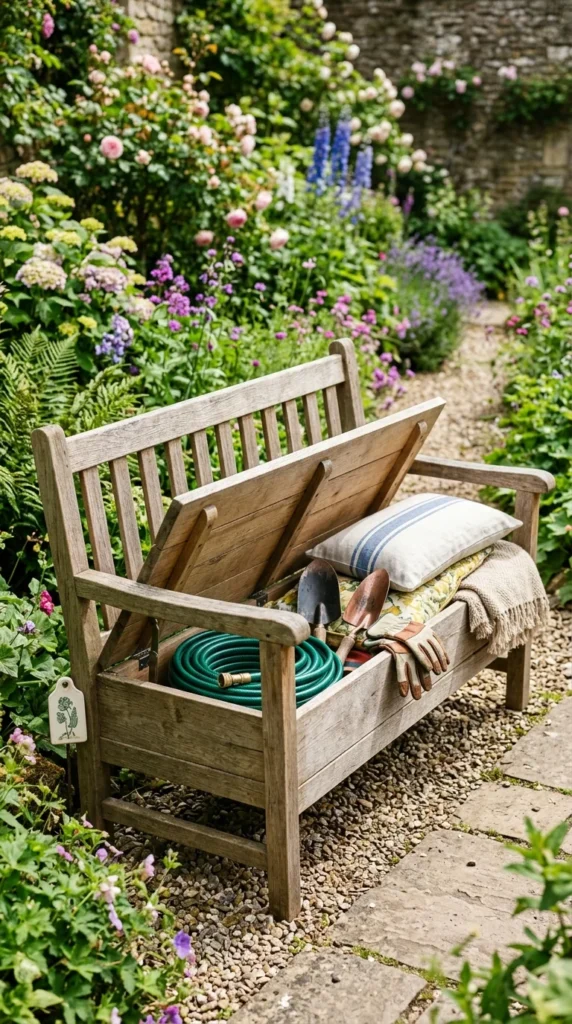
Clutter is the enemy of a small space. Every tool, hose, or stray toy makes a yard feel smaller. Incorporate hidden storage wherever possible—under benches, inside hollow “boulder” covers, or in slim-line sheds that lean against the house. Keeping the visual field clear of clutter ensures that the focus remains on the beautiful landscaping elements.