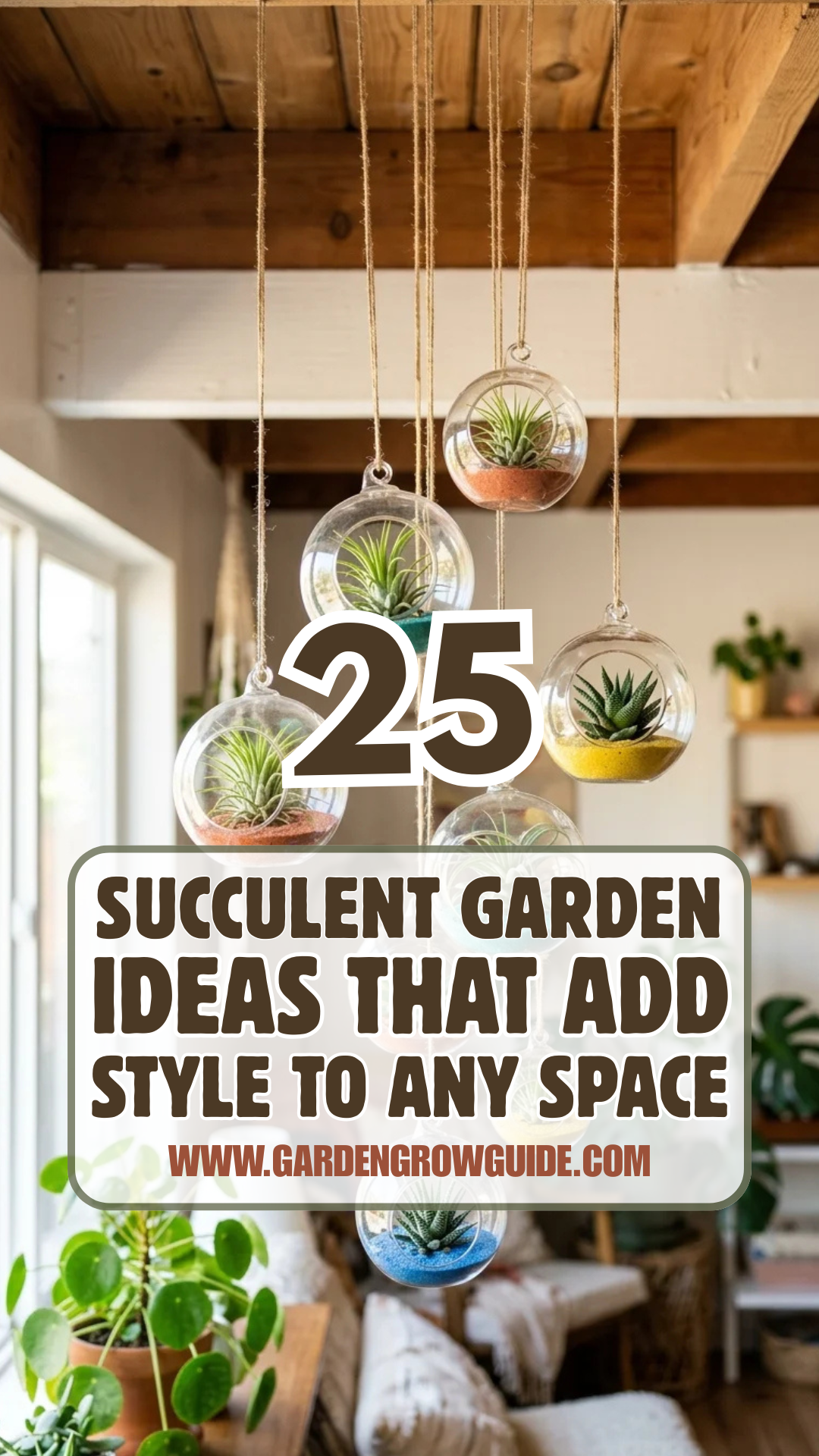
Succulents have revolutionized interior and exterior design with their architectural shapes, vibrant colors, and remarkably low-maintenance nature. These resilient plants store water in their fleshy leaves, allowing them to thrive in conditions where other plants might falter. Whether you have a sprawling backyard or a tiny studio apartment, succulent gardens offer a versatile way to introduce nature into your living space. From vertical displays to repurposed vintage items, the possibilities for creative arrangements are endless.
1. Terrarium Bowls
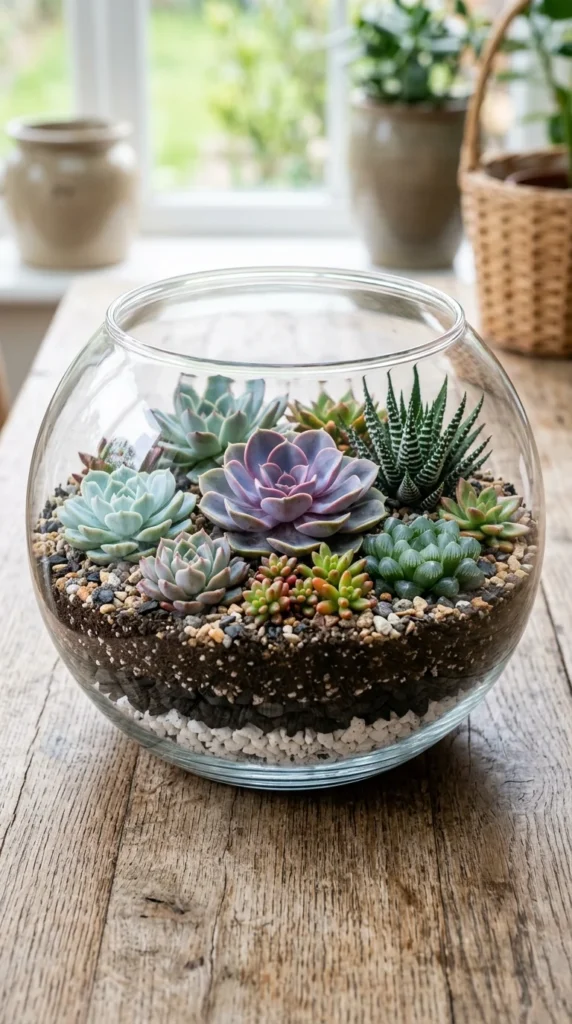
Glass terrariums are a classic choice for indoor succulent gardening. The transparency of the bowl allows you to showcase the geological beauty of soil layers, charcoal, and drainage pebbles. When creating a terrarium, it is crucial to use a “thriller, filler, and spiller” approach—choosing one focal point plant, several medium-sized fillers, and a trailing variety to drape over the edge.
2. Vertical Walls
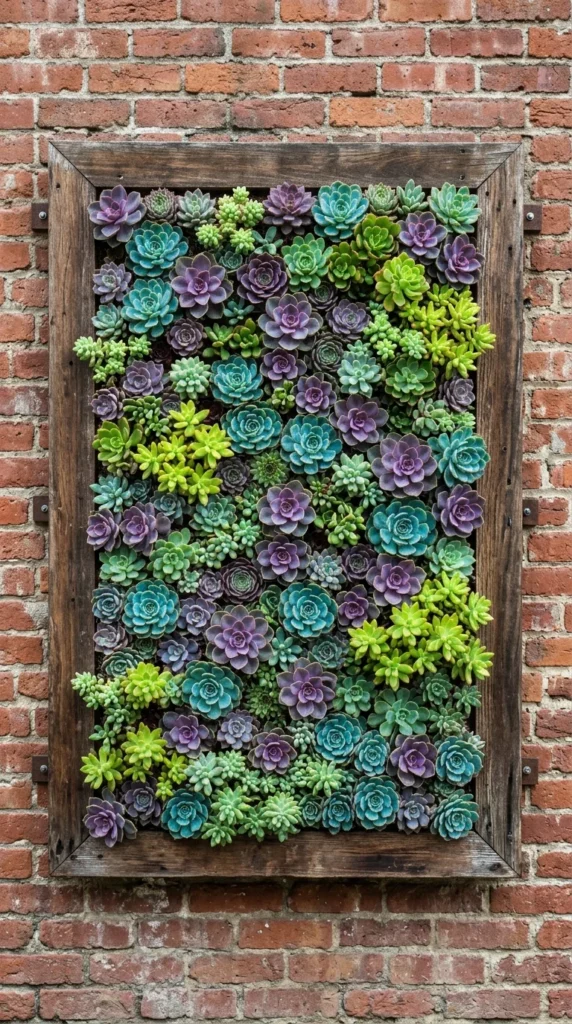
Vertical gardens, or living walls, are ideal for maximizing small spaces. By using a sturdy frame with a wire mesh backing, you can plant succulents close together to create a lush, carpet-like effect. As the plants grow, they cover the mesh entirely, resulting in a breathtaking piece of living art that requires minimal floor space.
3. Birdbath Planters
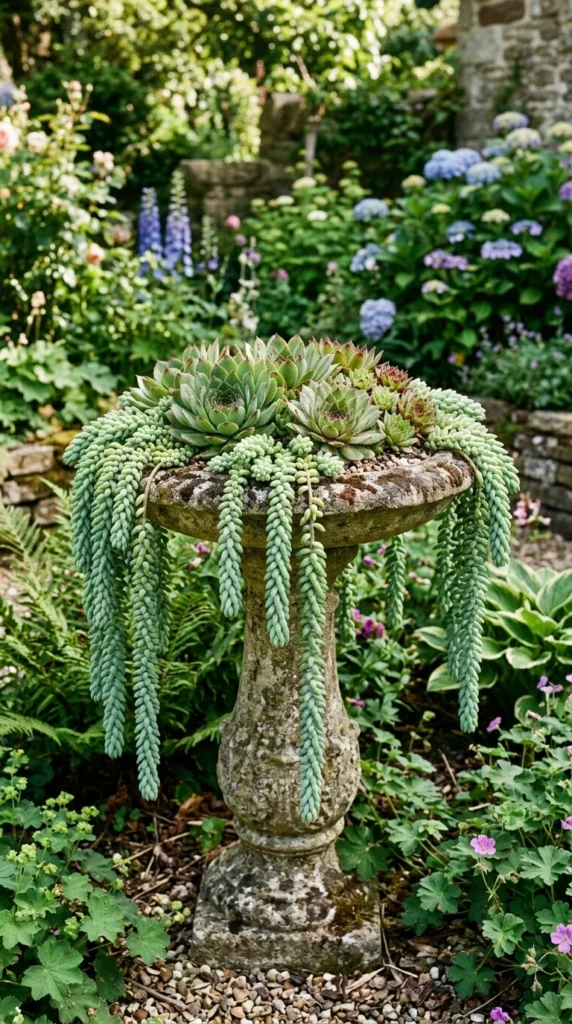
Repurposing an old birdbath into a succulent container adds a touch of vintage elegance to any garden. Because birdbaths are usually shallow, they provide the perfect depth for succulent root systems, which do not like to sit in deep, soggy soil. The height of the birdbath also makes it a natural focal point for a backyard landscape.
4. Vintage Teacups
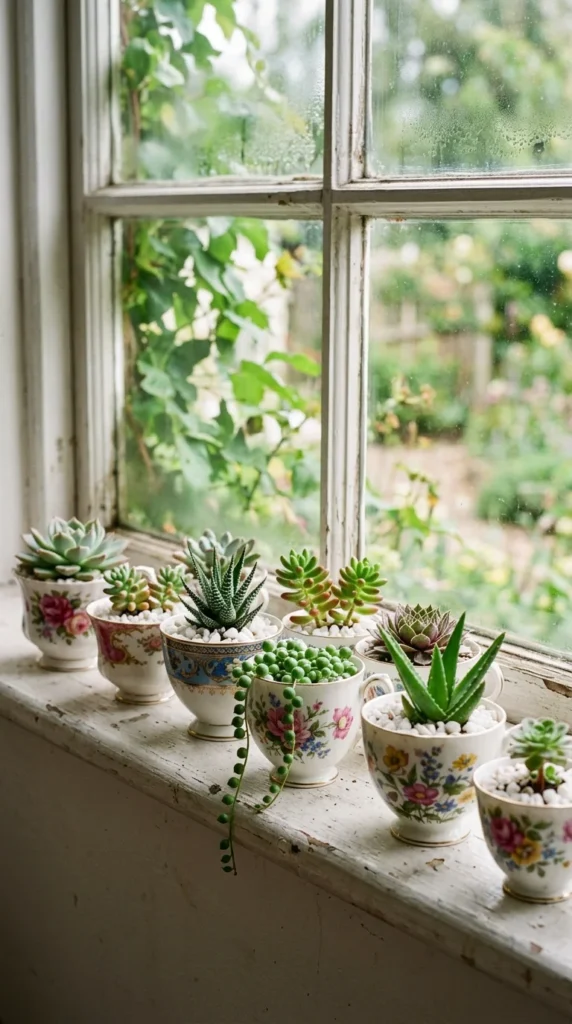
For a whimsical and dainty indoor display, look no further than your local thrift store for vintage teacups. These small vessels are perfect for “pups” or baby succulents. Since teacups rarely have drainage holes, it is important to add a layer of gravel at the bottom and water very sparingly to prevent root rot.
5. Driftwood Arrangements
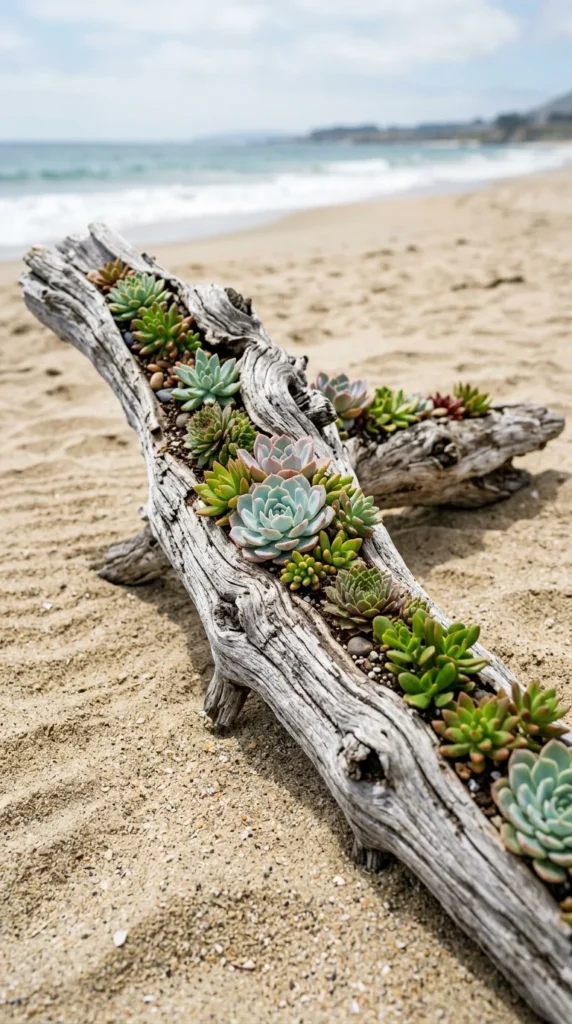
Driftwood provides a stunning, organic base for succulent displays. The contrast between the rugged, sun-bleached wood and the soft, fleshy leaves of the plants creates a coastal, rustic aesthetic. You can secure the plants using floral glue or by tucking them into natural nooks filled with a bit of sphagnum moss.
6. Cinder Block Garden
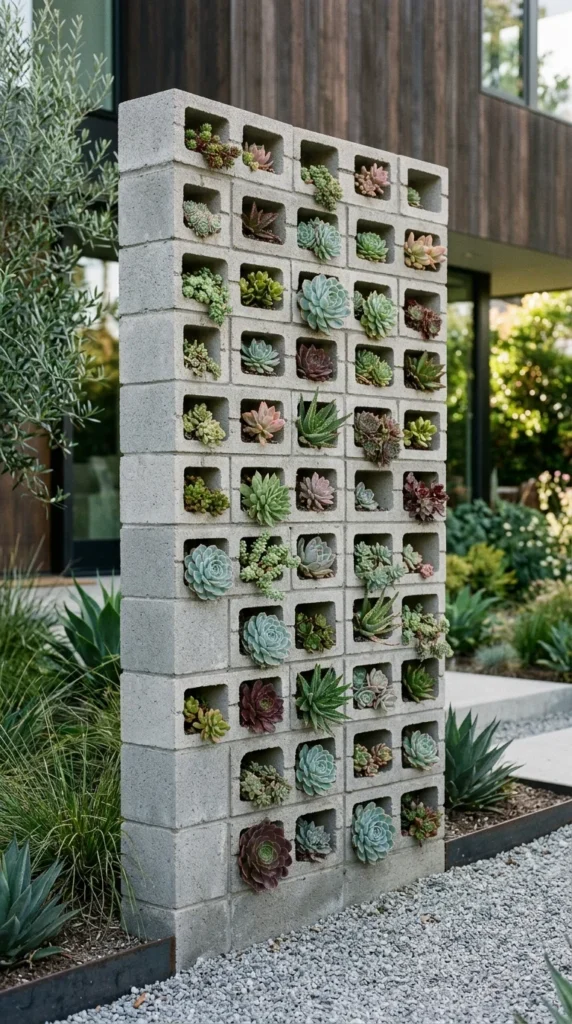
Cinder blocks are an affordable and modular way to build a contemporary succulent garden. By stacking them in different configurations, you can create a multi-level display that acts as both a garden and a structural boundary. The grey industrial look of the concrete makes the vibrant greens and reds of the plants pop.
7. Wreath Displays
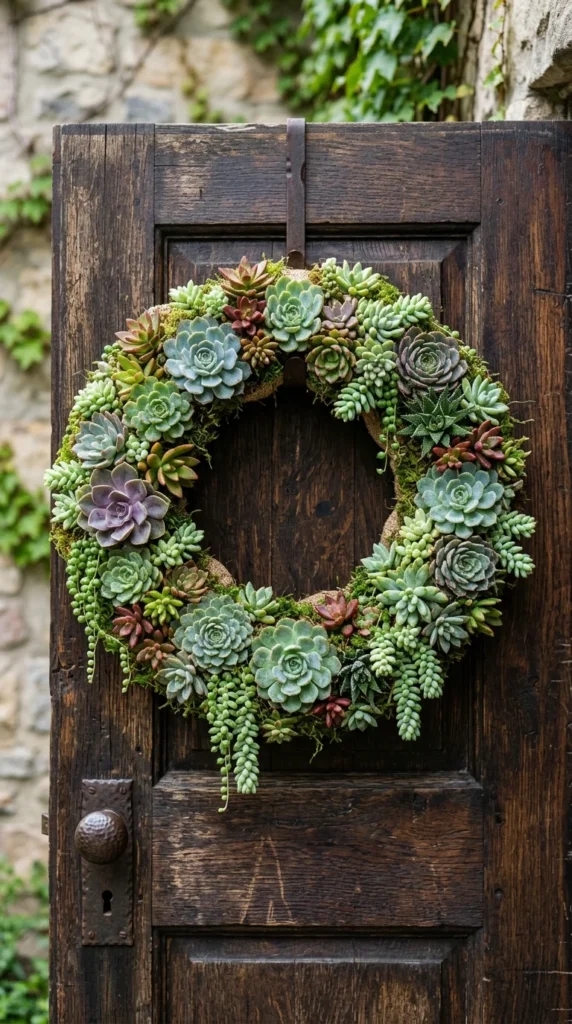
A succulent wreath is a sophisticated alternative to traditional floral wreaths. Because succulents are so hardy, they can survive for a long time in a moss-based wreath frame. To maintain it, simply take the wreath down every few weeks and soak it in a basin of water before letting it drain and rehanging it.
8. Glass Globes
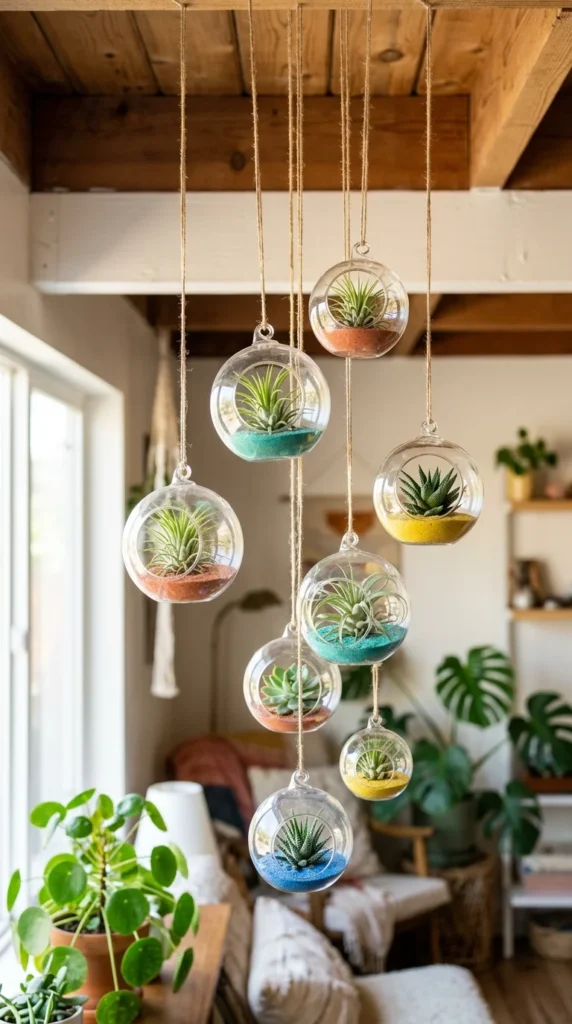
Hanging glass globes add a magical, airy feel to an indoor space. These are particularly effective in front of windows where the sunlight can catch the glass. Use lightweight succulents or air plants (Tillandsia) that don’t require heavy soil, making the globes easier to hang securely.
9. Monogram Planters
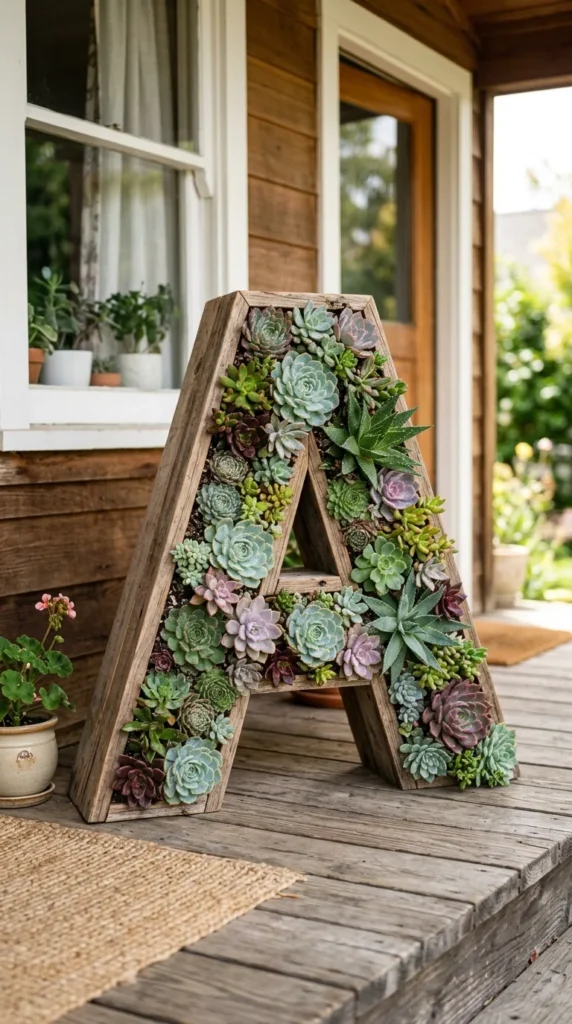
Personalize your garden with a monogram planter. These wooden frames shaped like initials are widely available or can be custom-built. They make excellent gifts and serve as a unique “welcome” sign when placed near a front entrance.
10. Rock River Beds
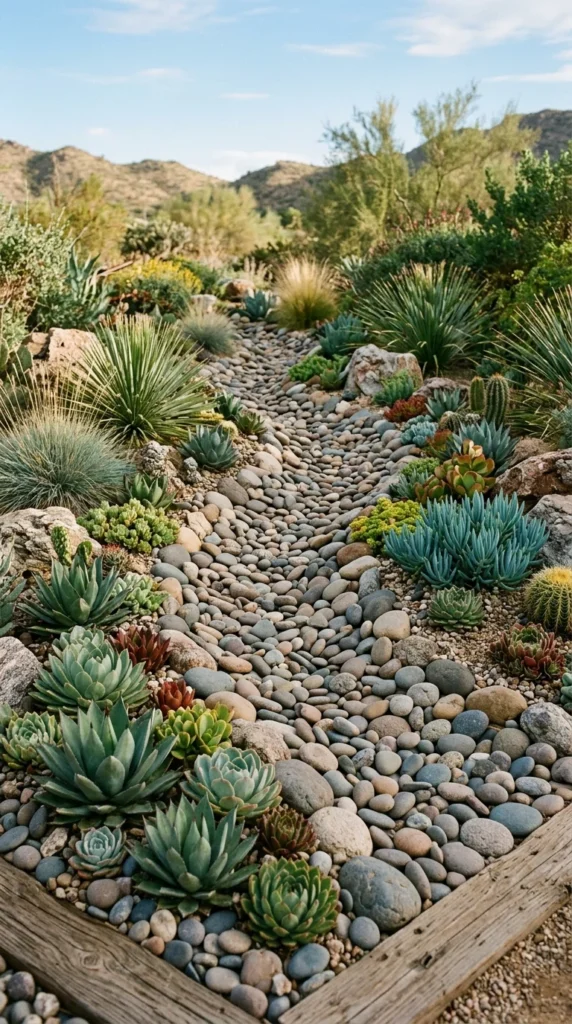
In larger outdoor landscapes, you can create a “dry river” look by laying down a path of smooth stones or gravel and planting succulents along the edges. This mimics the way plants grow in arid canyons and provides a low-water alternative to a traditional lawn.
11. Picture Frames
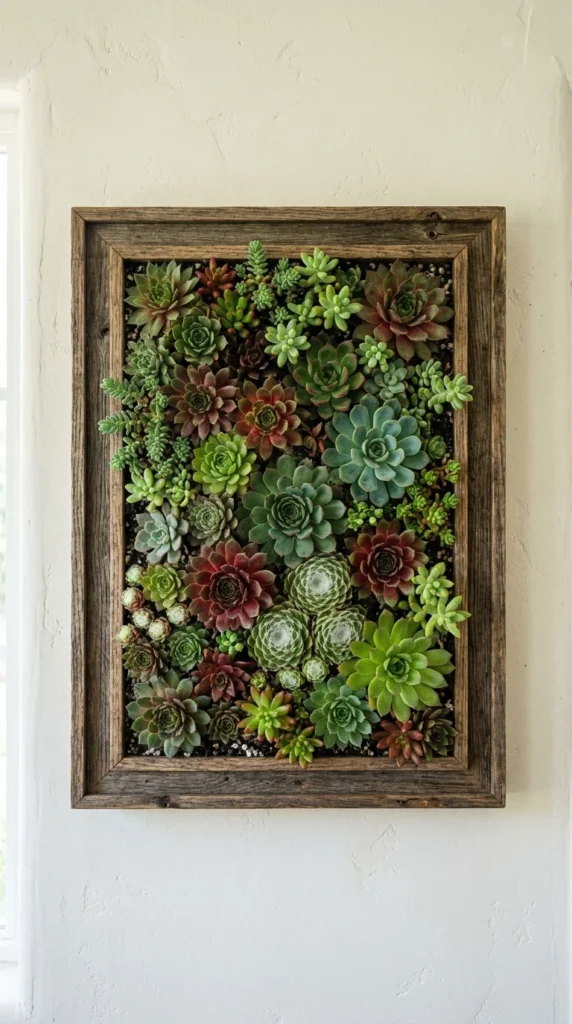
Succulent picture frames allow you to “paint” with plants. By using a shallow box behind a frame and securing it with chicken wire, you can create a vertical arrangement that looks like a 3D painting. These are perfect for patios, balconies, or even brightly lit indoor hallways.
12. Miniature Fairy Gardens
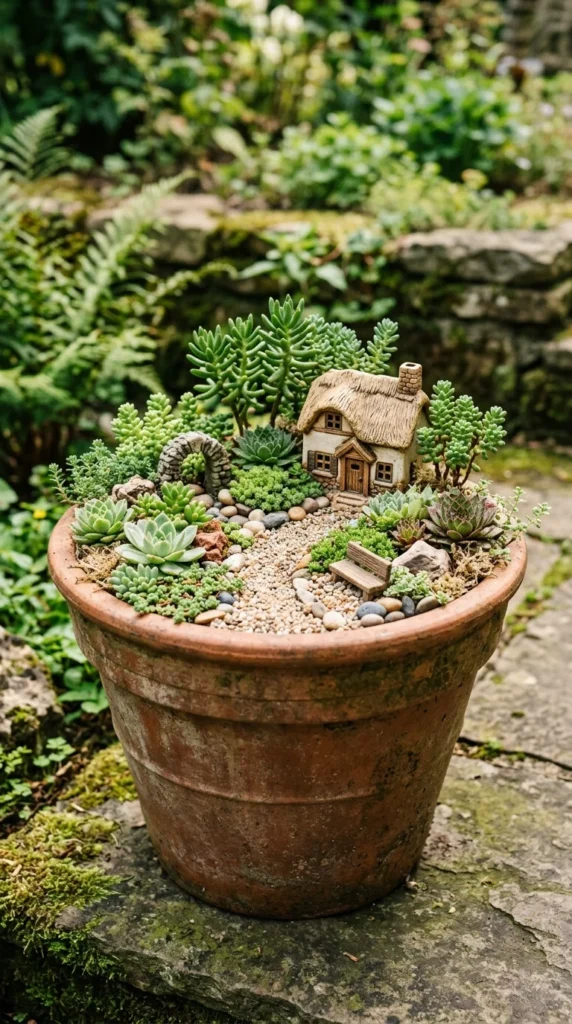
Fairy gardens are a hit with children and adults alike. Succulents like Crassula tetragona (Miniature Pine Tree) are perfect for creating scale-model landscapes. Adding small accessories like benches, bridges, and tiny houses turns a simple planter into a storytelling piece.
13. Concrete Geometric Pots
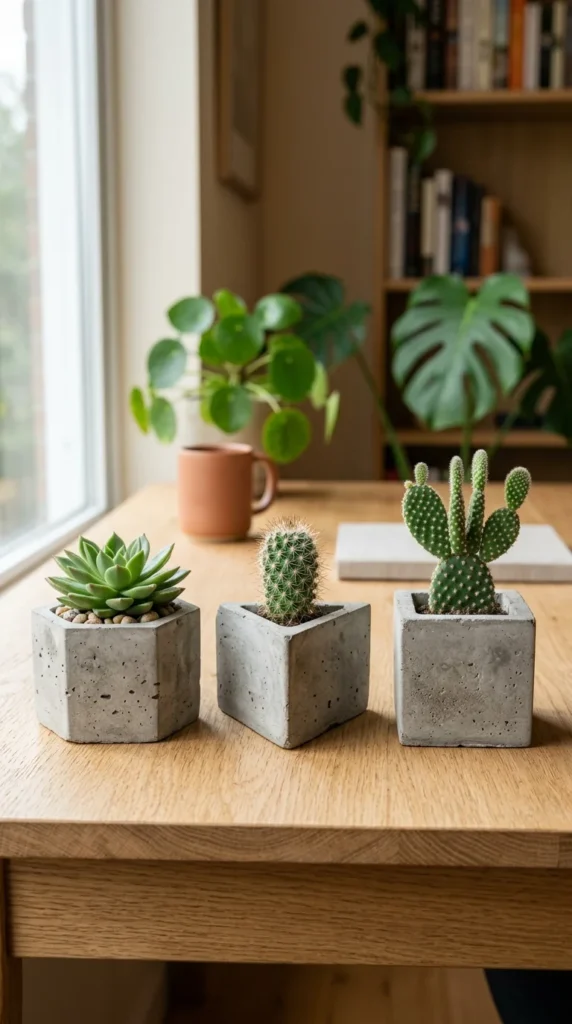
For a modern, minimalist home, concrete geometric pots are the way to go. The heavy, industrial texture of the concrete complements the sharp lines of cacti and the rounded forms of succulents. Grouping them in odd numbers (like three or five) creates a balanced and stylish desk or shelf accent.
14. Hanging Macrame
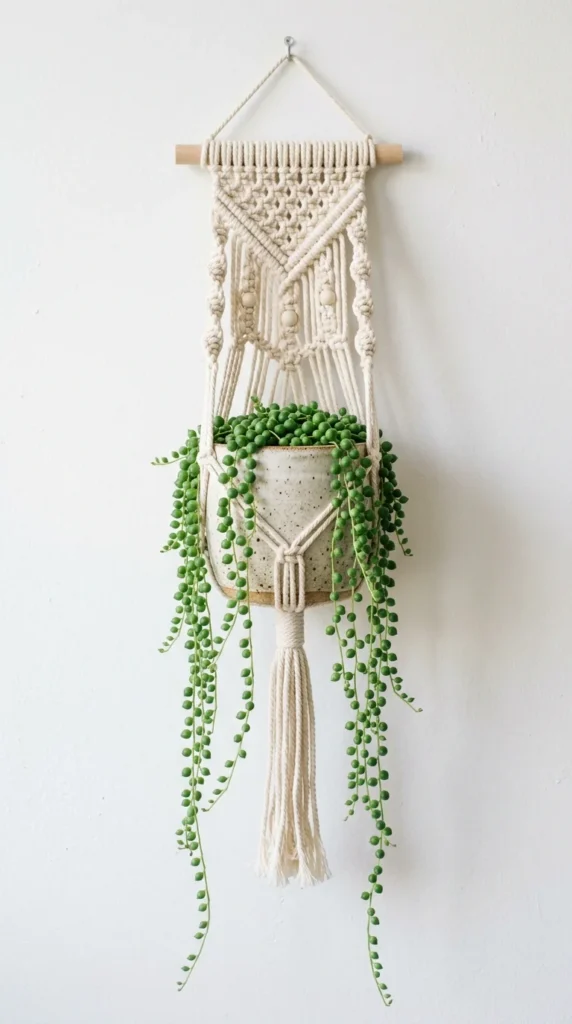
Bring back the 70s vibe with macrame hangers. Succulents that have a “trailing” habit, such as String of Pearls, String of Bananas, or String of Hearts, look best when allowed to cascade from a height. This is a great way to keep plants away from pets while utilizing vertical space.
15. Repurposed Lanterns
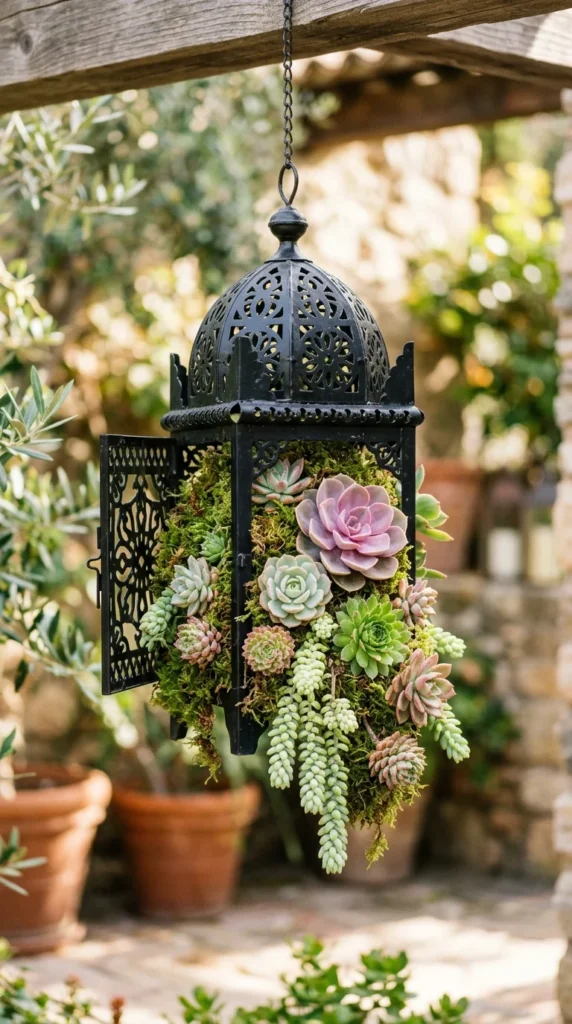
Old lanterns provide a beautiful, structured housing for succulents. You can remove the glass panes to allow for better airflow and easier access for watering. A lantern filled with succulents can serve as a stunning centerpiece for an outdoor dining table.
16. Tree Stump Clusters
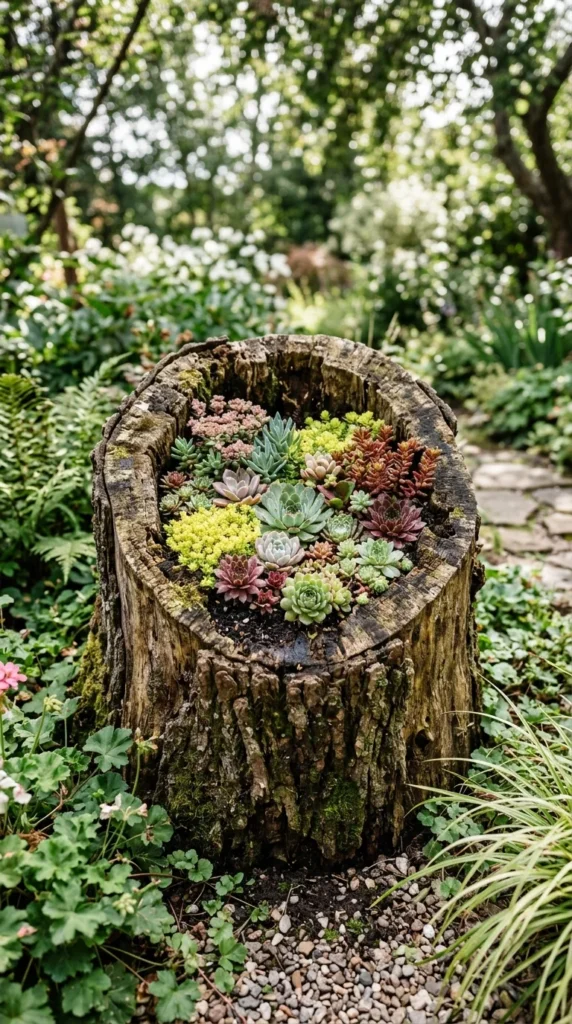
If you have a dead tree stump in your yard, don’t remove it—turn it into a planter! The decaying wood provides nutrients and a natural look that blends seamlessly into a woodland or rustic garden. Simply hollow out a portion of the top, add well-draining soil, and plant your favorites.
17. Tiered Trays
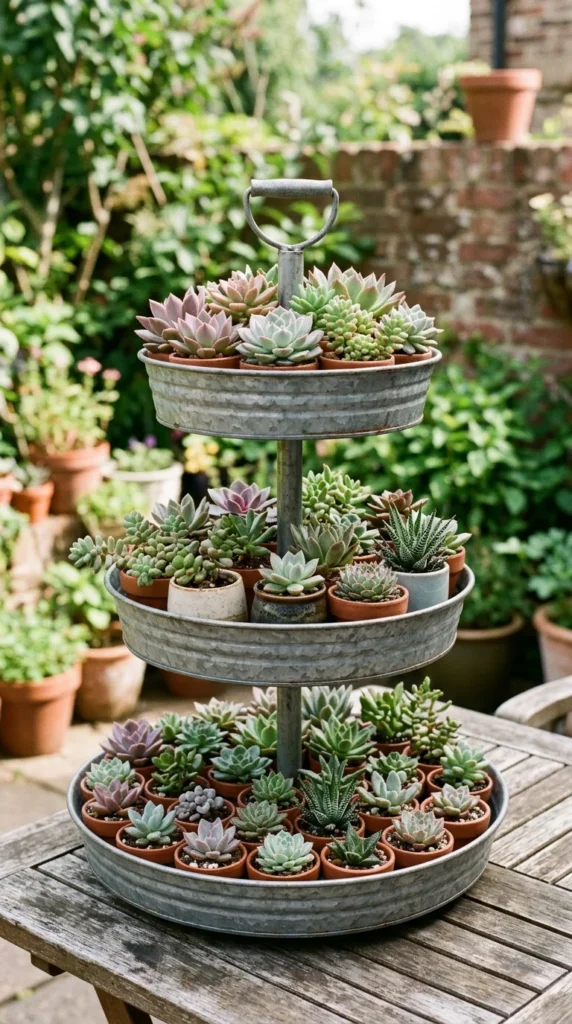
Tiered trays are perfect for collectors who have many small succulent varieties but limited surface area. By going vertical, you can display a large collection in a compact footprint. This setup also makes it easy to move the entire collection to a sunnier spot if needed.
18. Desert Terrariums
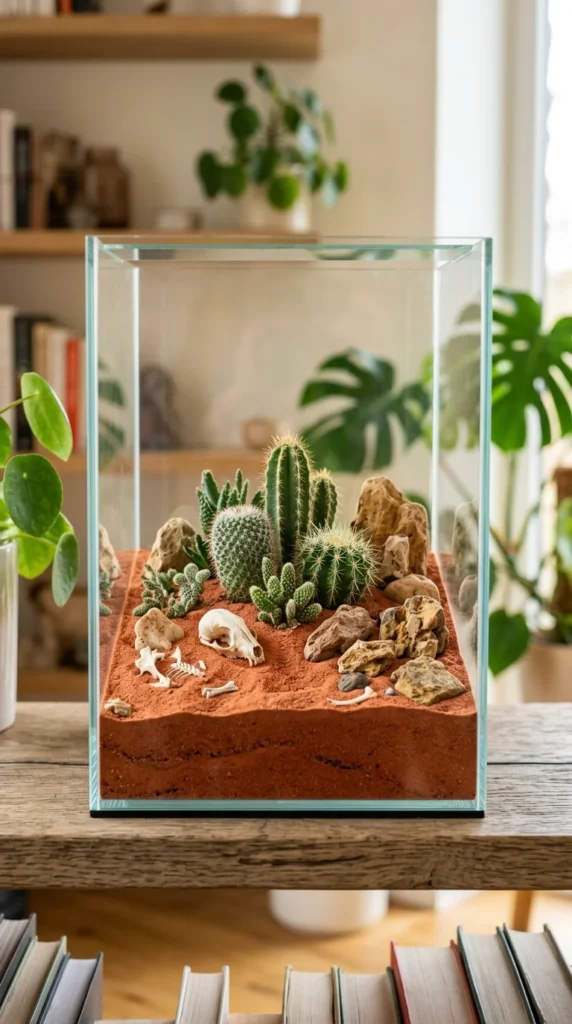
While most succulent gardens focus on greens and purples, a desert-themed terrarium utilizes cacti and succulents that thrive in high-heat looks. Using red or orange sand and “desert” props creates a miniature version of the American Southwest inside your home.
19. Galvanized Tubs
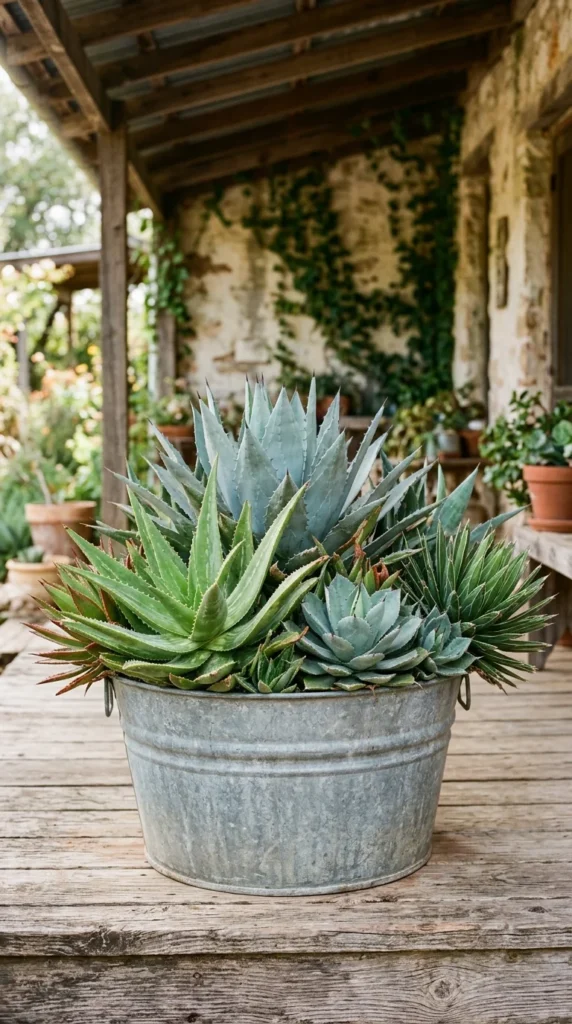
Galvanized steel tubs offer a farmhouse or “shabby chic” aesthetic. They are durable, weather-resistant, and large enough to hold bigger succulent species like Agave or large Aloe Vera. Ensure you drill drainage holes in the bottom to keep the plants healthy.
20. Wine Cork Magnets
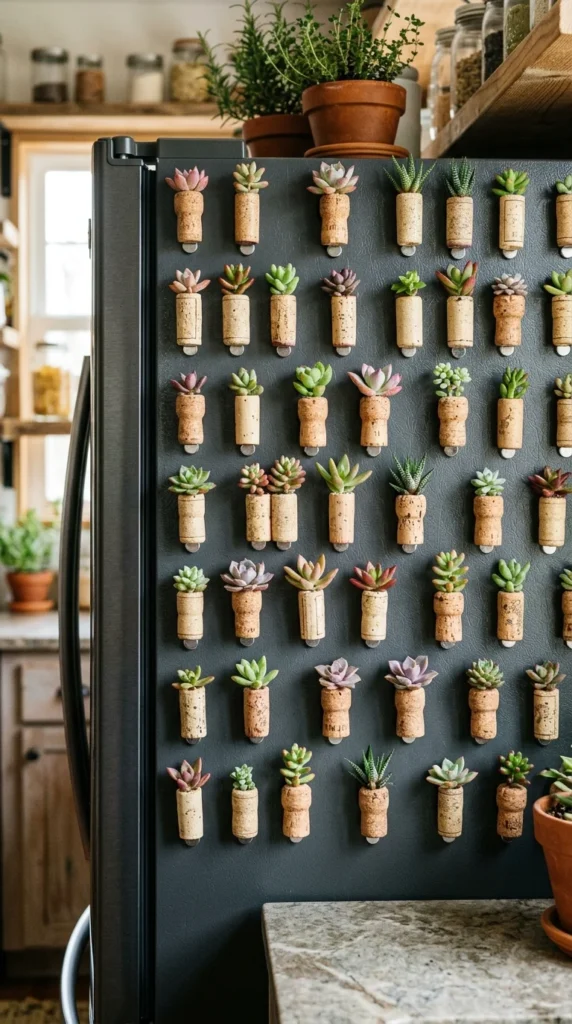
For the ultimate tiny garden, use wine corks! By hollowing out the top of a cork and gluing a magnet to the back, you can create a “fridge garden.” These are perfect for propagating tiny succulent cuttings and adding a bit of green to your kitchen.
21. Book Planters
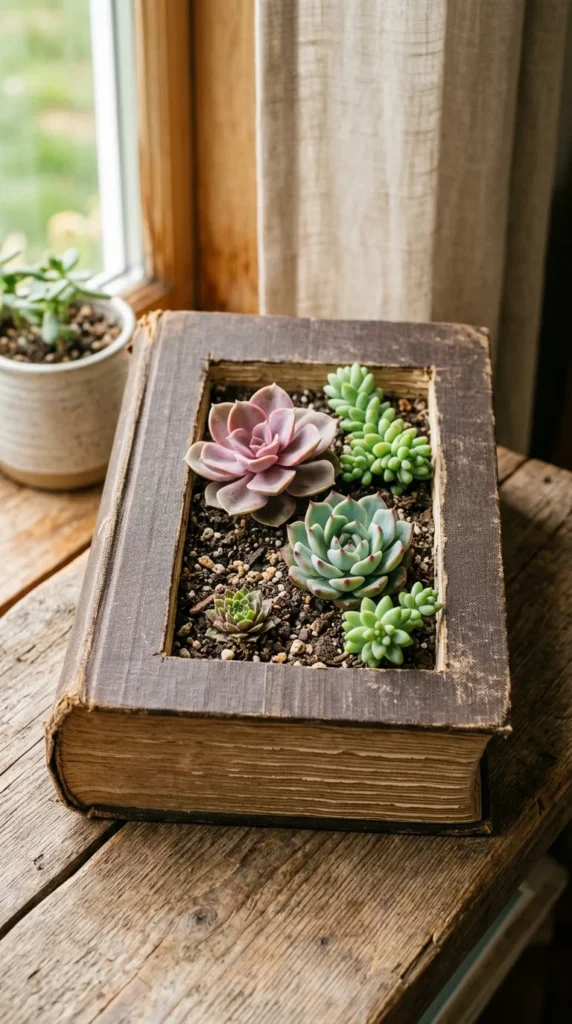
Bibliophiles will love this creative use of old books. By sealing the pages together and carving out a “niche,” you can create a literary planter. Use a plastic liner inside the cutout to protect the paper from moisture when you water the plants.
22. Wheelbarrow Displays
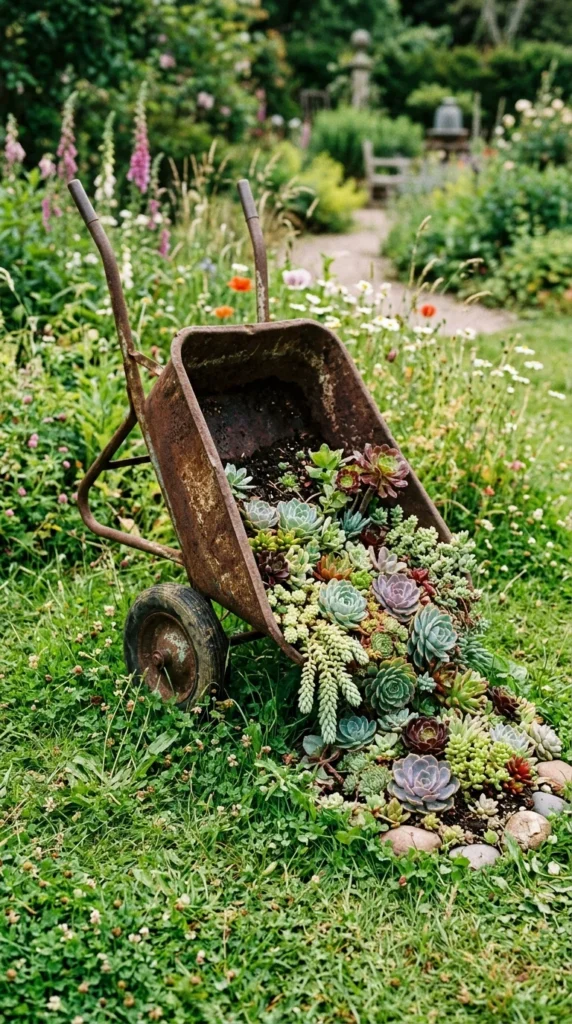
A “spilled” wheelbarrow is a classic garden design trick. By planting succulents inside the wheelbarrow and then continuing the planting onto the ground in front of it, you create a sense of motion and abundance in your landscape.
23. Staircase Accents
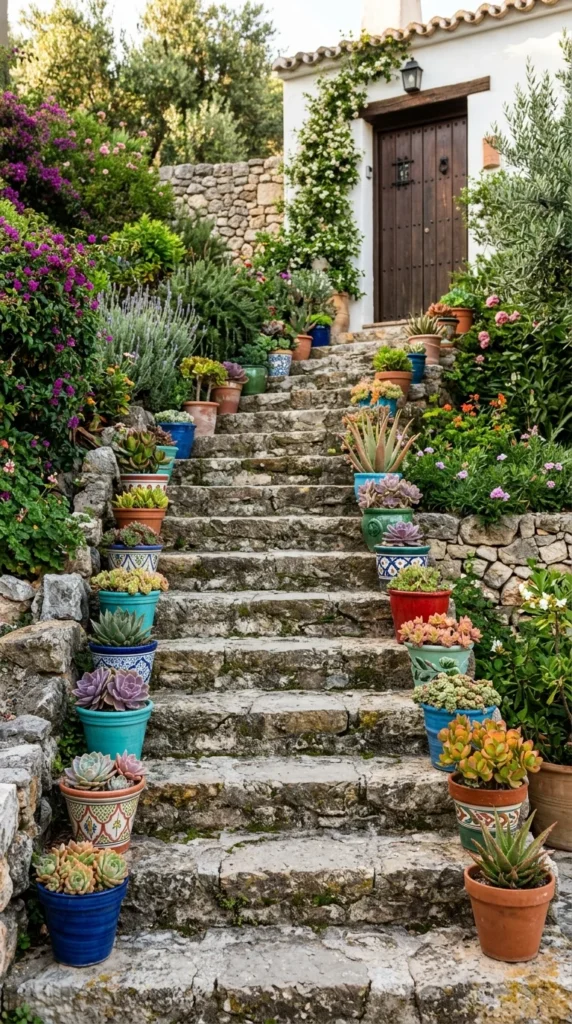
If you have an outdoor staircase, use the edges of the steps to showcase your potted succulents. This draws the eye upward and makes a grand entrance. Mixing and matching different pot styles can add to the eclectic charm of the display.
24. Coffee Table Centers
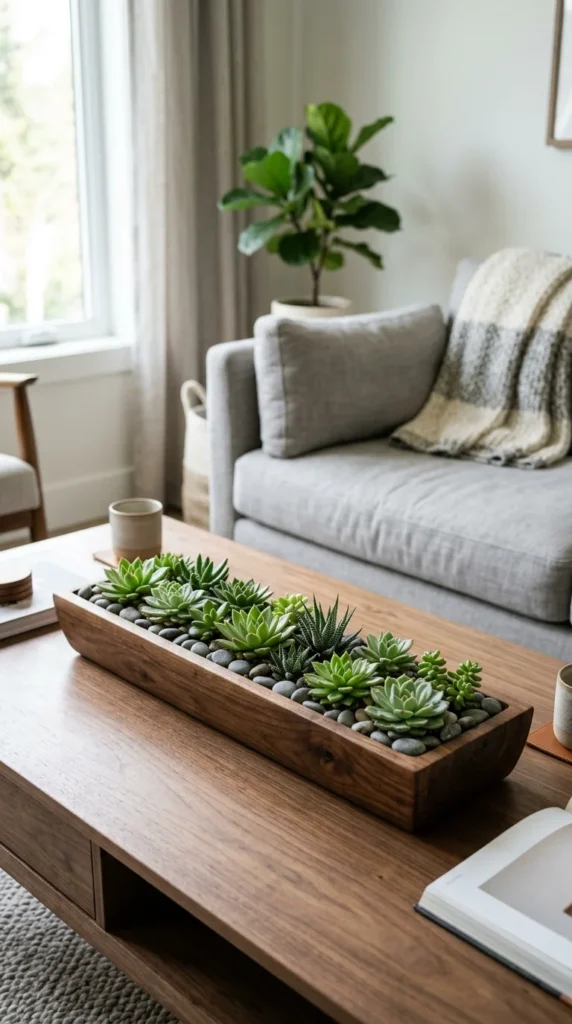
Succulents make the perfect living centerpiece because they stay low to the surface, meaning they won’t block your view of the TV or guests across the table. A long, narrow trough filled with succulents is a sophisticated way to anchor a living room’s decor.
25. Zen Sand Gardens
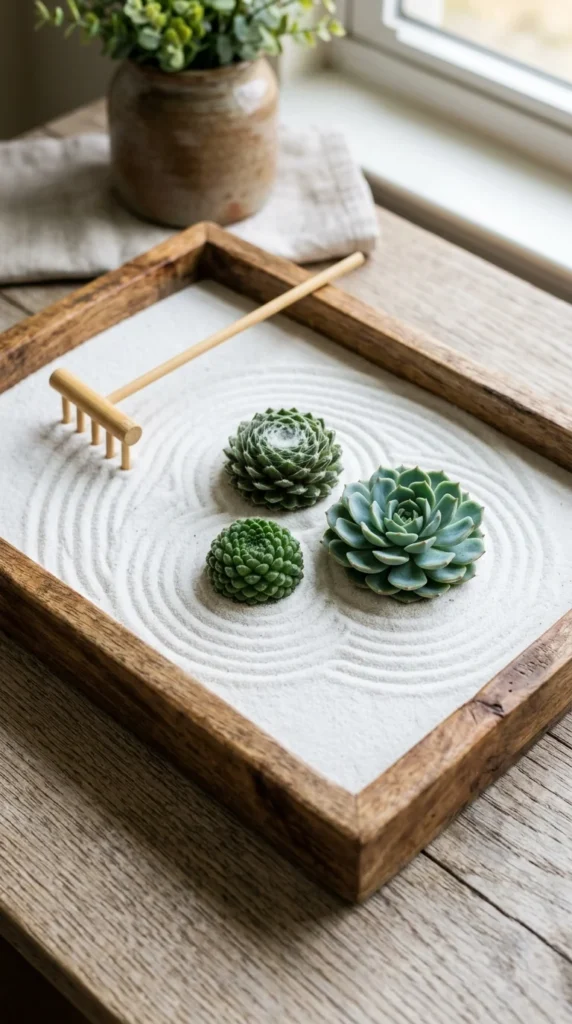
Combine the calming effect of a Zen sand garden with the beauty of succulents. Instead of just using stones, use slow-growing, symmetrical succulents like Haworthia or Lithops (Living Stones). Raking the sand around the plants can be a meditative daily practice.