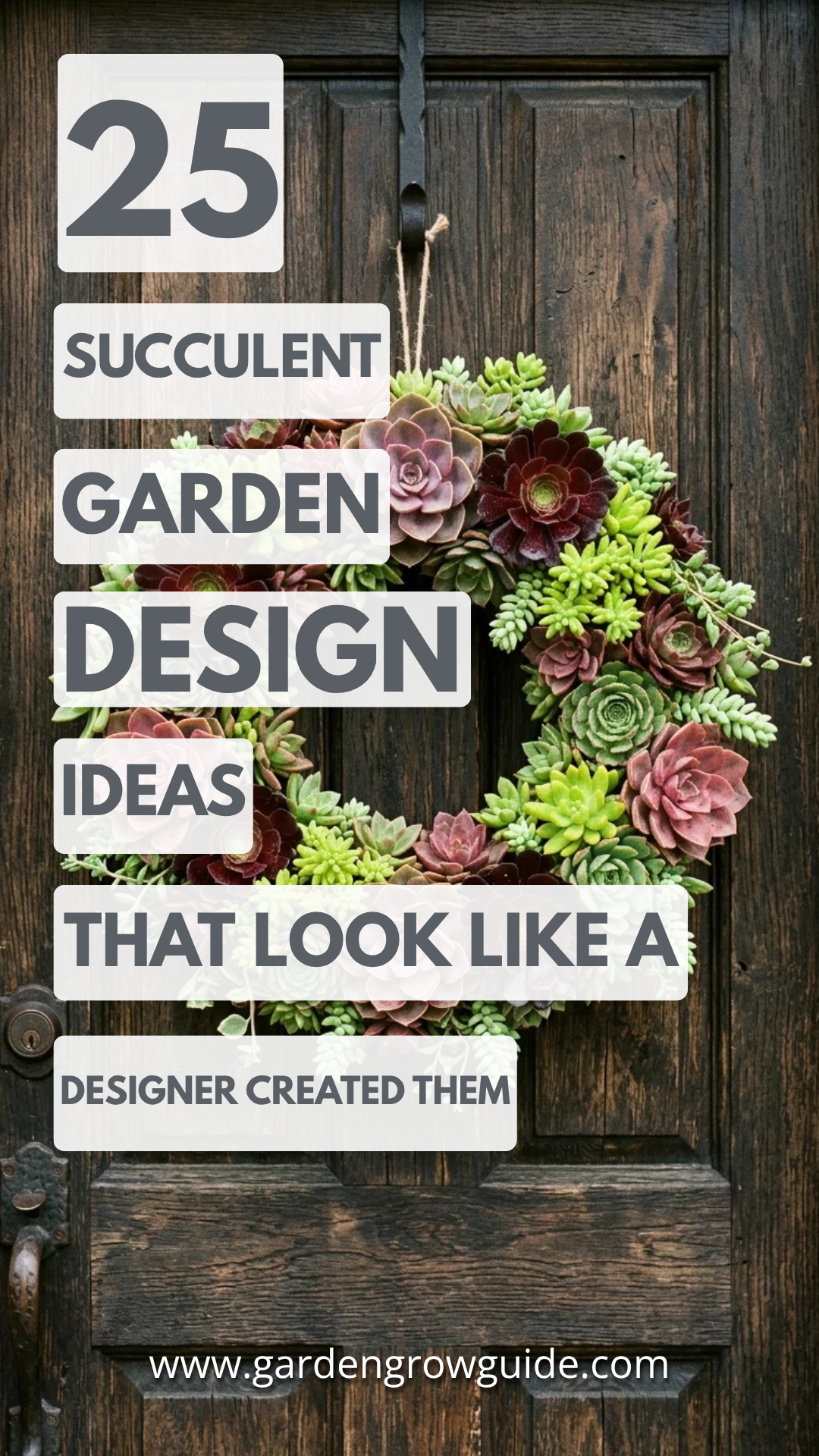
Succulents have transformed from niche botanical curiosities into the darlings of modern landscape design. Their architectural shapes, vibrant hues, and low-maintenance nature make them the perfect medium for creating “living art.” Designing a succulent garden that looks professionally curated requires more than just digging a hole; it involves understanding texture, color theory, and spatial arrangement. Whether you have a sprawling backyard or a small balcony, these 25 design ideas will help you elevate your green space to designer levels.
1. Desert Oasis
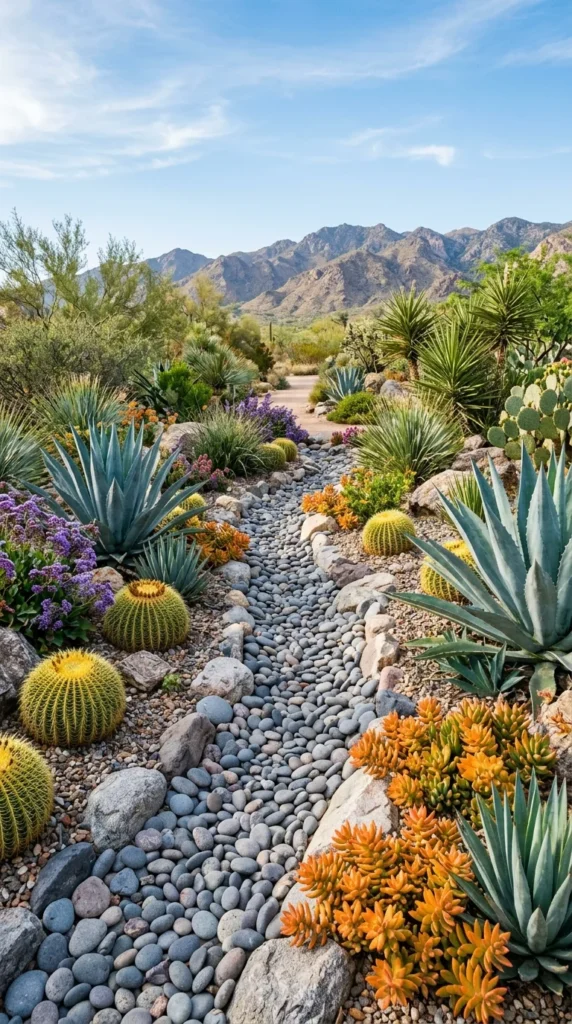
Creating a desert oasis is about embracing the natural habitat of these resilient plants. Use a variety of rock sizes to mimic a natural landscape. Start with large “anchor” boulders to provide structural weight, then fill in with medium-sized cobbles and finish with a fine gravel mulch. This layering creates depth and makes the succulents look as if they have been growing there for decades.
2. Vertical Walls
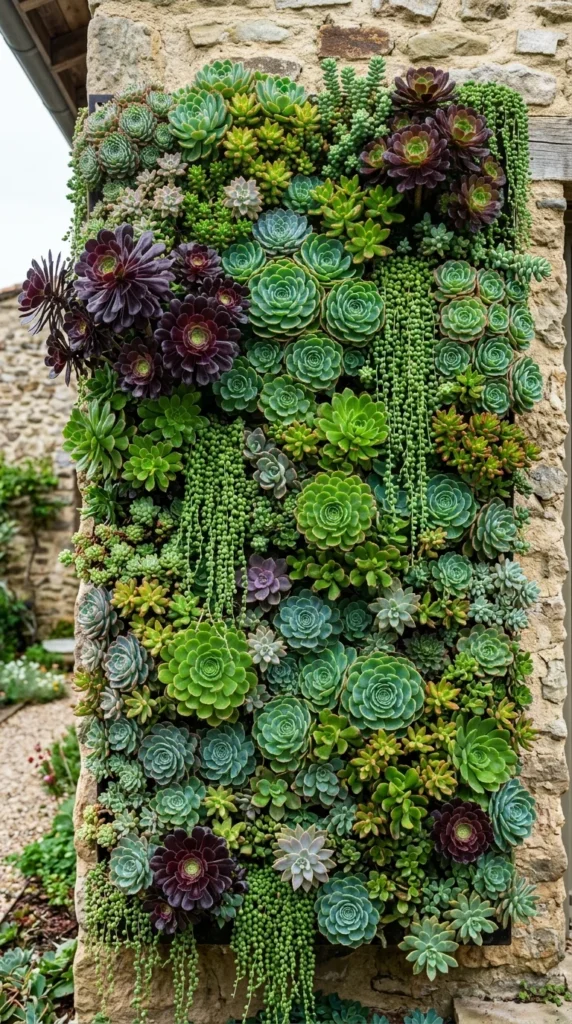
Vertical gardening is a designer secret for small spaces. A succulent wall acts as a living tapestry. By using a modular grid system or a felt pocket planter, you can create patterns using different colored rosettes. Designers often use “String of Pearls” or “String of Bananas” at the bottom to create a dripping, waterfall effect that softens the edges of the frame.
3. Repurposed Troughs
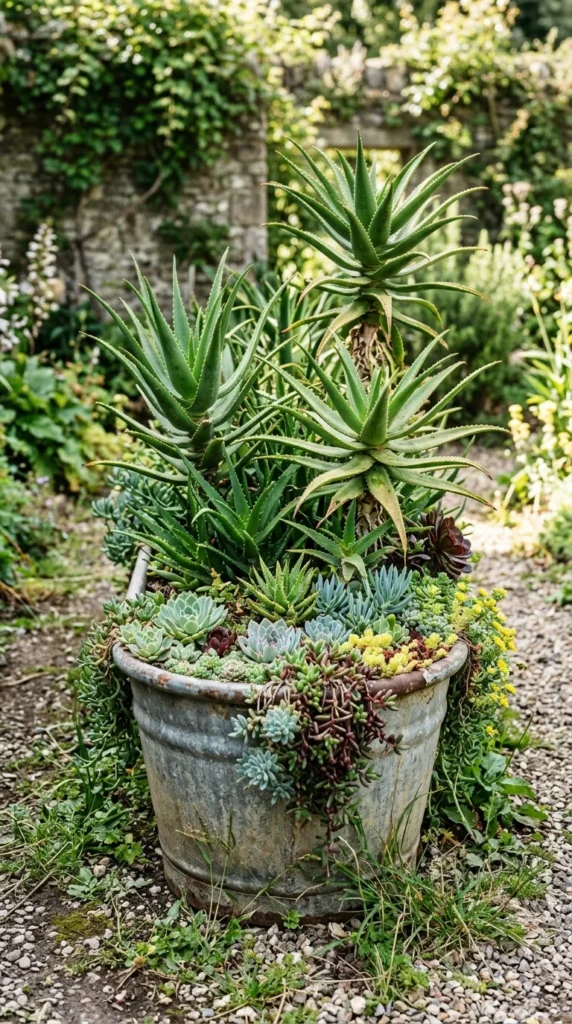
Industrial elements provide a stunning contrast to the organic shapes of succulents. A repurposed metal trough or a stone feeding basin offers excellent drainage and a rustic aesthetic. To achieve a designer look, don’t just fill it randomly; place taller, structural plants like “Sticks on Fire” (Euphorbia tirucalli) in the center and surround them with mounding Echeveria.
4. Spill Pots
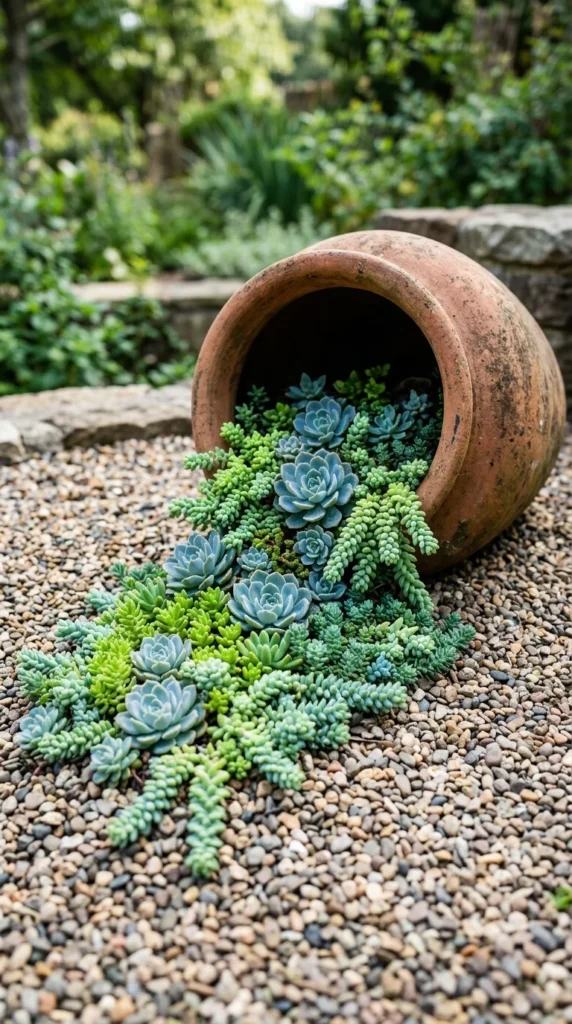
The “spill pot” is a classic design trick that creates a sense of movement. By burying a pot halfway into the ground at an angle and planting succulents in a trailing line away from the mouth, you create the illusion of a flowing liquid. Use silver-toned succulents like Senecio serpens (Blue Chalksticks) to mimic the look of cool water.
5. Modern Geometry
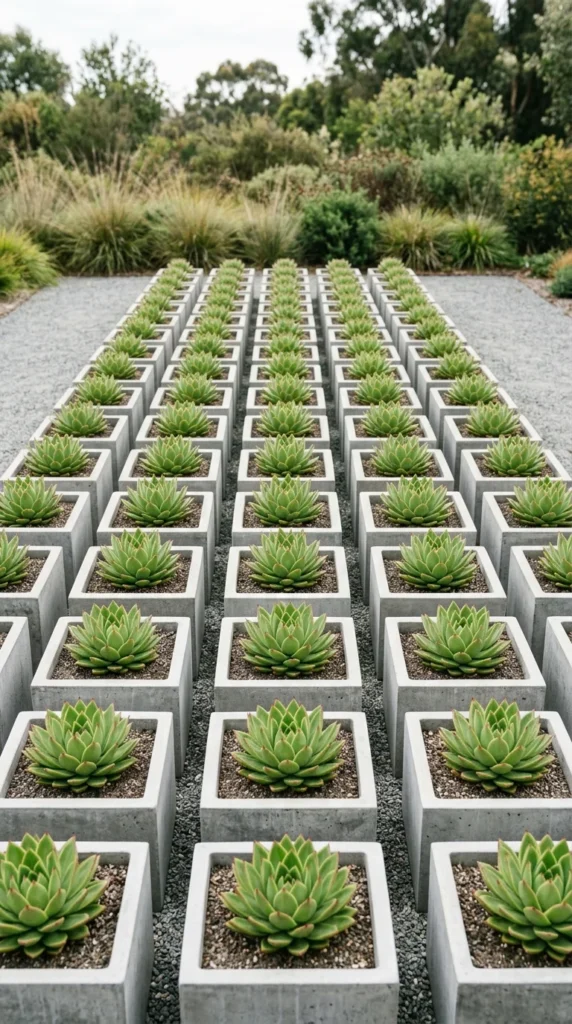
Modernism thrives on clean lines and repetition. Use identical square or cylindrical concrete planters and place a single, high-impact specimen in each. This “gallery” approach highlights the unique geometry of the plants themselves, such as the perfect spiral of an Aloe polyphylla.
6. Fairy Gardens
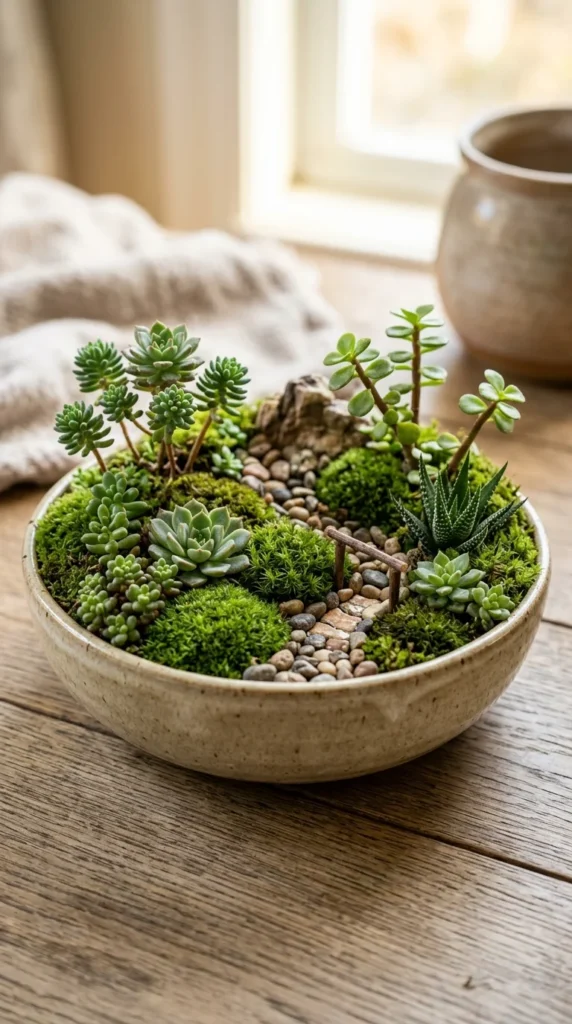
Designer fairy gardens move away from plastic figurines and focus on scale and perspective. Use “Crassula tetragona” to mimic miniature pine trees and “Sedum japonicum” for a mossy forest floor. The key is to keep the proportions consistent, creating a believable micro-world that invites close inspection.
7. Driftwood Arrangements
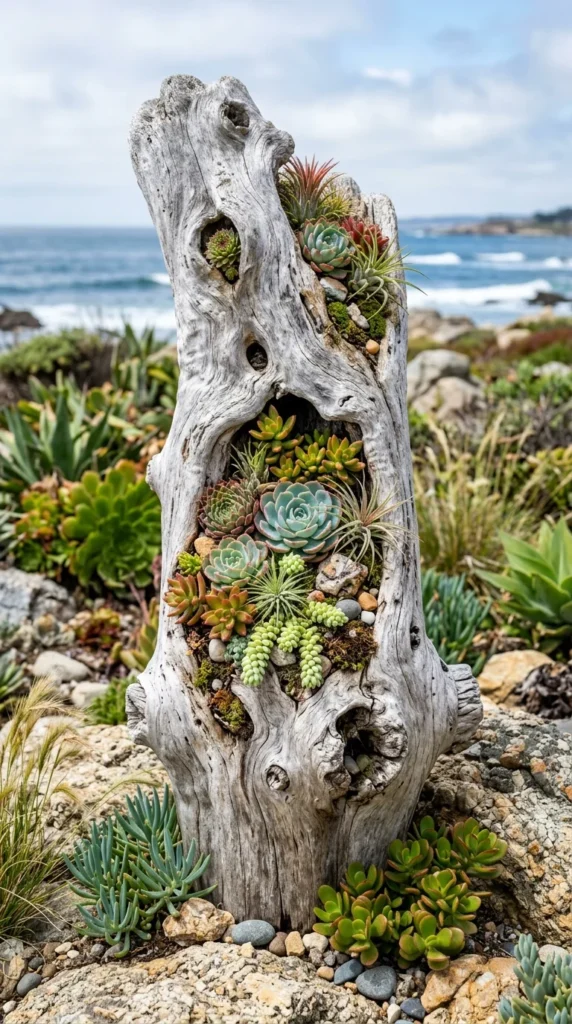
Driftwood brings a coastal, weathered texture that complements the fleshy leaves of succulents perfectly. Look for pieces with natural nooks and crannies. Fill these pockets with a bit of sphagnum moss and tuck in small succulent cuttings. As they grow, they will wrap around the wood, creating a seamless fusion of flora and timber.
8. Color Blocking
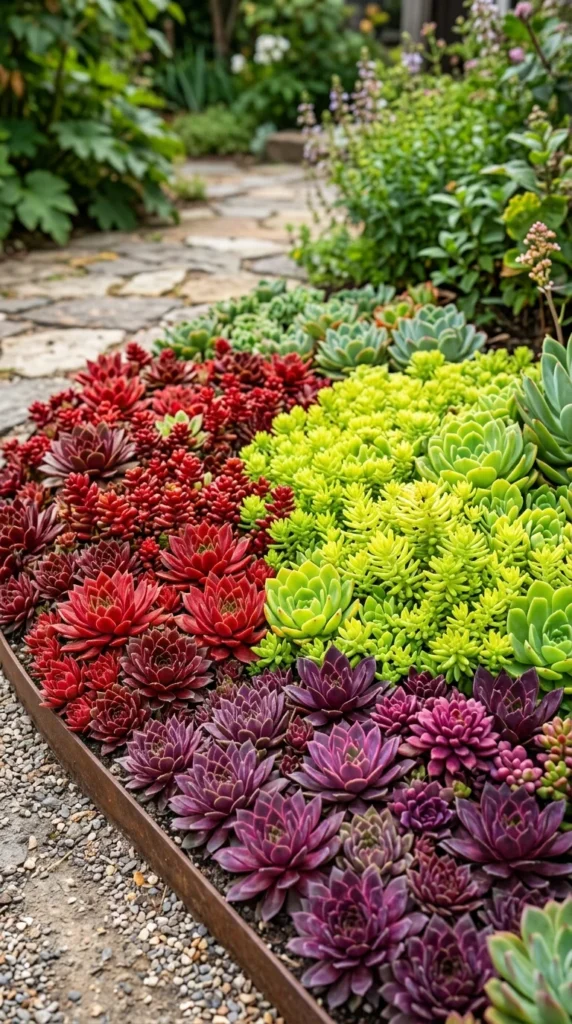
Designers use color blocking to create visual impact. Instead of mixing colors randomly, group plants by their hue. A mass planting of purple “Black Prince” Echeveria next to a sea of lime-green “Angelina” Sedum creates a high-contrast, professional look that draws the eye from a distance.
9. Mixed Textures
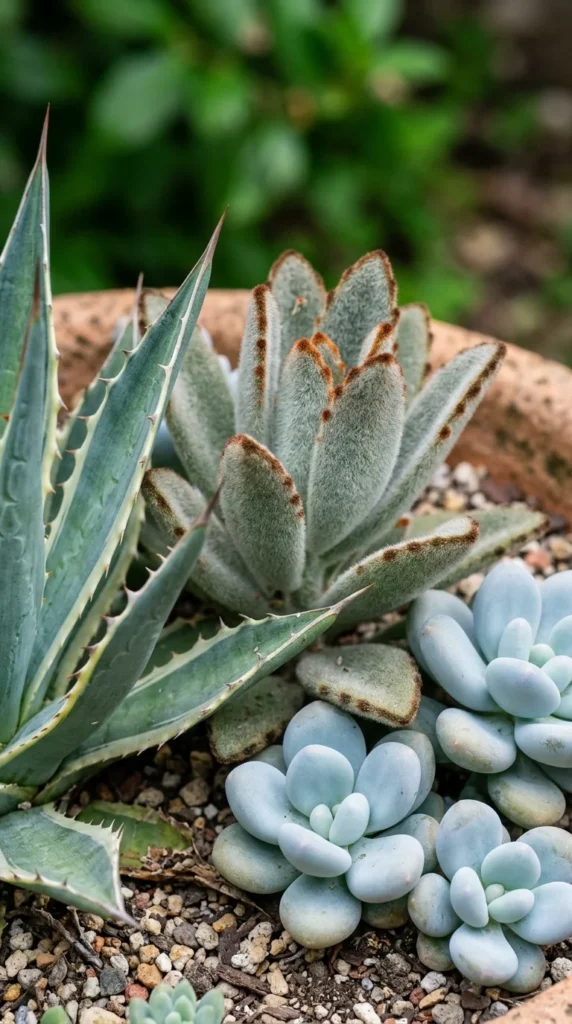
A professional-looking garden engages the sense of touch. Contrast the sharp, needle-like leaves of cacti with the soft, felt-like texture of “Panda Plants” (Kalanchoe tomentosa). This juxtaposition makes each plant’s unique characteristics stand out more prominently than if they were surrounded by similar textures.
10. Fire Pit Surround
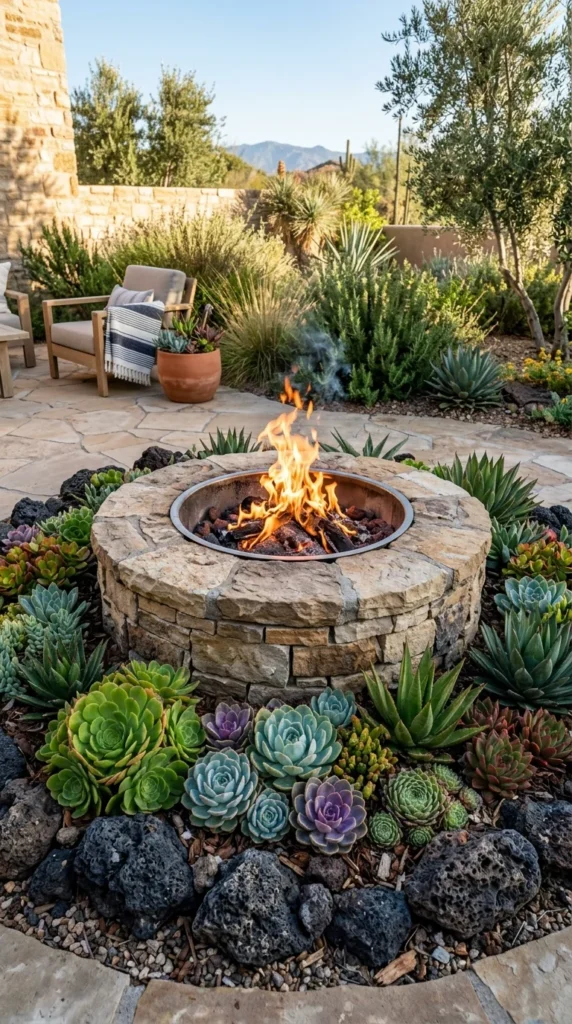
Succulents are the ideal choice for landscaping around fire pits because many species are surprisingly heat-tolerant and their high water content makes them less of a fire hazard than dried grasses. Surround a sunken fire pit with low-growing, fire-resistant varieties like Sempervivum (Hen and Chicks) nestled between flagstones.
11. Glass Terrariums
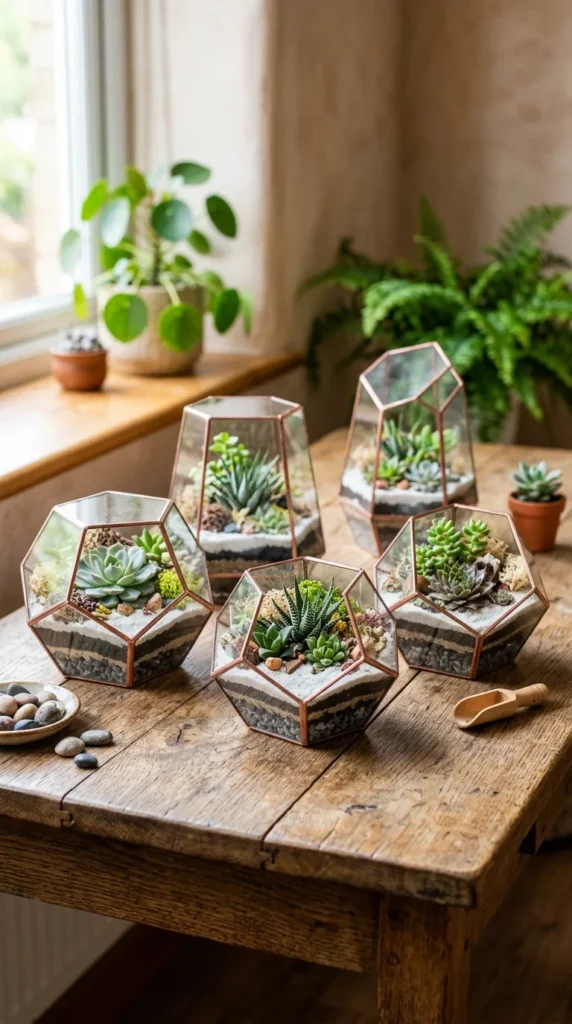
For indoor design, glass terrariums offer a sophisticated way to display succulents. To achieve a professional look, layer your substrate. Use a base of colorful pebbles, followed by a thin layer of charcoal, and then your potting soil. Finish with a decorative top-dressing of white sand or crushed glass to create a “layered cake” effect visible through the glass.
12. Window Boxes
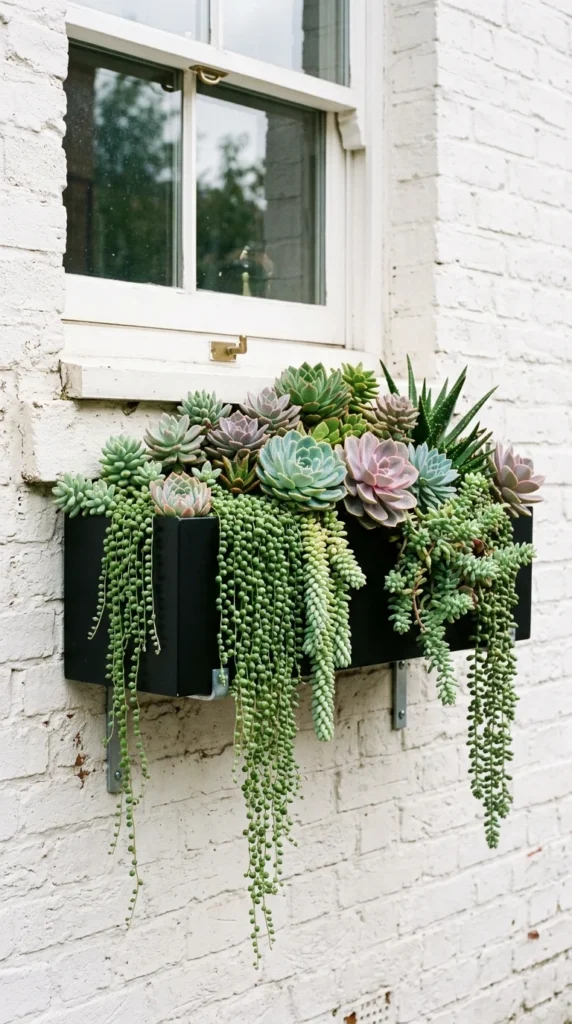
Window boxes aren’t just for geraniums. A succulent window box provides year-round interest and requires far less watering. Use “creepers” like “String of Buttons” to hang over the edge and “fillers” like “Graptosedum” to create a lush, full appearance that enhances your home’s curb appeal.
13. Birdbath Planters
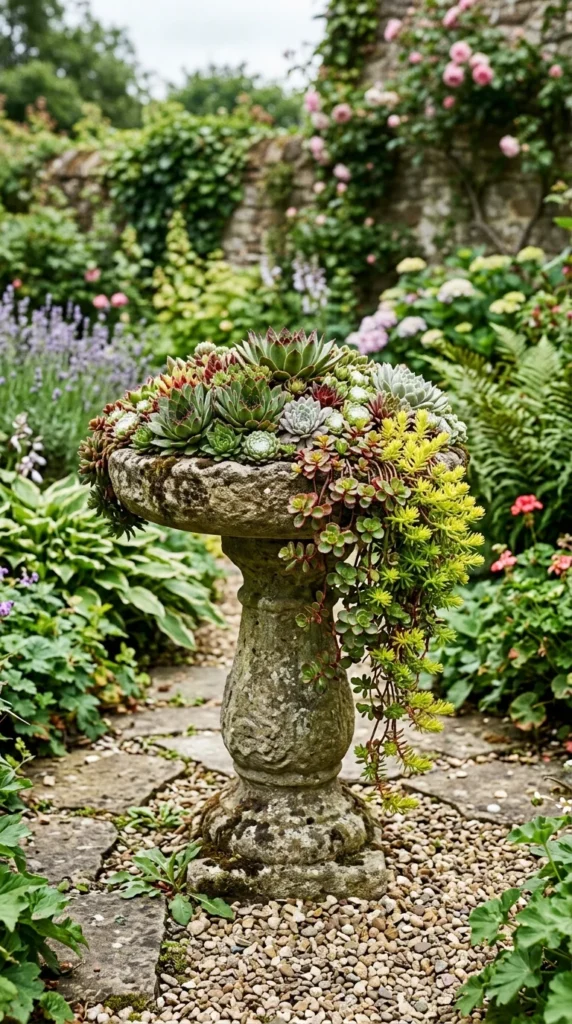
Old birdbaths often have the perfect depth for succulent roots. Designers love these because they provide instant elevation. By planting a “thriller” (a tall focal plant) in the center of the birdbath and “spillers” around the edges, you create a 360-degree piece of living sculpture for your garden.
14. Monochromatic Minimalism
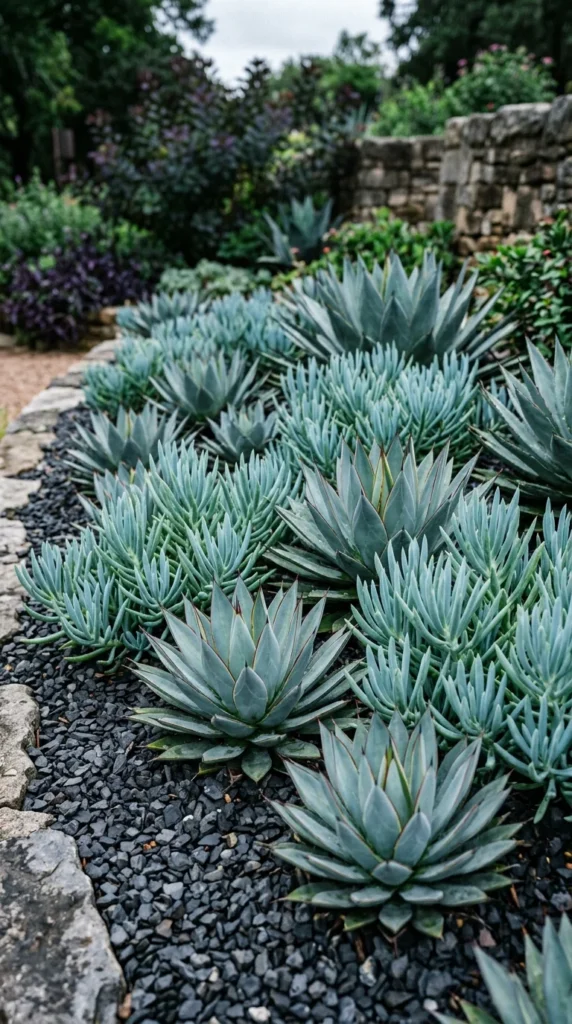
There is an understated elegance in a monochromatic palette. Choosing succulents that stay within one color family—such as various shades of blue, silver, and teal—creates a calming, sophisticated atmosphere. This approach highlights the subtle differences in leaf shape and growth patterns.
15. Zen Gravel
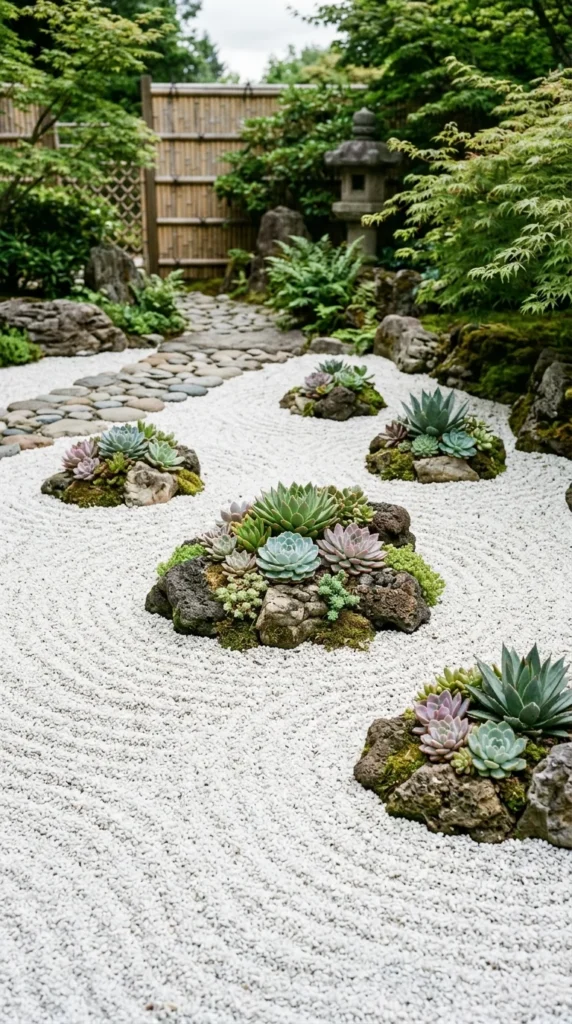
Incorporate the principles of a Japanese Zen garden by using raked gravel to create “water ripples” around succulent islands. This design emphasizes negative space, making the plants feel more like precious jewels. Choose architectural succulents with clean lines, such as Sansevieria or columnar cacti, to maintain the minimalist vibe.
16. Chandelier Planters
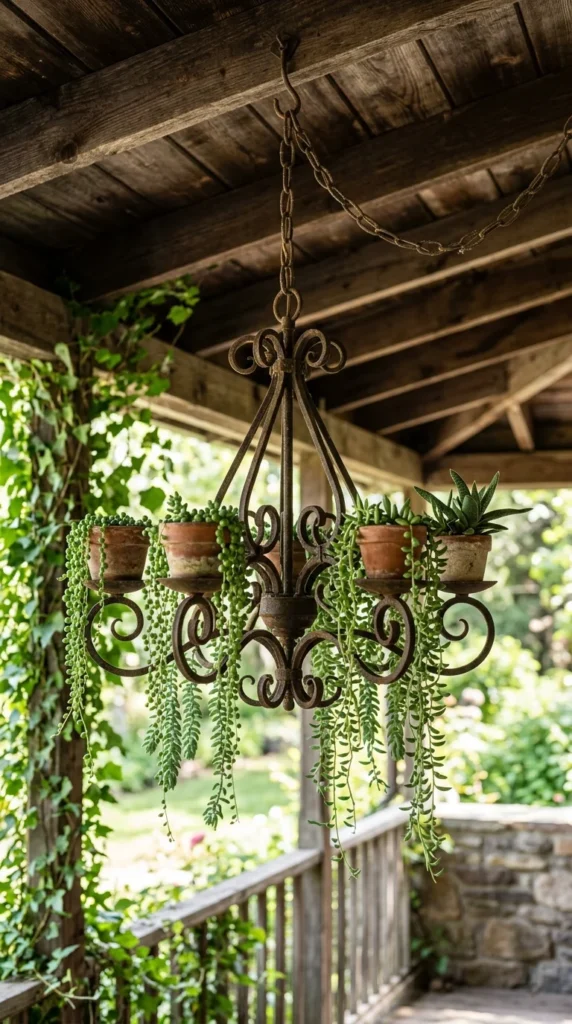
Upcycling an old chandelier into a succulent planter is a high-concept design move. Replace the light bulbs with small terracotta pots or coconut coir liners. Plant trailing varieties like “Donkey’s Tail” (Sedum morganianum) in the arms. As they grow, they will drape down like organic crystals, creating a stunning hanging garden.
17. Living Frames
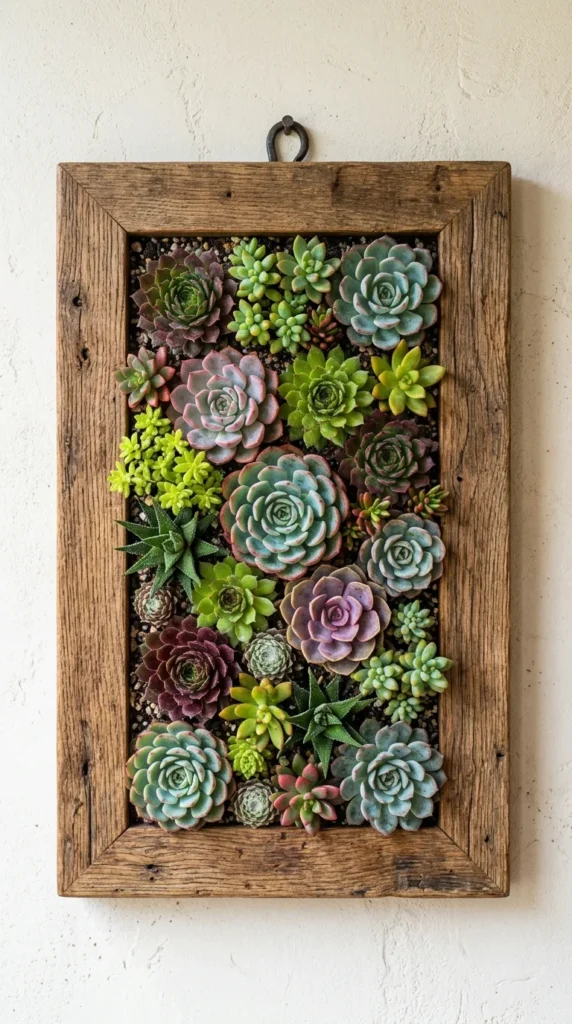
Succulents are essentially slow-growing sculptures, making them perfect for “living frames.” By securing a shallow box with a wire mesh front to the back of a picture frame, you can plant succulents through the mesh. Once the roots take hold, the frame can be hung vertically, creating a piece of art that changes and grows over time.
18. Riverbed Mimicry
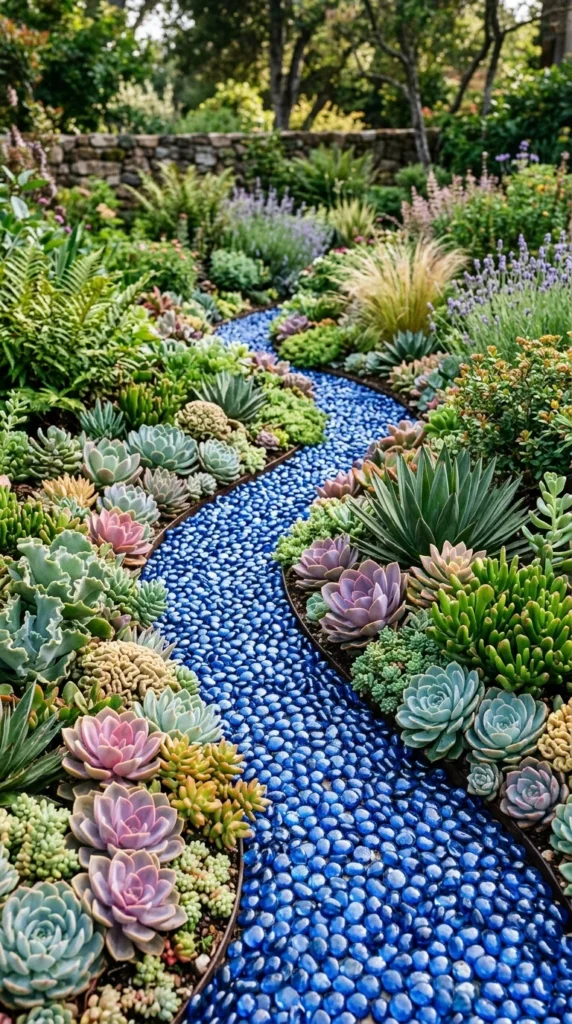
You can create the illusion of water in a drought-tolerant garden by using blue glass cullet or polished blue stones to form a “dry river.” Plant succulents that resemble coral or sea anemones along the “banks,” such as “Euphorbia flanaganii” (Medusa’s Head) or various crested Echeveria, to complete the aquatic theme.
19. Oversized Potted Focal Points
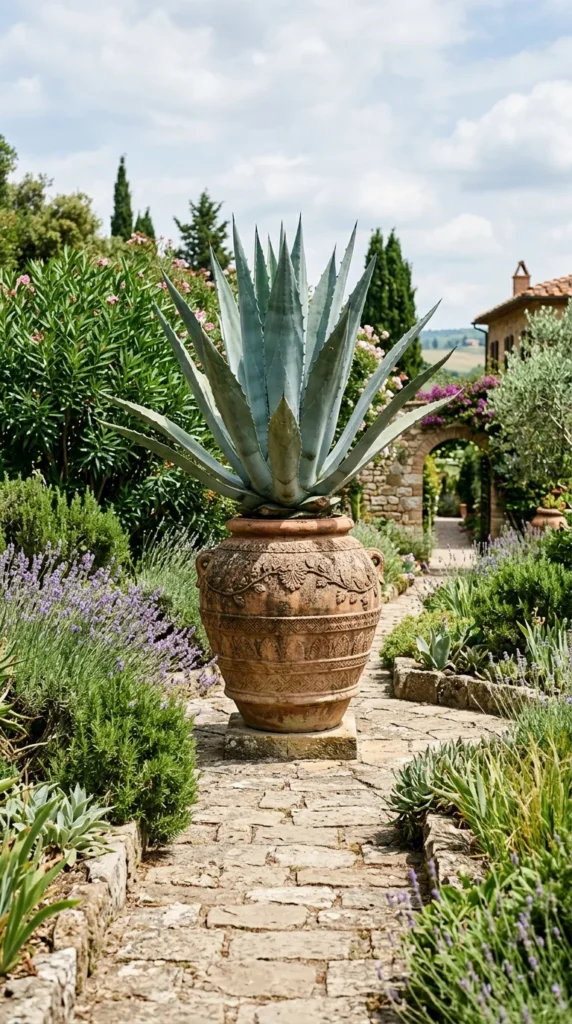
Designers often use “scale” to create drama. A single, enormous succulent in a high-quality, oversized pot creates a powerful focal point. This works particularly well at the end of a walkway or in the center of a courtyard. Choose a plant with a striking silhouette, like a large “Whale’s Tongue” Agave.
20. Succulent Wreaths
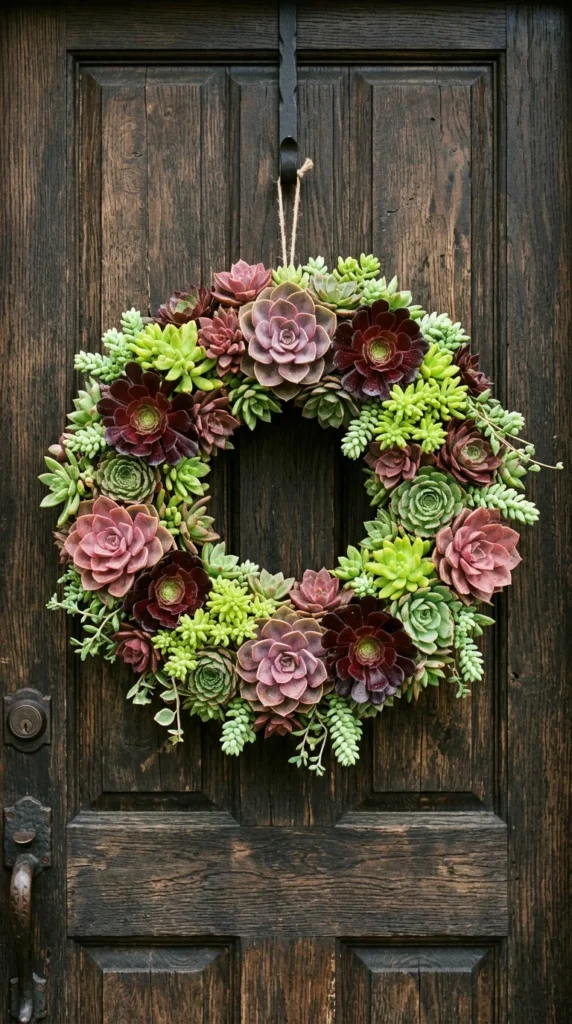
A succulent wreath is a sophisticated alternative to traditional floral wreaths. Because succulents can survive on minimal water and store moisture in their leaves, a wreath made on a moss base can last for months or even years with occasional misting. Use a variety of sizes to create a rich, textured look.
21. Tabletop Centerpieces
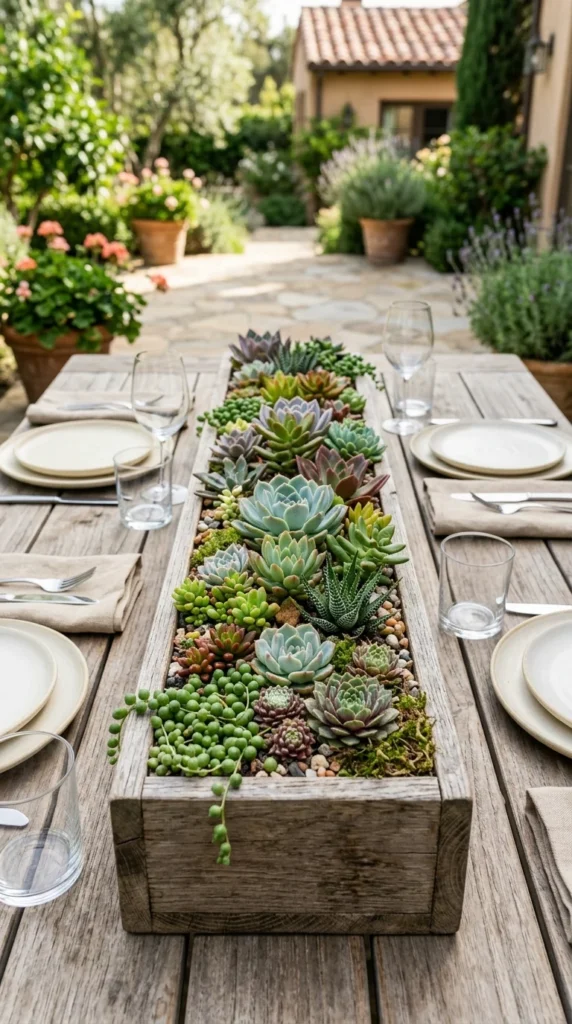
For outdoor entertaining, a succulent trough makes a perfect “set it and forget it” centerpiece. Unlike cut flowers, a succulent arrangement won’t wilt in the sun. Keep the height low so guests can see over the plants, and use a mix of colors to coordinate with your outdoor decor.
22. Staircase Accents
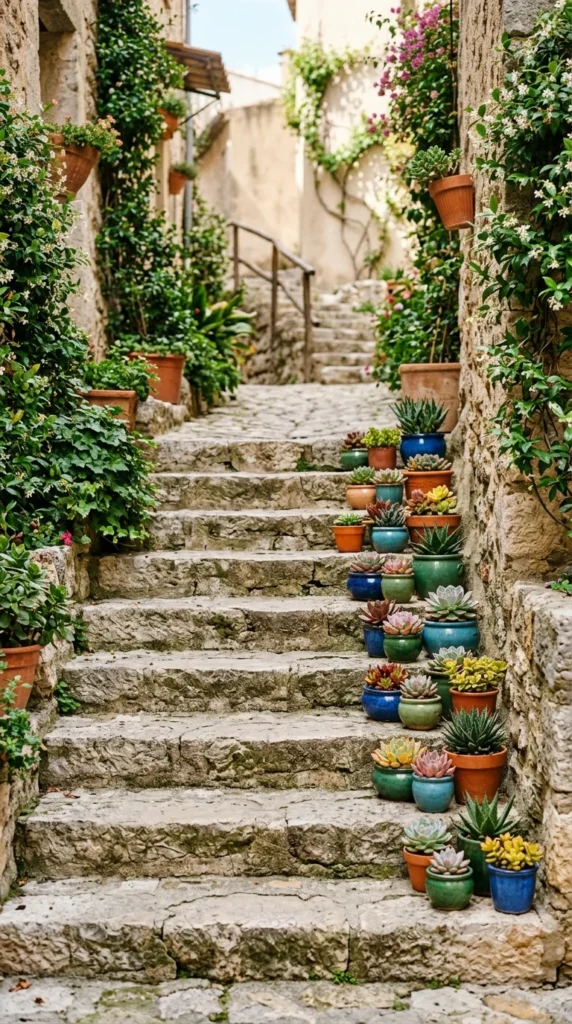
Transform a functional staircase into a design feature by placing small potted succulents on the corners of each step. This breaks up the hard lines of the stone or wood and adds a pop of color at every level. Use a consistent pot style—like all weathered clay or all white ceramic—to keep the look cohesive.
23. Layered Hills
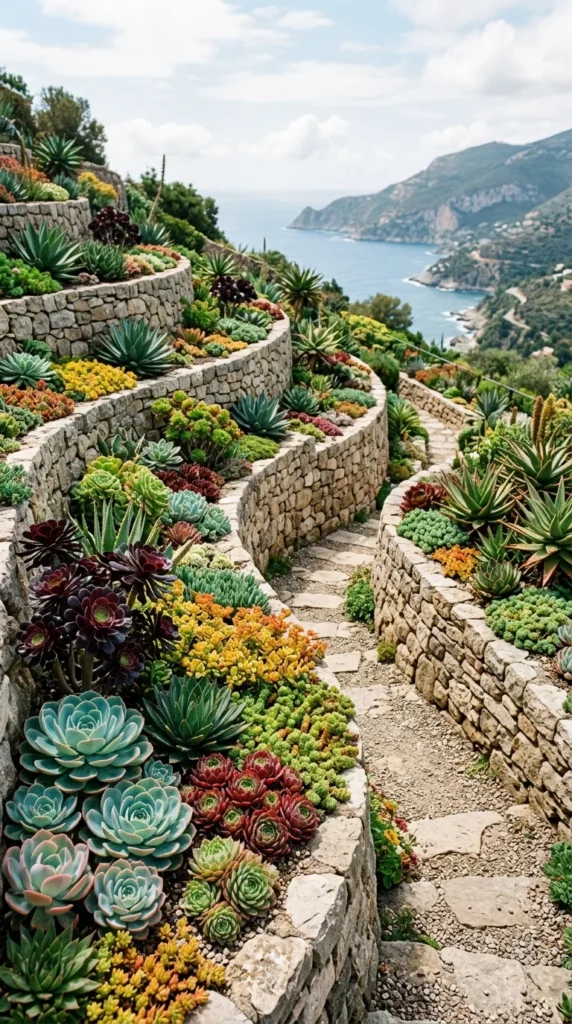
If your garden has a slope, use it to your advantage by creating terraced layers. This allows you to see every plant clearly. Place the smallest, most detailed succulents on the bottom tiers where they are closest to the eye, and larger, bolder specimens on the higher tiers to create a sense of grandeur.
24. Desert Paths
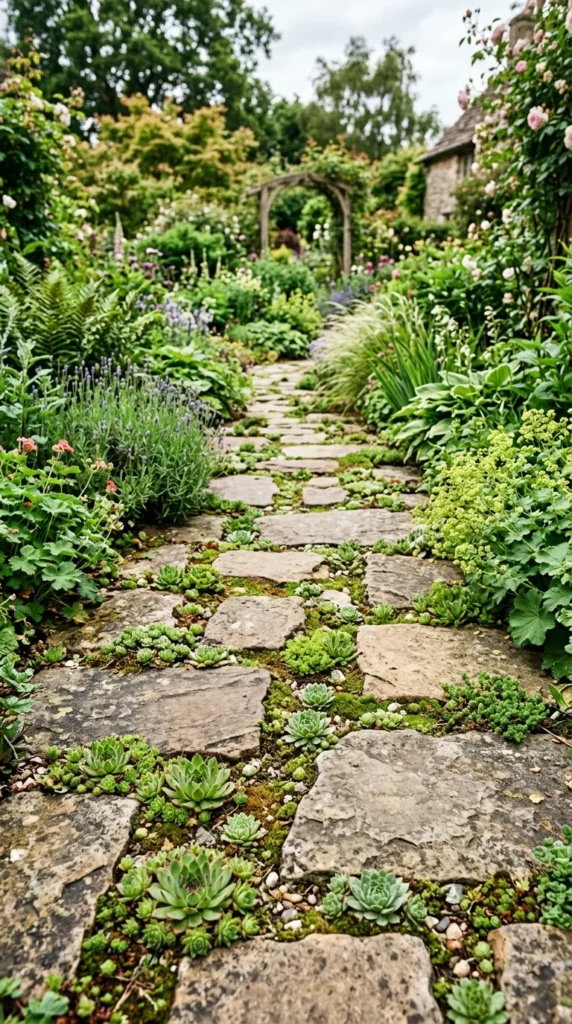
Standard mortar or dirt between stepping stones can be boring. Designers fill those gaps with “step-ables”—low-growing succulents that can handle occasional light foot traffic. Varieties like “Sedum album” or “Sempervivum” fill the cracks with life, making the path look like part of a natural outcropping.
25. Mixed Media
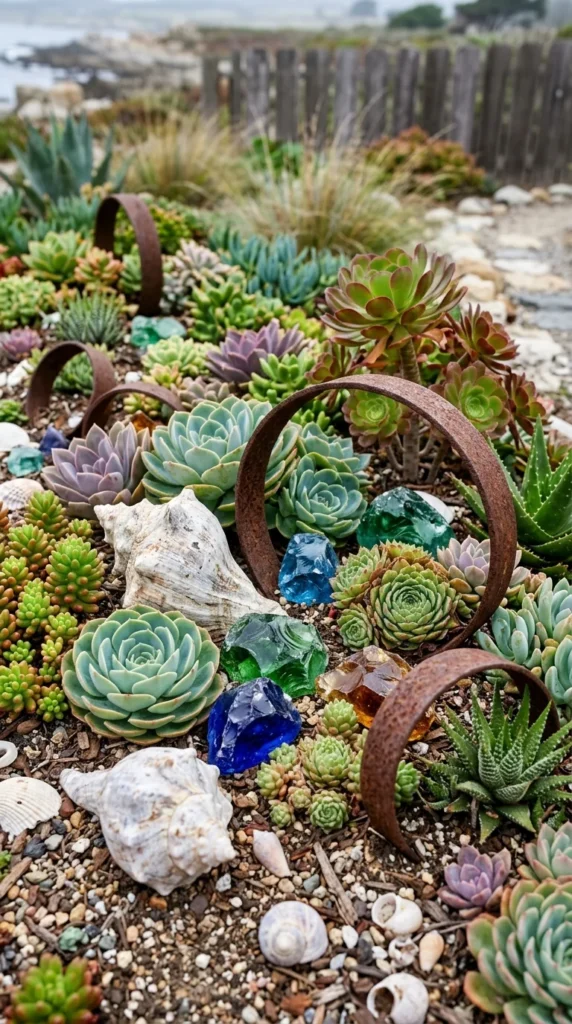
True designer gardens often incorporate non-plant elements to tell a story. Mix your succulents with oversized sea shells, antique ironwork, or chunks of colorful glass. The key is to choose one theme and stick to it, ensuring the objects enhance the plants rather than cluttering the space.
Expert Tips for Succulent Success
- Drainage is Non-Negotiable: Designers always ensure their containers have drainage holes. If using a decorative pot without one, use it as a “cachepot” (place a plastic nursery pot inside the decorative one).
- The Power of Top-Dressing: The secret to a “finished” look is top-dressing. Cover the bare soil with pea gravel, crushed granite, or decorative glass. This hides the dirt, suppresses weeds, and makes the colors of the succulents pop.
- Sunlight Matters: Most succulents need bright, indirect light to maintain their vibrant colors. If they don’t get enough light, they will “stretch” (etiolate), losing their compact, designer shape.
- Water Sparingly: The quickest way to ruin a designer garden is overwatering. Wait until the soil is bone-dry before watering again. Remember: it is much easier to revive a thirsty succulent than a rotten one.