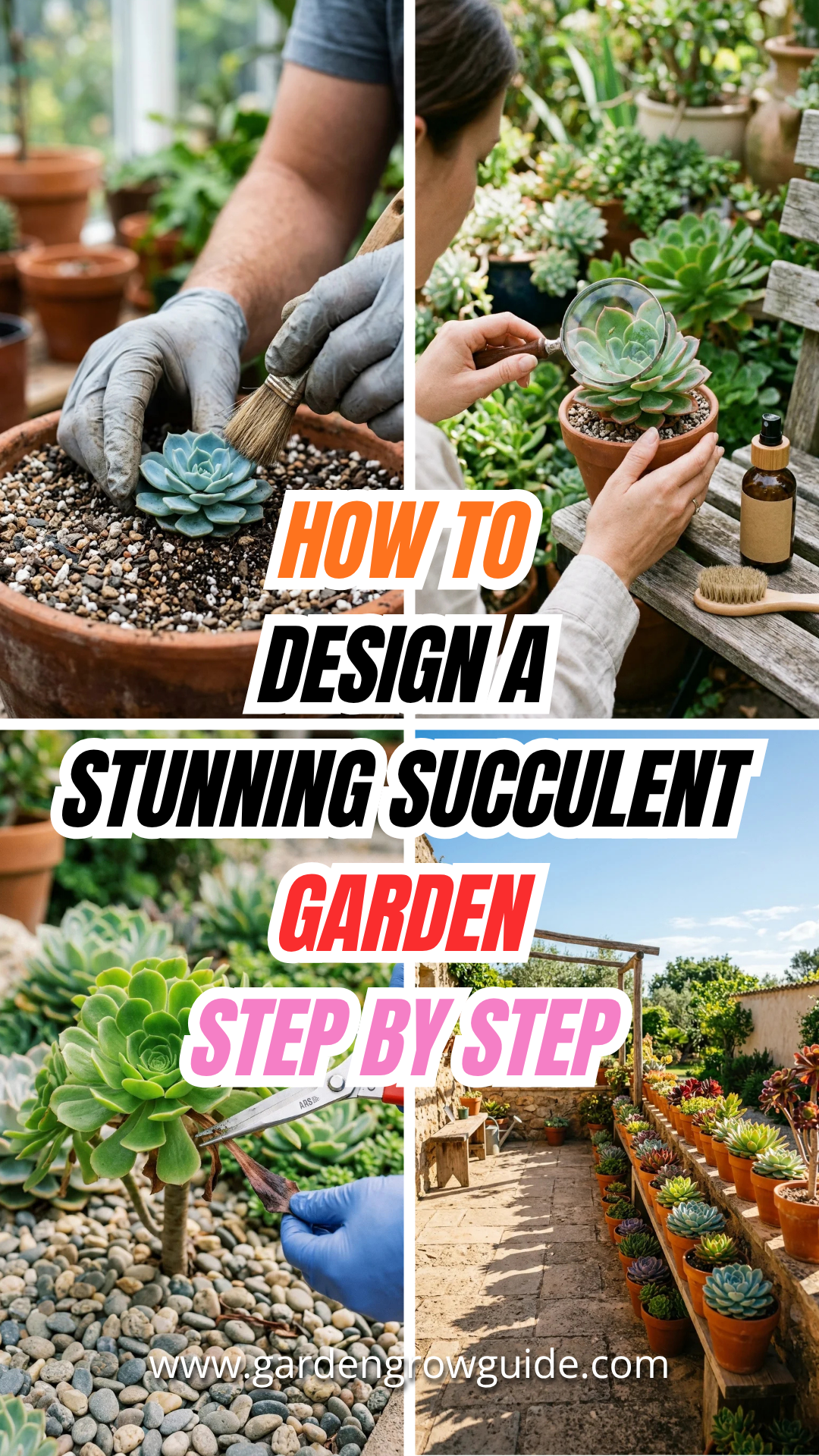
Succulent gardens have transformed from niche botanical interests into a global landscape phenomenon. Their architectural shapes, ethereal colors, and remarkable resilience make them the ideal choice for both novice gardeners and seasoned landscape designers. Whether you are working with a vast backyard or a small balcony container, the principles of succulent design remain the same: it is an art of texture, contrast, and strategic minimalism.
Unlike traditional gardens that rely on fleeting blooms, a succulent garden offers year-round structural beauty. These plants are the “living sculptures” of the botanical world, storing water in their fleshy leaves to survive in arid conditions. Designing a stunning succulent garden requires more than just placing plants in the ground; it involves understanding their unique physiological needs and arranging them in a way that highlights their geometric perfection.
1. Vision
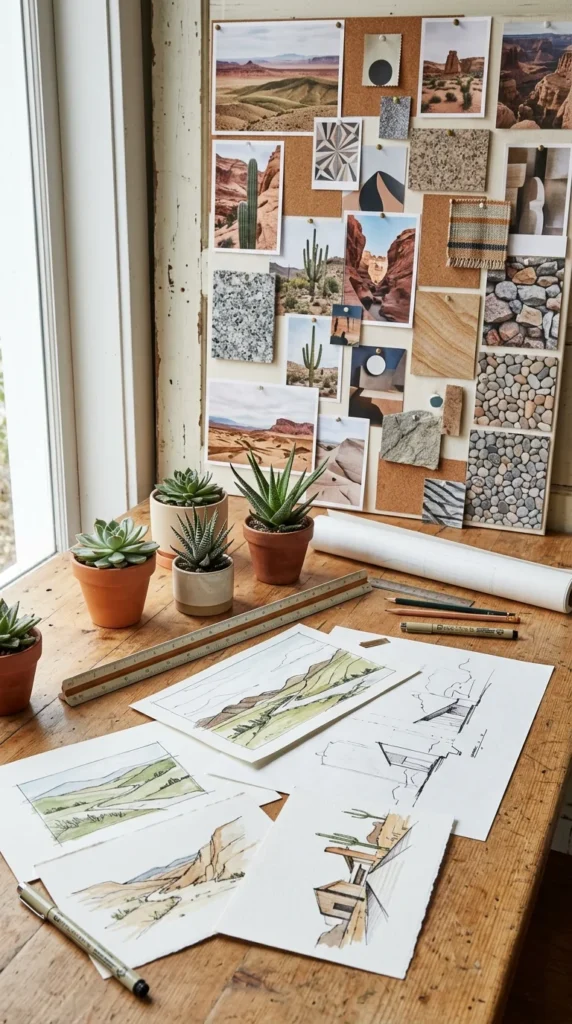
Every great garden begins with a clear conceptual framework. Before you touch a shovel, you must decide on the “vibe” of your garden. Are you aiming for a rugged, naturalistic desert look, or a polished, modern geometric arrangement? Succulents are incredibly versatile and can fit into almost any aesthetic.
When planning your layout, consider the concept of “The Focal Point.” This is often a large, structural plant like an Agave americana or a tall Euphorbia that draws the eye first. From there, you can design secondary clusters and groundcovers that radiate outward. Use “The Rule of Three” or odd-numbered groupings to create a more natural, organic feel. Drawing a rough map of your space will help you determine how many plants you need and where the tallest specimens should reside to avoid shading out smaller varieties.
2. Sunlight
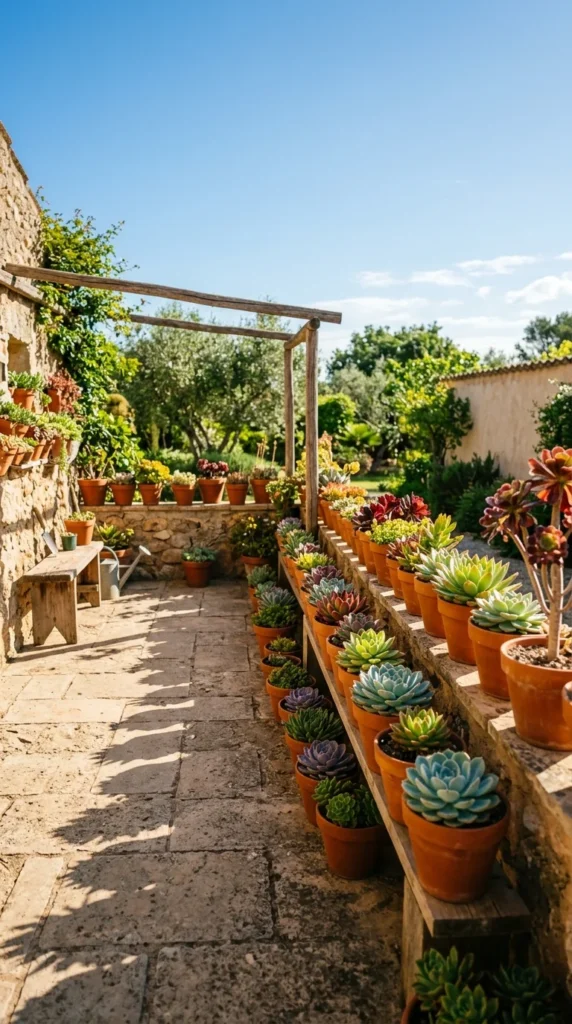
Light is the most critical factor in succulent health and coloration. Most succulents require at least six hours of bright, indirect sunlight to maintain their compact shapes and vivid hues. When succulents do not get enough light, they undergo a process called “etiolation,” where they stretch toward the light source, becoming leggy and losing their aesthetic appeal.
However, “full sun” can be deceptive. In extremely hot climates, the intense afternoon sun can actually scorch the leaves of more delicate varieties like Haworthia or certain Echeveria. When designing your garden, observe how the sun moves across your space throughout the day. Place sun-loving Cacti and Agaves in the brightest spots, and reserve slightly shaded areas or “dappled light” zones for softer, fleshier succulents that might burn under direct midday heat.
3. Varieties
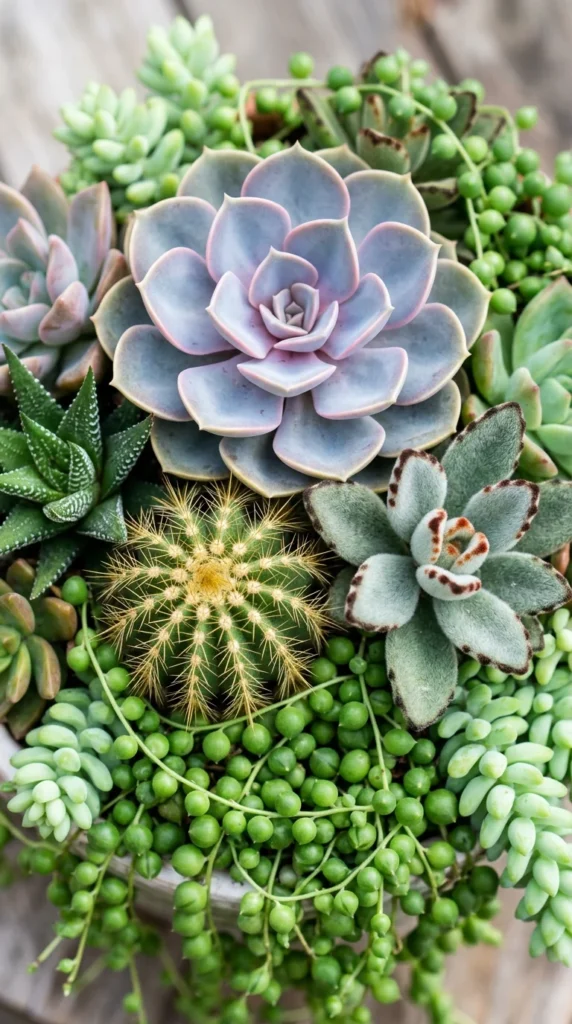
To create a visually stunning garden, you must play with the “Thriller, Filler, and Spiller” technique.
- Thrillers: These are your statement plants. Think of tall Aloes with striking blooms or large, colorful Aeoniums that stand on thick stalks.
- Fillers: These are mounding plants that take up space and add texture. Crassula (Jade plants) and various Sedums work perfectly to bridge the gaps between your thrillers.
- Spillers: These are trailing plants that soften the edges of containers or stone walls. Senecio rowleyanus (String of Pearls) or Sedum morganianum (Burro’s Tail) provide a cascading effect that adds vertical interest.
Don’t be afraid to experiment with color. Succulents offer a palette that ranges from icy blues and silvers to deep burgundies and neon oranges. Using complementary colors—like pairing a blue Senecio serpens with an orange Sedum nussbaumerianum—will make the garden “pop.”
4. Drainage
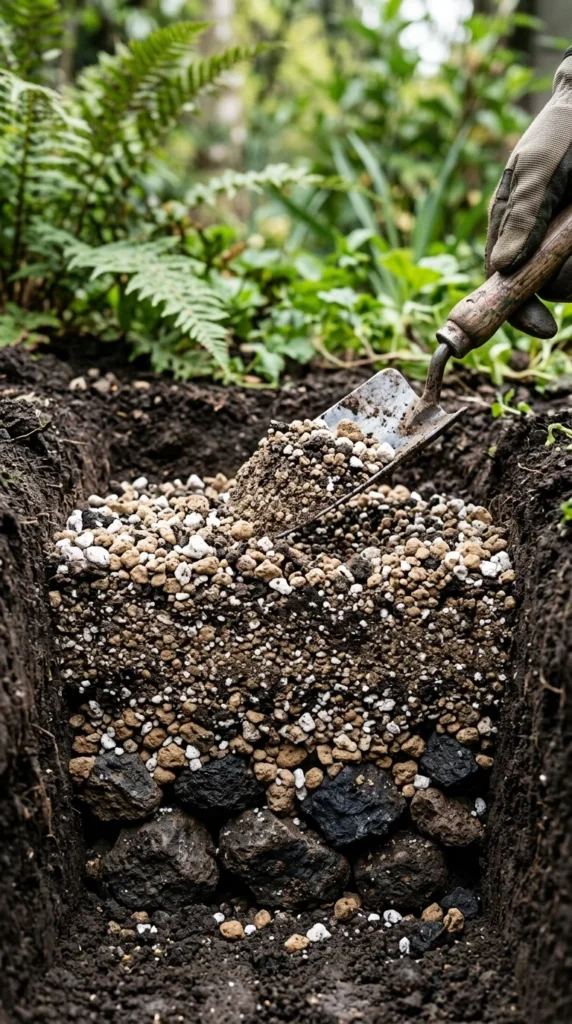
The fastest way to kill a succulent is through “wet feet.” These plants have evolved to survive in environments where water is scarce, and their roots are highly susceptible to rot if left in standing water. Proper drainage is the foundation of succulent success.
If you are planting in the ground, you may need to amend your native soil. Most garden soil is too heavy and retains too much moisture. Mix in generous amounts of coarse sand, perlite, or pumice to create a “gritty mix.” For raised beds or containers, look for a specialized cactus and succulent potting mix. A good rule of thumb: if you squeeze a handful of moist soil and it stays in a ball, it’s too heavy. It should crumble apart immediately to ensure air can reach the roots and water can pass through freely.
5. Containers
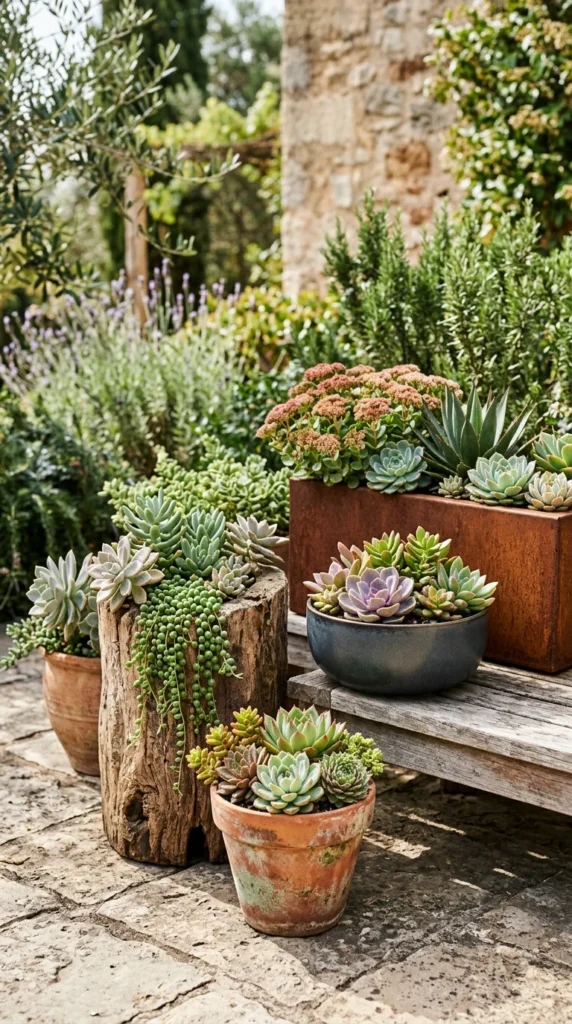
The choice of container is both a functional and aesthetic decision. Terracotta is a classic choice for succulents because the porous clay allows the soil to “breathe” and dry out faster. However, if you prefer a more modern look, ceramic, concrete, or metal planters can be used, provided they have adequate drainage holes at the bottom.
Consider the scale of your plants relative to the container. A tiny Echeveria will look lost in a massive pot, while a large Agave might crack a fragile ceramic vessel as its roots expand. For a “stunning” look, try group planting. Creating a “succulent arrangement” in a wide, shallow bowl allows you to create a miniature landscape, mixing different heights and colors in a single, eye-catching piece.
6. Planting
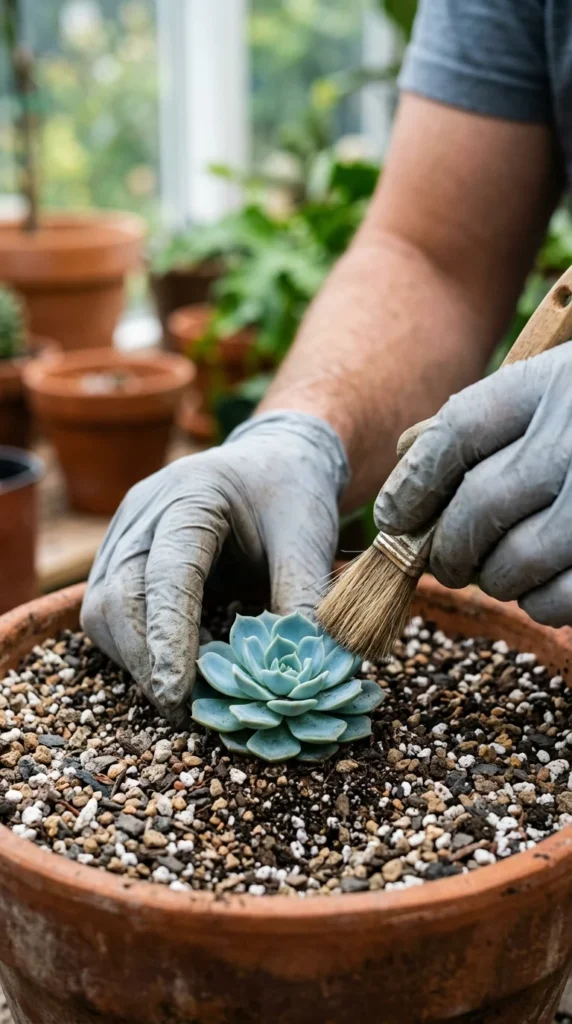
When it is time to put the plants in the ground, handle them with care. Succulent leaves are often brittle and can snap off easily. If you are dealing with cacti, use thick gloves or a folded piece of newspaper to move them without getting pricked.
Dig a hole only as deep as the root ball. Succulents do not like to be planted too deep; the base of the plant should be level with the soil surface to prevent the lower leaves from rotting. Once the plant is in place, gently firm the soil around the roots to eliminate air pockets, but do not pack it so tightly that you crush the delicate root system. A professional tip: wait a few days after planting before watering. This allows any roots that were damaged during the move to “callous” over, preventing pathogens from entering the plant.
7. Mulching
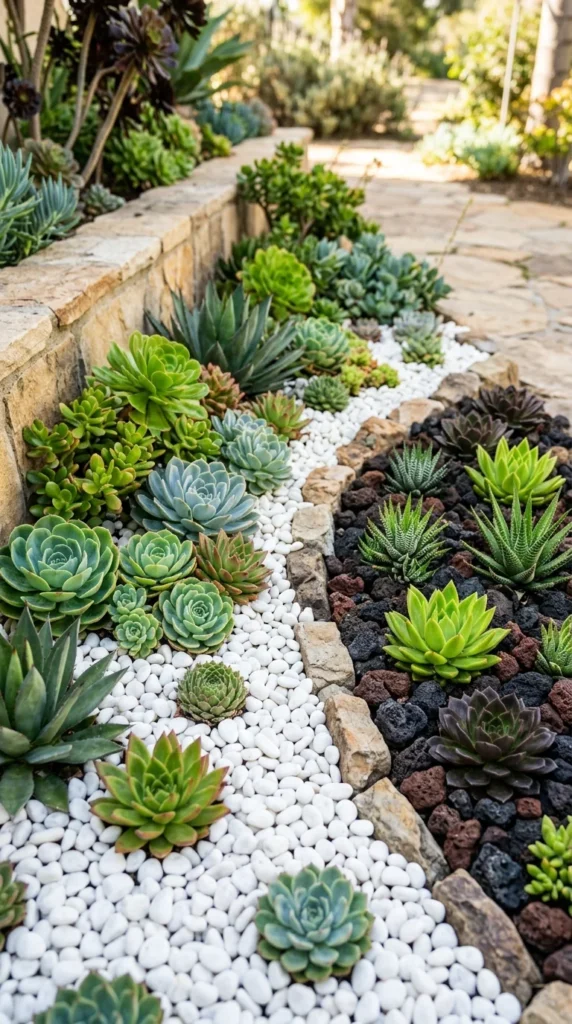
In the world of succulent design, “top dressing” is the secret ingredient that elevates a garden from amateur to professional. Top dressing refers to the layer of decorative rocks, pebbles, or sand placed on top of the soil after planting.
Beyond its aesthetic appeal—giving the garden a clean, finished look—top dressing serves several functional purposes. It keeps the lower leaves of the succulents off the damp soil, reducing the risk of rot. It also helps suppress weeds and prevents the light, airy succulent soil from washing away during watering. Choose a color of stone that complements your plants; dark lava rock makes bright green plants stand out, while white quartz pebbles create a serene, high-contrast look for darker succulents.
8. Hydration
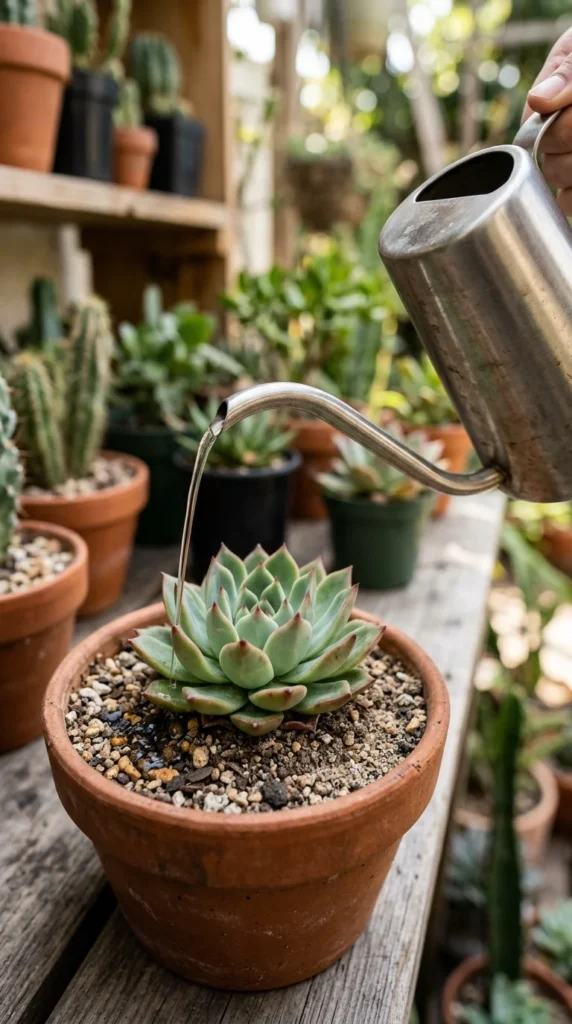
Watering succulents is an exercise in restraint. The most common mistake is watering too frequently. Succulents prefer a “soak and dry” cycle. This means you should water the soil thoroughly until water drains out of the bottom of the pot (or deeply saturates the ground), and then wait until the soil is completely dry before watering again.
During the active growing season (usually spring and summer), succulents may need water once a week or every two weeks, depending on the heat. In the winter, many succulents go dormant and require very little, if any, water. Always aim the water at the base of the plant. Water sitting in the “cup” of a rosette can lead to fungal issues and rot, especially in cooler weather.
9. Protection
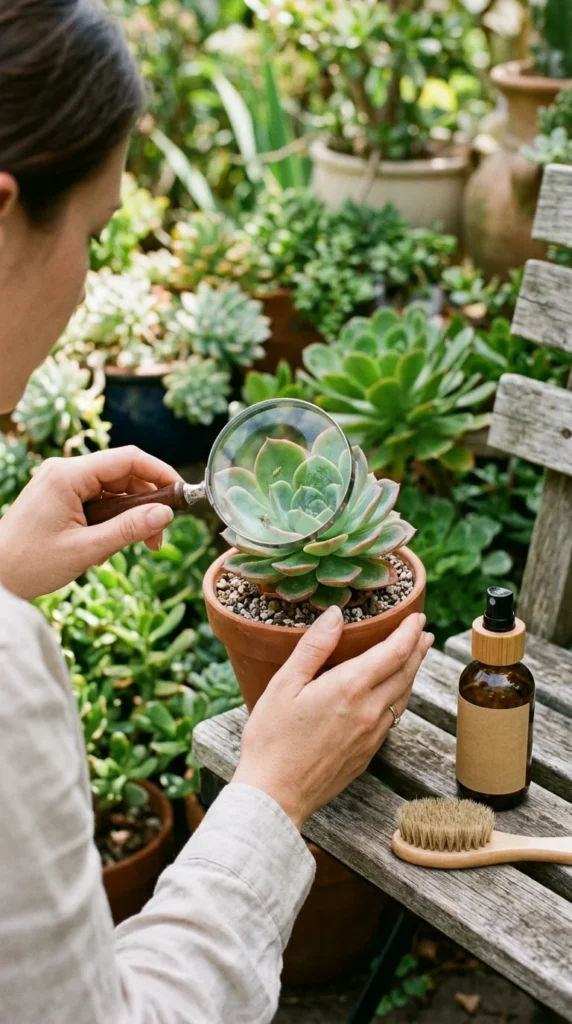
While succulents are hardy, they are not invincible. The most common pests are mealybugs—tiny, white, cottony insects that hide in the crevices of the leaves. If left unchecked, they can sap the life out of your plants. Other threats include scale, aphids, and occasionally slugs in damp environments.
Regularly inspect your garden for signs of stress or infestation. If you spot mealybugs, you can treat them by dabbing them with a cotton swab dipped in rubbing alcohol or using a gentle insecticidal soap. Prevention is the best cure: ensure your plants have good airflow and aren’t overcrowded, as stagnant air and high humidity are the primary breeding grounds for most succulent pests.
10. Grooming
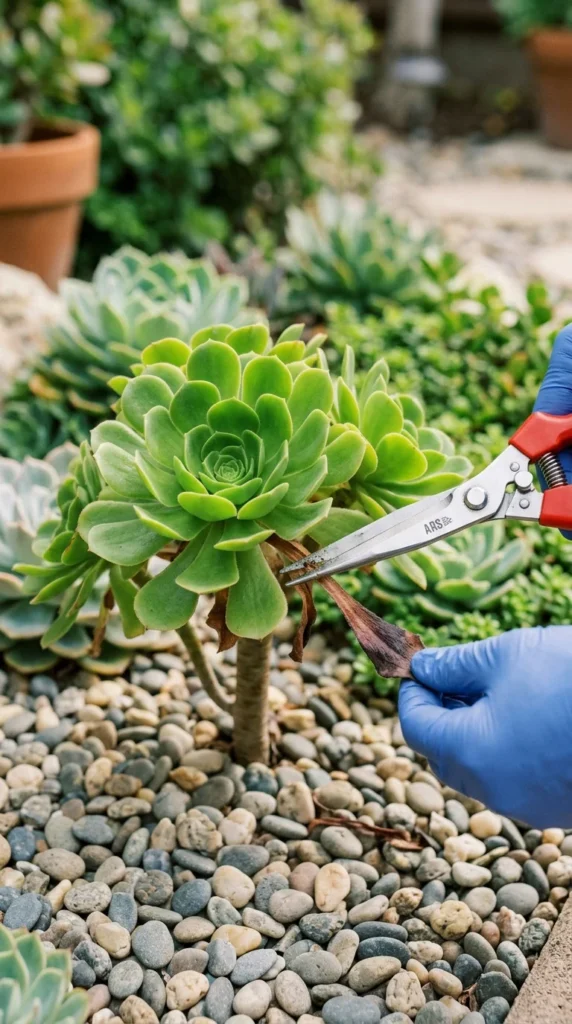
A stunning succulent garden requires occasional maintenance to keep it looking its best. As succulents grow, the lower leaves will naturally wither and turn brown; this is a normal part of their lifecycle as they funnel energy to new growth. Simply pull these dried leaves away to keep the plant looking tidy and to remove potential hiding spots for pests.
Some succulents, like Aeoniums or certain Sedums, can become “leggy” over time. Don’t be afraid to perform “succulent surgery.” You can behead a tall succulent, let the cut end dry for a few days, and then replant the head back into the soil. It will grow new roots, and the old stem will often produce multiple new “pups,” effectively rejuvenating your garden and giving you more plants for free. This constant cycle of growth and propagation ensures your garden remains a dynamic, evolving work of art.