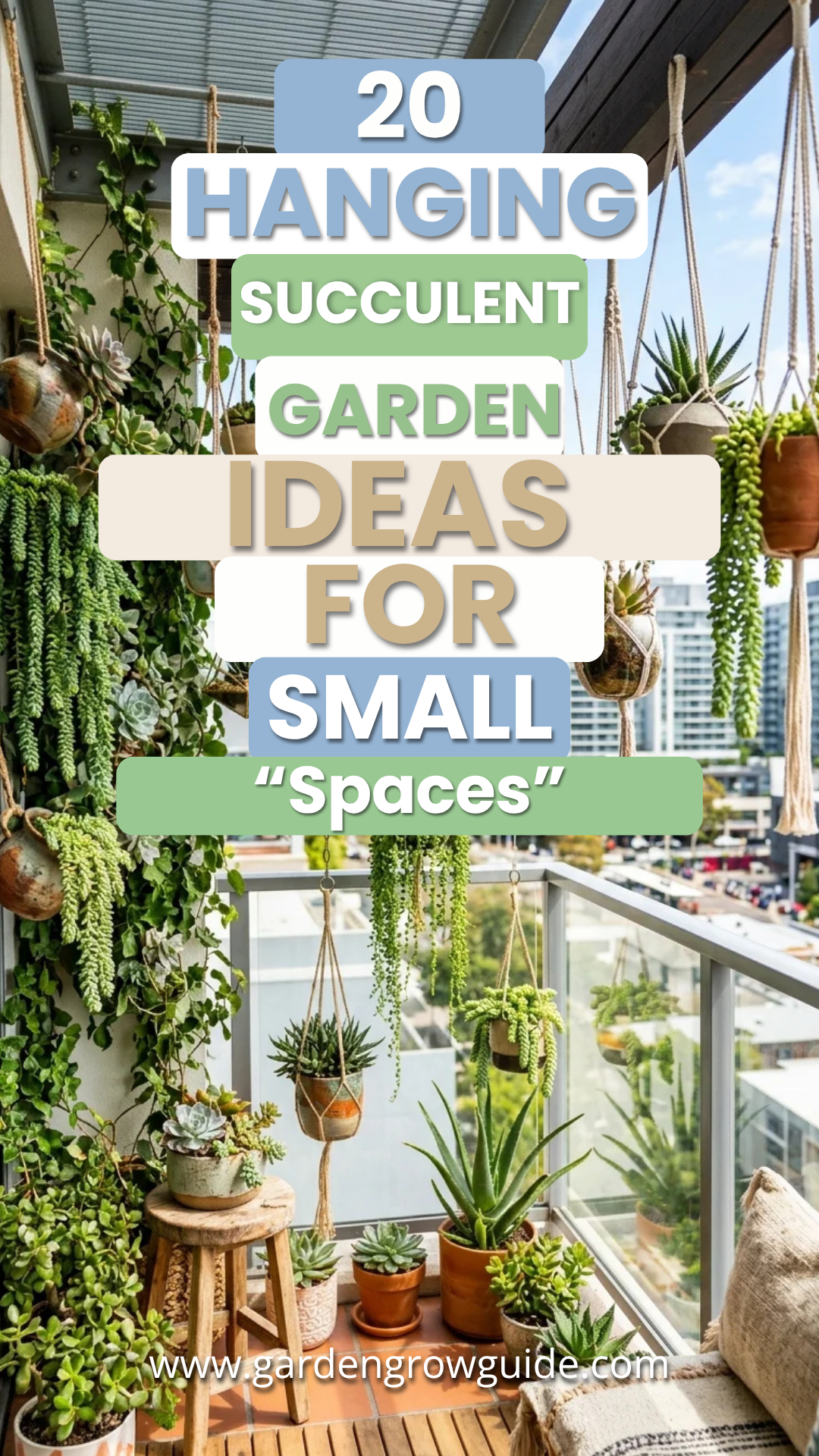
Succulents are the ultimate solution for urban gardeners and those living in compact spaces. Their resilient nature, minimal water requirements, and stunning geometric shapes make them perfect for interior design. However, when floor space is at a premium, the only way to go is up. Vertical gardening and hanging displays allow you to transform “dead” space—like corners, window frames, and empty walls—into a lush, living tapestry.
Whether you are working with a tiny studio apartment or a narrow balcony, these 20 hanging succulent garden ideas will help you maximize your square footage while bringing the serenity of nature indoors.
1. Macramé Slings
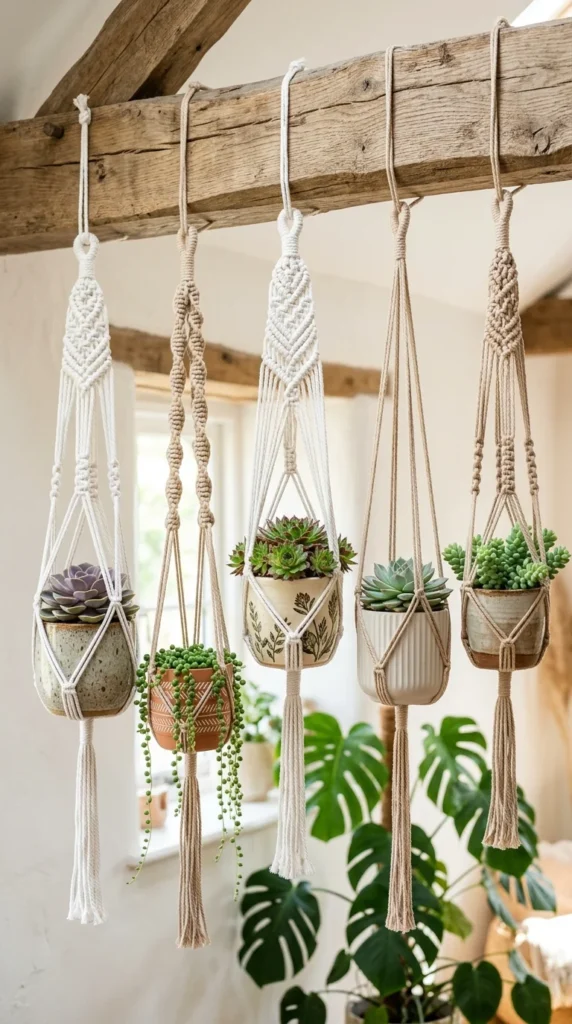
The bohemian aesthetic of macramé is a timeless choice for hanging gardens. These woven cotton or jute slings provide excellent support for pots of all sizes. For small spaces, use tiered macramé hangers that hold two or three pots vertically, utilizing the vertical height of a room without increasing the footprint. Varieties like the “String of Pearls” (Senecio rowleyanus) look particularly striking as they spill over the edges of a macramé-cradled pot.
2. Birdcage Planters
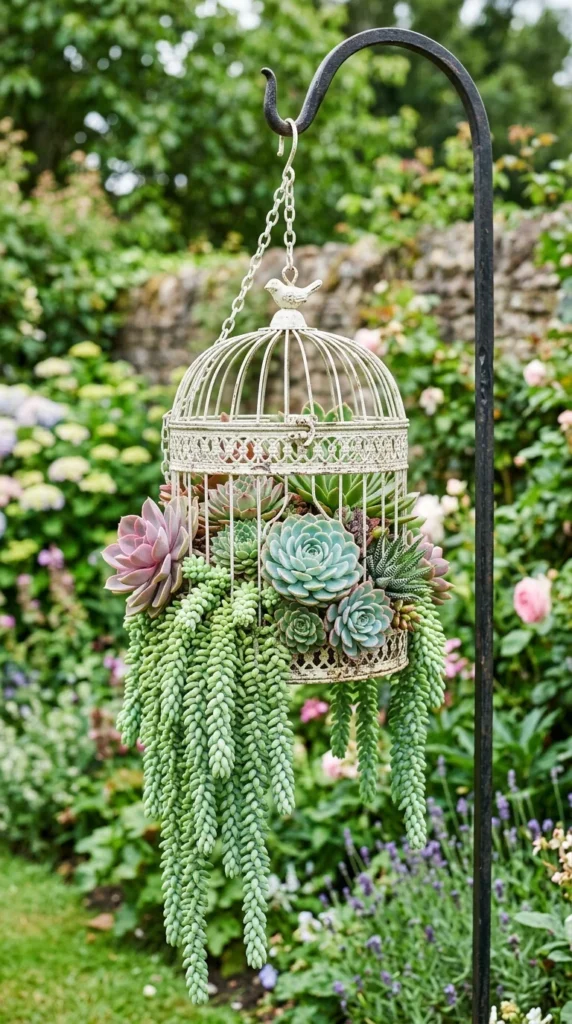
Repurposing vintage birdcages creates a romantic, shabby-chic focal point. Because birdcages are porous, they provide the excellent airflow that succulents crave. You can line the bottom with coconut coir or sphagnum moss to hold the soil in place. This setup is ideal for small balconies where you can hang the cage from a corner hook, allowing the succulents to grow through the bars in a beautiful, cluttered display.
3. Wall Pockets
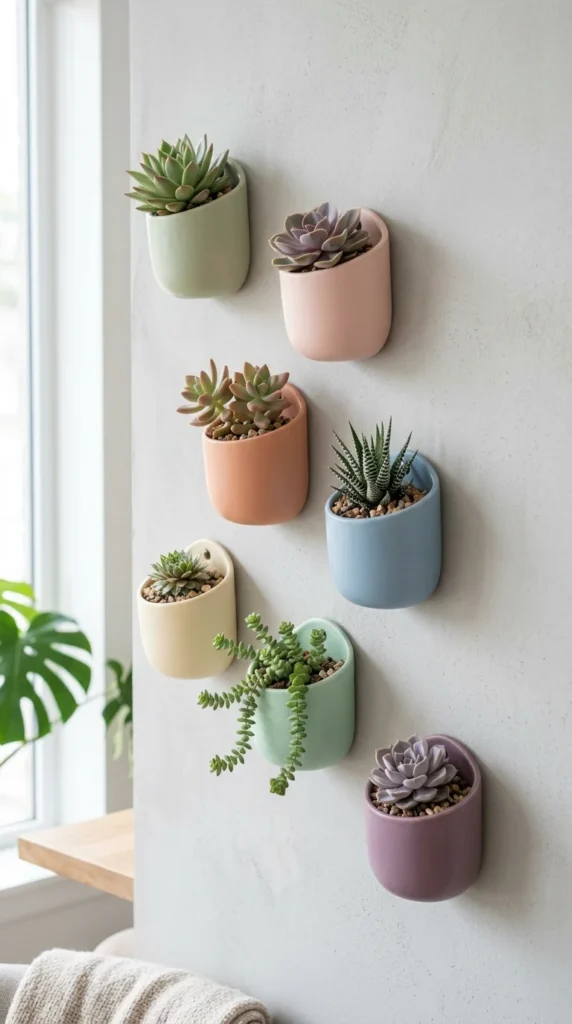
Wall pockets are essentially vertical containers that mount flush against the wall. They are perfect for hallways or narrow entryways where a traditional hanging pot might get in the way. Choose pockets made of breathable felt or ceramic. Felt pockets are particularly good for succulents as they allow the soil to dry out quickly, preventing root rot in species like the “Zebra Cactus” (Haworthiopsis fasciata).
4. Floating Shelves
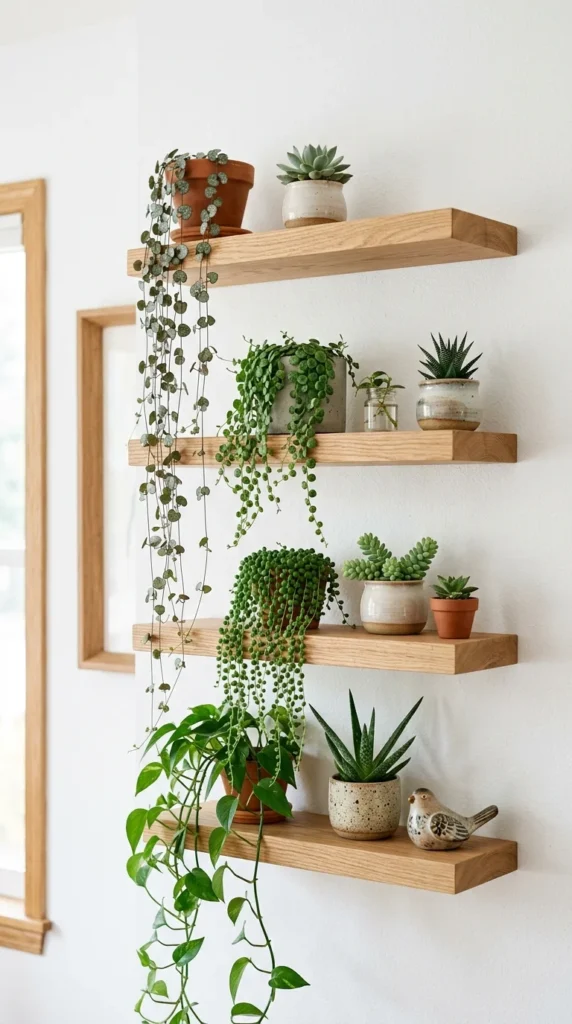
While not “hanging” in the traditional sense of a rope, floating shelves utilize wall space to create a suspended garden effect. By staggering the shelves at different heights, you create visual interest and plenty of room for trailing succulents to descend. This is a great way to keep your succulents near a window without blocking the entire view.
5. Teacup Hangers
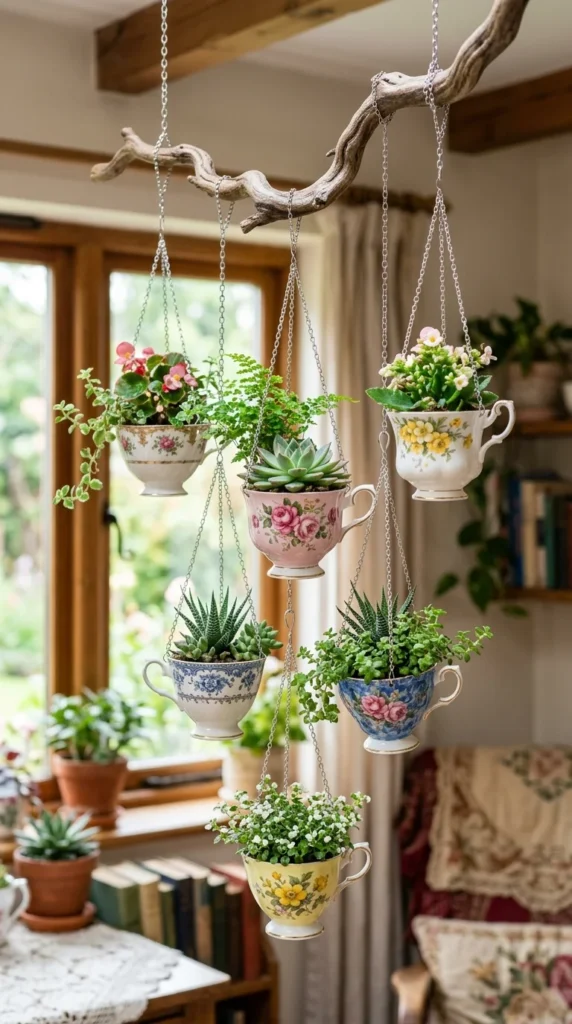
For those with a very limited amount of space, miniature gardens are the way to go. Vintage teacups are the perfect size for slow-growing succulents like “Living Stones” (Lithops) or small Echeveria pups. Drill a small drainage hole in the bottom of the cup using a diamond bit, or use a thick layer of charcoal at the bottom to manage moisture. These can be hung in a kitchen window for a charming, whimsical touch.
6. Vertical Pallets
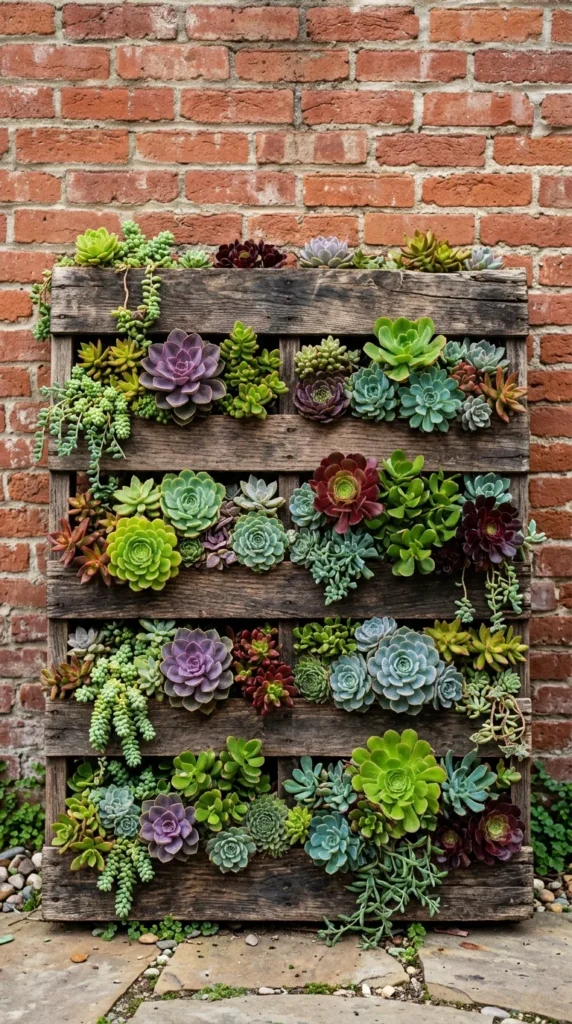
If you have a small outdoor area or a sturdy indoor wall, a pallet garden is a space-saving powerhouse. By stapling landscape fabric behind the slats, you create “pockets” for soil. This allows you to plant dozens of succulents in a space only a few inches deep. It acts as living art, providing a massive amount of greenery while taking up zero floor space.
7. Geometric Terrariums
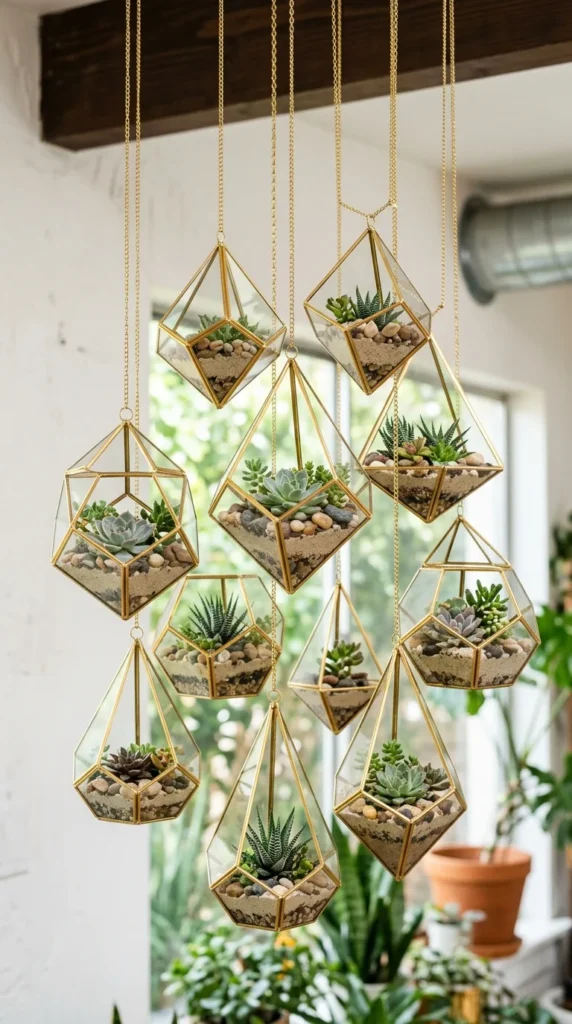
Geometric glass terrariums add a modern, architectural element to your garden. These are best for “Air Plants” (Tillandsia) or very hardy succulents that don’t require high humidity. Hanging them at different levels in a corner creates a 3D constellation of plants. Ensure the terrariums have open sides to prevent moisture buildup, which can be detrimental to succulent health.
8. Shower Caddy Garden
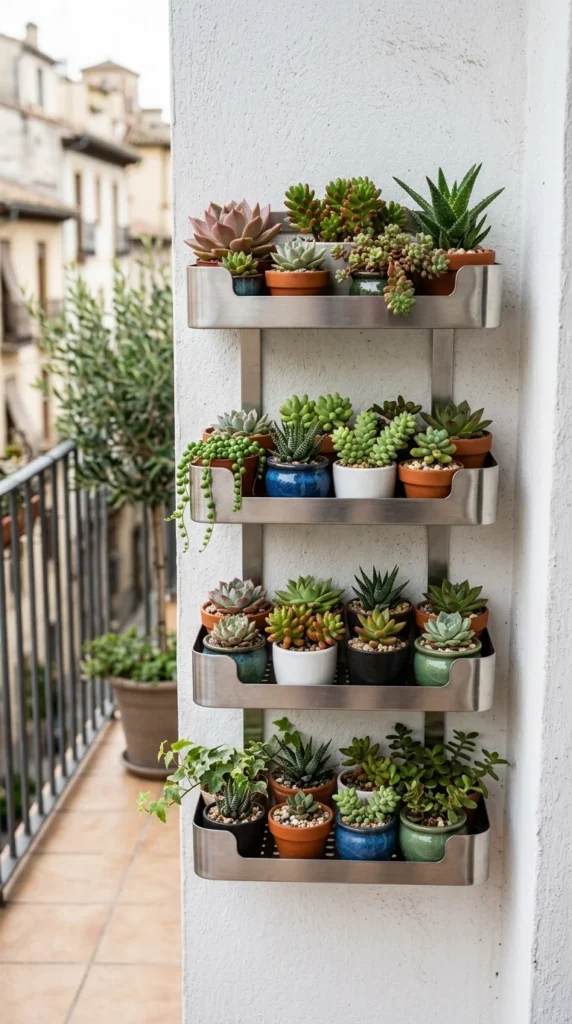
A stainless steel shower caddy is an ingenious hack for a small-space garden. They are designed to withstand moisture and usually come with hooks or suction cups. You can hang them on the side of a bookshelf, a door, or an outdoor fence. Each tier provides a shelf for small pots, making it an organized and highly portable garden solution.
9. Kokedama Balls
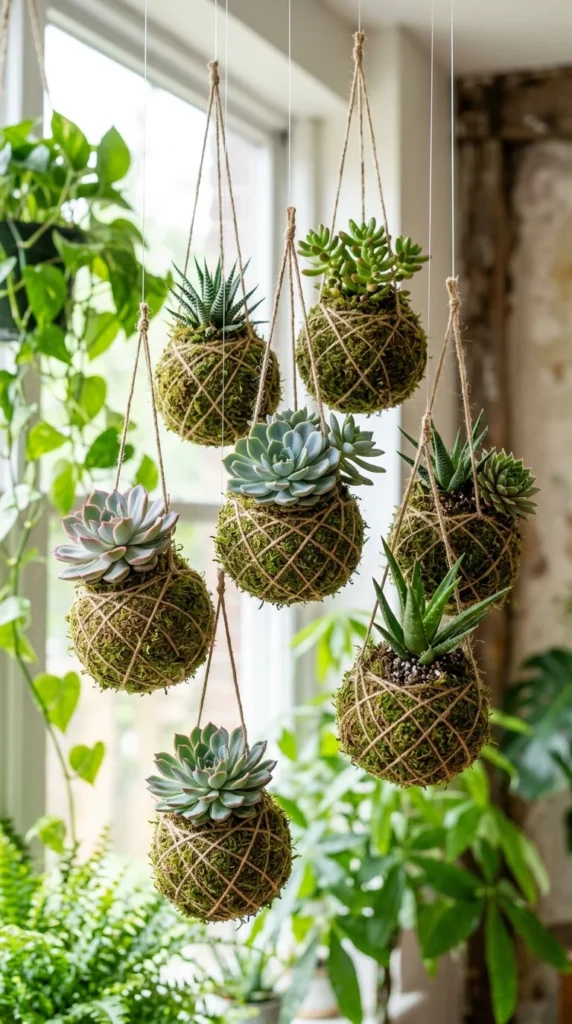
Kokedama is a Japanese gardening technique where the plant’s root ball is encased in a moss-covered sphere of soil. These “string gardens” are incredibly space-efficient because they don’t require a heavy pot. They can be hung from curtain rods or ceiling hooks. Because succulents require less water, these moss balls stay lightweight and are easy to maintain in an indoor environment.
10. Magnetic Tins
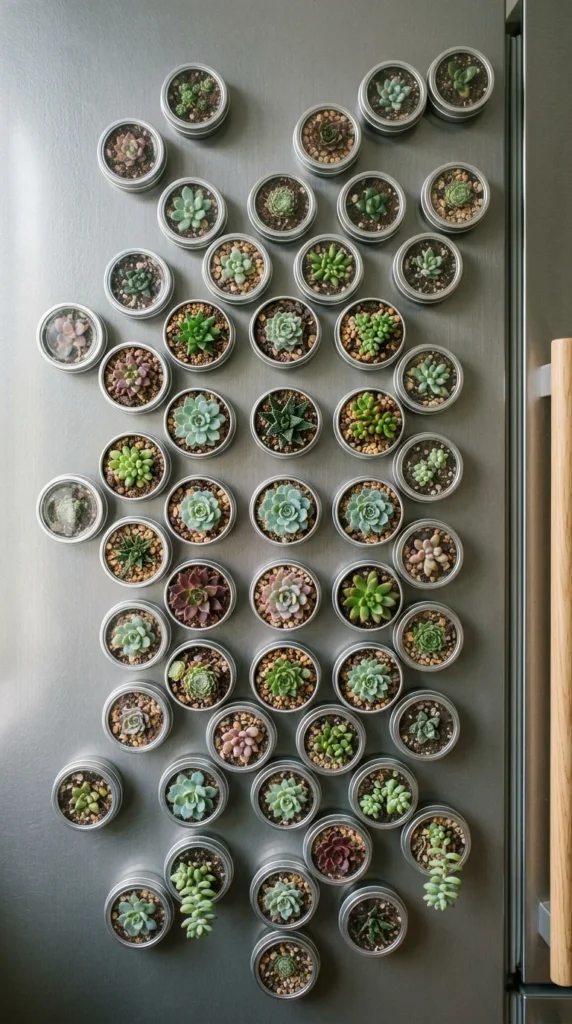
For the absolute smallest of spaces, magnetic tins can turn your refrigerator or a metal wall plate into a vertical garden. Small spice tins with clear lids are perfect for this. Simply add a few drainage holes, some succulent-specific soil, and a small cutting. This is a brilliant way to add life to a kitchen without sacrificing counter space.
11. Ladder Displays
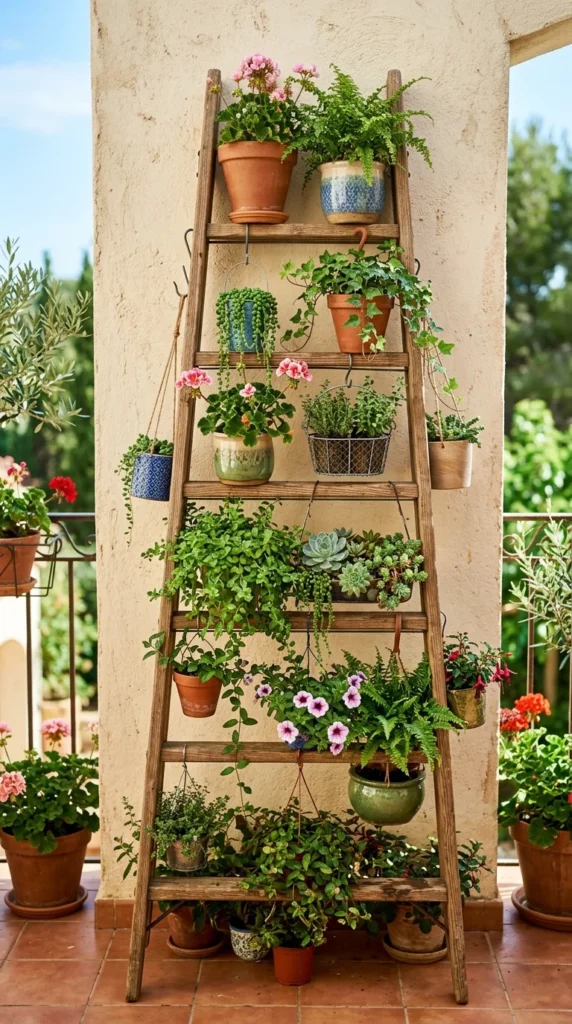
A leaning ladder is a great “no-drill” solution for renters. By leaning a thin ladder against the wall, you gain multiple horizontal bars from which to hang “S-hooks” and pots. This allows you to create a dense wall of succulents that can be easily moved or rearranged. It utilizes vertical space efficiently while adding a rustic, organized look to the room.
12. Colander Planters
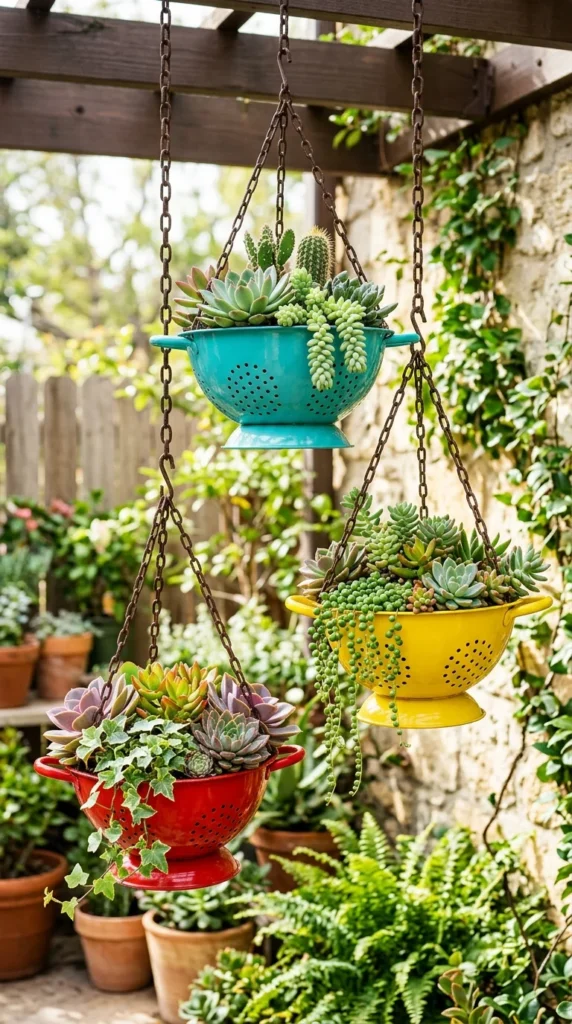
Succulents require excellent drainage, and nothing drains better than a kitchen colander. By attaching three chains to the rim, you can turn a vintage colander into a vibrant hanging basket. The holes in the sides also allow for side-planting, where you can tuck small succulents into the gaps to create a full, spherical look as they grow.
13. Glass Globes
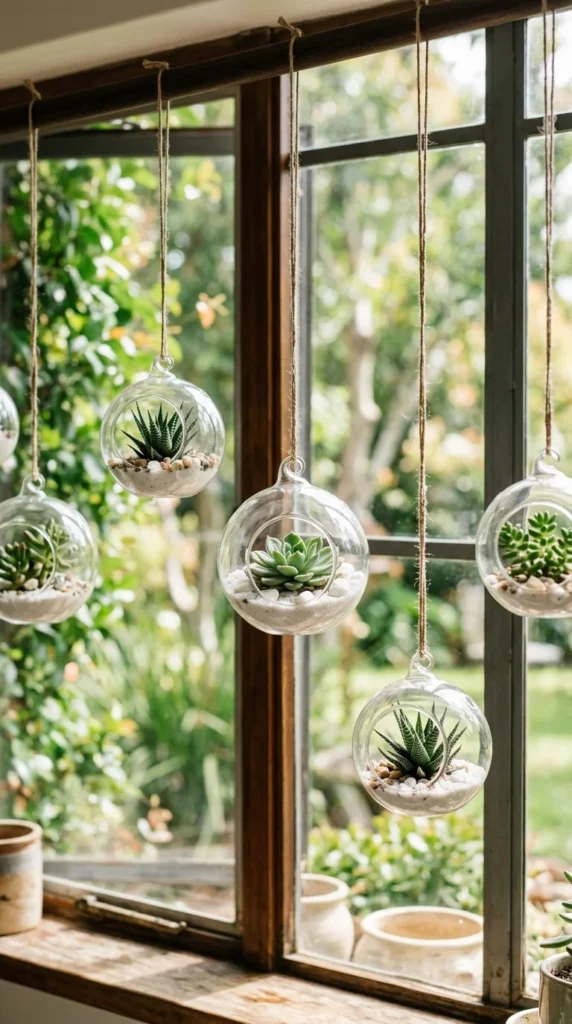
Similar to geometric terrariums, glass globes offer a more organic, fluid look. They are perfect for small “plug” succulents. Because they are transparent, they don’t visually clutter a room, making a small space feel larger and more open while still being filled with greenery.
14. Coconut Shells
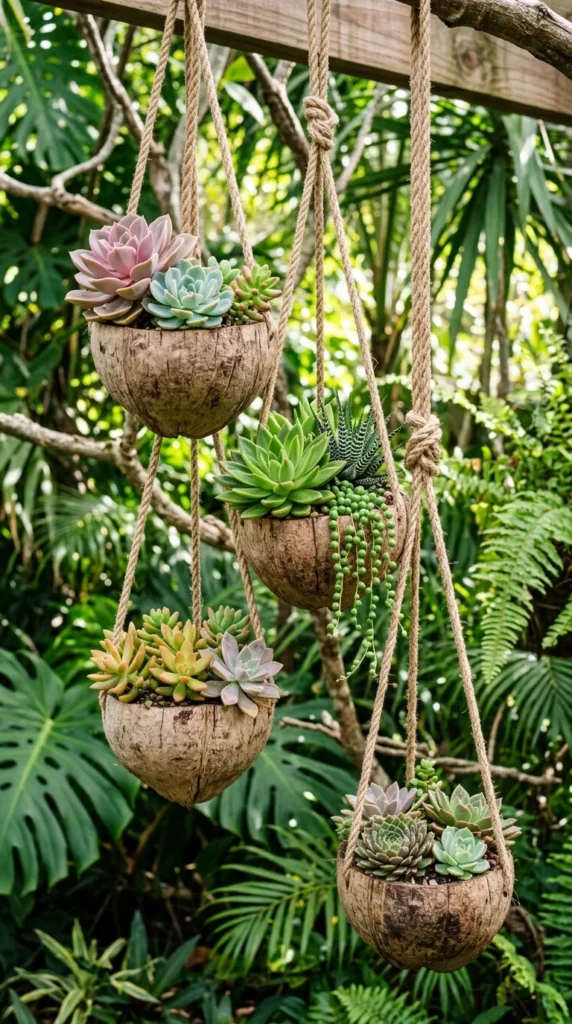
For a tropical or natural vibe, halved coconut shells make excellent hanging containers. They are durable, biodegradable, and the perfect size for most medium succulents. They look wonderful when grouped in clusters of three or five at different heights, providing a textured, earthy contrast to the waxy leaves of the plants.
15. Picture Frames
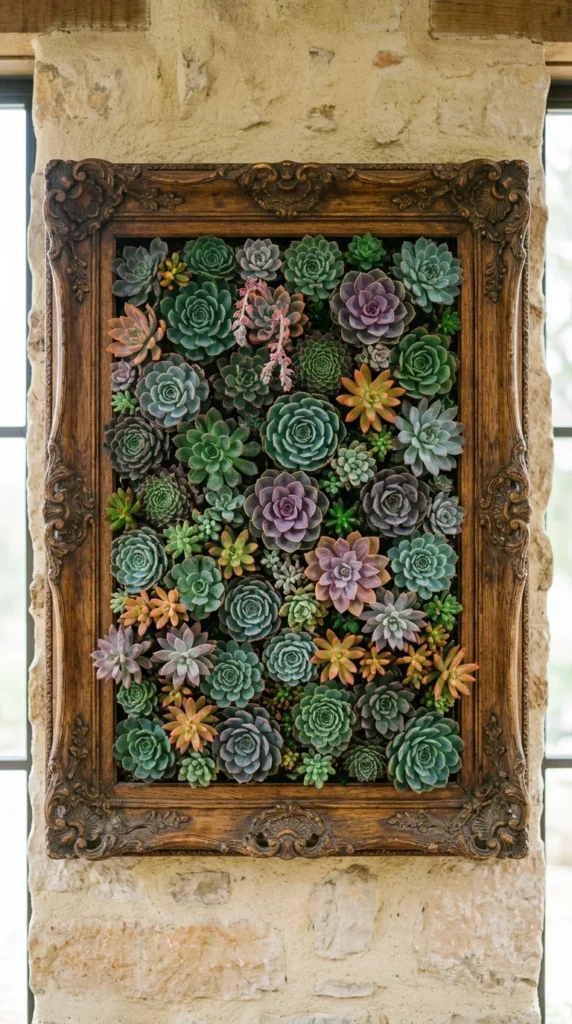
A “living picture frame” is the ultimate wall-hanging succulent garden. By building a shallow shadow box behind a frame and covering it with wire mesh, you can plant succulents so they grow horizontally. Once the roots take hold, the frame can be hung on the wall just like a piece of art. This is a great way to display a collection of Echeveria or Sempervivum.
16. Driftwood Hangers
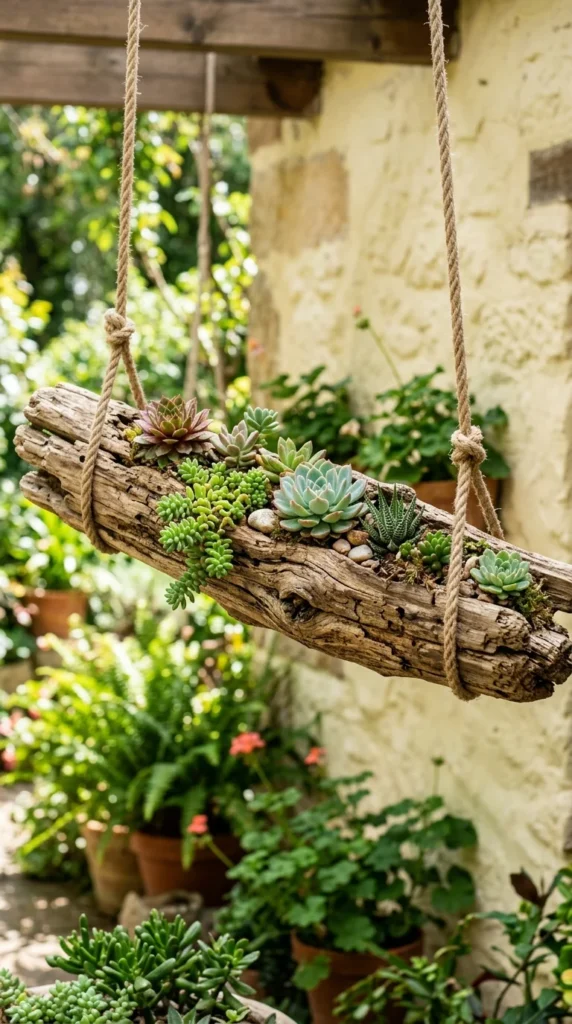
Driftwood offers a stunning, natural base for succulents. You can find pieces with natural divots or carve out small holes to house your plants. Since succulents often grow in rocky, nutrient-poor crevices in the wild, they thrive in these types of arrangements. Hanging a horizontal piece of driftwood above a sofa or bed adds a dramatic, natural element to the room.
17. Shoe Organizers
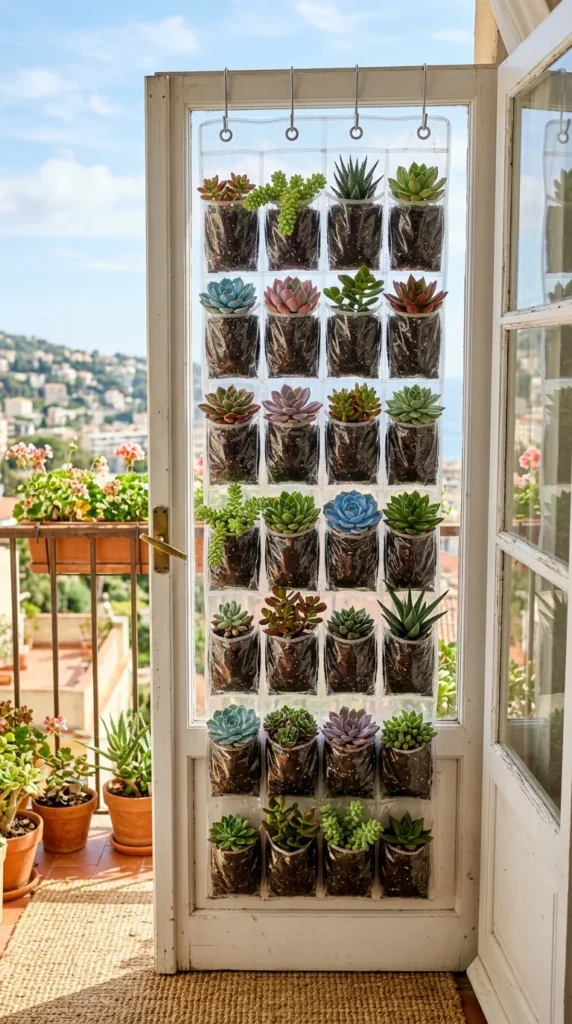
If you want a “wall of green” on a budget, an over-the-door shoe organizer is a surprisingly effective tool. The pockets are the perfect size for individual succulent plants. Using a clear organizer allows the roots and soil to get some warmth, while a canvas one provides better breathability. This is ideal for a balcony door or the back of a bright room.
18. Embroidery Hoops
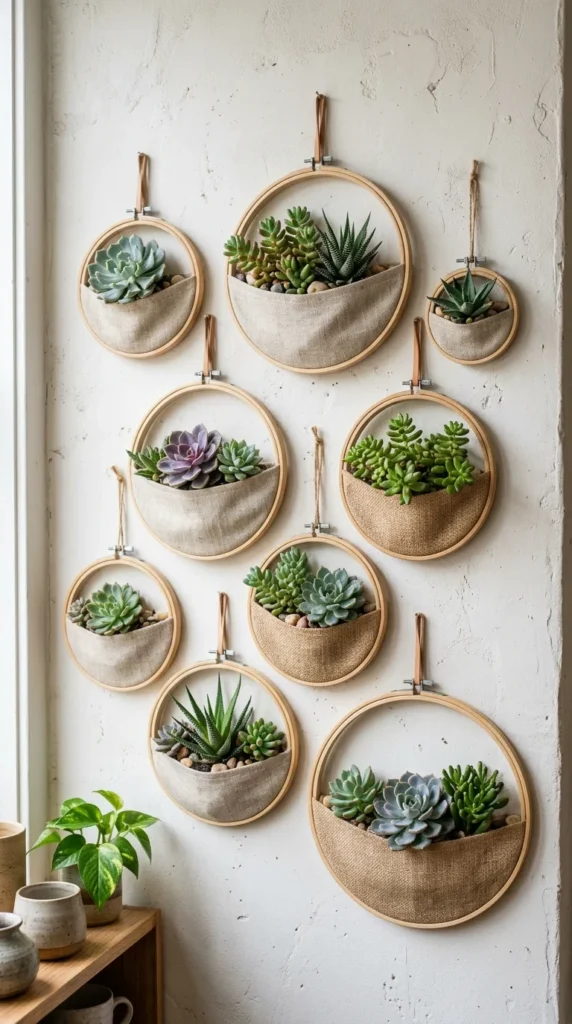
Embroidery hoops can be used to create minimalist, circular hanging frames. By stretching a piece of burlap or sturdy mesh across the hoop, you can create a pocket for moss and succulents. These are very lightweight and can be hung with simple finishing nails, making them perfect for gallery walls.
19. Mason Jar Sconces
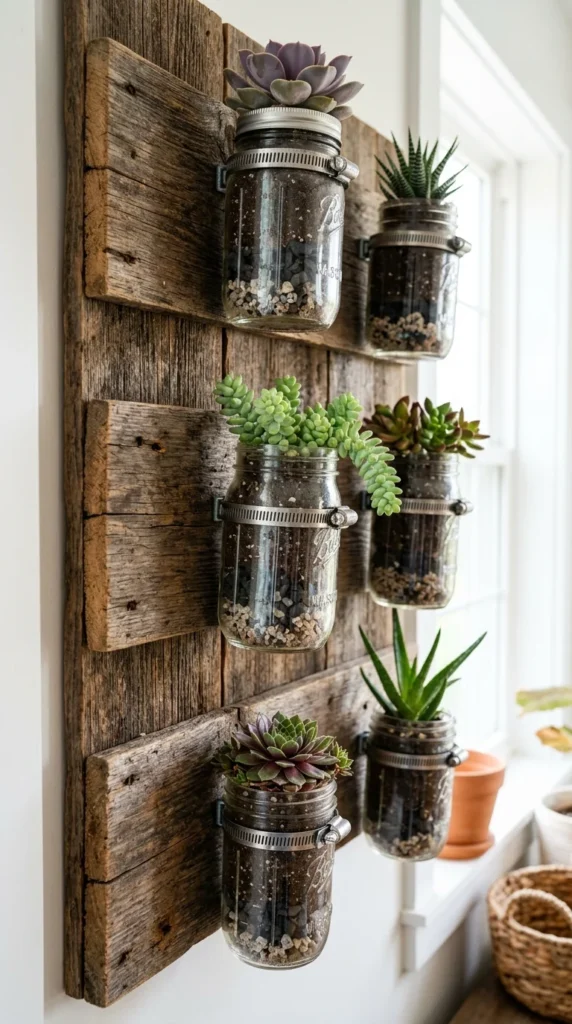
Mason jars are a staple of DIY decor. By using metal clamps to attach them to wooden boards, you create a rustic wall sconce. These are perfect for small spaces because they stay tucked away against the wall. To ensure succulent health in glass jars, use a layer of pebbles at the bottom for “internal drainage” and be very careful with watering.
20. Chandelier Planters
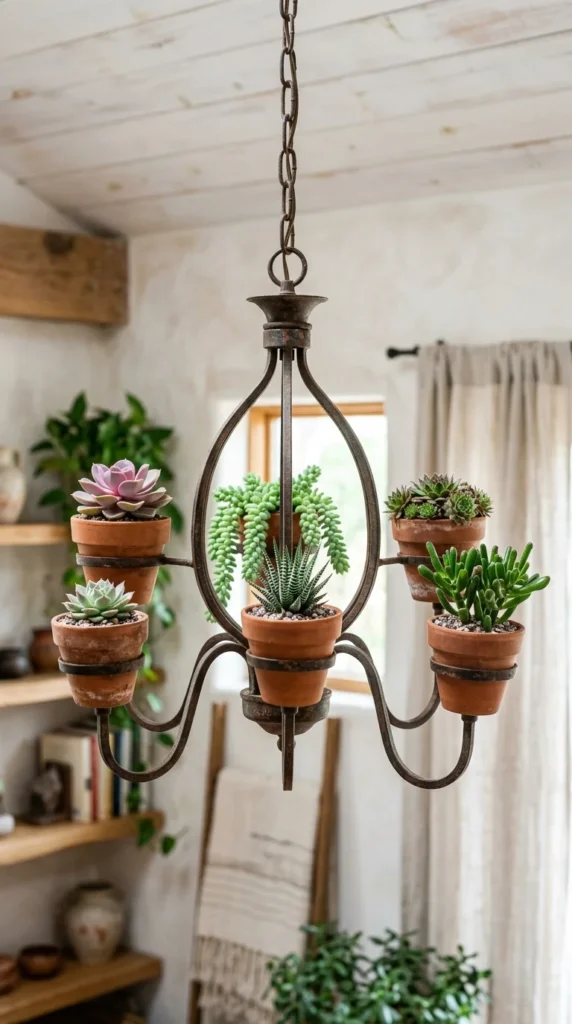
Give an old light fixture a second life by turning it into a hanging garden centerpiece. This is a fantastic way to utilize the center of a room or the space above a dining table. The multiple arms of the chandelier allow for a diverse collection of succulents, creating a 360-degree garden that can be viewed from every angle in a small apartment.