Transforming your living space into a verdant sanctuary often requires looking beyond the floor and tabletops. Vertical gardening—specifically the art of the hanging plant display—allows you to maximize square footage while creating a dramatic, immersive atmosphere. Whether you are an urban dweller with limited space or a homeowner looking to add a touch of nature to a high-ceilinged room, hanging plants offer a versatile solution for interior design and psychological well-being.
1. Lighting
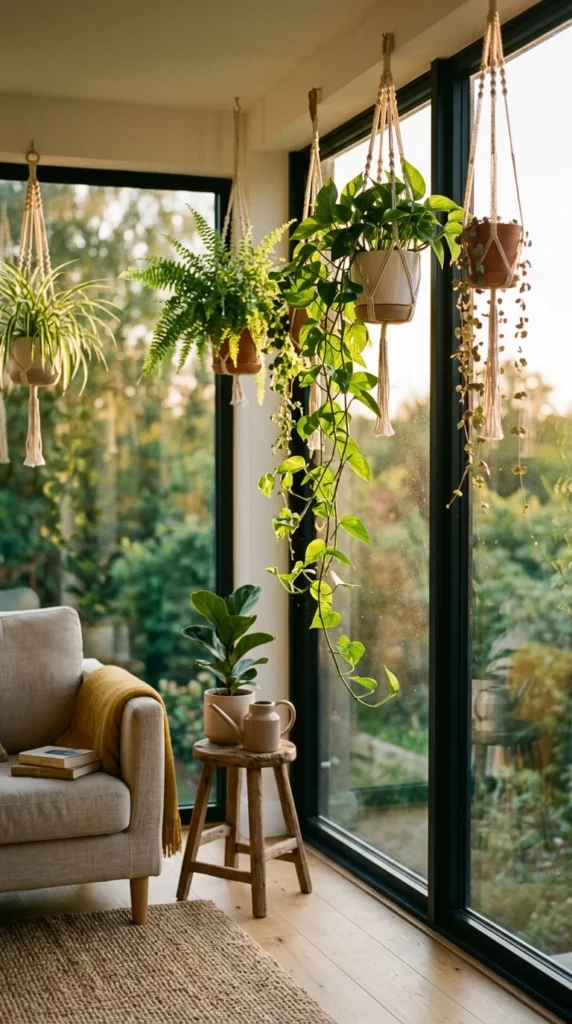
Before driving a single hook into your ceiling, you must assess the light quality of your intended space. Most indoor plants thrive in bright, indirect light, but the specific orientation of your windows dictates which species will flourish.
- South-Facing Windows: These provide the most intense light. They are ideal for sun-loving trailing succulents like String of Pearls or Burro’s Tail. However, be cautious of leaf scorch during peak summer hours.
- North-Facing Windows: These offer lower, consistent light levels. This is the perfect environment for “low-light” champions like the Heartleaf Philodendron or the classic Pothos.
- East and West Windows: These provide moderate light with a few hours of direct morning or afternoon sun. Ferns often thrive here if protected from the harshest rays.
Remember that light intensity drops significantly as you move away from the window. A plant hanging three feet away from a window receives significantly less energy than one placed directly in front of it.
2. Plant Species
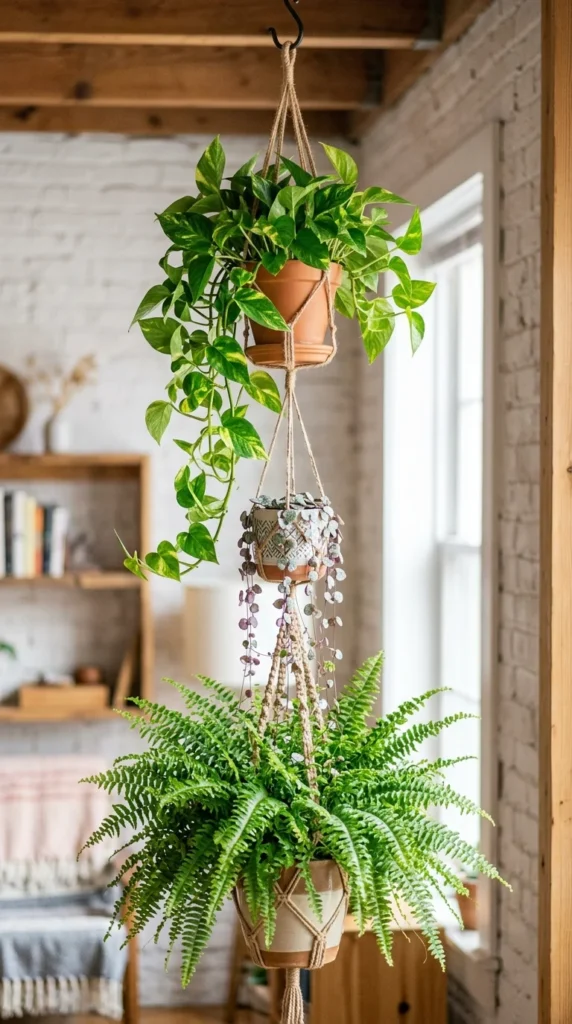
The success of your display depends heavily on selecting plants that naturally enjoy a trailing or pendulous growth habit. Selecting a mix of textures and leaf shapes creates a more professional, curated look.
- Epipremnum aureum (Pothos): Known as the “gateway plant,” Pothos is incredibly hardy and grows rapidly. Its vines can reach several feet in length, creating a “curtain” effect.
- Chlorophytum comosum (Spider Plant): This plant produces “pups” or spiderettes that hang down from the mother plant on long stems, adding a unique architectural element.
- Senecio rowleyanus (String of Pearls): For a minimalist or modern look, this succulent features spherical leaves that resemble a beaded necklace.
- Nephrolepis exaltata (Boston Fern): If you want volume and a “jungle” feel, the Boston Fern provides lush, feathery fronds that explode outward and downward.
- Tradescantia zebrina (Inch Plant): For a pop of color, this plant offers striking purple and silver striped foliage.
3. Macrame Hangers
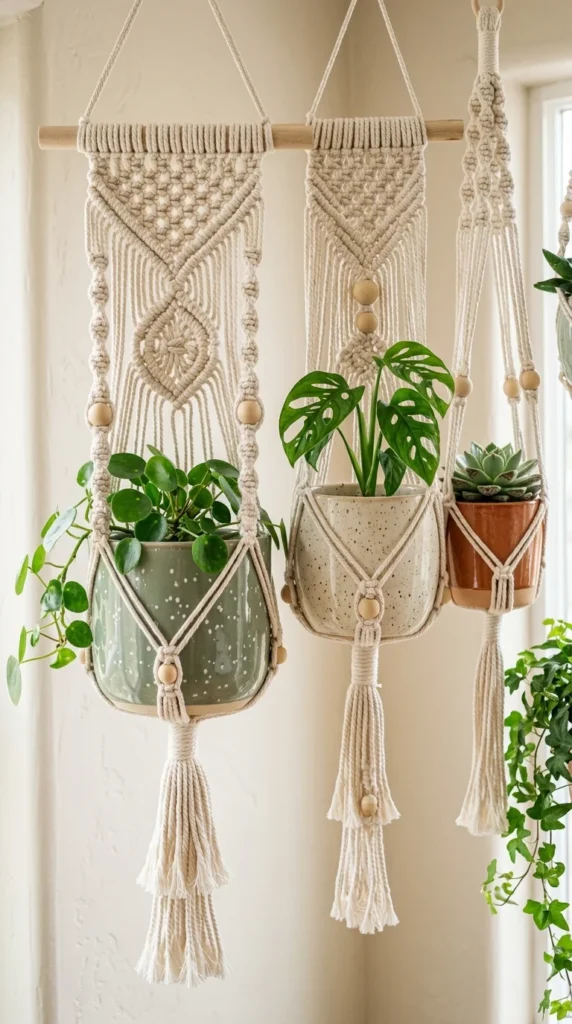
Macrame has seen a massive resurgence in interior design, particularly within the “Boho-chic” and “Scandi” movements. These textile hangers are not just functional; they are pieces of art that add softness and texture to a room.
When choosing macrame, consider the weight of your plant and pot. Thick, high-quality cotton or jute cords are essential for larger displays. The “tail” or tassel at the bottom of a macrame hanger adds vertical length, which can help fill empty wall space. You can also experiment with different colors—while natural cream is traditional, charcoal grey or forest green macrame can provide a more contemporary edge.
4. Ceiling Hooks
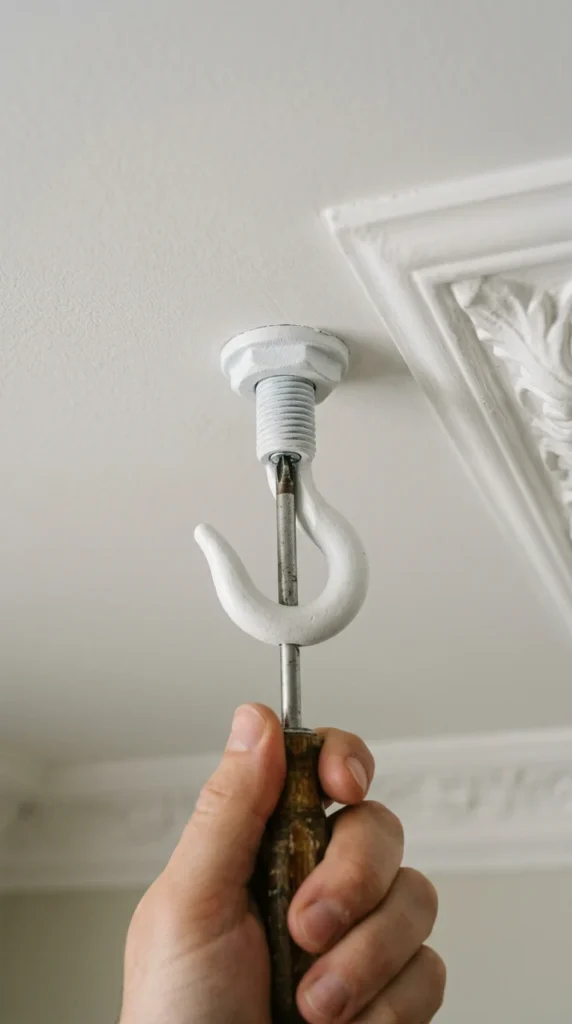
The safety of your display—and your floor—depends on proper installation hardware. Never hang a plant using a simple nail or a command strip; the weight of wet soil is deceptive.
- Swag Hooks: These are the gold standard for ceiling displays. They usually come with a toggle bolt for hollow drywall or a pointed screw for solid wood joists.
- Toggle Bolts: If you cannot find a ceiling joist, a toggle bolt is mandatory. It expands behind the drywall to distribute the weight across a larger surface area.
- Wall Brackets: If you prefer not to drill into the ceiling, decorative wrought iron or wooden wall brackets allow you to hang plants from the wall, extending them outward like a street lantern.
- Tension Rods: For renters who cannot drill holes, a heavy-duty tension rod placed across a window frame can support several small, lightweight hanging plants.
5. Layered Heights
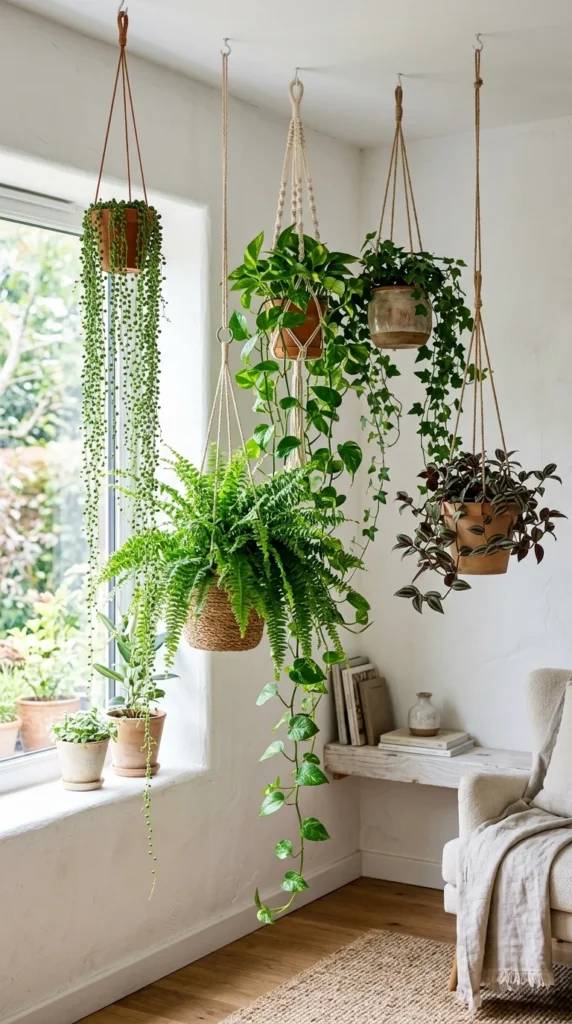
One of the most common mistakes in plant styling is hanging all plants at the exact same height. This creates a “monoline” that looks clinical rather than organic. To create a stunning display, you must embrace layering and depth.
Aim for a “staircase” or “waterfall” effect. Place your largest, fullest plants higher up and allow their vines to trail down toward medium and smaller plants positioned lower. Using adjustable S-hooks or varying the lengths of your macrame hangers allows you to fine-tune these heights. Overlapping the foliage slightly creates a sense of abundance and mimics how plants grow in a natural canopy.
6. Drainage Solutions
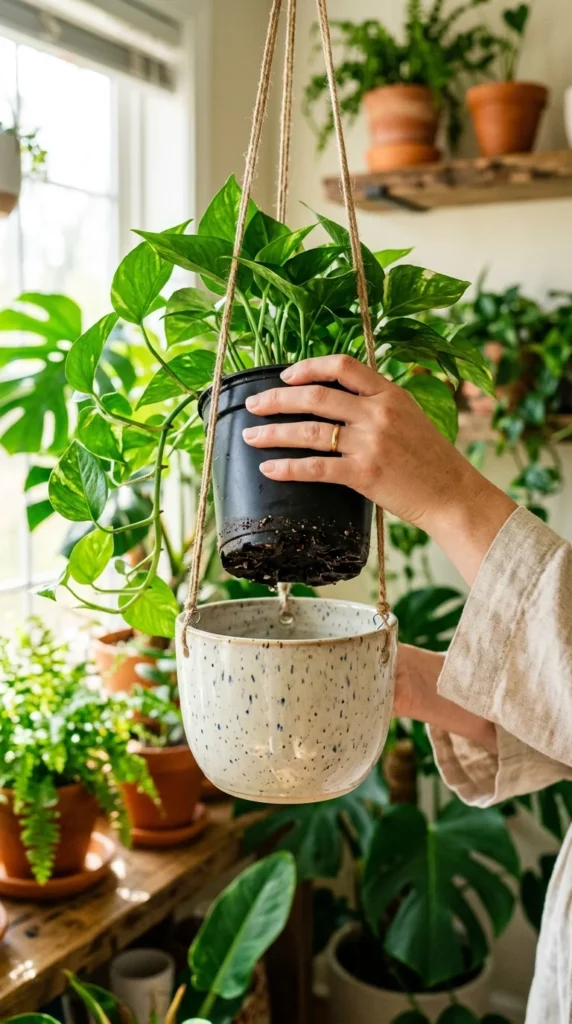
Watering hanging plants can be a logistical challenge. Without a plan for drainage, you risk either root rot from stagnant water or ruined flooring from leaks.
The “Cachepot” method is the most effective for hanging displays. Keep the plant in its plastic nursery pot (which has drainage holes) and place that inside a sealed, decorative hanging planter. When it’s time to water, you can either take the plastic pot to the sink or water carefully in place, ensuring the outer pot catches the excess. Alternatively, look for specialized hanging pots with attached saucers that clip onto the bottom, though these should be checked frequently to ensure they don’t overflow.
7. Maintenance Tools
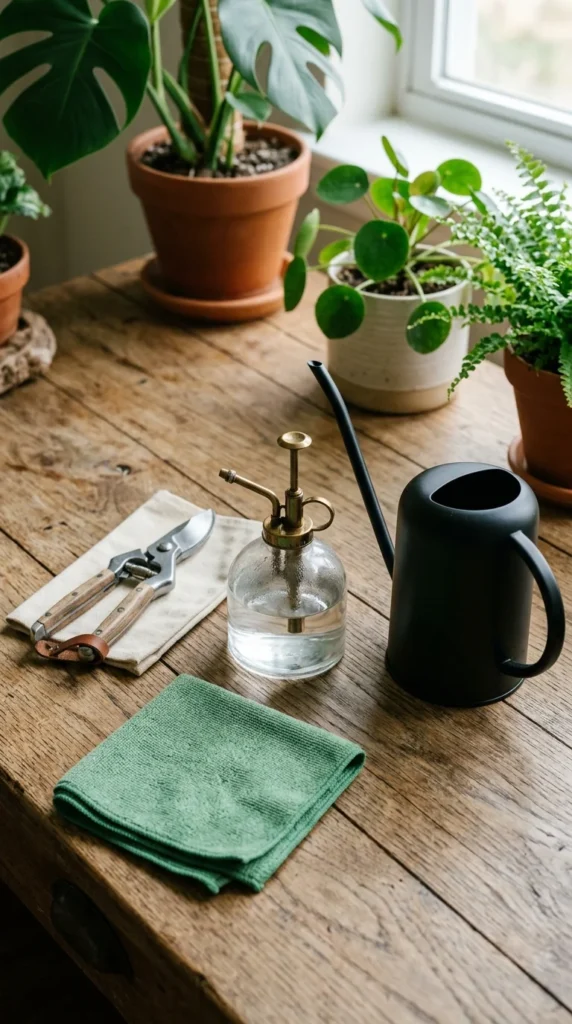
Because hanging plants are often positioned out of easy reach, specialized tools will make your maintenance routine much simpler.
- Long-Neck Watering Can: A watering can with a long, narrow spout allows you to reach up into high baskets without needing a ladder every time.
- Pulley Systems: For very high ceilings, you can install “plant pulleys” that allow you to lower the plant for watering and grooming and then retract it back to its display height.
- Pruning Shears: Regular pruning is vital for hanging plants. If a Pothos or Philodendron becomes too “leggy” (long stems with few leaves), trimming the ends encourages the plant to grow fuller at the top.
- Misters: Many hanging plants, particularly ferns and air plants, crave high humidity. A daily misting helps mimic their tropical origins, especially in heated indoor environments during winter.
By combining the right hardware, a thoughtful selection of species, and an eye for vertical composition, you can turn a blank corner into a breathtaking living installation. A well-executed hanging plant display does more than just decorate a room; it breathes life into the architecture of your home.