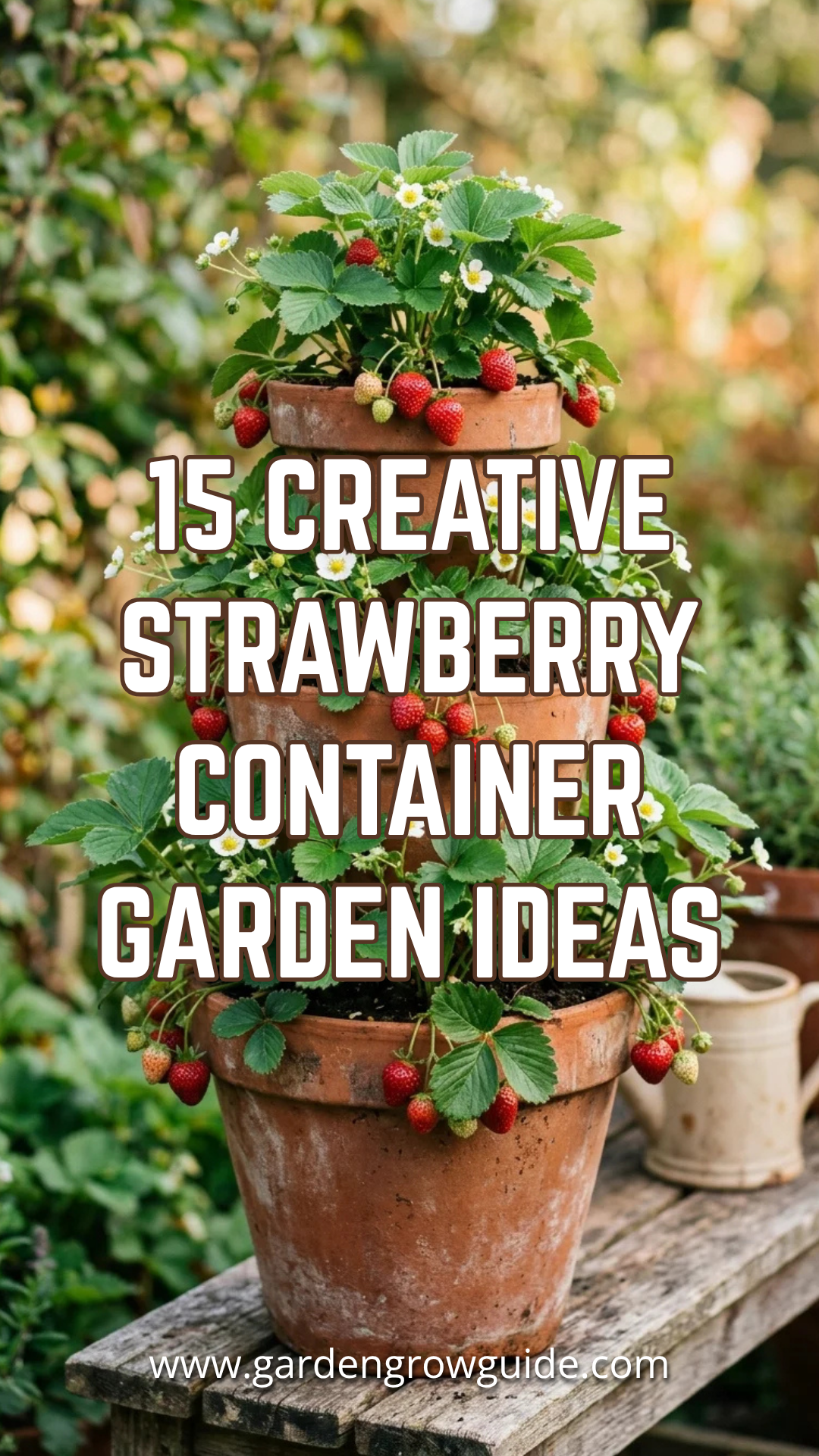
Strawberries are among the most rewarding crops for home gardeners. They are resilient, produce fruit relatively quickly, and thrive in confined spaces. Because strawberries have a shallow root system, they do not require deep soil, making them the perfect candidates for creative container gardening. Whether you have a sprawling backyard or a tiny apartment balcony, these 15 ideas will help you maximize your harvest and add aesthetic charm to your space.
1. PVC Towers
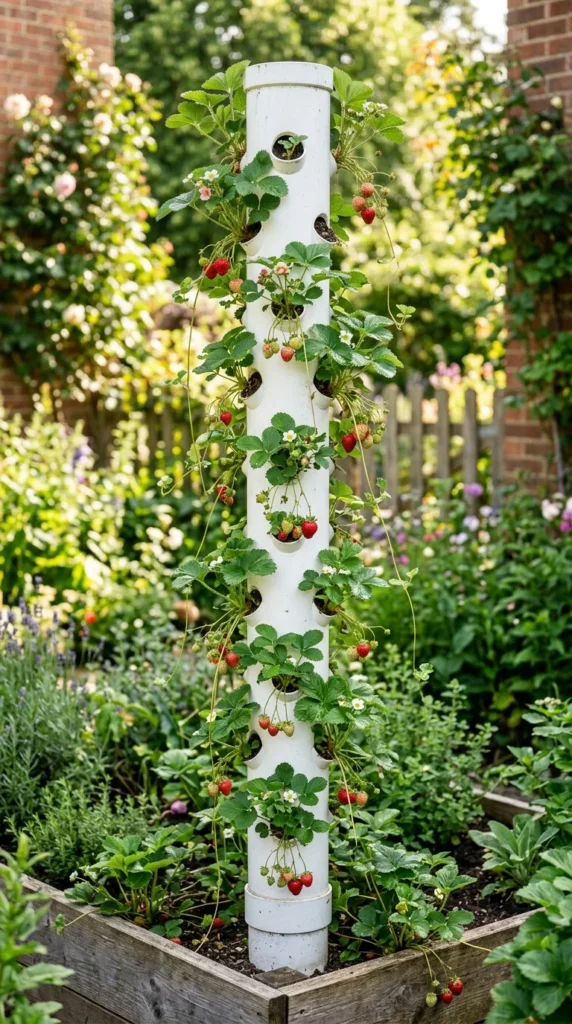
Vertical PVC towers are a masterclass in space efficiency. By using a large-diameter pipe and drilling holes along the sides, you can grow dozens of plants in a footprint of just one square foot. This method keeps the fruit off the ground, reducing the risk of rot and soil-borne pests. Inside the pipe, a smaller, perforated tube can be used to ensure even watering from top to bottom, preventing the lower plants from becoming waterlogged while the top ones dry out.
2. Hanging Baskets
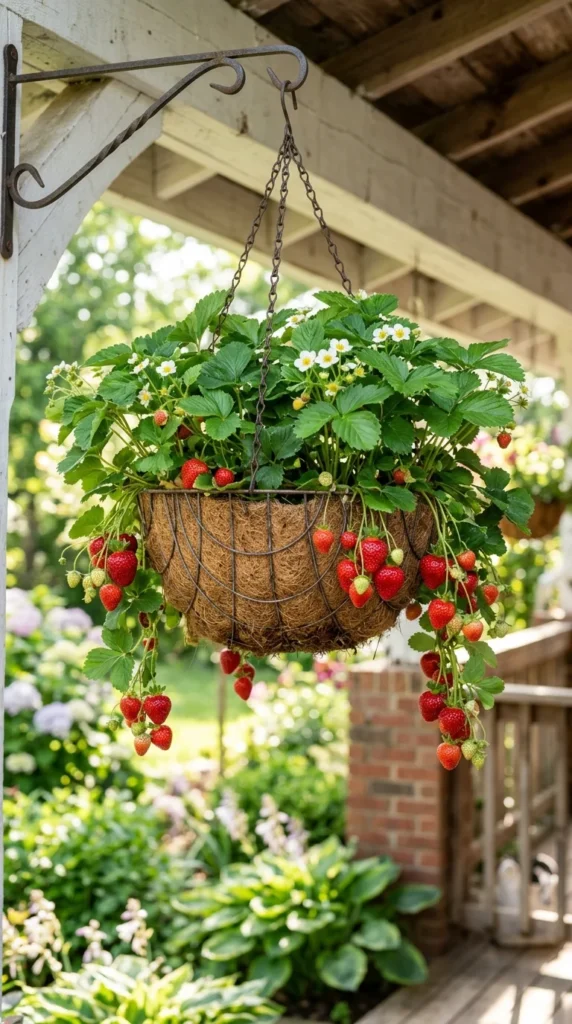
Hanging baskets are perhaps the most popular way to grow strawberries decoratively. They utilize “air space,” making them ideal for small porches. When strawberries are grown in hanging containers, the runners and fruit naturally drape downward. This creates a beautiful “living chandelier” effect. Using a coconut coir liner helps with drainage and aeration, which is vital for preventing root rot in the damp environments strawberries prefer.
3. Stacked Terracotta
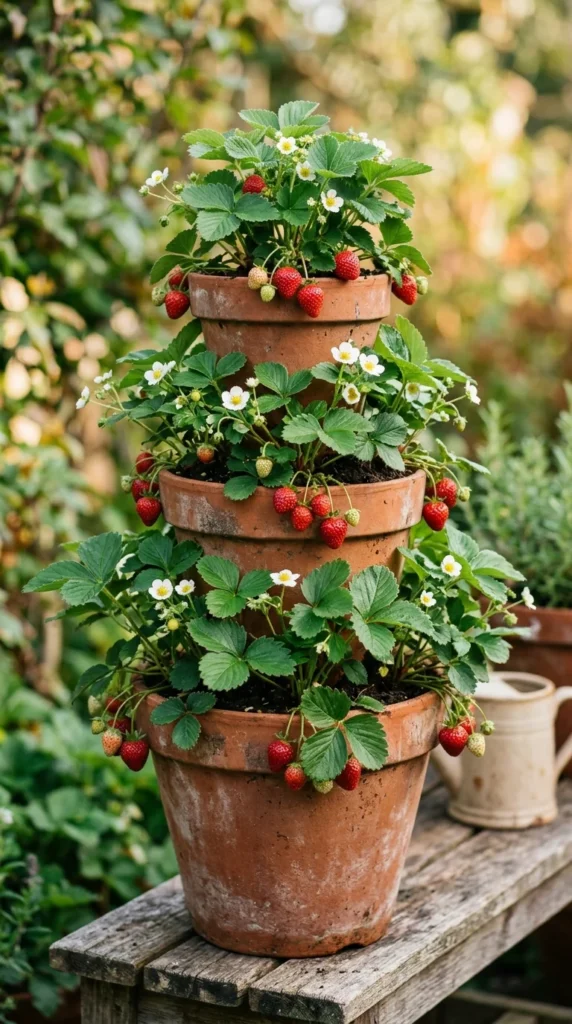
The tiered terracotta approach creates a focal point in any garden. By placing a smaller pot inside a larger one and filling the gaps with soil, you create multiple “shelves” for planting. This method is excellent for gardeners who want to grow different varieties of strawberries—such as June-bearing and Ever-bearing—in a single concentrated area. The porous nature of the clay allows the soil to breathe, though it does require more frequent watering.
4. Wooden Pallets
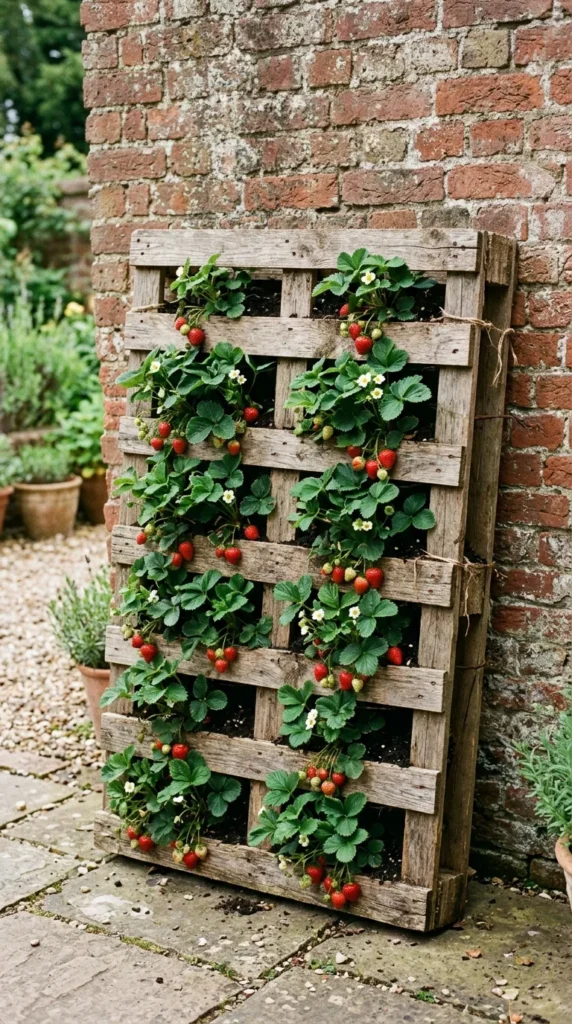
Upcycling wooden pallets into vertical gardens is a cost-effective and environmentally friendly option. By stapling landscape fabric behind the slats to create pockets, you can turn a flat pallet into a wall of greenery. This method is particularly effective for June-bearing varieties that produce many runners, as the runners can be pinned into lower slats to start new plants easily.
5. Gutter Gardens
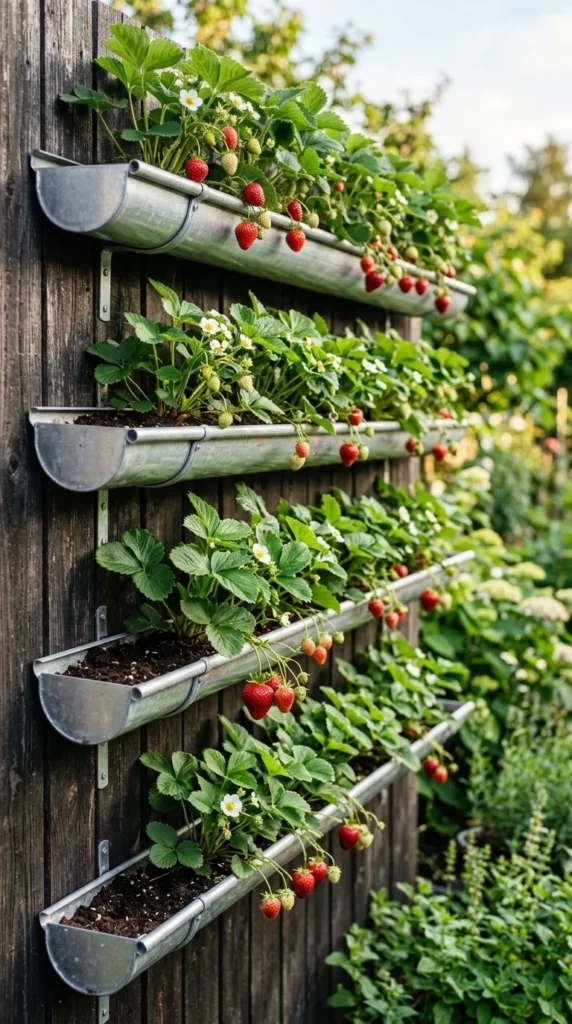
Rain gutters are shallow but wide, which perfectly matches the root profile of a strawberry plant. Mounting gutters to a fence or the side of a shed allows you to grow a long “ribbon” of strawberries at waist height, making harvesting incredibly easy. This setup also keeps the berries far away from slugs and snails that typically crawl along the ground.
6. Galvanized Buckets
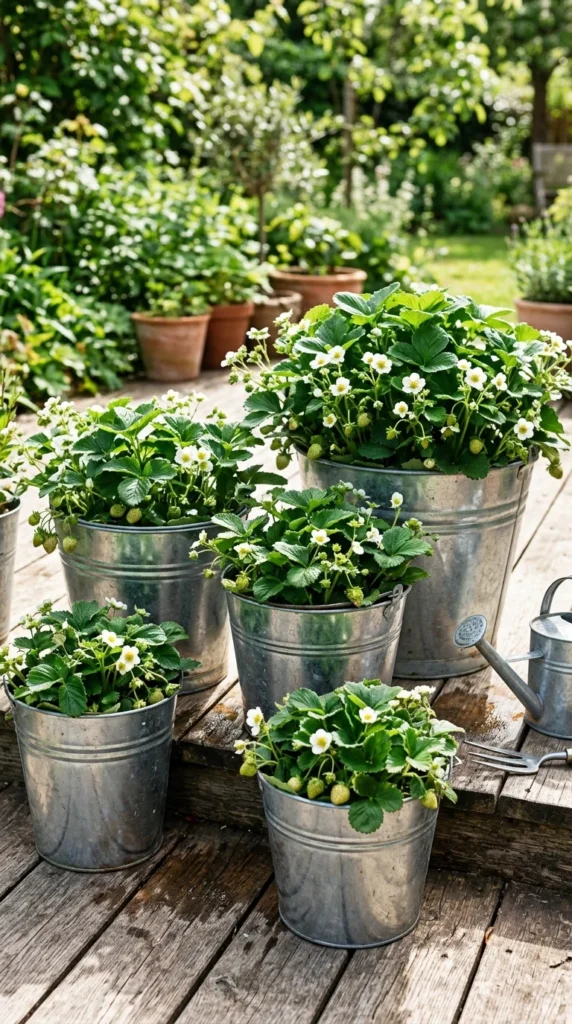
For a farmhouse or industrial aesthetic, galvanized metal buckets are a durable choice. They are deep enough to hold plenty of moisture and can be easily moved to follow the sun throughout the day. It is crucial to drill several drainage holes in the bottom of the buckets, as metal does not breathe like ceramic or wood, and standing water will quickly damage strawberry roots.
7. Repurposed Shoes
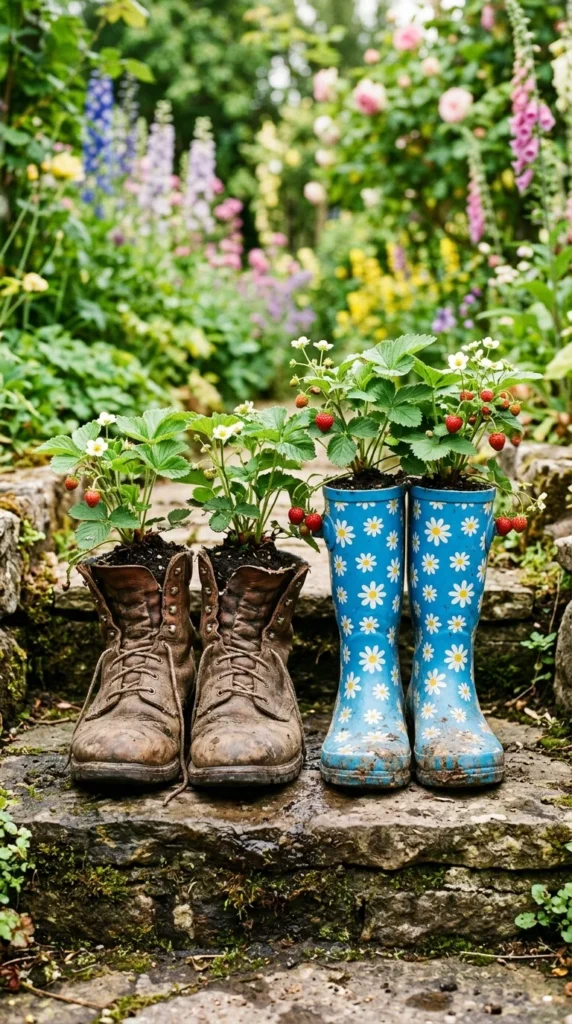
Repurposing old footwear like work boots or “Croc” style sandals adds a whimsical, eclectic touch to the garden. The drainage in shoes (especially those with pre-existing holes) is surprisingly good. This is a great project for kids, as it teaches them about recycling and gardening in a fun, accessible way. These “shoe planters” can be tucked into small corners or even hung by their laces.
8. Window Boxes
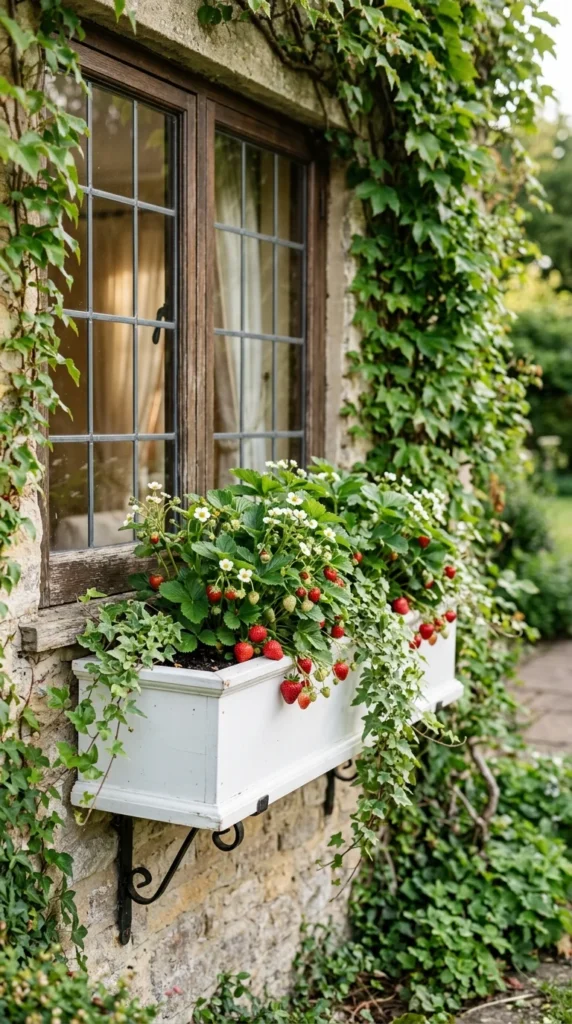
Window boxes are a traditional choice that brings the garden right to your eye level. Not only do they provide a convenient harvest right outside your window, but the fragrance of strawberry blossoms is also a delightful addition to a room’s atmosphere. Since window boxes are often exposed to wind and sun, using a potting mix with water-retaining crystals can help keep the plants hydrated.
9. Pyramid Planters
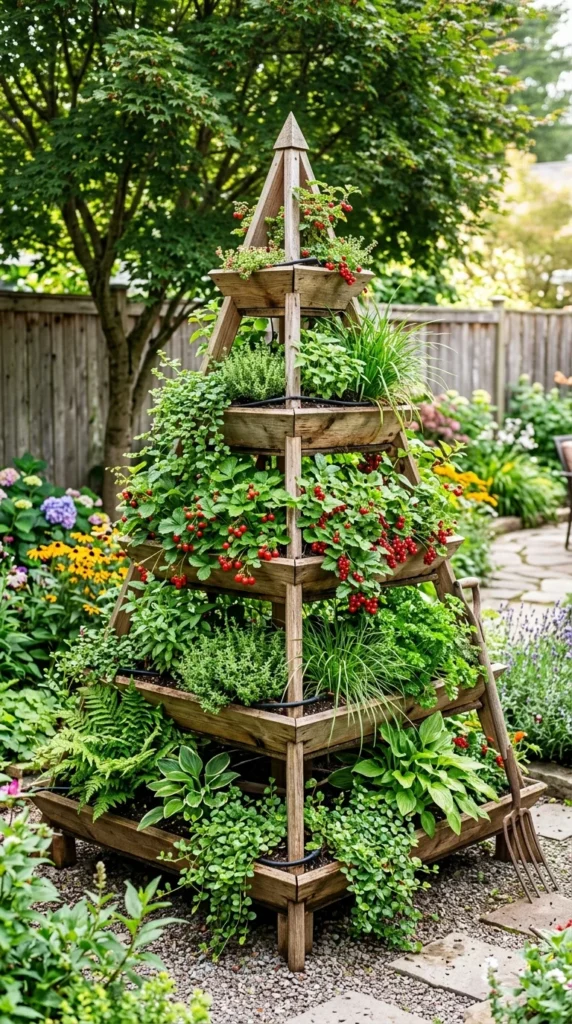
A strawberry pyramid is a dedicated wooden structure designed to maximize yield in a square space. Because it is shaped like a staircase on all four sides, it allows for maximum sunlight exposure for every plant. These structures are often built with cedar or redwood to resist rot. They are perfect for large-scale berry production in a suburban backyard.
10. Hanging Fabric Bags
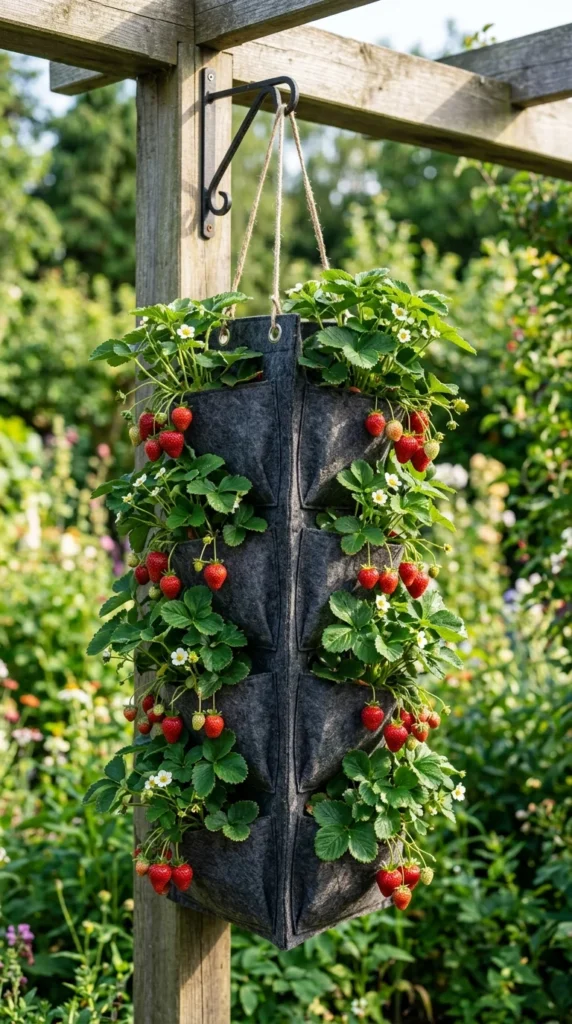
Fabric grow bags are made from breathable geotextile material that “air prunes” the roots, preventing them from becoming root-bound. Hanging bags with side pockets allow you to grow dozens of plants in a single vertical column. They are lightweight and can be easily taken down and moved indoors if a late frost is predicted, protecting your early blossoms.
11. Strawberry Jars
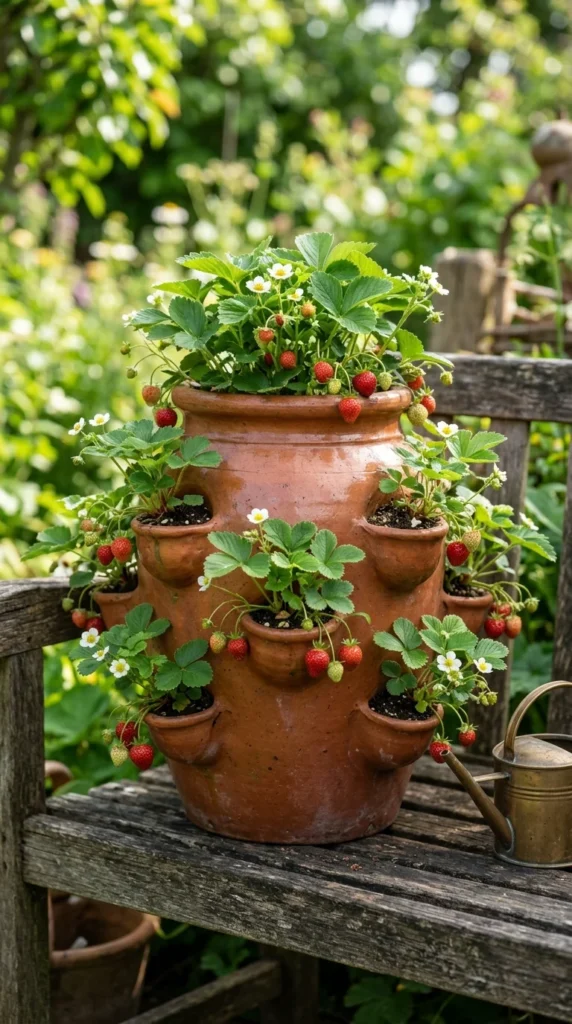
The classic “strawberry jar” is specifically designed for this fruit. The central pot holds the main soil mass, while the “pockets” on the sides allow for individual plants to grow outward. To ensure the plants in the lower pockets receive enough water, many gardeners insert a perforated tube or a layer of gravel down the center of the jar to facilitate deep watering.
12. Whiskey Barrels
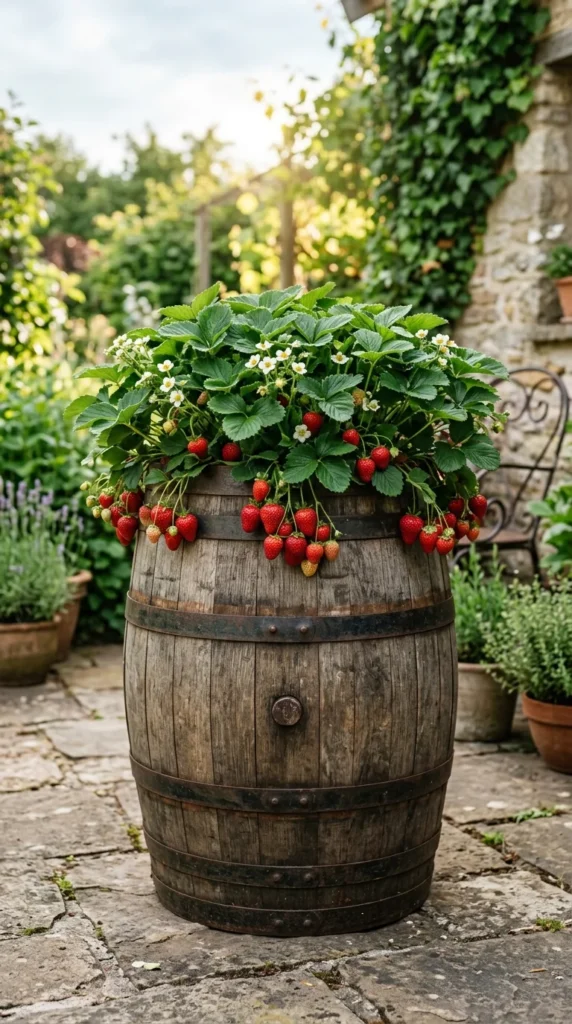
If you have a large space and want a massive harvest, a half-whiskey barrel is the way to go. These containers hold a large volume of soil, which helps regulate temperature and moisture levels. A single barrel can house 10 to 15 plants comfortably. Because they are heavy, it is best to place them on a rolling plant stand if you anticipate needing to move them.
13. Floating Shelves
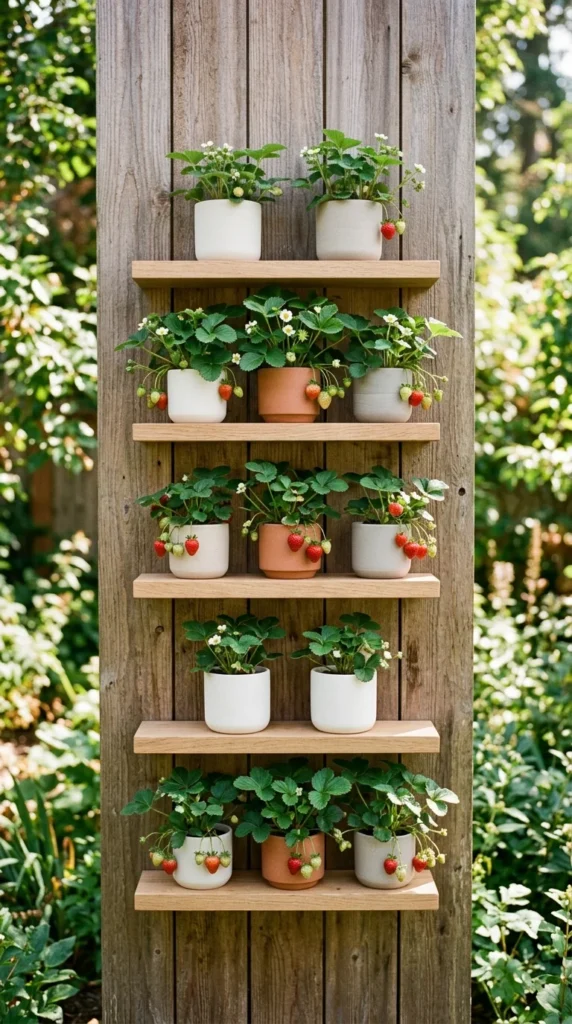
Floating shelves turn a plain wall into a functional garden. This approach is highly modular; you can add or remove shelves based on your needs. By using uniform pots, you can create a modern, clean look that mimics a professional greenhouse. This setup is particularly effective for controlling pests, as it is very difficult for ground-dwelling insects to reach the higher shelves.
14. Colander Planters
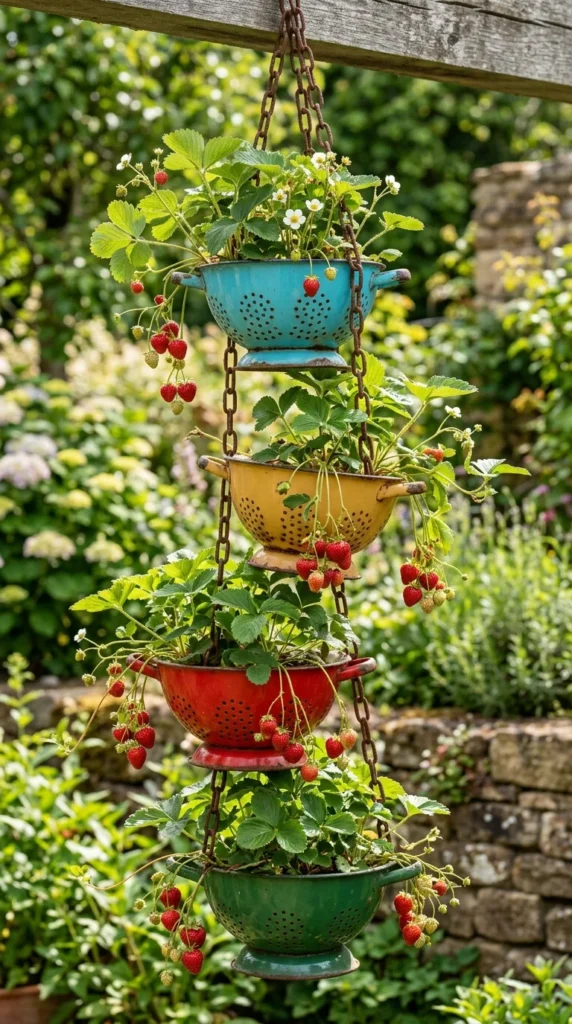
Old kitchen colanders make excellent planters because they have built-in drainage. The many small holes in the sides and bottom ensure that the soil never stays too wet, which is the primary cause of strawberry plant failure. The handles on the colanders make them easy to hang using S-hooks and chains, creating a colorful and functional display.
15. Cinder Block Walls
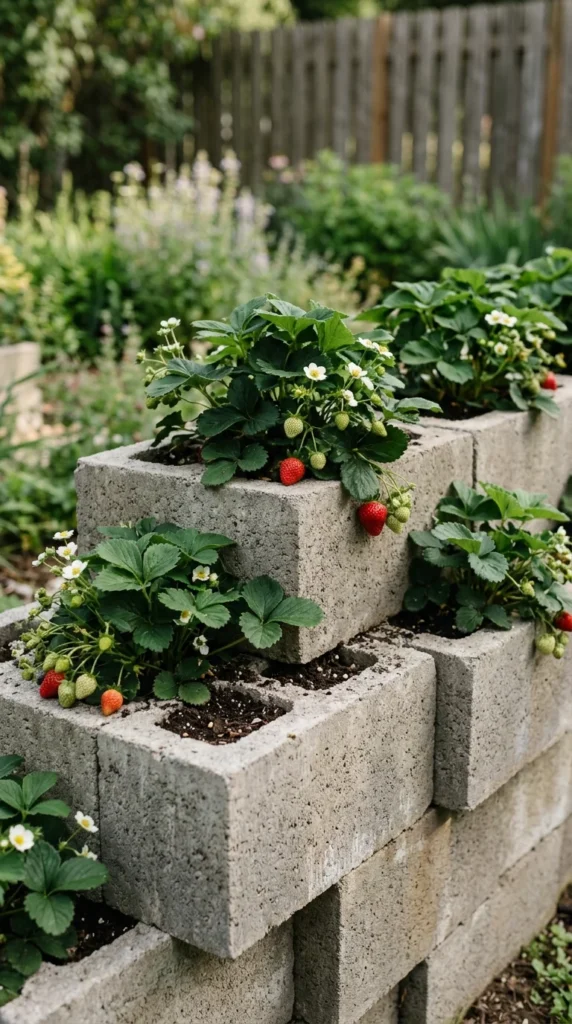
Cinder blocks are inexpensive and incredibly versatile. By stacking them in a staggered pattern, the open “cells” of the blocks become individual planting containers. The concrete absorbs heat during the day and releases it at night, which can help strawberries grow faster in cooler climates. This is a “permanent” container garden idea that can also serve as a boundary or a decorative edge for a patio.