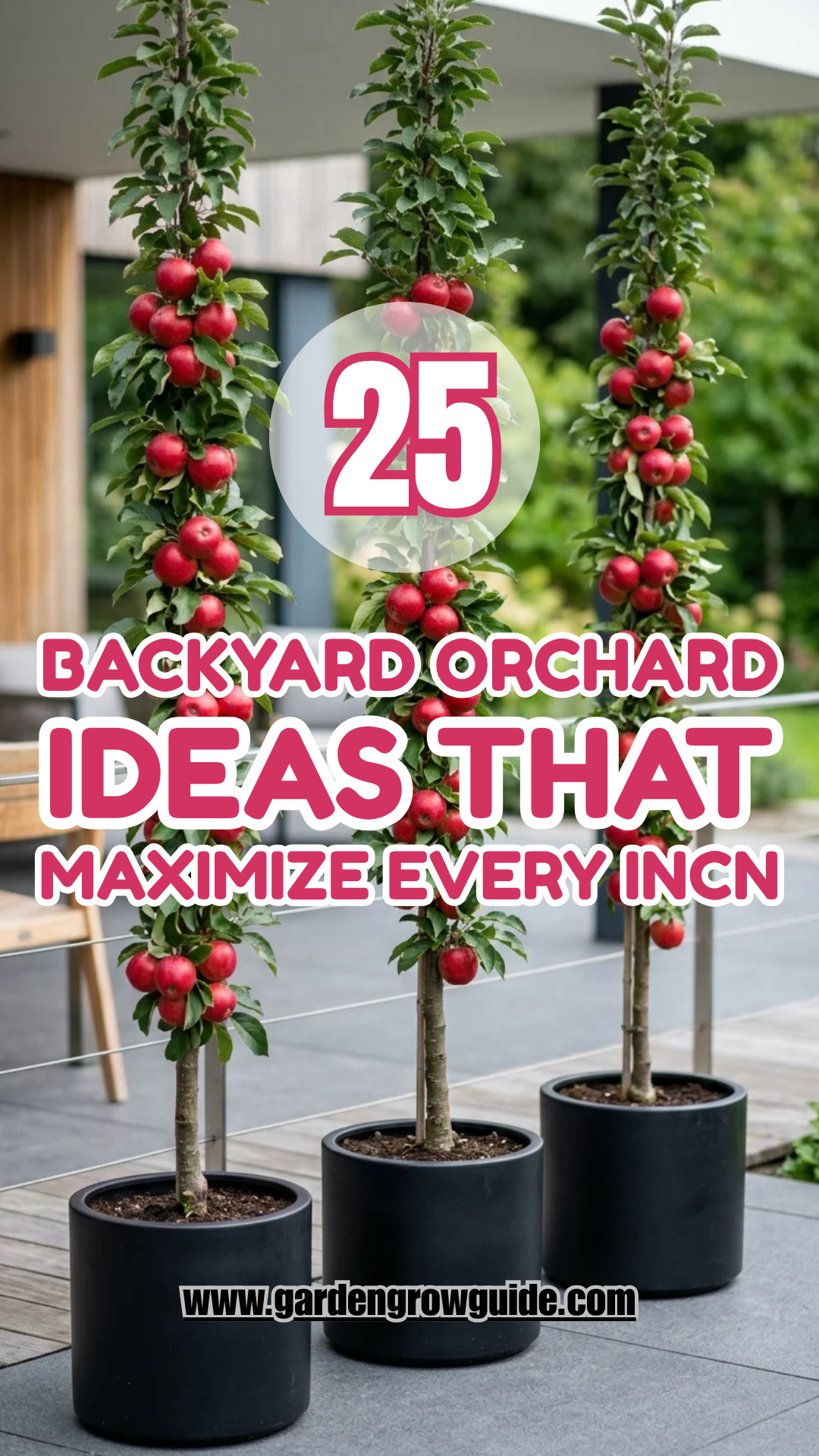
Transforming a modest backyard into a bountiful orchard is a rewarding endeavor that blends aesthetics with sustainability. Even the smallest urban lot can yield a surprising amount of fresh fruit when you apply clever design principles and specialized growing techniques. By focusing on vertical space, selecting the right rootstocks, and utilizing every corner of your landscape, you can create a high-density food forest that provides year-round interest and organic harvests.
1. Espalier Training
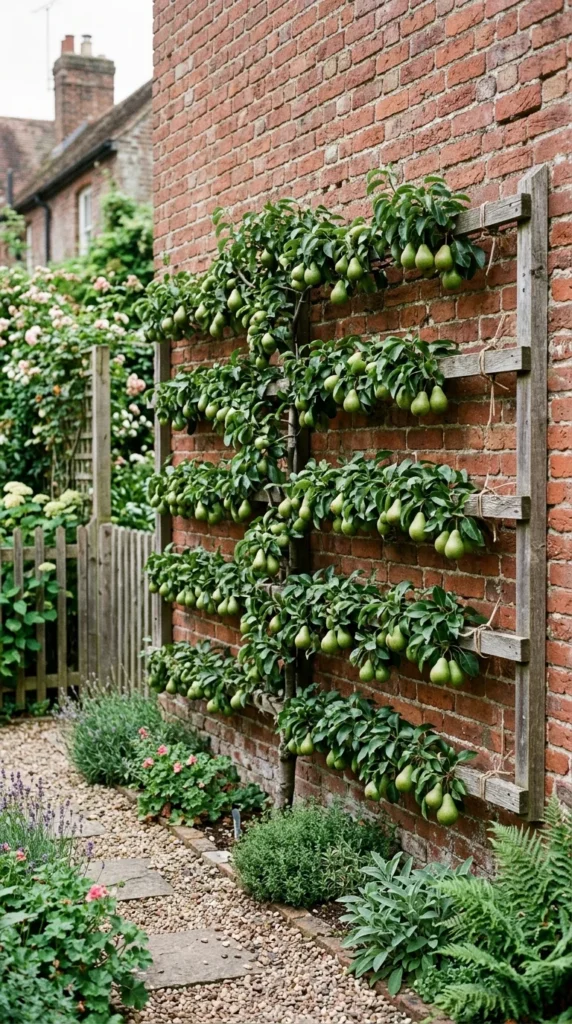
Espalier is the ancient practice of training trees to grow flat against a wall, fence, or freestanding trellis. This technique is the ultimate space-saver, allowing you to grow large-fruited trees like apples and pears in walkways or narrow passages where a traditional canopy would never fit. By forcing the branches into horizontal positions, you also encourage the tree to produce more fruiting spurs, often resulting in higher yields per square foot.
2. Columnar Trees
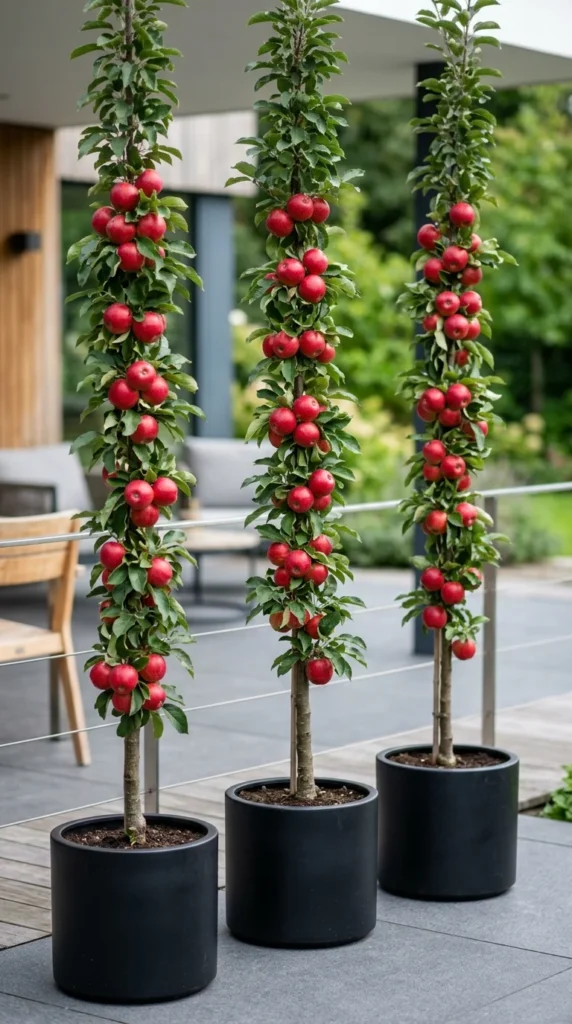
Columnar fruit trees, specifically bred for their narrow growth habit, are perfect for tight spots. These trees typically don’t grow horizontal branches; instead, the fruit develops on short spurs along the main trunk. They are ideal for flanking a doorway, lining a driveway, or growing in large containers on a balcony.
3. Dwarf Varieties
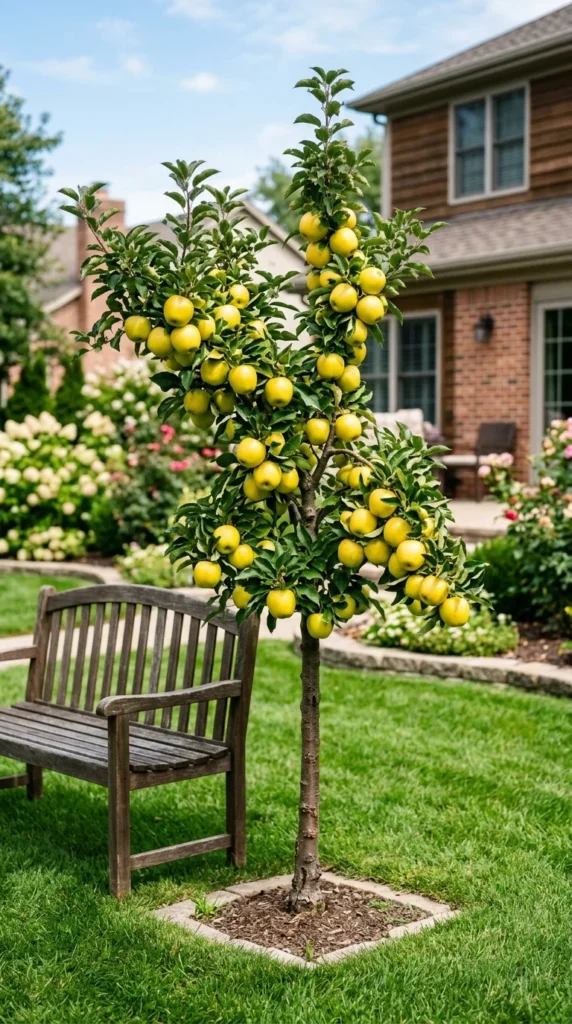
The secret to a small-scale orchard is the rootstock. Dwarf fruit trees are grafted onto specific root systems that limit the tree’s ultimate height to 6–10 feet. These trees are easier to prune, spray, and harvest without the need for tall ladders. Because they are smaller, you can fit four or five dwarf trees in the space of one standard-sized tree.
4. Multi-Graft Trees
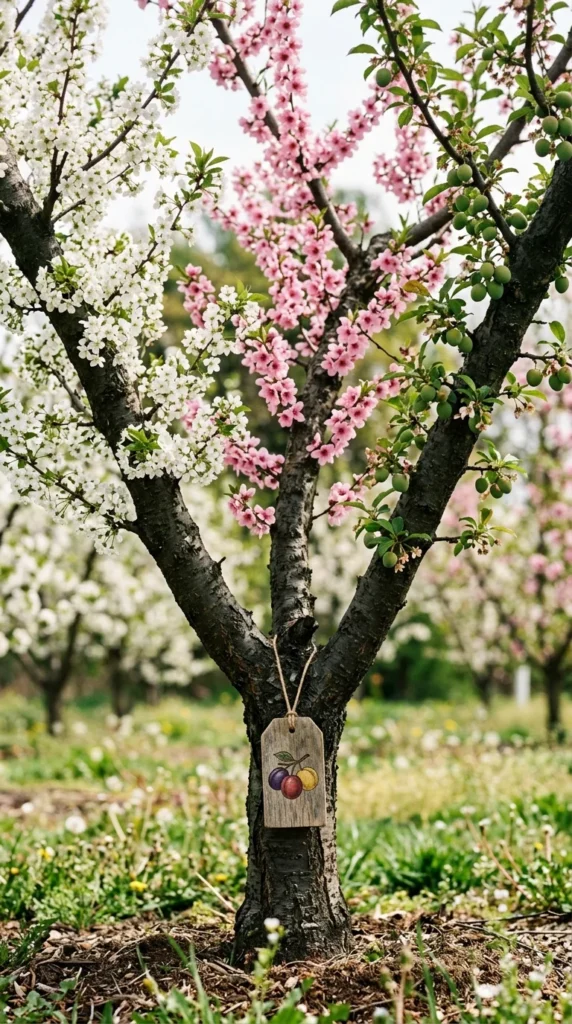
Often called “Fruit Salad Trees,” multi-graft specimens feature several different varieties of the same fruit type (like three types of apples or four types of stone fruit) grafted onto a single trunk. This is perfect for the gardener who wants variety but only has space for one tree. It also solves pollination issues, as the different varieties can pollinate each other.
5. Stepover Hedges
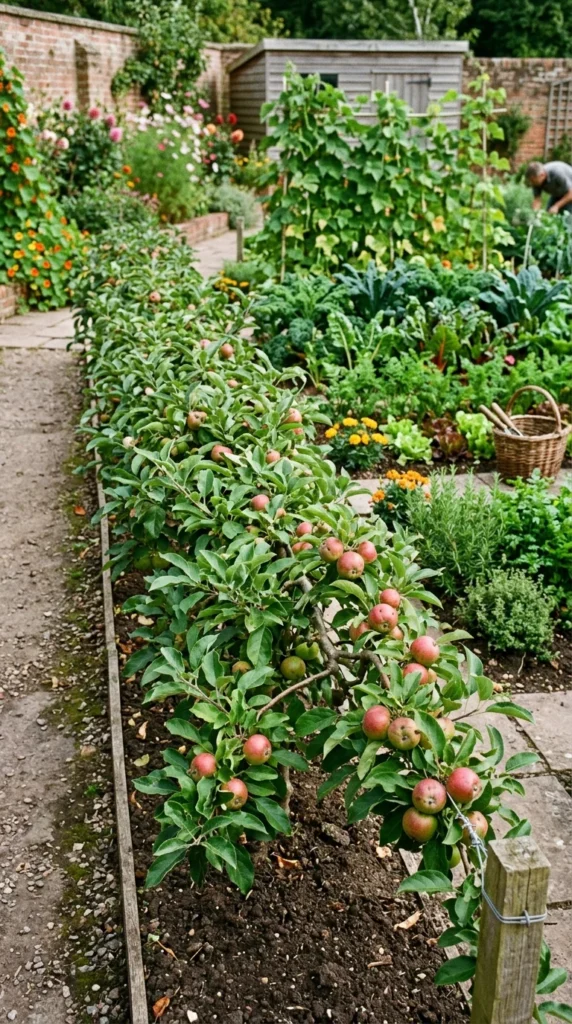
Stepover trees are a form of espalier where the tree is trained to have a single horizontal wire or rail. They create a “living fence” that is low enough to step over. These are excellent for edging garden beds or lining paths, providing a productive boundary that doesn’t block the view of the rest of the garden.
6. Container Growing
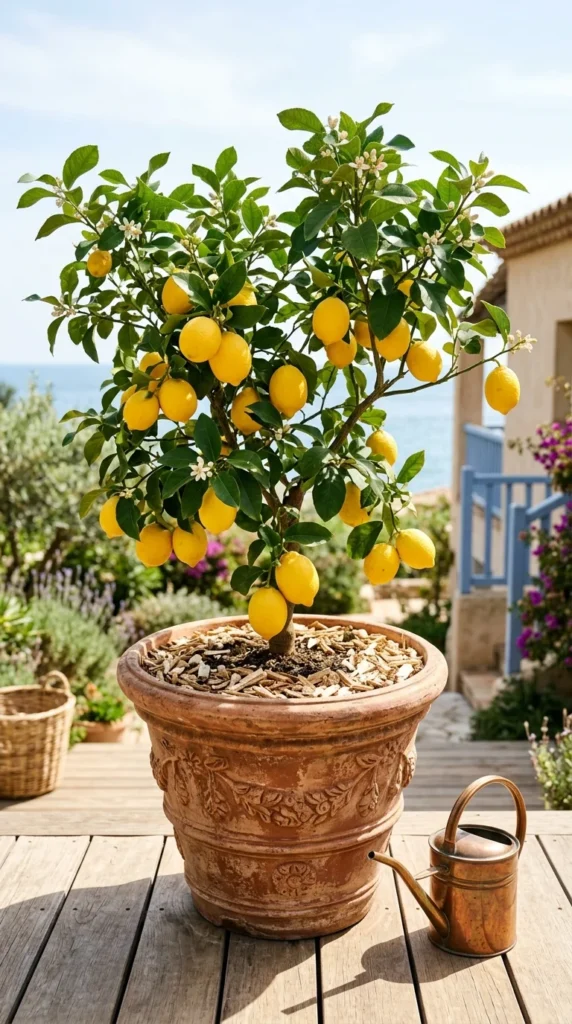
Many fruit trees, especially citrus, figs, and certain stone fruits, thrive in containers. Growing in pots allows you to move the trees to follow the sun or bring them indoors during harsh winters. It also naturally stunts the growth of the tree, making it manageable for patios and small decks.
7. Vertical Trellising
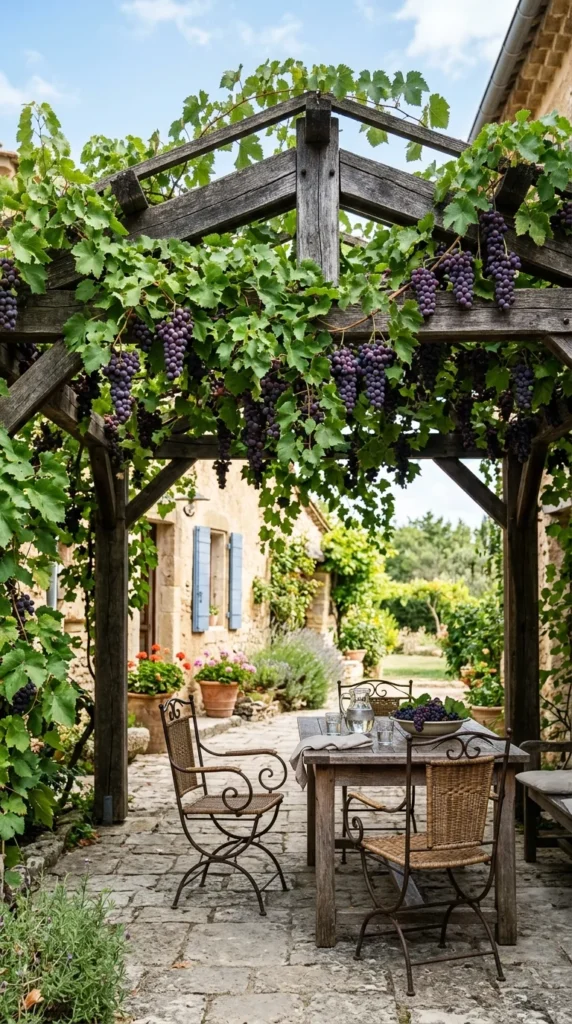
Don’t forget the “ceiling” of your backyard. Vining fruits like grapes, hardy kiwi, and passionfruit can be trained up and over pergolas, arbors, or fences. This utilizes vertical space that would otherwise go unused and creates a stunning, shaded retreat for summer afternoons.
8. Intercropping
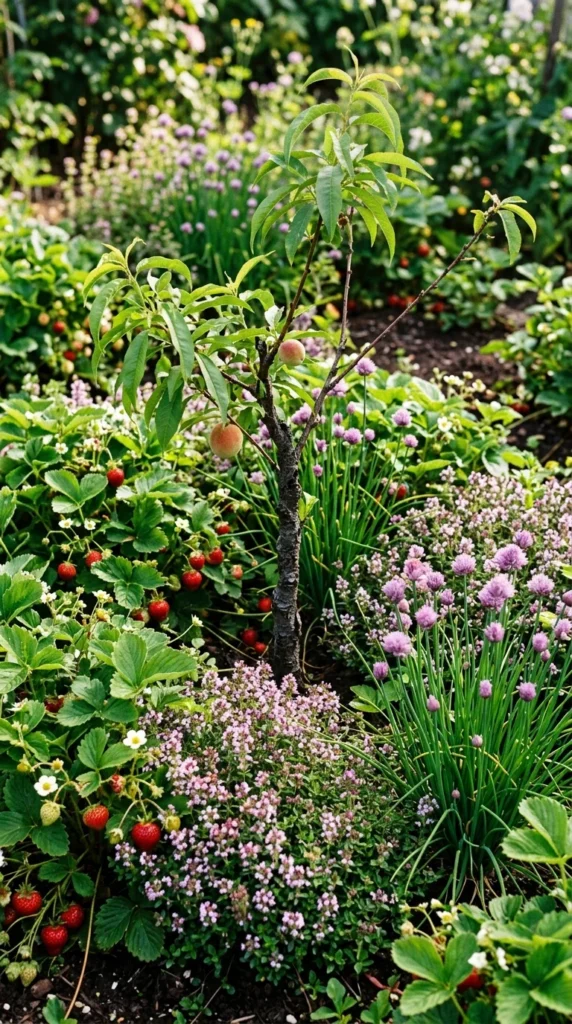
Maximize your soil space by planting “understory” crops beneath your fruit trees. Strawberries, herbs, and pollinator-friendly flowers can thrive in the dappled light under a tree canopy. This not only increases your yield but also creates a more resilient ecosystem that suppresses weeds and retains moisture.
9. Permaculture Guilds
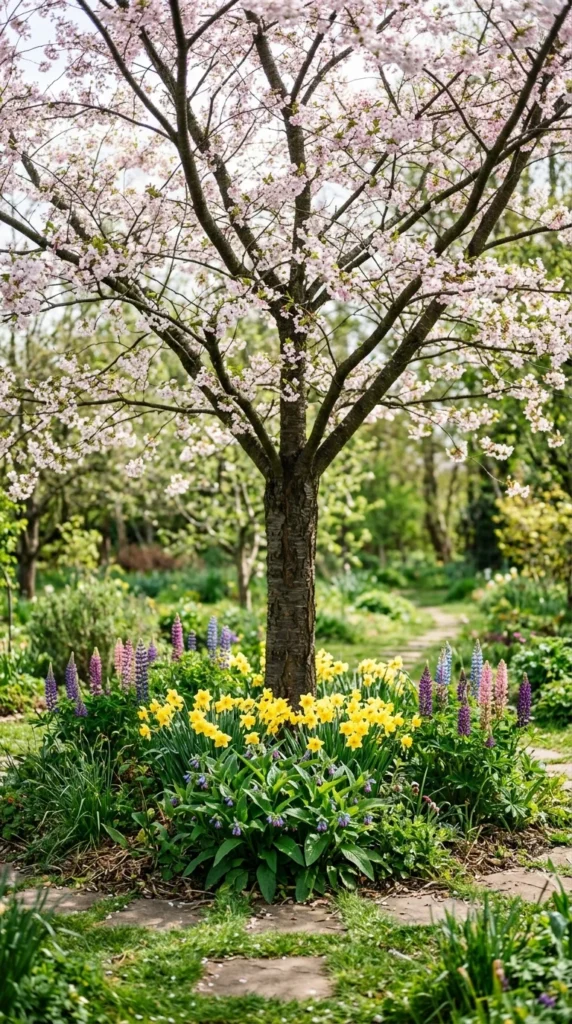
A fruit tree guild is a group of plants centered around a tree that support its growth. Nitrogen-fixers like clover or lupines feed the soil, while deep-rooted plants like comfrey bring up minerals. This holistic approach ensures your trees are healthy and productive with less chemical intervention.
10. High-Density Planting
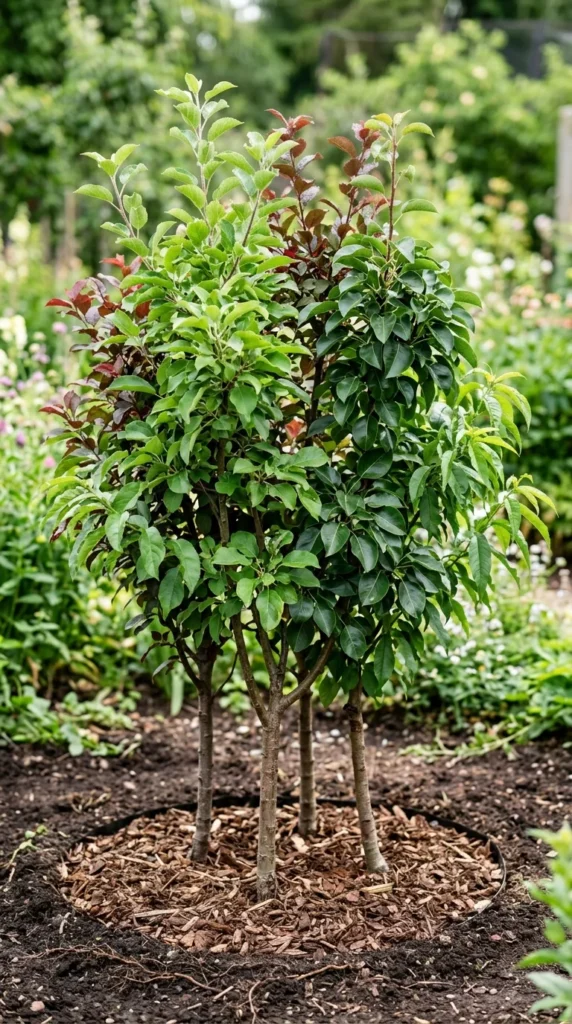
One of the most radical space-saving ideas is planting multiple trees in a single hole. By planting three or four trees close together and pruning them as a single unit, you can enjoy a staggered harvest and multiple varieties in the footprint of one tree. This requires diligent pruning to ensure air circulation.
11. Cordon Training
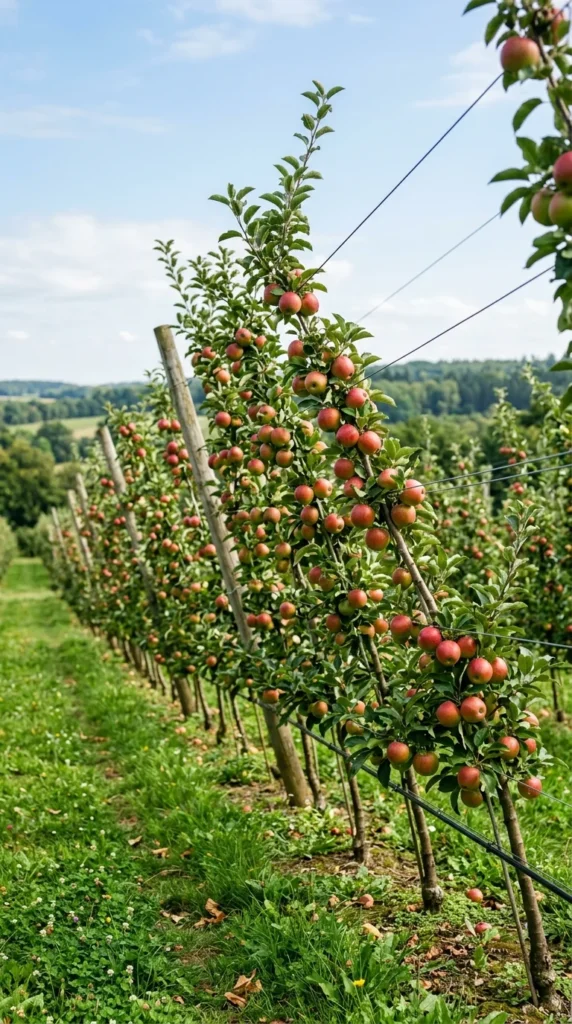
Cordons are single-stemmed trees planted at an angle (usually 45 degrees). This method slows the flow of sap, encouraging more fruit production and less vigorous wood growth. A row of cordons can provide a huge variety of fruit in a very narrow strip of land along a fence line.
12. Arched Walkways
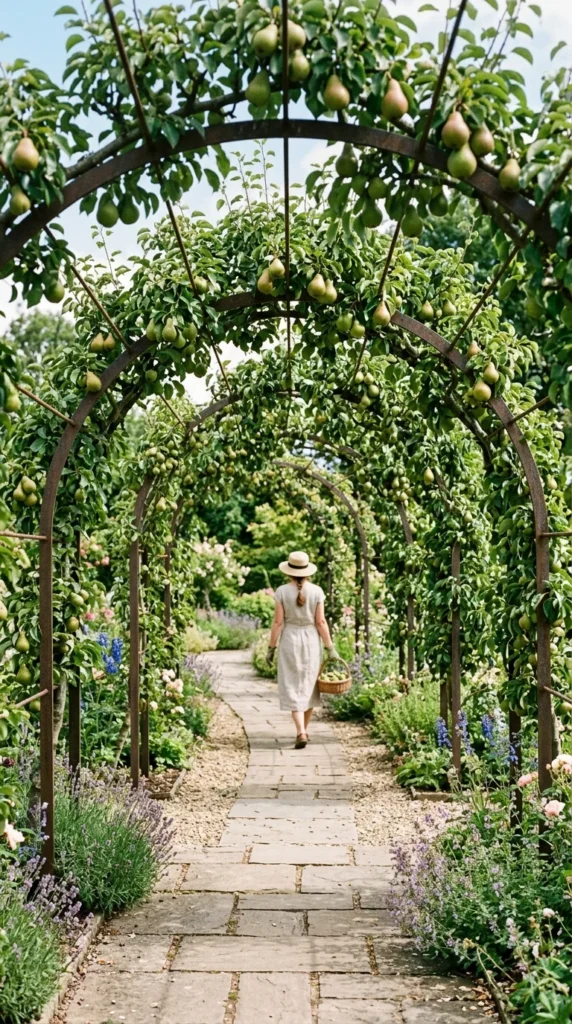
Turn a simple walkway into an immersive orchard experience. Training fruit trees over a series of arches creates a “fruit tunnel.” This uses the air space above your head and makes harvesting a breeze as the fruit hangs down within easy reach.
13. Wall-Mounted Pots
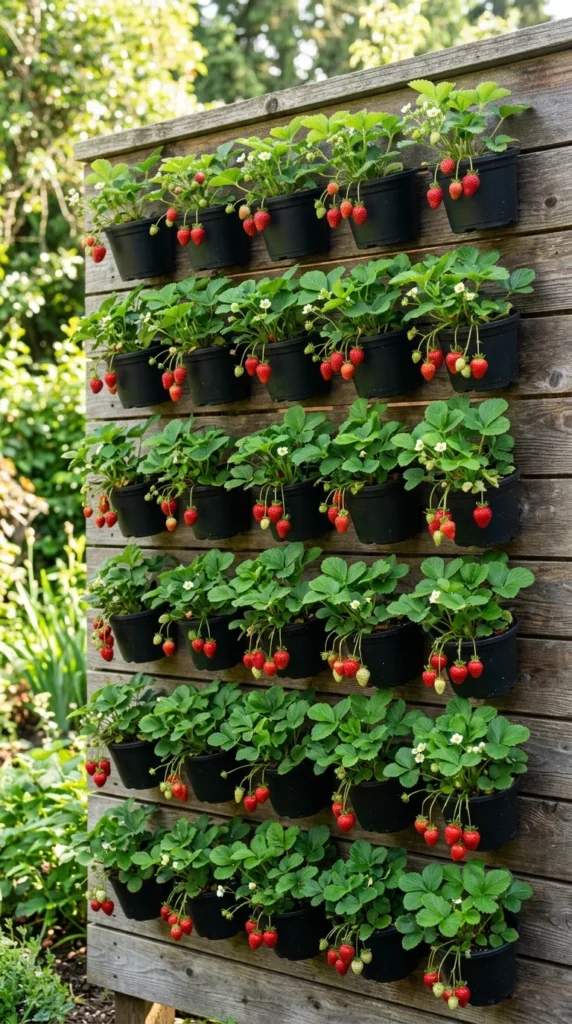
If you have zero ground space, look to your walls and fences. Vertical wall planters or “living walls” can house strawberries, dwarf blueberries, or even herbs. This keeps the fruit away from ground pests and utilizes the warmth reflected off the walls.
14. Tiered Planters
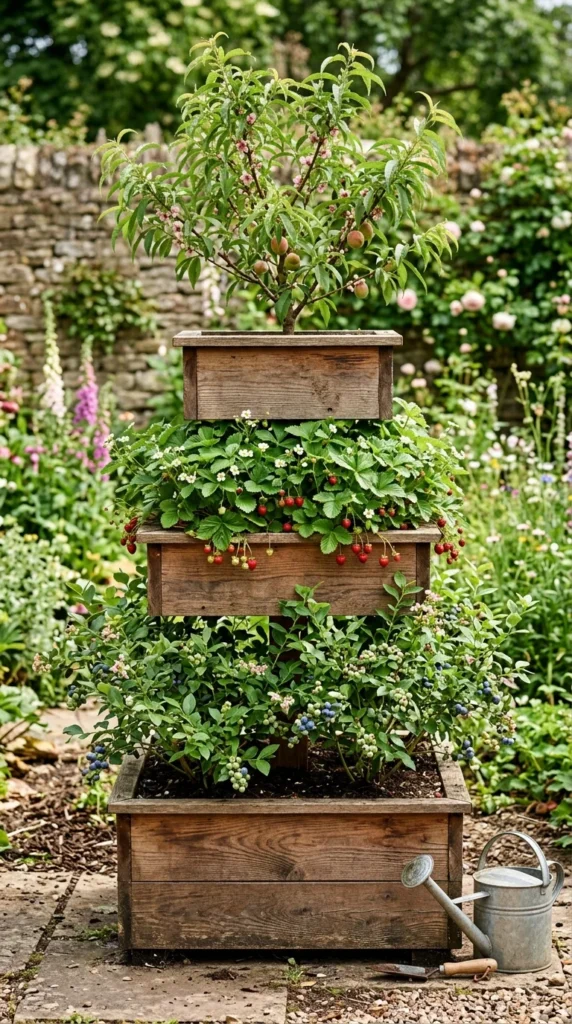
Tiered planters allow you to stack your crops vertically. This is particularly effective for berries that have different soil requirements. You can fill one tier with acidic soil for blueberries and another with standard potting mix for strawberries.
15. Hanging Baskets
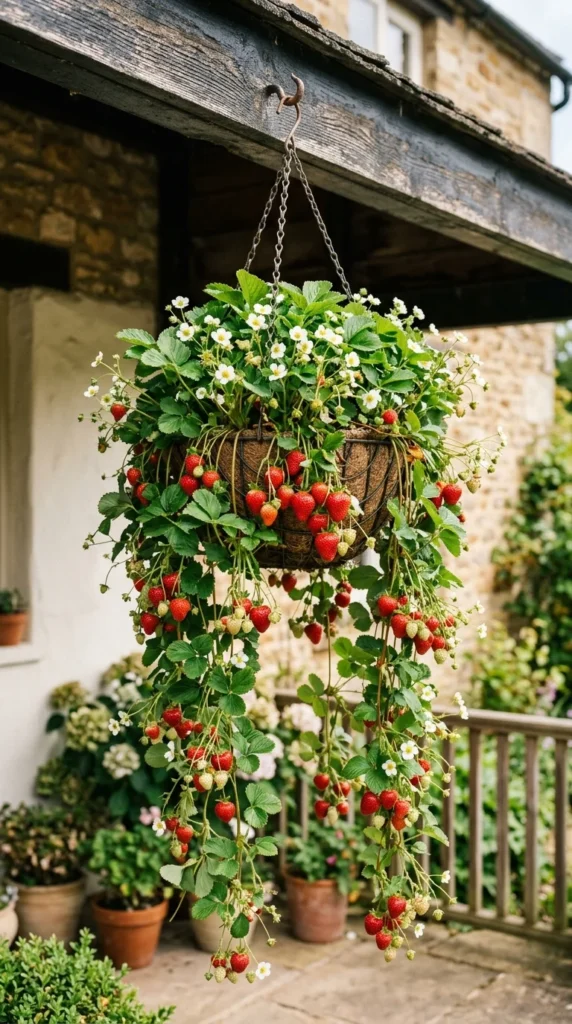
Hanging baskets aren’t just for petunias. Trailing varieties of strawberries and even some compact “tumbling” cherry tomatoes (which pair well in an orchard setting) can be grown overhead. This is a great way to use the eaves of your house or the branches of larger trees.
16. Boundary Hedgerows
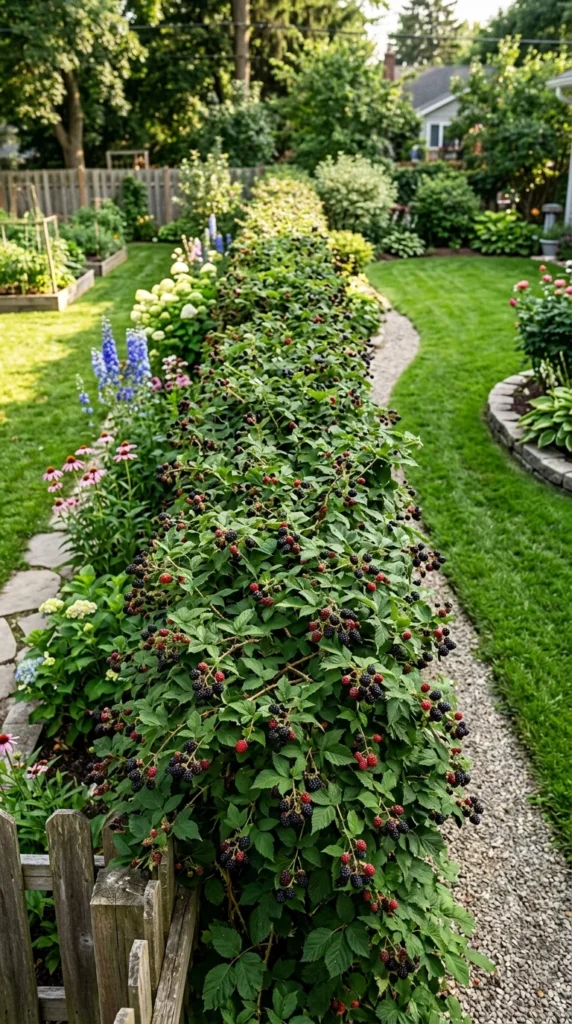
Instead of a boring boxwood hedge, plant a fruiting one. Currants, gooseberries, and raspberries can be pruned into a dense hedge that provides privacy, security, and gallons of berries. These “edible fences” are highly productive and provide excellent habitat for beneficial birds.
17. Rootstock Management
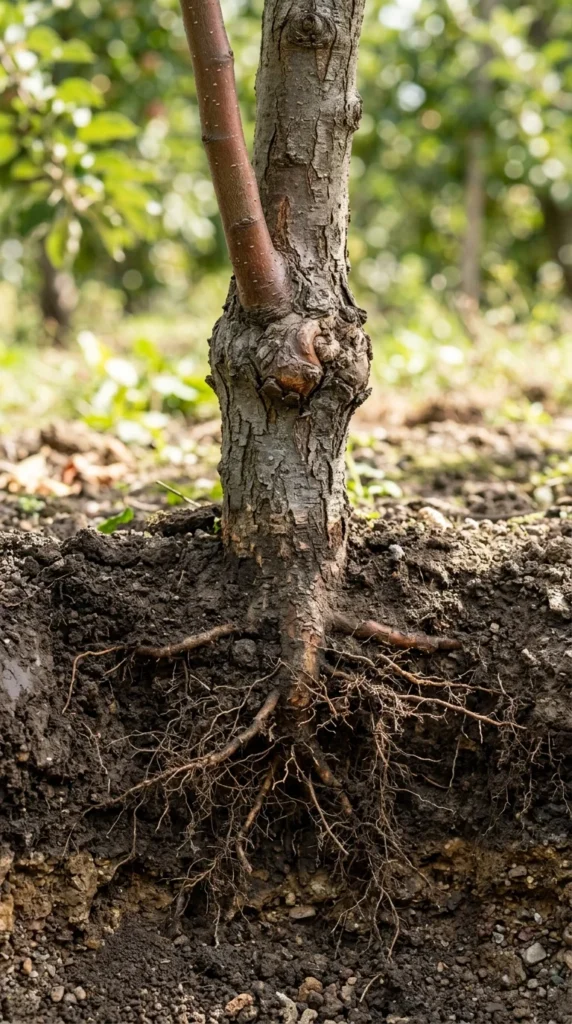
Understanding rootstocks is crucial for maximizing space. When buying trees, specifically look for “M27” or “Gisela 5” labels, which indicate ultra-dwarfing properties. These rootstocks ensure the tree stays small for its entire life, preventing it from eventually overwhelming your backyard.
18. Summer Pruning
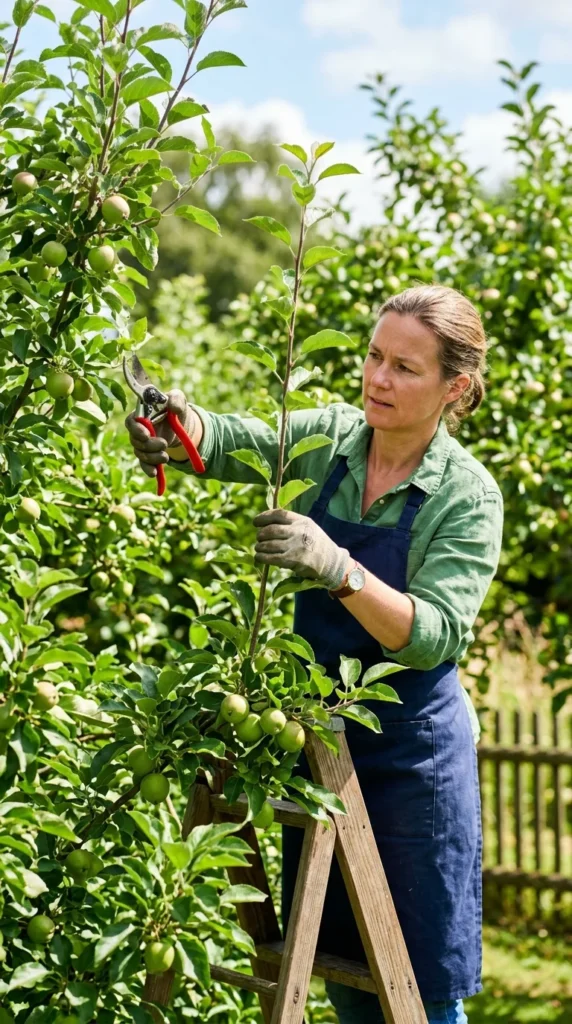
While most people prune in winter, summer pruning is the secret to controlling tree size. By cutting back the new, soft growth in July or August, you reduce the tree’s energy reserves, keeping it small and encouraging the formation of fruit buds for the following year.
19. Fan Training
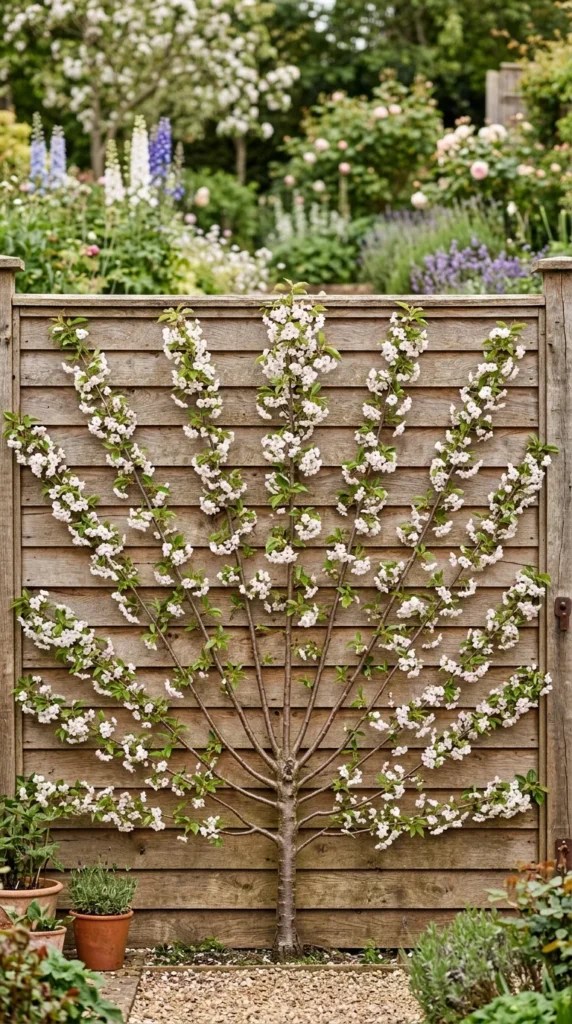
Fan training is particularly well-suited for stone fruits like cherries, peaches, and apricots, which don’t respond as well to horizontal espalier. The fan shape allows for excellent light penetration and air circulation, which is vital for preventing rot in stone fruits.
20. Belgic Fences
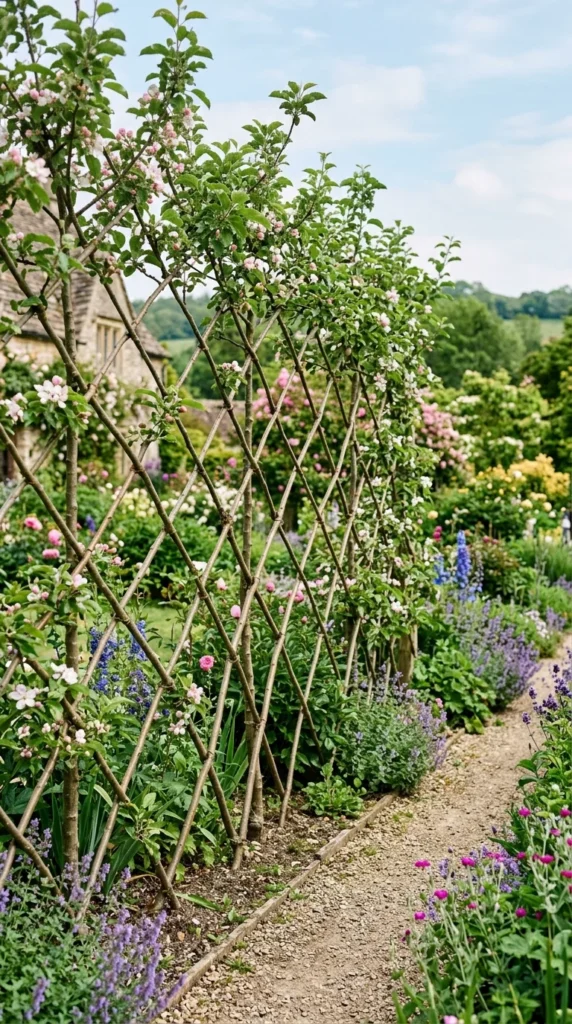
A Belgic fence (or Belgian Fence) is a form of espalier where multiple trees are trained at opposing 45-degree angles to create a lattice or diamond pattern. It is one of the most ornamental ways to grow fruit and can serve as a stunning focal point or a boundary wall.
21. Berry Understory
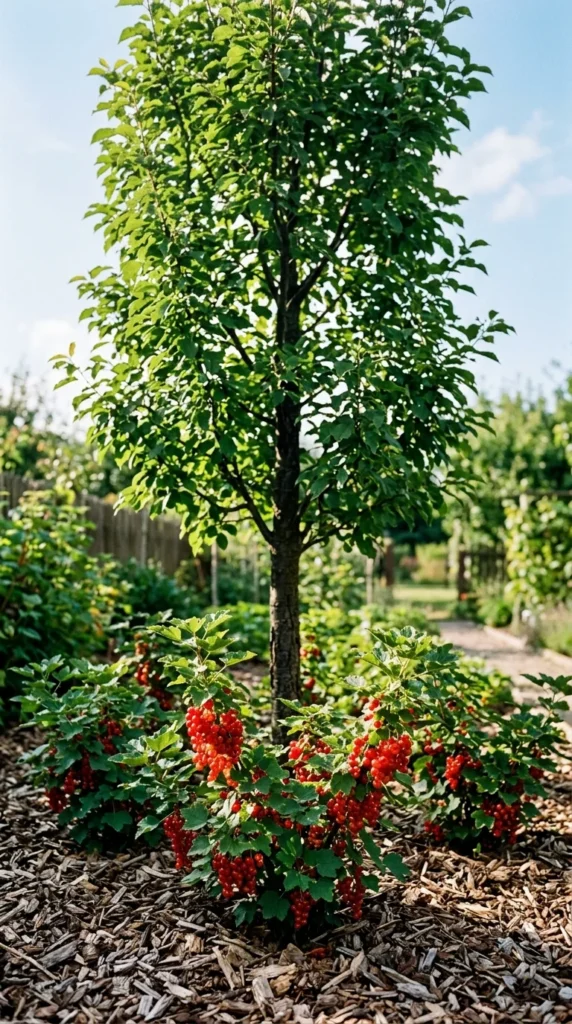
Berries like currants and gooseberries actually prefer a bit of shade in hotter climates. Planting them directly under the canopy of your larger fruit trees makes use of the “lower story” of your orchard, mimicking the natural structure of a forest edge.
22. Potted Citrus
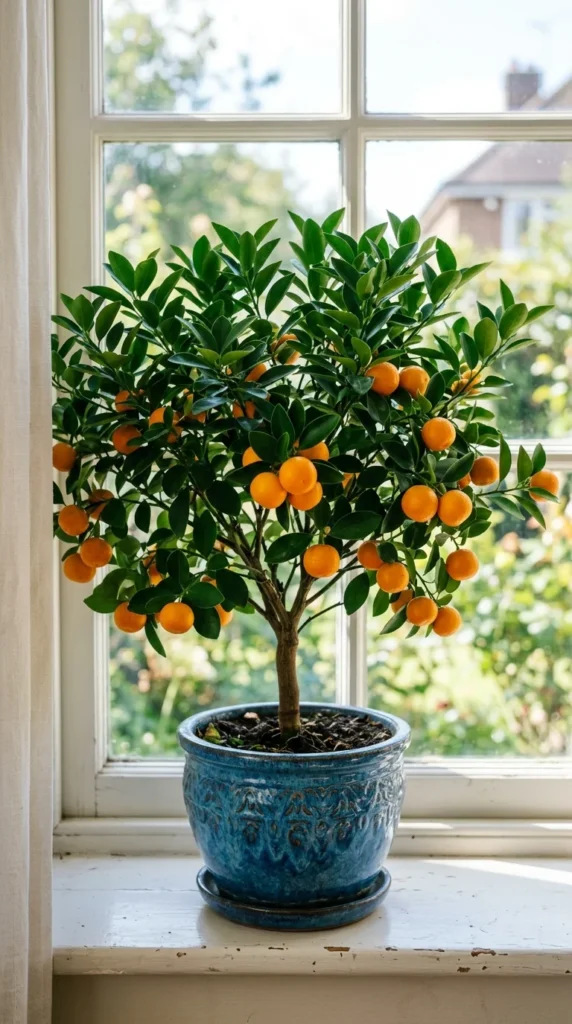
For those in colder climates, keeping citrus in pots is the only way to have an orchard. Calamondins, Meyer lemons, and Key limes are naturally smaller and can live happily in a sunny corner of a patio during summer and a bright window during winter.
23. Miniature Peaches
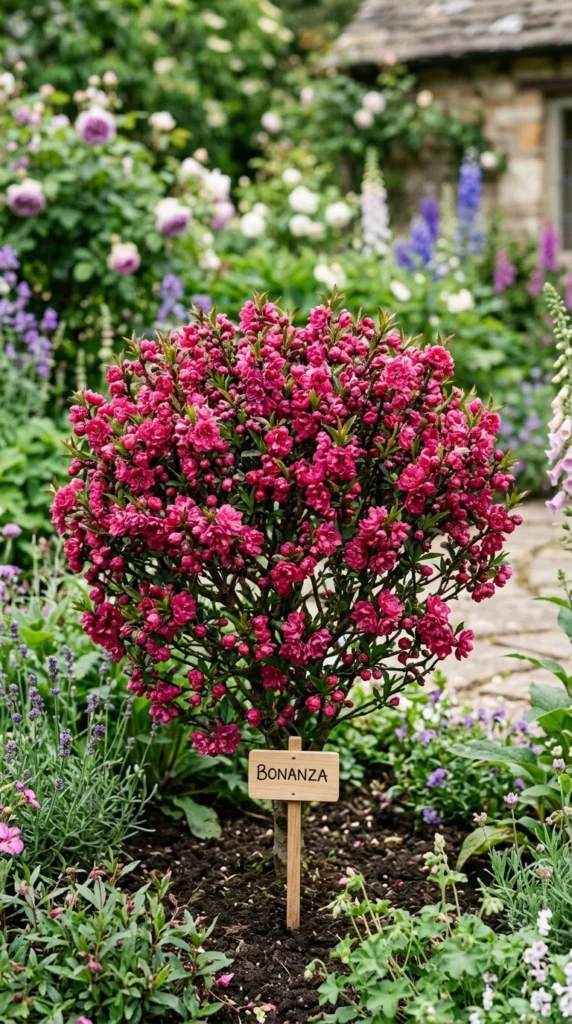
Genetic miniature peaches and nectarines are different from dwarf trees. They are naturally predisposed to grow as small, dense shrubs. They rarely exceed 4–5 feet in height and require almost no pruning to maintain their shape, making them perfect for low-maintenance small orchards.
24. Urban Micro-Climates
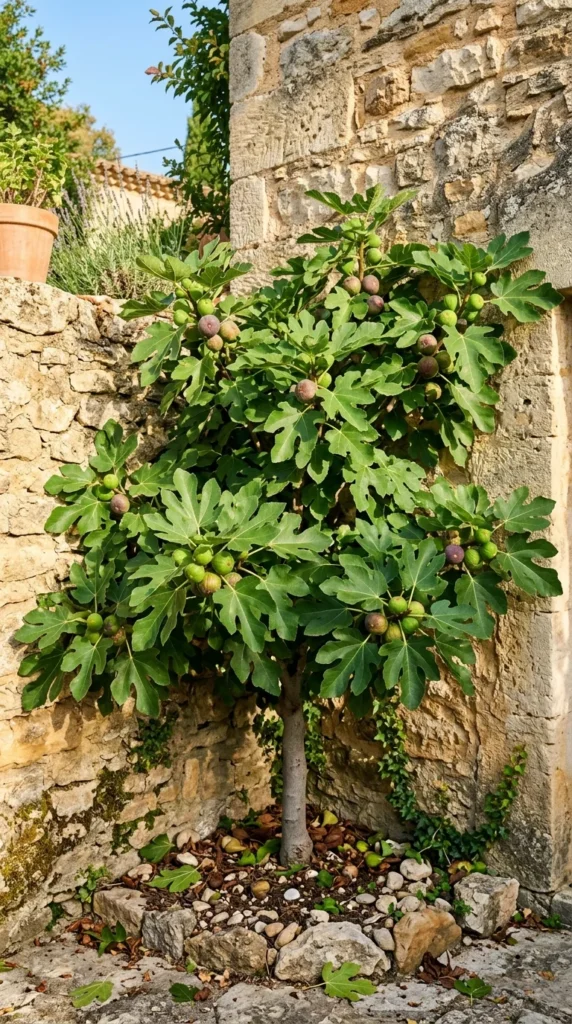
You can grow “boundary-pushing” fruits by utilizing micro-climates. A south-facing brick wall absorbs heat during the day and radiates it at night. Planting a heat-loving fig or apricot against such a wall can allow you to grow fruit that might otherwise struggle in your zone.
25. Self-Pollinating Cultivars
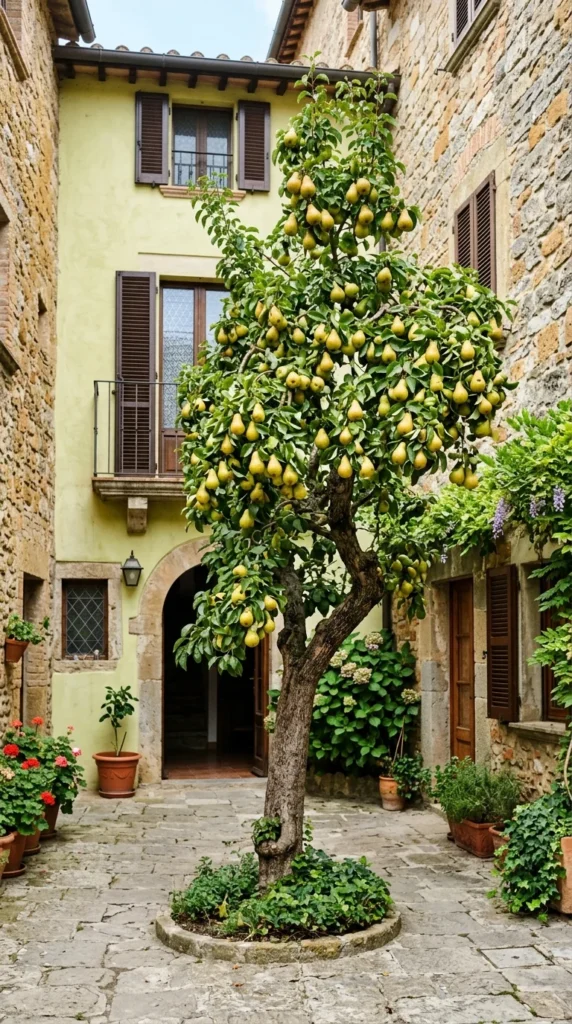
In a small backyard, you may only have room for one or two trees. To maximize space, always choose self-fertile or self-pollinating varieties. This ensures you get a crop without needing to plant a second “partner” tree for cross-pollination, effectively doubling your potential variety in the same space.