The dream of picking fresh, sun-ripened fruit from your own backyard is no longer reserved for those with sprawling country estates. Thanks to advancements in horticulture and a renewed interest in urban homesteading, small-space orcharding has become more accessible than ever. Whether you have a tiny urban patio, a narrow side yard, or a compact suburban plot, you can produce a significant bounty of fruit by choosing the right varieties and utilizing specialized growing techniques.
Selecting the perfect fruit tree for a limited space requires a shift in perspective. Instead of looking for the largest, most impressive canopy, you must focus on efficiency, rootstock, and growth habit. By understanding how to manipulate size and maximize vertical space, you can transform a handful of square feet into a productive edible landscape.
1. Dwarf Rootstock
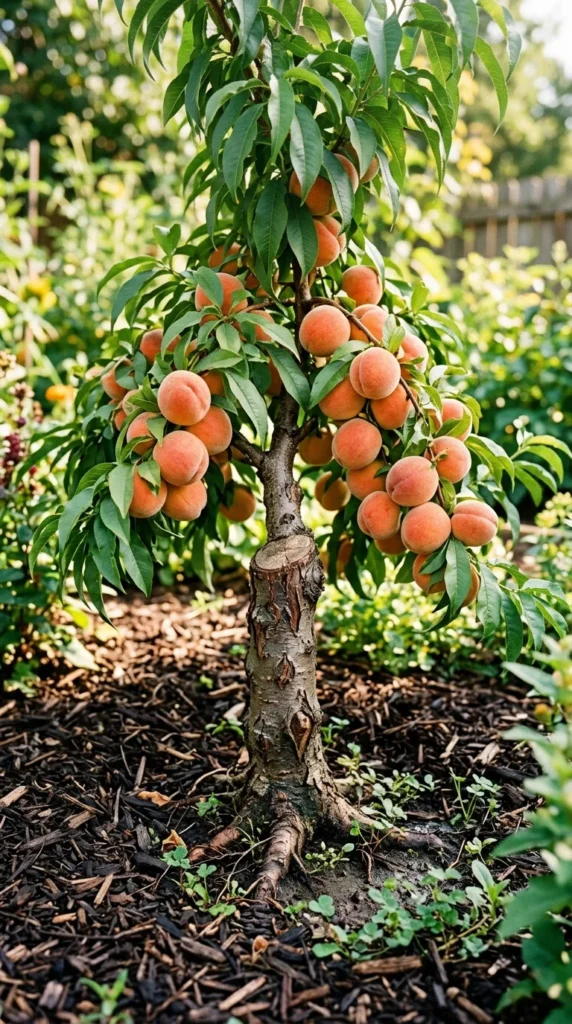
The most critical factor in choosing a tree for a small yard is the rootstock. Almost all commercial fruit trees are “grafted,” meaning the top part of the tree (the scion, which determines the fruit type) is fused onto the root system of another tree (the rootstock). For small gardens, “dwarf” or “ultra-dwarf” rootstocks are essential.
Dwarf rootstocks are genetically programmed to limit the tree’s ultimate height, usually keeping it between 6 to 10 feet tall. Despite their diminutive stature, these trees produce full-sized fruit, often earlier in their lifespan than standard trees. They are easier to prune, harvest, and protect from pests because every branch is within arm’s reach. When shopping, always verify the specific rootstock to ensure the tree won’t eventually outgrow its welcome.
2. Columnar Varieties
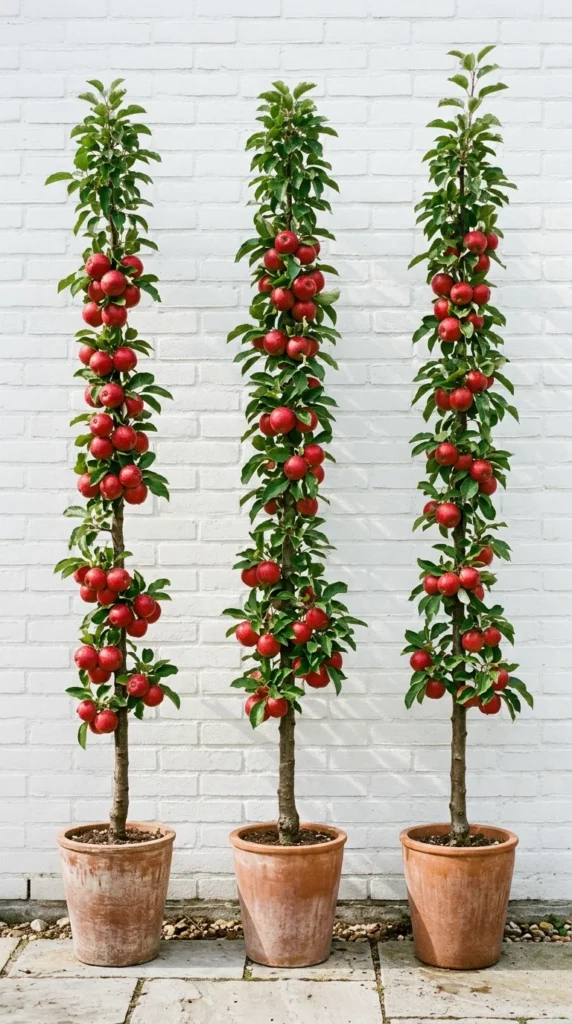
Columnar fruit trees, particularly “ballerina” apples, are the ultimate solution for extremely tight spaces. These trees grow in a narrow, upright pillar shape, rarely exceeding two feet in width. Because they lack traditional lateral branching, they can be planted in large containers or spaced as closely as 24 inches apart in the ground.
This growth habit is natural to the variety and requires very little pruning to maintain. They are perfect for framing a doorway, lining a walkway, or creating a living “fruit fence” along a property line. While apples are the most common columnar fruit, certain varieties of plums and cherries are also being developed with this narrow vertical habit.
3. Espalier Training
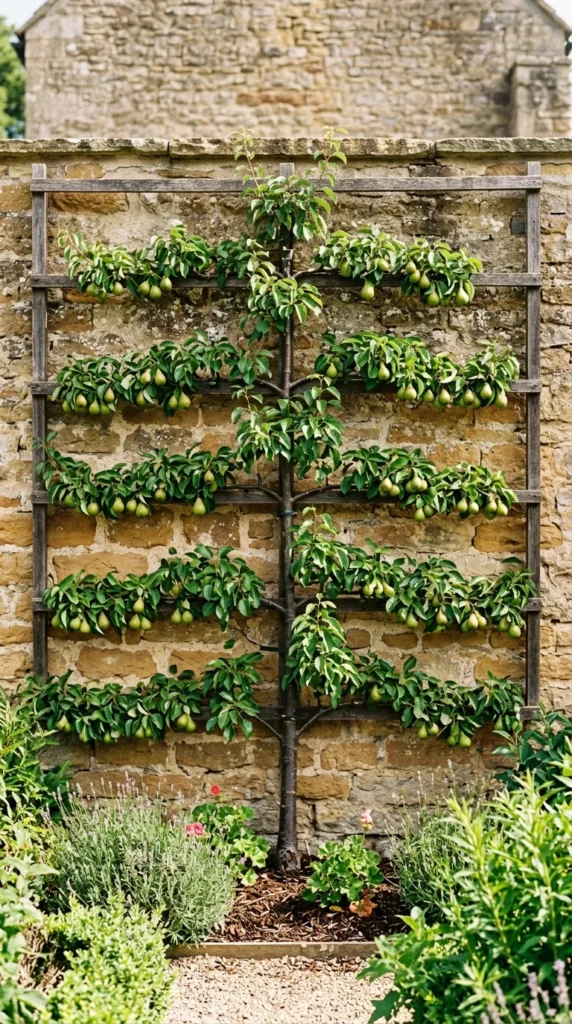
Espalier is an ancient horticultural practice of training a tree to grow flat against a 2D surface, such as a wall, fence, or freestanding wire trellis. This technique is a game-changer for small yards because it allows you to grow fruit in “found” spaces that would otherwise be unusable.
By pruning away branches that grow outward and tying those that grow sideways to a support, you create a beautiful, decorative, and highly productive feature. Espaliered trees benefit from the “heat sink” effect of walls, which can help ripen fruit in cooler climates. Apples and pears are the traditional choices for this method, but citrus and stone fruits like peaches can also be trained into fans.
4. Multi-Graft Trees
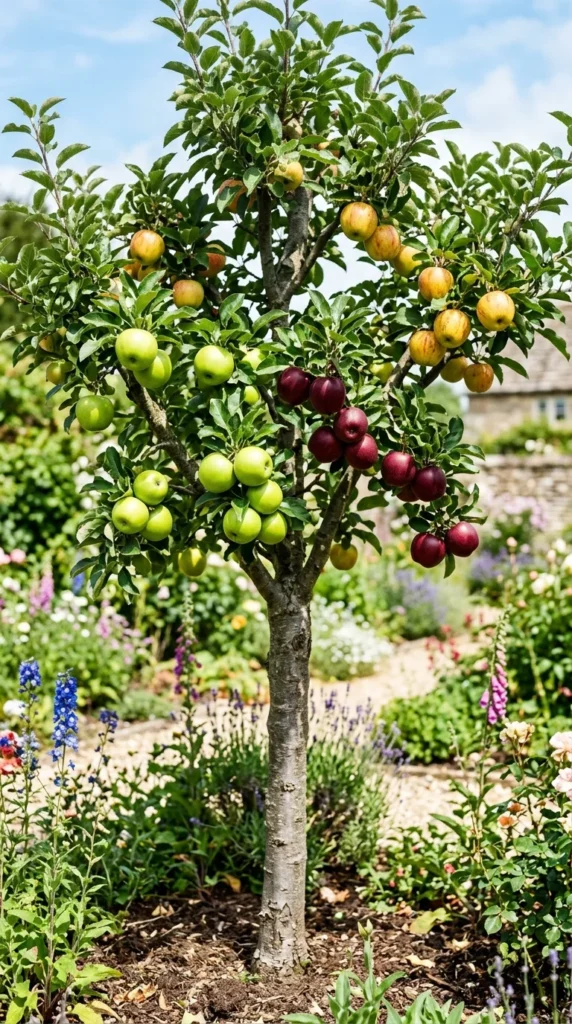
If you only have room for one tree but want a variety of flavors, “Multi-Graft” or “Fruit Salad” trees are the answer. These trees feature three to five different varieties of the same fruit family (like three types of apples or a mix of peaches, plums, and nectarines) grafted onto a single rootstock.
This serves two purposes for the small-space gardener. First, it provides a staggered harvest, as different varieties ripen at different times throughout the season. Second, it solves the problem of pollination. Many fruit trees are not self-fertile and require a second variety nearby to set fruit. A multi-graft tree has the pollinators built right into the same plant, ensuring a successful crop without needing a second tree.
5. Self-Fertile Cultivars
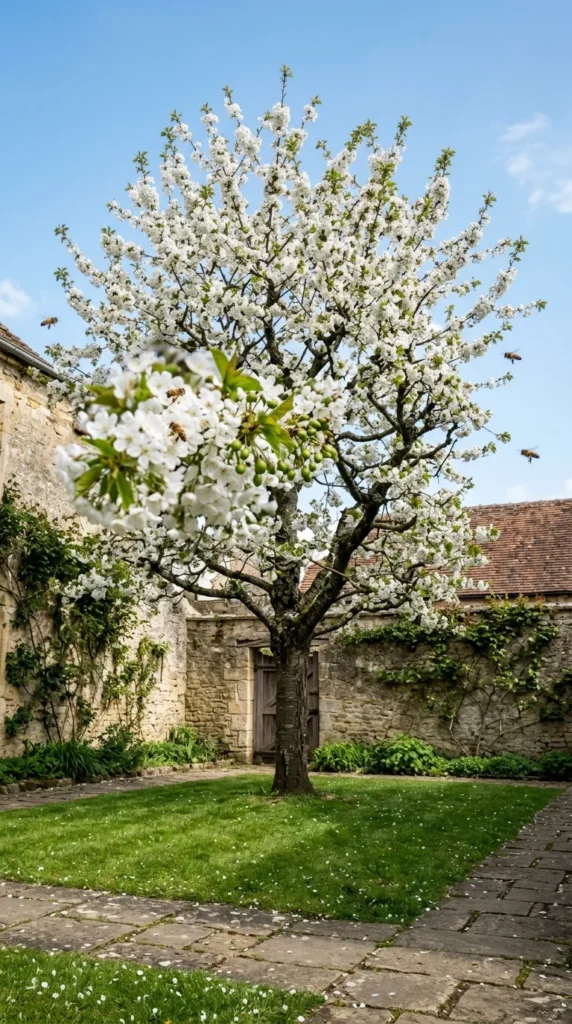
In a large orchard, pollination happens easily because there are dozens of trees to share pollen. In a small yard, you may not have space for a “pollination partner.” To overcome this, look for “self-fertile” or “self-pollinating” cultivars.
Certain fruits, like most peaches, nectarines, and sour cherries, are naturally self-fertile. However, many apples, pears, and sweet cherries require a different variety nearby. Breeders have developed specific self-fertile versions of these popular fruits (such as the ‘Stella’ cherry or ‘Garden Annie’ apricot). Choosing these ensures that even a solitary tree in a courtyard will produce a heavy crop.
6. Container Gardening
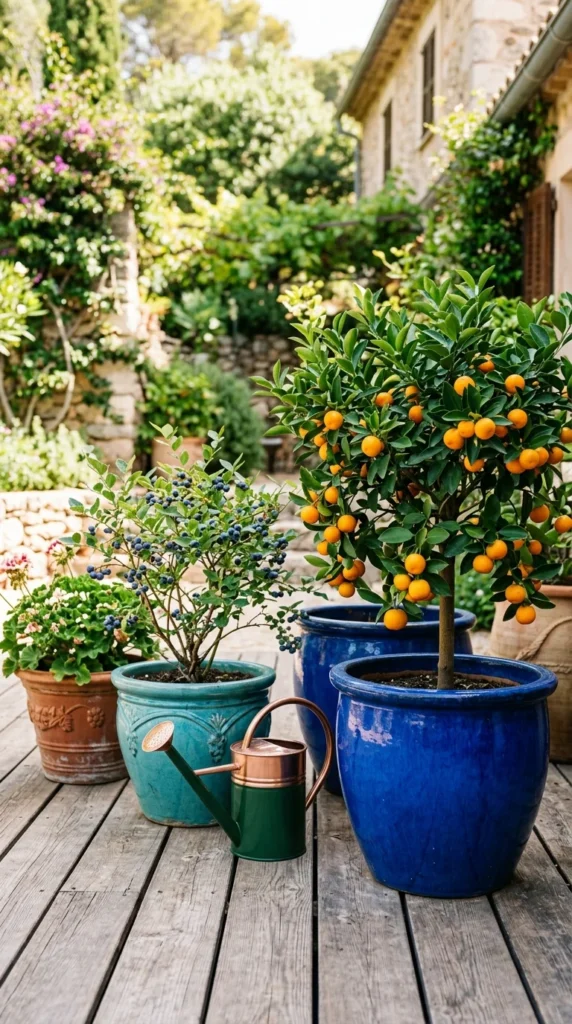
You don’t even need soil in the ground to grow fruit. Many dwarf varieties are specifically bred for life in a pot. Container-grown fruit trees offer the advantage of mobility; you can move them to follow the sun or bring them into a garage or greenhouse during harsh winter months.
Citrus trees, such as ‘Meyer’ lemons and ‘Key’ limes, are the kings of container fruit, but you can also grow “patio” varieties of peaches and nectarines. These are genetic dwarfs that naturally grow into a dense, mop-headed bush rather than a tall tree. When growing in containers, ensure you use a high-quality potting mix and a container with excellent drainage to prevent root rot.
7. Summer Pruning
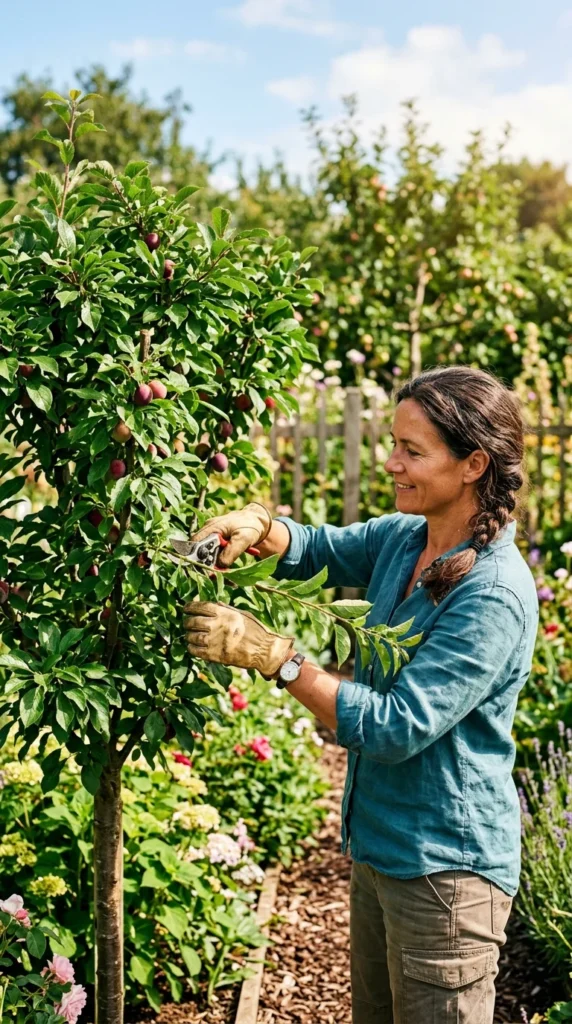
While rootstock does much of the work in controlling size, the gardener’s shears do the rest. Traditional orchardists often prune in winter to encourage growth, but for the small-yard gardener, summer pruning is the secret to success.
Pruning in the height of the growing season reduces the tree’s vigor by removing leaves that produce energy for the roots. By thinning out the canopy in July or August, you can keep a tree at a specific height and width indefinitely. This technique also allows more sunlight to reach the fruit in the center of the tree, improving color, sweetness, and overall quality.
8. Strategic Placement
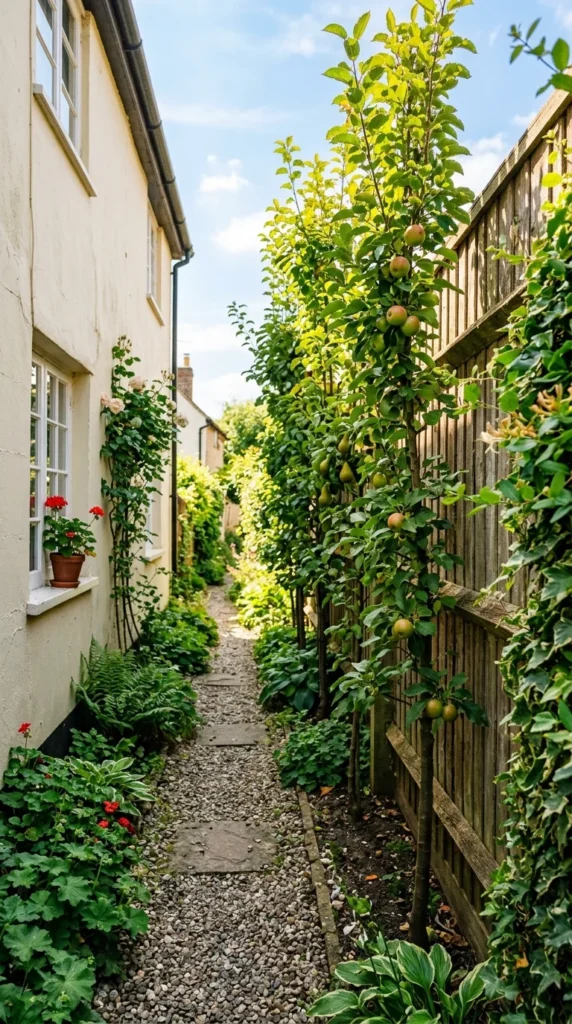
In a small yard, every inch of sunlight is precious. Most fruit trees require at least 6 to 8 hours of direct sun to produce sweet fruit and resist disease. When choosing your location, observe how shadows move across your yard throughout the day.
Utilize “microclimates”—for example, a south-facing wall will be significantly warmer than the rest of the garden, making it the perfect spot for a heat-loving fig or apricot. Avoid low-lying “frost pockets” where cold air settles, as late spring frosts can kill the blossoms on your trees and ruin your entire year’s harvest. By matching the tree’s needs to the specific conditions of your small space, you ensure a healthy, productive mini-orchard for years to come.