
Blueberries are often referred to as a “superfood” due to their high antioxidant content, but for the home gardener, they are also a “super-crop.” Unlike many fruit trees that require decades to mature or intensive chemical interventions, blueberries are hardy, long-lived, and aesthetically pleasing shrubs that fit perfectly into edible landscapes. However, blueberries have very specific physiological needs—particularly regarding soil chemistry—that differ from most other garden vegetables and fruits. To transition from a casual planter to a successful blueberry grower, one must understand the nuances of acidity, drainage, and varietal selection.
1. Varietal Selection
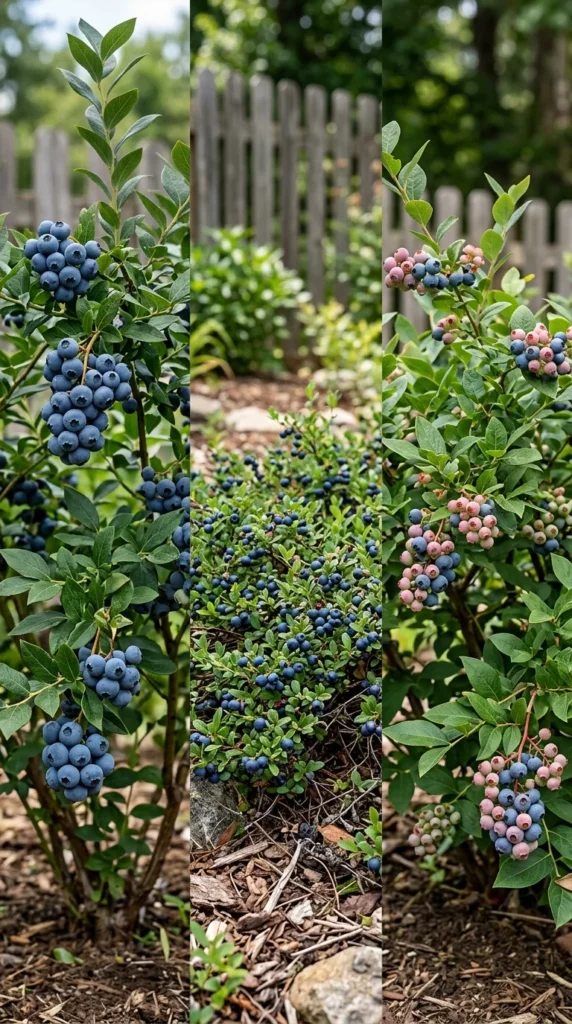
The first step to success is choosing the right cultivar for your specific climate. Blueberries are categorized primarily by their “chill hour” requirements—the number of hours between 32°F and 45°F during the winter.
- Northern Highbush: Best for regions with cold winters. These are the most common commercial varieties, known for large, sweet fruit.
- Southern Highbush: Specifically bred for warmer climates (Zones 7-10). They require fewer chill hours and are more heat-tolerant.
- Rabbiteye: Native to the Southeastern United States, these are incredibly productive and pest-resistant but require a different pollinator variety to set fruit.
- Lowbush: These are “wild” blueberries that grow very low to the ground and are extremely cold-hardy, perfect for Zone 3 or 4.
2. Soil Preparation
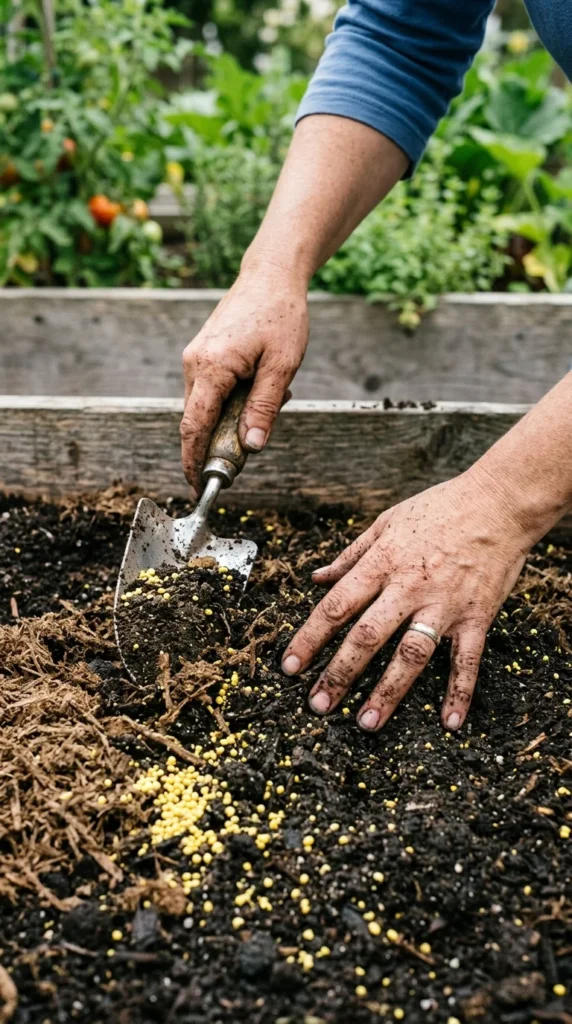
Soil is the most critical factor in blueberry success. Blueberries belong to the Ericaceae family, which requires acidic soil to absorb nutrients. The ideal pH range is between 4.5 and 5.2. If your soil pH is above 6.5, the plant will struggle with iron chlorosis, turn yellow, and eventually die.
To prepare the soil, it is recommended to test your pH at least six months before planting. If you need to lower the pH, incorporate elemental sulfur or aluminum sulfate. Adding organic matter like peat moss, pine bark, or leaf mold will not only help maintain acidity but also improve the soil structure.
3. Sunlight Requirements
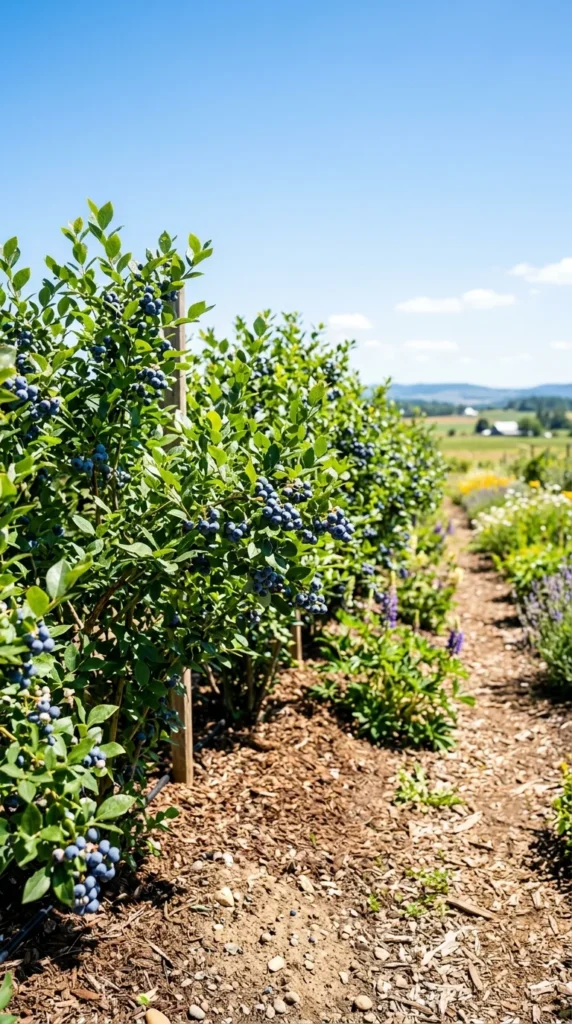
Blueberries are sun-worshippers. While they can survive in partial shade, their fruit production and sugar content will drastically decrease. For a successful harvest, ensure your planting site receives at least 6 to 8 hours of direct sunlight daily. Sunlight also helps keep the foliage dry, which prevents fungal diseases that thrive in damp, shaded environments.
4. Planting Steps
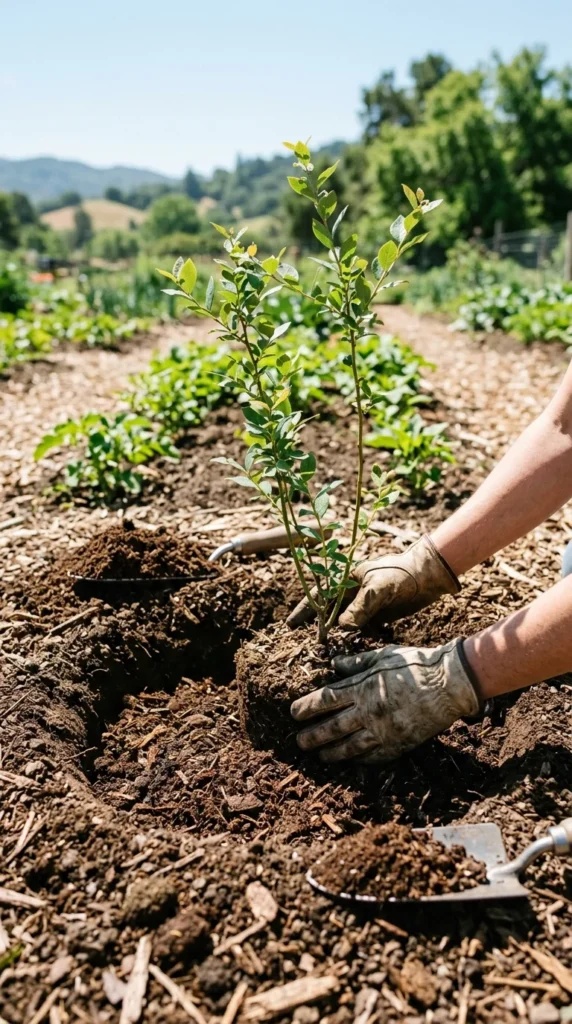
Timing is everything. In most regions, the best time to plant is in early spring or late autumn. When planting, dig a hole twice as wide as the root ball but no deeper. Blueberries have shallow, fibrous roots that need room to spread horizontally.
Space your plants about 3 to 5 feet apart in rows, with 10 feet between rows. If you are planting in containers, use a mix of 50% potting soil and 50% peat moss, and ensure the pot has excellent drainage.
5. Water Management
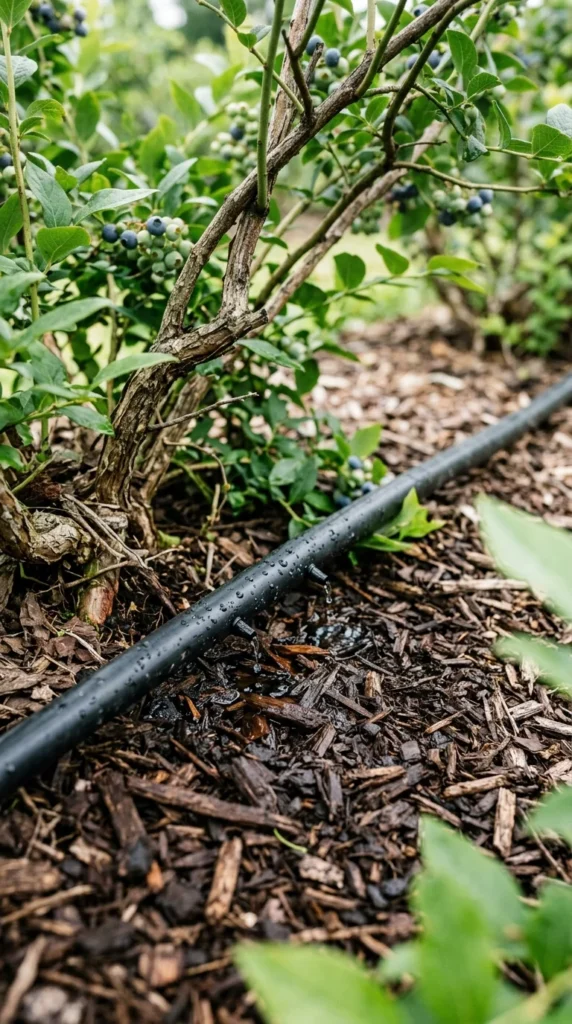
Blueberries have a shallow root system and do not have root hairs, which makes them very sensitive to fluctuations in moisture. They require consistent moisture but cannot tolerate “wet feet” or standing water.
The goal is to provide 1 to 2 inches of water per week. Drip irrigation or soaker hoses are the most effective methods because they deliver water directly to the soil without wetting the leaves, which reduces the risk of fruit rot and powdery mildew.
6. Mulch Application
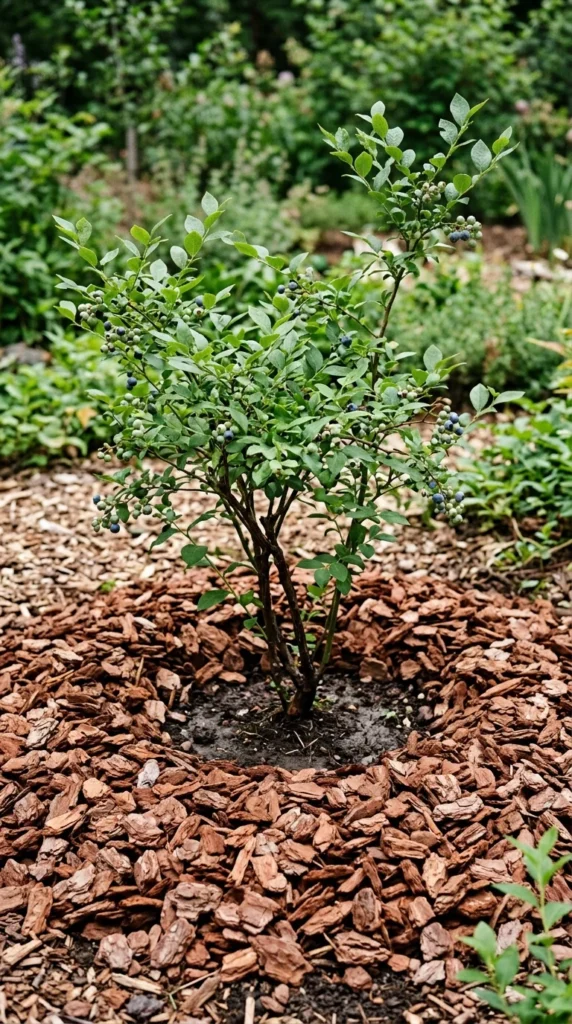
Mulching is non-negotiable for blueberries. Because their roots are shallow, they are prone to drying out and are easily damaged by temperature swings. A thick layer (2-4 inches) of organic mulch provides three main benefits:
- Moisture Retention: It prevents evaporation.
- Weed Suppression: It stops competing plants from stealing nutrients.
- Soil Acidification: As mulches like pine needles or pine bark decompose, they help maintain a low soil pH.
7. Nutrient Feeding
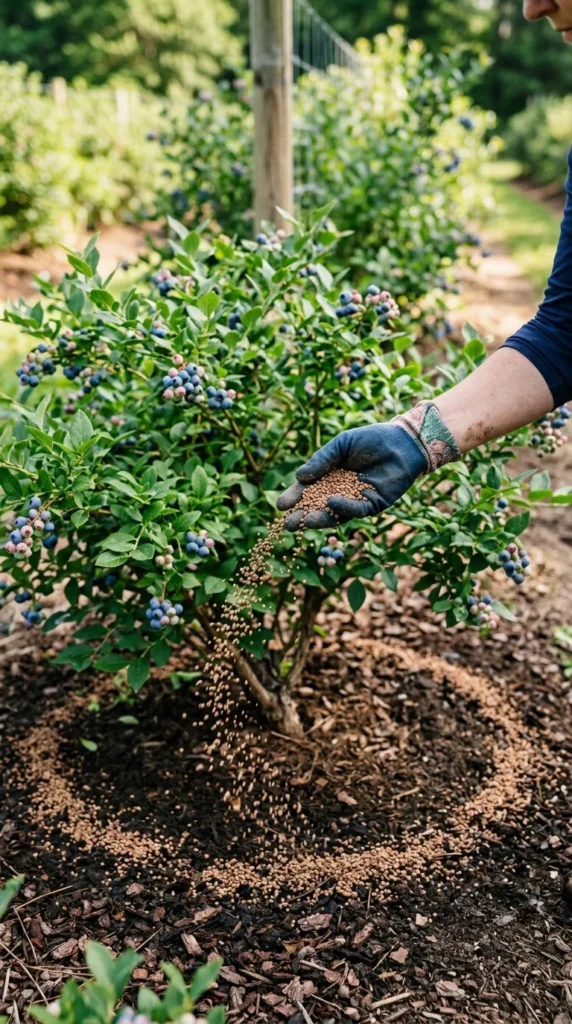
Blueberries are sensitive to over-fertilization. It is best to use fertilizers specifically formulated for acid-loving plants (often labeled as “Azalea or Camellia food”). Avoid fertilizers containing nitrates or chlorides, as these can be toxic to the roots.
Apply fertilizer in early spring before the buds break and again in late spring when the fruit begins to set. Organic options like blood meal, fish emulsion, or feather meal are excellent slow-release choices that won’t burn the delicate root system.
8. Pruning Techniques
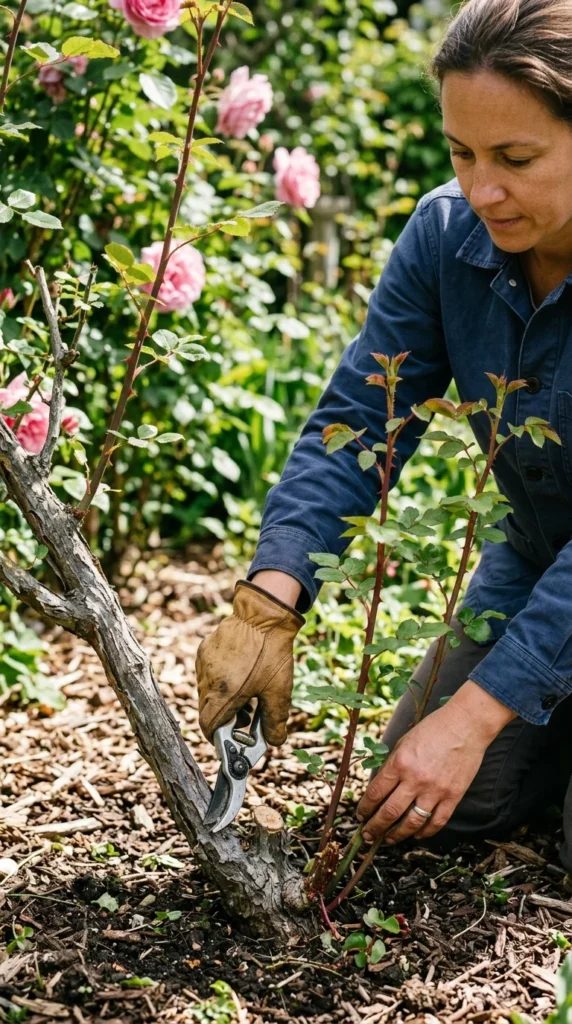
For the first two years, you should actually remove any flowers that appear. This forces the plant to put all its energy into establishing a strong root system rather than producing fruit.
Once the plant is mature (about 3-4 years old), annual pruning is required during the dormant winter season. Remove the “three D’s”: dead, damaged, or diseased wood. Additionally, prune out the oldest, thickest canes to the ground to encourage the growth of new, productive canes. A well-pruned bush should be open in the center to allow light and air to reach all parts of the plant.
9. Cross Pollination
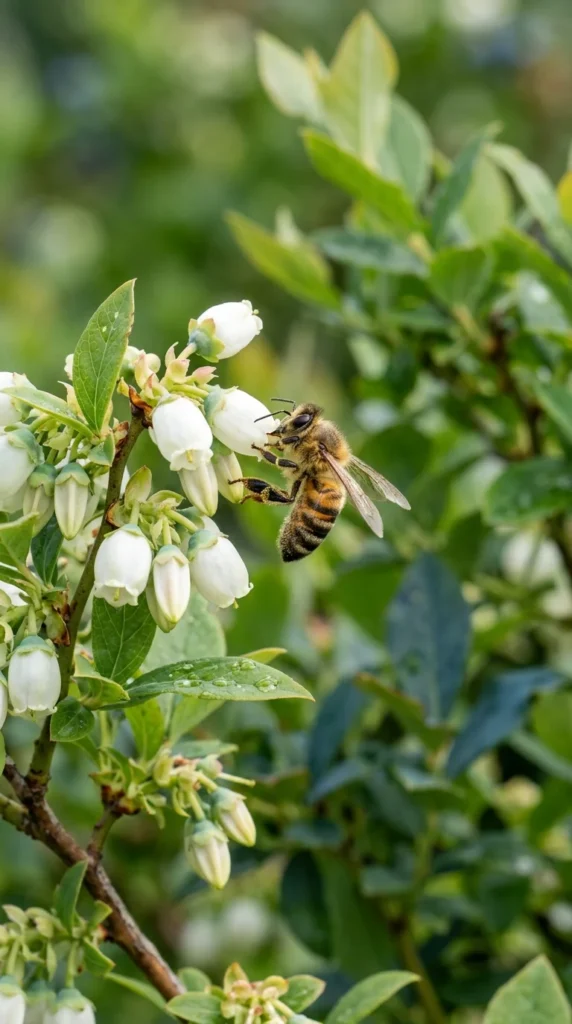
While many blueberry varieties are “self-fertile,” meaning they can produce fruit with their own pollen, almost all blueberries will produce significantly larger harvests and bigger berries if they are cross-pollinated.
To achieve this, plant at least two different varieties that bloom at the same time. This genetic diversity leads to better fruit set and a longer harvest window if you choose early, mid, and late-season varieties.
10. Pest Protection
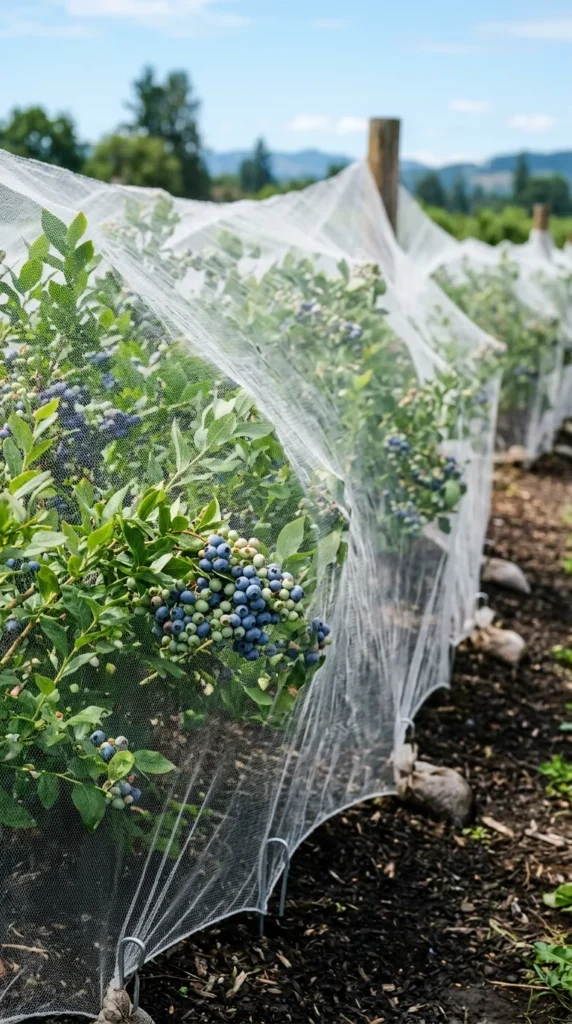
The biggest “pest” for blueberries is usually birds. Once the berries turn from green to blue, birds can strip a bush in hours. The most effective solution is bird netting. Drape the netting over a frame to prevent birds from poking through the mesh to reach the fruit.
For insect pests like the Spotted Wing Drosophila (fruit flies) or Japanese beetles, practice integrated pest management. Harvest fruit promptly as it ripens and keep the area under the bushes clean of fallen berries.
11. Harvest Time
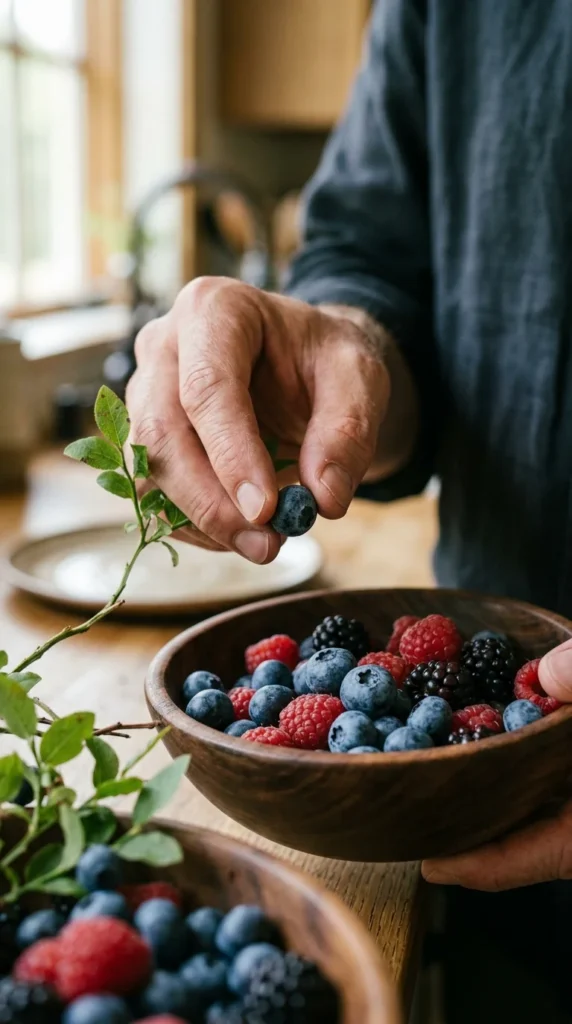
Knowing when to pick is an art. Blueberries turn blue before they are actually ripe. After they turn blue, they need another 3 to 7 days to develop their full sugar content.
The best test is the “tickle test.” Gently run your hand over a cluster of berries; the ones that are truly ripe will fall off into your hand with almost no effort. If you have to tug, the berry isn’t ready. Once harvested, do not wash the berries until you are ready to eat them, as moisture shortens their shelf life significantly.