
The dream of plucking a sun-ripened lemon or a fragrant lime from a tree in your own living room is entirely achievable. While citrus trees are native to tropical and subtropical climates, many dwarf varieties have been bred specifically to thrive in containers. Growing citrus indoors not only provides you with fresh, organic fruit but also fills your home with glossy evergreen foliage and one of the most intoxicating floral scents in the plant kingdom. However, success requires more than just a sunny windowsill; it requires an understanding of the specific environmental needs of these Mediterranean beauties.
1. Variety
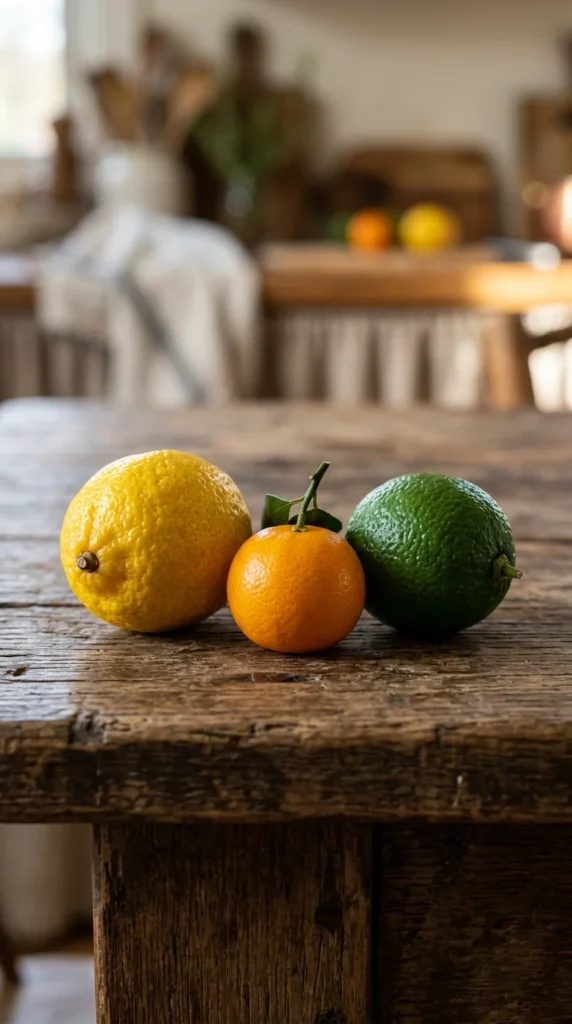
Choosing the right cultivar is the most critical step in indoor citrus gardening. Traditional citrus trees can grow up to 20 feet tall, which is impractical for a home setting. You must look for “dwarf” varieties grafted onto specific rootstocks that limit the tree’s size while encouraging early fruit production.
The Improved Meyer Lemon is the gold standard for indoor growth. It is more cold-tolerant and prolific than other lemons, producing thin-skinned, sweet-tart fruit. The Calamondin Orange is another favorite; while its fruit is quite sour (often used like a lime), the tree is incredibly hardy and almost constantly in bloom. For lime lovers, the Bearss Seedless Lime (or Persian Lime) and the Thai (Kaffir) Lime are excellent choices. If you prefer oranges, the Trower’s Red Navel or the Calamondin are your best bets, as true sweet oranges often require more heat and light than an average home can provide.
2. Sunlight
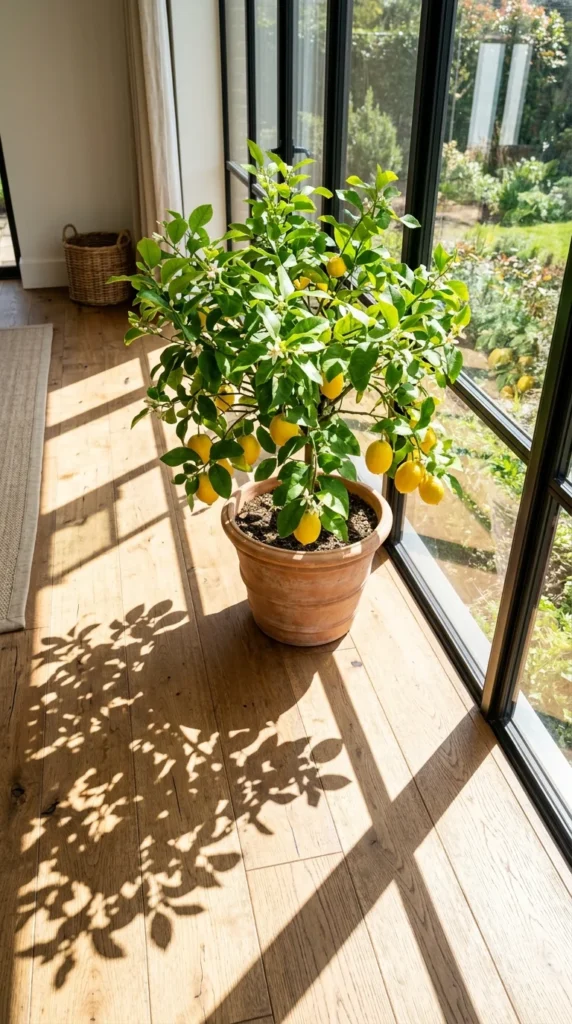
Citrus trees are “full sun” plants, meaning they require a minimum of 6 to 8 hours of direct sunlight per day, though 12 hours is ideal. In the Northern Hemisphere, a south-facing window is the most coveted real estate for a citrus tree. West-facing windows can also work, but they may become too hot in the peak of summer.
If your home lacks sufficient natural light, you must supplement with artificial lighting. High-intensity discharge (HID) lights or full-spectrum LED grow lights are effective. Position the lights about 12 to 20 inches above the canopy and use a timer to ensure consistency. Without enough light, the tree will fail to produce blossoms, and you may see significant leaf drop as the plant enters a survival mode.
3. Potting
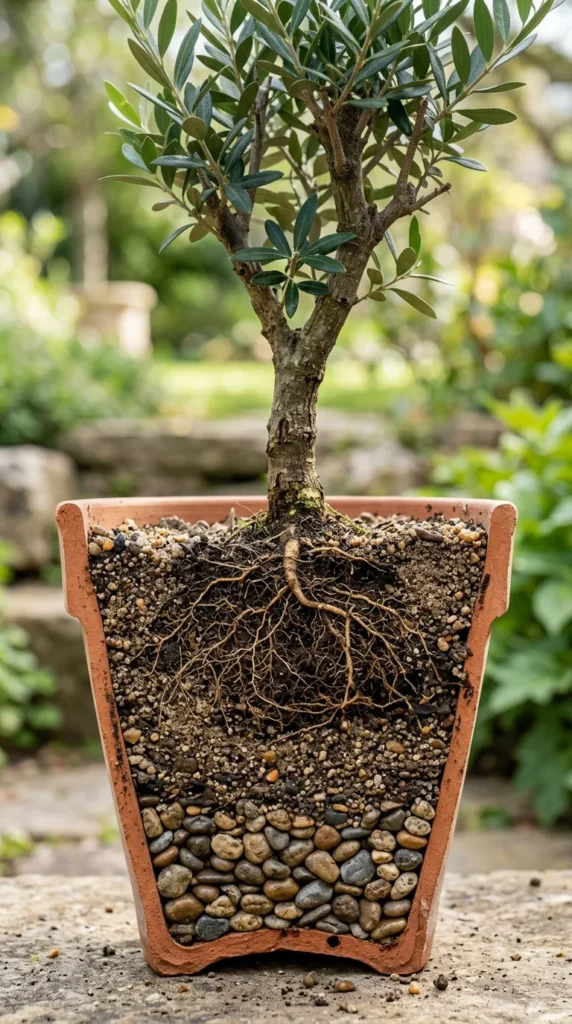
Proper drainage is non-negotiable. Citrus roots are highly susceptible to “wet feet” or root rot, which occurs when water sits around the roots for too long. Start with a pot made of breathable material like terra cotta or unglazed ceramic, which allows for better air exchange and moisture evaporation than plastic or glazed pots.
Ensure the pot has several large drainage holes at the bottom. When it comes to soil, avoid standard “potting soil,” which often retains too much moisture. Instead, use a specialized citrus or cactus mix, or create your own by blending two parts cedar shavings or pine bark with one part sterilized potting soil and one part perlite or coarse sand. This creates a slightly acidic, fast-draining medium that mimics the gritty soils of the Mediterranean.
4. Watering
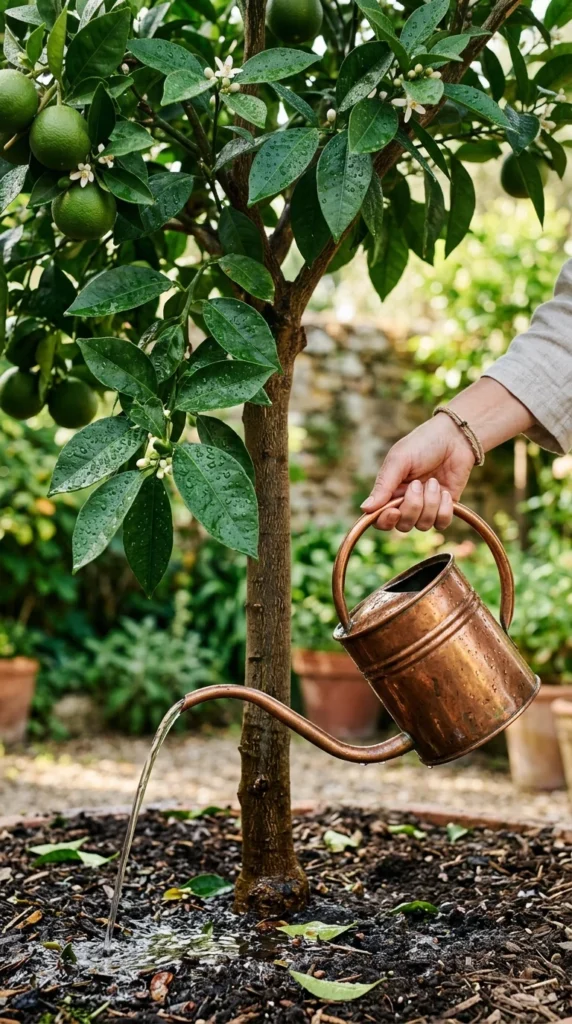
Watering citrus is an art of balance. The goal is to keep the soil moist but never soggy. Before watering, check the soil moisture by inserting your finger about two inches deep. If it feels dry at that depth, it is time to water. If it feels damp, wait another day.
When you do water, do it thoroughly. Pour water until it runs out of the drainage holes at the bottom. This ensures the entire root ball is hydrated and helps flush out any accumulated salts from fertilizers. Avoid letting the pot sit in a saucer of standing water; use “pot feet” to elevate the container so it can drain freely. During the winter months, the tree’s metabolism slows down, and it will require significantly less water than during the active growing season of spring and summer.
5. Feeding
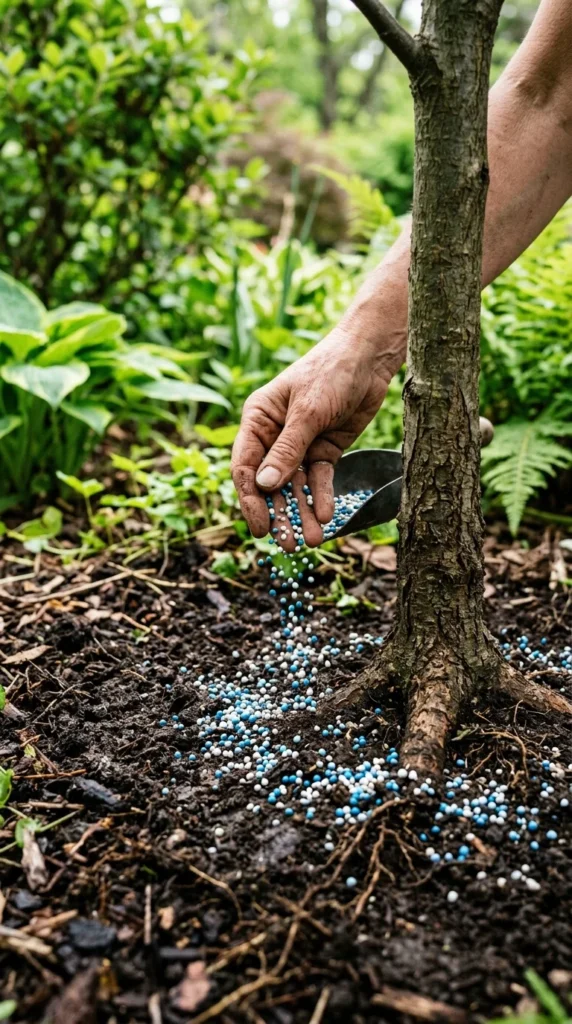
Citrus trees are heavy feeders, especially when they are actively growing or producing fruit. They require a fertilizer with a higher ratio of nitrogen (N) compared to phosphorus (P) and potassium (K), often labeled as a 2-1-1 or 3-1-1 ratio. Look for fertilizers specifically formulated for citrus or acid-loving plants, which include essential micronutrients like iron, zinc, and manganese.
Fertilize your tree regularly from early spring through late summer. Follow the package directions, but generally, a monthly feeding is appropriate. Reduce or stop fertilizing in the autumn and winter to allow the tree to rest. If the leaves start to turn yellow while the veins remain green (chlorosis), it is often a sign of a micronutrient deficiency, indicating the tree needs more iron or a more acidic soil pH.
6. Temperature
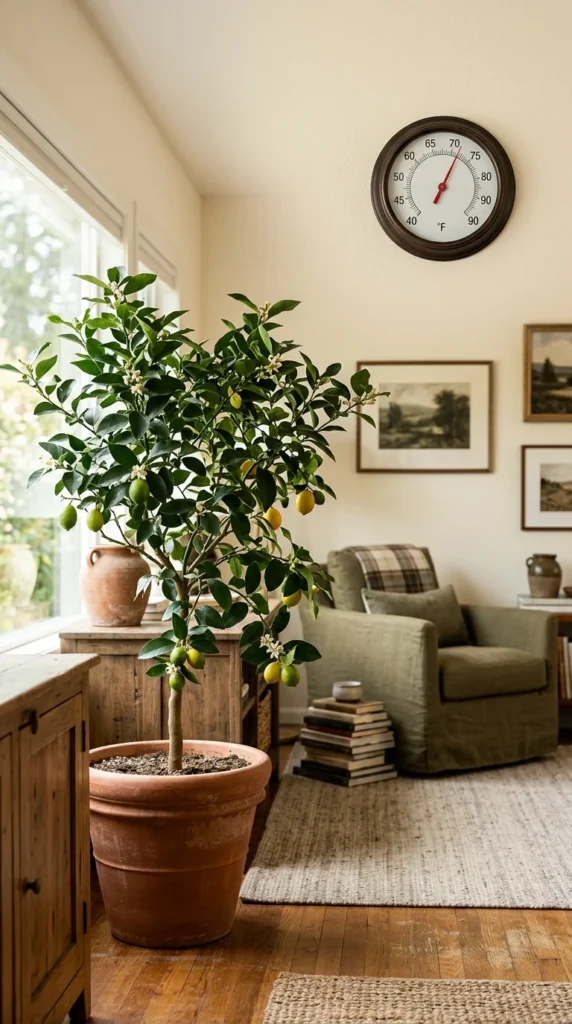
Citrus trees prefer temperatures between 65°F and 85°F. While they can handle a dip into the 50s at night (which can actually help stimulate flowering in some varieties), they should be protected from extreme fluctuations.
The biggest danger indoors is not the cold, but the dry, hot air from heating vents or the icy drafts from windows in the winter. Keep your tree away from radiators, fireplaces, and air conditioning vents. Humidity is equally important; indoor air in winter is often too dry for citrus. Aim for 50% humidity by using a room humidifier, placing the pot on a tray filled with pebbles and water (ensuring the pot sits on the pebbles, not in the water), or misting the leaves daily with distilled water.
7. Pruning
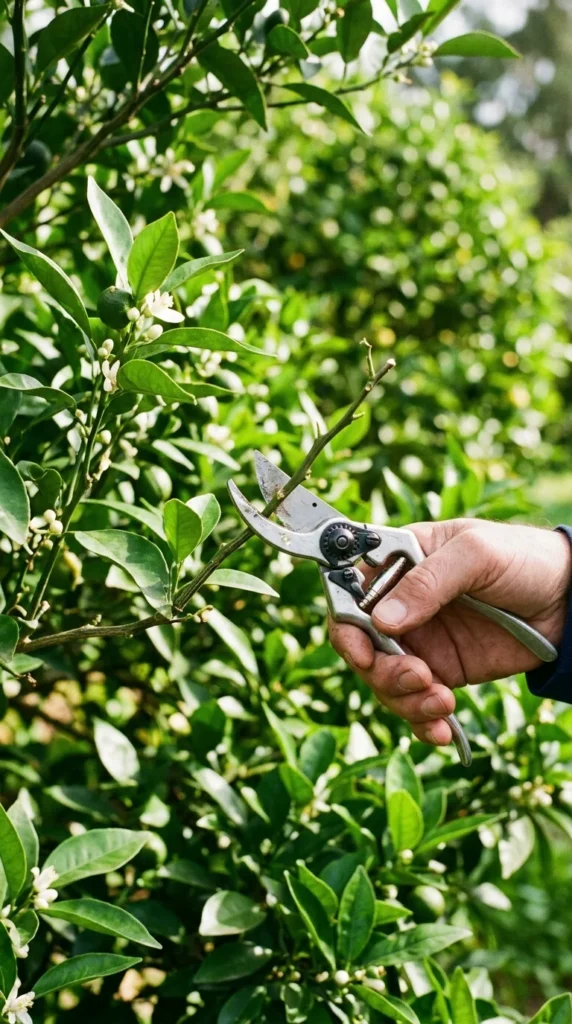
Pruning serves two purposes: maintaining the tree’s size for indoor living and improving the health of the plant. The best time to prune is in the early spring before the new growth begins. Start by removing any “suckers”—fast-growing shoots that emerge from the rootstock below the graft union. These will not produce the desired fruit and will sap energy from the main tree.
Thin out any crossing branches or those growing inward toward the center of the tree to allow for better light penetration and air circulation. You can also pinch back the tips of new growth to encourage a bushier, more compact shape. Don’t be afraid to prune; citrus trees are resilient and respond well to shaping.
8. Pollination
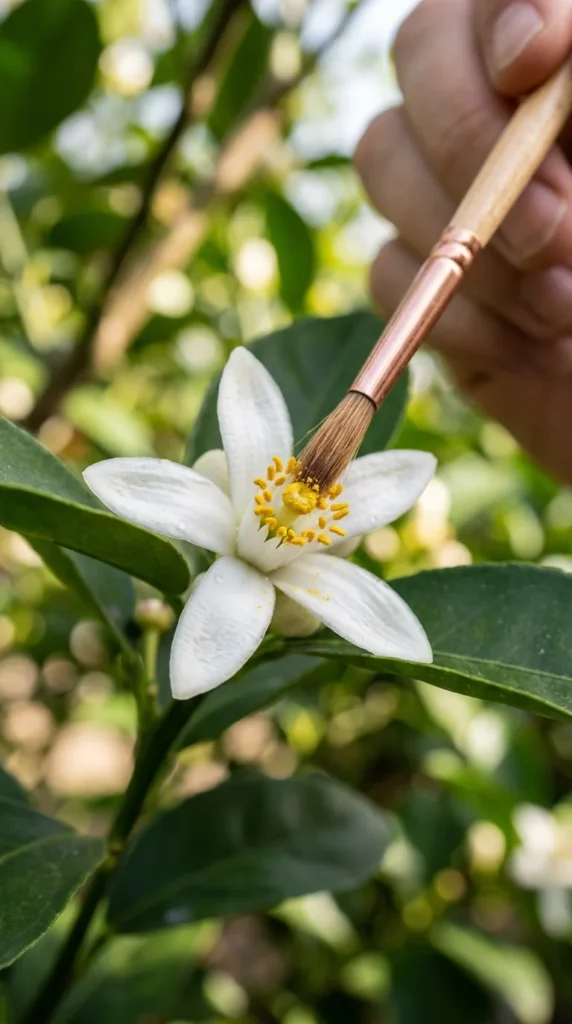
Outdoors, bees and wind handle the task of pollination. Indoors, you must become the pollinator. While many indoor citrus varieties are self-fertile, they still need a little help to ensure the pollen reaches the pistil.
When your tree is in bloom, you can gently shake the branches to distribute the pollen. For better results, use a small, soft paintbrush or a cotton swab. Gently rub the brush against the yellow anthers (which hold the pollen) and then transfer that pollen to the sticky stigma in the center of the flower. Repeat this process every few days while the tree is flowering. If the flowers fall off without forming small green fruit “nubs,” it is usually a sign of poor pollination, low humidity, or insufficient light.