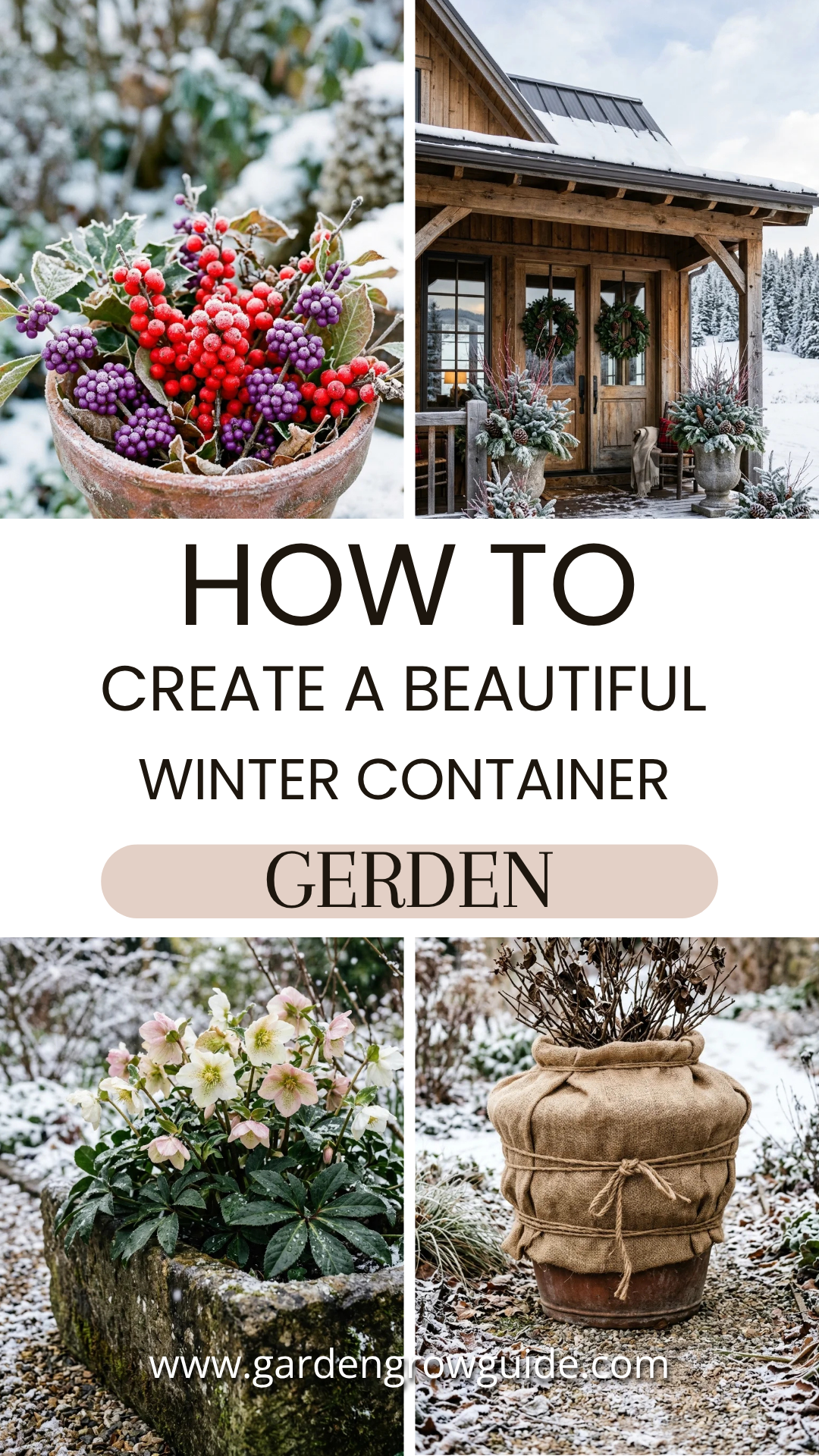
When the vibrant blooms of summer fade and the golden hues of autumn drop to the ground, the garden can often feel barren and desolate. However, winter is not a time for the garden to sleep entirely. Winter container gardening offers a unique opportunity to celebrate texture, structure, and subtle colors that often go unnoticed during the riotous growing season. By selecting the right materials and plants, you can transform your entryways and patios into a frost-kissed sanctuary that provides visual interest even in the depths of January.
Creating a beautiful winter container requires a departure from traditional gardening rules. Instead of focusing solely on growth and bloom cycles, you must focus on endurance and static beauty. The goal is to create a composition that remains architectural and pleasing as it braves the wind, ice, and snow.
1. Containers
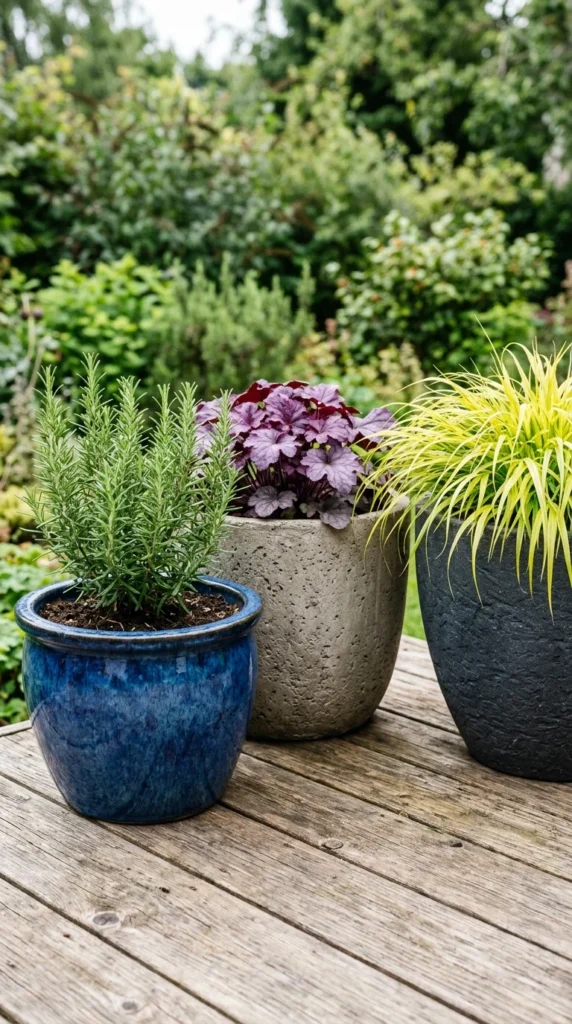
The foundation of any winter garden is the vessel itself. Not all pots are created equal when the mercury drops below freezing. Porous materials like standard terracotta or thin plastic are prone to cracking. When water in the soil freezes, it expands; if the container cannot flex or withstand that pressure, it will shatter.
- Materials: Opt for high-fired glazed ceramics, stone, concrete, lead, or heavy-duty resin. These materials are non-porous and can withstand the freeze-thaw cycle.
- Drainage: This is the most critical factor. Ensure the pot has large drainage holes. If water pools at the bottom and freezes, it creates an “ice plug” that can kill the roots of your plants or split the pot.
- Elevation: Use “pot feet” or bricks to lift your containers off the ground. This prevents the drainage holes from freezing to the patio and allows excess water to escape freely.
2. Evergreens
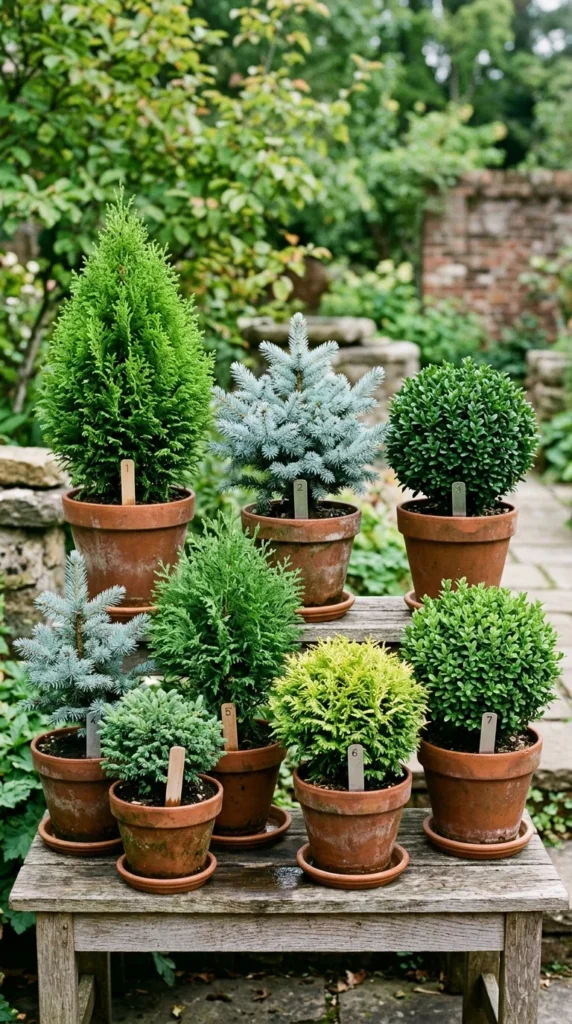
Evergreens are the “thrillers” and “fillers” of the winter container. They provide the necessary structure and a constant splash of green against the white and grey backdrop of winter.
- Dwarf Conifers: Look for slow-growing varieties like ‘Alberta Spruce’ or ‘Blue Star Juniper.’ Their needles offer a range of colors from steel blue to bright chartreuse.
- Boxwoods: These provide a classic, formal look. They are incredibly hardy and can be sheared into spheres or pyramids to add a sense of geometry to your design.
- Broadleaf Evergreens: Plants like Skimmia japonica or Pieris japonica offer glossy leaves that catch the light. Many broadleaf evergreens also develop flower buds in late winter that add extra texture.
3. Berries
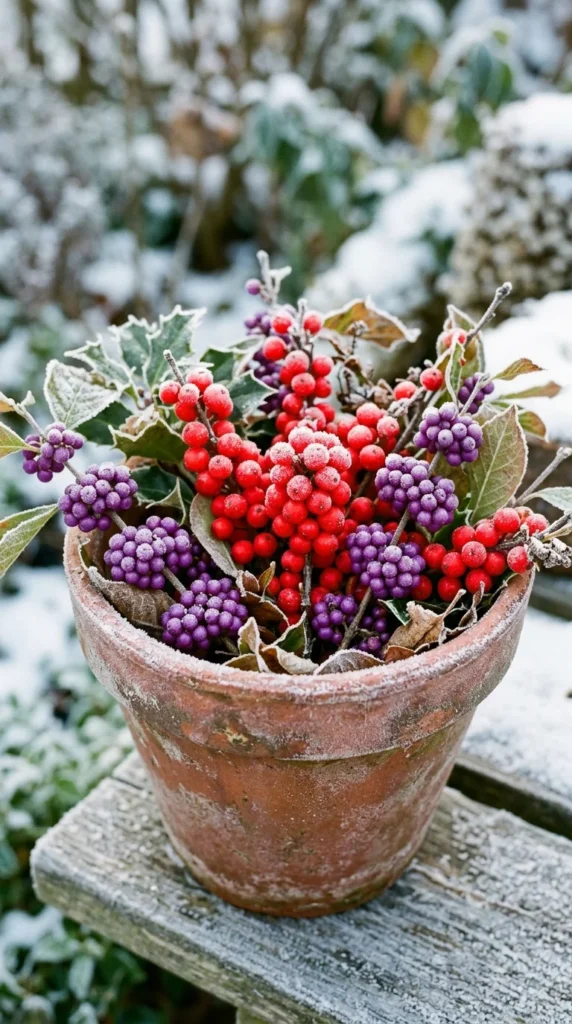
Winter is the season for fruit to shine. Adding berry-producing plants to your containers provides pops of high-contrast color that attract local birds and brighten gloomy days.
- Winterberry (Ilex verticillata): While this shrub is deciduous, its branches are densely packed with bright red berries that persist long after the leaves have fallen.
- Wintergreen (Gaultheria procumbens): A low-growing “spiller” that features red berries and leaves that turn a deep burgundy in the cold.
- Beautyberry (Callicarpa): For a more avant-garde look, the metallic purple berries of the beautyberry provide a stunning contrast to white snow.
4. Hellebores
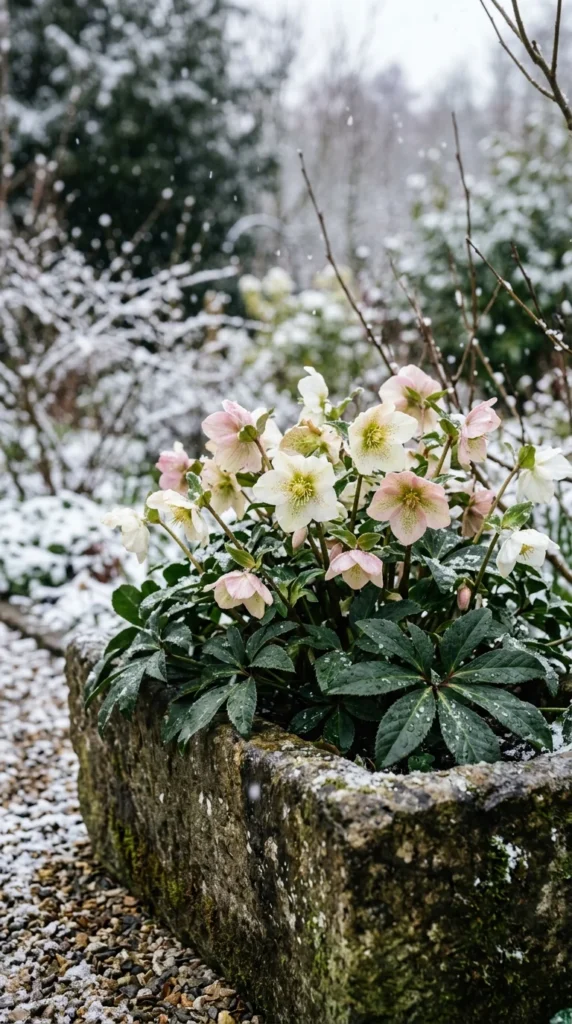
Often called the “Christmas Rose” or “Lenten Rose,” Hellebores are the undisputed royalty of the winter garden. They are one of the few plants that will actually bloom in the middle of winter, often pushing their way through a layer of snow.
- Appearance: They feature nodding, cup-shaped flowers in shades of ivory, dusty rose, deep purple, and even speckled lime green.
- Durability: Their leathery, evergreen foliage remains attractive all season long. They prefer a spot with filtered light and moist, well-draining soil.
5. Branches
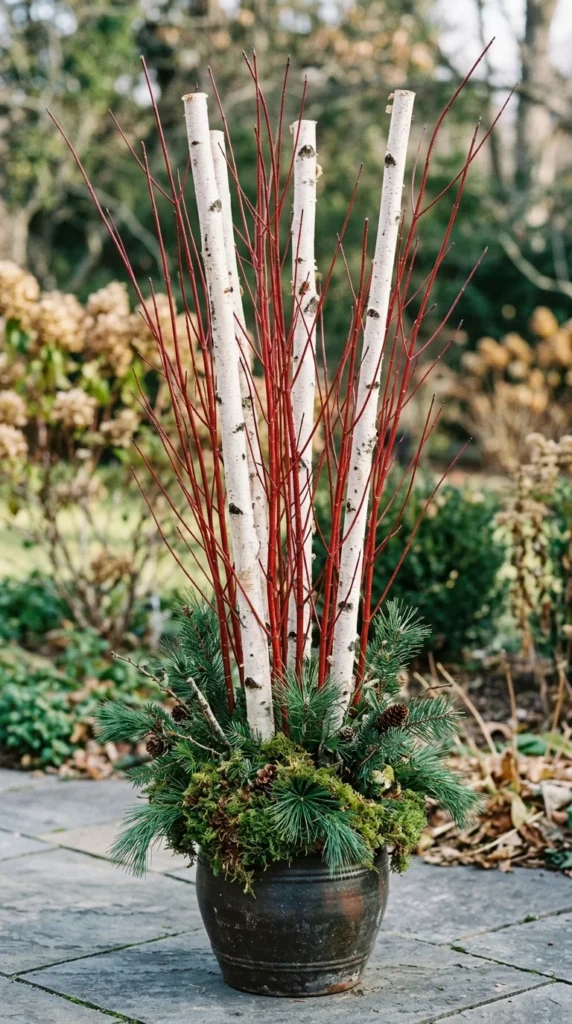
When flowers are scarce, architectural elements take center stage. Verticality is essential for a professional-looking container, and inert branches are the perfect way to achieve this without worrying about plant survival.
- Red Twig Dogwood: These branches provide a striking crimson vertical element that looks incredible against a snowy background.
- Birch Poles: The papery white bark of birch adds a rustic, woodland feel. Group three poles of varying heights in the center of a large pot for a dramatic focal point.
- Curly Willow: For a more whimsical or contemporary look, the twisted, contorted branches of curly willow add movement and intricate shadows.
6. Soil
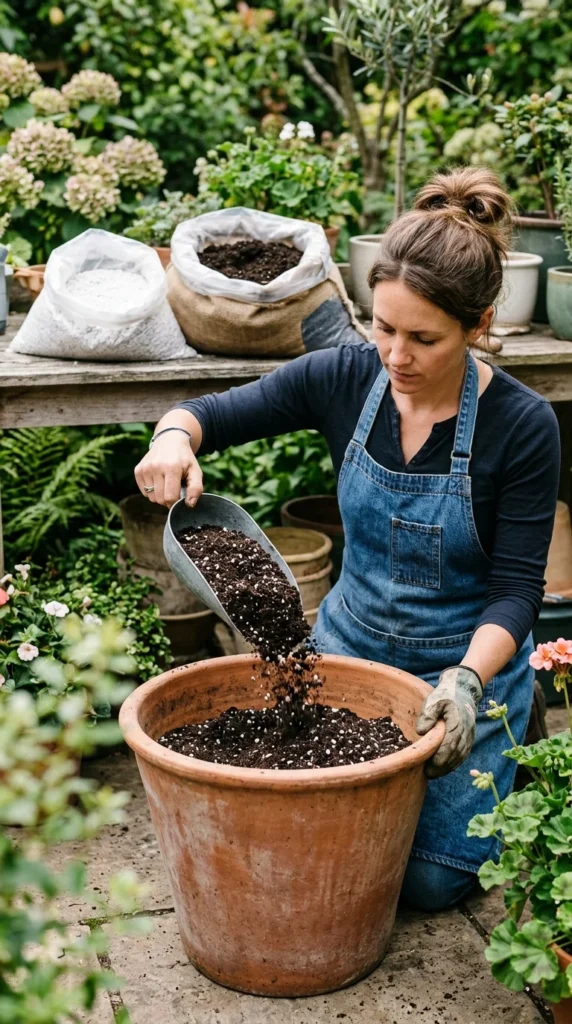
The soil used in winter containers serves a different purpose than summer soil. In summer, you want soil that retains moisture; in winter, you want soil that sheds it quickly to prevent root rot.
- Mix Composition: Use a high-quality potting mix and amend it with extra perlite or coarse sand to improve drainage.
- Fertilization: Do not fertilize your winter containers. You do not want to encourage new, tender growth that will immediately be killed by a hard frost. The goal is to keep the plants in a semi-dormant, healthy state.
7. Layout
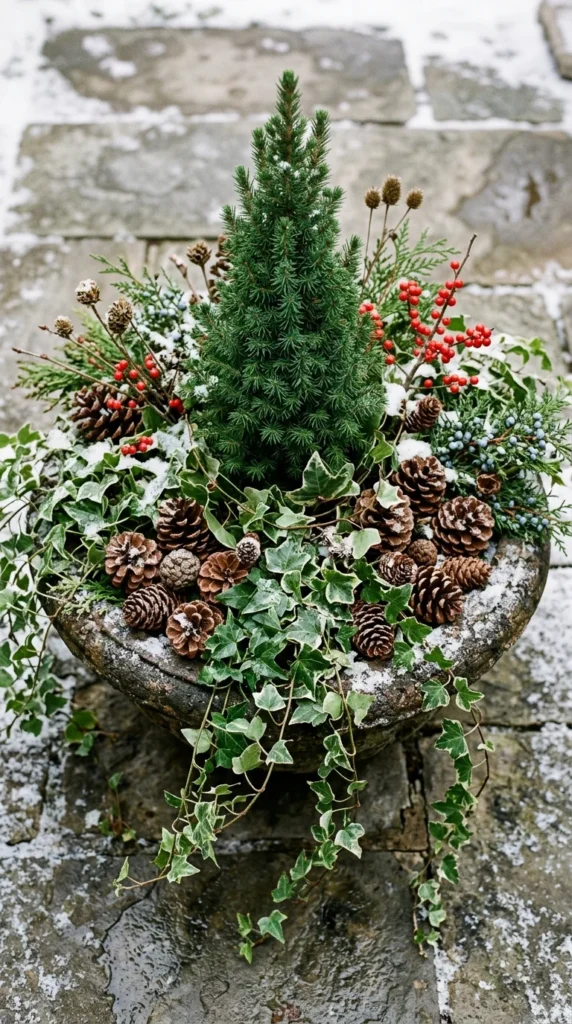
The “Thriller, Filler, Spiller” method still applies, but with a winter twist. Because plants grow much slower (or not at all) in winter, you can plant them much closer together than you would in the spring.
- The Thriller: This is your center or back piece. Use a tall evergreen, a cluster of birch poles, or a large ornamental grass.
- The Filler: Surround the thriller with mounded plants like Hellebores, Heuchera (Coral Bells), or dense evergreen boughs.
- The Spiller: Soften the edges of the pot with trailing plants like English Ivy or variegated Euonymus. Even if they don’t grow much, their existing length will drape beautifully over the rim.
8. Insulation
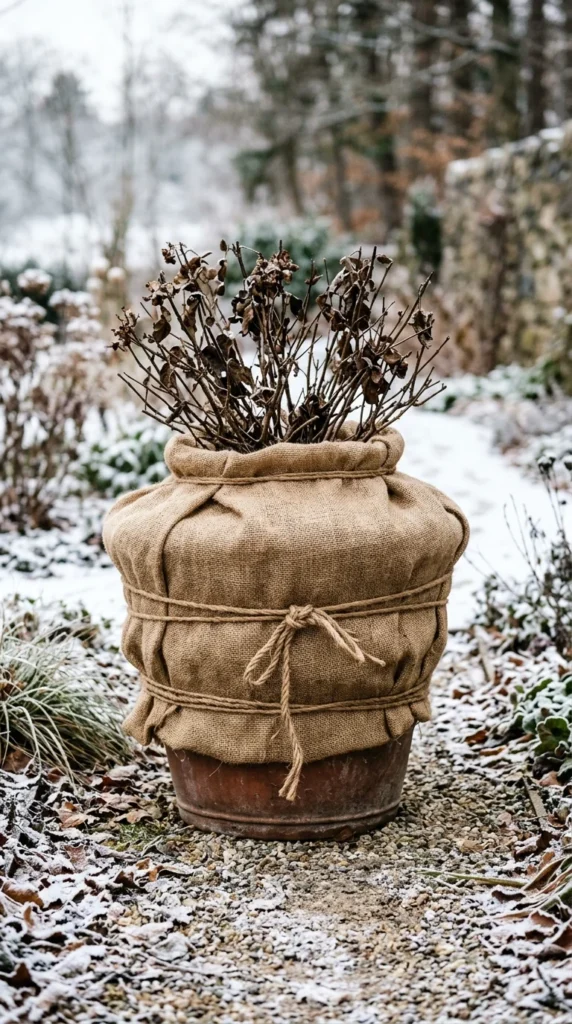
The biggest threat to a winter container garden is not the cold air, but the freezing and thawing of the roots. Because the roots are above ground in a pot, they lack the natural insulation of the earth.
- Internal Lining: Before planting, you can line the inside of your pot with a thin layer of bubble wrap or foam (leaving the drainage hole clear) to provide an extra layer of warmth for the roots.
- Watering: It may seem counterintuitive, but you must water your containers during winter dry spells. Moist soil stays warmer than bone-dry soil, and evergreens continue to lose moisture through their needles (transpiration) even in winter. Only water when the air temperature is above freezing.
- Siting: Place your pots in a location where they are shielded from harsh, drying winter winds. A north or east-facing wall is often better than a south-facing one, as it prevents the pot from heating up too much during the day and freezing rapidly at night.