While many gardeners view winter as a time for dormancy and rest, the cold months offer a unique opportunity to showcase texture, form, and resilient splashes of color. Winter container gardening allows you to maintain curb appeal and enjoy nature even when the ground is frozen. By selecting the right plants and frost-resistant pots, you can transform your balconies, patios, and entryways into vibrant winter wonderlands.
1. Winter Heather
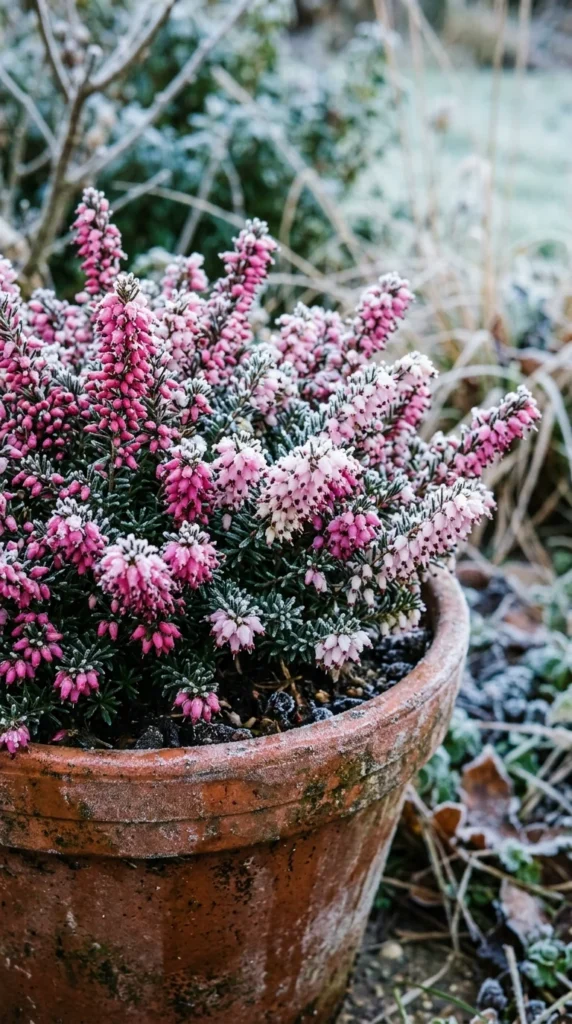
Winter heather, specifically Erica carnea, is a champion of the cold-weather garden. Unlike most flowering plants that retreat when the temperature drops, heather thrives in the chill, producing masses of tiny, bell-shaped blooms in shades of white, pink, and deep purple. These plants are exceptionally low-maintenance and provide a critical nectar source for early-emerging bees on warmer winter days. Because they are low-growing and mounded, they work perfectly as a “filler” in larger arrangements or as a standalone statement in small, decorative pots.
2. Red Dogwood
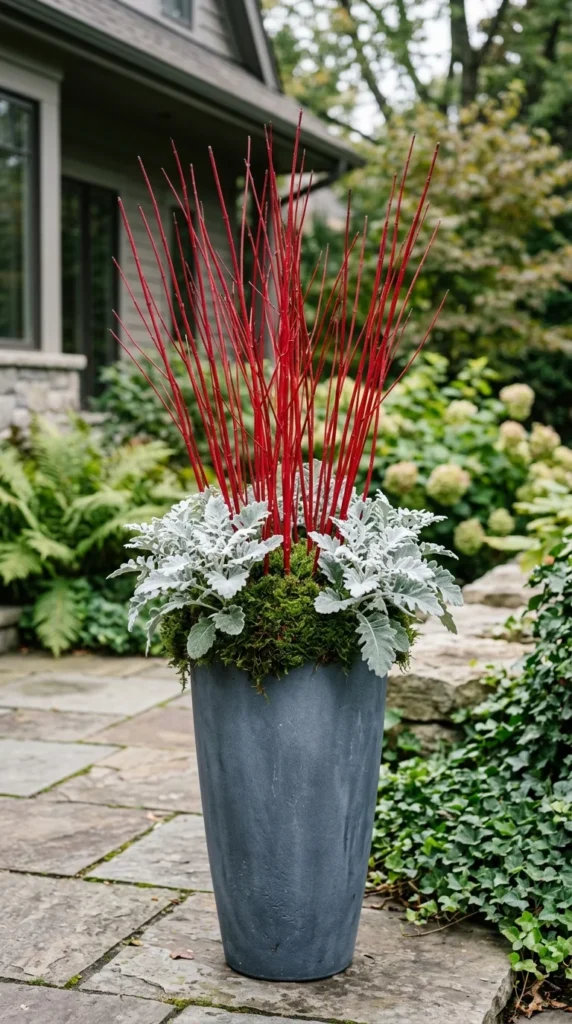
When the leaves fall, the skeletal structure of the garden takes center stage. Red Twig Dogwood (Cornus alba) is prized for its brilliant crimson stems that provide striking vertical interest. In a container, these stems act as a natural sculpture. To maximize the visual impact, plant them in the center of a large pot to serve as the “thriller.” As the winter sun hits the stems, they appear to glow against the backdrop of white snow or grey skies.
3. Hellebores
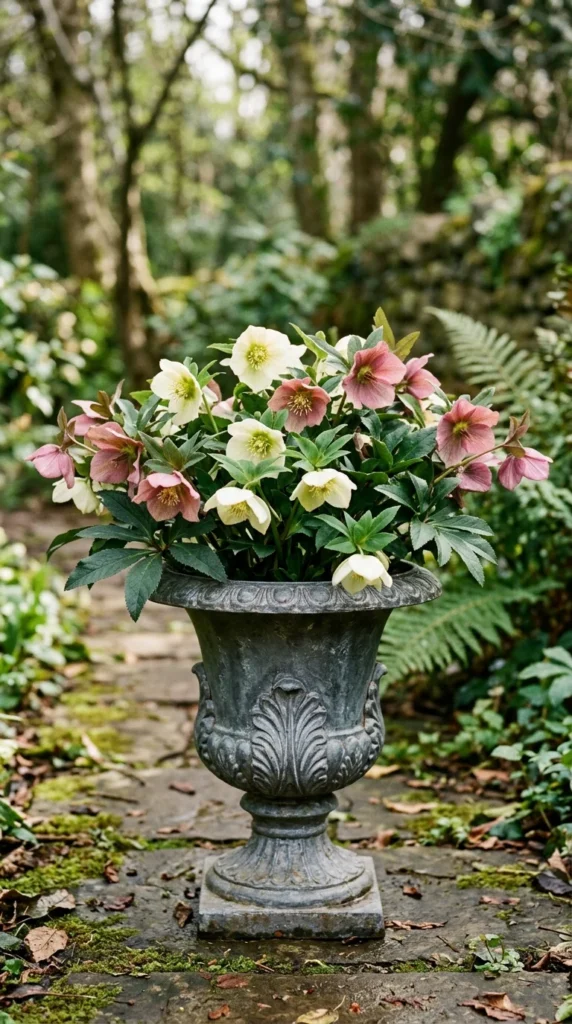
Often called the Christmas Rose or Lenten Rose, Hellebores are the royalty of the winter container. These perennials are incredibly hardy and produce elegant, cup-shaped flowers when almost nothing else is blooming. Their leathery, evergreen foliage provides a sturdy base, while the flowers—ranging from pure white to deep burgundy and even speckled greens—add a touch of sophisticated drama. They prefer a bit of shade, making them ideal for north-facing porches or covered entryways.
4. Ornamental Kale
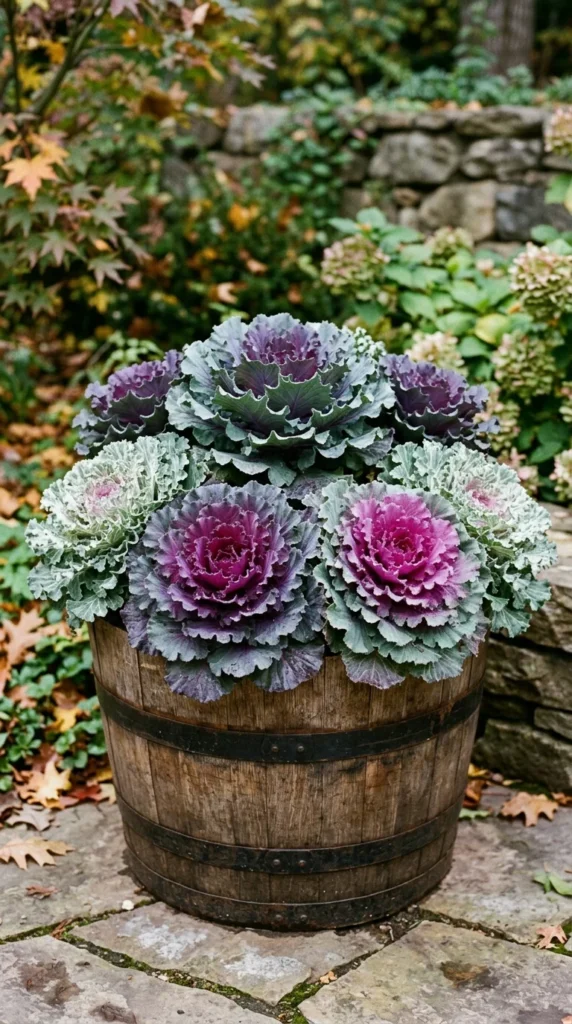
Ornamental kale and cabbage are grown for their spectacular foliage rather than their flavor. As the temperatures drop, their colors actually become more intense, shifting into vivid pinks, purples, and creamy whites. Their broad, ruffled leaves provide a heavy, grounded texture that contrasts beautifully with finer-leafed evergreens. These plants are remarkably tough, often surviving well into mid-winter before finally succumbing to the deep freeze.
5. Dwarf Conifers
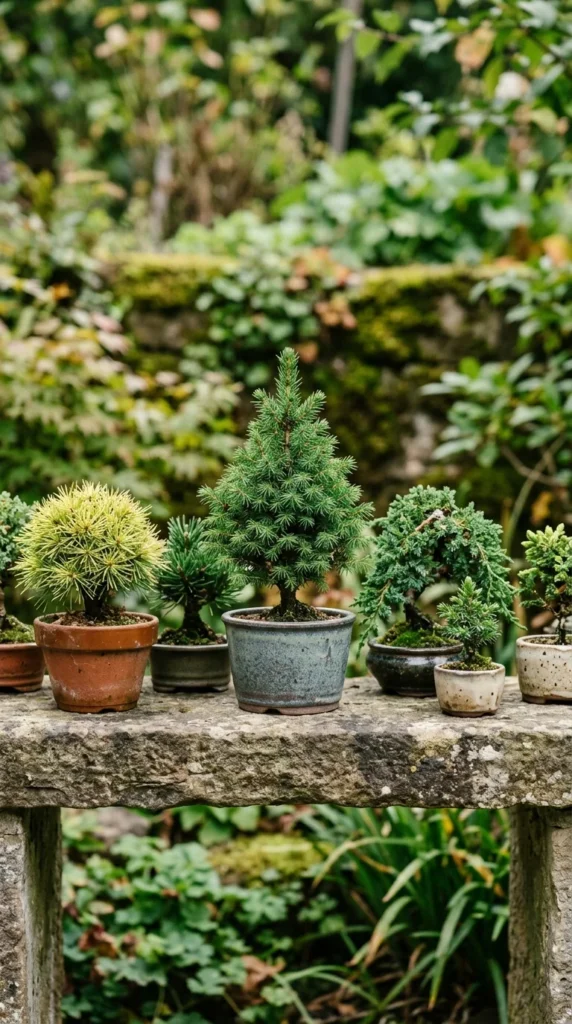
Conifers are the backbone of any winter landscape, and dwarf varieties are perfectly suited for life in a pot. From the perfect cone shape of a Dwarf Alberta Spruce to the shaggy, golden needles of a ‘Gold Thread’ False Cypress, these plants provide year-round structure. They vary significantly in color—from silvery blues to bright chartreuse—allowing you to create a “mini-forest” effect on a balcony or patio.
6. Wintergreen
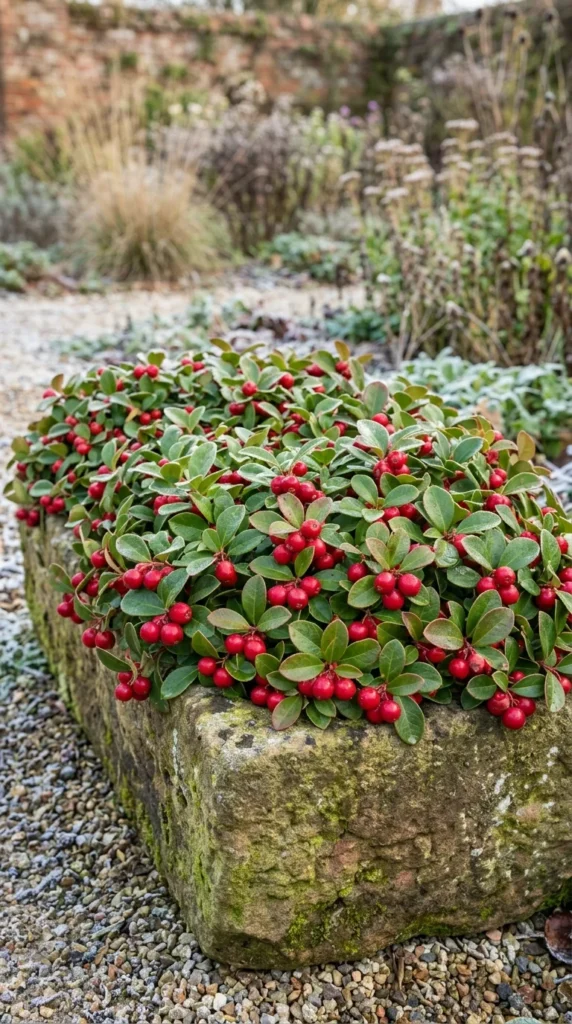
Gaultheria procumbens, commonly known as Wintergreen or Teaberry, is a delightful creeping evergreen that provides a pop of festive red. In the winter, its glossy leaves often take on a reddish or bronze tint, and it produces plump red berries that persist throughout the season. Because it stays low to the ground, it is an excellent “spiller” for the edges of containers, softening the rim of the pot with its trailing stems.
7. Boxwood
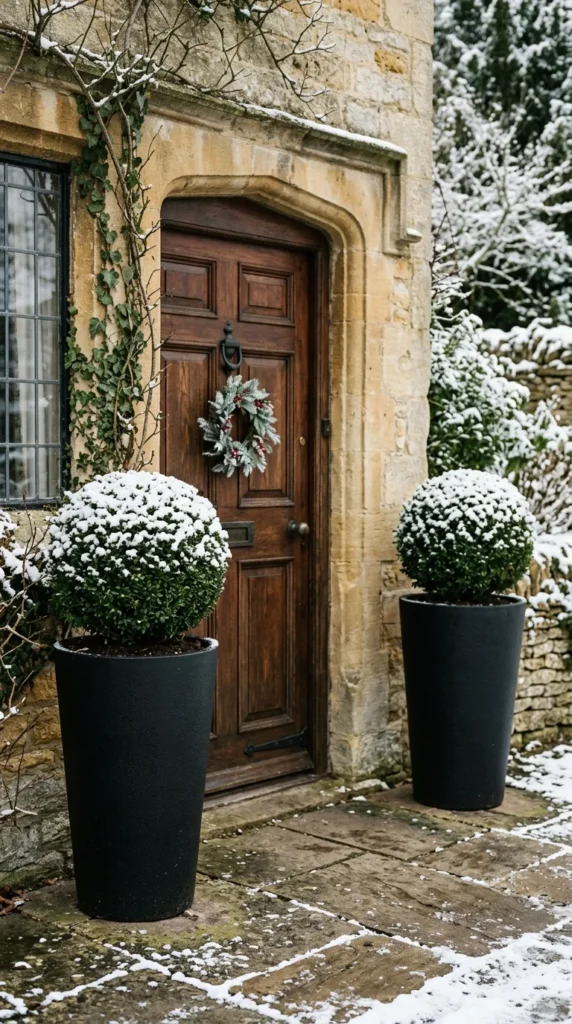
For those who prefer a classic, formal look, Boxwood (Buxus) is the ultimate choice. These broadleaf evergreens can be pruned into tight spheres, cubes, or pyramids, providing a sense of order and elegance. They are incredibly hardy and can withstand the wind and cold of an exposed porch. To dress them up for the holidays, you can easily wrap them in thin LED fairy lights or nestle decorative ornaments among their dense branches.
8. Skimmia Japonica
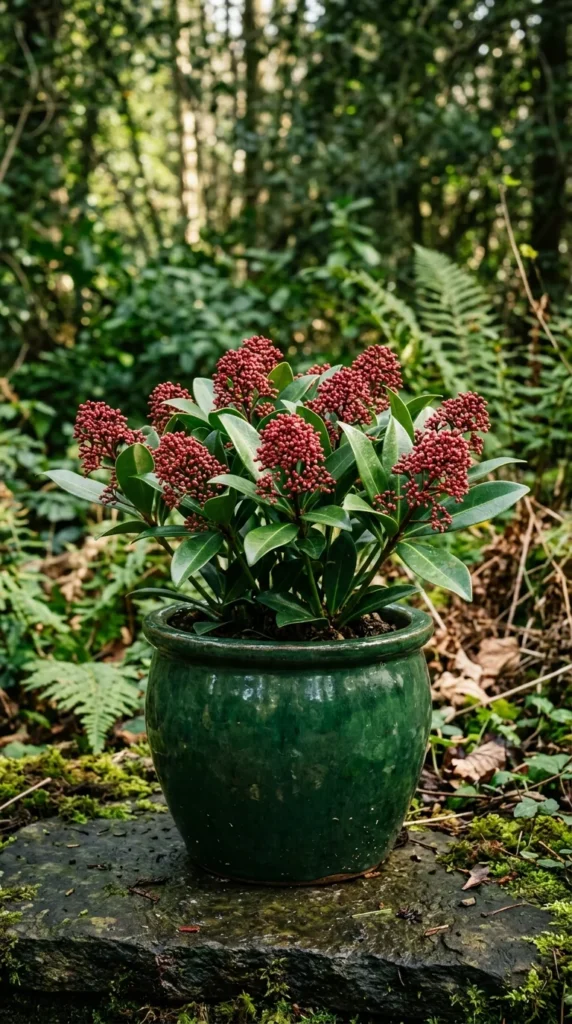
Skimmia japonica is a versatile shrub that offers multiple seasons of interest. In the winter, the female plants produce bright red berries, while the male plants are covered in tight, reddish-pink flower buds that wait until spring to open. The foliage is thick, waxy, and a rich shade of green, providing a lush look even in the dead of winter. It is a slow grower, making it a sustainable choice for long-term container living.
9. Silver Cineraria
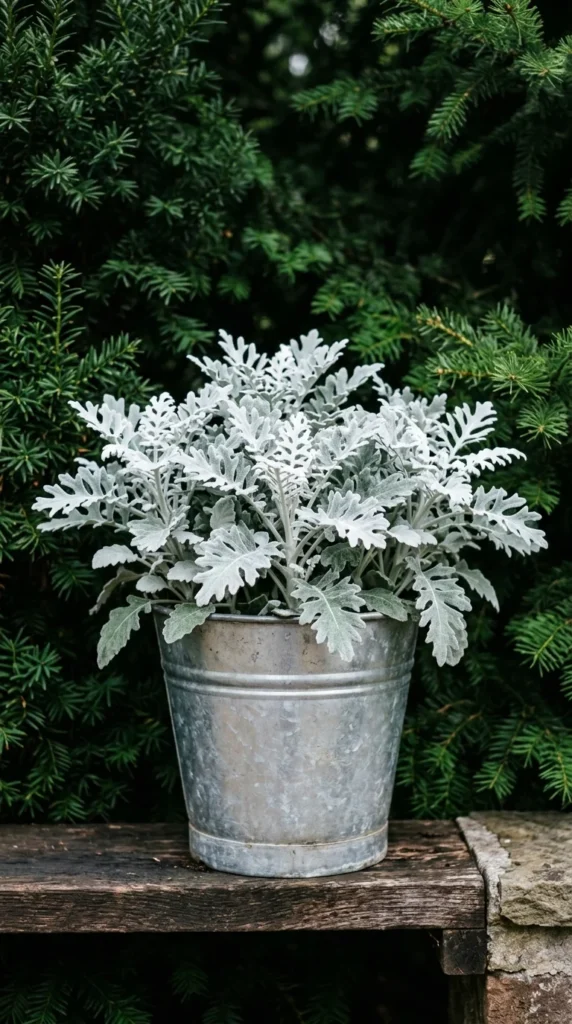
Commonly known as Dusty Miller, this plant is often treated as an annual in summer, but it is surprisingly cold-tolerant. Its silver, velvety foliage looks as though it has been permanently touched by frost, making it a perfect thematic addition to a winter garden. The pale color reflects moonlight and low winter sun, brightening up dark corners of a terrace or garden.
10. English Ivy
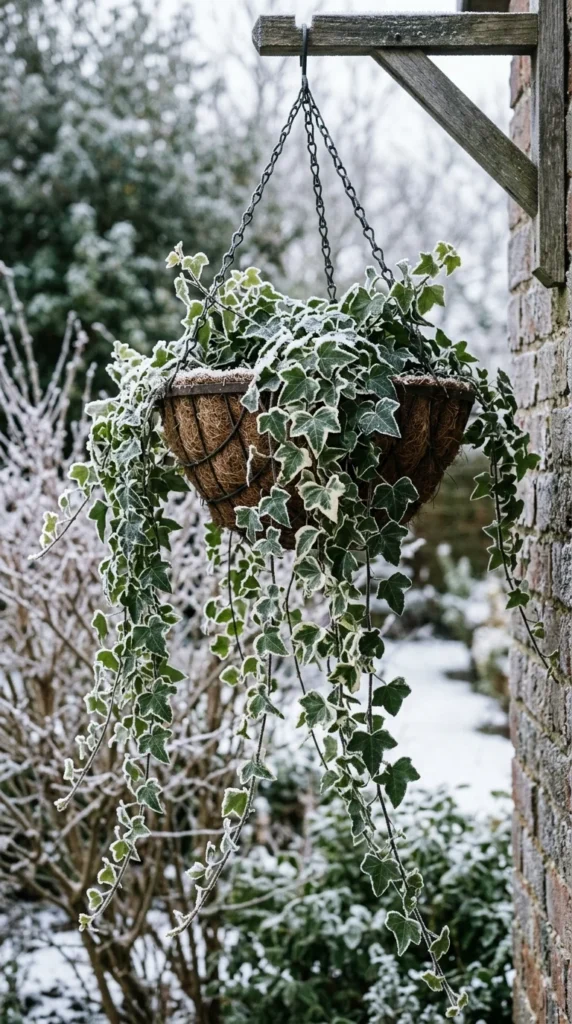
While many plants go dormant, English Ivy remains vibrant. Its trailing habit makes it the perfect “spiller” for winter hanging baskets or the edges of tall planters. Variegated varieties, featuring white or yellow edges, are particularly effective at adding light to a winter arrangement. Ivy is tough as nails and can handle the fluctuating temperatures of late fall and early spring with ease.
11. Coral Bells
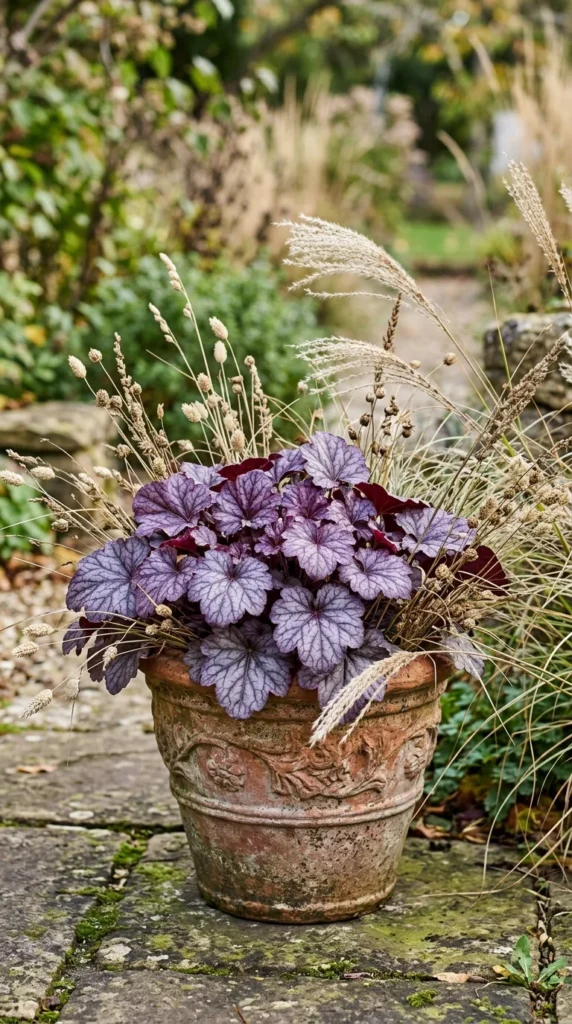
Heuchera, or Coral Bells, are prized for their incredible foliage colors, which range from lime green and peach to deep burgundy and nearly black. Many varieties are evergreen in milder winters and semi-evergreen in colder ones. Their broad, heart-shaped leaves provide a wonderful color contrast to the typical greens of winter. When the frost hits the ruffled edges of Heuchera leaves, it creates a stunning, crystalline outline.
12. Winter Pansies
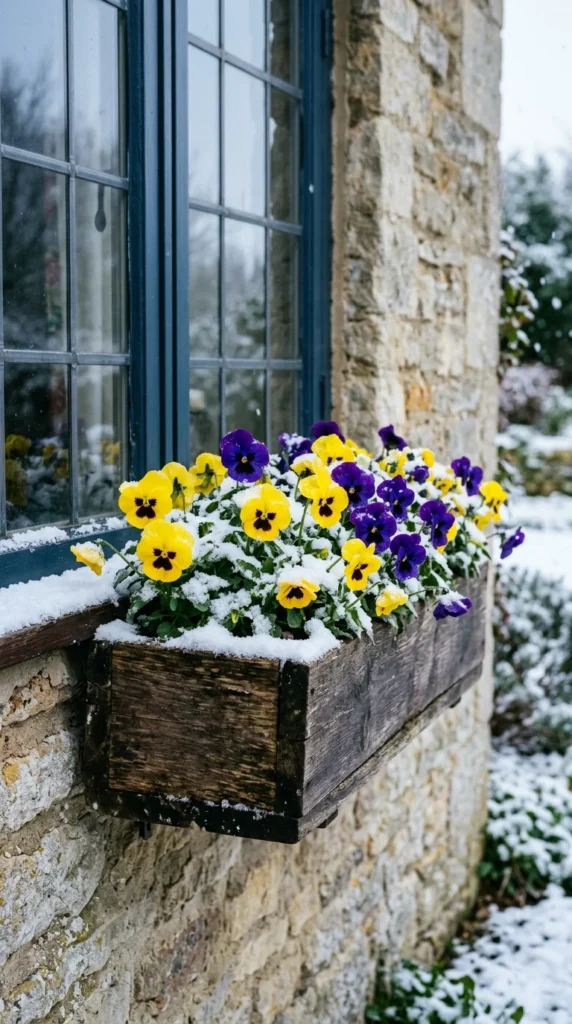
Believe it or not, some pansies are bred specifically to survive the frost. “Winter-flowering” or “Icicle” pansies can freeze solid and then “thaw out” and continue blooming. While they may look a bit wilted during a deep freeze, they bounce back as soon as the sun hits them. They provide the most vivid floral colors available during the winter months, making them essential for window boxes.
13. Blue Fescue
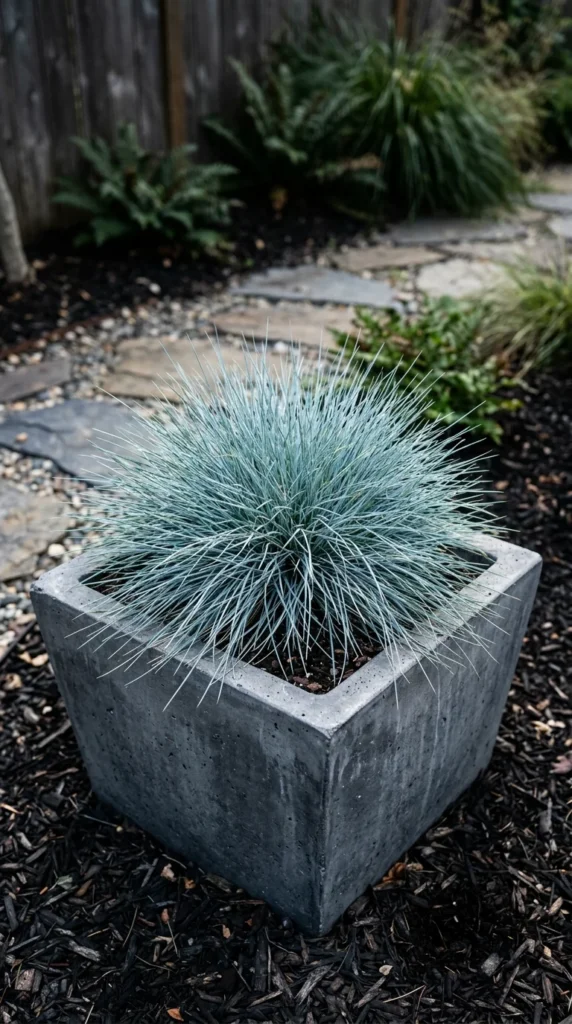
Ornamental grasses add movement and sound to the winter garden. Blue Fescue (Festuca glauca) is a small, mounding grass that retains its distinct steely-blue color throughout the year. Its fine, spiky texture provides a modern, architectural look. In the winter wind, the rustling of the dried blades adds a sensory element that soft-leafed plants cannot provide.
14. Yucca
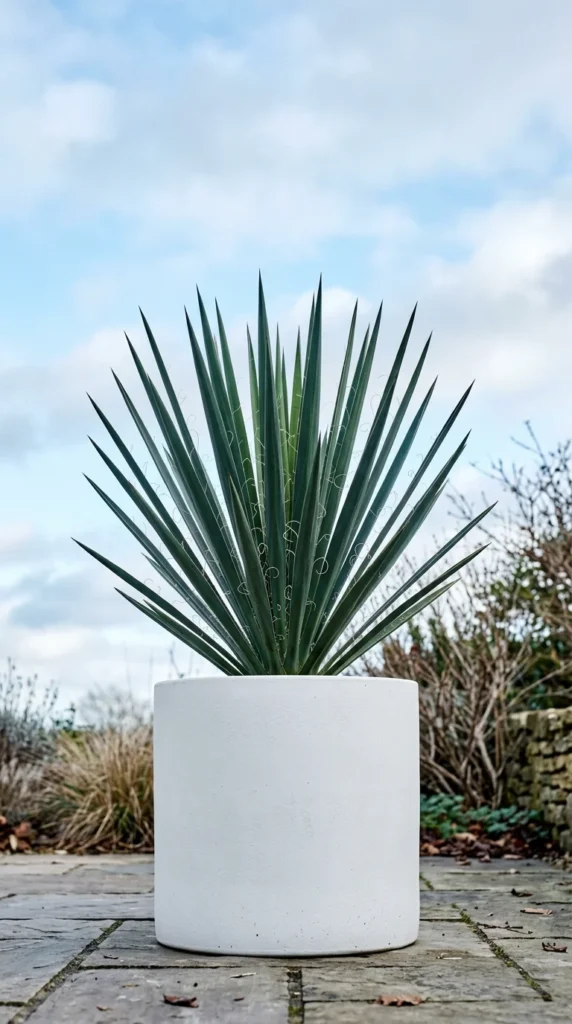
For an architectural and dramatic statement, Yucca filamentosa is an excellent choice. Its stiff, sword-like leaves provide a sharp contrast to the rounded shapes of most shrubs. It is incredibly drought-tolerant and cold-hardy. The variegated versions, with yellow stripes down the center of the leaves, add a sunny glow to the porch even on the gloomiest winter days.
15. Winter Jasmine
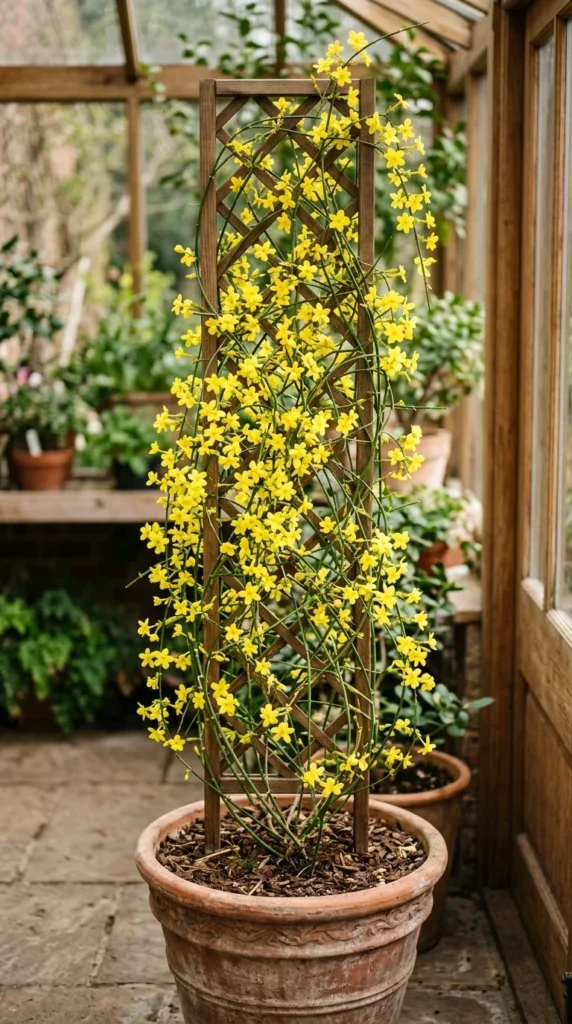
Jasminum nudiflorum, or Winter Jasmine, is a rare treat: a winter-blooming vine. Unlike its fragrant summer cousins, winter jasmine has no scent, but it makes up for it with cheerful, bright yellow flowers that appear on bare green stems as early as January. It has a sprawling habit, so it looks best when allowed to spill over the sides of a tall container or trained up a small obelisk or trellis.
Essential Tips for Winter Container Success
To ensure your winter garden thrives until spring, keep these practical tips in mind:
- Choose the Right Pot: Plastic, metal, fiberglass, and treated wood are best for winter. Standard terracotta is porous and often cracks when the moisture inside it freezes and expands.
- Don’t Forget to Water: While plants need much less water in winter, they can still dry out, especially in windy conditions. Water your containers on days when the temperature is above freezing.
- Drainage is Key: Ensure your pots have large drainage holes. If water pools at the bottom and freezes, it can kill the roots of even the hardiest plants.
- Group for Warmth: If a particularly harsh cold snap is predicted, huddle your pots together near the house wall for added insulation.
- Add Non-Living Accents: Supplement your plants with birch logs, oversized pinecones, or decorative branches like curly willow to fill gaps and add height.