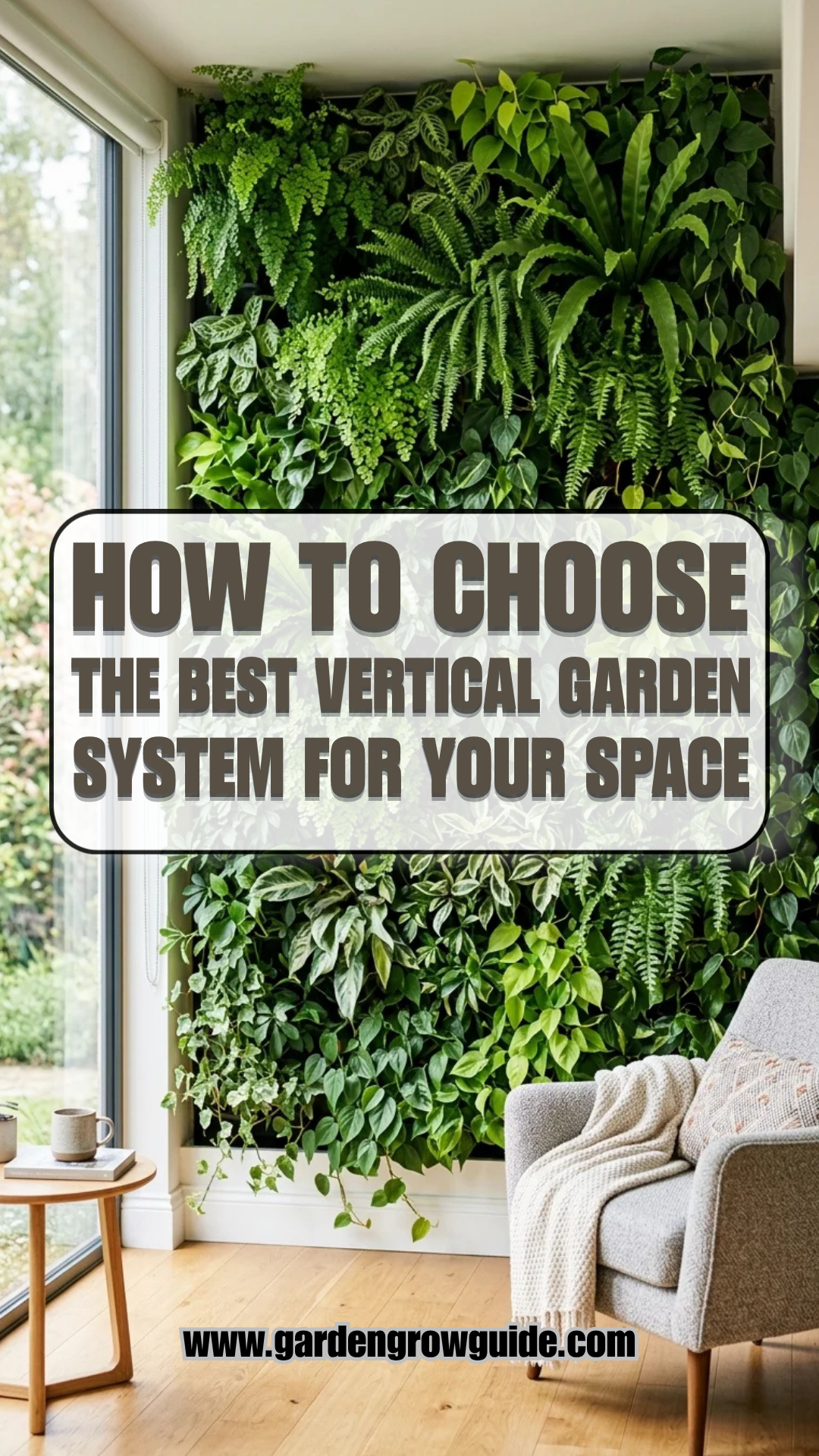
Vertical gardening has transformed from a niche landscaping trend into a vital solution for urban dwellers and gardening enthusiasts alike. As living spaces shrink and the desire for homegrown produce and greenery grows, the vertical garden offers a way to reclaim the “lost” space of walls, fences, and balconies. Choosing the right system, however, is not a one-size-fits-all endeavor. It requires a balance of aesthetic preference, botanical needs, and structural considerations.
1. Assessment
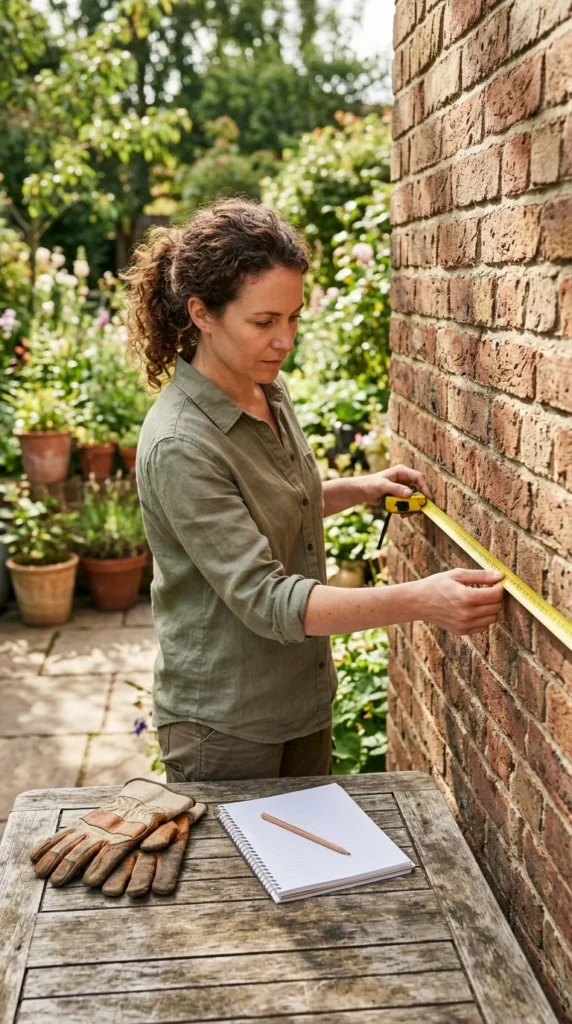
Before purchasing any hardware, you must conduct a thorough assessment of your intended location. The primary factor is light. Most edible plants, such as cherry tomatoes or peppers, require at least six to eight hours of direct sunlight. Conversely, many tropical “green wall” plants prefer indirect light. Observe your wall throughout the day to track how the sun moves across it.
Secondary to light is weight and structural integrity. A vertical garden filled with wet soil and mature plants is significantly heavier than it looks. Ensure the wall or fence you choose can support the load. Finally, consider water access. A system located far from a water source will require manual hauling of watering cans, which can become a chore that leads to plant neglect.
2. Pockets
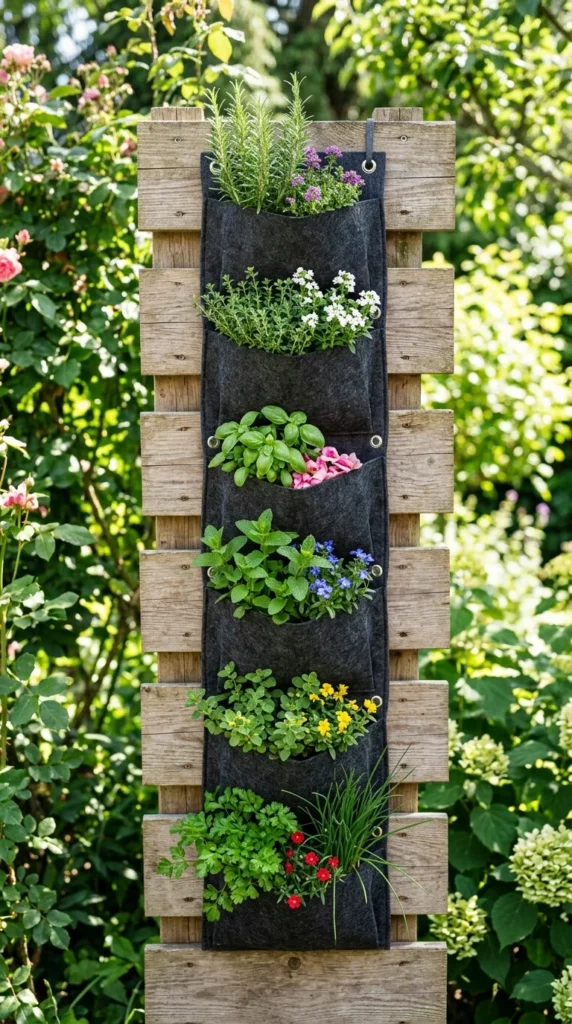
Felt pocket systems are among the most popular and affordable options for beginners. Usually made from recycled PET or breathable geotextiles, these systems allow for excellent air circulation around the root zone, which prevents root rot. The breathable fabric allows the soil to “air prune” the roots, leading to a more robust root system.
However, pocket systems have a high evaporation rate. Because the fabric is porous, the soil dries out much faster than in plastic or ceramic pots. They are best suited for moisture-loving ferns in shaded areas or for gardeners who intend to install an automatic drip irrigation system. If used indoors, a waterproof backing is essential to prevent moisture from seeping into your drywall and causing mold.
3. Towers
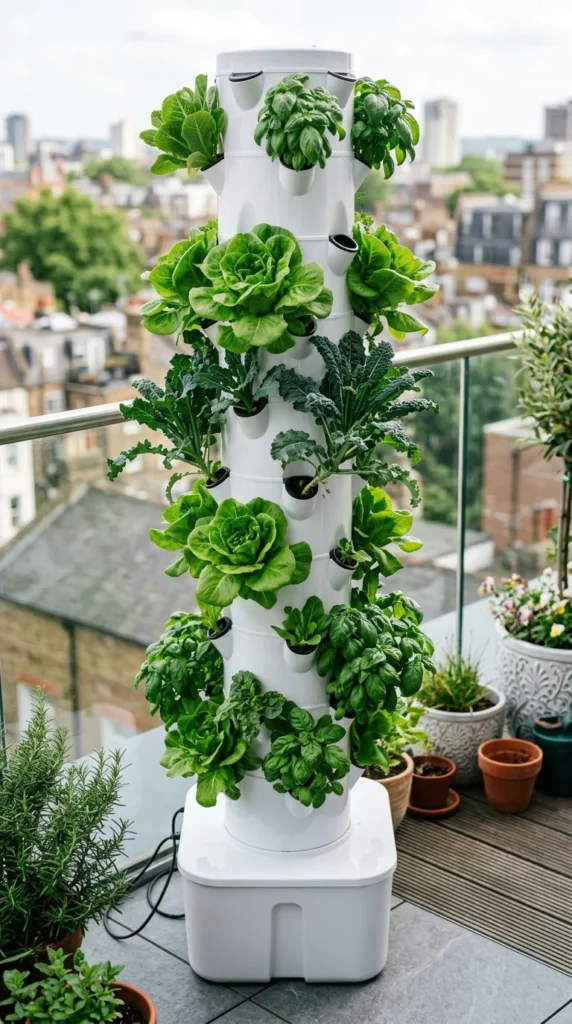
Vertical towers, often utilized in hydroponic or aeroponic setups, are the peak of efficiency for food production. These systems move water and nutrients from a reservoir at the base up to the top, where it then trickles down through the plant modules. Because they don’t use soil, they are significantly lighter than traditional planters and significantly cleaner for indoor use.
Towers are ideal for those with limited floor space but high ambitions for a “farm-to-table” lifestyle. They excel at growing leafy greens, herbs, and even strawberries. The main drawback is the reliance on electricity for the pump and the initial investment cost, which is typically higher than manual soil-based systems.
4. Modulars
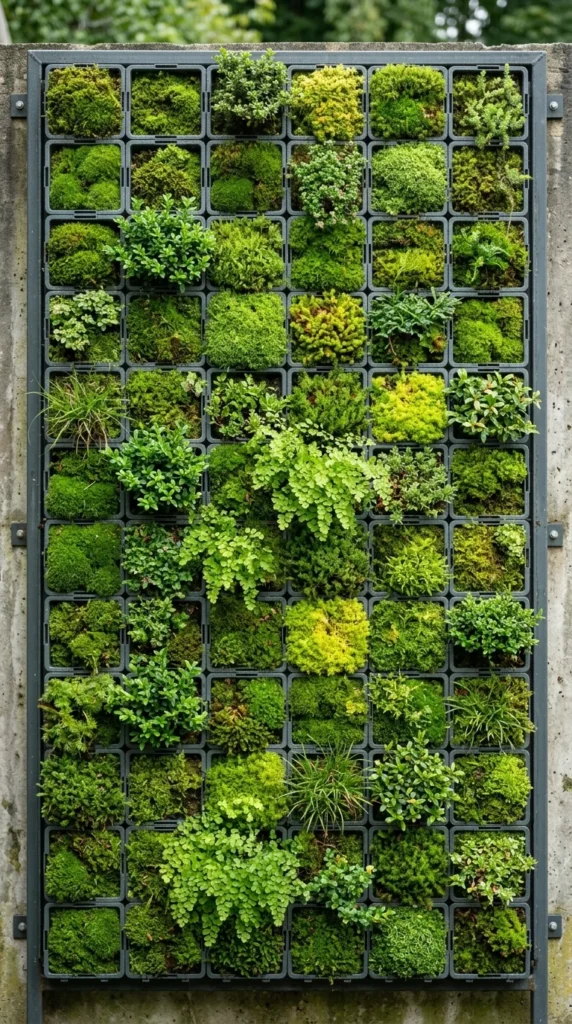
Modular plastic systems offer the greatest degree of customization. These consist of individual hard-plastic pots that click into a grid or rail system mounted to the wall. The benefit of modularity is the ability to swap plants in and out easily. If one plant dies or outgrows its space, you can remove that specific pot without disturbing the rest of the garden.
These systems often include built-in irrigation channels where water poured into the top row trickles down into subsequent rows. When choosing a modular system, look for UV-resistant plastics to ensure the containers don’t become brittle and crack under the sun’s rays.
5. Trellises
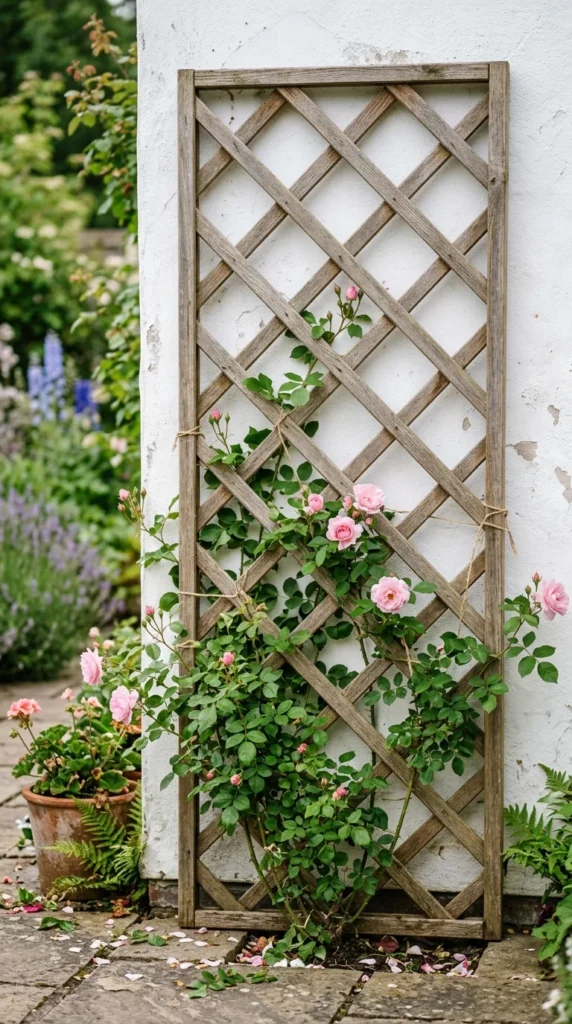
For those who prefer a more natural or “cottage-core” aesthetic, a simple trellis or arbor is the oldest form of vertical gardening. Instead of mounting containers to the wall, you plant climbing species in the ground or in large floor pots and train them to grow upward.
Trellises are perfect for vining plants like clematis, jasmine, peas, or cucumbers. They provide excellent airflow and allow the plants to grow according to their natural habit. While they offer less “instant” coverage than a pre-planted wall, the longevity and low maintenance of a trellis make it a favorite for permanent outdoor installations.
6. Irrigation
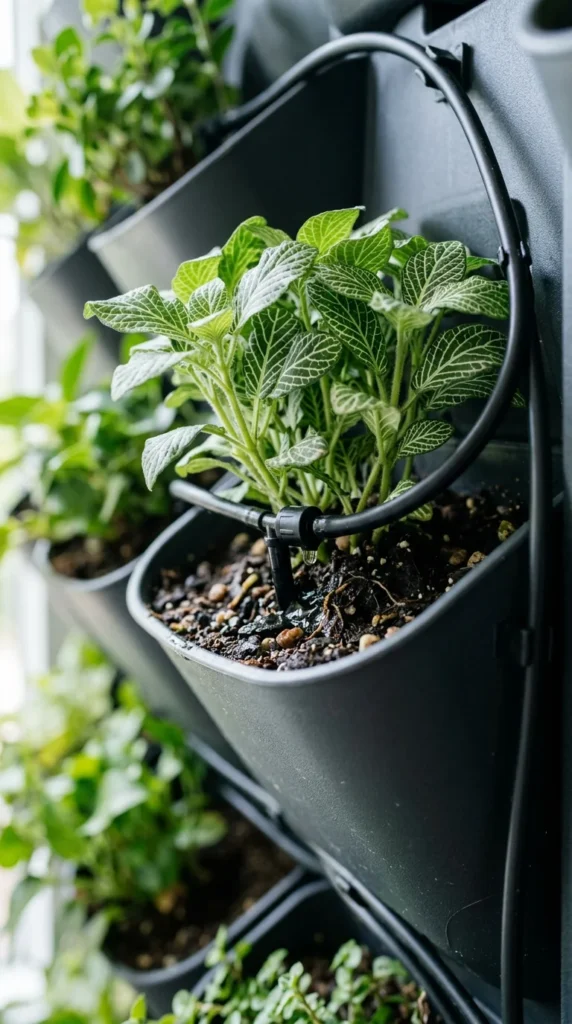
Irrigation is the “make or break” element of any vertical garden. Because vertical systems hold smaller volumes of soil than traditional garden beds, they lack a significant moisture buffer. In the heat of summer, a vertical garden can go from hydrated to wilted in a matter of hours.
An automatic drip irrigation system is highly recommended for any vertical setup larger than a few square feet. These systems use a timer connected to a hose bib or a reservoir pump to deliver precise amounts of water directly to the roots. If you are building a DIY system, ensure that the drainage from the top layers doesn’t drown the bottom layers, a common design flaw in many vertical kits.
7. Selection
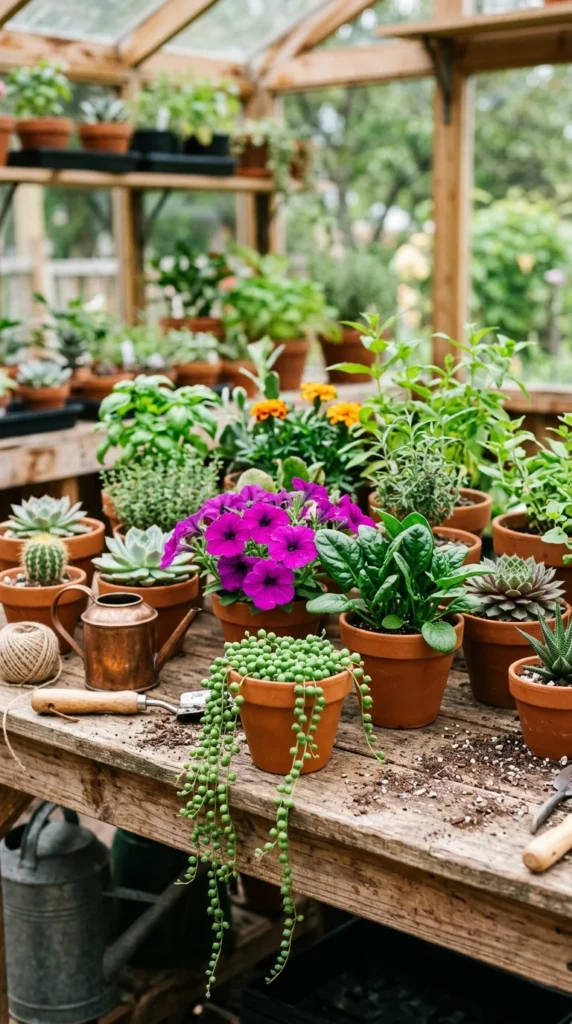
Not all plants are destined for vertical life. When selecting your greenery, consider the “habit” of the plant. Trailing plants like ivy, pothos, or creeping thyme are excellent for covering the structure and creating a lush look. Upright plants like chives or small grasses provide texture and height.
It is also vital to group plants with similar needs together. Do not mix cacti with ferns; the watering schedule required to keep the fern alive will rot the cactus. For a cohesive look, choose a “thriller” (a bold centerpiece plant), a “filler” (foliage that takes up space), and a “spiller” (something that hangs down) for each section of your vertical wall.
8. Support
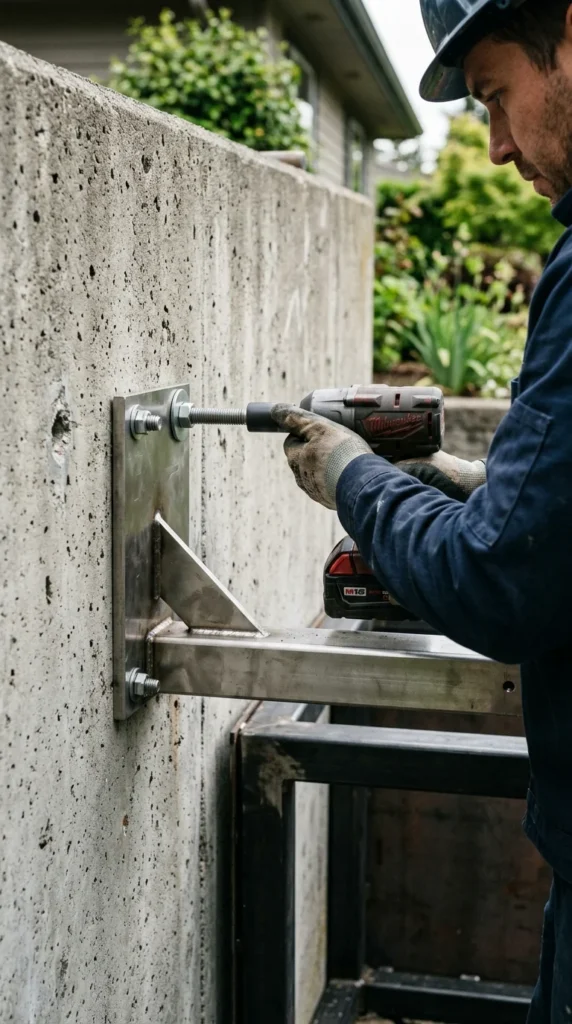
Safety and stability should never be overlooked. A vertical garden is a long-term installation. If you are mounting a system to a fence, ensure the fence posts are not rotted and are set in concrete. For interior walls, you must locate the studs; drywall anchors are rarely sufficient for the weight of a fully saturated vertical garden.
If you are renting and cannot drill into the walls, look for freestanding vertical garden frames or “leaning” ladder-style planters. These provide the height and aesthetic of a vertical garden without the permanent structural commitment. Always check the manufacturer’s weight rating for any bracket or hanging hardware you use.
9. Maintenance
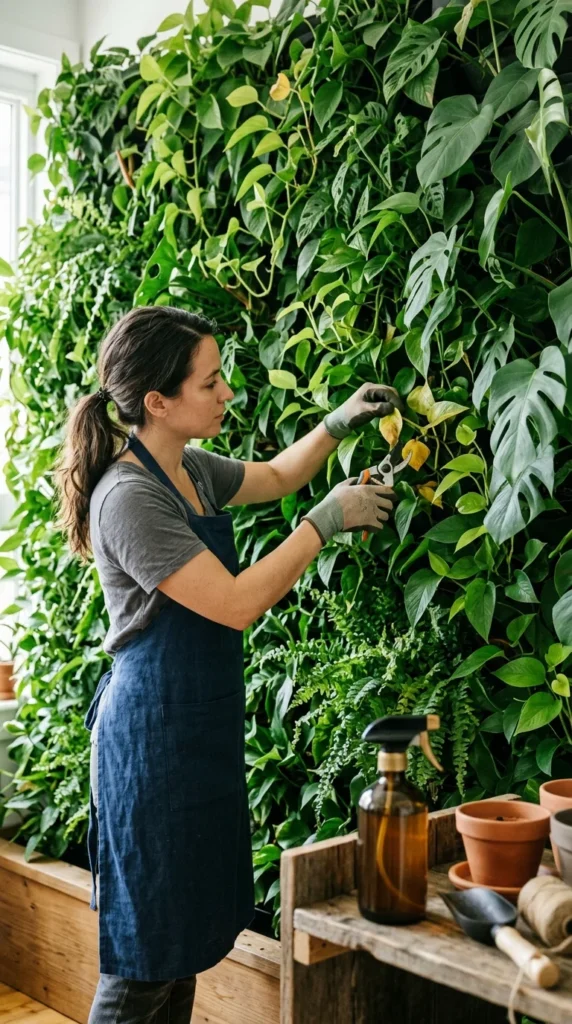
Maintenance for a vertical garden is slightly different than a traditional one. Pruning becomes essential to prevent faster-growing species from overshadowing and “choking out” slower-growing neighbors. You will also need to fertilize more frequently. Because you are likely watering often, nutrients leach out of the limited soil quite quickly.
Regularly check for pests, especially on the undersides of leaves. In the dense environment of a green wall, pests like spider mites or aphids can spread rapidly from plant to plant. Using a liquid seaweed or fish emulsion fertilizer once every two weeks during the growing season will keep your vertical garden vibrant and resilient.