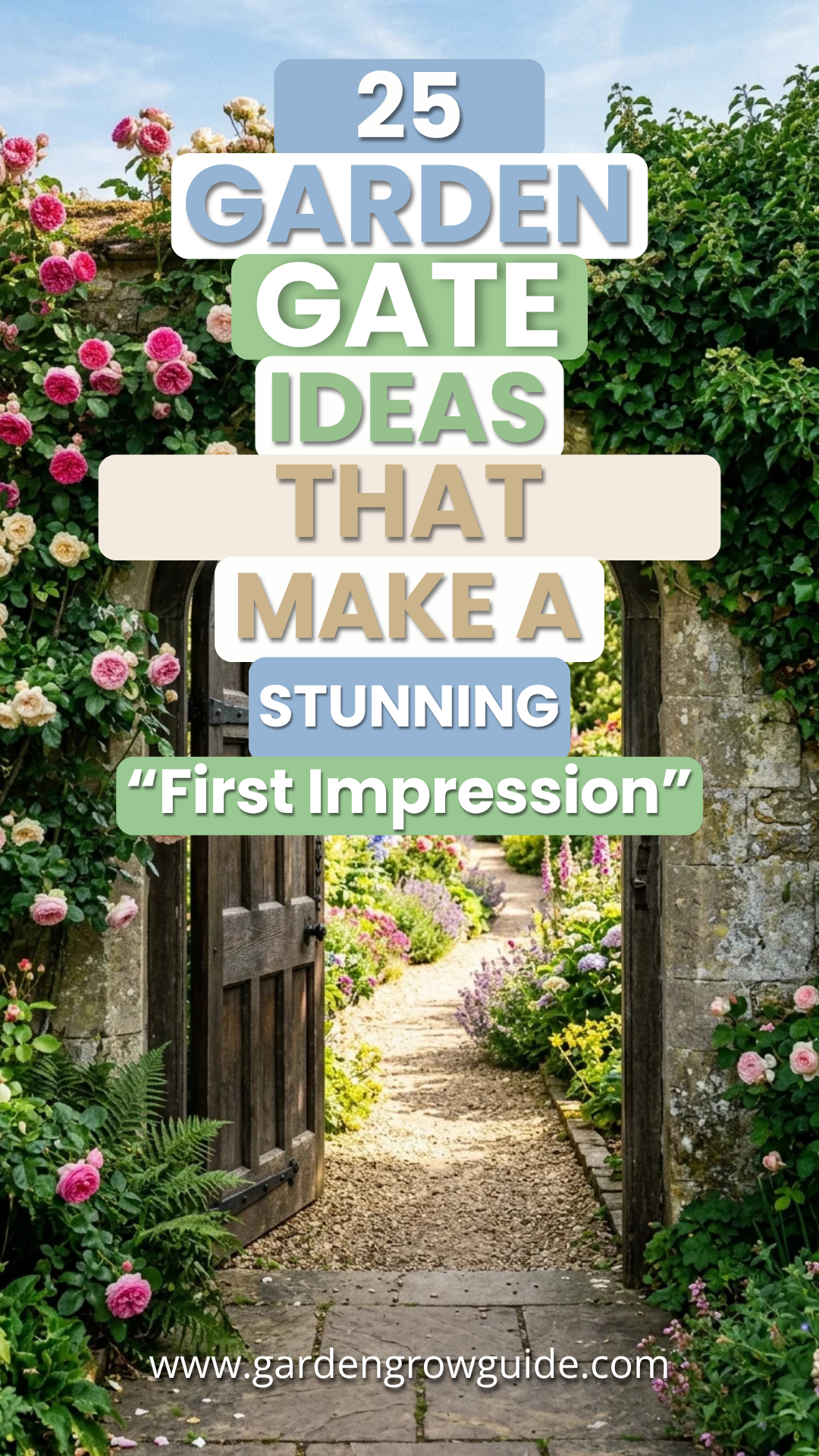
A garden gate is more than just a point of entry; it is the prologue to the story of your home. It serves as a transition between the public world and your private sanctuary, setting the tone for what lies beyond. Whether you are aiming for a rustic cottage feel, a sleek modern aesthetic, or a grand Victorian entrance, the right gate can significantly enhance your property’s curb appeal and overall value. From the materials used to the intricate details of the design, every element contributes to that crucial first impression.
1. Classic Picket
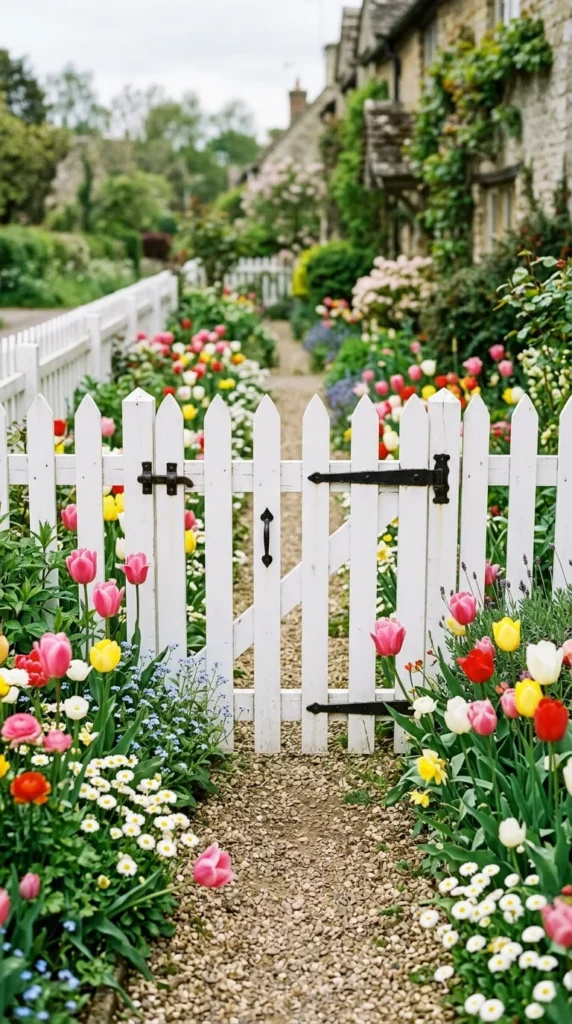
The classic white picket gate is the epitome of traditional charm. Often associated with the quintessential “dream home,” this style is perfect for front yards and cottage gardens. Its open-slat design provides security for pets and children without blocking the view of your meticulously manicured lawn. To keep it looking fresh, choose a high-quality outdoor paint or a durable vinyl material that resists peeling and yellowing.
2. Arched Timber
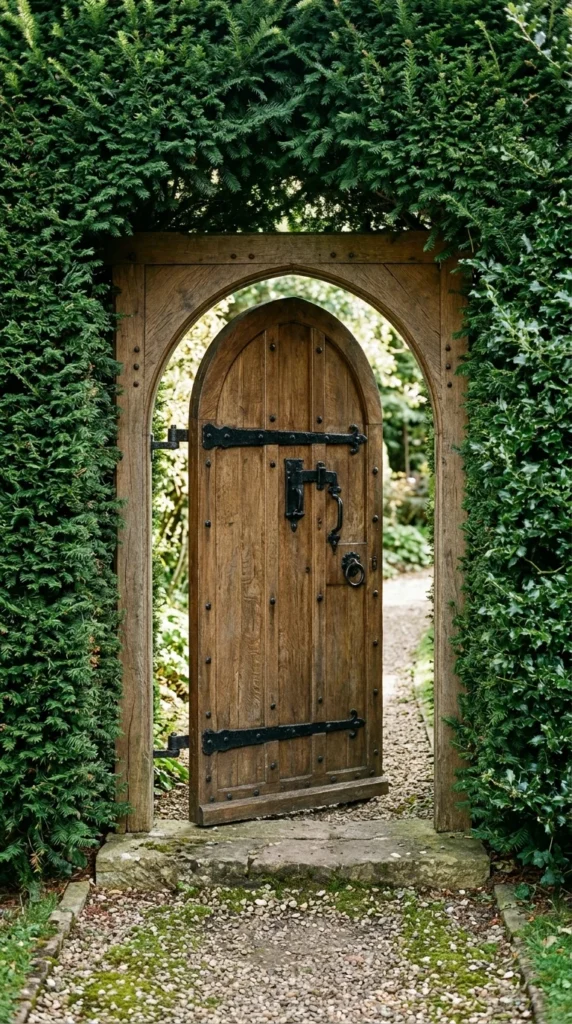
An arched timber gate adds a touch of architectural elegance to any garden path. The curved top softens the straight lines of a fence or wall, creating a more organic and inviting look. Using heavy hardwoods like oak or cedar ensures longevity and a natural aesthetic that patinas beautifully over time. This style works exceptionally well as a side gate or an entrance to a secluded woodland garden.
3. Wrought Iron
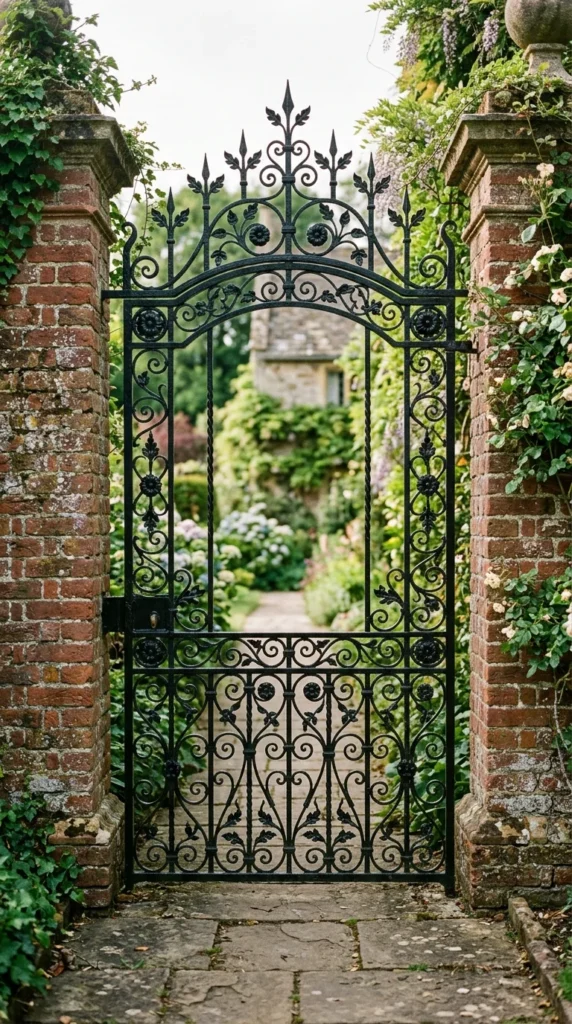
Wrought iron gates are timeless and offer a sense of permanence and security. The beauty of iron lies in its versatility; it can be forged into minimalist bars for a modern look or into elaborate, swirling scrolls for a more romantic, old-world feel. Because they are see-through, they allow the beauty of your garden to be visible from the street while still providing a sturdy boundary.
4. Modern Steel
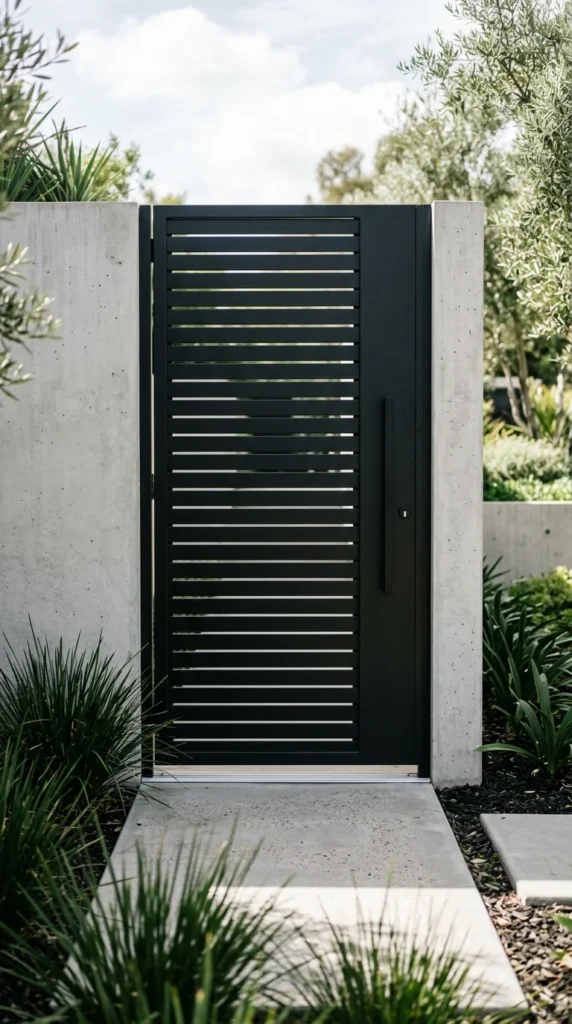
For contemporary homes, a modern steel gate offers clean lines and a sophisticated silhouette. These gates often prioritize privacy, using closely spaced horizontal or vertical slats. The industrial feel of steel can be softened by pairing it with concrete, stone, or lush tropical greenery. Powder-coated finishes in charcoal, black, or even bold colors like navy can make a striking statement.
5. Reclaimed Wood
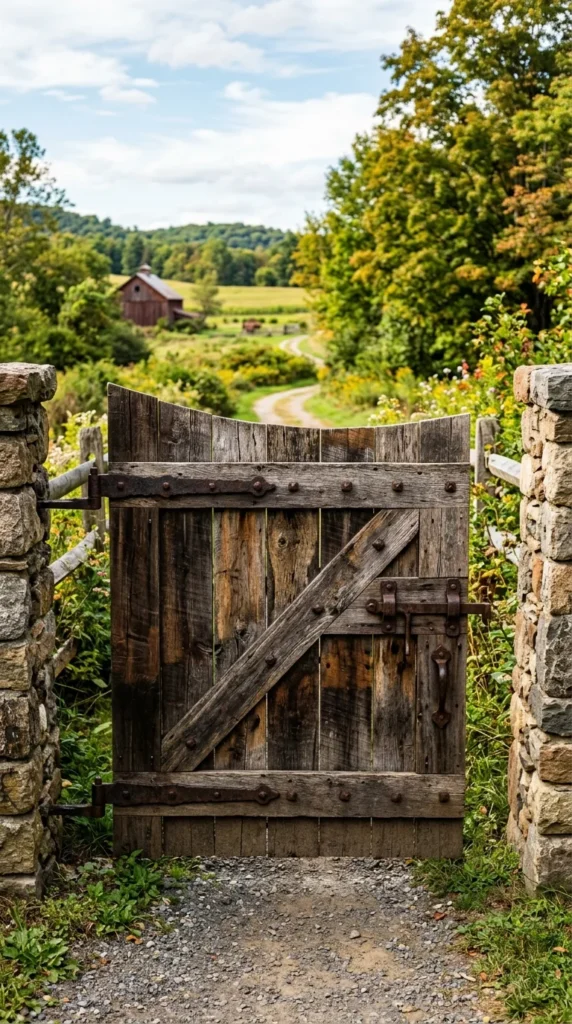
Sustainability meets style in the reclaimed wood gate. Using timber from old barns, pallets, or shipping crates gives the gate a unique history and a rustic, lived-in character that new wood cannot replicate. The variations in grain, color, and texture make each gate a one-of-a-kind piece of art. This style is particularly effective in farmhouse-style gardens or xeriscaped yards.
6. Moon Gate

Inspired by traditional Chinese architecture, a moon gate is a circular opening that serves as a spiritual and physical passageway. While many moon gates are open, some include a circular wooden or metal gate within the frame. This design acts as a “picture frame” for your garden, drawing the eye toward a specific focal point beyond the entrance. It is a bold, artistic choice that creates a sense of mystery and transition.
7. Cottage Style
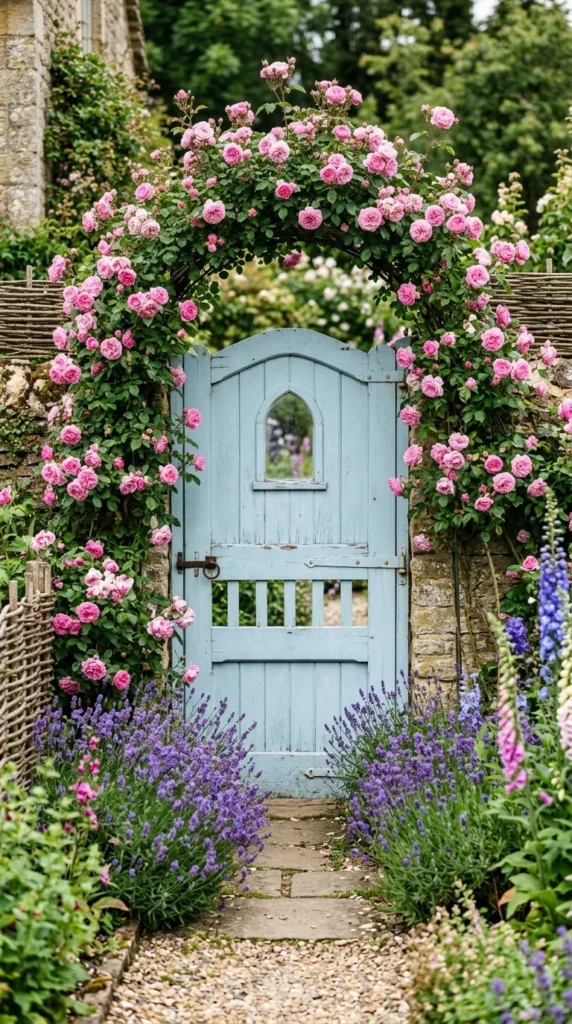
Cottage gates are all about whimsy and romance. Often painted in soft pastels or left in a weathered natural state, these gates are usually low-profile and integrated with flowering vines. A common feature is a “viewing window” or a decorative cutout, such as a heart or a star, which adds a playful touch to the garden entrance.
8. Split Rail
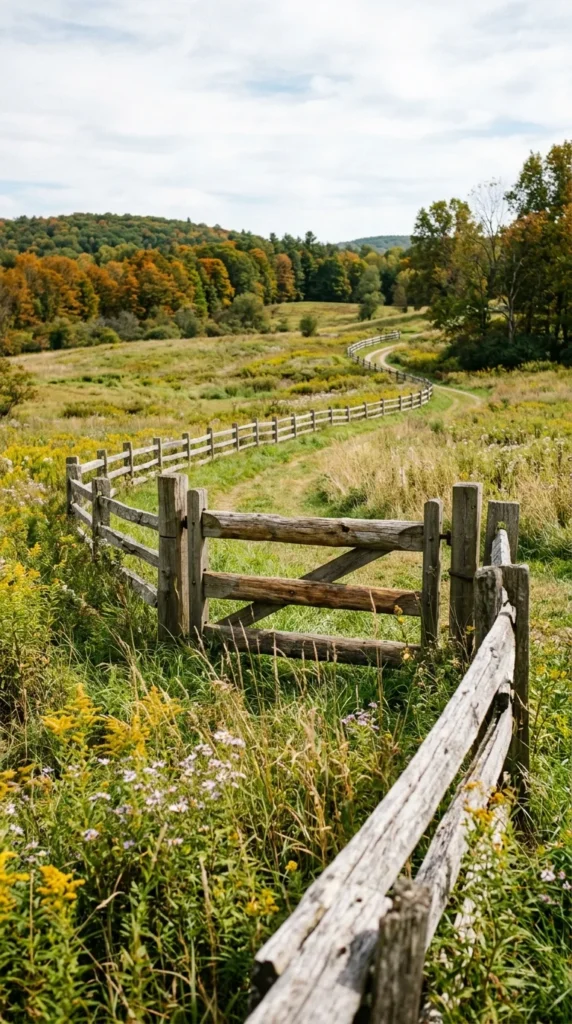
Perfect for large properties or rural settings, the split rail gate is functional and understated. It maintains an open, airy feel that doesn’t obstruct the landscape. This style is often used to define boundaries in a way that feels natural and unobtrusive. It is also one of the most cost-effective options for those with extensive perimeter fencing.
9. Laser-Cut Metal
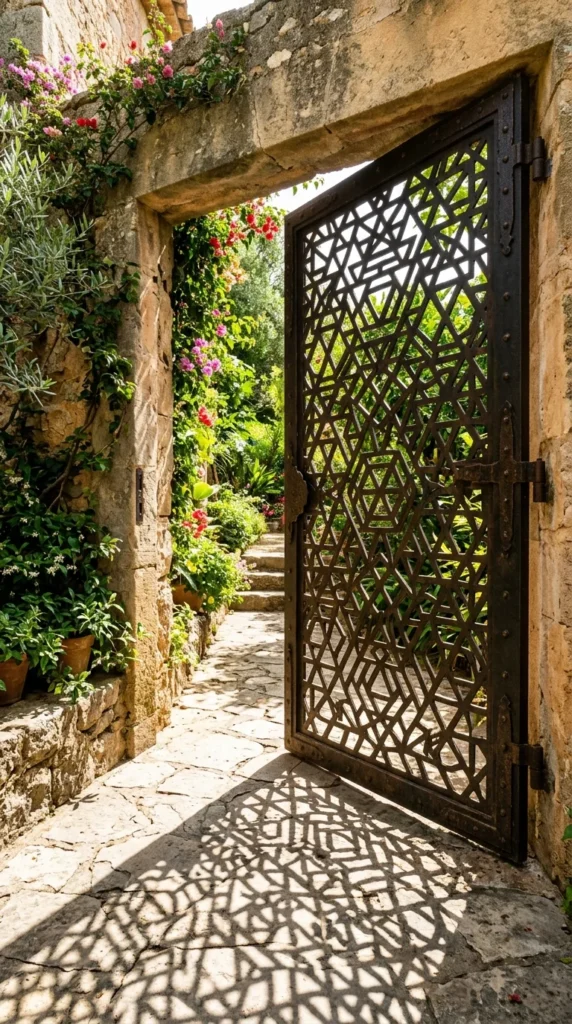
Laser-cutting technology allows for incredibly intricate designs that were once impossible to achieve. From geometric patterns and abstract art to silhouettes of trees and animals, a laser-cut gate is a modern masterpiece. During the day, the sun casts beautiful, patterned shadows on the ground, adding a dynamic layer of interest to your entryway.
10. Stone Archway
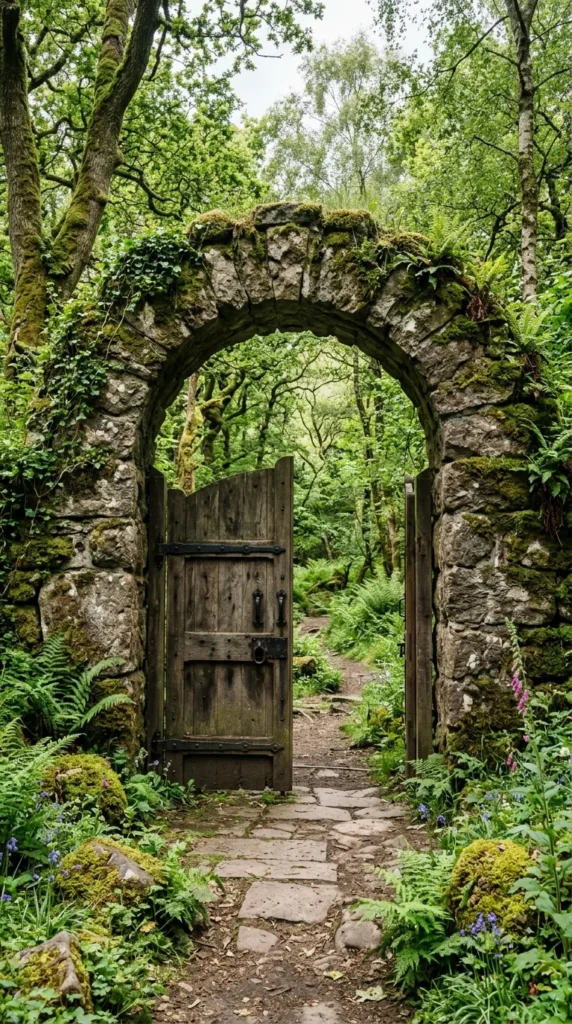
Nothing says “grandeur” like a gate set within a stone archway. This combination creates a sense of fortification and timelessness. Whether you use sleek, cut limestone for a formal look or rugged fieldstone for a naturalistic feel, the weight of the stone provides a dramatic contrast to the organic shapes of the garden.
11. Bamboo Entrance
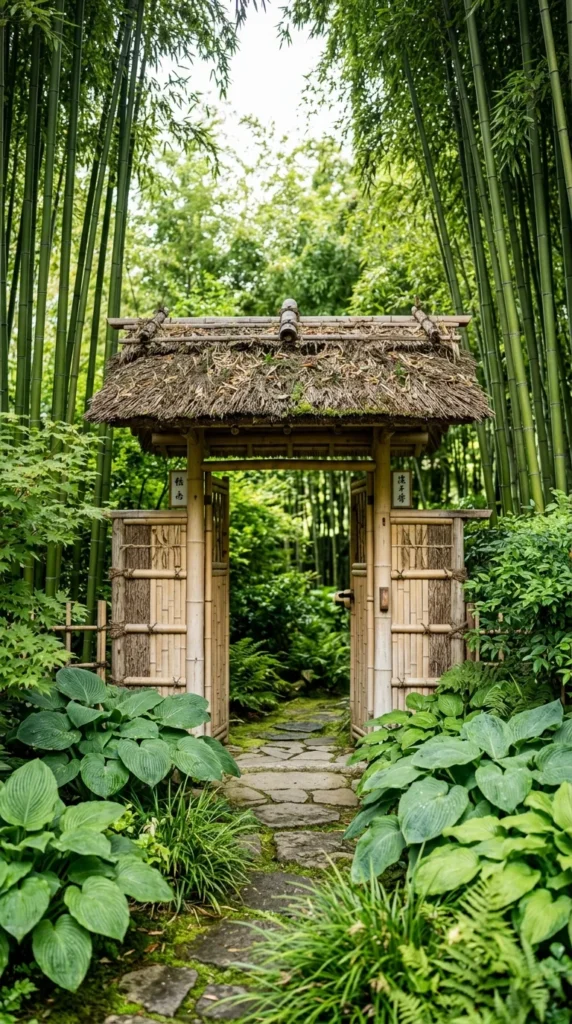
For a Zen-inspired or tropical garden, bamboo is the ideal material. It is eco-friendly, lightweight, and offers a unique texture. A bamboo gate often features a simple latch mechanism and can be paired with a small “roof” or canopy to protect it from the elements and enhance the Japanese aesthetic.
12. Secret Door
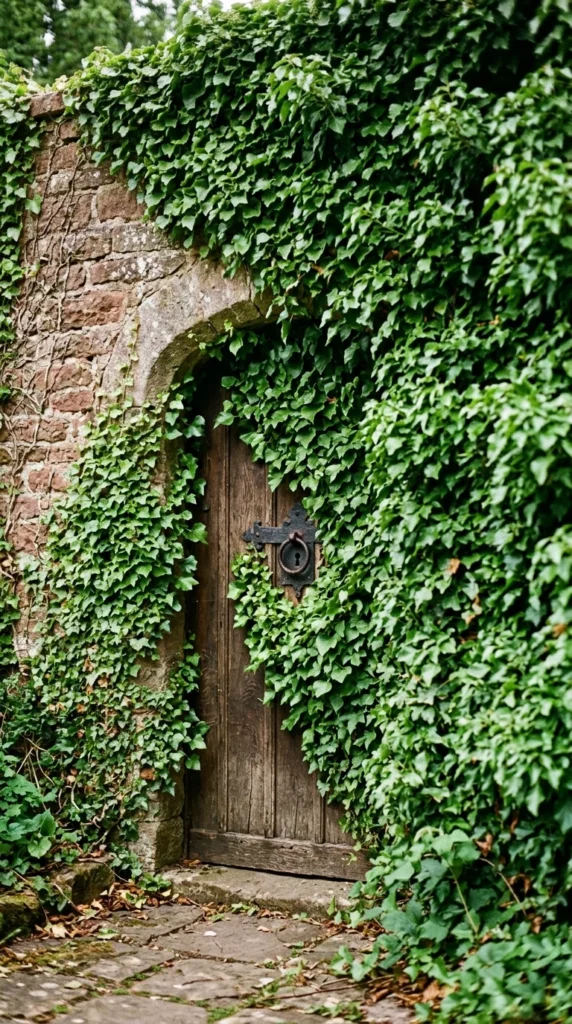
The “secret door” gate is designed to blend in with its surroundings, creating a sense of wonder and exclusivity. These are often solid wood doors set into high walls or thick hedges. They provide maximum privacy and give the impression that the garden behind them is a hidden sanctuary, far removed from the outside world.
13. Farmhouse Dutch
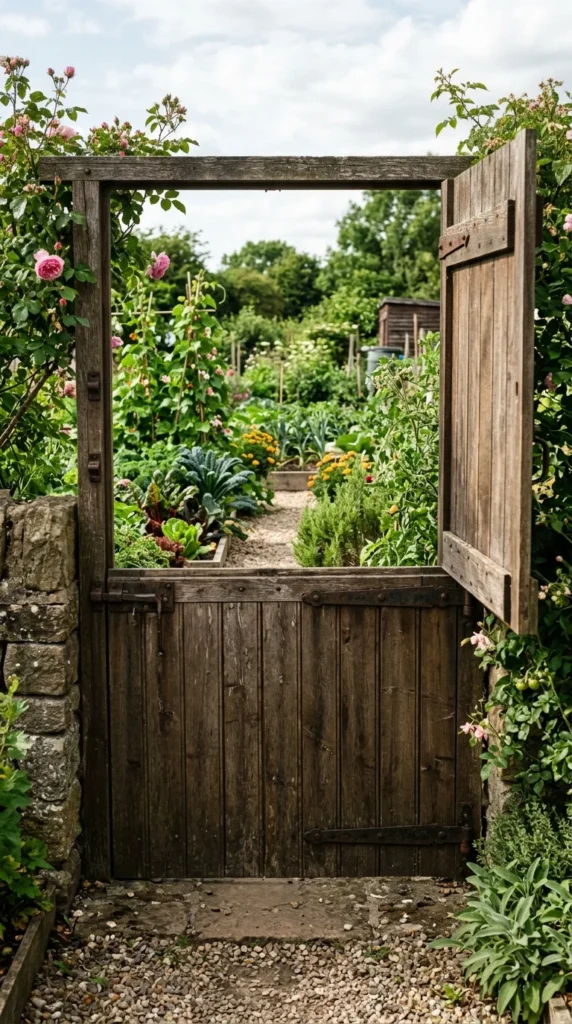
A Dutch gate (or stable gate) is split horizontally in the middle, allowing the top half to open while the bottom stays closed. This is incredibly practical for keeping pets in or out while still being able to chat with neighbors or enjoy the view. It brings a cozy, farmhouse functionality to the garden.
14. Victorian Scrollwork
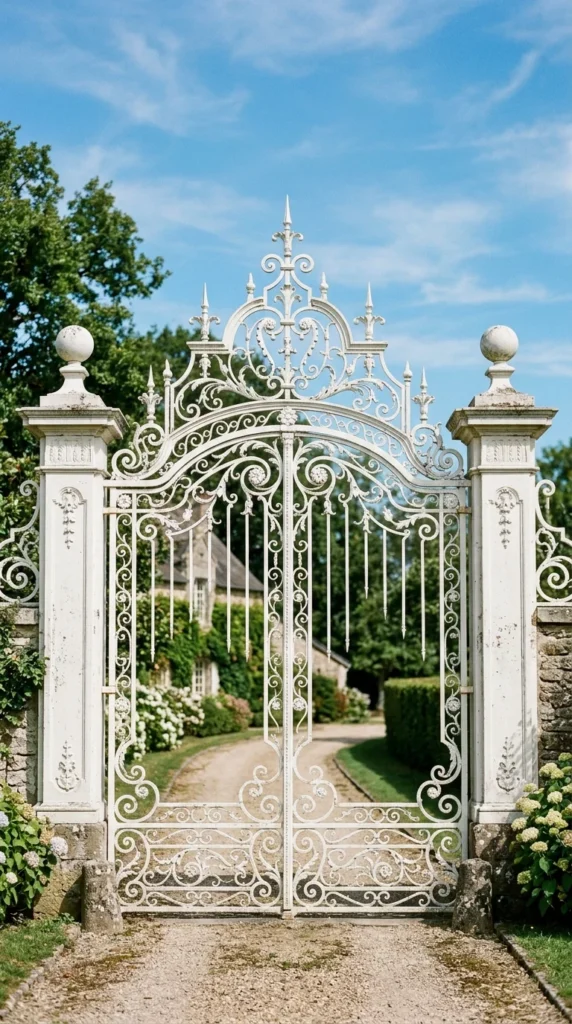
Victorian-style gates are characterized by their height and elaborate ornamentation. They often feature intricate floral motifs, fleur-de-lis finials, and symmetrical patterns. Painted in classic black, forest green, or even a bright white, these gates command attention and give the home a formal, historical atmosphere.
15. Minimalist Glass
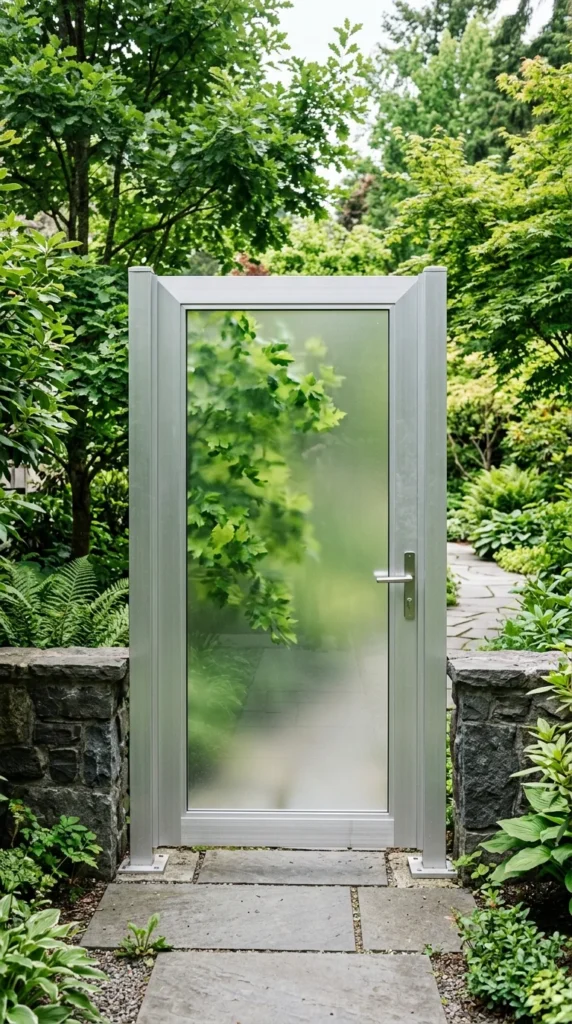
Glass gates are a bold choice for modern homes. They provide a physical barrier without creating a visual one, making small spaces feel much larger. Frosted or etched glass can provide privacy while still allowing light to filter through, creating a luminous and airy entrance.
16. Driftwood Rustic
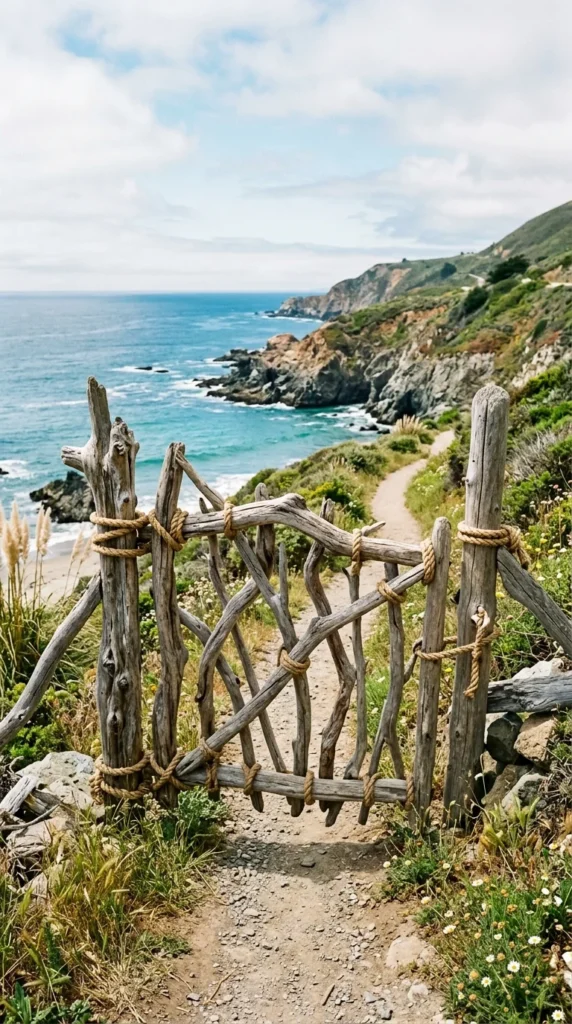
Ideal for coastal homes or beach-themed gardens, a driftwood gate uses the natural, sculpted shapes of wood weathered by the sea. Each piece is unique, resulting in a gate that looks like a piece of found art. It’s a wonderful way to harmonize the garden with a nearby maritime environment.
17. Colorful Paint
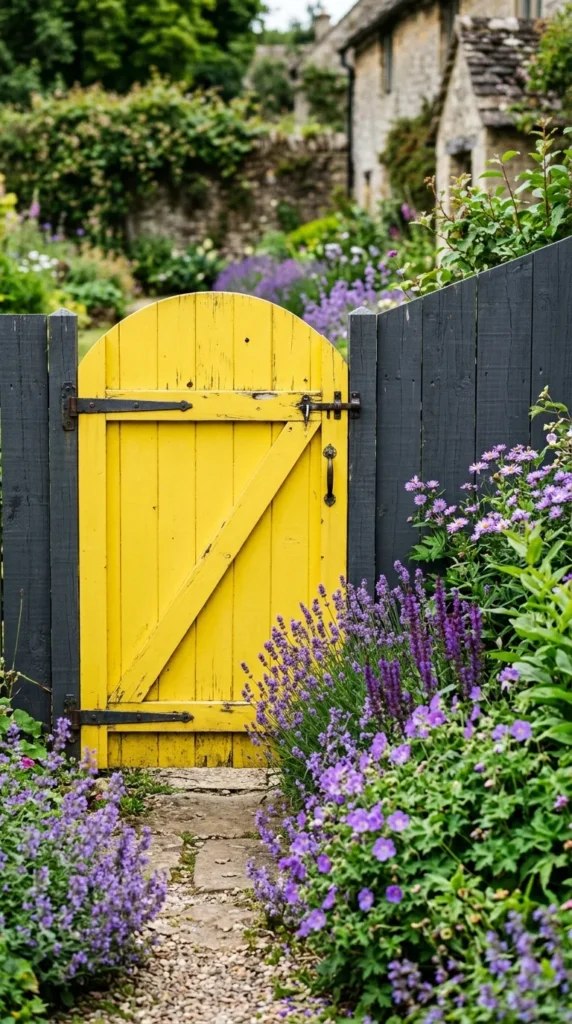
Sometimes, the best way to make a statement is through color. A standard wooden gate can be transformed into a focal point with a bold coat of paint. Whether it’s a sunny yellow, a deep cobalt blue, or a striking red, a colorful gate adds personality and cheer to the neighborhood.
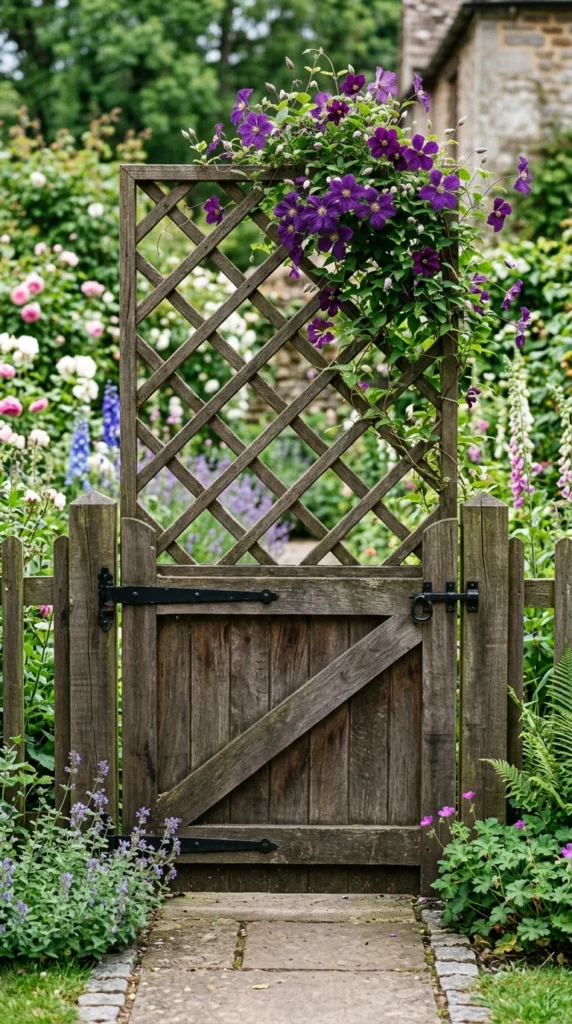
18. Trellis Top
A trellis-top gate combines the security of a solid base with the decorative potential of a lattice upper section. This design is perfect for gardeners who want to encourage climbing plants like clematis, honeysuckle, or jasmine to frame their entryway, adding both height and fragrance.
19. Double Swing
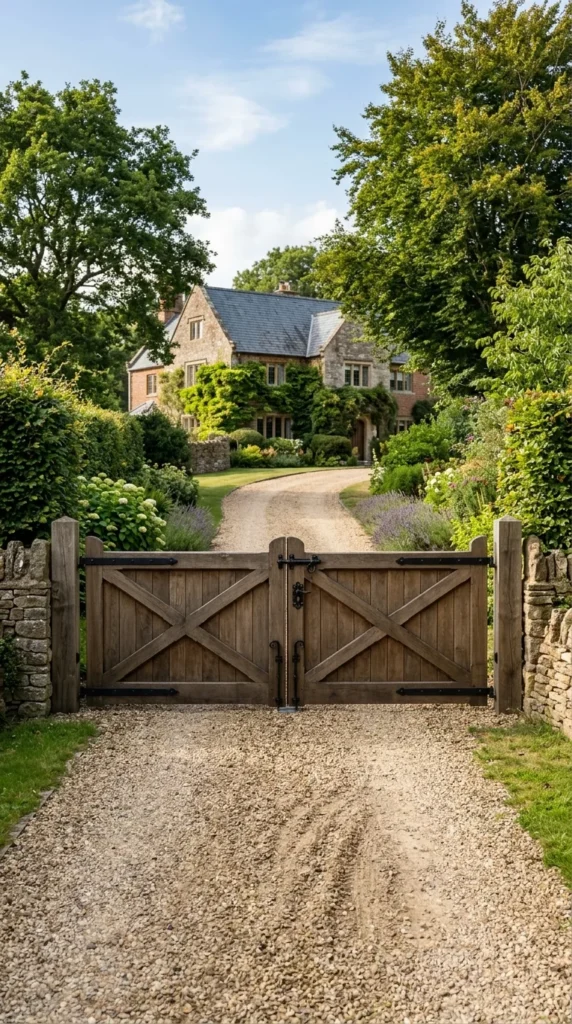
Double gates create a sense of scale and importance. They are wider than standard single gates, making them ideal for driveways or wide garden paths. The symmetry of two gates swinging open provides a grand, welcoming gesture for guests.
20. Copper Patina
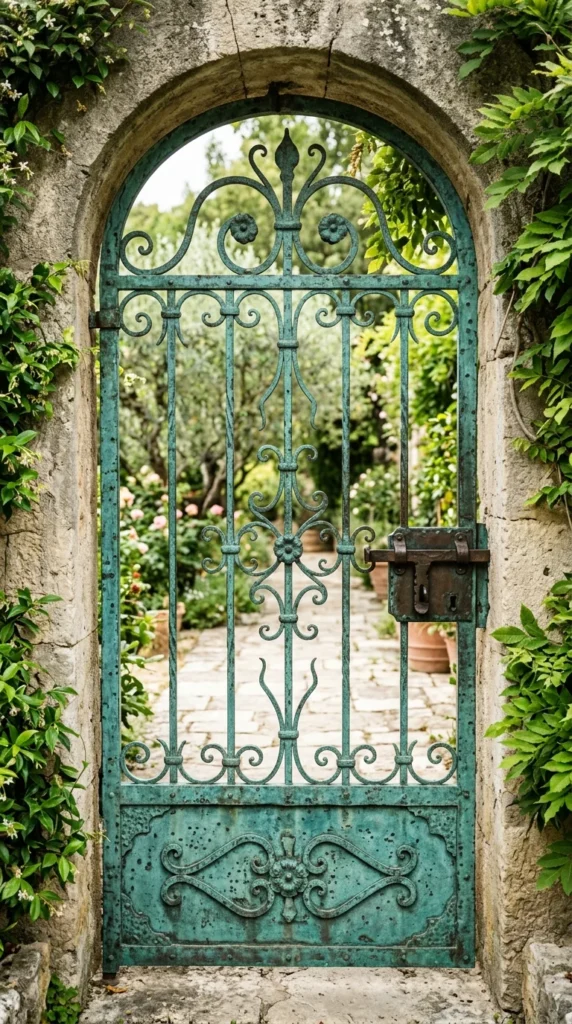
Copper gates are a luxury choice that changes beautifully over time. Initially bright and metallic, the copper eventually develops a signature green patina due to oxidation. This “living finish” allows the gate to evolve with the garden, eventually blending in with the natural tones of the foliage.
21. Gabion Wall
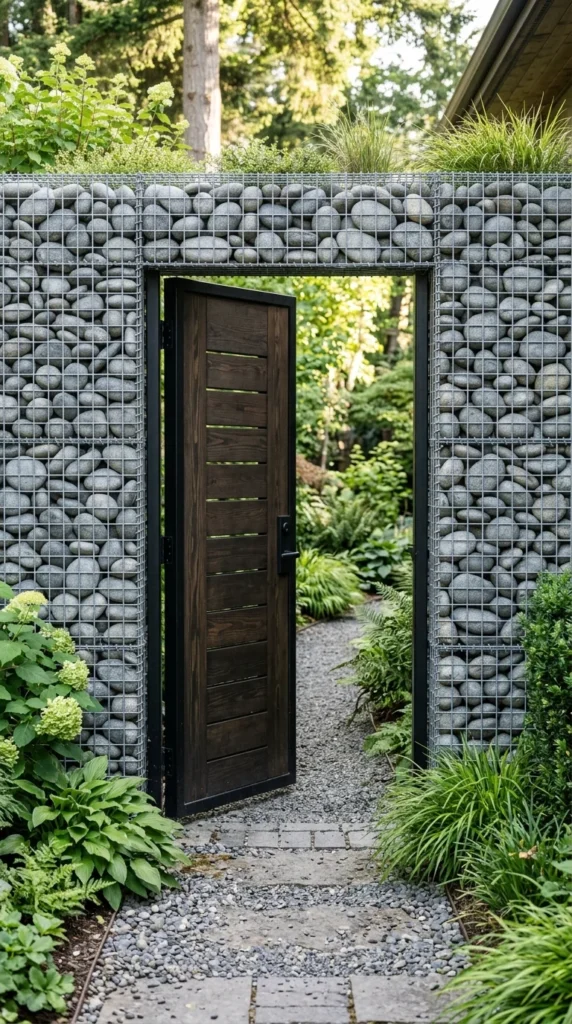
Gabion walls—wire cages filled with rocks—are an increasingly popular landscaping feature. Integrating a gate into a gabion wall creates a striking contrast between the rugged, industrial texture of the stones and the warmth of a wooden or metal gate. It’s a durable and highly contemporary look.
22. Stained Glass
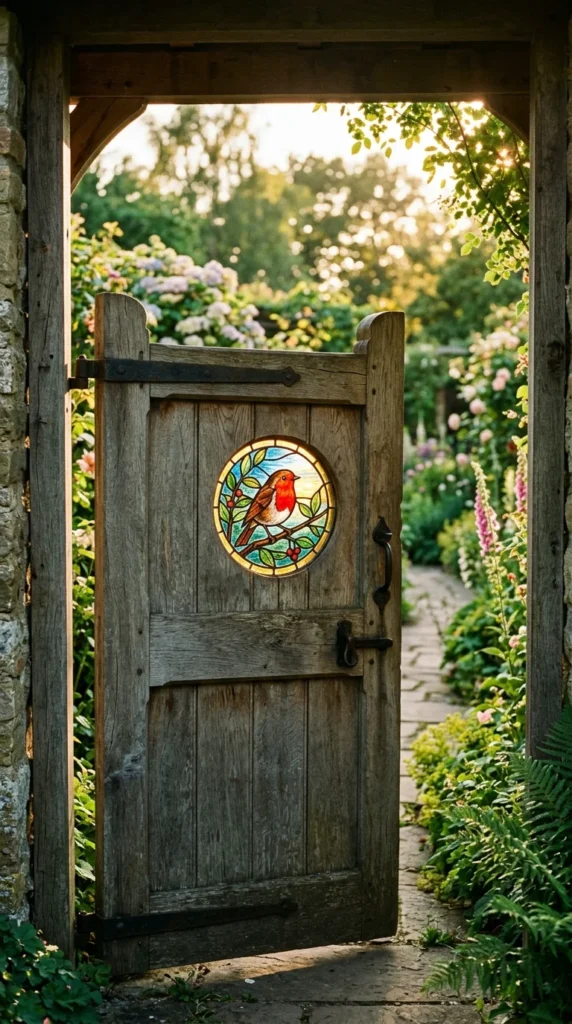
Incorporating stained glass into a garden gate adds a touch of artisan craftsmanship. Small inserts or panels of colored glass catch the light at different times of the day, casting colorful reflections onto the garden path. This is a perfect way to add a “jewelry” element to your home’s exterior.
23. Redwood Slat
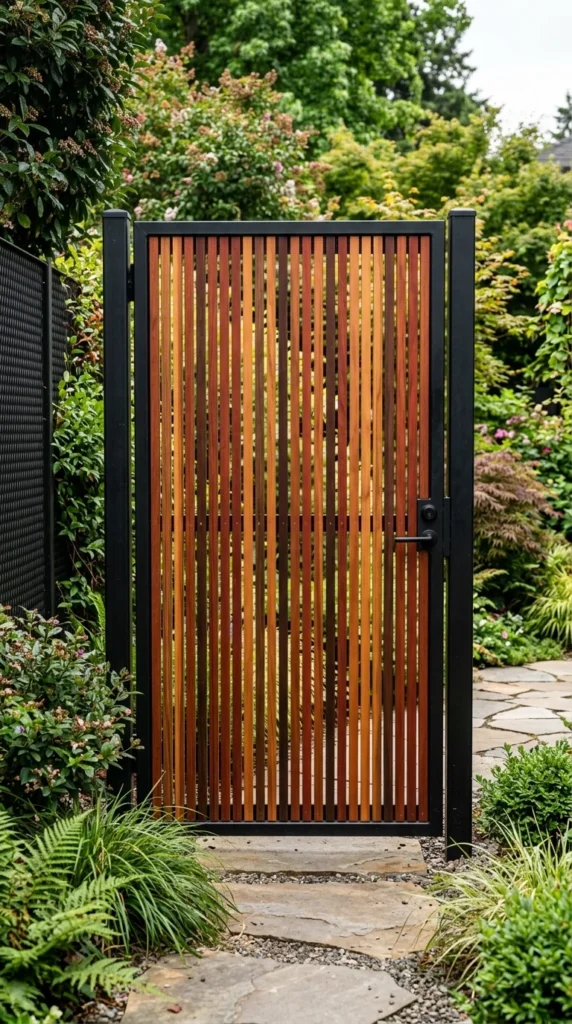
Redwood is prized for its natural resistance to decay and its stunning deep-red hue. A slat-style gate using redwood provides a warm, organic feel that works well in mid-century modern or West Coast-inspired designs. The natural oils in the wood mean it requires less maintenance than other softwoods.
24. Ornate Bronze
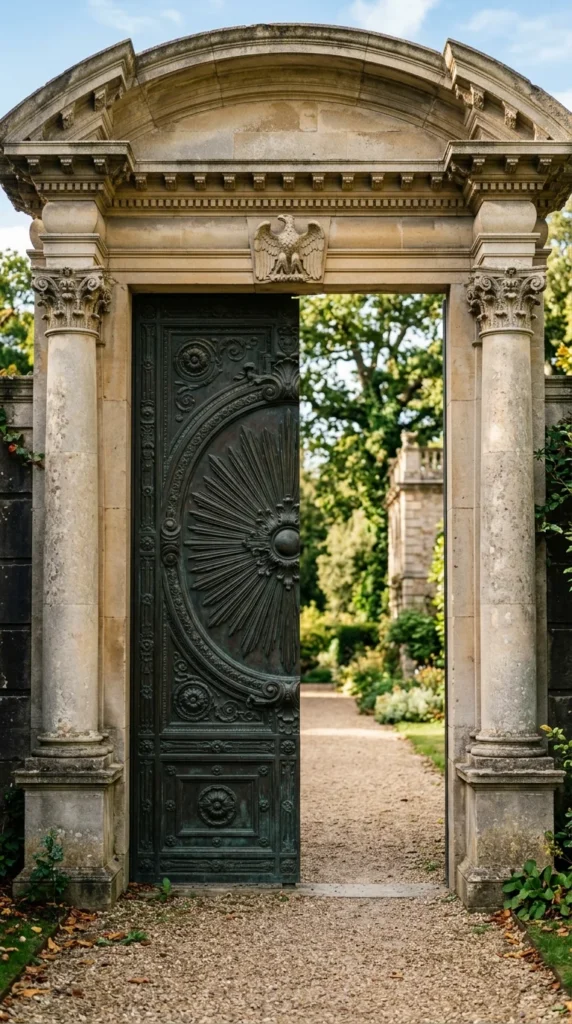
Bronze gates offer a level of detail and weight that is unparalleled. Often custom-cast, these gates can feature high-relief sculptures and textures. While expensive, a bronze gate is a multi-generational investment that will never rust and only grows more beautiful with age.
25. Living Gate
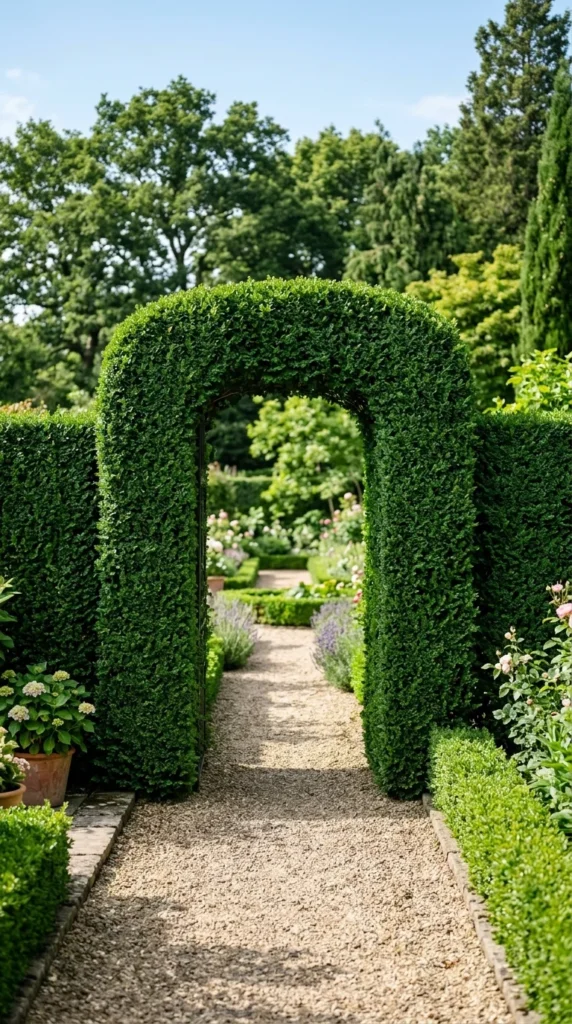
A “living gate” is essentially a gate that has been disguised with plants. Using a sturdy metal frame as a base, gardeners can grow ivy, boxwood, or even espaliered fruit trees across the surface. When closed, the gate disappears into the surrounding greenery, creating a seamless and magical landscape.