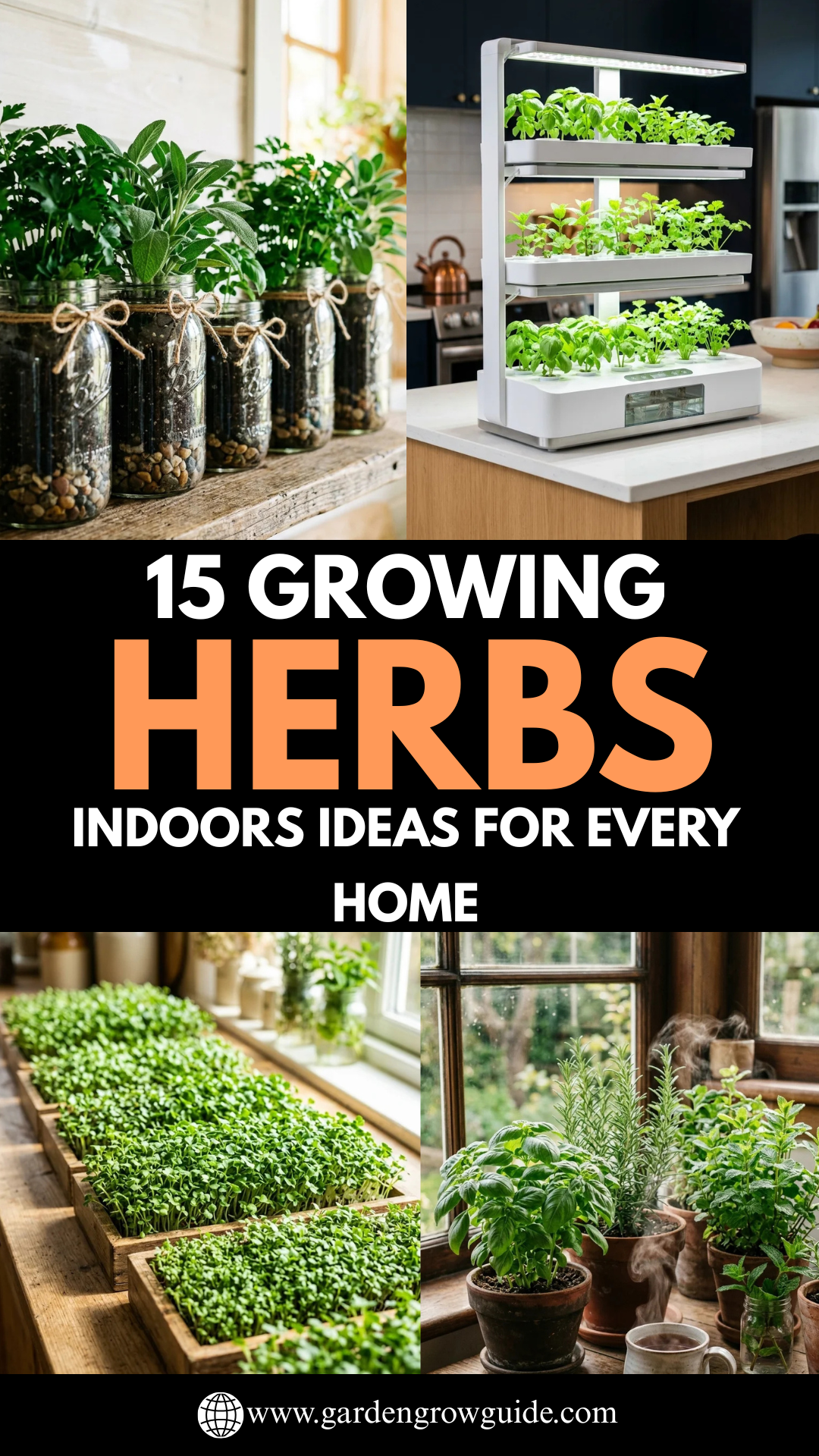
Indoor gardening has evolved from a simple hobby into a lifestyle choice for urban dwellers and culinary enthusiasts alike. The ability to pluck fresh basil for a Margherita pizza or snip sprigs of rosemary for a roast directly from your kitchen counter is a luxury that any home can accommodate. Whether you live in a sprawling estate or a compact studio apartment, integrating greenery into your living space provides aesthetic beauty, improved air quality, and unparalleled flavor.
1. Kitchen Windowsill
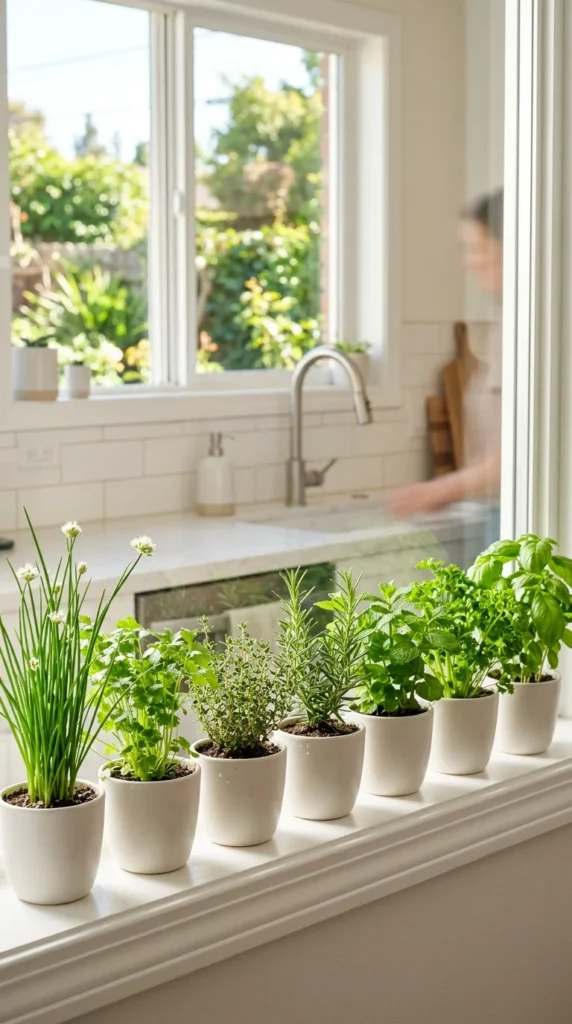
The kitchen windowsill is the quintessential location for an indoor herb garden. It offers the most important ingredient for plant success: natural light. Most herbs require at least six hours of sunlight daily, making a south-facing window the prime real estate for sun-loving varieties like basil and oregano. This setup keeps your ingredients within arm’s reach while you cook, encouraging you to use them more frequently. To succeed with windowsill gardening, ensure your pots have drainage holes and use a saucer to protect your surfaces from water damage.
2. Vertical Wall Planters
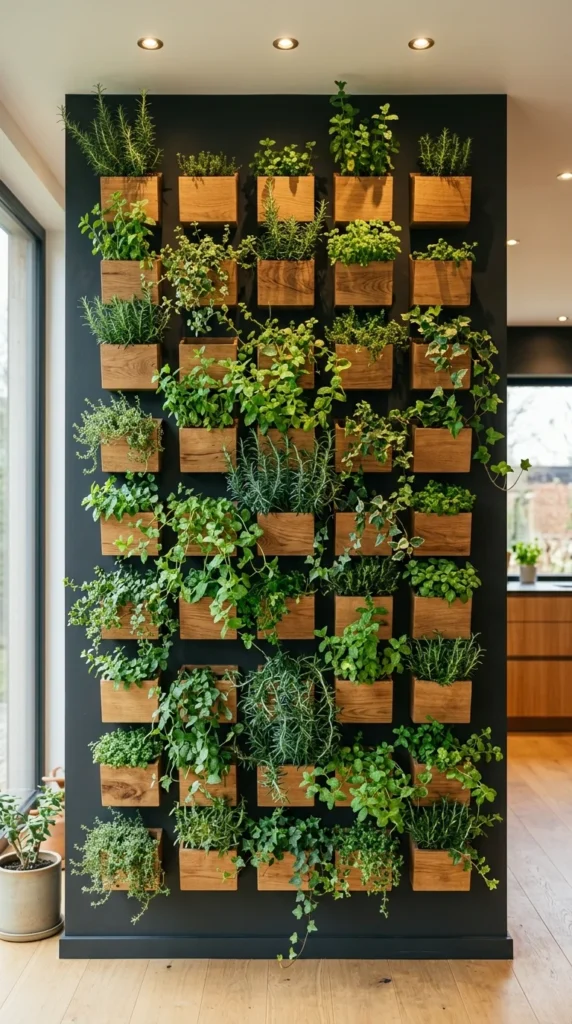
When floor and counter space are at a premium, look to your walls. Vertical wall planters are a brilliant solution for small apartments. These systems can range from simple wooden pockets to modular felt bags or sophisticated irrigation-linked panels. Beyond saving space, a vertical herb wall serves as a stunning focal point in a dining room or kitchen. It’s particularly effective for “creeping” herbs like thyme or mint, which naturally spill over the edges, creating a lush, jungle-like effect indoors.
3. Hydroponic Smart Gardens
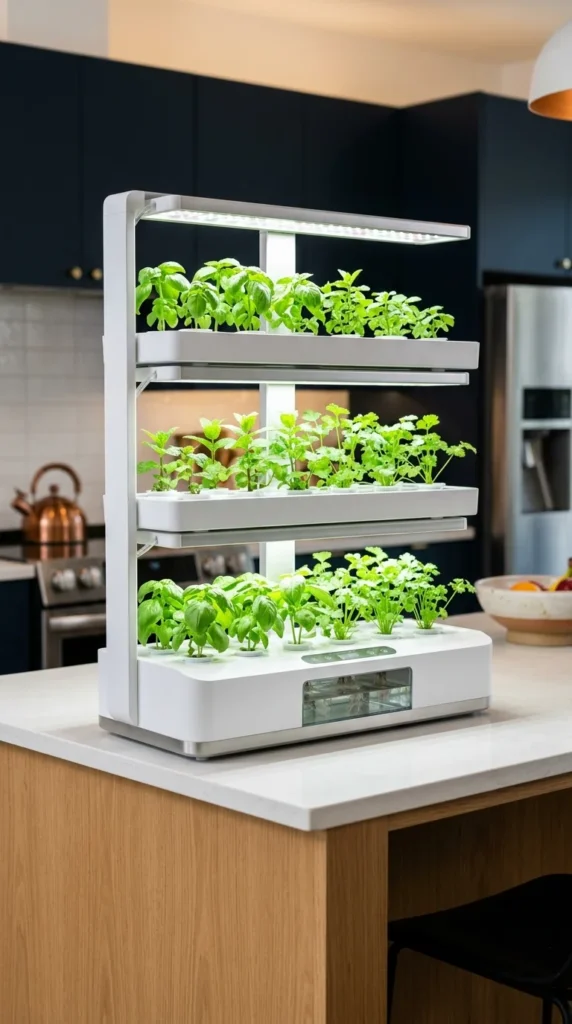
For those who lack a green thumb or live in homes with minimal natural light, hydroponic smart gardens are a game-changer. These self-contained units use water infused with nutrients instead of soil. Most come equipped with built-in LED grow lights on a timer, ensuring your herbs get the exact spectrum of light they need regardless of the weather outside. These systems often feature water-level sensors that alert you when it’s time to refill, making it nearly impossible to fail at growing fresh produce.
4. Repurposed Mason Jars
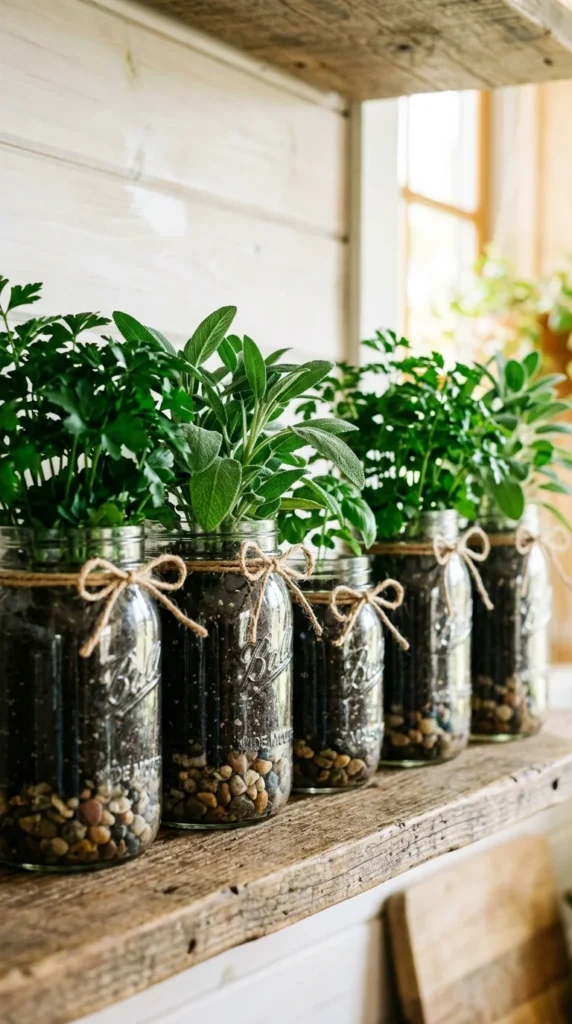
Mason jars offer a charming, rustic aesthetic that fits perfectly with farmhouse or shabby-chic decor. Because glass jars do not have drainage holes, the key to success is creating a “false bottom” using an inch of small pebbles or activated charcoal before adding soil. This prevents the roots from sitting in stagnant water. Mason jar gardens are ideal for herbs that don’t mind slightly more moisture, such as mint or lemon balm, and they look beautiful when labeled with chalkboard paint or twine tags.
5. Hanging Macramé Baskets
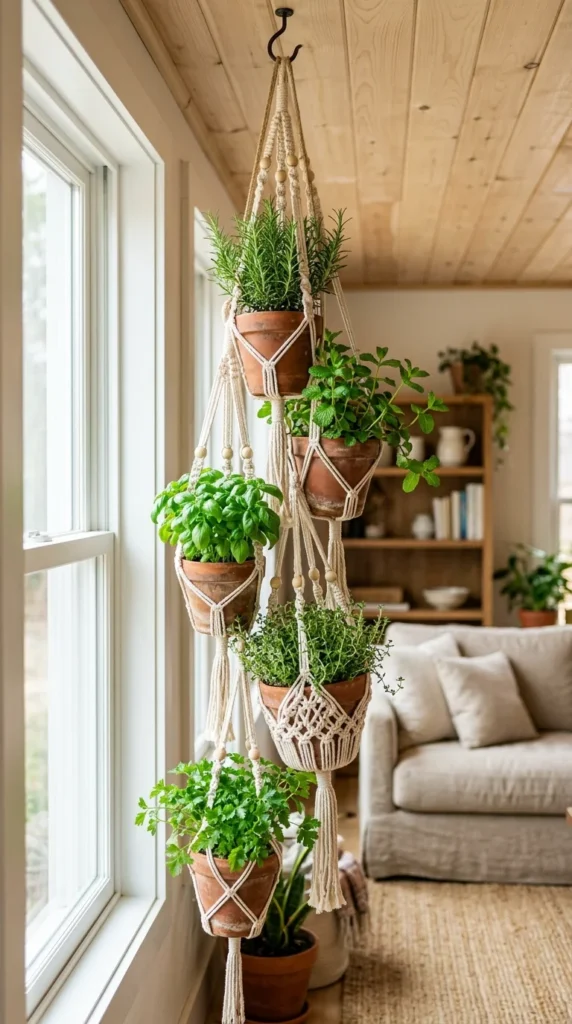
Hanging your herb garden is an excellent way to utilize vertical space while keeping plants away from curious pets or toddlers. Macramé hangers add a bohemian flair to your home and allow you to place herbs directly in front of windows where shelf space might not exist. This method is particularly effective for herbs with a trailing habit. Ensure the hangers are secured to ceiling joists and use lightweight plastic pots inside the decorative sleeves to prevent excess weight on the hooks.
6. Tiered Plant Stands
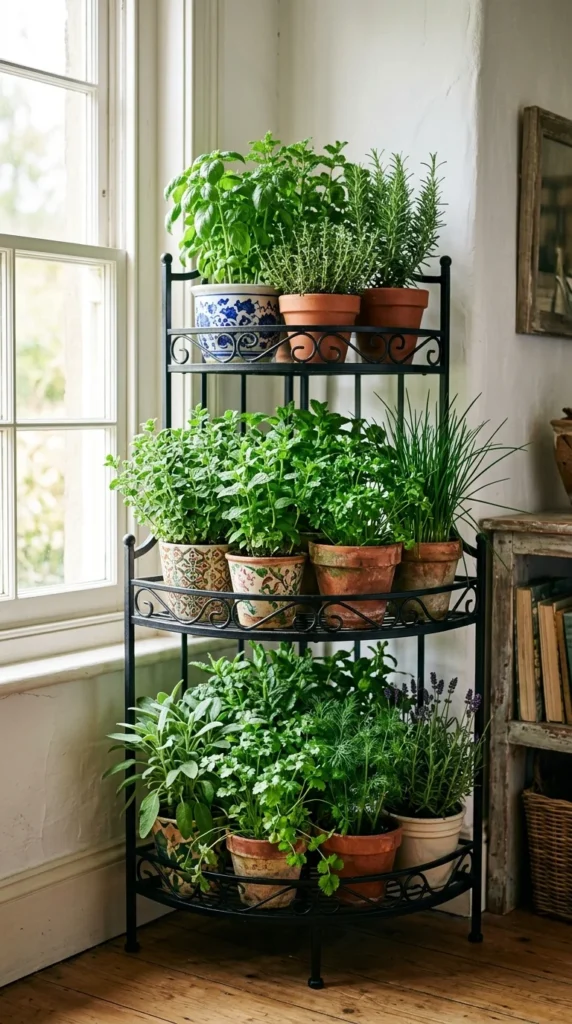
A tiered plant stand allows you to create a concentrated “micro-climate” for your herbs. By grouping plants together, you increase the local humidity, which many herbs find beneficial during the dry winter months when indoor heating is active. These stands come in various styles—from mid-century modern wood to industrial metal—and allow you to organize your herbs by their watering needs. Place the most sun-hungry plants on the top tier and those that tolerate partial shade, like chervil or mint, on the lower levels.
7. Magnetic Fridge Tins
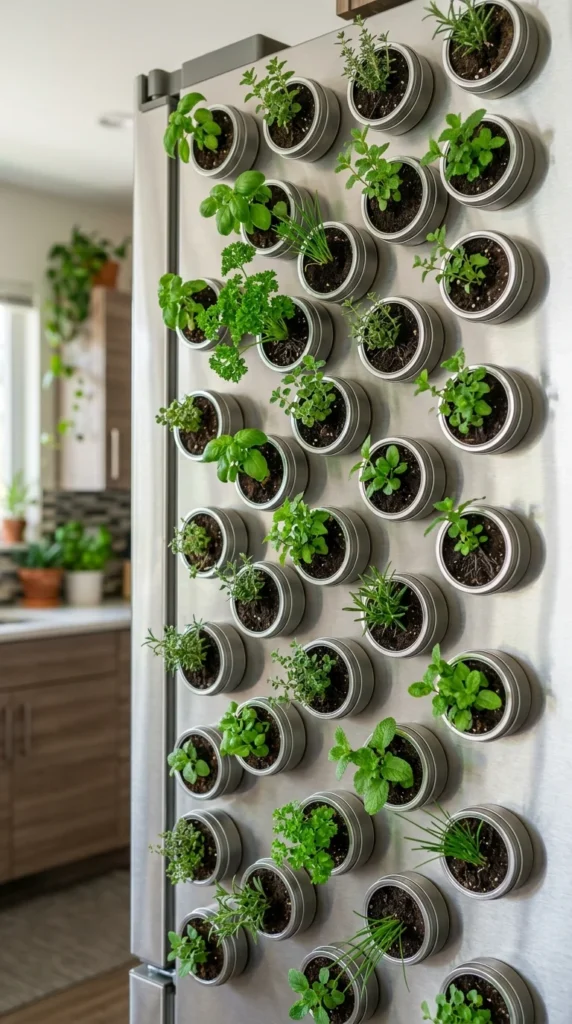
If you have absolutely no counter space, the side of your refrigerator can become your garden. Small magnetic tins filled with a light potting mix can house hardy, small-root herbs. This idea is best suited for “micro-herbs” or young plants that you plan to harvest frequently. It’s an ingenious use of “dead space” in the kitchen and keeps your seasoning options right where you do your meal prep. Just ensure the magnets are strong enough to support the weight of the damp soil and the plant.
8. Rolling Bar Carts
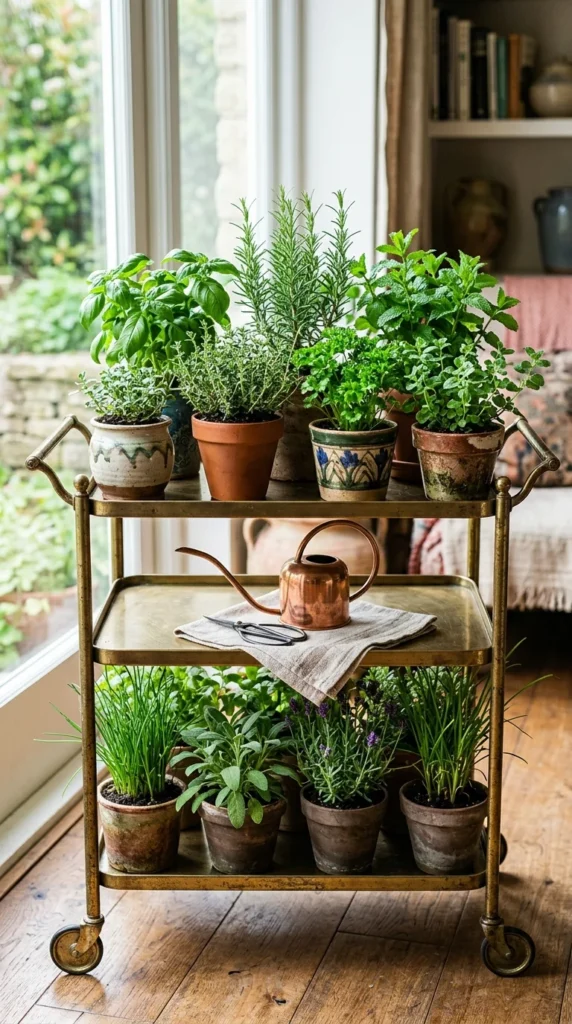
A rolling bar cart offers the ultimate flexibility in indoor gardening. You can “chase the sun” by moving the cart from room to room as the light changes throughout the day. In the evening, the cart can be rolled into the dining area to serve as a conversational centerpiece where guests can snip their own garnishes for drinks or dinner. The multiple levels provide ample space for a diverse herb collection, from tall stalks of lemongrass to low-growing oregano.
9. Tea Tin Gardens
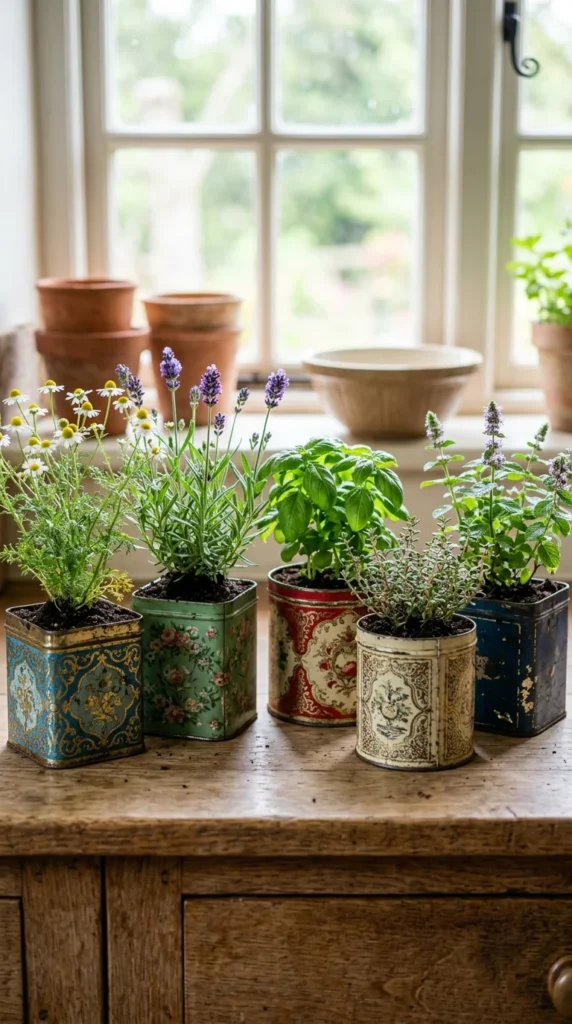
Repurposing old tea tins is an eco-friendly way to add character to your indoor garden. The metallic colors and vintage typography of high-end tea containers provide a sophisticated look that pairs well with the delicate textures of herbs. Like mason jars, tea tins require a layer of gravel at the bottom for drainage. These are perfect for smaller herbs and look best when clustered in groups of three or five on a side table or kitchen island.
10. Ladder Shelves
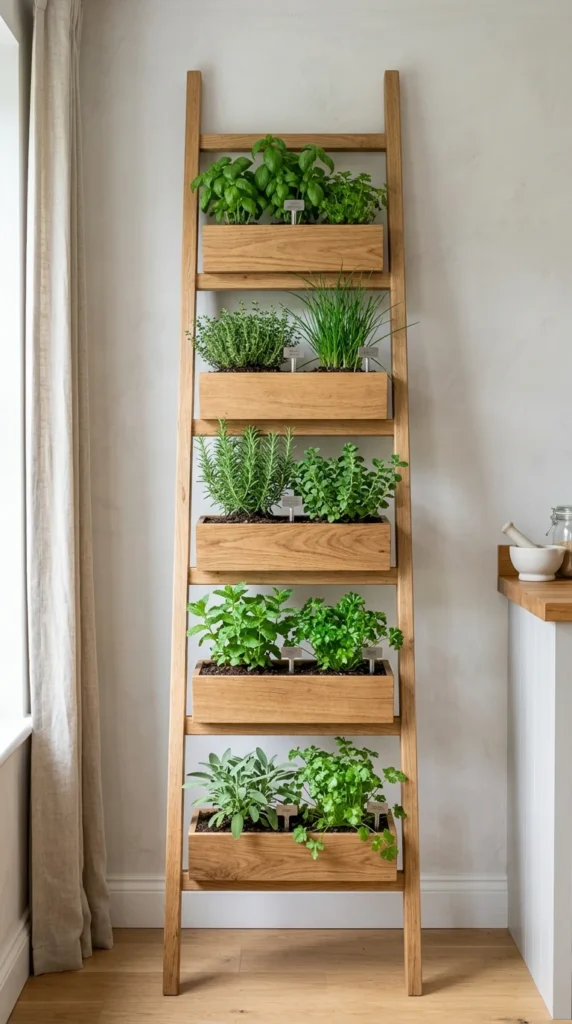
Ladder shelves have become a staple in modern interior design, and they serve as excellent scaffolds for herb gardens. By using long rectangular planter boxes on each “step,” you can create a massive amount of growing space in a very small footprint. This setup allows for better air circulation around the plants compared to crowded windowsills, reducing the risk of fungal issues like powdery mildew. It also provides a structured, organized look that fits well in minimalist or Scandinavian-style homes.
11. Grow Light Stations
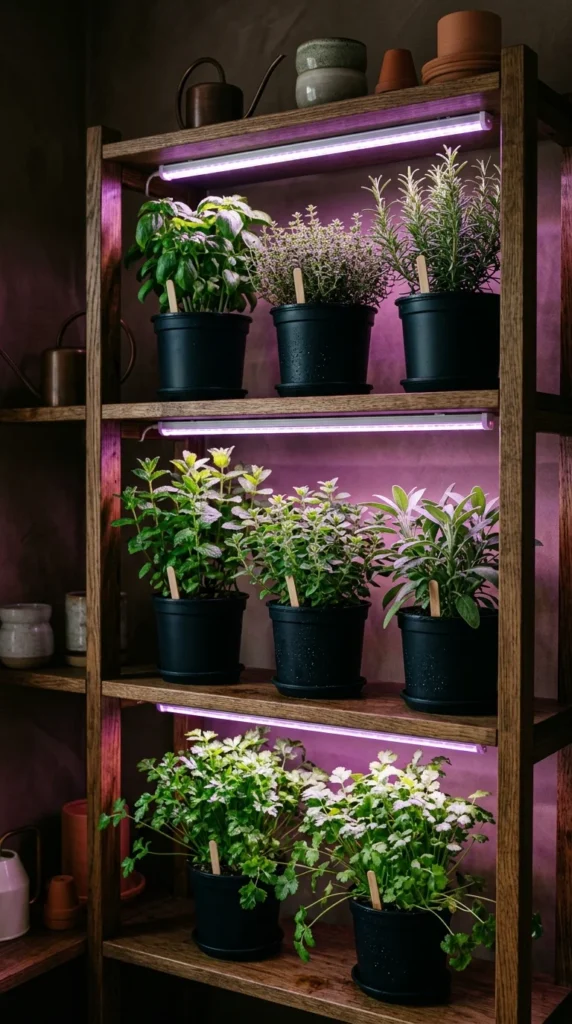
For homes with north-facing windows or basement apartments, a grow light station is a necessity. Modern LED grow lights are energy-efficient and can be easily hidden under kitchen cabinets or bookshelves. By creating a dedicated light station, you are no longer at the mercy of the seasons or the orientation of your home. You can grow demanding herbs like Mediterranean rosemary or heat-loving basil all year round, even in the middle of a dark winter.
12. Upside-Down Planters
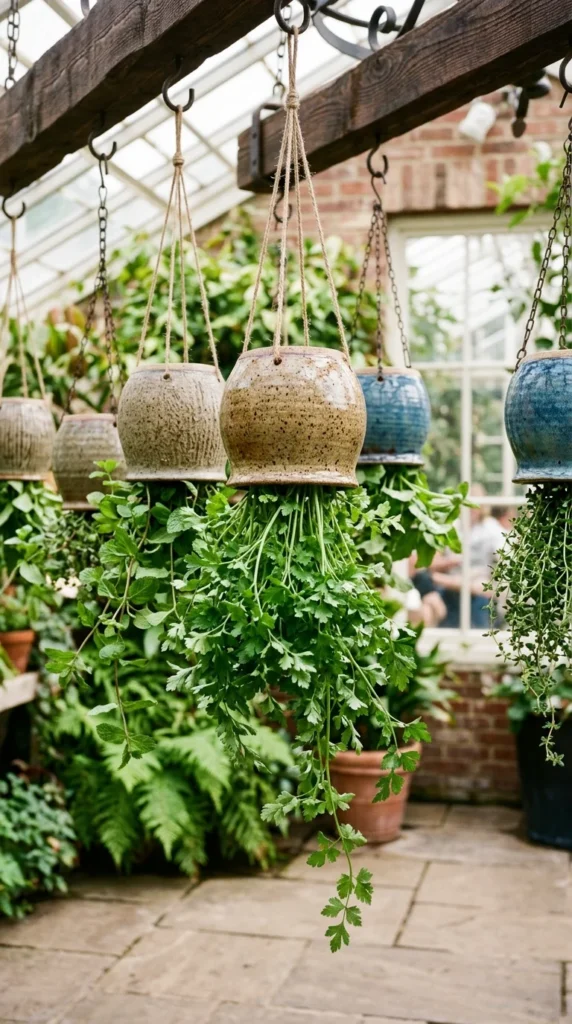
Upside-down gardening isn’t just for tomatoes. Growing herbs like mint or parsley upside down is a fantastic way to save space and create a conversation piece. These specialized planters use a gravity-fed watering system where water is poured into the top and slowly filters down through the soil to the roots. This method can help prevent certain soil-borne pests and ensures that the foliage gets plenty of air circulation. It’s an avant-garde approach that works exceptionally well in modern, high-ceilinged spaces.
13. Pallet Wood Herb Racks
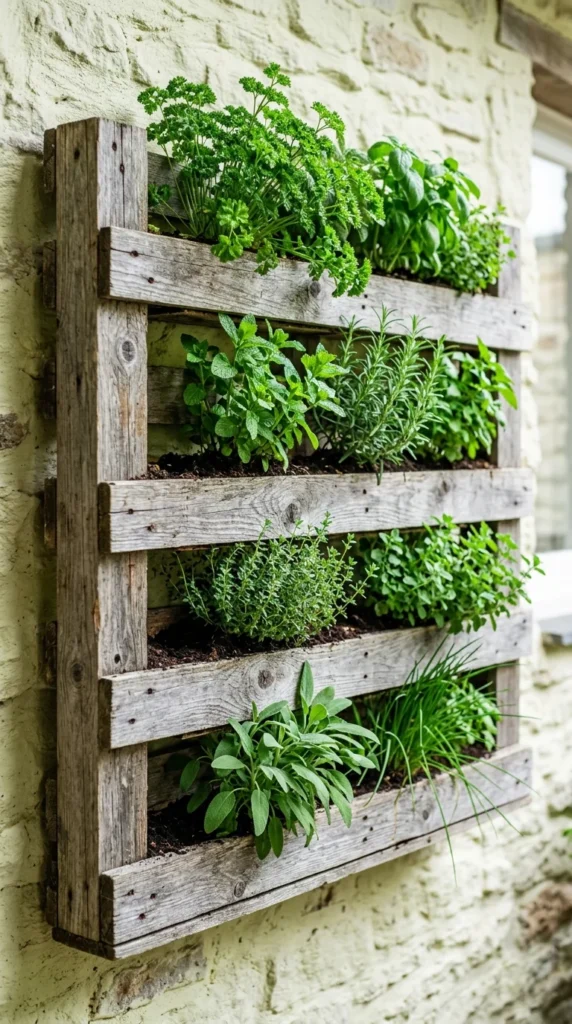
For the DIY enthusiast, a pallet wood rack is a cost-effective and stylish way to house a large herb collection. By sealing the wood and lining the internal troughs with landscape fabric, you can create a sturdy, wall-mounted garden. This setup is particularly well-suited for a kitchen or a covered balcony. The wide slats allow you to grow a large volume of herbs, making it the perfect choice for families who cook with fresh greens daily.
14. Windowsill Microgreen Trays
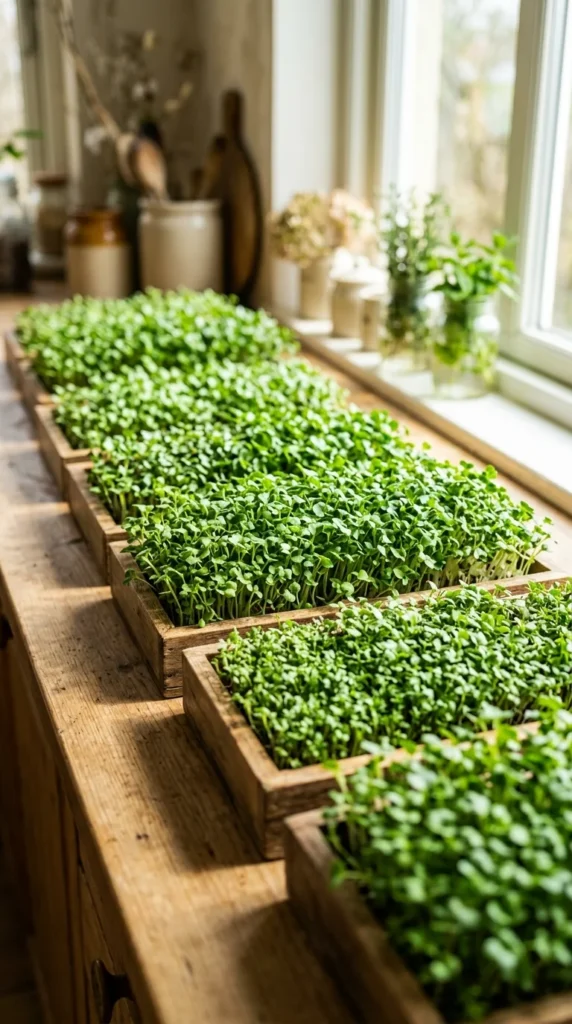
If you want the fastest “farm-to-table” experience, microgreen trays are the answer. While technically young versions of herbs like cilantro, mustard, and basil, microgreens are harvested just days after germination. They require very little soil—sometimes just a damp paper towel or hemp mat—and can be grown in shallow decorative trays. They are packed with concentrated nutrients and add a professional, gourmet touch to salads and sandwiches.
15. Self-Watering Pots
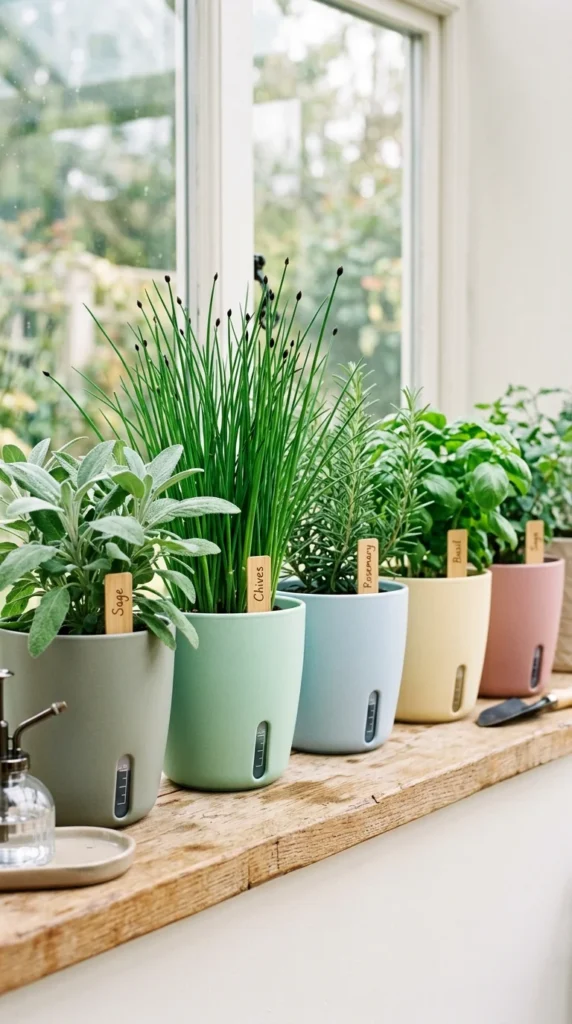
The most common cause of indoor herb failure is inconsistent watering. Self-watering pots solve this by using a reservoir and a wicking system that allows the plant to “drink” only as much water as it needs. This is ideal for herbs that prefer consistent moisture, such as parsley and mint. These pots are perfect for busy professionals or those who travel frequently, as the reservoir can often keep the plant hydrated for a week or more. They come in many high-end finishes, ensuring they look as good as they function.