Cactus gardening has evolved from a niche hobby into a major landscape and interior design trend. These resilient, sculptural plants offer a unique architectural beauty that few other flora can match. Beyond their aesthetic appeal, cacti are celebrated for their low-maintenance nature, making them the perfect choice for busy homeowners, those living in drought-prone areas, or anyone looking to add a touch of the exotic to their environment. Building a stunning cactus garden requires more than just placing a plant in the dirt; it requires an understanding of drainage, light, and the specific needs of these desert dwellers.
1. Planning
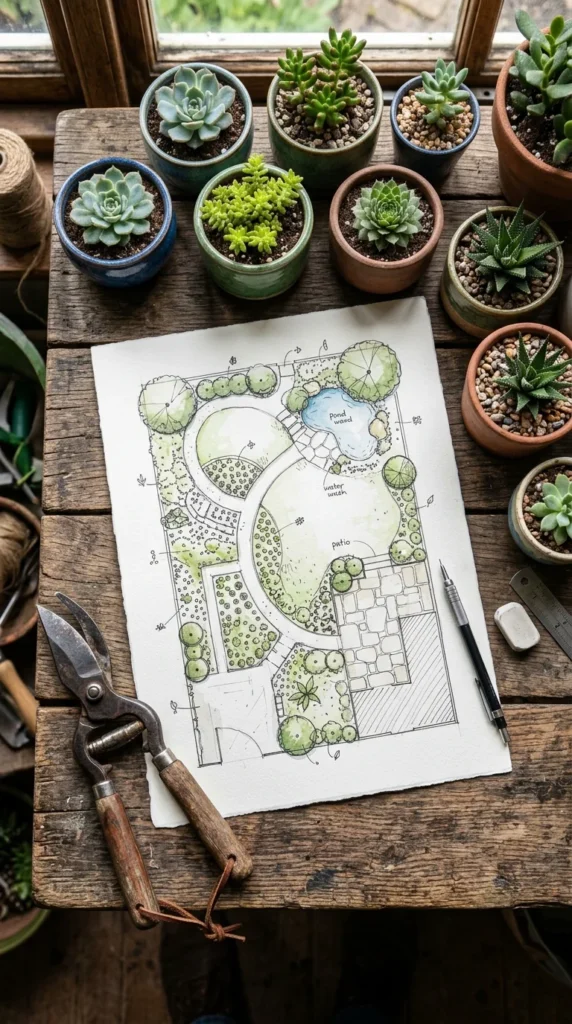
Before you dig your first hole or buy your first pot, you must assess your environment. Cacti are light-loving organisms. For an outdoor garden, you need a spot that receives at least six to eight hours of direct sunlight daily. If you are gardening indoors, a south-facing window is non-negotiable.
Consider the “zones” of your garden. Are you looking for a large-scale rockery or a collection of elegant containers? Mapping out the height of your plants is crucial; place taller specimens like Totem Pole or Saguaro-style cacti in the back and smaller, globular varieties like Bishop’s Cap in the front. This creates a sense of depth and ensures that smaller plants aren’t shaded out by their larger neighbors.
2. Substrate
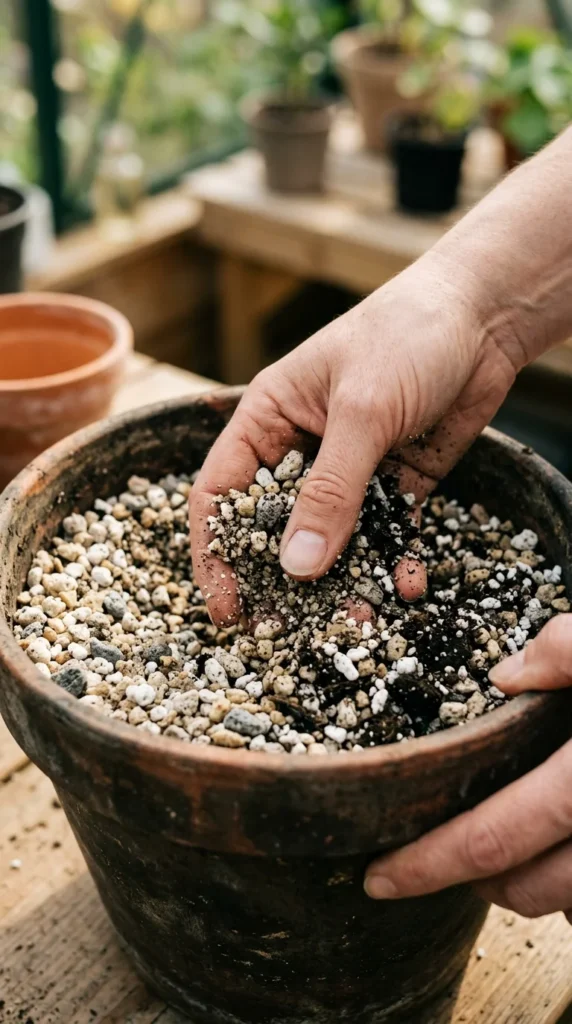
The single most common reason for cactus failure is “wet feet” or root rot. Standard potting soil retains too much moisture for desert plants. To create a thriving garden, you must use a specialized cactus mix. This substrate should be gritty, porous, and fast-draining.
A professional-grade DIY mix typically consists of:
- One part organic matter: Peat moss or coconut coir.
- Two parts inorganic grit: Perlite, pumice, or coarse poultry grit.
- One part coarse sand: Avoid fine beach sand, which can compact and choke roots.
When you water a cactus in the right substrate, the water should run through the pot almost immediately. This ensures the roots stay hydrated without being submerged in stagnant moisture.
3. Selection
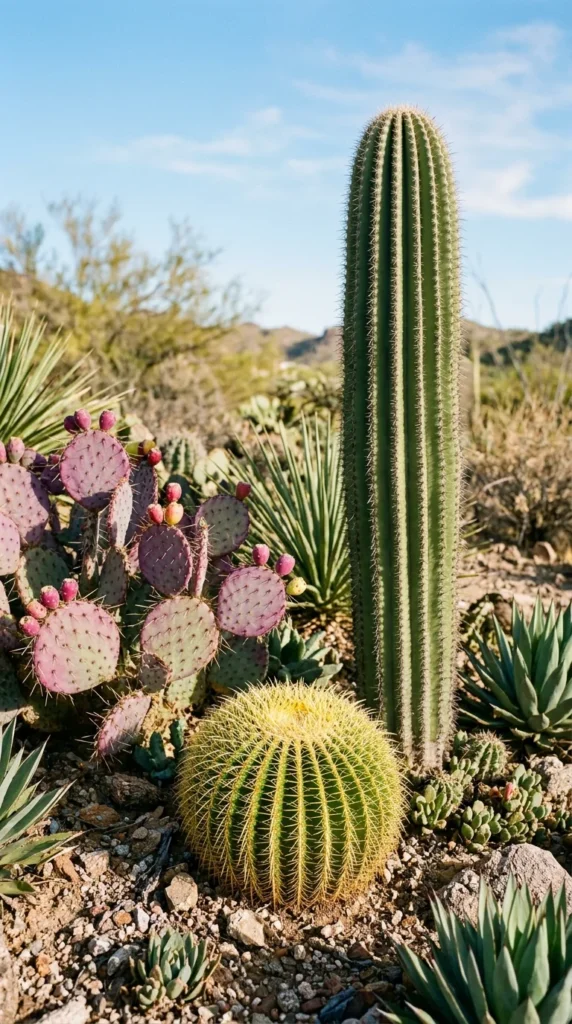
Choosing the right plants is the most exciting part of the process. For a visually stunning garden, aim for a variety of textures, colors, and forms.
- Globular Cacti: Varieties like the Golden Barrel (Echinocactus grusonii) provide a bold, round focal point.
- Columnar Cacti: Species like the Mexican Fence Post (Lophocereus marginatus) add verticality and a modern, architectural feel.
- Opuntia: Known as Prickly Pears, these offer flat, paddle-like shapes and often produce vibrant flowers and fruit.
- Creeping Varieties: The Rat Tail cactus can be used to spill over the edges of containers or rock walls for a softening effect.
Research the cold hardiness of your selections if you are planting outdoors. Some cacti can handle frost, while others will perish at the first sign of a freeze.
4. Containers
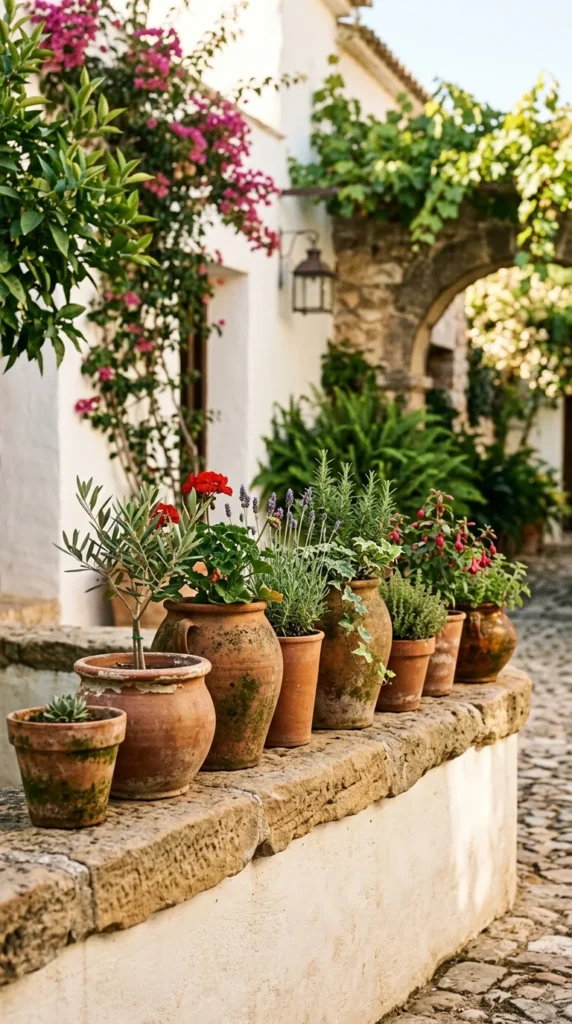
If you aren’t planting directly into the ground, the choice of container is vital. Terracotta is the gold standard for cactus enthusiasts. Because the clay is porous, it allows moisture to evaporate through the walls of the pot, which helps prevent overwatering.
Ensure every container has a large drainage hole at the bottom. Avoid glazed ceramic or plastic pots unless you are an expert at gauging moisture levels, as these materials trap water inside. For a modern look, consider weathered steel (Corten) planters or concrete troughs, which provide a beautiful industrial contrast to the organic shapes of the cacti.
5. Planting
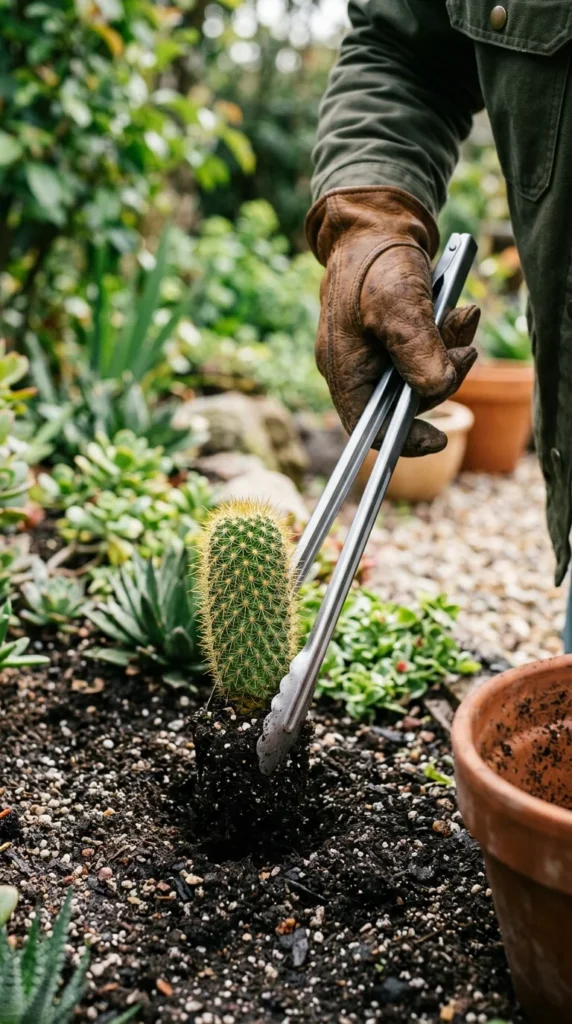
Planting a cactus requires a different technique than planting a rose or a vegetable. Safety is paramount. Invest in thick, puncture-proof leather gloves. For particularly spiny specimens, use folded newspaper or specialized tongs to move the plant.
When transplanting:
- Remove the plant from its nursery pot and gently tease the roots if they are root-bound.
- Dig a hole only as deep as the original root ball. Planting too deep can lead to stem rot.
- Position the plant and backfill with your gritty soil mix.
- Crucial Step: Do not water the cactus immediately after planting. Wait at least 5 to 7 days. This allows any roots that were damaged during the move to callous over, preventing infection and rot.
6. Mulching
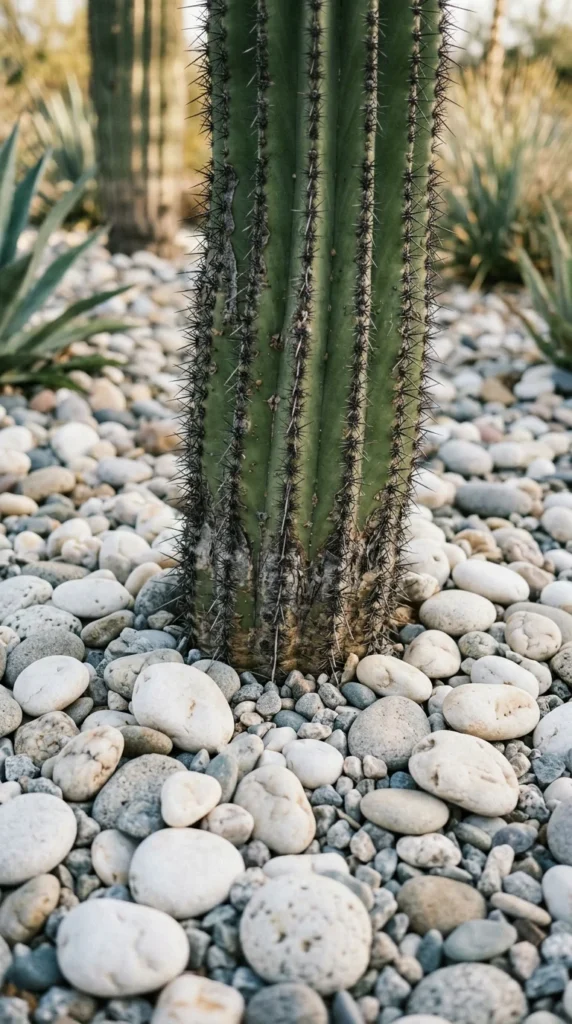
In the world of cacti, mulching is referred to as “top dressing.” This serves both an aesthetic and a functional purpose. A layer of decorative gravel, crushed lava rock, or river stones finishes the look of the garden, making it appear professional and polished.
Functionally, top dressing keeps the base of the cactus dry by preventing soil from splashing onto the plant during watering. It also helps stabilize the plant as it establishes its root system. Choose a color that contrasts with your plants; for example, dark basalt rocks make bright green cacti “pop,” while white quartz provides a clean, minimalist desert aesthetic.
7. Hydration
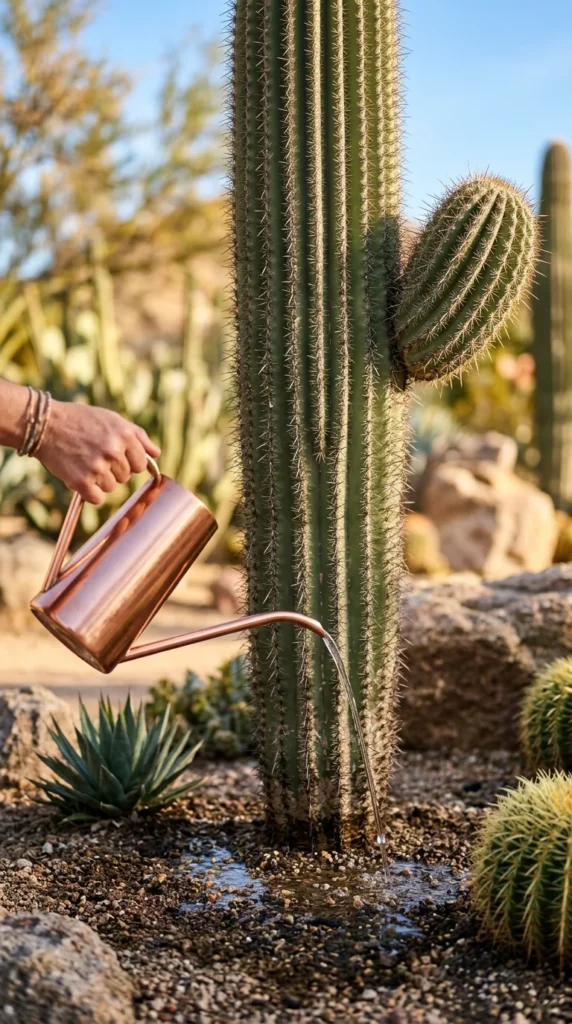
Watering is where most beginners struggle. Cacti do not need “a little bit of water often.” Instead, they thrive on a “soak and dry” method. This mimics the natural rainfall patterns of the desert.
- During the growing season (Spring and Summer): Water thoroughly until water drains out of the bottom of the pot. Ensure the soil is completely dry to the touch—all the way down—before watering again.
- During the dormant season (Fall and Winter): Most cacti require very little to no water during these months. Overwatering in winter is a death sentence, as the plant’s metabolism slows down significantly.
Always water the soil, not the plant itself. Water trapped in the crevices of a cactus can lead to fungal issues.
8. Maintenance
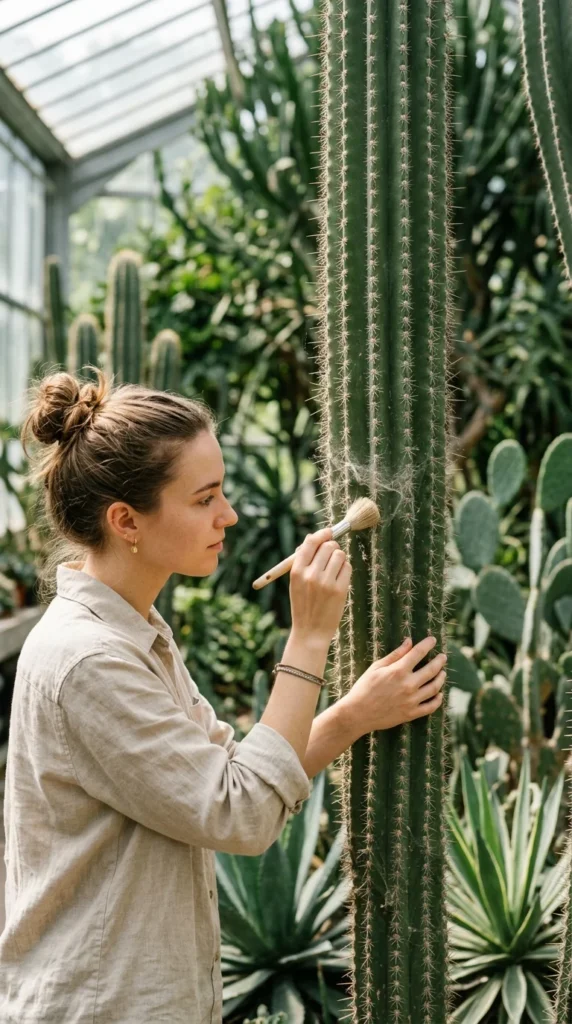
While cacti are low-maintenance, they are not “no-maintenance.” To keep your garden looking stunning, perform these occasional tasks:
- Dusting: Indoor cacti can collect dust, which inhibits photosynthesis. Use a soft brush or a can of compressed air to clean them.
- Pruning: Remove dead or dying “paddles” from Opuntia or trim back leggy growth to maintain the desired shape.
- Pest Control: Keep an eye out for mealybugs—small, white, cottony spots. These can be treated with a cotton swab dipped in rubbing alcohol.
- Fertilizing: During the spring, use a low-nitrogen, high-phosphorus fertilizer diluted to half-strength to encourage blooming and robust growth.
With the right balance of light, drainage, and patience, your cactus garden will become a living work of art that grows more beautiful with each passing year.