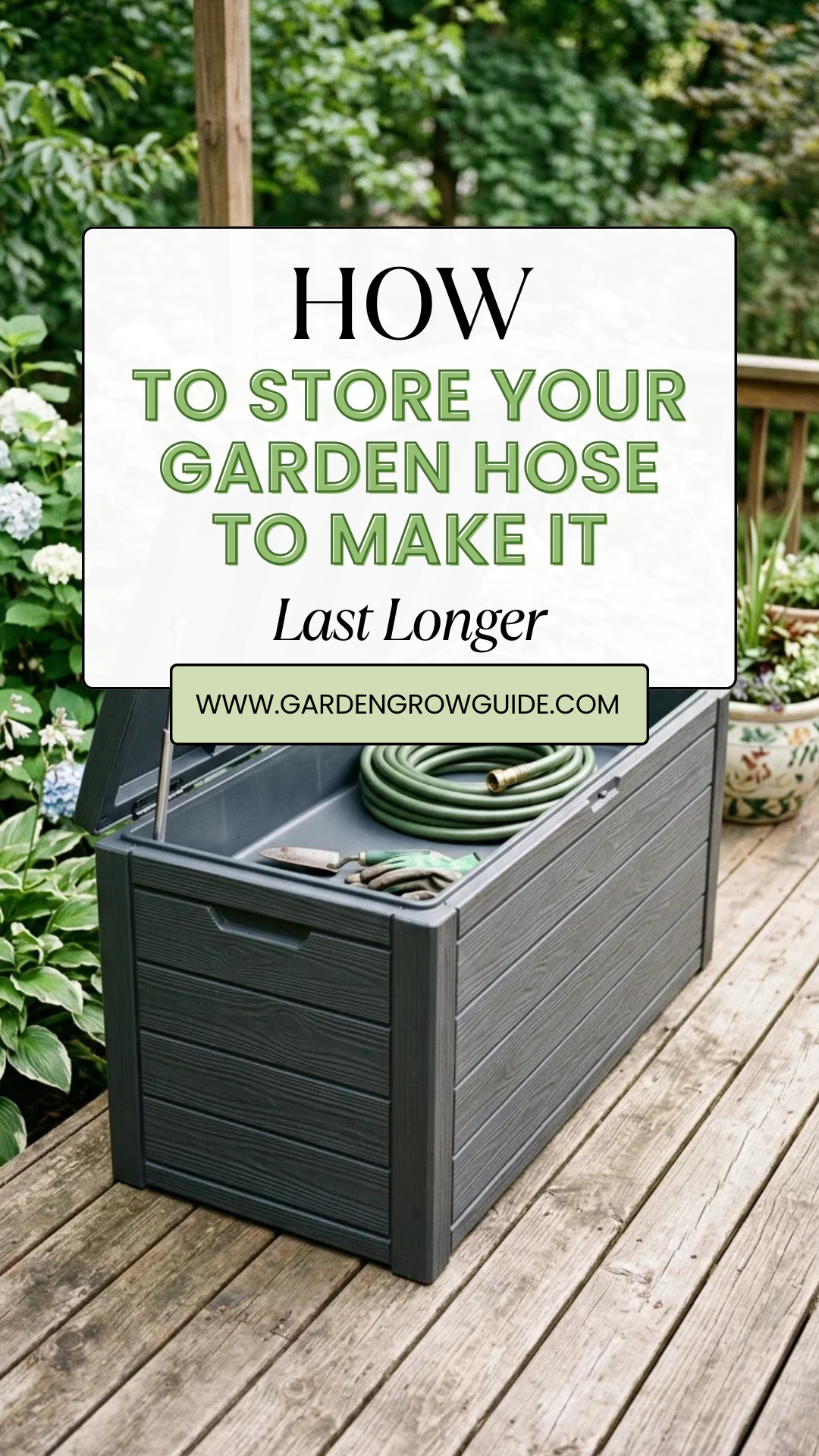
A high-quality garden hose is an investment in your landscape’s health, but it is often the most neglected tool in the shed. Left to the elements, a hose can quickly succumb to UV degradation, internal mold growth, and structural damage from freezing temperatures. Proper storage is not merely about aesthetics or preventing tripping hazards; it is about preserving the structural integrity of the material to ensure it serves you for a decade rather than a single season.
1. Hose Reels
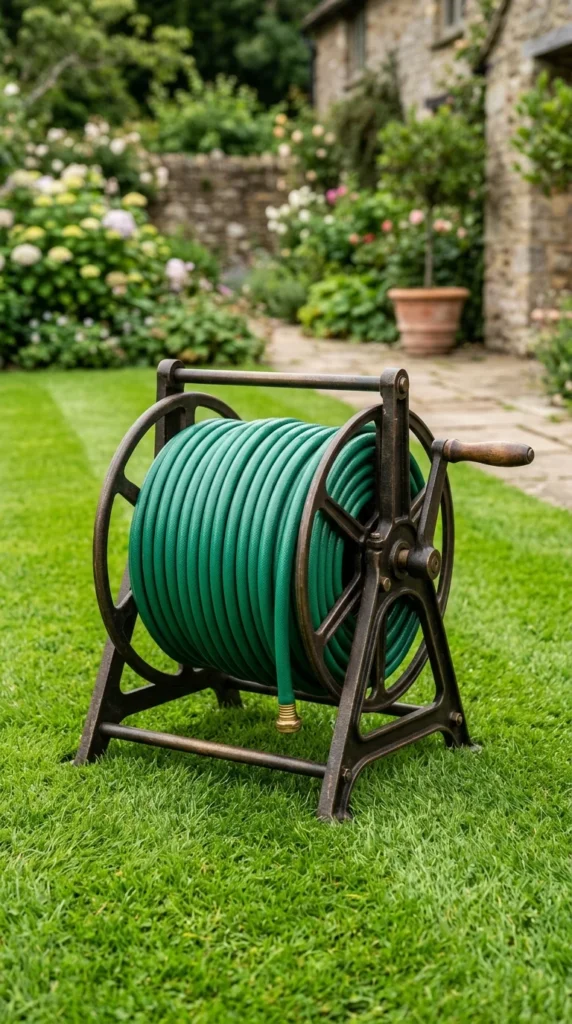
Hose reels are widely considered the gold standard for hose organization. They utilize a cylindrical drum and a mechanical crank to wind the hose in neat, parallel layers. This method is highly effective because it prevents the hose from twisting or overlapping in ways that create permanent “memory” kinks.
When using a reel, it is vital to ensure the hose is wound under low tension. Pulling the hose too tightly around the drum can stretch the outer casing, leading to thinning and eventual bursting under high water pressure. Choose a reel with a sturdy base—either wall-mounted or a weighted cart—to prevent it from tipping over as you extend the hose across your yard.
2. Hose Pots
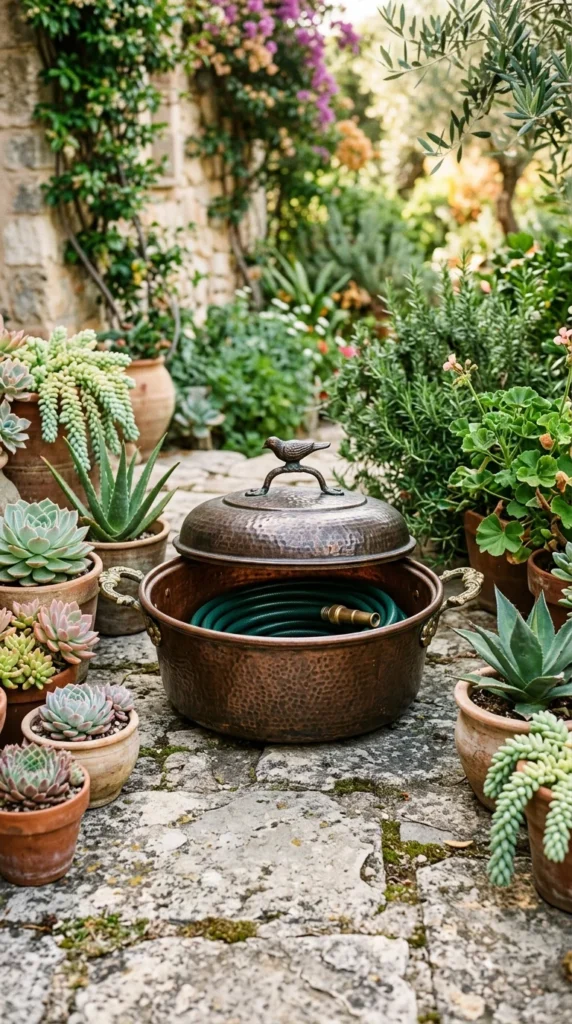
For those who prioritize garden aesthetics, hose pots offer a blend of functionality and decor. These large, weather-resistant basins allow you to coil the hose manually into a hidden compartment. The circular shape of the pot naturally encourages the hose to follow its inherent curve, which reduces stress on the material.
The primary benefit of a hose pot, especially those with lids, is the protection it provides from direct sunlight. UV rays are the leading cause of “sun-rotting,” a process where the plastic or rubber becomes brittle and cracks. When using a hose pot, ensure it has adequate drainage holes at the bottom so that any residual water leaking from the nozzle doesn’t pool and cause the hose to sit in a stagnant bath, which can lead to slime and mold.
3. Wall Mounts
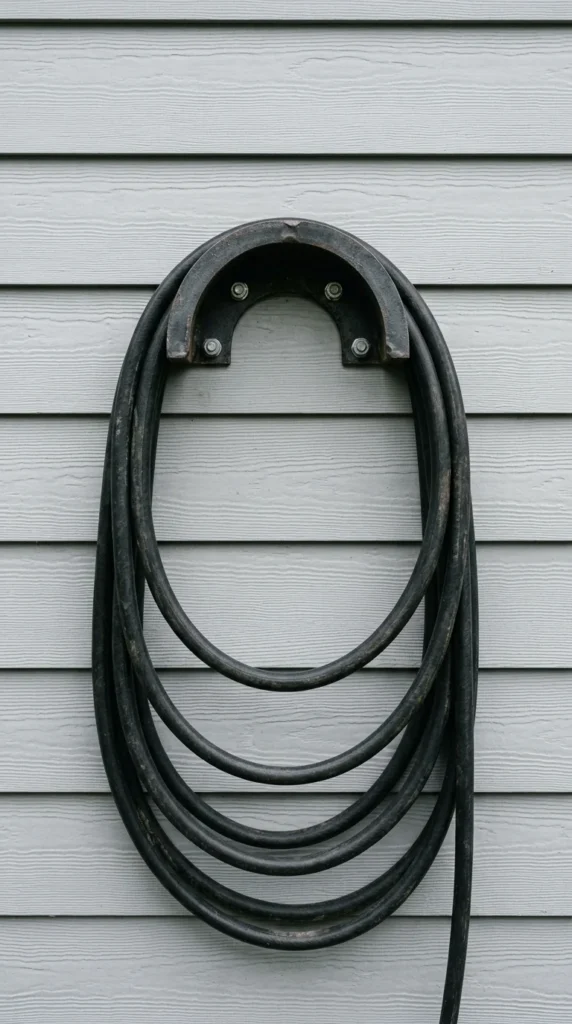
Wall-mounted hangers are a simple and space-saving solution, particularly for smaller patios or side yards. These are typically curved brackets that mimic the natural diameter of a coiled hose. By keeping the hose off the ground, you protect it from sharp rocks, lawnmowers, and pests that might chew through the casing.
When installing a wall mount, height is key. You want it high enough to keep the loops off the soil but low enough that you aren’t straining to lift the heavy, water-filled hose. Avoid using narrow hooks or nails; these create “point pressure,” which can pinch the hose and cause a permanent indentation or a weak spot in the lining. A wide, curved hanger distributes the weight evenly across a larger surface area.
4. Hose Hangers
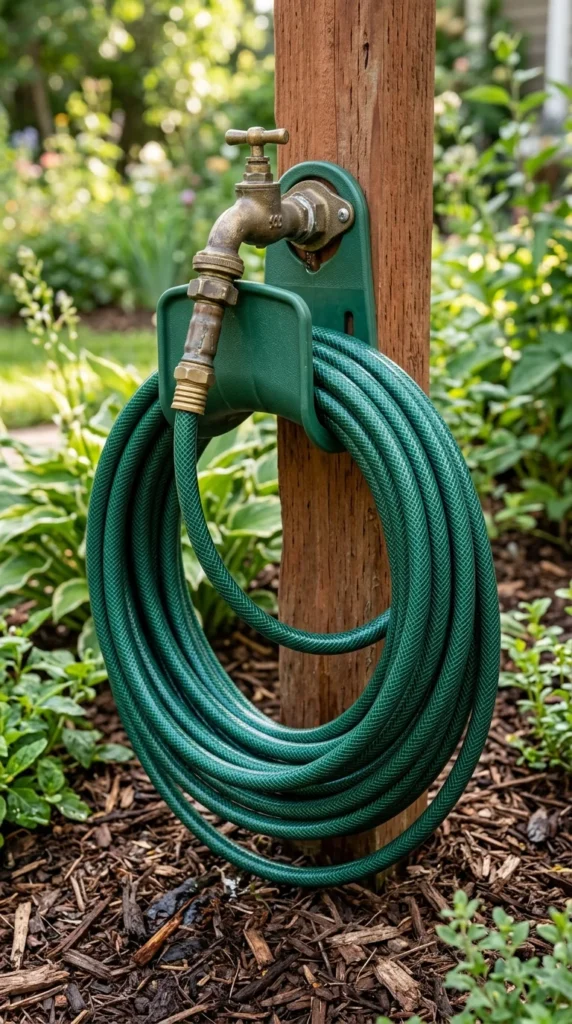
If you prefer a temporary or portable solution, faucet-mounted hose hangers are an excellent choice. These typically hook directly over the spigot or a fence post, requiring no drilling or permanent installation. They are particularly useful for lightweight or “expandable” hoses that don’t require the bulk of a heavy reel.
The trick to using a simple hanger effectively is the “over-under” coiling technique. Instead of simply looping the hose over the hook, give the hose a slight half-twist with your wrist as you loop it. This neutralizes the natural torque of the material, allowing it to hang flat without tangling.
5. Storage Boxes
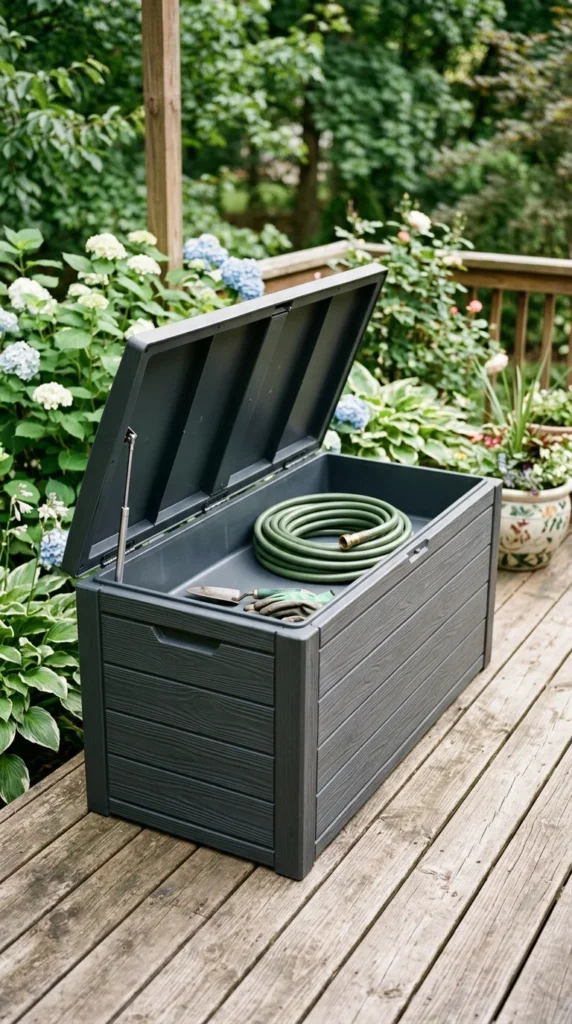
Storage boxes or “hideaway” containers are perfect for homeowners who want their garden tools completely out of sight. These boxes often feature an internal guide that helps distribute the hose evenly as you wind it in using an external handle.
Because these boxes are enclosed, they provide the best protection against extreme weather fluctuations. However, because they lack airflow, it is crucial to drain the hose completely before winding it inside. Moisture trapped in a dark, sealed box is a breeding ground for mildew, which can eventually eat away at the hose’s gaskets and outer layers.
Essential Steps Before Storing Your Hose
Regardless of the storage method you choose, the way you prepare the hose for storage is just as important as where it sits.
Drain the Water Completely
Water left inside a hose is a silent killer. In the summer, trapped water can heat up to boiling temperatures under the sun, damaging the inner lining. In the winter, that water will expand as it freezes, causing the hose to lose its shape or burst entirely. Always disconnect the hose from the spigot and the nozzle, then walk the length of the hose, lifting it to let gravity pull all the remaining water out.
Clean the Exterior
Before coiling your hose for a long period, wipe it down with a damp cloth and a mild soap solution. Garden hoses often pick up fertilizers, pesticides, and acidic soil particles. If these chemicals are left on the hose during storage, they can slowly degrade the synthetic rubber or vinyl. Cleaning the hose also prevents you from bringing dirt and allergens into your storage shed or garage.
Check the Washers and Fittings
The ends of your hose—the “couplings”—are its most vulnerable points. Before putting the hose away, inspect the rubber O-ring or washer inside the female end. If it looks dry, cracked, or flattened, replace it. A fresh washer costs pennies but prevents the leaking that often leads to rust and corrosion on your metal spigots.
Seasonal Considerations: Winter vs. Summer
Winterizing for Longevity
If you live in a climate where temperatures drop below freezing, you must bring your hose indoors. Even “freeze-proof” hoses can become brittle if left in a sub-zero garden. Store the hose in a basement, heated garage, or a climate-controlled shed. Avoid storing it near a furnace or water heater, as excessive dry heat can also damage the material.
Managing Summer Heat
During peak summer, the biggest threat is the sun. If you don’t use a covered storage box or pot, try to locate your hose reel or hanger on the north side of your house or in a shaded alcove. If the hose feels soft or “gummy” to the touch, it is overheating and needs to be moved to a cooler location immediately.
Conclusion
By investing five minutes into properly coiling and sheltering your garden hose, you can triple its lifespan. Whether you choose the mechanical ease of a reel, the elegance of a decorative pot, or the simplicity of a wall mount, the goal remains the same: keep it drained, keep it coiled, and keep it out of the harsh elements. A well-maintained hose is not just a tool; it’s a reliable partner in maintaining a beautiful, thriving garden.