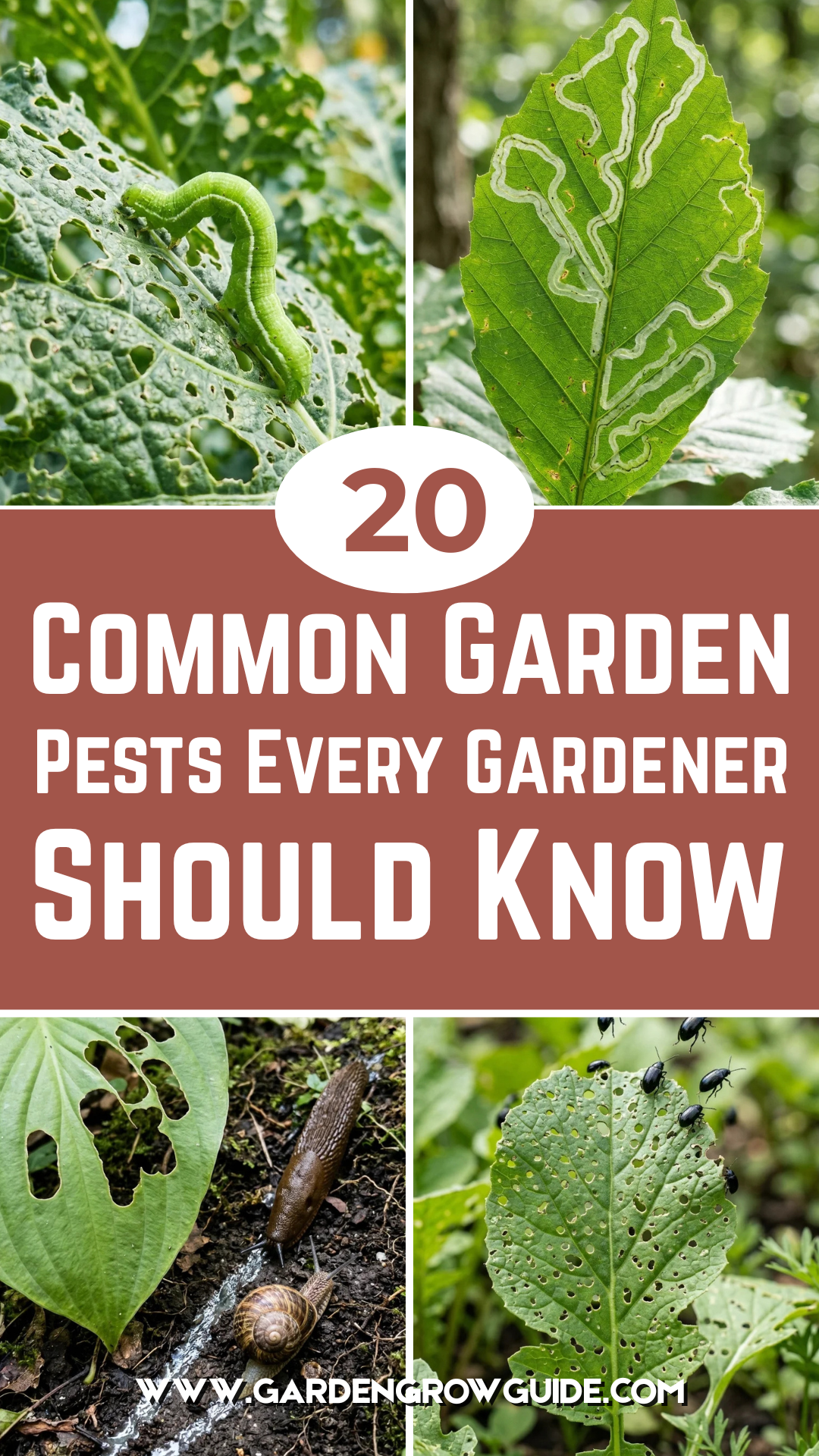
Maintaining a thriving garden is a labor of love, but even the most attentive gardener will eventually face the challenge of unwelcome visitors. Garden pests come in many forms—from microscopic mites to ravenous caterpillars—and they can make quick work of your prized vegetables and ornamental flowers. Understanding how to identify these pests and the damage they cause is the first step toward effective organic or integrated pest management.
In this comprehensive guide, we explore 20 of the most common garden pests, providing insights into their life cycles, the specific damage they leave behind, and how you can manage them to keep your garden flourishing.
1. Aphids
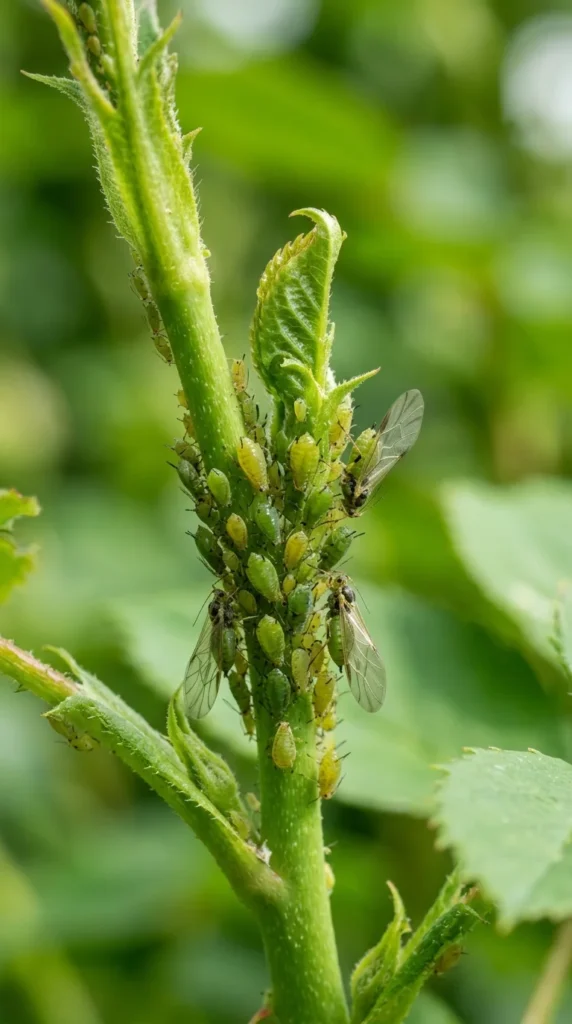
Aphids are perhaps the most ubiquitous garden pest. These tiny, soft-bodied insects come in various colors, including green, black, yellow, and pink. They use their needle-like mouthparts to suck the nutrient-rich sap from plant tissues, particularly the tender new growth at the tips of stems. As they feed, they excrete a sticky substance known as “honeydew,” which often attracts ants and promotes the growth of black sooty mold. Aphids reproduce at a staggering rate, meaning a small infestation can become an epidemic in just a few days if left unchecked.
2. Cabbage Loopers
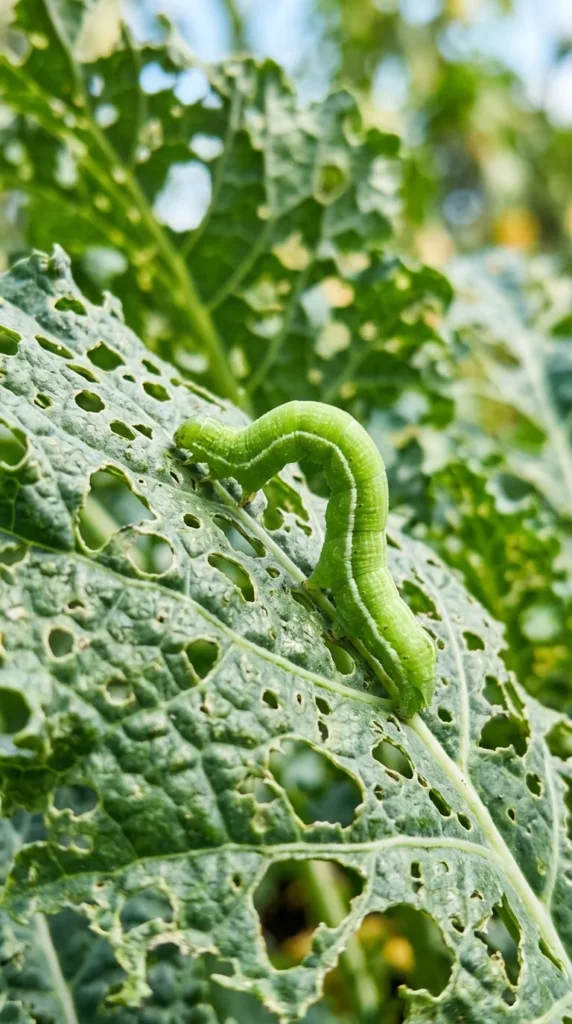
Cabbage loopers are the larvae of a mottled brown moth. These caterpillars are named for the distinctive “looping” motion they make as they walk, pulling their hind legs forward toward their front legs. They are voracious eaters, focusing primarily on brassicas like cabbage, broccoli, kale, and cauliflower. You’ll know they’ve arrived when you see large, irregular holes in the foliage and dark green frass (droppings) left behind on the leaves.
3. Japanese Beetles
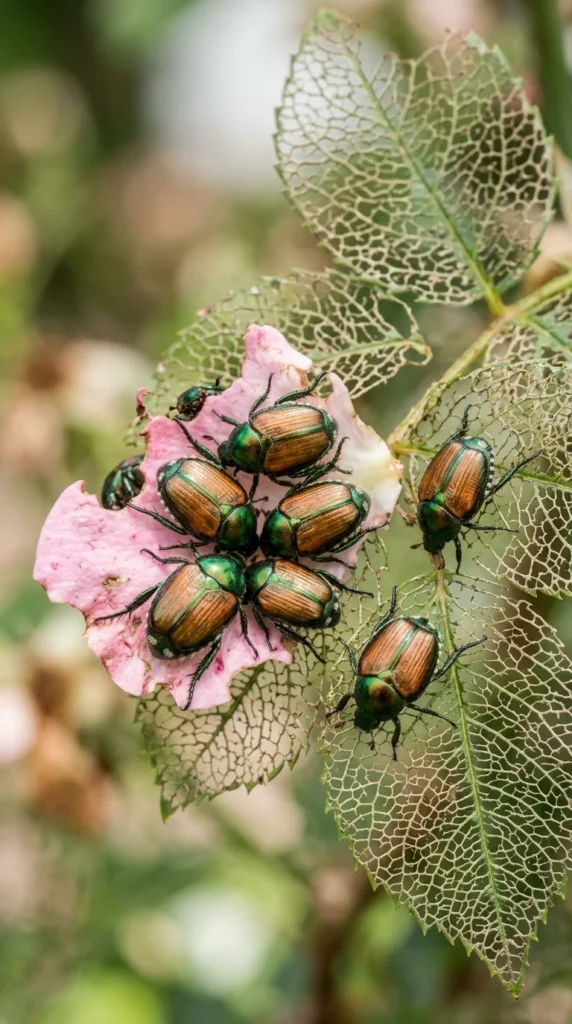
Identifiable by their iridescent blue-green heads and copper-colored backs, Japanese beetles are a significant threat to over 300 plant species. While the larvae (grubs) live underground and eat grass roots, the adults emerge in mid-summer to feed on foliage and flowers. They are “skeletonizers,” meaning they eat the soft tissue between the leaf veins, leaving behind a lacy, brown skeleton of what used to be a leaf. They are highly social and often congregate in large groups to feed.
4. Slugs and Snails
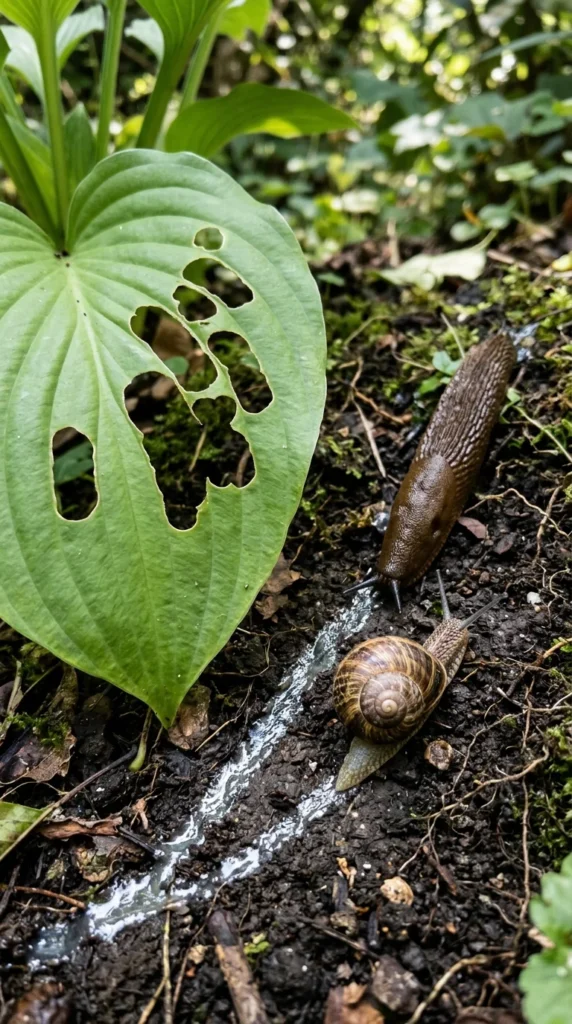
Slugs and snails are gastropods that thrive in moist, shady environments. They are nocturnal feeders, coming out at night or during rainy days to feast on tender seedlings, leafy greens, and low-hanging fruit like strawberries. They leave behind telltale signs: large, ragged holes in leaves and a distinctive, shimmering trail of dried mucus. They are particularly devastating in early spring when young plants are most vulnerable.
5. Spider Mites
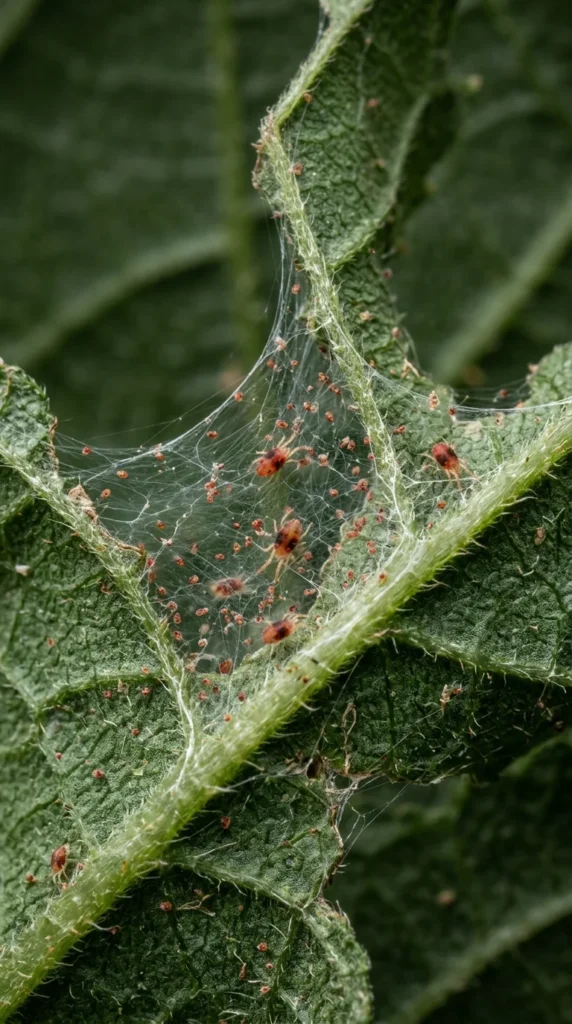
Spider mites are not actually insects but arachnids. Because of their microscopic size, they are often difficult to spot until the damage is severe. They feed on the underside of leaves, sucking out chlorophyll and leaving behind tiny yellow or white stippling (dots) on the upper surface. In heavy infestations, you will see fine, silk-like webbing draped over the plant’s stems and leaves. They thrive in hot, dry conditions and can quickly cause plants to turn yellow and drop their leaves.
6. Tomato Hornworms
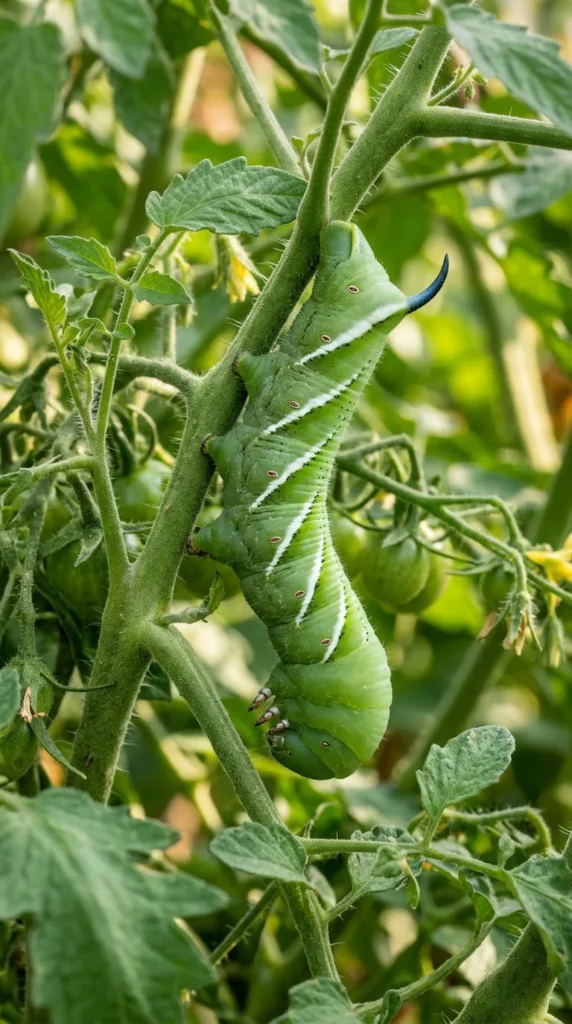
The tomato hornworm is the giant of the garden pest world, growing up to four inches long. Despite their size, their green color and white diagonal markings make them incredibly difficult to spot among the foliage of tomato, pepper, and potato plants. They can defoliate an entire plant in a matter of days. Look for missing leaves at the top of the plant and large, dark droppings on the ground or lower leaves to find these camouflaged giants.
7. Whiteflies
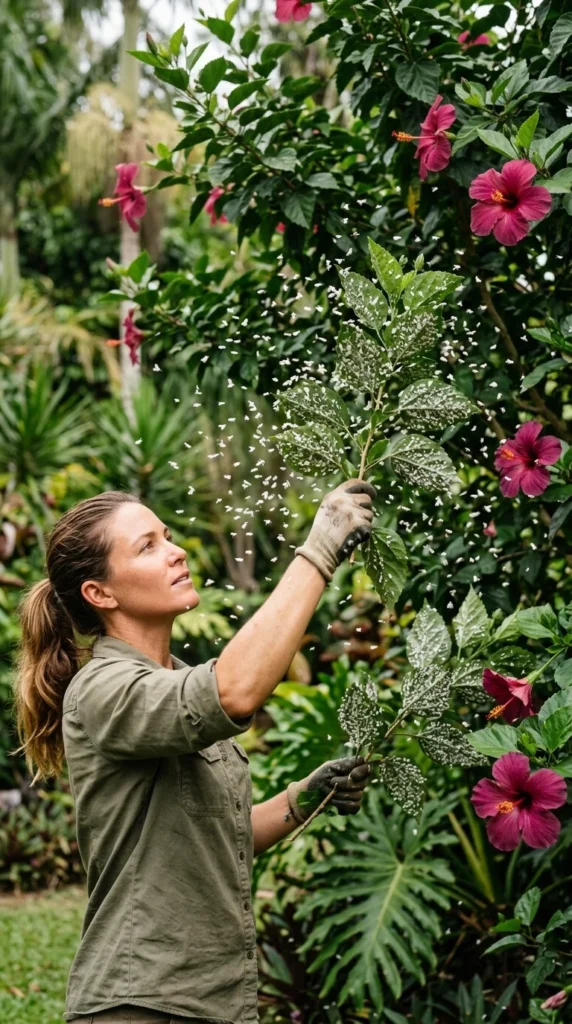
Whiteflies are tiny, winged insects related to aphids and mealybugs. They usually congregate on the undersides of leaves in large numbers. When the plant is disturbed, they take flight in a white, fluttering cloud. Like aphids, they suck sap and excrete honeydew, leading to stunted growth, yellowing leaves, and the potential for viral diseases. They are especially common in greenhouse environments and warm climates.
8. Squash Bugs
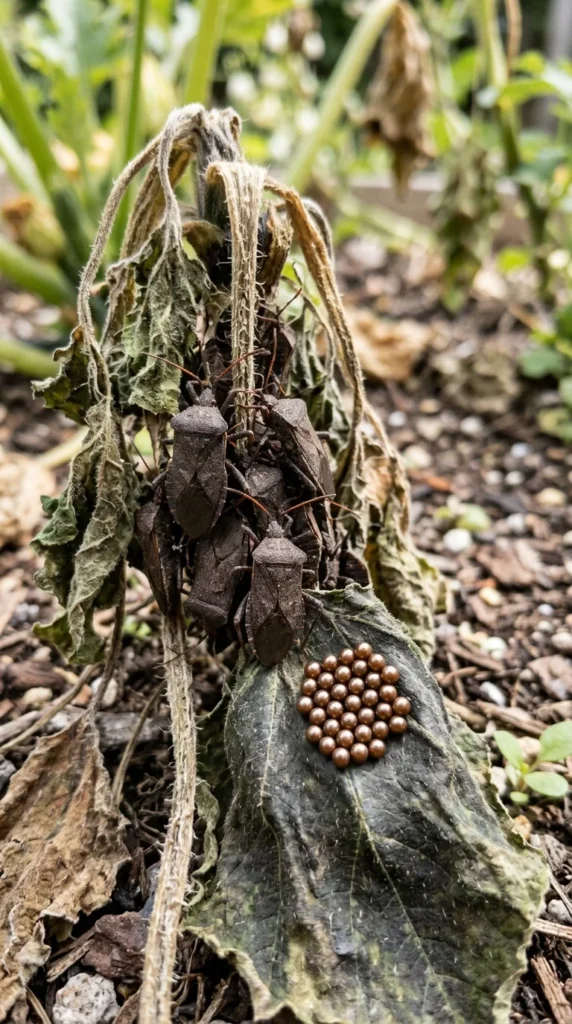
Squash bugs are a major headache for growers of pumpkins, squash, and cucumbers. These shield-shaped insects inject a toxin into the plant while feeding, which causes “anasa wilt.” The leaves of the plant will turn brittle and black, often leading to the death of the entire vine. They are notorious for hiding under leaves and near the base of the plant, and their hard shells make them resistant to some organic sprays.
9. Cucumber Beetles
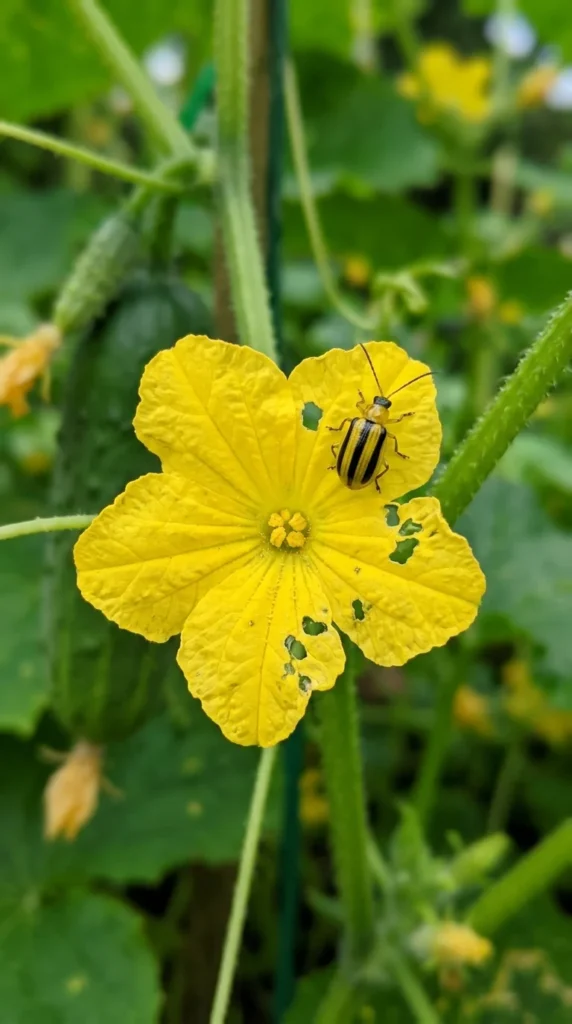
Cucumber beetles come in two varieties: striped and spotted. Both are small, yellow beetles that feed on the leaves, flowers, and fruit of cucurbits. While the physical damage they cause is significant, the real danger lies in their ability to transmit bacterial wilt. Once a plant is infected with this bacteria, it will wilt and die rapidly, and there is no cure. Early detection and exclusion are key to managing these pests.
10. Flea Beetles
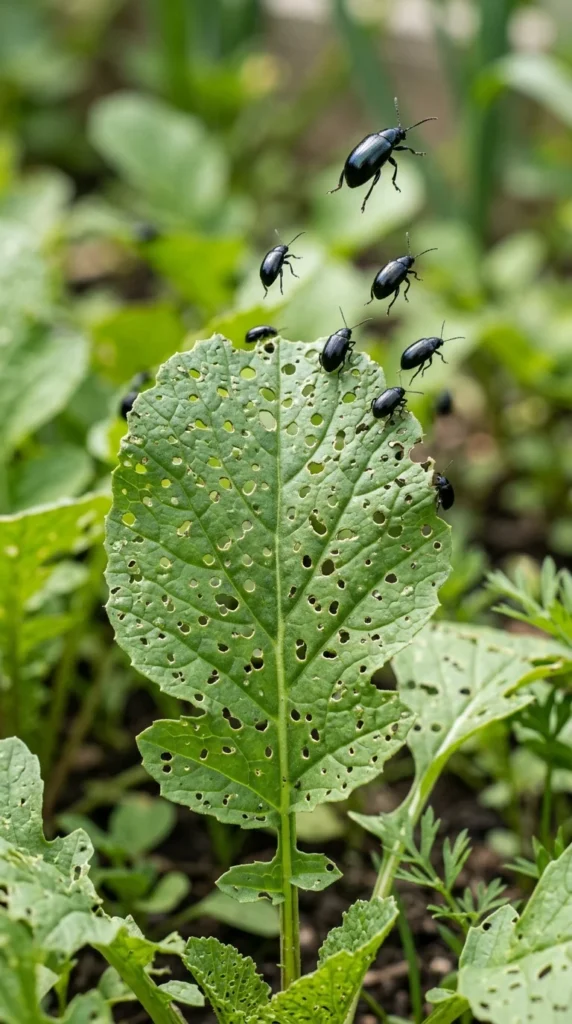
Flea beetles get their name from their ability to jump long distances when disturbed. These tiny, shiny insects (usually black or bronze) chew numerous small, round holes in the leaves of young plants, a pattern often described as “shothole” damage. While healthy, mature plants can usually survive an infestation, young seedlings are often stunted or killed by the loss of leaf surface area.
11. Mealybugs
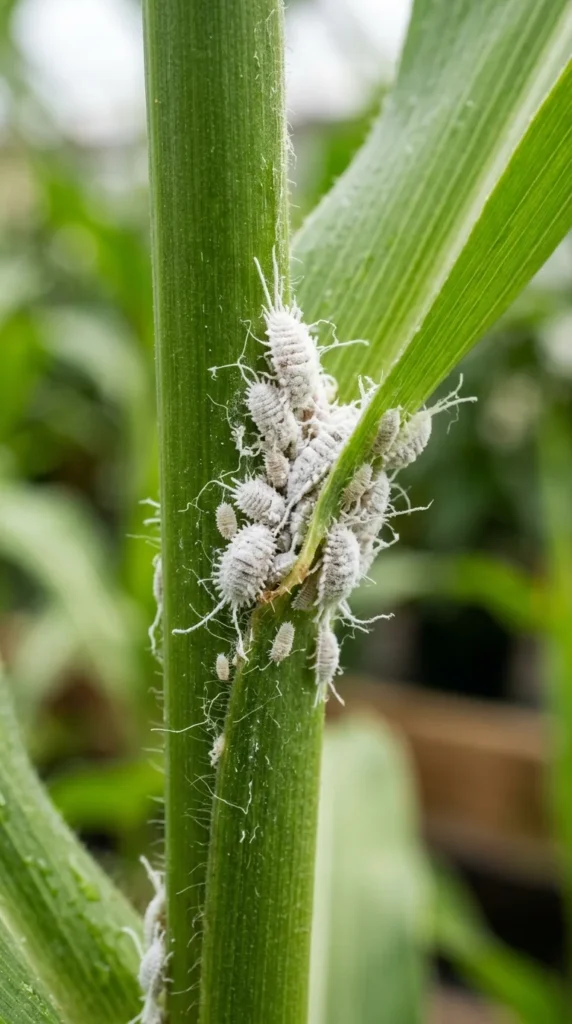
Mealybugs look like small, white, cottony blobs attached to the stems and leaf axils of plants. They are soft-bodied insects that move very slowly and protect themselves with a waxy, white filament. Like many other sucking pests, they weaken the plant by draining its sap and can cause leaf drop and distorted growth. They are particularly common on indoor plants and in warmer, sheltered garden spots.
12. Thrips
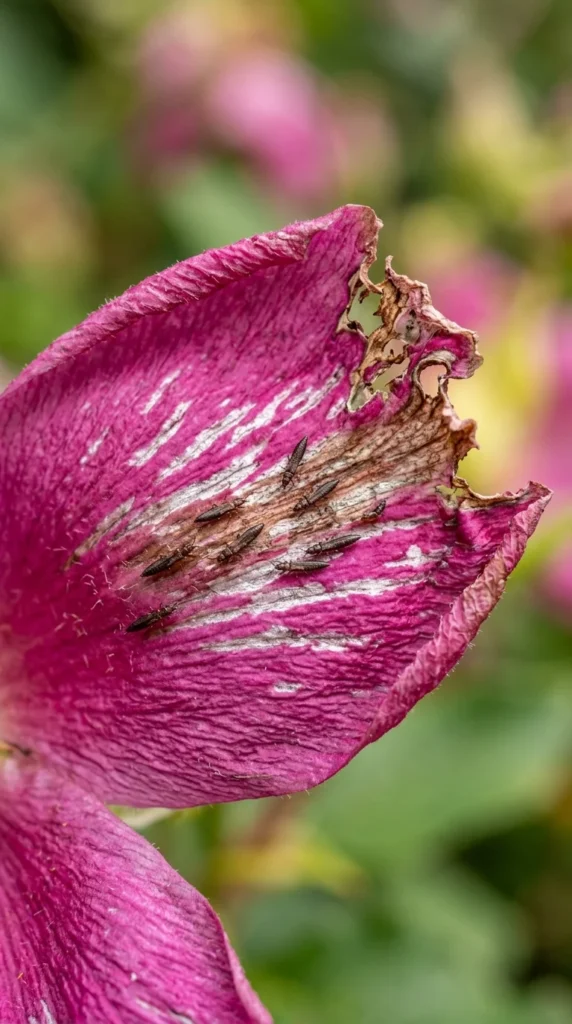
Thrips are extremely small, slender insects with fringed wings. They feed by puncturing the plant cells and rasping away at the surface, which creates a characteristic silvery or bronzed appearance on leaves and flowers. They also leave behind small black specks of excrement. Thrips can cause flower buds to drop or open improperly, and they are known vectors for several devastating plant viruses, such as Tomato Spotted Wilt Virus.
13. Earwigs
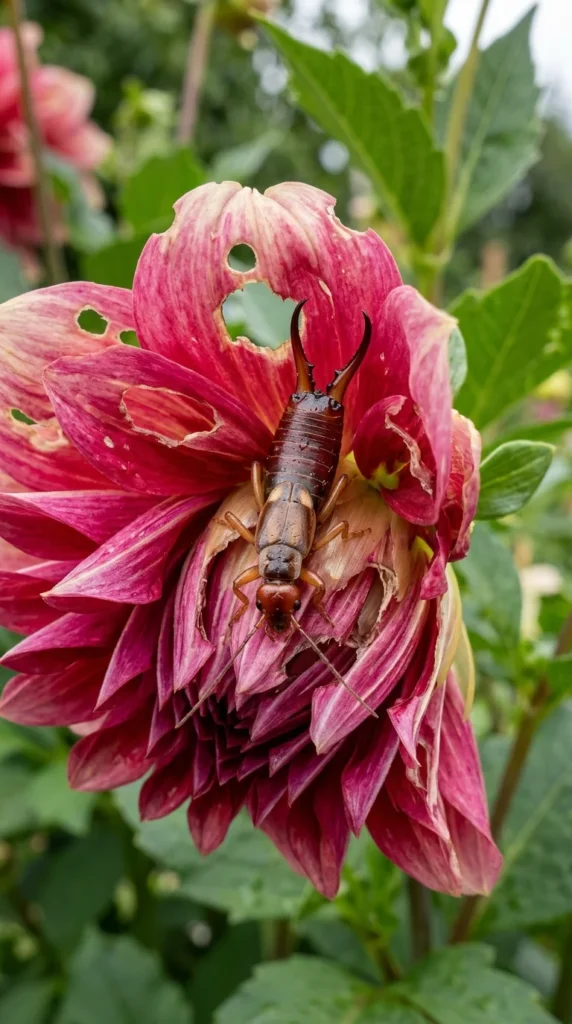
Earwigs are often misunderstood. While they do act as predators for some pests, they can also be destructive in the garden. They are nocturnal and hide in cool, moist crevices during the day. At night, they emerge to feed on tender seedlings, soft fruit, and the petals of flowers like dahlias and zinnias. Their presence is usually signaled by ragged holes in the foliage and flowers, and they are often found hiding inside lettuce heads or deep within blossoms.
14. Cutworms
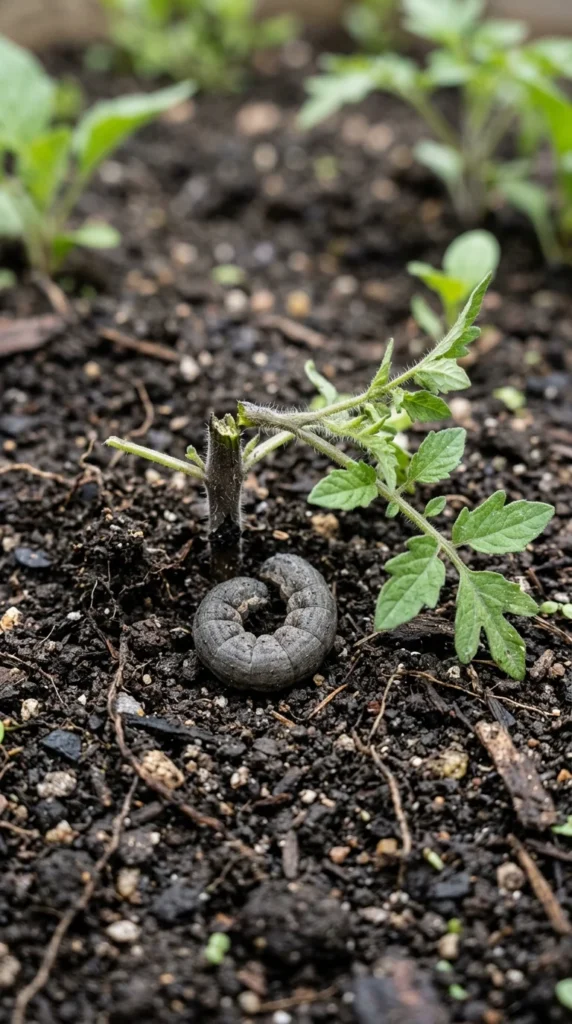
Cutworms are the larvae of several species of night-flying moths. They spend their days hiding in the soil and emerge at night to feed. They are “generalist” feeders, but they are most famous for their habit of chewing through the stems of young seedlings right at or just below the soil surface, “cutting” the plant down. A gardener might find a perfectly healthy seedling lying on the ground the next morning, severed from its roots.
15. Colorado Potato Beetles
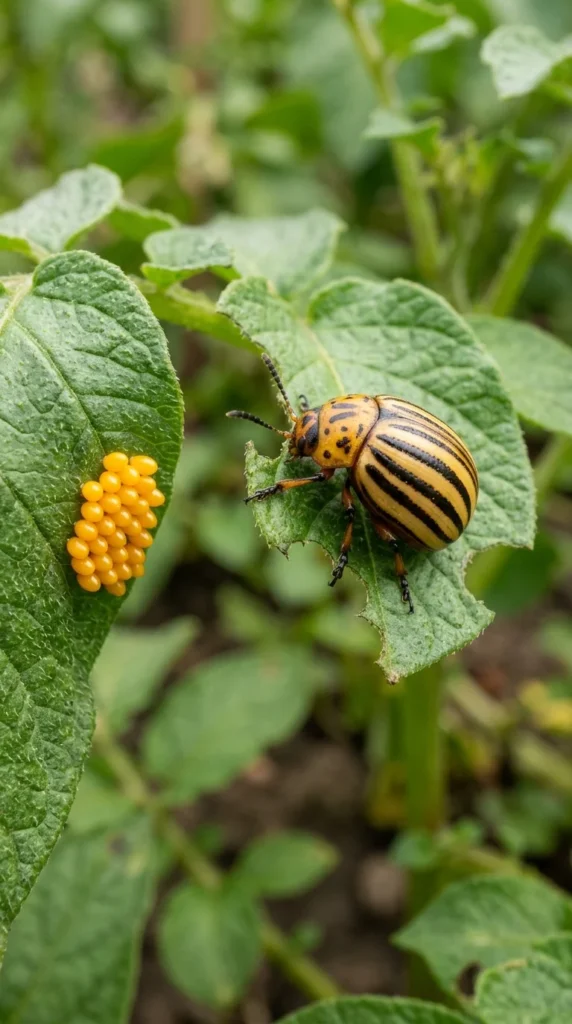
The Colorado Potato Beetle is a formidable foe for those growing potatoes, eggplants, and peppers. Both the adults (with their striped shells) and the larvae (humpbacked, orange-red grubs) are voracious leaf eaters. They can quickly strip a plant of its foliage, significantly reducing the yield of the tubers. They are known for their ability to rapidly develop resistance to chemical pesticides, making manual removal and crop rotation essential.
16. Scale Insects
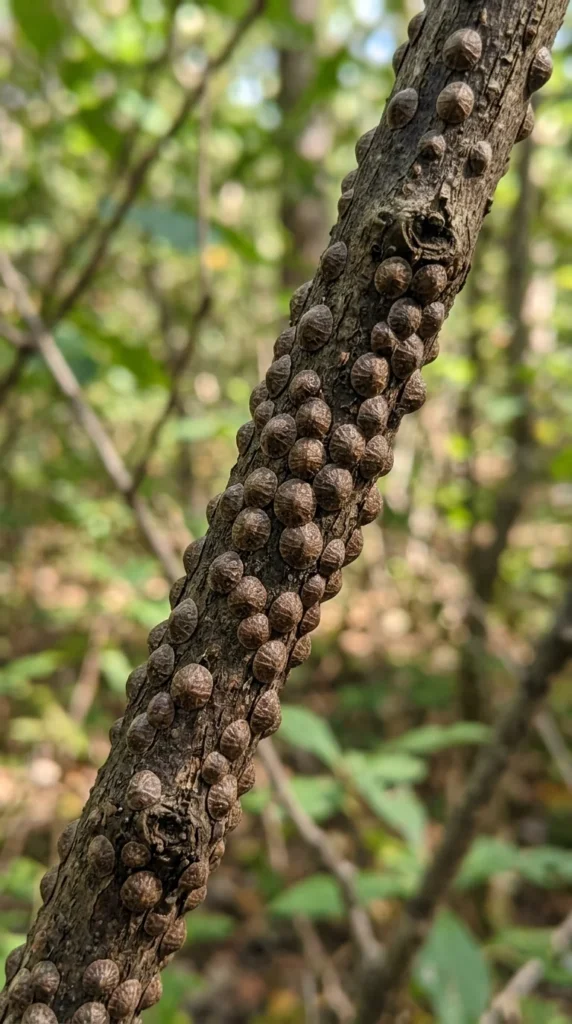
Scale insects are unique because they spend most of their lives stationary. They look like small, waxy bumps on the stems and leaves of plants rather than insects. Underneath that hard protective “scale” is a soft insect sucking sap from the plant. Because they don’t move and are often the same color as the bark or stem, they go unnoticed until the plant begins to show signs of decline, such as yellowing leaves or dieback of branches.
17. Leafminers
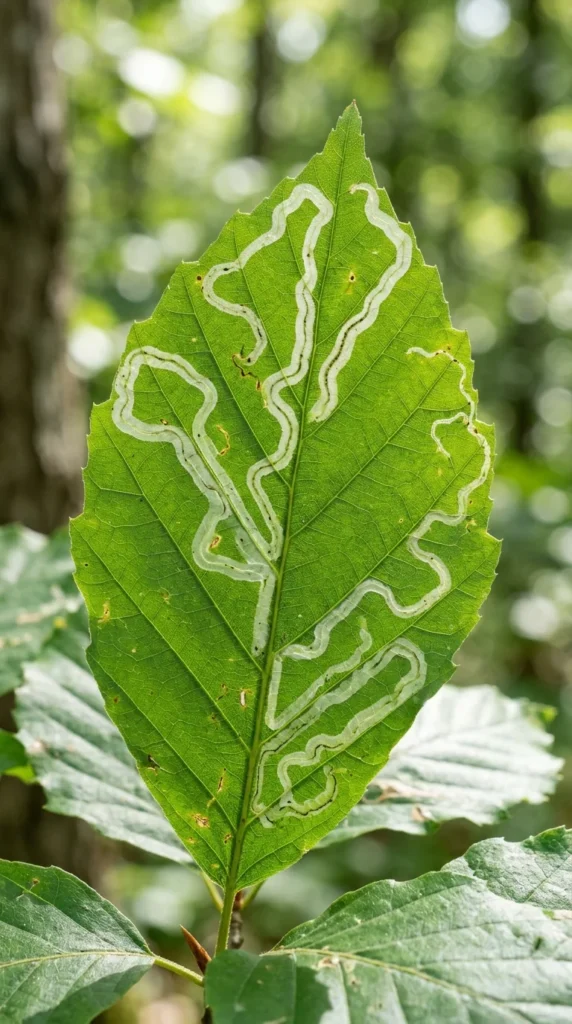
Leafminers are not a single species but the larvae of various flies, beetles, or moths. The adult lays an egg inside the leaf tissue, and the hatched larvae “mine” their way through the middle of the leaf, eating as they go. This creates distinctive, winding white or brown trails. While the damage is often cosmetic, a heavy infestation can reduce the plant’s ability to photosynthesize and can make edible leaves, like spinach or chard, unappealing.
18. Tarnished Plant Bugs
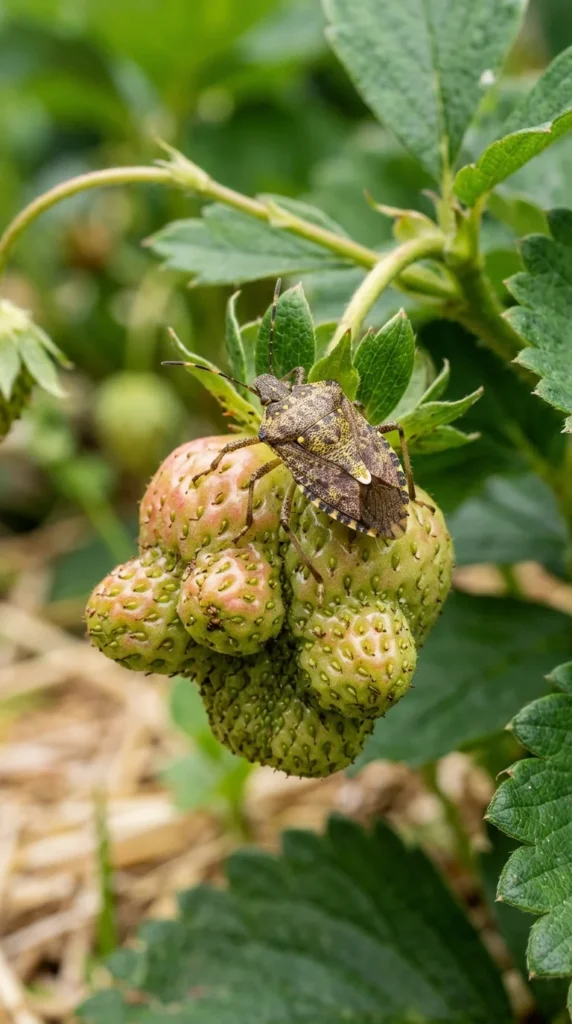
Tarnished plant bugs are “true bugs” that feed on a wide variety of fruits and vegetables. They inject a digestive enzyme into the plant that kills the cells around the feeding site. This leads to distorted growth, such as “cat-facing” on strawberries and tomatoes, or blackened, dead terminal buds on flowers. They are very active and will quickly fly or crawl away when approached, making them difficult to catch.
19. Root Maggots
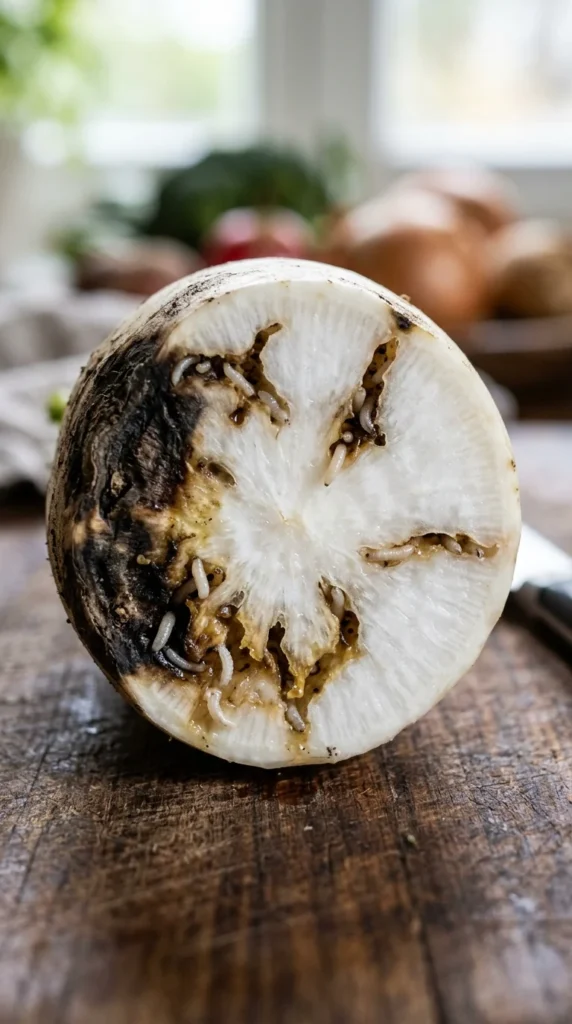
Root maggots are the larvae of small flies that resemble common houseflies. The flies lay their eggs in the soil near the base of plants like onions, radishes, and cabbages. Once they hatch, the white, legless maggots burrow into the roots to feed. This causes the plants to wilt, turn yellow, and eventually die as the root system is destroyed. Because the damage happens underground, it is often only discovered when the plant is pulled up or has collapsed.
20. Wireworms
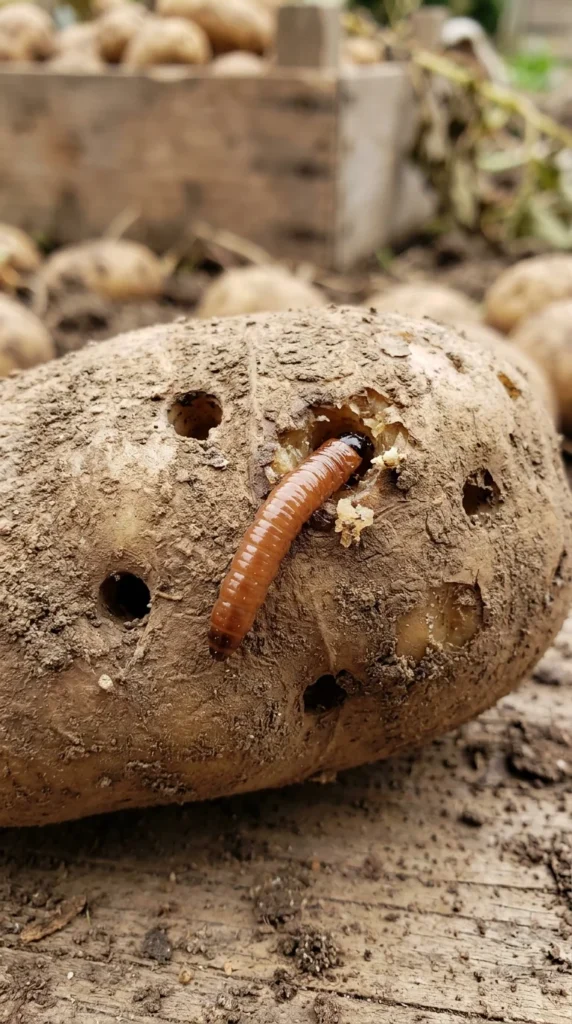
Wireworms are the larval stage of click beetles. They are long, thin, and have a hard, brownish-orange outer shell that looks like a wire. They live in the soil for several years before maturing, during which time they feed on seeds, roots, and tubers. They are particularly destructive to root crops like potatoes and carrots, where they tunnel through the vegetable, making it inedible and prone to rot.
Conclusion
Identifying the pests in your garden is the first and most important step toward protecting your harvest. By recognizing the specific patterns of damage—whether it’s the “shothole” pattern of flea beetles or the slime trails of slugs—you can choose the most effective, targeted solution. Remember that a healthy garden often includes a few “bad” bugs; the goal is not total eradication, but maintaining a balance where your plants can thrive despite the occasional visitor. Regular scouting, encouraging natural predators, and practicing good garden hygiene will go a long way in keeping these 20 common pests under control.