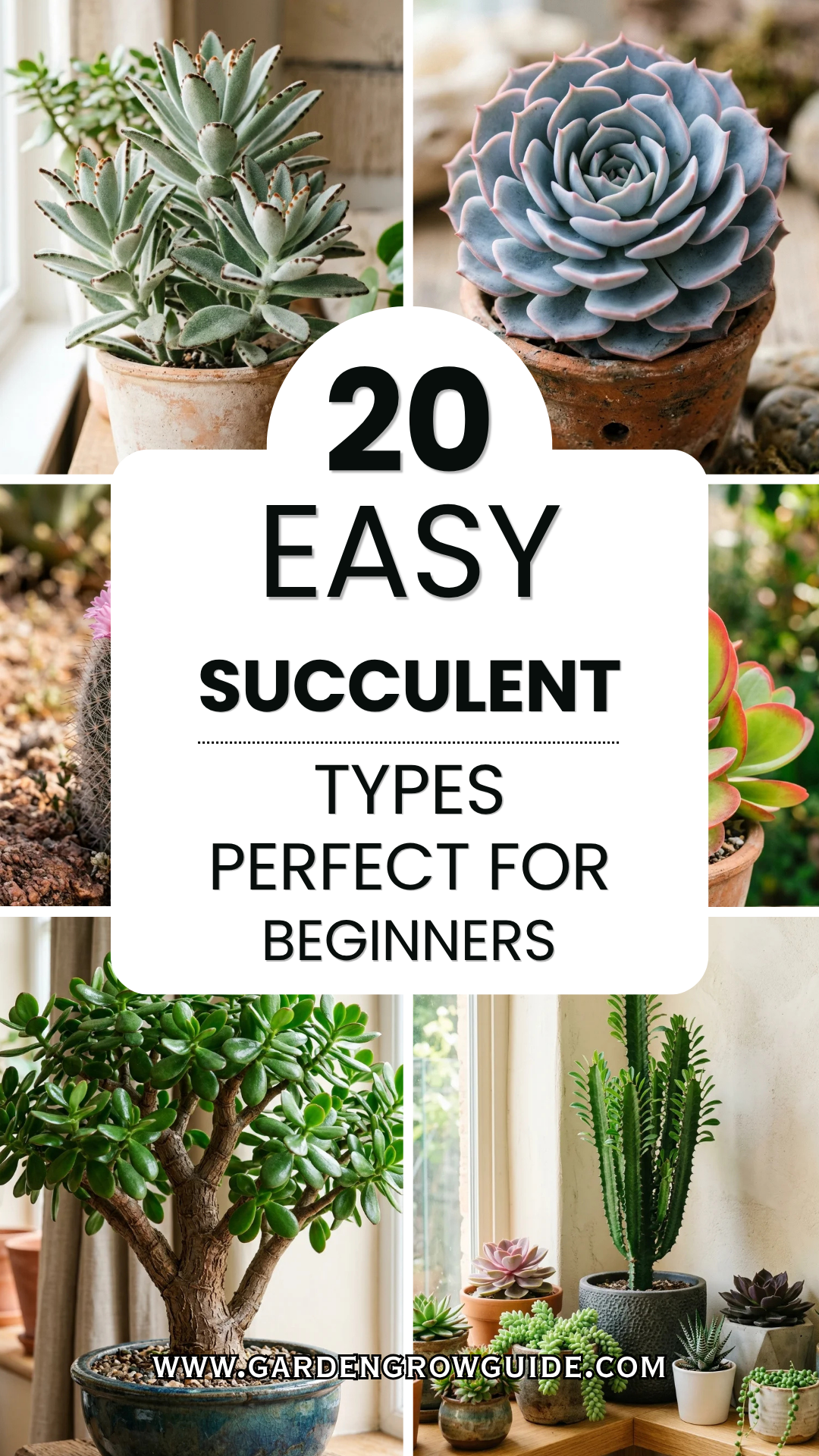
Succulents have taken the world of interior design and gardening by storm, and for good reason. These resilient plants are the ultimate choice for beginners because they are evolutionarily designed to survive in harsh conditions. Characterized by their thick, fleshy leaves that store water, succulents require minimal intervention, making them perfect for busy individuals or those who claim to have a “black thumb.” From the architectural elegance of the Snake Plant to the charming rosettes of the Echeveria, there is a succulent for every aesthetic and environment.
1. Jade Plant
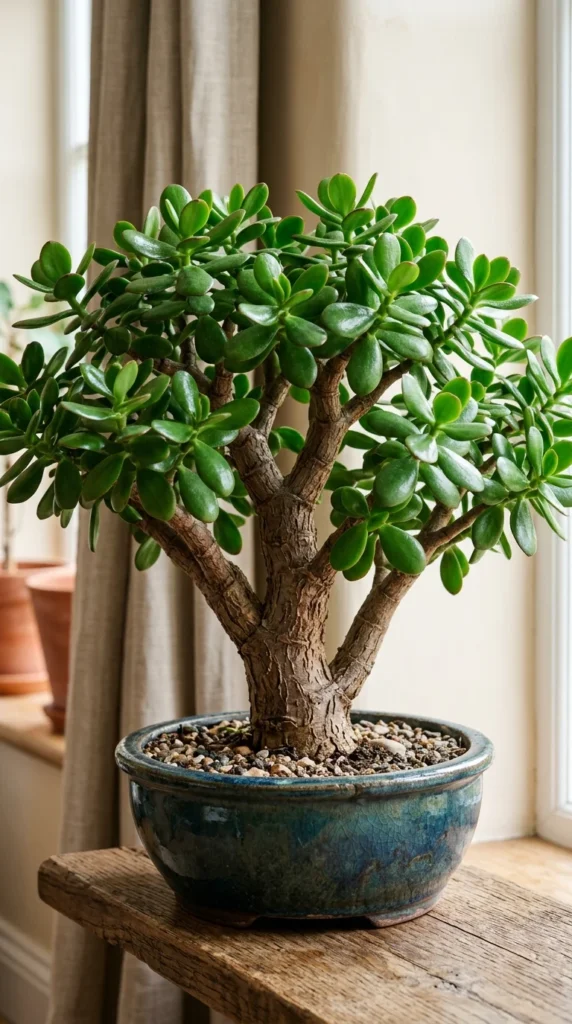
The Jade Plant (Crassula ovata) is often referred to as the “Money Tree” or “Friendship Tree.” It is one of the most popular succulents globally due to its longevity and ease of care.
- Appearance: It features thick, woody stems and rich green, teardrop-shaped leaves. Under high sun exposure, the edges of the leaves can develop a beautiful red tint.
- Care Tip: Jades prefer bright, indirect light and should only be watered when the top inch of soil is bone dry. They can live for decades, often being passed down through generations.
2. Aloe Vera
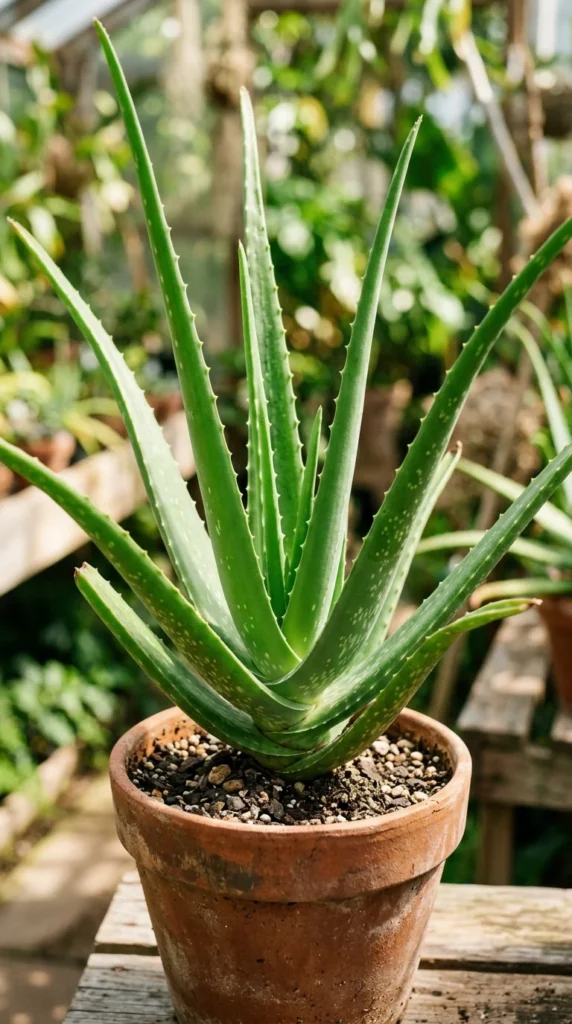
Aloe Vera is perhaps the most famous succulent, known widely for its medicinal properties. It is a “functional” plant that doubles as a first-aid kit for minor burns and skin irritations.
- Appearance: It grows in a clumping rosette of thick, upright leaves filled with a clear, soothing gel.
- Care Tip: Aloe Vera thrives in bright, sunny spots. It is highly susceptible to root rot, so ensure the pot has excellent drainage and avoid overwatering.
3. Zebra Haworthia
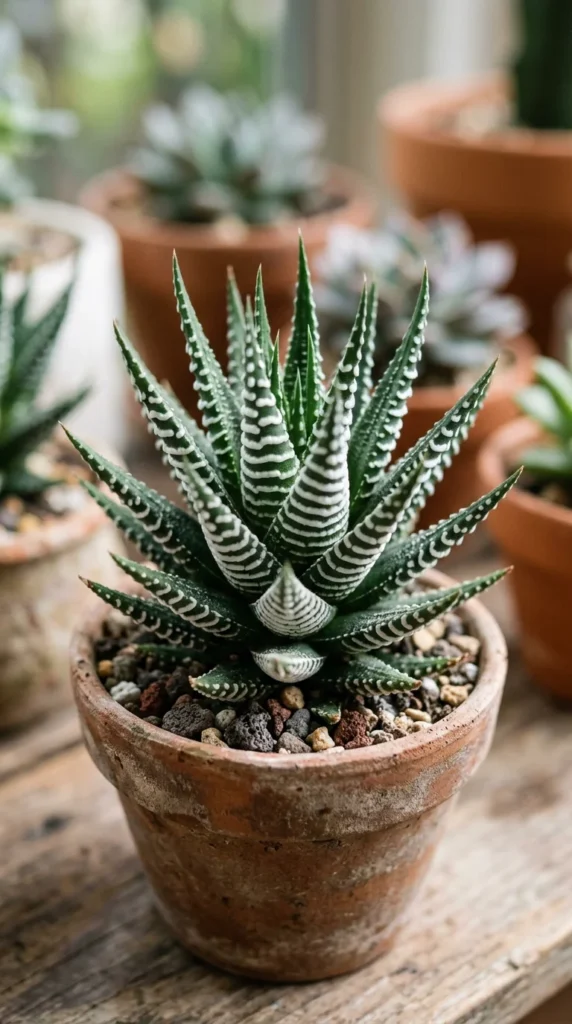
For those with limited space or lower light conditions, the Zebra Haworthia (Haworthiopsis attenuata) is an ideal choice. It remains small and grows slowly, making it perfect for office desks.
- Appearance: It looks like a miniature aloe but is distinguished by the striking white horizontal stripes on its outer leaves.
- Care Tip: Unlike many succulents, Haworthia can tolerate partial shade, though it prefers bright, filtered light.
4. Snake Plant
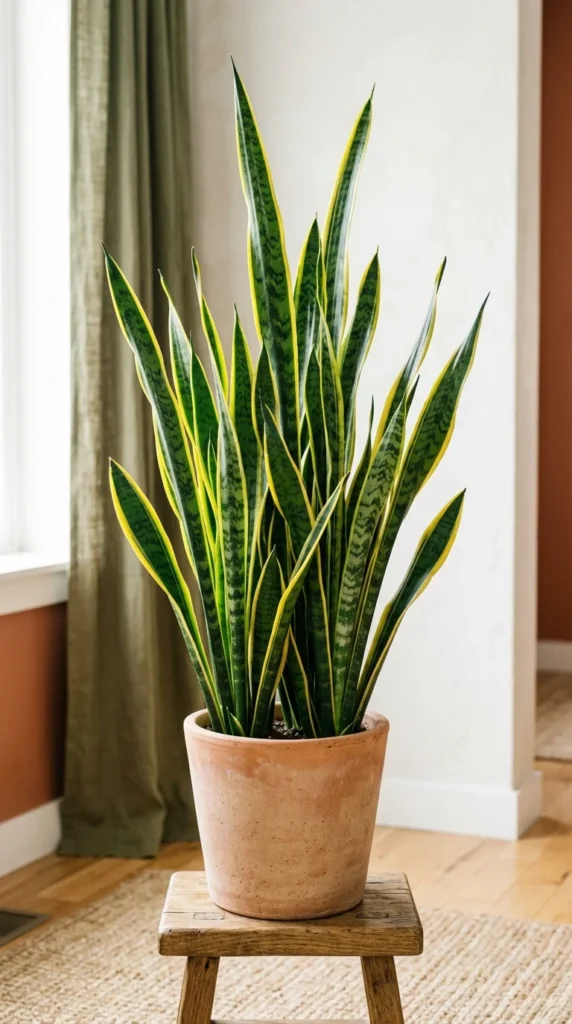
The Snake Plant (Dracaena trifasciata) is the “set it and forget it” champion of the plant world. It is incredibly hardy and can survive weeks of neglect.
- Appearance: It has tall, stiff, sword-like leaves that grow vertically. Varieties range from dark green to variegated yellow and silver.
- Care Tip: It is one of the few succulents that can thrive in low-light environments. It also acts as a natural air purifier, removing toxins like formaldehyde from the air.
5. Echeveria
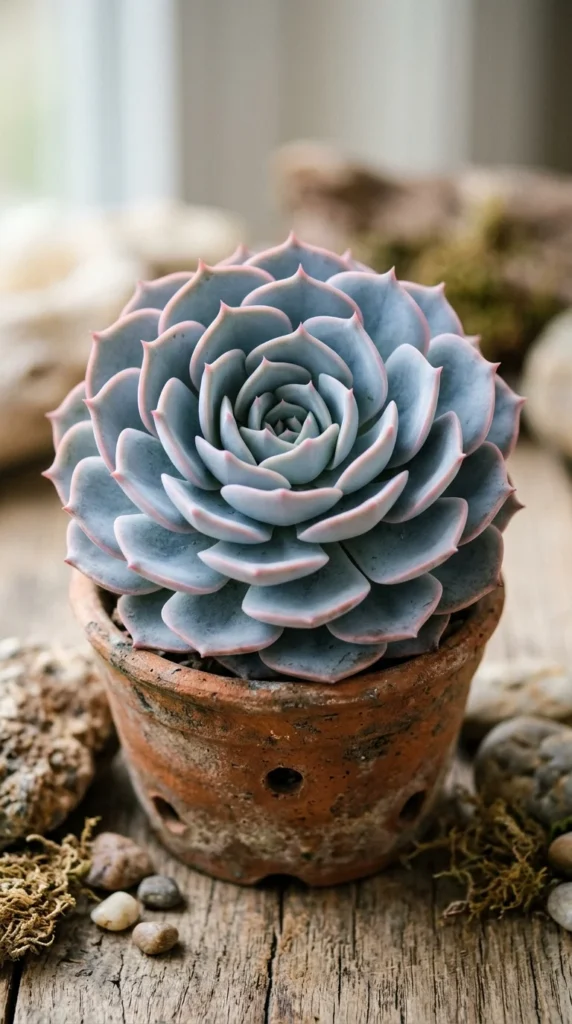
Echeverias are the “supermodels” of the succulent world. Their perfect rosette shape and wide range of colors make them a favorite for terrariums and wedding bouquets.
- Appearance: These plants form tight, flower-like rosettes. They come in shades of teal, pink, purple, and bright green.
- Care Tip: They need plenty of bright light to maintain their compact shape. Without enough sun, they will “stretch” (etiolate) and lose their beautiful form.
6. Burro’s Tail
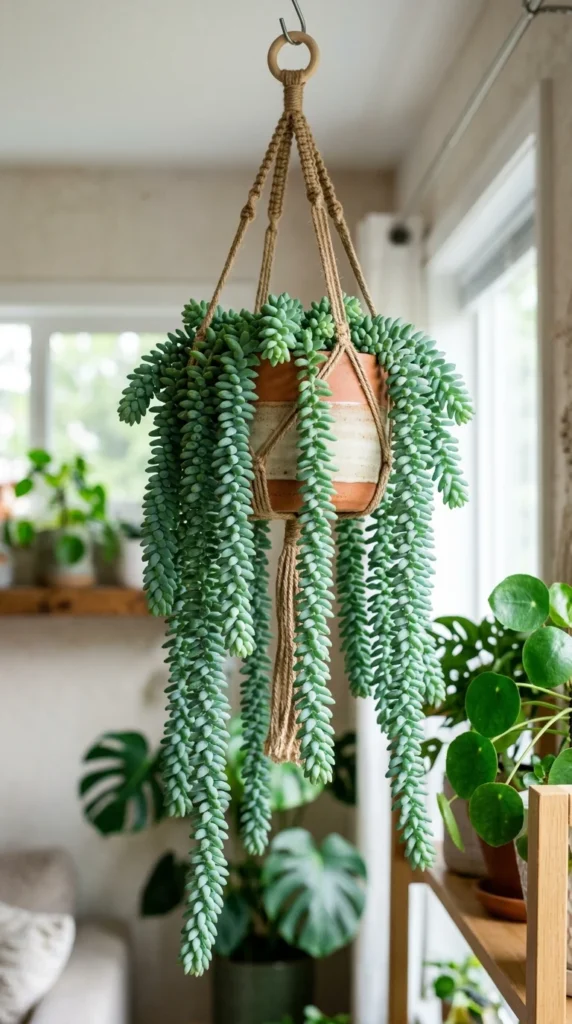
If you are looking for a plant to hang in a sunny window, the Burro’s Tail (Sedum morganianum) is a showstopper.
- Appearance: It features long, trailing stems that can grow up to two feet long, covered in overlapping, fleshy, blue-green leaves.
- Care Tip: Be careful when handling this plant; the leaves fall off easily if bumped. Place it in a permanent spot where it won’t be disturbed.
7. Christmas Cactus
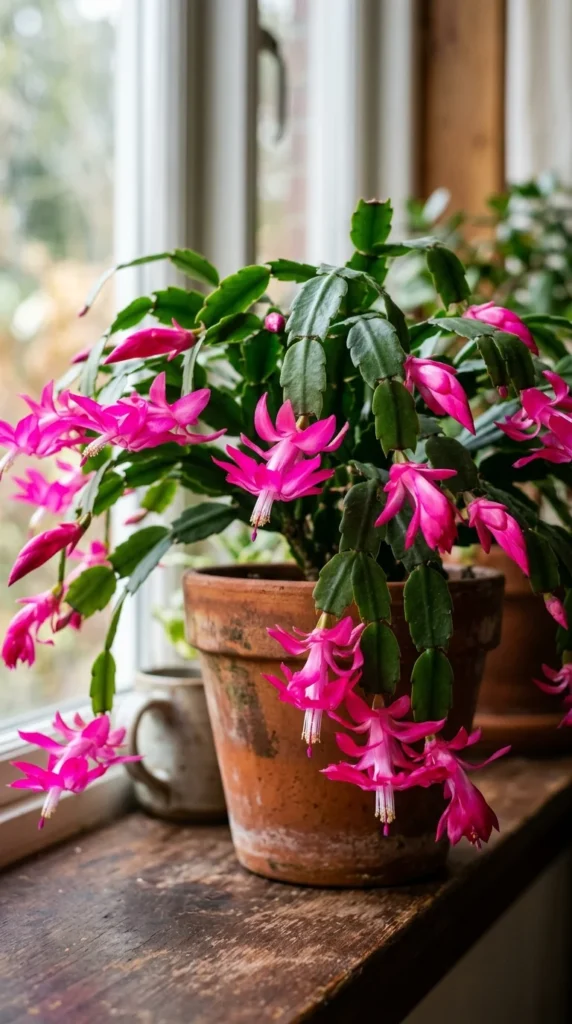
Unlike most desert succulents, the Christmas Cactus (Schlumbergera) is a tropical succulent native to the rainforests of Brazil.
- Appearance: It has flat, segmented stems and produces spectacular tubular flowers in shades of red, pink, and white during the winter months.
- Care Tip: It prefers more humidity and more frequent watering than its desert cousins. It thrives in bright, indirect light.
8. String of Pearls
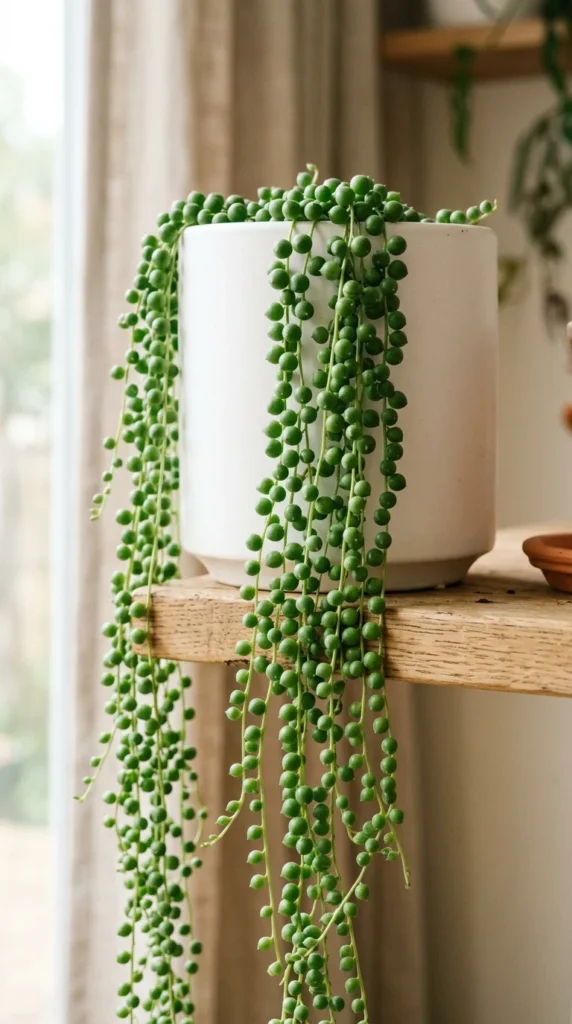
The String of Pearls (Senecio rowleyanus) is a whimsical, unique plant that looks like a collection of green beads on a string.
- Appearance: Its spherical leaves are actually a water-conservation mechanism, minimizing surface area to prevent evaporation.
- Care Tip: This plant prefers bright, indirect light. It is sensitive to overwatering, so use a well-draining succulent mix and a pot with a drainage hole.
9. Hens and Chicks
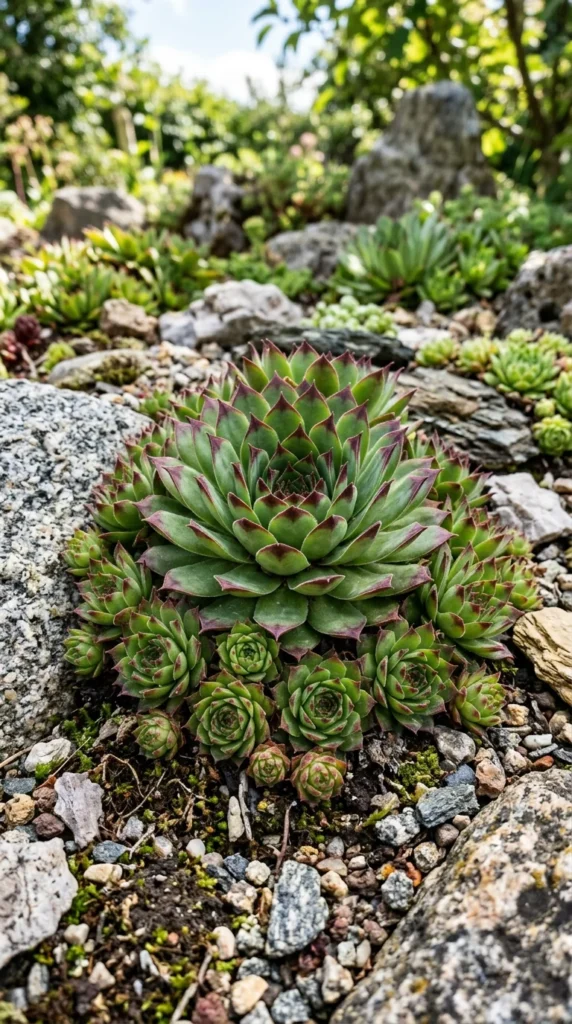
Hens and Chicks (Sempervivum) are incredibly cold-hardy, making them excellent for outdoor rock gardens in temperate climates.
- Appearance: The “Hen” is the main rosette, which produces smaller “Chicks” via runners. They come in various shades of green, red, and purple.
- Care Tip: These plants are almost indestructible and can even survive under a layer of snow. They prefer full sun and rocky, poor soil.
10. Panda Plant
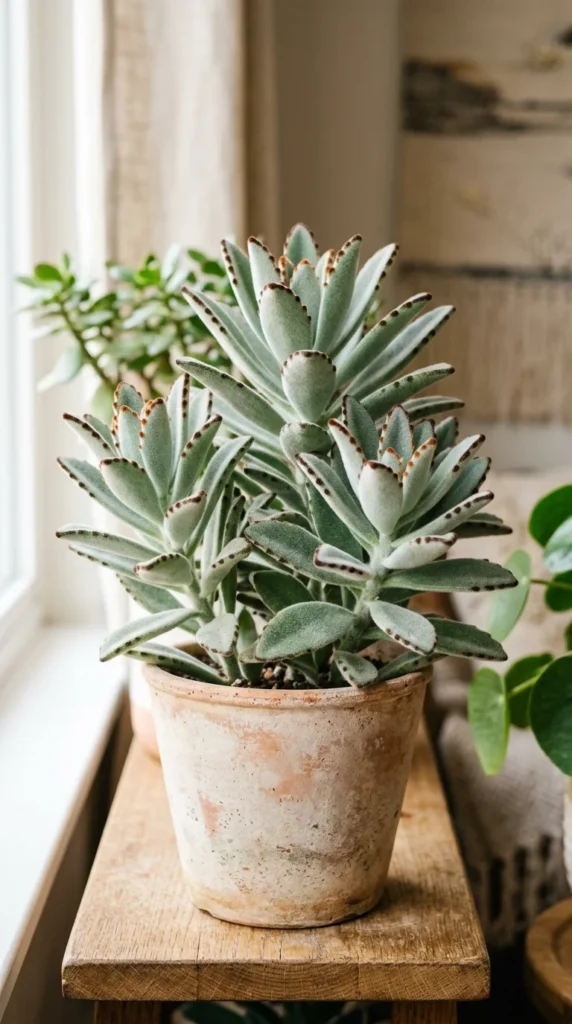
The Panda Plant (Kalanchoe tomentosa) is loved for its soft, fuzzy texture. Its leaves are covered in tiny silver hairs that give it a velvety feel.
- Appearance: The leaves are grayish-green with distinct brown or rust-colored spots along the margins, resembling the markings of a panda or cat’s ear.
- Care Tip: The fuzzy leaves can trap water, which leads to rot, so always water the soil directly rather than over the foliage.
11. Pincushion Cactus
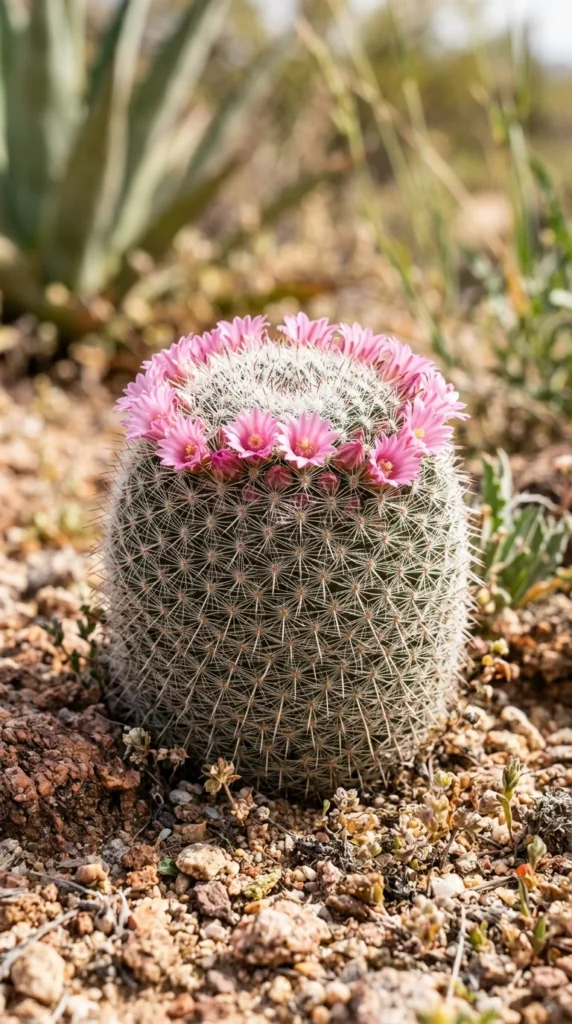
For those who want a classic desert look, the Pincushion Cactus (Mammillaria) is a perfect entry-level cactus.
- Appearance: It is typically small and ball-shaped or cylindrical, covered in a dense network of spines. It frequently produces rings of small, colorful flowers.
- Care Tip: Give it as much sun as possible. In the winter, stop watering entirely to allow the plant to go dormant, which encourages blooming in the spring.
12. Crown of Thorns
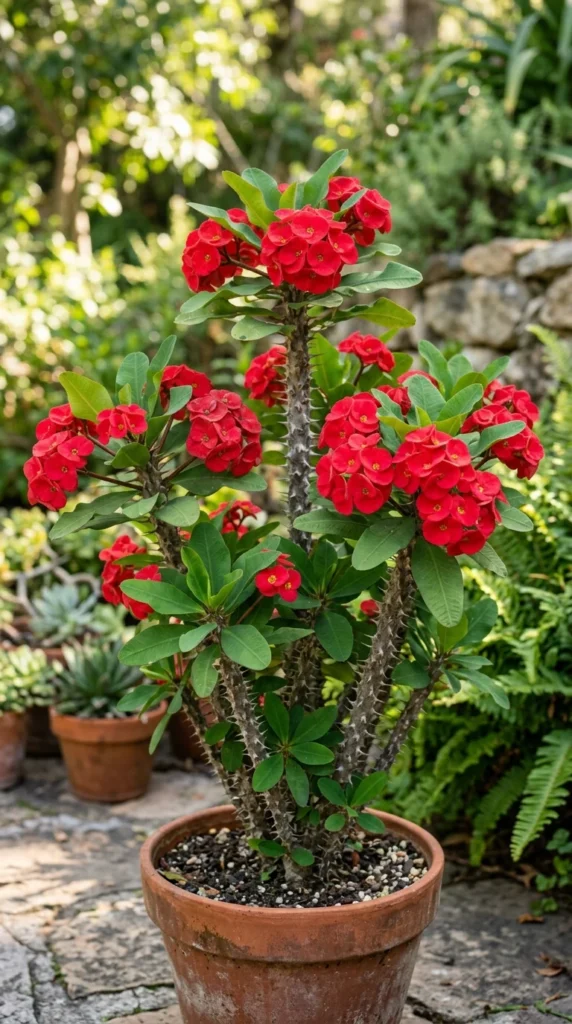
The Crown of Thorns (Euphorbia milii) is a succulent that acts like a flowering shrub. It is incredibly tough and can bloom almost year-round.
- Appearance: It has thick, leathery leaves and sharp thorns along its stems. The “flowers” are actually colorful bracts that surround the tiny true flowers.
- Care Tip: It is very drought-tolerant but enjoys more frequent watering than other succulents when it is actively blooming. Be careful of the milky sap, which can be irritating to the skin.
13. Ghost Plant
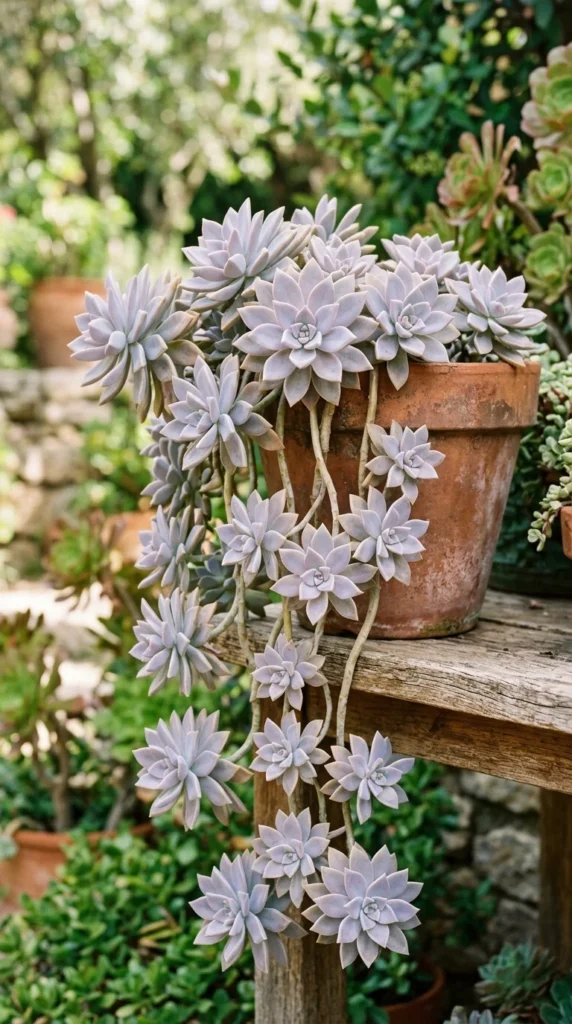
The Ghost Plant (Graptopetalum paraguayense) gets its name from its opalescent, pale appearance that seems to change color depending on the light.
- Appearance: The rosettes are thick and fleshy, ranging in color from pale blue and gray to light pink or yellow in high sun.
- Care Tip: These are very easy to propagate. If a leaf falls off, simply lay it on top of dry soil, and it will likely grow a new baby plant.
14. Paddle Plant
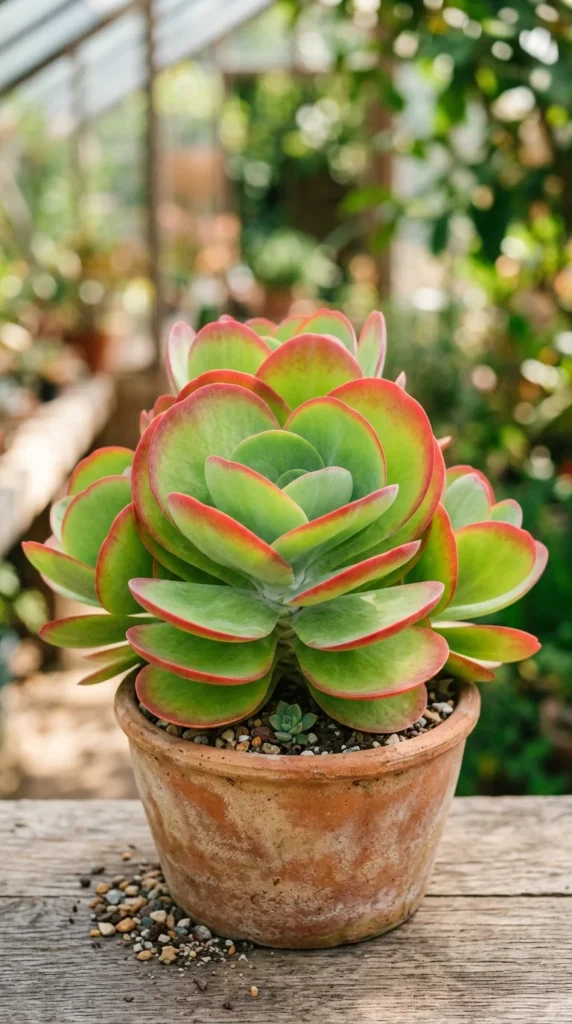
Also known as the “Flapjack Plant,” the Paddle Plant (Kalanchoe luciae) provides a bold, architectural look with its oversized foliage.
- Appearance: Its leaves are large, flat, and round, stacked like pancakes. In the sun, the edges turn a brilliant, fiery red.
- Care Tip: To keep the red color vibrant, the plant needs several hours of direct sunlight daily. It is very drought-tolerant.
15. Ponytail Palm
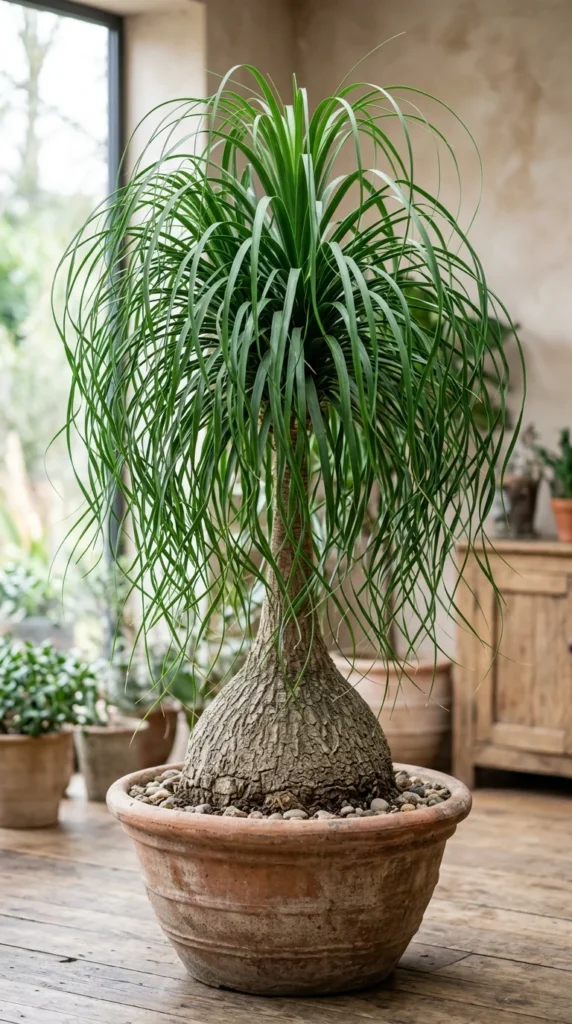
Despite its name and appearance, the Ponytail Palm (Beaucarnea recurvata) is actually a succulent, not a true palm.
- Appearance: It features a distinctive “elephant foot” base that stores water and a crown of long, wispy leaves that drape down like a ponytail.
- Care Tip: This is a great “low-maintenance” tree for the home. It grows slowly and only needs water every 2-3 weeks.
16. Gasteria
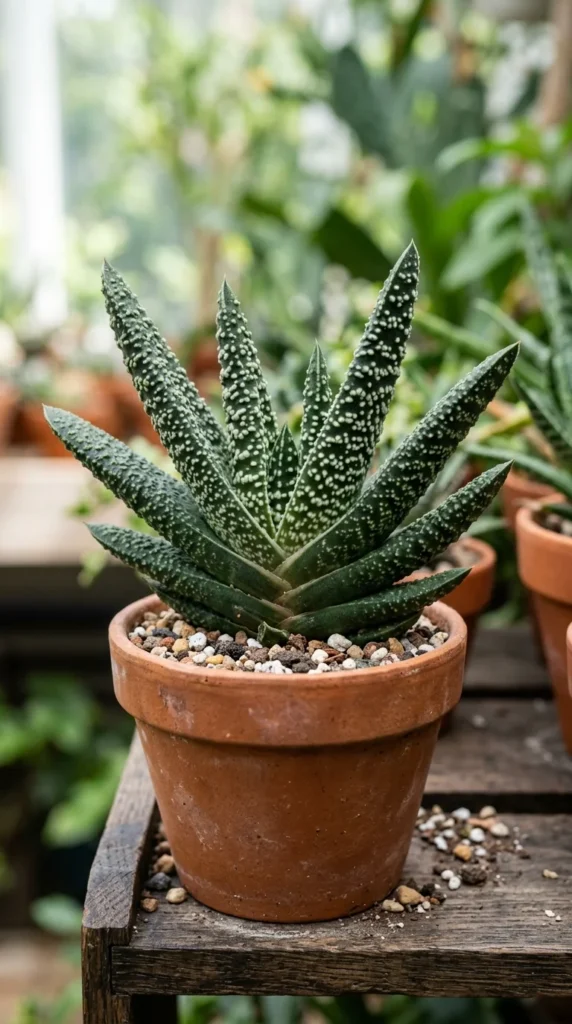
Gasteria is a cousin to Aloe and Haworthia, known for its unique “tongue-shaped” leaves.
- Appearance: The leaves are thick, usually dark green, and often covered in interesting bumps or variegation. The name comes from the stomach-shaped flowers it produces.
- Care Tip: Like Haworthia, Gasteria is more tolerant of lower light conditions than many other succulents, making it a great indoor choice.
17. String of Bananas
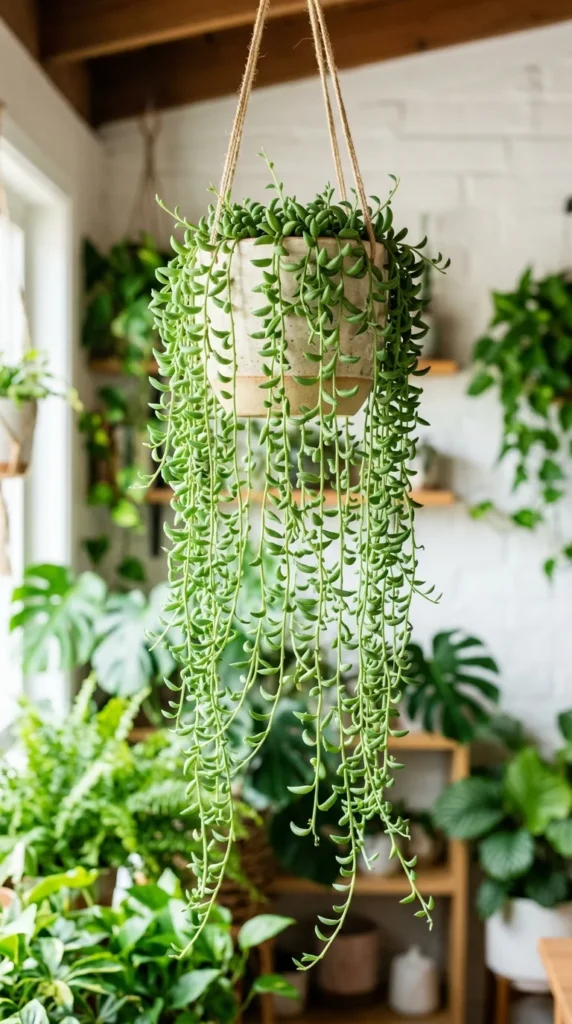
If you love the “String of” look but find the String of Pearls too finicky, the String of Bananas (Curio radicans) is a faster-growing, hardier alternative.
- Appearance: It features long, cascading vines with leaves shaped like tiny pointed bananas.
- Care Tip: It is much more forgiving with watering and grows quite rapidly under bright, indirect light.
18. Golden Sedum
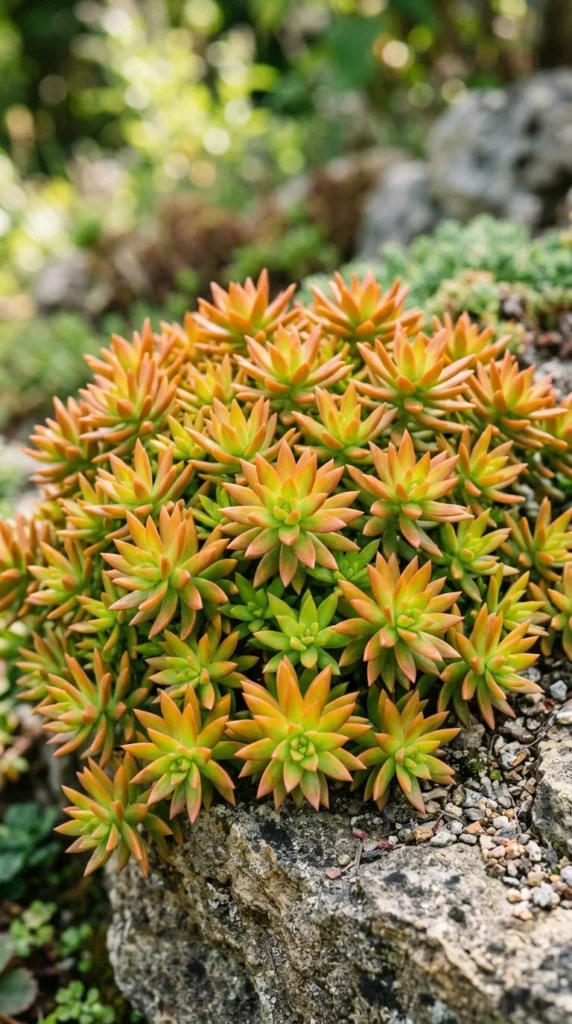
Sedum ‘Adolphii’, or Golden Sedum, is a versatile succulent that adds a pop of warm color to any collection.
- Appearance: It grows in sprawling rosettes. While it starts as a yellow-green, direct sunlight turns the leaf tips a bright, golden orange.
- Care Tip: It is an excellent groundcover in warm climates or a filler in container arrangements. It can handle a bit more water than some of the more delicate succulents.
19. African Milk Tree
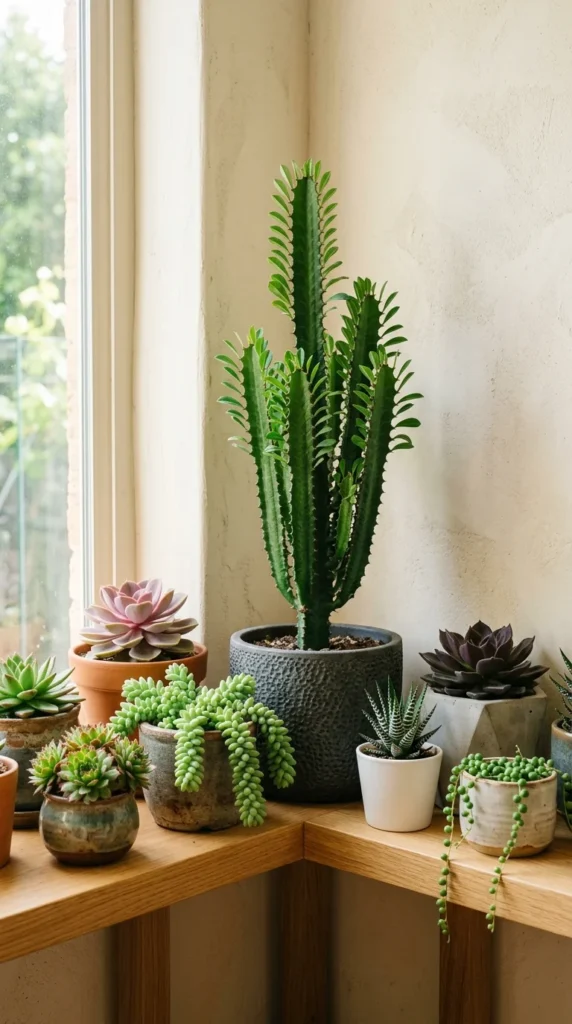
The African Milk Tree (Euphorbia trigona) looks like a cactus but is actually a succulent. It adds height and a dramatic, desert-vibe to a room.
- Appearance: It grows vertically with ribbed stems. Small green leaves grow between the thorns along the ridges of the stems.
- Care Tip: It is a fast grower and can reach several feet in height. It prefers bright light and should be watered once the soil is dry.
20. Moonstones
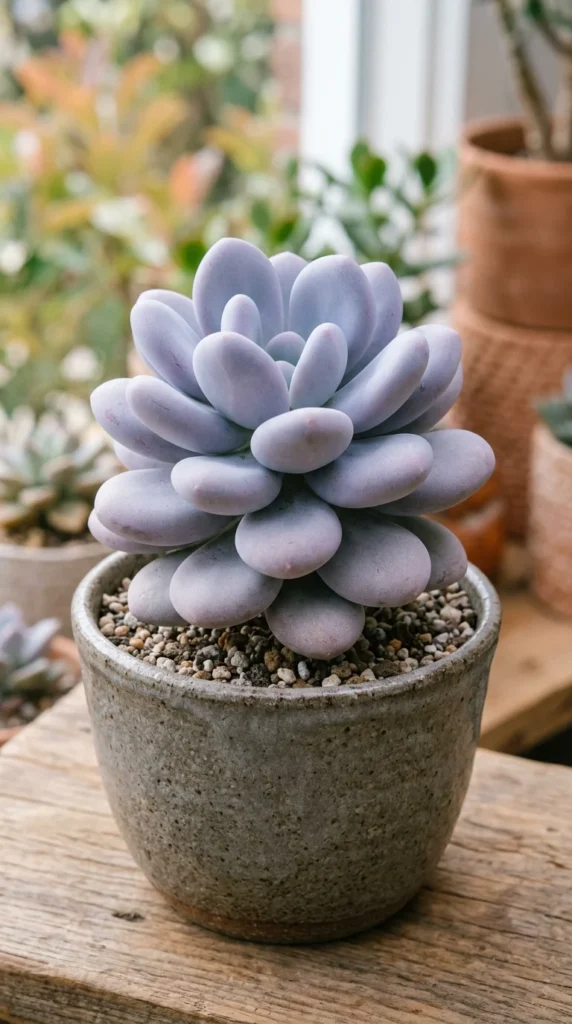
Moonstones (Pachyphytum oviferum) are prized for their incredibly chubby, rounded leaves that look like polished river stones or sugar-coated almonds.
- Appearance: The leaves are covered in a thick layer of “farina” (a powdery epicuticular wax) that gives them a soft, matte, pastel appearance.
- Care Tip: Avoid touching the leaves, as the natural oils from your fingers will smudge the powdery coating. This plant is very drought-tolerant and needs very little water.
A Quick Guide to Succulent Success
While each species has its quirks, following these four golden rules will help any beginner keep their succulents thriving:
- Light is Life: Most succulents need at least 4-6 hours of bright light. If your plant is leaning or stretching, it’s “begging” for more sun.
- The Soak and Dry Method: Never “mist” a succulent. Instead, soak the soil until water runs out of the drainage hole, then wait for the soil to become completely dry before watering again.
- Proper Soil: Use a specialized succulent or cactus mix. These soils contain perlite or sand to ensure water drains quickly away from the roots.
- Drainage is Non-Negotiable: Always use a pot with a hole at the bottom. Succulents sitting in stagnant water will quickly develop root rot, which is the most common cause of succulent death.