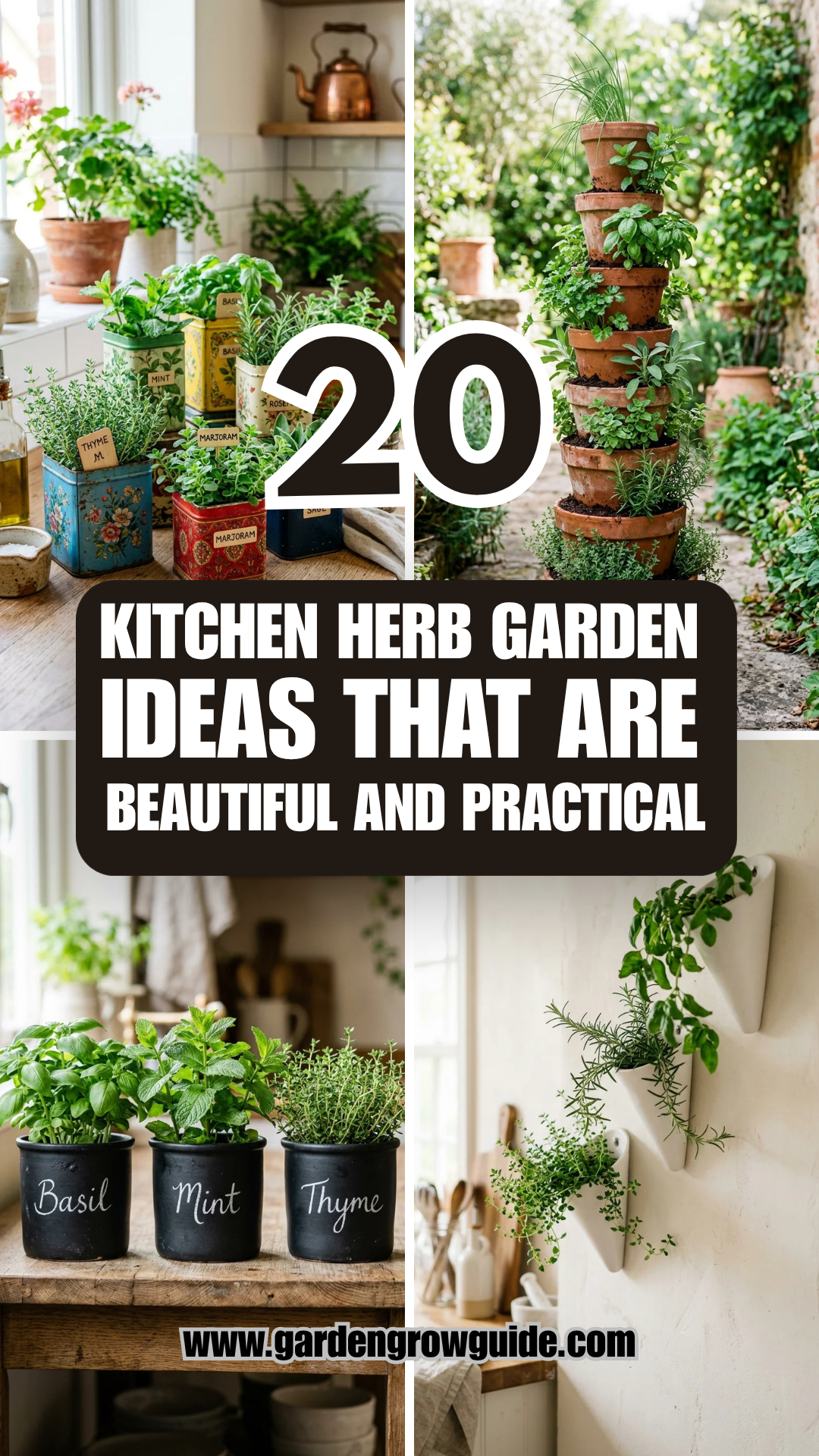
Nothing elevates the culinary experience quite like the addition of fresh, homegrown herbs. Beyond the undeniable flavor benefits, a kitchen herb garden serves as a living piece of decor, bringing texture, fragrance, and a touch of nature into the heart of the home. Whether you have a sprawling farmhouse kitchen or a compact urban apartment, there is a creative way to integrate a functional garden into your space.
The following twenty ideas prioritize both aesthetic appeal and ease of maintenance, ensuring your “green thumb” efforts result in a bountiful harvest and a stunning visual display.
1. Windowsill Planters
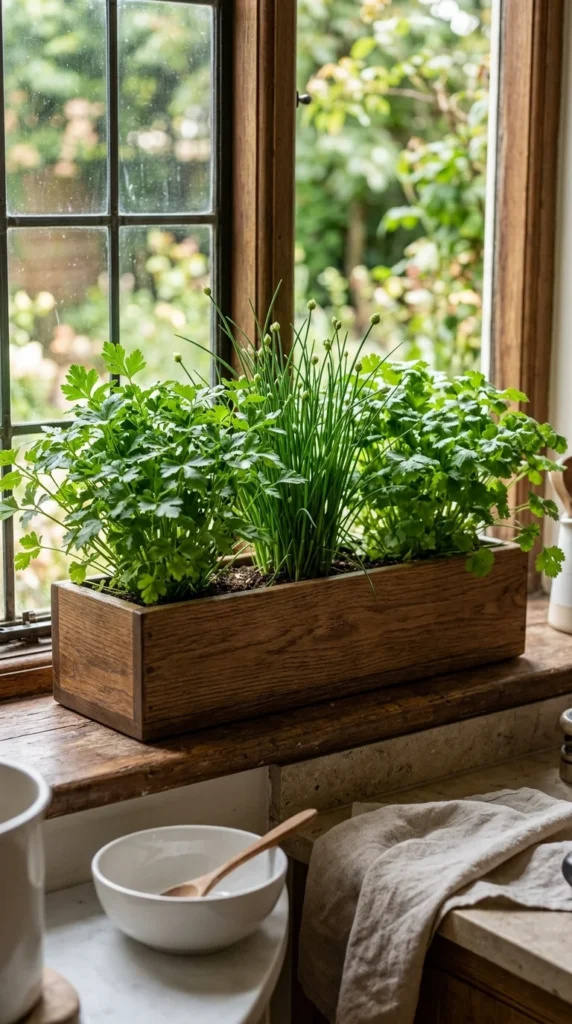
The windowsill is the most traditional spot for a reason: it offers the direct sunlight most herbs crave. Using a singular, long planter box creates a clean, streamlined look that minimizes clutter. Opt for materials like cedar for a rustic feel or white ceramic for a minimalist aesthetic. This setup keeps your most-used herbs at arm’s reach while you prep meals.
2. Vertical Wall Pockets
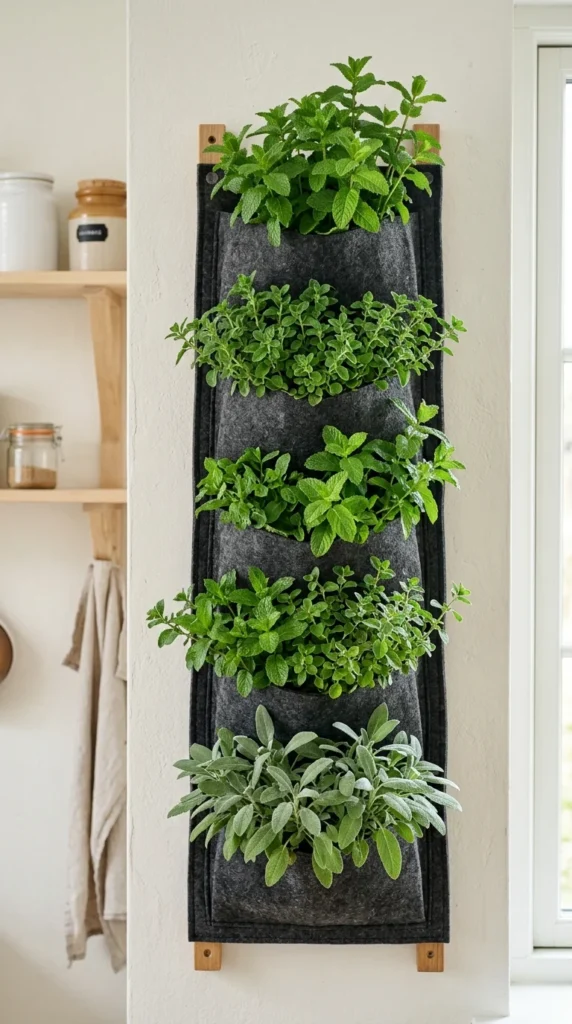
When counter space is at a premium, look to your walls. Vertical felt pockets or “living wall” modules allow you to grow a large variety of herbs without sacrificing a single inch of workspace. These systems often include moisture-wicking liners to keep the plants hydrated while protecting your walls from dampness.
3. Hanging Macrame
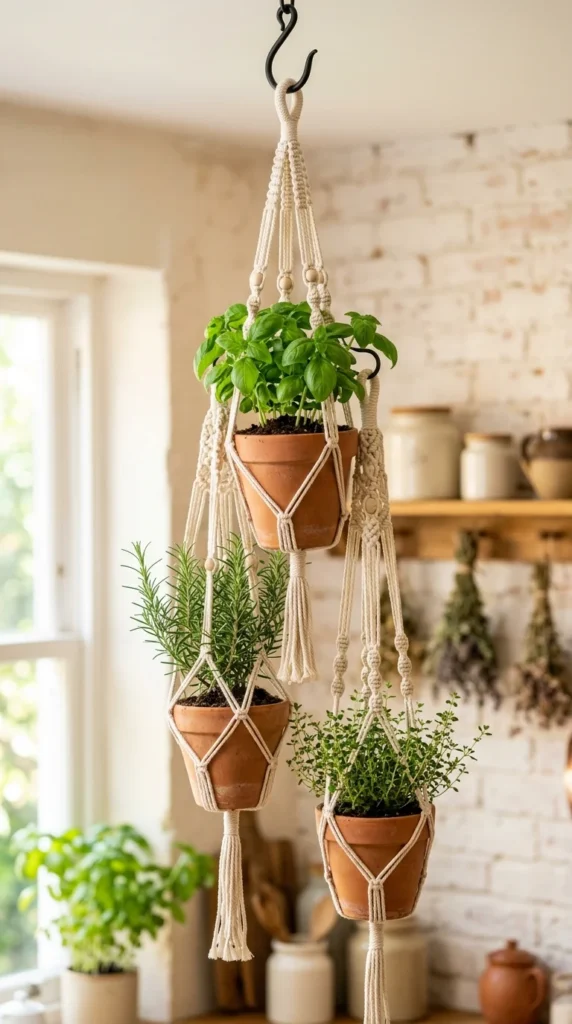
For a bohemian or eclectic kitchen, hanging macrame planters add vertical interest and movement. Suspending herbs near a window allows them to catch the light while keeping the countertops clear. This is an excellent solution for trailing herbs like creeping thyme or mint, which can spill over the edges of the pots beautifully.
4. Mason Jar Clusters
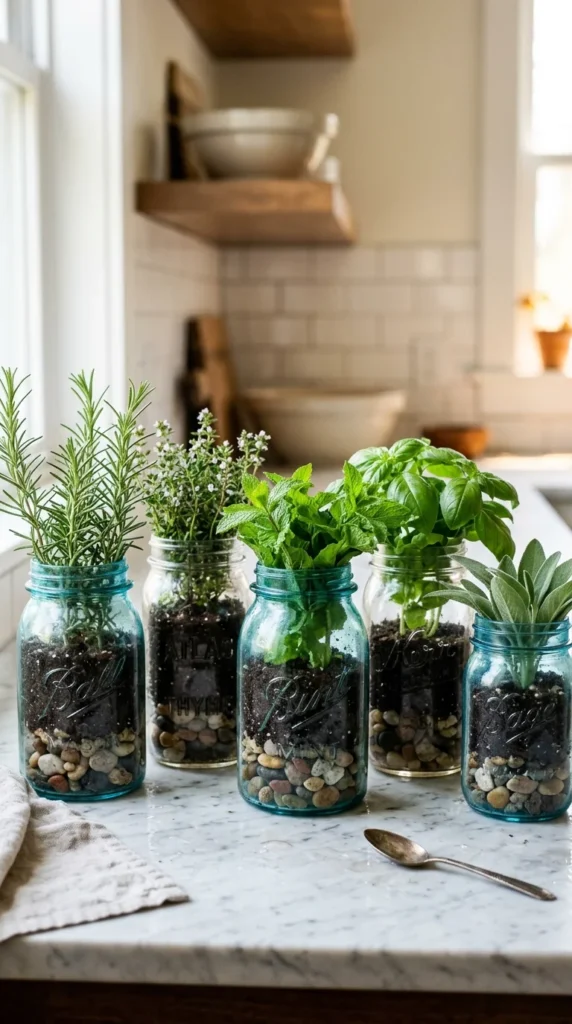
Mason jars provide a charming, farmhouse-inspired look. Because these jars do not have drainage holes, it is crucial to place a layer of small stones or activated charcoal at the bottom before adding soil. This prevents root rot while allowing you to see the moisture levels through the glass.
5. Magnetic Spice Tins
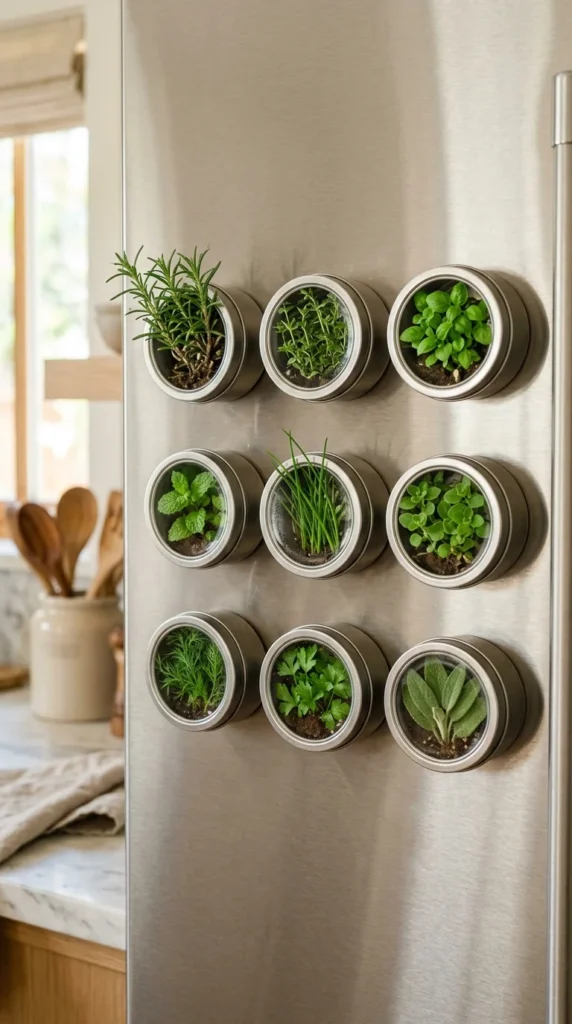
Utilize the unused surface area of your refrigerator or a dedicated magnetic board. Magnetic tins are perfect for smaller herbs or starting seedlings. Ensure the magnets are strong enough to support the weight of the damp soil, and choose tins with clear lids so you can monitor growth at a glance.
6. Tiered Metal Trays
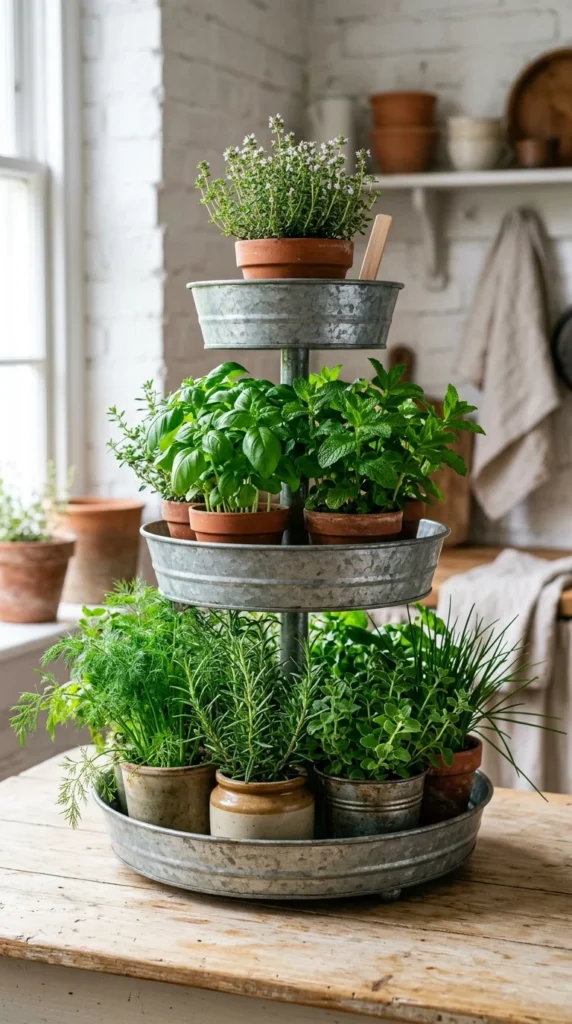
Tiered trays are excellent for organizing a variety of herbs in a small footprint. Place taller herbs like rosemary on the top tier and bushier plants like basil on the lower levels. The galvanized metal adds an industrial-chic vibe that complements many modern kitchen designs.
7. Rolling Bar Cart
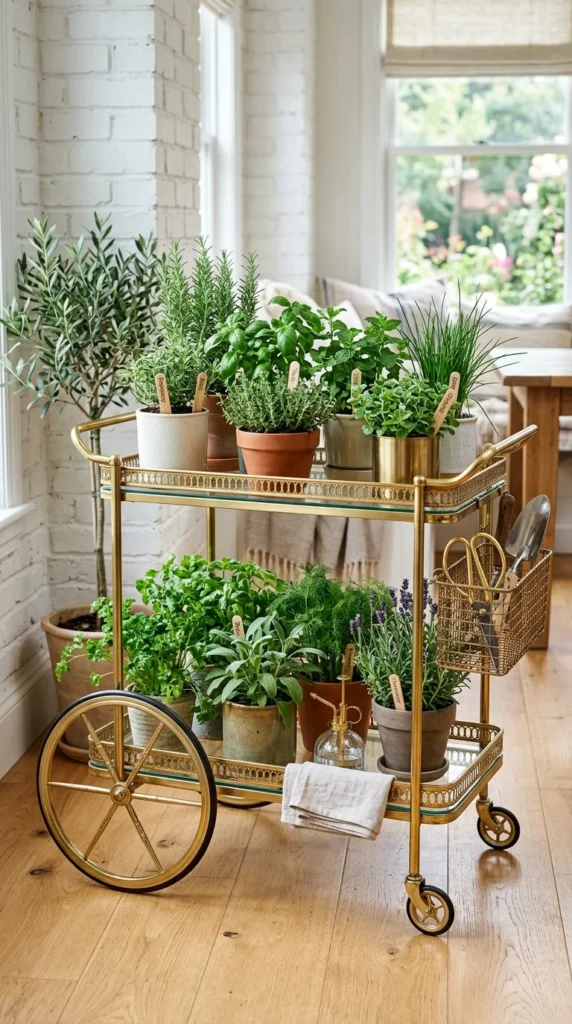
A rolling cart offers the ultimate flexibility. You can move your herb garden into the sun during the day and roll it closer to the stove when you are ready to cook. This “mobile garden” approach allows you to house larger pots that might be too heavy for shelves.
8. Copper Pipe Rack
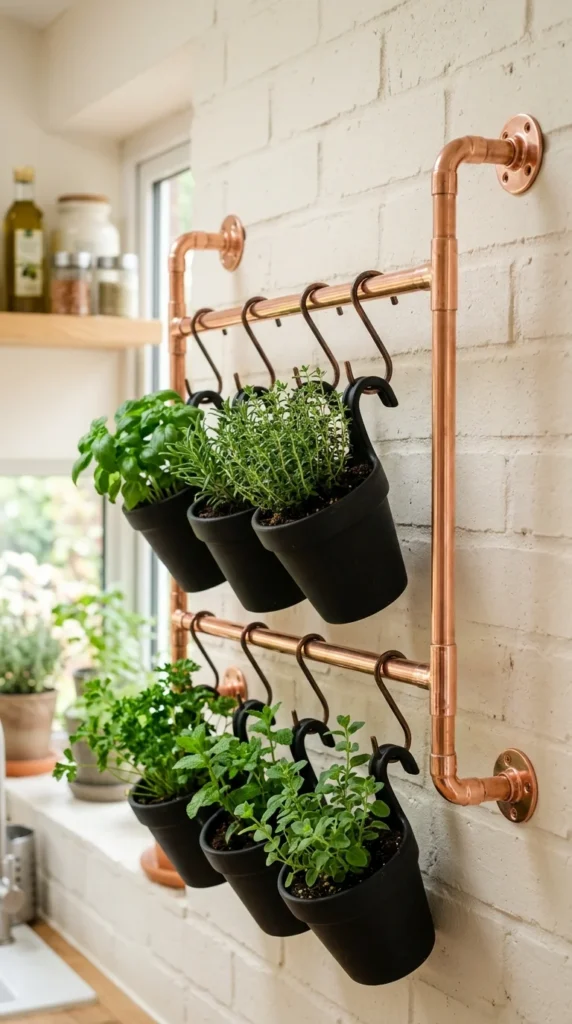
Copper adds a warm, metallic glow to the kitchen. By mounting a simple copper rail, you can hang lightweight pots using hooks. This setup is highly customizable; you can add or remove pots as your herb collection grows or changes with the seasons.
9. Floating Shelves
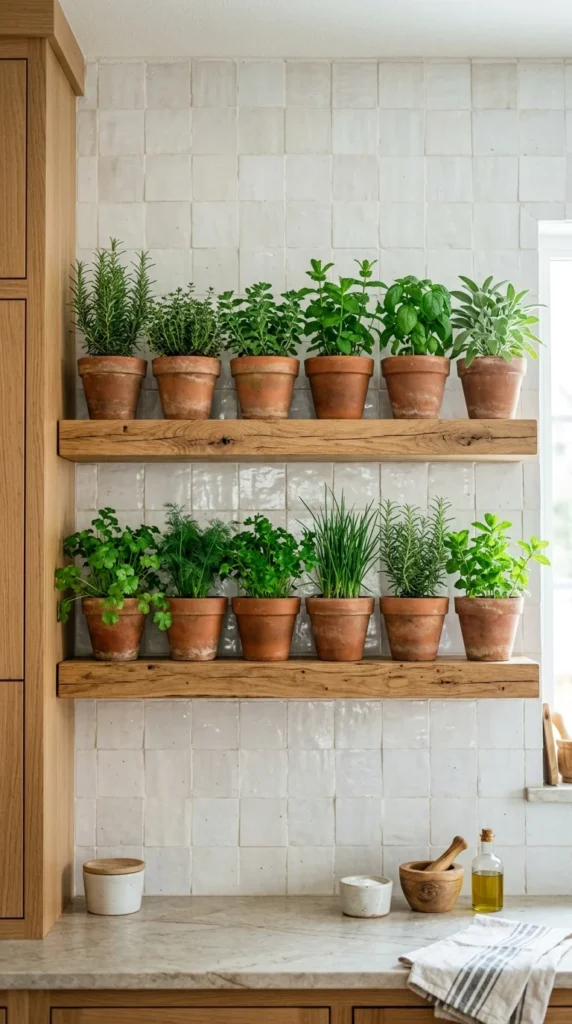
Floating shelves provide a permanent, structural home for your herbs. By installing them near a light source, you create a dedicated “green zone” that feels like an intentional part of the kitchen’s architecture. Using matching pots ensures the display looks curated and tidy.
10. Repurposed Tea Tins
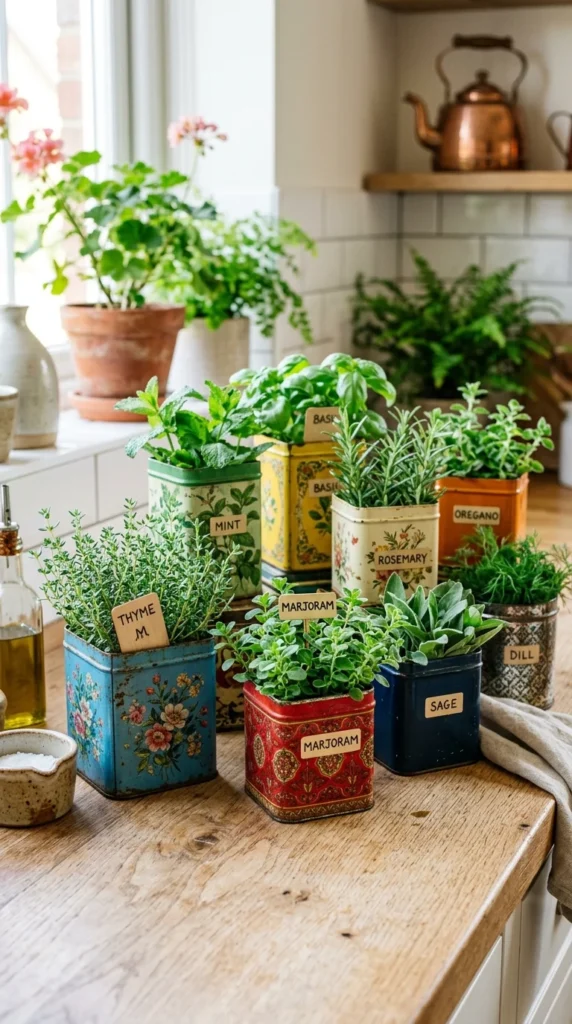
Vintage tea tins offer unique patterns and colors that add personality to your kitchen. These are perfect for small-scale herb growing. Since they are metal, remember to drill small drainage holes in the bottom and use a saucer underneath to catch excess water.
11. Ladder Display
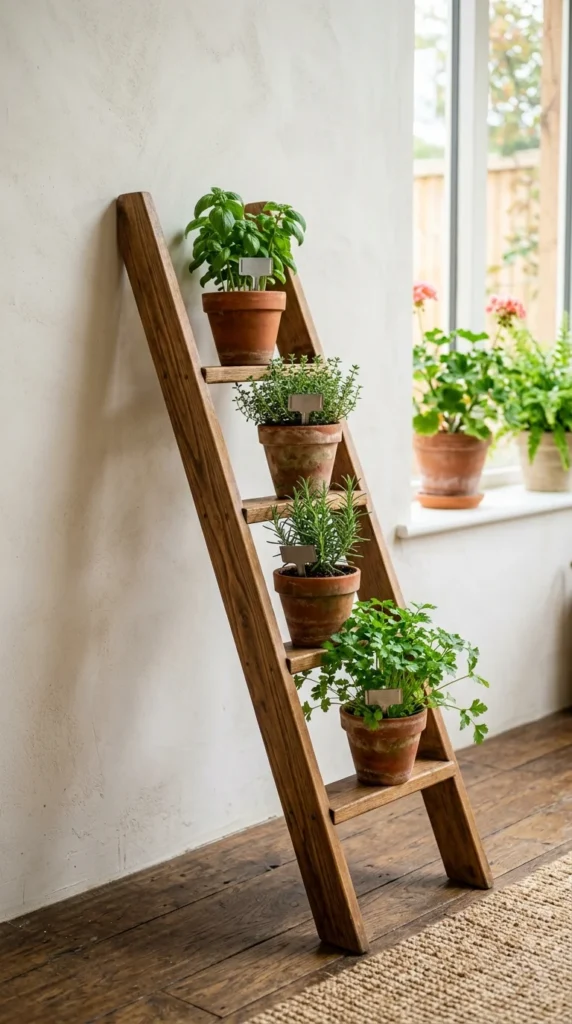
A decorative ladder is a stylish way to utilize vertical space without mounting anything to the wall. It creates a tiered effect that allows each plant to receive adequate light. This is particularly effective in corners that might otherwise go unused.
12. Hydroponic Smart Garden
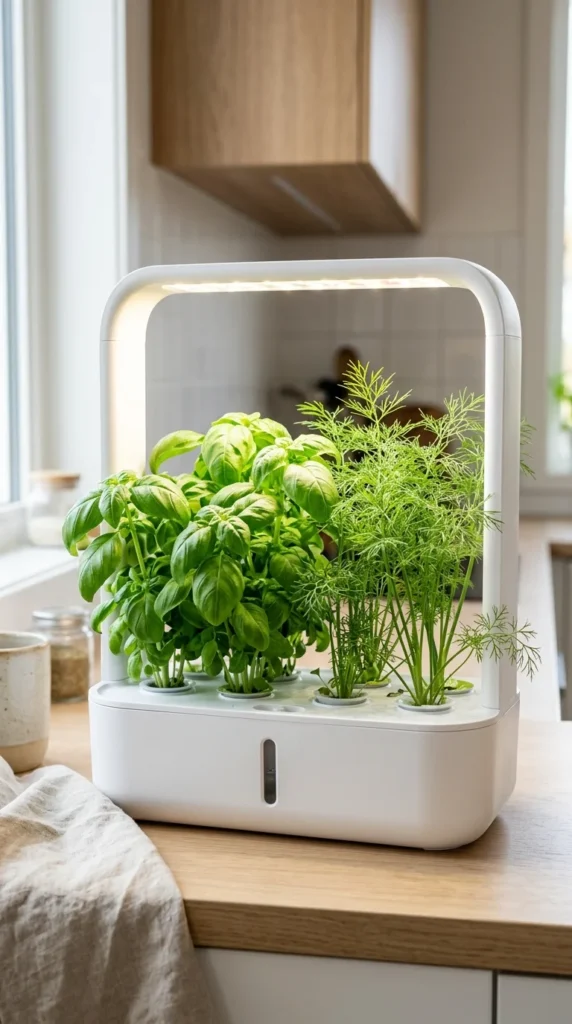
For the tech-savvy gardener or those with low-light kitchens, a hydroponic smart garden is the perfect solution. These systems use water and nutrients instead of soil and come with built-in grow lights and timers, making herb gardening almost entirely automated and foolproof.
13. Chalkboard Pots
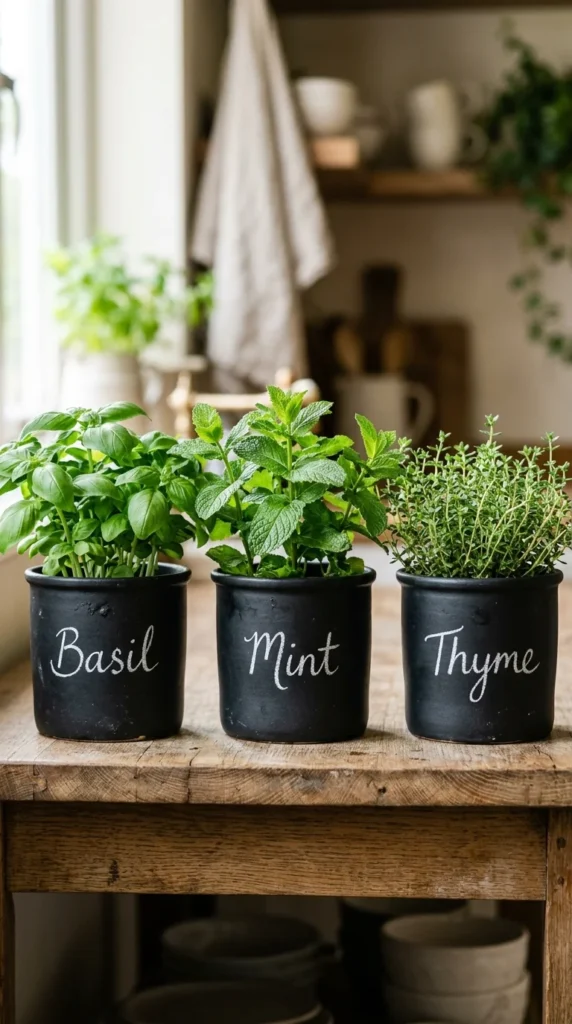
Never confuse your cilantro with your parsley again. Chalkboard-painted pots are both practical and stylish, allowing you to easily relabel your garden as you rotate different plants. The contrast between the black pots and the bright green leaves is visually striking.
14. Woven Baskets
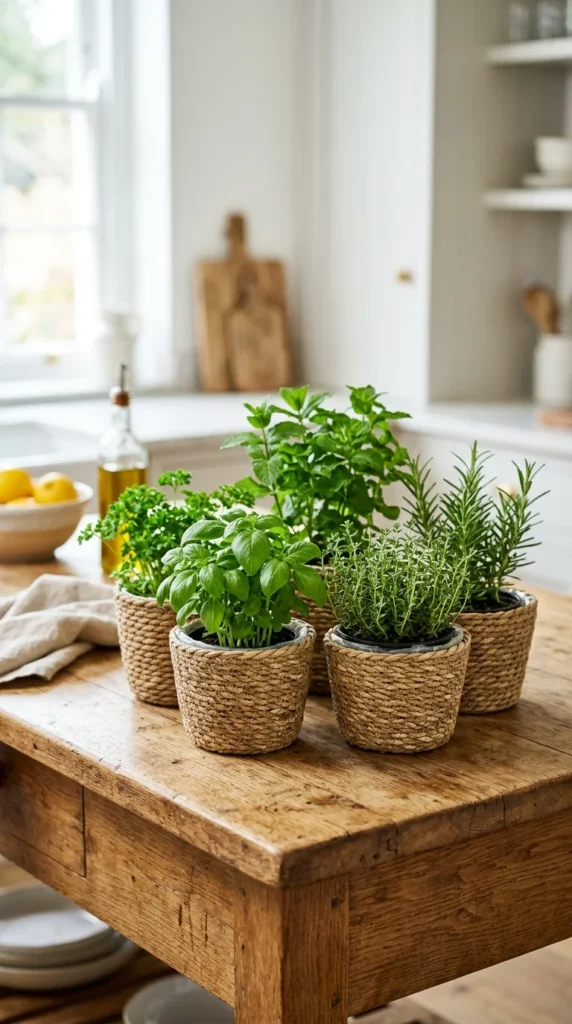
Woven baskets add a soft, organic texture to the kitchen. By placing your standard plastic nursery pots inside these baskets, you hide the utilitarian containers while maintaining a cohesive, natural look. Just be sure to use a plastic liner or saucer to prevent the baskets from rotting.
15. Recycled Wine Crates
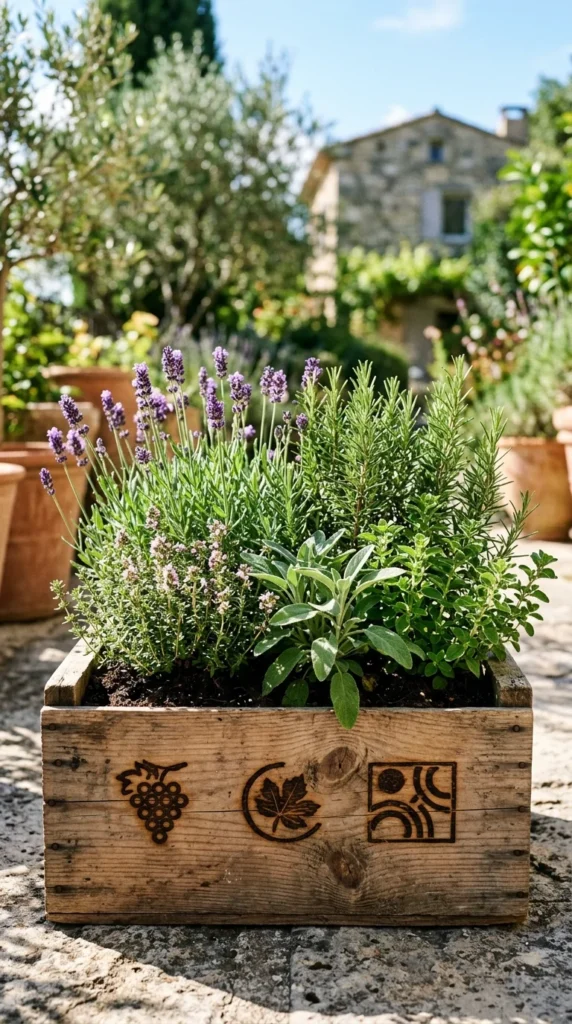
Large wooden wine crates provide ample space for a miniature herb farm. These are ideal for the “kitchen island” look, providing enough depth for larger root systems. The aged wood adds a sense of history and warmth to the room.
16. Over-the-Sink Shelf
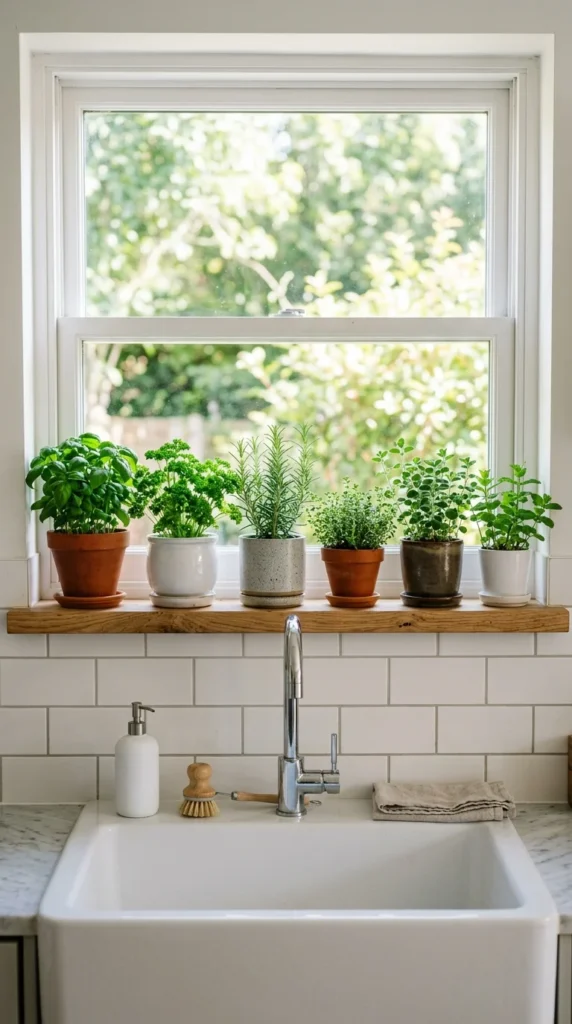
The space above the sink is often underutilized. A simple shelf placed here allows you to take advantage of the window light and the convenience of having water immediately available. It’s the perfect spot for herbs that need frequent misting or watering.
17. Pegboard Organizer
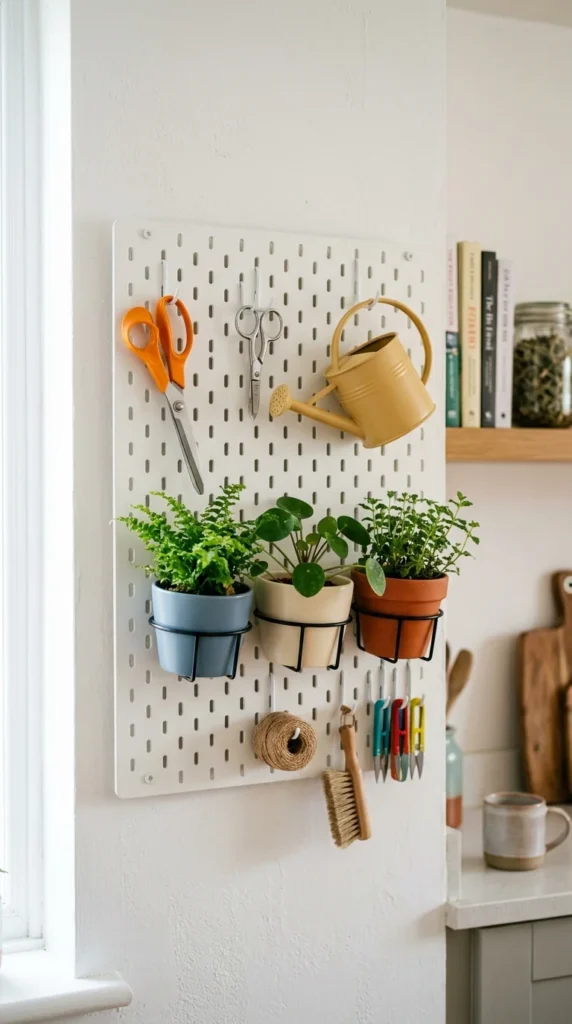
Pegboards are the ultimate organizational tool. By using ring hooks, you can “float” your herb pots against the board. This allows you to rearrange your garden layout whenever you like and keeps all your gardening tools in one centralized, visible location.
18. Ceramic Wall Cones
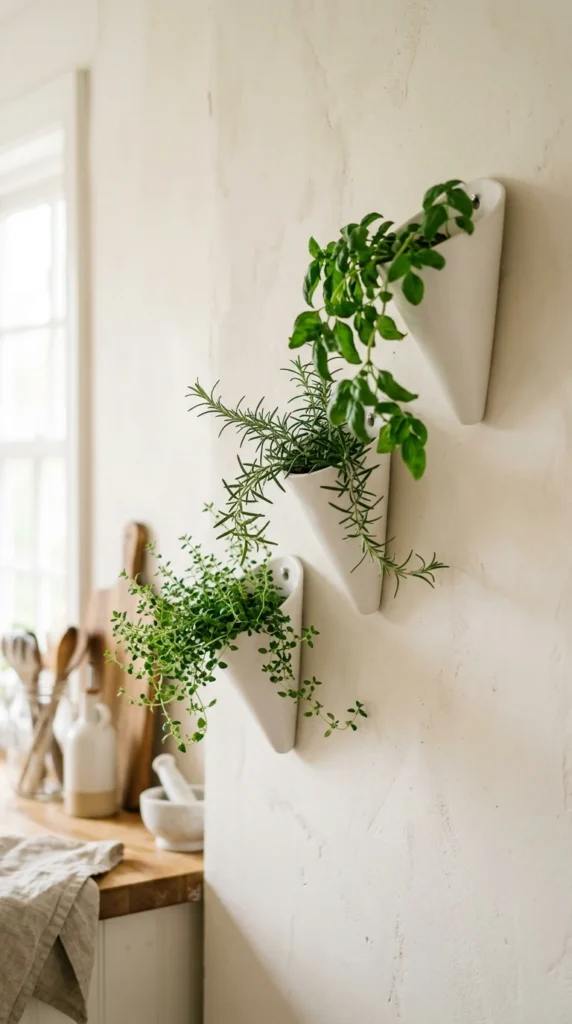
For a modern, sculptural look, ceramic wall cones are an excellent choice. They act as wall art while providing a home for your plants. These are best suited for smaller herbs or those with shallow root systems, such as chives or certain varieties of thyme.
19. Gutter Gardens
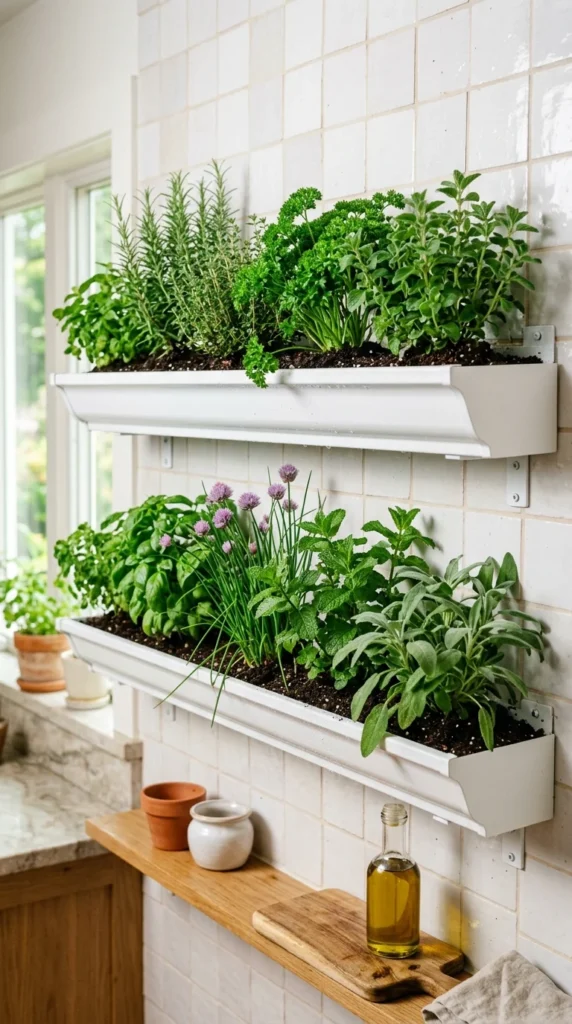
Repurposing rain gutters is a clever and inexpensive way to create a long, continuous planting space. This creates a “ribbon of green” along your wall. Gutter gardens are particularly effective in long, narrow kitchens where floor and counter space are limited.
20. Terracotta Stacks
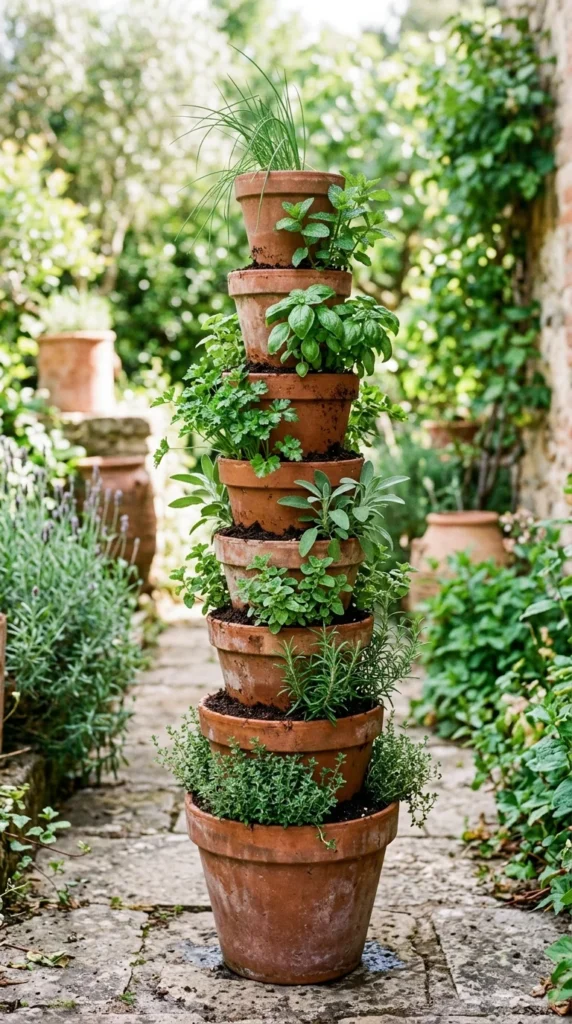
By stacking pots of decreasing size, you can create a “tower of herbs” that takes up very little floor space. This vertical arrangement allows for excellent drainage—water the top pot, and the excess trickles down to the ones below. It’s a classic look that fits perfectly in a traditional or Mediterranean-style kitchen.
Tips for a Thriving Kitchen Herb Garden
To ensure your beautiful herb garden remains healthy and productive, keep these three essential factors in mind:
- Light Requirements: Most culinary herbs (like basil, rosemary, and thyme) require at least 6 hours of sunlight per day. If your kitchen is dark, consider supplementing with a small LED grow light.
- Drainage is Key: Herbs do not like “wet feet.” Always ensure your containers have drainage holes, or use a “double pot” system where the herb is in a plastic liner with holes inside a decorative container.
- Pruning for Growth: Don’t be afraid to harvest! Regularly pinching off the tops of your herbs encourages them to grow bushier and prevents them from becoming “leggy” or going to seed too quickly.