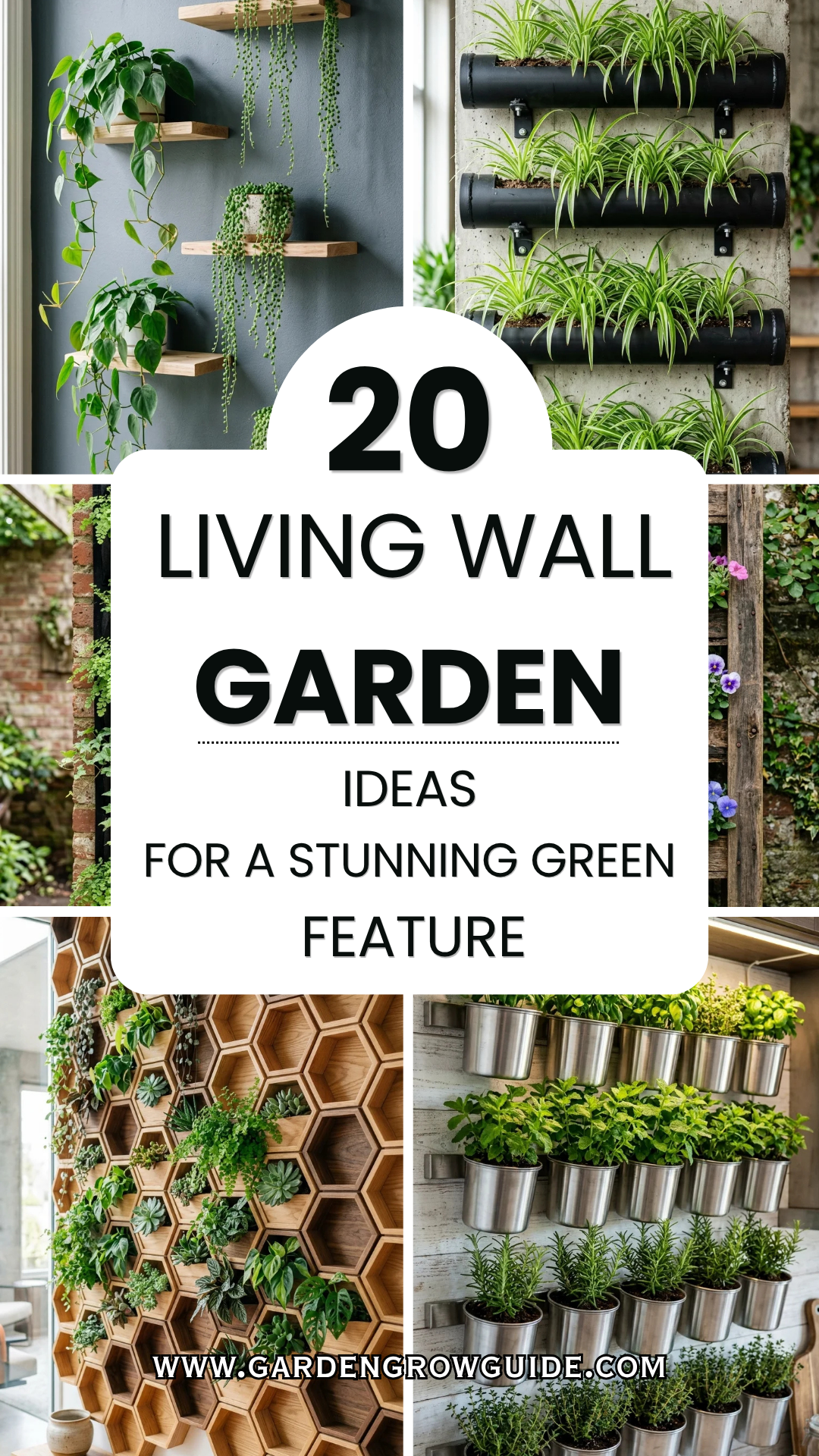
Vertical gardens, often referred to as living walls or green walls, have transformed from high-end architectural novelties into accessible home decor staples. They offer a unique way to bring nature indoors, improve air quality, and save precious floor space. Whether you are looking for a DIY weekend project or a sophisticated professional installation, these twenty ideas provide a comprehensive guide to elevating your space with living greenery.
1. Succulent Tapestry
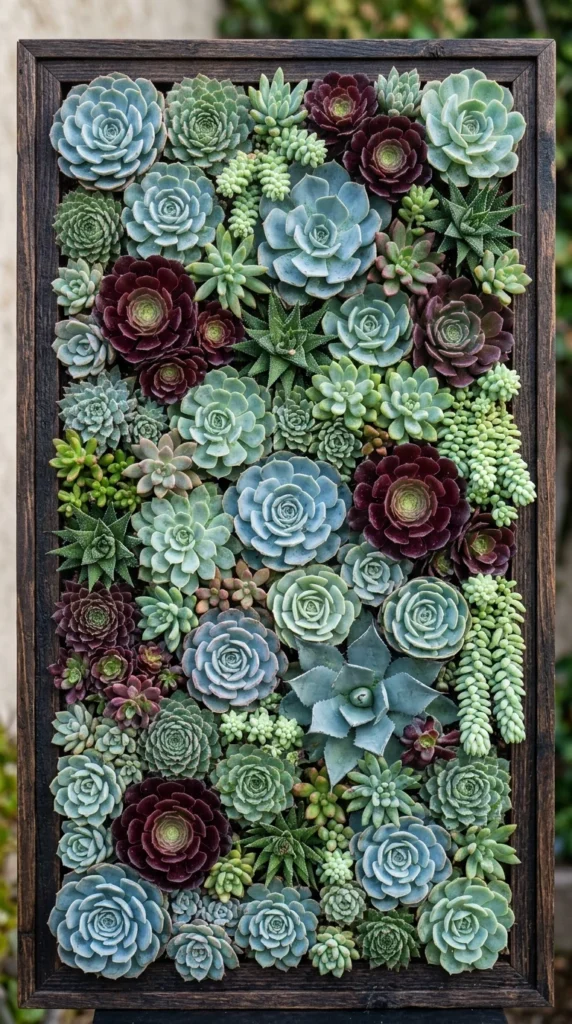
Succulents are the ideal choice for vertical gardens due to their shallow root systems and low water requirements. By mixing different species like Echeveria, Sedum, and Crassula, you can create a “tapestry” effect. The variety in shapes—from rosettes to trailing strings—adds a sculptural quality to the wall. Because they grow slowly, the design remains intact for a long period without needing constant pruning.
2. Herb Gallery
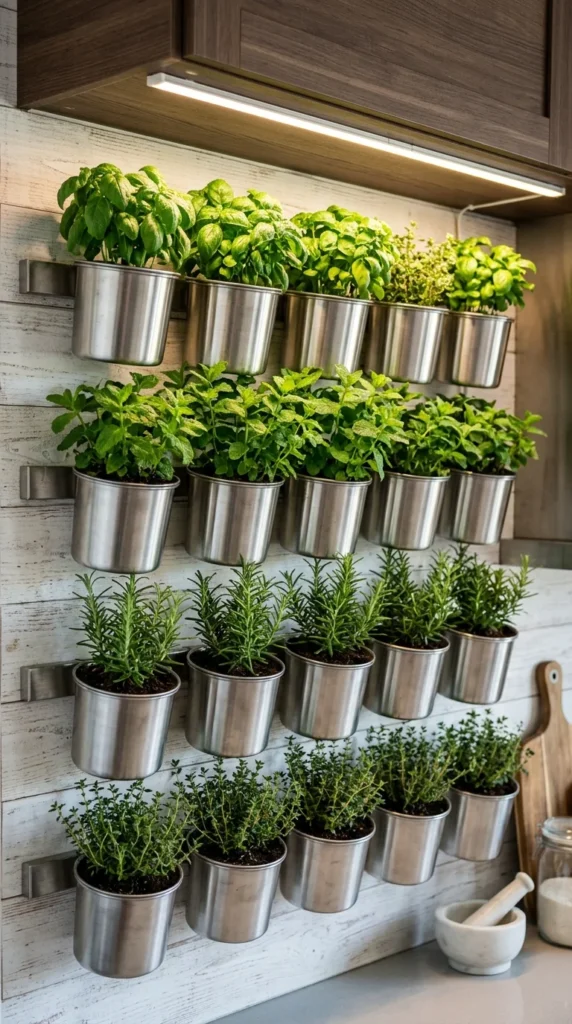
Function meets fashion in an indoor herb gallery. Placing a living wall in your kitchen ensures that fresh garnishes are always within reach. Using individual pots or a pocket system allows you to replace specific herbs as they are harvested. To ensure success, place this wall near a sunny window or install full-spectrum grow lights to keep the Mediterranean herbs like rosemary and oregano thriving.
3. Tropical Oasis
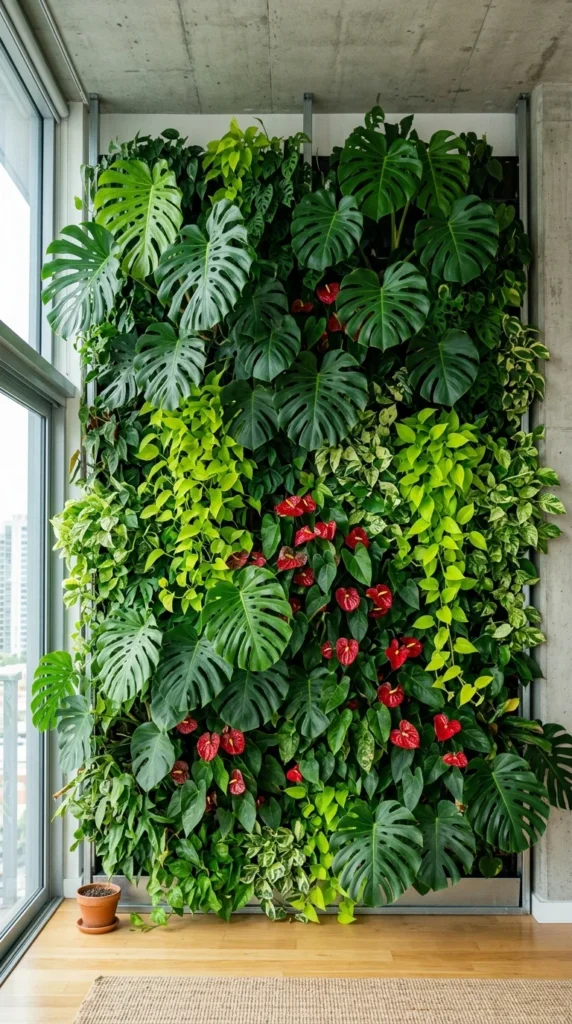
For a bold, high-impact look, a tropical living wall is unmatched. These walls typically utilize felt-pocket systems that mimic the natural environment of epiphytes. Plants like Marantas, Calatheas, and various Philodendrons provide a lush, multi-layered texture. This setup works best in areas with higher humidity, such as a large bathroom or a well-ventilated sunroom.
4. Moss Mural
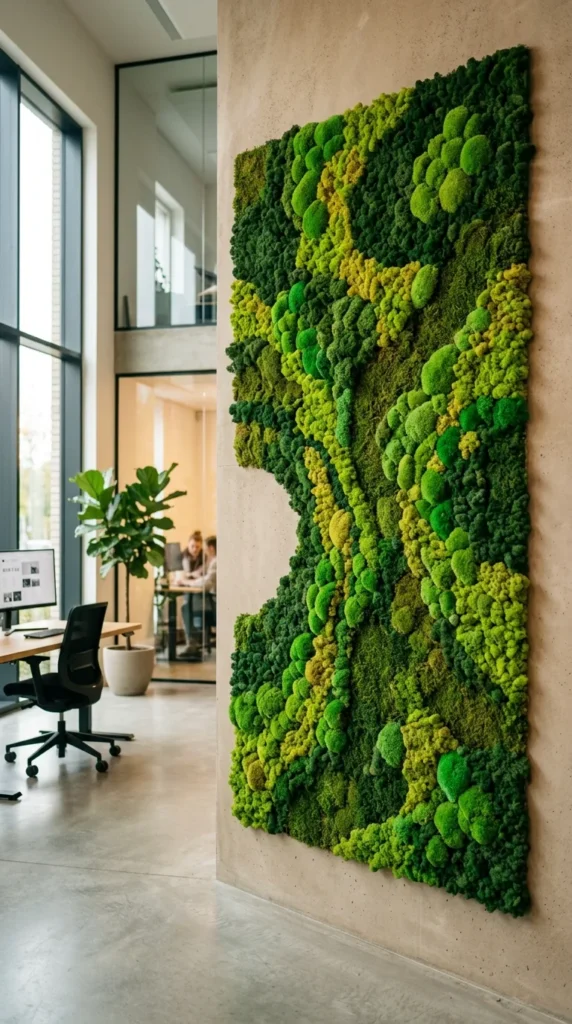
If you want the look of a living wall without the maintenance of irrigation, a moss mural is the answer. These are often made from preserved moss, which requires no water or light. They provide excellent acoustic insulation and a soft, tactile aesthetic. You can arrange different shades of moss into geometric patterns or organic shapes to create a maintenance-free piece of botanical art.
5. Pocket Planters
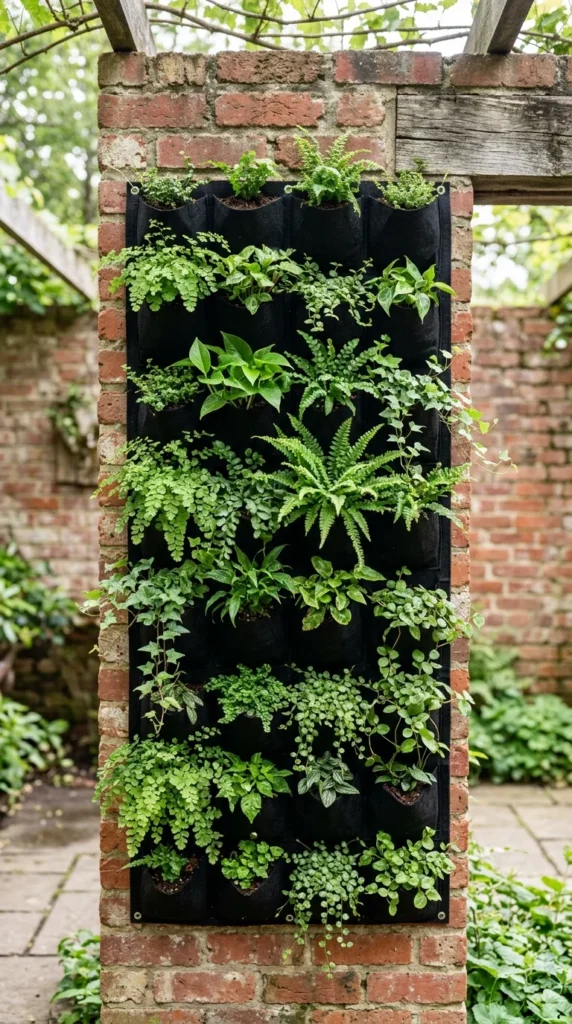
Felt pocket systems are the backbone of many DIY living walls. These breathable fabric pockets allow for excellent aeration of the roots and easy drainage. They are lightweight and can be mounted onto almost any vertical surface. This style is particularly effective for creating a “wall of green” where the hardware disappears entirely once the plants mature and spill over the edges.
6. Framed Art
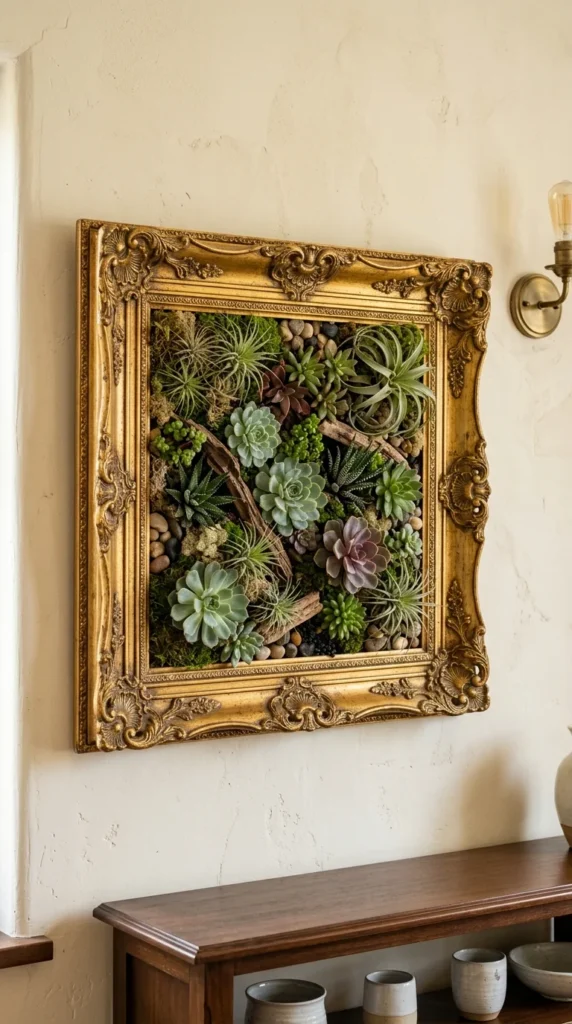
Treat your plants like a masterpiece by enclosing them in a picture frame. This approach works well for smaller spaces or as a focal point in a gallery wall. A deep shadow box or a specialized “living frame” kit holds the soil and mesh in place, allowing the plants to grow outward. It is a sophisticated way to introduce greenery into a formal dining room or a minimalist hallway.
7. Modular Grids
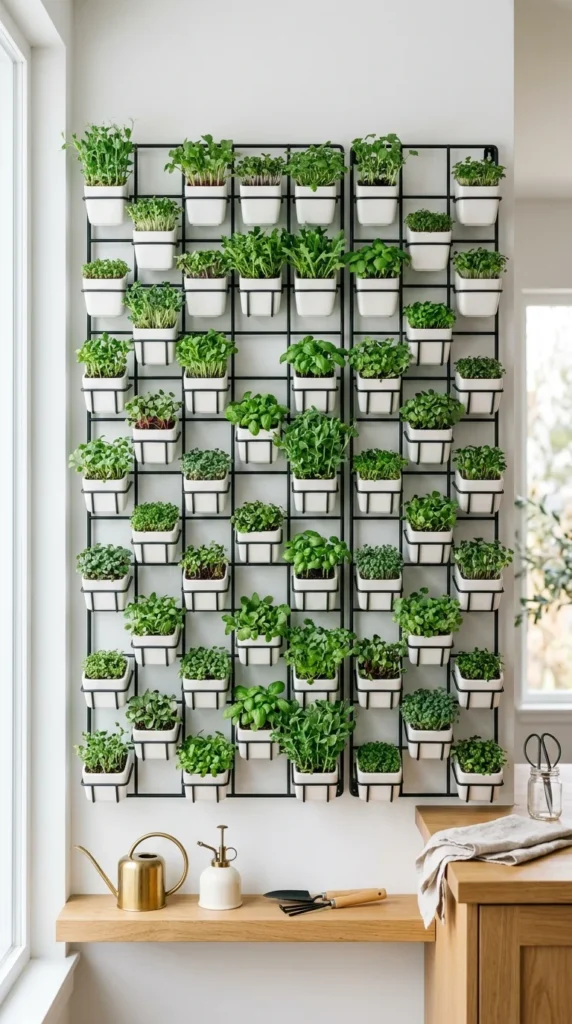
Modular systems use a grid of plastic or metal that holds individual canisters or pots. This is the most flexible option for beginners because it allows you to move, swap, or replace individual plants without disturbing the rest of the wall. It’s a great way to experiment with different plant combinations or seasonal rotations.
8. Climbing Vines
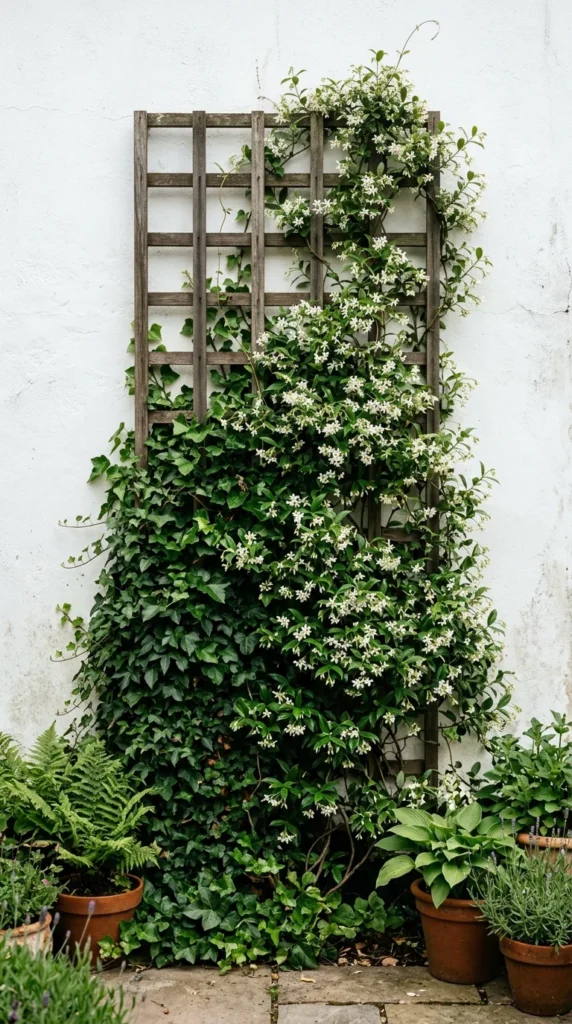
Sometimes the simplest living wall is a traditional trellis with climbing plants. By using a wall-mounted trellis, you can encourage vines like Pothos, Hoya, or Ivy to grow vertically. This creates a softer, more ethereal look compared to the dense “plug” style of other living walls. As the vines grow, they can be trained to frame doorways or windows.
9. Fern Grotto
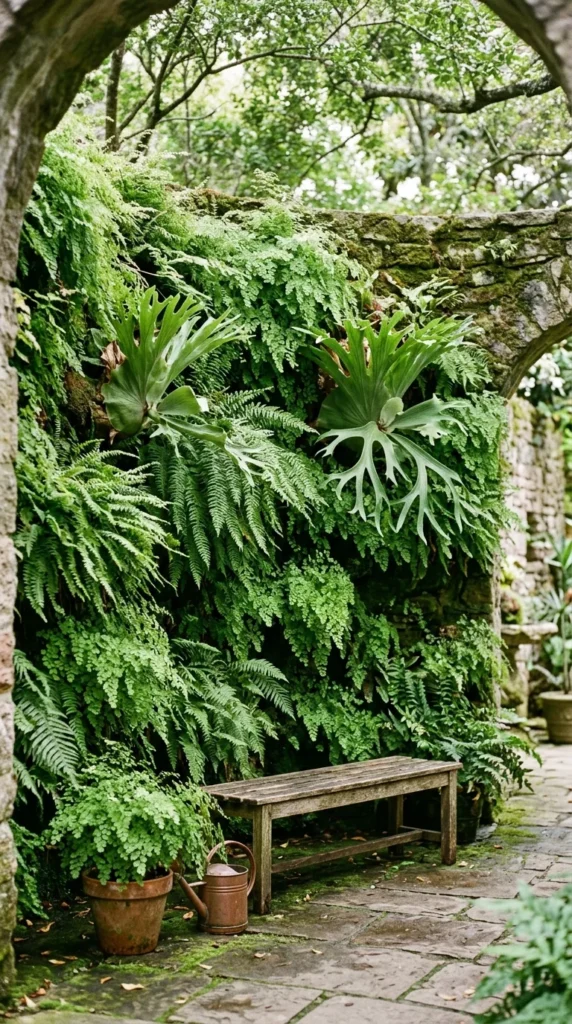
Ferns are perfect for north-facing walls or interior rooms with lower light levels. A “fern grotto” style living wall focuses on texture rather than color. The delicate, arching fronds of Maidenhair ferns contrasted with the sturdy, prehistoric look of Staghorn ferns creates a calming, woodland atmosphere. These walls require consistent moisture, making a built-in drip irrigation system highly recommended.
10. Pallet Upcycle
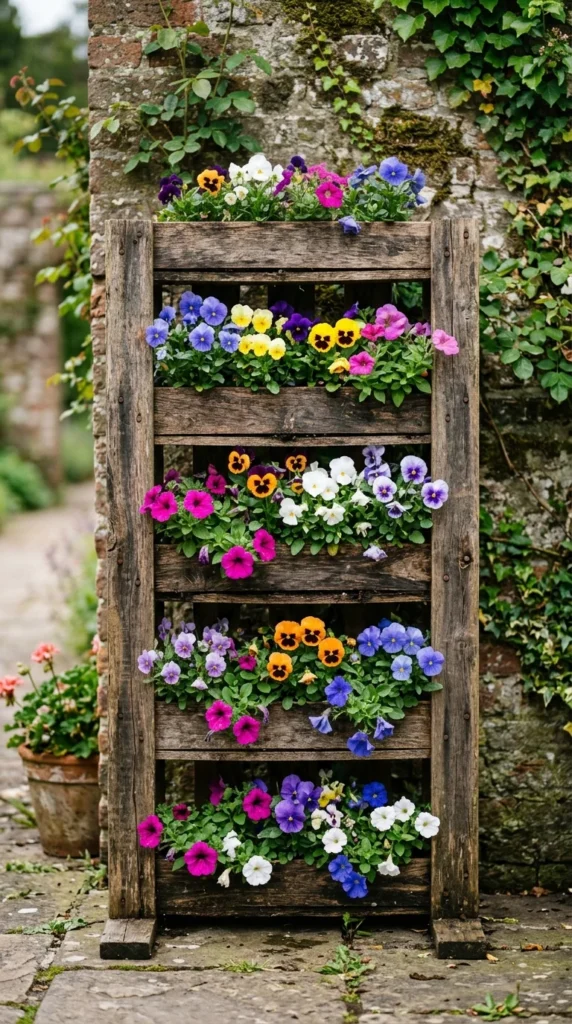
For a rustic or farmhouse aesthetic, an upcycled wooden pallet is a cost-effective solution. By stapling landscape fabric to the back and bottom of the slats, you create horizontal troughs for planting. This works exceptionally well for outdoor patios or balconies, allowing you to grow a mix of flowering annuals and decorative grasses in a compact footprint.
11. Minimalist Shelving
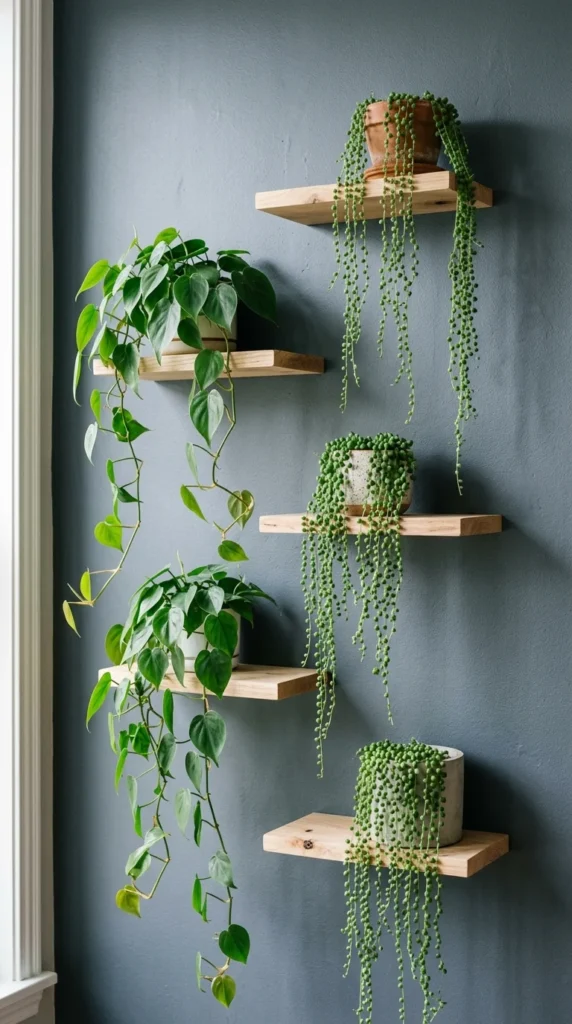
If a full “jungle wall” feels too overwhelming, minimalist shelving offers a cleaner look. By using thin floating shelves and choosing plants with a “cascading” habit, you can create a vertical curtain of green that feels light and airy. This method allows the wall color and the architecture of the room to remain visible while still providing a significant botanical presence.
12. Hydroponic Tower
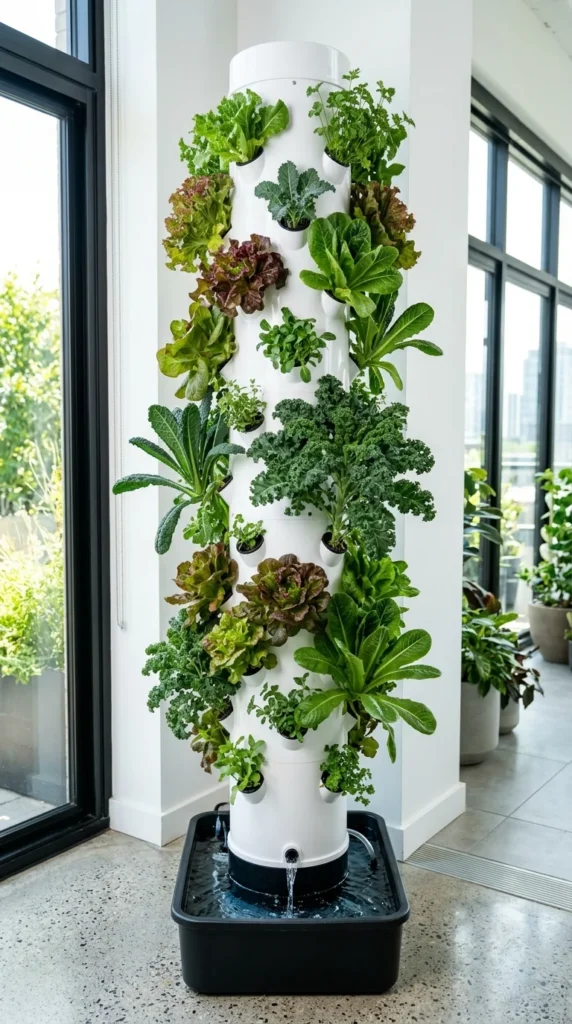
Hydroponic walls represent the intersection of technology and gardening. These systems do not use soil; instead, nutrient-rich water is circulated through the structure to feed the roots directly. They are incredibly efficient, grow plants faster than soil-based systems, and are perfect for indoor vegetable gardening. A hydroponic tower can produce a massive amount of food in just a few square feet.
13. Air Plant Display
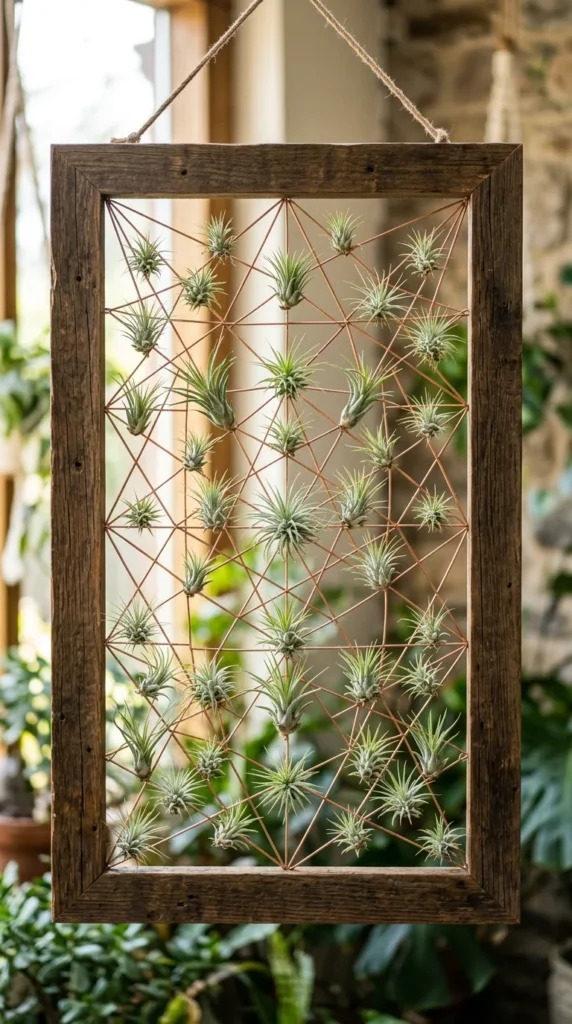
Air plants (Tillandsia) are unique because they don’t require soil to grow. They take in moisture and nutrients through their leaves. This allows for incredibly creative vertical displays. You can glue them to driftwood, hang them from wire grids, or nestle them into geometric metal frames. Because they are so light, you can create a massive living wall feature that is easy to move and maintain.
14. Industrial Pipes
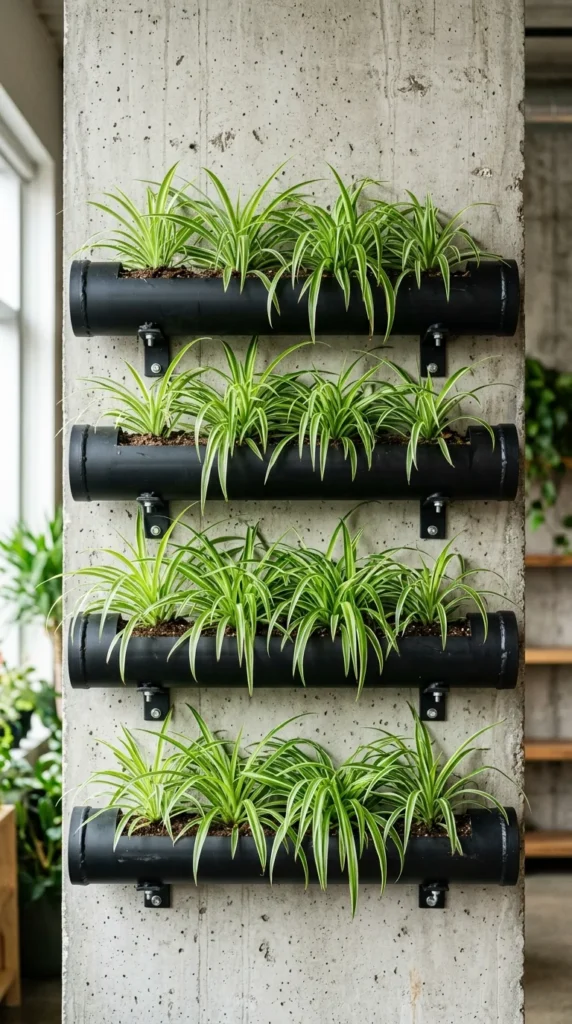
For lofts and modern industrial spaces, using plumbing pipes as planters adds an edgy, urban vibe. Copper, PVC, or galvanized steel pipes can be mounted horizontally and filled with soil. This linear approach is great for narrow hallways where a bulky planter might obstruct the path. Spider plants and trailing succulents look particularly striking when emerging from the “industrial” hardware.
15. Geometric Patterns
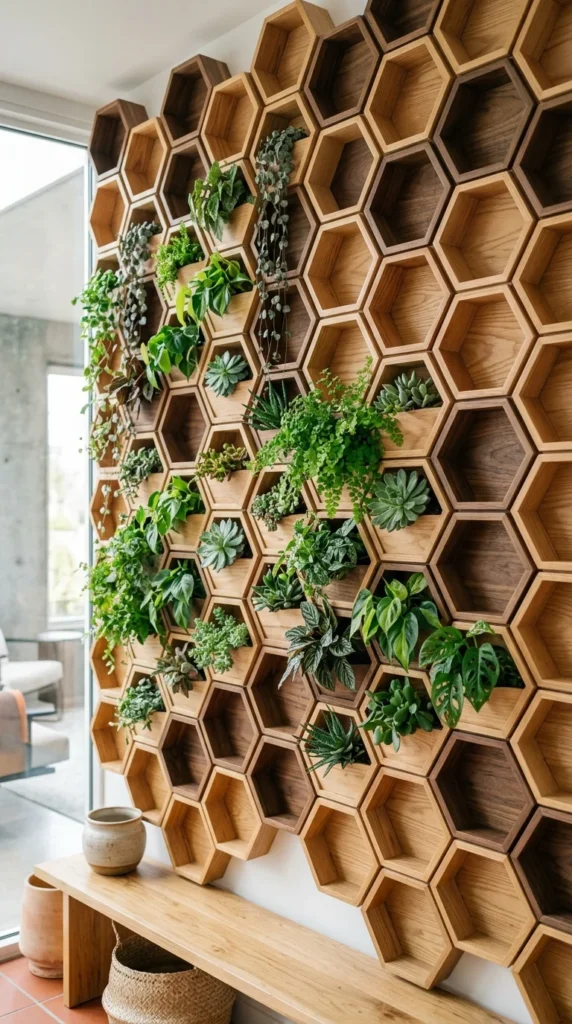
Living walls don’t have to be solid rectangles. Using geometric containers—like hexagons, triangles, or circles—allows you to create a graphic pattern on the wall. By leaving some of the containers empty or filling them with different materials like wood or stone, you turn the garden into a piece of contemporary wall art. This is a popular choice for modern offices and living rooms.
16. Flowering Cascade
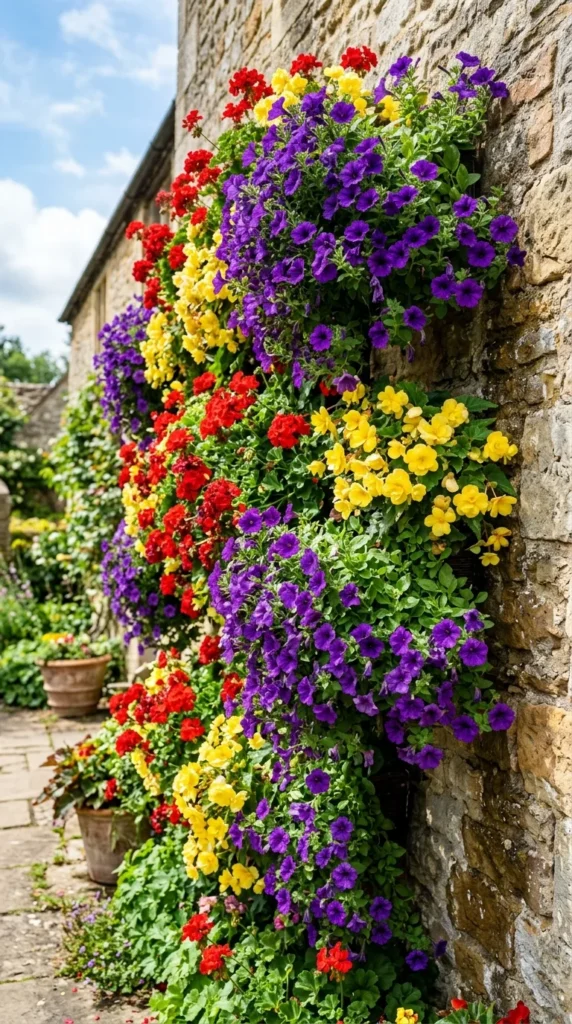
While many living walls focus on foliage, a flowering wall provides a seasonal explosion of color. Using a mix of flowering annuals ensures that the wall changes throughout the year. To maintain the bloom, these walls require more frequent “deadheading” and fertilization, but the visual reward of a vertical floral display is unparalleled for summer outdoor entertaining areas.
17. Kitchen Backsplash
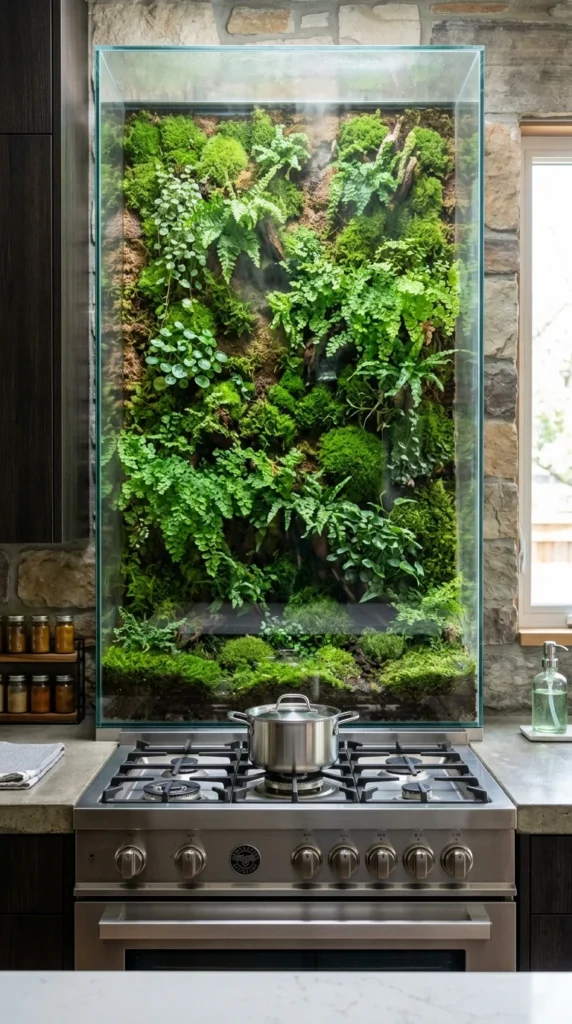
A living backsplash is a high-end design choice that brings life to the heart of the home. Usually installed behind a glass panel to protect the plants from cooking heat and splatters, these walls require professional installation and specialized lighting. They create a stunning, vibrant backdrop for a modern kitchen and provide a permanent connection to nature while you cook.
18. Privacy Screen
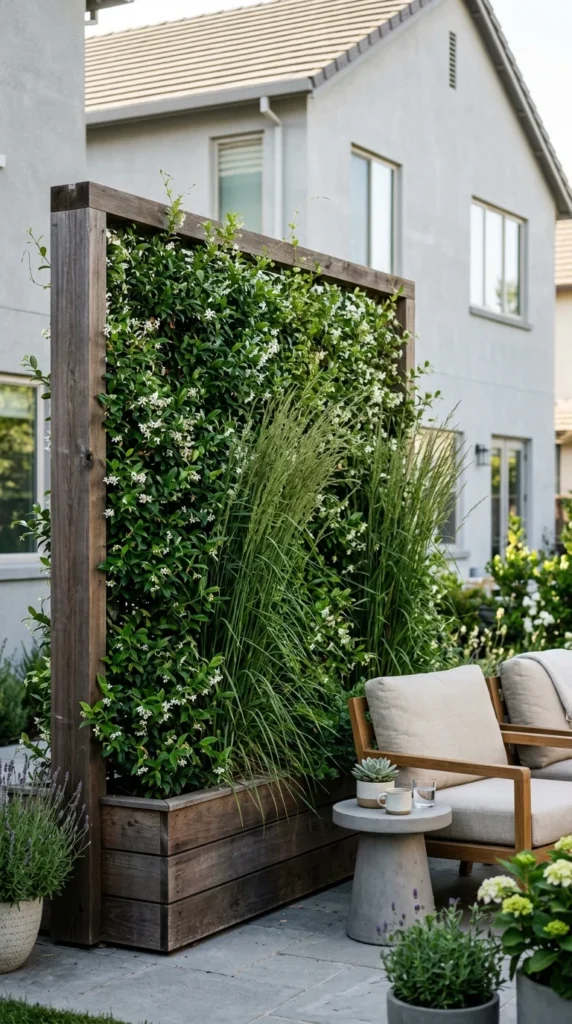
A living wall can serve a functional purpose as a privacy screen. Instead of a wooden fence or a plastic barrier, a double-sided vertical garden can block neighbors’ views while providing a beautiful view for you. Tall grasses, bamboo, and dense ivy are excellent choices for creating a natural, sound-dampening barrier on a deck or balcony.
19. Shadow Box Display
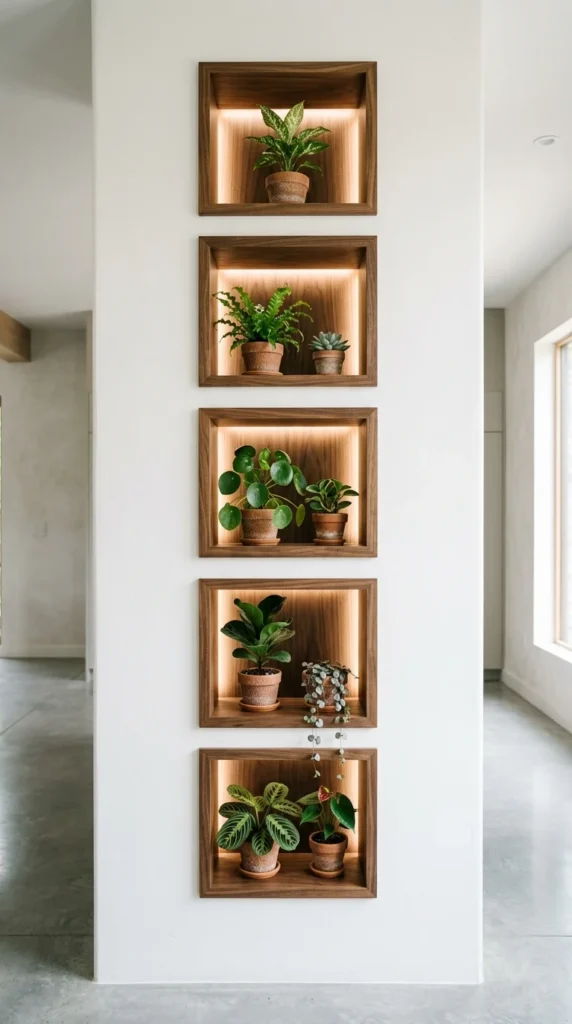
Recessing the garden into the wall creates a “shadow box” effect. This adds depth to the room and makes the plants look like they are part of the building’s architecture. Integrating LED strips within the boxes can highlight the textures of the leaves and ensure the plants receive enough light in darker rooms. This is a very clean, high-concept way to integrate greenery.
20. Smart Automated Wall
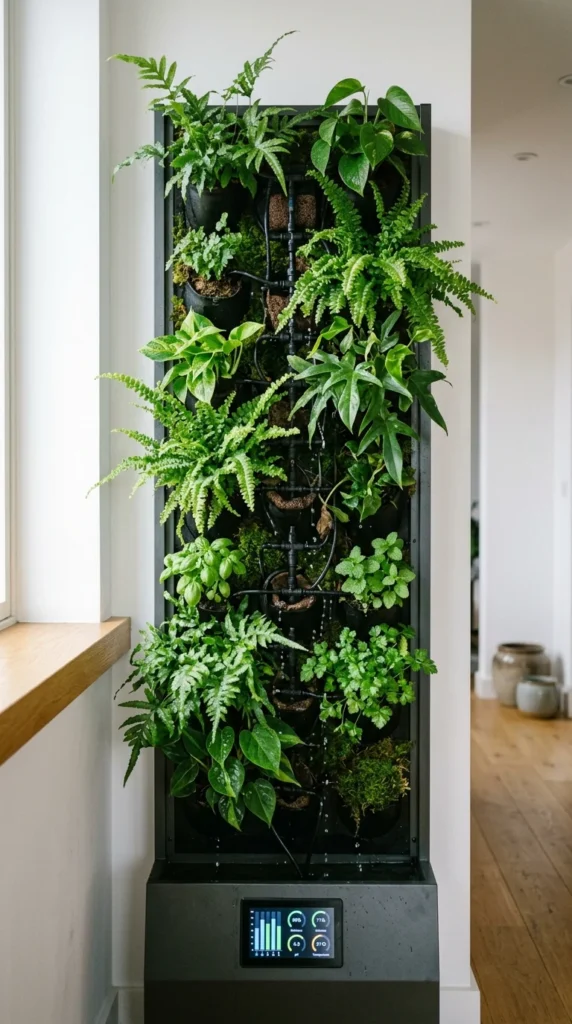
For the tech-savvy gardener, a smart living wall takes the guesswork out of maintenance. These systems include built-in reservoirs, automatic pumps, and sensors that monitor soil moisture and light levels. Some even connect to smartphone apps to alert you when it’s time to add nutrients. This is the ultimate “set it and forget it” solution for those who want a massive green feature without the daily upkeep.