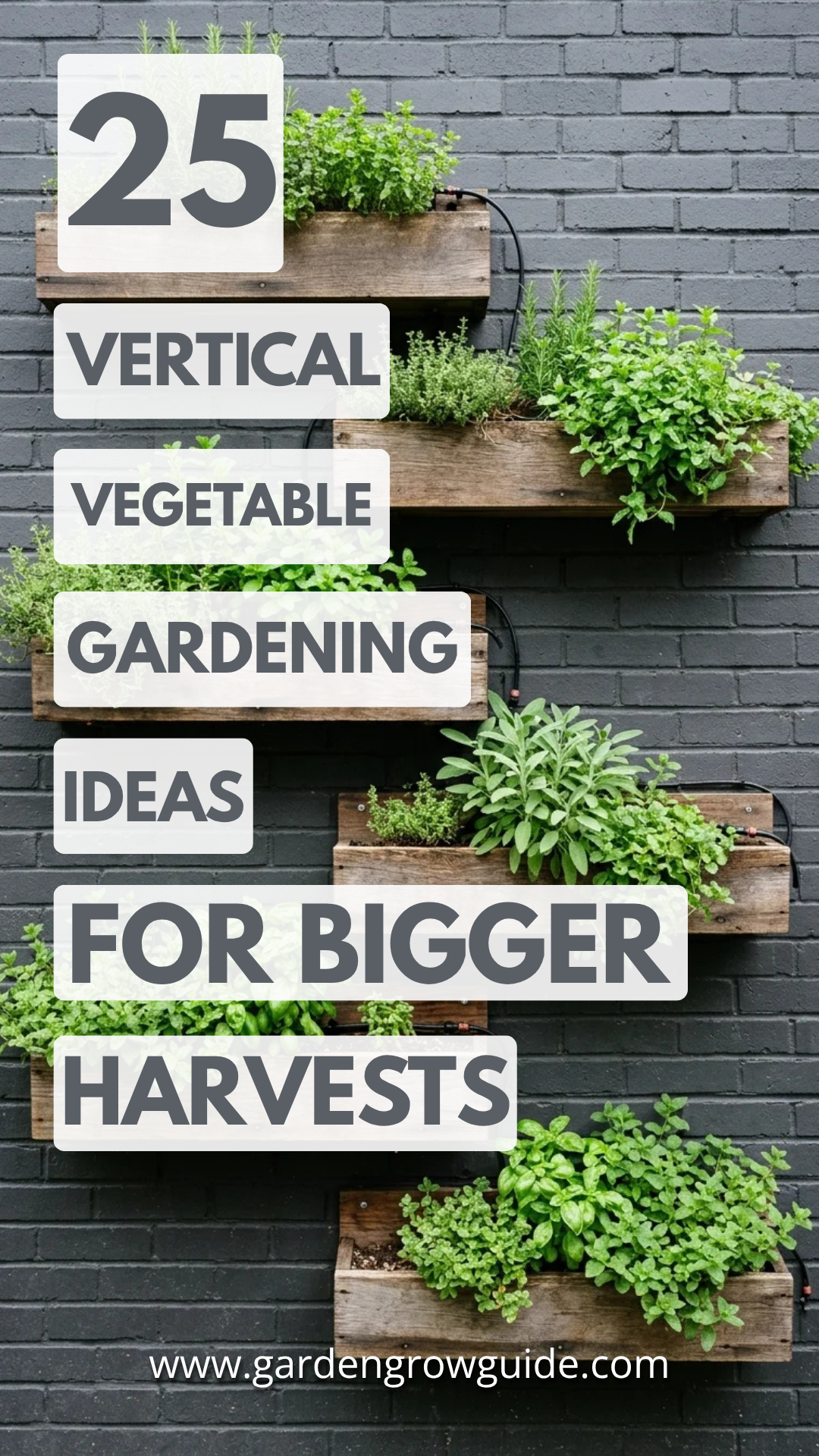
Vertical gardening is the ultimate solution for gardeners facing limited space, poor soil quality, or the desire to maximize their harvest yields. By shifting your focus from the ground upward, you open up a new dimension of cultivation that improves air circulation, reduces pest pressure, and makes harvesting significantly easier on your back. Whether you have a sprawling suburban yard or a tiny urban balcony, these twenty vertical gardening ideas will help you grow more food in less space.
1. A-Frame Trellises
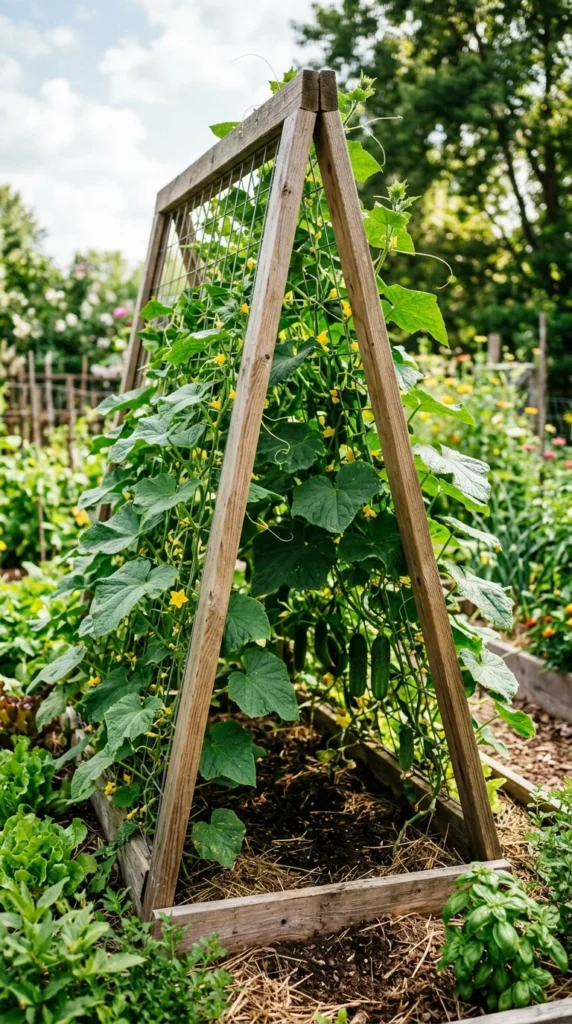
The A-frame trellis is a classic for a reason. Its stable, triangular design allows you to grow heavy vining crops on both sides while creating a shaded microclimate underneath. This under-space is perfect for cool-season crops like lettuce or spinach that might otherwise bolt in the summer sun. A-frames are particularly effective for cucumbers, small melons, and pole beans. Because the fruit hangs down through the center of the “A,” it stays clean, straight, and easy to spot during harvest.
2. Cattle Panels
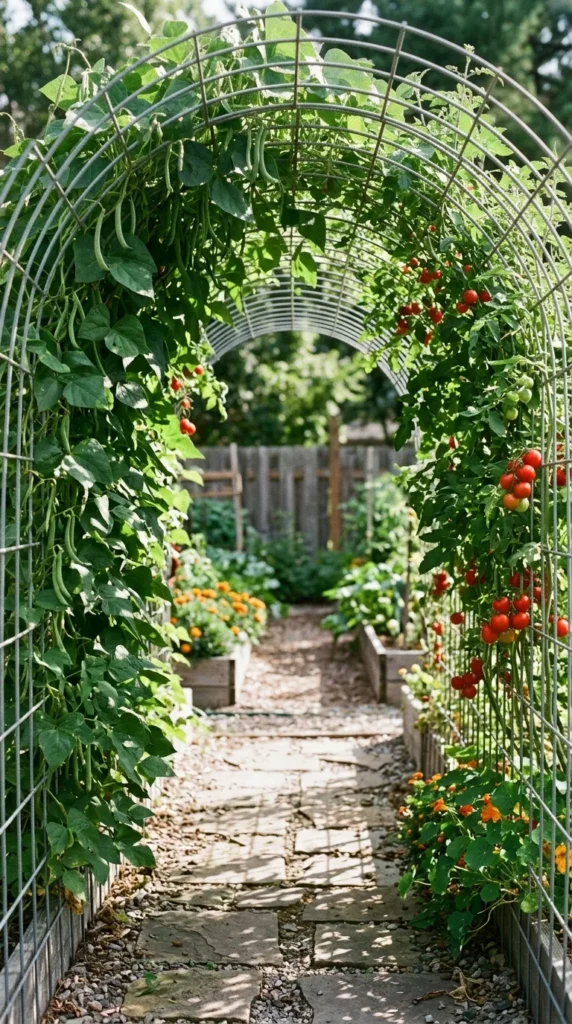
Cattle panels are perhaps the most durable and versatile vertical gardening tool available. Made of thick, galvanized steel wire, they can be arched between two raised beds to create a “living tunnel.” This setup is ideal for heavy climbers like winter squash, pumpkins, and indeterminate tomatoes. The arch provides incredible structural integrity, ensuring that even a 20-pound pumpkin won’t collapse the support. Walking through a tunnel of hanging vegetables is not only space-efficient but also an enchanting aesthetic experience.
3. Tower Gardens
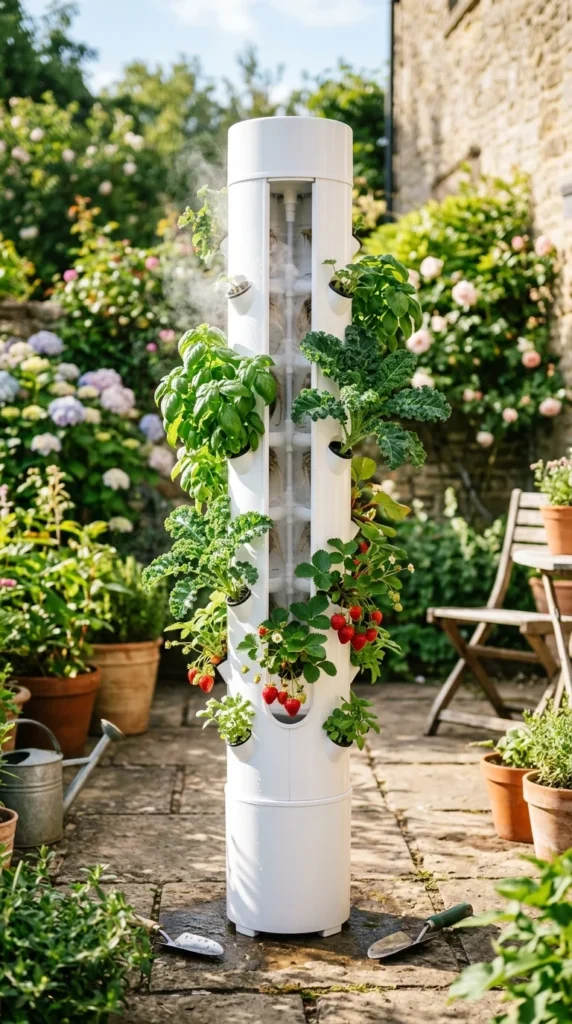
For those with very limited ground space or no soil at all, vertical tower gardens are a game-changer. These systems can be soil-based or hydroponic/aeroponic. They work by stacking planting pockets vertically around a central reservoir. Because they utilize a recirculating water system, they often use 90% less water than traditional gardening. They are perfect for leafy greens, herbs, and strawberries, allowing you to grow dozens of plants in a footprint of just a few square feet.
4. Wall Planters
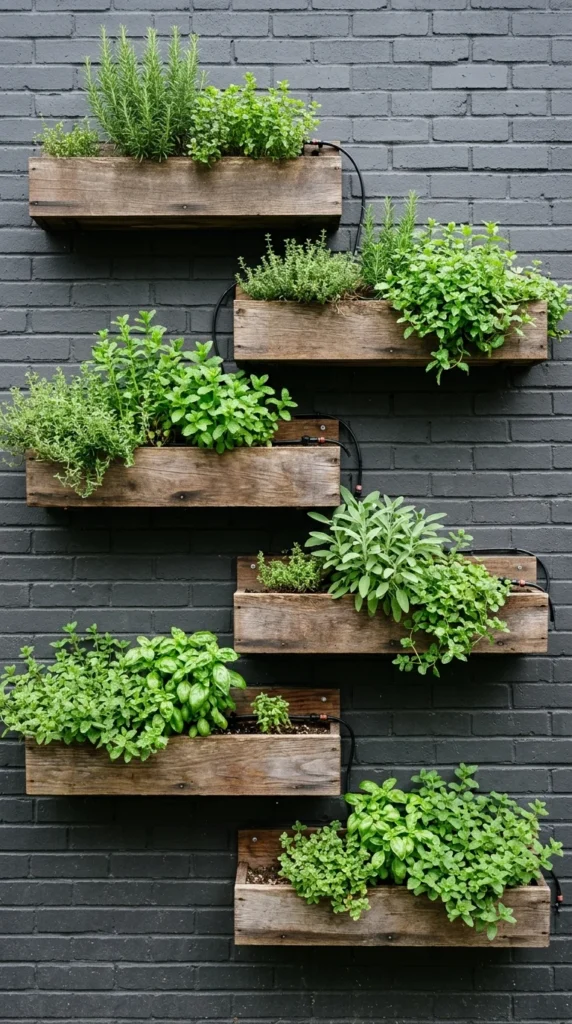
Utilizing vertical wall space can transform a bare fence or the side of a house into a productive food source. Wall planters can range from simple wooden boxes to elaborate modular systems. The key to success with wall planters is ensuring they are securely fastened and have adequate drainage. These are excellent for shallow-rooted vegetables like radishes, chives, and various types of lettuce.
5. Hanging Baskets
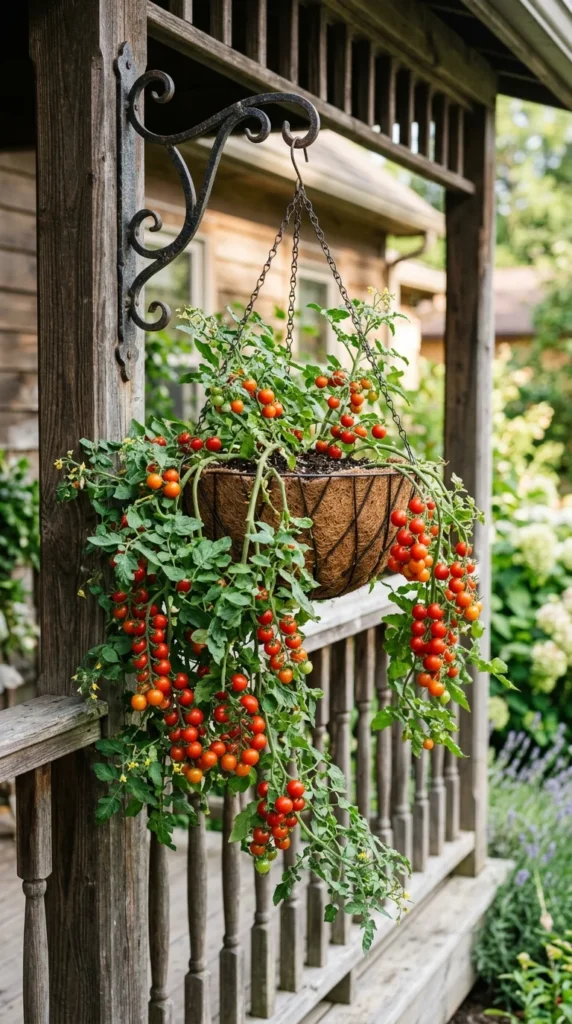
Hanging baskets are not just for petunias. Many vegetable varieties have been bred specifically for trailing growth habits. “Tumbling” tomatoes, strawberries, and even certain types of peas thrive in hanging environments. This method keeps the fruit off the ground, protecting it from slugs and soil-borne diseases. Placing them at eye level makes monitoring for pests and harvesting effortless.
6. Gutter Gardens
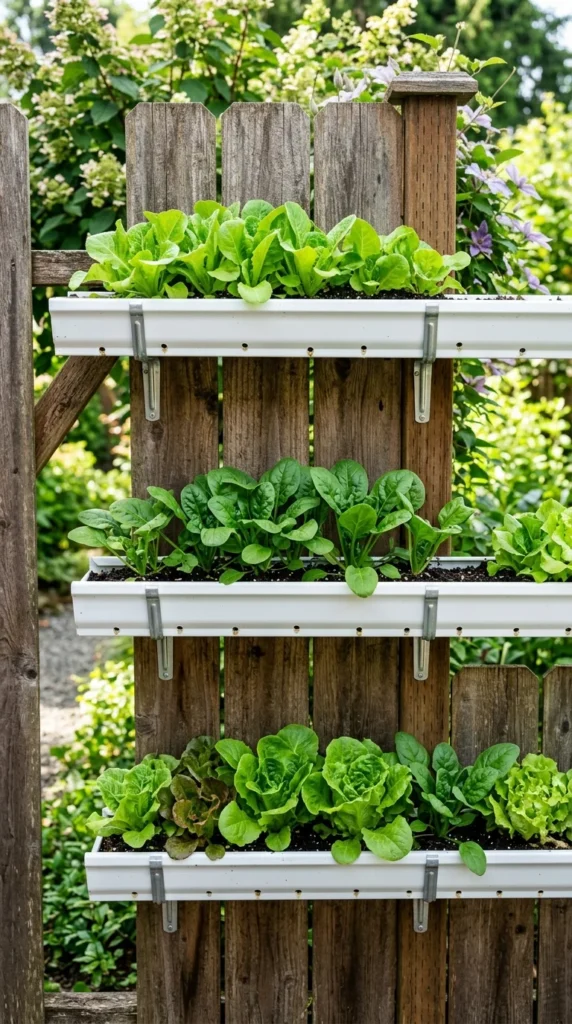
Repurposing old rain gutters is an affordable and clever way to create a vertical herb or salad garden. By mounting sections of guttering to a fence or a standalone frame, you create long, narrow planting rows. This setup is particularly effective for “cut and come again” greens. Because the soil volume is relatively low, these gardens require frequent watering or a simple drip irrigation line, but they excel at keeping delicate greens away from ground-dwelling pests.
7. Pallet Planters
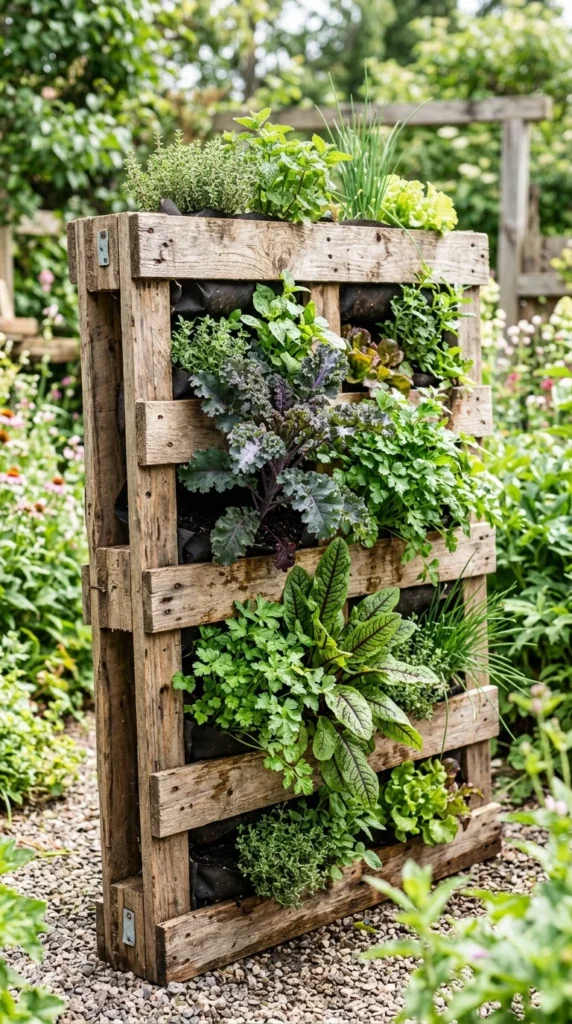
Upcycling wooden pallets is a favorite DIY vertical gardening project. By backing the pallet with landscape fabric and filling it with soil, the horizontal slats become natural rows for planting. It is crucial to use pallets marked with “HT” (Heat Treated) rather than chemically treated ones to ensure no toxins leach into your food. This method is highly effective for compact herbs and succulents.
8. Bamboo Tepees
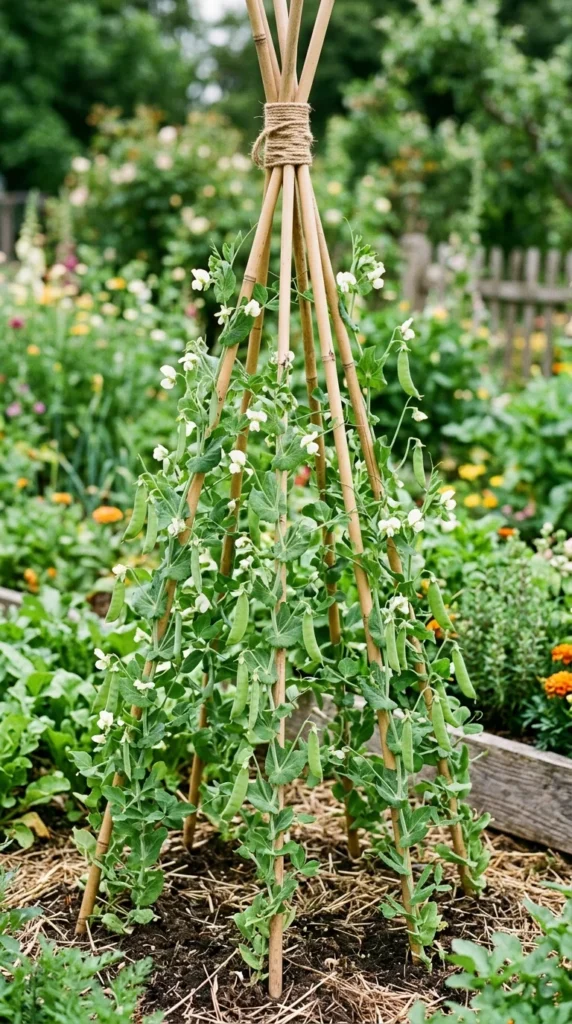
Bamboo tepees are a sustainable, low-cost, and visually pleasing way to support climbing plants. They are incredibly easy to assemble and can be moved around the garden each season to support crop rotation. Tepees are the traditional choice for pole beans and sweet peas. As the plants reach the top, they create a lush green pyramid that adds height and architectural interest to the vegetable patch.
9. Arbors
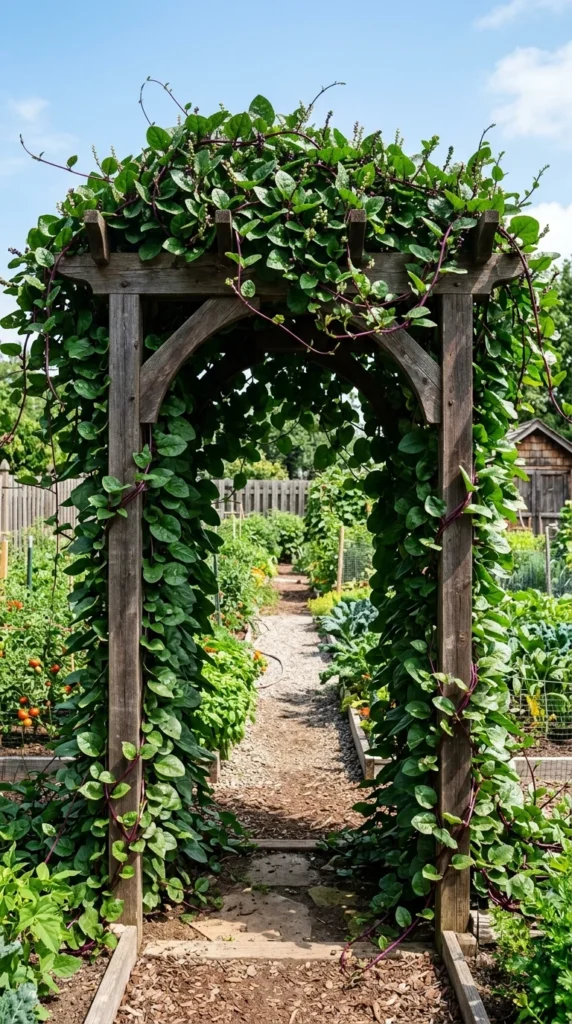
An arbor serves as both a functional support and a beautiful gateway. While often used for ornamental roses, an arbor is perfect for vigorous edible climbers like grapes, hardy kiwi, or Malabar spinach. Because arbors are built to be permanent and sturdy, they can handle the significant weight of woody vines that return year after year.
10. Stair-Step Shelving
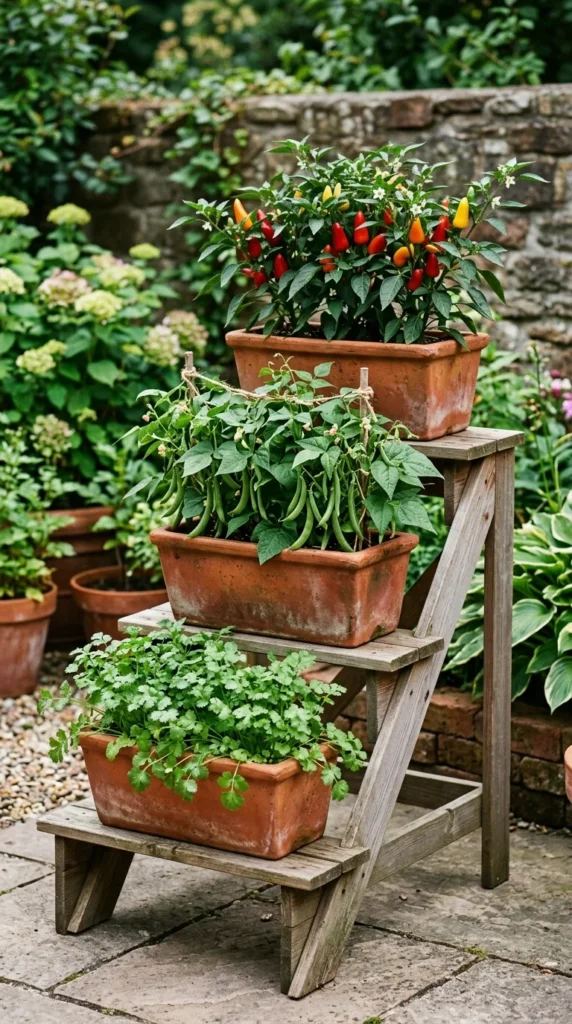
Stair-step shelving is an excellent way to organize a container garden vertically. This design ensures that the plants in the back aren’t shaded out by the plants in the front. It allows for a high density of pots in a small area and makes it easy to move individual plants if they need more or less sun. This is an ideal solution for renters who need a productive garden that can be easily disassembled and moved.
11. Netting Systems
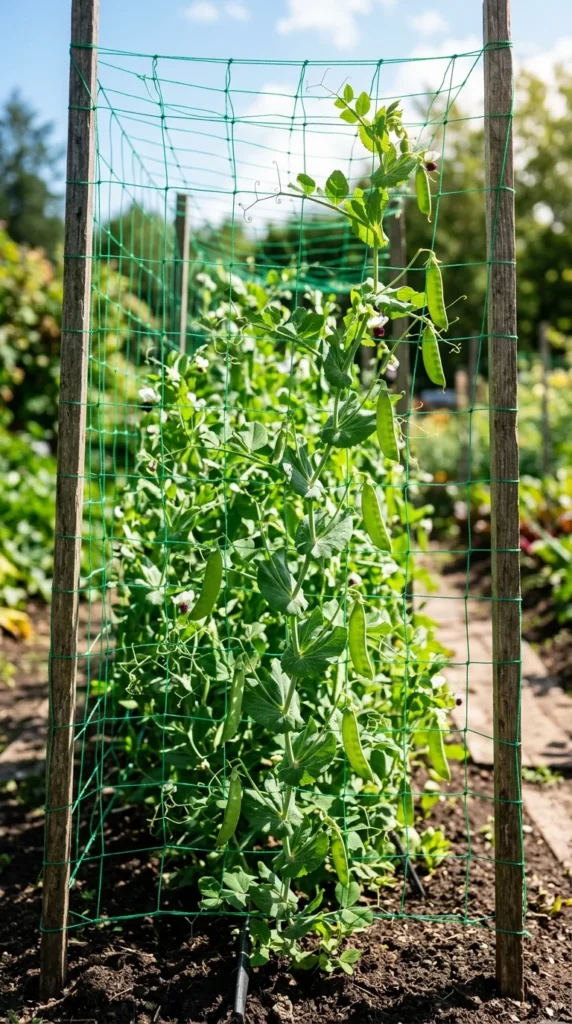
For plants with delicate tendrils, such as peas or certain varieties of cucumbers, heavy wooden trellises can sometimes be too thick for the plant to grasp. Lightweight nylon or jute netting provides the perfect fine-grid support. The netting can be strung between posts or even attached to the side of a building. At the end of the season, jute netting can be composted along with the spent vines, making cleanup a breeze.
12. Pocket Organizers
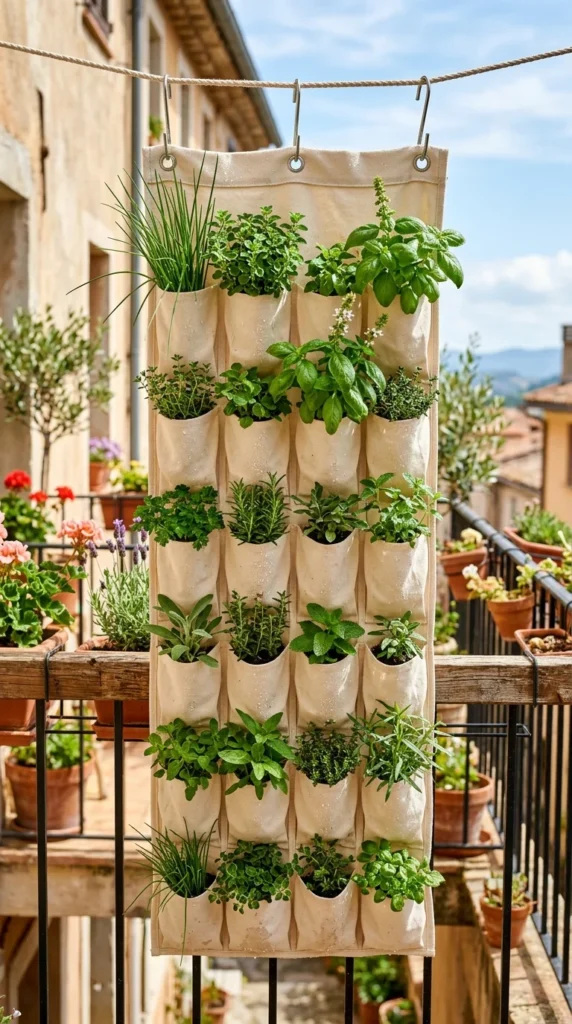
While it might seem unconventional, a canvas shoe organizer is a fantastic vertical planter for herbs and small greens. The individual pockets provide perfect portions for single plants, and the breathable fabric allows for excellent drainage and air to the roots. This is one of the most budget-friendly vertical gardening hacks and is especially popular for apartment dwellers with limited balcony space.
13. Tiered Raised Beds
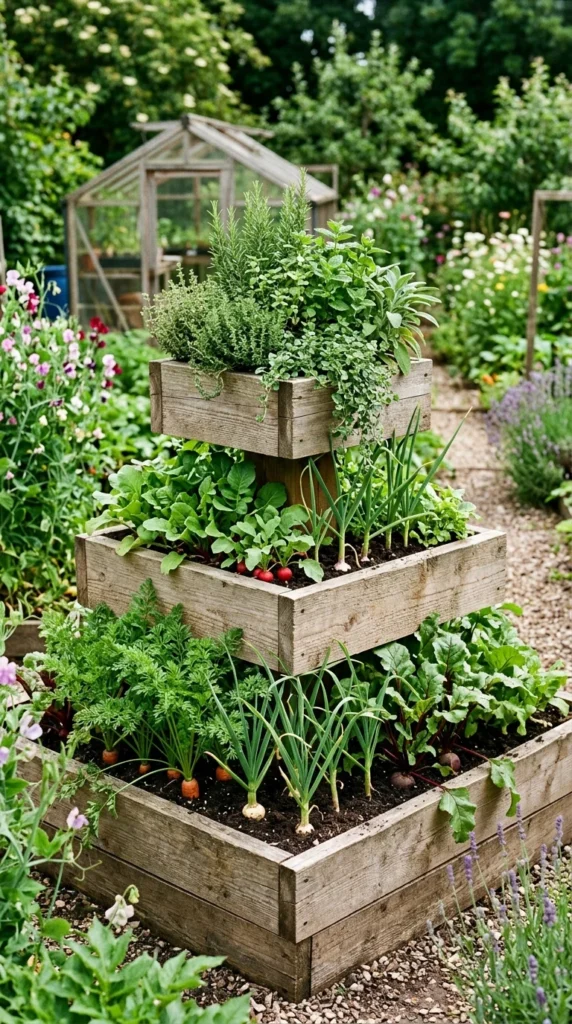
Tiered raised beds allow you to maximize the “verticality” of a traditional garden bed. By stacking frames, you create different soil depths, which is useful for planting deep-rooted crops like carrots in the center and shallower crops around the edges. This design also reduces the amount of bending required for maintenance and creates a focal point in the landscape.
14. Vertical PVC Pipes
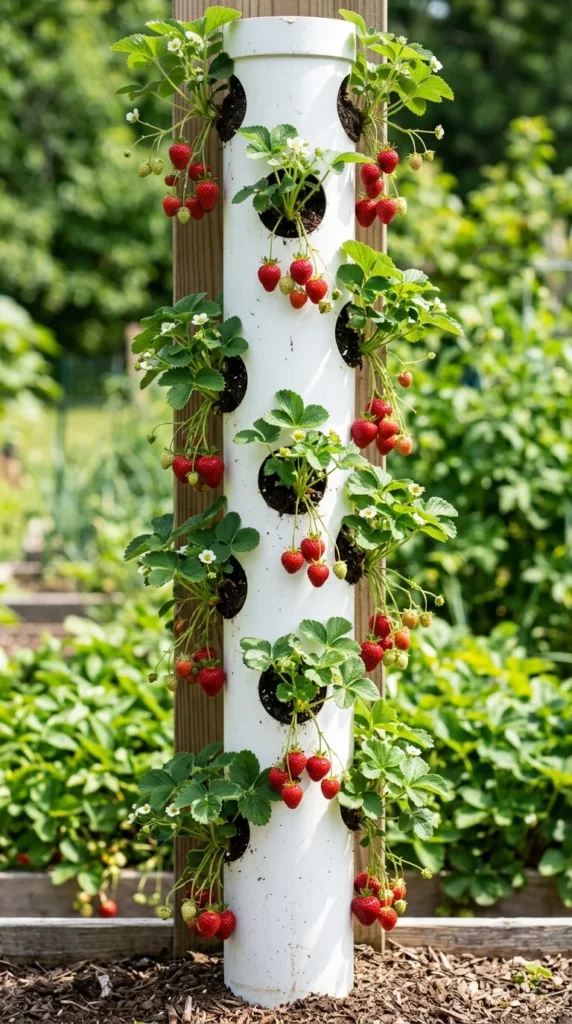
Using PVC pipes as vertical planters is a space-efficient way to grow strawberries or leafy greens. By drilling large holes into the sides of a 4-inch or 6-inch pipe and filling it with a high-quality potting mix, you create a “planting column.” An internal, smaller perforated pipe can be used to ensure water reaches the roots at the very bottom of the tower. This method keeps fruit clean and away from ground pests.
15. String Support
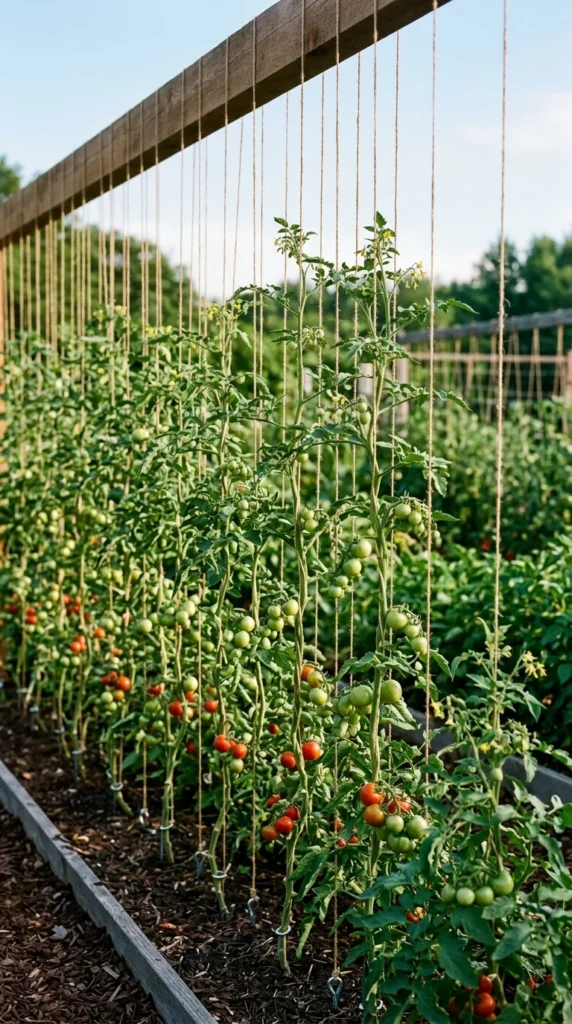
The string support method, often used in commercial greenhouses, is a highly effective way to grow indeterminate tomatoes and peppers in a small footprint. By pruning plants to a single or double leader and wrapping them around a vertical string, you can grow plants much closer together than traditional cages allow. This increases airflow and makes the fruit very easy to access.
16. Obelisks
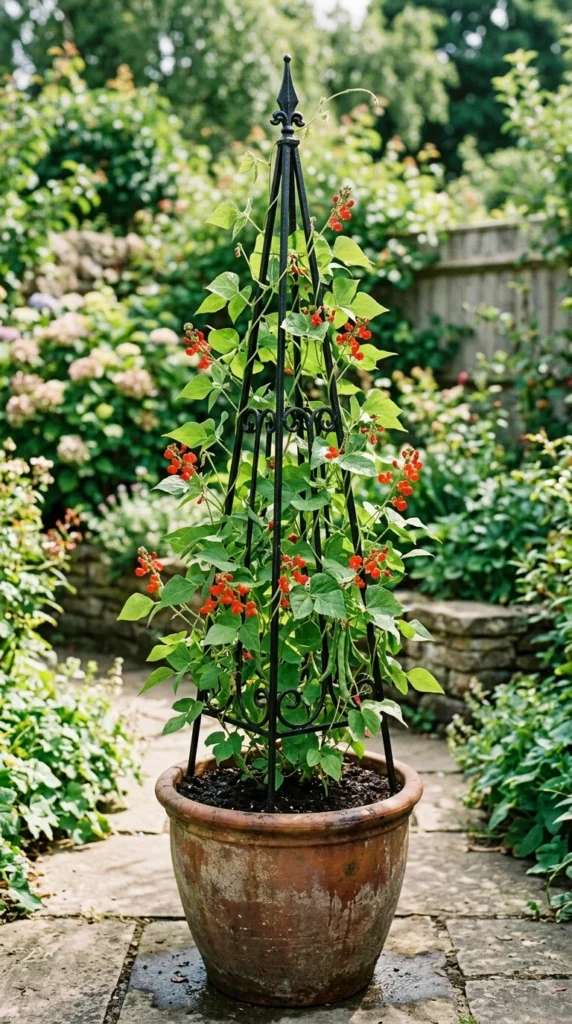
Garden obelisks add a touch of elegance and formality to the vegetable garden. These four-sided pyramid structures are perfect for smaller climbing plants or for adding a vertical element to a large container. Because they are often quite ornamental, they are a great choice for “edible landscaping” where you want your food crops to look as beautiful as your flowers.
17. Spiral Towers
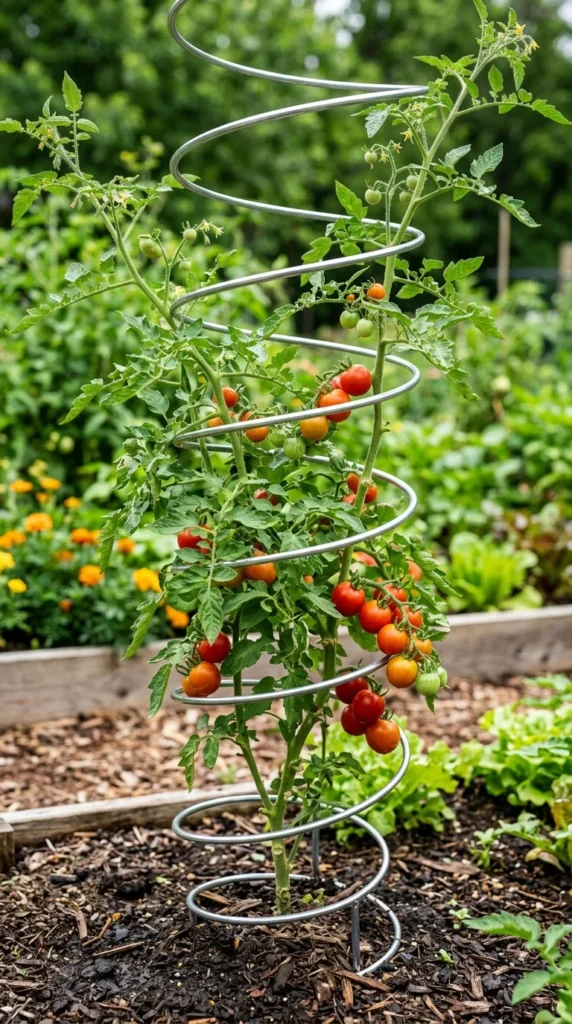
Spiral supports are a modern alternative to the traditional tomato cage. The spiral design allows the plant to grow upward through the center, with the branches naturally resting on the loops. This eliminates the need for tying the plant to the support and provides a sleek, minimalist look. They are particularly useful for medium-sized tomato varieties and eggplants.
18. Fence Mounted Pots
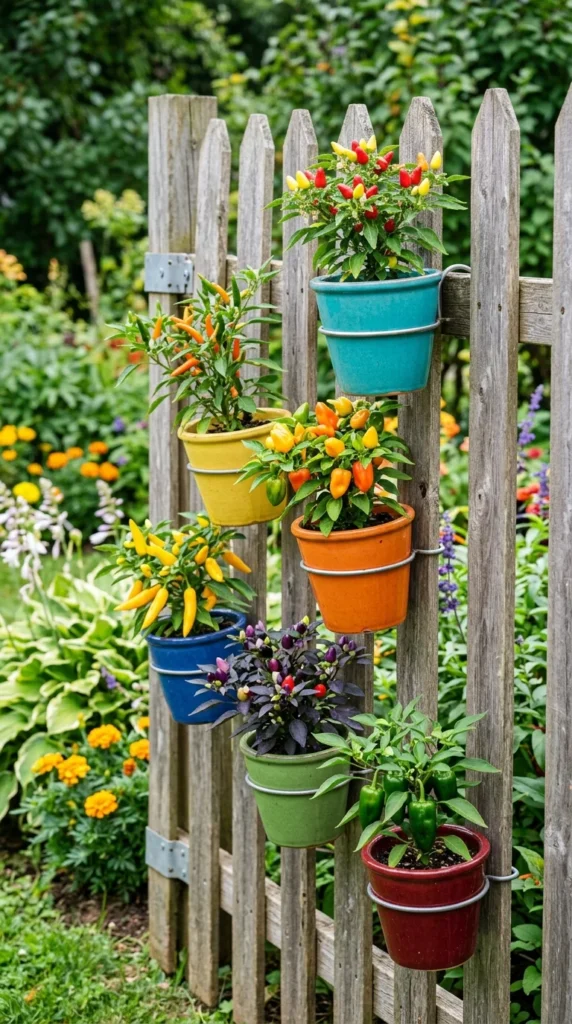
If you have a fence, you have a vertical garden waiting to happen. Using specialized brackets or simple wire loops, you can mount standard terracotta or plastic pots directly to the fence. This elevates your plants, putting them at a convenient height for care and harvesting while utilizing a space that is usually left empty. This is a great way to grow heat-loving plants like peppers, as the fence can often reflect extra warmth toward the pots.
19. Stackable Planters
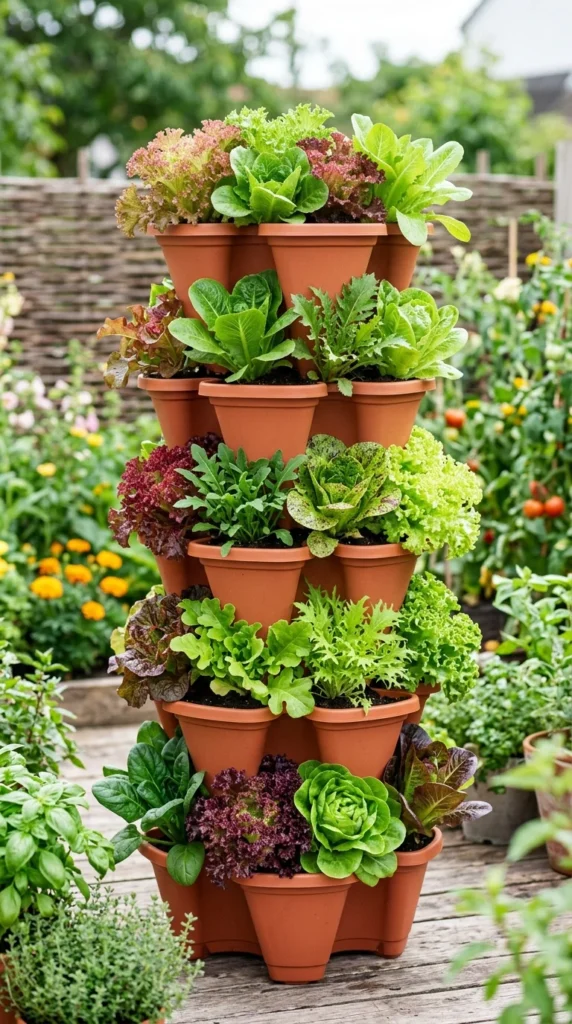
Commercial stackable planters are designed specifically for vertical efficiency. These units usually feature a tiered design where water from the top level trickles down to nourish the levels below. They are extremely stable and can be stacked quite high, allowing you to grow dozens of plants in the space of a single pot. They are the gold standard for high-density strawberry and herb production.
20. Window Boxes
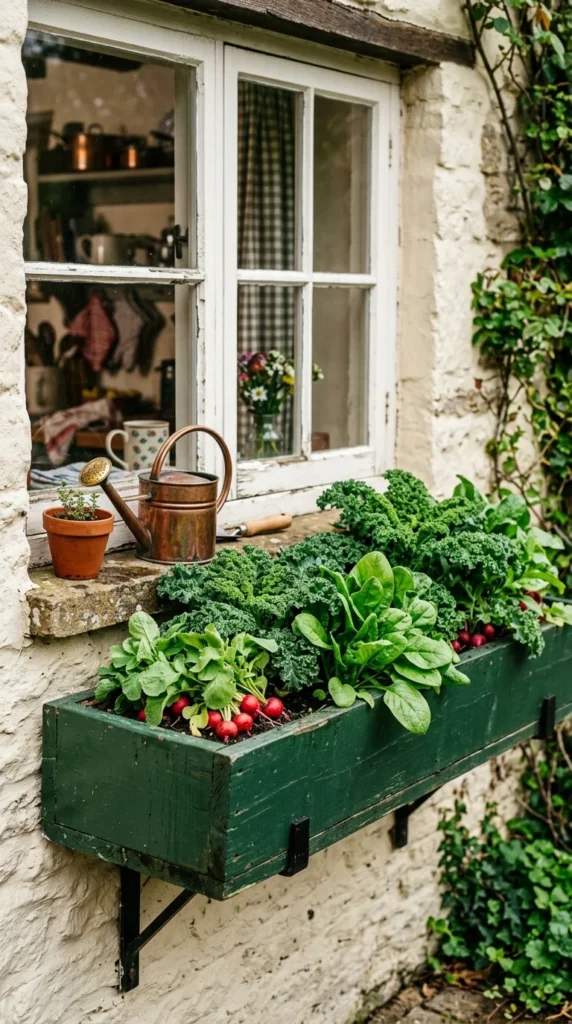
Window boxes are the original vertical garden. While often used for flowers, they are perfectly suited for a “kitchen garden” filled with herbs and salad greens. Placing them just outside a kitchen window makes it incredibly convenient to snip fresh ingredients while cooking. Their elevated position keeps the plants away from rabbits and other small garden visitors, ensuring your harvest stays for you.