Whether you are a seasoned horticulturalist or a beginner with a newfound interest in backyard cultivation, having the right equipment is the difference between a chore and a passion. Gardening is a physical endeavor that requires precision, endurance, and the proper mechanical advantage. To help you cultivate a thriving landscape, we have curated a list of the 25 essential tools that provide the best balance of utility, durability, and ergonomic design.
1. Hand Trowel
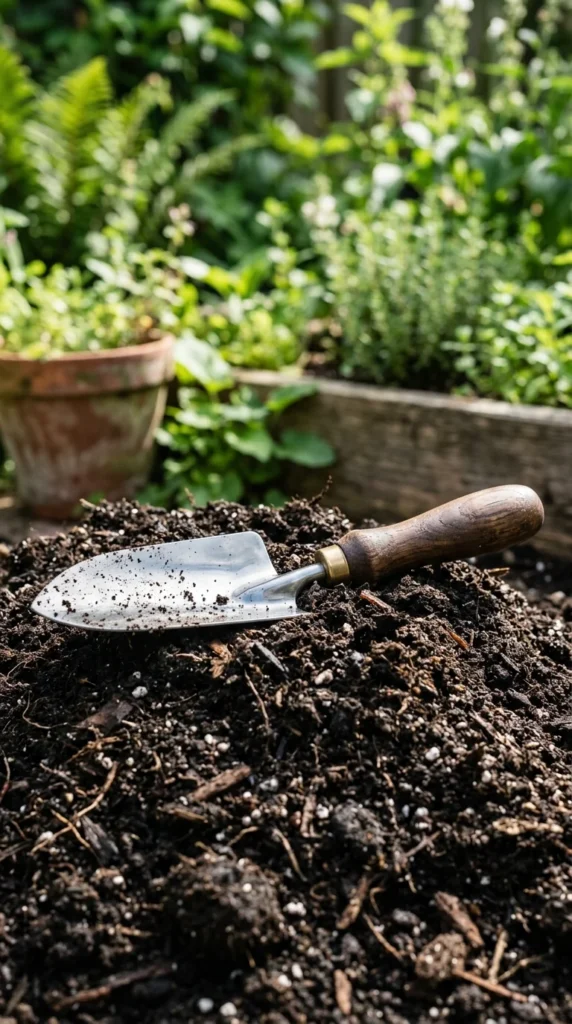
The hand trowel is perhaps the most fundamental tool in any gardener’s arsenal. It is essentially a miniature shovel used for digging small holes, transplanting seedlings, and planting bulbs. When selecting a trowel, look for a “one-piece” design or one with a reinforced shank to prevent the neck from bending under pressure. A pointed tip is better for rocky soil, while a wider, curved blade allows you to move more soil per scoop.
2. Bypass Pruners
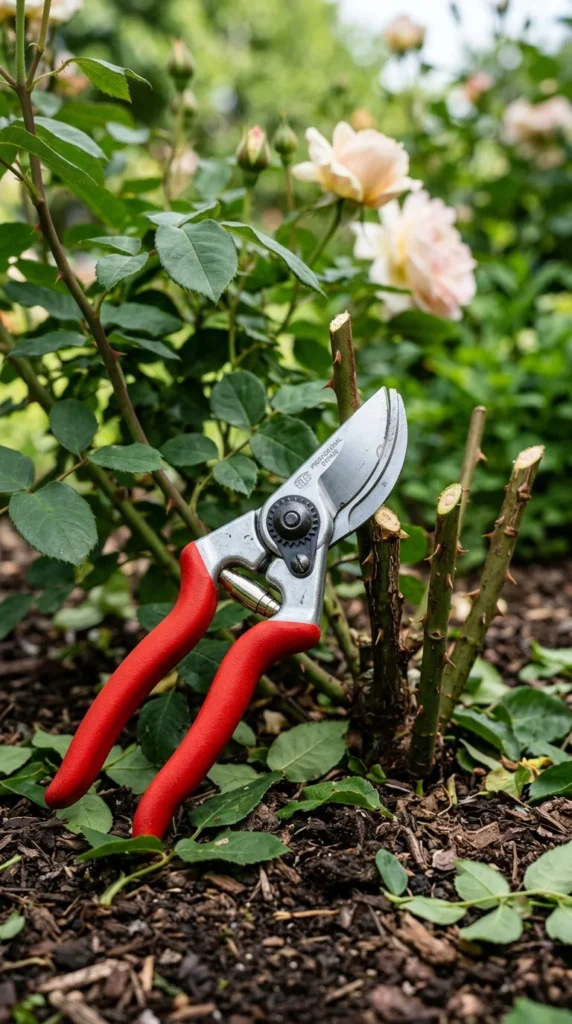
Bypass pruners act like scissors, where two blades “bypass” each other to create a clean, sharp cut. These are indispensable for pruning live plants, harvesting vegetables, and deadheading flowers. A clean cut is vital because it allows the plant to heal faster and prevents the entry of diseases. Always choose a pair that fits comfortably in your hand and features a locking mechanism for safety.
3. Gardening Gloves
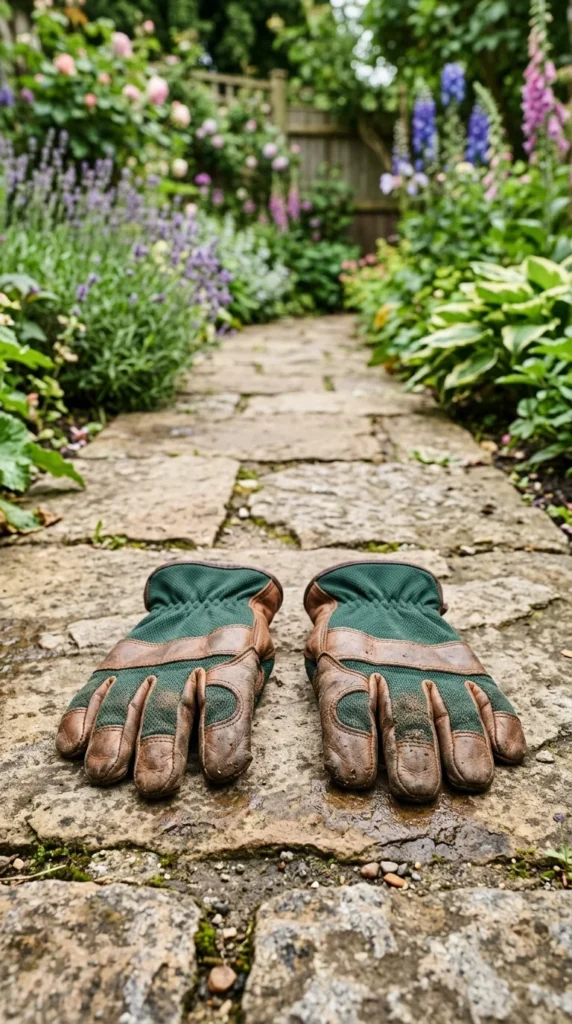
Protection is paramount when working with soil, thorns, and stinging insects. A good pair of gardening gloves should be durable enough to resist punctures but flexible enough to allow for tactile tasks like seed handling. Leather or synthetic suede palm gloves are excellent for heavy-duty work, while nitrile-coated fabric gloves offer better dexterity for delicate weeding.
4. Digging Shovel
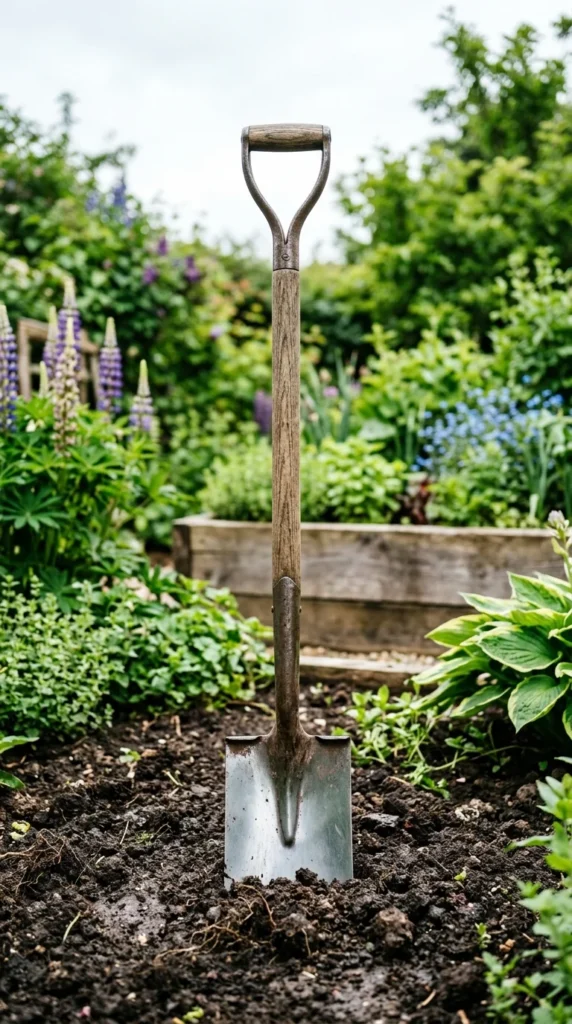
For larger tasks like planting trees, digging deep trenches, or moving mounds of mulch, a full-sized digging shovel is required. A pointed, “round-point” shovel is the most versatile, as it can penetrate hard-packed earth and slice through roots. Look for a blade made of forged steel and a handle made of ash wood or fiberglass for maximum strength-to-weight ratio.
5. Garden Hoe
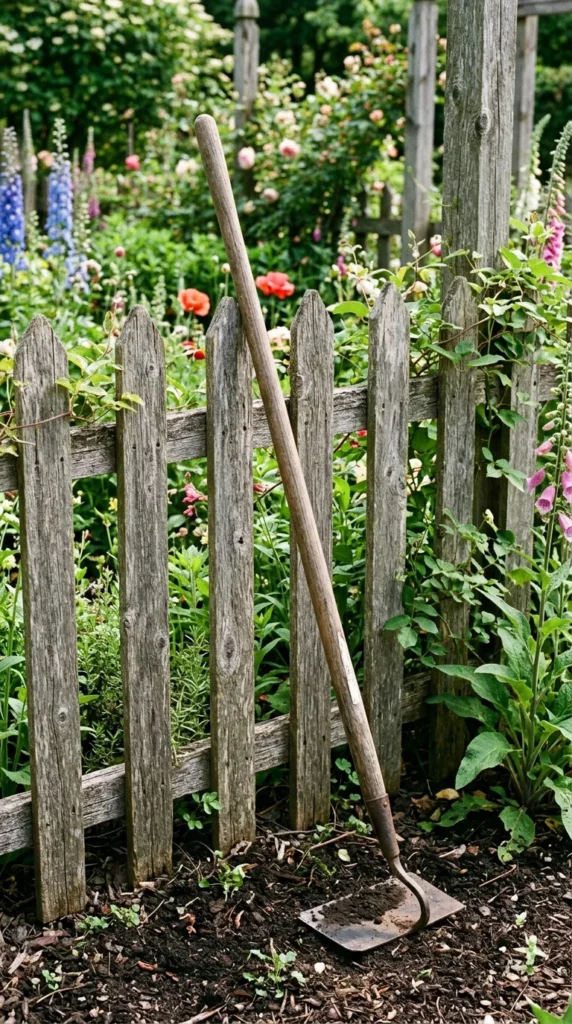
The garden hoe is the ultimate tool for weed management and soil preparation. By pulling the sharp blade just beneath the surface of the soil, you can sever the roots of germinating weeds without disturbing the surrounding plants. It is also excellent for creating shallow furrows for seed planting and for breaking up surface crusts to improve water penetration.
6. Bow Rake
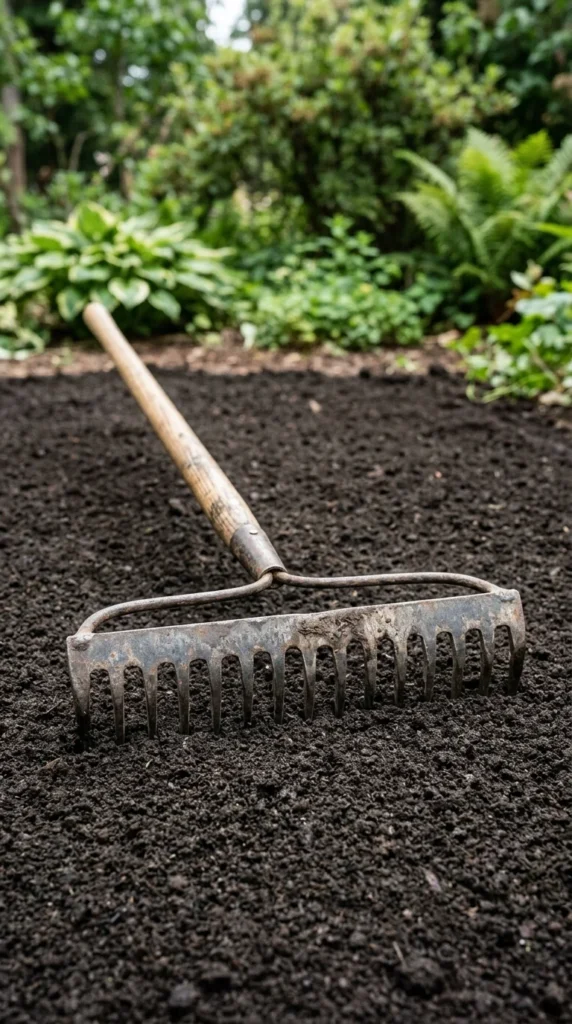
Unlike the flexible leaf rake, a bow rake features rigid metal tines. This tool is designed for heavy-duty leveling, moving gravel, and breaking up large clods of earth. The “bow” design provides a bit of spring, making it easier to rake through dense soil. It is an essential tool for preparing a perfectly flat seedbed before planting.
7. Loppers
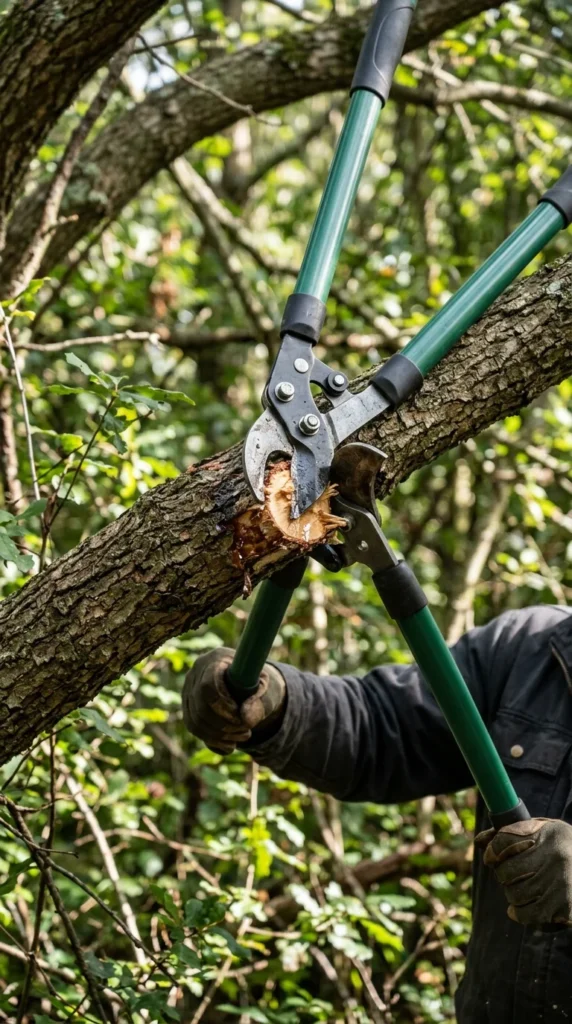
When a branch is too thick for bypass pruners, loppers are the solution. With their long handles, they provide the leverage needed to cut through wood up to two inches in diameter. Like pruners, they come in bypass and anvil styles; bypass loppers are generally preferred for living wood to ensure a clean, non-crushing cut.
8. Garden Hose
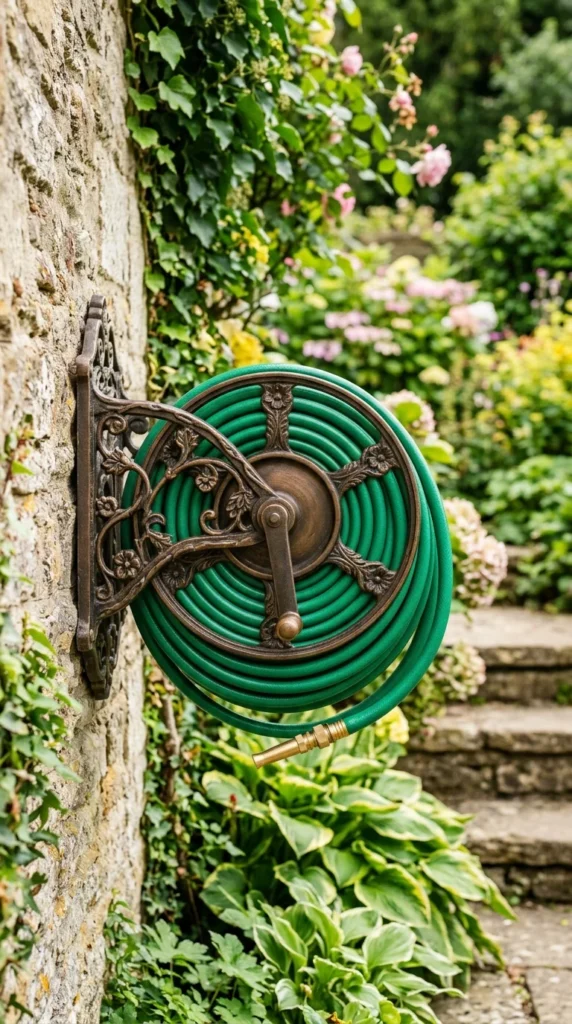
Watering is the most frequent task in the garden, and a high-quality hose makes it much less frustrating. Look for a “kink-free” hose made of multi-layered rubber or reinforced vinyl. A 5/8-inch diameter is standard for home gardens, providing plenty of water pressure for both delicate watering and heavy-duty rinsing.
9. Watering Can
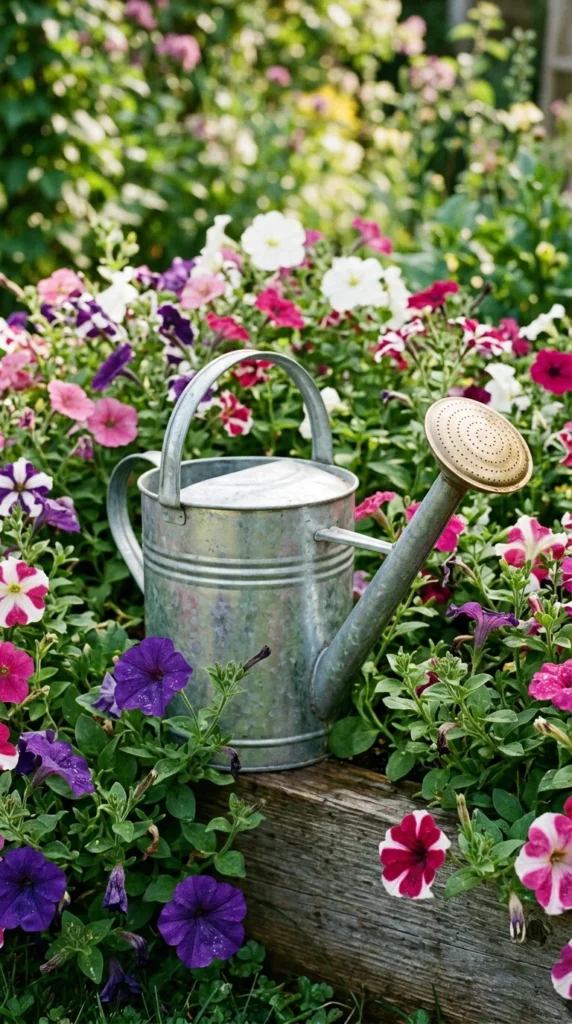
For indoor plants, seedlings in trays, or specific spots in the garden that the hose can’t reach, a watering can is a must. A good watering can should have a balanced handle design that makes it easy to pour when full. A removable “rose” (the perforated nozzle) allows you to switch between a gentle shower for seedlings and a steady stream for larger pots.
10. Hori Hori Knife
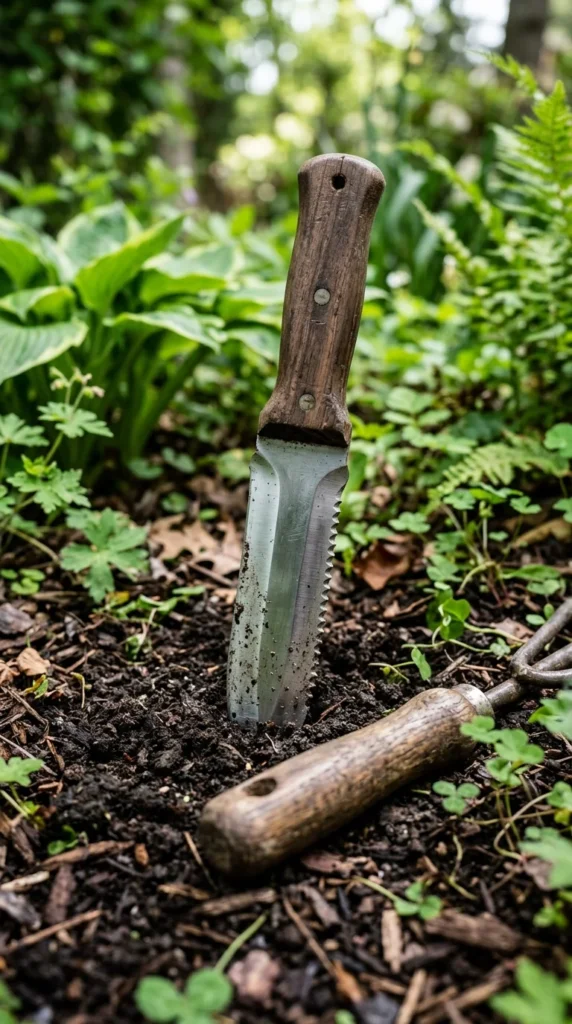
Originating from Japan, the Hori Hori (meaning “dig-dig”) is a multi-purpose tool that combines a knife, a saw, and a trowel. One side of the blade is sharp for cutting through roots, while the other is serrated for sawing. The slightly concave shape makes it great for digging, and many models feature measurement markings on the blade to help you gauge planting depth.
11. Wheelbarrow
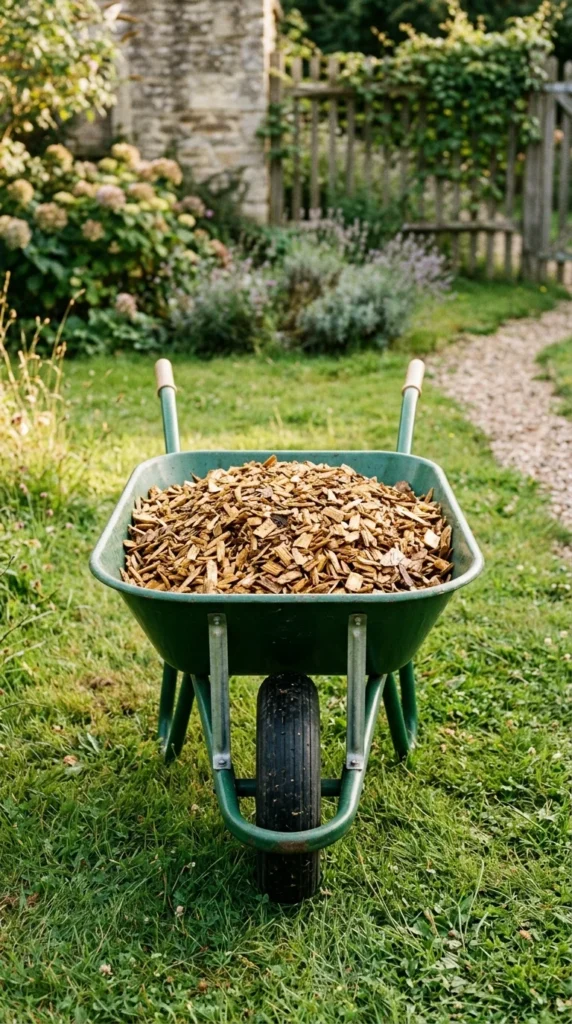
A wheelbarrow is the workhorse of the garden. It is essential for transporting heavy bags of soil, rocks, compost, or garden waste. A traditional single-wheel design offers the best maneuverability in tight garden paths, while a two-wheel garden cart offers better stability on uneven terrain. A steel tray is more durable, while plastic trays are lighter and won’t rust.
12. Spading Fork
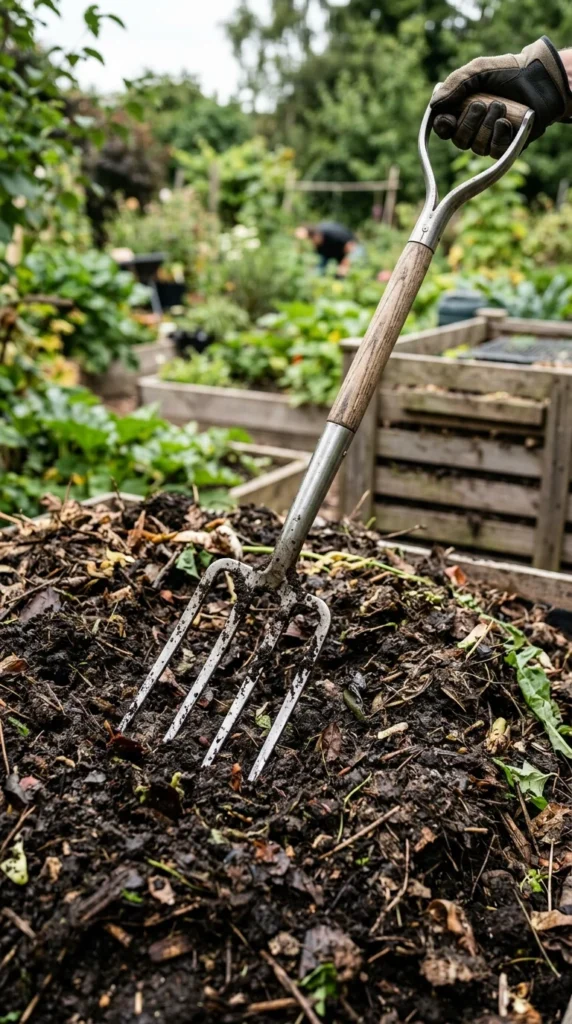
A spading fork (often confused with a pitchfork) has thick, flat tines designed for turning and aerating soil. It is much more effective than a shovel for breaking up heavy clay or rocky soil because the tines can slide between obstacles. It is also the perfect tool for turning a compost pile or lifting root vegetables like potatoes and carrots without damaging them.
13. Hand Weeder
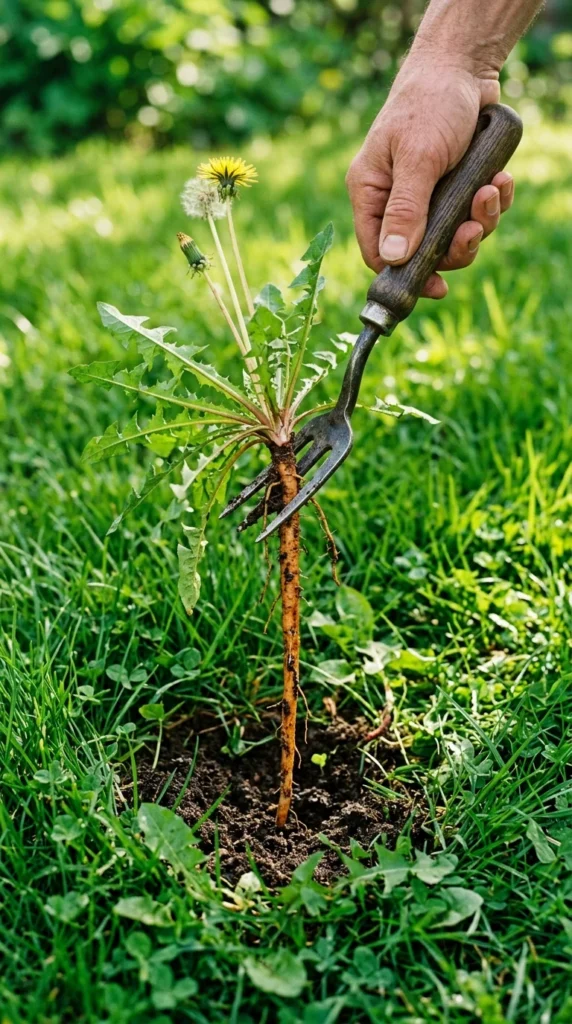
For those stubborn weeds with long taproots, such as dandelions, a standard trowel often isn’t enough. A hand weeder, sometimes called a “fishtail weeder,” features a long, thin shaft with a notched end. You push the tool deep into the soil next to the weed, use the fulcrum point to pry upward, and lift the entire root out to prevent the weed from regrowing.
14. Kneeling Pad
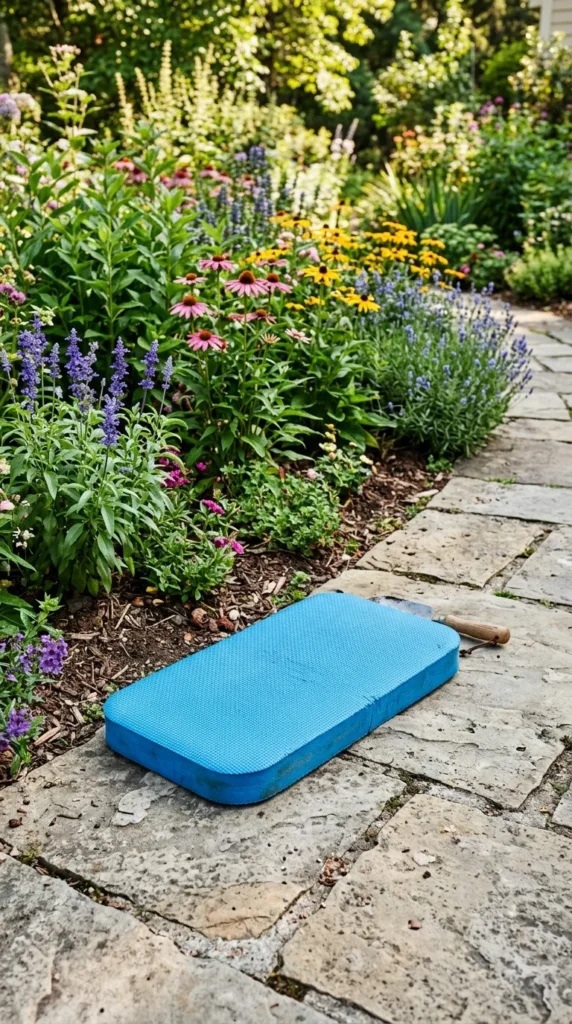
Gardening can be tough on the joints, particularly the knees. A thick foam kneeling pad provides a soft barrier between your knees and the hard, damp ground. This simple accessory significantly extends the amount of time you can comfortably spend weeding or planting at ground level. Some versions even come as “garden kneelers” with handles that help you stand back up.
15. Leaf Rake
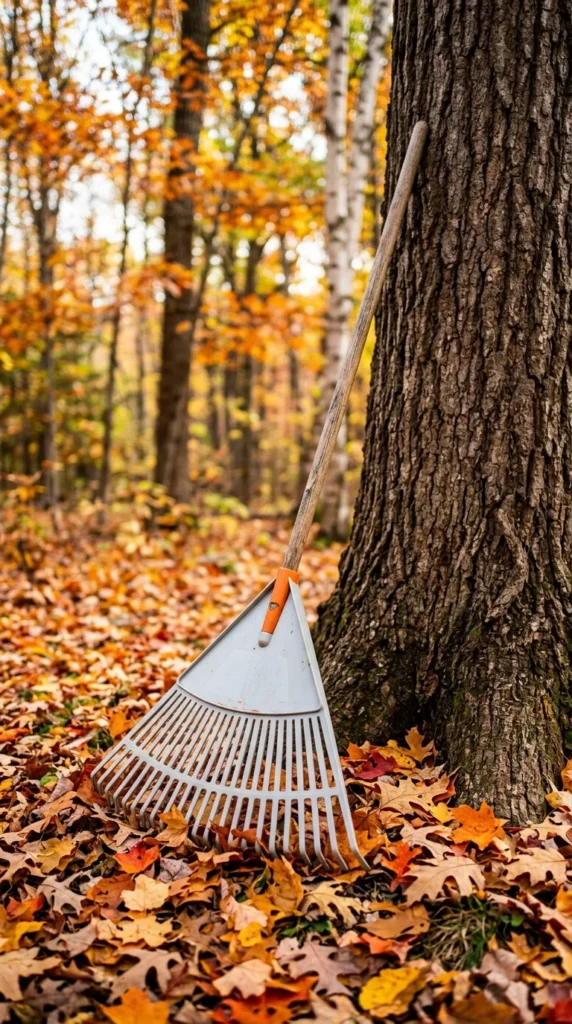
While a bow rake is for soil, a leaf rake is for debris. These rakes feature flexible, fan-shaped tines made of plastic or springy metal. They are designed to glide over the grass without damaging it, collecting leaves, grass clippings, and light twigs. A wide head allows you to clear large areas quickly, while a smaller “shrub rake” is better for getting into tight spaces under bushes.
16. Garden Edger
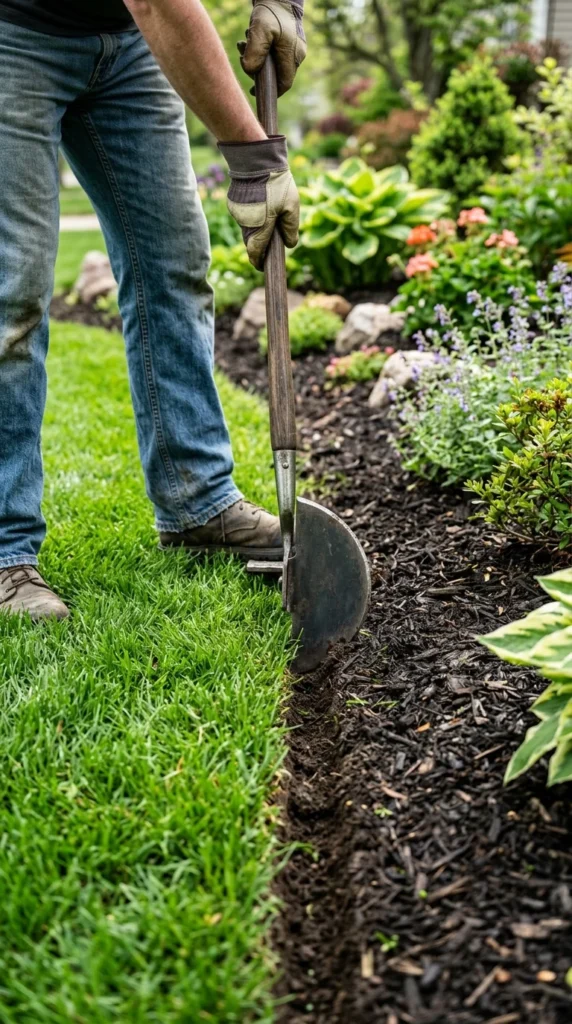
To achieve that professional, “manicured” look, a garden edger is essential. A manual half-moon edger allows you to slice a clean, vertical line into the sod at the edge of your flower beds or walkways. This prevents grass from creeping into your garden and creates a distinct visual boundary that defines the landscape’s shape.
17. Pruning Saw
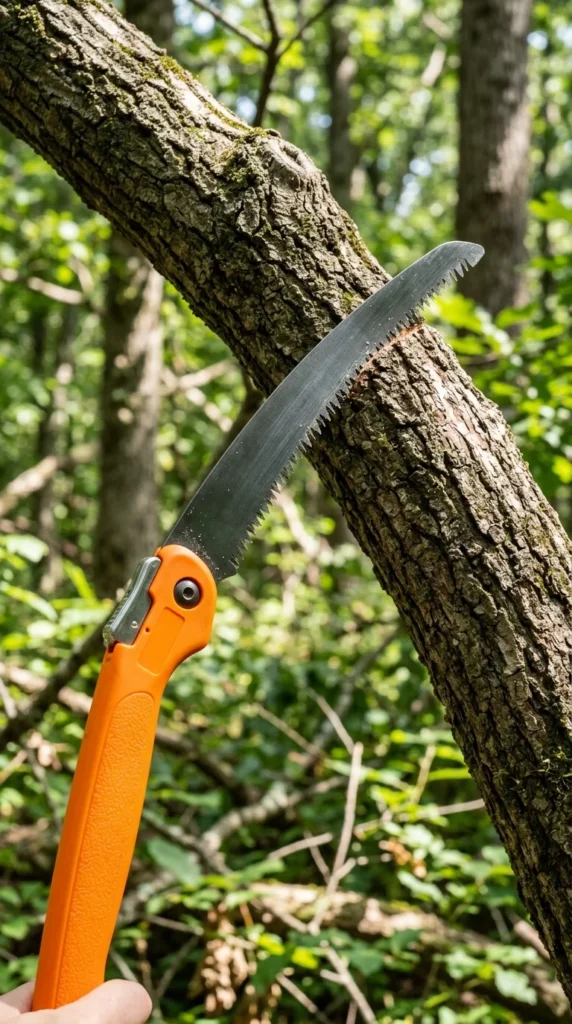
When branches exceed the capacity of loppers (typically over 2.5 inches), a pruning saw is necessary. These saws feature specialized teeth designed to cut on the “pull” stroke, which provides more control and prevents the blade from binding in wet wood. Folding models are popular for their portability and safety, as the blade can be tucked away when not in use.
18. Hedge Shears
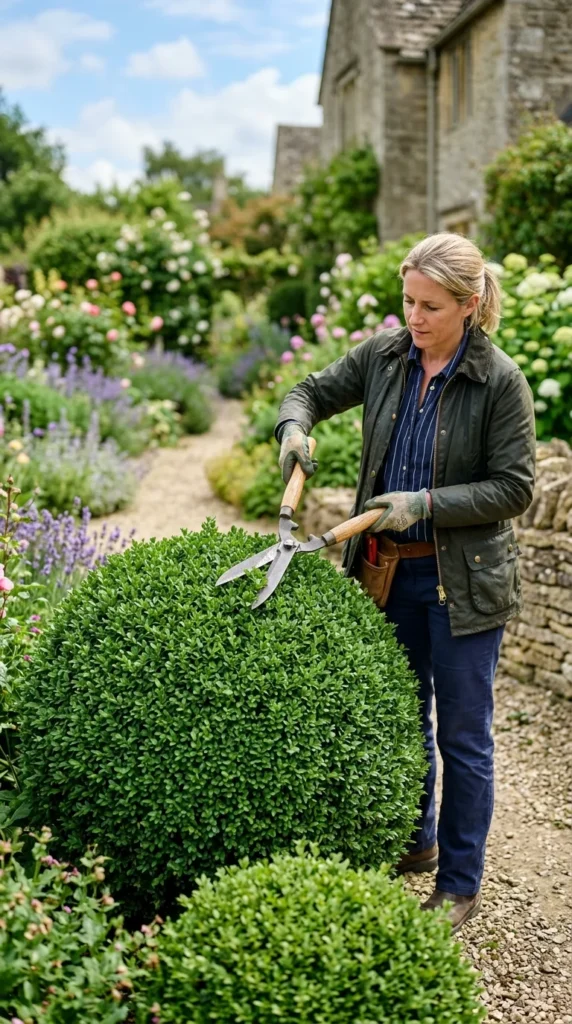
Hedge shears are essentially giant scissors used for shaping hedges, shrubs, and ornamental grasses. Unlike pruners, which cut individual stems, hedge shears are designed to cut a broad area at once to create flat planes or curved shapes. Look for shears with bumpers between the handles to absorb the shock of each cut, reducing fatigue in your arms and shoulders.
19. Spray Nozzle
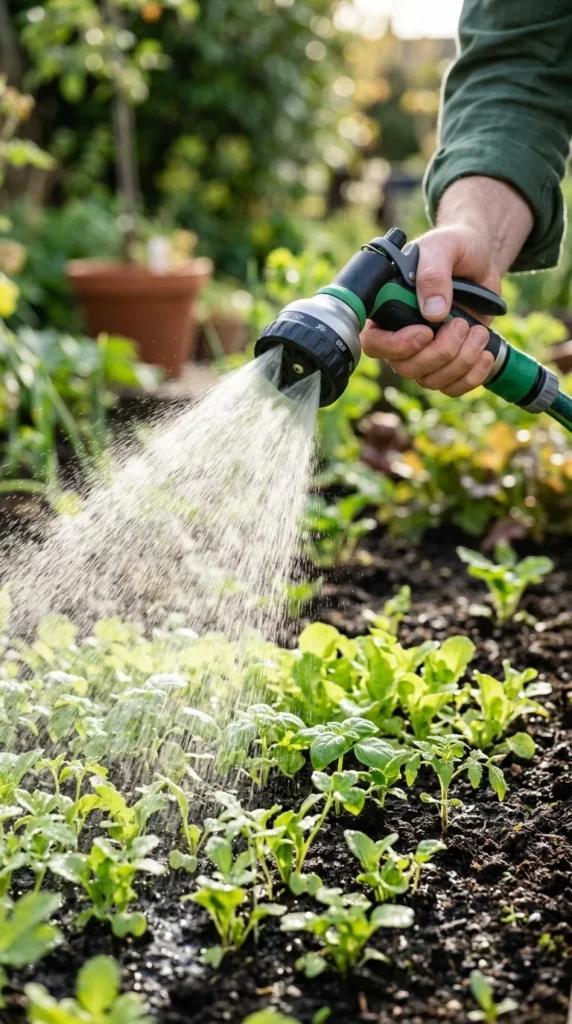
A high-quality spray nozzle attaches to your hose and allows you to control the flow and pattern of the water. The best models feature several settings, such as “mist” for delicate seeds, “soaker” for deep root watering, and “jet” for cleaning tools. A “thumb control” or “trigger lock” is a great ergonomic feature that prevents hand cramping during long watering sessions.
20. Soil PH Meter
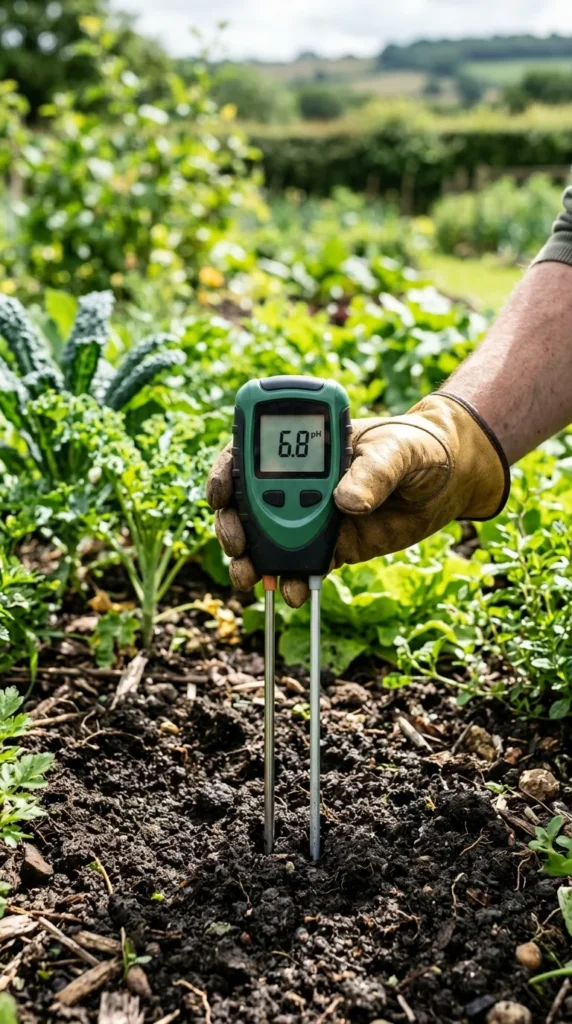
The health of your plants depends heavily on the chemistry of the soil. A soil PH meter is a simple device that tells you how acidic or alkaline your soil is. This information is crucial because many plants cannot absorb nutrients if the PH is too high or too low. Most meters are “3-way,” also measuring soil moisture and light levels at the site.
21. Dibber
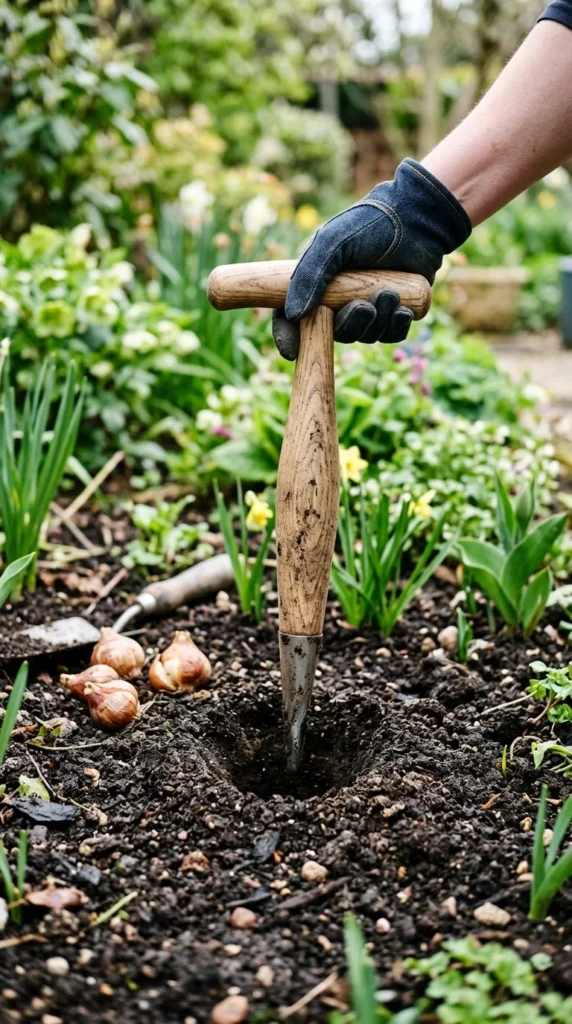
A dibber (or dibble) is a simple, pointed tool used to poke holes in the soil for seeds, bulbs, or small seedlings. By using a dibber, you ensure a consistent depth and width for your plantings, which leads to more uniform growth. Some are made of wood with a T-grip, while others are stainless steel with measurement increments etched into the side.
22. Garden Cart
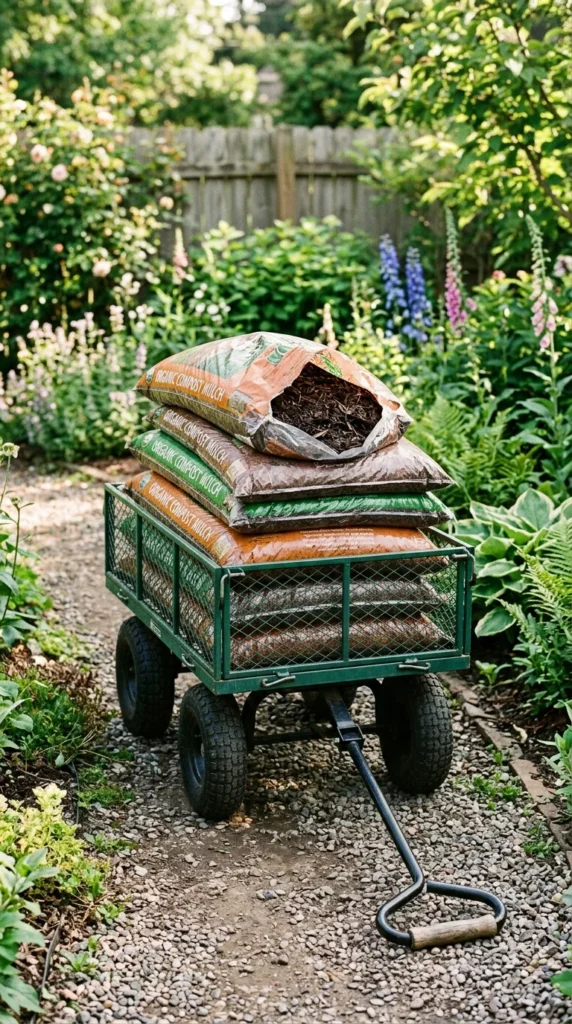
While the wheelbarrow is great for dumping materials, a garden cart is often better for organized transport. With four wheels and a flat base, it is much more stable and can carry heavier loads without requiring the operator to balance the weight. Many carts feature fold-down sides, allowing them to transform into a flatbed for hauling large items like heavy pots or logs.
23. Hand Transplanter
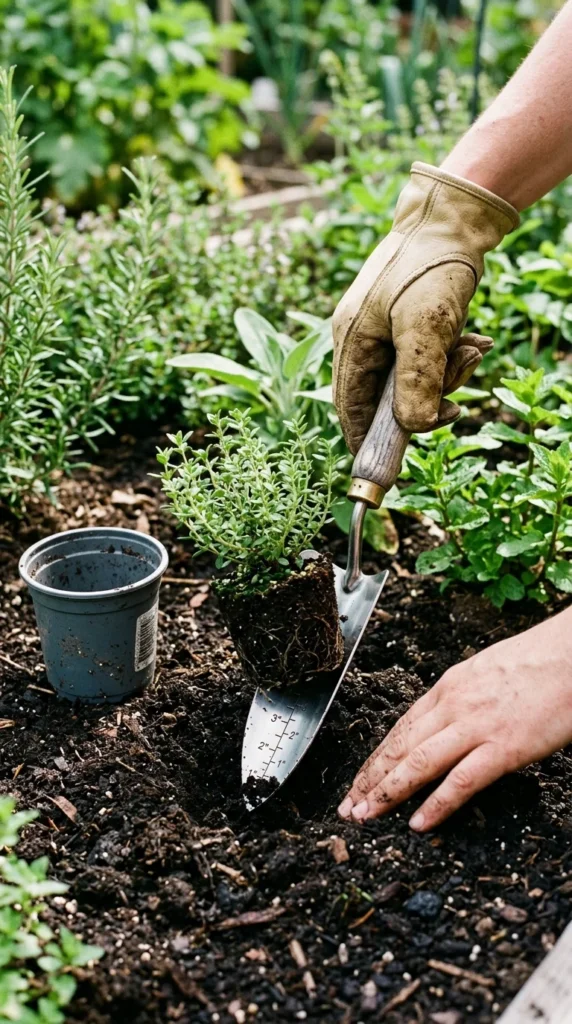
A hand transplanter looks like a slimmed-down trowel. Its narrow profile is designed to fit into tight spaces, such as transplanting small plants from a multi-cell tray into the ground. Most transplanters feature a series of inch or centimeter marks on the blade, allowing you to accurately measure the depth of the hole to match the plant’s root ball perfectly.
24. Soaker Hose
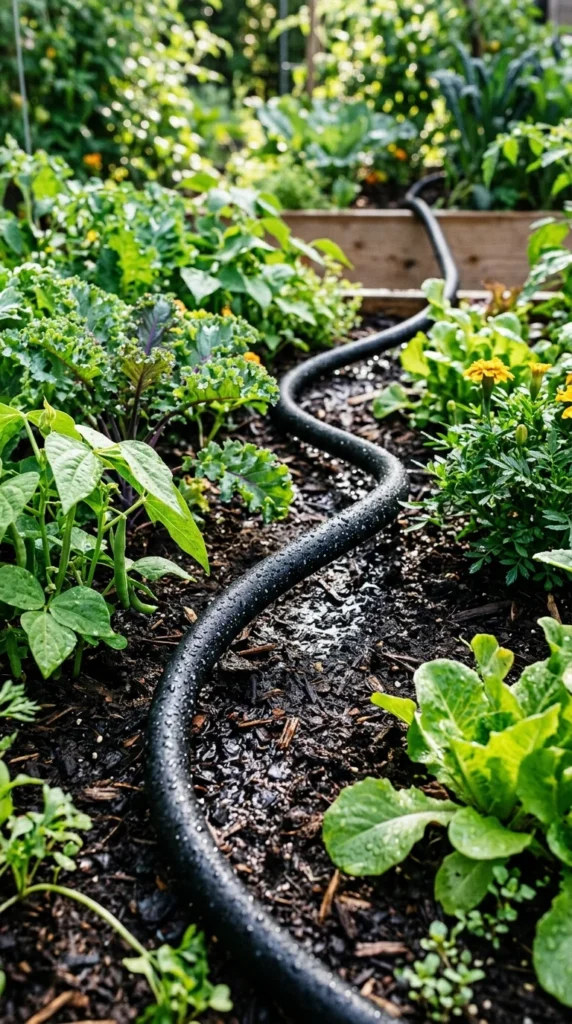
A soaker hose is a porous pipe that “sweats” water along its entire length. This is one of the most efficient ways to water a garden because it delivers moisture directly to the soil surface, minimizing evaporation and keeping water off the foliage (which helps prevent fungal diseases). It is ideal for long rows of vegetables or densely planted flower beds.
25. Garden Cultivator
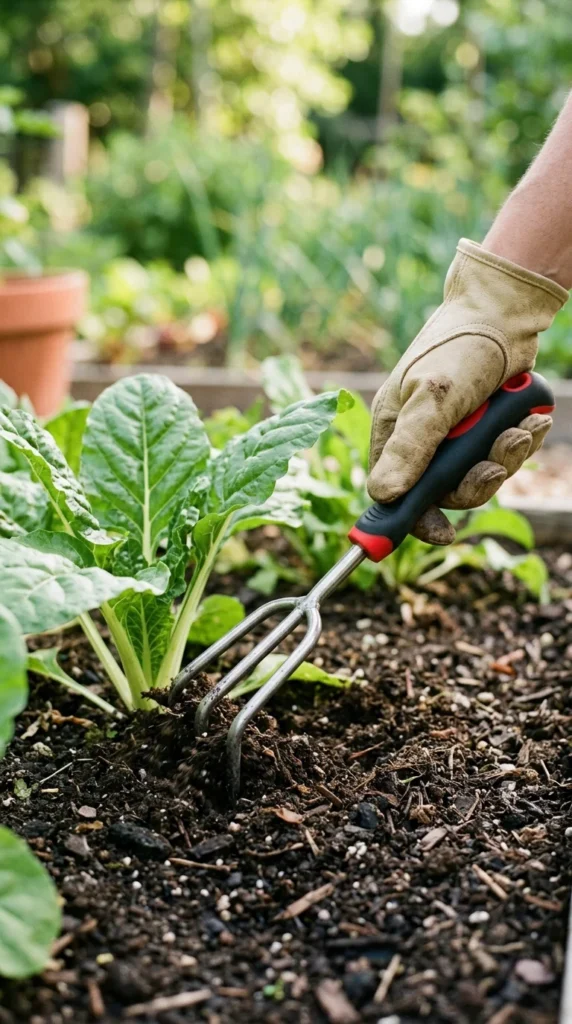
A hand cultivator features three or more curved metal tines. It is used to scratch the surface of the soil to remove small weeds and break up “crusting” that happens after a heavy rain. By loosening the top inch of soil, you improve air and water flow to the roots, ensuring that your plants have the best environment possible to thrive.