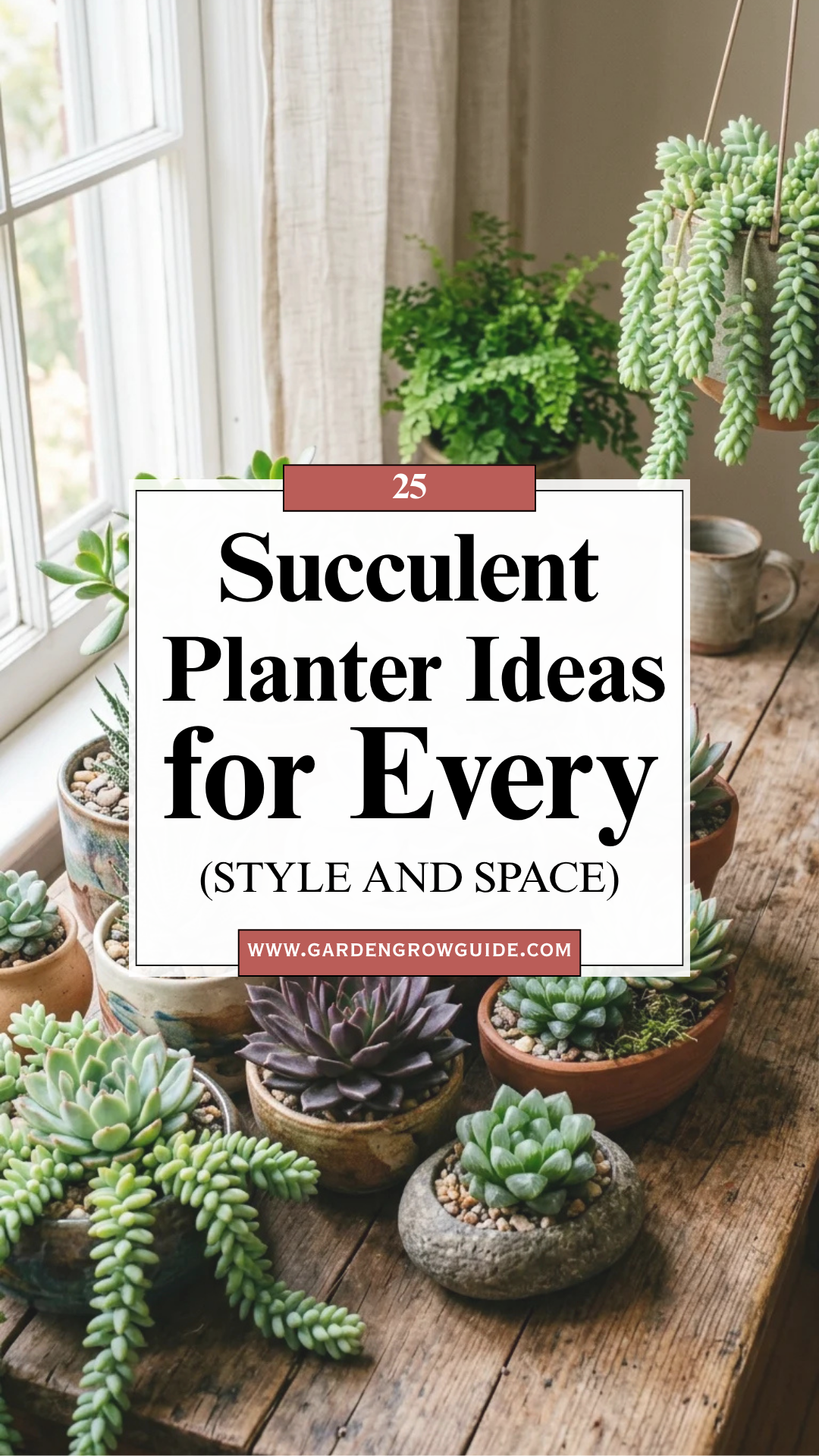
Succulents have taken the world of interior design and gardening by storm. Known for their resilience, geometric beauty, and low-maintenance nature, these fleshy plants are the perfect choice for both novice gardeners and seasoned botanists. However, the true magic of succulents lies in their versatility. Because they have shallow root systems and require minimal water, they can thrive in an astonishing array of containers. Whether you are looking to decorate a tiny apartment windowsill or a sprawling backyard patio, choosing the right planter can elevate your greenery from a simple plant to a piece of living art.
This guide explores 25 creative succulent planter ideas categorized by style, material, and space requirements to help you find the perfect match for your home.
1. Terracotta Pots
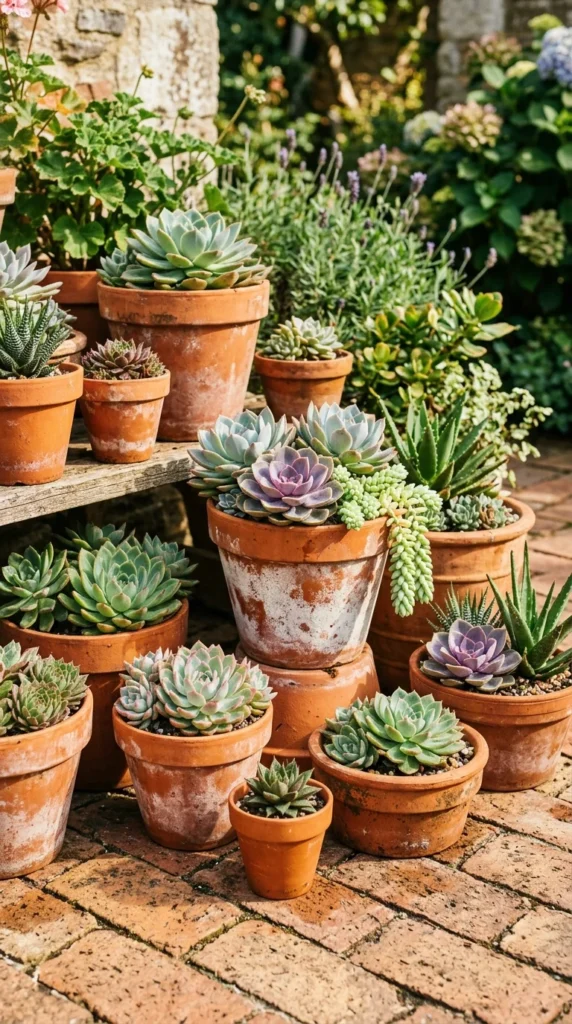
The quintessential choice for any succulent lover, terracotta is more than just a stylistic preference. The porous nature of the clay allows for excellent airflow and drainage, which is crucial for preventing root rot. To give them a modern twist, you can hand-paint them with geometric patterns or use a “whitewash” technique for a Mediterranean feel.
2. Glass Terrariums
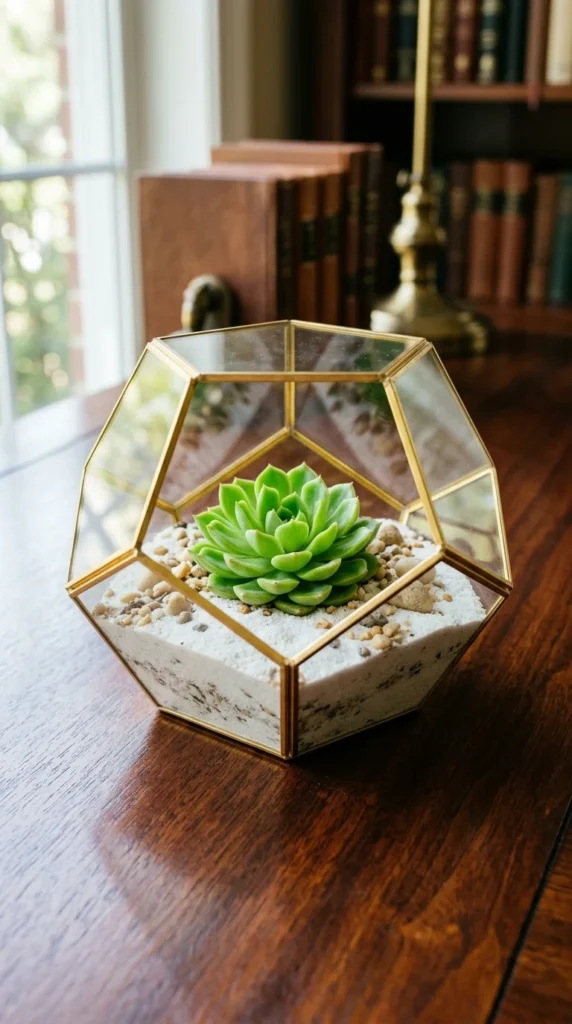
Terrariums offer a sophisticated, “enclosed ecosystem” look. They are ideal for tabletop displays. When using glass, it is vital to create a drainage layer at the bottom using charcoal and pebbles since most glass containers do not have drainage holes. Use varied heights of plants to create a sense of depth within the glass walls.
3. Concrete Cubes
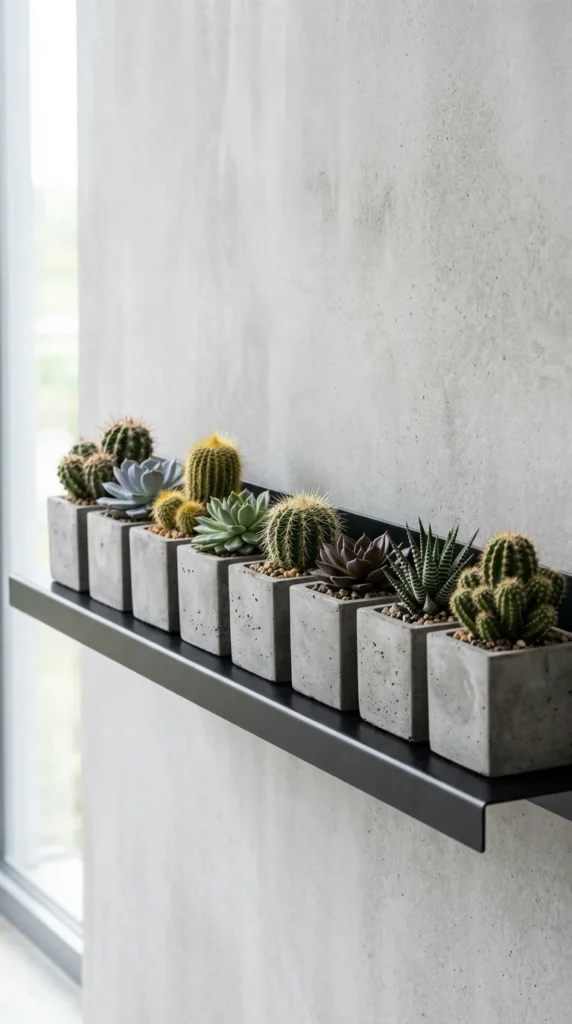
For those who love the industrial or brutalist aesthetic, concrete planters provide a heavy, textured contrast to the soft curves of succulents. The neutral gray tone makes the vibrant greens and pinks of the plants pop. These are particularly sturdy, making them excellent for outdoor areas prone to wind.
4. Vintage Teacups
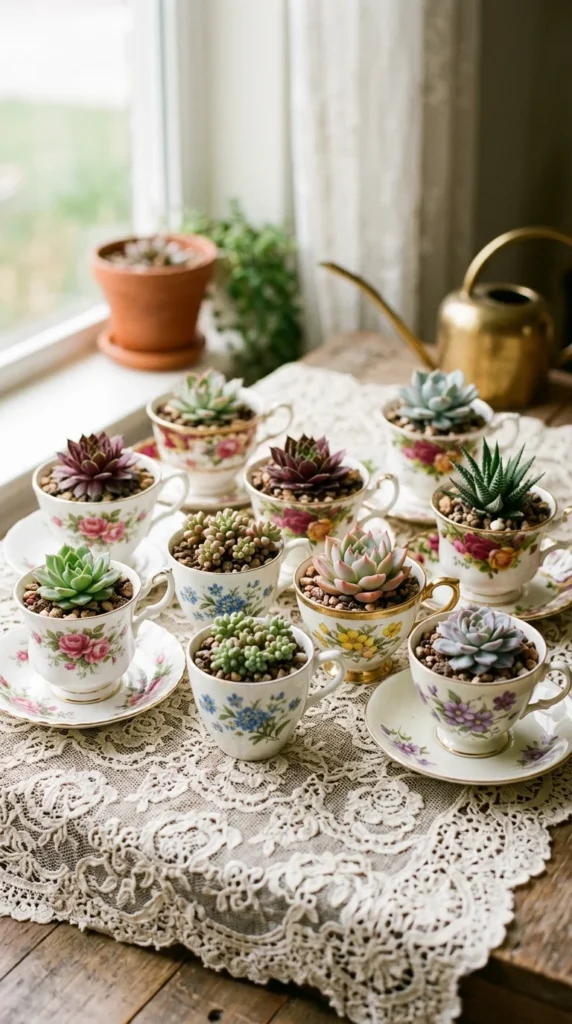
Repurposing vintage teacups is a charming way to add a “shabby chic” touch to your decor. These are perfect for small species like “String of Pearls” or miniature Haworthia. If you are hesitant to drill a hole in the bottom, be extremely sparing with water or use a nursery liner inside the cup.
5. Driftwood Logs
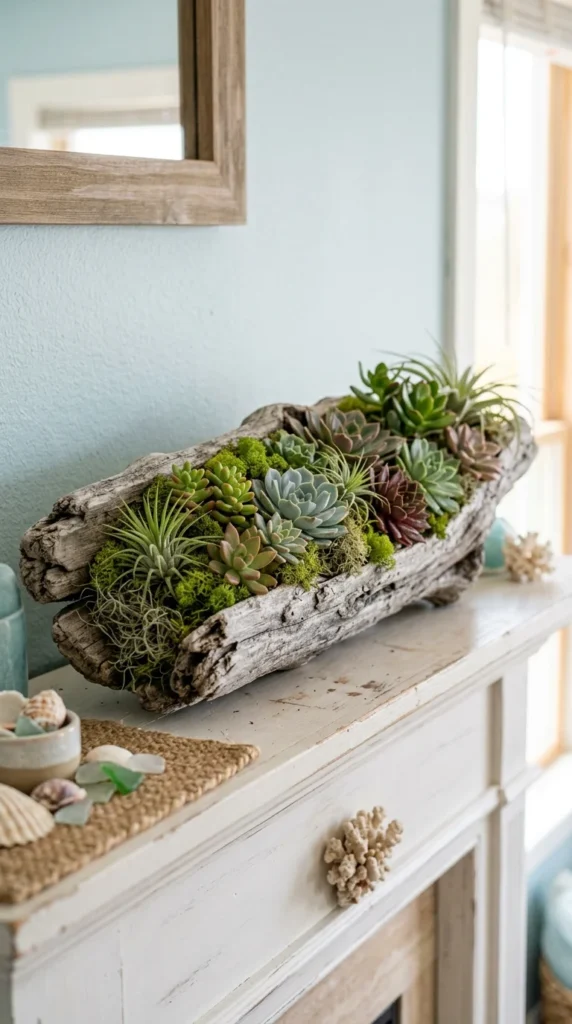
Driftwood planters bring an organic, coastal vibe to a room. You can find pieces with natural dips and hollows that are perfect for tucking in small succulents and a bit of sphagnum moss. This arrangement works beautifully as a dining table centerpiece or a mantle focal point.
6. Hanging Macrame
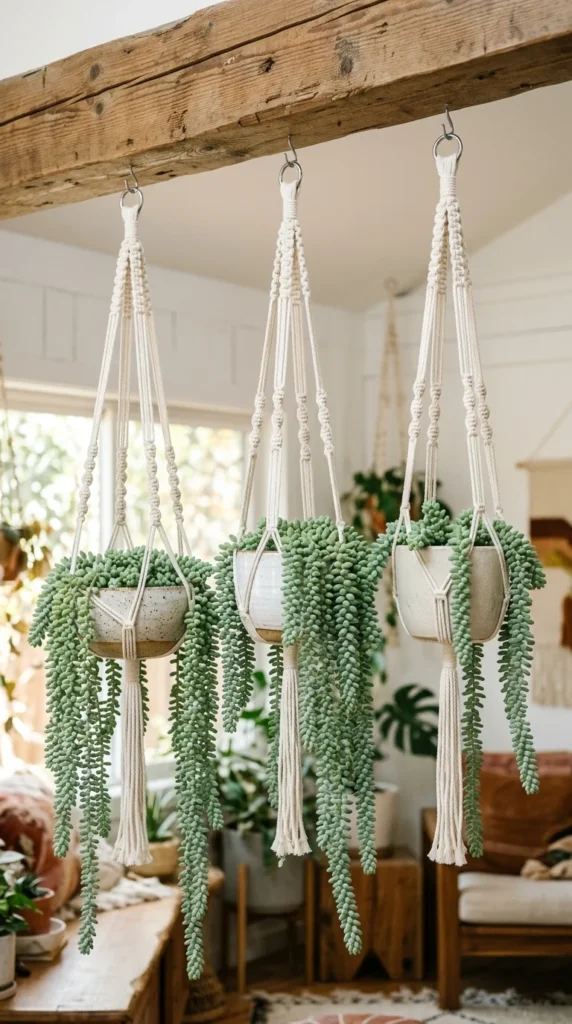
Hanging planters are the ultimate space-savers. Macrame holders add a bohemian texture to your space while allowing “trailing” succulents—like String of Bananas or Burro’s Tail—to spill over the edges gracefully. This utilizes vertical space and keeps plants away from curious pets.
7. Birdcage Planters
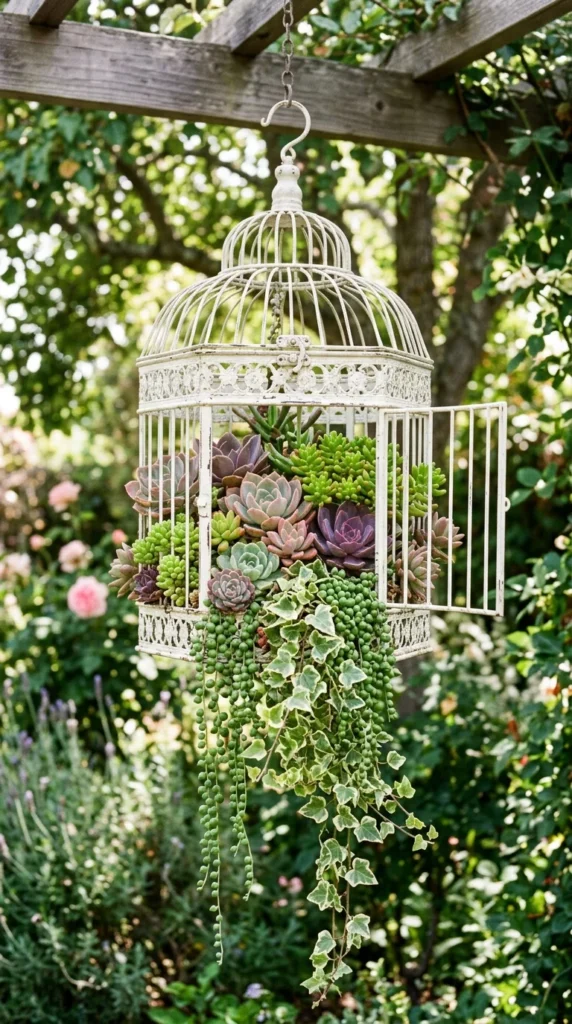
An antique birdcage can be transformed into a whimsical garden feature. By lining the bottom with coco coir or moss, you can plant a variety of succulents that will eventually grow through the bars, creating a lush, caged-garden effect that feels like something out of a fairy tale.
8. Wall Frames
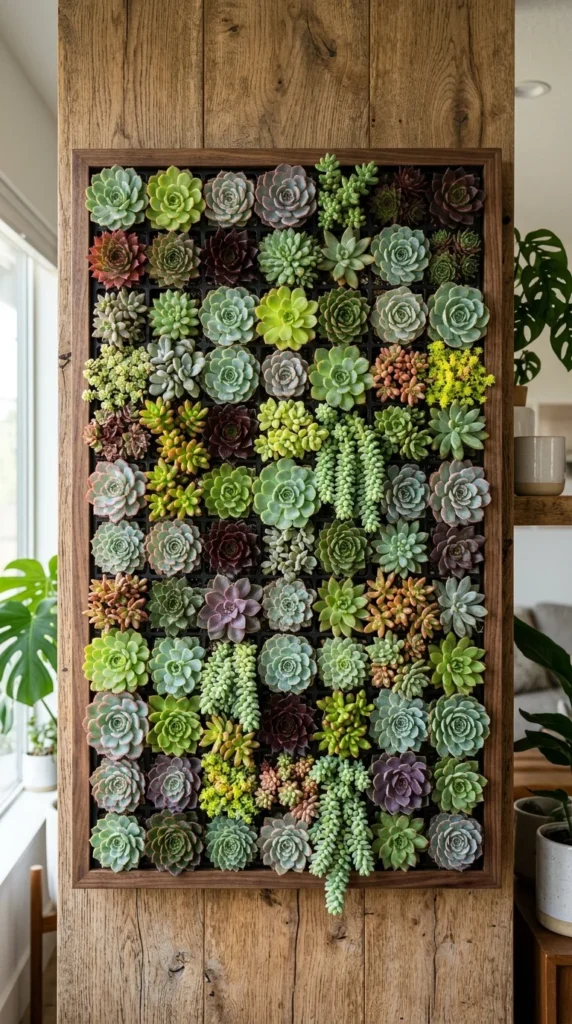
Vertical gardening is a major trend, and succulent frames are the crown jewel of this movement. These “living pictures” use a shallow box with a wire mesh front to hold the plants in place. As the succulents grow, they fill in the gaps, creating a stunning, three-dimensional wall art piece.
9. Wine Corks
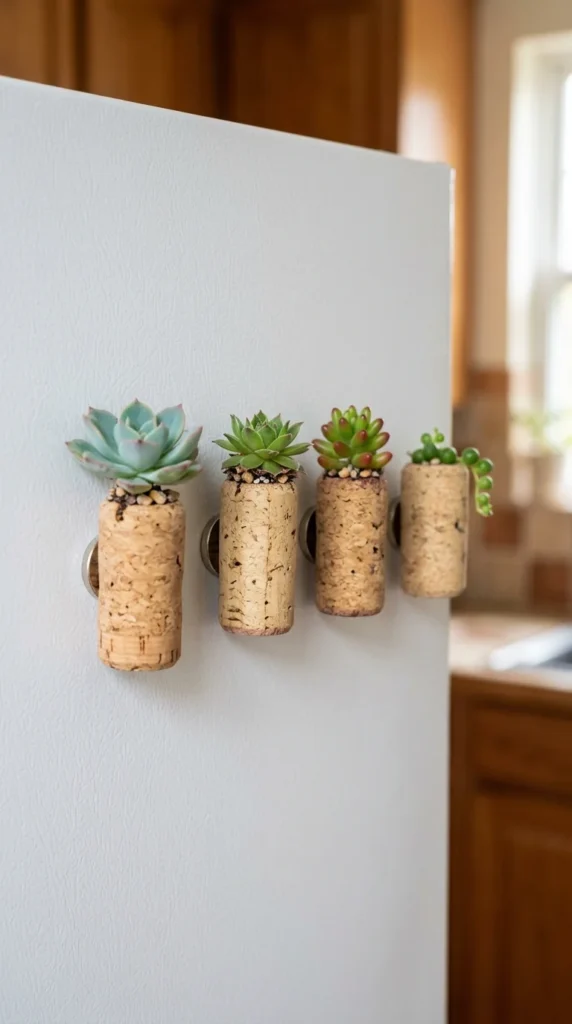
If you’re looking for a DIY project, tiny wine cork planters are adorable and eco-friendly. By hollowing out the center of a cork and gluing a magnet to the side, you can create a “living fridge magnet.” These are great for propagating small cuttings until they are ready for a larger home.
10. Tin Cans
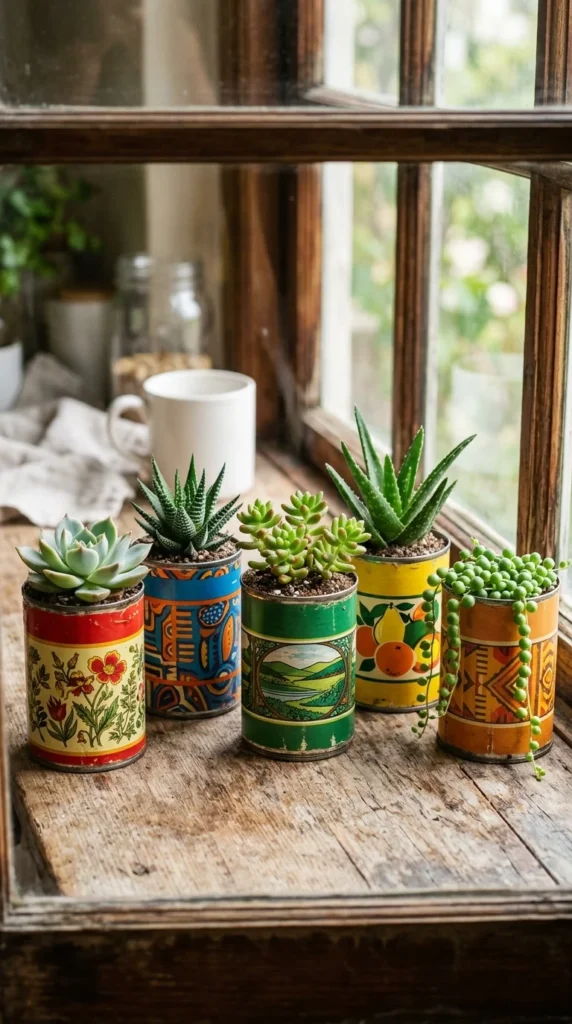
Upcycling old food tins—especially those with vintage typography or bright colors—adds a pop of personality to a kitchen or workspace. Ensure you punch a few holes in the bottom for drainage and sand down any sharp edges before planting.
11. Geometric Ceramics
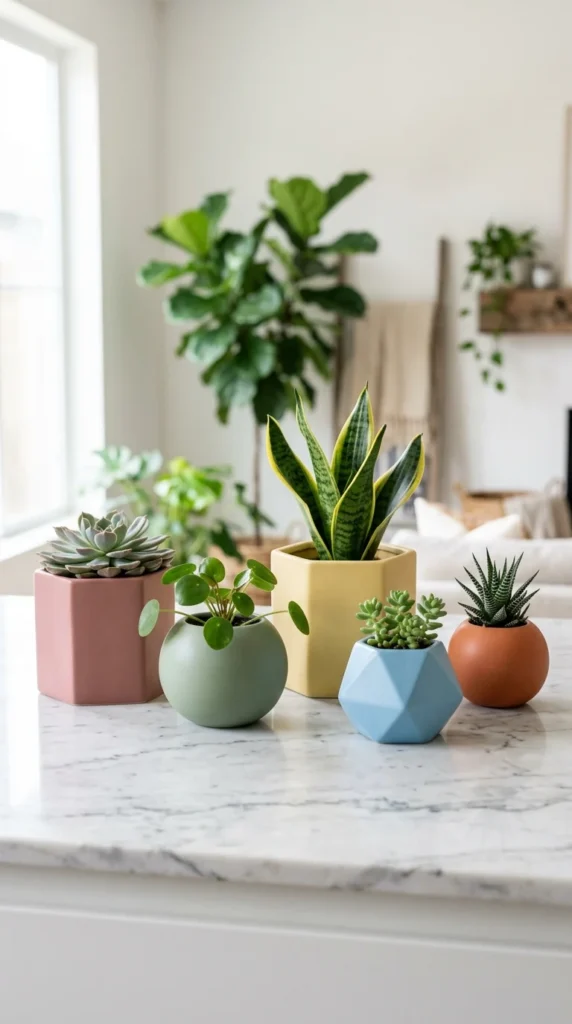
Geometric planters fit perfectly in modern, minimalist, or Scandinavian-inspired homes. Their sharp angles provide a beautiful counterpoint to the organic, often chaotic growth patterns of succulents. Grouping different shapes together creates a curated, architectural look.
12. Animal Planters
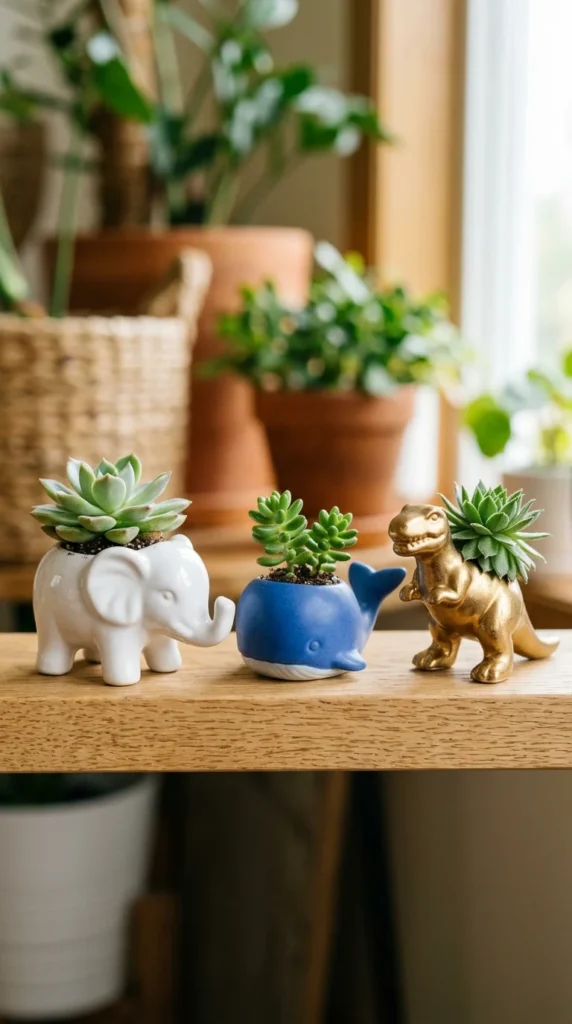
Add a playful element to a child’s room or a home office with animal-shaped pots. From ceramic foxes to resin dinosaurs, these whimsical containers turn your plants into characters. They are fantastic conversation starters and make excellent gifts.
13. Book Planters
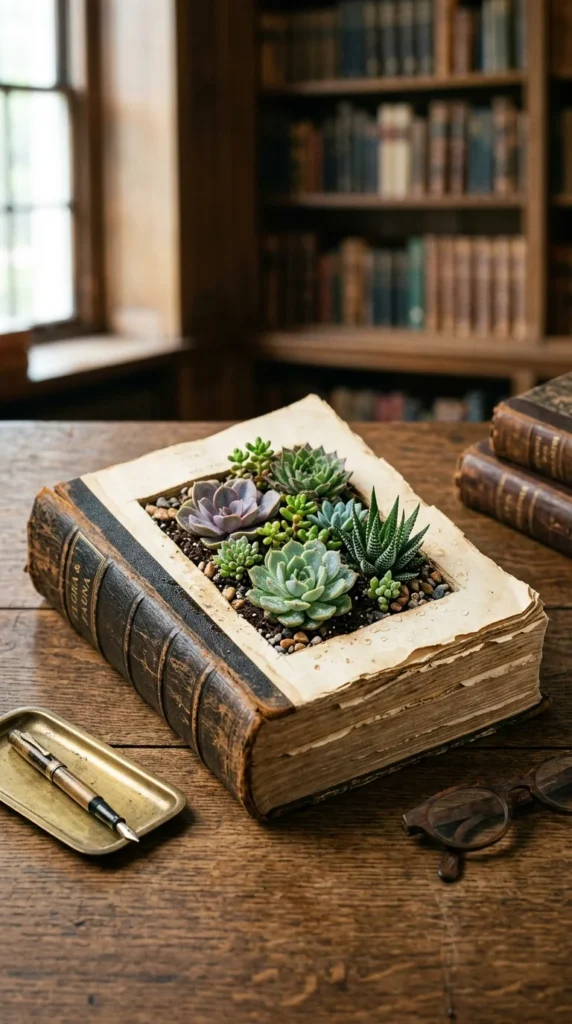
For the bibliophile, a repurposed book planter is a dream. By hollowing out a thick, vintage book and lining the cavity with plastic, you can create a scholarly home for your plants. It looks particularly striking on a bookshelf nestled between other novels.
14. Shell Containers
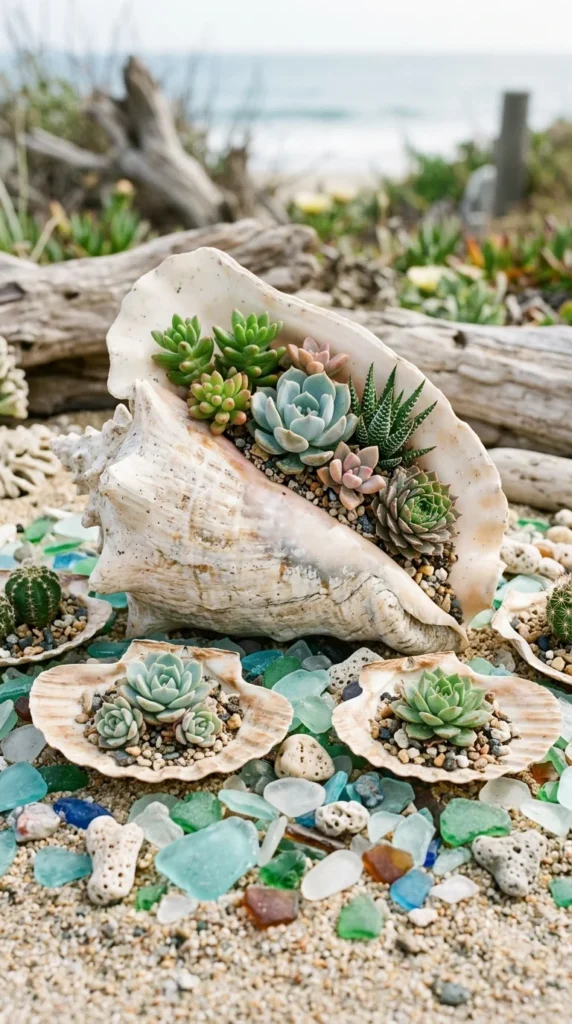
Sea shells, especially large conch or abalone shells, make excellent natural vessels. They provide a beachy, relaxed atmosphere. Since shells are relatively small, they are best suited for slow-growing succulents or air plants that don’t require much soil.
15. Strawberry Pots
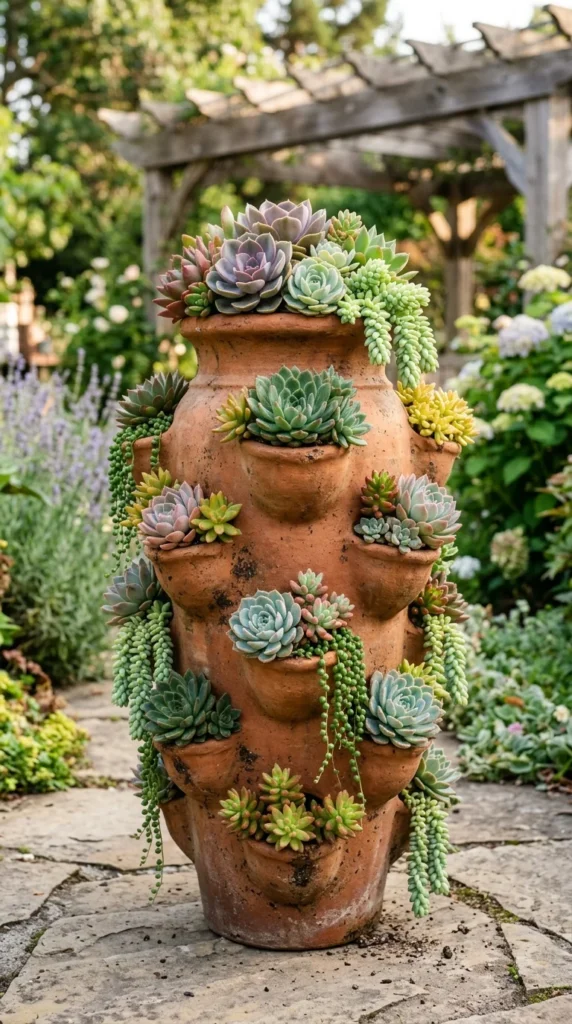
Strawberry pots, with their multiple side “pockets,” are ideal for creating a succulent tower. You can plant a different variety in every opening, allowing the plants to grow outward and downward, eventually covering the entire pot in a cascade of foliage.
16. Tiered Stands
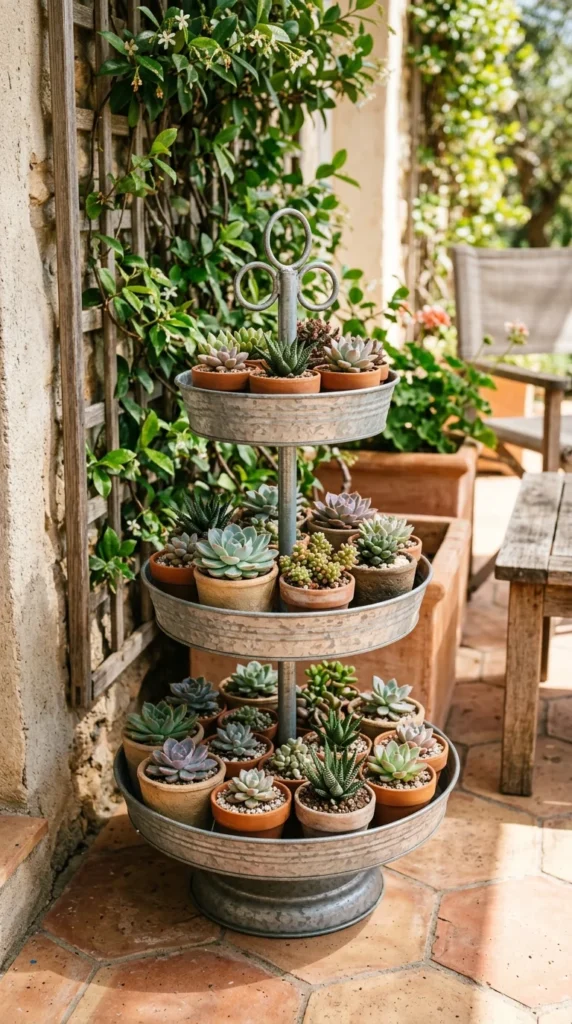
If you have a large collection but limited floor space, a tiered stand (like a dessert tower or a ladder shelf) allows you to display dozens of plants in a small footprint. This also makes it easier to ensure every plant gets adequate sunlight.
17. Tree Stumps
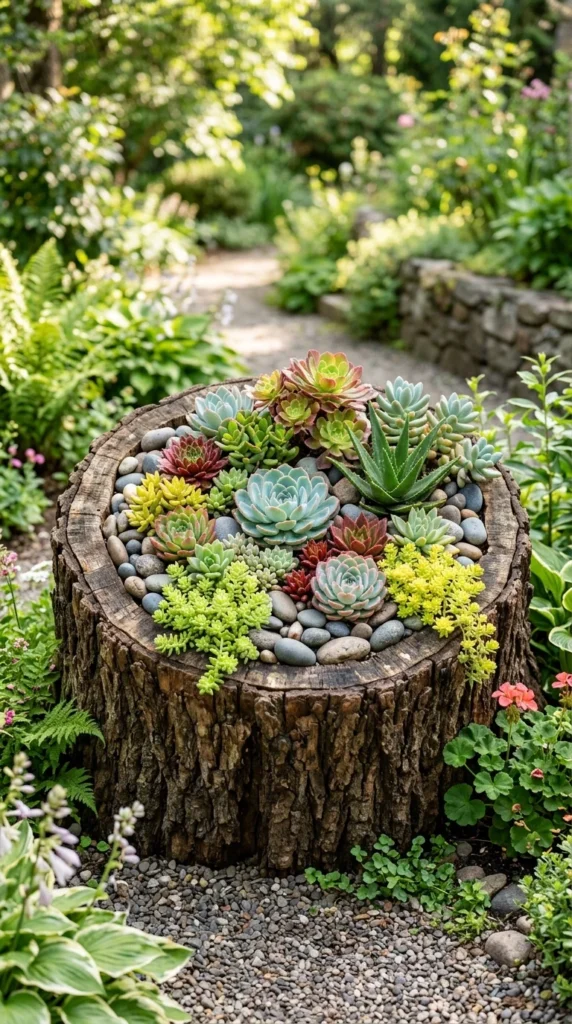
In an outdoor garden, a hollowed-out tree stump provides a rustic, earthy home for succulents. As the wood slowly decomposes over years, it provides nutrients to the plants. This is a great way to turn a landscape “eyesore” into a beautiful feature.
18. Lantern Boxes
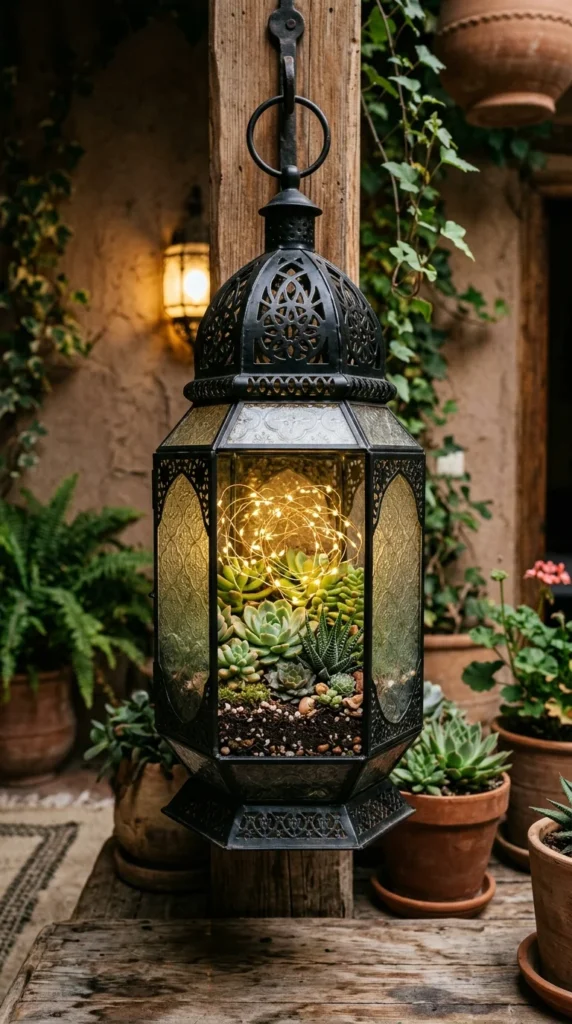
Repurposing decorative lanterns by removing the candles and adding succulents creates a magical look. This is especially effective for patio decor. You can even wrap a small string of LED “fairy lights” around the plants for an enchanting evening glow.
19. Colander Pots
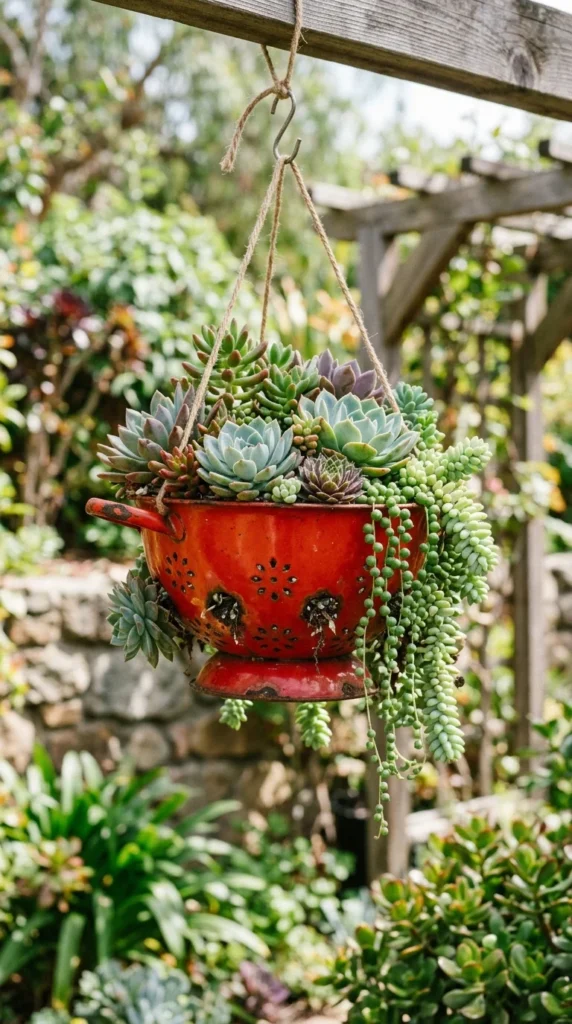
Kitchen colanders are the unsung heroes of succulent gardening. They come with “built-in” drainage holes all over. A brightly colored metal colander filled with succulents creates a fun, retro look that is perfect for a deck or a sunroom.
20. Boot Planters
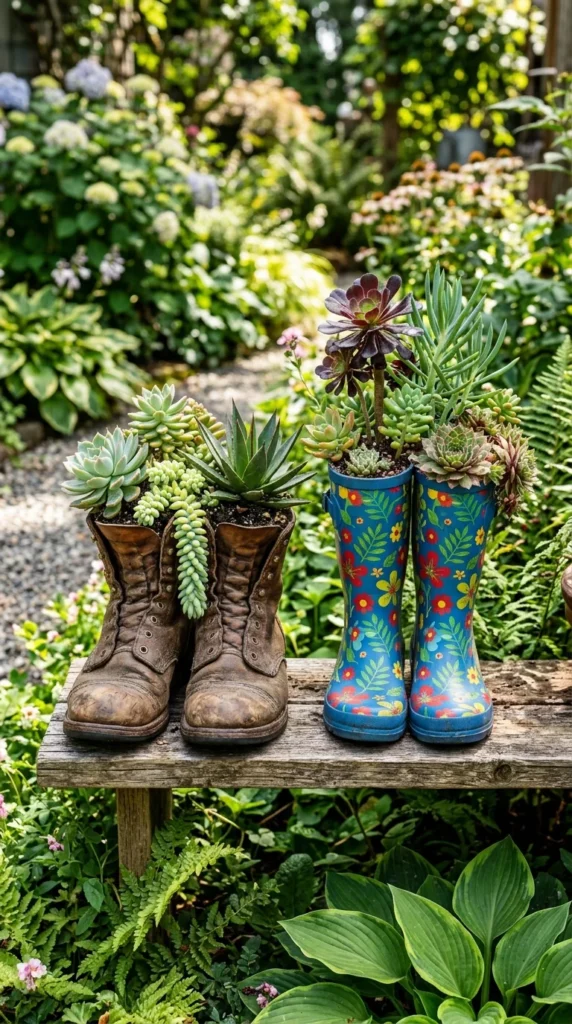
Don’t throw away those old rain boots or leather work boots! They can be turned into quirky, rustic planters. Rubber boots are especially easy to work with and add a splash of color to a porch or garden path.
21. Floating Shelves
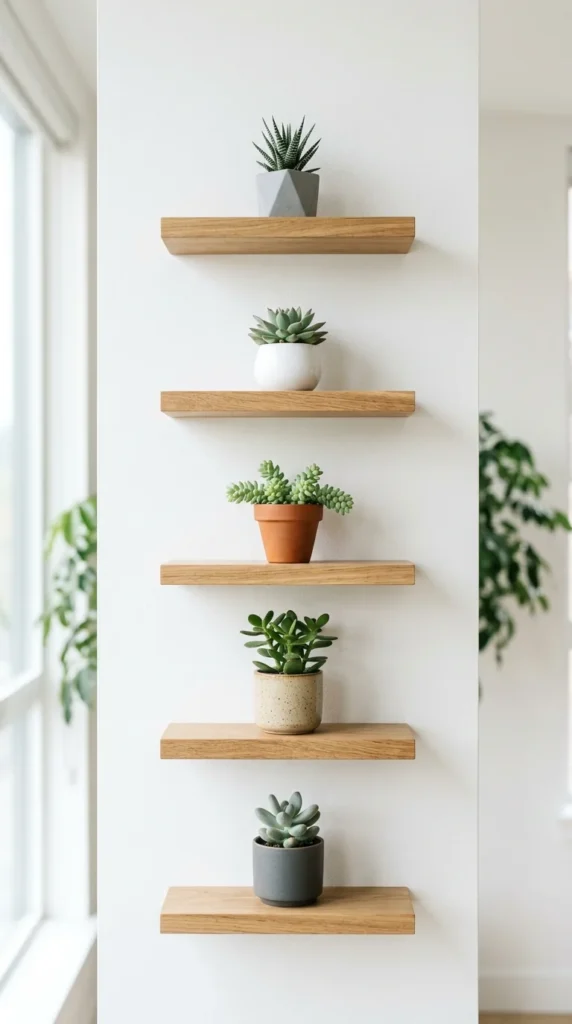
If you want a clean, museum-like display, utilize floating shelves. Placing one succulent per shelf creates a focal point and keeps the design from feeling cluttered. This is an excellent way to keep plants away from children and pets while utilizing wall space.
22. Magnetic Tins
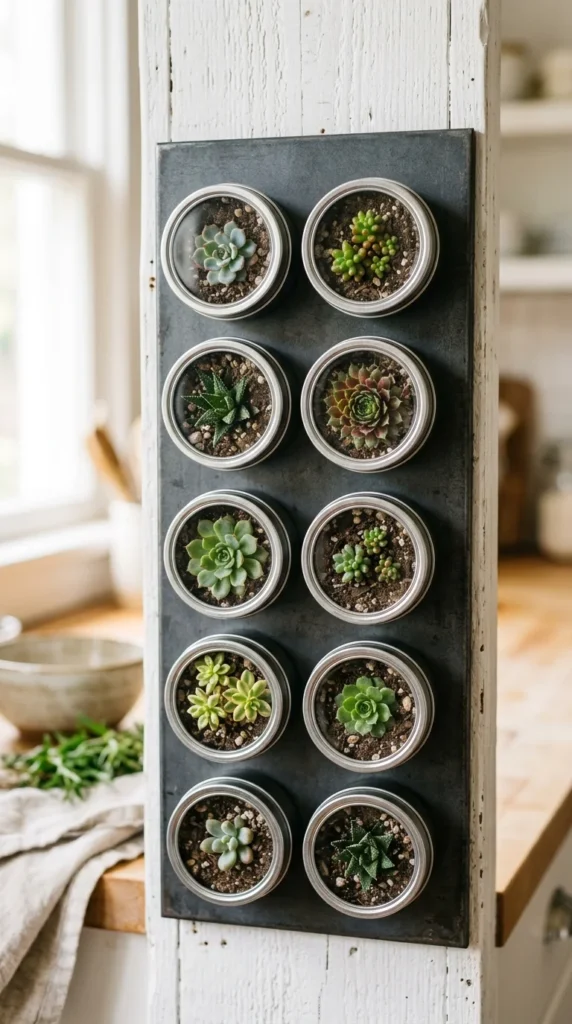
Similar to the cork idea but on a larger scale, magnetic tins (like those used for spices) can be mounted on a metal board or the side of a filing cabinet. This is a brilliant solution for adding life to a sterile office environment.
23. Fairy Gardens
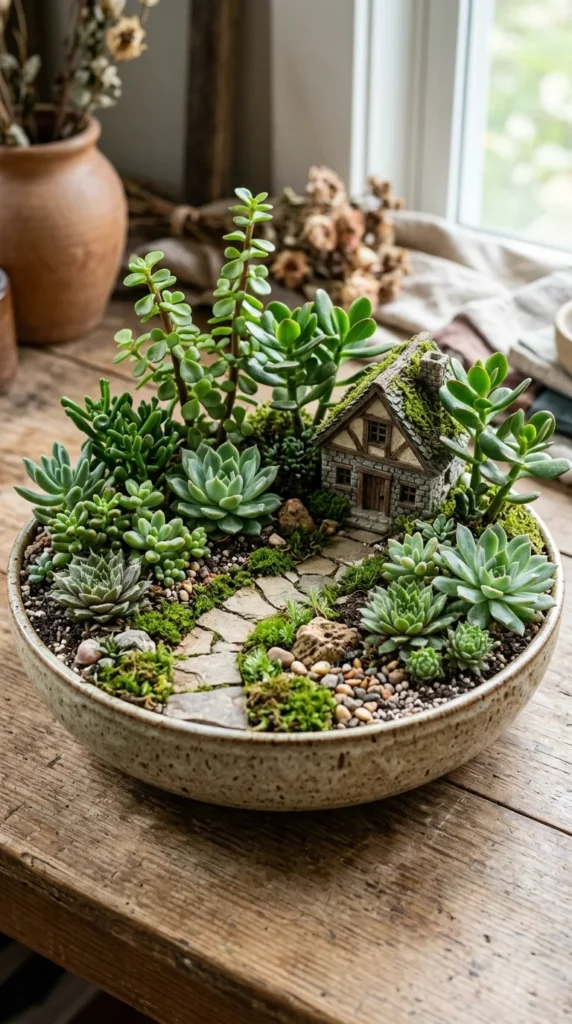
Succulents are the perfect scale for fairy gardens. Use a wide, shallow bowl to create a miniature landscape, using different succulents to represent trees, shrubs, and groundcover. Add miniature accessories like benches or paths to complete the scene.
24. Pallet Walls
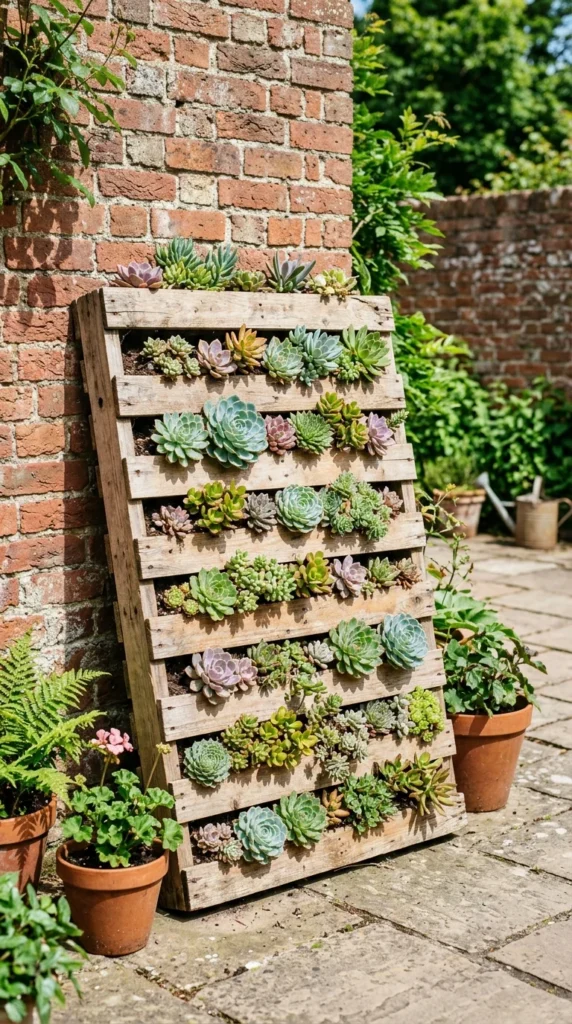
Reclaimed pallets can be converted into massive vertical gardens. By attaching landscape fabric to the back and bottom of the slats, you create “troughs” for soil. This is a cost-effective way to cover a large, boring wall with lush, living texture.
25. Marble Bowls
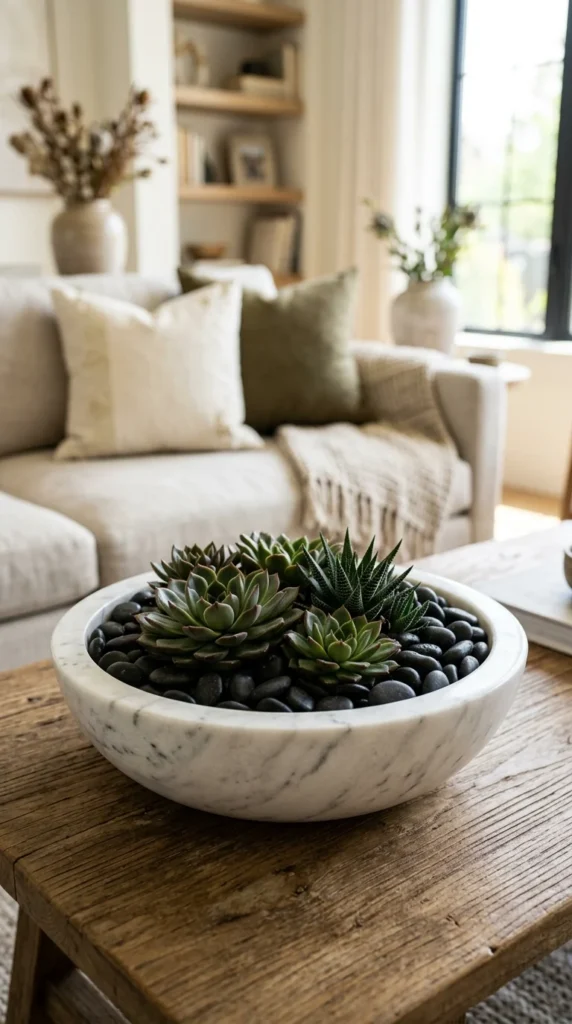
For a touch of luxury, a solid marble bowl makes an exquisite succulent container. The cool, heavy stone complements the fleshy leaves of the plants. Use white marble with grey veining for a classic look, or dark green marble for something more dramatic.
Tips for Success with Any Planter
Regardless of which planter you choose, keeping your succulents healthy requires following a few golden rules:
- Drainage is Non-Negotiable: If your chosen container doesn’t have holes, add a thick layer of pebbles at the bottom and be extremely careful not to overwater.
- Use the Right Soil: Standard potting soil holds too much moisture. Always use a gritty “cactus and succulent mix” that drains quickly.
- Light Requirements: Most succulents need at least 4-6 hours of bright, indirect sunlight daily. If your planter is in a dark corner, consider a grow light.
- The “Soak and Dry” Method: Only water your succulents when the soil is completely dry all the way through. When you do water, soak the soil thoroughly until water runs out the bottom.