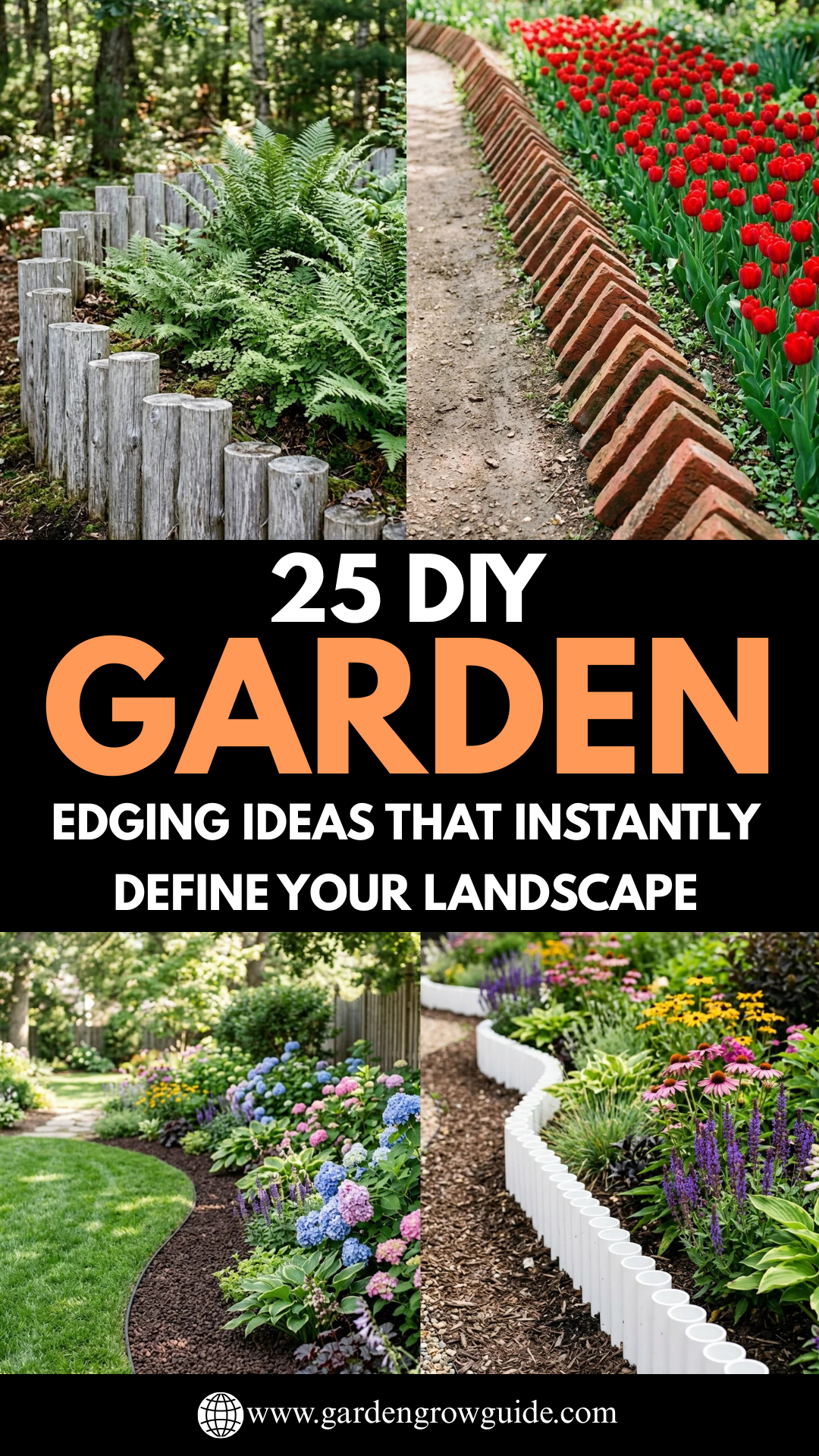
Garden edging is the secret weapon of professional landscapers. It provides a clean “frame” for your horticultural masterpiece, preventing grass from invading flower beds and keeping mulch where it belongs. Beyond functionality, edging adds a finished, polished look that elevates the curb appeal of any home. Whether you prefer a rustic, woodland aesthetic or a sharp, modern vibe, these 25 DIY garden edging ideas will help you transform your outdoor space with materials that are often affordable or even free.
1. Natural Stones
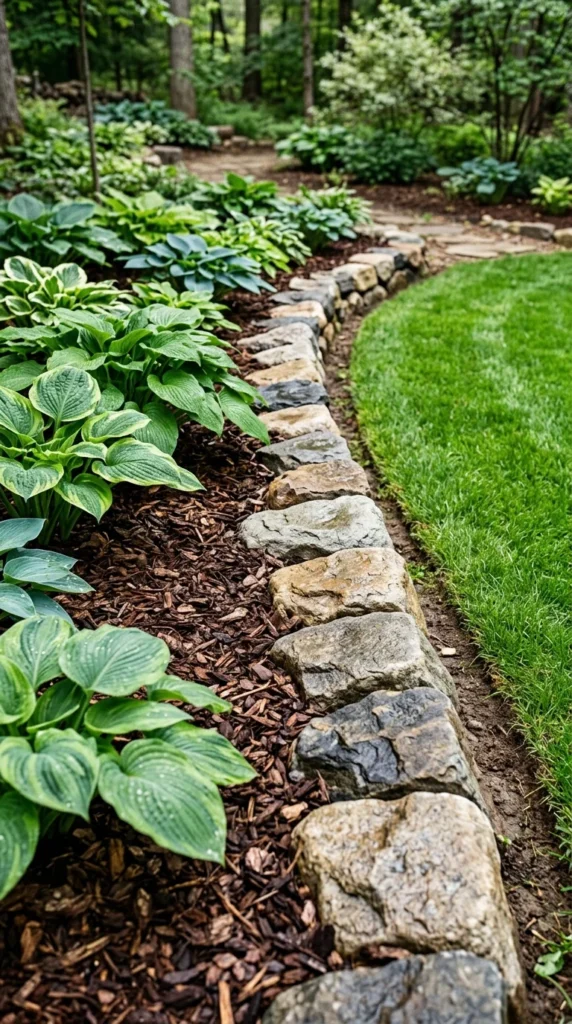
Using natural stones is one of the most timeless ways to edge a garden. You can source these from your own property or purchase them in bulk from a local quarry. To install, dig a shallow trench and nestle the stones close together. This “dry-stack” method looks organic and blends seamlessly with traditional or cottage-style gardens.
2. Red Bricks
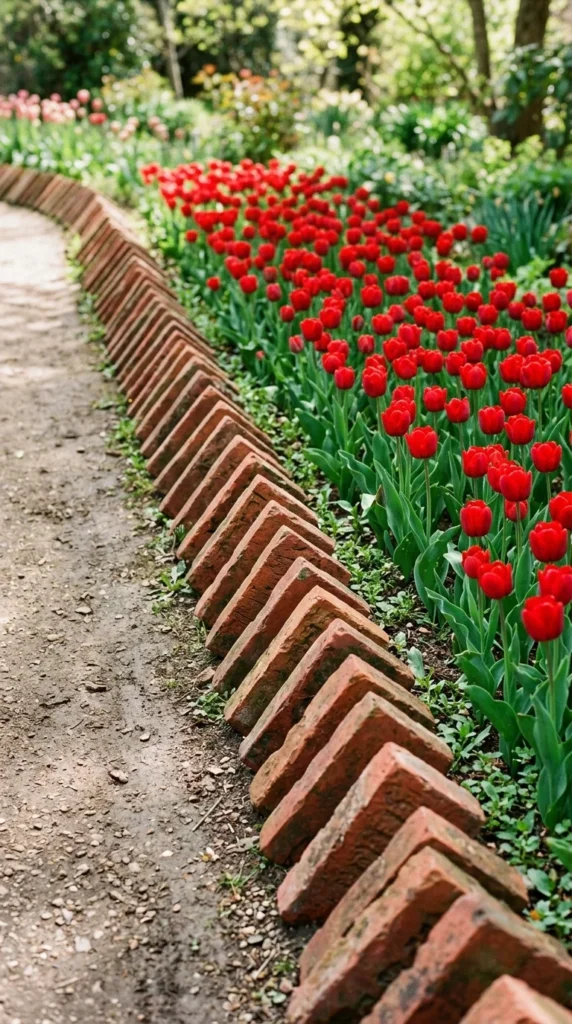
Bricks offer a classic, structured look. You can lay them flat for a mowing strip, stand them vertically for a crisp line, or angle them in a “sawtooth” design for added texture. Using reclaimed bricks adds a sense of history and character to your landscape, making it feel established and warm.
3. Glass Bottles
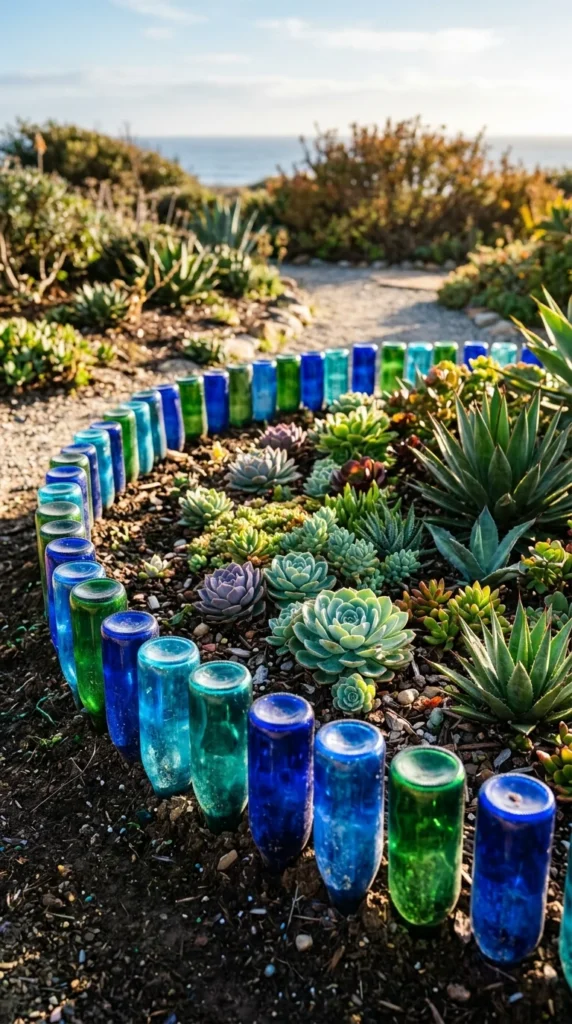
For a whimsical or bohemian touch, upcycle old wine or soda bottles. By burying them neck-down, you create a colorful, luminous border that catches the light. This is an eco-friendly way to reuse glass and adds a unique pop of color to shaded areas where flowers might struggle to bloom.
4. Wooden Logs
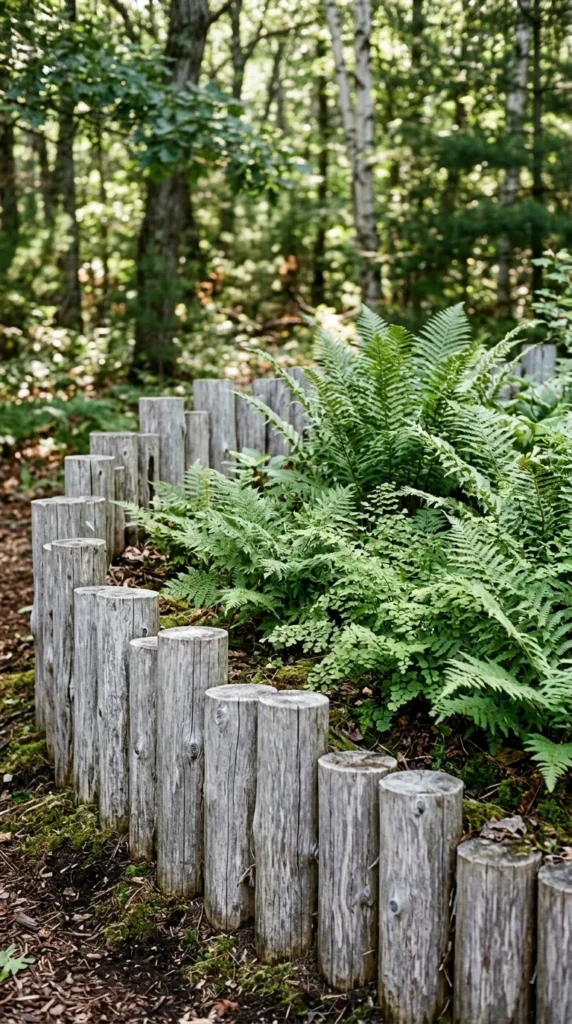
If you have access to fallen branches or old firewood, wooden logs make excellent edging. By cutting them into uniform or varying lengths and burying them vertically, you create a sturdy, naturalistic barrier. Cedar and locust are ideal choices as they are naturally rot-resistant.
5. Terracotta Pots
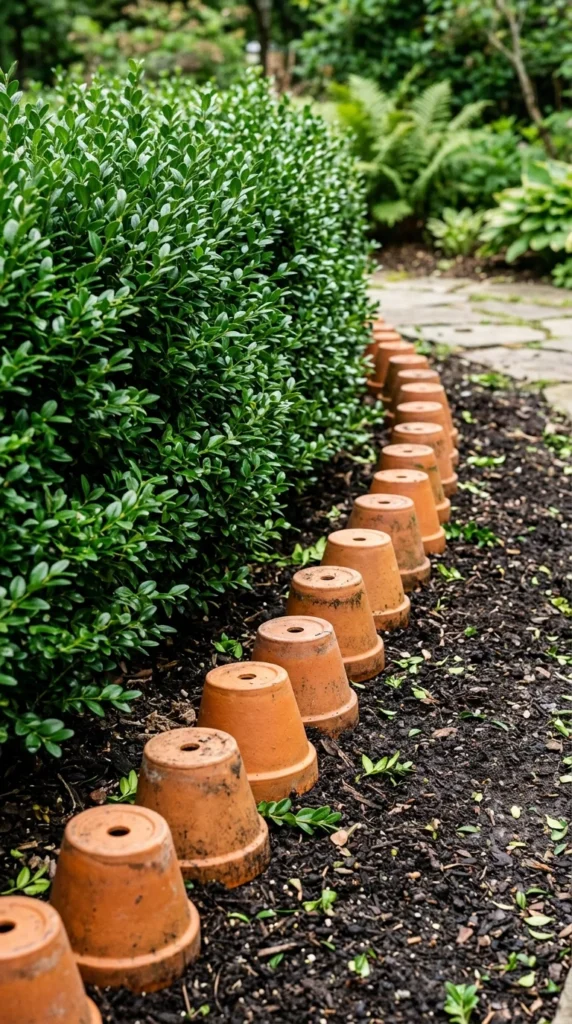
Old or slightly chipped terracotta pots can find a second life as garden edging. When buried halfway, they create a charming, scalloped appearance. This look works particularly well in Mediterranean-style gardens or around herb patches, providing a sense of rustic elegance.
6. Wattle Fencing
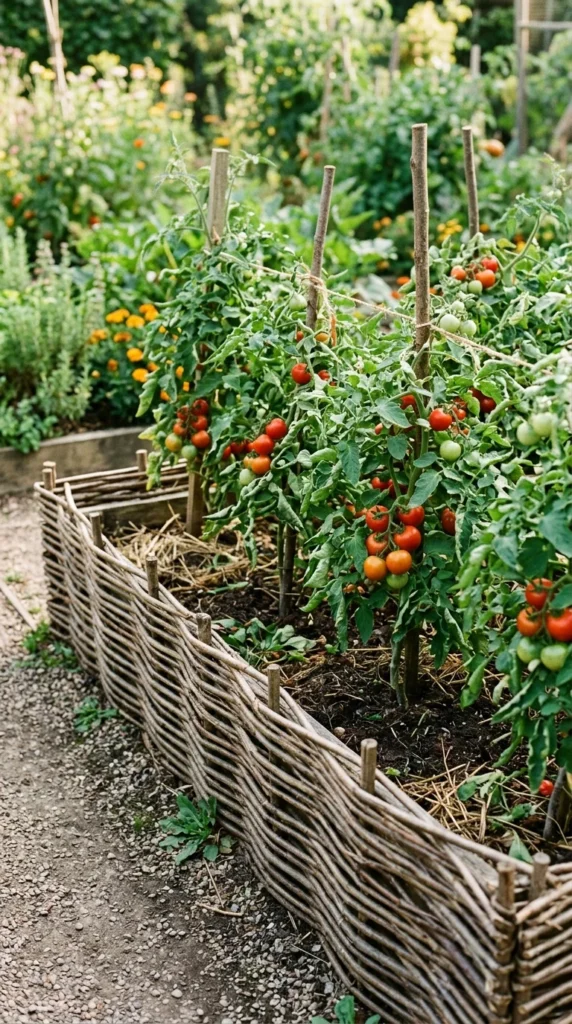
Wattle edging is an ancient technique involving weaving flexible branches—usually willow or hazel—around vertical stakes. This creates a beautiful, organic texture that is perfect for English cottage gardens or vegetable patches. It is biodegradable and adds a handcrafted feel to the landscape.
7. Concrete Pavers
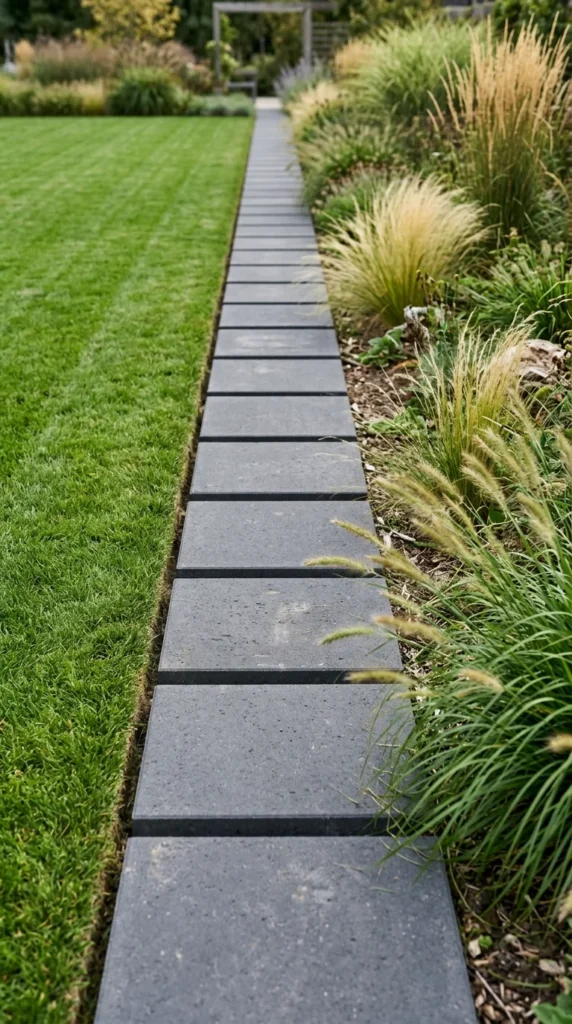
Concrete pavers are readily available at any hardware store and offer a clean, contemporary look. If you lay them flush with the ground, they serve as a “mowing strip,” allowing you to run your lawnmower wheels right over them, eliminating the need for string trimming.
8. Sea Shells
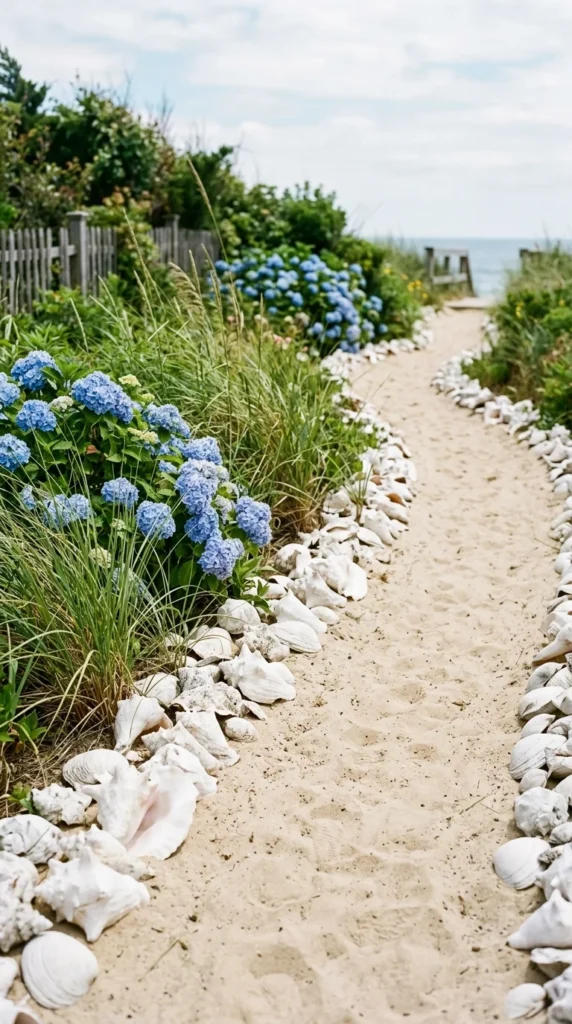
For coastal homes or those wishing for a beachy vibe, large sea shells create a stunning and unique border. While they might not be practical for high-traffic areas, they look beautiful around specimen plants or quiet garden nooks, reflecting the light and adding a bright, airy feel.
9. Metal Pipes
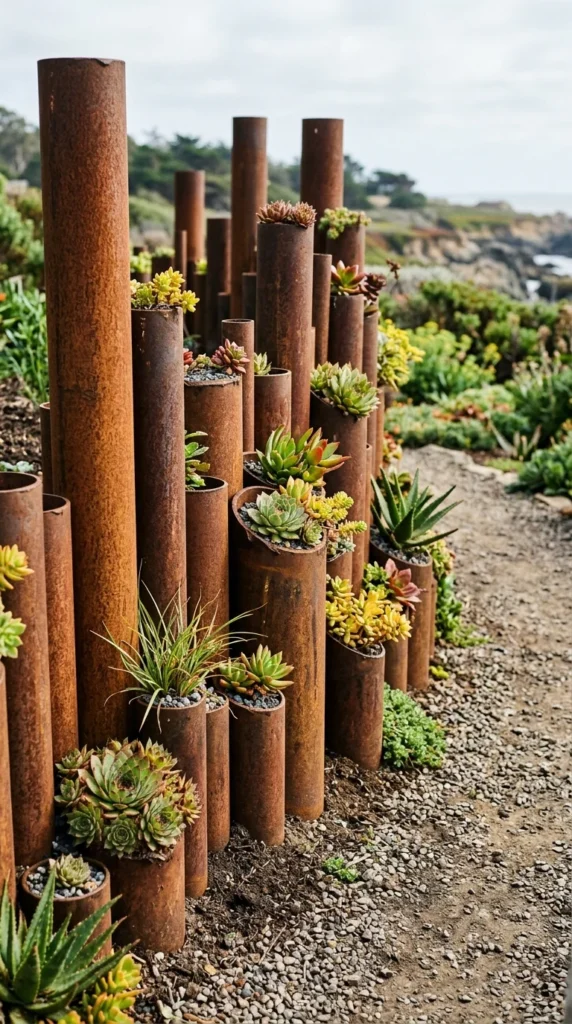
Scrap metal pipes can be repurposed into a sleek, industrial-style edge. By using pipes of varying heights and diameters, you can create a rhythmic, architectural border. If you use wide pipes, you can even plant small alpines or succulents inside the pipes themselves.
10. River Rocks
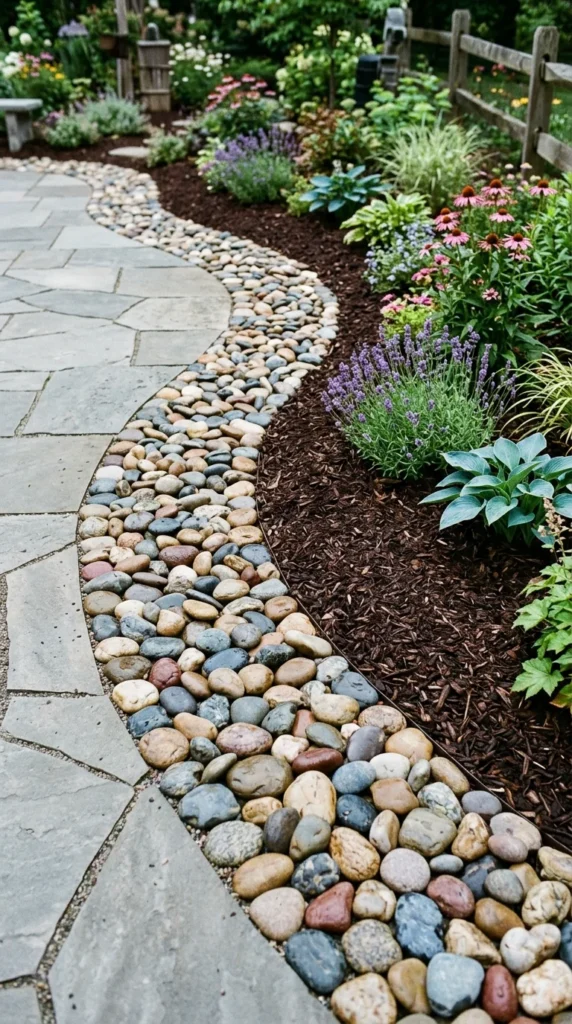
River rocks provide a soft, fluid look that is perfect for Zen gardens or dry creek bed designs. Their smooth textures and varied earthy tones create a relaxing visual transition between different zones of the yard. They are also excellent for drainage and preventing soil erosion.
11. Railroad Ties
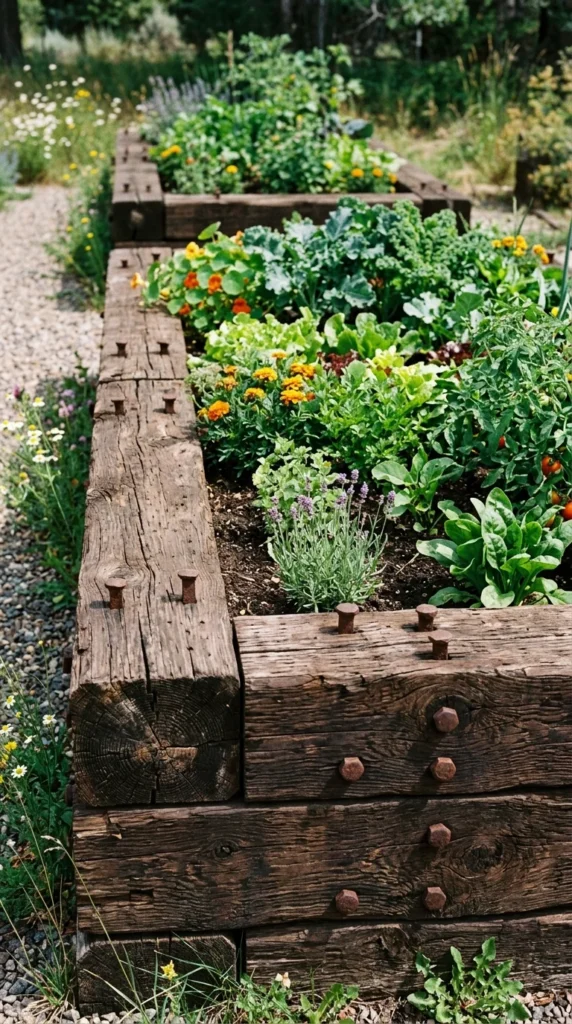
Railroad ties (or large landscaping timbers) are ideal for creating bold, straight lines and managing changes in elevation. They are heavy and durable, making them perfect for framing large garden beds or creating low retaining walls that double as edging.
12. Gabion Cages
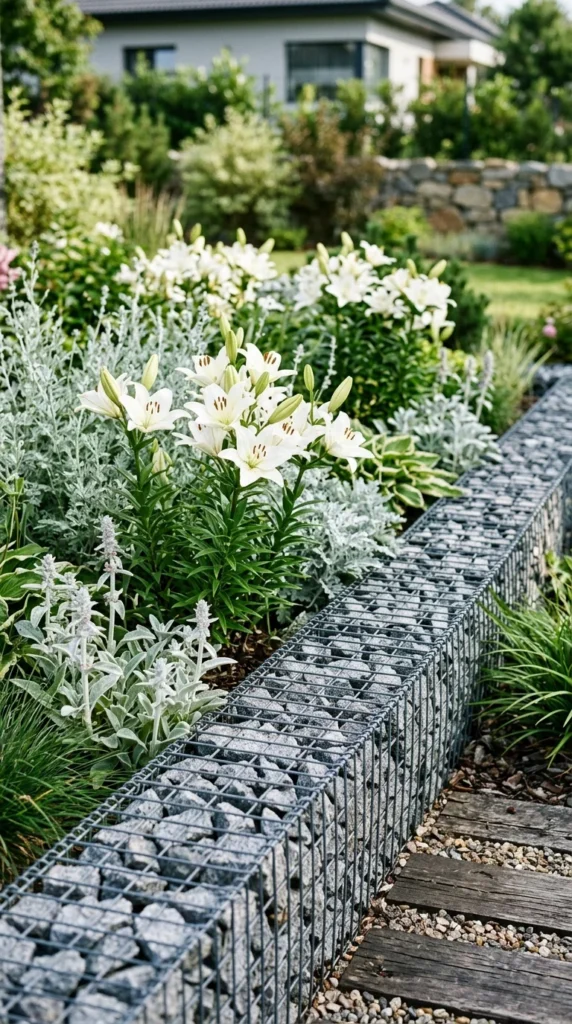
Gabion edging involves filling thin wire cages with stones, pebbles, or even recycled glass rocks. This provides a very structured, architectural look that is popular in modern landscape design. It is incredibly durable and allows for excellent water drainage.
13. Bamboo Poles
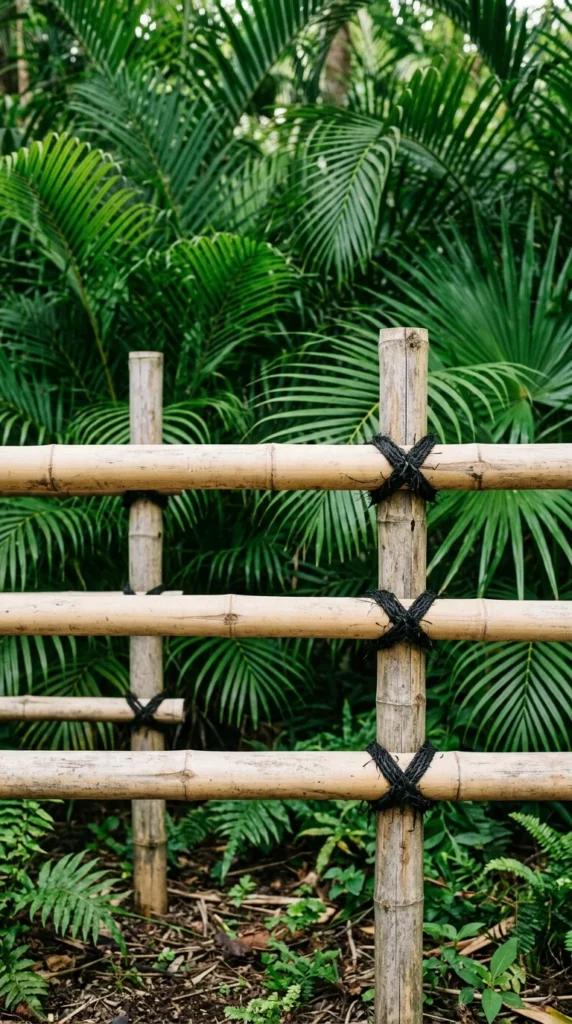
Bamboo edging is perfect for adding a tropical or Asian-inspired aesthetic to your garden. You can lay poles horizontally for a low-profile look or create a “mini-fence” by lashing together vertical segments. It is a sustainable material that adds a lightweight, natural feel.
14. Bowling Balls
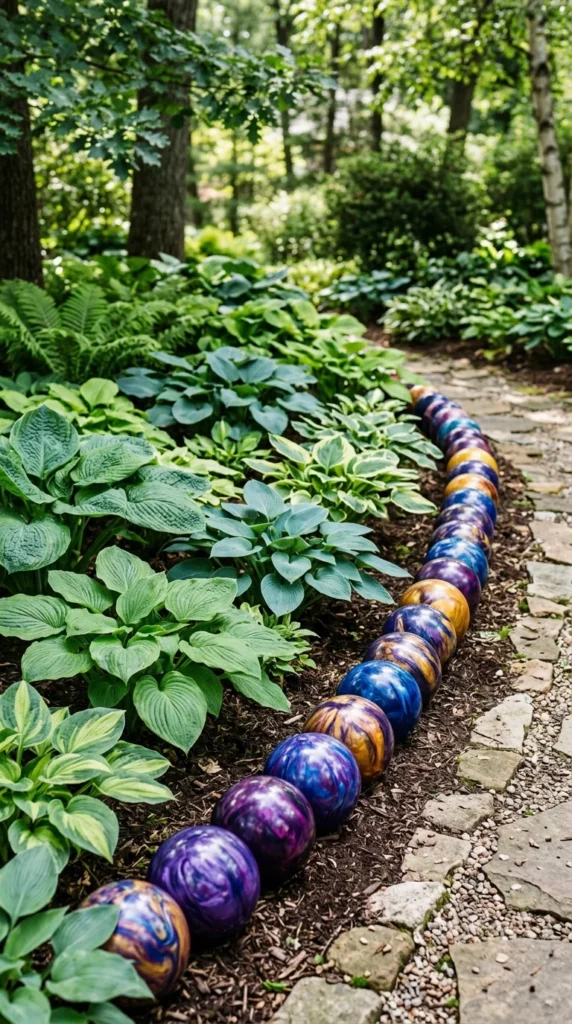
For the gardener with a sense of humor, recycled bowling balls make a bold and colorful statement. They are heavy enough to stay in place and their spherical shape creates a unique, rolling border that is sure to be a conversation starter.
15. Cinder Blocks
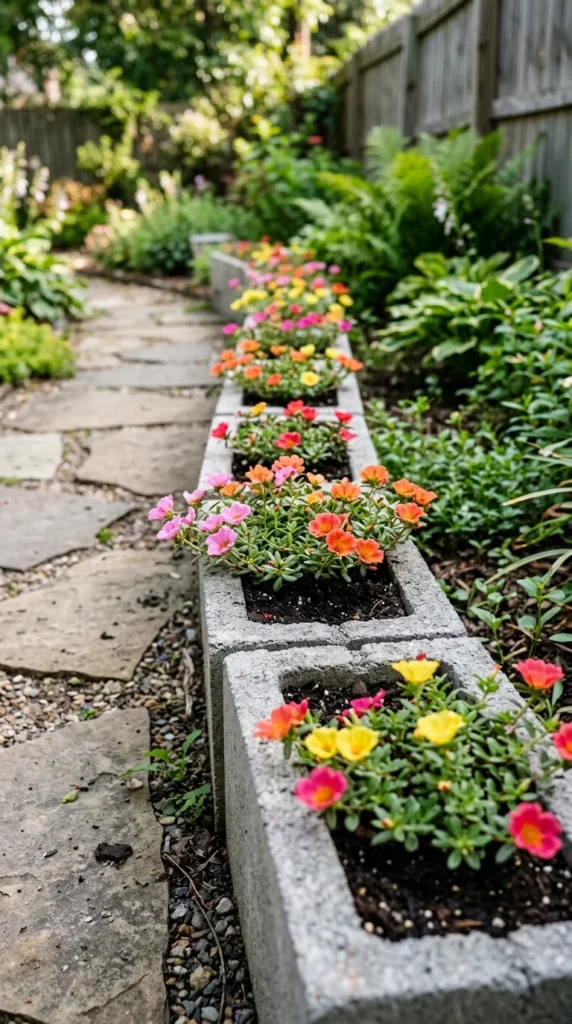
Cinder blocks are inexpensive and highly functional. By turning them so the holes are exposed, you can turn your edging into a secondary planter. This “living wall” effect is great for small herbs or colorful annuals, maximizing your planting space.
16. Corrugated Metal
Corrugated metal strips provide a rustic, farmhouse-chic or industrial look. When allowed to develop a natural rust patina, the warm orange tones of the metal contrast beautifully with green foliage. This material is great for creating thin, sharp boundaries in tight spaces.
17. Scalloped Edging
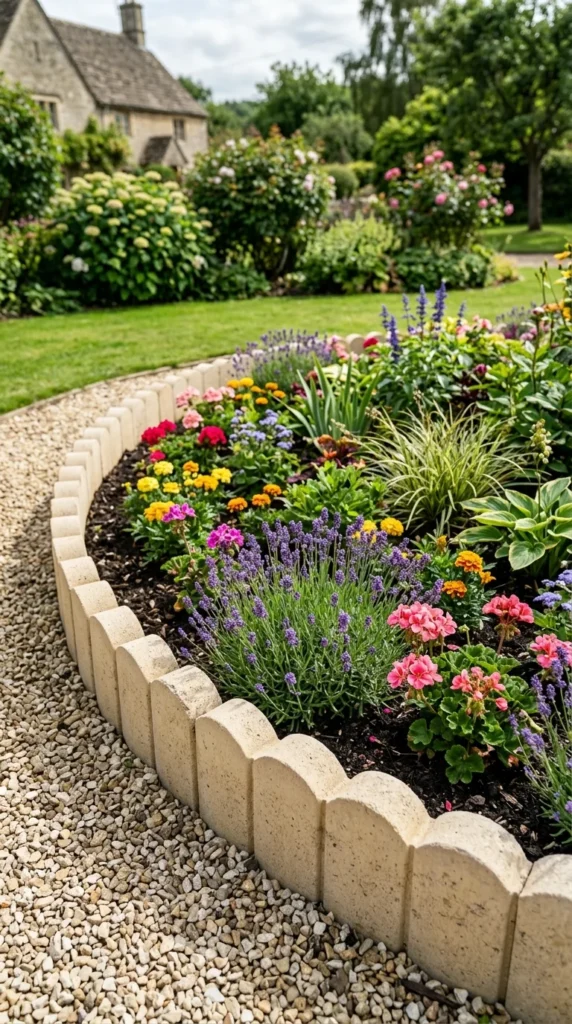
Scalloped concrete or plastic edging is a classic choice for traditional landscapes. These pieces are designed to interlock, making them easy to install in curved shapes. The repeating humps create a sense of rhythm and formal elegance in flower borders.
18. Dinner Plates
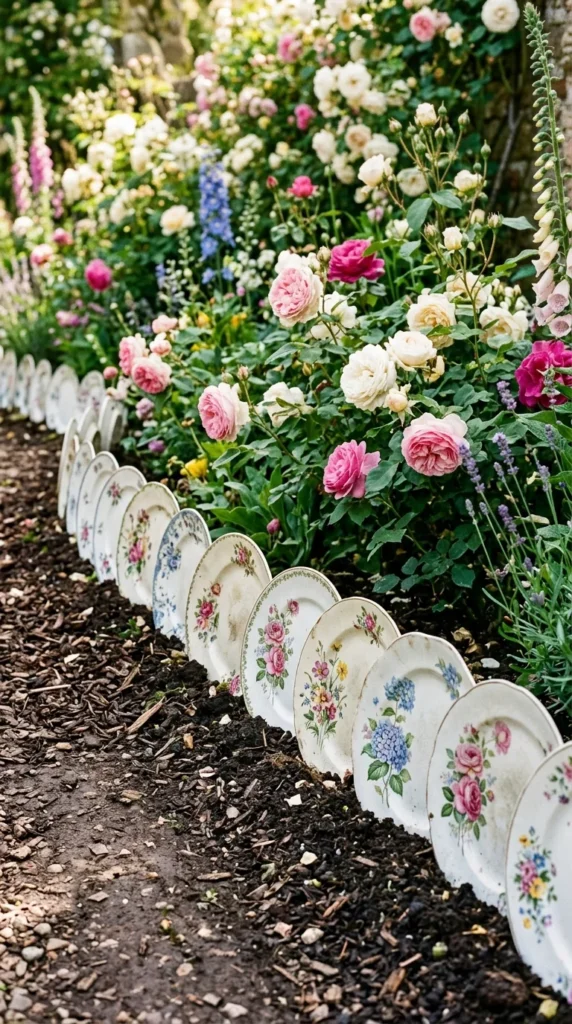
Upcycling old or mismatched dinner plates is a fantastic way to add a “shabby chic” or vintage vibe to your garden. This works best in protected areas where the plates are less likely to be stepped on. The varied patterns and colors create a charming, cottage-core aesthetic.
19. Tree Branches
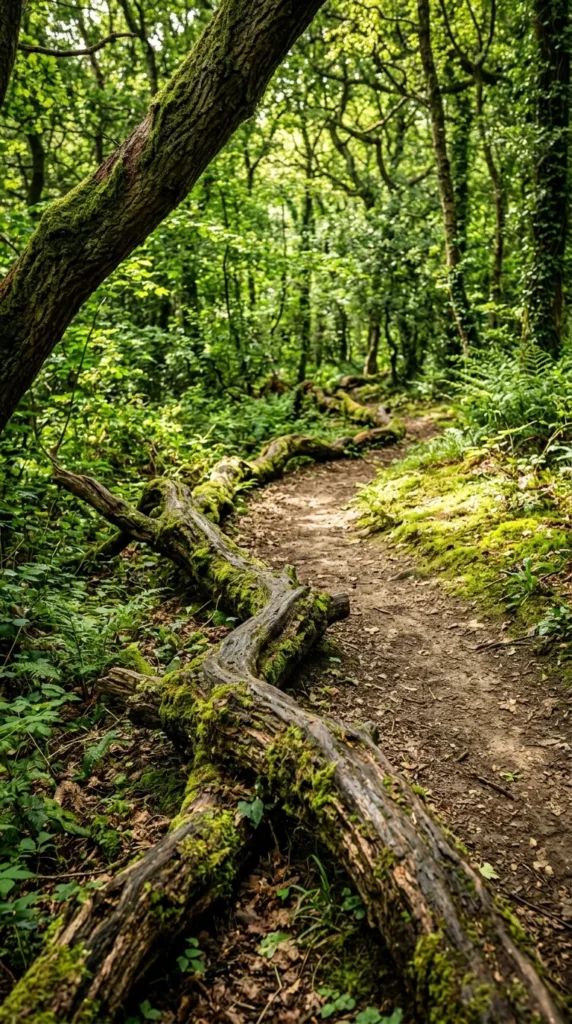
For a “no-cost” option, use thick branches or limbs pruned from your own trees. Laying them along the edge of a path creates a rustic, woodland look. This is particularly effective in shaded, naturalistic areas where you want the human intervention to be subtle.
20. Rubber Mulch Edging
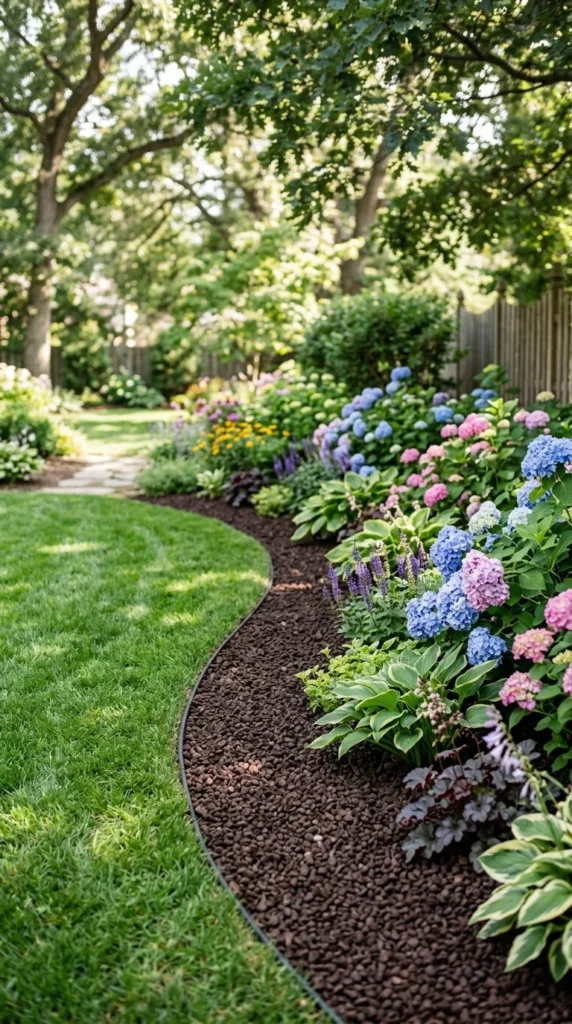
Recycled rubber edging often comes in long, flexible strips that mimic the look of stone or wood. It is incredibly easy to install around curves and is highly durable. This is an excellent choice for those who want a low-maintenance, eco-friendly solution that won’t rot or crack.
21. Rope Edging
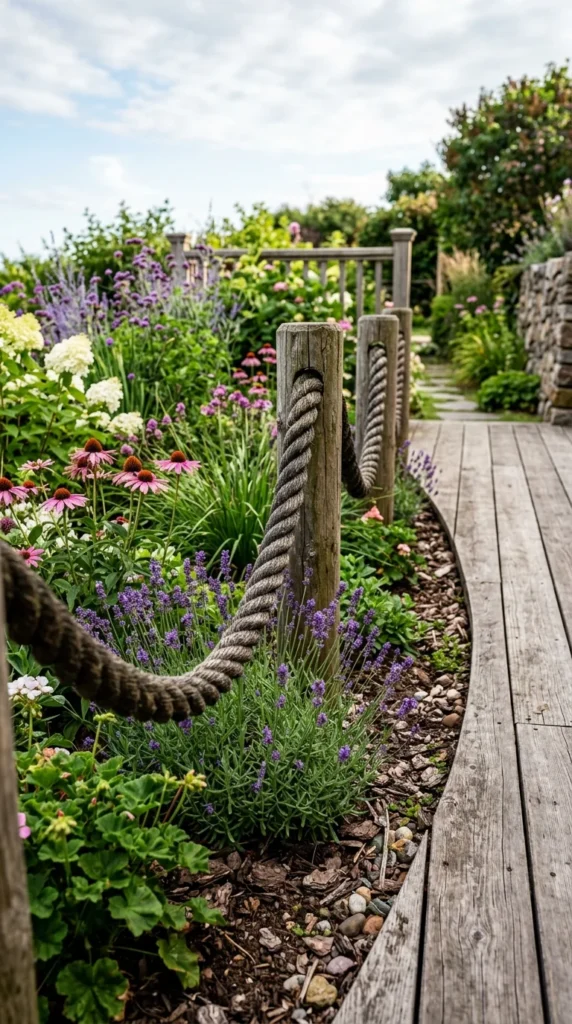
Nautical rope can create a soft, textured border that feels relaxed and informal. You can lay a heavy-gauge rope directly on the ground or drape it through low posts. This look is perfect for coastal gardens or as a boundary for children’s play areas.
22. Slate Tiles
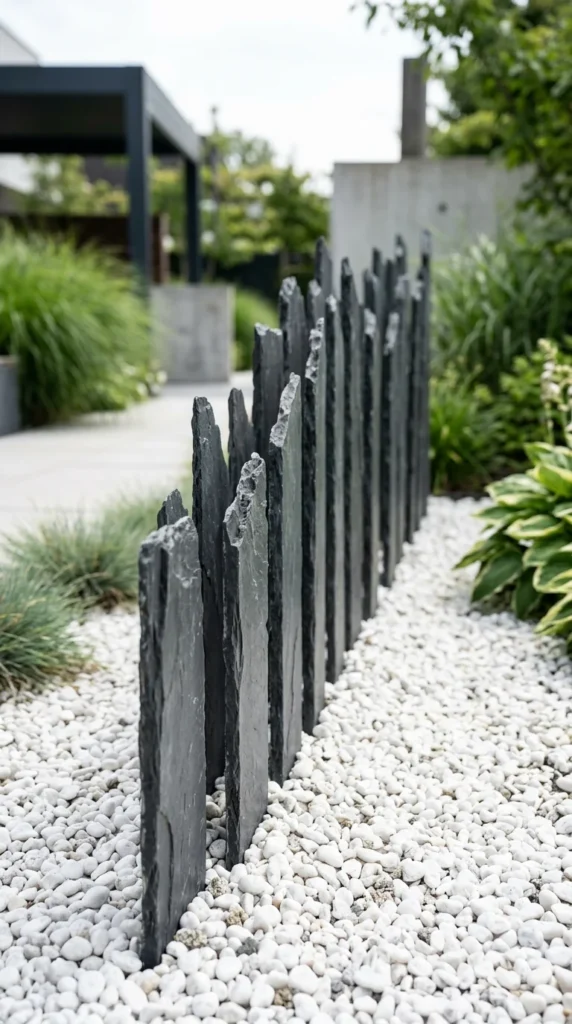
Slate tiles, whether new or reclaimed from an old roof, offer a sophisticated and moody look. Their dark color makes the greens and bright colors of your plants pop. By burying them vertically, you create a very slim, unobtrusive border that is perfect for modern or minimalist designs.
23. Cobblestones
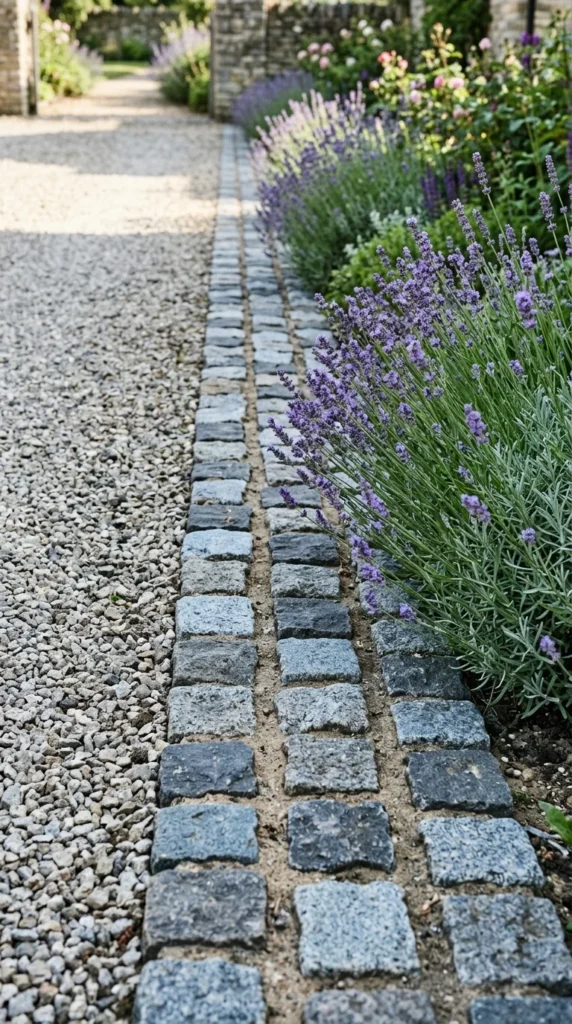
Cobblestones evoke the feeling of old European streets. They are incredibly durable and provide a substantial, heavy border that stays in place for decades. Their rounded edges and varied sizes give a handmade, historic feel to any landscape.
24. PVC Pipes
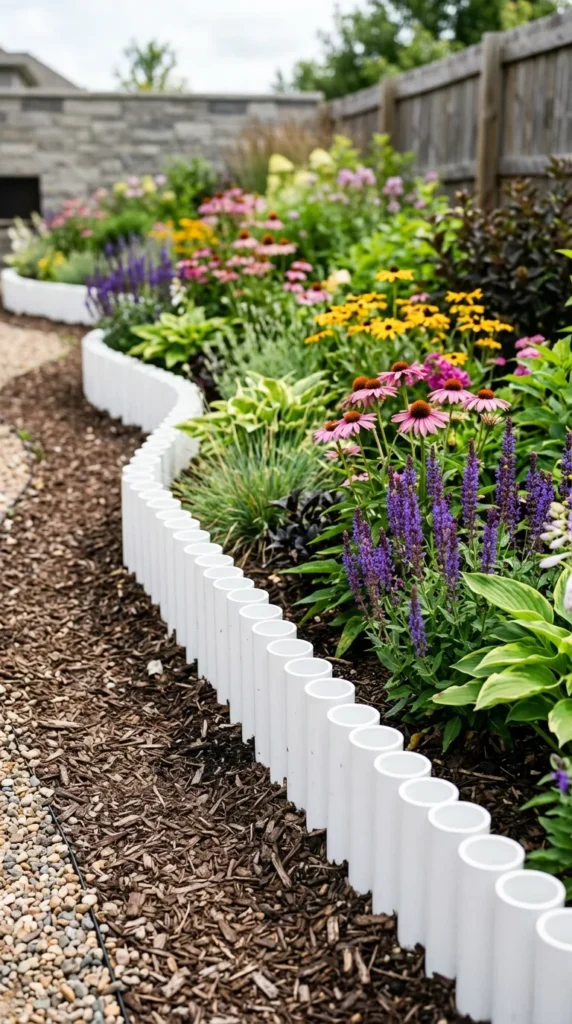
For a modern, DIY look on a budget, PVC pipe sections can be used. When painted in a uniform color (like matte black or metallic copper) and buried vertically, they create a surprising and stylish border. Like cinder blocks, the hollow centers can be used for small decorative stones or even tiny plants.
25. Boxwood Hedges
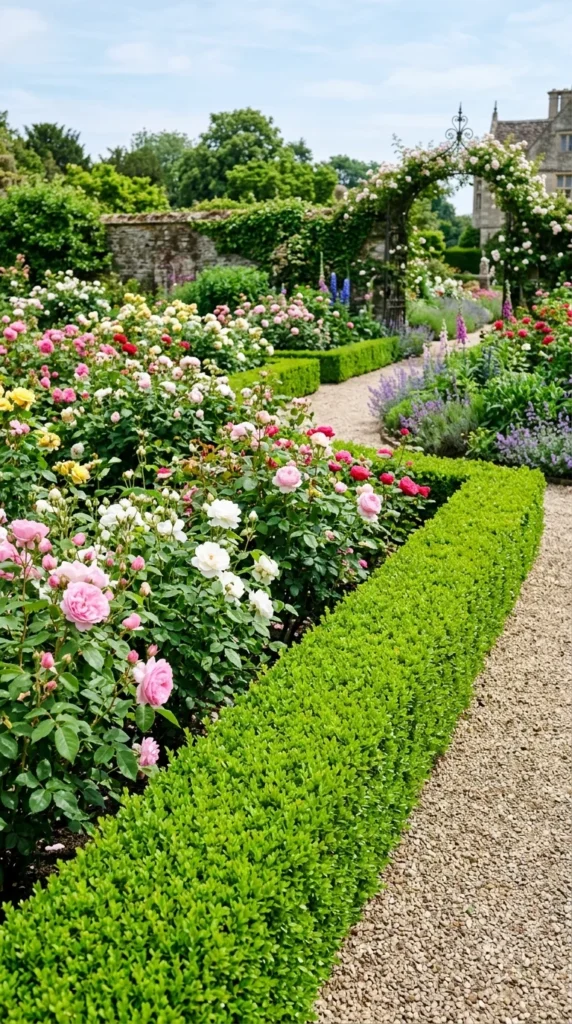
The ultimate “living” edge is the low hedge. Boxwood or dwarf varieties of ilex are commonly used to create formal borders known as “parterres.” While this requires more maintenance (pruning) than stone or wood, it provides a lush, evergreen structure that looks beautiful in all four seasons.