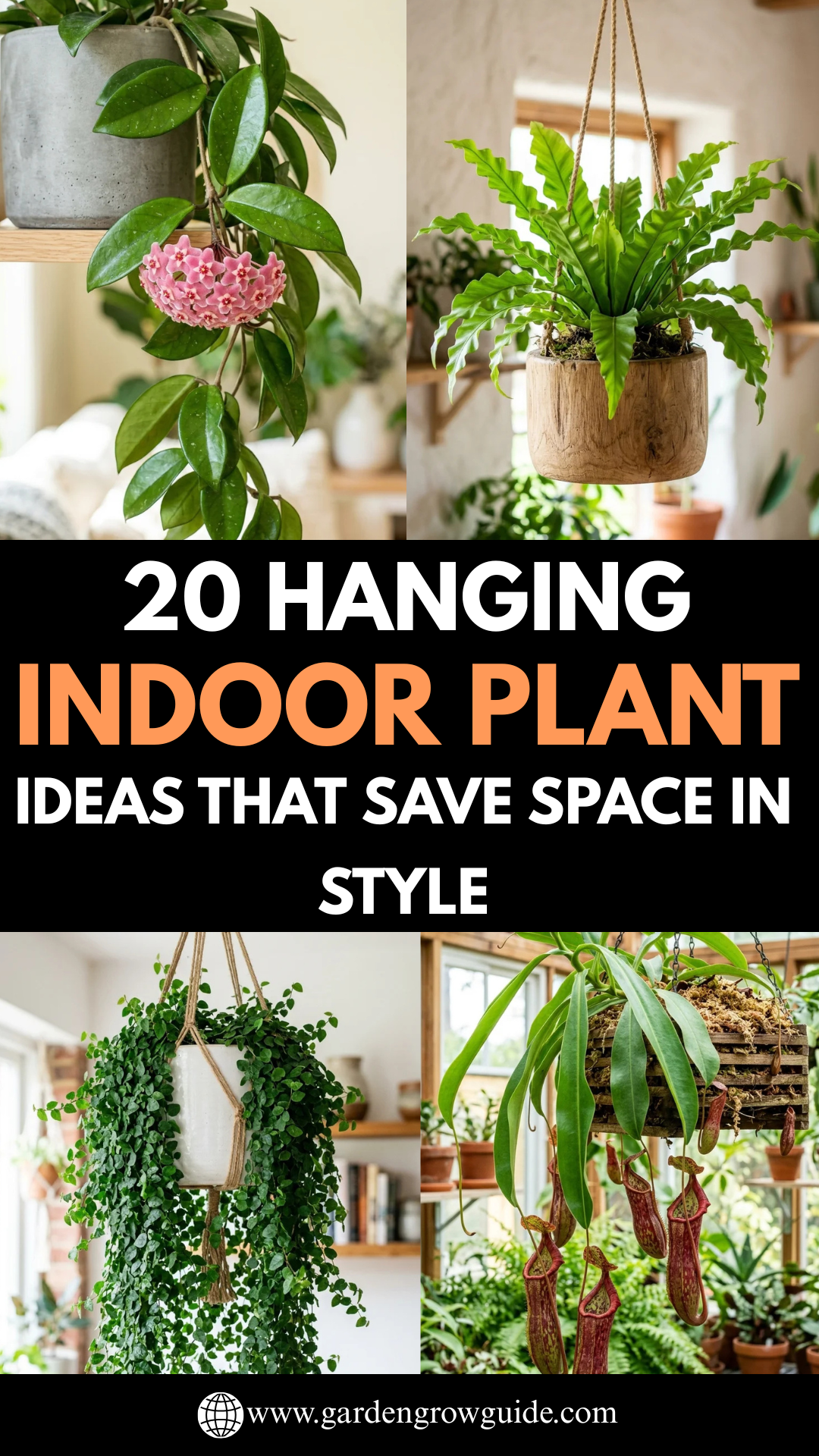
Indoor gardening has evolved far beyond the traditional windowsill pot. As urban living spaces become more compact, plant enthusiasts are looking upward to maximize their square footage. Hanging plants offer a sophisticated solution, transforming empty air space into a lush, cascading canopy of greenery. Beyond their aesthetic appeal, these elevated botanical displays improve air quality and create a sense of tranquility without cluttering floor space.
From the delicate trails of succulent vines to the dramatic fronds of tropical ferns, hanging plants come in diverse textures and colors. Whether you are a seasoned horticulturalist or a beginner looking for low-maintenance options, these twenty hanging plant ideas will help you design a stylish, vertical oasis.
1. String of Pearls
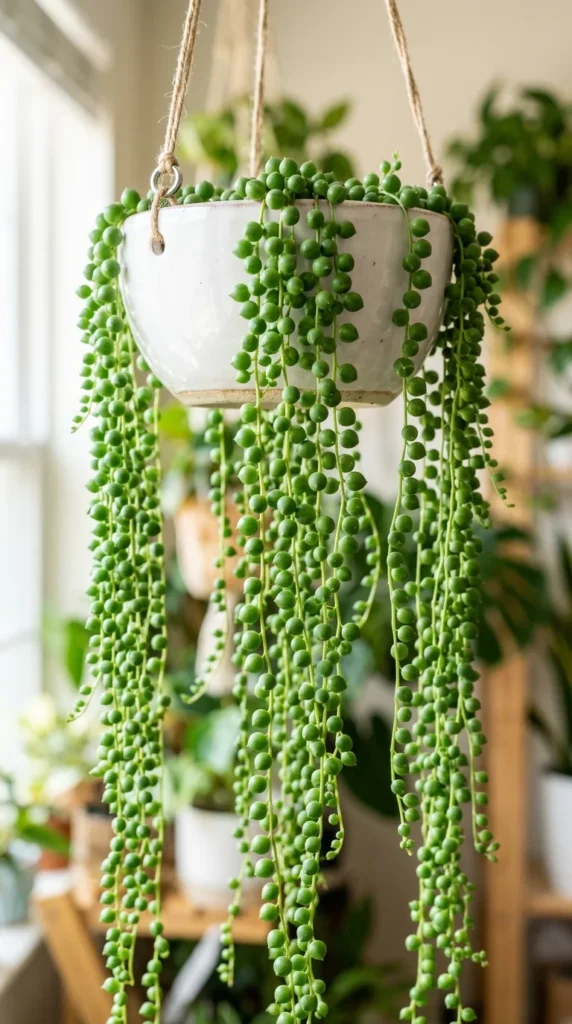
The Senecio rowleyanus, commonly known as the String of Pearls, is a show-stopping succulent that mimics the appearance of a beaded necklace. Its unique spherical leaves are designed to store water, making it a drought-tolerant choice for busy homeowners. When hung in a bright spot with indirect sunlight, the pearls can cascade several feet, creating a striking visual line.
- Light: Bright, indirect light.
- Water: Infrequent; allow soil to dry completely between waterings.
- Best For: High shelves or ceiling hooks where the “pearls” can drape freely.
2. Spider Plant
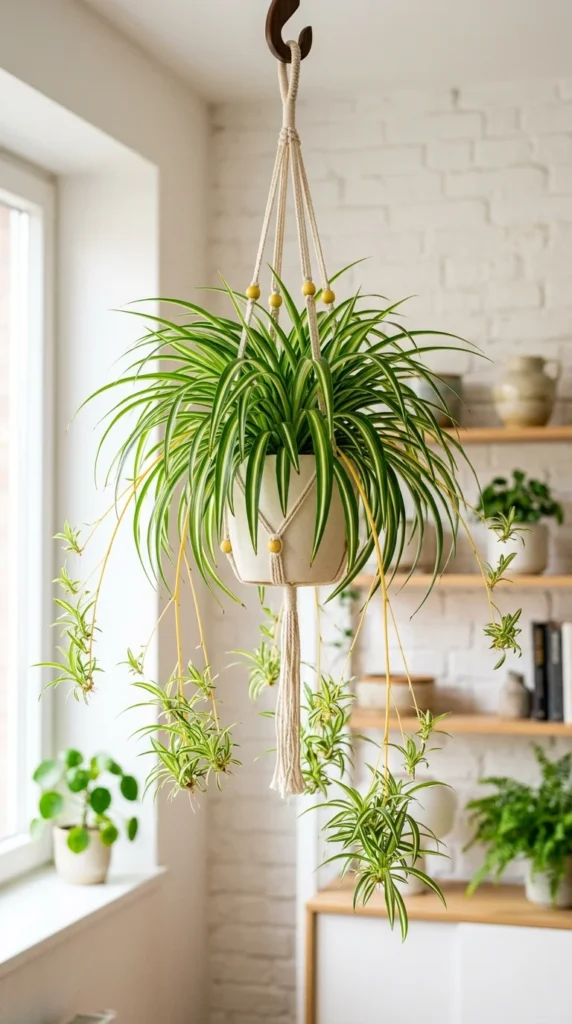
The Spider Plant (Chlorophytum comosum) is a classic for a reason. It is incredibly resilient and famous for its “pups”—miniature versions of the parent plant that dangle from long stems like spiders on a web. These offshoots make the plant look exceptionally full and architectural when suspended. It is also one of the top air-purifying plants identified by NASA.
- Light: Low to bright indirect light.
- Water: Weekly; keep soil slightly moist but not soggy.
- Best For: Bedrooms and bathrooms due to its air-filtering capabilities.
3. Golden Pothos
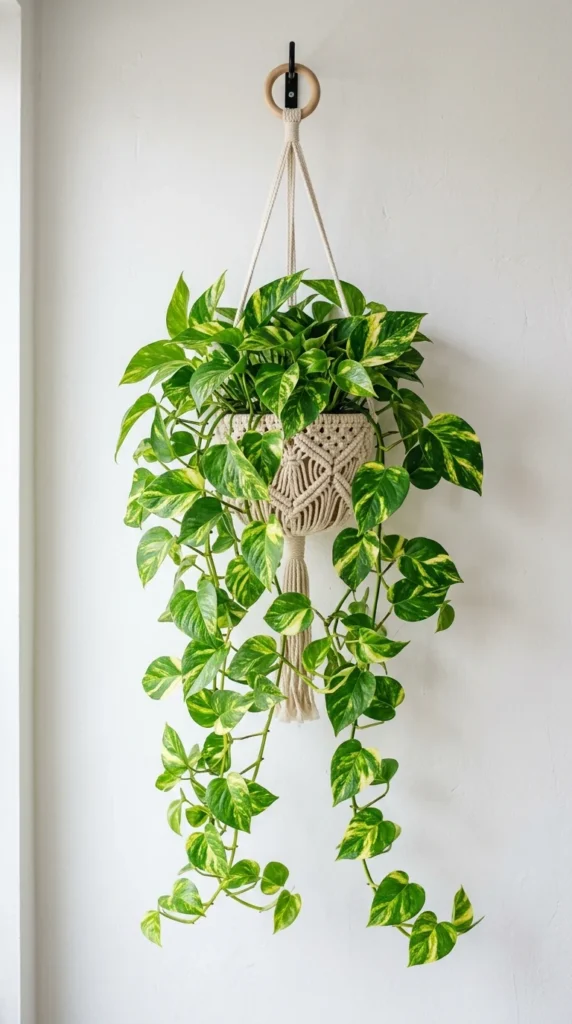
Often called “Devil’s Ivy” because it is nearly impossible to kill, the Golden Pothos is the ultimate entry-level hanging plant. Its heart-shaped leaves feature beautiful yellow variegation. Pothos are fast growers, and their vines can be trained to wrap around curtain rods or trail down toward the floor, adding a sense of wild elegance to any room.
- Light: Tolerates low light but thrives in medium to bright indirect light.
- Water: When the top inch of soil feels dry.
- Best For: Beginners and low-light apartments.
4. Boston Fern
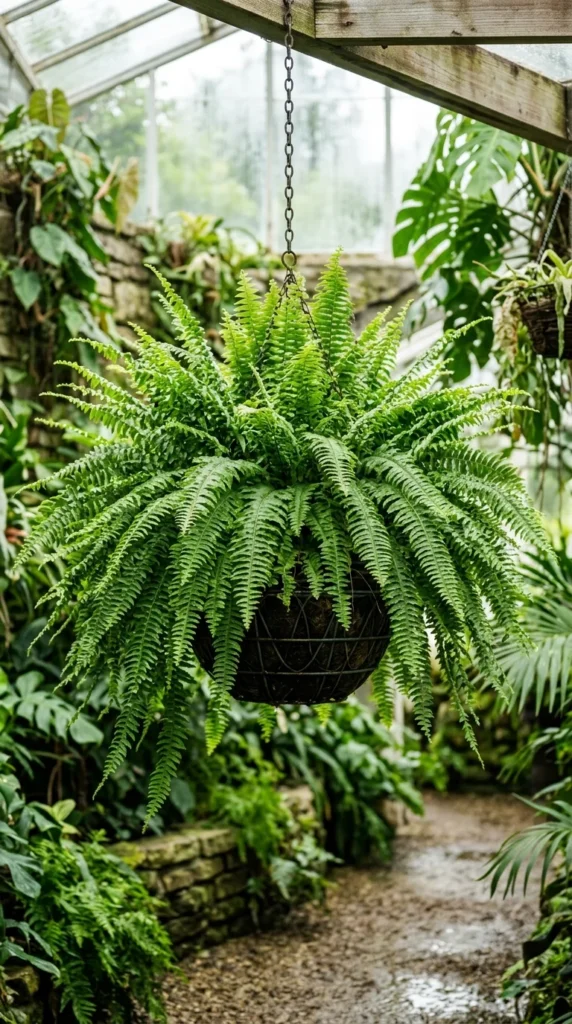
For a classic, Victorian-era aesthetic, the Boston Fern (Nephrolepis exaltata) is unmatched. Its dense, feathery fronds create a voluminous “explosion” of green. This plant thrives in humidity, making it the perfect candidate for a well-lit bathroom or a kitchen. Its bushy nature provides excellent coverage for corners that need a touch of softness.
- Light: Filtered or indirect light.
- Water: Needs consistent moisture and high humidity.
- Best For: Bathrooms or rooms with a humidifier.
5. Burro’s Tail
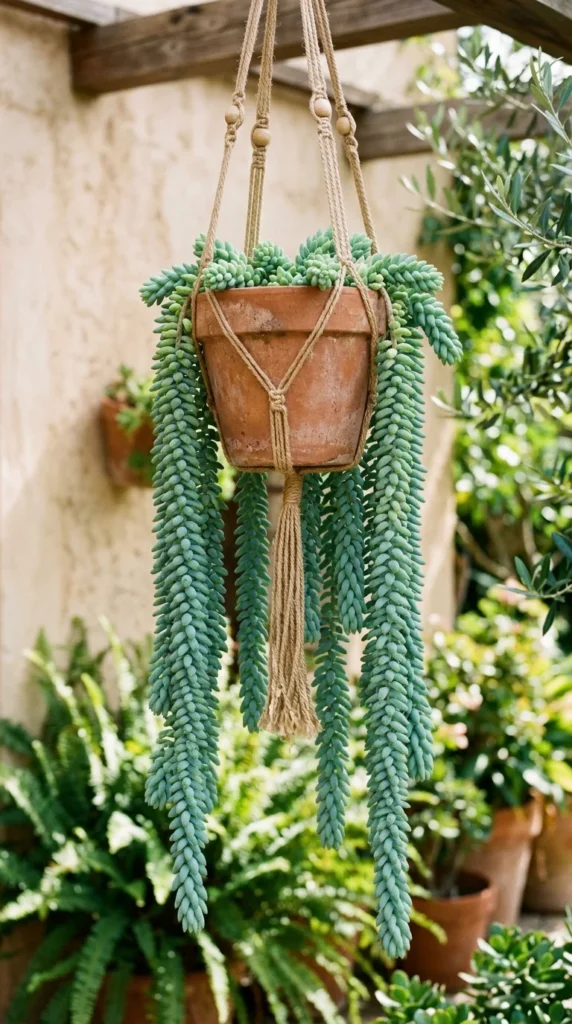
Sedum morganianum, or Burro’s Tail, is a succulent known for its heavy, rope-like stems covered in plump, teardrop-shaped leaves. It has a beautiful silvery-blue hue that contrasts well against warmer interior palettes. Because the leaves are fragile and can drop if touched, hanging it out of high-traffic areas is essential for its longevity.
- Light: Bright sunlight (some direct sun is okay).
- Water: Soak deeply once the soil is dry; avoid overwatering.
- Best For: Sunny windows and minimalist decors.
6. String of Hearts
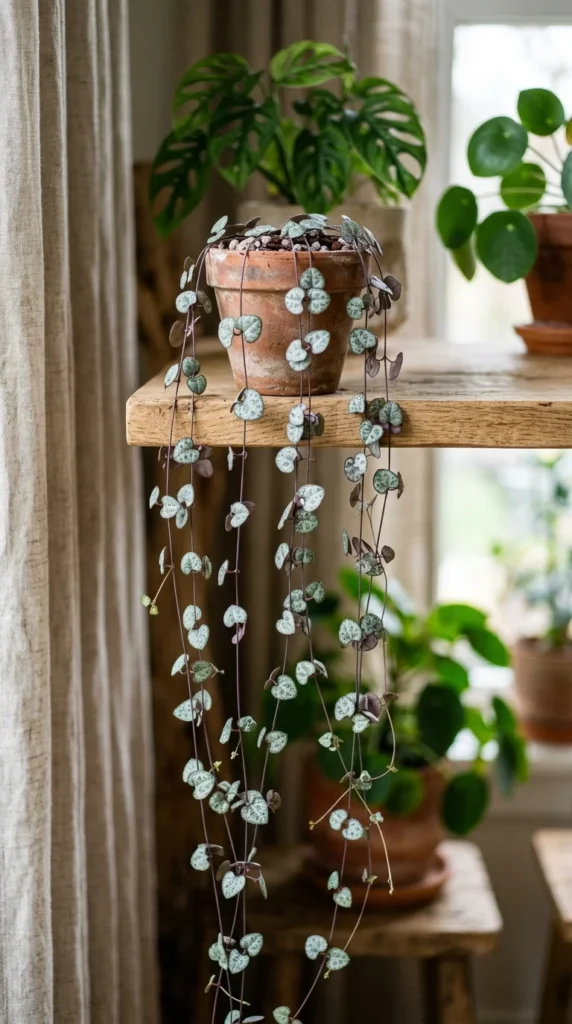
The String of Hearts (Ceropegia woodii) is a romantic and dainty addition to any vertical garden. Its leaves are shaped like tiny hearts and feature a marbled silver pattern with purple undersides. It is a semi-succulent, meaning it doesn’t require constant attention, and its vines can grow quite long, creating a delicate “curtain” effect.
- Light: Bright, indirect light.
- Water: Allow to dry out between waterings.
- Best For: Smaller spaces or as a companion to heavier-leafed plants.
7. Heartleaf Philodendron
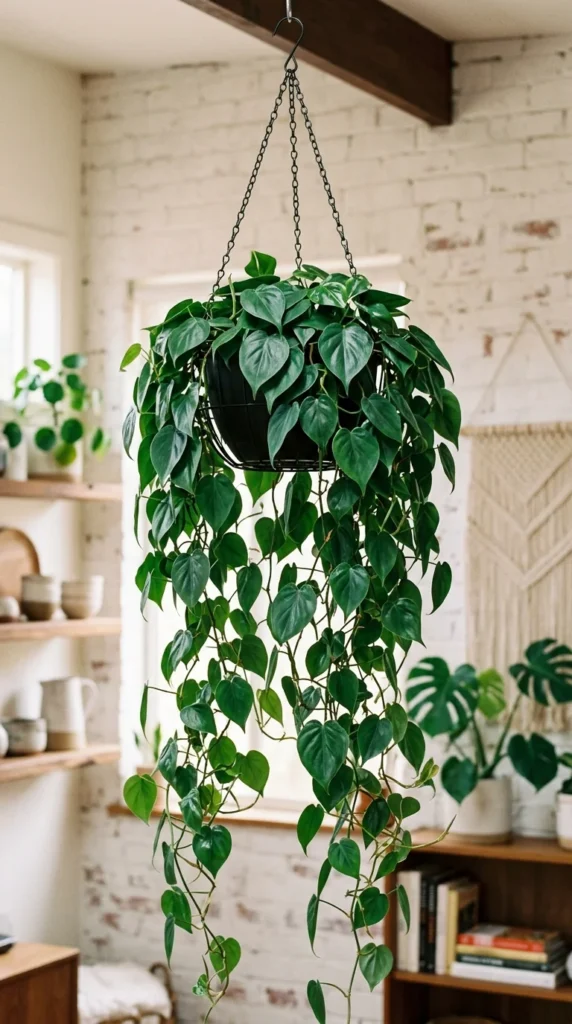
The Heartleaf Philodendron is frequently confused with the Pothos, but its leaves are thinner and more perfectly heart-shaped. It is a vigorous climber and trailer that can survive in various light conditions. It is particularly effective at softening the sharp corners of bookshelves or cabinets when allowed to spill over the edge.
- Light: Low to bright indirect light.
- Water: When the top half of the soil is dry.
- Best For: Cubicles, offices, and low-light corners.
8. English Ivy
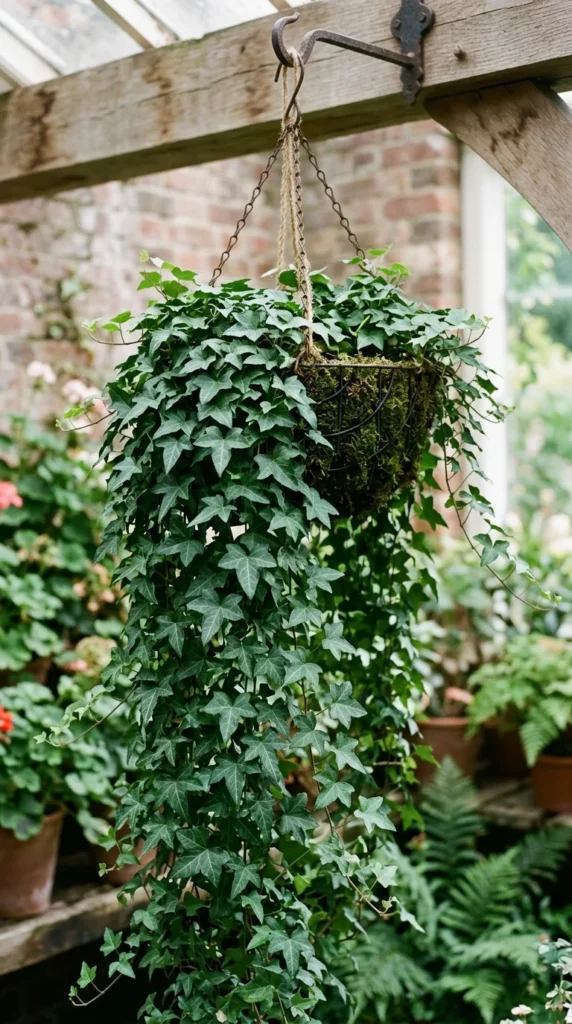
English Ivy (Hedera helix) brings a touch of the European countryside indoors. While often used as a groundcover outdoors, its trailing habit makes it a spectacular hanging plant. It can be trained to follow specific paths using small hooks on the wall, allowing you to create living wall art.
- Light: Medium to bright light.
- Water: Prefers consistently moist soil; likes to be misted.
- Best For: Creating a “cottagecore” or traditional aesthetic.
9. Staghorn Fern
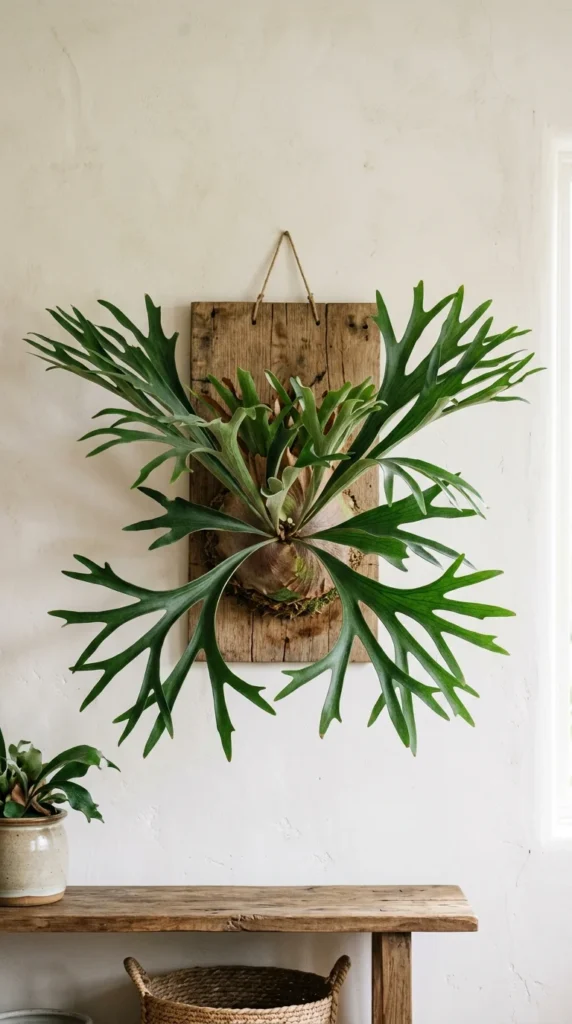
The Staghorn Fern (Platycerium) is an epiphyte, meaning in nature, it grows on the sides of trees. While it can be grown in baskets, it is most stylish when “mounted” on a piece of reclaimed wood and hung like a piece of taxidermy. Its dramatic, antler-like fronds make it a conversation piece in any modern home.
- Light: Bright, indirect light.
- Water: Mist frequently and “dunk” the root ball in water once a week.
- Best For: Wall-mounted art and tropical-themed rooms.
10. Pitcher Plant
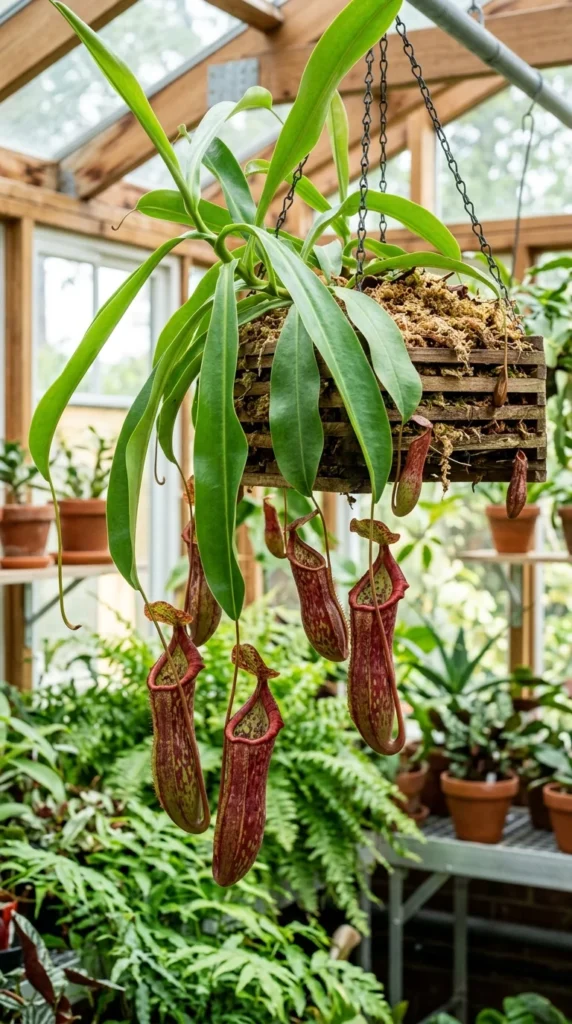
If you want something truly exotic, the Nepenthes or Pitcher Plant is a carnivorous option that doubles as natural pest control. Its “pitchers” hang down from the ends of its leaves, often featuring vibrant reds, purples, and greens. It adds a prehistoric, jungle-like vibe to your indoor collection.
- Light: Bright, filtered light.
- Water: Requires distilled water or rainwater; keep soil moist.
- Best For: Experienced plant parents looking for a unique focal point.
11. Hoya Carnosa
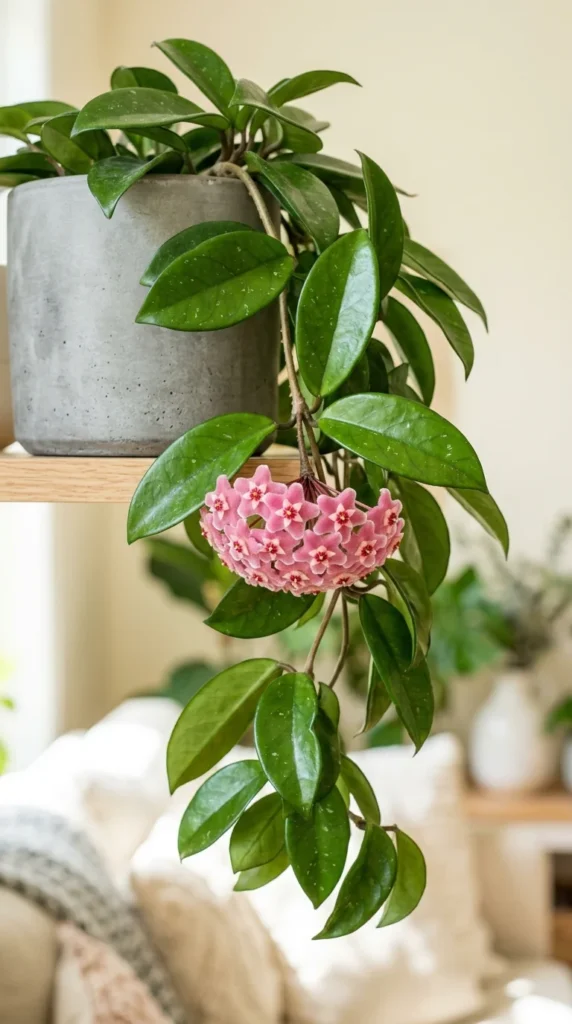
Commonly known as the Wax Plant, the Hoya is beloved for its thick, succulent leaves and its ability to produce stunning, fragrant, umbrella-shaped flower clusters. Hoyas are slow growers but are incredibly long-lived. Their woody vines are sturdy, making them easy to manage in a hanging arrangement.
- Light: Bright, indirect light.
- Water: Allow to dry out almost completely before watering.
- Best For: People who want flowers alongside foliage.
12. Air Plants
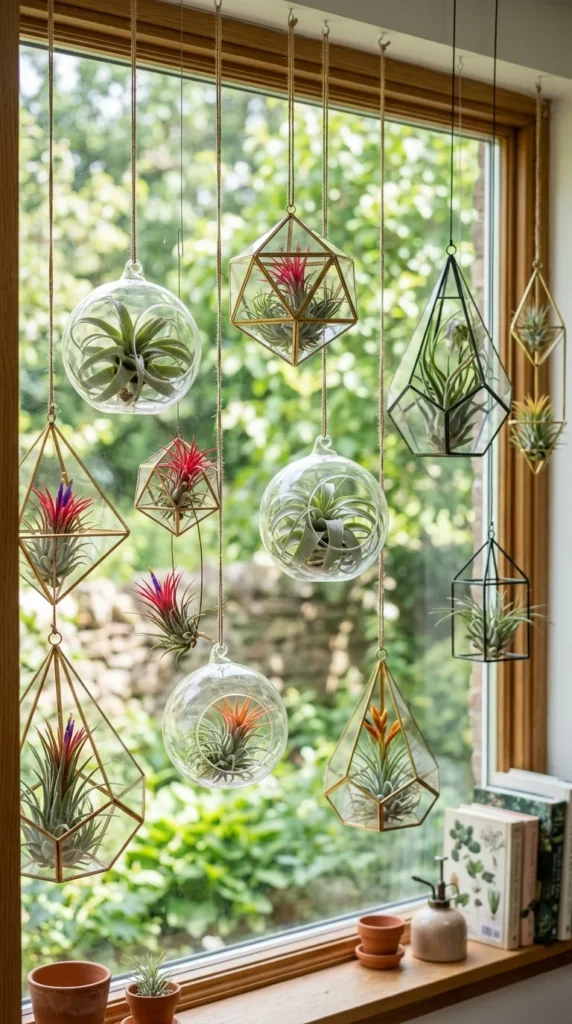
Air plants (Tillandsia) are the ultimate space-savers because they don’t require soil. This allows for incredible creativity in how they are displayed. You can hang them in glass terrariums, wire frames, or even attached to pieces of driftwood. They are perfect for minimalist aesthetics where bulky pots are not desired.
- Light: Bright, indirect light.
- Water: Soak in water for 20 minutes once a week.
- Best For: Modern, minimalist, or industrial decor.
13. Lipstick Plant
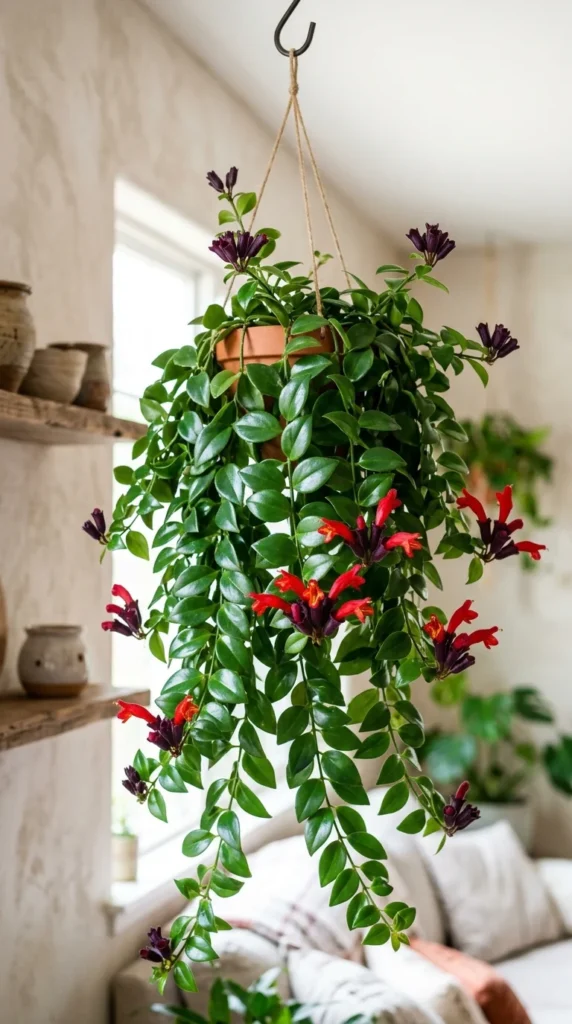
The Lipstick Plant (Aeschynanthus radicans) gets its name from its bright red tubular flowers that emerge from dark purple “tubes,” resembling a tube of lipstick. This plant provides a rare pop of color in a sea of green. It has a graceful trailing habit that looks best when viewed from eye level.
- Light: Bright, indirect light (needs light to bloom).
- Water: Keep soil moderately moist; do not let it dry out completely.
- Best For: Adding a splash of floral color to high shelves.
14. Bird’s Nest Fern
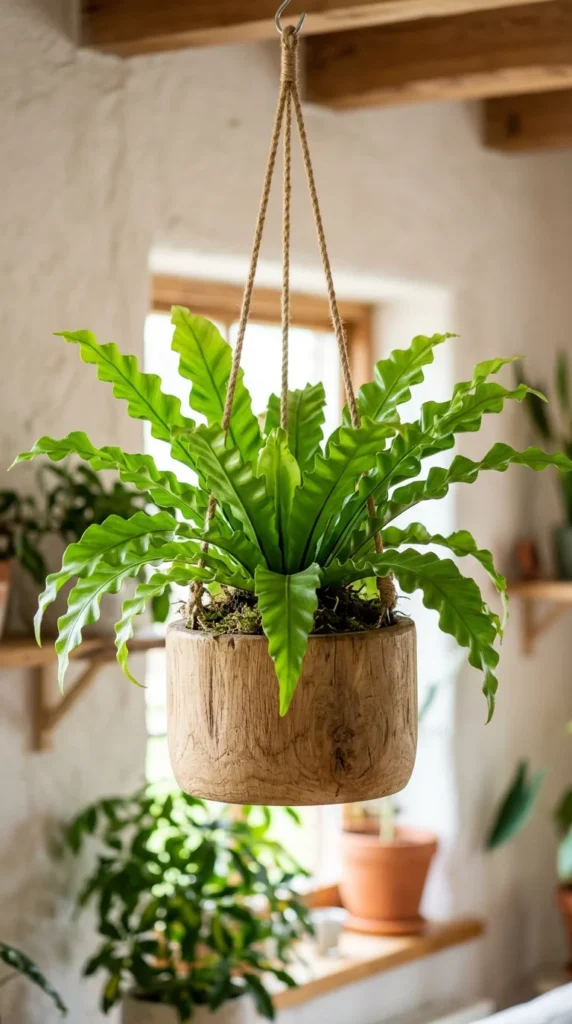
While many ferns have delicate, small leaves, the Bird’s Nest Fern (Asplenium nidus) features large, broad, apple-green fronds with wavy edges. When hung, it creates a bold, structural silhouette. It is much more forgiving than the Boston Fern regarding humidity, making it a great choice for those new to ferns.
- Light: Medium, indirect light.
- Water: Water around the edges (avoiding the center “nest”).
- Best For: Mid-century modern homes and low-light areas.
15. Creeping Fig
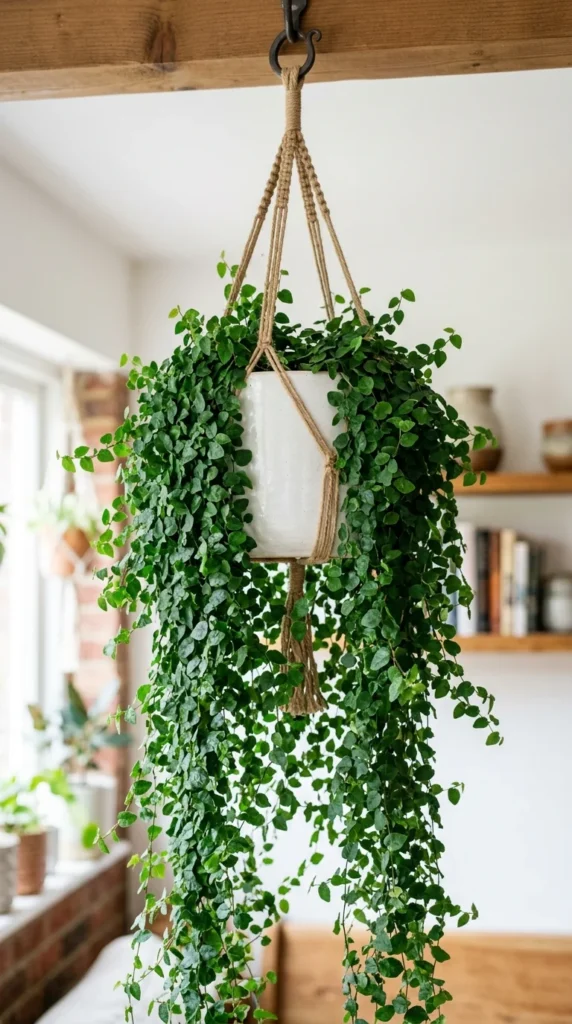
Ficus pumila, or the Creeping Fig, is known for its tiny, delicate leaves and its ability to “creep” and cling to surfaces. In a hanging basket, it creates a very dense, bushy look that can eventually cover the entire pot and hanger. It is a fast grower that responds well to pruning, allowing you to maintain a specific shape.
- Light: Bright, indirect light.
- Water: Likes to stay consistently moist; do not allow to dry out.
- Best For: Creating a “living wall” effect or dense greenery.
16. Marble Queen Pothos
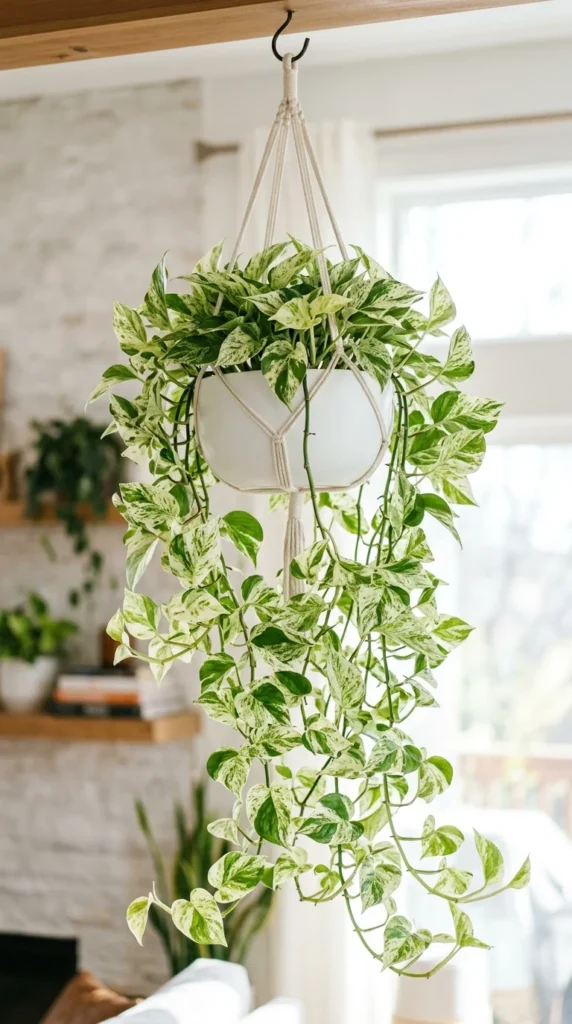
A variation of the standard Pothos, the ‘Marble Queen’ is prized for its high-contrast variegation. Its leaves are splashed with white and cream, making it look almost like a work of marble art. Because it has less chlorophyll than the green version, it grows a bit slower but remains just as easy to care for.
- Light: Bright, indirect light (to maintain variegation).
- Water: When the top inch of soil is dry.
- Best For: Bright rooms with white or neutral furniture.
17. String of Dolphins
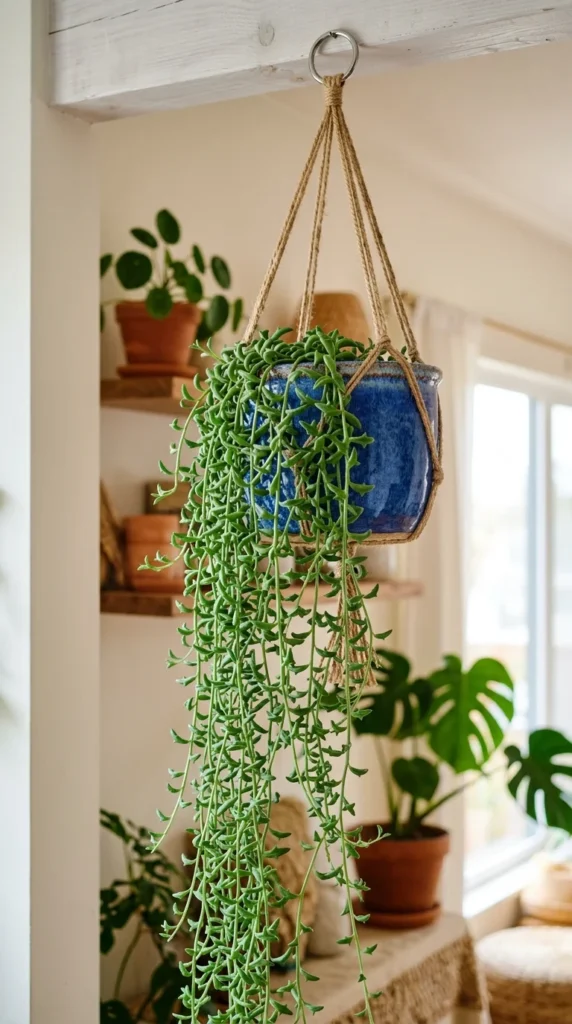
The String of Dolphins (Senecio peregrinus) is a whimsical succulent hybrid. Each leaf is shaped like a tiny, jumping dolphin, complete with a “fin.” This plant is a conversation starter and looks incredible when the “dolphins” are seen leaping down from a high-mounted hanging basket.
- Light: Bright, indirect light.
- Water: Succulent care—water only when the soil is dry.
- Best For: Children’s rooms, creative studios, or sunrooms.
18. Chenille Plant
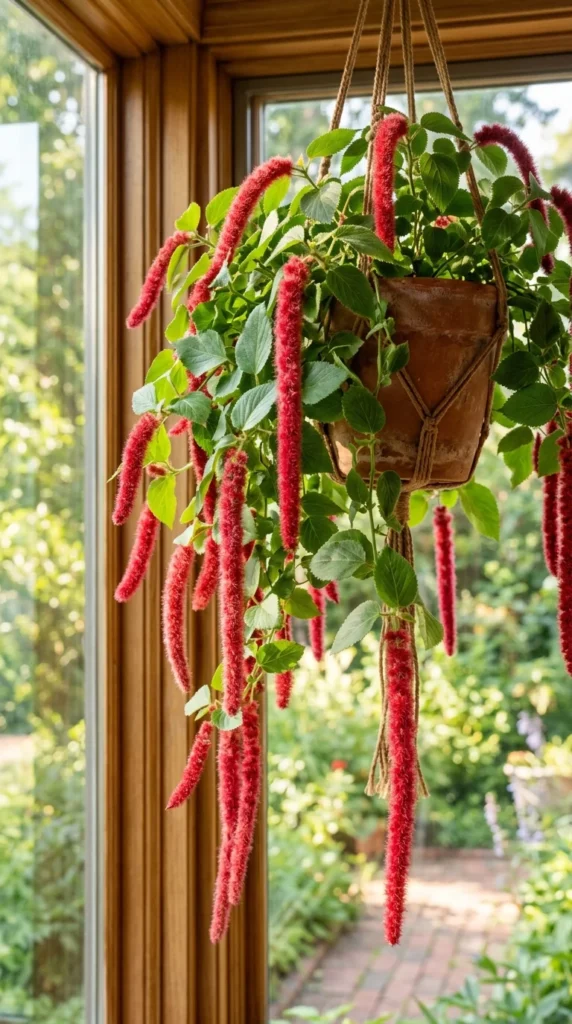
For a touch of the bizarre and beautiful, the Chenille Plant (Acalypha hispida) offers long, fuzzy red pendulous flowers that look like caterpillars or chenille yarn. These unique blooms can grow up to 18 inches long. It is a tropical plant that brings an immediate sense of the exotic to your indoor space.
- Light: Very bright light (needs sun for the flowers).
- Water: Keep soil consistently moist.
- Best For: Adding texture and a bold “statement” flower.
19. Monstera Adansonii
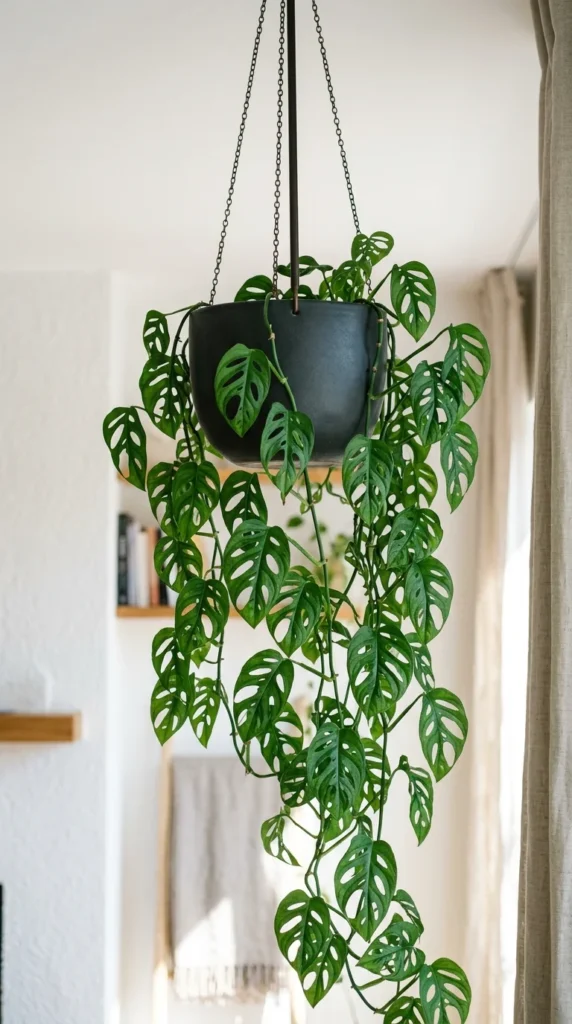
Also known as the Swiss Cheese Vine, Monstera adansonii is the smaller, trailing cousin of the famous Monstera deliciosa. Its leaves feature natural holes (fenestrations) that give it a sophisticated, architectural look. While it loves to climb, it is equally stunning when allowed to trail from a ceiling hook.
- Light: Bright, indirect light.
- Water: Weekly; allow the top soil to dry out.
- Best For: Modern interiors and enthusiasts of the “jungle” look.
20. Grape Ivy
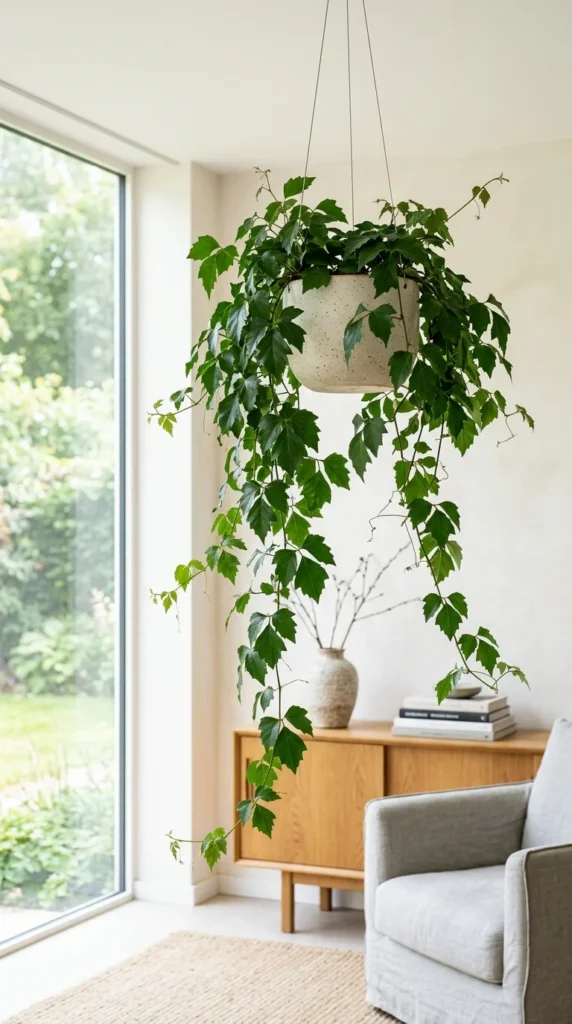
Cissus rhombifolia, or Grape Ivy, is a reliable and hardy trailer that is often overlooked. Its foliage resembles grape leaves, with a metallic sheen on the underside. It is highly adaptable to different environments and is excellent for those who want a lush, leafy look without the finicky nature of more tropical plants.
- Light: Low to medium light.
- Water: Allow soil to dry slightly between waterings.
- Best For: Apartment dwellers with limited natural light.