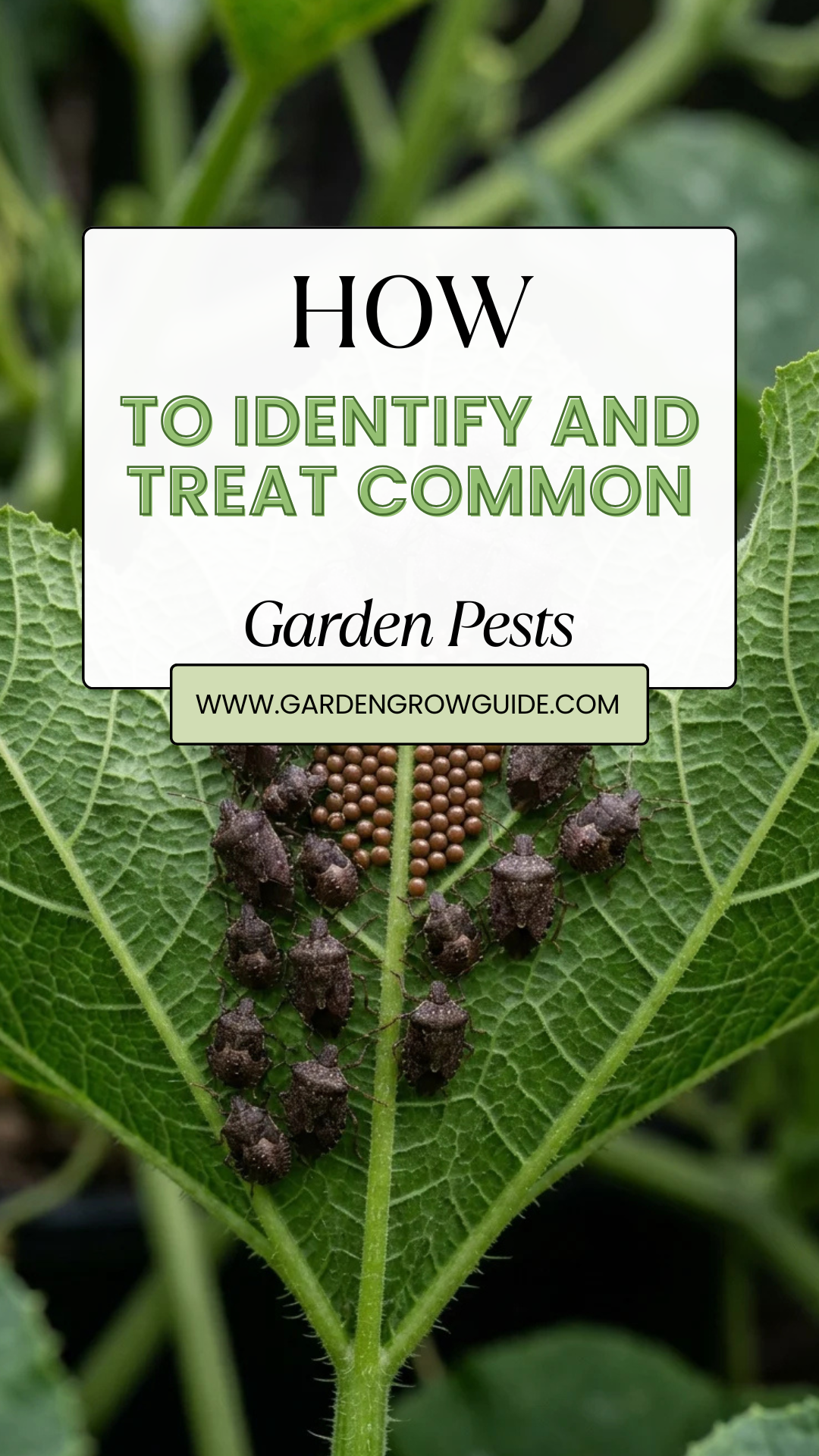
Maintaining a flourishing garden is a rewarding endeavor, but it often feels like a constant battle against nature’s tiny invaders. Garden pests can transform a prize-winning vegetable patch into a tattered mess in a matter of days. Understanding how to identify these intruders and implementing effective, environmentally friendly treatments is the key to a sustainable and productive harvest.
Successful pest management begins with observation. By learning the specific signs of distress in your plants and the physical characteristics of the insects themselves, you can intervene before an infestation becomes unmanageable. This guide explores the most common garden pests, providing detailed identification markers and multi-layered treatment strategies.
1. Aphids
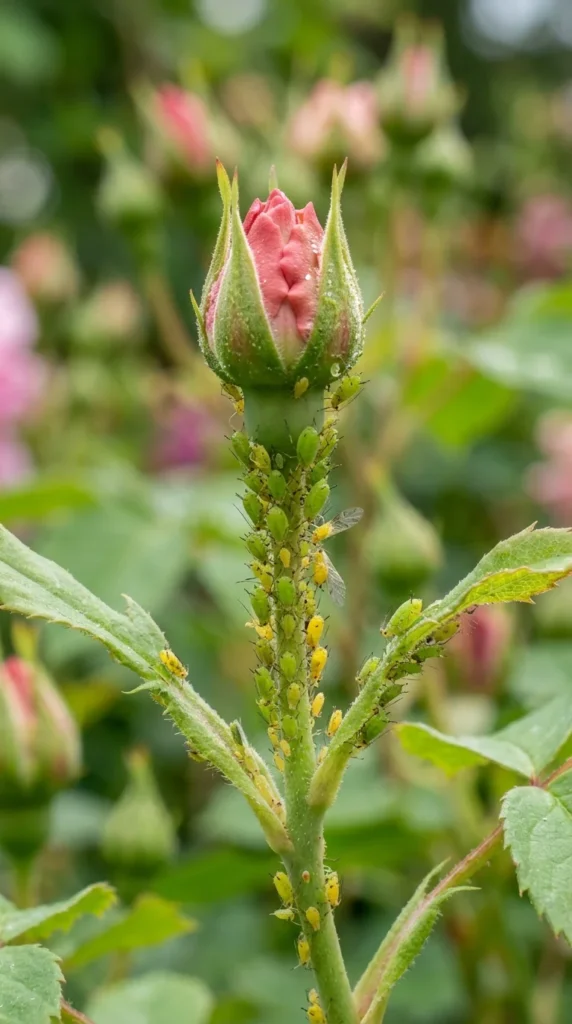
Aphids are perhaps the most ubiquitous garden pest. These tiny, soft-bodied insects come in various colors, including green, black, yellow, and pink. They congregate in large colonies, usually on the undersides of leaves or on succulent new growth.
Identification: Aphids feed by piercing plant tissues and sucking out the sap. This causes leaves to curl, yellow, and stunt. A hallmark sign of aphids is “honeydew,” a sticky substance they excrete that often leads to the growth of black sooty mold. You may also notice an increase in ant activity, as ants “farm” aphids for their honeydew.
Treatment:
- Mechanical: A strong blast of water from a garden hose can knock aphids off plants, and they are often unable to climb back up.
- Biological: Encourage natural predators like ladybugs, lacewings, and hoverflies.
- Organic Sprays: Apply insecticidal soap or neem oil, ensuring you coat the undersides of the leaves where the insects hide.
2. Cabbage Worms
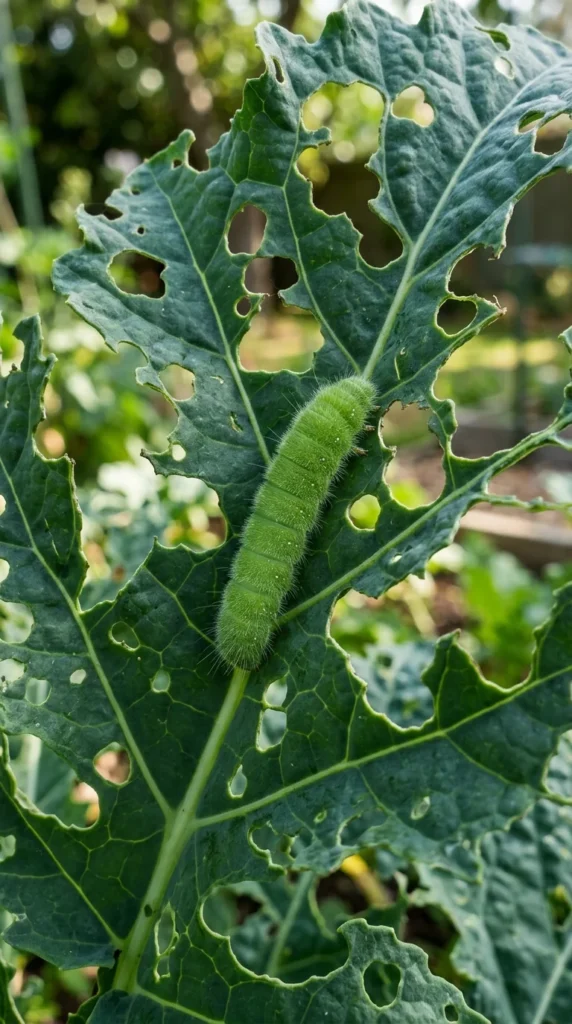
If you grow brassicas—broccoli, cabbage, kale, or cauliflower—you will likely encounter the cabbage worm. These are the larvae of the Pieris rapae butterfly, commonly known as the Cabbage White.
Identification: These velvety green caterpillars are difficult to spot because they blend in perfectly with the foliage. Look for large, irregular holes in the leaves and small dark green droppings (frass) left behind. If you see white butterflies fluttering around your garden during the day, they are likely laying eggs on your plants.
Treatment:
- Manual Removal: Check the undersides of leaves for tiny yellow eggs or the caterpillars themselves and pick them off by hand.
- Barriers: Use floating row covers to prevent the adult butterflies from laying eggs on the plants.
- Biological: Bacillus thuringiensis (Bt) is a naturally occurring soil bacterium that is highly effective against caterpillars but harmless to beneficial insects and humans.
3. Slugs and Snails
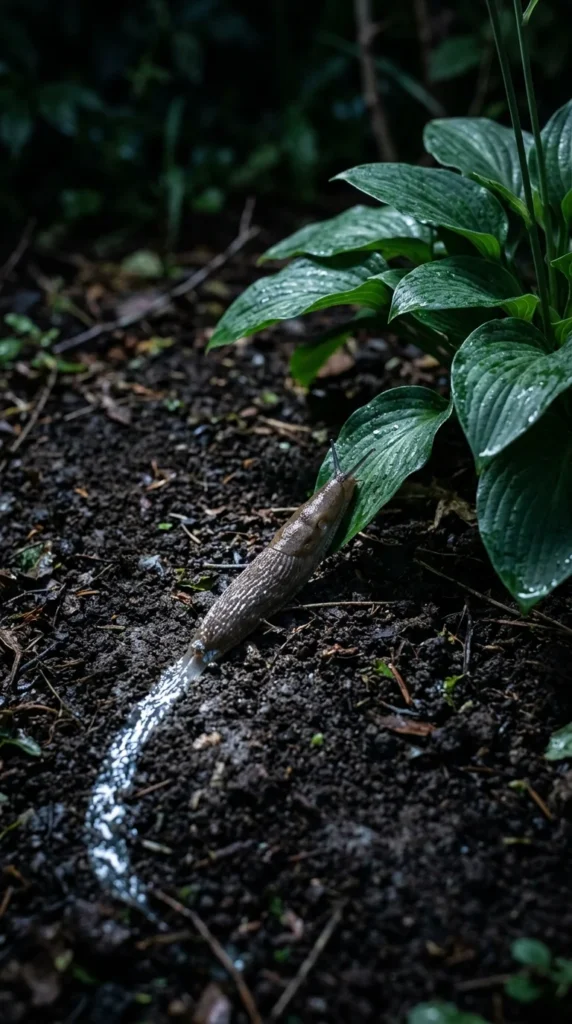
Slugs and snails are nocturnal gastropods that thrive in moist, shaded environments. They are the primary culprits behind large, ragged holes in leaves and the disappearance of entire seedlings overnight.
Identification: Unlike insects, slugs and snails leave behind a tell-tale “slime trail”—a silvery, shimmering path on the soil or leaves. They prefer succulent foliage like hostas, lettuce, and strawberries.
Treatment:
- Cultural: Water your garden in the morning rather than the evening to ensure the soil surface is dry by nightfall.
- Traps: Place shallow saucers of beer at ground level; the yeast attracts them, and they fall in and drown.
- Barriers: Copper tape around pots or raised beds creates a mild electric charge that deters them. Diatomaceous earth can also be sprinkled around plants to create a sharp, dehydrating barrier.
4. Spider Mites
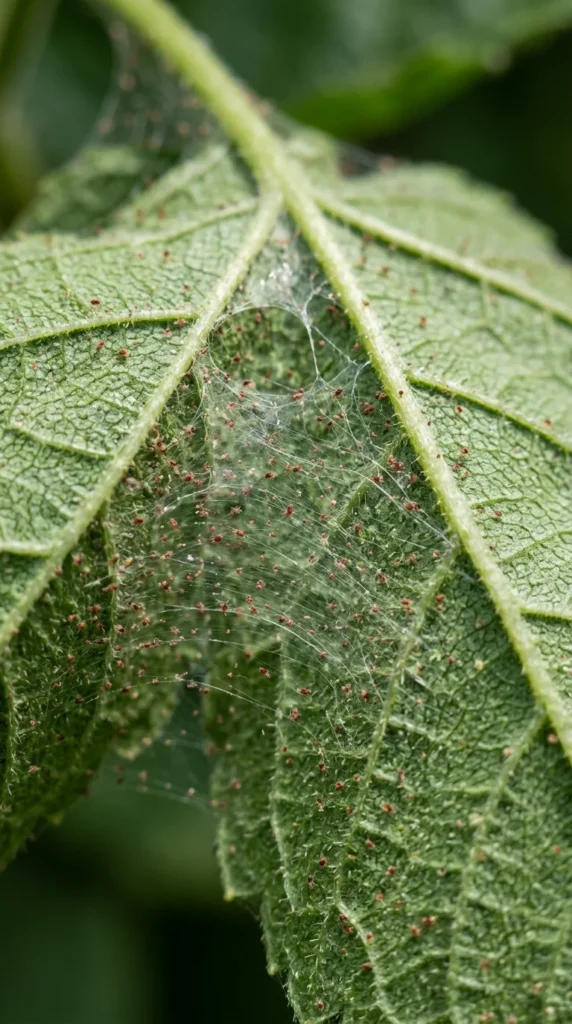
Spider mites are arachnids, not insects, and are so small they are nearly invisible to the naked eye. They thrive in hot, dry conditions and can quickly weaken a plant by draining its cellular contents.
Identification: The first sign of spider mites is usually “stippling”—thousands of tiny yellow or white dots on the upper surface of leaves. As the infestation progresses, you will see fine webbing stretched across stems and leaves. If you suspect mites, shake a leaf over a white piece of paper; if the “dust” starts to move, you have mites.
Treatment:
- Hydration: Keep plants well-watered and increase humidity by misting the foliage.
- Biological: Introduce predatory mites (Phytoseiulus persimilis) which feed exclusively on spider mites.
- Oil-Based Sprays: Neem oil or horticultural oils are effective at smothering the mites and their eggs.
5. Japanese Beetles
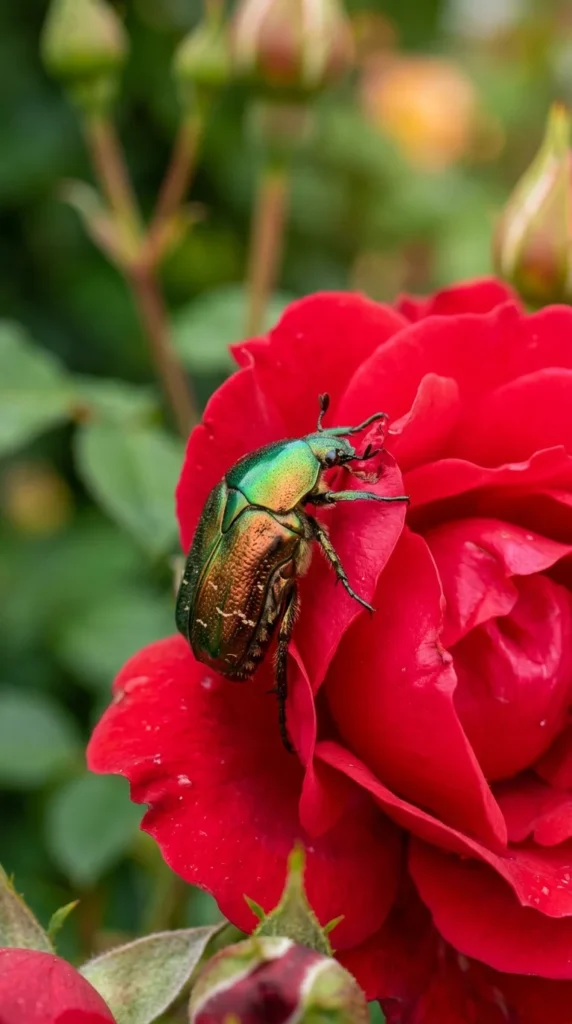
Japanese beetles are devastating pests that feed on over 300 species of plants, including roses, grapes, and beans. They are highly mobile and tend to congregate in large numbers.
Identification: These beetles are easily recognized by their shiny metallic green bodies and copper wing covers. They “skeletonize” leaves, eating the tissue between the veins and leaving behind a lace-like structure. They are most active on warm, sunny days.
Treatment:
- Hand-Picking: In the early morning when they are sluggish, knock them into a bucket of soapy water.
- Pheromone Traps: While effective at catching beetles, use them with caution; they can often attract more beetles into your yard than they actually catch. Place them far away from the plants you want to protect.
- Grub Control: Since the larvae live in the soil as white grubs, treating your lawn with Milky Spore or beneficial nematodes can reduce the following year’s population.
6. Tomato Hornworms
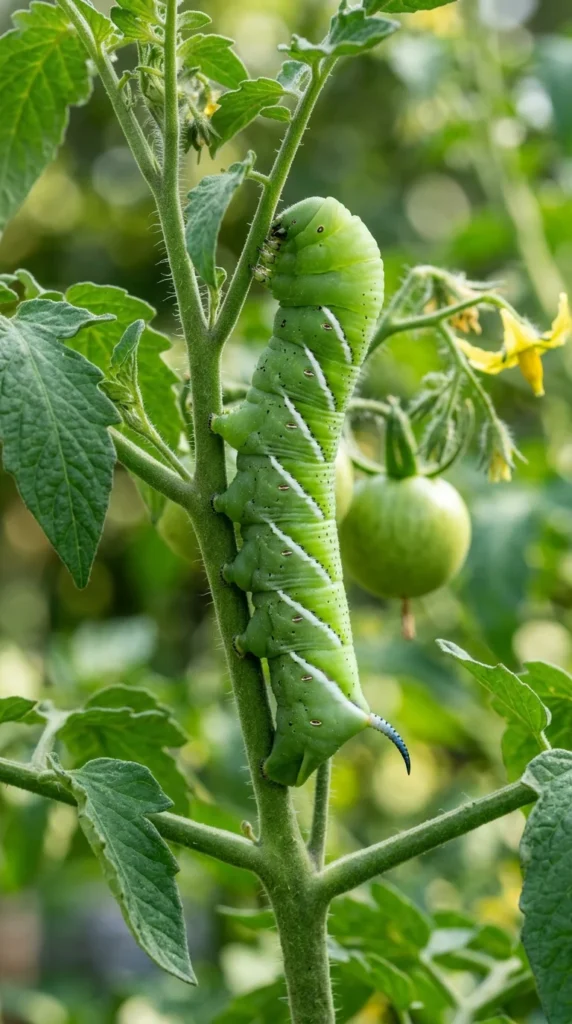
The tomato hornworm is one of the largest caterpillars you will find in the garden. Despite their size, their green color and leaf-like markings make them incredibly difficult to spot until significant damage has been done.
Identification: Look for missing leaves at the top of tomato, pepper, or eggplant stems. Hornworms can defoliate a large portion of a plant in a single night. Their droppings are large, dark green, and shaped like tiny grenades. If you see a hornworm covered in small white cocoons, leave it alone—those are the larvae of parasitic braconid wasps that will eventually kill the hornworm and hatch more wasps to guard your garden.
Treatment:
- Visual Inspection: Use a UV flashlight at night; hornworms glow under blacklight, making them easy to find.
- Tilling: Tilling the soil in late fall or early spring can destroy the pupae overwintering in the ground.
- Organic Control: Bt (Bacillus thuringiensis) works well if the caterpillars are still relatively small.
7. Whiteflies
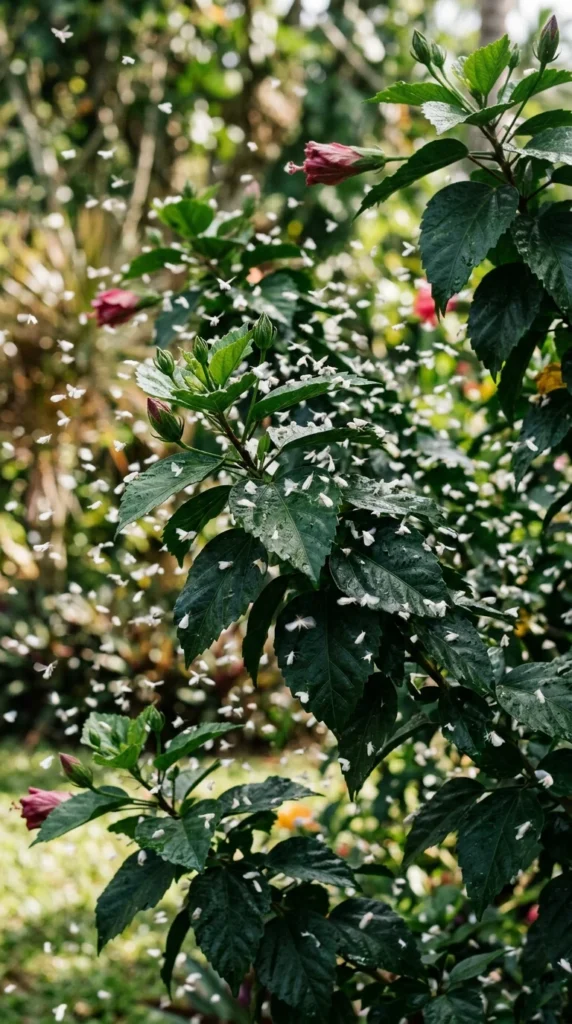
Whiteflies are tiny, winged insects related to aphids and scales. They are typically found on the undersides of leaves and fly up in a white “cloud” when the plant is disturbed.
Identification: Like aphids, whiteflies suck plant juices and excrete honeydew. This leads to leaf yellowing, wilting, and stunted growth. They are common in greenhouse environments and warm climates.
Treatment:
- Yellow Sticky Traps: Whiteflies are attracted to the color yellow; hanging sticky cards near affected plants can catch the adults.
- Reflective Mulch: Using silver or aluminum-colored mulch can confuse the insects and prevent them from landing on your plants.
- Soap Sprays: Regular applications of insecticidal soap can manage populations, but consistency is key as they reproduce quickly.
8. Scale Insects
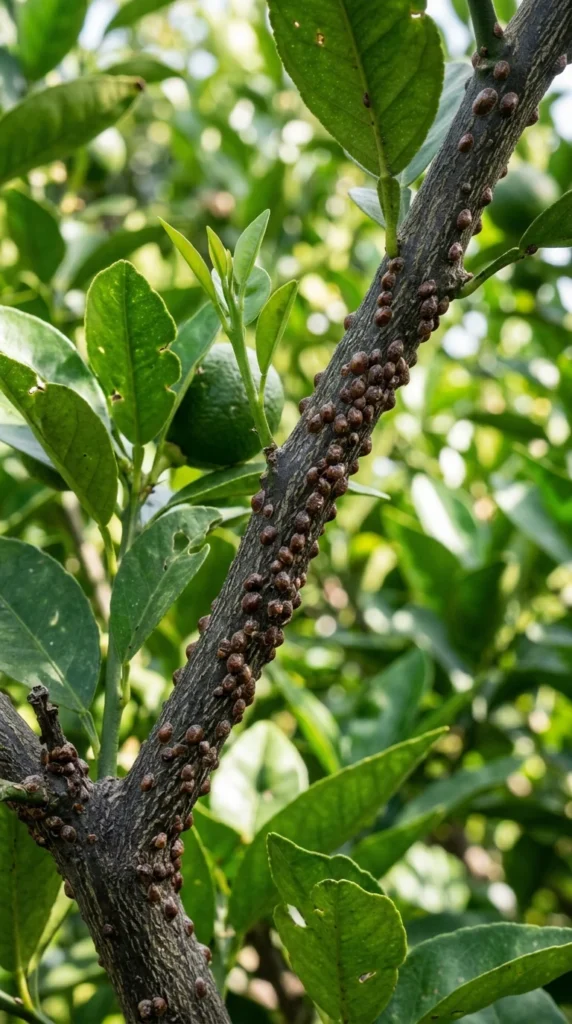
Scale insects are unique because the adults are stationary. They attach themselves to stems and leaves, secreting a waxy, shell-like covering that protects them from predators and many pesticides.
Identification: Scale looks more like a lumpy growth or a disease than an insect. They appear as small, rounded bumps in shades of brown, white, or gray. Beneath that shell, the insect is feeding on the plant’s sap. Infested plants may show yellowing leaves and a general decline in vigor.
Treatment:
- Pruning: If the infestation is limited to a few branches, prune them out and dispose of them away from the garden.
- Scrubbing: For light infestations, you can rub the scales off with an old toothbrush dipped in soapy water.
- Horticultural Oil: Apply “dormant oil” in the winter or light horticultural oil during the growing season to suffocate the insects under their shells.
9. Squash Bugs
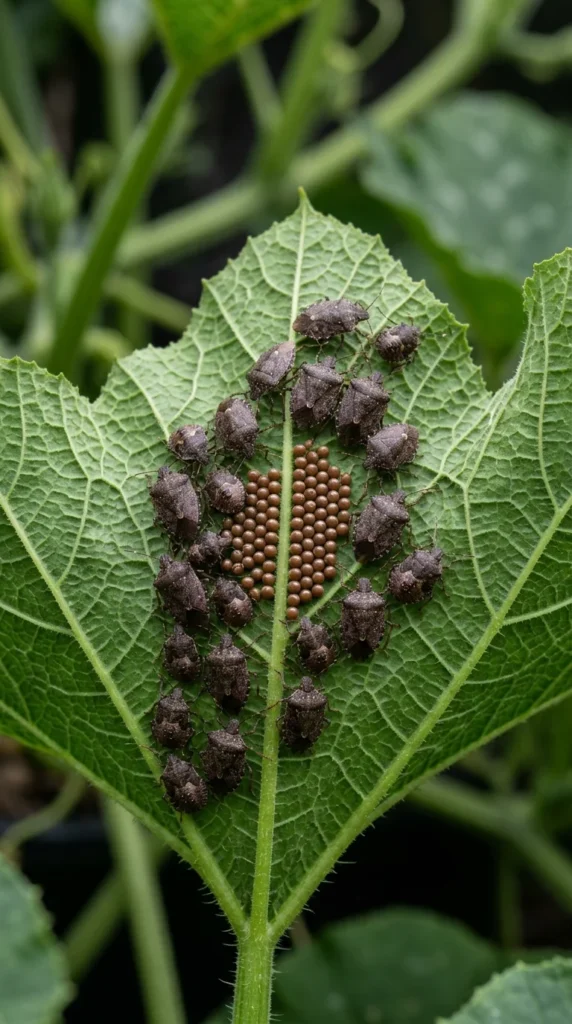
Squash bugs primarily target pumpkins, squash, and cucumbers. They are notorious for being difficult to kill once they reach adulthood.
Identification: Adults are flat, brownish-gray, and about half an inch long. They often hide at the base of the plant or under dead leaves. They lay neat clusters of bronze-colored, diamond-shaped eggs on the undersides of leaves. Their feeding causes “Anasa wilt,” where individual leaves or whole vines suddenly wither and turn black.
Treatment:
- Egg Removal: Check the undersides of leaves every few days and scrape off any egg clusters you find.
- Board Traps: Place pieces of cardboard or shingles on the ground around the plants. The bugs will hide under them at night; in the morning, flip the boards and destroy the bugs.
- Cleanliness: Remove all garden debris at the end of the season to eliminate overwintering sites for the adults.
10. Thrips
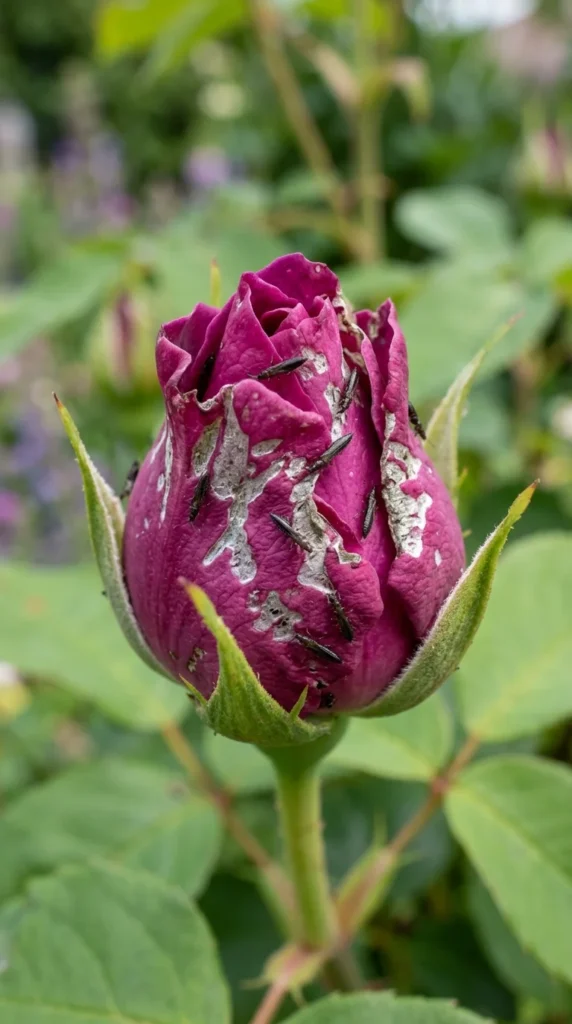
Thrips are minute, fringed-wing insects that cause damage by rasping the surface of leaves and flowers and sucking the exuded sap.
Identification: Damage from thrips often appears as silvery streaks or speckling on leaves and distorted, “tight” growth on flower buds. They are also known for transmitting various plant viruses. You may see tiny black specks of excrement on the leaf surfaces.
Treatment:
- Blue Sticky Traps: Unlike many other pests, thrips are particularly attracted to the color blue.
- Reflective Mulches: These can help deter thrips from settling on the crop.
- Spinosad: This is a natural substance derived from soil bacteria that is highly effective against thrips while remaining low-toxicity to mammals and many beneficial insects.
Preventative Strategies for a Healthy Garden
The most effective way to manage pests is to prevent them from becoming a problem in the first place. A healthy, balanced ecosystem is your best defense.
- Soil Health: Robust plants grown in nutrient-rich, well-composted soil are better able to withstand pest pressure and heal from minor damage.
- Companion Planting: Interplant vegetables with strong-smelling herbs and flowers. Marigolds, garlic, and mint can confuse pests, while plants like alyssum and dill attract beneficial predatory insects.
- Crop Rotation: Avoid planting the same family of vegetables in the same spot year after year. This breaks the life cycle of soil-borne pests and diseases.
- Biodiversity: A monoculture is an all-you-can-eat buffet for pests. By mixing different types of plants, you create a more complex environment that is less attractive to specialized insects.
- Sanitation: Keep the garden clear of weeds, fallen fruit, and diseased foliage, as these provide hiding spots and breeding grounds for pests.
By adopting an Integrated Pest Management (IPM) approach—combining physical barriers, biological controls, and cultural practices—you can maintain a beautiful and productive garden that thrives in harmony with nature.