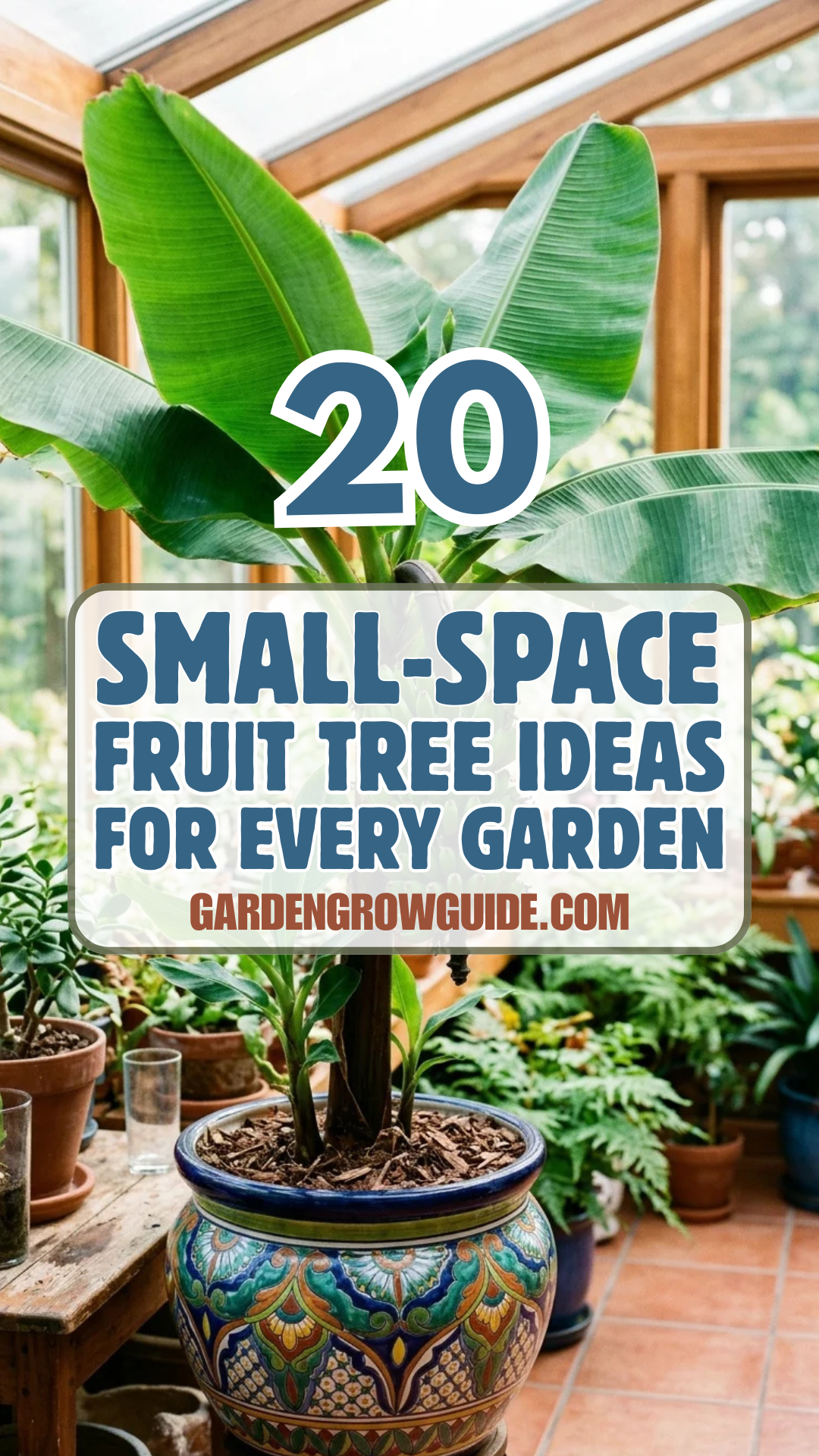
The dream of picking fresh fruit from your own backyard is no longer reserved for those with sprawling orchards. Thanks to modern horticultural breakthroughs in grafting and breeding, urban gardeners, apartment dwellers, and those with tiny suburban plots can now enjoy a bountiful harvest. Dwarf, columnar, and espaliered fruit trees are designed specifically to maximize vertical space and thrive in containers.
Here are 20 exceptional small-space fruit tree ideas to transform your limited square footage into a productive edible oasis.
1. Columnar Apple
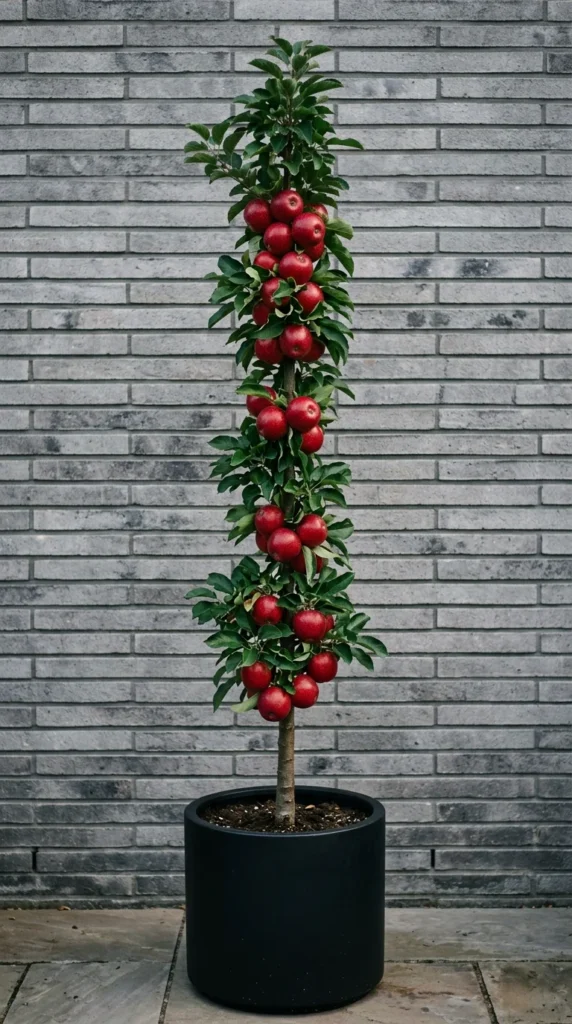
Columnar apple trees are the ultimate solution for narrow spaces. Unlike traditional spreading apple trees, these varieties grow straight up like a pillar, rarely exceeding two feet in width. They produce fruit on short spurs along the main trunk, making them perfect for lining a walkway or framing a doorway. Varieties like ‘Northpole’ (resembling McIntosh) or ‘Golden Sentinel’ (resembling Golden Delicious) are popular choices. They are easy to prune and require no heavy ladders for harvesting.
2. Meyer Lemon
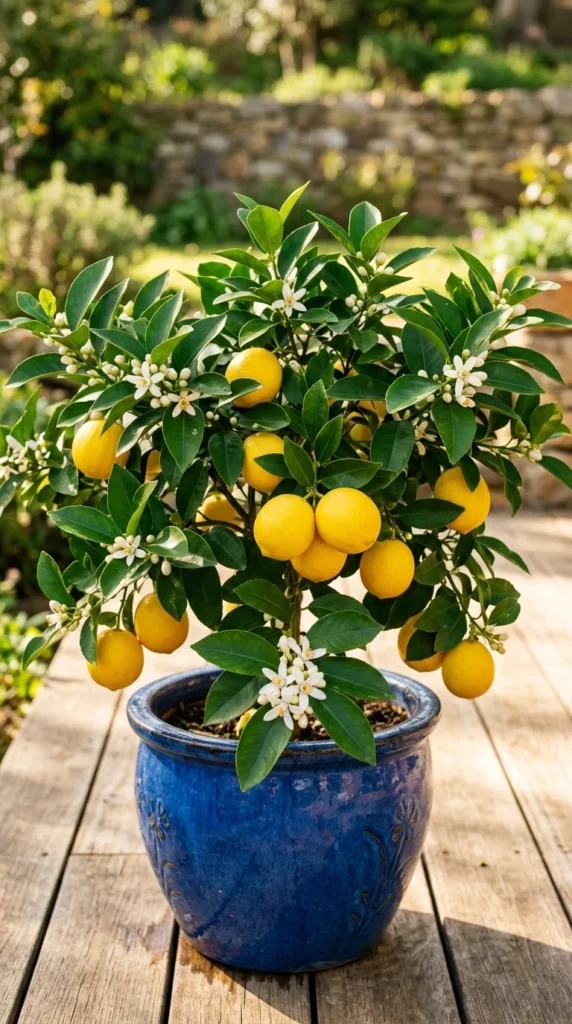
The ‘Meyer’ lemon is perhaps the most beloved citrus for small gardens. A cross between a lemon and a mandarin orange, the fruit is sweeter and thinner-skinned than grocery store lemons. These trees are naturally shrubby and adapt beautifully to container life. They can even be moved indoors during harsh winters in colder climates. Their intoxicatingly fragrant blossoms provide a sensory delight long before the fruit is ready to pick.
3. Little Miss Figgy
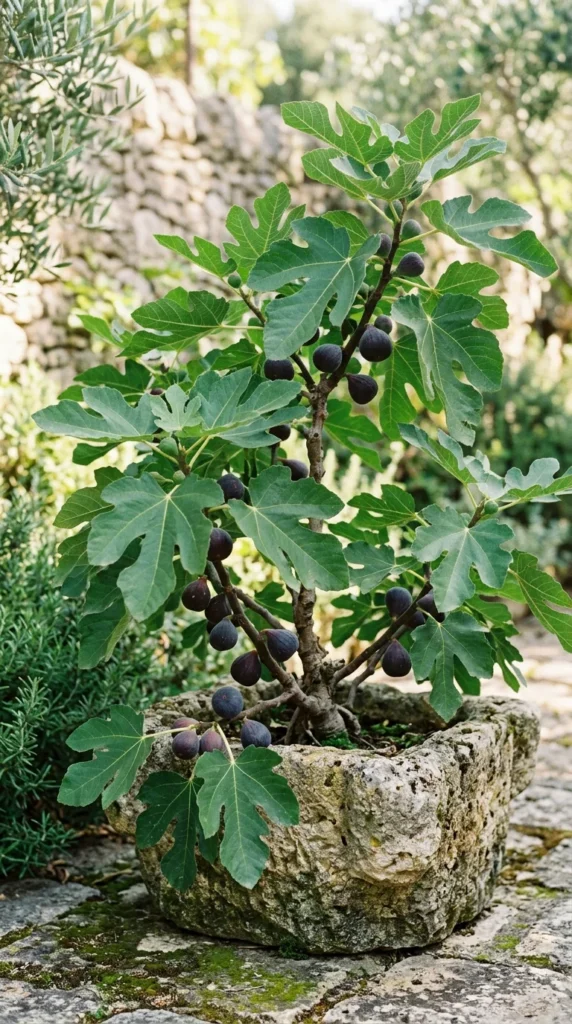
Figs are notoriously vigorous, but the ‘Little Miss Figgy’ variety is a game-changer for small spaces. This genetic dwarf stays about 4-6 feet tall and wide, which is half the size of a standard fig tree. It is remarkably prolific, producing large amounts of sweet, dark purple fruit. It is cold-hardy and thrives in full sun, making it an excellent choice for a focal point on a small patio.
4. Bonanza Peach
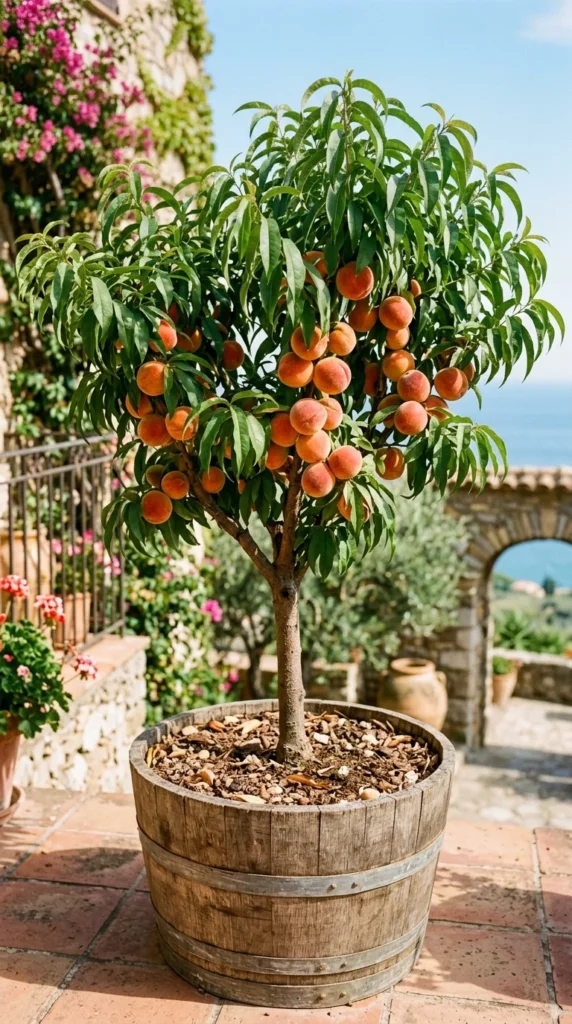
The ‘Bonanza’ peach is a genetic dwarf that reaches only 4 to 6 feet at maturity. Despite its small stature, it produces full-sized, sweet, yellow-fleshed freestone peaches. In the spring, the tree is smothered in stunning pink double blooms, making it as ornamental as it is productive. Because it is self-fertile, you only need one tree to get a full crop.
5. Dwarf Cavendish Banana
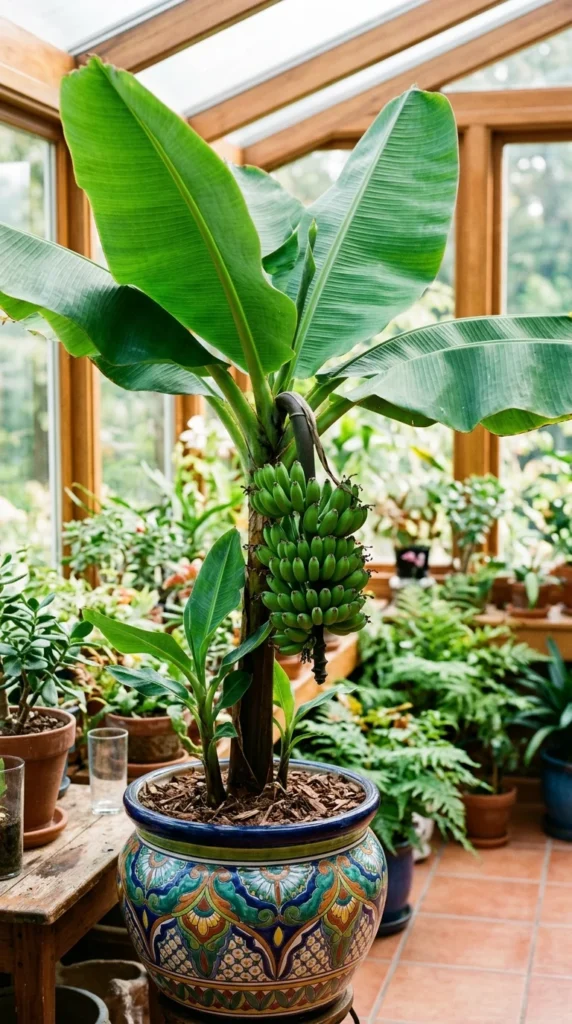
If you want a tropical vibe in a small space, the Dwarf Cavendish is the answer. While standard banana trees can reach 20 feet, this variety stays between 5 and 9 feet. It features wide, paddle-shaped leaves that create an instant jungle aesthetic. While they require plenty of heat, water, and fertilizer, they can produce bunches of sweet, creamy bananas even when grown in large tubs.
6. Espaliered Pear
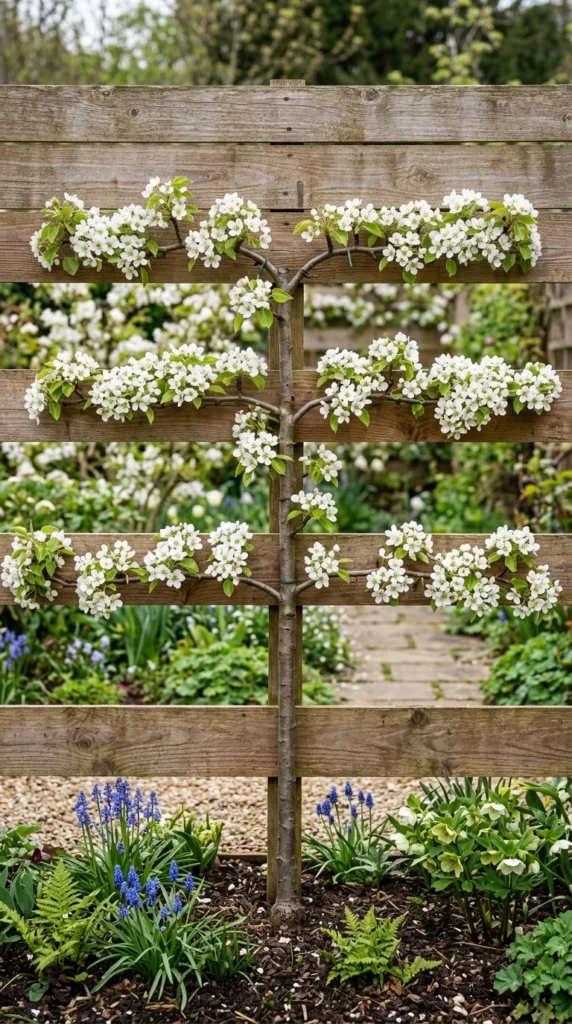
Espalier is the ancient practice of training a tree to grow flat against a wall or fence. Pears are particularly suited to this method. By using a trellis or wire system, you can grow a pear tree in a space only a few inches deep. This method not only saves space but also increases fruit production by exposing more of the tree to sunlight. It turns a boring boundary wall into a living, edible work of art.
7. Calamondin Orange
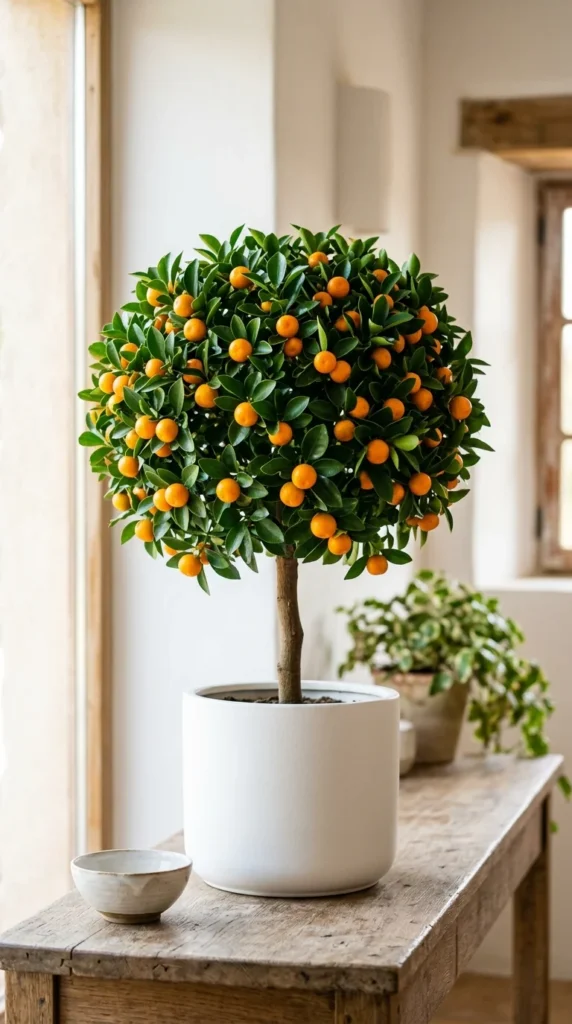
The Calamondin is a cross between a tangerine and a kumquat. It is one of the hardiest citrus trees and is extremely well-suited for indoor-outdoor living. The fruit is small and tart, perfect for marmalades or as a substitute for lime in drinks. Because it is highly ornamental and stays small naturally, it is a favorite for apartment balconies and bright kitchens.
8. Dwarf Pomegranate
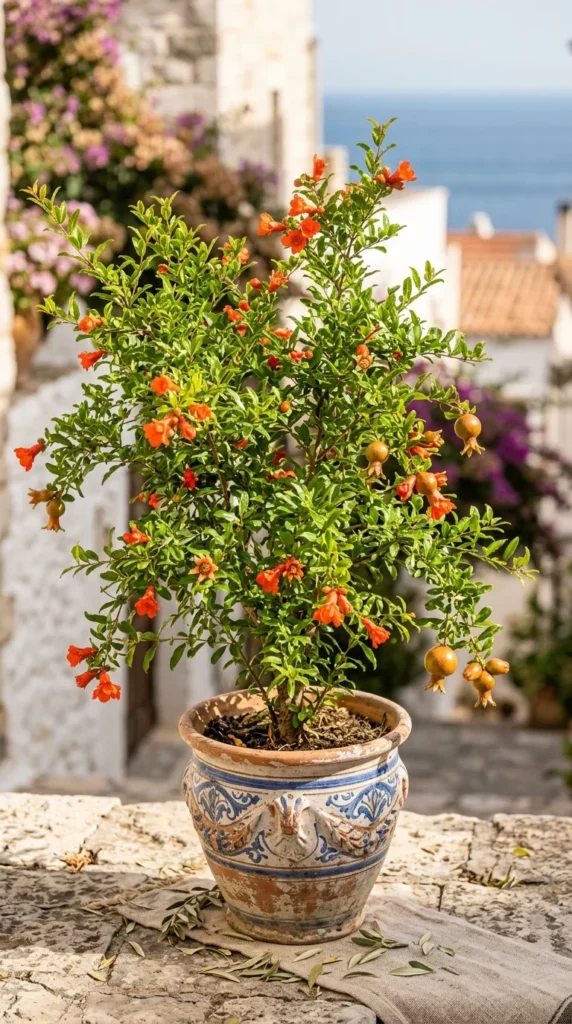
The ‘Nana’ variety of pomegranate is a true dwarf, often reaching only 3 feet in height. While the fruit is smaller than the commercial varieties, it is perfectly edible and packed with seeds. The tree is exceptionally drought-tolerant once established and features beautiful shredded bark and brilliant orange flowers that attract hummingbirds.
9. Issai Mulberry
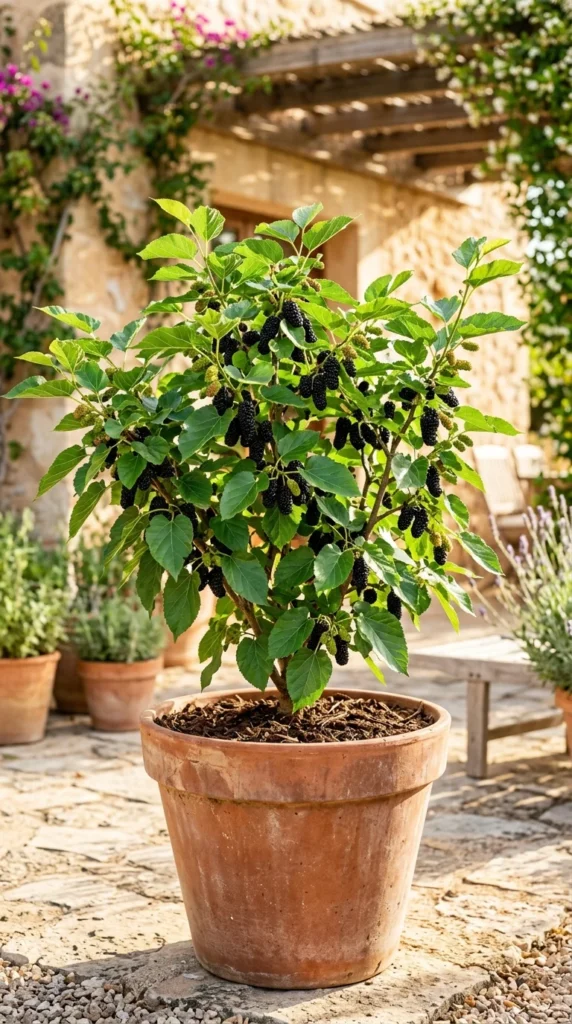
Traditional mulberry trees are massive, messy giants, but ‘Issai’ is a Japanese dwarf variety that is perfect for small gardens. It is a slow grower that can be easily kept to 6 feet with pruning. Unlike many other mulberries, ‘Issai’ often fruits in its first year, producing sweet, seedless berries that taste like a mix of honey and blackberry.
10. Dwarf Stella Cherry
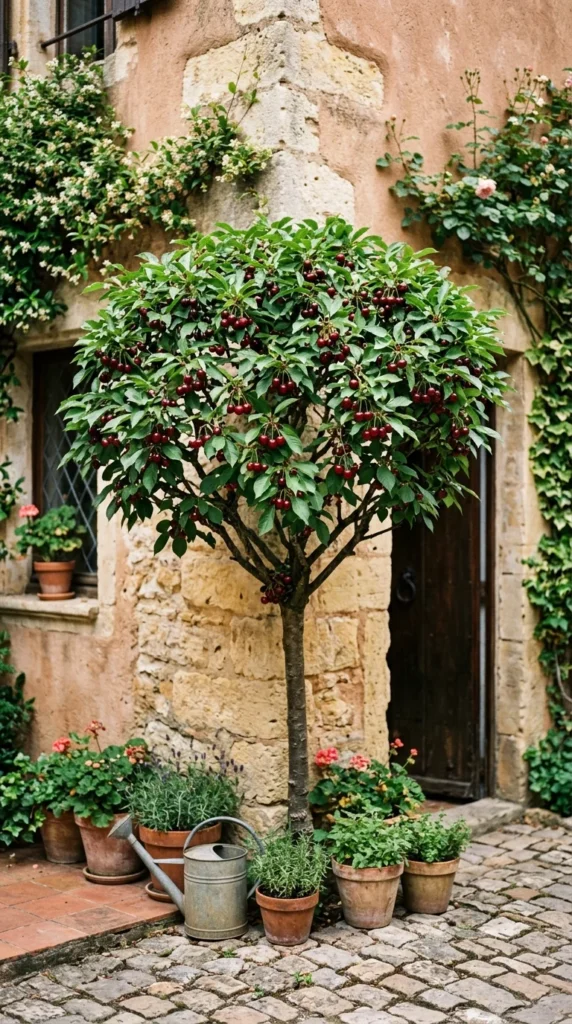
Cherries often require two trees for pollination, but the ‘Dwarf Stella’ is self-fertile, meaning you only need one. Grafted onto dwarfing rootstock, this tree stays manageable while producing heavy crops of large, sweet, heart-shaped cherries. Its white spring blossoms are breathtaking, providing a double-duty ornamental value.
11. Nagami Kumquat
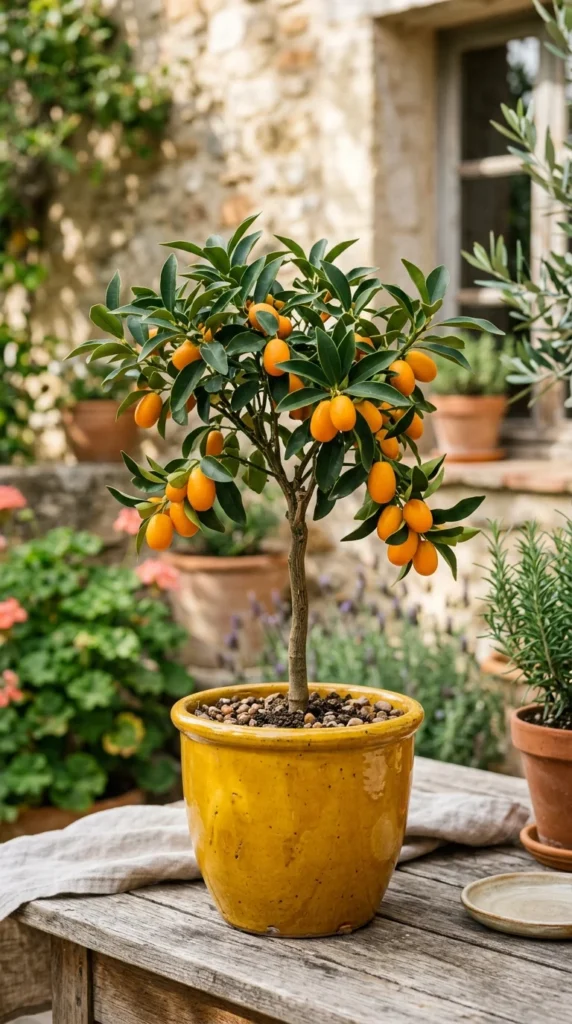
Kumquats are the jewels of the small-space garden. The ‘Nagami’ variety produces small, oblong fruits that you eat whole—peel and all. The peel is sweet, while the inside is tart, creating a unique flavor explosion. These trees are naturally small and slow-growing, making them ideal candidates for long-term container gardening.
12. Garden Aprigold Apricot
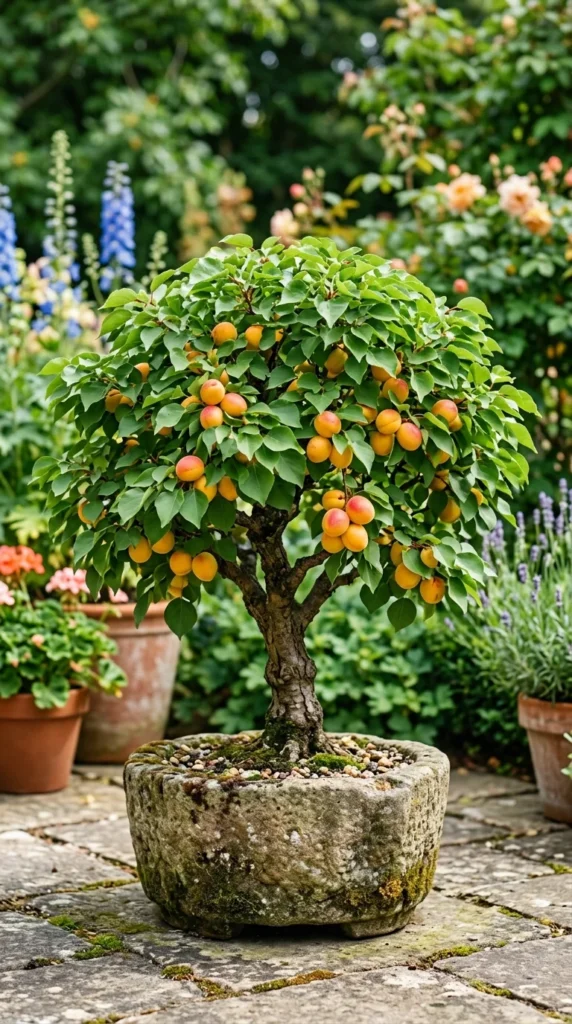
The ‘Aprigold’ is a genetic dwarf apricot that reaches about 4 to 5 feet. It is incredibly productive for its size, offering delicious, velvety-skinned fruit in midsummer. Apricots are often the first trees to bloom in spring, providing an early source of nectar for bees and a splash of color for the gardener.
13. Australian Finger Lime
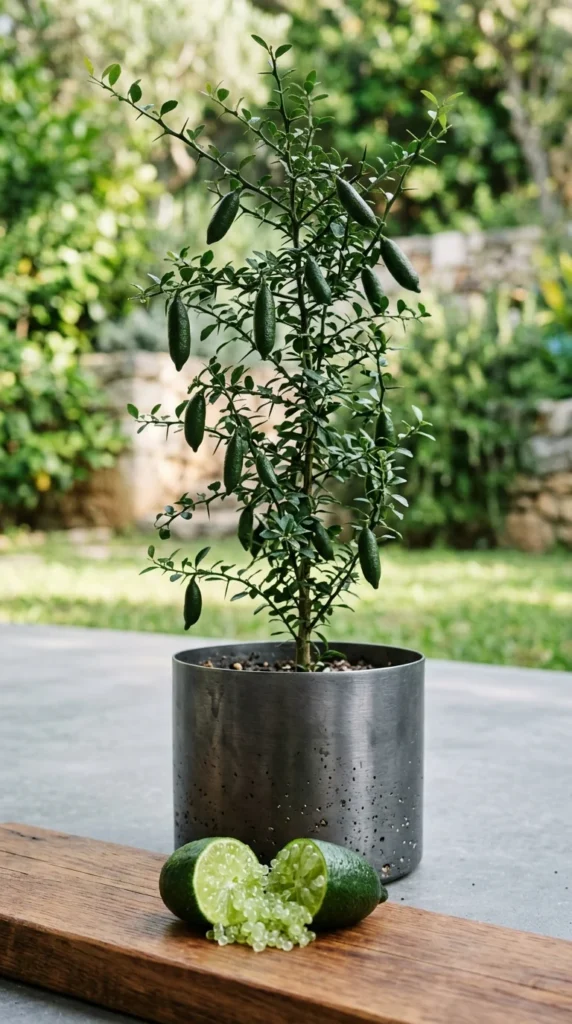
Often called “citrus caviar,” finger limes are a gourmet delight. The tree itself is more of a large shrub with a weeping, thorny habit, but it can be easily pruned to fit a small corner. The fruit contains tiny, juice-filled vesicles that pop in your mouth. This is a must-have for the adventurous gardener with limited space.
14. Dwarf Olive
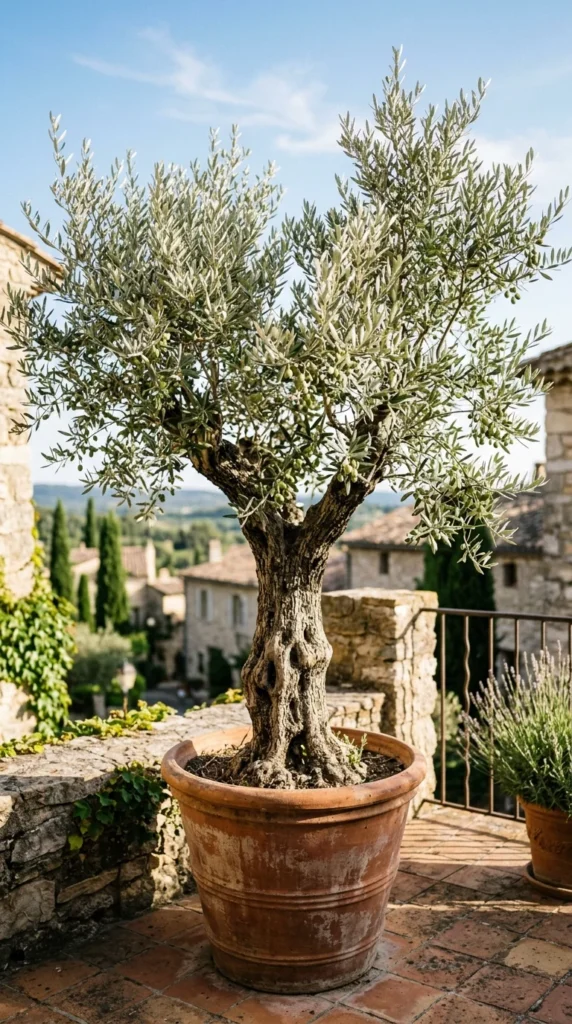
The ‘Arbequina’ olive is a slow-growing variety that thrives in containers. While it can eventually get large if planted in the ground, it responds very well to pot culture, which naturally stunts its growth. The silvery foliage provides a sophisticated, Mediterranean look to any small space, and the tree is remarkably resilient to heat and neglect.
15. Nectarzee Nectarine
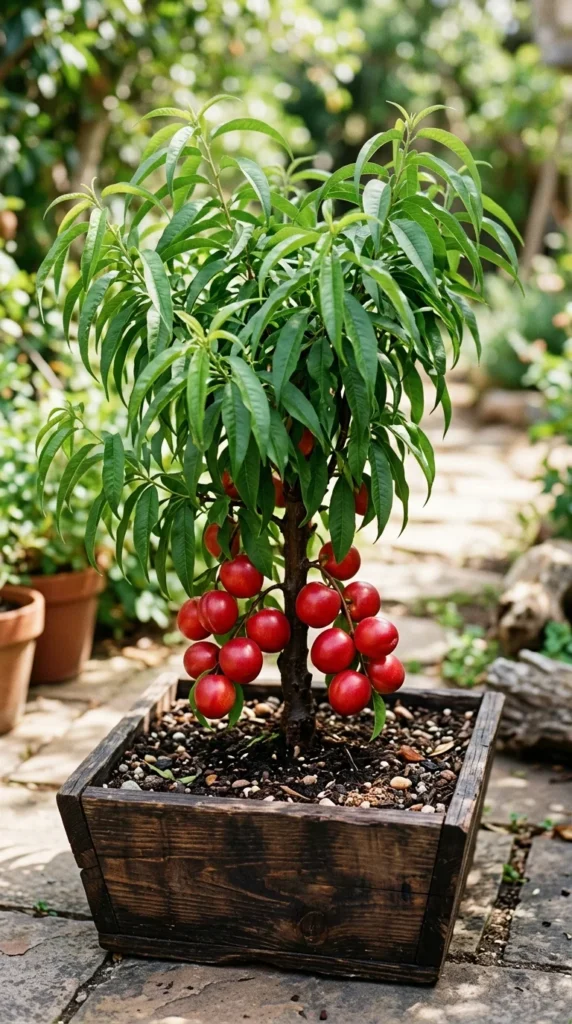
‘Nectarzee’ is a miniature nectarine tree that rarely grows taller than 4 feet. It produces a massive amount of sweet, yellow-fleshed fruit. Because the fruit is so heavy and the tree is so small, you may sometimes need to thin the fruit to prevent the branches from bending too far. It’s a perfect “patio” tree that requires almost no pruning.
16. Key Lime
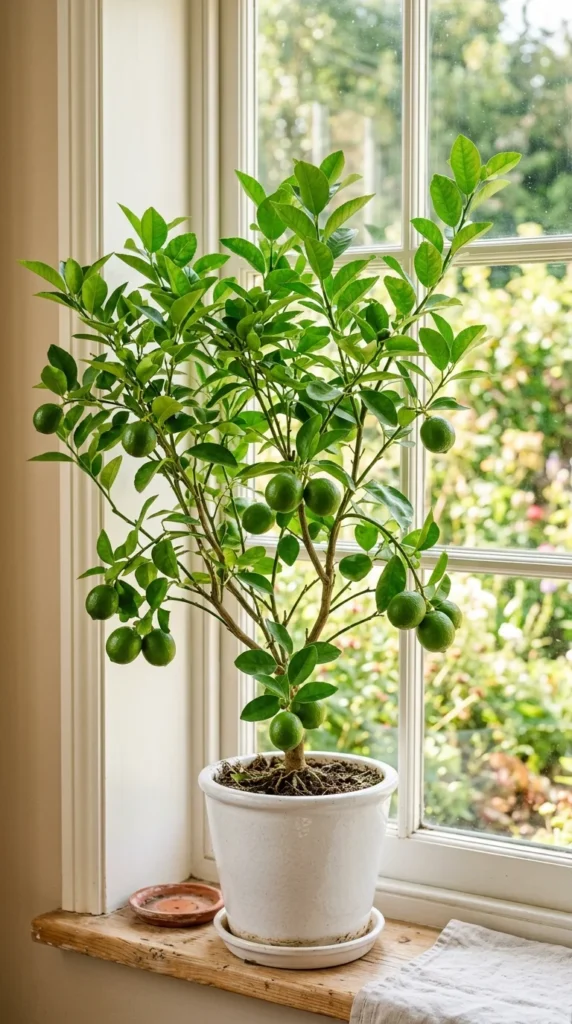
Key limes are smaller and more aromatic than the standard Persian limes found in stores. The trees are also more compact, with a dense growth habit that makes them excellent for containers. They love humidity and heat, making them perfect for sunny balconies or greenhouses. The thin-skinned fruit is a staple for desserts and drinks.
17. Dwarf Guava
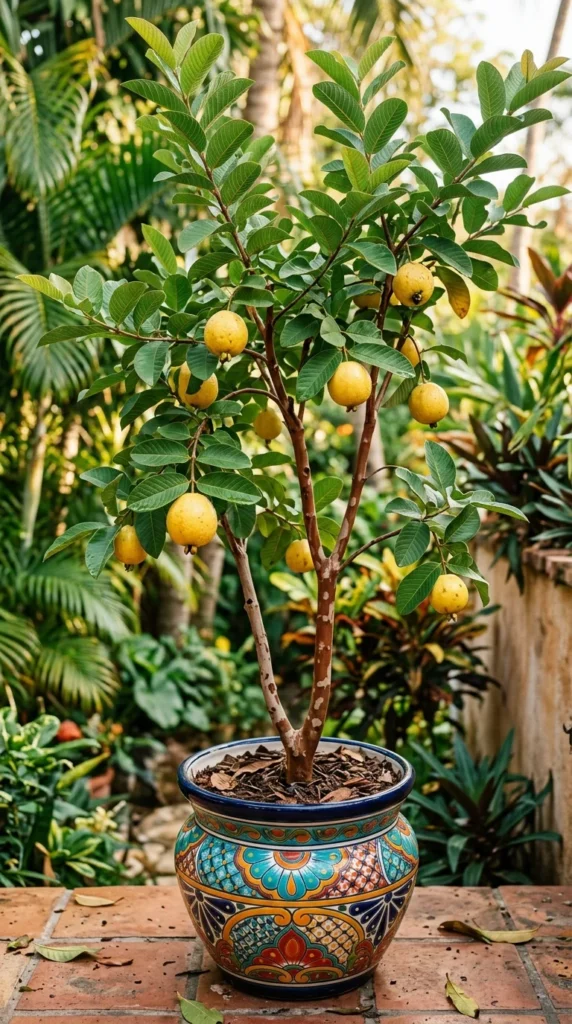
Tropical guavas come in dwarf varieties that can be kept under 6 feet. They are prized for their highly aromatic fruit and beautiful, peeling bark. Dwarf guavas can be pruned into a standard tree shape or left as a bushy shrub. They are excellent for those in warmer zones or for those willing to move them indoors for the winter.
18. Loquat
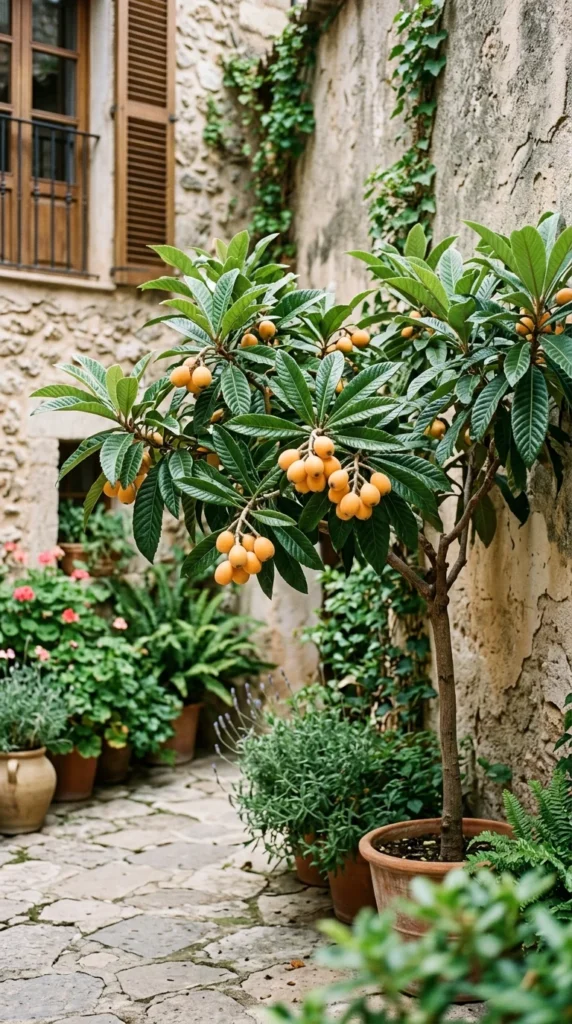
Loquats are often overlooked but are excellent small-space candidates. They have large, tropical-looking evergreen leaves and produce clusters of sweet, tangy orange fruit in late winter or early spring. While they can grow large, they are very tolerant of heavy pruning and can be kept as a small, umbrella-shaped tree in a large pot.
19. Pineapple Guava (Feijoa)
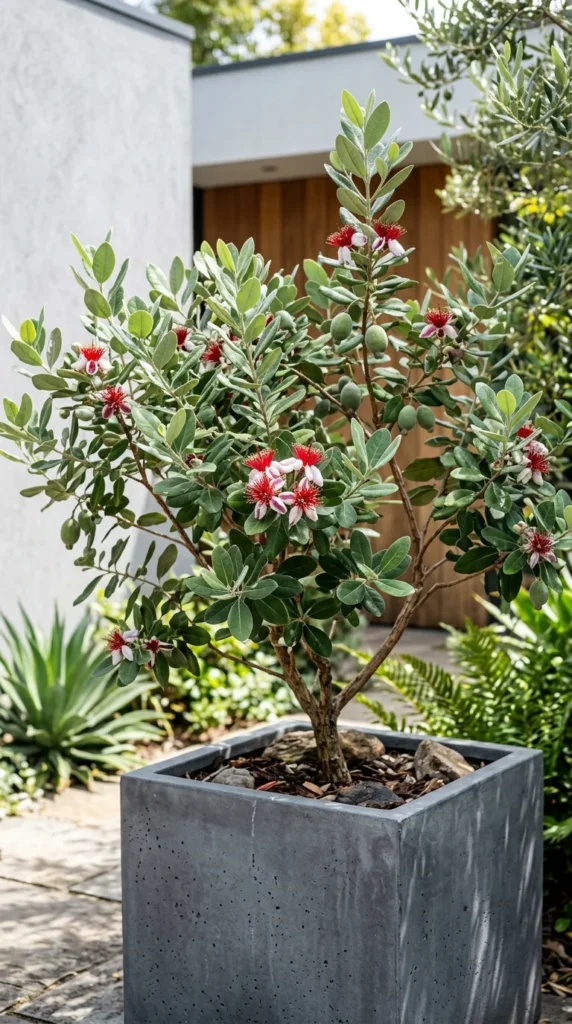
The Feijoa is a rugged, beautiful plant that functions as both an ornamental hedge and a fruit tree. It produces stunning edible flowers that taste like marshmallow, followed by green fruits with a pineapple-mint flavor. It is very easy to shape and can be kept quite small with annual pruning.
20. Trixzie Miniature Pear
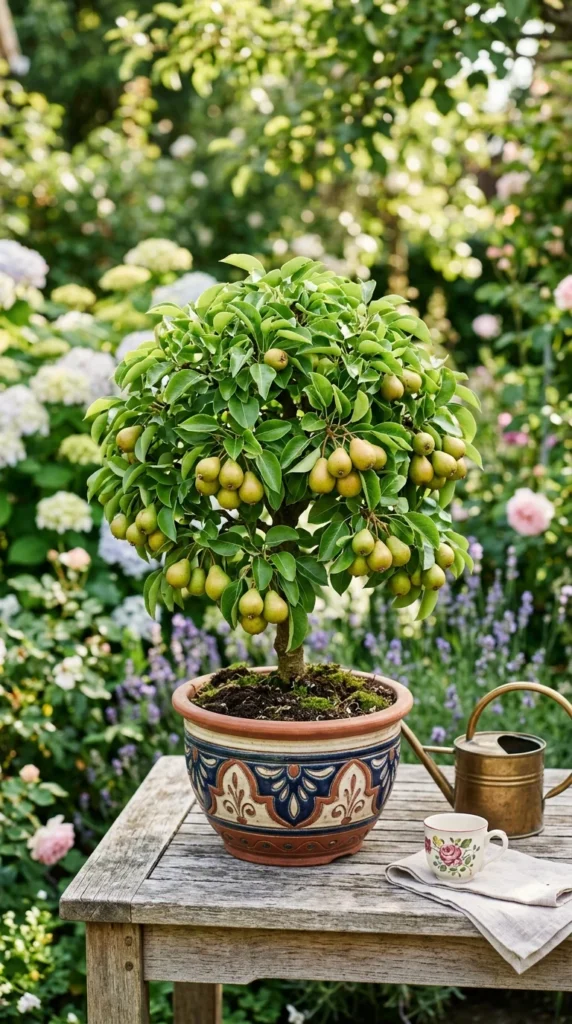
The Trixzie series is specifically bred for the smallest of spaces. These miniature pear trees reach only about 1.5 meters (5 feet) in height and width. They are self-fertile and produce delicious, full-sized pears. Because of their tiny size, they can be placed on tabletops or integrated into flower beds without overshadowing other plants.