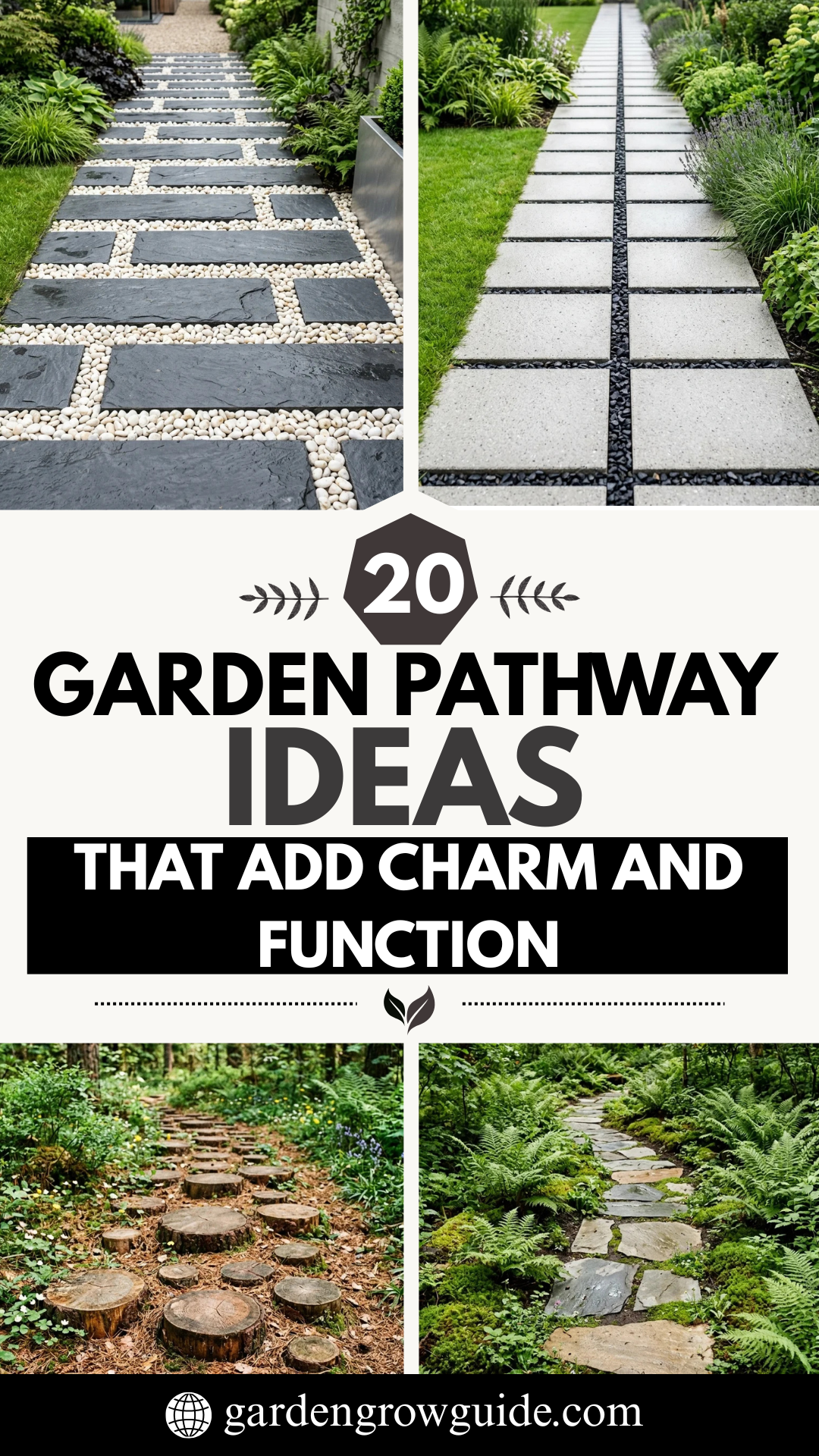
garden pathway is more than just a means to get from point A to point B. It serves as the backbone of your landscape design, providing structure, defining “rooms” within your yard, and protecting your plants from foot traffic. Whether you are looking for a formal entrance or a whimsical woodland trail, the right materials and layout can transform your outdoor space.
From the rustic appeal of weathered timber to the sleek sophistication of modern concrete, here are 20 garden pathway ideas to inspire your next landscaping project.
1. Flagstone Paths
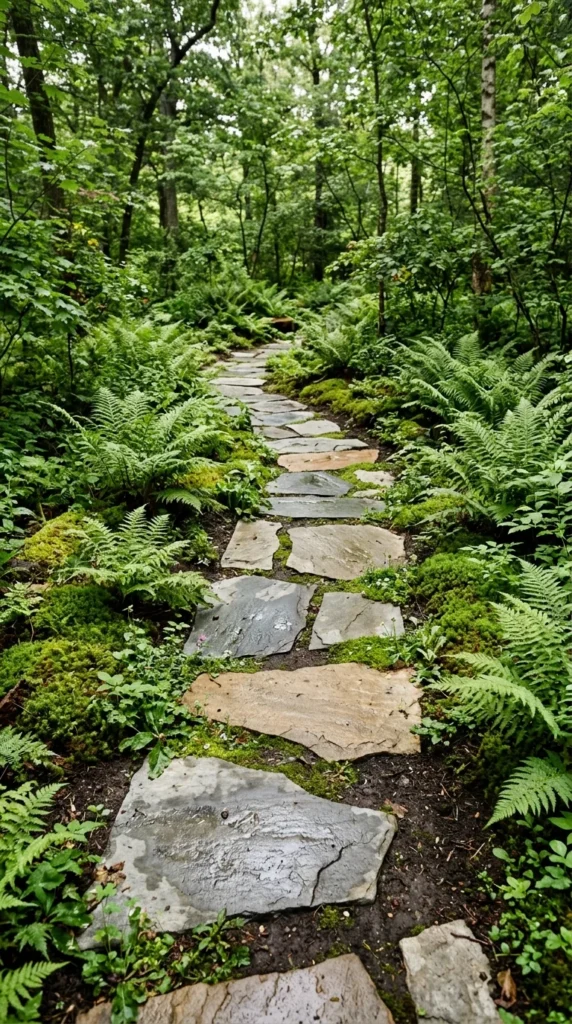
Flagstones are a perennial favorite for gardeners who desire a natural, organic look. These flat, quarried stones come in various shapes and sizes, allowing for a “puzzle-piece” installation that feels integrated into the earth.
- Pros: Extremely durable, slip-resistant, and aesthetically versatile.
- Best For: Traditional gardens, cottage-style landscapes, and high-traffic areas.
- Maintenance: Occasional weeding between the joints is required unless you fill the gaps with polymeric sand or groundcover.
2. Brick Herringbone
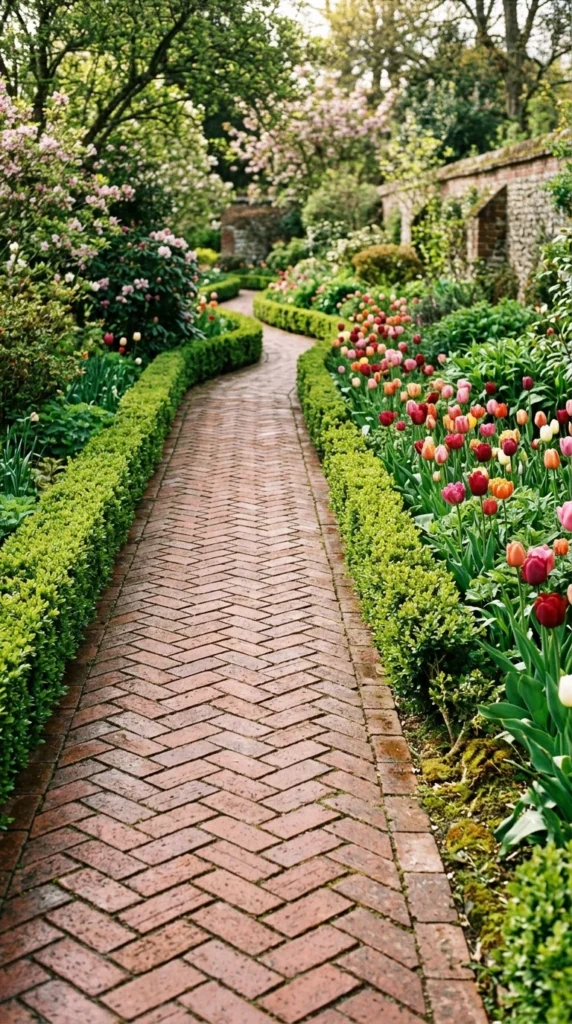
For a touch of timeless elegance, a brick pathway is hard to beat. The herringbone pattern—where bricks are laid at a 45-degree angle to one another—creates a visual sense of movement and provides excellent structural stability.
- Pros: Provides a formal, historical feel; very stable for wheelbarrows or strollers.
- Best For: Colonial or Georgian-style homes and kitchen gardens.
- Maintenance: Requires a solid base of leveled sand or stone dust to prevent shifting over time.
3. Gravel Walkways
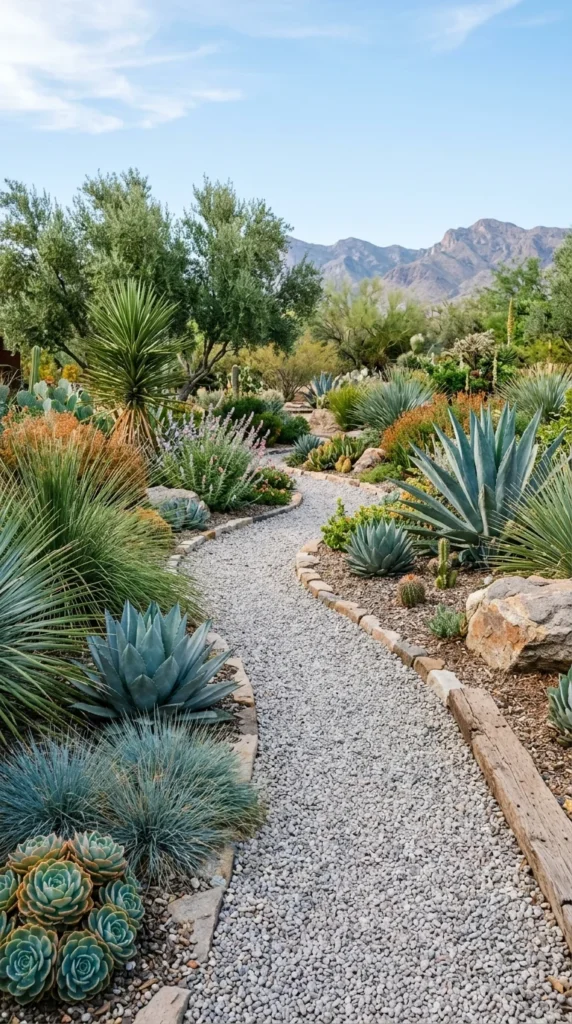
Gravel is one of the most budget-friendly and easiest-to-install pathway options. It provides a satisfying “crunch” underfoot and offers excellent drainage, making it ideal for rainy climates.
- Pros: Affordable, DIY-friendly, and allows water to permeate the ground.
- Best For: Casual gardens, Mediterranean landscapes, and paths that need to curve around obstacles.
- Maintenance: Needs occasional raking and replenishing; using a weed barrier underneath is essential.
4. Wood Slices
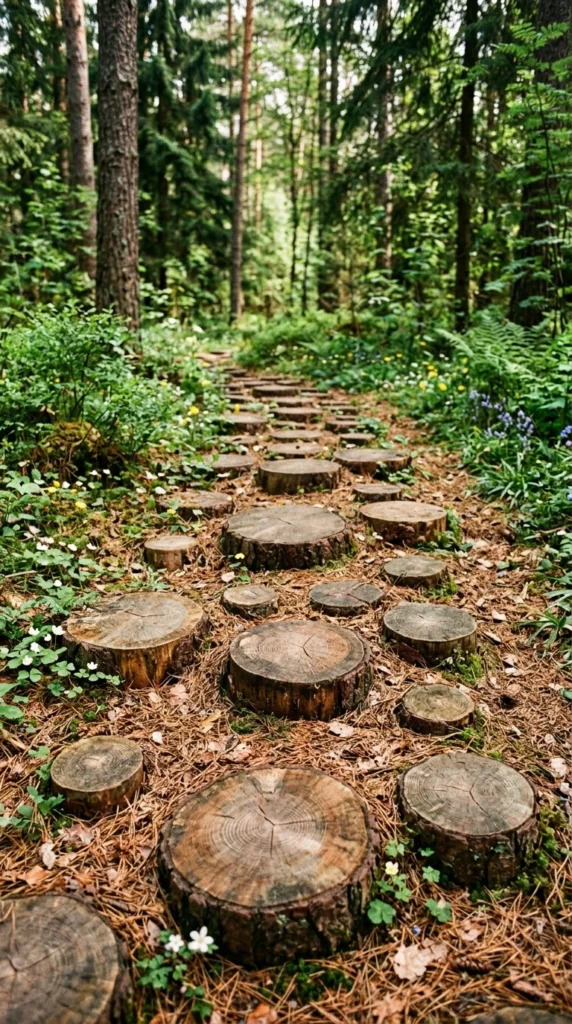
Also known as “log rounds,” wood slice paths are perfect for woodland settings or rustic backyards. They utilize natural materials to create a whimsical, stepping-stone effect that blends seamlessly with the trees.
- Pros: Natural aesthetic; often free if you have fallen trees on your property.
- Best For: Shady garden nooks, fairy gardens, and play areas.
- Maintenance: Wood can rot over time or become slippery when wet; it is best to seal the slices or use rot-resistant wood like cedar or black locust.
5. Stepping Stones
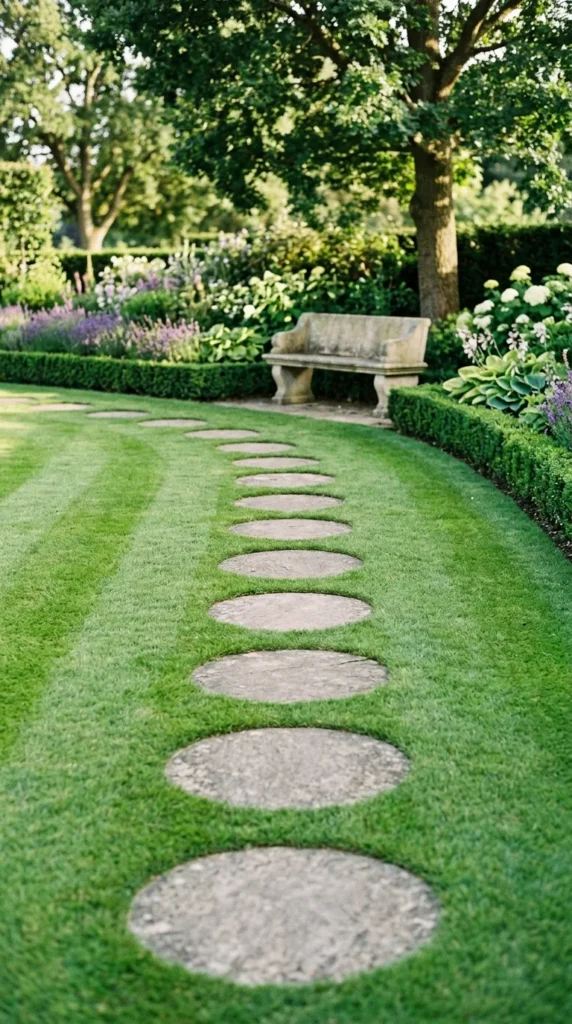
Stepping stones offer a minimalist approach to pathways. Instead of a continuous solid surface, these stones provide designated spots to step, allowing the surrounding grass or groundcover to remain the focal point.
- Pros: Minimal impact on the landscape; easy to install.
- Best For: Low-traffic areas where you want to preserve the look of a lawn.
- Maintenance: Grass around the stones must be trimmed or edged regularly.
6. Concrete Pavers
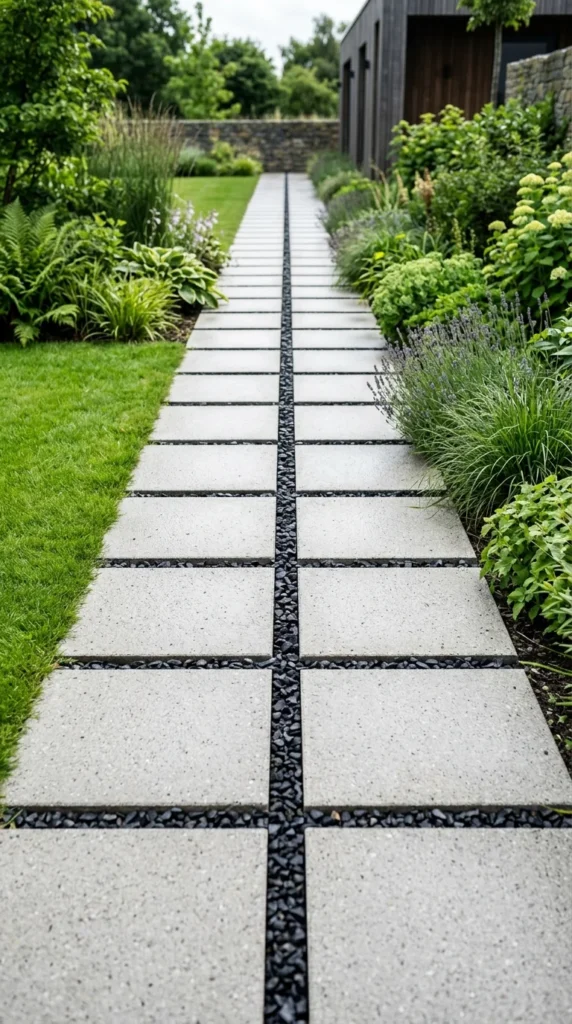
If your home has a modern or contemporary architectural style, concrete pavers are an excellent choice. They offer clean lines and a uniform appearance that creates a sense of order.
- Pros: Very durable and available in various geometric shapes and colors.
- Best For: Modern landscapes and urban gardens.
- Maintenance: Low maintenance; occasional power washing keeps them looking crisp.
7. Bark Mulch
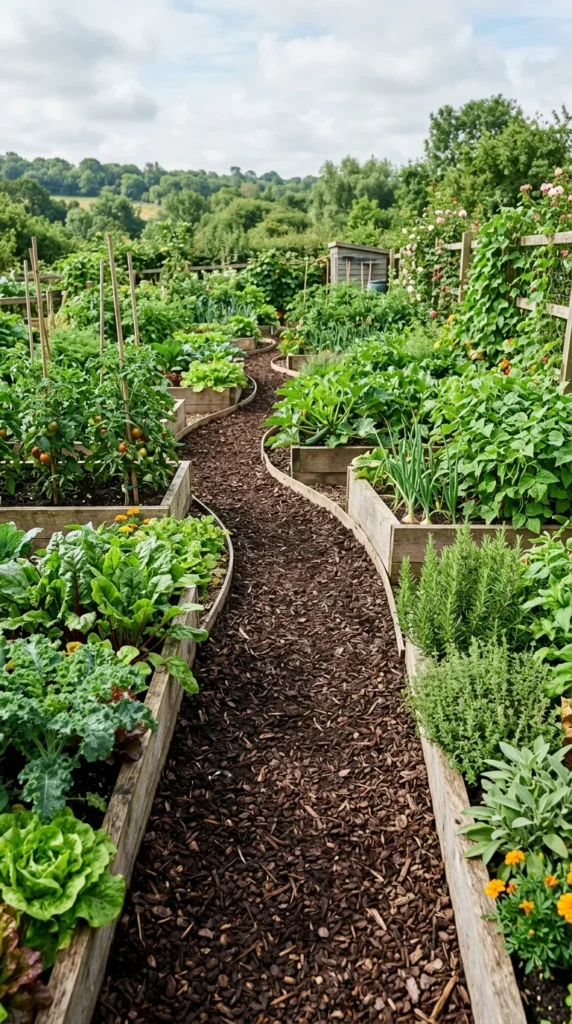
Bark mulch is the quintessential choice for a “soft” path. It is gentle on the feet and knees, making it a favorite for gardeners who spend a lot of time tending to their beds.
- Pros: Very inexpensive and helps enrich the soil as it decomposes.
- Best For: Vegetable gardens, play areas, and rustic trails.
- Maintenance: Needs to be topped off every year or two as the mulch breaks down.
8. Cobblestone Classics
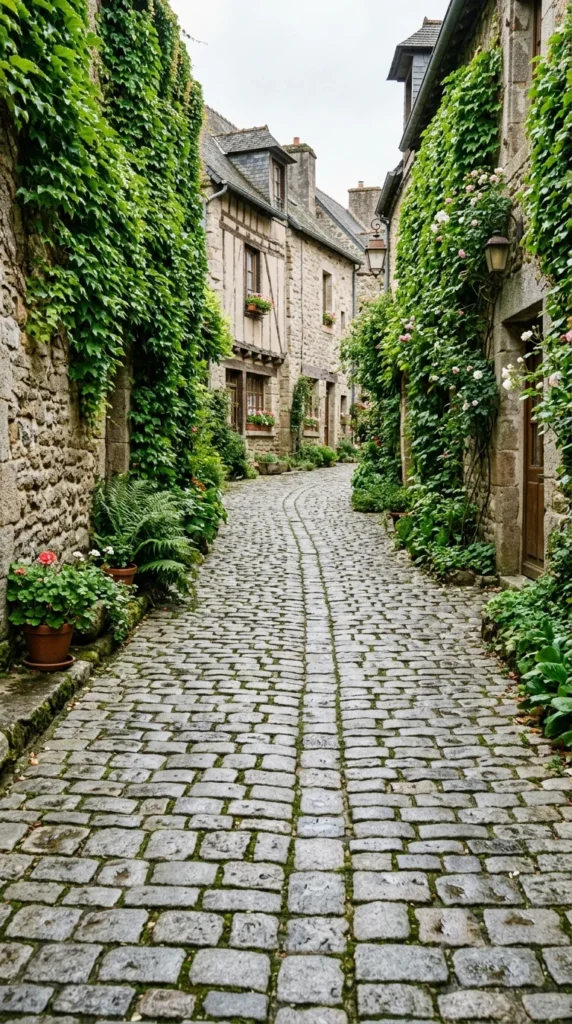
Evoking the charm of old European villages, cobblestone paths are incredibly durable and full of character. The rounded edges of the stones give the path a textured, tactile quality.
- Pros: Lasts for decades; adds immediate historical weight to a property.
- Best For: Driveway borders, main entrances, and cottage gardens.
- Maintenance: High initial labor for installation, but very little maintenance afterward.
9. Modern Linear
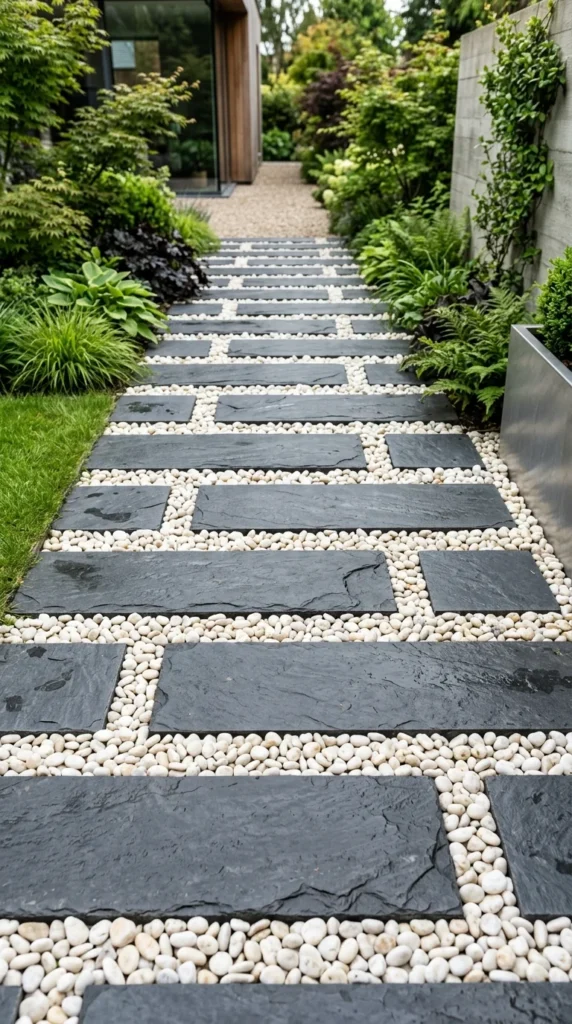
The modern linear path focuses on contrast and geometry. By using long slabs of stone and filling the gaps with a contrasting color of gravel or pebbles, you create a striking visual statement.
- Pros: High visual impact; makes small spaces feel longer.
- Best For: Minimalist gardens and entryways.
- Maintenance: Keeping the pebbles clean of leaves and debris is the primary task.
10. Grass Paths
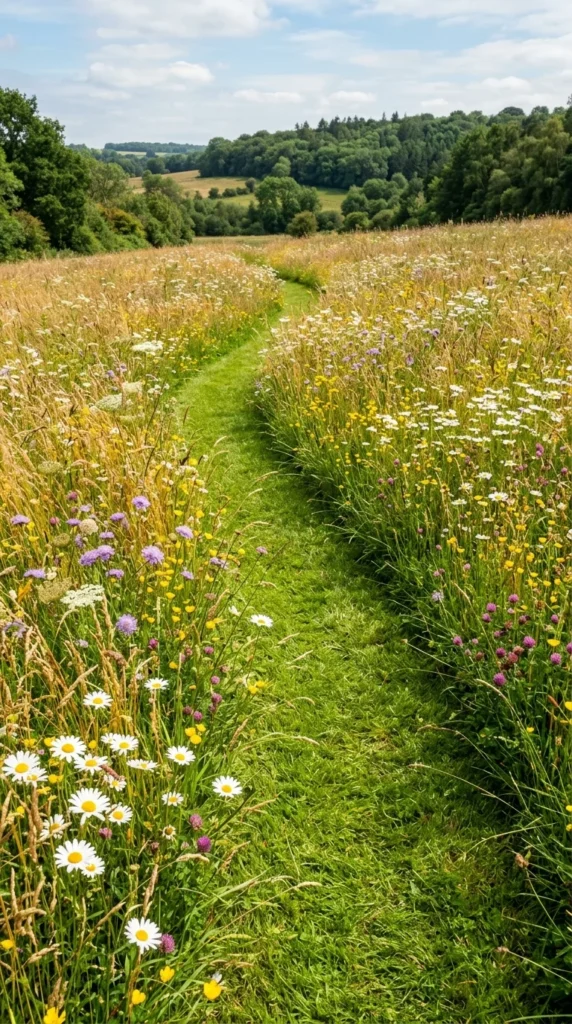
Sometimes the best path is simply the one nature provides. A mowed grass path through a wildflower meadow or a denser part of the garden creates a soft, inviting transition.
- Pros: No material costs; provides a cool surface in the summer.
- Best For: Large properties and naturalized meadows.
- Maintenance: Requires regular mowing and edging to keep the path defined.
11. Mosaic Patterns
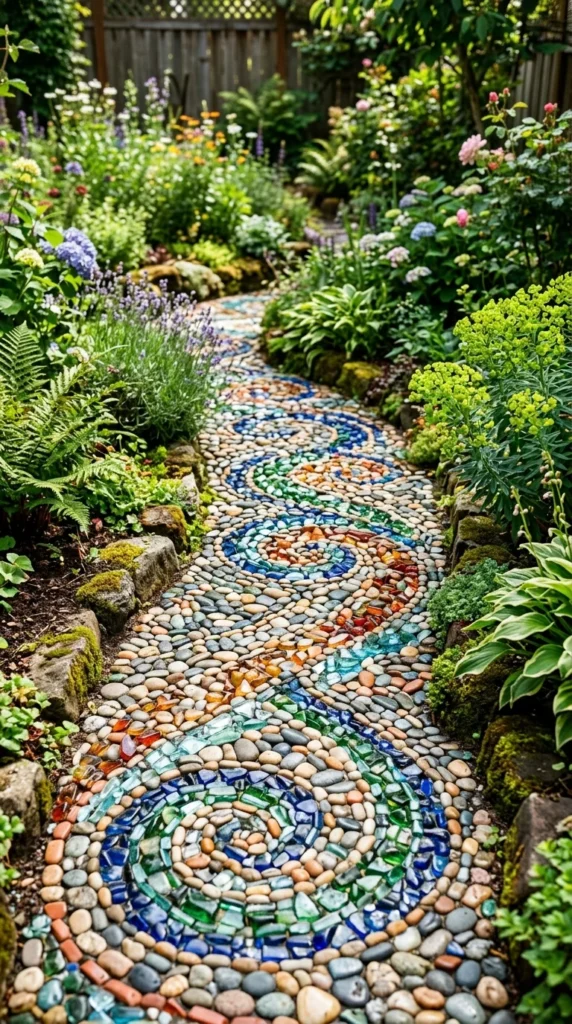
For the artistic gardener, a mosaic path is a labor of love that serves as a permanent piece of art. By embedding small stones or tiles into a mortar base, you can create intricate patterns, swirls, or pictures.
- Pros: Completely unique and customizable.
- Best For: Focal points in the garden or small courtyard spaces.
- Maintenance: If installed correctly on a concrete base, it is very durable; requires occasional sealing.
12. Reclaimed Timber
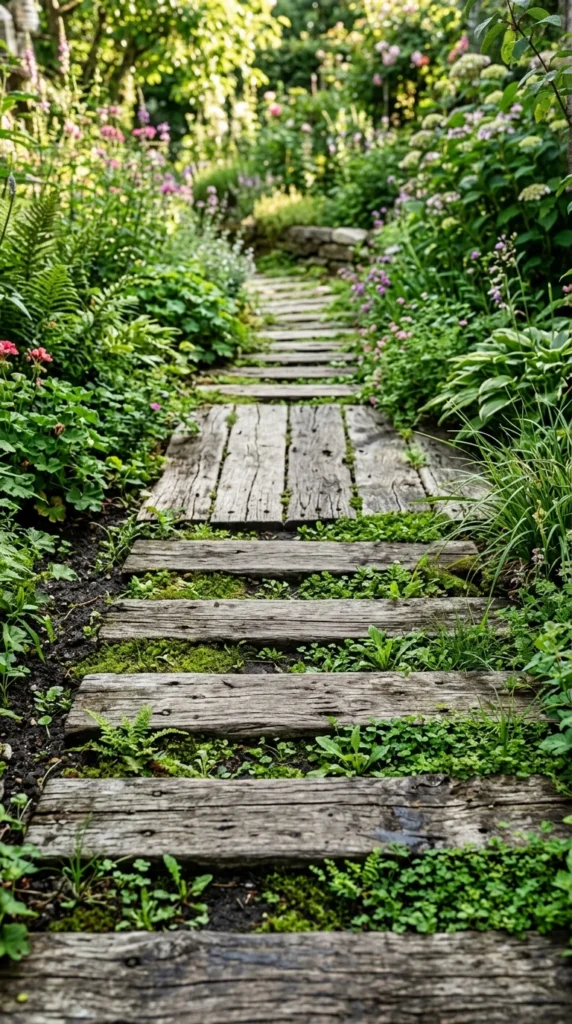
Using reclaimed wood, such as old barn siding or deck boards, gives your garden an eco-friendly and lived-in feel. The silver-grey patina of aged wood complements almost any plant palette.
- Pros: Environmentally friendly and cost-effective if sourcing salvaged materials.
- Best For: Sustainable gardens and rustic themes.
- Maintenance: Wood must be checked for splinters and rot; may require a non-slip coating in wet areas.
13. Decomposed Granite
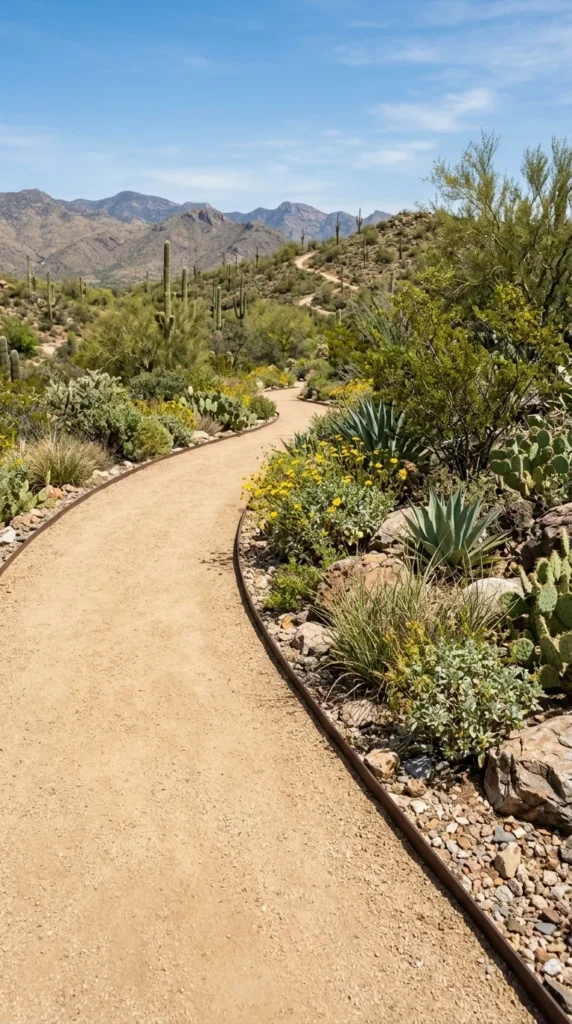
Decomposed granite (DG) is a fine, sandy material that packs down into a firm, stable surface. It is the gold standard for creating smooth, natural-looking paths that are more stable than loose gravel.
- Pros: Natural look, permeable, and relatively inexpensive.
- Best For: Large-scale landscaping and Southwest-style gardens.
- Maintenance: May require “refreshing” with a new layer every few years; can be messy if tracked into the house.
14. Slate Tiles
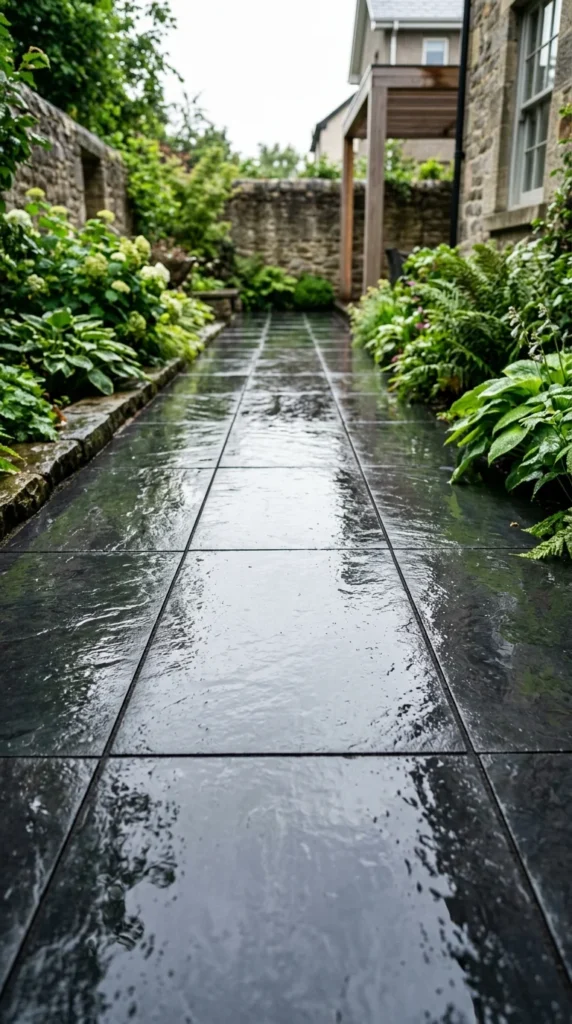
Slate offers a sophisticated, slightly dramatic look. Its natural cleft surface provides texture, while its dark hues make green foliage and bright flowers pop.
- Pros: Water-resistant and holds its color well over time.
- Best For: Formal gardens and contemporary patio transitions.
- Maintenance: Slate can be prone to “spalling” (flaking), so choosing high-quality tiles is important.
15. Pebble Ribbons
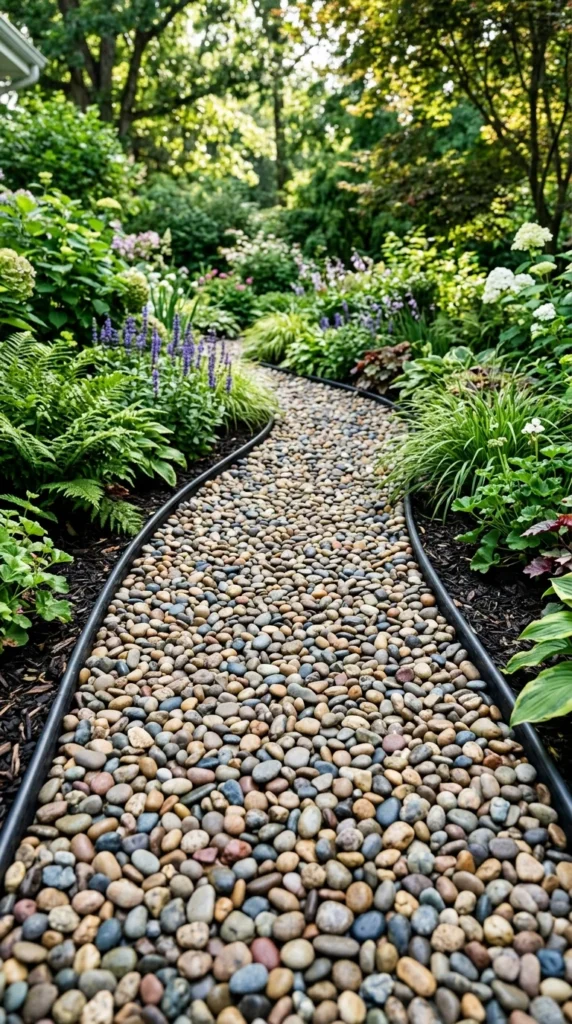
Pebble paths are soft to the eye and provide a zen-like atmosphere. They work beautifully when used as a “ribbon” that flows through a rock garden or under a bridge.
- Pros: Very flexible; can fit into any shape or tight corner.
- Best For: Zen gardens, Japanese-inspired landscapes, and drainage areas.
- Maintenance: Pebbles can migrate out of the path, so a sturdy edging is required.
16. Living Paths
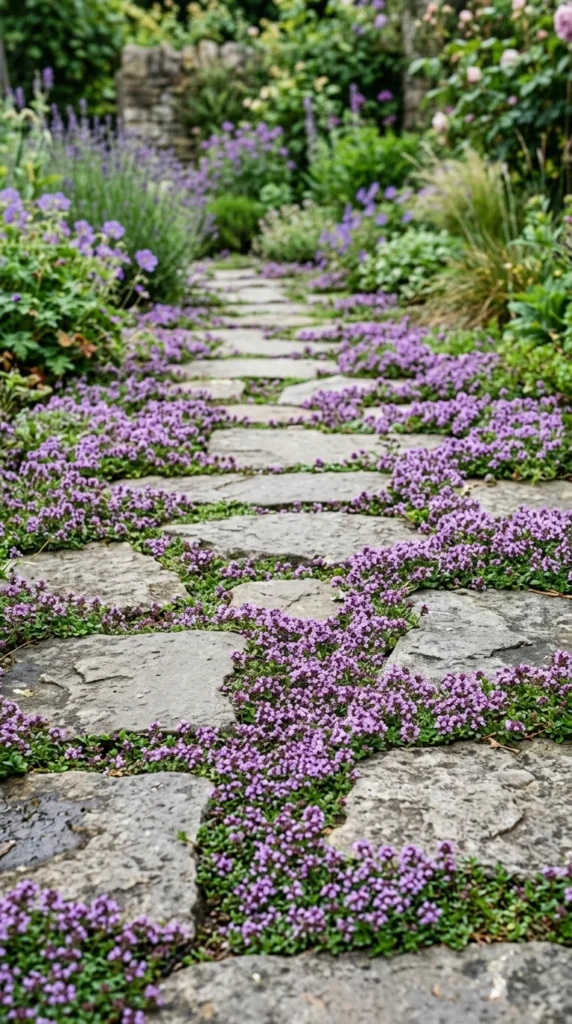
A living path incorporates low-growing, “steppable” plants between stones or pavers. As you walk, the plants release a pleasant fragrance, and the greenery softens the hard edges of the stone.
- Pros: Beautiful, fragrant, and helps with storm-water runoff.
- Best For: Fragrant gardens and low-traffic areas.
- Maintenance: The “living” part of the path requires water and occasional trimming.
17. Elevated Boardwalks
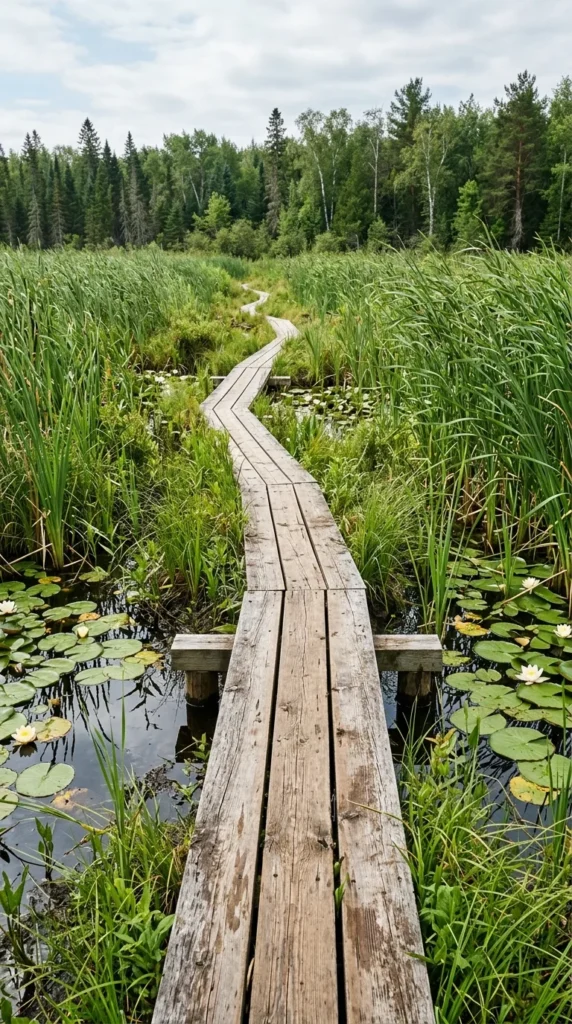
In areas where the ground is consistently wet or uneven, an elevated boardwalk is the perfect solution. It protects the ecosystem below while providing a dry, stable surface for walking.
- Pros: Solves drainage issues; creates a sense of adventure.
- Best For: Wetlands, sloped yards, and beach-style gardens.
- Maintenance: Periodic staining or sealing of the wood is necessary to prevent decay.
18. Circular Pavers
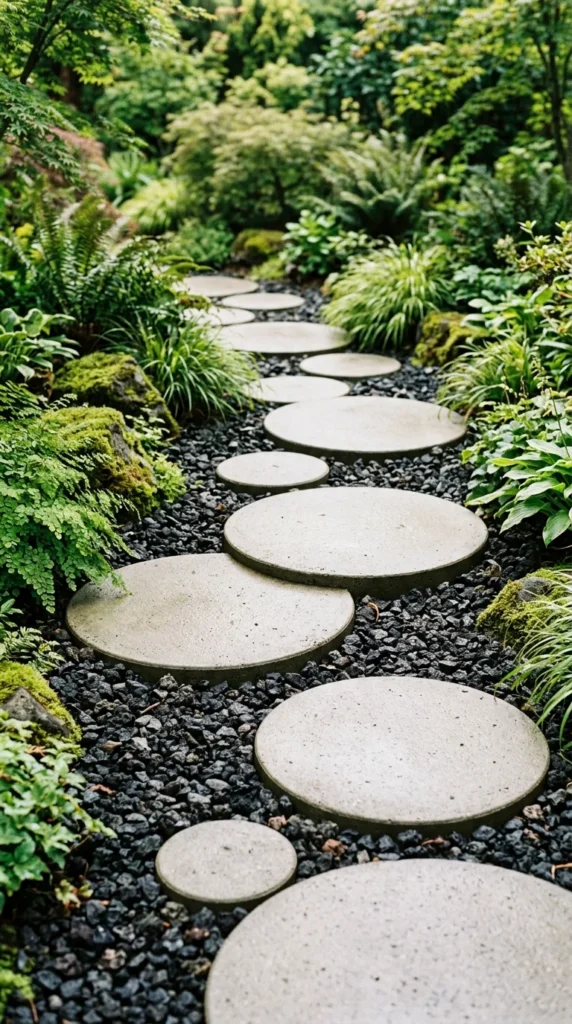
Circular elements break up the straight lines often found in gardens. Using round pavers creates a whimsical, “bouncing” feel that is particularly attractive in modern and children’s gardens.
- Pros: Softens the geometry of the yard; easy to install.
- Best For: Creative landscapes and play areas.
- Maintenance: Low maintenance; focus on keeping the area between the circles clear.
19. Railroad Ties
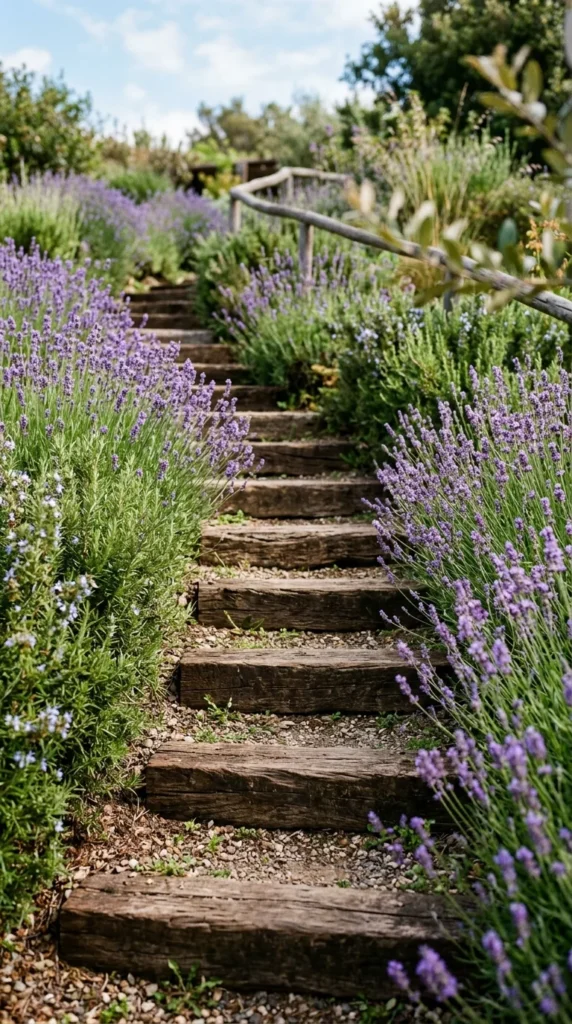
Railroad ties provide a sense of scale and ruggedness. They are particularly useful for creating paths on slight inclines, where they can act as both a walkway and a mini-retaining wall.
- Pros: Very heavy and stable; provides a masculine, industrial-rustic look.
- Best For: Sloped gardens and farmhouse styles.
- Maintenance: Ensure the wood is not treated with creosote if you are planting edible crops nearby.
20. Mixed Media
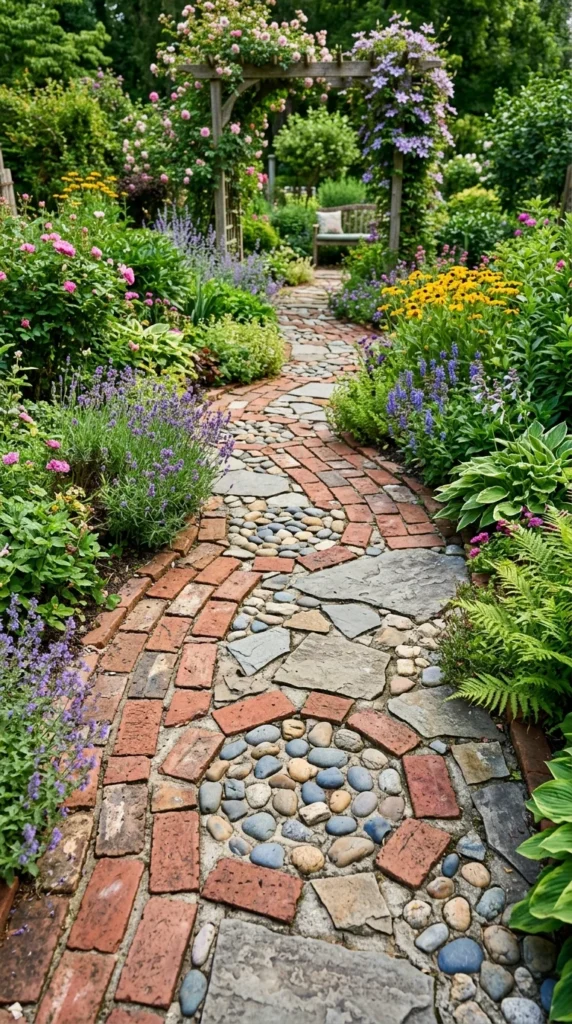
Why choose just one material? Mixed media paths combine different textures—like stone, brick, and gravel—to create a visually rich and eclectic walkway.
- Pros: Uses up leftover materials; creates a custom, high-end look.
- Best For: Eclectic gardens and artistic homeowners.
- Maintenance: Varies depending on the materials used; requires careful planning during installation to ensure a level surface.