Bringing the garden indoors is more than just a culinary convenience; it is a lifestyle transformation. Having fresh basil, rosemary, and mint within arm’s reach of your stove elevates your cooking from ordinary to gourmet while purifying your indoor air and providing a calming, aesthetic touch to your home decor. While many believe that a “green thumb” is a prerequisite for success, the truth is that indoor herb gardening is a science rooted in a few fundamental principles. By understanding the specific needs of these aromatic plants, anyone can cultivate a miniature nursery that flourishes year-round, regardless of the weather outside.
1. Lighting
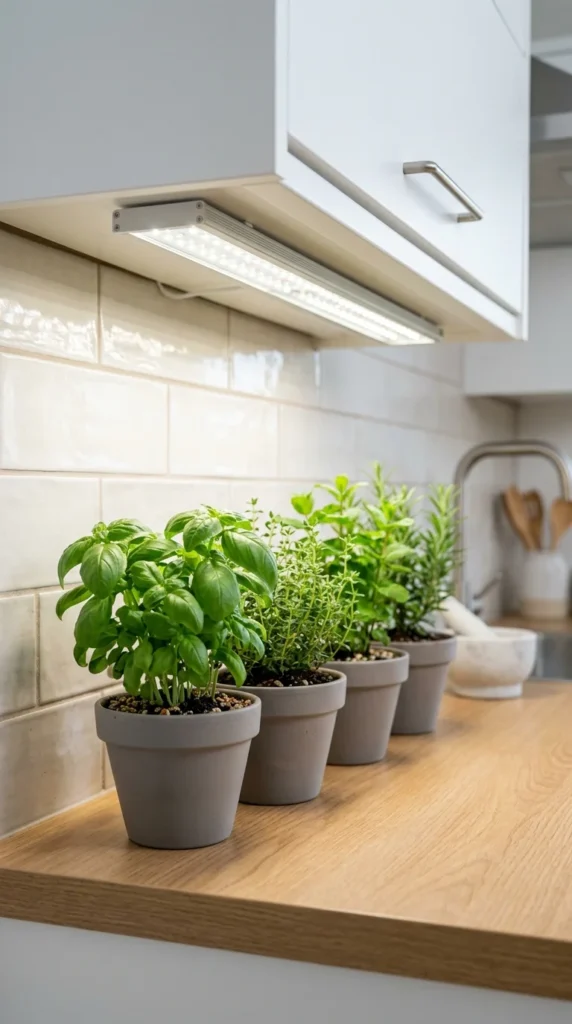
Light is the most critical factor for indoor herb success. Most culinary herbs are Mediterranean in origin, meaning they crave intense, direct sunlight for at least six to eight hours a day.
- Natural Light: South-facing windows are the gold standard for indoor gardeners. They provide the most consistent and strongest light throughout the day. West-facing windows are a secondary option, though they can sometimes become too hot in the mid-afternoon.
- Supplemental Lighting: If your home lacks natural light, or during the dark winter months, high-quality LED grow lights are essential. Position the lights about 6 to 12 inches above the plants. Unlike old-fashioned incandescent bulbs, LEDs provide the full spectrum of light (red and blue waves) required for photosynthesis without burning the delicate leaves.
- Rotation: Herbs will naturally lean toward their light source. To ensure even growth and prevent “legginess,” rotate your pots a quarter-turn every few days.
2. Drainage
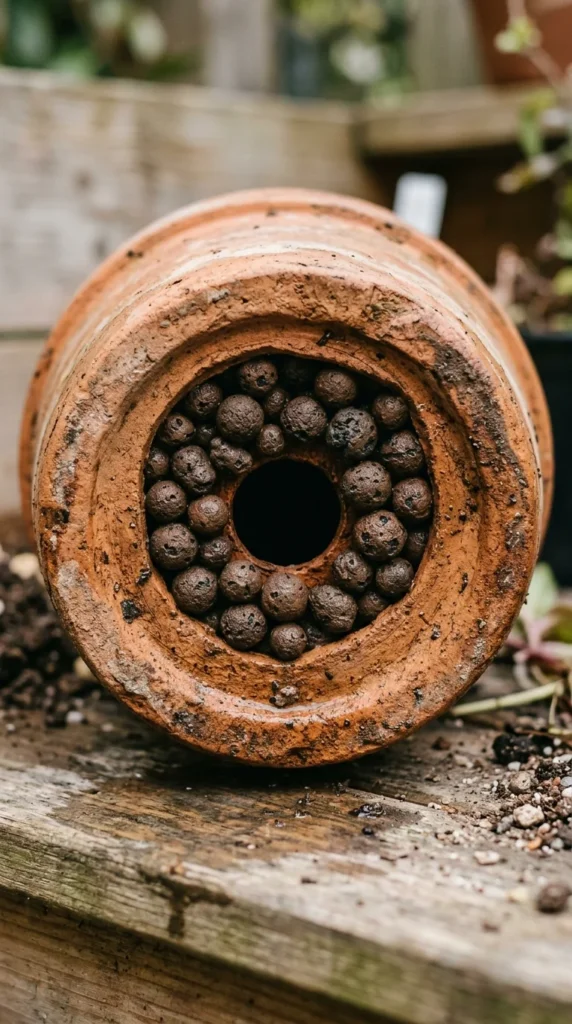
The quickest way to kill an indoor herb is through “wet feet” or root rot. Herbs hate sitting in stagnant water. Proper drainage is non-negotiable for a healthy root system.
- The Container: Always choose pots with drainage holes at the bottom. If you find a beautiful decorative pot without holes, use it as a “cachepot”—keep the herb in a plastic nursery liner with holes and place that inside the decorative container.
- The Medium: Never use garden soil for indoor pots; it is too heavy and can contain pests or pathogens. Instead, use a high-quality organic potting mix. These mixes are typically composed of peat moss, pine bark, and perlite, which allow water to move freely while retaining just enough moisture for the roots.
- Airflow: Good drainage also refers to air. Ensure there is enough space between your pots to allow air to circulate, which prevents powdery mildew and other fungal issues.
3. Basil
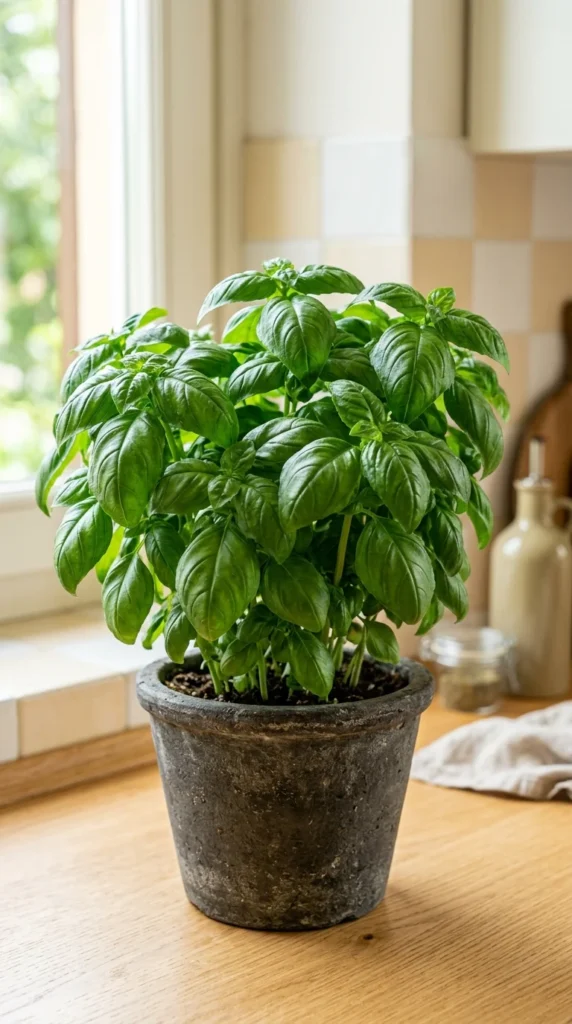
Basil is the undisputed king of the indoor herb garden. It is fast-growing and incredibly rewarding, but it is also one of the most demanding in terms of warmth and water.
- Temperature Needs: Basil is tropical. It thrives in temperatures between 70°F and 85°F. Keep it away from cold windowsills or air conditioning vents during the winter.
- Watering Habits: Unlike many other herbs, basil likes to stay consistently moist. If the soil becomes bone-dry, the leaves will wilt dramatically.
- Pruning for Growth: To keep basil from becoming tall and spindly, pinch off the top set of leaves once the plant is about six inches tall. This encourages the plant to branch out, resulting in a bushier, more productive herb.
4. Rosemary
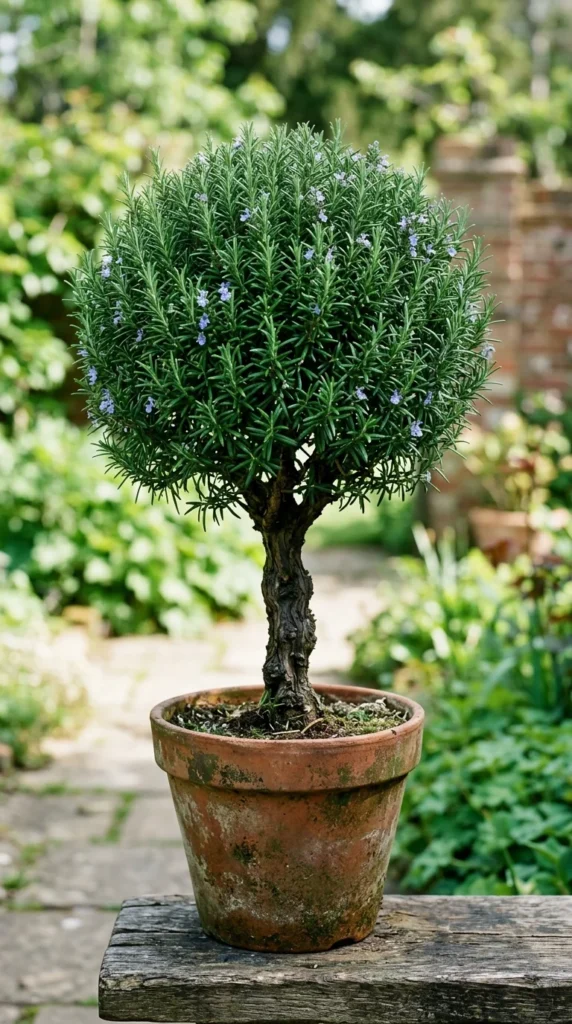
Rosemary is a hardy, perennial shrub that adds a wonderful fragrance to any room. It is quite different from basil in its care requirements, leaning more toward the “neglect” side of the spectrum.
- Drought Tolerance: Rosemary prefers its soil to dry out significantly between waterings. Overwatering is the most common cause of rosemary failure indoors.
- The Need for Light: This herb requires the absolute brightest spot in your home. If it doesn’t get enough light, the needles will turn brown and drop off.
- Humidity: While rosemary likes dry soil, it enjoys some atmospheric humidity. Misting the leaves once a week or placing the pot on a pebble tray filled with water can help mimic its coastal Mediterranean home.
5. Mint
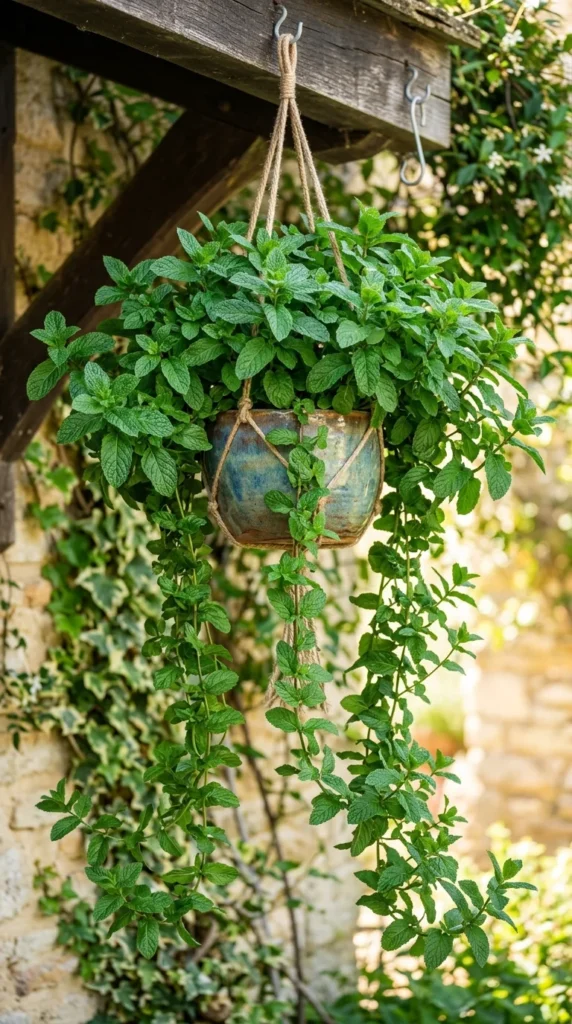
Mint is perhaps the easiest herb for beginners because it is incredibly resilient and grows vigorously even in less-than-ideal conditions.
- Containment: The most important rule of mint is to grow it in its own container. Mint spreads via underground runners (rhizomes) and will quickly choke out any other herbs sharing its pot.
- Shade Tolerance: While most herbs need full sun, mint is one of the few that can tolerate partial shade, making it a great choice for windows that don’t get direct afternoon light.
- Moisture: Mint loves water. Keep the soil damp to the touch, and harvest frequently to keep the plant from becoming too “leggy.”
6. Temperature
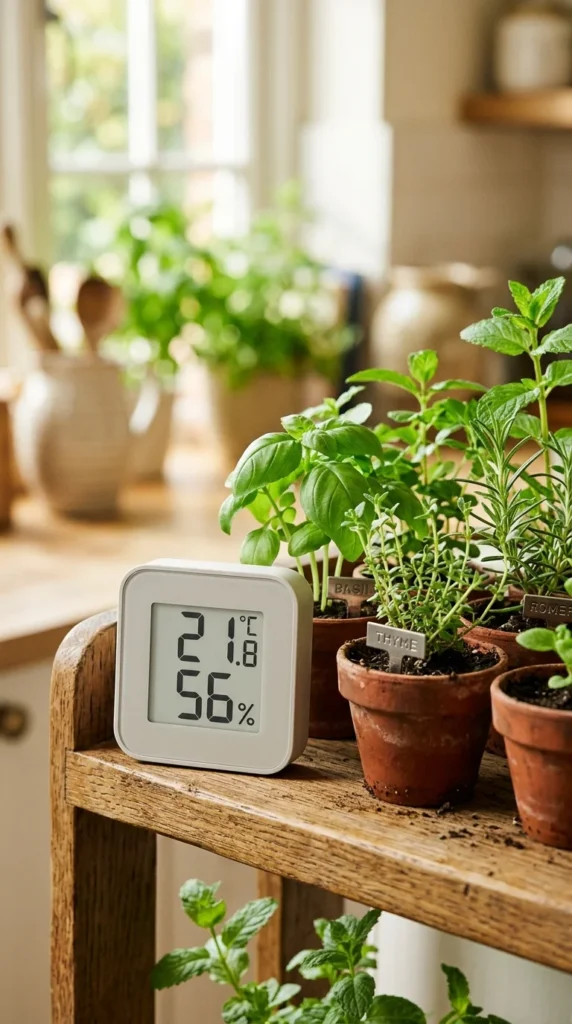
Indoor herbs generally thrive in the same temperature range that humans find comfortable, but fluctuations can be a problem.
- The Sweet Spot: Most herbs prefer temperatures between 65°F and 75°F.
- Drafts and Heat: Avoid placing your garden near heaters, radiators, or drafty doors. Extreme heat can dry out the soil too quickly, while cold drafts can shock the plants and stunt their growth.
- Nighttime Cool: A slight drop in temperature at night (down to 55°F or 60°F) mimics the natural outdoor environment and can actually help some herbs, like parsley and chives, grow stronger.
7. Harvesting
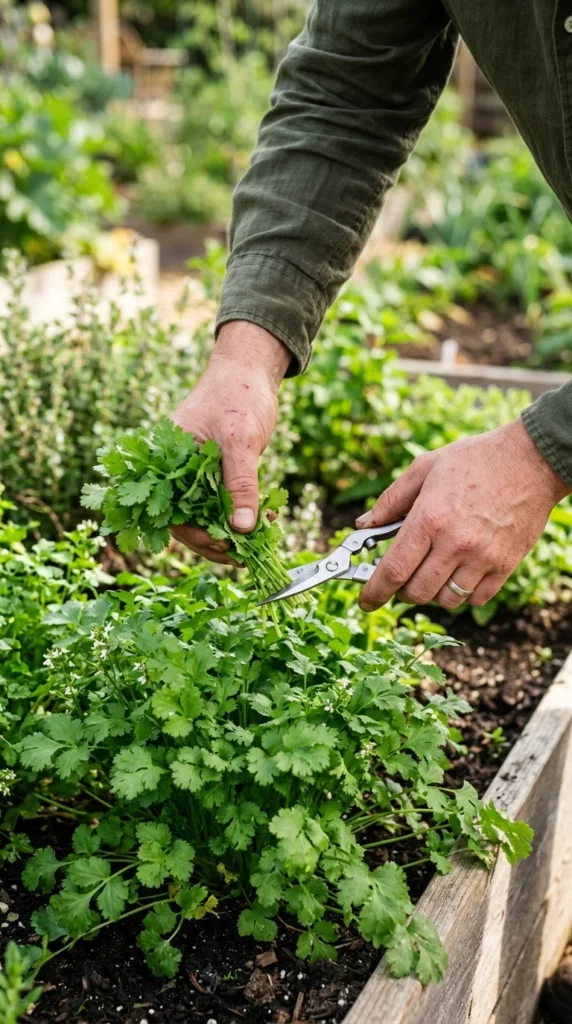
Harvesting is not just about getting ingredients for your dinner; it is an essential part of plant maintenance. Regular harvesting tells the plant to continue producing new growth.
- The One-Third Rule: Never harvest more than one-third of a plant at any given time. Taking too much can stress the herb and make it difficult for it to recover.
- Top-Down Method: Always harvest from the top of the plant. Snip the stems just above a leaf node (the spot where new leaves emerge). This stimulates the “axillary buds” to grow, creating two new stems where there was once only one.
- Removing Flowers: If your herbs start to produce flowers (known as “bolting”), pinch them off immediately. Once a plant flowers, the flavor of the leaves often becomes bitter as the plant puts all its energy into seed production.
8. Watering
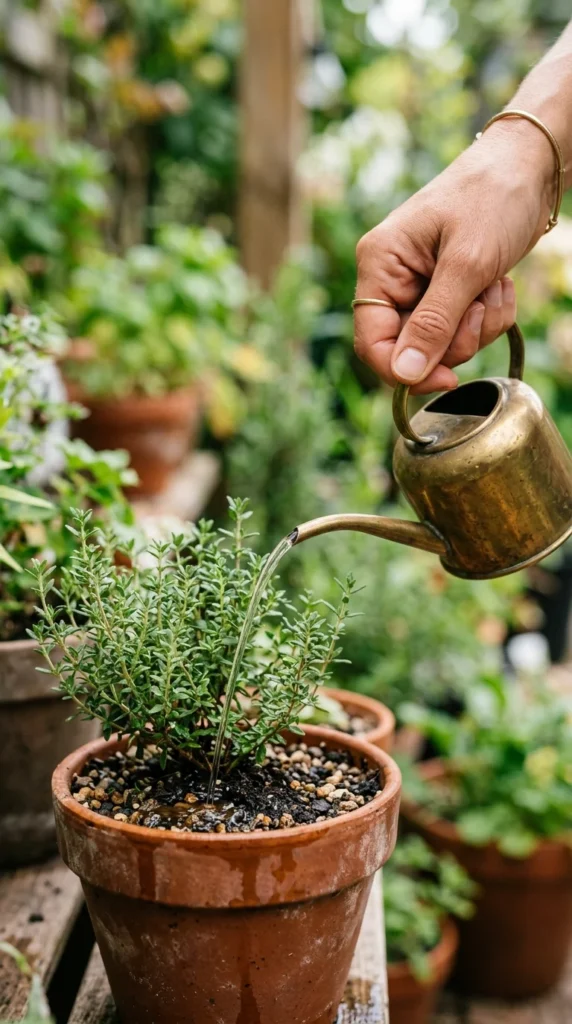
Watering is an art form. The frequency depends on the type of herb, the size of the pot, and the humidity in your home.
- The Finger Test: Don’t water on a set schedule. Instead, stick your finger an inch into the soil. If it feels dry, it’s time to water. If it feels damp, wait another day.
- Technique: Always water at the base of the plant rather than over the leaves. Wet foliage can encourage fungal diseases and pests.
- Deep Soaking: When you do water, do so thoroughly until water runs out of the drainage holes at the bottom. This ensures that the entire root ball is hydrated and encourages roots to grow deep rather than staying near the surface.
9. Fertilization
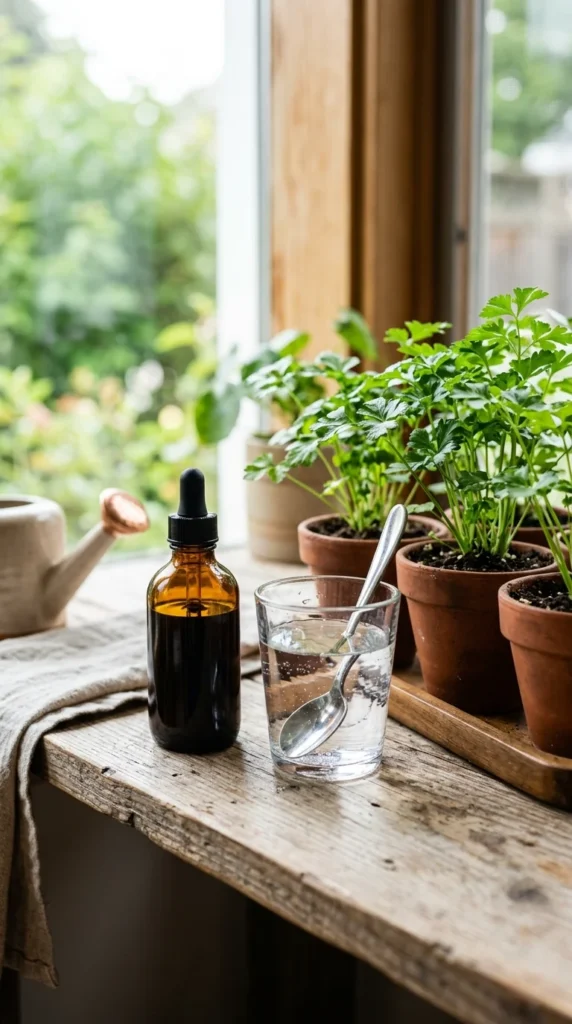
Because indoor herbs are confined to pots, they eventually exhaust the nutrients in their soil. To keep them thriving, you must replenish those nutrients.
- Organic Options: Since you will be eating these herbs, use an organic, liquid fertilizer. Fish emulsion or seaweed extract are excellent choices that provide a gentle boost of nitrogen, phosphorus, and potassium.
- Frequency: During the active growing season (spring and summer), fertilize your herbs every two to four weeks at half the strength recommended on the bottle. Over-fertilizing can lead to fast growth but weak flavor, as the essential oils don’t have time to concentrate in the leaves.
- Winter Dormancy: Reduce or stop fertilization during the winter months when plant growth naturally slows down due to lower light levels.