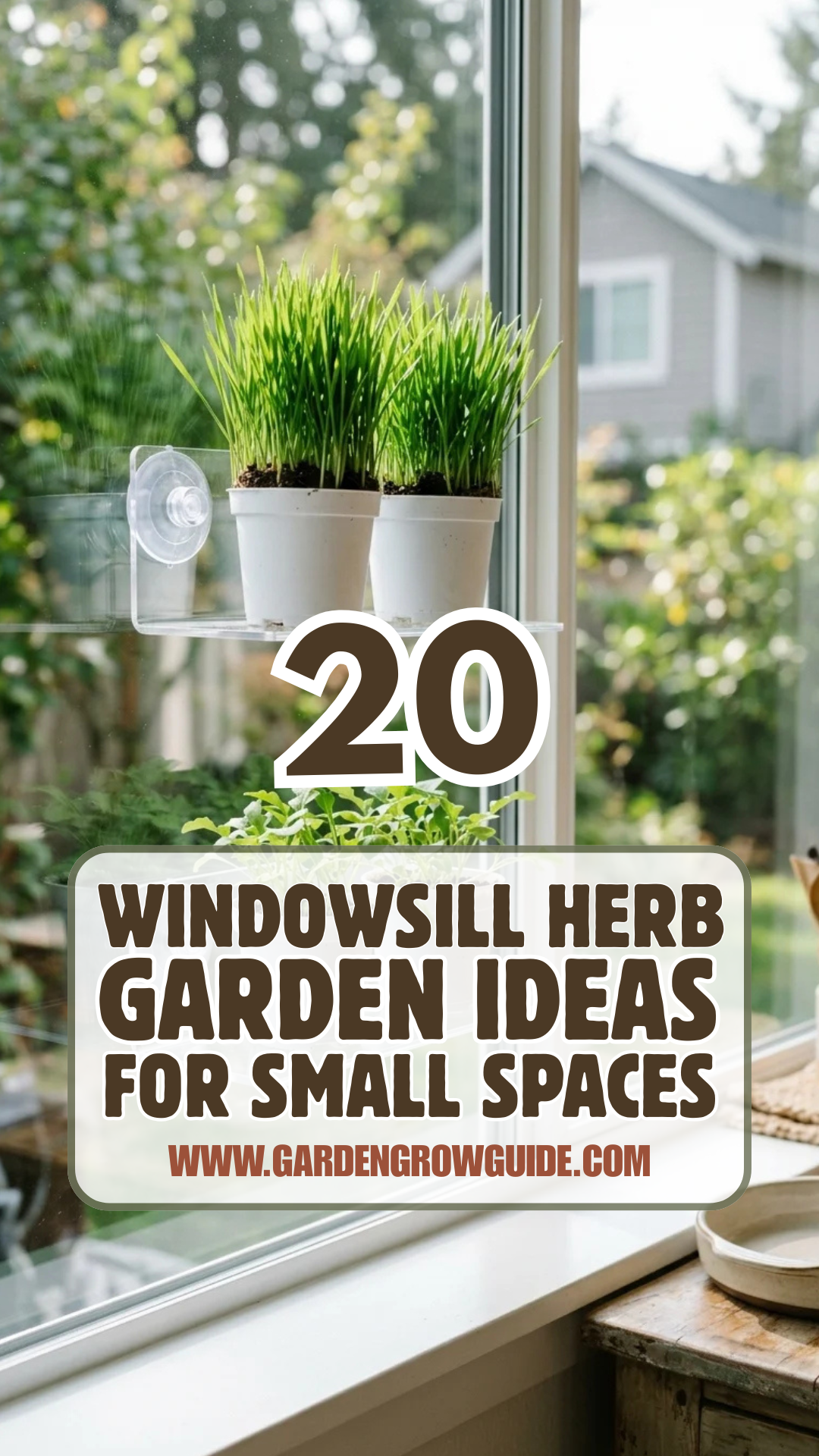
Growing your own herbs is one of the most rewarding ways to bring life, flavor, and fragrance into a small living space. Even if you don’t have a backyard or a balcony, a windowsill provides the perfect micro-environment for a thriving culinary garden. Herbs like basil, mint, rosemary, and thyme are remarkably resilient and can flourish in compact containers as long as they receive adequate sunlight.
Beyond the culinary benefits of having fresh ingredients at your fingertips, a windowsill garden improves indoor air quality and adds a vibrant aesthetic element to your home decor. Whether you prefer a rustic farmhouse look or a sleek, modern hydroponic setup, there is a space-saving solution for every style.
1. Terra Cotta
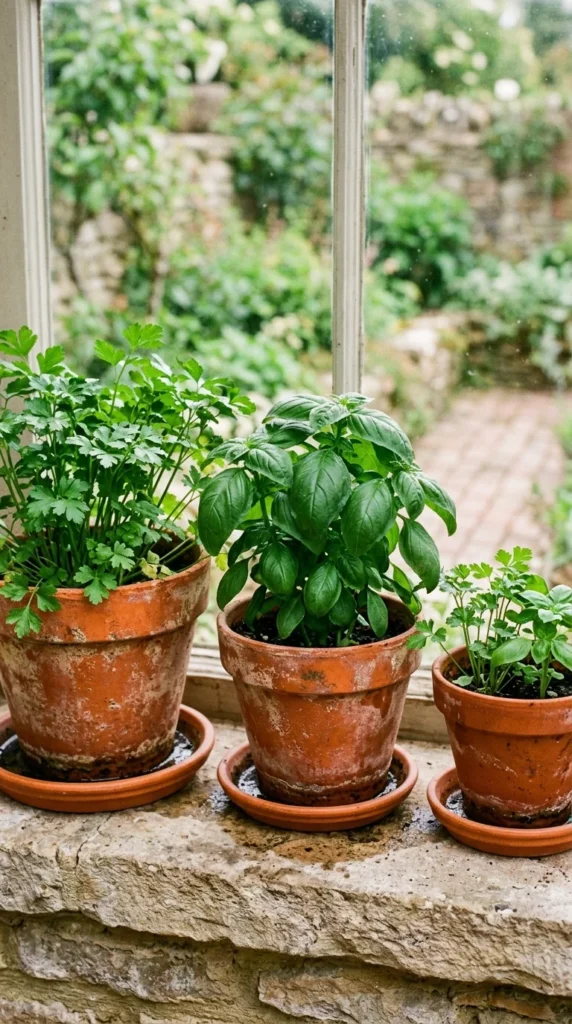
Terra cotta remains the gold standard for herb gardening for a reason. These clay pots are porous, allowing the soil to “breathe” and preventing root rot by soaking up excess moisture. For small windowsills, a row of 4-inch terra cotta pots provides a uniform, classic look. They develop a beautiful patina over time, adding a sense of history and warmth to your kitchen. To keep things tidy, ensure each pot has a matching saucer to catch drainage water.
2. Mason Jars
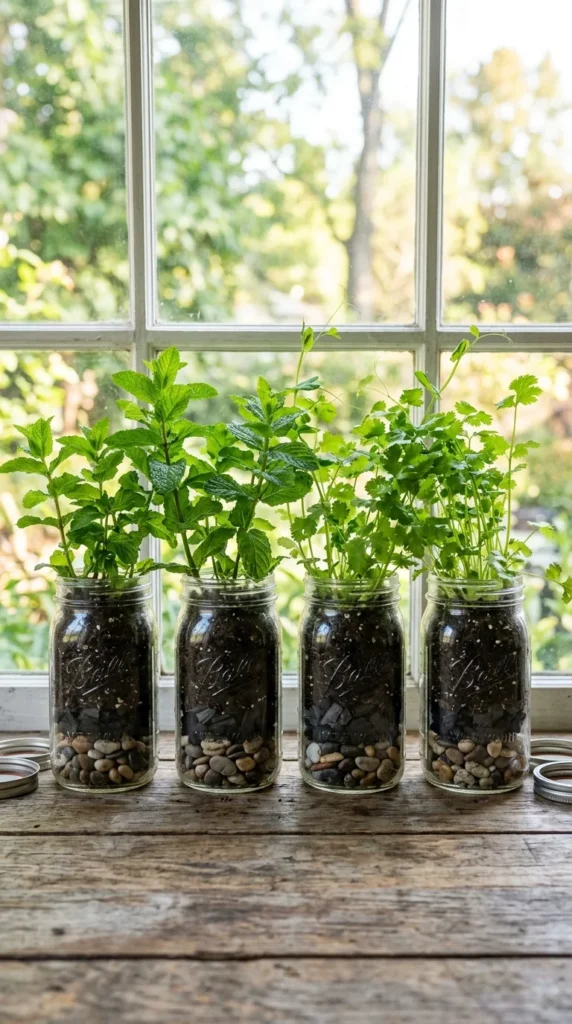
Mason jars offer a trendy, transparent look that allows you to see the root systems and soil moisture levels. Since these jars do not have drainage holes, it is crucial to layer the bottom with an inch of pebbles or horticultural charcoal to prevent water from pooling around the roots. This “aquarium style” of gardening is perfect for moisture-loving herbs like mint or lemon balm.
3. Magnetic Tins
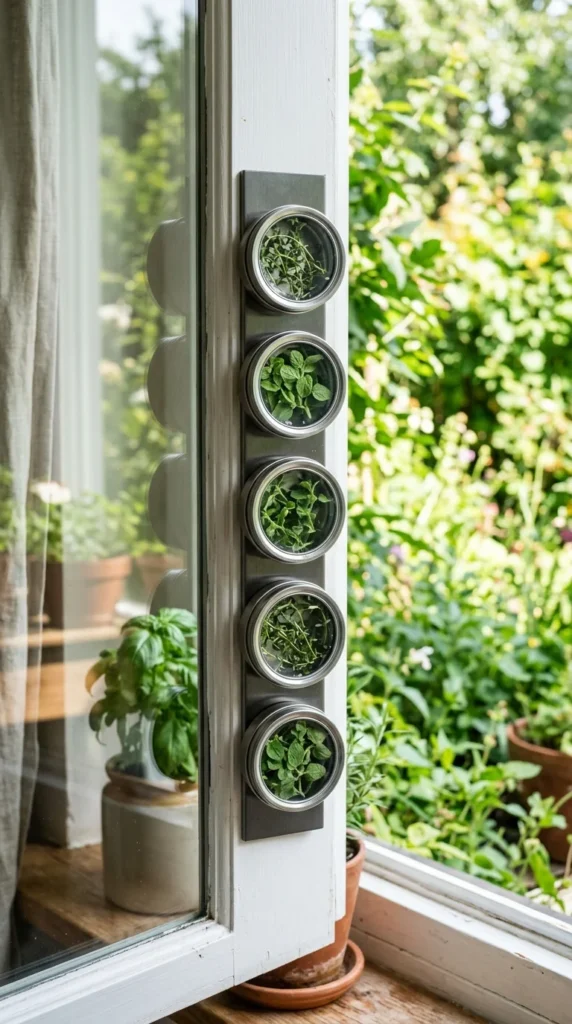
If your windowsill is exceptionally narrow, look to the vertical surfaces around it. Magnetic spice tins can be repurposed into tiny planters and attached to a metal strip or a refrigerator located near a sunny window. This is an excellent solution for “micro-herbs” or smaller varieties like chives. Ensure you use lightweight potting soil to keep the weight manageable for the magnets.
4. Hanging Macramé
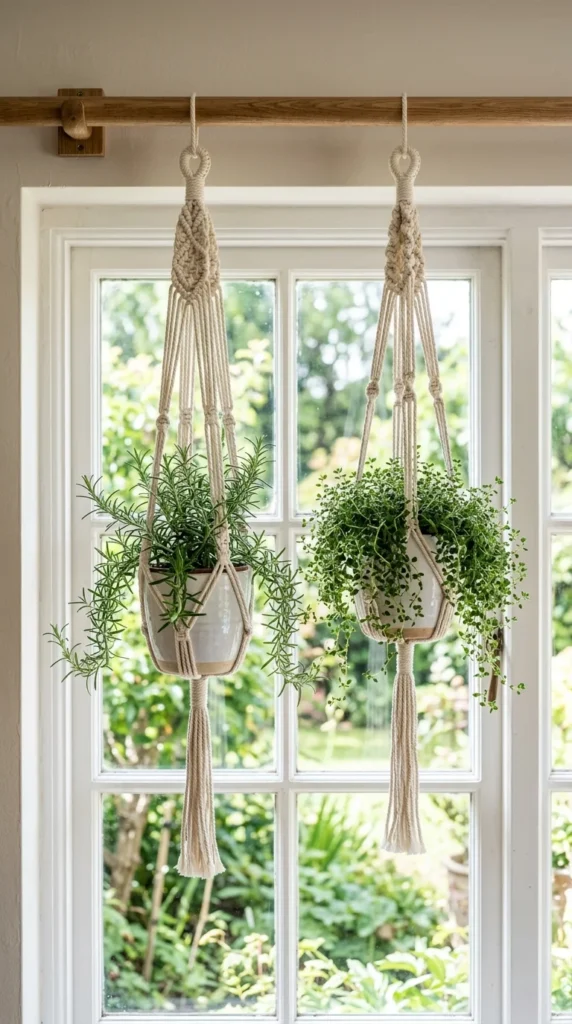
Vertical space is often underutilized in small apartments. By hanging your herbs in macramé holders, you free up the actual sill for other items while positioning the plants at the brightest part of the window. Trailing herbs like creeping thyme or prostrate rosemary look particularly stunning as they spill over the edges of the pots.
5. Self-Watering Pots
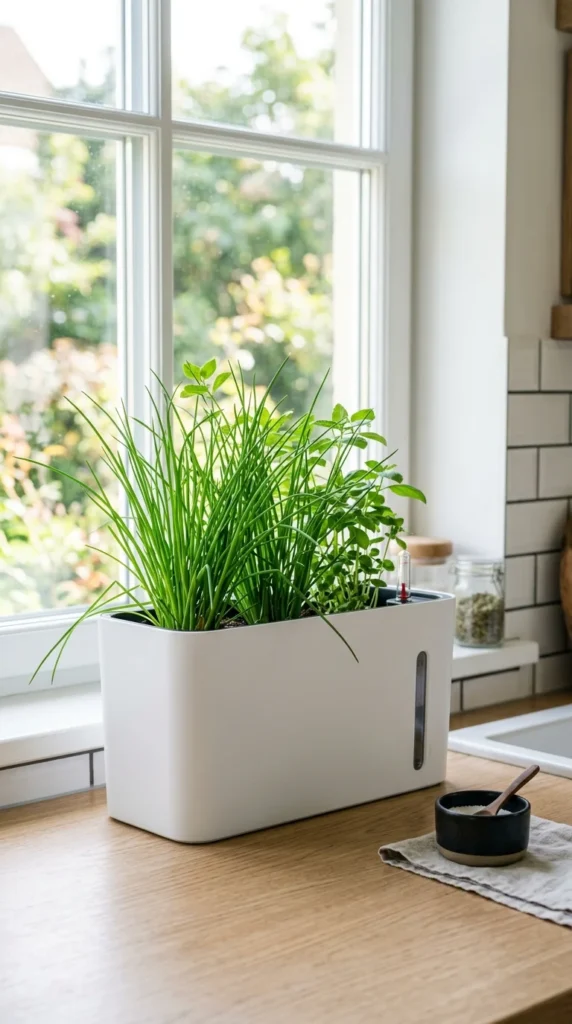
For the busy gardener, self-watering pots are a game-changer. These containers feature a reservoir at the base that allows plants to wick up moisture as needed. This is particularly beneficial for herbs like basil, which can wilt quickly if the soil dries out. The built-in reservoir also prevents messy spills on your windowsill, making it a clean and efficient choice.
6. Recycled Cans
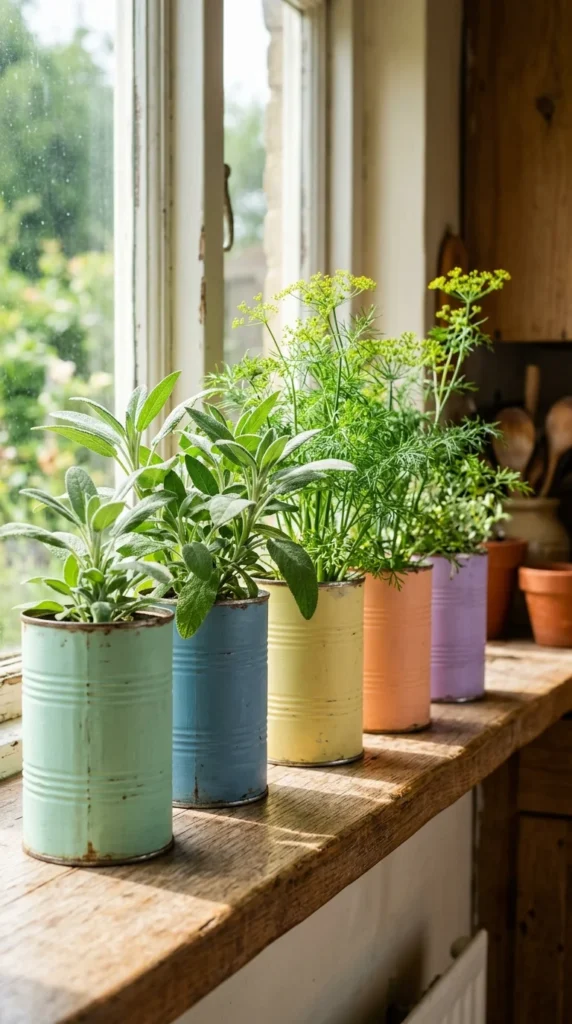
Sustainability meets style with recycled tin cans. Once cleaned and fitted with drainage holes (easily made with a hammer and nail), old soup or coffee cans become charming, industrial-style planters. You can paint them to match your kitchen’s color palette or leave them in their metallic state for a modern, edgy look.
7. Tiered Racks
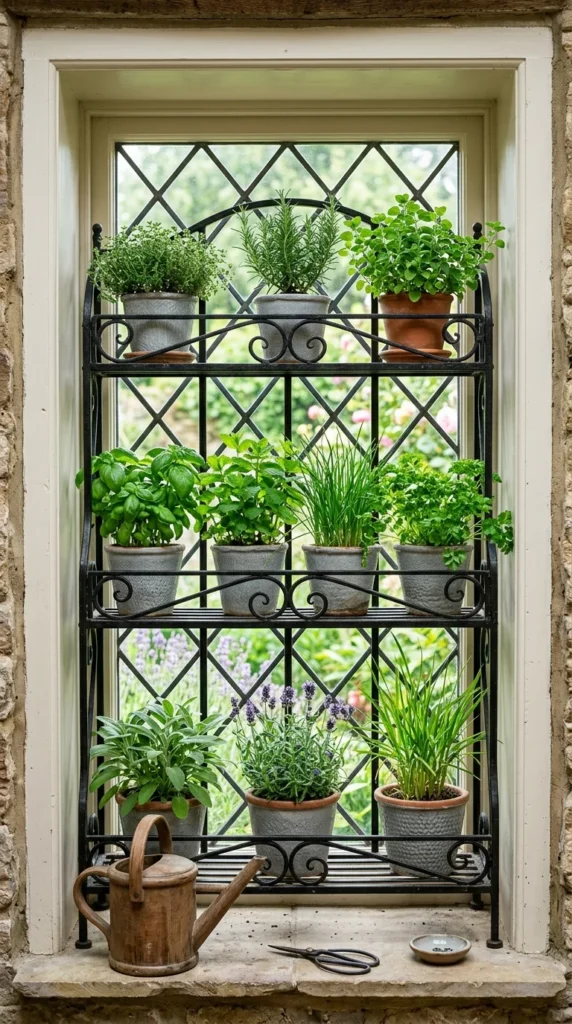
When horizontal space is limited, go vertical. A tiered spice rack or a small bathroom shelf can be repurposed to hold multiple rows of herbs. This maximizes the number of plants you can grow in a single window. Just be sure to rotate the rack occasionally so that the plants in the back or on the lower tiers receive their fair share of sunlight.
8. Tea Tins
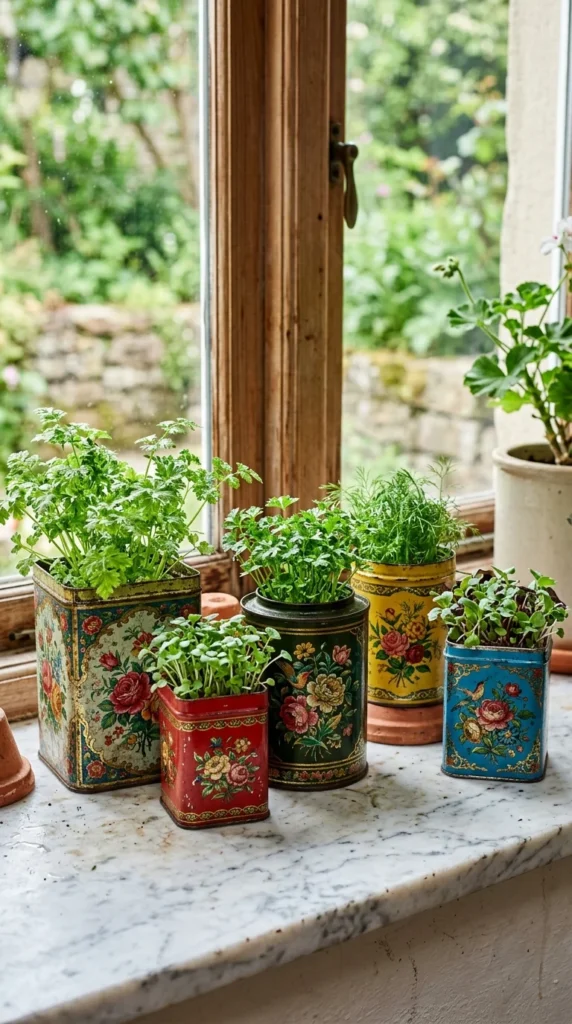
Vintage tea tins add a touch of whimsy and elegance to a windowsill garden. Their square shapes allow them to sit flush against one another, saving space. Because tea tins are usually made of thin metal, they are easy to drill for drainage. Their height is perfect for herbs with deeper root systems, such as cilantro or dill.
9. Suction Shelves
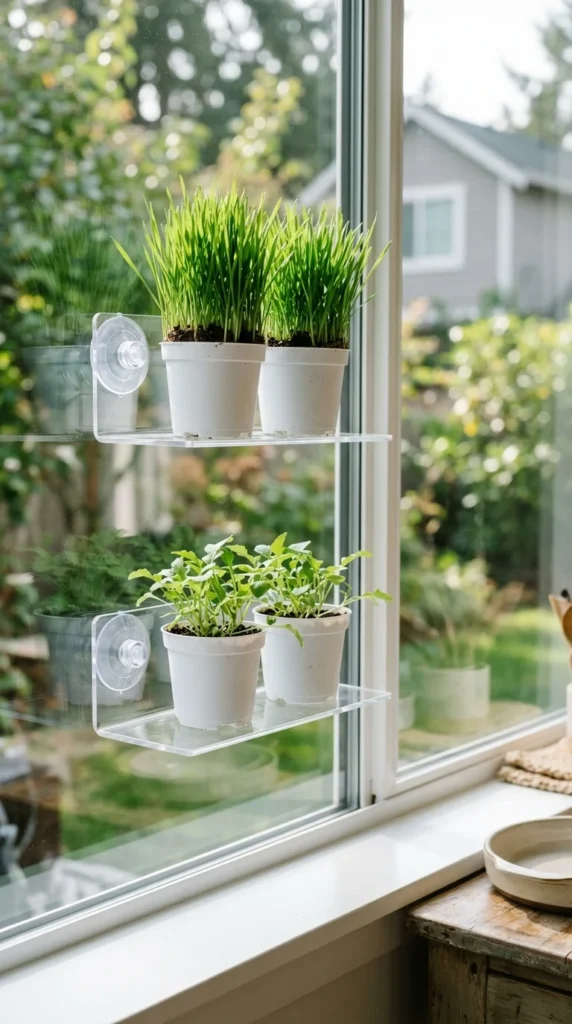
Suction-cup shelves are the ultimate “small space” hack. These clear acrylic platforms attach directly to the window glass, allowing your herbs to sit in the path of maximum sunlight without taking up any surface area on the sill. They create a “floating” garden effect that is visually stunning and highly functional for high-rise apartment dwellers.
10. Floating Shelves
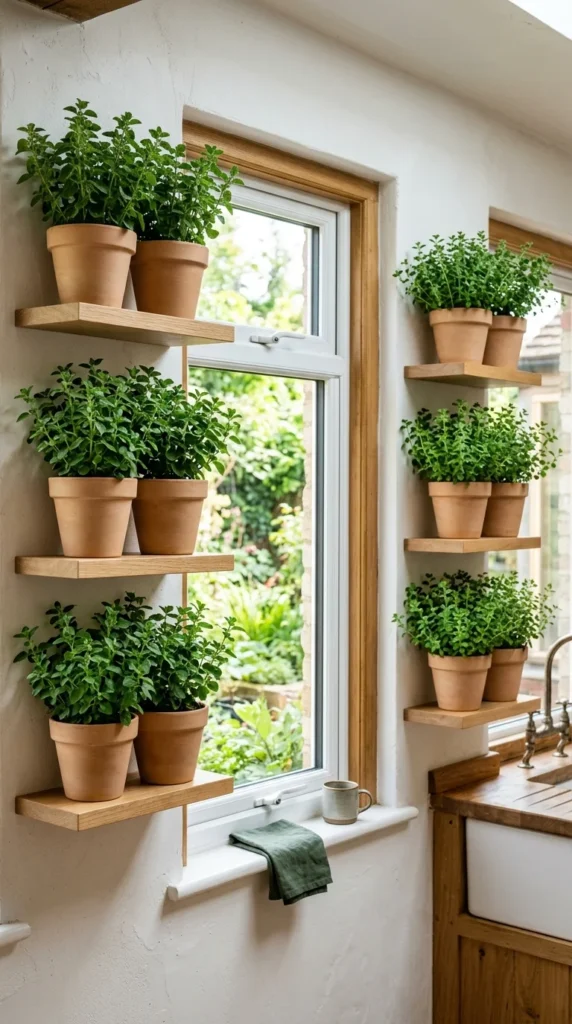
If your window doesn’t have a ledge, you can create one. Installing a few floating shelves across the window frame or directly beside it provides a sturdy platform for your herb collection. This allows you to stack your garden vertically, creating a “wall of green” that doubles as a natural privacy screen.
11. Gutter Planters
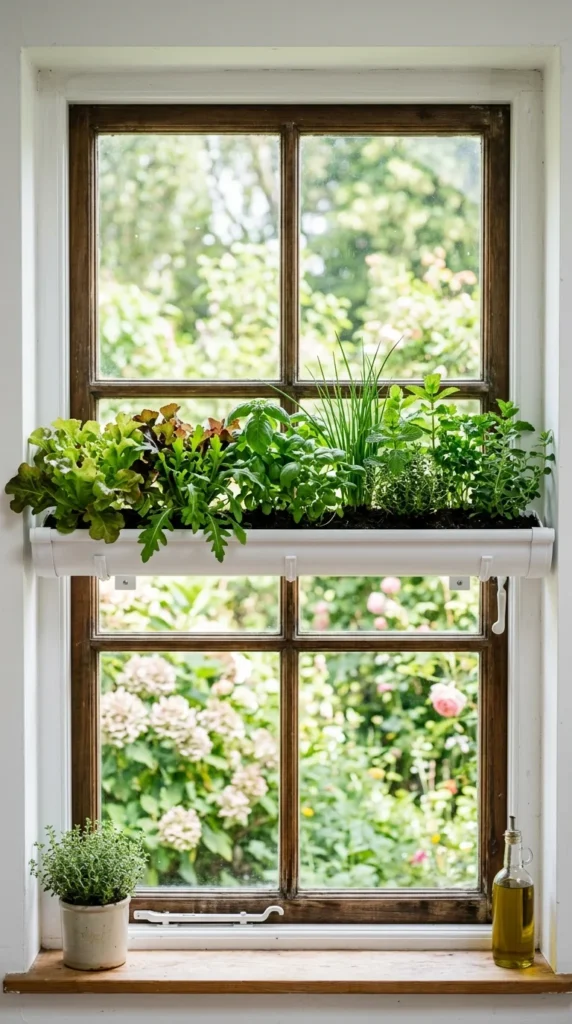
A short section of rain gutter can be capped at both ends and mounted to a window frame to create a long, narrow trough. This is an excellent way to grow a “line” of herbs in a very thin space. Gutter planters are lightweight and provide a uniform, clean look that fits perfectly in modern or industrial-themed kitchens.
12. Smart Gardens
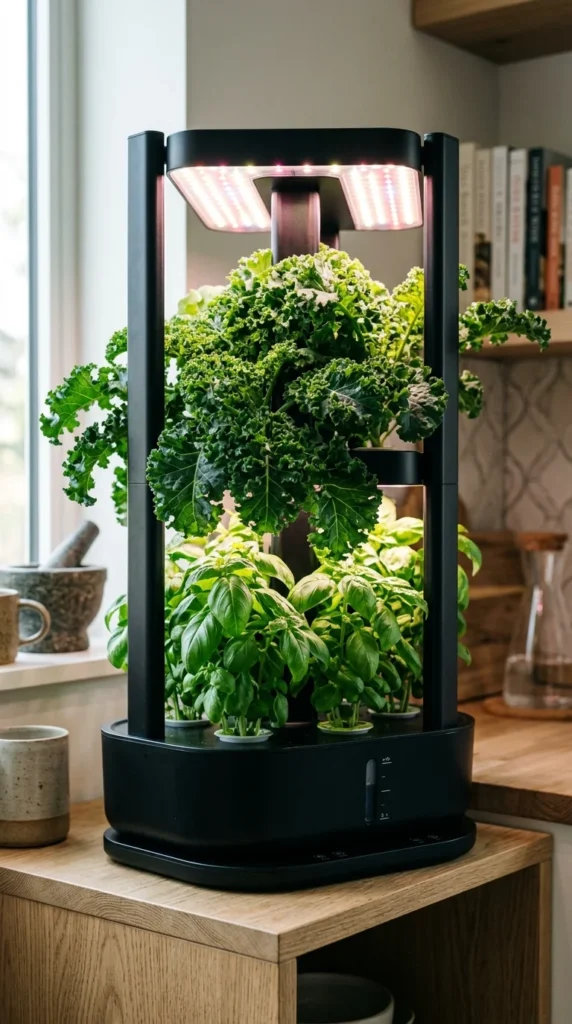
For those with low-light windows or a “black thumb,” a smart garden is the perfect investment. These units use hydroponics (growing in water rather than soil) and built-in LED grow lights to ensure your herbs thrive regardless of the weather or the time of year. Most models are compact enough to fit on a standard windowsill and feature automated timers for light and water.
13. Woven Baskets
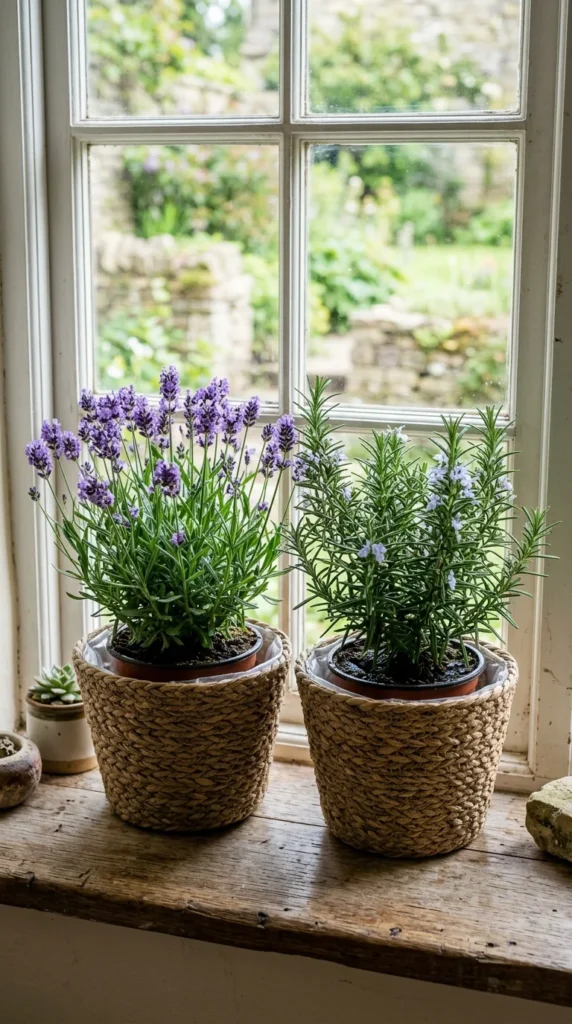
Woven baskets bring a soft, organic texture to your herb garden. By placing your standard plastic nursery pots inside small baskets, you hide the unsightly plastic while adding a bohemian or farmhouse feel to your space. Ensure the baskets are lined with plastic to prevent water from damaging the fibers and the windowsill.
14. Chalkboard Pots
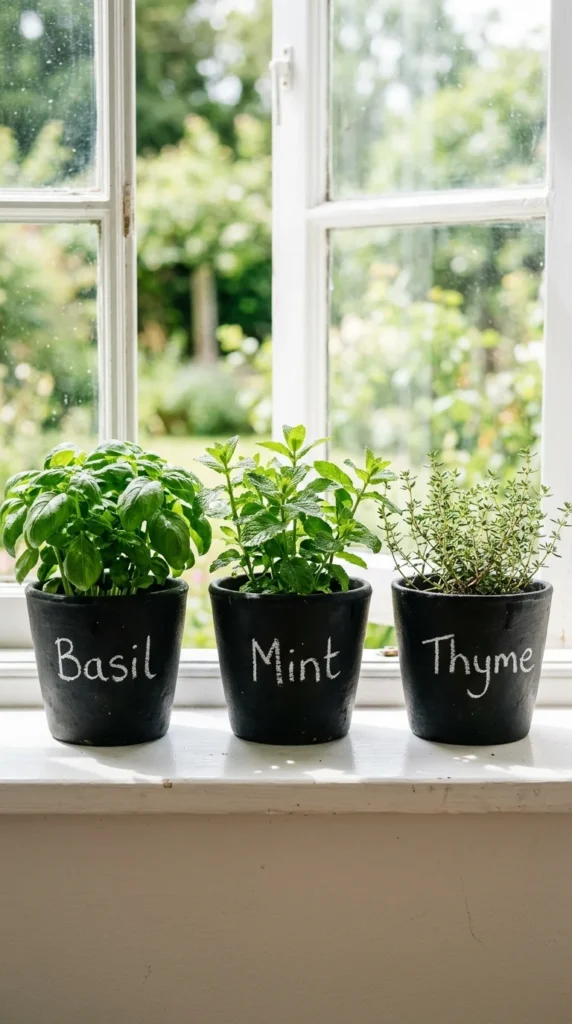
Organization is key in a crowded garden. Chalkboard pots allow you to label your herbs clearly, which is especially helpful if you are growing several similar-looking varieties like different types of mint or basil. The matte black finish provides a striking contrast against the vibrant green of the herbs, making the colors pop.
15. Copper Pipe
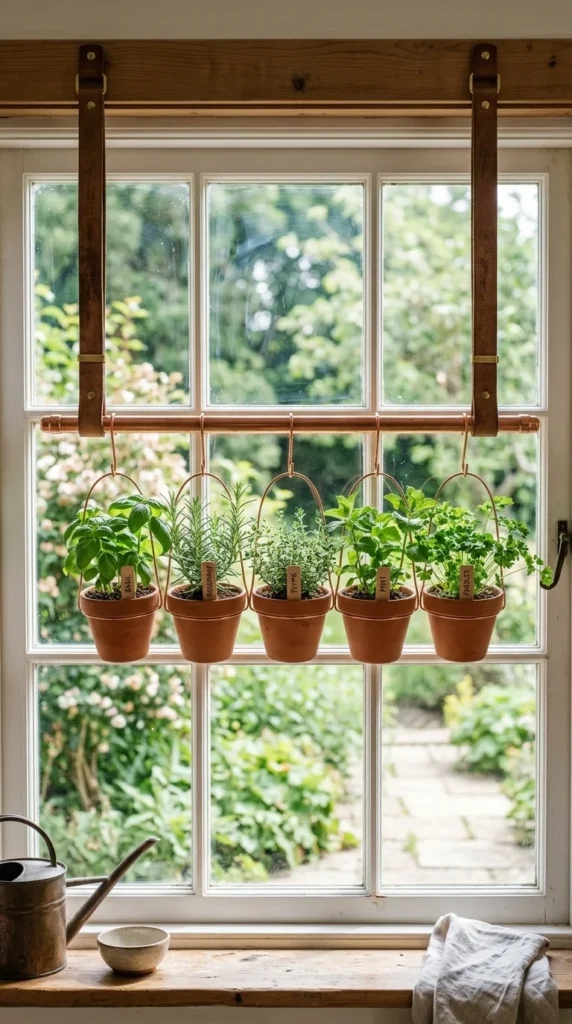
For a chic, industrial look, a copper pipe herb hanger is a brilliant DIY project. A single pipe can be mounted across the window frame, and small pots can be hung using “S” hooks. This keeps the windowsill clear for cleaning and gives your kitchen a custom, high-end designer feel.
16. Vertical Pockets
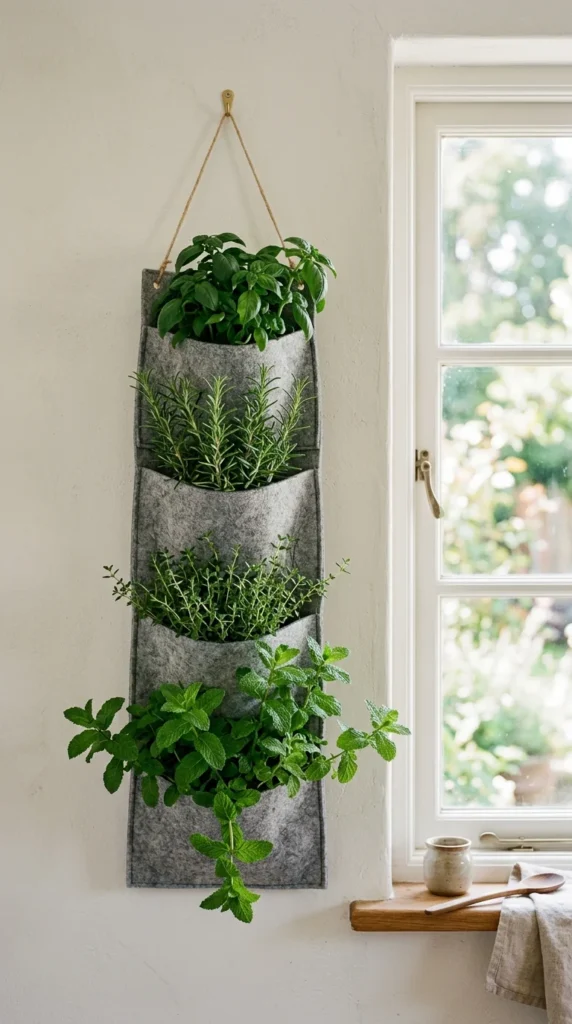
Felt or canvas wall pockets are typically used for large outdoor vertical gardens, but smaller versions work perfectly for indoor herb displays. These pockets are breathable, which promotes healthy root growth. They can be hung on the wall immediately adjacent to a window, turning a blank wall into a productive vertical farm.
17. Colander Planters
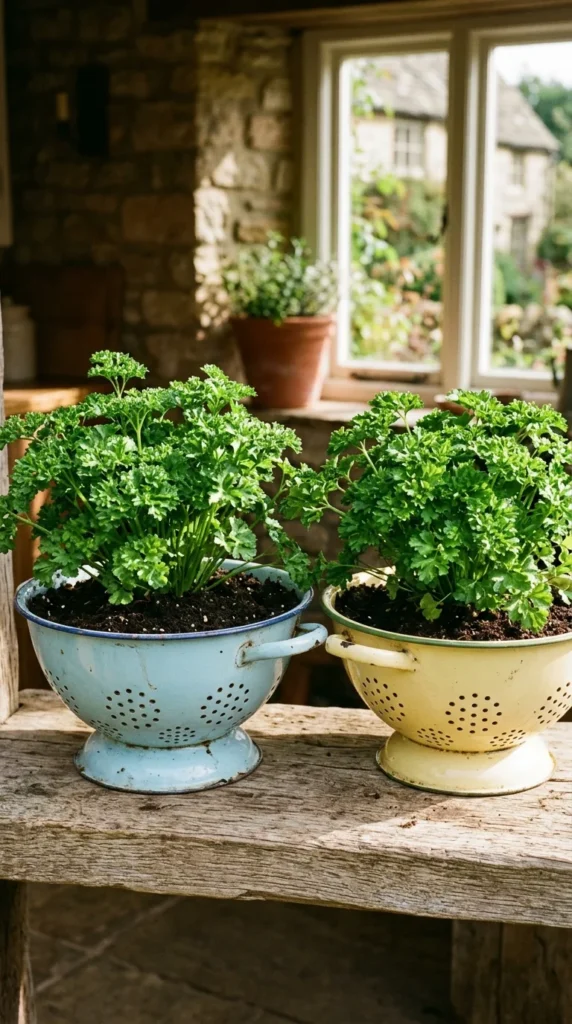
Colanders are naturally designed for drainage, making them whimsical and effective planters for herbs. Vintage enamel colanders add a pop of color and a retro vibe to the kitchen. They are particularly good for herbs that require excellent drainage, such as rosemary and lavender.
18. Glass Beakers
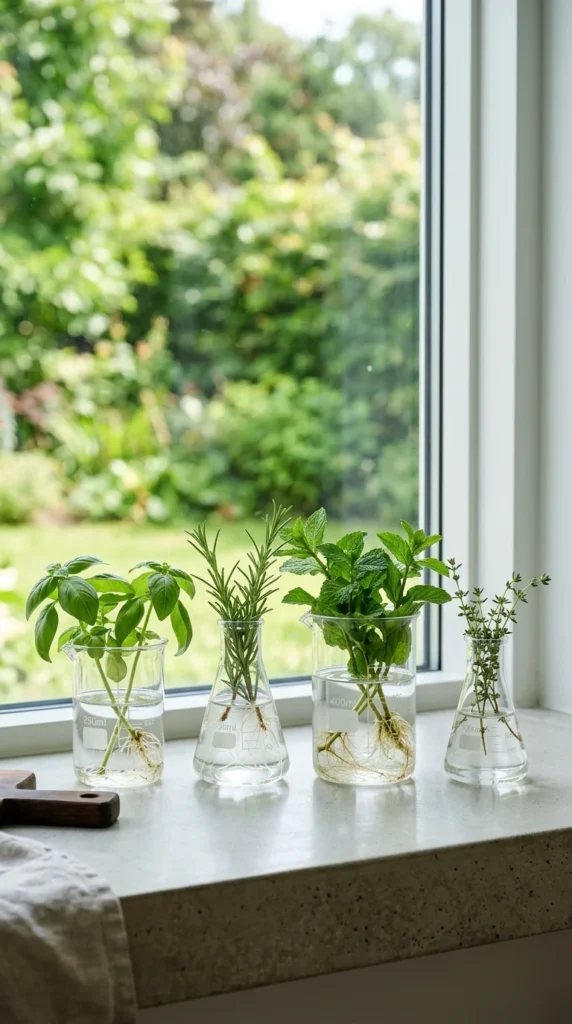
If you prefer a minimalist or scientific aesthetic, use glass beakers or flasks to grow herbs in water. Many herbs, such as mint, basil, and green onions, can be grown indefinitely in water through a process called “hydro-culture.” This method is clean, soil-free, and looks incredibly sharp on a sunny window ledge.
19. Clamped Jars
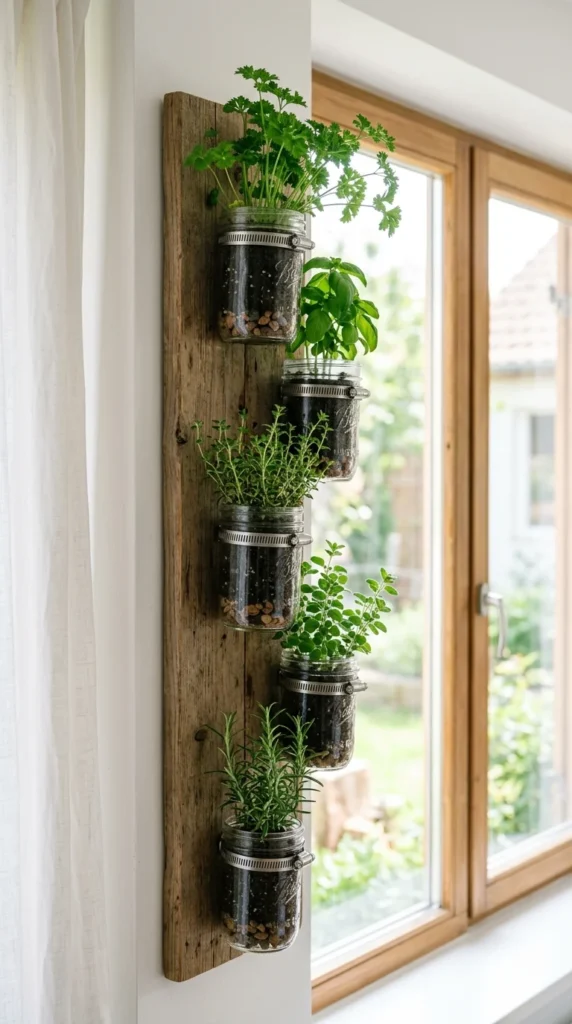
This idea combines the aesthetic of mason jars with a space-saving vertical mount. By using metal hose clamps to secure jars to a piece of reclaimed wood, you create a rustic, vertical herb station. The wood can be mounted directly to the window trim, keeping your herbs organized and easily accessible.
20. Wooden Troughs
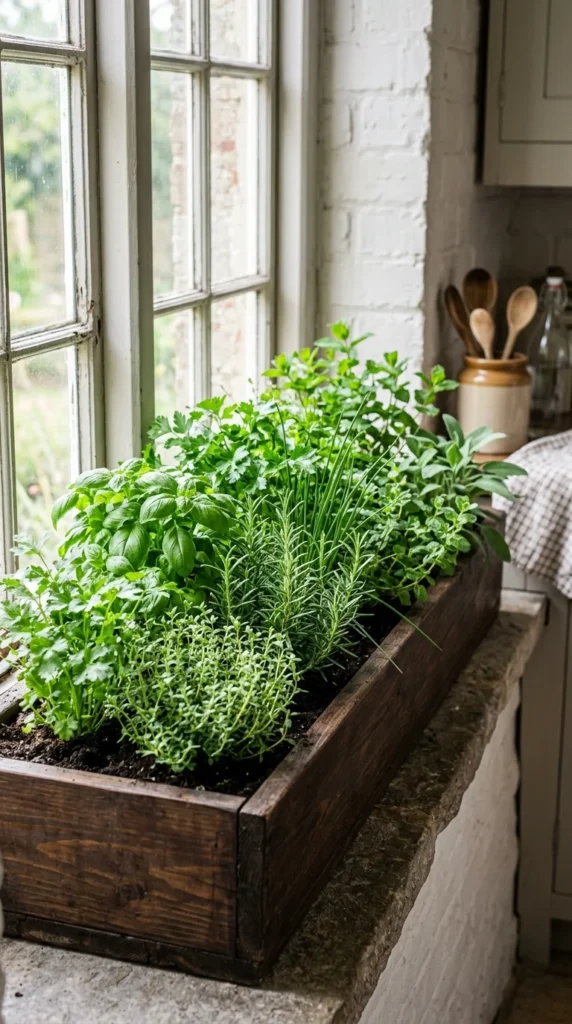
A single long wooden trough creates a cohesive, “planted-in” look for your windowsill. Instead of many small pots, one large container allows you to create a miniature herb landscape. This provides more soil volume, which can help regulate temperature and moisture more effectively than individual small pots, leading to healthier, more robust herb growth.