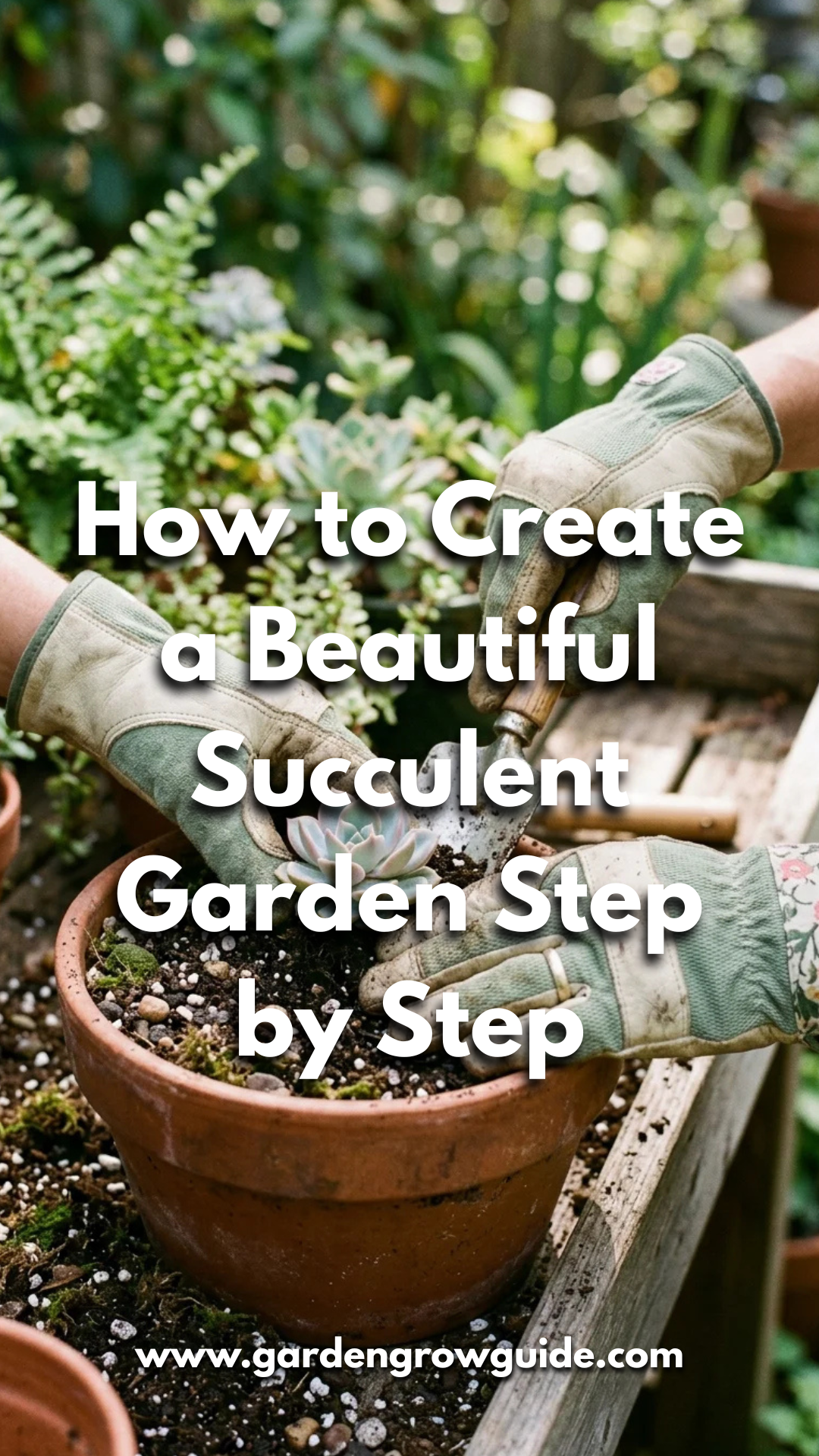
Succulents have taken the gardening world by storm, and for good reason. These resilient, fleshy-leaved plants come in an almost infinite array of shapes, colors, and sizes, making them perfect for both beginner gardeners and seasoned horticulturists. Whether you are looking to brighten up a small apartment balcony or redesign a sprawling backyard, succulents offer a low-maintenance yet high-impact solution. Creating a beautiful succulent garden is an art form that balances aesthetics with the specific biological needs of these desert-dwelling plants.
1. Planning
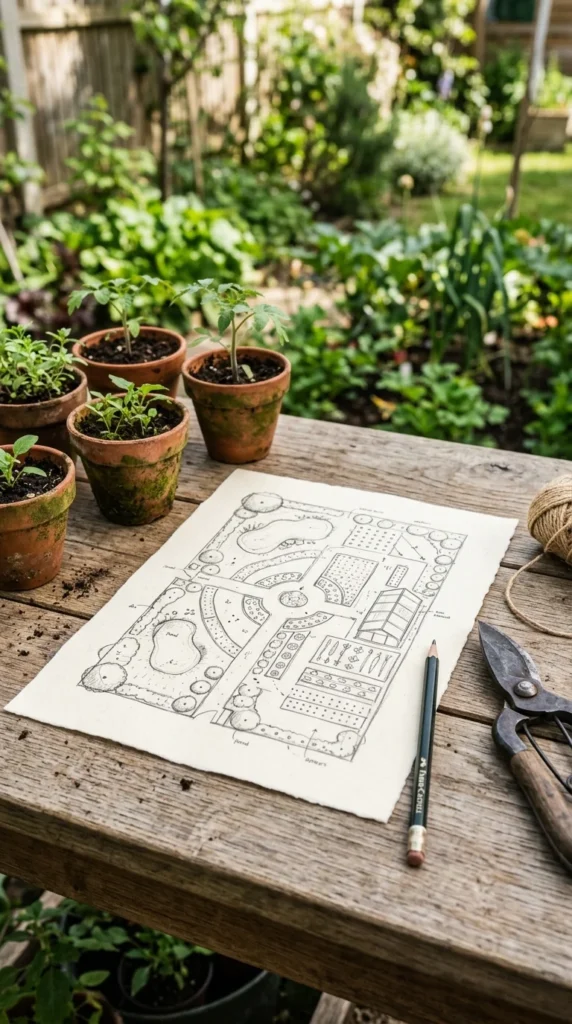
Before you dig a single hole, you must plan your space. Succulents are hardy, but they are very particular about their environment.
- Assess Sunlight: Most succulents require at least six hours of bright, indirect sunlight. If you are planting outdoors, observe your garden throughout the day to identify “hot spots” where the sun might scorch delicate leaves and “shady spots” where succulents might become leggy (etiolated) as they stretch for light.
- Determine Your Zone: Check your local hardiness zone. While many succulents thrive in heat, only a few varieties (like Sempervivum) can survive a freezing winter. If you live in a cold climate, consider a container garden that can be moved indoors during frost.
- Choose a Theme: Do you want a modern, minimalist look with monochromatic plants and sleek pots? Or a wild, “desert-oasis” look with overflowing textures? Deciding on a theme early will guide your plant and container selection.
2. Selection
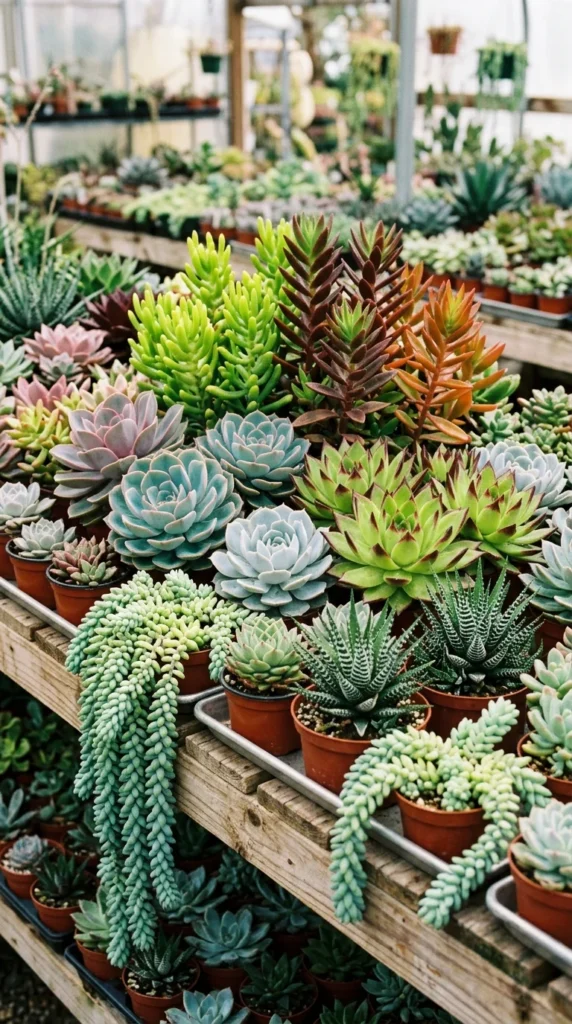
The key to a visually stunning garden is variety. You want to create a composition that includes “thrillers, fillers, and spillers.”
- Thrillers: These are your focal points. Choose tall or structurally unique plants like Aloe ferox, Agave, or large Aeoniums. These draw the eye upward and provide height.
- Fillers: These are mid-sized plants that occupy the bulk of the space. Rosette-shaped succulents like Echeveria or Graptopetalum are perfect fillers. Look for contrasting colors—place a deep purple Black Prince next to a pale blue Echeveria Elegans.
- Spillers: These plants trail over the edges of your pots or garden beds. String of Pearls, Sedum Morganianum (Burro’s Tail), and String of Bananas add a soft, cascading element that breaks up hard lines.
3. Substrate
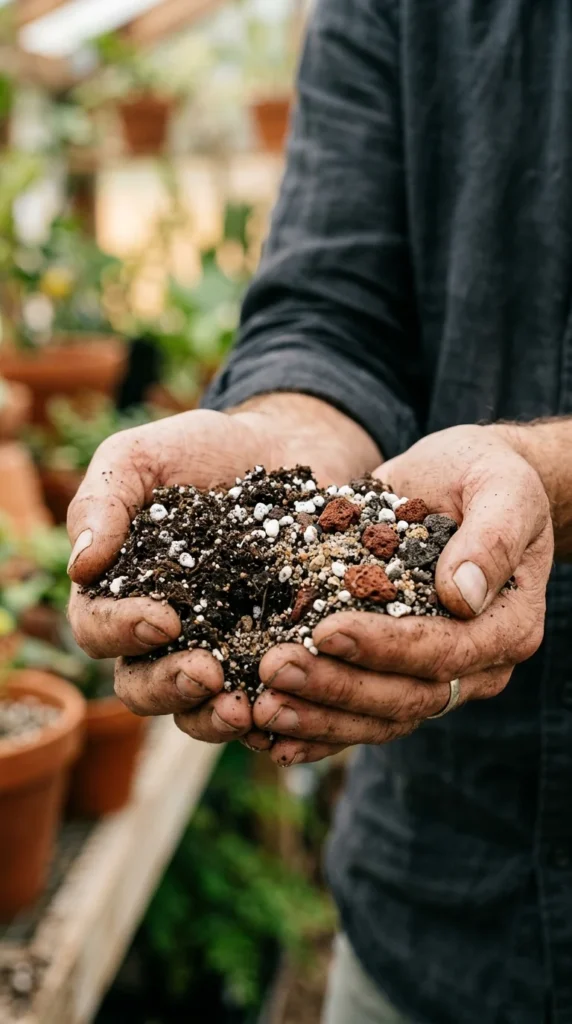
The most common cause of succulent death is root rot, which occurs when roots sit in moisture for too long. Standard potting soil is designed to hold moisture—the exact opposite of what a succulent needs.
- The Perfect Mix: You can buy a commercial cactus and succulent mix, or make your own by mixing 50% regular potting soil with 50% inorganic grit like perlite, pumice, or coarse sand.
- Aeration: The goal is to create a “breathable” soil. When you water the garden, the liquid should drain through the soil almost immediately.
- Avoid Peat: Try to avoid heavy peat moss, as it can become hydrophobic when dry (repelling water) or stay soggy for weeks once saturated.
4. Containers
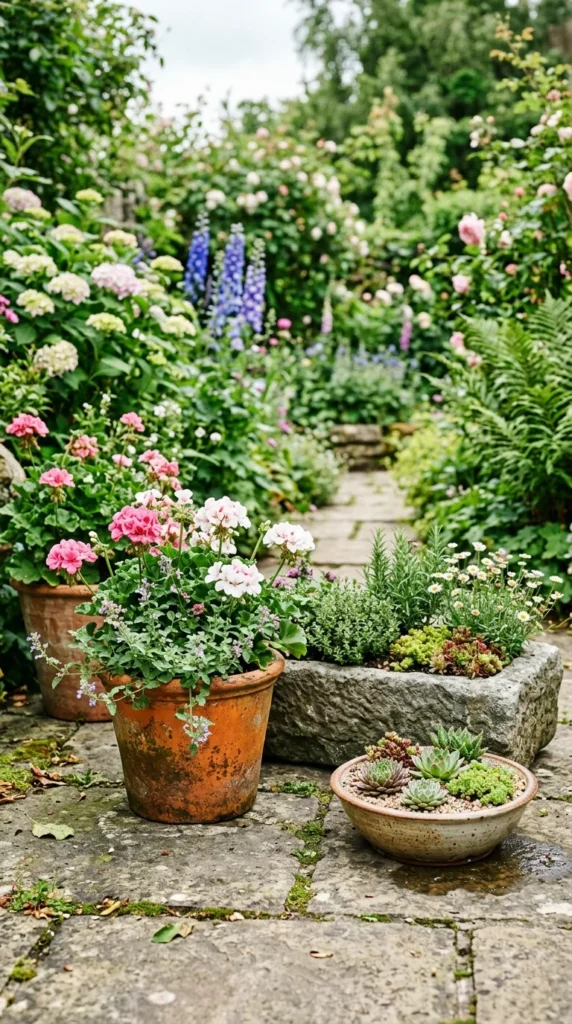
If you aren’t planting directly into the ground, your choice of container is vital for the health of your garden.
- Drainage is Non-Negotiable: Every pot must have at least one drainage hole. If you find a beautiful vintage tin or ceramic bowl without one, use a diamond-tipped drill bit to create a hole before planting.
- Breathable Materials: Terracotta and unglazed ceramic are ideal because they are porous. They allow moisture to evaporate through the walls of the pot, helping the soil dry out faster.
- Size Matters: Choose a container that is only slightly larger than the plant’s root ball. Too much extra soil holds unnecessary moisture, which can lead to rot.
5. Planting
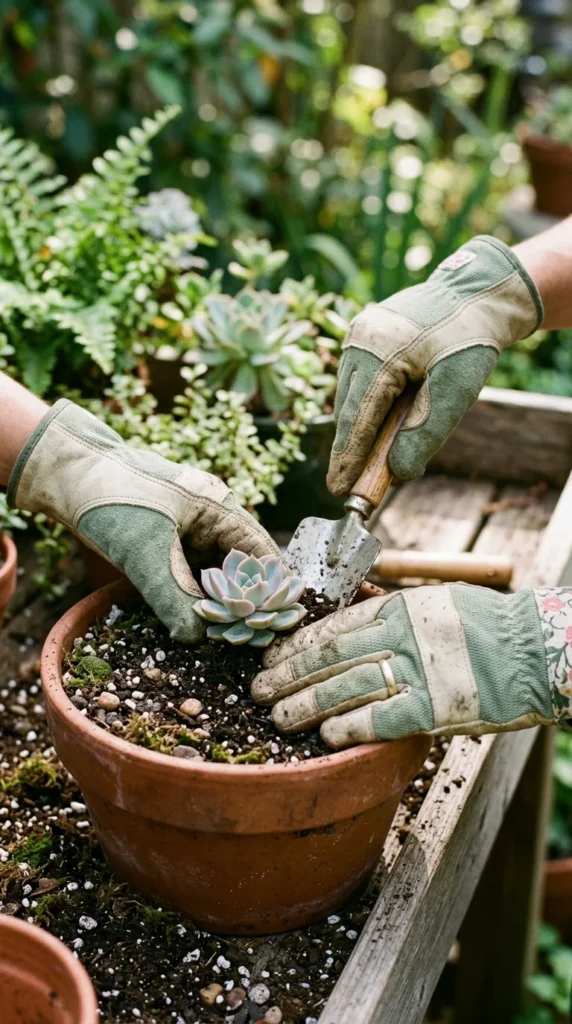
Planting succulents requires a gentle touch. Their leaves are often fragile and can snap off if handled roughly.
- Prep the Plant: Gently remove the succulent from its nursery pot. Squeeze the sides of the pot to loosen the root ball.
- Clean the Roots: Tickle the roots to remove as much of the old, dense nursery soil as possible. This allows the roots to breathe and expand into their new, gritty home.
- The Arrangement: Start with your “thrillers” in the center or back, then work outward with your fillers. Place the spillers last near the edges.
- Don’t Overcrowd: While a “full” look is beautiful, succulents need airflow between them to prevent pests like mealybugs. Leave a small gap (about an inch) between plants.
6. Topdressing
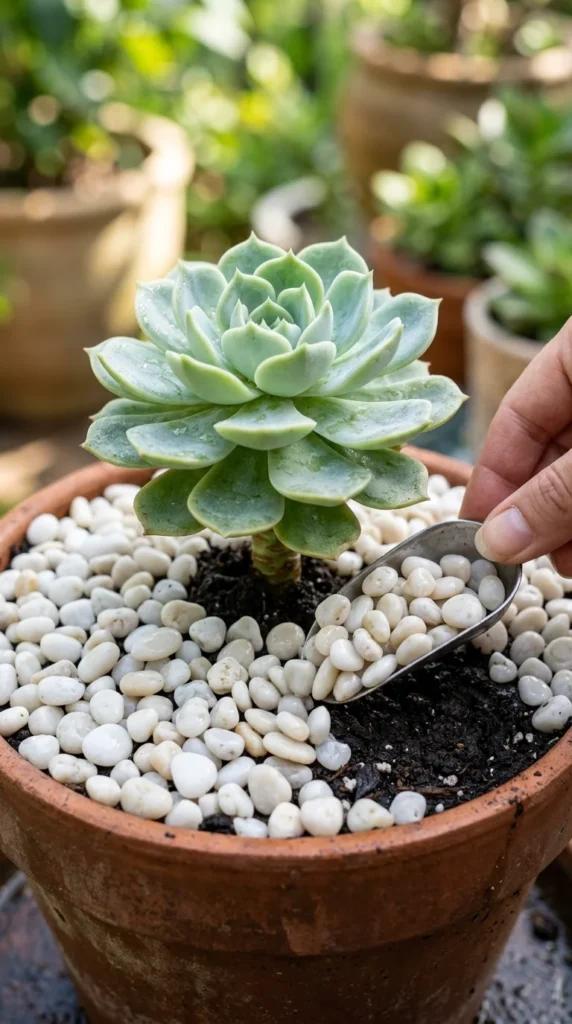
Topdressing is the “secret ingredient” that takes a succulent garden from amateur to professional. It refers to a layer of decorative rock or gravel placed over the soil.
- Aesthetic Appeal: A layer of white pebbles, lava rock, or crushed glass provides a clean, finished look and makes the colors of the plants pop.
- Functional Benefits: Topdressing keeps the leaves of the succulent off the damp soil, which prevents rot. It also prevents soil from splashing onto the leaves during watering and helps stabilize the plants until their roots take hold.
- Weed Suppression: In outdoor beds, a thick layer of inorganic topdressing can help prevent weed seeds from germinating.
7. Watering
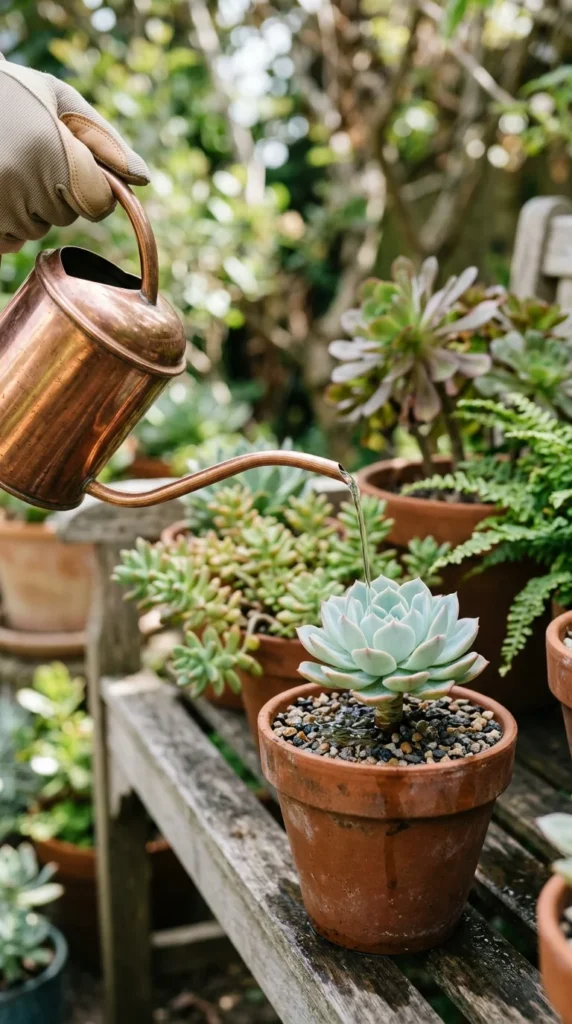
Watering is where most succulent owners go wrong. The “little and often” approach used for tropical plants will kill a succulent.
- Soak and Dry: When you water, soak the soil until water runs out of the drainage holes. Then, do not water again until the soil is bone-dry all the way to the bottom.
- Seasonal Changes: Succulents need more water in the spring and summer (their growing season) and very little in the winter (their dormant period).
- Avoid the Leaves: Try to water the soil directly. Water trapped in the “cup” of a rosette can cause the plant to rot from the center out.
8. Maintenance
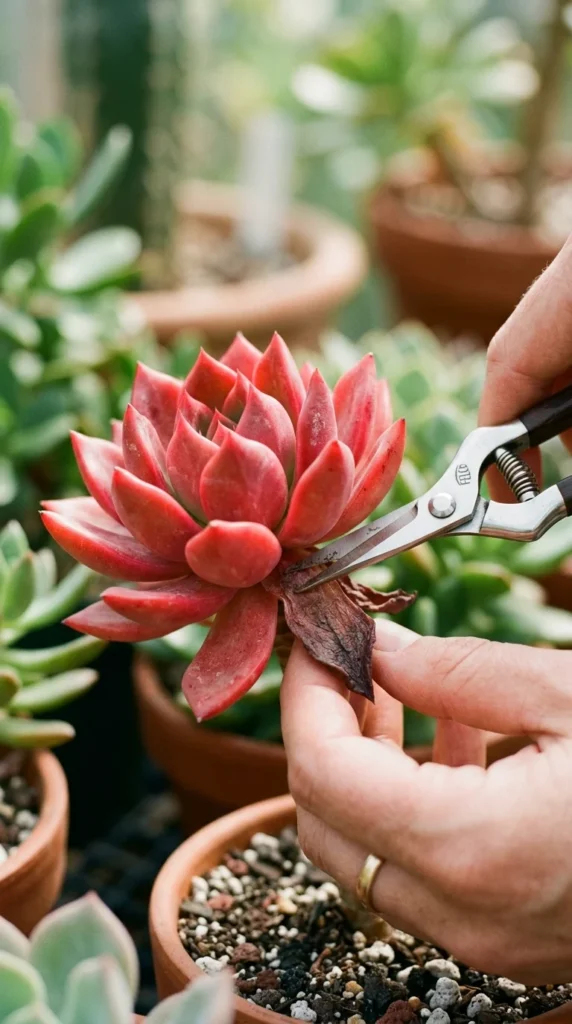
While succulents are low-maintenance, they are not “no-maintenance.” Regular upkeep will keep your garden looking vibrant for years.
- Grooming: It is natural for the bottom leaves of a succulent to die off as the plant grows. Gently pull these dry, crispy leaves away to prevent pests from hiding in them.
- Beheading: If a plant becomes too tall or “leggy,” don’t be afraid to cut the top off. Leave an inch of stem, let it callous for two days, and stick it back into the soil. It will grow new roots, and the old stem will often produce “pups” (baby succulents).
- Pest Patrol: Keep an eye out for mealybugs (small white cottony spots). If you see them, treat the plant immediately with 70% isopropyl alcohol sprayed directly on the insects.
By following these steps, you can create a succulent garden that is not only a beautiful addition to your home but a thriving, living ecosystem. Patience is your best friend—give your plants time to settle, and they will reward you with stunning blooms and incredible growth.