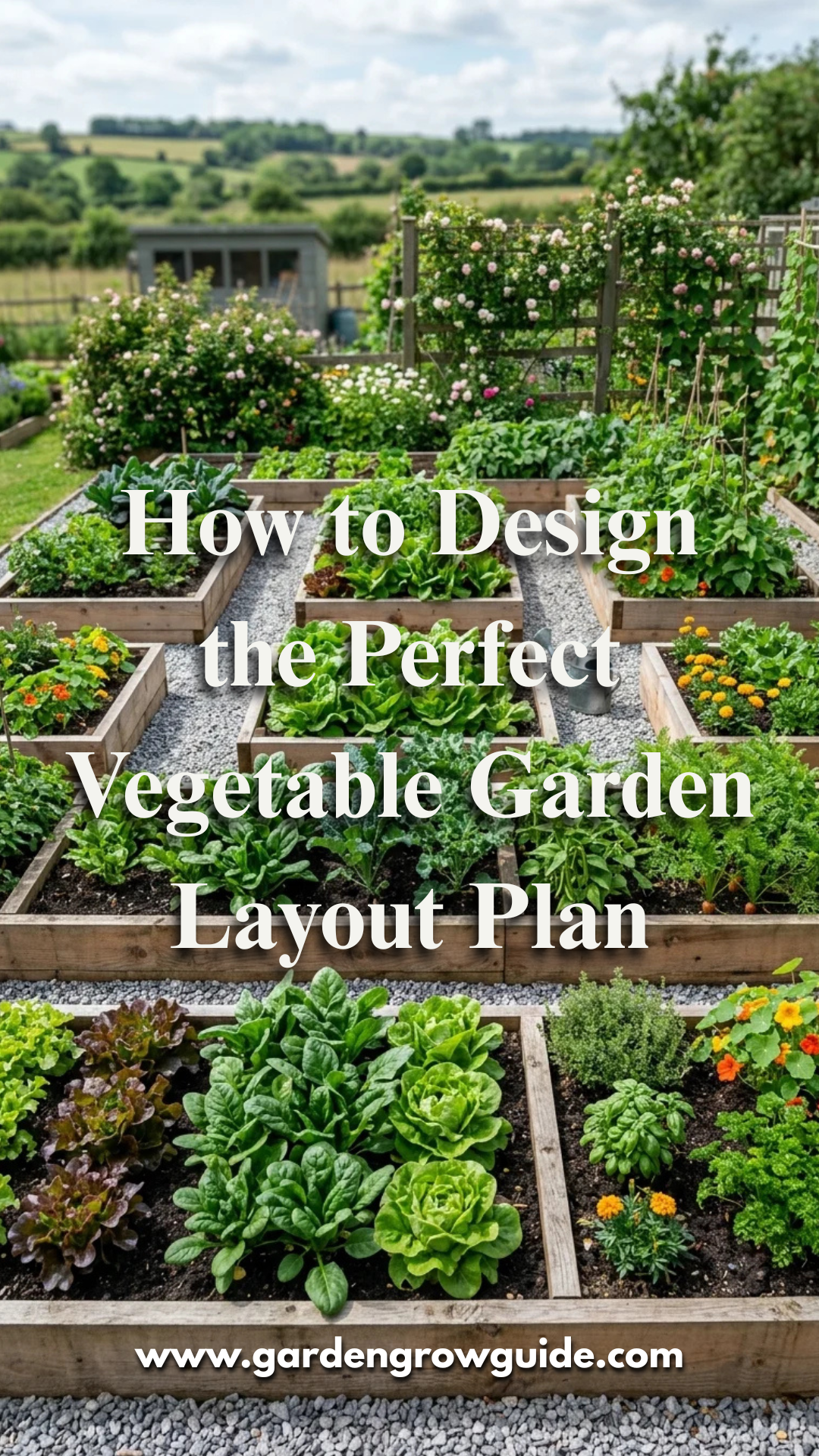
Designing a vegetable garden is more than just scattering seeds in the dirt; it is a strategic endeavor that blends science, art, and logistics. A well-thought-out layout maximizes your harvest, minimizes your labor, and ensures your plants thrive in a harmonious environment. Whether you have a sprawling backyard or a compact balcony, the principles of effective garden design remain the same: prioritizing sunlight, accessibility, and soil health.
1. Site Selection
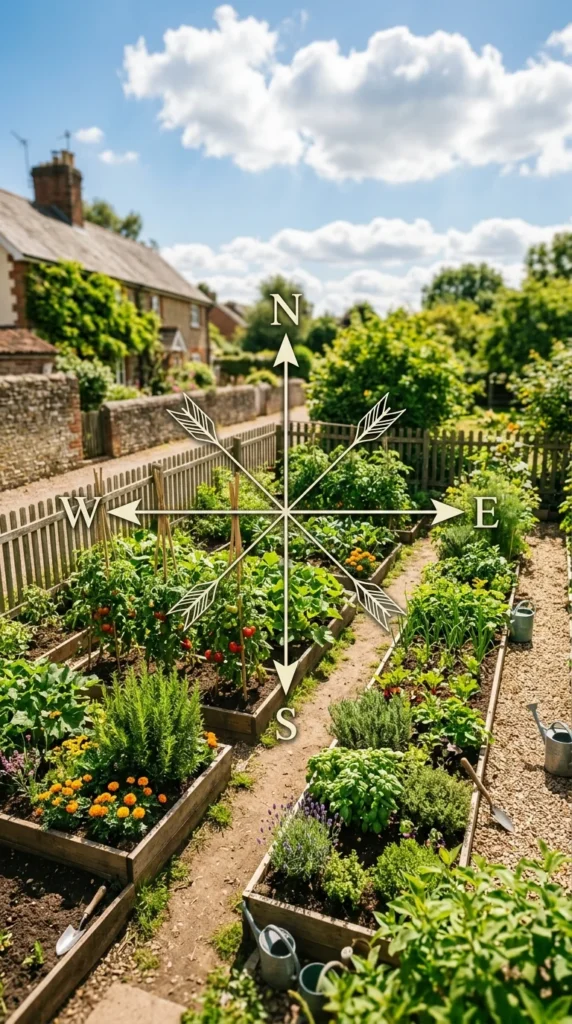
The success of your garden depends heavily on its location. Most vegetables require at least six to eight hours of direct sunlight daily to photosynthesize effectively and produce fruit. Before you dig, observe your yard throughout the day to identify “hot spots” and areas shaded by trees or buildings. Proximity to a water source is equally critical; if the garden is too far from a hose or spigot, irrigation becomes a grueling chore. Additionally, avoid low-lying areas where water pools, as “wet feet” can lead to root rot and fungal diseases.
2. Raised Beds
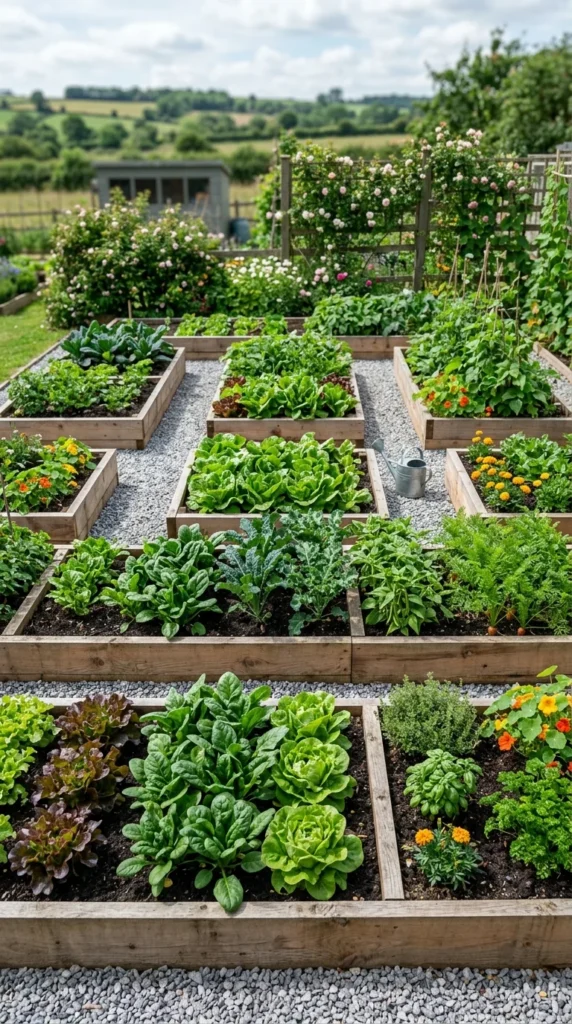
Raised beds are a favorite among modern gardeners for several reasons. They provide excellent drainage, prevent soil compaction from foot traffic, and allow you to control the soil quality from the start. By elevating the growing area, you also make the garden more accessible, reducing the strain on your back and knees. When designing your beds, keep them no wider than four feet; this ensures you can reach the center from either side without stepping into the bed and crushing delicate root systems.
3. In-Ground Rows
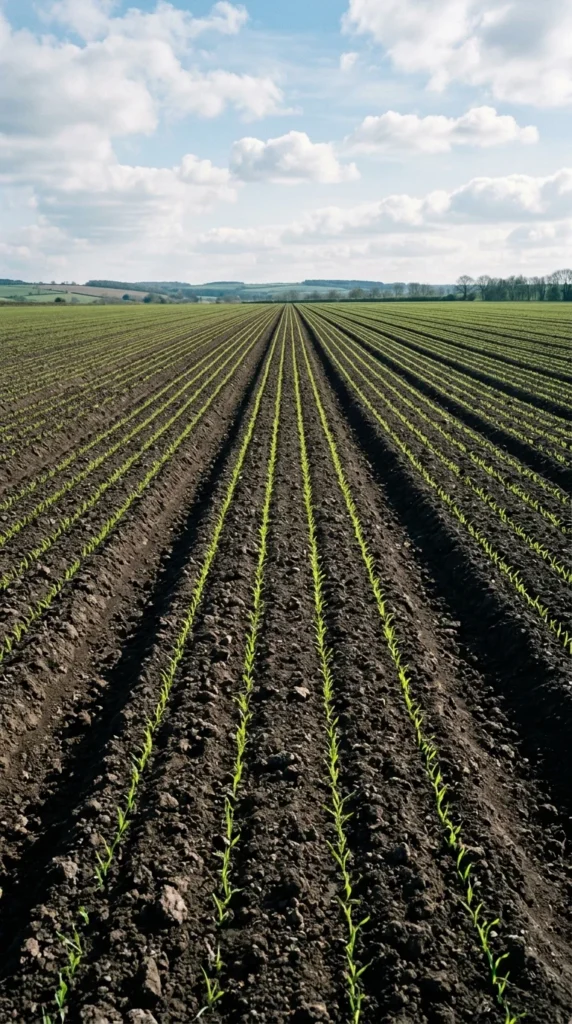
For those with ample space, traditional in-ground row gardening is often the most cost-effective method. This layout is ideal for large-scale production of “space hogs” like corn, potatoes, and pumpkins. To optimize an in-ground plan, consider the “Permanent Bed” system, where you designate specific walking paths and growing areas to avoid compacting the soil where your plants live. Orientation is key: running your rows North-to-South ensures that all plants receive equal sunlight as the sun moves across the sky, preventing taller crops from shading out smaller ones.
4. Companion Planting

Layout planning should also consider the relationships between different plant species. Companion planting is the practice of grouping plants that benefit each other. For example, planting marigolds alongside tomatoes can deter nematodes and other pests, while basil can improve the flavor of the fruit. Conversely, some plants are “foes”; onions and garlic can stunt the growth of beans and peas. A smart layout integrates these biological synergies to create a self-sustaining ecosystem that reduces the need for chemical pesticides.
5. Vertical Growth
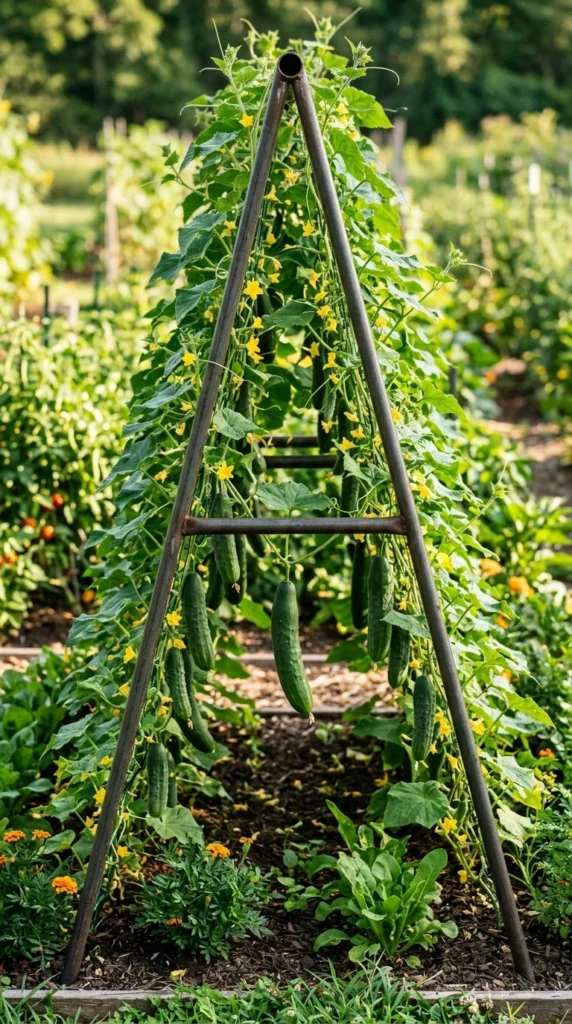
If you are working with a small footprint, look upward. Vertical gardening utilizes trellises, arbors, and cattle panels to grow vining crops like cucumbers, pole beans, squash, and even small melons. This layout strategy not only saves ground space but also improves air circulation around the foliage, which significantly reduces the risk of powdery mildew and other moisture-related issues. Furthermore, harvesting becomes much easier when the fruit is hanging at eye level rather than hidden under a canopy of leaves on the ground.
6. Pathway Design
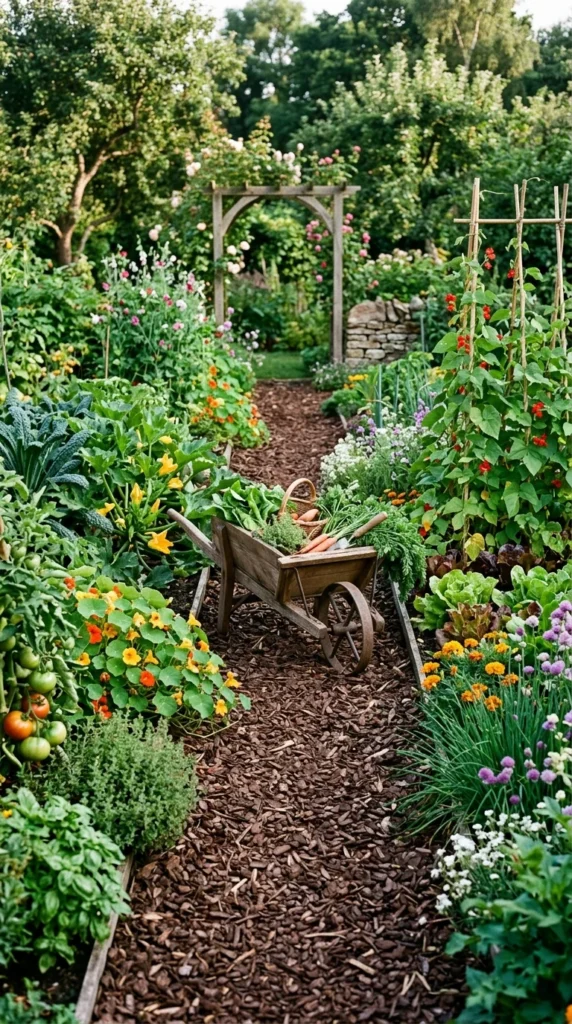
Often overlooked, pathways are the “highways” of your garden. A common mistake is making paths too narrow in an attempt to squeeze in more plants. For a functional layout, primary paths should be at least three feet wide to accommodate a wheelbarrow or garden cart. Secondary paths between beds can be narrower, around 18 to 24 inches. Consider using materials like wood chips, gravel, or stepping stones to suppress weeds and provide a stable, mud-free surface for walking during rainy seasons.
7. Irrigation Setup
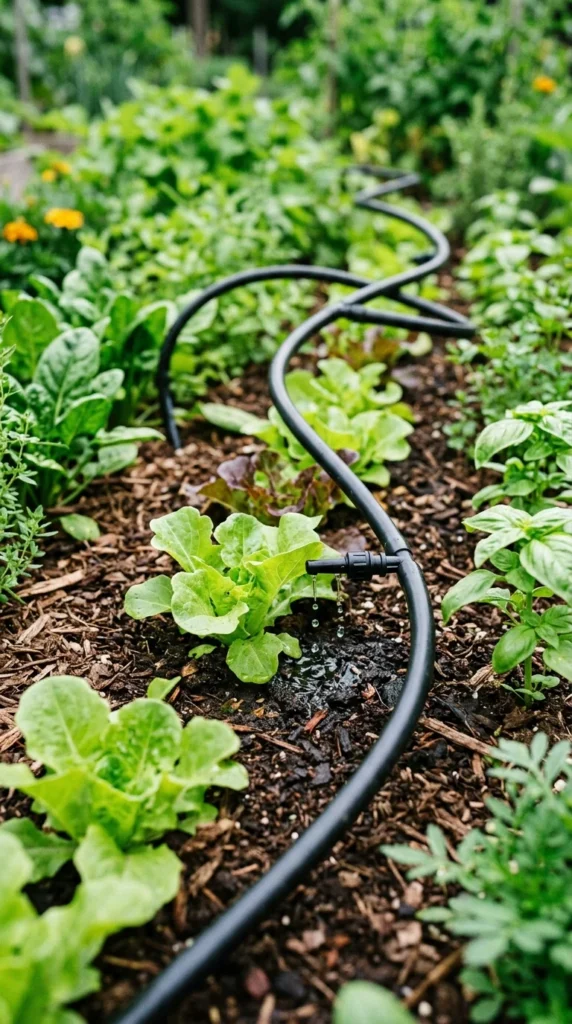
Consistency is the secret to a high-yielding garden. Integrating an irrigation plan into your initial layout saves hours of manual watering and ensures your plants never experience “drought stress.” Drip irrigation is the gold standard for vegetable gardens; it delivers water directly to the roots, minimizing evaporation and keeping the leaves dry to prevent disease. When laying out your beds, map out where the main supply lines and headers will go to ensure every corner of the garden receives adequate moisture.
8. Perennial Borders
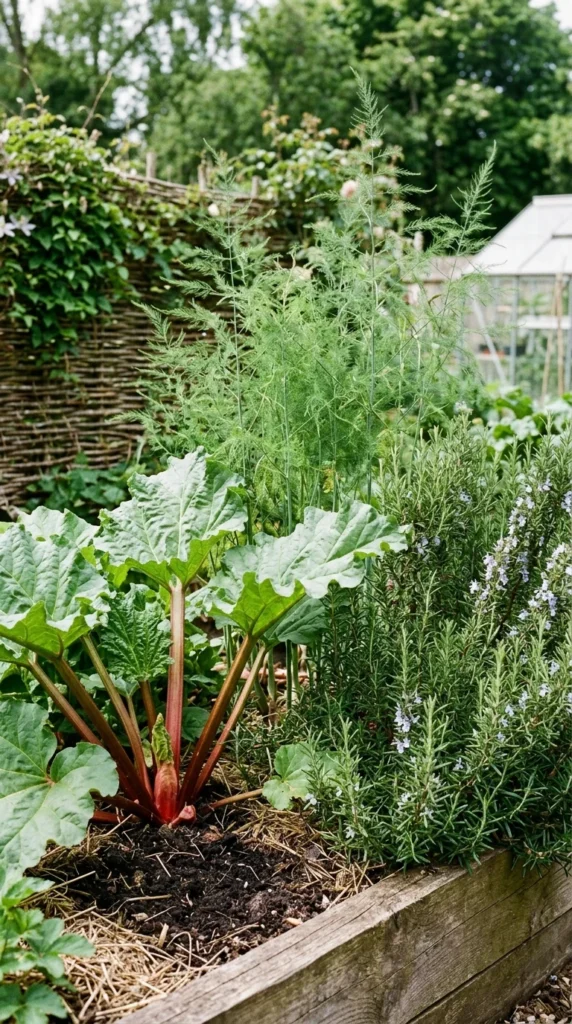
Most vegetables are annuals, meaning they are pulled out at the end of the season. However, crops like asparagus, rhubarb, and many herbs are perennials that live for many years. These should be placed in a dedicated “permanent” zone of your layout—usually along the northern edge or in a corner—where they won’t be disturbed by the tilling or replanting of annual beds. This ensures their deep root systems remain intact and they can return stronger each spring.
9. Garden Mapping
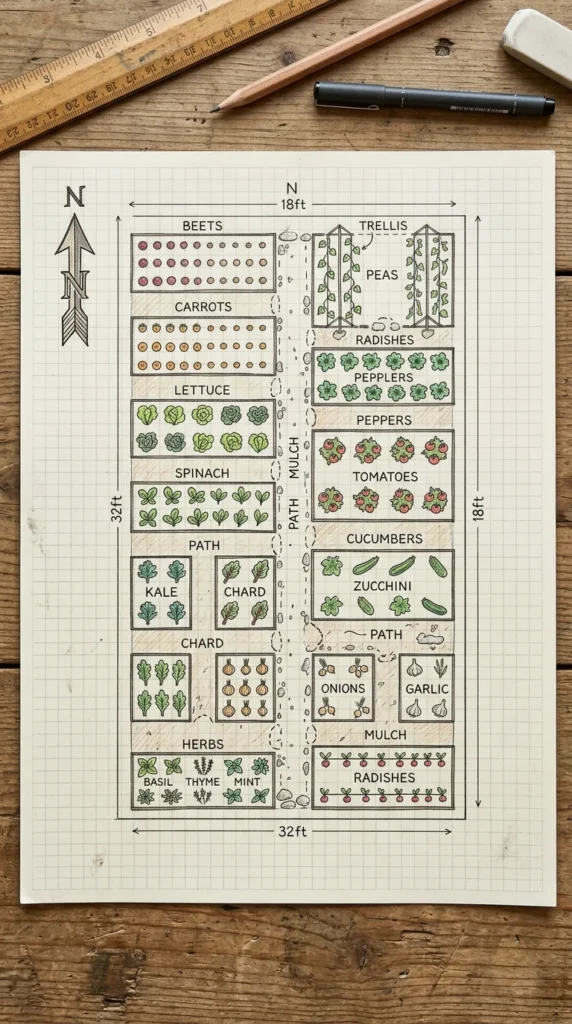
Before a single shovel hits the dirt, create a physical map of your plan. Using graph paper or digital design software allows you to play with different configurations and ensure everything fits. A map also serves as a vital record for crop rotation. To prevent soil-borne diseases and nutrient depletion, you should avoid planting the same family of crops (like nightshades: tomatoes, peppers, eggplant) in the same spot more than once every three years. Tracking these shifts on your map ensures a healthy, productive garden for years to come.