Indoor plants have evolved from simple windowsill ornaments to essential elements of interior design. Integrating greenery into your living space—a practice known as biophilic design—does more than just improve air quality; it creates a sense of tranquility, adds organic texture, and breathes life into static architectural lines. However, achieving a “magazine-ready” look requires more than just scattering pots at random. It involves understanding balance, scale, and the specific needs of each botanical specimen.
1. Scale
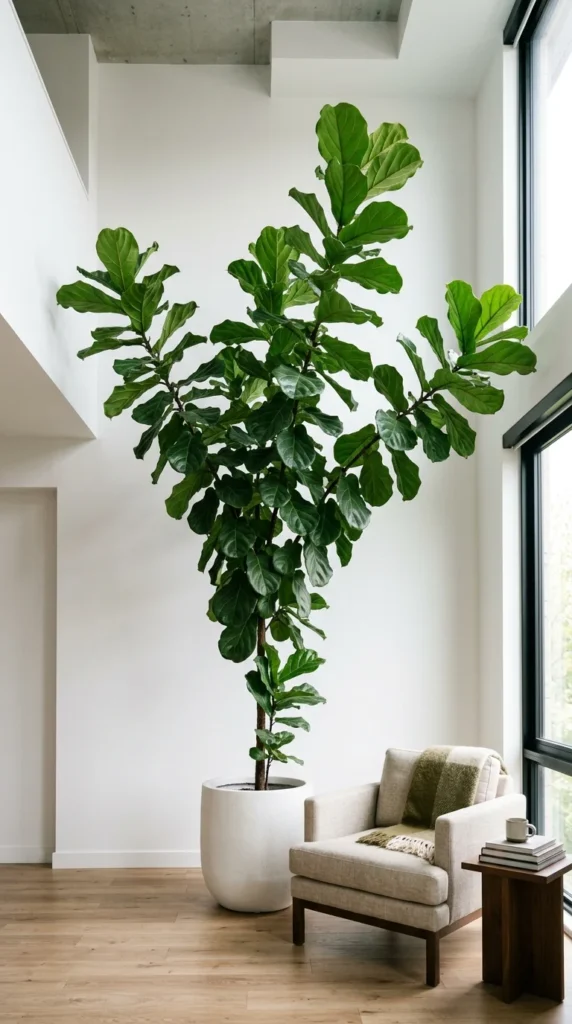
The most common mistake in plant styling is choosing plants that are either too small for the space or overwhelming for a tiny corner. Scale is about the relationship between the plant and the furniture surrounding it. A large, architectural plant like a Bird of Paradise or a Rubber Tree acts as a piece of living furniture. These “statement” plants should be placed in areas with high ceilings or wide-open corners where they have room to breathe and grow.
Conversely, small plants like Echeveria or Haworthia look best when displayed on elevated surfaces like coffee tables, nightstands, or floating shelves. To create a sense of balance, avoid placing a tiny pot on a massive floor space; instead, use a plant stand to give it height and prominence.
2. Layering
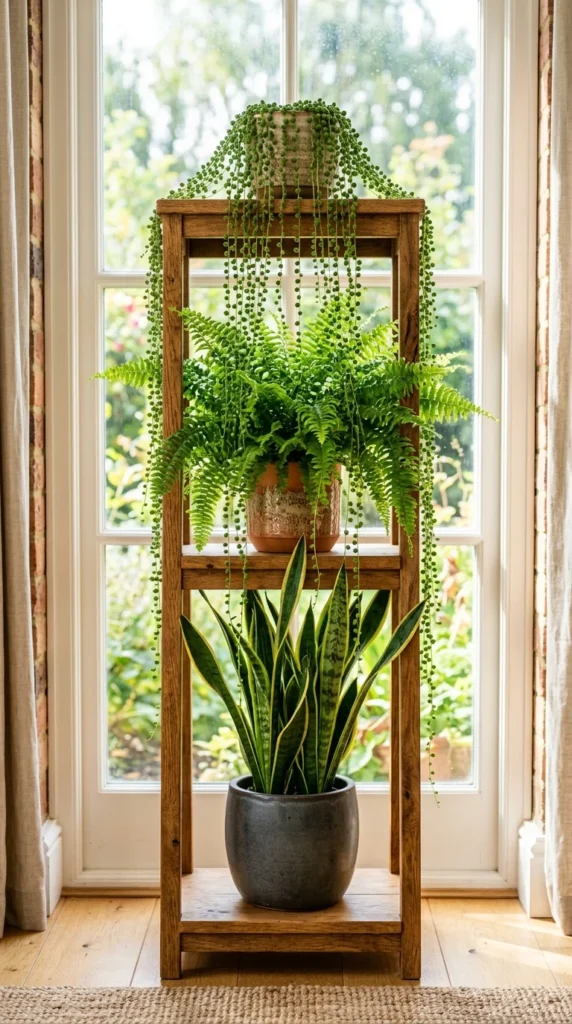
Layering is the secret to creating a lush, jungle-like atmosphere without it feeling cluttered. This technique involves placing plants at different heights to lead the eye through the room. Start with your tallest plants in the back or on the floor, then use mid-sized plants on stools or side tables, and finish with trailing plants that spill over the edges of shelves.
By varying the heights, you create “depth of field.” This mimics how plants grow in nature—some reaching for the canopy while others thrive in the understory. Using plant stands of varying heights is an easy way to achieve this look even if all your plants are currently of similar sizes.
3. Texture
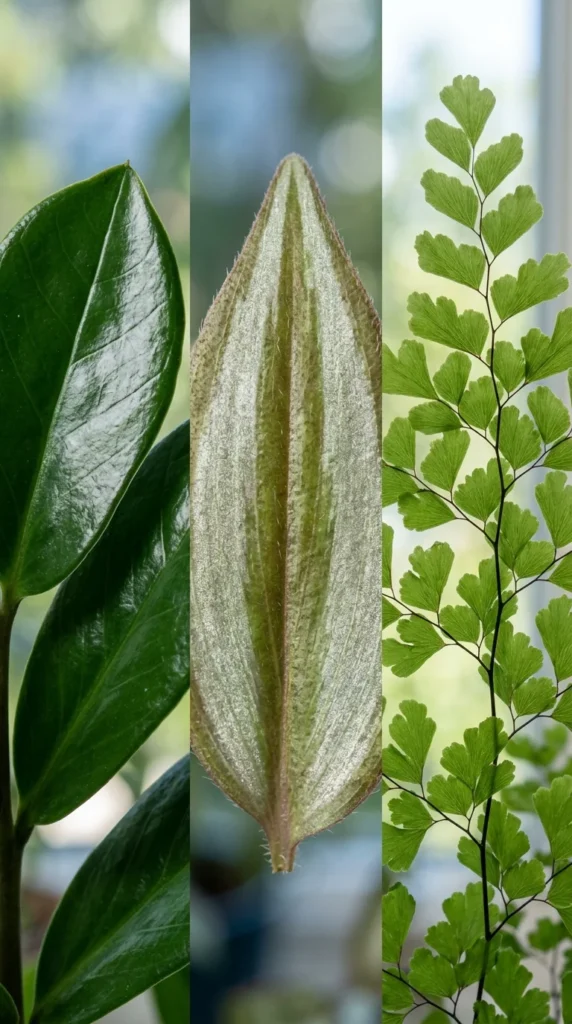
In interior design, texture is often overlooked, but in plant styling, it is vital. To make a space feel dynamic, mix plants with different leaf shapes, colors, and finishes. Pair the broad, waxy leaves of a Monstera with the fine, delicate needles of an Asparagus Fern.
Contrast the deep, moody purples of a Persian Shield with the vibrant, lime greens of a Neon Pothos. When you group plants with contrasting textures, each individual plant stands out more clearly, preventing the greenery from blending into a single, indistinct mass of green.
4. Grouping
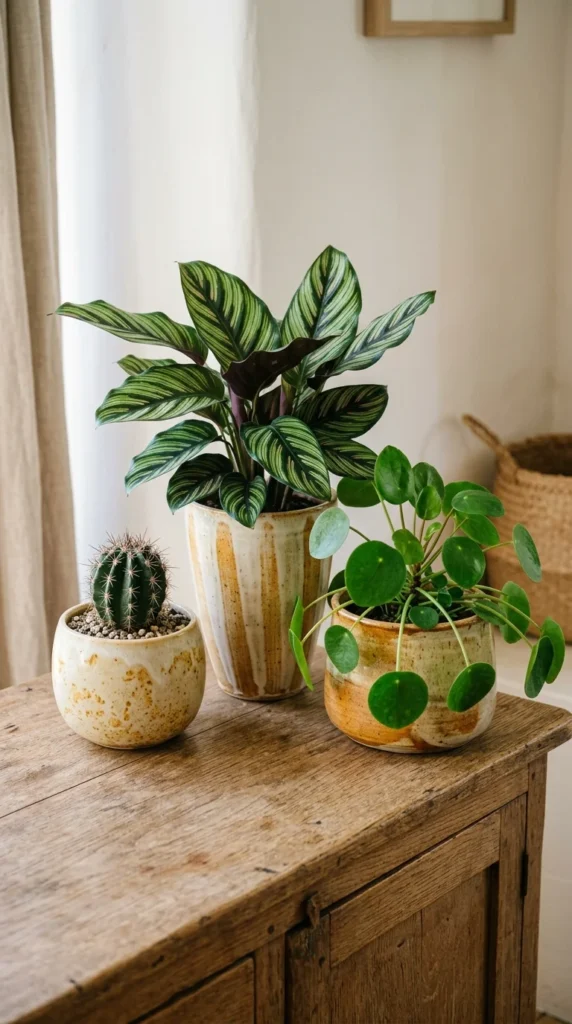
The “Rule of Three” is a staple in design, and it applies perfectly to indoor plants. Grouping plants in odd numbers—specifically threes—tends to look more natural and aesthetically pleasing than even-numbered arrangements.
When grouping, try to find a common thread to maintain balance. This could be a similar pot color, a shared leaf shape, or a theme (such as a “desert collection” of various cacti). Grouping also benefits the plants themselves; as they transpire, they create a localized microclimate of higher humidity, which is particularly beneficial for tropical species like Calatheas and Alocasias.
5. Verticality
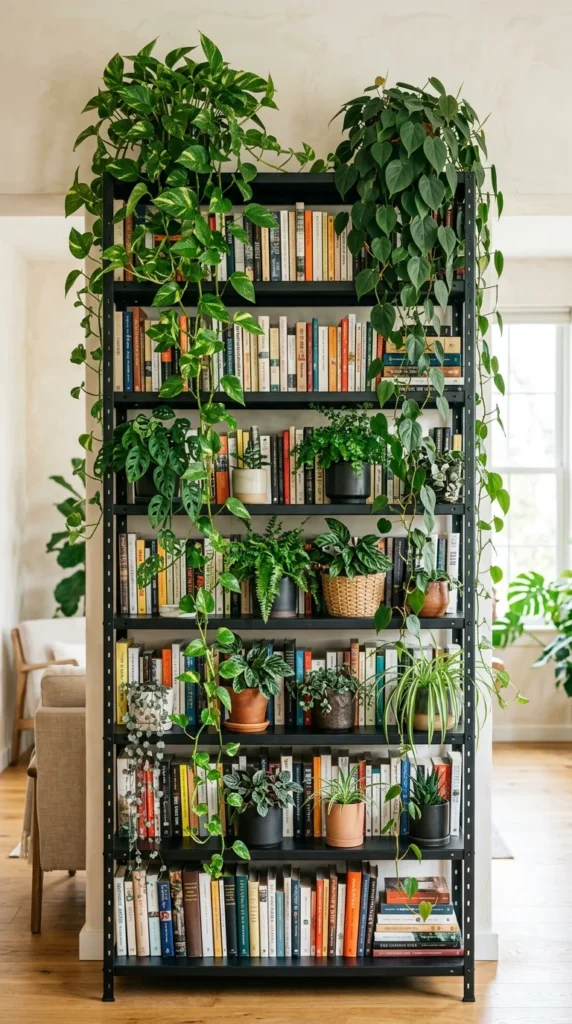
When floor space is limited, look up. Utilizing vertical space is essential for a balanced home, as it draws the eye upward and makes rooms feel larger. Hanging planters made of macramé, ceramic, or glass can be suspended from ceiling hooks to fill empty corners or soften the transition between walls and ceilings.
Wall-mounted planters or “living walls” are another way to introduce verticality. Trailing plants are the stars here; species like English Ivy, String of Hearts, or Creeping Fig create a “living curtain” effect that adds movement and softness to hard architectural edges.
6. Containers
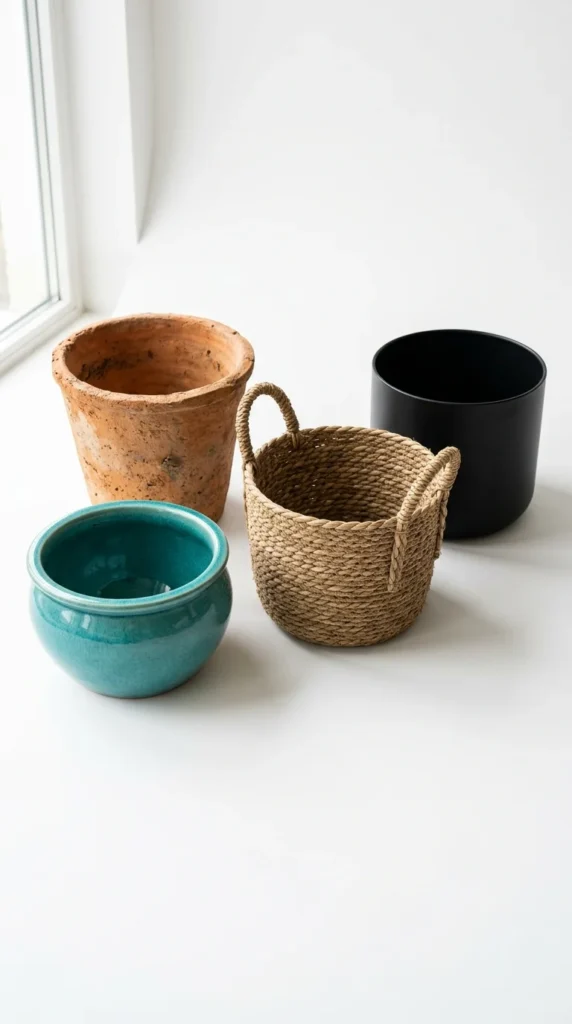
The pot is just as important as the plant itself. To maintain a balanced home, choose containers that complement your existing decor. For a bohemian look, opt for woven baskets and terracotta. For a modern, industrial vibe, look for concrete or matte metal finishes.
Don’t be afraid to mix and match materials, but keep a cohesive color story. If you have a lot of colorful foliage, neutral-toned pots (white, grey, tan) will let the plants be the focal point. If your plants are mostly dark green, vibrant or patterned pots can provide a necessary pop of visual interest. Always ensure your decorative pots have drainage or use the “cachepot” method—keeping the plant in its plastic nursery pot and placing that inside the decorative container.
7. Lighting
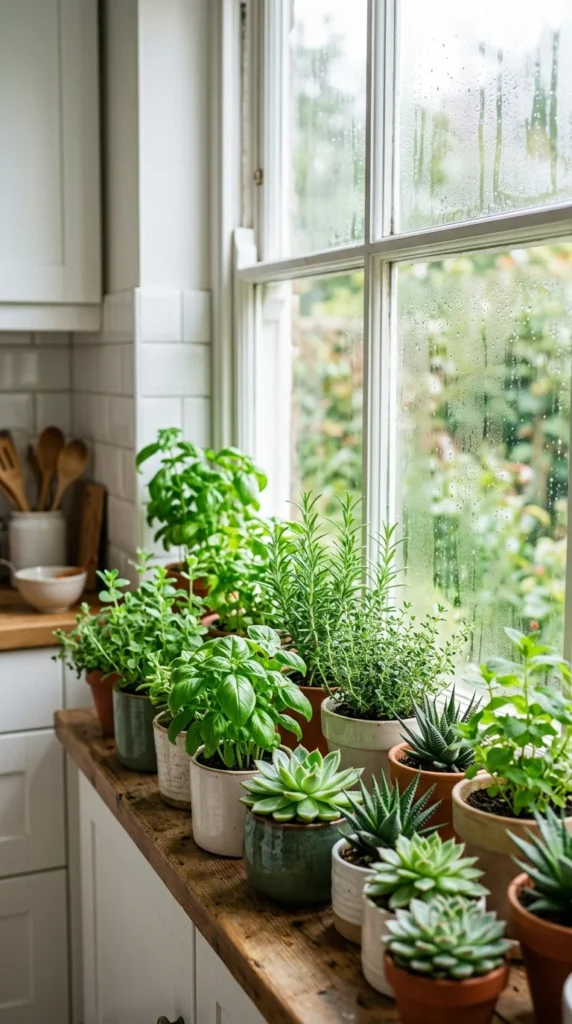
Styling is nothing without sustainability. You must style your plants according to their light requirements, or your beautiful arrangement won’t last long. A common mistake is placing a high-light plant, like a Fiddle Leaf Fig, in a dark hallway because it “looks good” there.
Instead, use low-light tolerant plants (like Snake Plants, ZZ Plants, or Pothos) for darker corners and save the bright windowsills for succulents, cacti, and flowering species. If you have a dark spot that desperately needs greenery, consider using high-quality grow lights that can be integrated into stylish lamps, ensuring your design remains both beautiful and functional.
8. Transitions
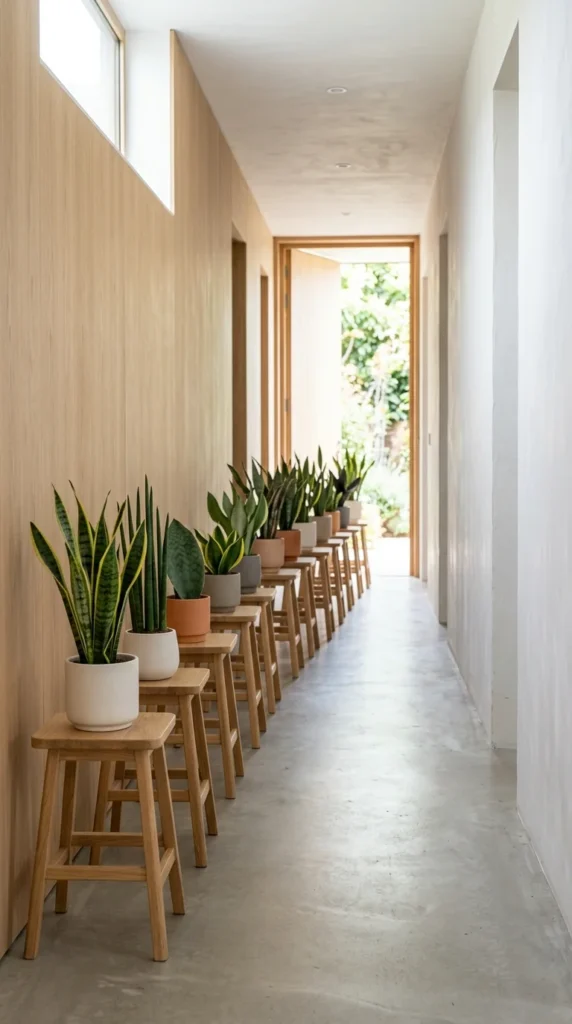
Plants are excellent tools for defining “zones” in an open-concept home or softening transitions between rooms. A tall plant can act as a natural room divider between a dining area and a living room. Placing a plant at the end of a hallway creates a visual destination, making the transit through the house feel more intentional and pleasant.
In entryways, a welcoming arrangement of plants sets the tone for the rest of the home, signaling a space that is cared for and alive. By placing greenery in transitional spaces, you ensure that the “flow” of the home feels consistent and balanced from the moment you walk through the door.