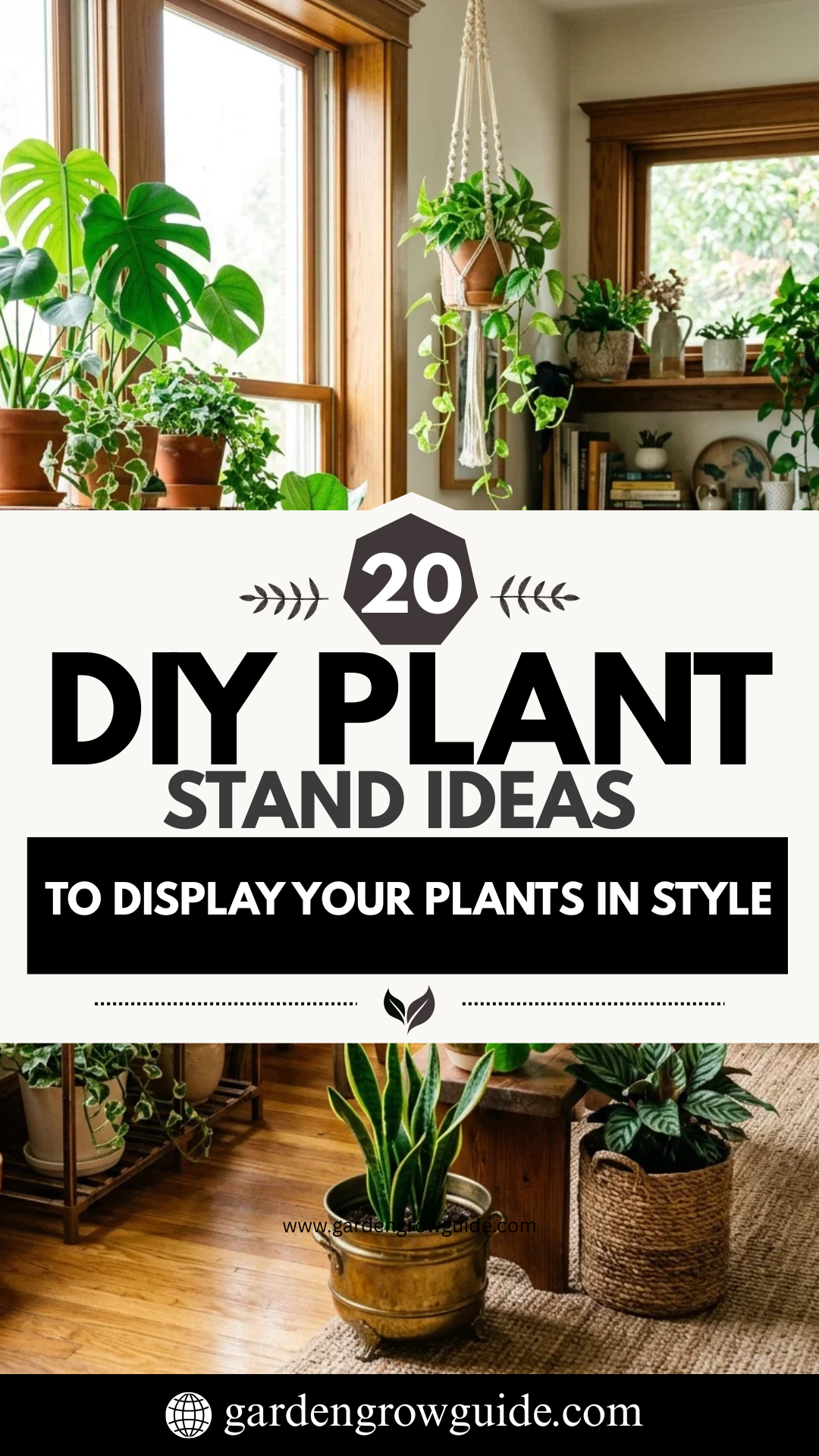
Elevating your greenery is more than just a functional choice; it is a design statement. Whether you live in a compact apartment where floor space is a premium or a sprawling home that needs a touch of botanical warmth, DIY plant stands offer the perfect solution. By building your own stands, you can customize the height, material, and aesthetic to perfectly match your interior decor while providing your plants with the light they crave. From minimalist mid-century designs to rustic upcycled projects, the possibilities for showcasing your leafy companions are endless.
1. Mid-Century Modern
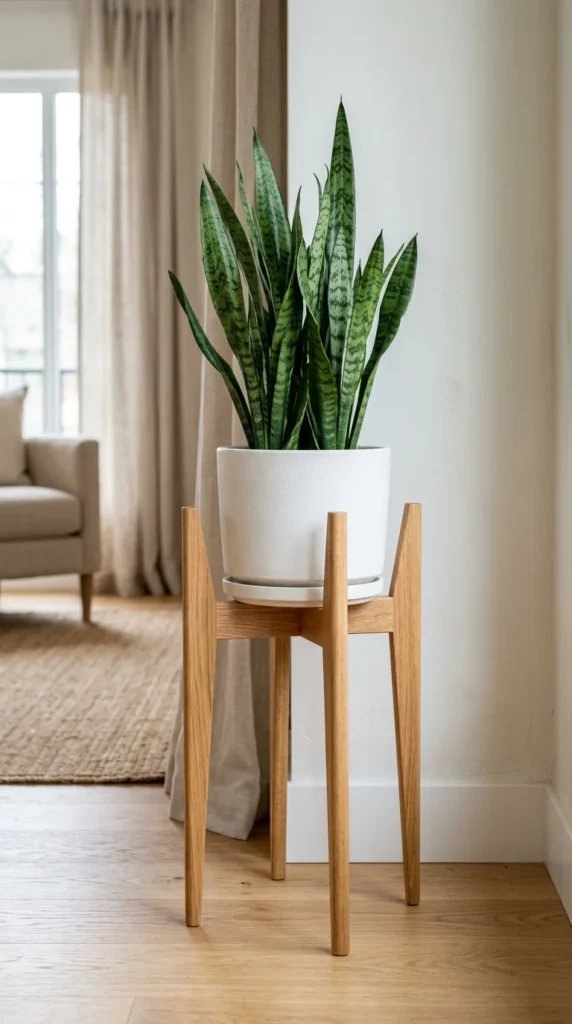
The Mid-Century Modern look is a timeless favorite for interior enthusiasts. Characterized by clean lines and tapered legs, this stand is surprisingly simple to construct. You generally need four pre-cut tapered furniture legs, a few pieces of hardwood for the cross-base, and some wood glue. This design is particularly effective for larger pots that need a sturdy, stylish base. It lifts the plant just enough to create visual interest without overwhelming the room’s decor.
2. Wooden Ladder
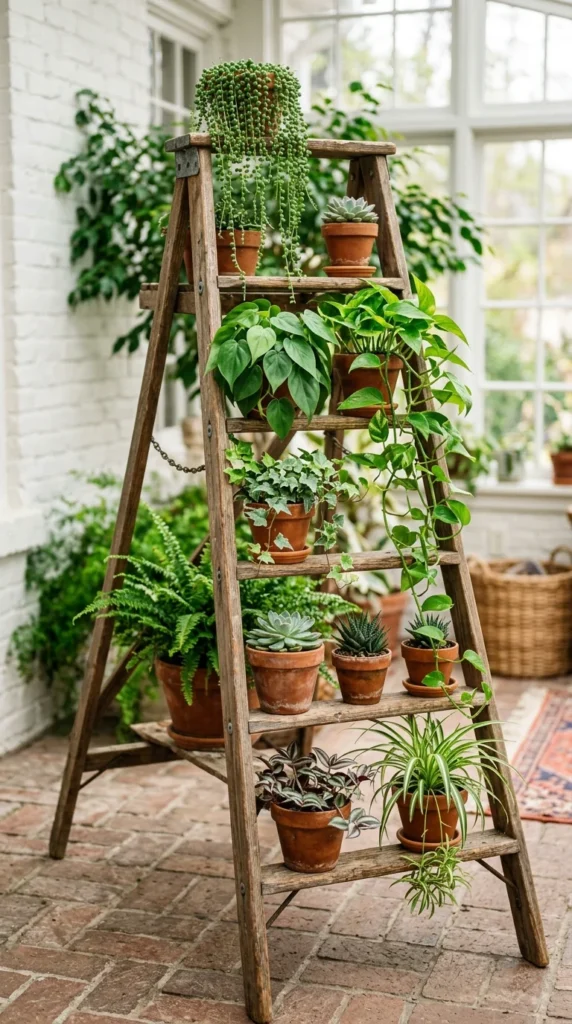
Repurposing an old ladder is one of the easiest ways to create a high-impact display. If you have an antique wooden ladder, a light sanding and a coat of sealant can preserve its character. If you prefer a cleaner look, a fresh coat of white or pastel paint can transform it into a focal point. The different rungs allow for a tiered arrangement, making it ideal for a collection of small to medium-sized succulents, ferns, and trailing ivy.
3. Copper Pipe
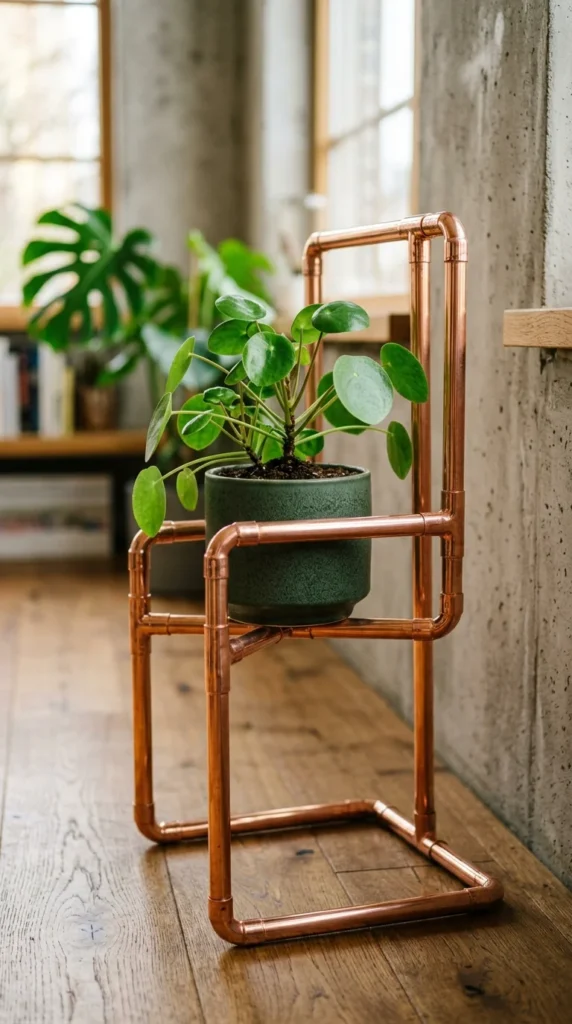
For those who love the industrial or modern chic aesthetic, copper pipes are an excellent material choice. Available at any hardware store, these pipes can be cut to size and assembled using elbow joints and heavy-duty adhesive. The metallic sheen of the copper provides a stunning contrast to the organic textures of green leaves. Over time, the copper will develop a natural patina, or you can keep it polished for a bright, high-end look.
4. Wood Slice
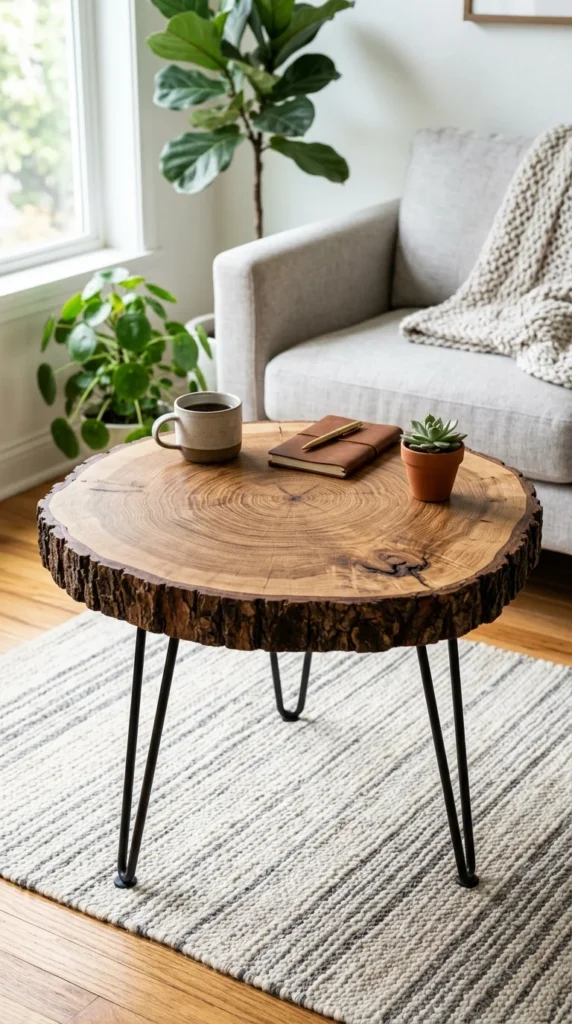
Bringing the outdoors in is easy with a wood slice plant stand. You can source a cross-section of a fallen tree or purchase a pre-cut slab from a craft store. By attaching three metal hairpin legs to the bottom, you create a rustic yet sophisticated pedestal. This style celebrates the natural imperfections of wood, such as bark edges and growth rings, making every piece entirely unique.
5. Concrete Block
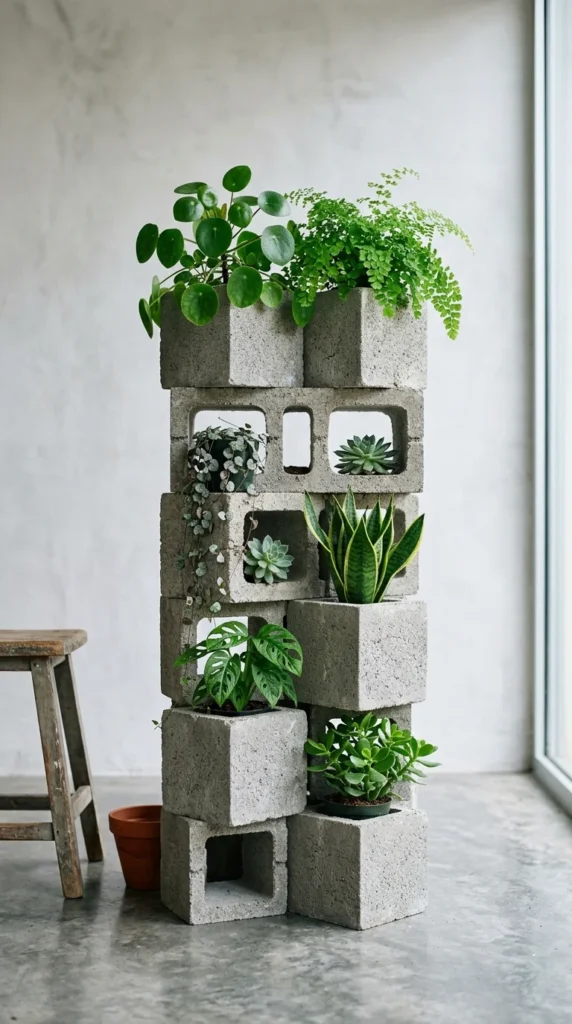
Concrete blocks, or cinder blocks, are the ultimate budget-friendly material for a modern, architectural look. By stacking them in various configurations, you can create a modular shelving unit that fits perfectly in a corner or against a patio wall. For an artistic touch, paint the geometric edges of the blocks in metallic gold or neon colors. The hollow centers of the blocks can even act as individual planters for smaller succulents.
6. Floating Shelves
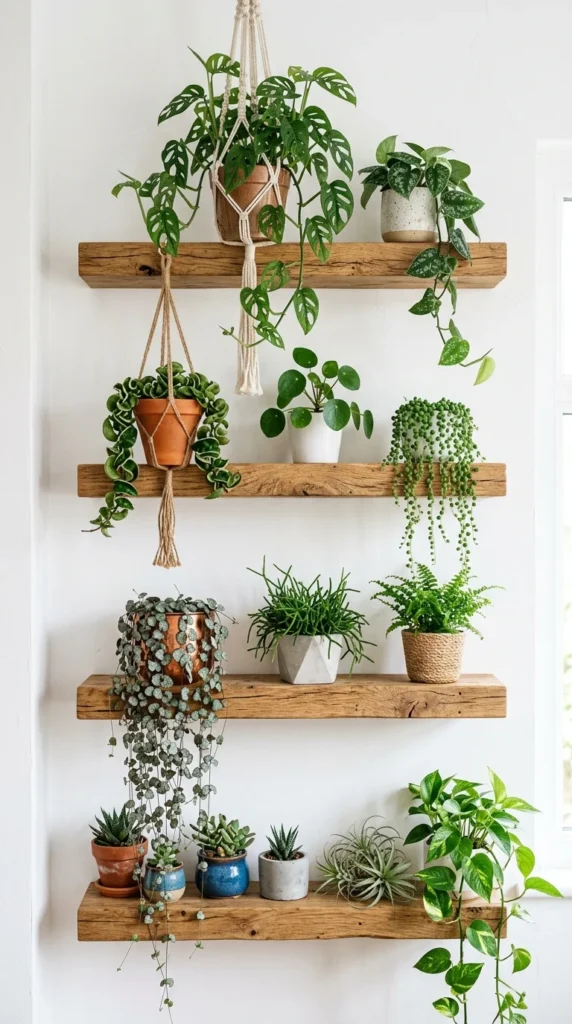
If you have run out of floor space, look to your walls. Floating shelves are a sleek way to display plants at varying heights. By using thick, live-edge wood or simple white planks, you can turn a bare wall into a vertical garden. This is especially useful for “vining” plants like Pothos or Philodendrons, which can drape down from the shelves, creating a waterfall of greenery.
7. Tomato Cage
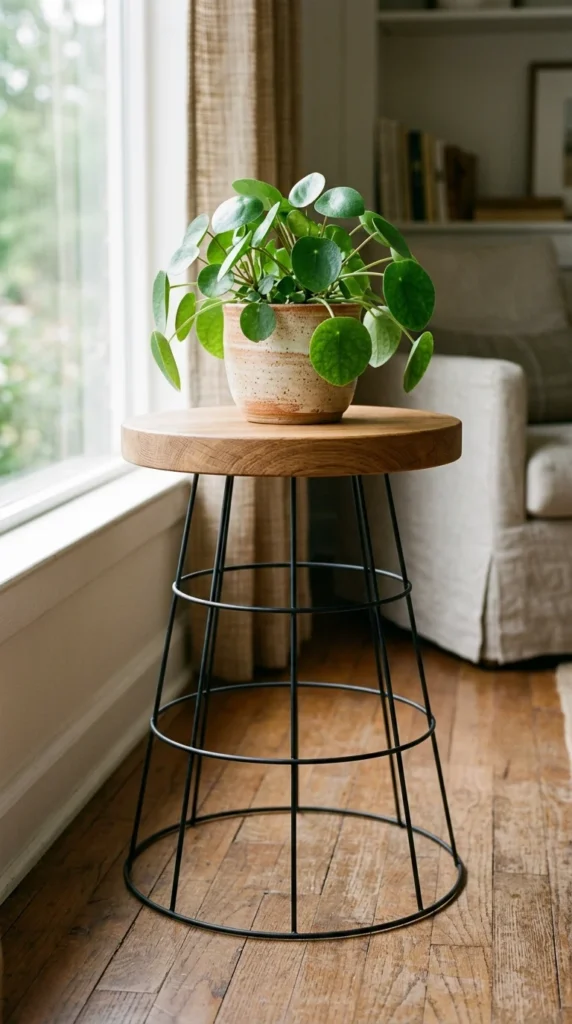
An unconventional but highly effective hack involves using a wire tomato cage. By flipping the cage upside down and cutting the wires to a desired height, you create a lightweight, tripod-style stand. Spray paint the wire in a bold color like gold, copper, or matte black to hide its garden-tool origins. Place a wooden circle or a decorative tray on top to hold your pot.
8. Hanging Macramé
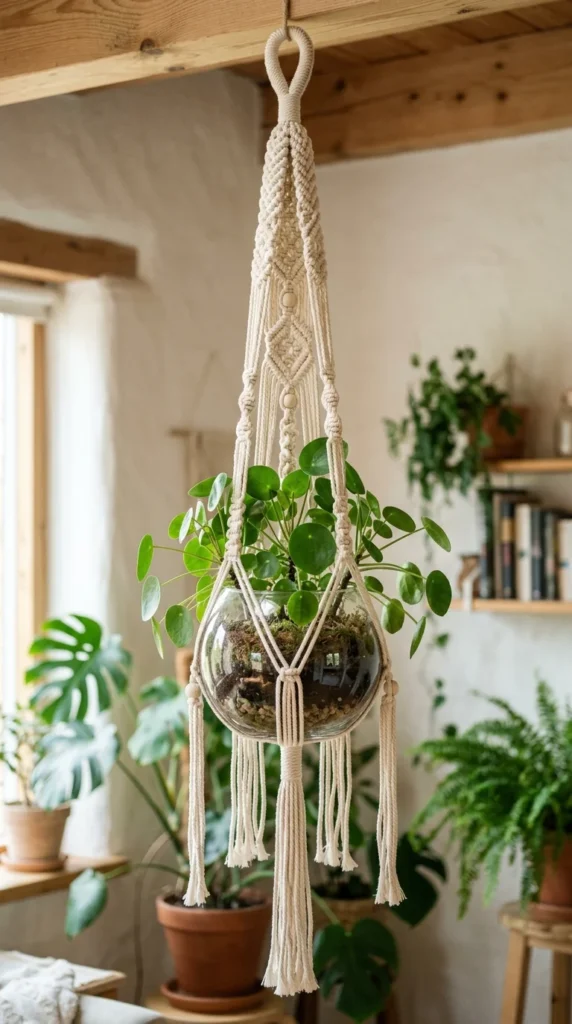
The bohemian charm of macramé never goes out of style. While technically a “hanger” rather than a “stand,” it serves the same purpose of displaying plants beautifully. Using basic knots like the square knot and the half-hitch, you can craft a custom cradle for your pots. These are perfect for keeping plants away from curious pets and children while utilizing the vertical space near windows.
9. Bar Stool
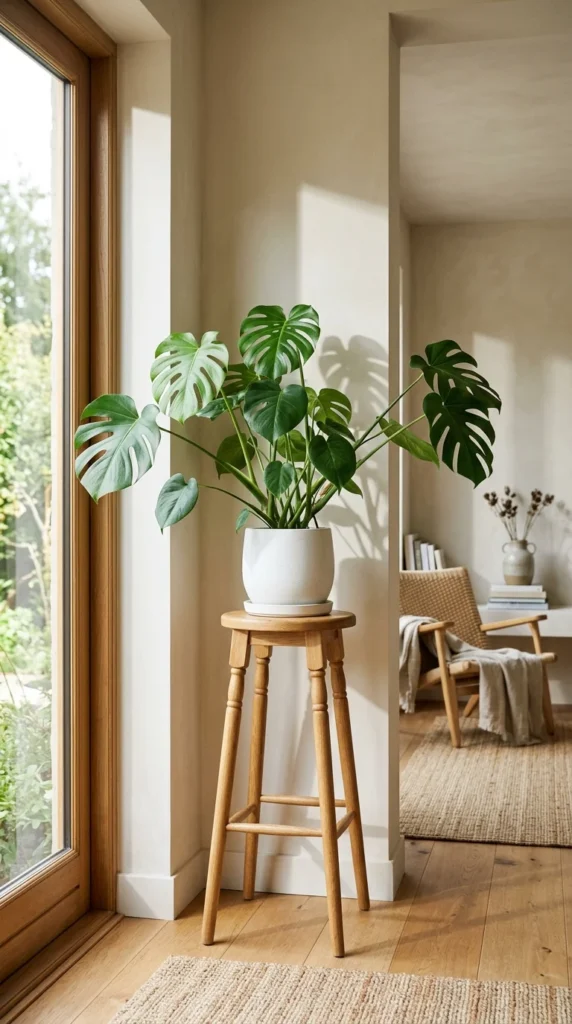
Sometimes the best DIY is a simple upcycle. An old wooden bar stool, whether found at a thrift store or sitting in your garage, makes a perfect plant pedestal. The height of a bar stool is ideal for showcasing large, dramatic plants like a Monstera Deliciosa or a Bird of Paradise. You can sand it down and stain it for a classic look or use a bold paint color to make it pop.
10. Wire Basket
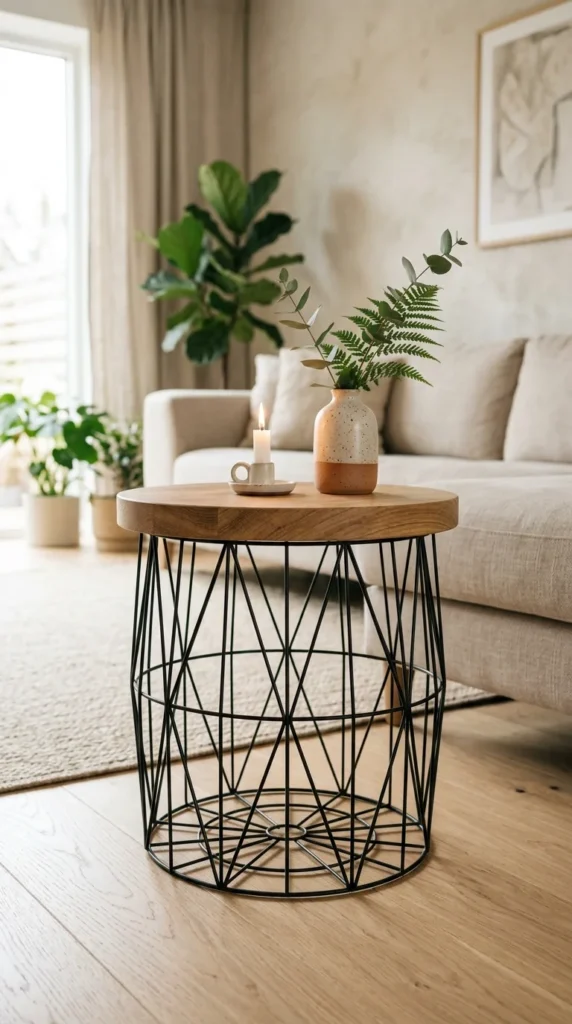
Modern wire baskets are readily available and can be easily converted into stylish stands. By inverting a sturdy wire basket and attaching a circular piece of stained plywood to what was the bottom, you create a geometric, airy stand. This design is perfect for small spaces because the open wire structure doesn’t block light or make the room feel cluttered.
11. Tiered Corner
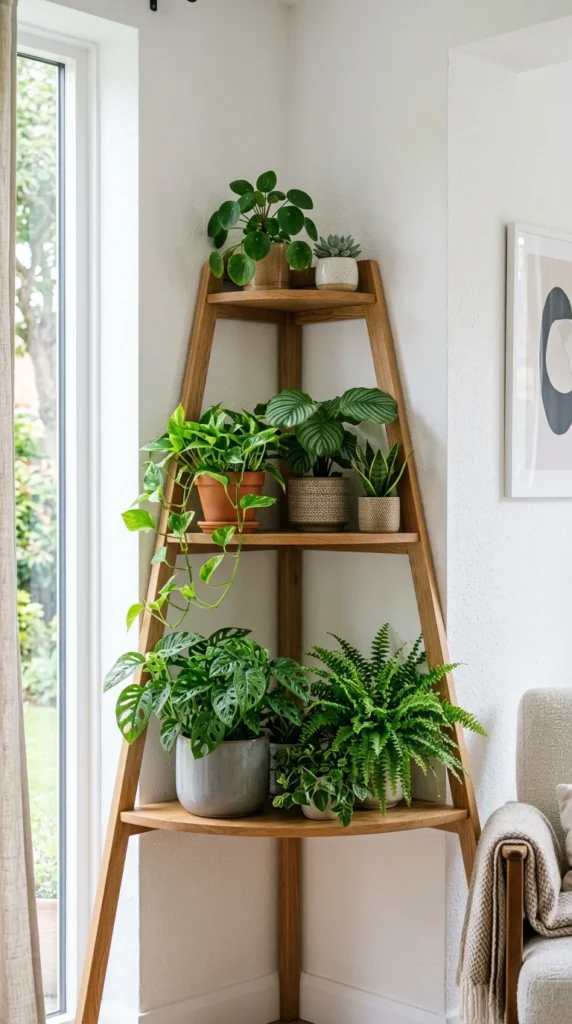
Corners are often underutilized spaces in a home. A tiered corner stand, built from scrap wood or plywood, can maximize this area. By creating three or four levels of varying heights in a triangular shape, you can fit a large number of plants into a very small footprint. This creates a “stadium seating” effect for your plants, ensuring each one gets adequate light.
12. Drawer Stand
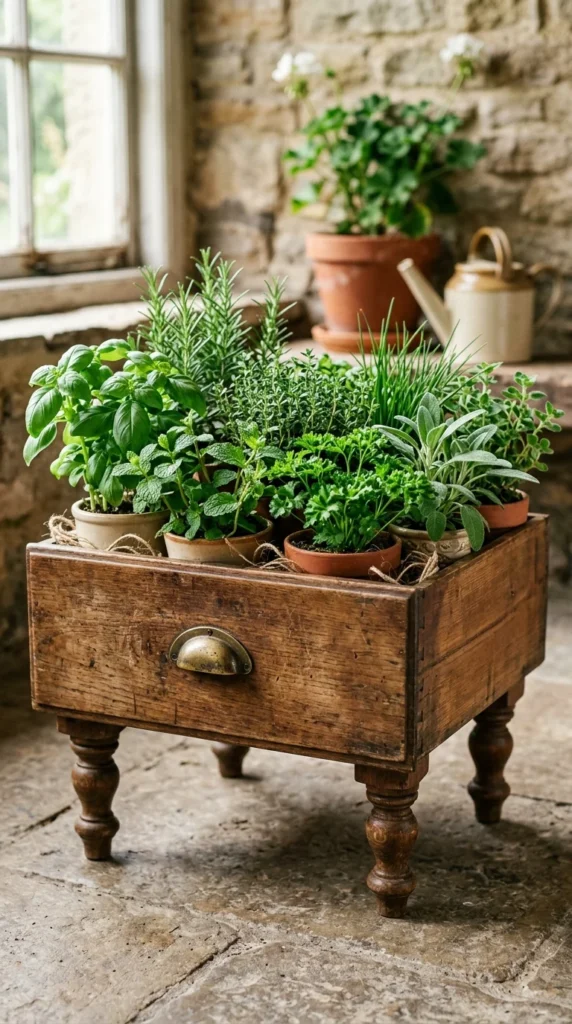
If you have an old dresser that is beyond repair, save the drawers. A single drawer can be turned into a unique, box-style plant stand by adding four short furniture legs to the corners. This creates a “planter box” look that is perfect for grouping several small plants together, such as a miniature herb garden or a collection of different cacti.
13. Cinder Block
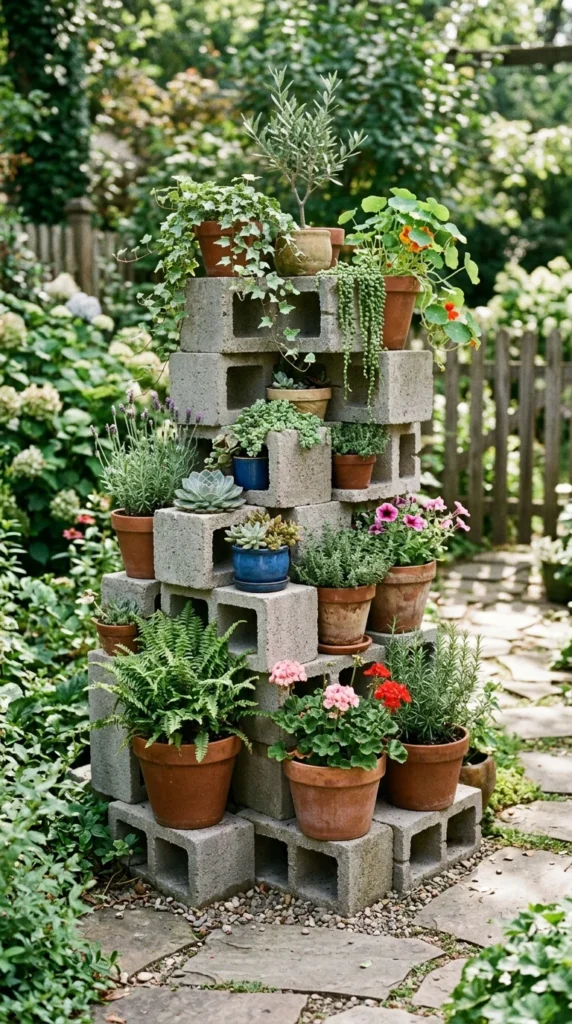
While similar to the “Concrete Block” idea, the cinder block garden focuses on verticality and outdoor/indoor transition. By stacking blocks and securing them with construction adhesive, you can build a sturdy, weatherproof tower. This is a great solution for balcony gardeners who want to grow a large number of plants in a restricted area.
14. Plant Chandelier
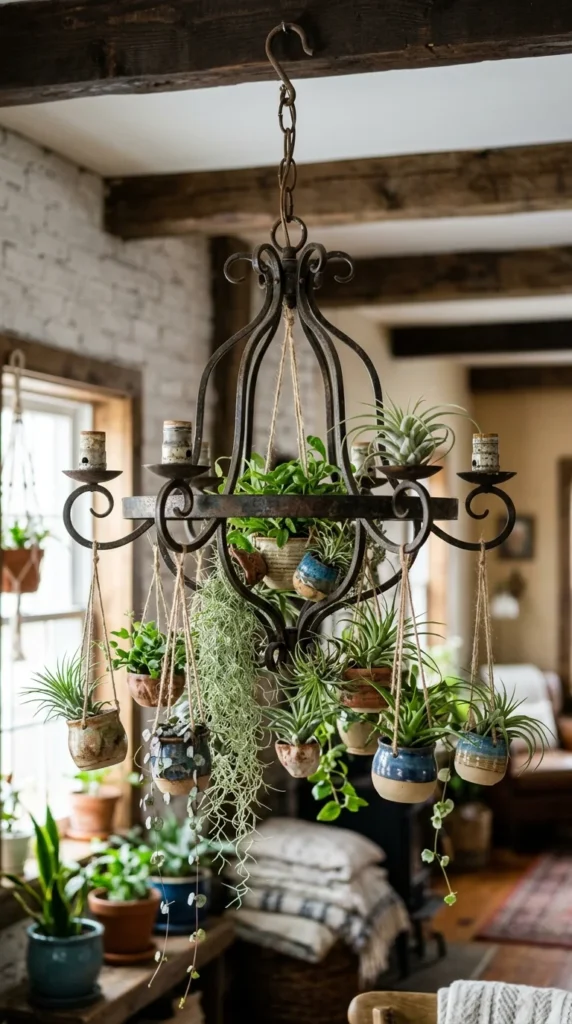
Repurposing an old light fixture is a creative way to add a touch of elegance to your plant display. By removing the electrical components and wiring of an old chandelier, you can use the arms to hold small pots or air plants. This creates a stunning “living light” that hangs from the ceiling, perfect for dining rooms or entryways.
15. A-Frame Shelf
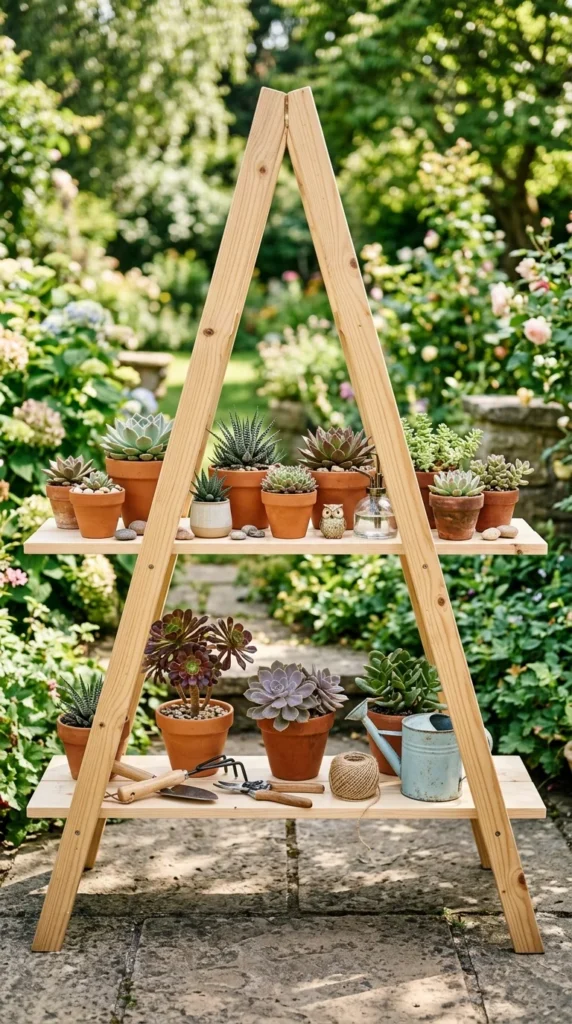
The A-frame shelf is a staple of Scandinavian design. It is built using two “A” shaped frames connected by horizontal planks of varying lengths. This design is incredibly stable and offers a lot of surface area for plants. It works well as a room divider or a statement piece in a sunroom. The open nature of the shelves allows light to pass through to all levels.
16. Log Pedestal
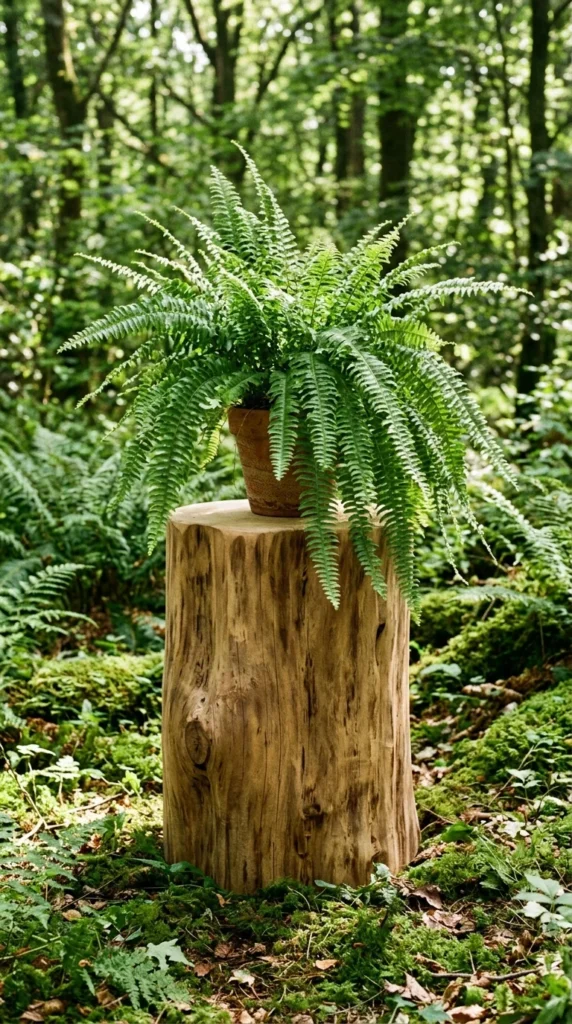
For a truly organic and earthy feel, nothing beats a solid log pedestal. Find a dry, seasoned log and remove the bark for a clean look, or leave it on for a more rugged appearance. Sand the top until it is perfectly level and apply a clear polyurethane finish to protect the wood from water damage. These stands are heavy and stable, making them ideal for large, top-heavy plants.
17. Embroidery Hoop
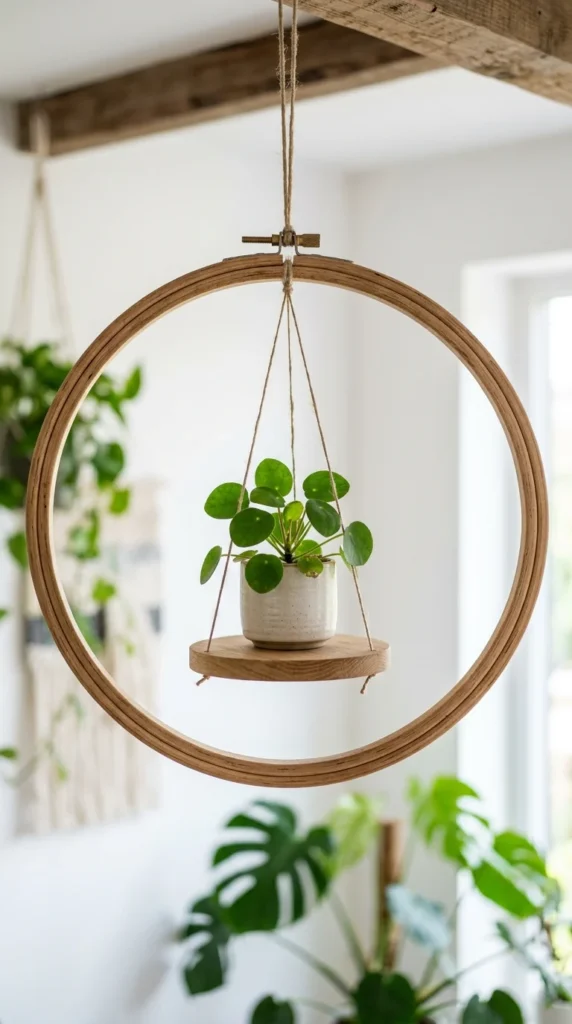
This is a clever and delicate DIY that uses simple craft supplies. By interlocking two large embroidery hoops and securing a small wooden base in the center, you can create a spherical, hanging plant stand. It has a modern, celestial feel and is lightweight enough to hang from a simple ceiling hook. It is best suited for small, lightweight plants like succulents or air plants.
18. PVC Pipe
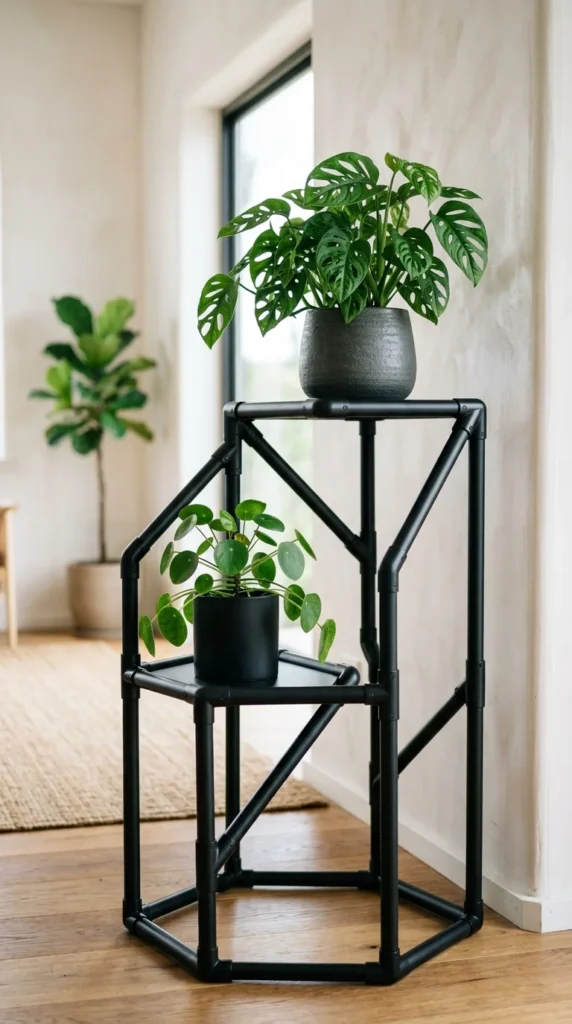
PVC pipe is one of the most versatile and inexpensive DIY materials. When cut and joined into a cube or a rectangular prism, it creates a very modern, geometric frame. The secret to making PVC look high-end is the finish; using a “hammered metal” or “matte black” spray paint can completely disguise the plastic material, making it look like custom-welded steel.
19. Tire Stand
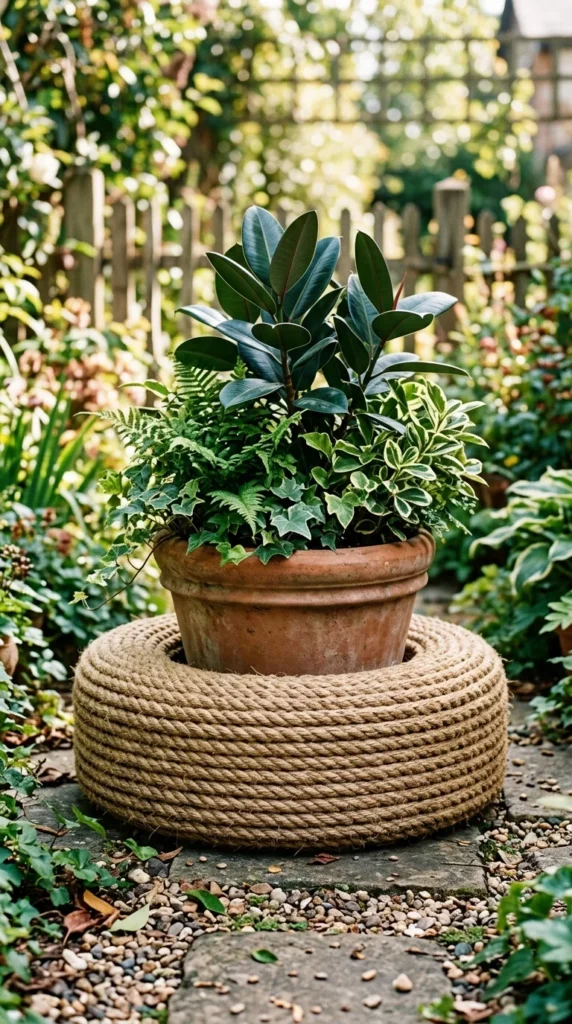
Upcycling a tire is a great way to keep waste out of landfills while creating a unique piece of furniture. By cleaning a tire and wrapping it tightly in sisal or manila rope, you can create a textured, nautical-style stand. Alternatively, you can paint the tire in a bright color. A wooden disc placed on top provides the flat surface needed for your plant pot.
20. Suitcase Stand
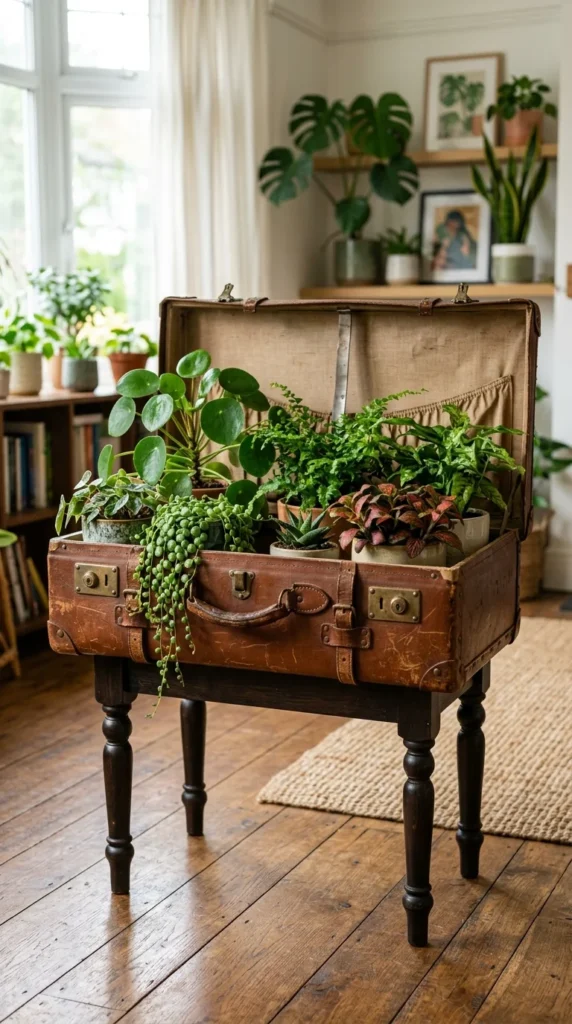
A vintage suitcase can be transformed into a whimsical and nostalgic plant stand. By attaching four mid-century style legs to the bottom of the suitcase, you create a conversation piece that doubles as a planter. You can keep the lid open and place a variety of plants inside, or keep it closed and use the top surface as a traditional stand. It adds a sense of travel and adventure to your home decor.