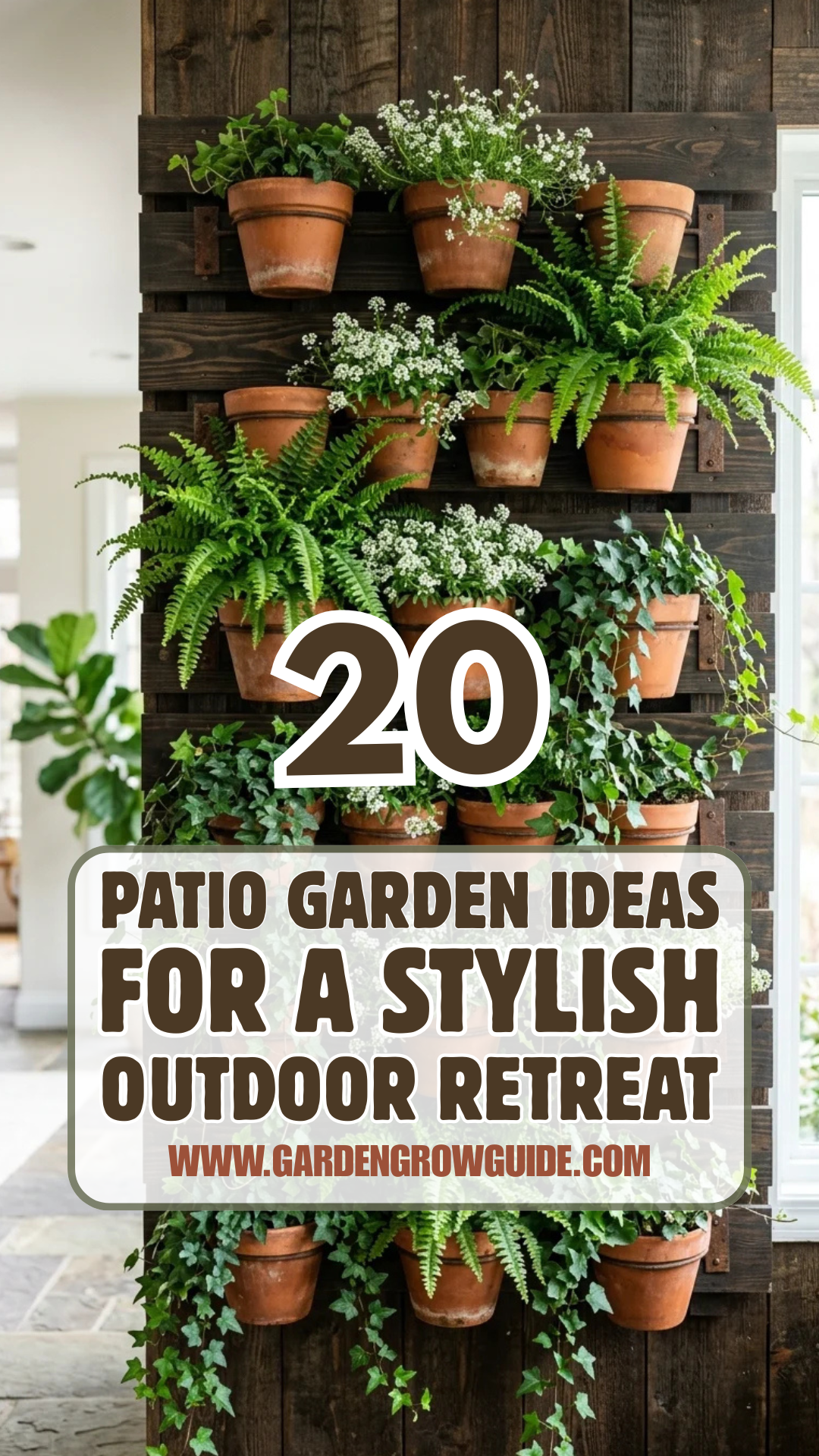
Transforming a patio into a sanctuary requires more than just a few chairs and a table. It is about blending the comfort of indoor living with the refreshing vitality of the outdoors. Whether you have a sprawling terrace or a compact balcony, the right garden design can turn your outdoor area into a stylish retreat that serves as a personal oasis. From vertical greenery to atmospheric lighting, these twenty ideas will help you cultivate a space that is both functional and breathtaking.
1. Vertical Gardens
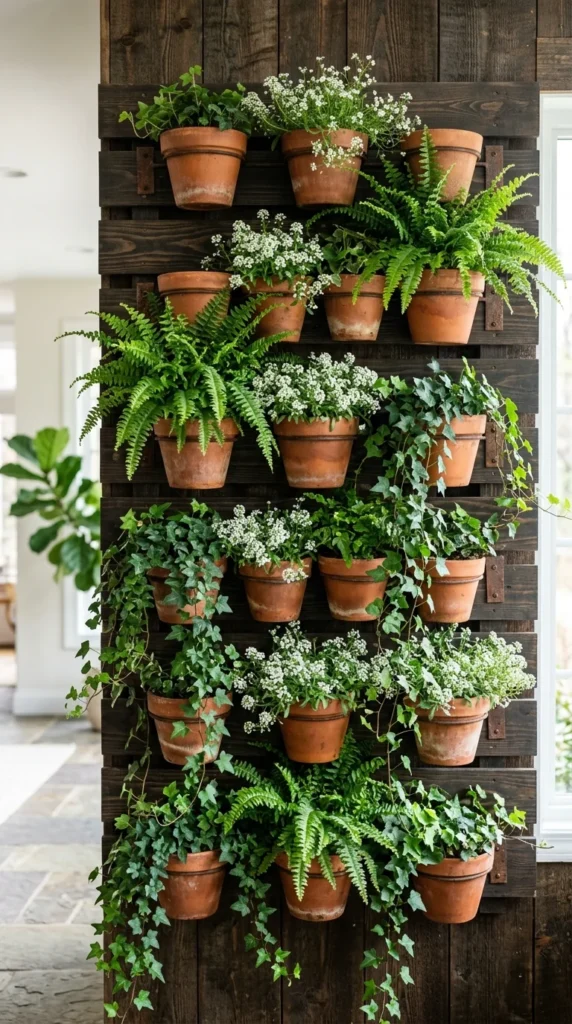
When ground space is limited, the only way to go is up. Vertical gardens are a brilliant solution for small patios or for adding a “living wallpaper” effect to a dull exterior wall. You can use modular pocket systems, wooden pallets, or wall-mounted rings to hold your plants.
- Best Plants: Ferns, pothos, lipstick vines, and small herbs.
- Design Tip: Use a drip irrigation system hidden behind the structure to ensure even watering without a mess on your patio floor.
2. Container Clusters
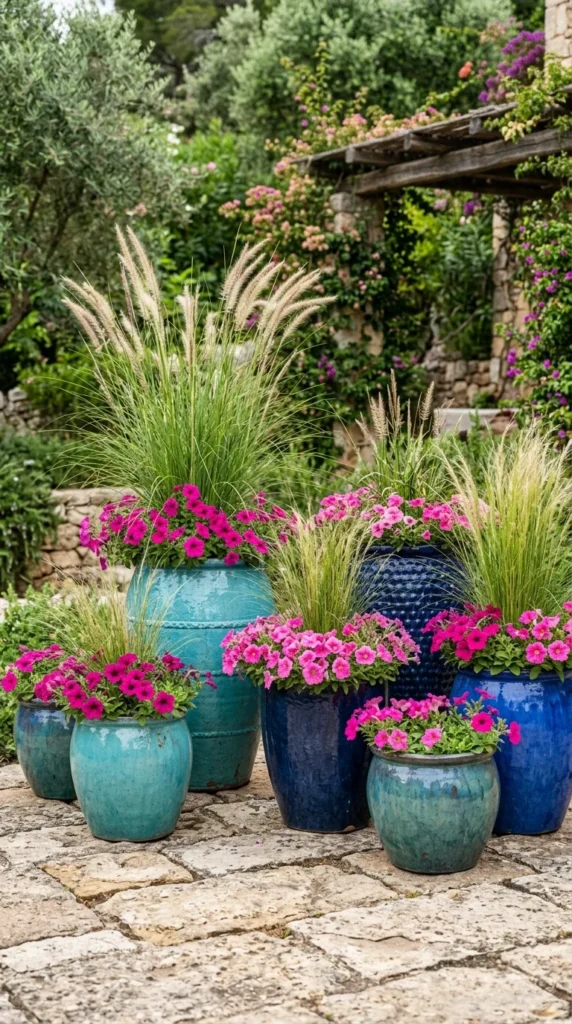
Instead of scattering single pots across the patio, group them in odd-numbered clusters. This creates a more significant visual impact and mimics the look of a natural garden bed. Mixing heights, textures, and colors within the cluster adds depth.
- Strategy: Place the tallest plant in the back (the “thriller”), mid-sized leafy plants around it (the “fillers”), and trailing plants at the edge (the “spillers”).
- Aesthetic: Match your pot materials—like all terracotta or all concrete—to maintain a cohesive look.
3. Zen Retreat
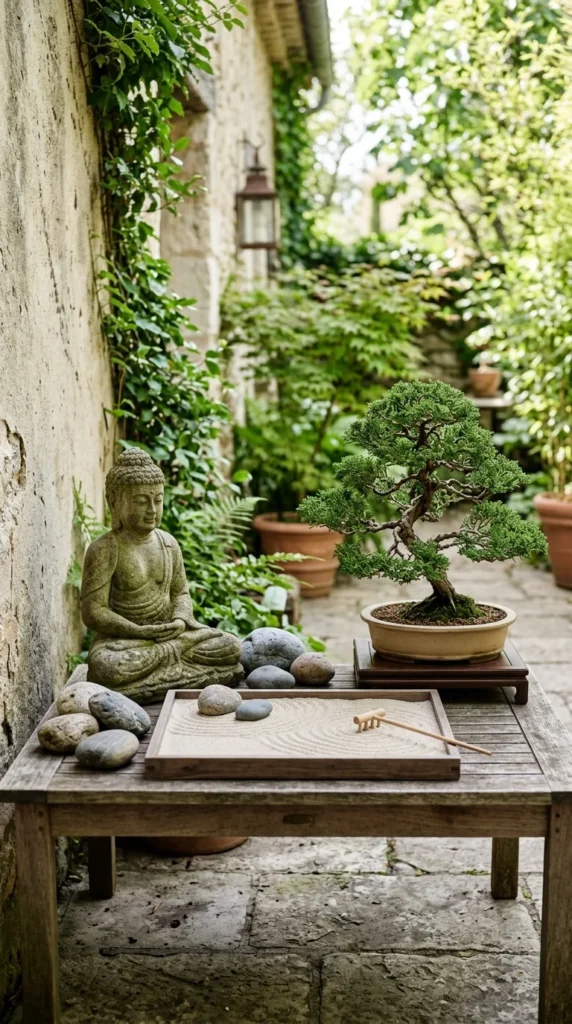
A Zen-inspired patio garden focuses on minimalism, balance, and tranquility. By incorporating elements like raked gravel, smooth stones, and simple greenery, you create a space dedicated to meditation and relaxation.
- Key Elements: Low-maintenance evergreens, moss, and stone lanterns.
- Atmosphere: Keep the color palette neutral with greens, grays, and whites to reduce visual noise.
4. Edible Borders
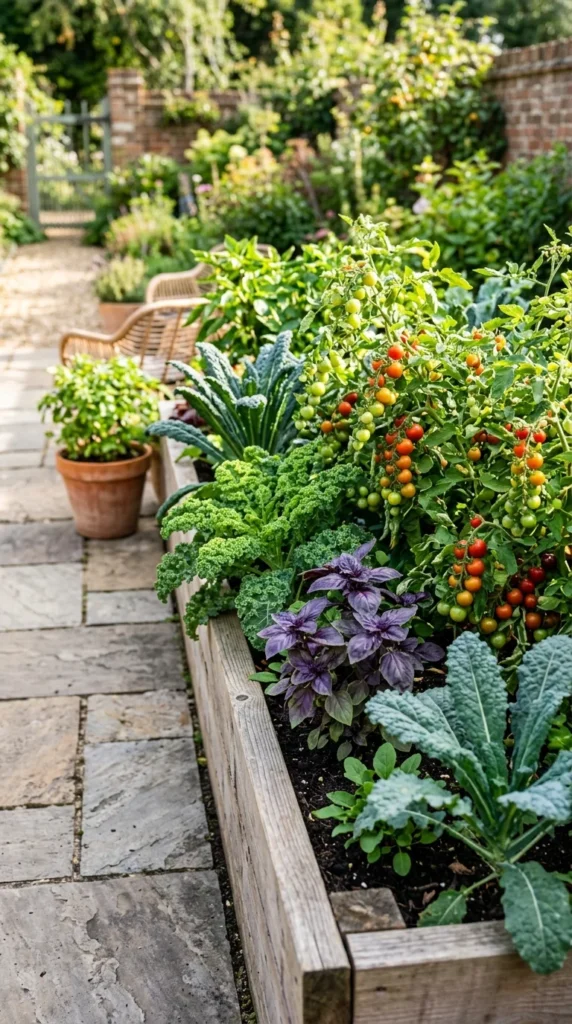
Why choose between beauty and utility? Edible borders allow you to grow your own produce while framing your patio with lush foliage. Raised beds at the perimeter of the patio serve as both a garden and a structural boundary.
- Functionality: Keeping herbs and vegetables close to the seating area makes it easy to harvest fresh ingredients for outdoor dining.
- Visual Appeal: Rainbow chard and purple peppers add unexpected pops of color.
5. String Lighting
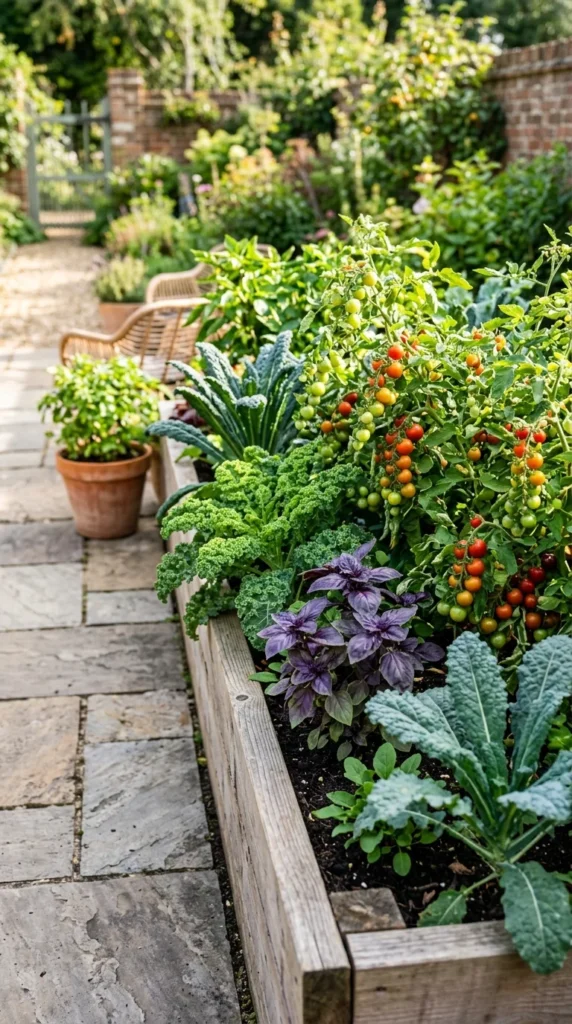
Lighting is the secret ingredient for a stylish evening retreat. String lights, or “bistro lights,” provide a soft, ambient glow that overhead security lights cannot match. They define the ceiling of your outdoor room, making it feel cozy and enclosed.
- Installation: Zig-zag them across the patio or wrap them around pillars and trees.
- Pro Tip: Use solar-powered LED versions to save on energy and avoid complicated wiring.
6. Outdoor Rugs
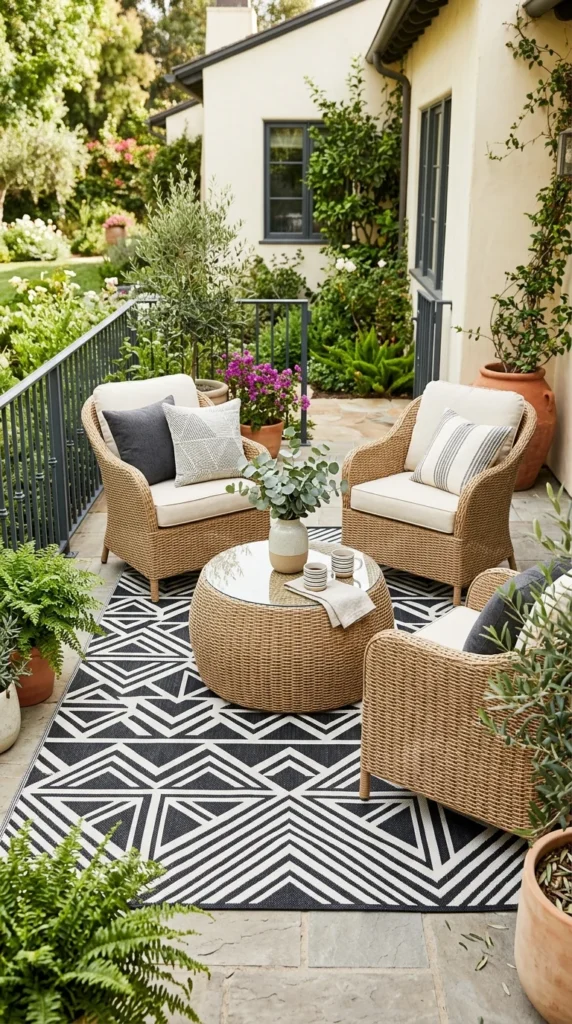
An outdoor rug is the quickest way to “anchor” a space. It defines the seating or dining area, separating it from the rest of the garden. Rugs also add a layer of softness underfoot, making the patio feel like a true extension of your living room.
- Materials: Look for polypropylene or recycled plastic rugs that are UV-resistant and easy to hose down.
- Styling: Choose a bold pattern to make a statement or a natural jute-look for a coastal vibe.
7. Hanging Baskets
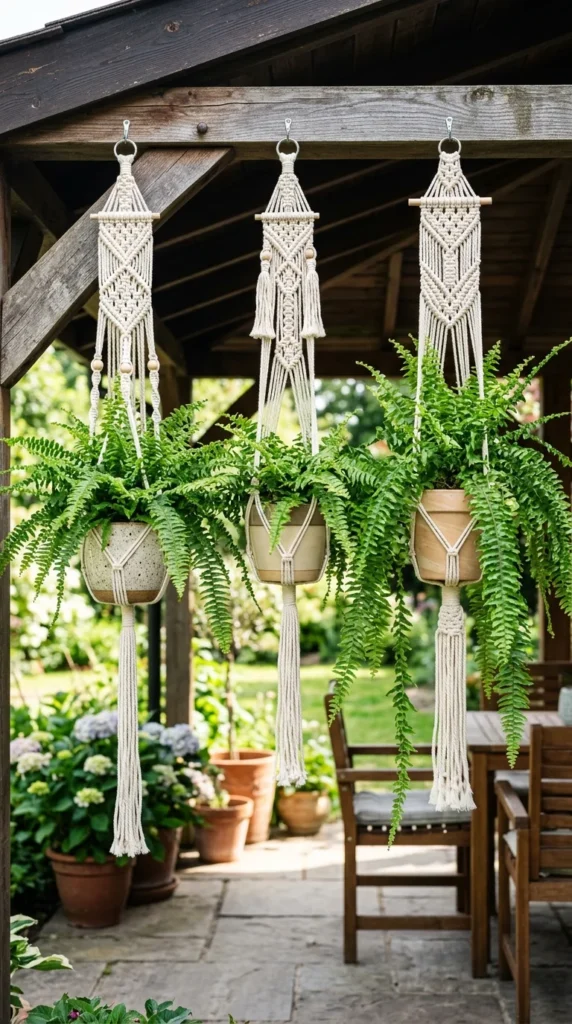
Hanging baskets add layers to your garden by bringing the greenery to eye level. They are perfect for softening the hard edges of a roofline or a pergola.
- Variety: Use flowering plants like fuchsias and begonias for color, or trailing succulents like String of Pearls for a modern look.
- Maintenance: Remember that hanging baskets dry out faster than ground pots; they may need daily watering in the summer.
8. Native Species
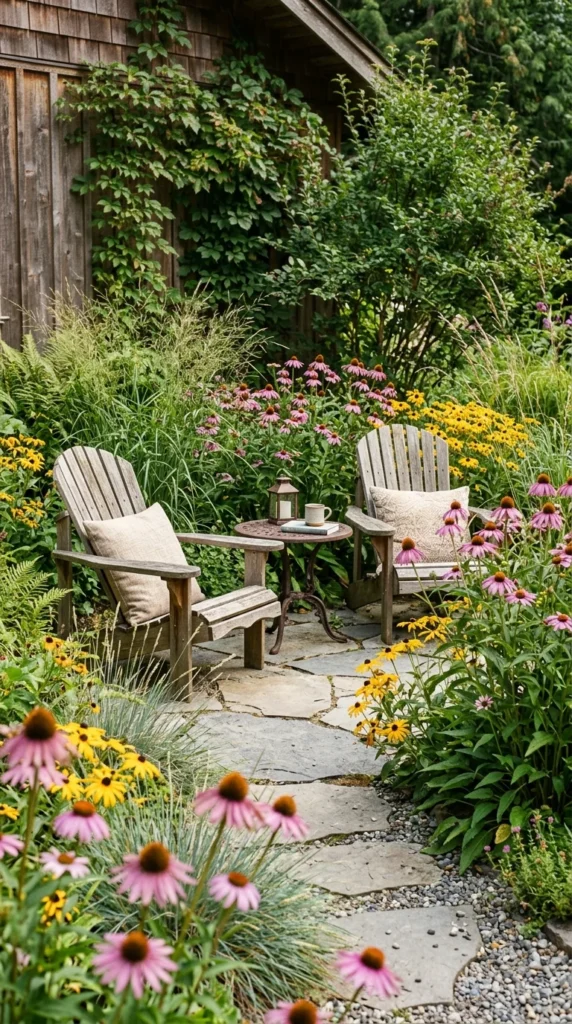
Designing with native plants is environmentally responsible and stylistically trendy. Native plants are adapted to your local climate and soil, meaning they require less water and fewer pesticides.
- Wildlife: These gardens attract local pollinators like bees, butterflies, and birds, adding movement and life to your retreat.
- Look: Native gardens often have a relaxed, meadow-like aesthetic that feels organic and unpretentious.
9. Modern Minimalism
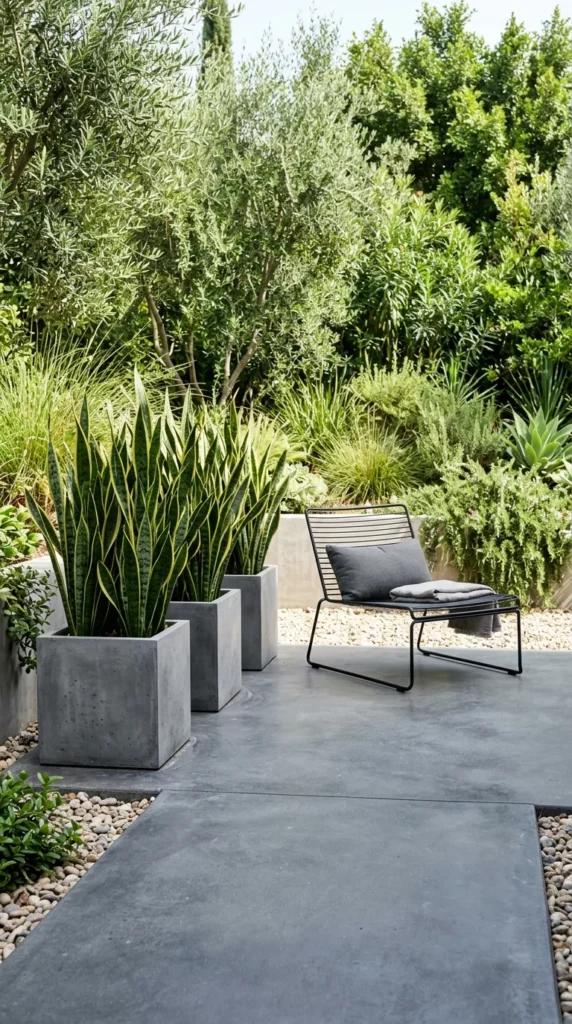
For those who prefer clean lines and low maintenance, a minimalist patio garden is ideal. Focus on a limited color palette and architectural plants that have strong shapes.
- Plant Choices: Agave, snake plants, and boxwood spheres provide structural interest without the need for constant deadheading.
- Hardscape: Use materials like polished concrete, dark slate, or composite decking to reinforce the modern feel.
10. Central Firepit
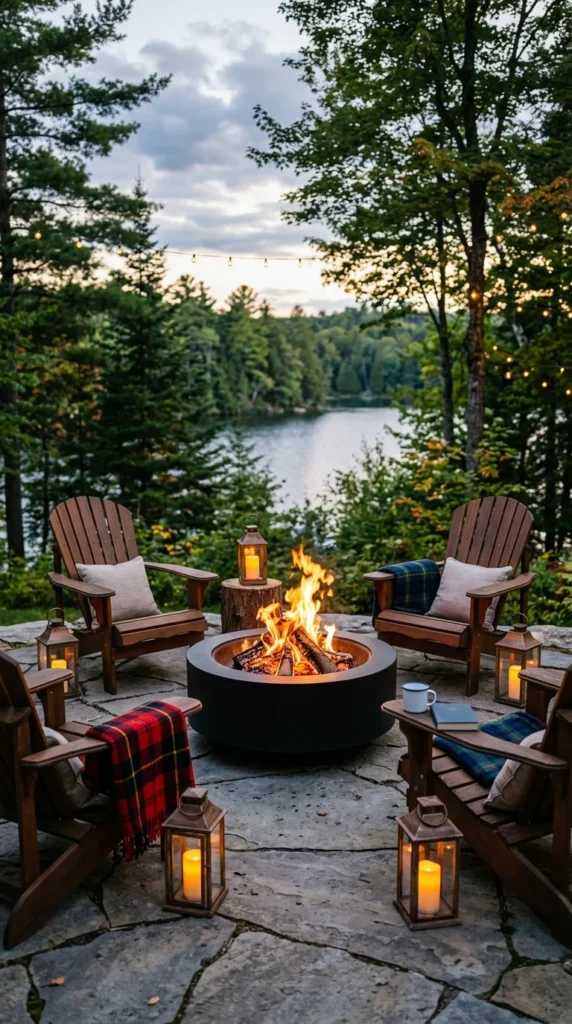
A firepit acts as a natural focal point and extends the usability of your patio into the cooler months. It creates a gathering spot that encourages conversation and provides a cozy atmosphere.
- Style: Choose a sleek gas-powered table for modern patios or a rustic cast-iron bowl for a more traditional look.
- Safety: Ensure the firepit is placed on a non-flammable surface and is at a safe distance from hanging plants or structures.
11. Water Features
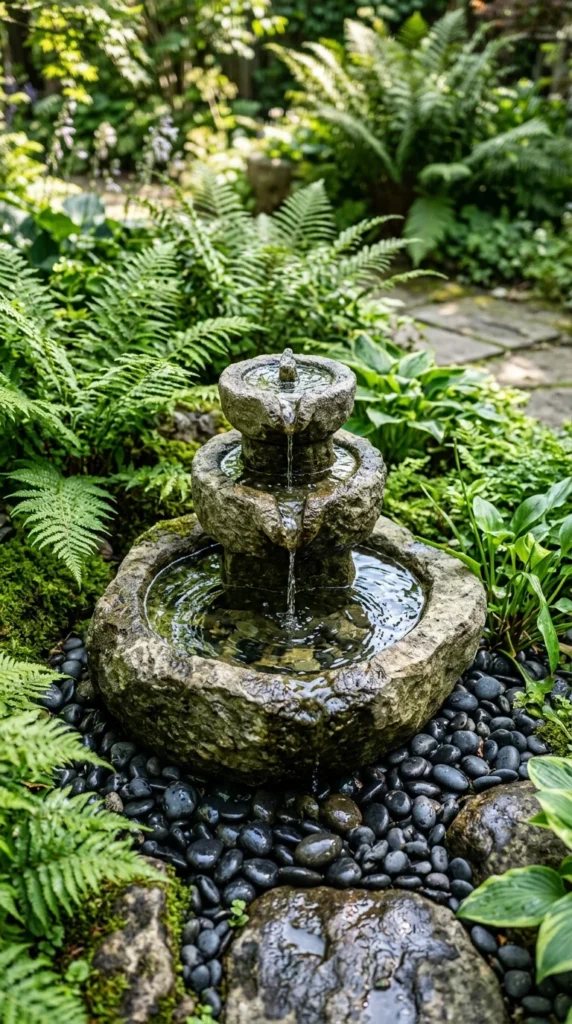
The sound of trickling water can mask neighborhood noise and provide a sense of profound calm. You don’t need a massive pond; a tabletop fountain or a small wall-mounted water feature can be just as effective.
- Benefits: Water features cool the surrounding air slightly and provide a drinking source for birds.
- Design: Integrate the feature into your plant groupings so it feels like a natural part of the landscape.
12. Living Walls
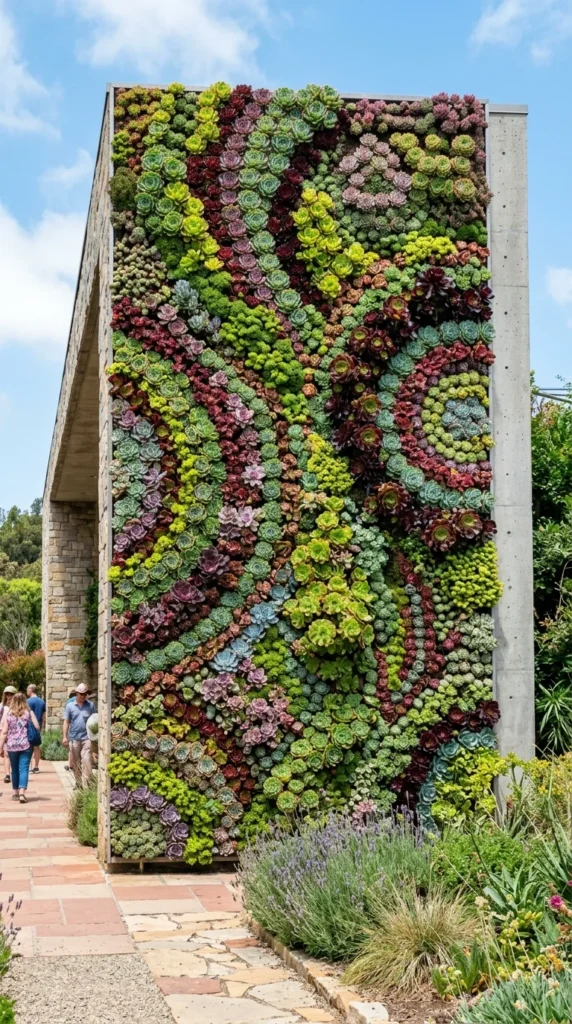
Unlike vertical gardens which use pots, a living wall is often a fully integrated system where plants grow directly in a substrate on the wall. This creates a “green mural” effect that is incredibly striking and modern.
- Impact: This is a high-end design choice that provides excellent insulation and soundproofing for your patio.
- Maintenance: Most living walls require a built-in irrigation and drainage system.
13. Tropical Oasis
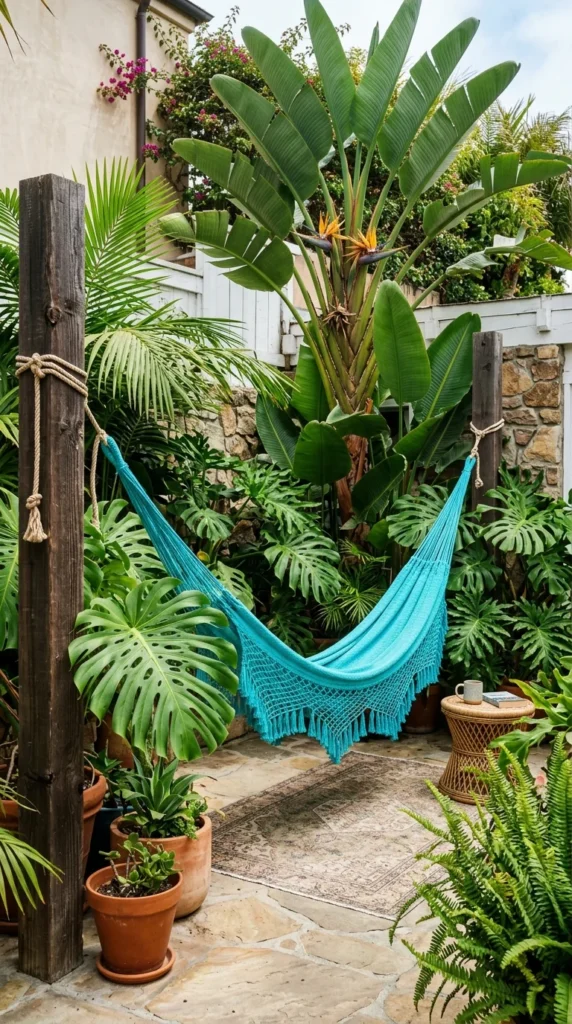
Create a vacation vibe at home by using “big leaf” plants. Tropical gardens are characterized by dense foliage, bold textures, and vibrant, exotic flowers.
- Key Plants: Palms, canna lilies, hibiscus, and elephant ears.
- Climate Tip: If you live in a colder climate, use tropical plants in pots so they can be moved indoors during the winter.
14. Bistro Nooks
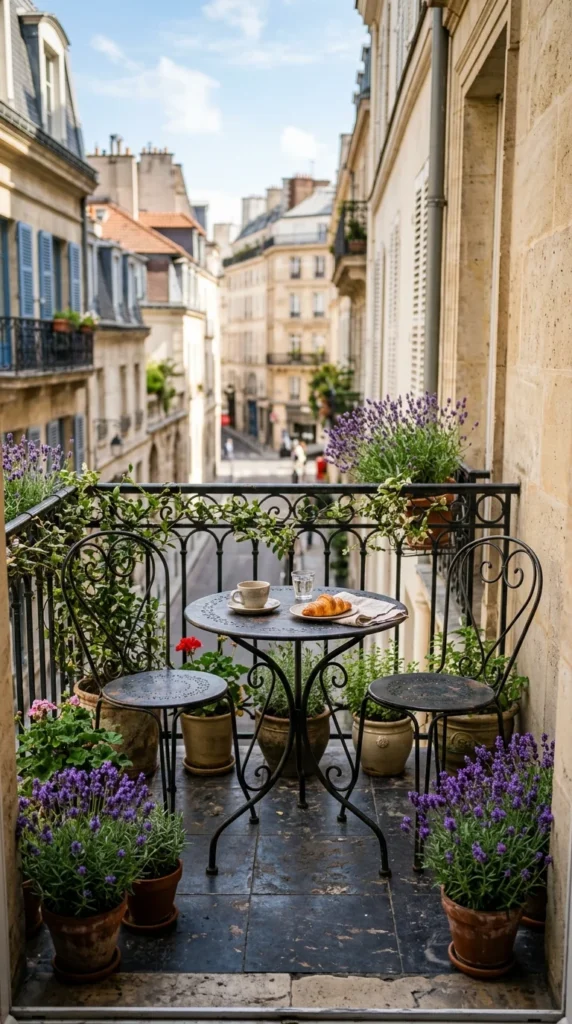
You don’t need a huge patio to have a garden retreat. A bistro nook focuses on making the most of a small corner. By adding a compact table and a few high-quality plants, you create an intimate spot for morning coffee or evening wine.
- Space Saving: Use folding furniture that can be tucked away when not in use.
- Scent: Plant fragrant herbs like jasmine or lavender nearby to enhance the sensory experience in a small space.
15. Tiered Steps
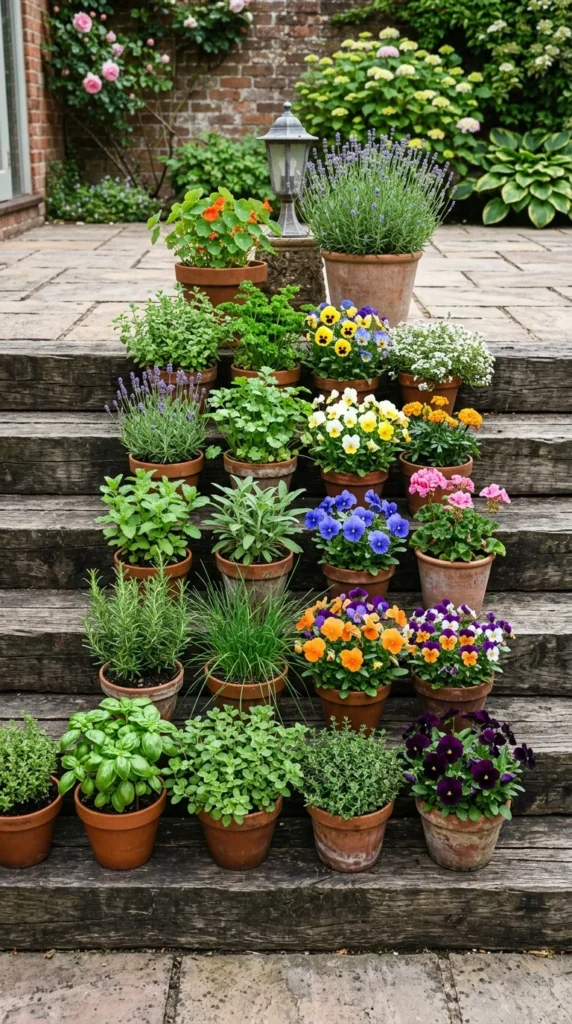
Using different levels adds architectural interest to a flat patio. Tiered shelving or built-in steps allow you to display a large number of plants without taking up much floor space.
- Visual Depth: It creates a “stadium seating” effect for your plants, ensuring that every flower is visible.
- Organization: Use different tiers for different categories, such as an “herb tier,” a “succulent tier,” and a “flowering tier.”
16. Succulent Statues
Succulents are the jewels of the garden world. Because they grow slowly and have shallow root systems, they can be used to create living sculptures or “dish gardens” that act as centerpieces for outdoor tables.
- Variety: Mix different colors—from dusty blues to bright oranges—and different shapes to create a miniature landscape.
- Care: These are perfect for sunny patios and require very little water, making them ideal for busy homeowners.
17. Climbing Vines
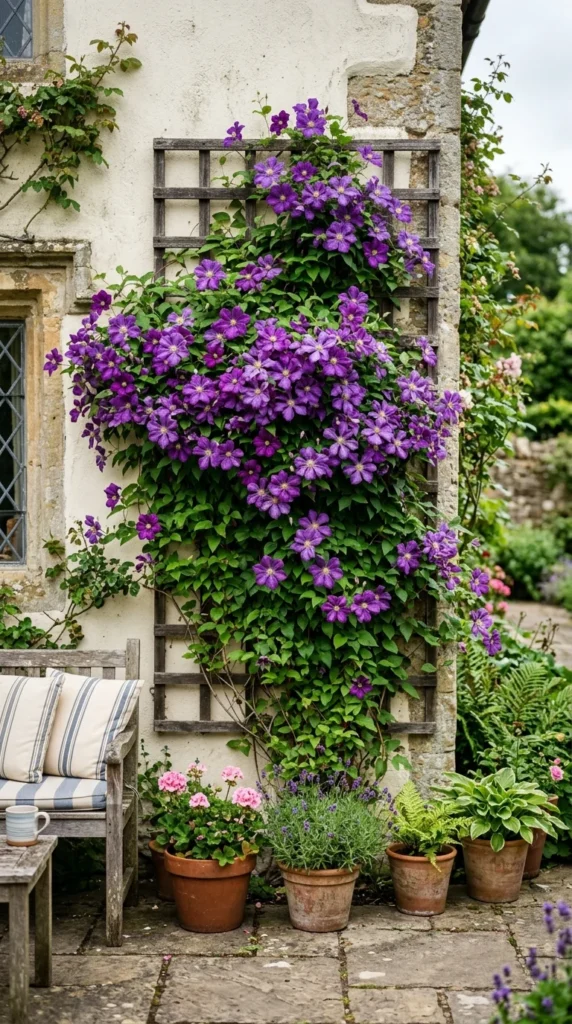
Climbing plants provide height and can be used to “soften” the appearance of fences or brick walls. They add a romantic, slightly wild feel to the patio.
- Choices: For fragrance, choose honeysuckle or star jasmine. For fast-growing greenery, try ivy or Virginia creeper.
- Support: Ensure your trellis or wire system is sturdy enough to support the weight of the vine as it matures.
18. Privacy Screens
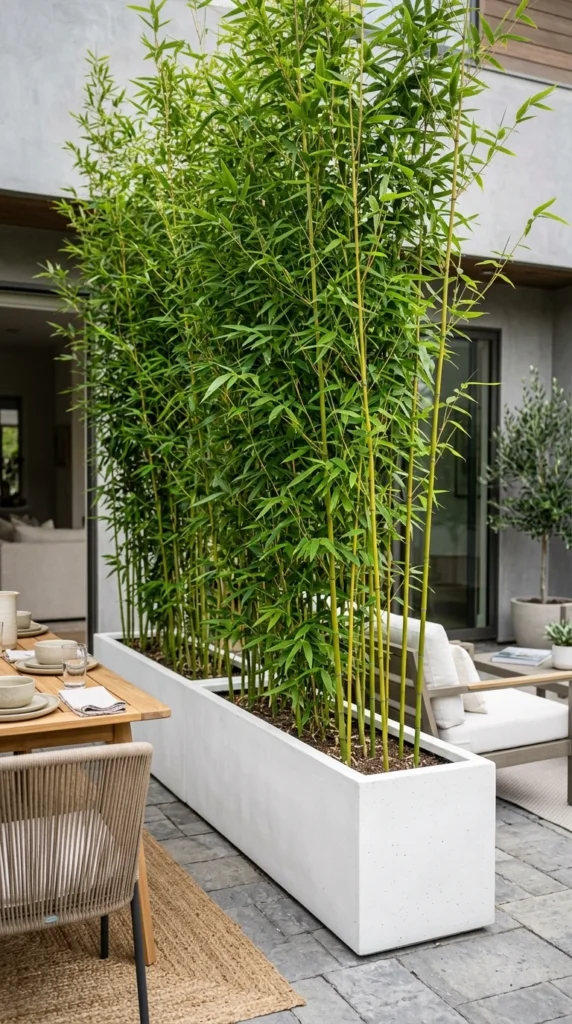
Natural privacy screens are more attractive than wooden fences. By using tall, dense plants, you can shield your patio from the eyes of neighbors while adding more greenery to your view.
- Best Options: Bamboo (in pots to prevent spreading), tall ornamental grasses, or a row of tightly packed arborvitae.
- Style: Choose sleek, long planters to create a clean, modern boundary.
19. Bohemian Layers
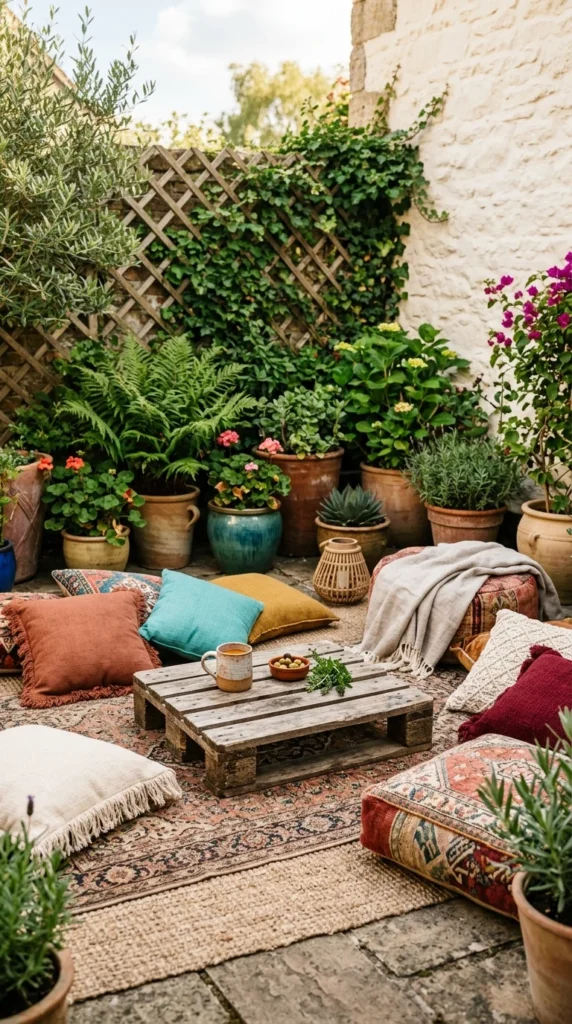
The “Boho” style is all about comfort and an eclectic mix of textures. It’s a great way to create a relaxed, lived-in feel. Combine different plant types, decorative lanterns, and plenty of textiles.
- Textiles: Use weather-resistant pillows and throws to make the space feel as comfortable as an indoor lounge.
- Plants: Mix and match everything—tall palms next to tiny cacti and overflowing flower boxes.
20. Herb Spirals
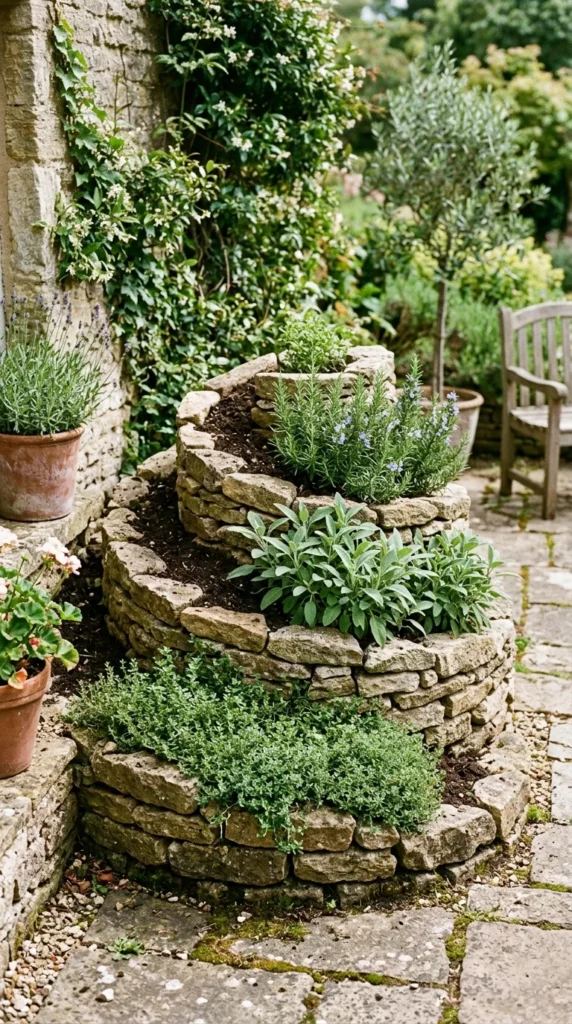
An herb spiral is a beautiful example of permaculture design that works perfectly on a patio. The spiral shape creates different microclimates (sun, shade, dry, moist) in a very small footprint, allowing you to grow a wide variety of herbs together.
- Visual Interest: The swirling stone structure adds a sculptural element to the garden.
- Accessibility: It allows you to reach all your herbs easily from one spot, making it the ultimate functional garden feature.
Summary for Success
Designing a stylish patio garden is a journey of balancing your personal aesthetic with the practical needs of the plants. By layering heights, incorporating diverse textures, and considering how the space will be used at night, you can create an outdoor retreat that is not only a garden but a sanctuary. Start with one or two of these ideas and watch your patio transform into your favorite “room” in the house.