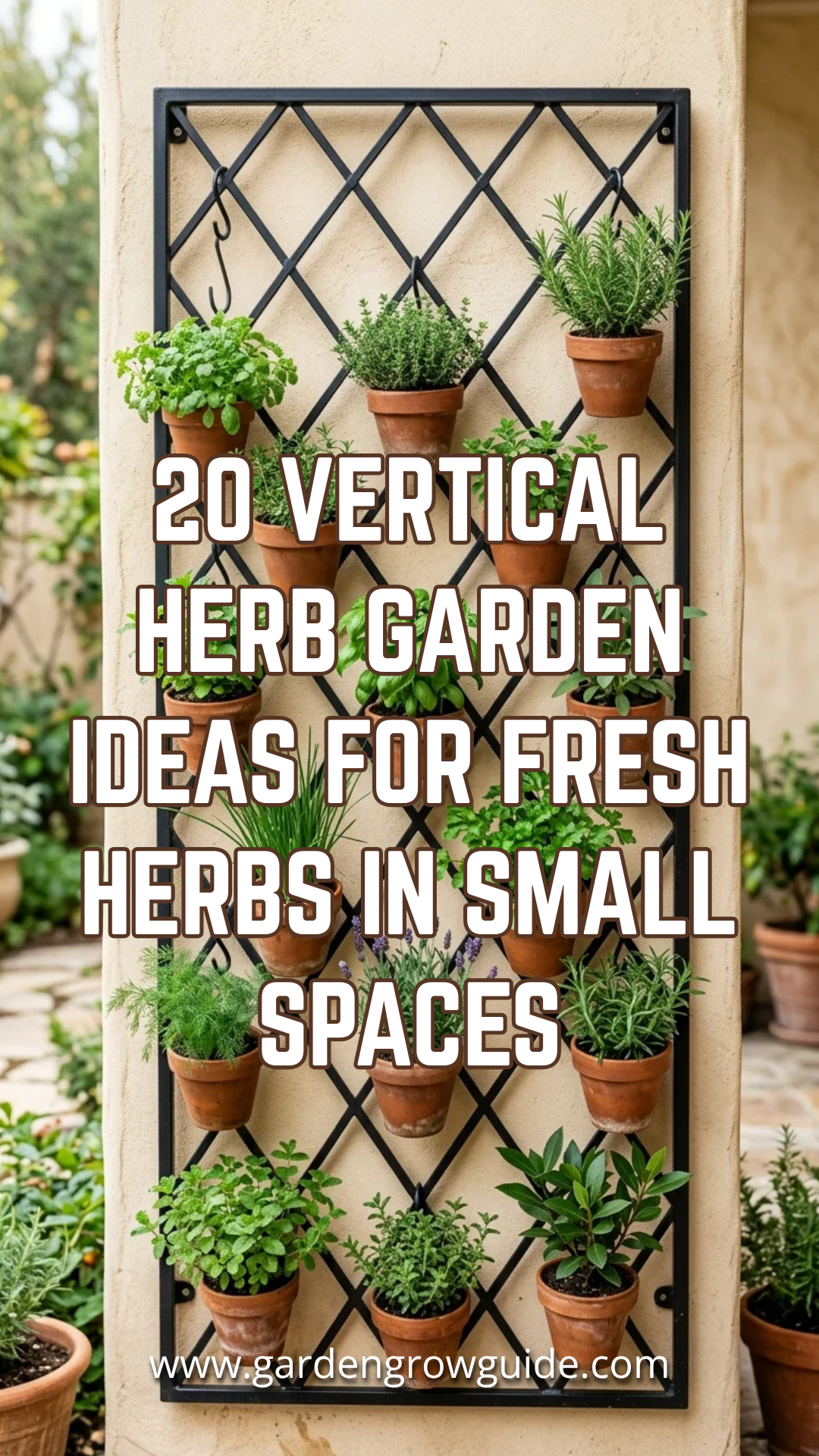
The dream of plucking fresh basil for a homemade pesto or clipping sprigs of rosemary for a Sunday roast shouldn’t be limited by the square footage of your home. For urban dwellers, apartment residents, or those with small patios, vertical gardening offers a transformative solution. By utilizing upward space rather than floor area, you can cultivate a bountiful harvest in the smallest of footprints. Vertical herb gardens are not only functional but also serve as living art, purifying the air and bringing a touch of nature indoors or onto a cramped balcony.
1. Pocket Organizers
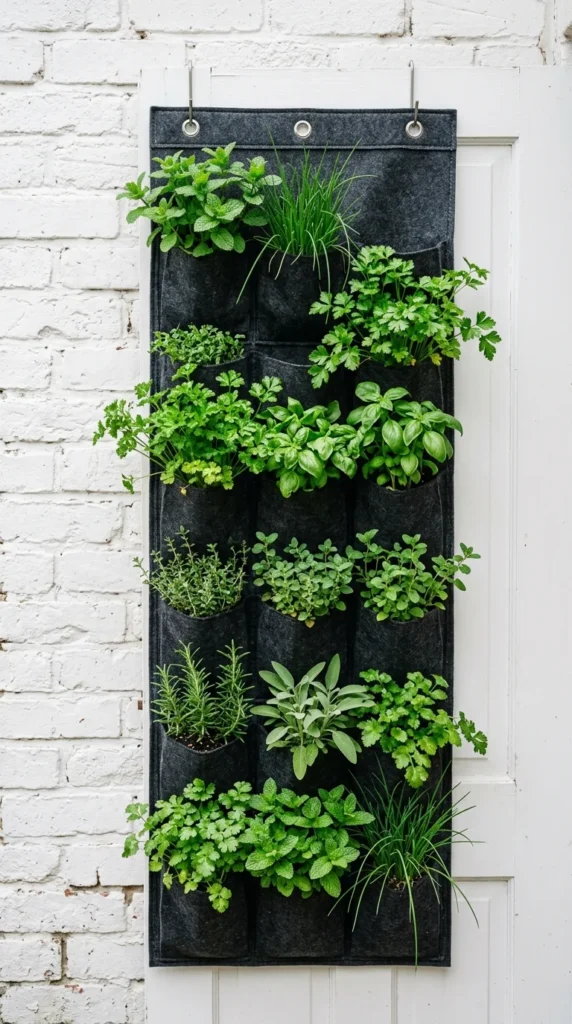
One of the most affordable and accessible ways to start a vertical garden is by using a fabric pocket organizer. Typically sold for shoe storage, these felt or canvas pouches are perfect for holding small herb plants. The fabric is breathable, which prevents root rot by allowing excess moisture to evaporate. When mounted on a sunny wall or the back of a door, this setup creates a “living wall” effect that is easy to maintain and highly space-efficient.
2. Wall-Mounted Jars
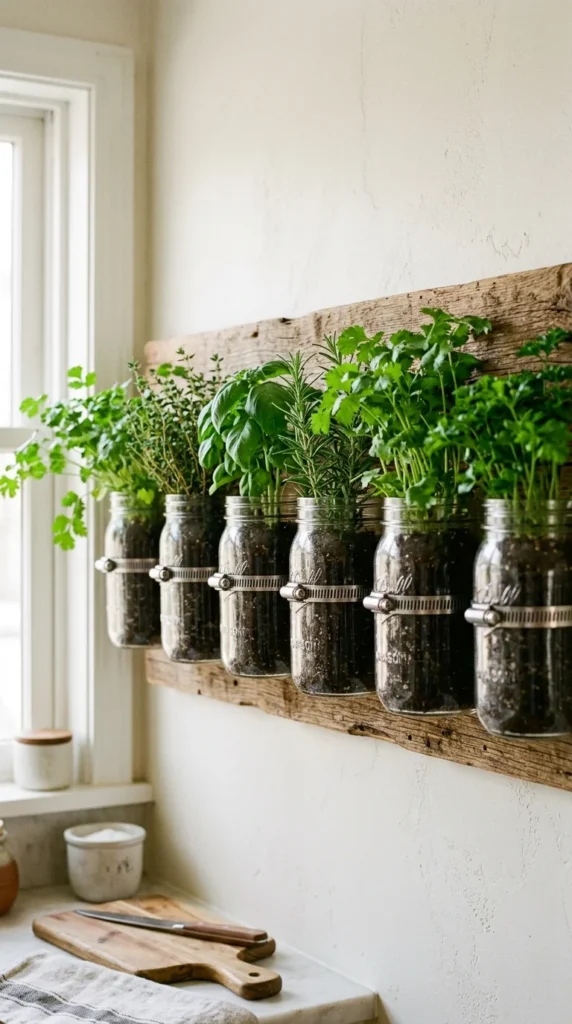
Mason jars offer a rustic, farmhouse aesthetic that fits perfectly in a kitchen environment. By securing these jars to a wooden board using hose clamps, you create a sturdy and stylish vertical herb station. It is important to add a layer of pebbles or charcoal at the bottom of the jars for drainage, as they lack traditional drainage holes. This setup keeps your most-used culinary herbs at arm’s length while you cook.
3. Ladder Shelves
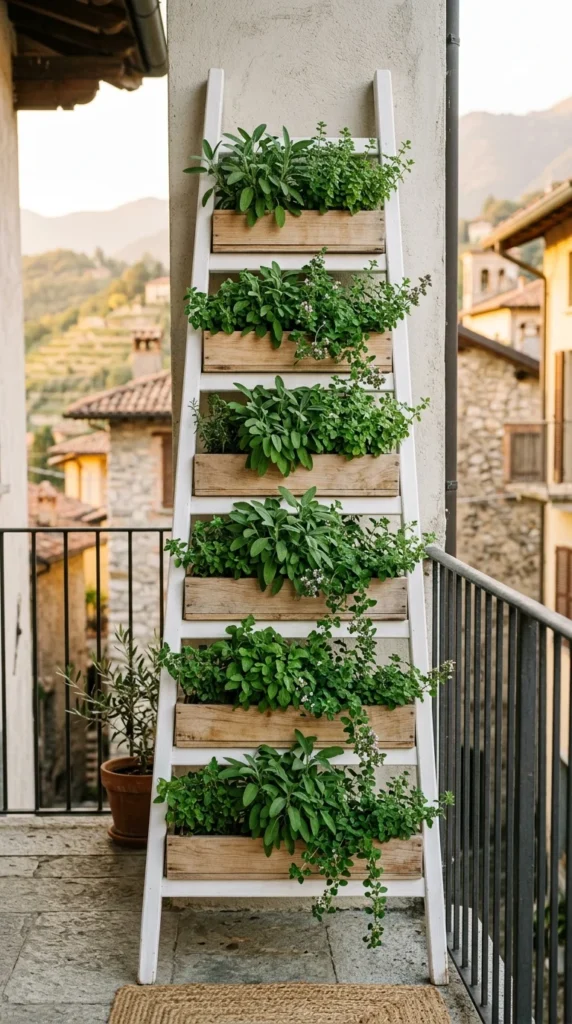
Ladder shelves capitalize on vertical height while providing a stable platform for multiple containers. You can use a dedicated plant ladder or repurpose an old wooden step ladder for a vintage look. The tiered design ensures that plants on the lower levels still receive adequate sunlight, making it an ideal choice for balconies or bright corners of a living room.
4. Pallet Gardens
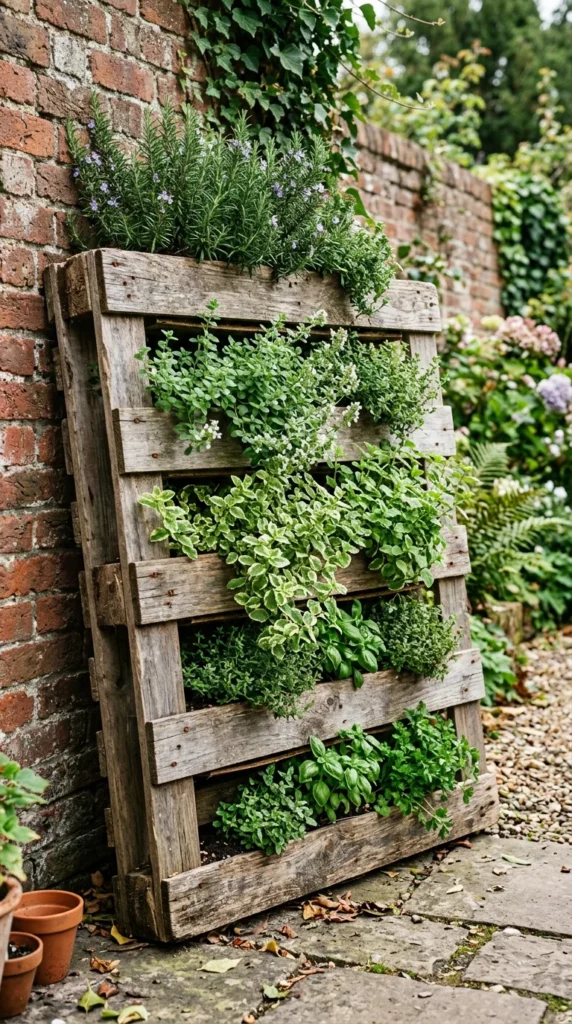
Upcycling a wooden pallet is a favorite among DIY enthusiasts. By sealing the bottom of the slats with landscape fabric, you create built-in planting rows. This method allows you to grow a large volume of herbs in a very narrow profile. Pallets can be painted to match your decor or left in their natural state for a rugged, organic feel.
5. Hanging Gutters
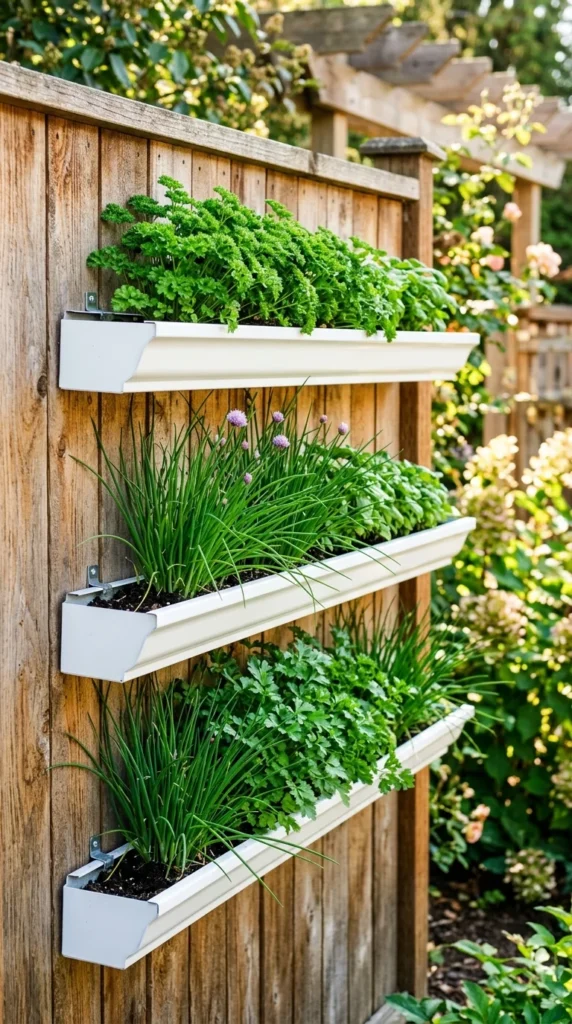
Rain gutters are surprisingly effective planters due to their long, shallow nature—perfect for herbs with shallow root systems like cilantro and lettuce. Mounting multiple rows of gutters on an exterior wall or fence creates a sleek, industrial-style garden. Ensure you drill drainage holes along the bottom of the gutters to prevent waterlogging during heavy rain.
6. Trellis Systems
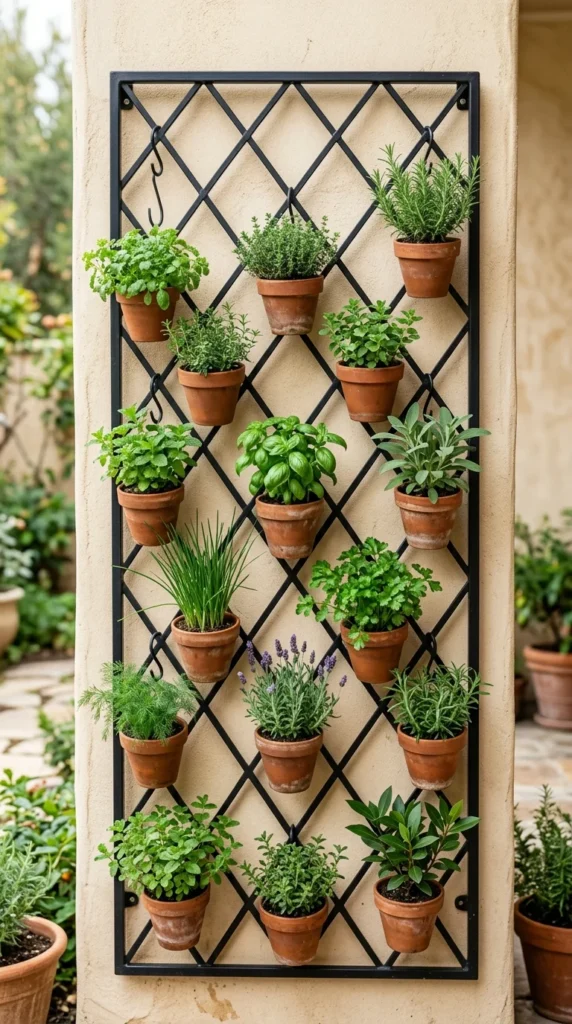
A trellis isn’t just for climbing vines; it can serve as a modular frame for a vertical herb garden. By using S-hooks or wire, you can hang lightweight pots across the grid. This system is highly customizable, allowing you to move pots around as plants grow or as the sun’s position changes throughout the seasons.
7. Stacked Pots
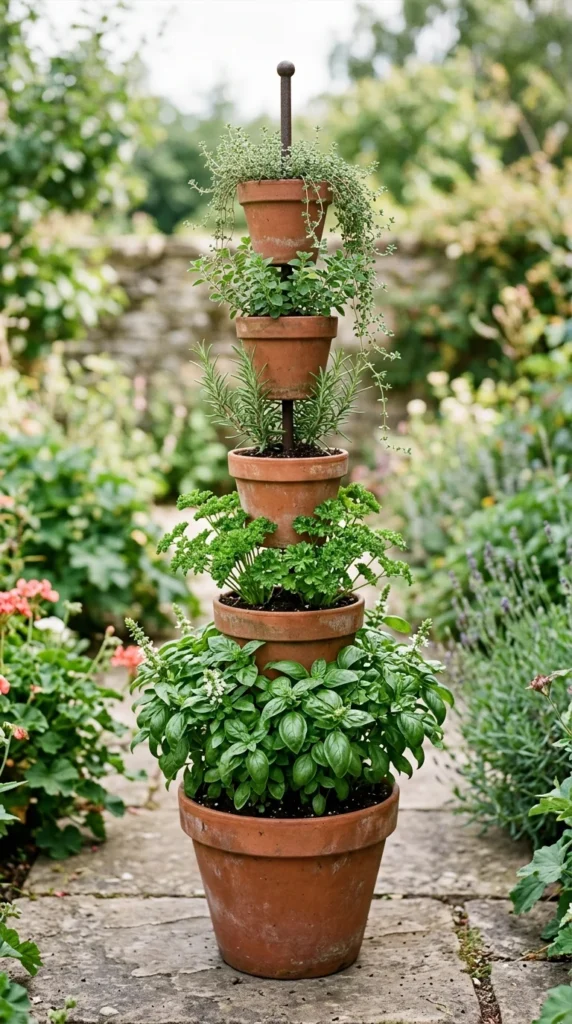
The “pot tower” is a classic vertical gardening technique. By threading a central dowel or rebar through the drainage holes of several pots, you can stack them securely. This creates a 360-degree garden that occupies only the diameter of the largest bottom pot. It’s a great centerpiece for a small patio table or a sunny corner.
8. Magnetic Tins
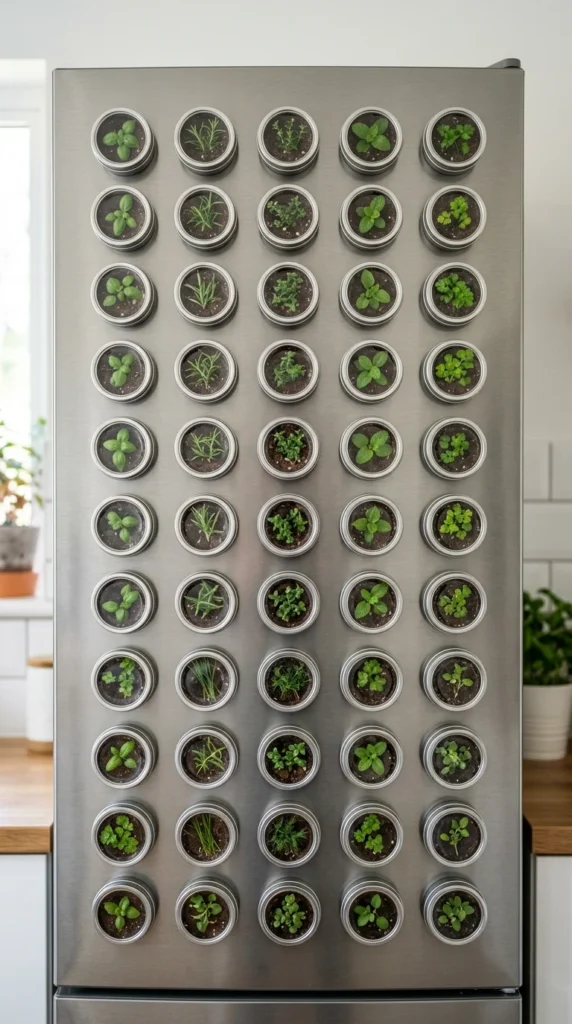
For those with absolutely no floor or wall space, the refrigerator is a viable garden plot. Small magnetic tins can be filled with lightweight potting soil and hardy herbs like thyme or oregano. This keeps your herbs organized and easily accessible in the heart of the kitchen. Just ensure the location receives enough natural light or supplement with a nearby grow light.
9. Window Boxes
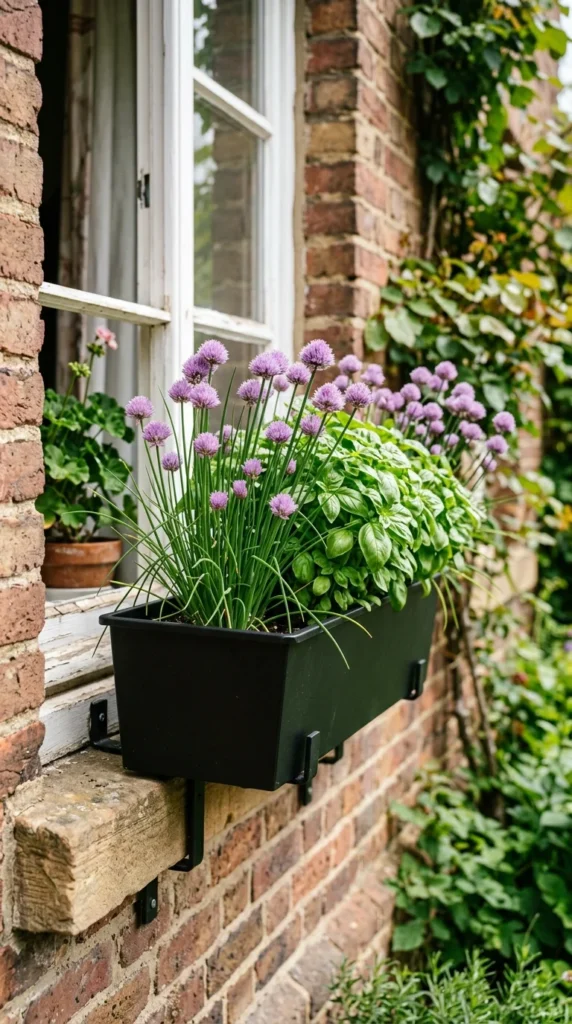
Window boxes are the original vertical garden. They utilize the “dead space” outside your windows to provide herbs with maximum sunlight and fresh air. Modern window box designs range from traditional wood to contemporary self-watering plastics, making them a versatile choice for any architectural style.
10. PVC Pipes
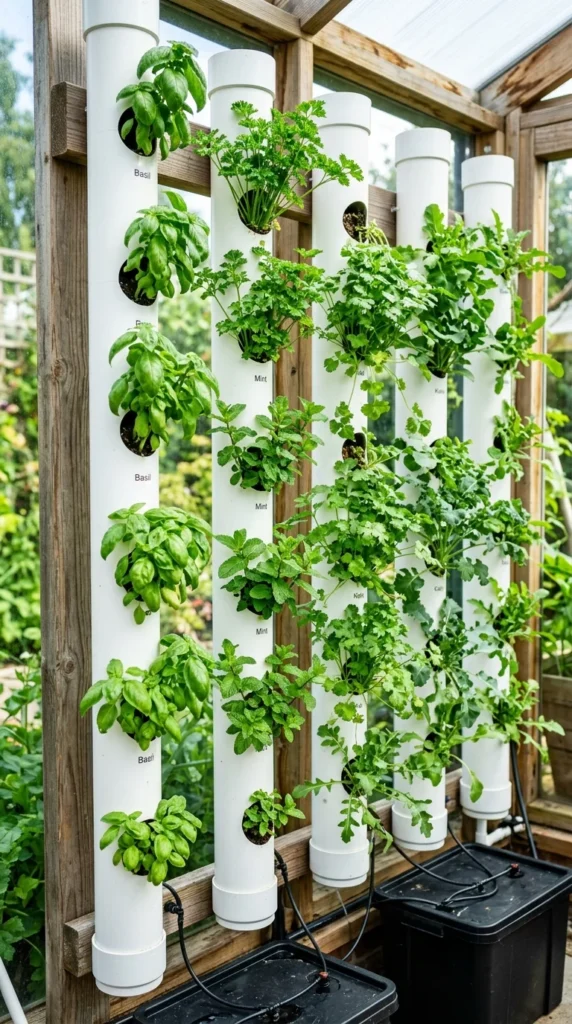
PVC pipes can be transformed into high-density growing towers. By cutting holes into the sides and filling the pipe with soil or a hydroponic medium, you can grow dozens of plants in a single vertical column. This method is particularly popular for those looking to maximize yield in a very small footprint, such as a balcony corner.
11. Floating Shelves
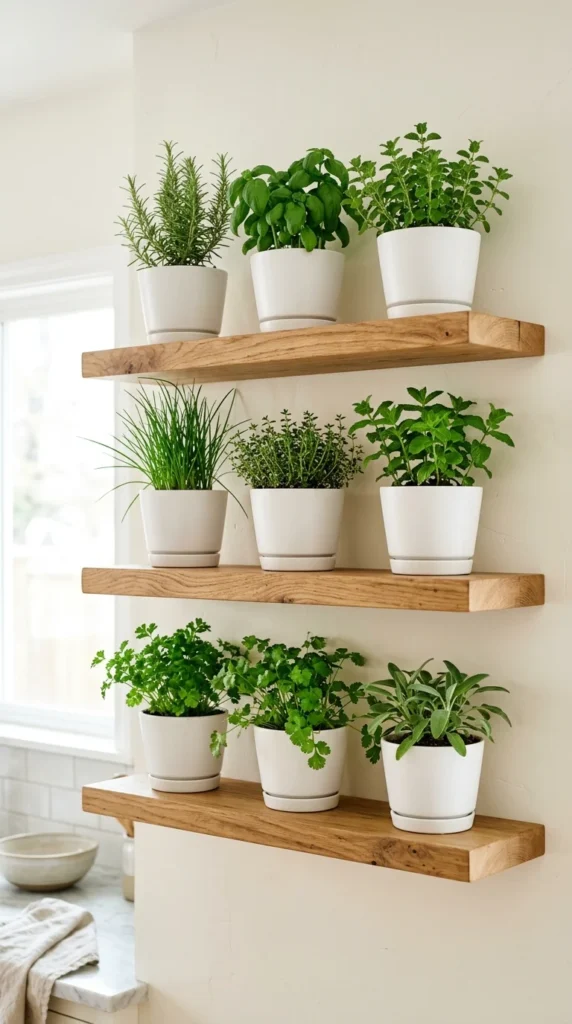
Floating shelves provide a clean, modern look while keeping your countertops clear. By installing shelves specifically for your herbs, you can curate a beautiful “herb gallery.” Choosing uniform pots creates a cohesive look, while different pot styles can offer a more eclectic, bohemian vibe.
12. Wire Mesh
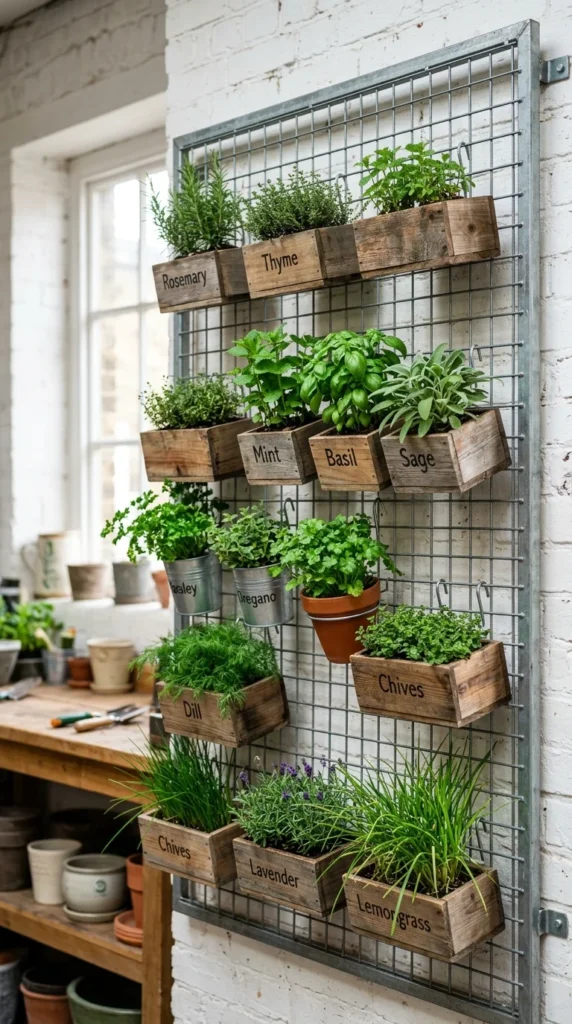
Using a wire mesh or “remesh” panel allows for an edgy, industrial aesthetic. Similar to a trellis, the mesh provides infinite attachment points for pots. This is a particularly sturdy option for outdoor walls where you might want to hang heavier ceramic or wooden planters.
13. Wine Crates
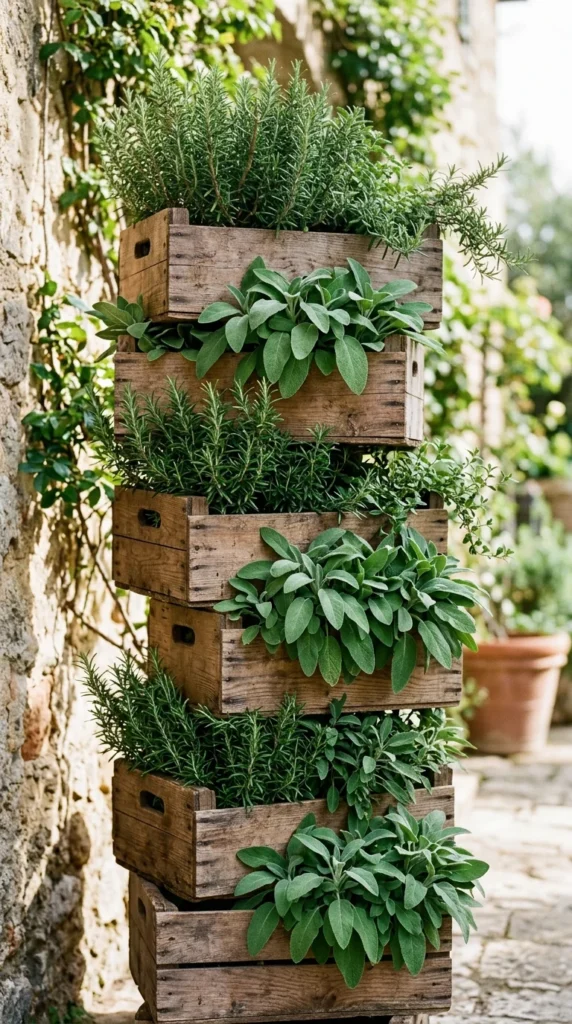
Stacked wine crates offer a deep planting environment suitable for herbs that need a bit more root space, such as rosemary or lavender. By staggering the crates, you create “steps” that allow light to reach the lower levels. The weathered wood adds a warm, rustic charm to any patio or balcony.
14. Tiered Baskets
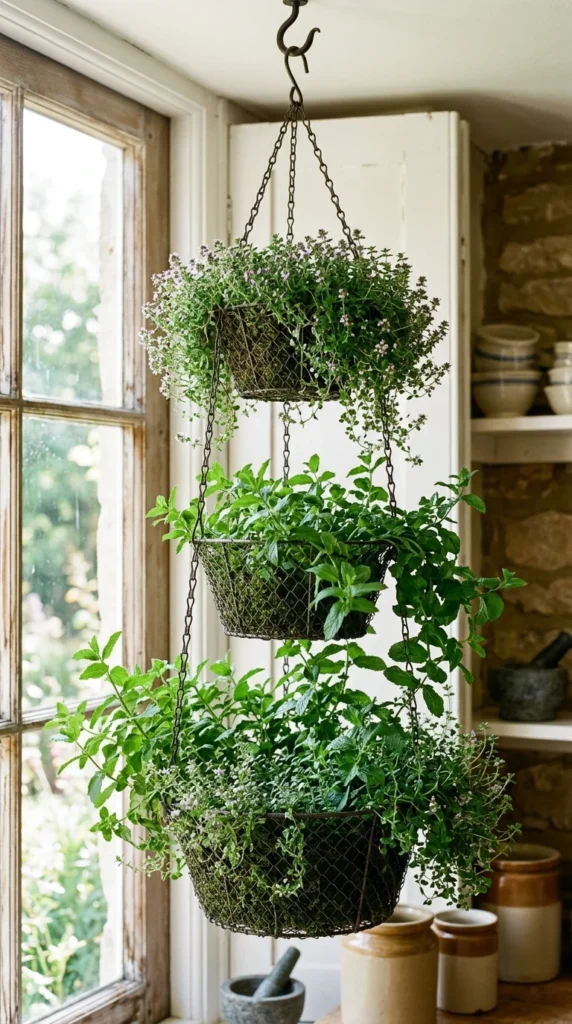
Hanging baskets are perfect for utilizing ceiling space. A tiered basket system, often used for fruit, can be lined with coco coir or moss to hold soil. This keeps herbs out of reach of pets and small children while adding a lush, hanging element to your room’s decor.
15. Felt Grow Bags
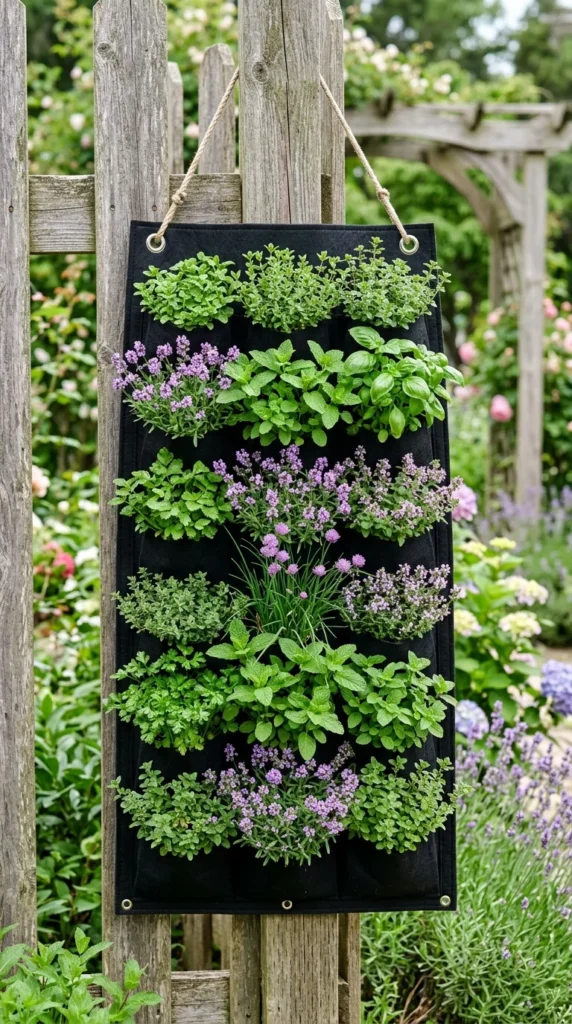
Specifically designed for gardening, felt grow bags are lightweight and promote “air pruning” of the roots, which leads to a healthier root system. These bags often come with pre-installed grommets, making them easy to hang on hooks or nails. They are an excellent choice for a temporary or seasonal garden.
16. Pegboard Walls
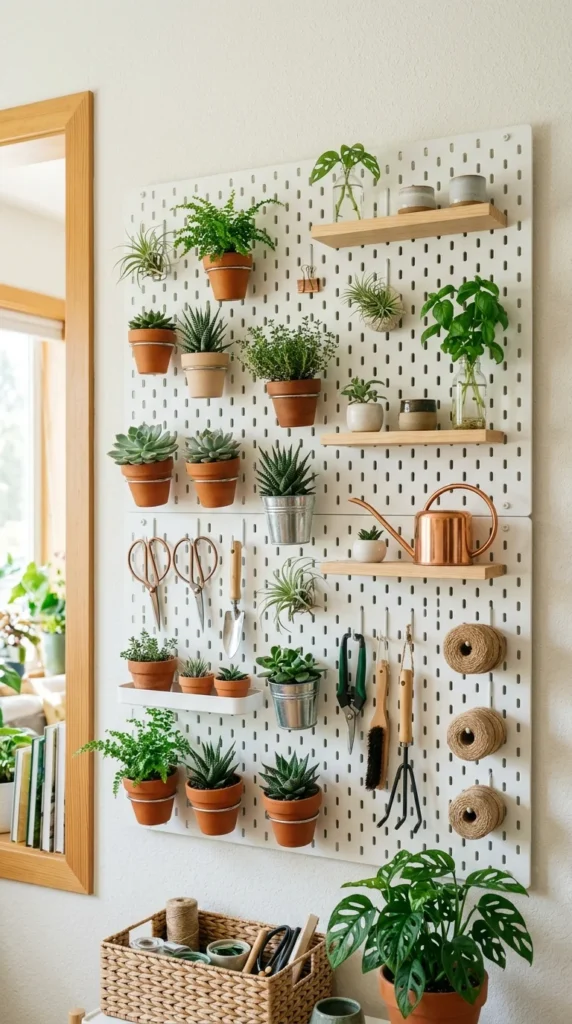
Pegboards are the ultimate in modular organization. By using specialized pegboard hooks and ring holders, you can create a completely adjustable herb garden. As your herbs grow or as you add new varieties, you can simply unhook the pots and rearrange them. This is a favorite for those who love to tweak and optimize their space.
17. Repurposed Shutters
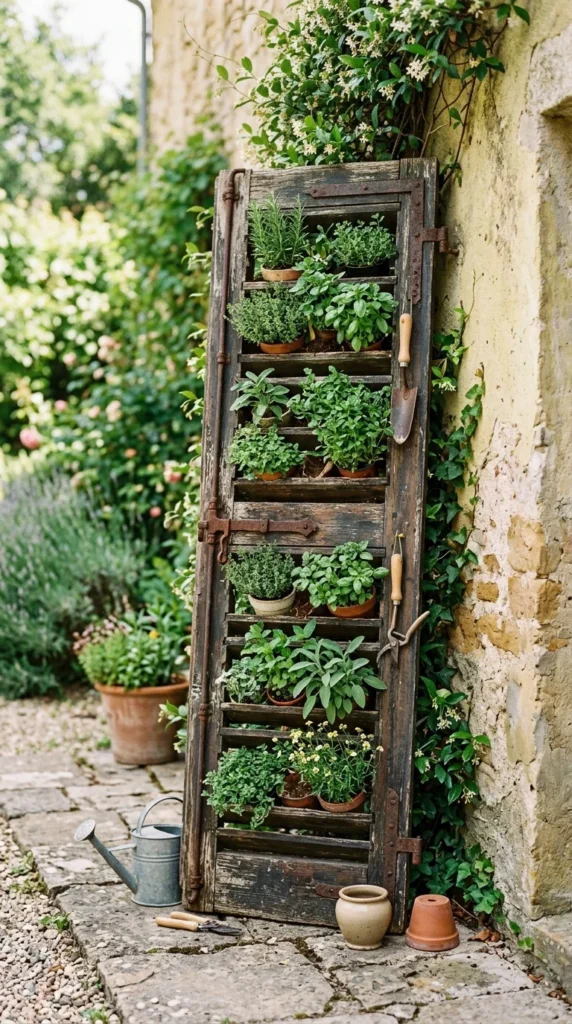
An old window shutter can be given new life as a vertical planter. The angled slats are perfectly positioned to hold small pots or, if lined with landscape fabric, can be filled directly with soil. This creates a narrow, tall garden that fits into the tightest of spaces.
18. Tower Planters
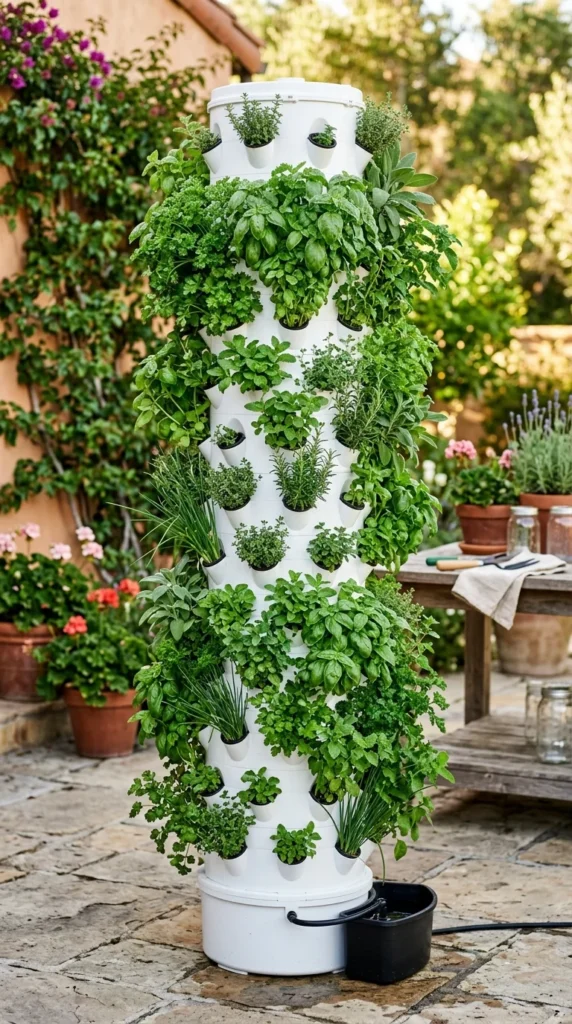
For the serious home chef, a dedicated tower planter (often used for hydroponics or aeroponics) provides the highest yield per square foot. These systems often include internal irrigation, making them almost “set it and forget it” once established. They are perfect for those who want a high-tech, high-yield garden.
19. Chalkboard Planters
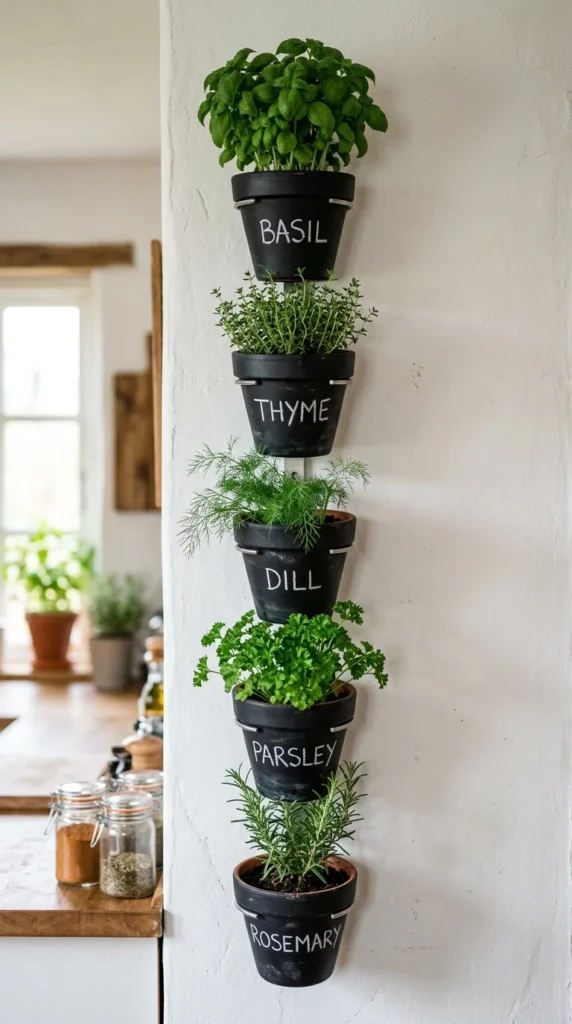
Combining labeling with planting, chalkboard planters are both functional and decorative. By mounting these on a vertical rack, you can clearly identify your herbs—a helpful feature for families or those just beginning their gardening journey. It also adds a bistro-like charm to your kitchen.
20. Copper Pipes
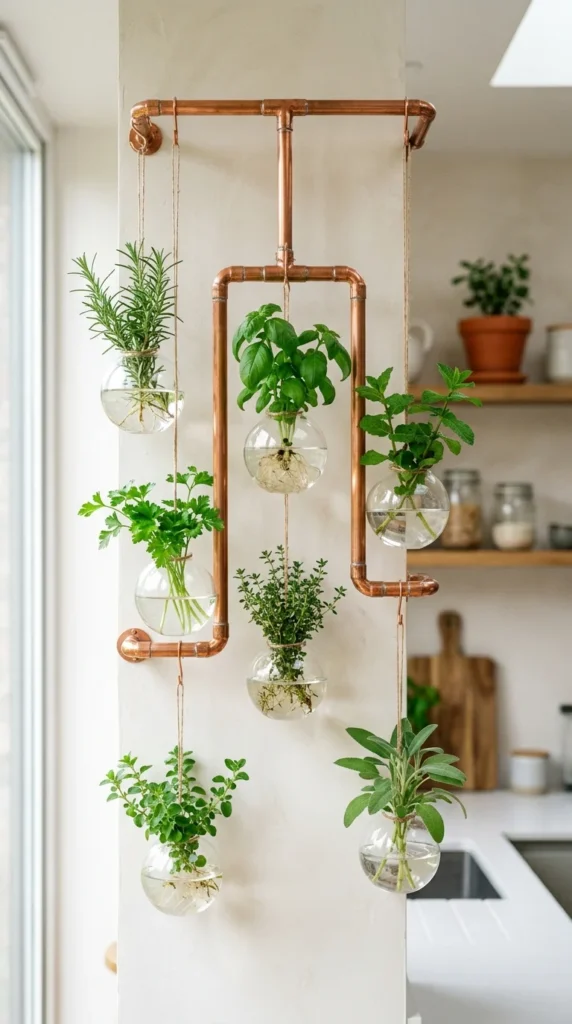
For a high-end, contemporary look, a copper pipe frame can be used to hang small planters or glass vessels. This setup works beautifully for “water-grown” herbs or small soil-based pots. The warm glow of the copper contrasted with the vibrant green of the herbs creates a stunning visual statement in a modern home.
Tips for Vertical Herb Success
While vertical gardening is a space-saver, it does come with unique considerations:
- Light Requirements: Most herbs need at least 6 hours of sunlight. Ensure your vertical structure is placed near a south-facing window or in a sunny spot on your balcony.
- Watering Needs: Vertical gardens, especially those in small containers or breathable fabrics, dry out faster than traditional gardens. Check the soil moisture daily.
- Weight Distribution: Ensure your wall or mounting system can handle the weight of wet soil and pots. Use wall anchors for indoor mounting.
- Drainage: Always provide a way for excess water to escape to prevent root rot. If indoors, ensure there is a tray or system to catch runoff to protect your floors and walls.
- Fertilization: Because herbs in small containers have limited soil, they can quickly deplete nutrients. Use a liquid organic fertilizer every few weeks during the growing season.