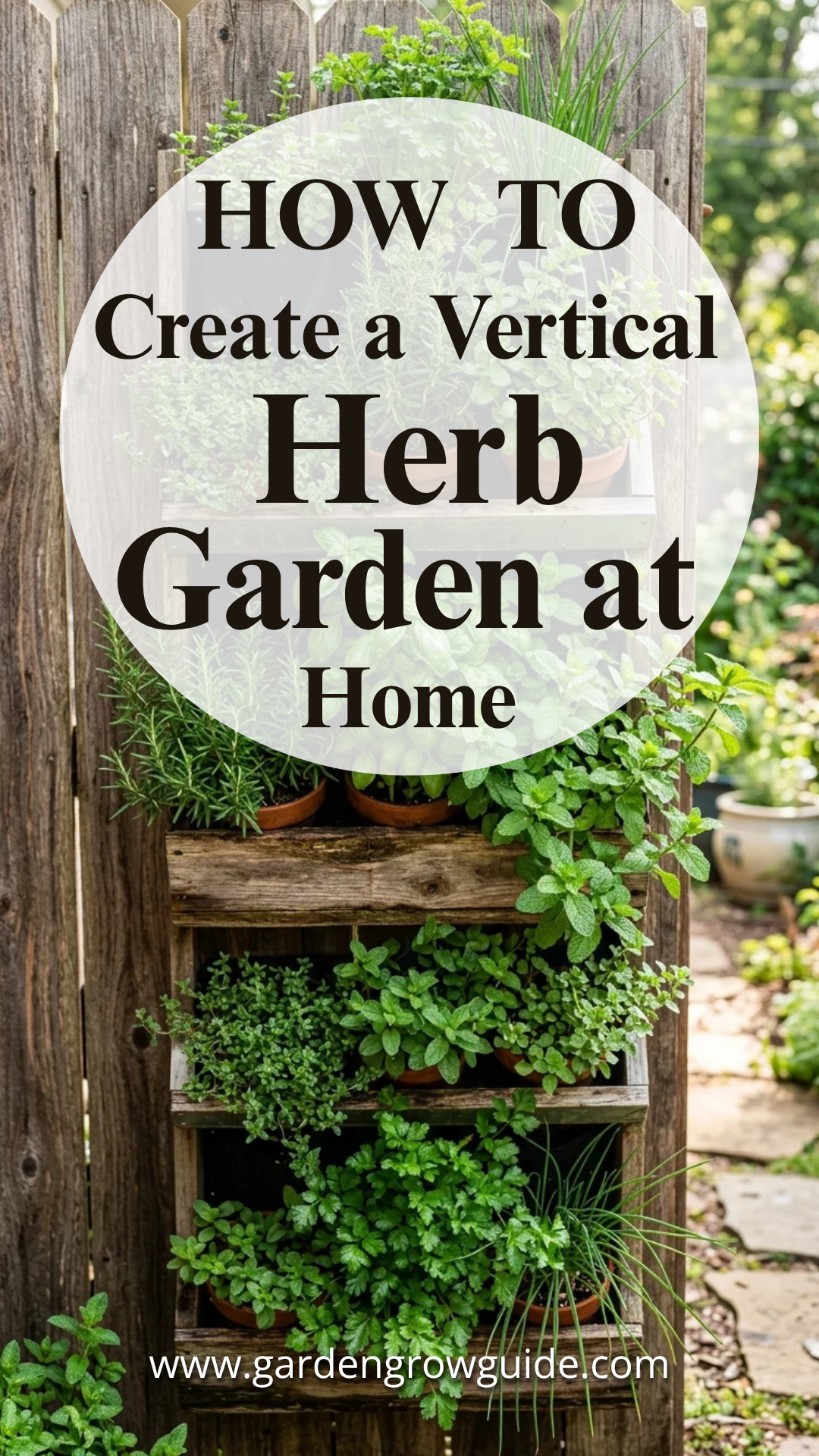
Vertical gardening has transformed the way urban dwellers and homeowners with limited space approach horticulture. By utilizing vertical space, you can cultivate a thriving oasis of fresh flavors right in your kitchen, on your balcony, or along a backyard fence. A vertical herb garden is not only a functional source of culinary ingredients but also a striking aesthetic feature that improves air quality and brings a sense of tranquility to your living environment.
1. Location
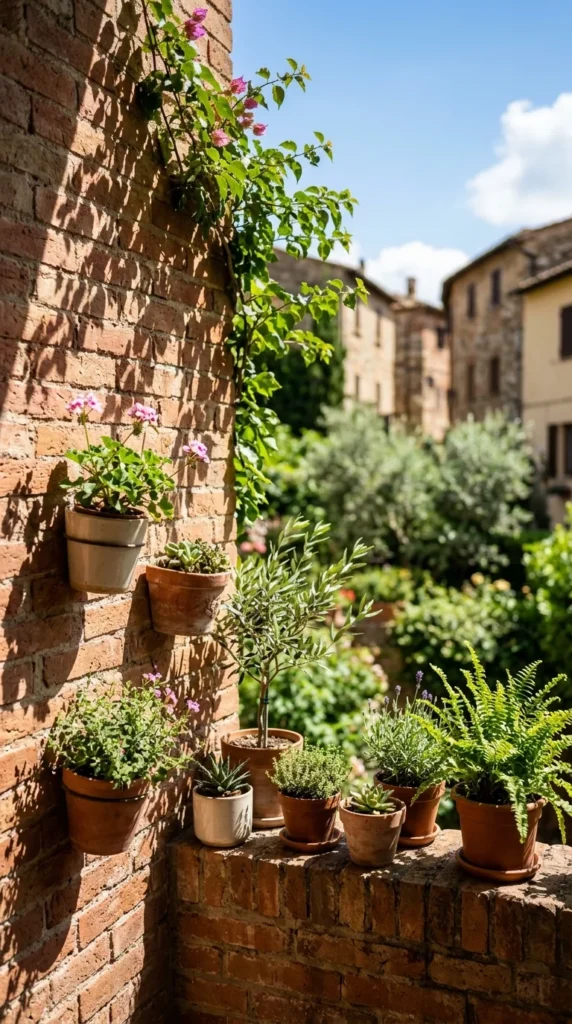
The success of your vertical herb garden depends heavily on where you place it. Most culinary herbs are Mediterranean in origin, meaning they crave significant amounts of sunlight. Ideally, your vertical structure should be placed in a spot that receives at least six to eight hours of direct sunlight daily. South-facing walls are typically the “gold standard” for this.
Beyond light, consider accessibility and airflow. You want your garden close enough to the kitchen that “pinching a bit of rosemary” doesn’t feel like a chore. However, ensure the area has good air circulation to prevent fungal diseases, which can spread quickly in the dense planting patterns typical of vertical systems. If you are planting indoors, choose a spot near a large window or supplement with full-spectrum LED grow lights to mimic the intensity of the sun.
2. Structures
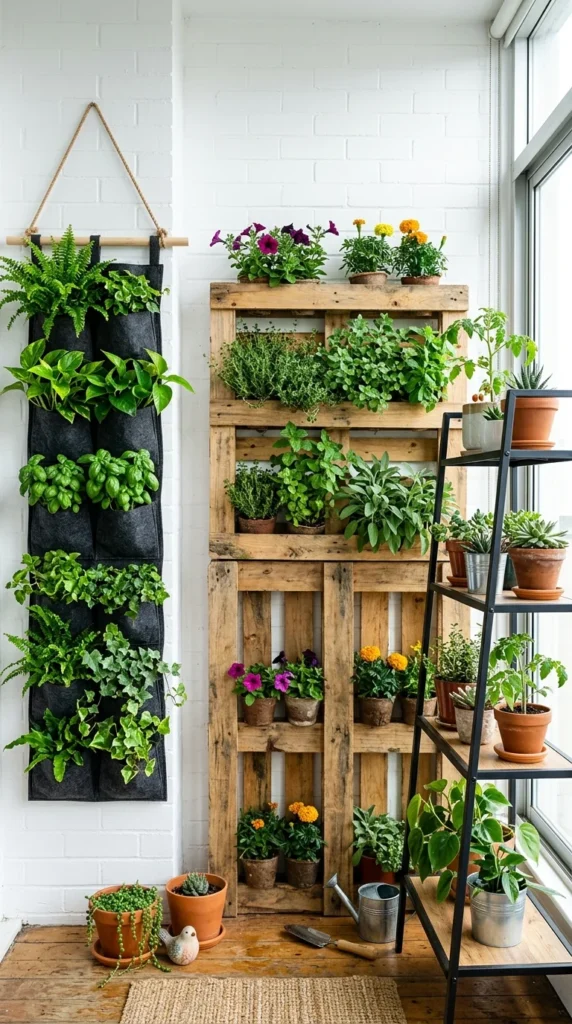
The “skeleton” of your garden can range from DIY projects to high-tech pre-fabricated kits. The choice depends on your budget, aesthetic preference, and the weight-bearing capacity of your wall.
- Pocket Slings: Often made from breathable felt or recycled plastic, these “living walls” feature rows of pockets. They are lightweight and excellent for air pruning roots, though they tend to dry out faster than other methods.
- Pallet Gardens: A classic DIY favorite. By stapling landscape fabric to the back and bottom of a wooden pallet, you create a rustic, multi-tiered planter. Ensure the wood is heat-treated (marked “HT”) rather than chemically treated to avoid toxins leaching into your food.
- Tiered Shelving: Utilizing a ladder-style rack or floating shelves allows you to use traditional pots. This is the most flexible option, as you can move individual plants if one needs more sun or starts to struggle.
- PVC or Pipe Systems: For a modern, industrial look, vertical pipes with holes cut out can house herbs in a hydroponic or soil-based setup.
3. Herbs
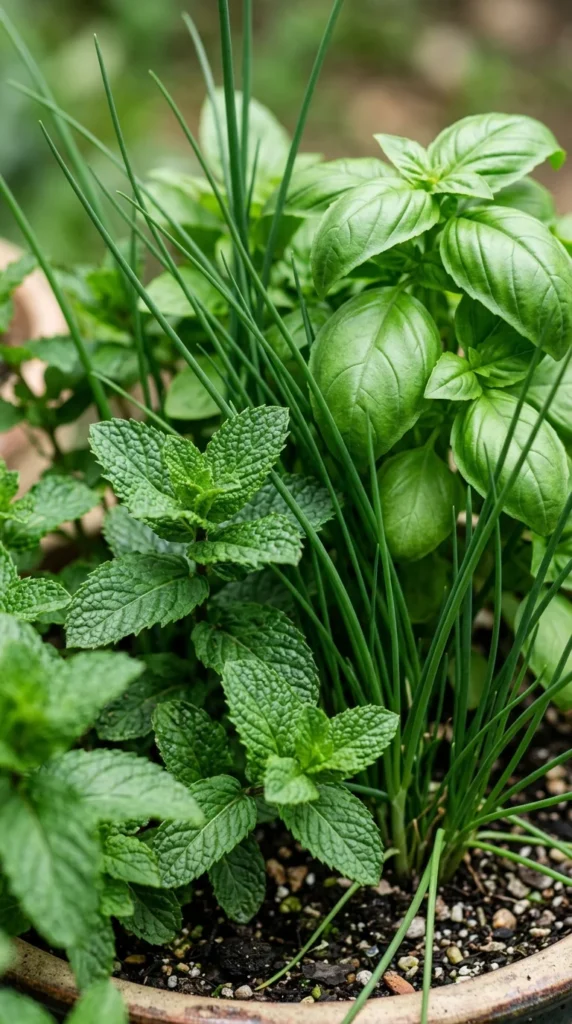
Not all herbs are created equal when it comes to vertical growth. You must consider the growth habit of each plant—some grow upright, some trail downward, and some spread like a carpet.
- The “Thrillers” (Upright): Rosemary, Dill, and Thai Basil provide height and structure. These should generally be placed in the top tiers where they won’t shade out smaller neighbors.
- The “Fillers” (Mounding): Chives, Parsley, and Cilantro grow in dense clumps. They are perfect for middle pockets or pots.
- The “Spillers” (Trailing): Creeping Thyme, Oregano, and Mint love to cascade. Placing these in lower pockets allows them to drape beautifully over the structure without smothering the plants below.
Crucially, keep invasive herbs like Mint in their own contained pots. Mint roots are aggressive and will quickly take over an entire shared planter or felt pocket system if not restricted.
4. Containers
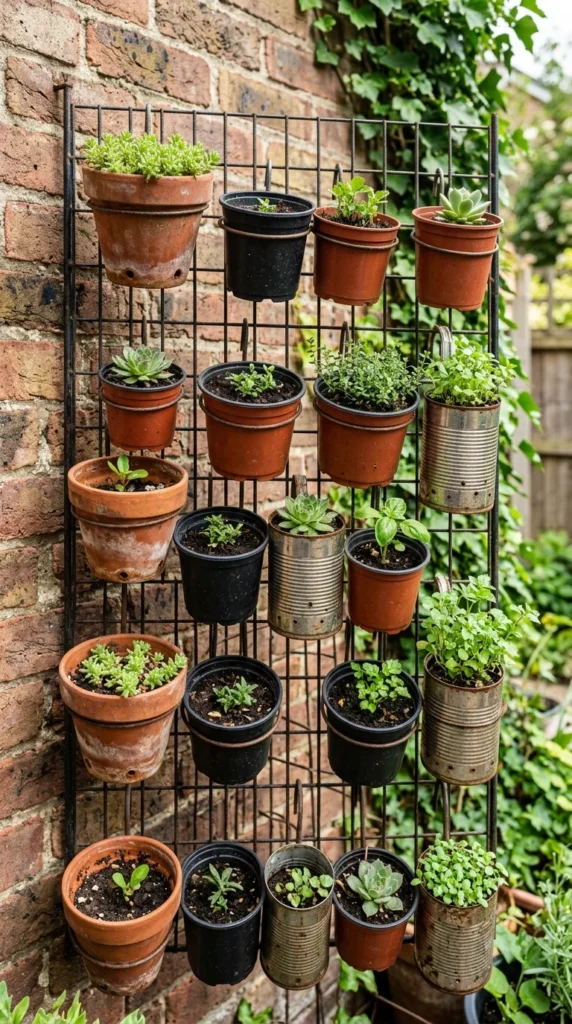
The containers you choose will dictate how often you need to water. Vertical gardens are notorious for drying out quickly because they are exposed to more air on all sides.
- Terracotta: Breathable and beautiful, but very heavy and prone to drying out.
- Plastic/Resin: Retains moisture well and is lightweight, making it ideal for wall-mounted systems.
- Self-Watering Pots: These have a reservoir at the bottom, which is a lifesaver for vertical setups where the top plants often dry out while the bottom ones stay damp.
- Fabric Pots: These allow for excellent oxygenation of the roots but require a waterproof barrier between the pot and your wall to prevent rot or water damage to your home.
5. Substrate
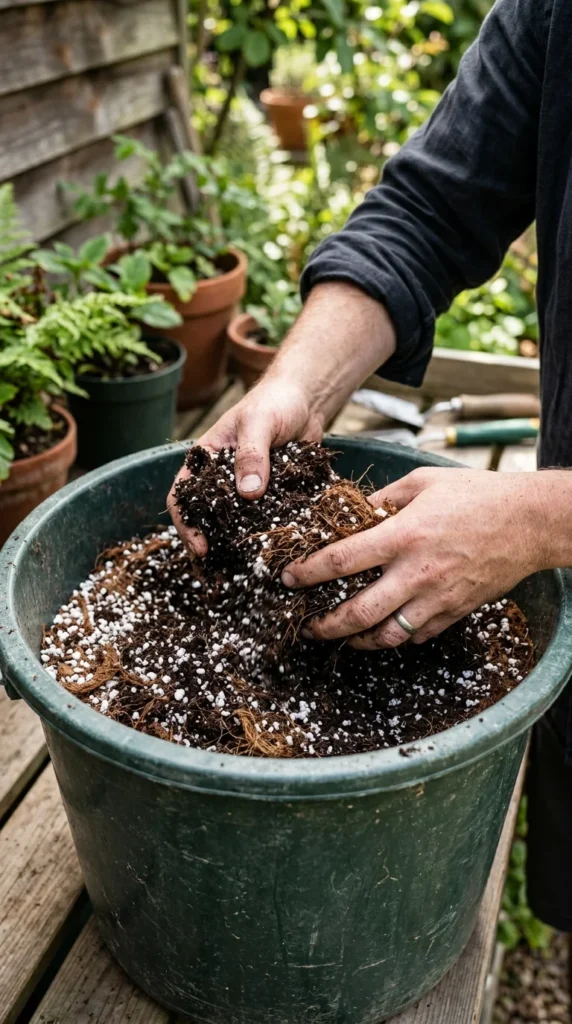
Do not use standard garden soil in a vertical garden. It is too heavy, can contain pests, and compacts easily, which suffocates roots in a confined space. Instead, use a high-quality “soilless” potting mix.
A great DIY mix for vertical herbs consists of:
- 1 part Peat Moss or Coconut Coir: For moisture retention.
- 1 part Perlite or Vermiculite: For aeration and drainage.
- 1 part Compost or Worm Castings: For natural, slow-release nutrition.
Because herbs in vertical gardens have limited root space, the quality of the substrate is their only lifeline for nutrients. Adding a handful of hydrogels (water-retaining crystals) can also help if you live in a particularly arid climate.
6. Irrigation
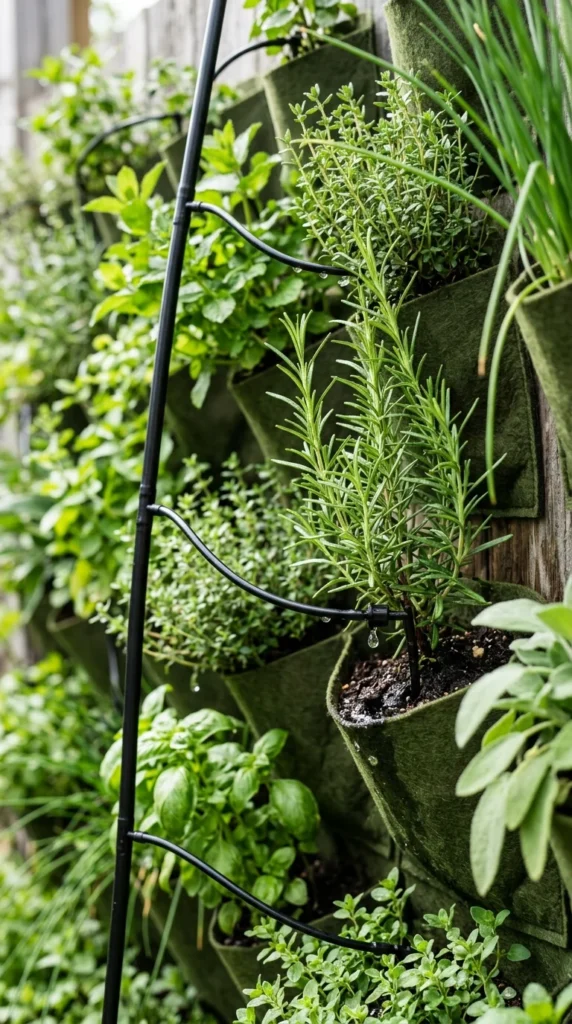
Watering is the most challenging aspect of vertical gardening. Gravity causes water to migrate downward, meaning the top plants often starve for moisture while the bottom plants sit in a swamp.
- Manual Watering: If you choose to water by hand, start at the top and work your way down. Use a long-necked watering can or a misting wand to reach high spots without splashing soil onto the leaves.
- Drip Irrigation: This is the “set it and forget it” solution. Small emitters are placed in every pot or pocket, connected to a timer. This ensures consistent moisture levels, which is the key to preventing herbs like Cilantro from bolting (going to seed prematurely).
- Wicking Systems: A cotton cord runs from a central water reservoir to each plant, drawing up water as the soil dries out. This is highly effective for indoor vertical gardens.
7. Nutrients
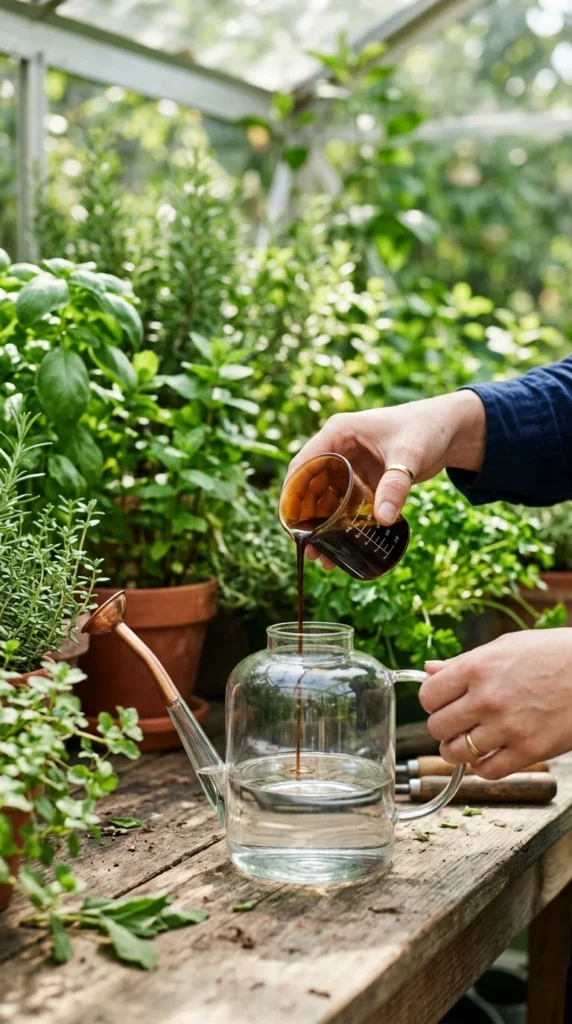
In a vertical system, nutrients are washed away more quickly due to frequent watering. While herbs generally prefer “lean” soil (too much nitrogen can actually reduce the concentration of flavorful essential oils), they still need regular feeding.
Use a liquid organic fertilizer diluted to half-strength every two to four weeks during the growing season. Seaweed extract or fish emulsion is excellent for herbs, providing a wide array of trace minerals without the risk of chemical burns. Avoid high-nitrogen fertilizers unless you are only growing leafy greens, as too much nitrogen encourages weak, spindly growth in woody herbs like Sage and Rosemary.
8. Pruning
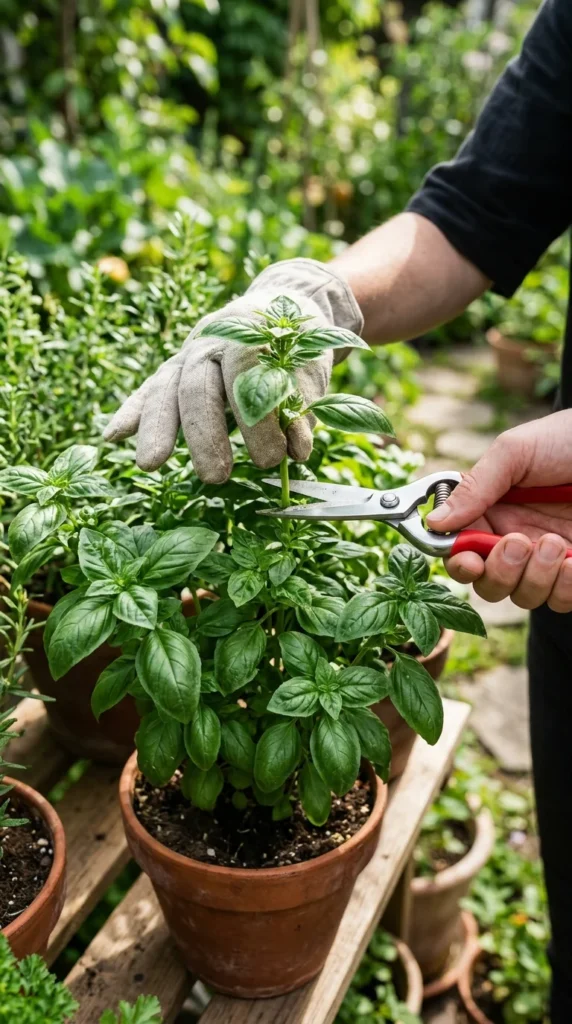
To keep a vertical garden looking like a lush wall rather than a collection of straggly weeds, regular pruning is essential. Harvesting is pruning. The more you use your herbs, the better they will grow.
- Pinching: Use your thumb and forefinger to pinch off the tips of basil and mint. This forces the plant to branch out, creating a bushier, more compact shape that fits better in a vertical pocket.
- Deadheading: If you see flowers forming, snip them off immediately. Once an herb flowers, its energy shifts from leaf production to seed production, often making the leaves taste bitter or woody.
- Airflow Pruning: Occasionally thin out the center of dense plants like Parsley to ensure light and air can reach the inner stems, preventing mold.
9. Maintenance

A vertical garden requires a bit more vigilance than a traditional garden bed. Because plants are packed closely together, pests like spider mites or aphids can migrate across the entire “wall” in a matter of days.
- Pest Check: Once a week, look at the undersides of leaves. If you find pests, a simple spray of neem oil or insecticidal soap usually does the trick.
- Rotation: If your structure allows, rotate the pots every few weeks. Plants naturally lean toward the light; rotating them ensures they grow straight and even.
- Seasonal Refresh: Some herbs are annuals (like Basil and Cilantro) and will eventually die off. Have a few starter plants ready to go so you can “plug” holes in your vertical wall as soon as a plant finishes its life cycle.
10. Harvesting
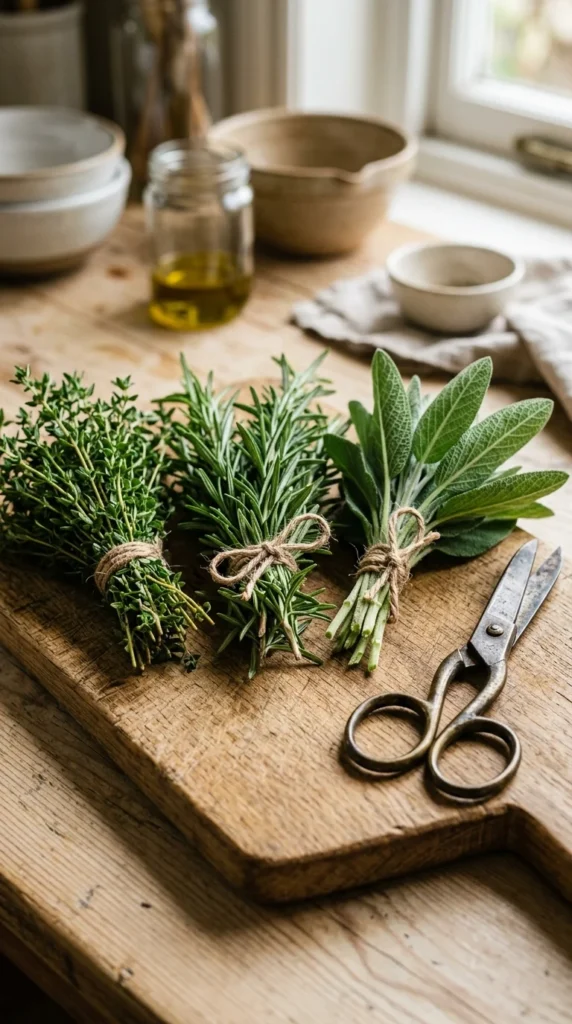
The final and most rewarding step is the harvest. For the best flavor, harvest your herbs in the morning after the dew has dried but before the sun is at its hottest. This is when the essential oils are at their peak concentration.
Never harvest more than one-third of the plant at a time. This ensures the herb has enough foliage left to photosynthesize and recover. With a well-maintained vertical garden, you will have a perpetual supply of fresh aromatics that elevate your cooking from ordinary to extraordinary, all while taking up no more than a few square feet of floor space.