Herb gardens are the perfect marriage of utility and beauty. Whether you are a culinary enthusiast looking for fresh flavors, a hobbyist seeking a fragrant sanctuary, or a small-space dweller wanting to add greenery to your home, there is an herb garden design for everyone. Beyond their kitchen uses, many herbs boast medicinal properties and the ability to attract pollinators, making them an essential addition to any landscape.
1. Window Box
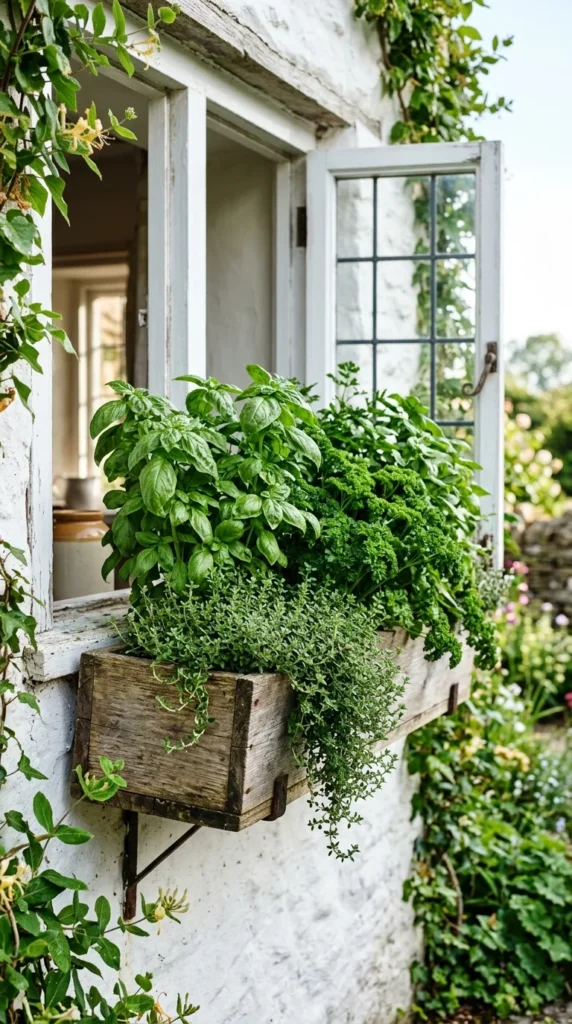
A window box is the ultimate solution for urban dwellers or those with limited outdoor space. Positioned right outside your kitchen window, it provides instant access to fresh garnishes. The key to a successful window box is ensuring proper drainage and choosing herbs with similar water requirements. Mediterranean herbs like rosemary and thyme pair well together as they prefer slightly drier soil.
2. Vertical Wall
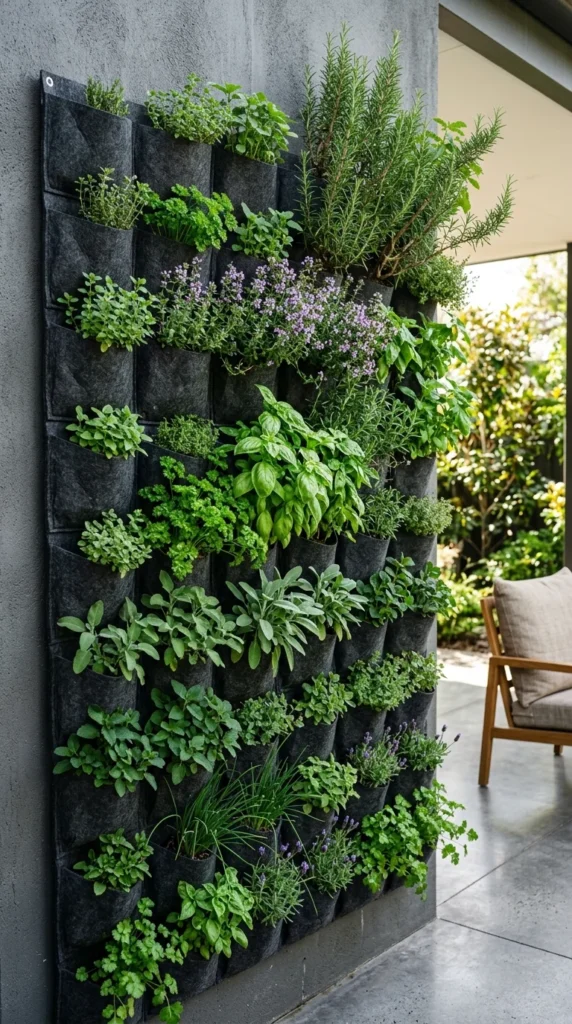
Vertical gardens maximize square footage by utilizing wall space. Using a modular system or felt pockets, you can create a “living wall” of greenery. This method is particularly effective for soft-stemmed herbs like cilantro, mint, and chives. It also serves as a stunning focal point for a patio or balcony, muffling street noise and providing a refreshing microclimate.
3. Raised Beds
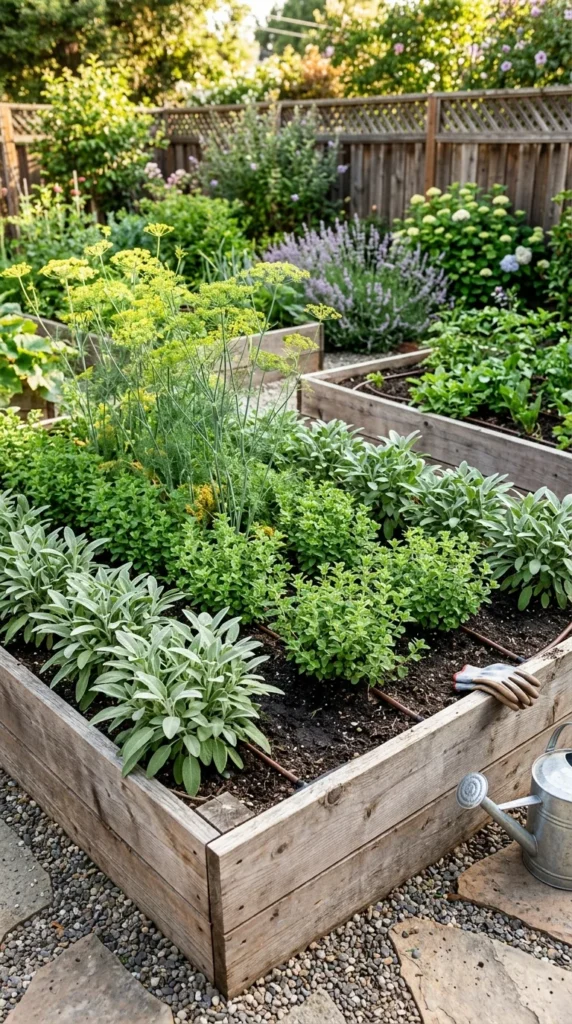
Raised beds offer superior control over soil quality and drainage. They are easier on the back and knees, as they reduce the need for bending. By using high-quality compost and organic matter, you can grow robust, high-yield herbs. Raised beds also help define different zones in a larger garden, keeping spreading herbs like mint contained if you use internal dividers.
4. Kitchen Counter
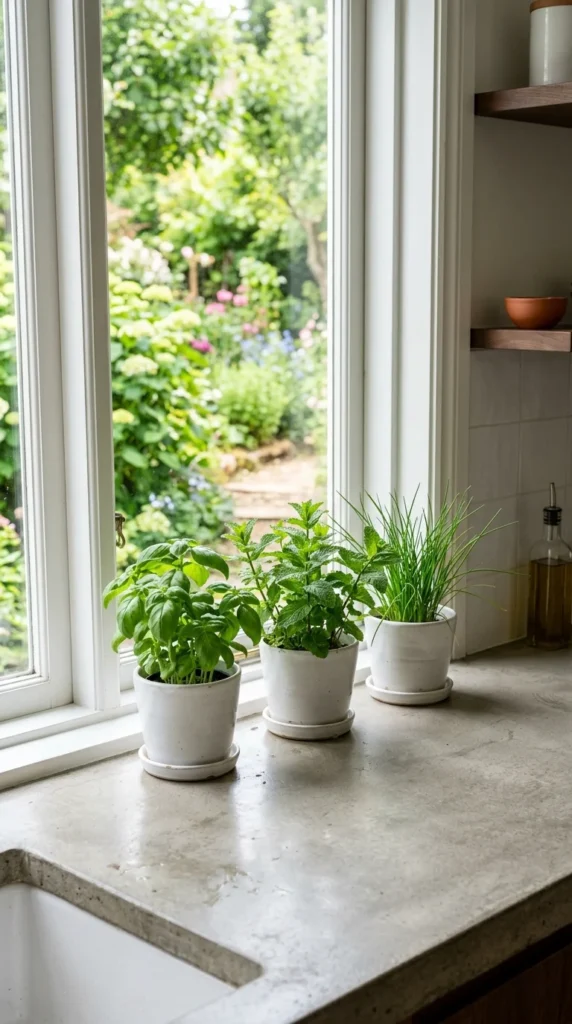
Keeping herbs on the kitchen counter is the height of convenience. Small pots of basil, parsley, and mint can thrive on a sunny windowsill. To keep them looking their best, ensure they receive at least six hours of light daily or supplement with a small LED grow light. This setup encourages frequent harvesting, which actually promotes bushier growth in most herbs.
5. Hanging Baskets
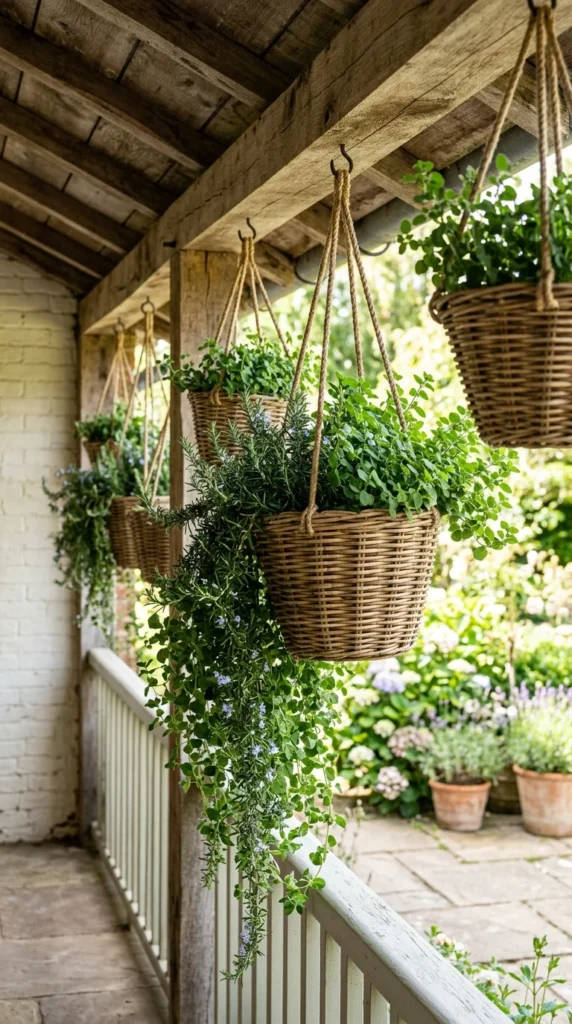
Hanging baskets are perfect for trailing herbs. Prostrate rosemary, creeping thyme, and oregano look beautiful as they spill over the edges of a basket. This method keeps the herbs away from ground-level pests and utilizes overhead space that would otherwise go unused. Be sure to check the soil moisture frequently, as hanging containers tend to dry out faster than ground-level pots.
6. Spiral Garden
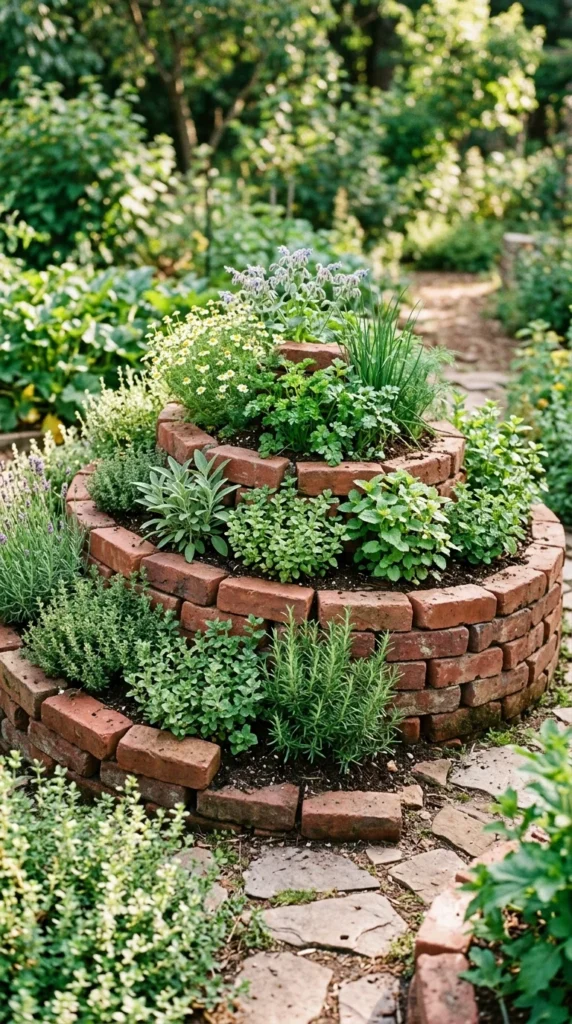
The herb spiral is a permaculture classic that creates multiple microclimates in a small footprint. The top of the spiral is dry and sunny—perfect for rosemary and sage—while the bottom stays moist and cool, which is ideal for mint and parsley. It is a highly efficient way to grow a diverse range of herbs while adding a sculptural element to your yard.
7. Pallet Garden
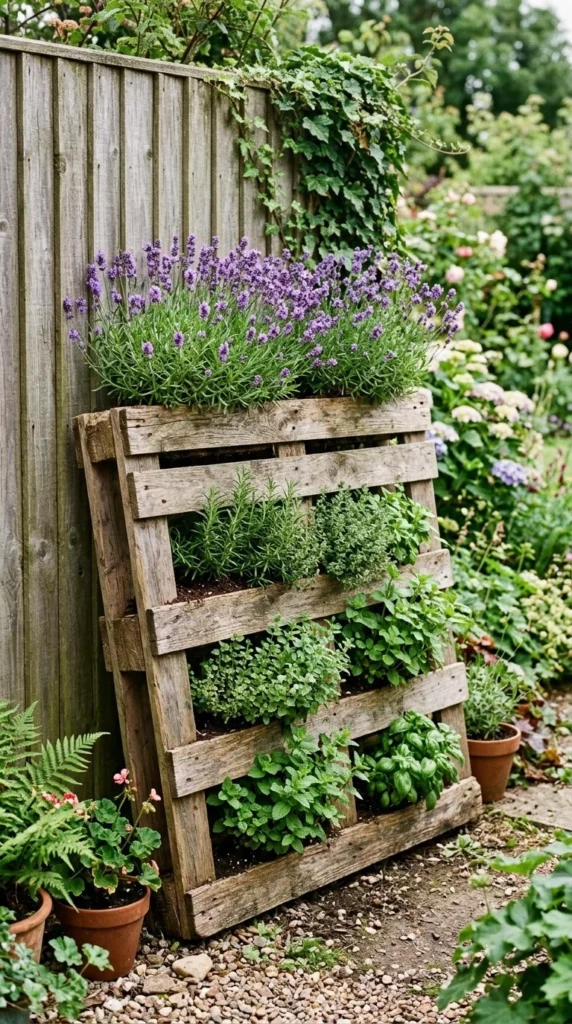
Upcycling a wooden pallet into an herb garden is an eco-friendly and budget-friendly project. By sealing the wood and adding landscape fabric to create pockets, you can grow a variety of herbs in a vertical format. It adds a rustic, farmhouse charm to any outdoor space and is easy to customize with paint or wood stain to match your decor.
8. Terracotta Pots
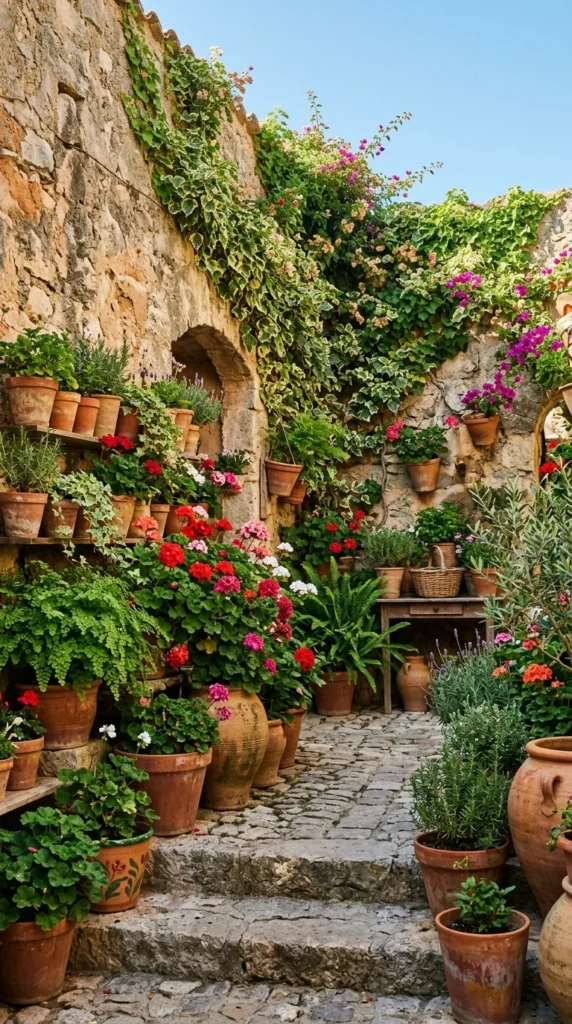
Classic terracotta pots are breathable, which prevents root rot and allows for healthy gas exchange. Grouping different sizes together creates a charming, Mediterranean-inspired display. Terracotta is especially good for “thirsty” herbs that don’t like to sit in soggy soil. The warm orange hue of the clay provides a beautiful contrast to the deep greens and silvery blues of herb foliage.
9. Mason Jar Wall
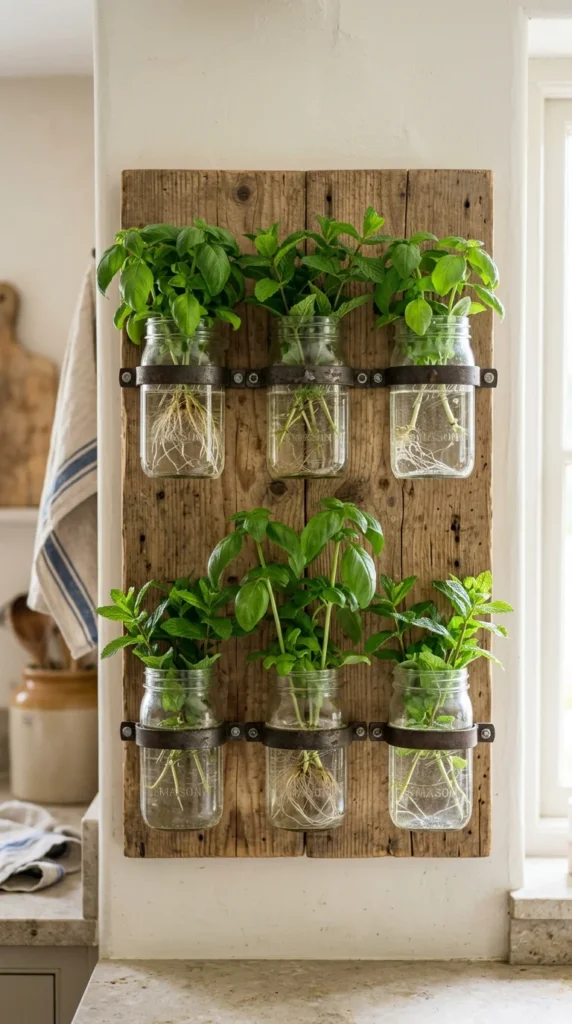
For a modern or farmhouse-style indoor garden, mason jars mounted on a reclaimed wood board are a popular choice. This can be used for soil-based growing or for rooting cuttings in water. If using soil, it is crucial to add a layer of pebbles at the bottom for drainage since jars do not have holes. This setup is perfect for small-scale harvests of “cut and come again” herbs.
10. Companion Planting
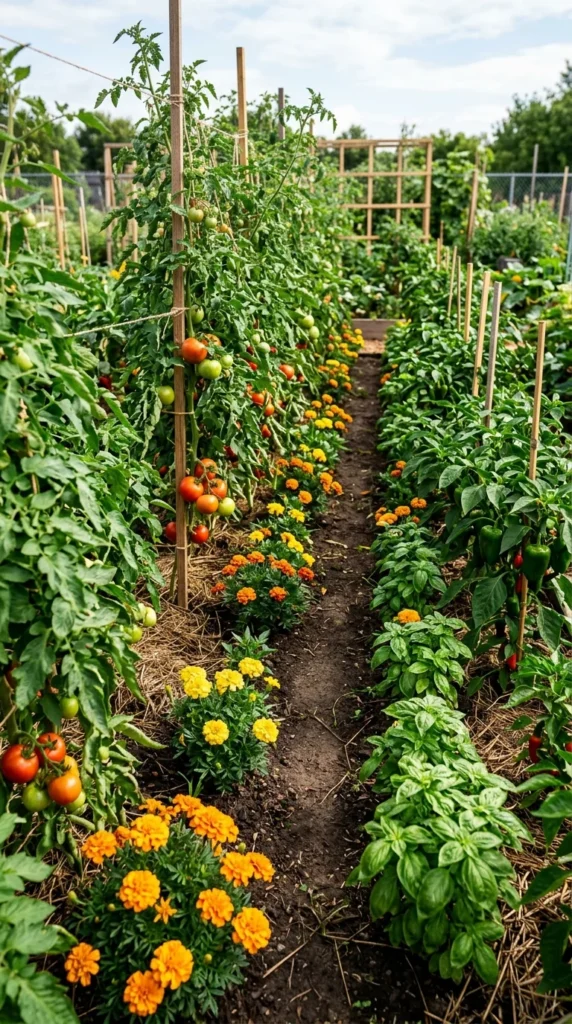
Integrating herbs into your vegetable patch is a functional strategy known as companion planting. For example, planting basil near tomatoes is said to improve the flavor of the fruit and repel pests. Many herbs, such as dill and cilantro, attract beneficial insects like ladybugs and predatory wasps that protect your vegetables from aphids and caterpillars.
11. Tiered Ladder
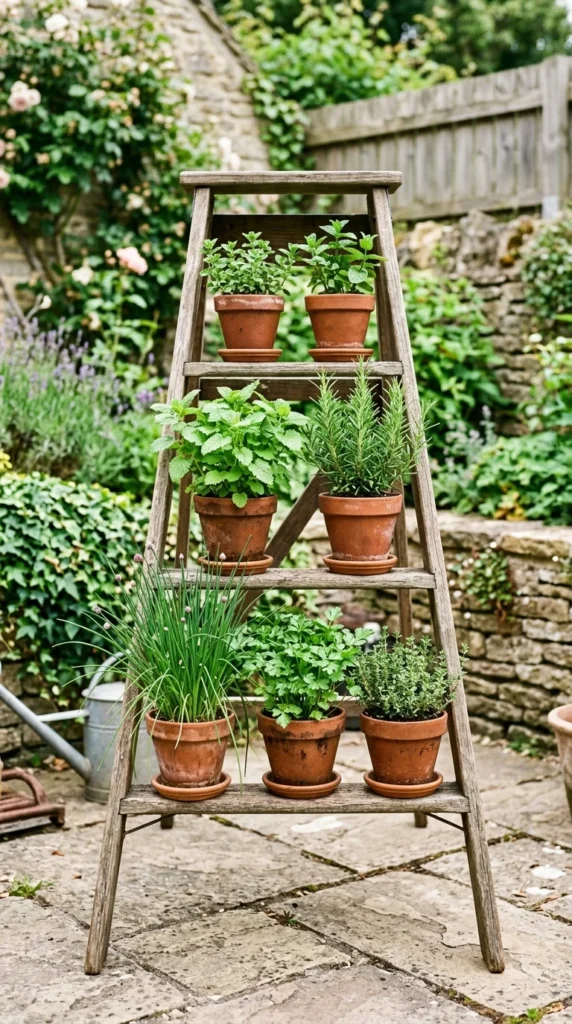
A tiered ladder stand allows you to display a variety of herbs in a small footprint while ensuring each plant gets adequate sunlight. It creates a “staircase” of greenery that is visually appealing and highly organized. This is an excellent option for a balcony or a small deck where you want to maximize vertical height without mounting anything to the walls.
12. Wheelbarrow Garden
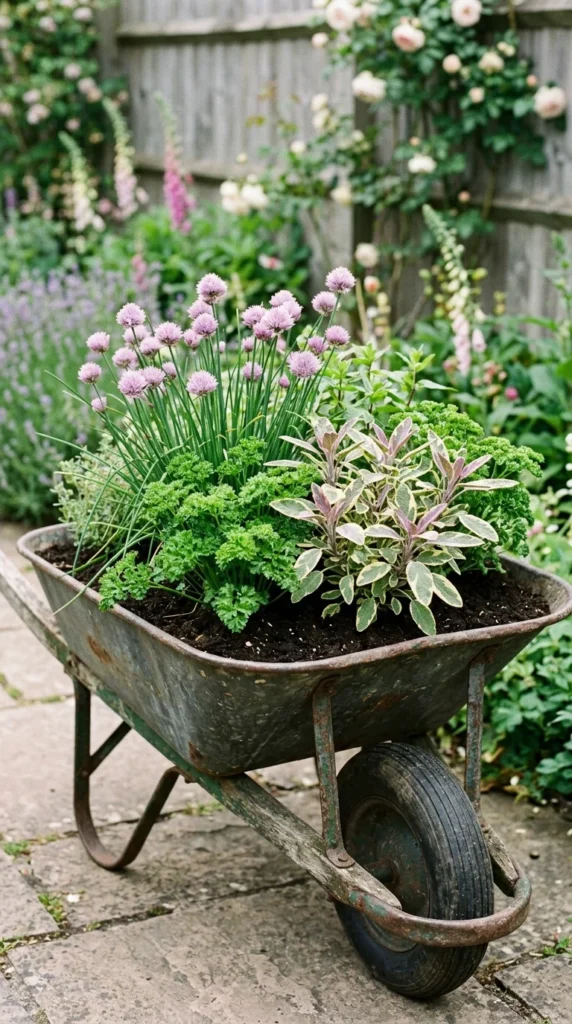
An old, repurposed wheelbarrow makes a mobile and whimsical herb garden. This is ideal if your yard has shifting sun patterns, as you can literally wheel your garden to the sunniest spot. Ensure you drill drainage holes in the bottom of the wheelbarrow to prevent waterlogging. It serves as a rustic focal point that adds personality to a backyard.
13. Tea Garden
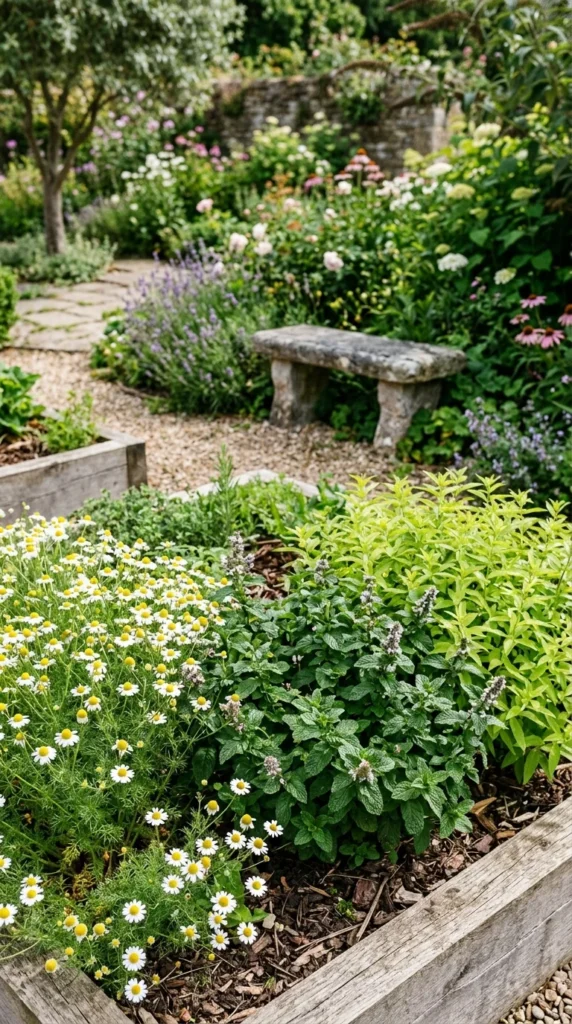
A dedicated tea garden focuses on herbs used for infusions. Planting peppermint, lemon balm, chamomile, and stevia together creates a thematic and fragrant corner of the garden. Imagine stepping outside to harvest fresh leaves for a morning cup of tea. These herbs are often vigorous growers, so grouping them together allows you to manage their spreading habits more effectively.
14. Woven Willow Edging
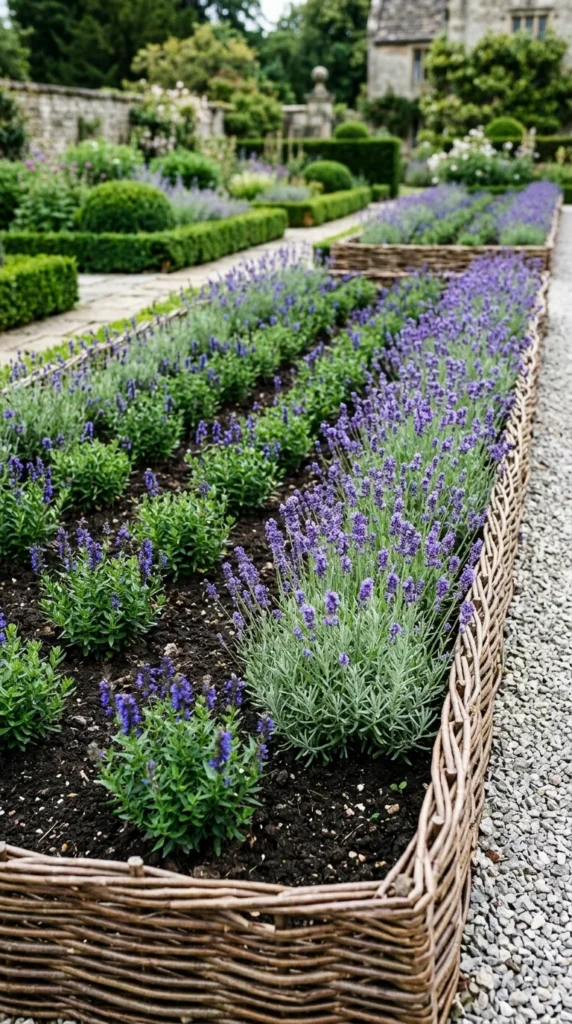
Using woven willow or “wattle” to edge your herb garden beds adds a traditional, English cottage feel. The natural texture of the willow complements the organic shapes of the herbs. This technique is great for creating slightly raised beds and keeping pathways clear of sprawling herbs like oregano or thyme.
15. Gutter Garden
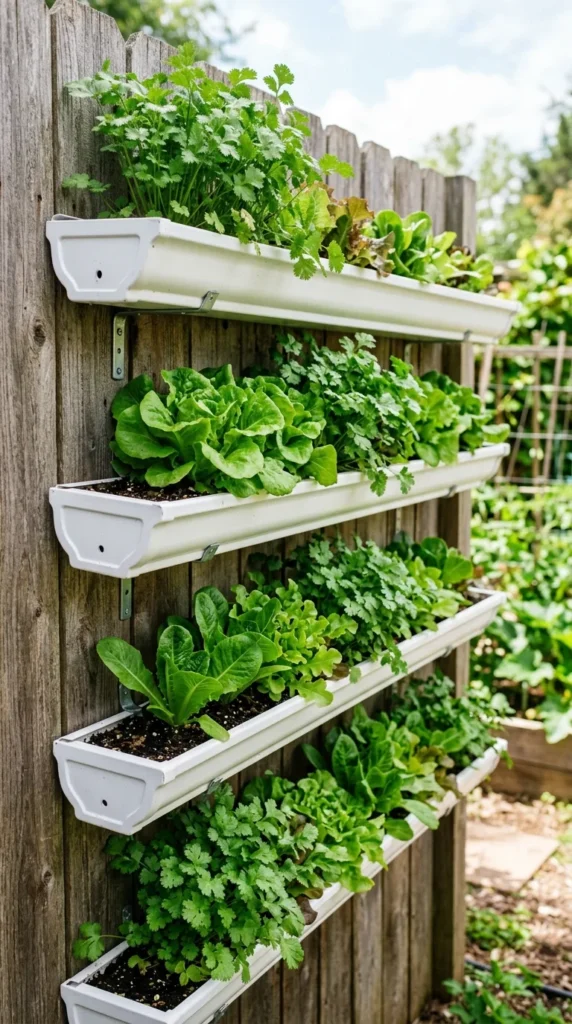
Rain gutters mounted to a fence or wall create a slim, space-saving herb garden. This is particularly effective for shallow-rooted herbs like cilantro, parsley, and various types of lettuce or microgreens. It is an inexpensive way to turn a boring fence into a productive agricultural wall.
16. Hydroponic Tower
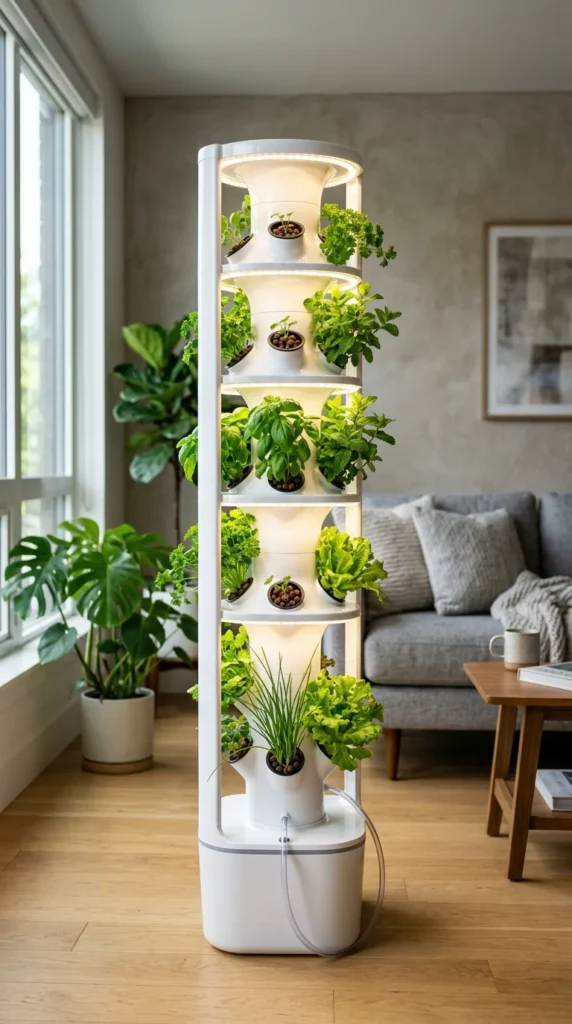
For the tech-savvy gardener, a hydroponic tower allows you to grow herbs indoors year-round without soil. These systems use a nutrient-rich water solution to feed the plants directly. They are incredibly efficient, often growing plants faster than traditional soil methods. A tower can sit in a corner of a dining room or kitchen, providing a futuristic and highly productive indoor farm.
17. Rock Garden
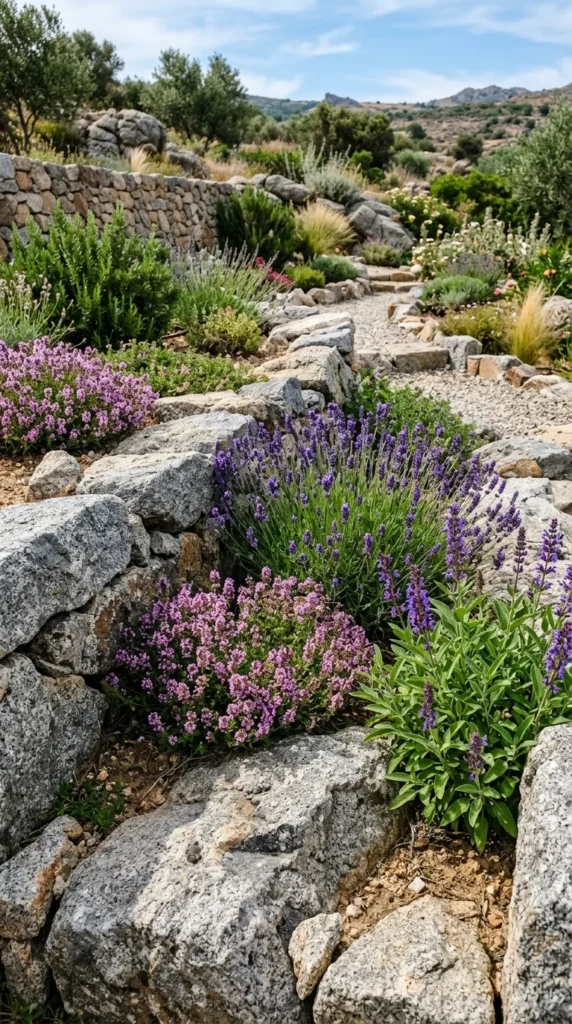
Many Mediterranean herbs, such as thyme, oregano, and winter savory, thrive in the poor, well-draining soil found in rock gardens. The rocks absorb heat during the day and release it at night, creating a warm environment that these herbs love. This is a low-maintenance option that works well in sunny, sloped areas where other plants might struggle.
18. Formal Knot Garden

A knot garden is a formal design where herbs are planted in intricate, interlocking patterns. Traditionally, these used clipped hedges of boxwood or lavender to create the “lines” of the knot, with different textured herbs filling the spaces. While it requires more maintenance in terms of pruning, the result is a sophisticated and historic landscape feature.
19. Galvanized Tubs
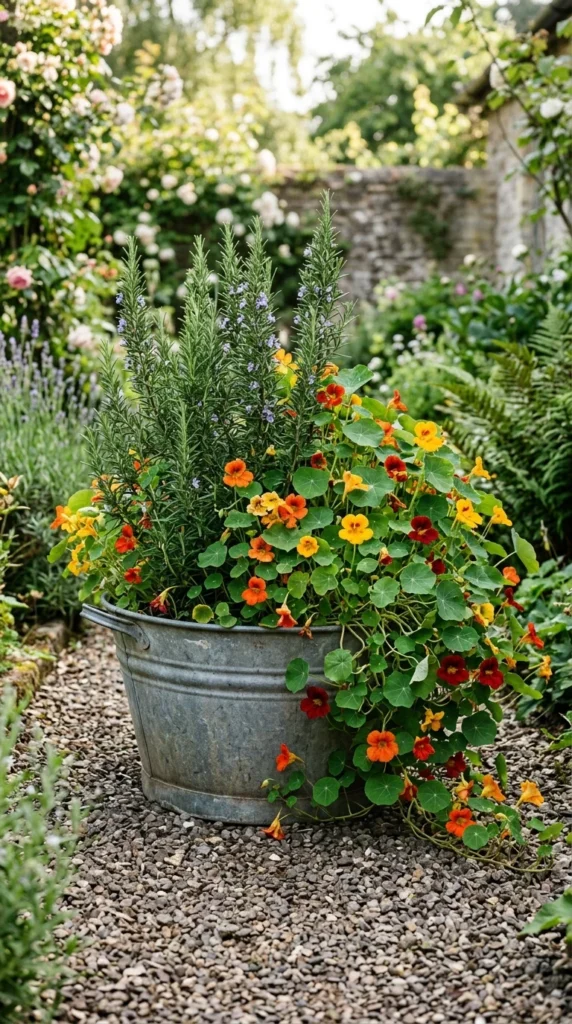
Galvanized steel tubs provide a modern-industrial or rustic-farmhouse look. They are durable, spacious, and hold a significant amount of soil, which helps keep the root temperature stable. These tubs are perfect for larger herb bushes like rosemary or bay laurel. Just be sure to drill ample drainage holes in the bottom before planting.
20. Pocket Planters
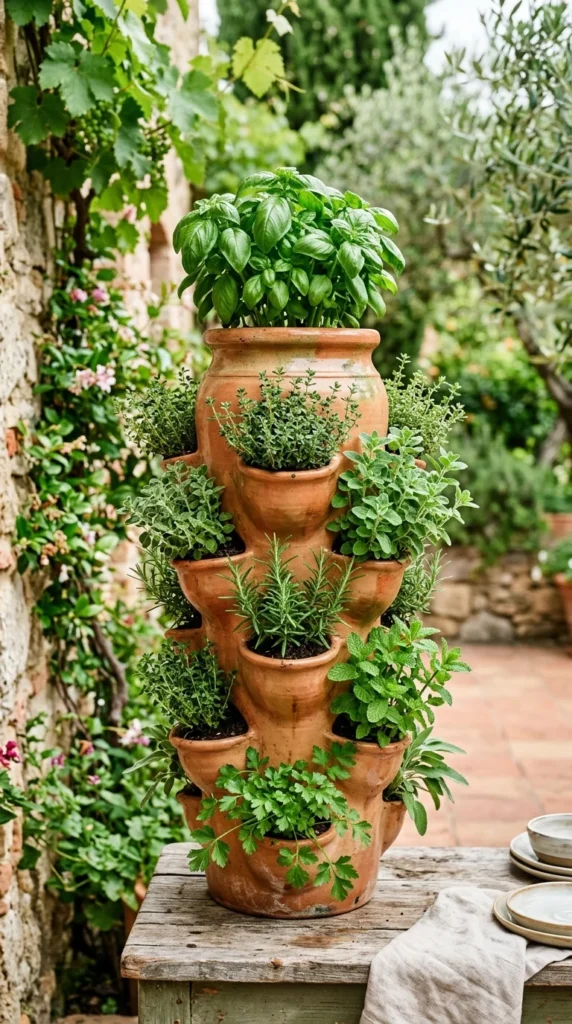
Originally designed for strawberries, “pocket planters” or “strawberry jars” are fantastic for herbs. Each “pocket” can house a different herb, allowing you to grow five or six varieties in a single pot. This is a great way to keep invasive herbs like mint contained while still having them as part of a larger display.
21. Shade-Loving Corner
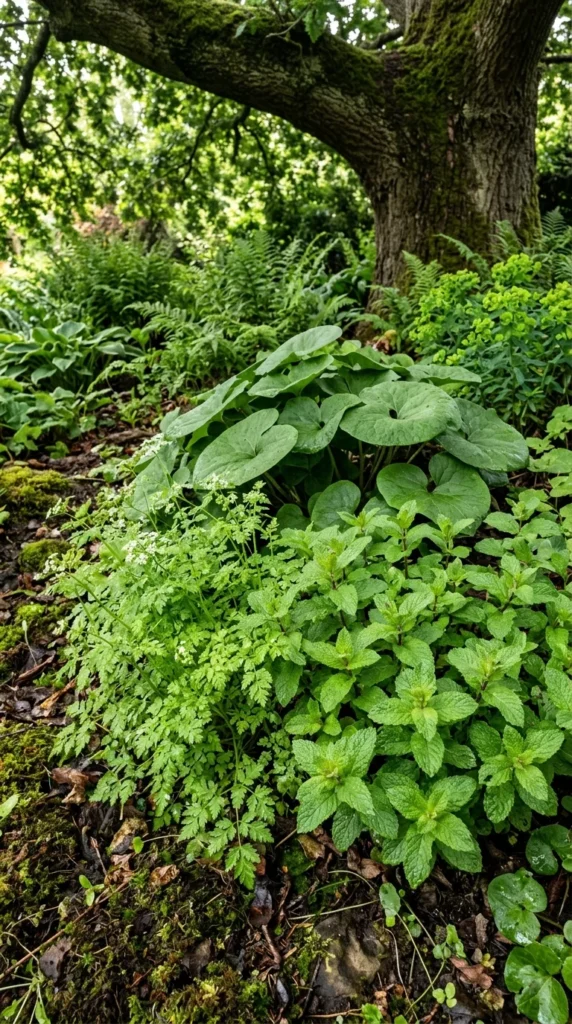
While most herbs love the sun, some actually prefer partial shade. Creating a shade-loving herb corner with mint, chervil, lemon balm, and parsley ensures you can have a garden even in north-facing areas. These herbs often have more delicate leaves and can scorch in intense afternoon sun, so a sheltered, dappled spot is ideal.
22. Indoor Greenhouse
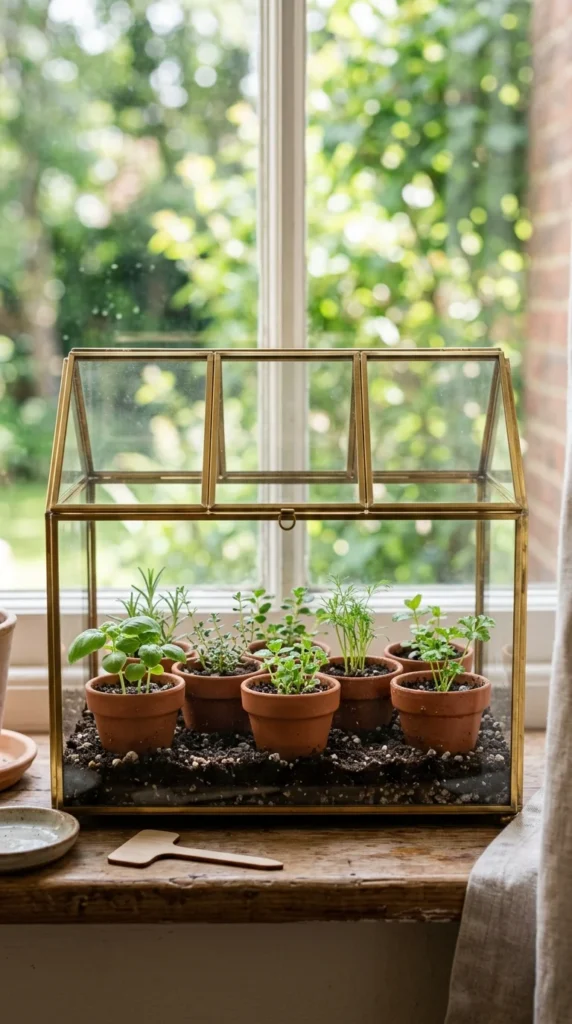
A small tabletop greenhouse is perfect for starting herb seeds or protecting delicate herbs during the winter. It creates a humid microclimate that helps young plants thrive. Beyond its functionality, a glass and metal greenhouse serves as a beautiful decorative piece for a sideboard or console table.
23. Repurposed Crates
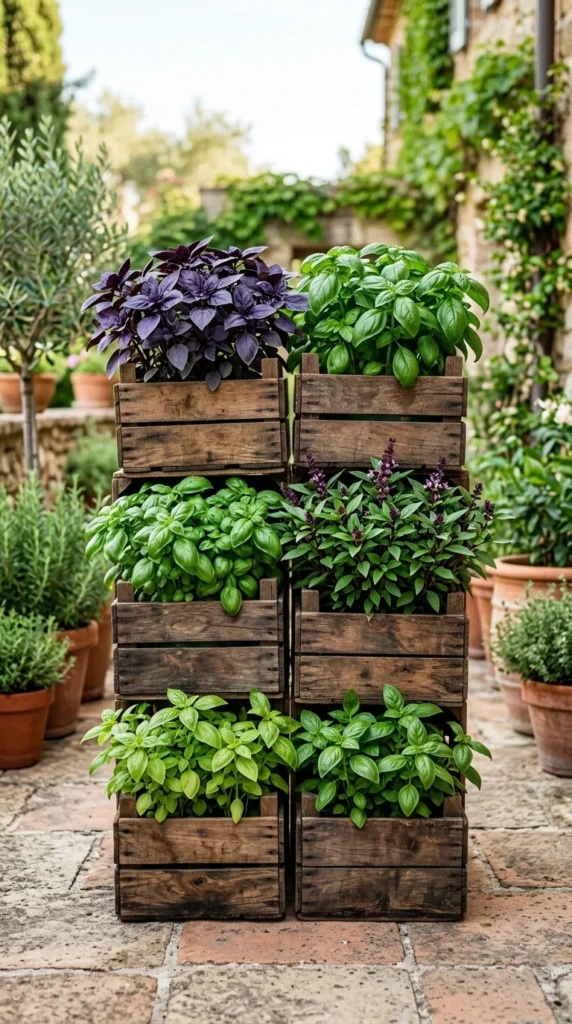
Vintage wine or fruit crates add character to an herb garden. You can stack them to create different heights, making the garden more visually dynamic. Lining them with plastic (with holes) or landscape fabric will help the wood last longer. This is a modular system that can be rearranged whenever you feel like changing the look of your space.
24. Checkerboard Path
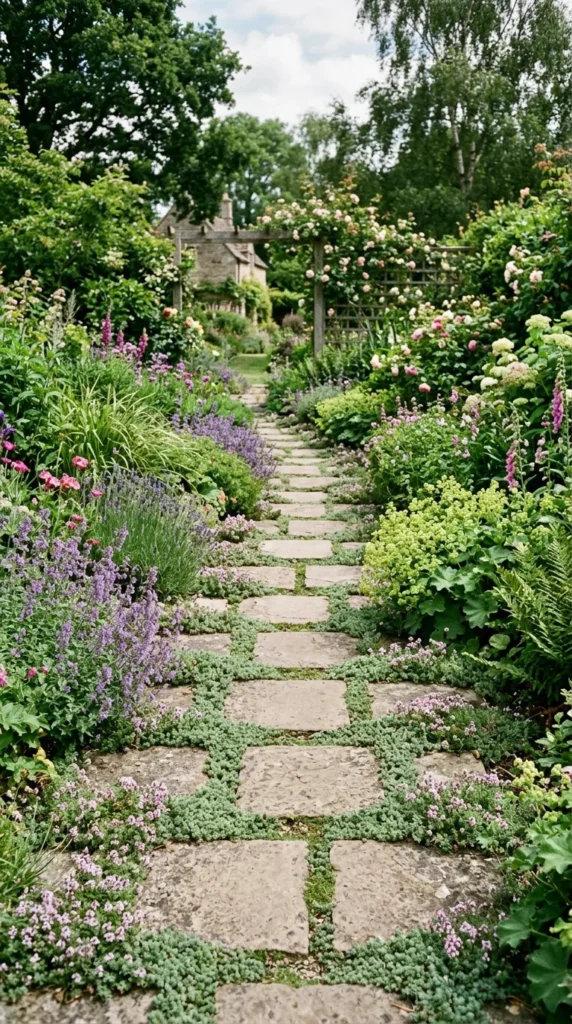
A checkerboard herb garden alternates paving stones with low-growing “steppable” herbs like woolly thyme or Roman chamomile. When you walk on these herbs, they release a wonderful fragrance. This design integrates the garden into the walkway, blurring the lines between hardscape and softscape.
25. Smart Garden Kit
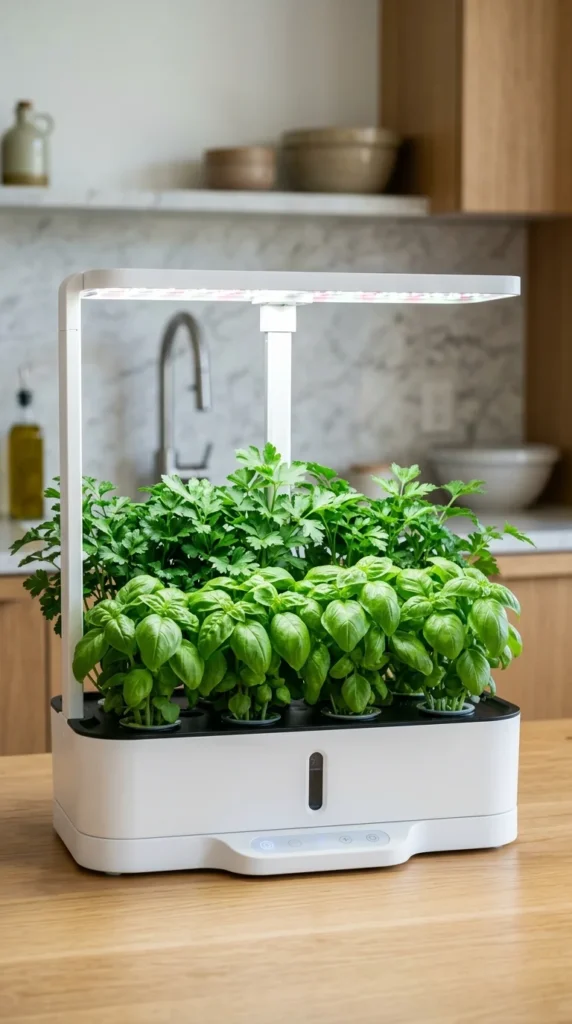
If you have a “black thumb” or a very busy lifestyle, a smart garden kit takes the guesswork out of herb gardening. These devices automatically manage light cycles and water levels. They are often sleek and compact, designed to fit on a desk or a small counter, ensuring you have fresh herbs with minimal effort.
Tips for a Thriving Herb Garden
To ensure your herb garden—regardless of the design you choose—remains healthy and productive, keep these fundamental tips in mind:
- Sunlight Requirements: Most herbs need at least 6 to 8 hours of direct sunlight. If you are growing indoors, a south-facing window is usually the best spot.
- Drainage is Crucial: Herbs do not like “wet feet.” Always use pots with drainage holes and well-draining potting mix. For ground planting, amend heavy clay soil with compost or grit.
- Harvest Regularly: The more you harvest your herbs, the more they will grow. Pinching off the tips encourages the plant to branch out and become bushier rather than leggy.
- Watering Habits: Check the soil daily. Herbs in small pots or in full sun will dry out quickly. However, Mediterranean herbs (lavender, rosemary, sage) should be allowed to dry out slightly between waterings.
- Fertilize Sparingly: Herbs generally don’t need much fertilizer. Over-fertilizing can lead to fast growth but less intense flavor and aroma. A light feeding with organic liquid fertilizer in the spring is usually sufficient.