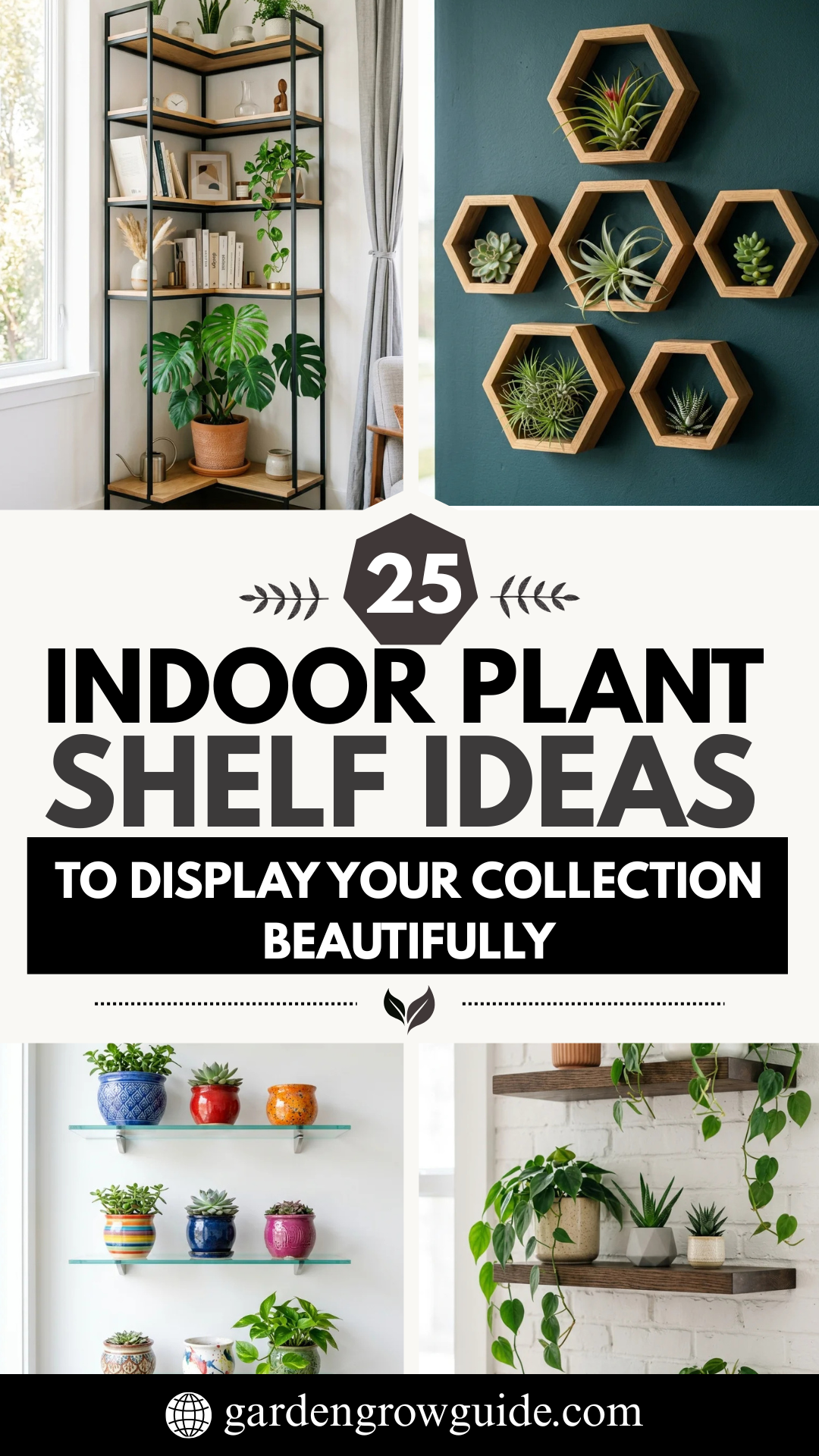
Transforming your home into a verdant sanctuary requires more than just a green thumb; it requires a vision for organization and aesthetics. As plant collections grow, floor space often becomes a premium commodity. This is where creative shelving comes into play. By elevating your greenery, you not only save space but also create dynamic focal points that improve air quality and boost your mood. Whether you live in a compact studio or a sprawling estate, these 25 indoor plant shelf ideas will help you display your botanical treasures with style and purpose.
1. Floating Shelves
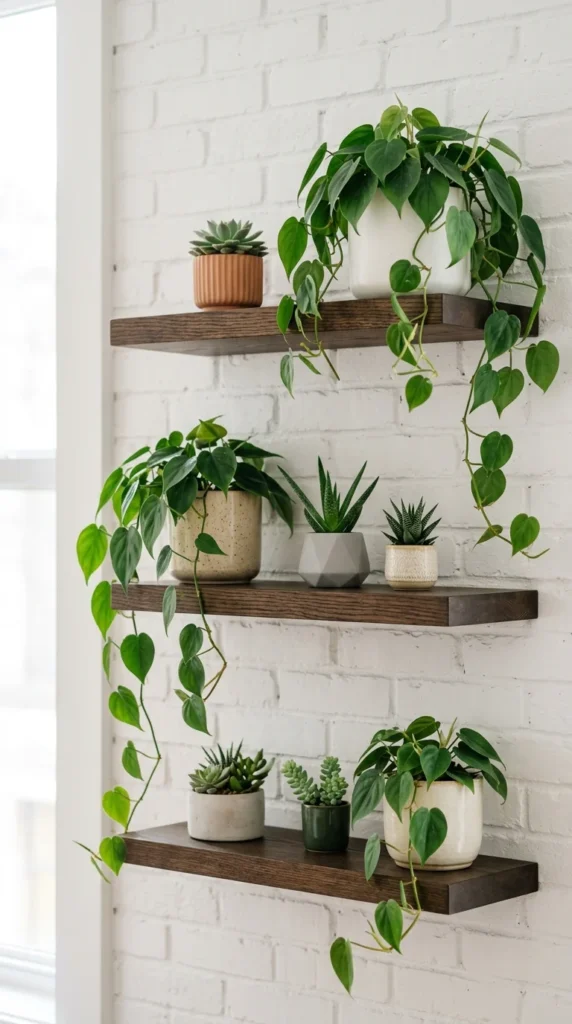
Floating shelves are the gold standard for minimalist plant displays. By removing visible brackets, these shelves create a clean, streamlined look that allows the plants to take center stage. They are particularly effective for trailing species like Pothos or String of Pearls, as the vines can cascade down without obstruction. Positioning them at varying heights on a single wall creates a “living wall” effect that adds depth to any room.
2. Ladder Stands
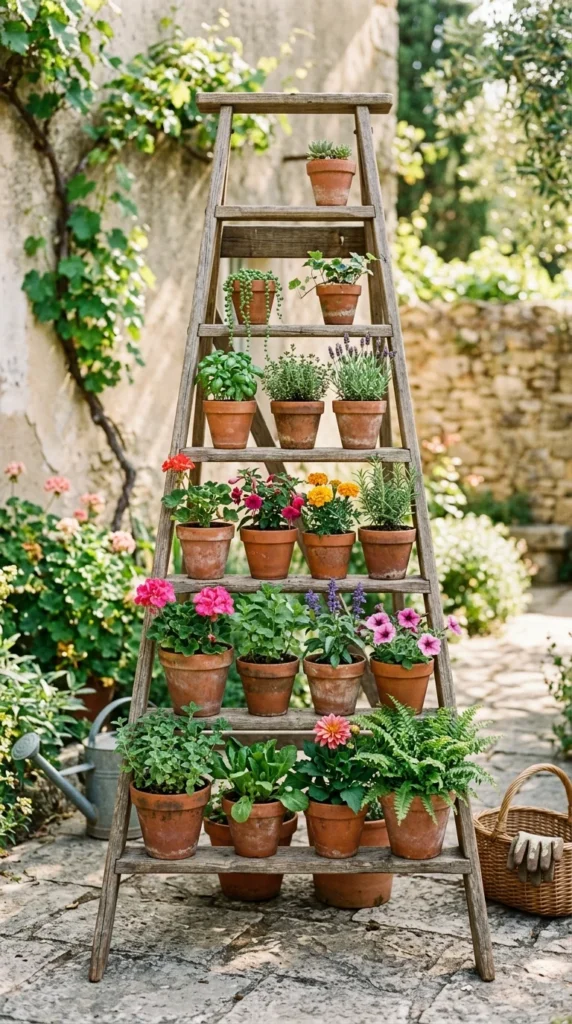
The leaning ladder shelf is a versatile favorite for those who enjoy a rustic or farmhouse aesthetic. Because ladders naturally taper or offer different depths at each level, they provide the perfect graduated platform for plants of different heights. Place larger, sun-loving plants like Sansevieria on the top rungs and smaller shade-tolerant ferns on the bottom to maximize light exposure based on each plant’s specific needs.
3. Macrame Hangers
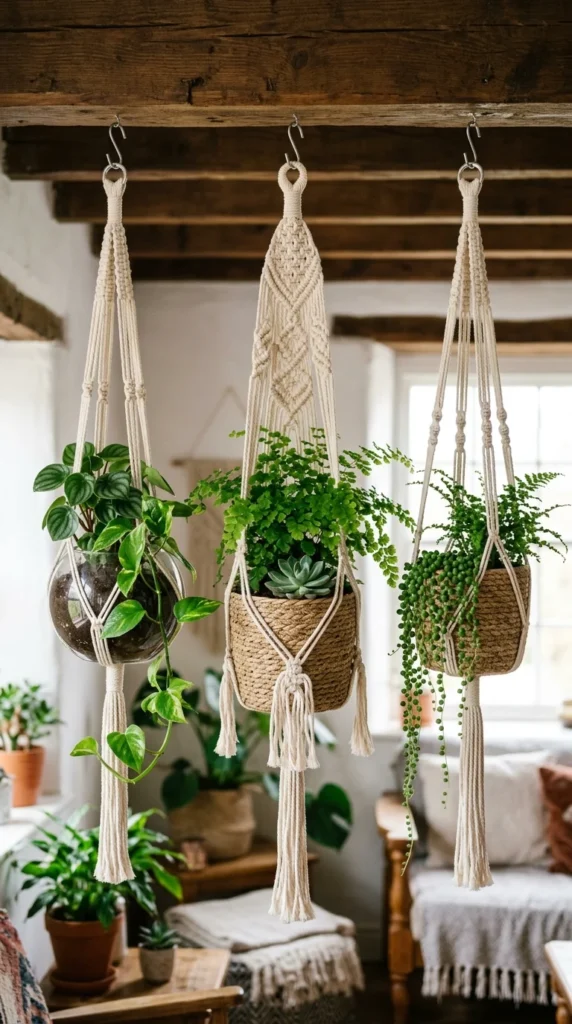
While technically a hanging solution, macrame hangers often incorporate small wooden platforms or “shelves” at the base of the knots. This boho-chic approach is ideal for utilizing vertical space that would otherwise go to waste. Hanging plants near windows ensures they receive optimal light while freeing up valuable surface area on tables and countertops.
4. Corner Units
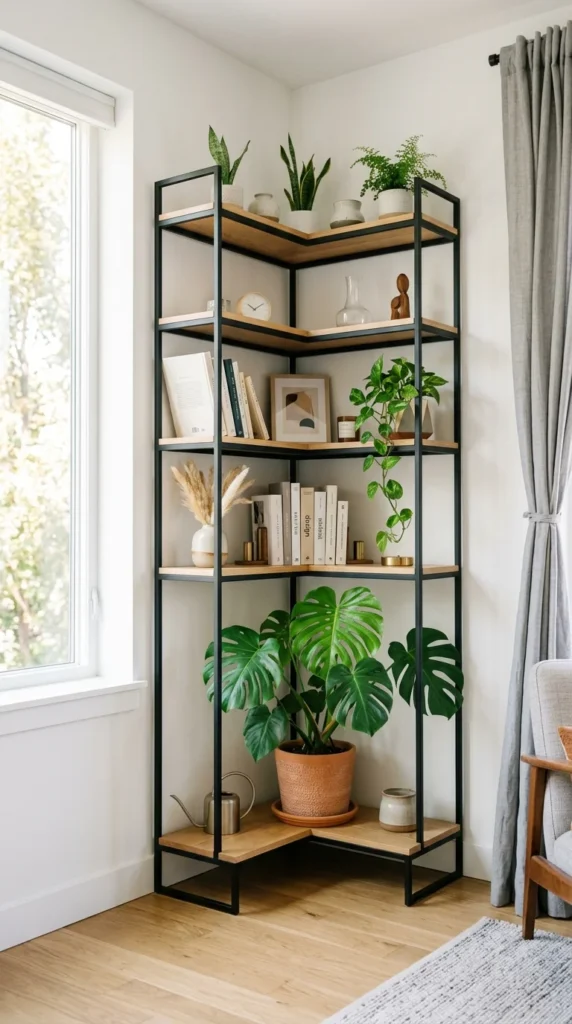
Corners are often underutilized in interior design. A dedicated corner plant shelf can turn an awkward dead space into a thriving botanical nook. Multi-tiered corner units allow you to stack your collection vertically, making them an excellent choice for apartment dwellers who want to maximize their “urban jungle” footprint without sacrificing floor area.
5. Industrial Pipes
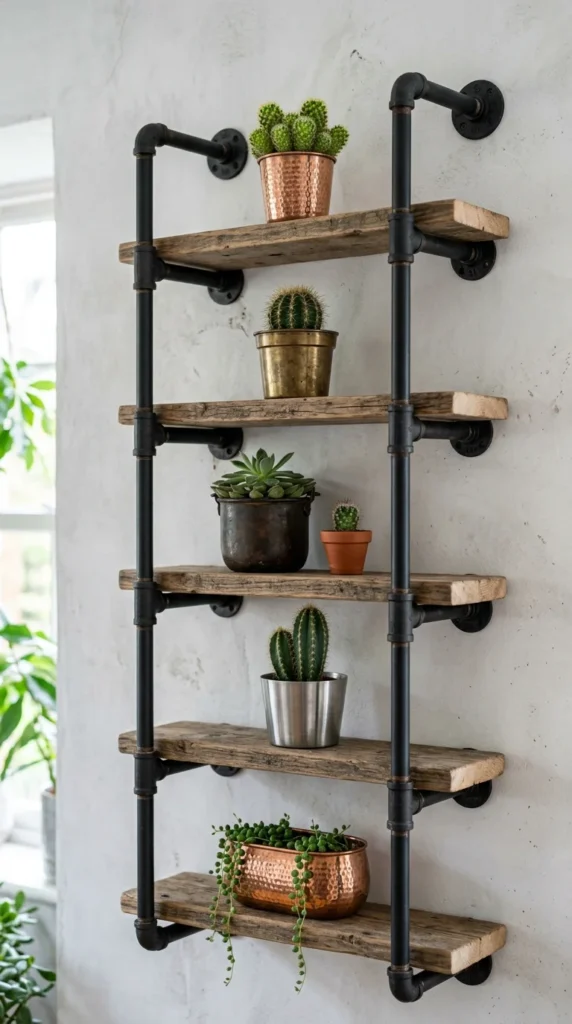
For those who prefer an edgy, urban look, industrial pipe shelving offers unmatched durability and style. These shelves are incredibly sturdy, making them perfect for heavy ceramic pots or large lead-based containers. The contrast between the cold, hard metal and the soft, organic shapes of the plants creates a sophisticated visual balance.
6. Window Sills
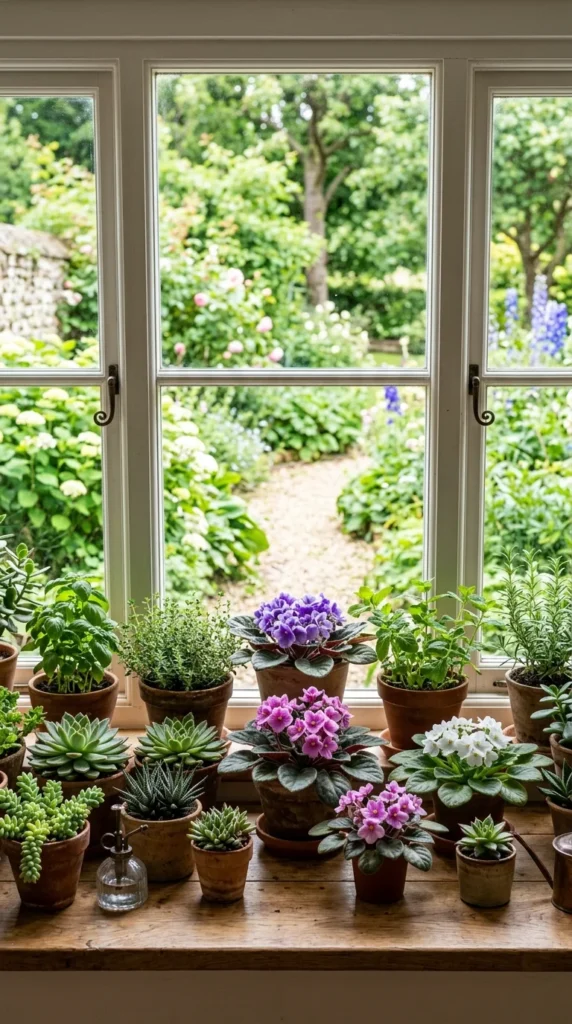
The window sill is the original plant shelf. If your home features deep sills, you have a built-in stage for light-hungry plants. To enhance this, you can add “window-mount” acrylic shelves that suction directly to the glass, allowing you to stack plants vertically right in the path of the sun without blocking the view entirely.
7. Hexagon Boxes
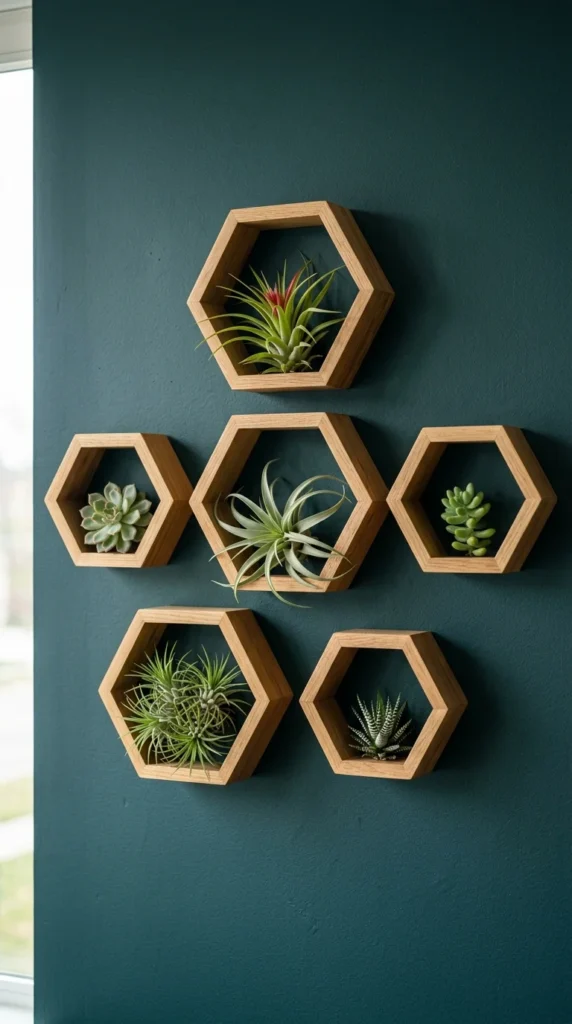
Geometric shelving, particularly hexagons or “honeycomb” shelves, adds an architectural element to your plant display. These modular units can be arranged in various patterns to create a custom art piece. Because each “cell” is relatively small, they are best suited for smaller specimens like Echeveria, Haworthia, or decorative air plants.
8. Bar Carts
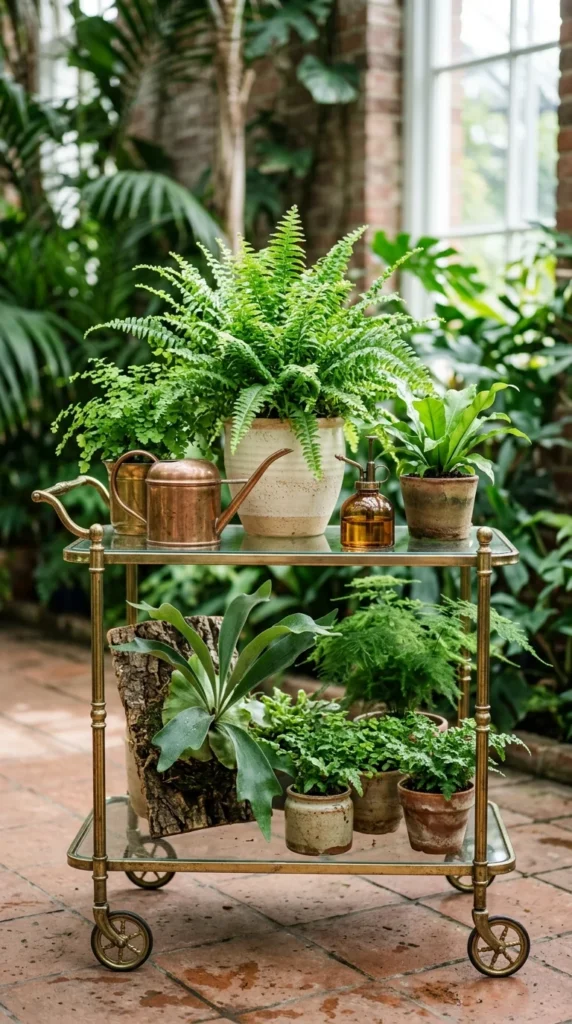
Who says bar carts are only for spirits? Repurposing a rolling cart into a mobile plant station is a genius move for flexible decor. You can easily move your plants to follow the sun throughout the day or wheel them into another room when you need extra space for entertaining. The multi-level design allows for a mix of tall plants and trailing varieties.
9. Ceiling Racks
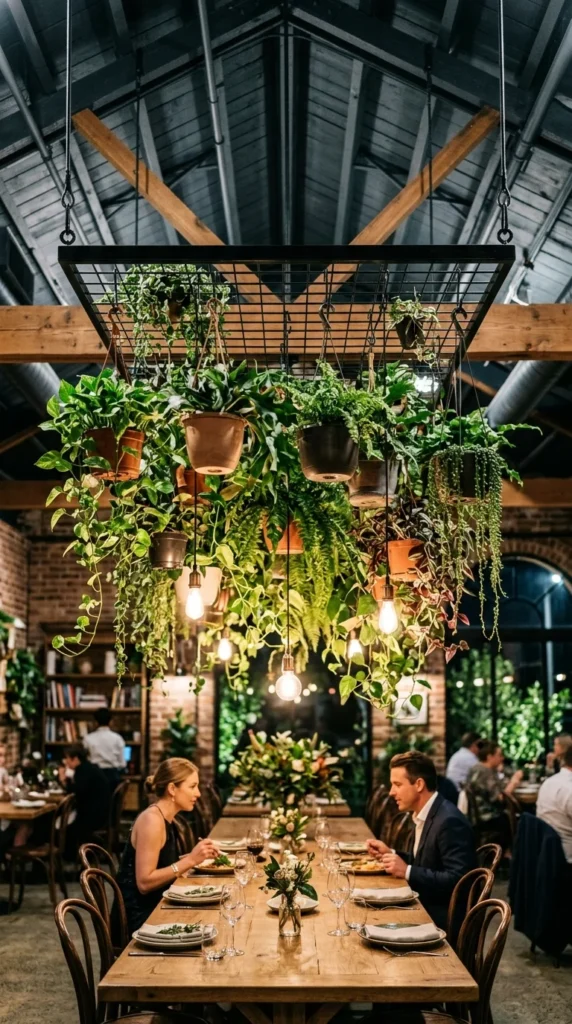
In rooms with high ceilings, look upward. A ceiling-mounted rack—similar to those used for pots and pans in a kitchen—can hold a massive amount of greenery. This creates a stunning “indoor canopy” effect. It is particularly effective in kitchens or dining areas, where you can hang fresh herbs within arm’s reach of the cooking station.
10. Propagation Stations
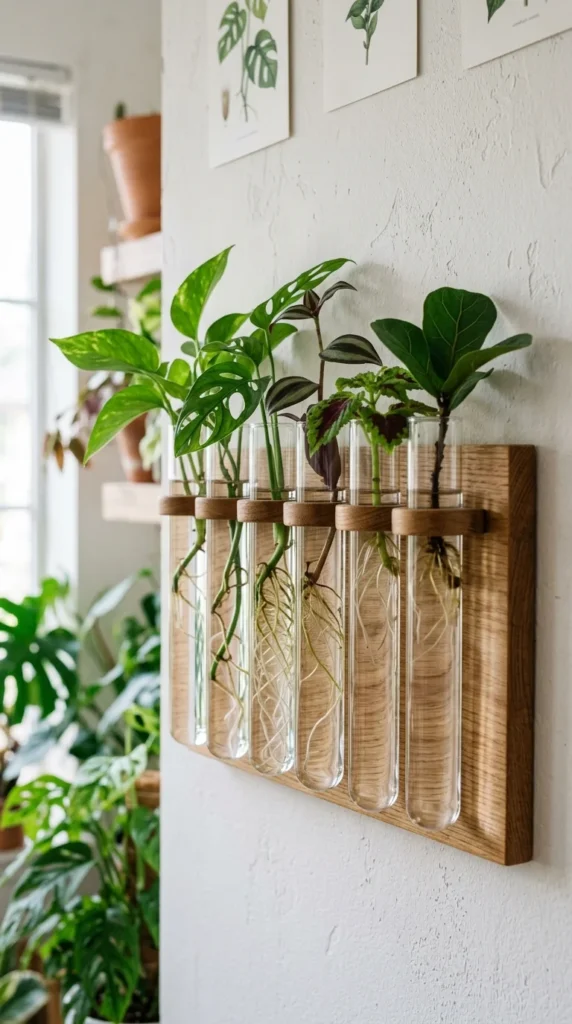
Shelving isn’t just for mature plants. A dedicated propagation shelf acts as a “nursery” for your collection. Using glass vials or laboratory-style test tubes on a slim wooden shelf allows you to watch roots develop in real-time. This functional display doubles as a fascinating scientific art piece that celebrates the life cycle of your plants.
11. Minimalist Glass
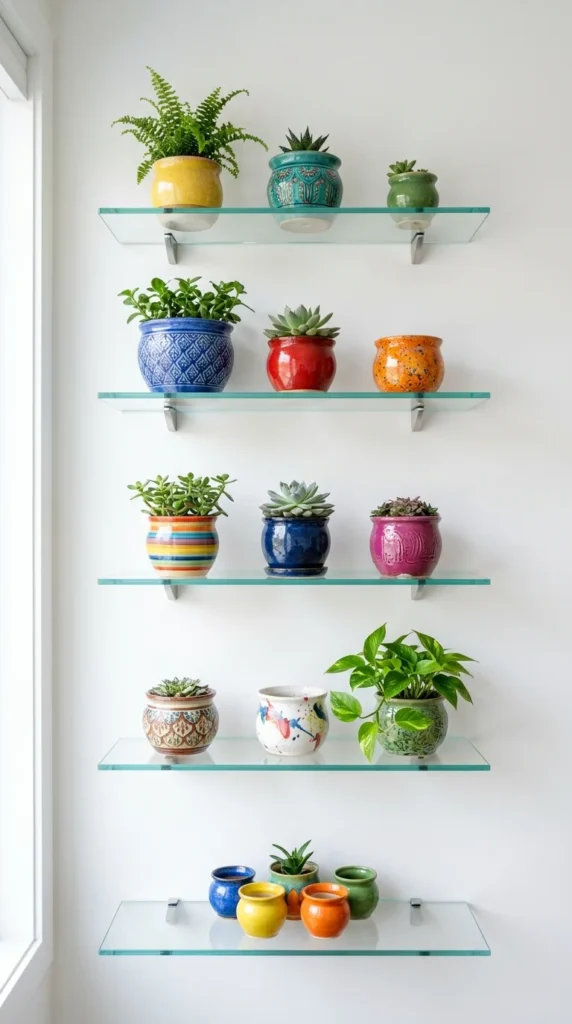
Glass shelves are the ultimate choice for small spaces because they are visually “light.” They don’t block light from reaching plants on lower levels, and they don’t visually clutter a room. When paired with colorful pots, glass shelves allow the colors and textures of the foliage to be the primary focus.
12. Mid-Century Modern
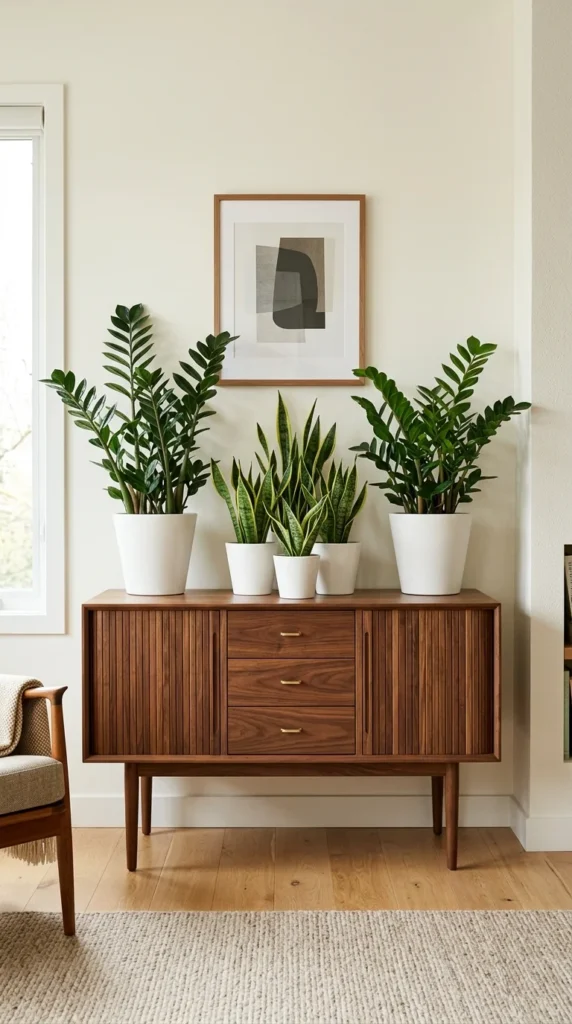
Mid-century modern furniture often features clean lines and organic materials that complement indoor plants perfectly. Using a low-profile credenza or a dedicated “plant-stand” shelf with tapered legs adds a touch of retro sophistication to your collection. This style works best with “architectural” plants that have sharp, defined shapes.
13. Boho Rattan
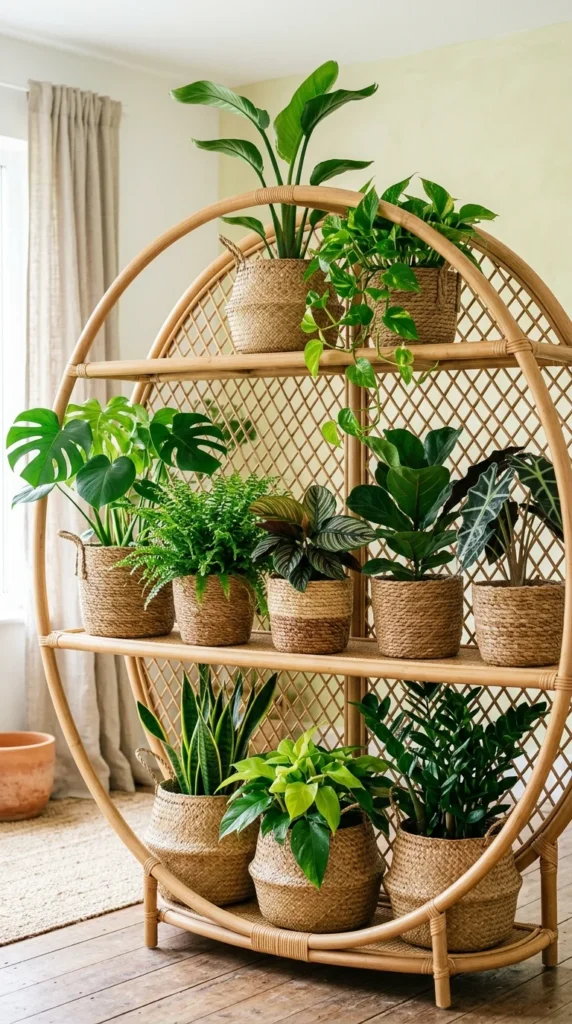
For a soft, natural, and textured look, rattan shelving is unbeatable. The warm tones of the wicker pair beautifully with the vibrant greens of tropical leaves. Rattan shelves are lightweight and easy to move, making them ideal for those who like to frequently rearrange their decor.
14. Vertical Pallets
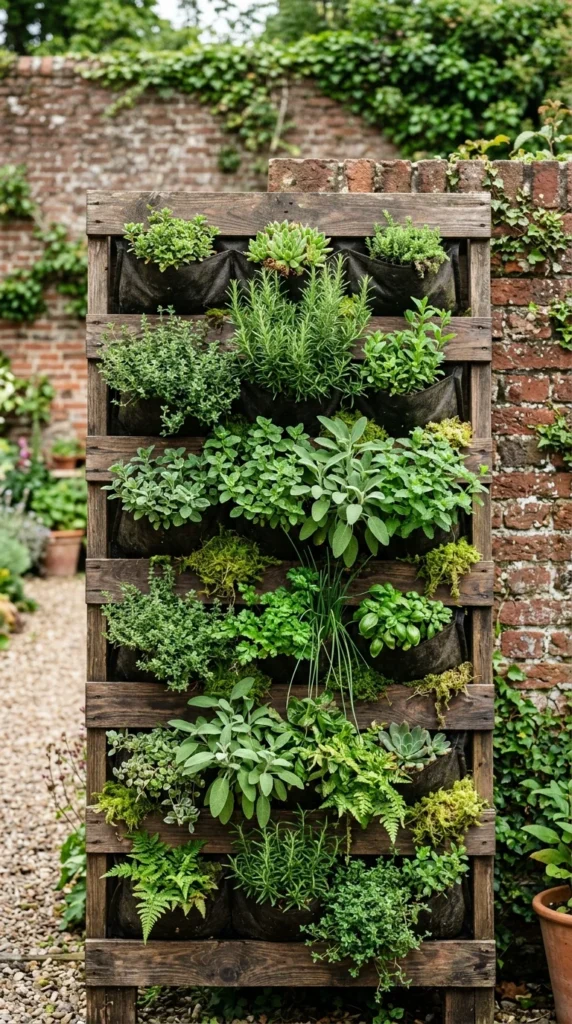
Upcycling a wooden pallet into a vertical plant wall is an eco-friendly and budget-conscious way to display a large collection. By adding backing and landscape fabric, you can create “pockets” for soil, or simply use the slats as ledges for small pots. This creates a rustic, “living wall” vibe that is perfect for a sunroom or a balcony-adjacent wall.
15. Tiered Steps
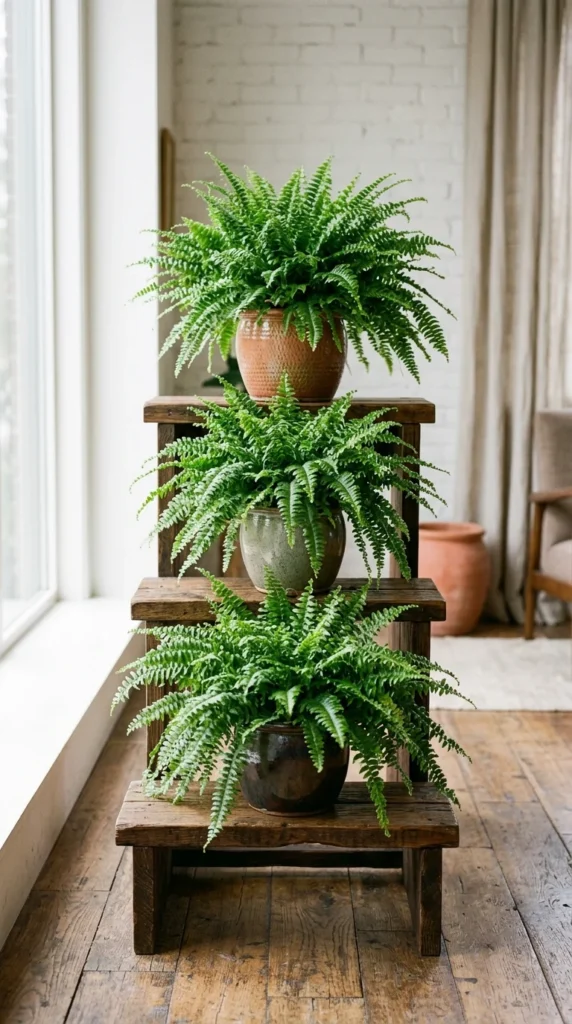
Tiered step shelves, often referred to as “stadium seating” for plants, ensure that every plant gets its moment in the sun. By elevating the back row, you prevent smaller plants from being overshadowed by larger ones. This is a practical solution for floor displays where you want to create a sense of lush density.
16. Pegboards
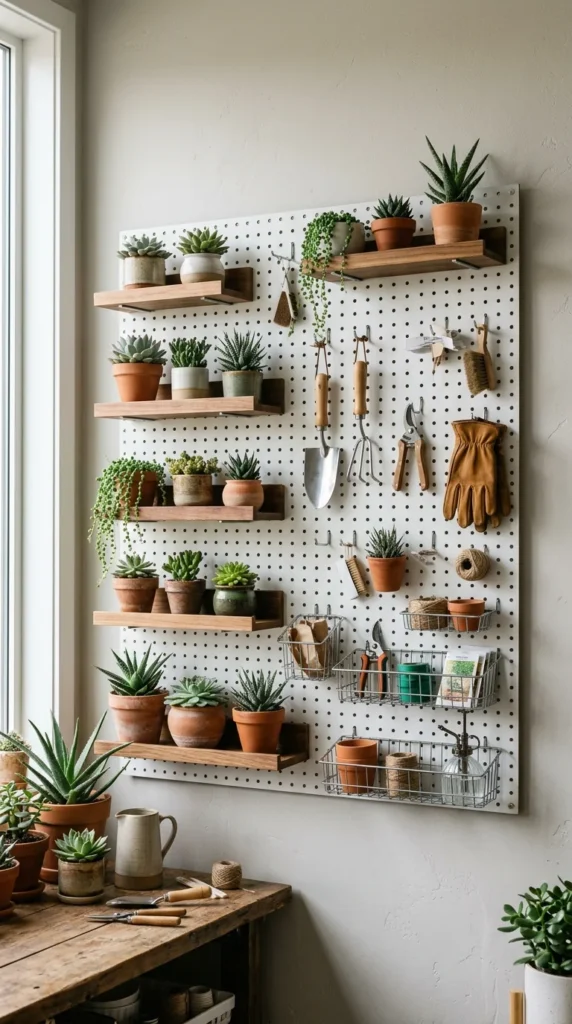
The ultimate in customization, a pegboard allows you to move your shelves and hooks whenever you like. As your plants grow, you can simply adjust the shelf heights. This is a fantastic option for a home office or a craft room where you want to surround your workspace with greenery without taking up desk space.
17. Circular Hoops
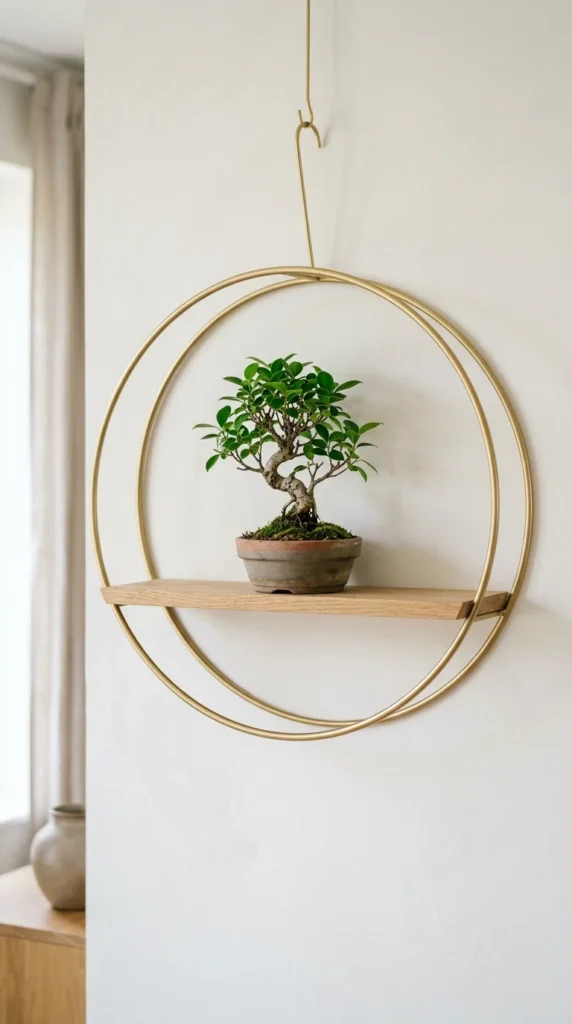
Circular or “moon” shelves serve as a frame for your plants. These are decorative pieces intended for a few “statement” plants rather than a large collection. The circular shape provides a beautiful contrast to the vertical growth of the plants, turning a simple Pilea or Bonsai into a masterpiece.
18. Hidden Bookshelf
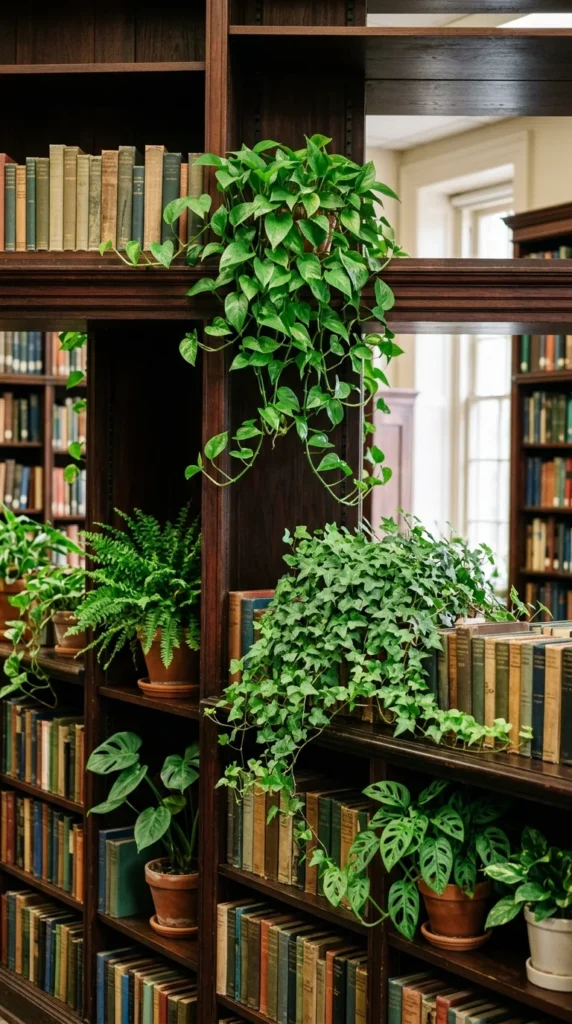
Mixing plants with books is a classic interior design trick. By clearing out sections of your library to make room for foliage, you break up the visual weight of the books. “Vining” plants are particularly effective here, as they can crawl along the spines of the books, creating a “secret garden” or “overgrown library” aesthetic.
19. Bathroom Caddies
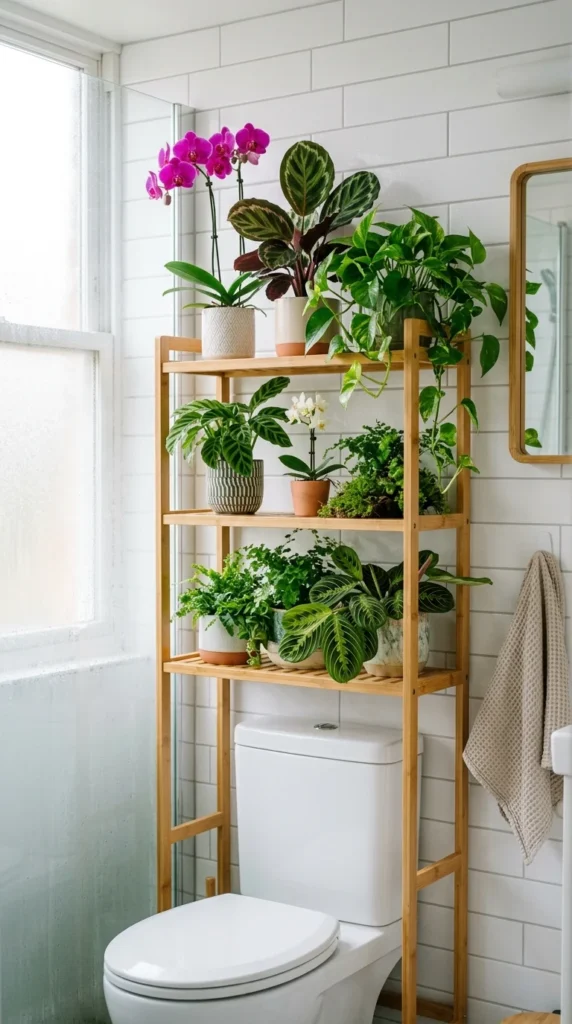
The bathroom is an ideal microclimate for many tropical plants due to the high humidity. An over-the-toilet caddy or a specialized shower shelf can house species that thrive in damp environments. This turns a functional room into a spa-like retreat.
20. Kitchen Herb Racks
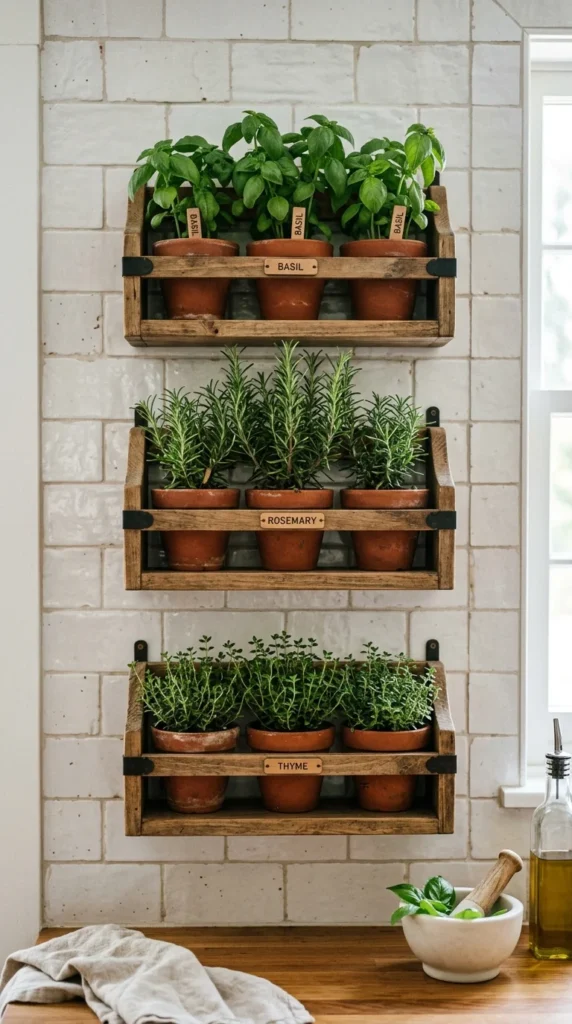
Keep your culinary garden within reach by installing dedicated herb shelves in the kitchen. These should be placed near a window or under high-quality grow lights. Not only do they look beautiful, but they also provide fresh ingredients for your cooking, combining form and function perfectly.
21. Geometric Metal
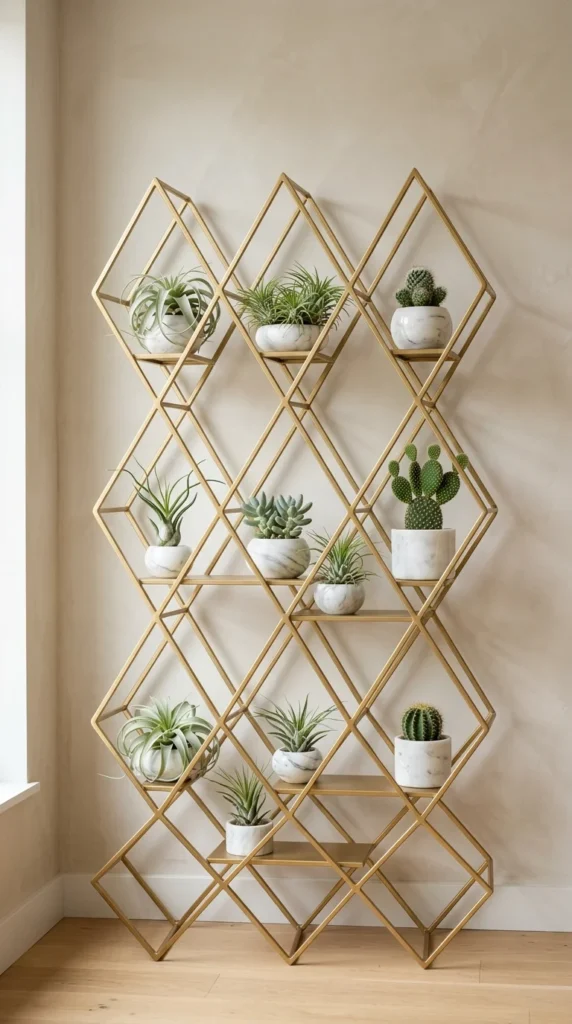
Metallic shelves in gold, silver, or copper add a touch of luxury to your plant display. The thin profiles of geometric metal units don’t overwhelm the space, making them perfect for modern, upscale interiors. They look particularly striking when paired with sleek, monochromatic pots.
22. Live Edge Wood
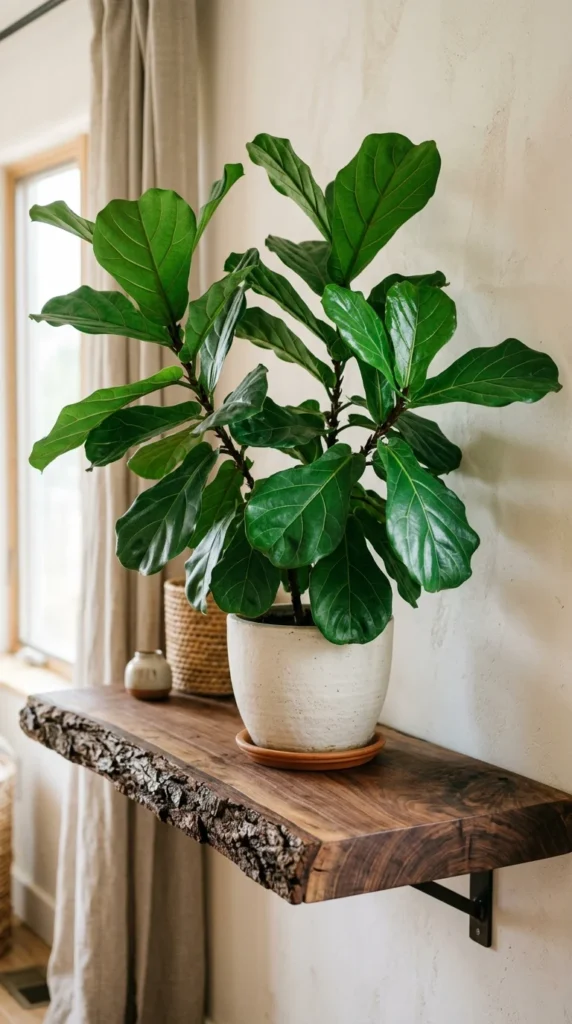
For the nature lover, nothing beats the look of a live-edge wooden shelf. These shelves retain the natural curves and imperfections of the tree they came from, emphasizing the connection between the furniture and the plants sitting atop it. It’s a high-end, organic look that works well in “earthy” or contemporary homes.
23. Staircase Nooks
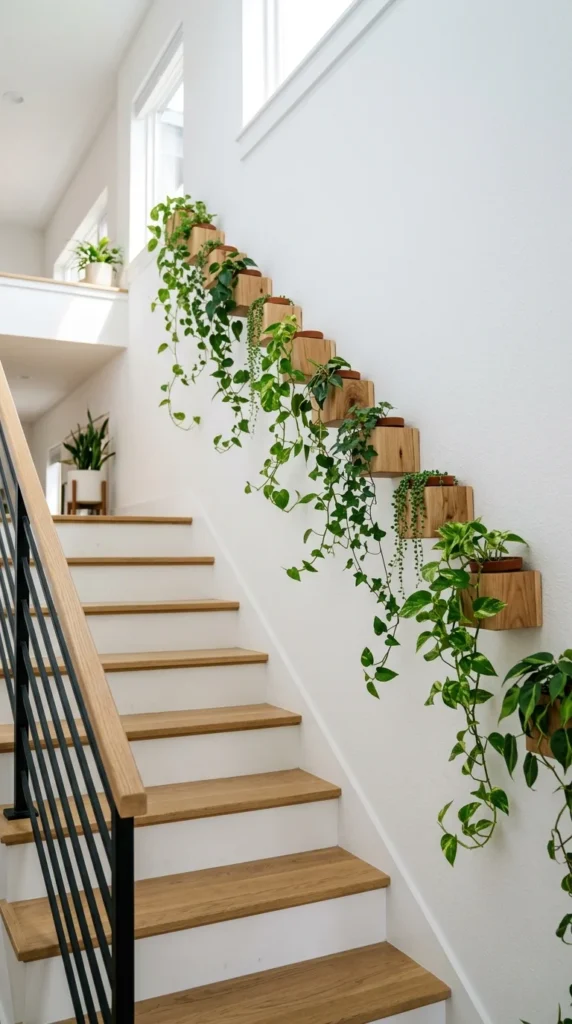
If you have a staircase, you have an opportunity for a cascading display. You can install individual small shelves along the wall following the incline of the stairs. As the plants grow, their vines will follow the path of the staircase, creating a beautiful transition between the floors of your home.
24. Room Dividers
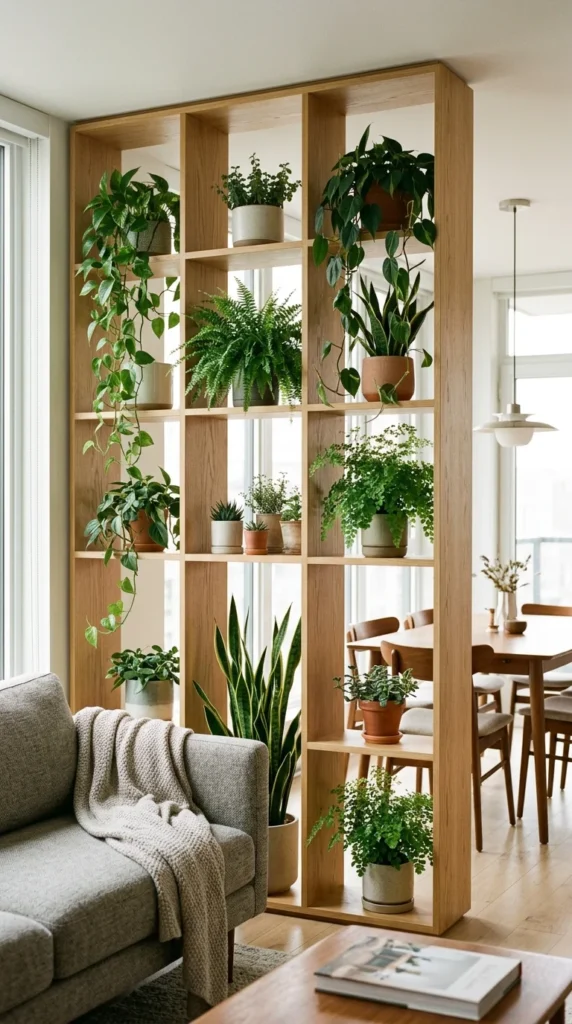
Large, open-shelf units can serve as “living walls” to divide open-concept spaces. By filling the shelves with plants, you create a screen that provides privacy without blocking light or making the room feel closed in. This is a sophisticated way to define different zones in a large room.
25. Rolling Shelves
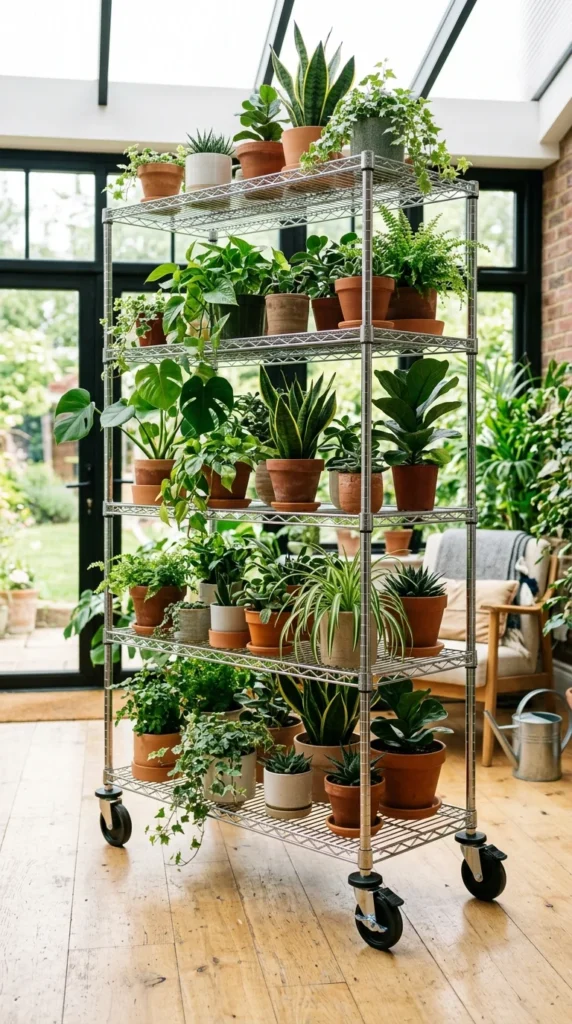
For the serious collector, heavy-duty rolling wire shelves (often used in commercial kitchens) are a godsend. They can support the weight of dozens of plants and large bags of soil. The wheels allow you to rotate the entire “shelf” so that every plant gets equal light exposure, making maintenance much easier for large-scale indoor gardens.
Tips for Maintaining Your Plant Shelves
- Weight Capacity: Always check the weight limit of your shelves, especially floating ones. Wet soil and ceramic pots are much heavier than they appear.
- Water Protection: Use saucers or drip trays under every pot to prevent water damage to your wooden or metal shelves.
- Lighting: Group plants with similar light requirements on the same shelf. Use clip-on grow lights for shelves in darker corners.
- Rotation: Rotate your pots every few weeks so that the plants grow evenly rather than leaning toward the light source.