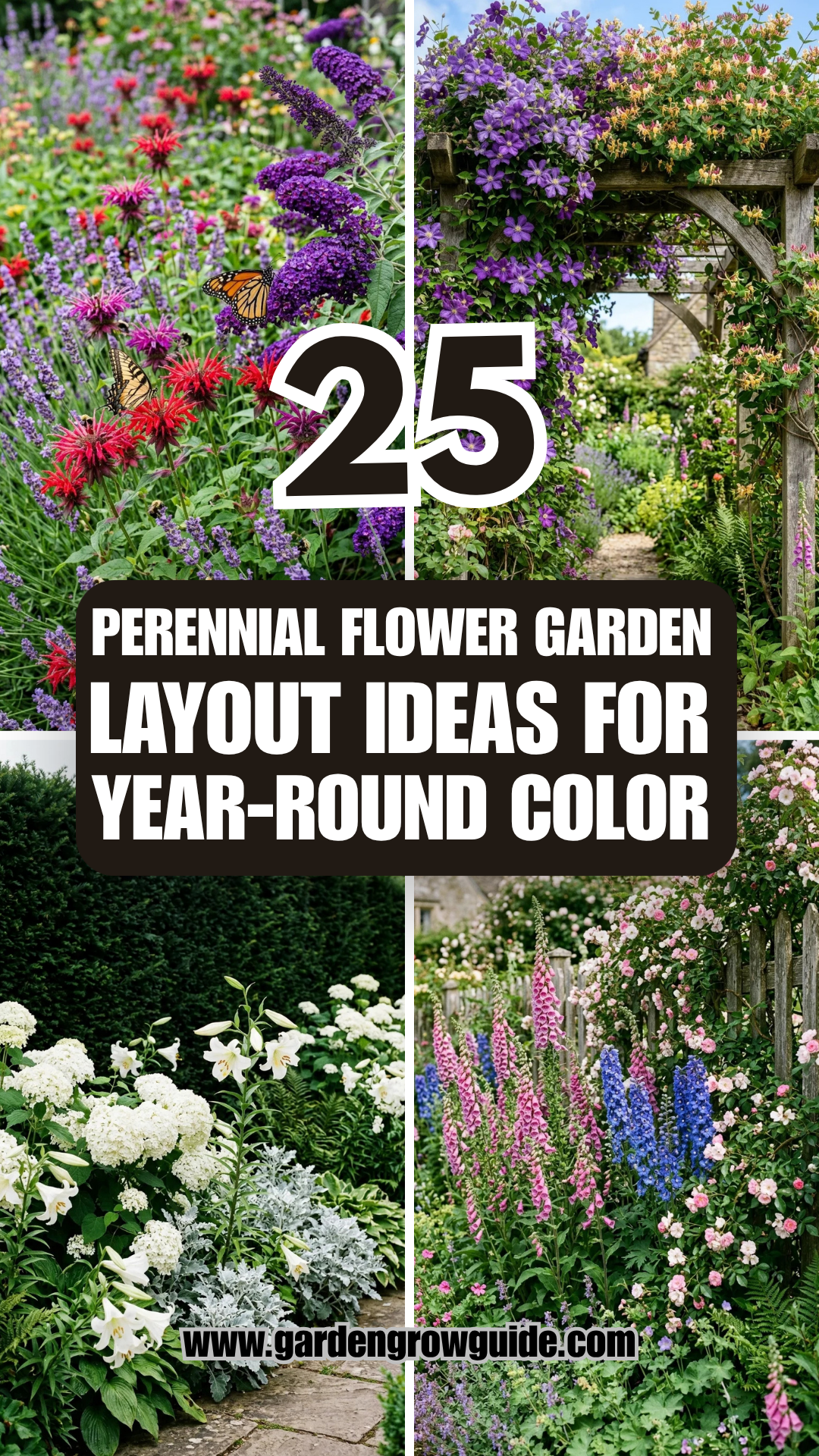
Creating a perennial garden that offers visual interest throughout all four seasons is the ultimate goal for any gardener. Unlike annuals, which must be replanted every year, perennials are the backbone of the landscape, returning year after year to provide structure, color, and habitat. The secret to a successful year-round garden lies in “succession planting”—the strategic selection of plants so that as one species fades, another begins its display.
1. Cottage Chaos
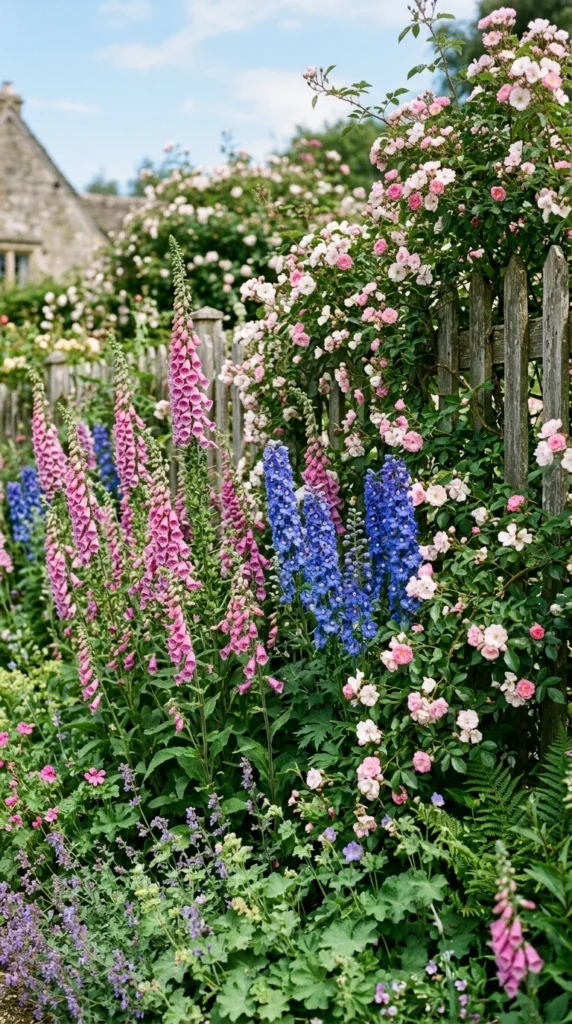
The cottage garden layout is defined by its lack of rigid structure and its abundance of blooms. This style focuses on “ordered chaos,” where plants are allowed to self-seed and spill over pathways. To achieve year-round color in this layout, use early-spring bulbs like Muscari, followed by mid-summer heavy hitters like Peonies and Hollyhocks. In the autumn, let Sedum ‘Autumn Joy’ and Asters take the lead, while leaving the dried seed heads of Echinacea to provide architectural interest during the winter months.
2. Monochromatic White
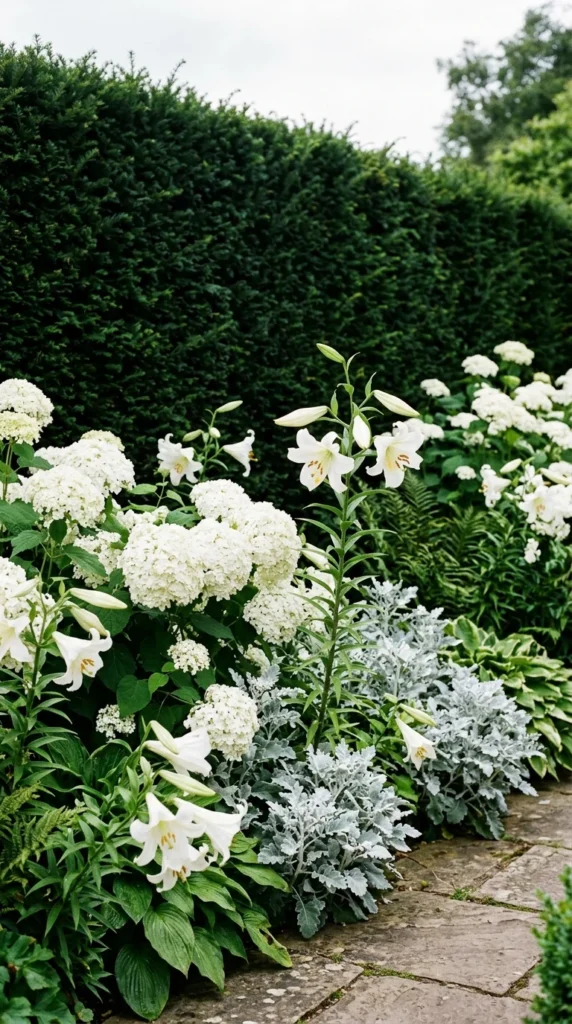
Often referred to as a “Moon Garden,” a monochromatic white layout is particularly striking at dusk. The key to making this work across seasons is varying the textures. Start the year with Snowdrops and White Tulips. Transition into summer with white Irises, Phlox, and “Annabelle” Hydrangeas. For the colder months, the silver foliage of Artemisia or the white bark of a Birch tree ensures the garden doesn’t disappear when the flowers fade.
3. Structured Border
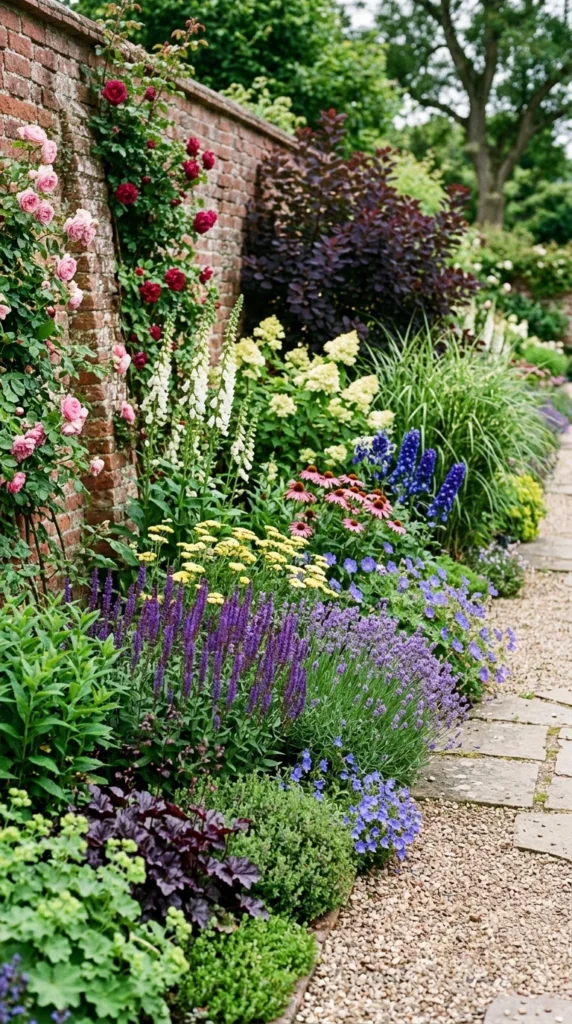
A structured border follows the “stadium seating” rule: short plants in the front, medium in the middle, and tall in the back. This layout is excellent for long, narrow spaces. For year-round appeal, use evergreen shrubs like Boxwood or Yew as the “back row” to provide a green frame even in winter. Fill the foreground with Creeping Phlox for spring and Coral Bells (Heuchera) for multi-colored foliage that lasts through the frost.
4. Native Prairie
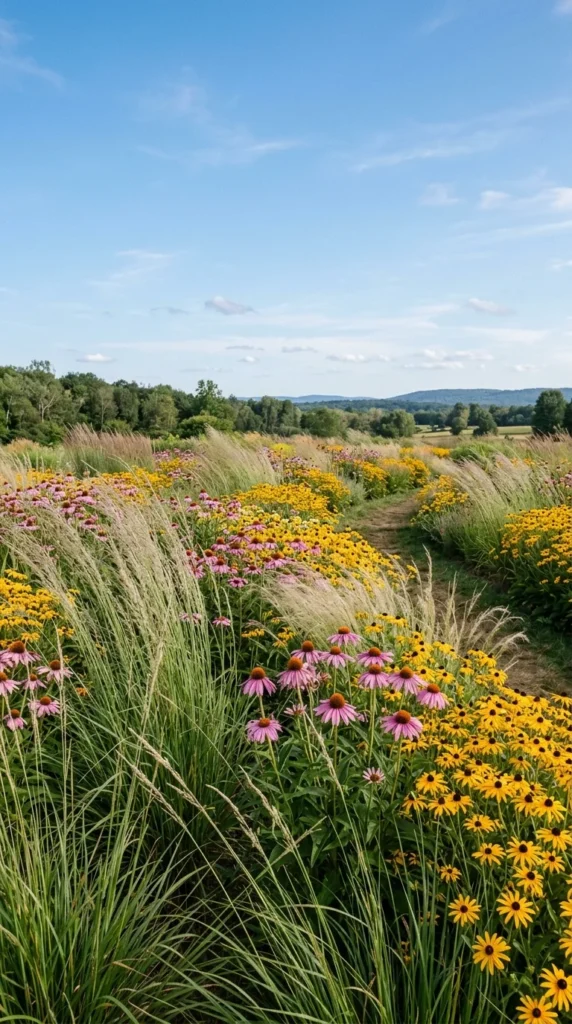
Native prairie layouts are low-maintenance and ecologically beneficial. They rely heavily on a mix of native grasses and wildflowers. Little Bluestem and Switchgrass provide golden-bronze structure in the winter. In the summer, the garden explodes with the bright yellows of Coreopsis and the deep purples of Liatris. This layout thrives on “managed wildness,” requiring only a single cut-back in late winter.
5. Shade Sanctuary
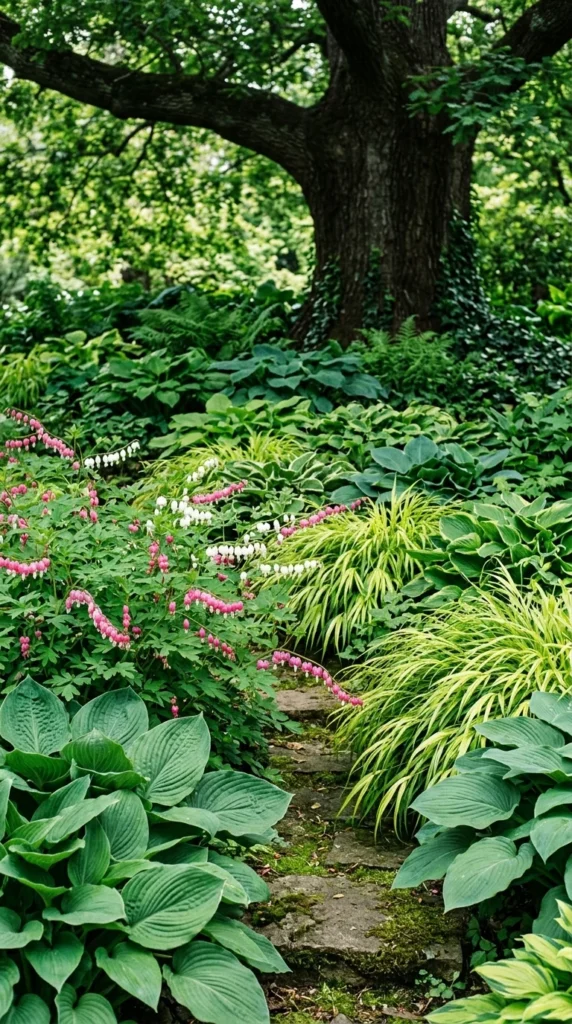
Shade gardens often focus more on foliage than flowers, but they can still be colorful. Use Hellebores (Lenten Roses) for late winter and early spring blooms when everything else is dormant. Combine them with various Hosta varieties for lush summer greenery and Astilbe for “plumes” of pink and white. In the autumn, the changing colors of Ferns and the bright berries of Winterberry (Ilex verticillata) keep the visual interest high.
6. Pollinator Pathway
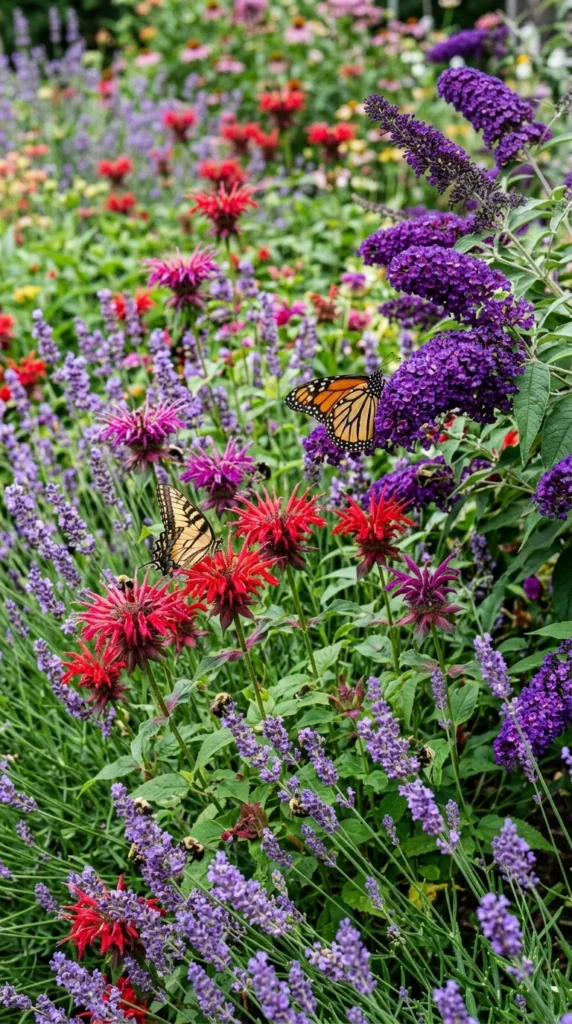
This layout prioritizes plants that provide nectar and pollen. To keep pollinators coming back, you need a succession of blooms from March to October. Start with Crocus and Hellebore, move into Salvia and Milkweed for the summer, and finish the season with Goldenrod and Joe Pye Weed. The layout should be grouped in “drifts”—large patches of the same plant—to help insects locate their food more easily.
7. Rock Garden
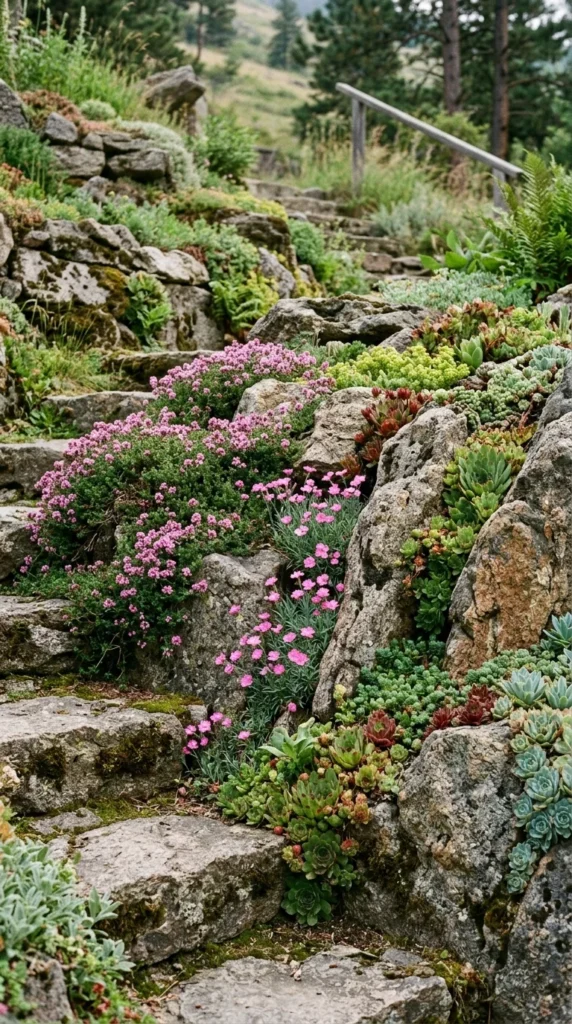
Rock gardens mimic high-altitude alpine environments. They require excellent drainage and sun-loving perennials. Sedums and Sempervivums (Hens and Chicks) provide year-round succulent texture. In the spring, Aubrieta and Alyssum provide a carpet of color over the stones. Because rock gardens often use evergreen groundcovers, they remain visually interesting even when covered in a light dusting of snow.
8. English Formal
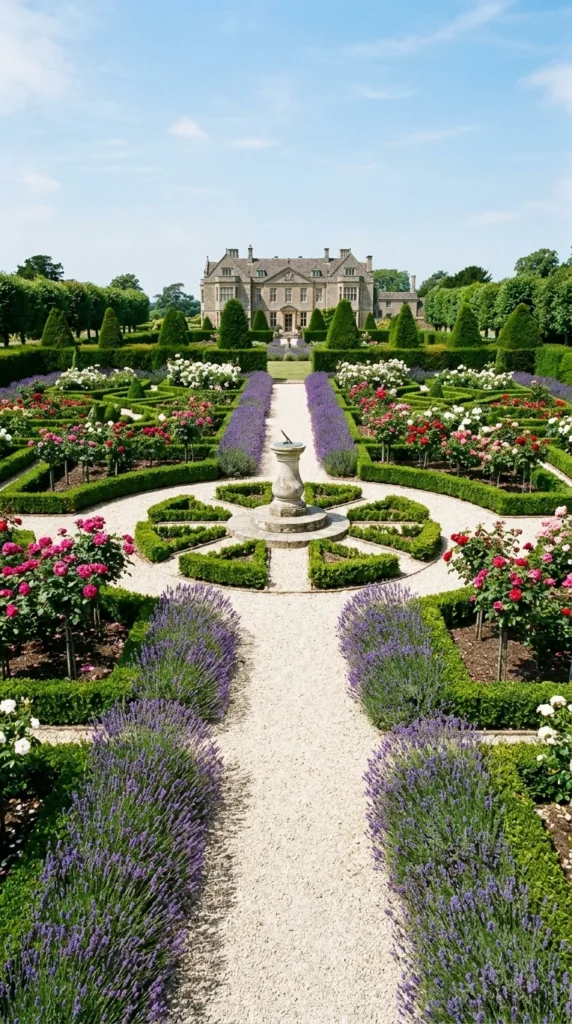
Formal gardens rely on symmetry and repetition. Typically, a central focal point (like a fountain or statue) is surrounded by mirrored beds. Use Lavender or Rosemary to create low-growing “hedges” that maintain their shape year-round. Inside the geometric beds, plant classic perennials like Alliums for late spring and Japanese Anemones for late summer elegance.
9. Modern Minimalist
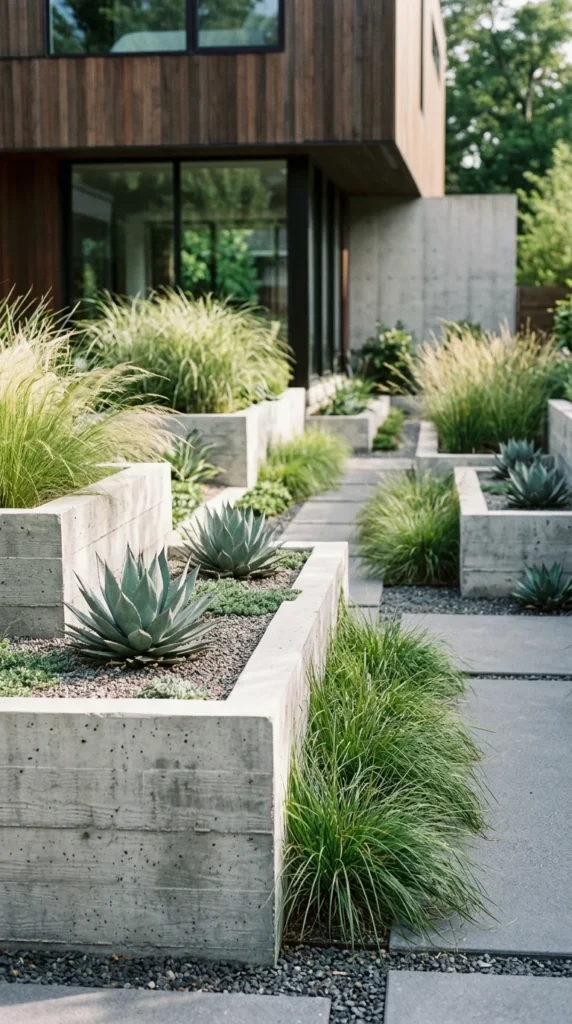
The modern layout is all about “less is more.” Instead of dozens of species, choose three or four and plant them in large, clean blocks. Ornamental grasses like “Karl Foerster” are the stars here, providing vertical lines in summer and golden silhouettes in winter. Pair them with a long-blooming perennial like Nepeta (Catmint) for a wash of blue color that lasts for months.
10. Mediterranean Heat
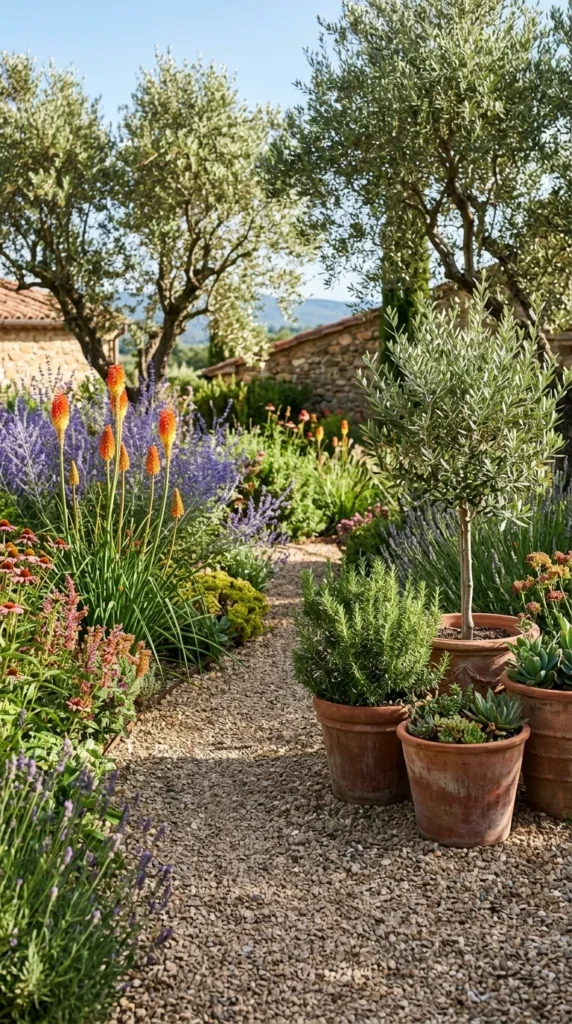
Ideal for hot, dry climates, this layout uses plants with silver or grey foliage, which reflects sunlight. Lavender, Santolina, and Russian Sage provide a cool-toned backdrop for the fiery spikes of Kniphofia (Red Hot Poker). These plants are often evergreen or semi-evergreen, meaning the garden maintains its structure even during the hottest and coldest months.
11. Woodland Edge
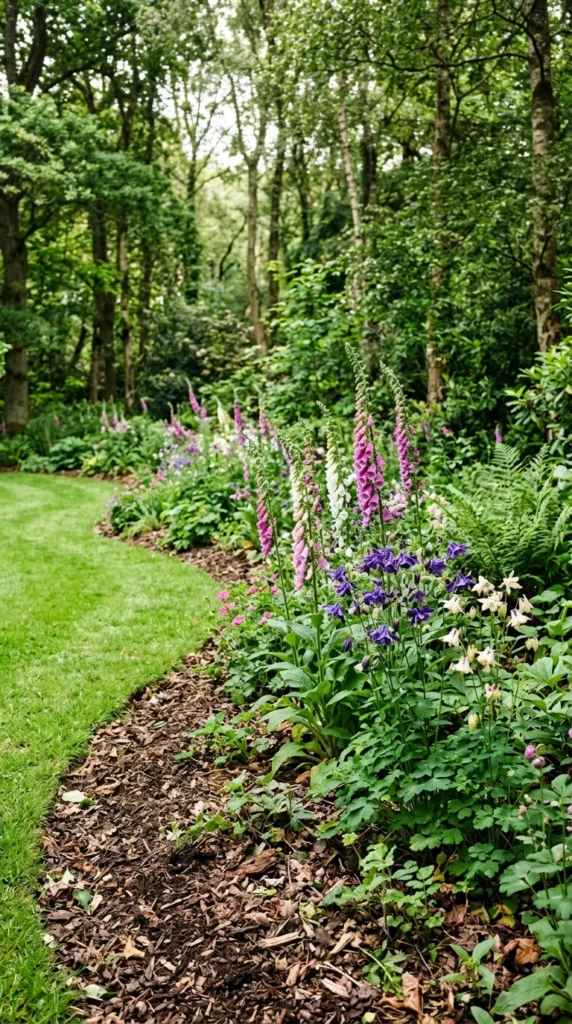
This layout mimics the transition between a forest and a clearing. It thrives on dappled sunlight. Use spring ephemerals like Trilliums and Virginia Bluebells that disappear by summer. Fill the gaps with hardy Geraniums (Cranesbill) and Japanese Painted Ferns. The “edge” look is achieved by layering heights and allowing plants to mingle naturally.
12. Rain Garden
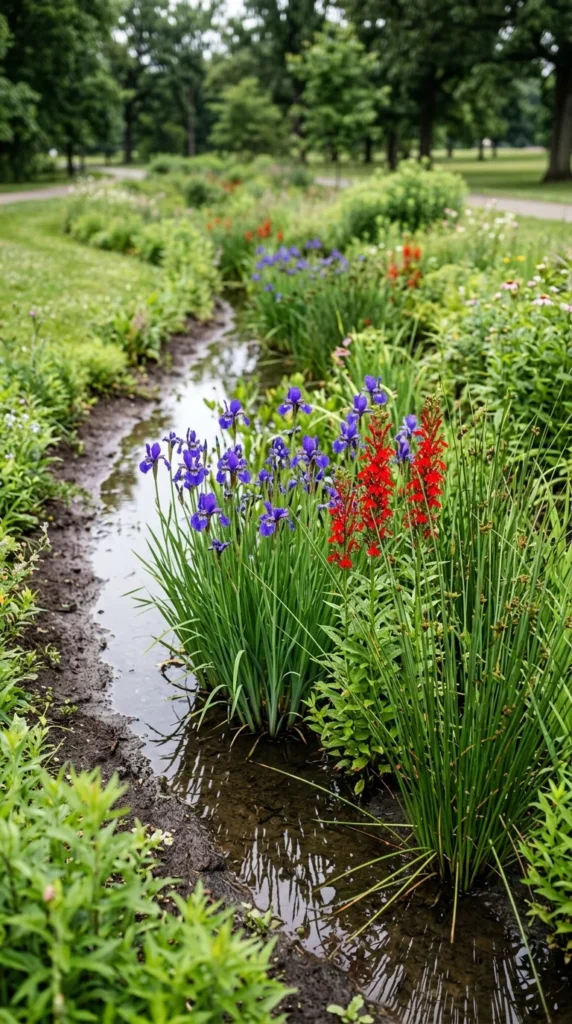
A rain garden is both beautiful and functional, designed to manage stormwater. Because these areas can fluctuate between very wet and very dry, choose resilient perennials. Siberian Iris provides stunning spring color, while the Cardinal Flower (Lobelia cardinalis) offers intense red spikes in late summer. For winter, the stiff stems of Juncus (Rushes) provide a graphic, architectural element.
13. Cutting Garden
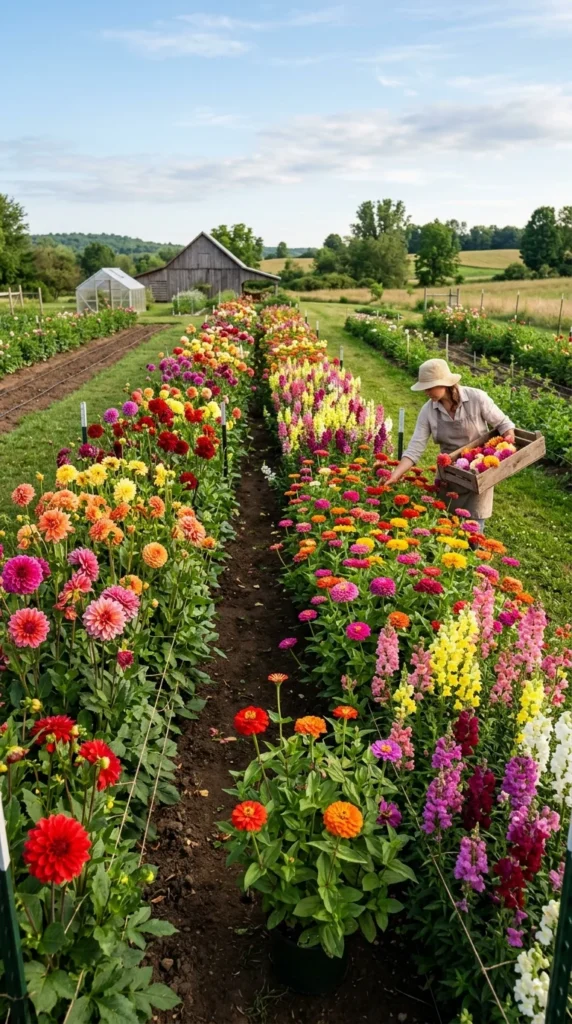
While a cutting garden is designed for harvest, it can still be a beautiful layout. Arrange plants in rows or blocks based on their bloom time. Ensure you include “fillers” like Baby’s Breath, “thrillers” like Lilies, and “spillers” like Sweet Peas. To keep it looking good year-round, include woody perennials like Forsythia or Hydrangea, whose branches can be cut for indoor arrangements even in the off-season.
14. Vertical Trellis
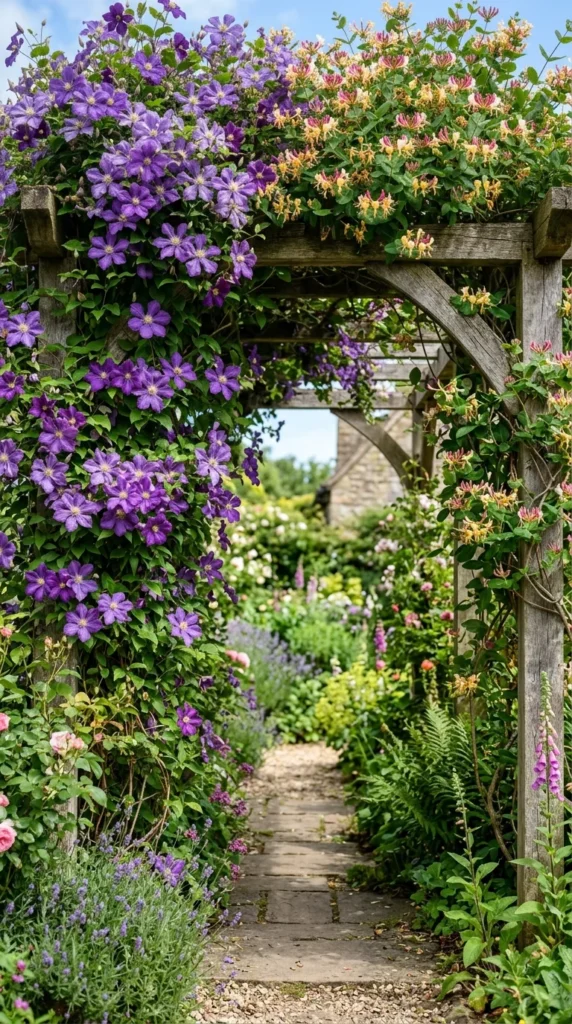
When ground space is limited, go vertical. Clematis is the queen of the vertical perennial garden, with different varieties blooming from spring through autumn. Pair a spring-blooming Clematis montana with a late-summer Clematis viticella. In the winter, the woody vines and the structure of the trellis itself provide a skeleton for the garden.
15. Drought-Tolerant Xeriscape
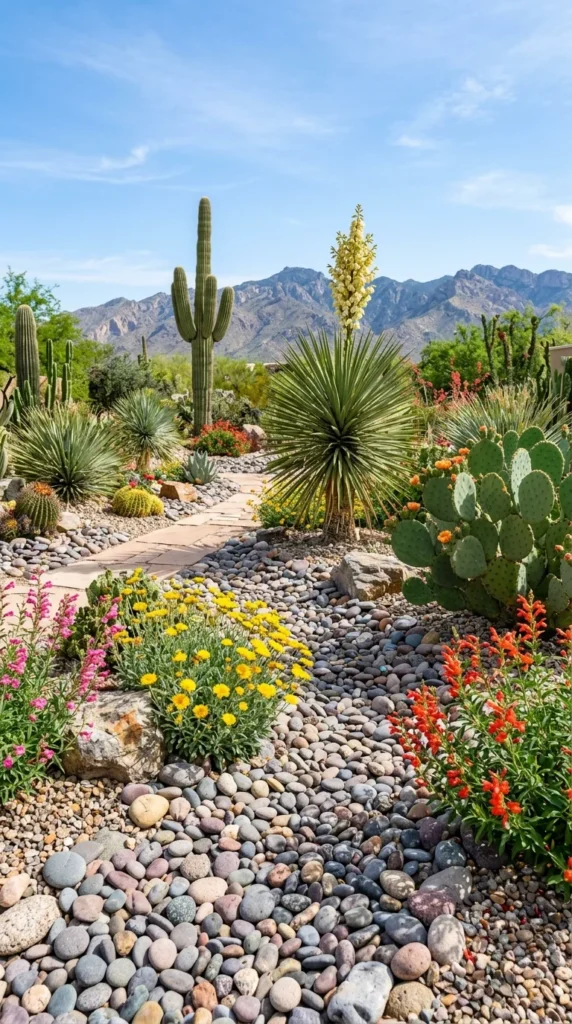
Xeriscaping doesn’t mean just rocks and cacti. It involves choosing “water-wise” perennials like Blanket Flower (Gaillardia) and Yarrow (Achillea). These plants often have deep taproots or waxy leaves to retain moisture. Yuccas provide a dramatic, evergreen focal point that looks just as good in January as it does in July.
16. Symmetrical Entryway
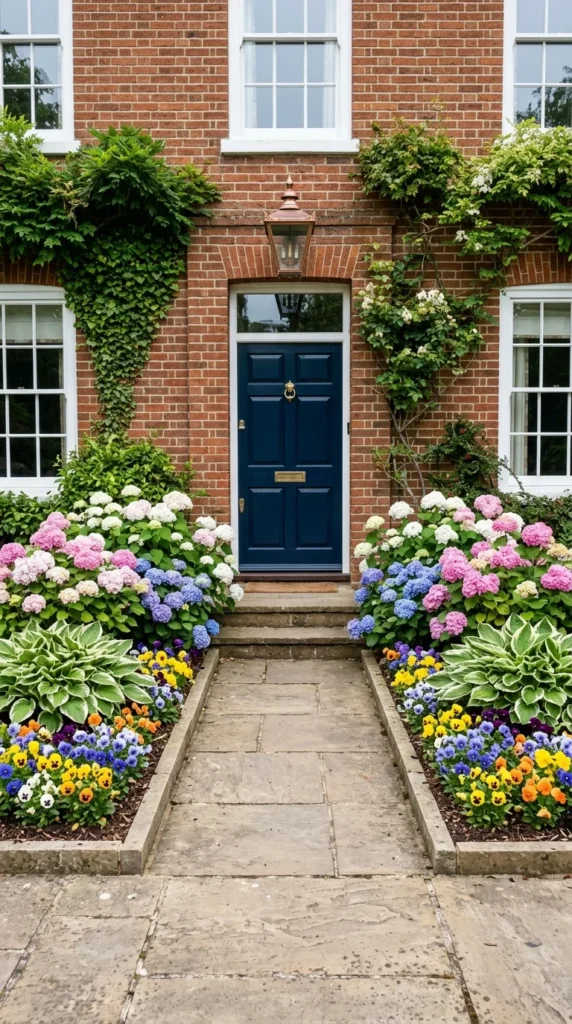
The entryway layout is about curb appeal. Symmetry creates a sense of order and welcome. Use a pair of evergreen shrubs to anchor the corners, and fill the center with rotating perennials. Daylilies are perfect for this, as they are incredibly hardy and come in thousands of colors. For winter, add decorative lanterns or permanent evergreen topiary.
17. Tiered Terraces
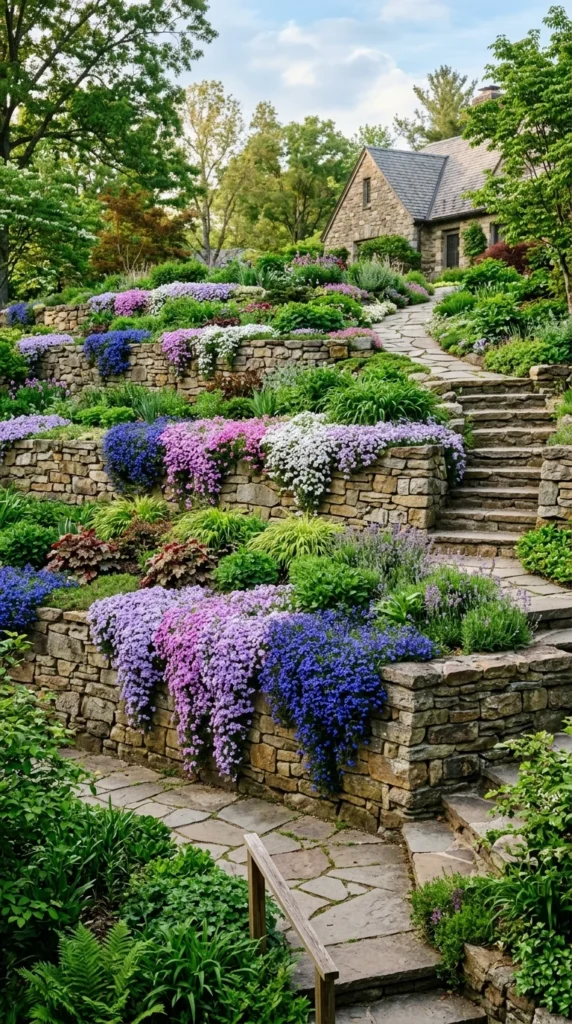
Terracing is the best way to manage a slope. Each “step” can have its own micro-climate. The top tiers (drier) can host herbs and Mediterranean plants, while the bottom tiers (moister) can house ferns and Primroses. The stone walls themselves hold heat, which can help extend the growing season for certain perennials.
18. Sensory Garden
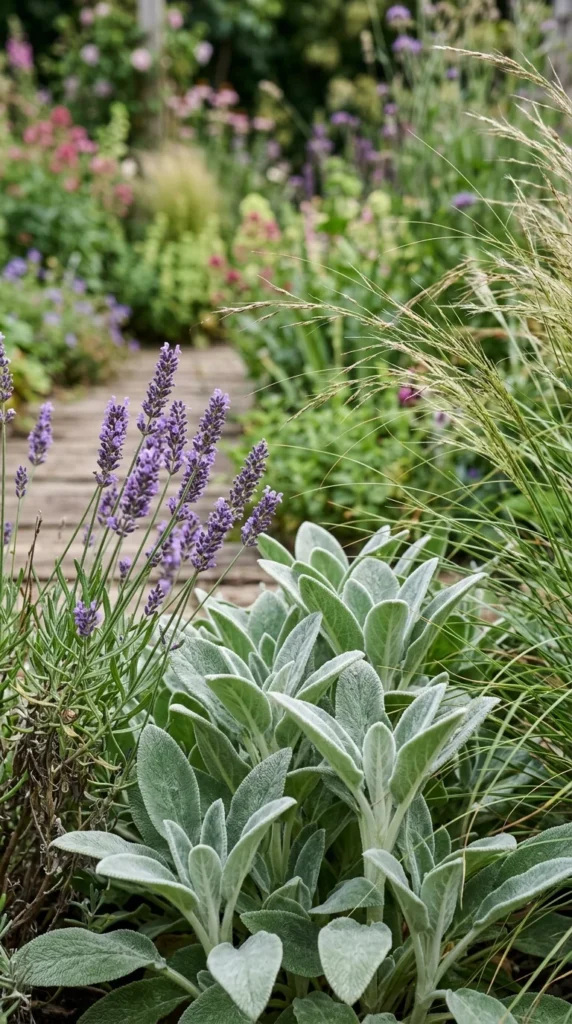
A sensory garden layout focuses on touch, smell, and sound. Lamb’s Ear (Stachys byzantina) provides a soft, velvety texture that lasts through the frost. Lavender and Sage provide fragrance. To ensure year-round sensory input, include plants with interesting winter textures, like the peeling bark of a Ninebark shrub or the rattle of dried seed pods.
19. Winter Interest
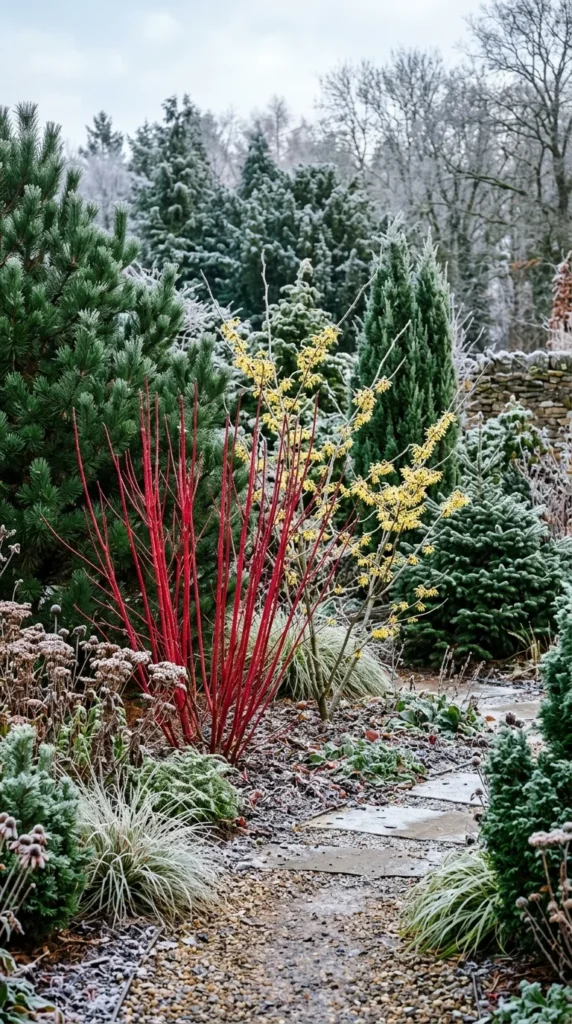
Most people plan for summer, but a “winter interest” layout focuses on the “bones” of the garden. Use plants with colorful bark, such as Red-Twig Dogwood, or those that bloom in the cold, like Hellebores and Witch Hazel. Ornamental grasses left standing will catch the frost and snow, creating a shimmering, ethereal landscape.
20. Island Bed
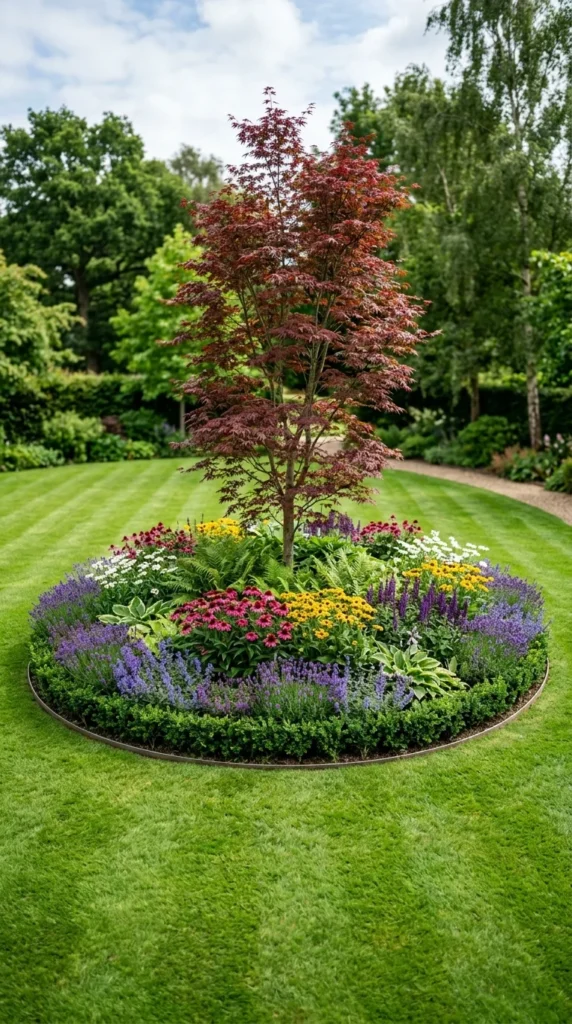
An island bed is meant to be viewed from 360 degrees. Place the tallest plants—like a Rose of Sharon or a tall ornamental grass—in the exact center and work outward in height. This creates a “mountain” effect of color. Because it’s isolated from other structures, it’s a great place to showcase “specimen” perennials that deserve their own spotlight.
21. Moon Garden
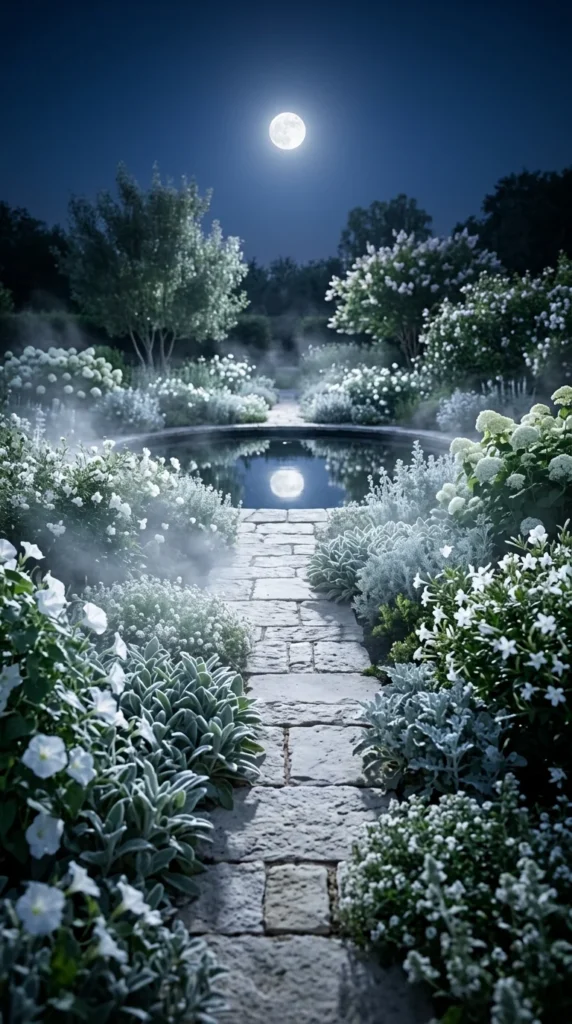
The Moon Garden is designed to be enjoyed at night. Focus on white and pale yellow flowers that reflect moonlight, and include plants that release their scent after the sun goes down, such as Moonflower vines (though these are often grown as annuals, they can be replaced by perennial Jasmine in warmer zones). For structure, use silver-leafed perennials like “Silver Mound” Artemisia.
22. Coastal Breeze
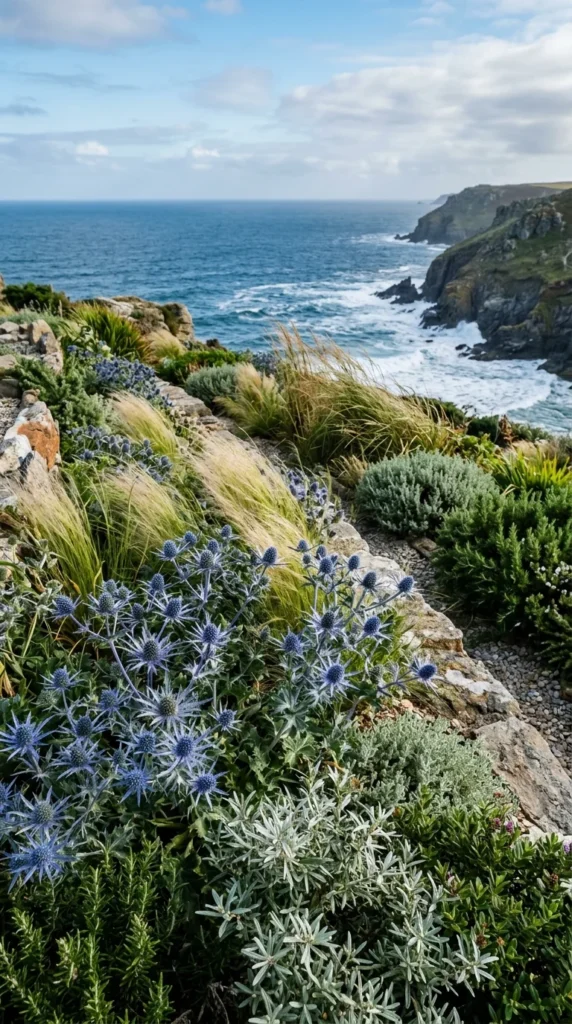
Coastal layouts must contend with salt spray and wind. Perennials like Sea Thrift (Armeria maritima) and Russian Sage thrive in these conditions. The color palette often leans toward blues, silvers, and sandy yellows to mimic the seaside environment. These plants are typically rugged and keep their shape despite harsh coastal winters.
23. Alpine Scree
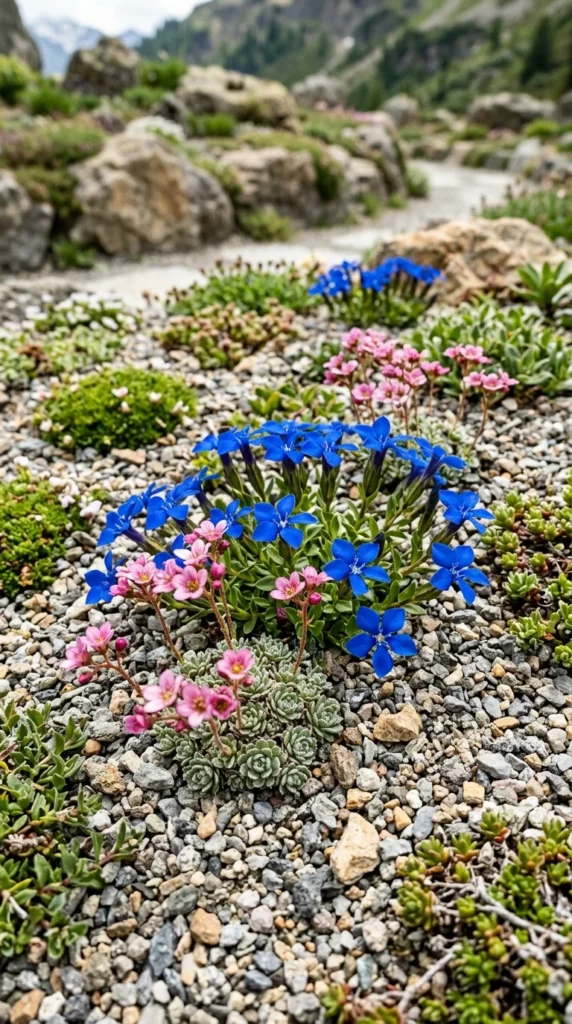
A “scree” garden mimics the loose rock slopes of high mountains. It provides the ultra-sharp drainage that many rare and beautiful perennials need. It’s a layout for the plant collector. Small, low-growing perennials like Gentiana provide intense blue flowers in late summer, while various Saxifrages offer intricate foliage patterns all year long.
24. Tropical Mimicry
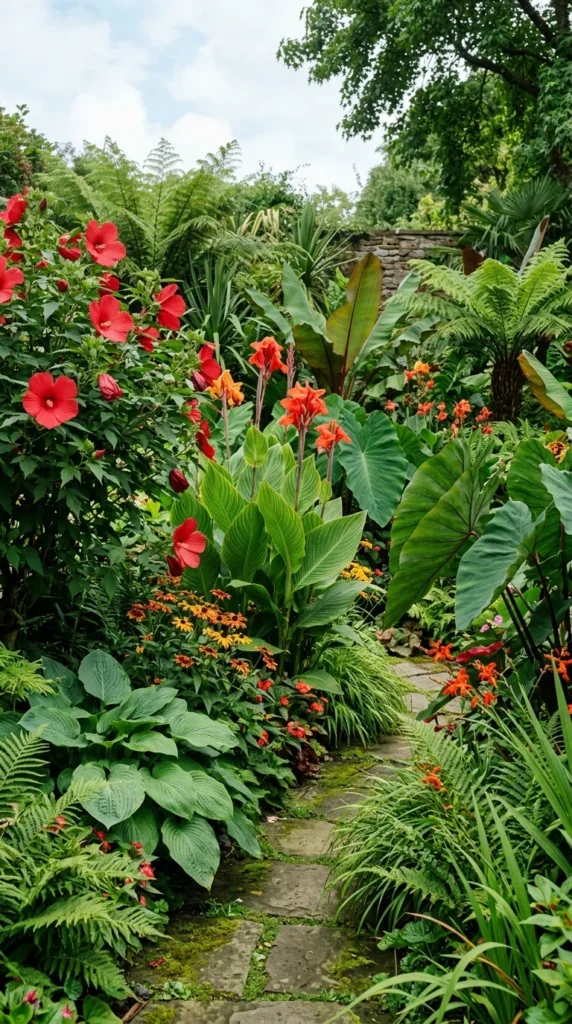
You don’t need a tropical climate to have a tropical-looking garden. Use hardy perennials with “bold” personalities. Cold-hardy Hibiscus (Hibiscus moscheutos) produces dinner-plate-sized blooms in late summer. Pair them with Butterbur (Petasites) for massive, jungle-like leaves. In winter, the garden will go dormant, so use structural elements like bamboo screens to maintain the theme.
25. Wildflower Meadow
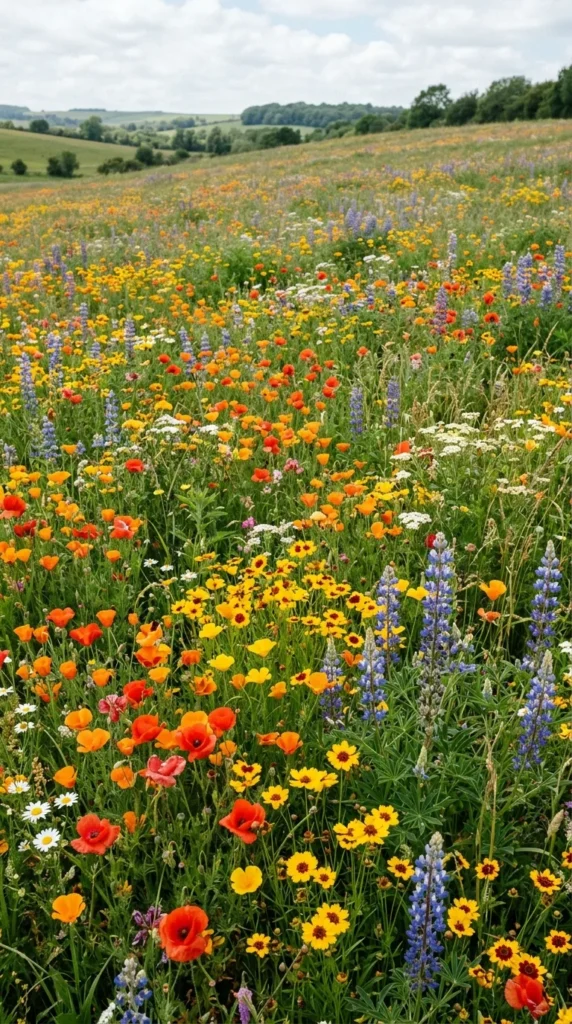
The meadow layout is the ultimate “set it and forget it” perennial garden. It relies on a high-density planting of various species to out-compete weeds. By choosing a mix of early, mid, and late-season bloomers, the meadow changes color like a slow-motion kaleidoscope. In the winter, the entire area is left standing to provide a golden, textured field that serves as a vital sanctuary for local wildlife.