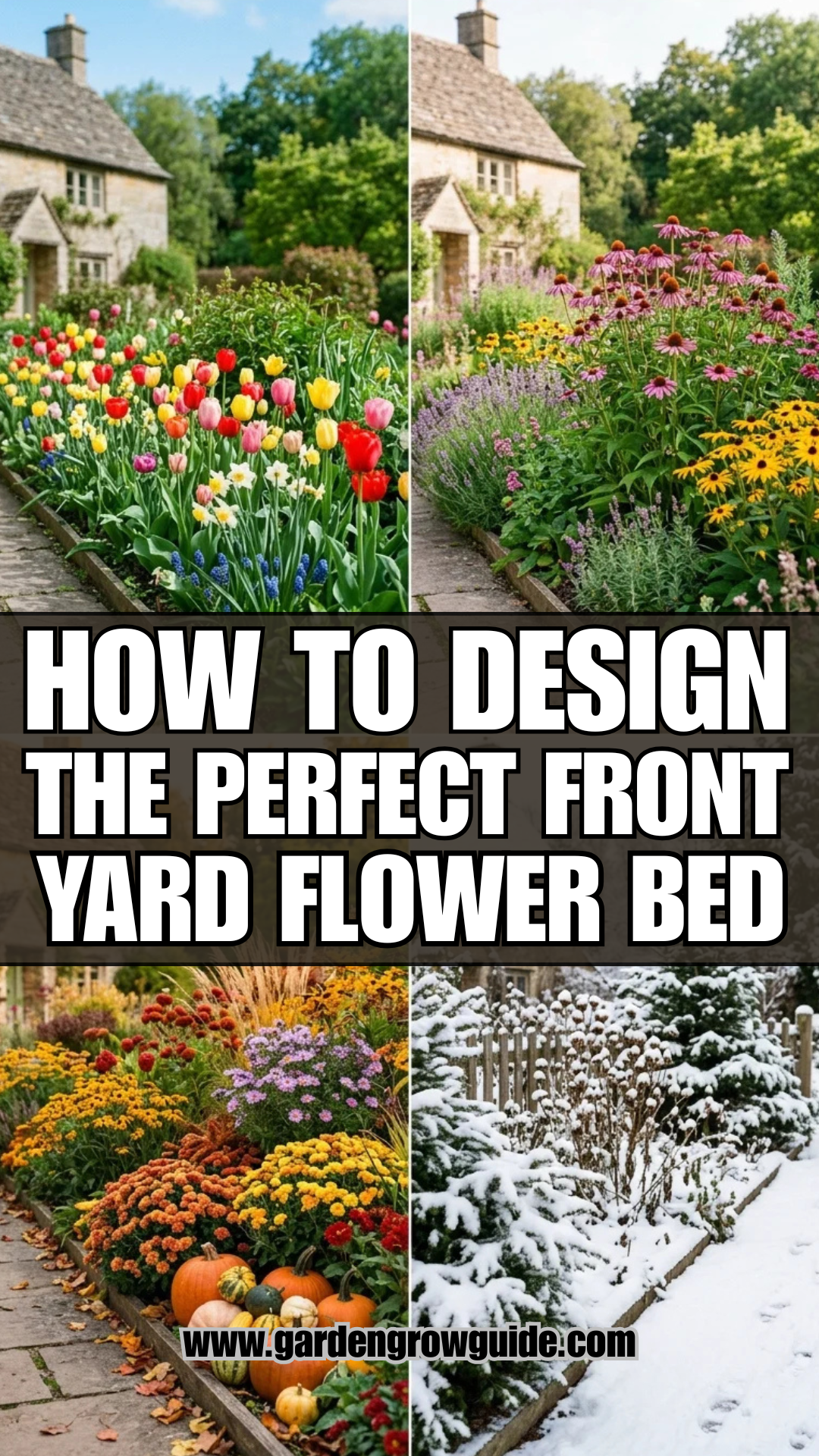
Creating a front yard flower bed is more than just a weekend project; it is an exercise in landscape architecture that significantly boosts curb appeal and home value. A well-designed garden bed serves as a warm welcome to guests and a personal sanctuary for the homeowner. Designing the “perfect” bed requires a balance of horticultural knowledge, aesthetic principles, and practical planning. By understanding the environment of your yard and the growth habits of your plants, you can create a professional-looking landscape that thrives through the seasons.
1. Site Analysis
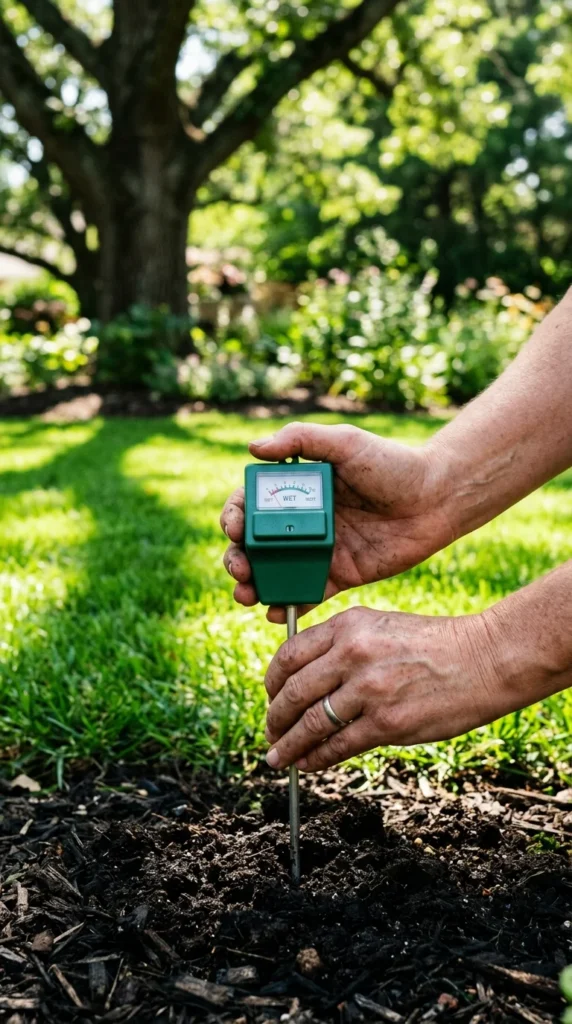
Before a single shovel hits the dirt, you must understand the physical characteristics of your front yard. The success of your flower bed depends heavily on matching your plants to the existing conditions of your site.
- Sun Exposure: Observe your yard at different times of the day. Does it receive six or more hours of direct sunlight (Full Sun), four to six hours (Part Shade), or less than four hours (Full Shade)?
- Soil Quality: Perform a soil test to determine the pH levels and nutrient content. Sandy soil drains quickly but loses nutrients, while clay soil retains water and can lead to root rot if not amended.
- Drainage: After a heavy rain, check if water pools in certain areas. You may need to grade the soil or choose water-loving plants for “boggy” spots.
- Climate Zone: Consult the USDA Plant Hardiness Zone Map to ensure the perennials you choose can survive the winter temperatures in your region.
2. Design Style
Your flower bed should act as an extension of your home’s architecture. Choosing a cohesive style prevents the garden from looking cluttered or accidental.
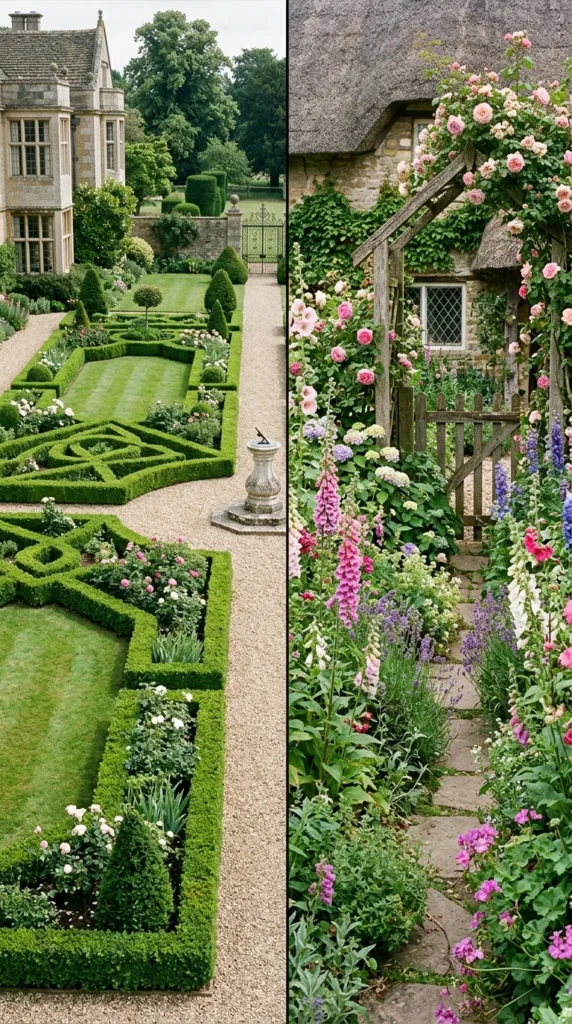
- Formal: Characterized by symmetry, straight lines, or perfect geometric curves. This style often uses clipped hedges, a limited color palette, and organized rows.
- Cottage: A romantic, “controlled chaos” approach. It features dense plantings, a mix of heights, and an abundance of traditional flowers like peonies, delphiniums, and roses.
- Modern/Minimalist: Focuses on bold textures and structural plants. It often utilizes mass planting (many of the same species) and clean, sharp edges with a focus on green tones and architectural interest.
- Native/Naturalistic: Uses plants indigenous to the local region. This style is eco-friendly, attracts local pollinators, and typically requires less maintenance once established.
3. Bed Shape
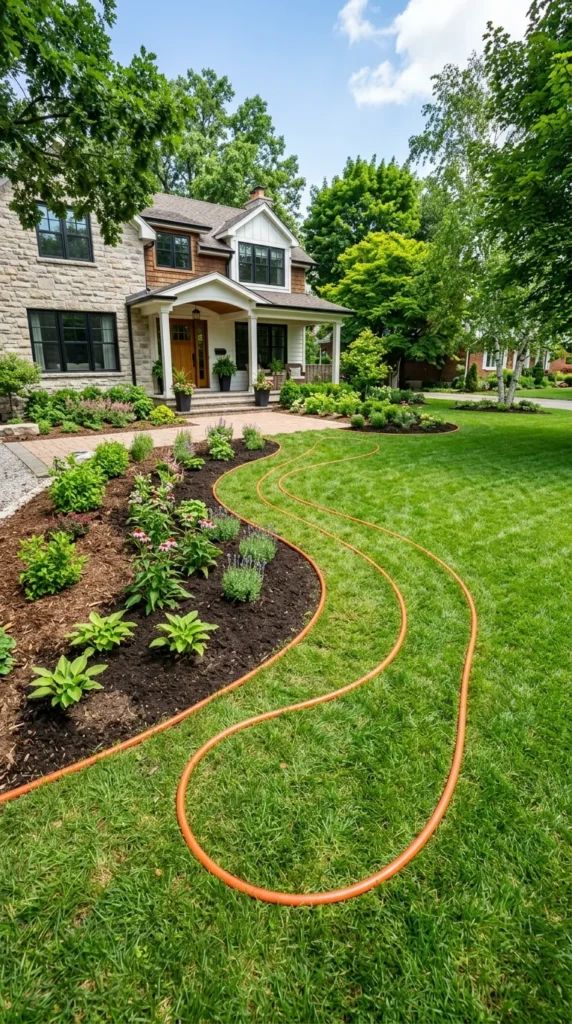
The silhouette of your garden bed defines the flow of your landscape. Most experts recommend avoiding small, “postage-stamp” sized beds in favor of larger, more impactful shapes.
- The Power of Curves: Sweeping, organic curves are generally more pleasing to the eye than straight lines. They mimic nature and lead the viewer’s eye toward the house’s entrance.
- Scale and Proportion: A common mistake is making beds too narrow. For a balanced look, a bed should be at least 5 to 6 feet deep. This allows for proper layering of plants from front to back.
- Connecting Elements: Try to connect separate island beds or foundation plantings to create a unified landscape rather than several disconnected “spots” of flowers.
4. Plant Layering
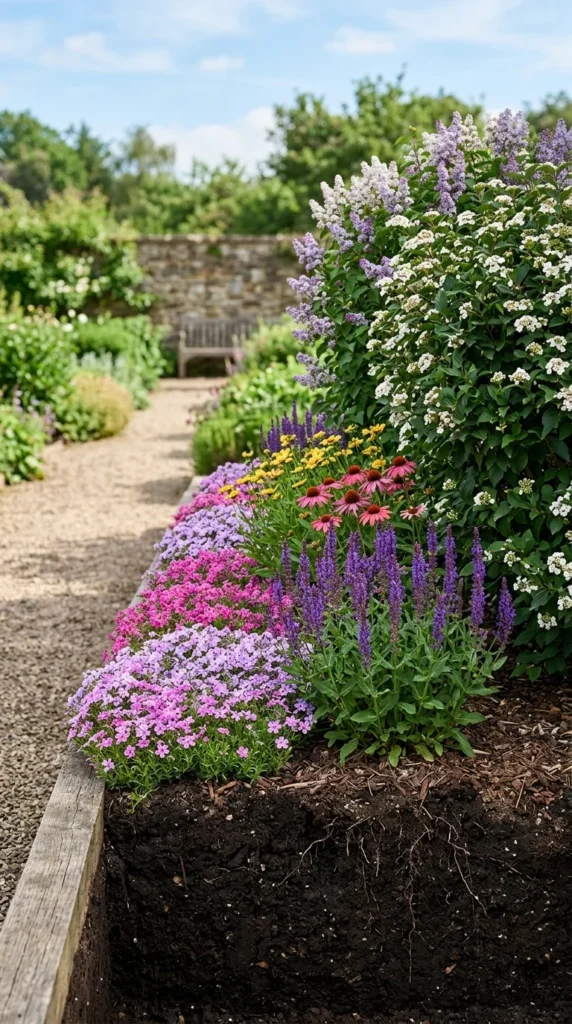
To achieve a professional “finished” look, plants should be arranged in tiers based on their mature height and width. This ensures that every plant is visible and receives adequate light.
- The Back Row (Anchors): Use evergreen shrubs, tall ornamental grasses, or large perennials. These provide a green backdrop and maintain structure during the winter months.
- The Middle Row (Fillers): This is where most of your color comes from. Choose mid-sized perennials that bloom at different times to ensure a continuous display of color.
- The Front Row (Edgers): Use low-growing plants, groundcovers, or mounded annuals. These “spill” over the edge of the bed and hide the bare stems of the taller plants behind them.
- The Focal Point: Incorporate a “specimen” plant—something unique in color, shape, or size—to act as the visual center of the bed.
5. Color Palette
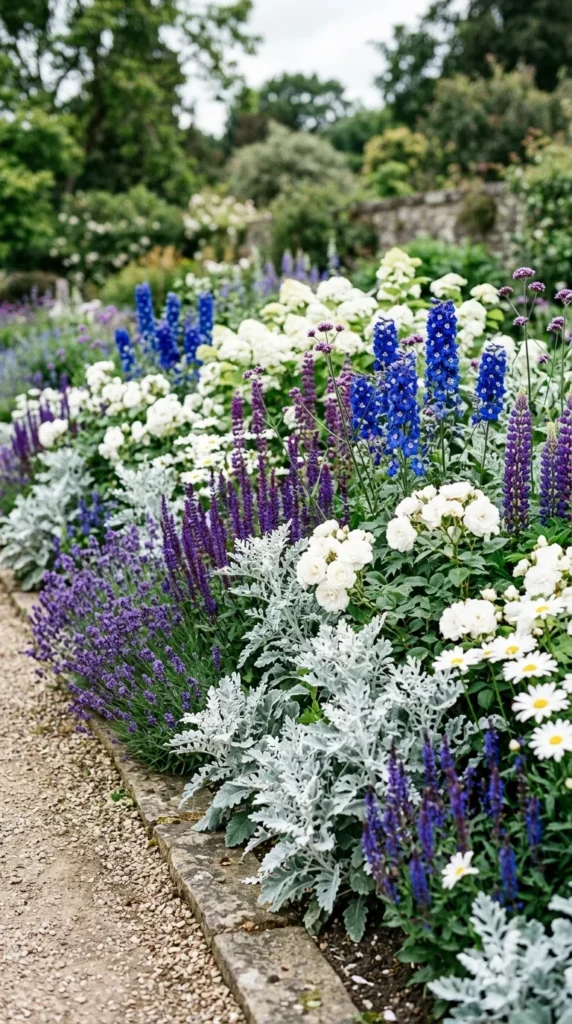
Color theory plays a massive role in the emotional impact of your front yard. A haphazard mix of every color can look messy, whereas a planned palette looks sophisticated.
- Complementary Colors: Using colors from opposite sides of the color wheel (like purple and yellow or blue and orange) creates a high-energy, vibrant look.
- Analogous Colors: Using colors next to each other (like red, orange, and yellow) creates a harmonious, soothing transition.
- Monochromatic: A garden using different shades of a single color (like an all-white garden or “Moon Garden”) looks incredibly elegant and modern.
- The Role of Foliage: Don’t forget the greens, silvers, and burgundies of leaves. Foliage provides color even when the flowers are not in bloom.
6. Hardscaping Edging
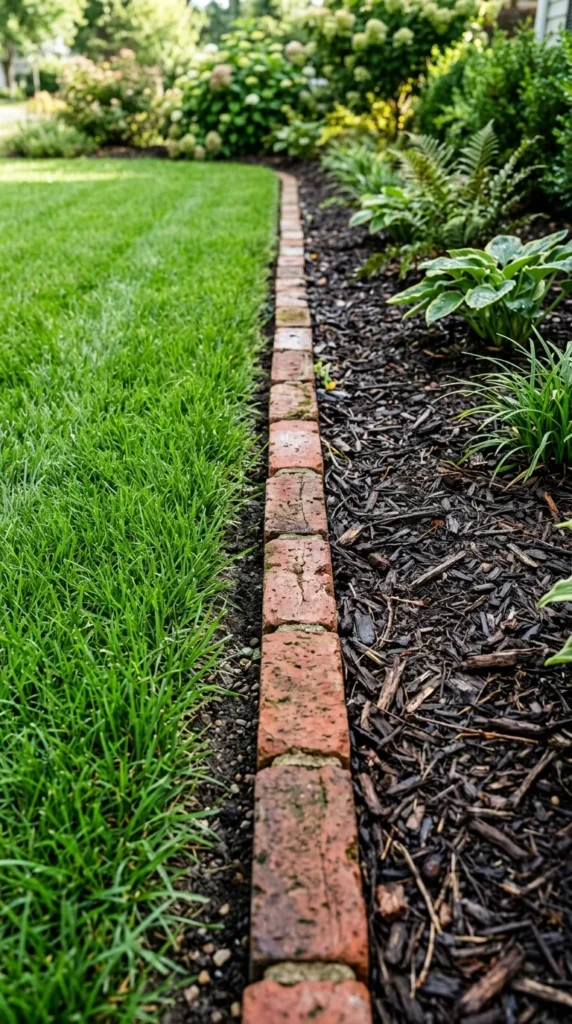
Edging is the “frame” for your floral masterpiece. It provides a clean break between the lawn and the garden, preventing grass from creeping into the flower bed.
- Natural Trench: A simple “V” shaped trench cut into the turf. It is cost-effective and provides a very clean, professional look but requires regular re-cutting.
- Stone and Brick: Permanent and classic. Using materials that match the stone or brick on your home creates a cohesive architectural look.
- Metal or Plastic: Low-profile options that disappear into the landscape while providing a sturdy barrier for roots.
- Boulders: Incorporating large rocks within the bed adds height, texture, and a sense of permanence to the design.
7. Mulch Selection
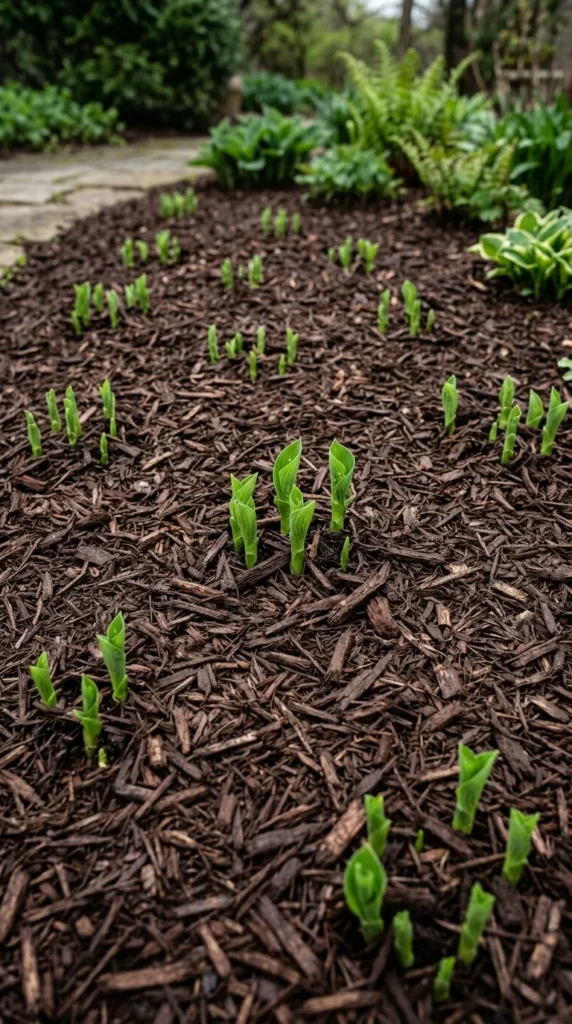
Mulch is the finishing touch that serves both aesthetic and functional purposes. It ties the look of the bed together while protecting the plants.
- Moisture Retention: Mulch helps the soil stay hydrated by reducing evaporation, which is critical during hot summer months.
- Weed Suppression: A 2-to-3-inch layer of mulch blocks sunlight from reaching weed seeds, significantly reducing your maintenance time.
- Soil Health: Organic mulches, like shredded bark or compost, break down over time and improve the soil structure and nutrient levels.
- Aesthetics: Choose a color that complements your home. Dark brown or black mulch makes the green foliage and bright flower colors “pop” more than lighter-colored straws or gravel.
8. Seasonal Interest
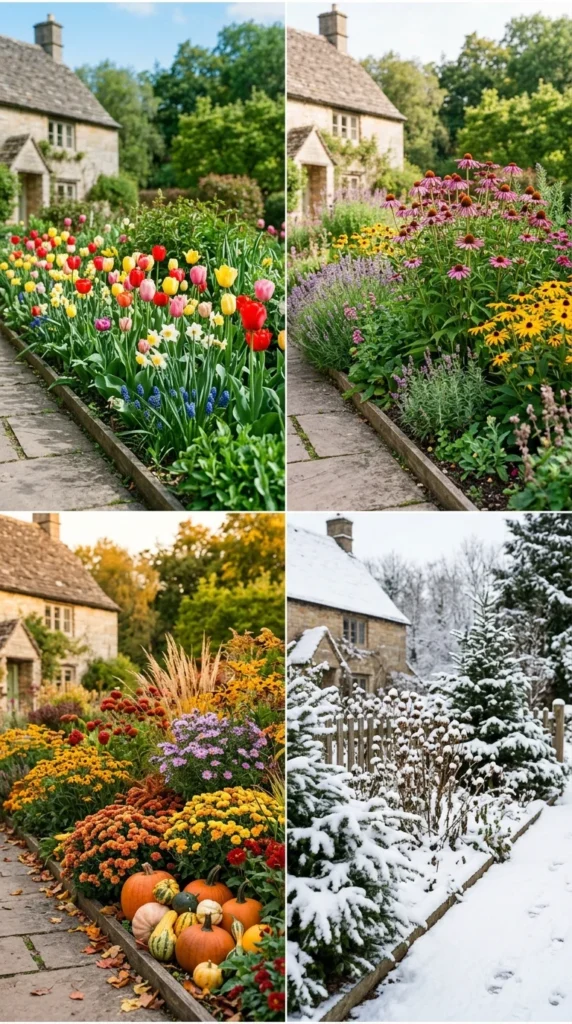
The perfect front yard flower bed should look good 365 days a year, not just during the peak of summer.
- Spring Bulbs: Plant tulips, daffodils, and crocuses in the fall so they can provide the first burst of color when the ground thaws.
- Summer Stars: Rely on long-blooming perennials like Black-eyed Susans, Coneflowers, and Lavender.
- Autumn Texture: Incorporate plants that change color in the fall, such as Amsonia, or those that bloom late, like Sedum ‘Autumn Joy’ and Ornamental Kale.
- Winter Structure: Ensure at least 20-30% of your bed consists of evergreens or plants with interesting bark (like Red-twig Dogwood) so the yard doesn’t look empty when the perennials go dormant.