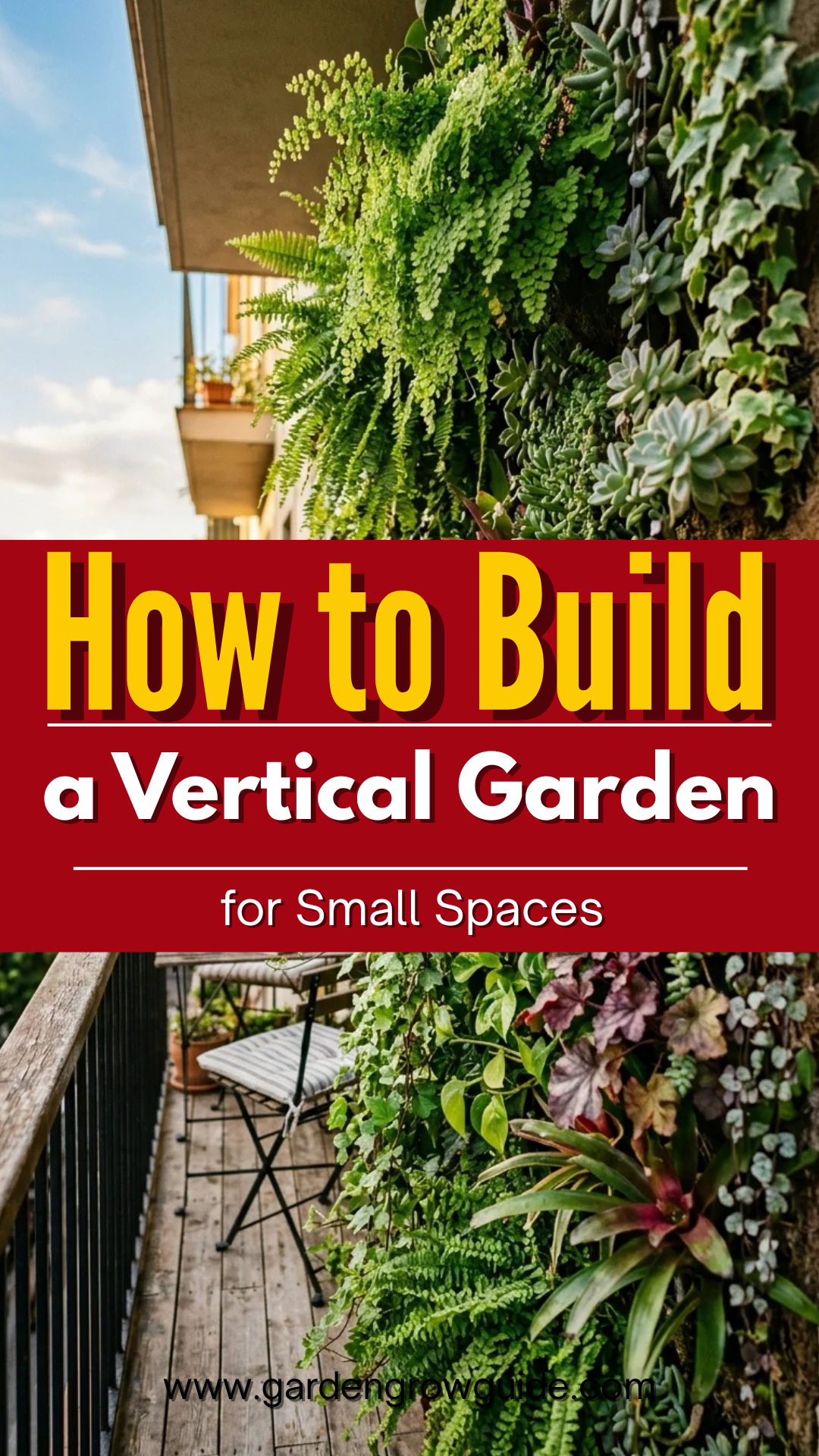
In an era where urban living often means sacrificing sprawling backyards for compact balconies and sunlit windowsills, the concept of gardening has undergone a radical transformation. Vertical gardening is the innovative response to the constraints of modern architecture, allowing nature enthusiasts to reclaim their green thumb by looking upward rather than outward. Whether you live in a high-rise apartment or a cozy studio, a vertical garden serves as a living tapestry that purifies the air, provides fresh produce, and offers a serene escape from the concrete jungle.
This comprehensive guide explores every facet of designing, building, and maintaining a vertical garden, ensuring that even the smallest square footage can flourish with life.
1. Assessment
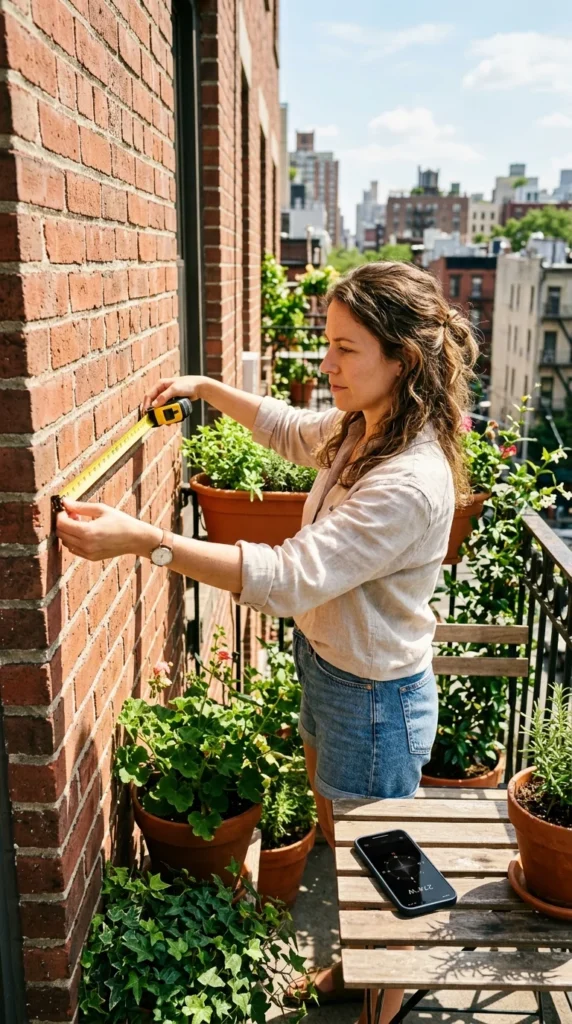
Before a single seed is planted, a thorough assessment of your available space is crucial. Not all walls are created equal, and the success of your vertical garden depends on understanding the environmental variables at play.
- Weight Capacity: Soil, water, and containers are significantly heavier than they appear. If you are attaching a structure to a drywall or a wooden fence, ensure it can support the load once fully saturated.
- Sun Exposure: Observe the light patterns throughout the day. South-facing walls typically receive intense, direct sunlight, ideal for vegetables and succulents. North-facing walls are cooler and shadier, perfect for ferns and mosses.
- Microclimates: Wind can be a silent killer for vertical gardens, especially on higher floors. High winds increase evaporation and can physically damage fragile stems. Consider windbreaks or hardier plant varieties if your space is exposed.
- Water Access: Determine how you will get water to the highest points of your garden. Proximity to a hose bib or a sink will dictate whether you use a manual watering can or a sophisticated irrigation system.
2. Structures
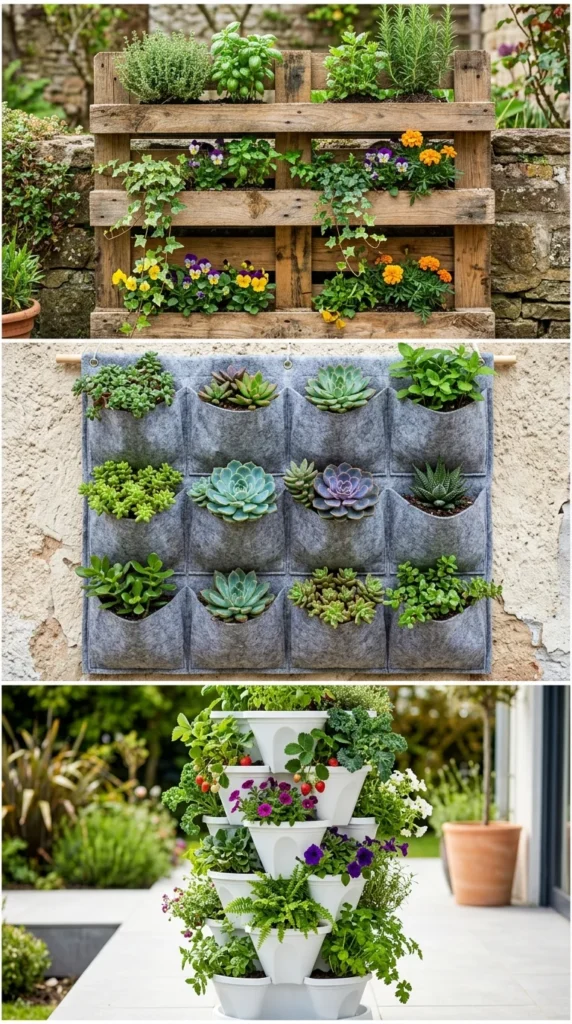
The skeleton of your garden—the structure—defines its aesthetic and functionality. There are several popular methods to choose from depending on your DIY skills and budget.
- Pocket Systems: These are usually made from breathable, heavy-duty felt. They are lightweight and easy to hang, allowing roots to breathe while maintaining moisture.
- Repurposed Pallets: For a rustic, eco-friendly look, wooden pallets can be lined with landscape fabric and filled with soil. This creates horizontal “slats” for planting.
- Modular Plastic Trays: These are commercial kits that snap together. They often include built-in drainage channels that allow water to flow from the top tray down to the bottom.
- Trellises and Arbors: If you prefer climbing plants like peas, jasmine, or ivy, a simple trellis against a wall provides the necessary support for upward growth without the need for heavy soil-filled containers.
- Floating Shelves: Utilizing deep wooden or metal shelves to hold individual pots allows for easy rearrangement and maintenance.
3. Plants
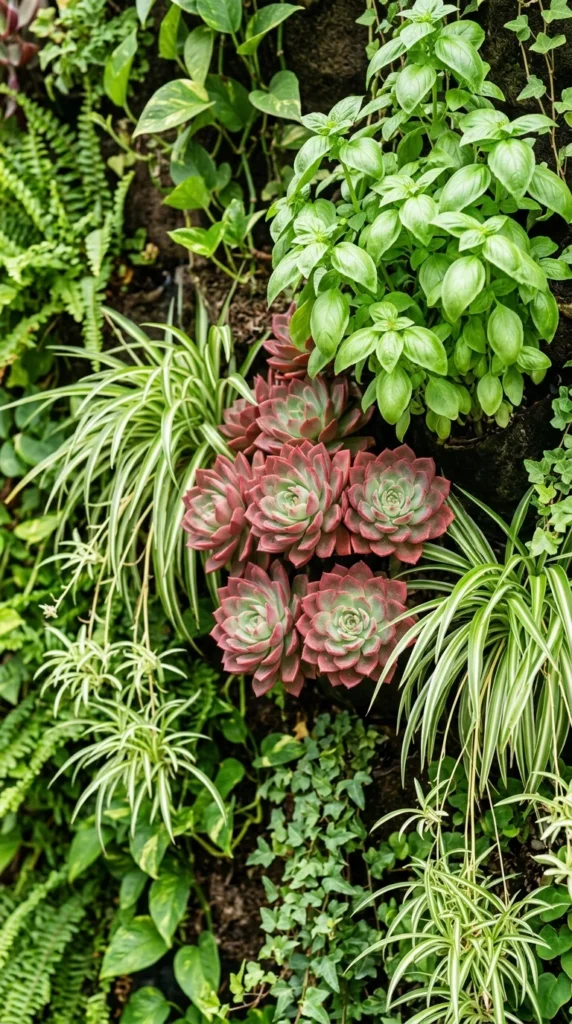
Choosing the right inhabitants for your vertical wall is a balance of aesthetics and biology. You must group plants with similar light and water requirements to ensure harmony.
- Herbs: Basil, mint, parsley, and chives thrive in vertical containers. They are practical for kitchen use and generally have shallow root systems.
- Succulents: Ideal for sunny, low-maintenance walls. Their ability to store water makes them resilient, and their varied textures provide a striking visual.
- Trailing Varieties: Plants like Pothos, Creeping Jenny, or String of Pearls create a “waterfall” effect, masking the structural elements of your garden with a curtain of green.
- Leafy Greens: Lettuce, kale, and spinach are excellent for vertical gardens. They grow quickly and can be harvested “cut-and-come-again” style.
- Ferns: For indoor or shaded outdoor walls, ferns provide a prehistoric, lush look. They enjoy the humidity often found in vertical setups.
4. Assembly
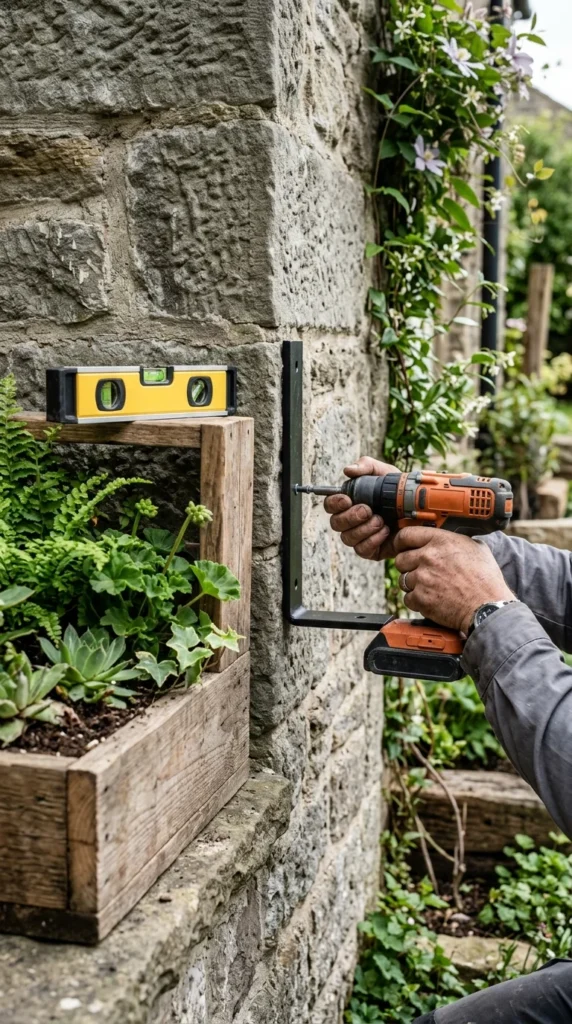
The assembly phase is where your planning meets reality. Securely mounting your garden is the most critical safety step.
- Waterproofing: If you are mounting a garden directly onto a wall (especially indoors), install a moisture barrier such as a sheet of plastic or pond liner between the garden and the wall to prevent mold and structural damage.
- Anchoring: Use heavy-duty anchors suited for your wall type (concrete, brick, or stud). Always use a level to ensure your rows are straight, as even a slight tilt can disrupt water distribution.
- Spacing: Leave enough room between containers or pockets for the plants to reach their full mature size. Overcrowding can lead to poor air circulation and the spread of pests.
- Drainage: Ensure that every container has a drainage hole. In vertical systems, the runoff from the top plants often hydrates the ones below, but stagnant water at the bottom must be collected in a drip tray or directed away from the building.
5. Hydration
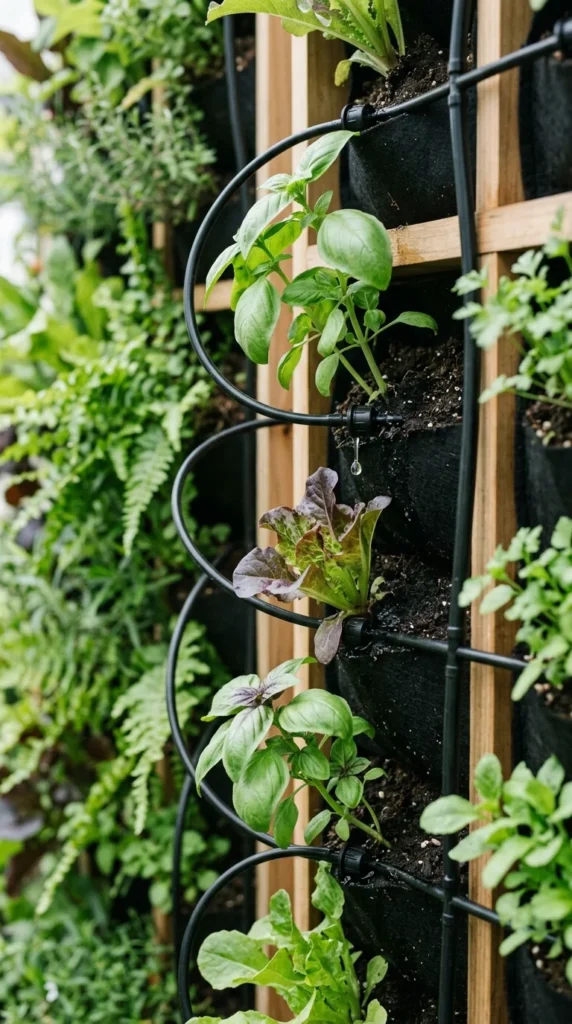
Watering a vertical garden is more complex than watering a traditional one. Gravity causes water to move downward quickly, meaning the top layers dry out faster than the bottom.
- Drip Irrigation: This is the gold standard for vertical gardening. A network of thin tubes delivers a precise amount of water to the base of each plant, minimizing waste and ensuring even hydration.
- Self-Watering Reservoirs: Some modular systems include a tank at the bottom with a pump that recirculates water to the top, or wicking systems that pull moisture up from a reservoir.
- Manual Misting: For tropical plants and ferns, regular misting helps maintain the high humidity they crave.
- The Finger Test: Always check the soil moisture levels manually before watering. Stick your finger an inch into the soil; if it’s dry, it’s time to water.
6. Illumination
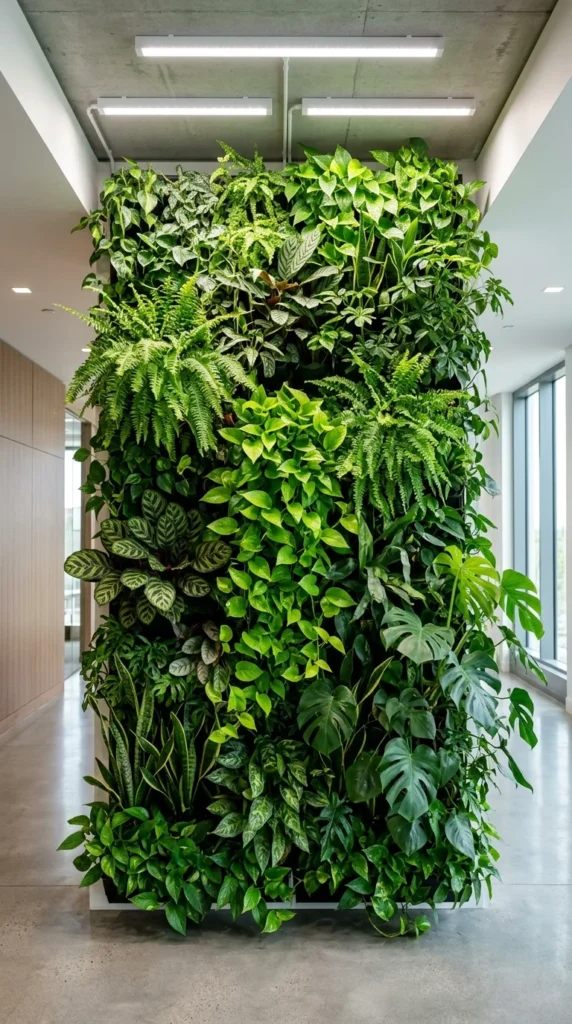
Light is the fuel for your garden. In small urban spaces, natural light can be a rare commodity.
- Natural Light Tracking: Track how many hours of “direct” vs. “indirect” light your wall receives. Most vegetables need at least 6 hours of direct sun, while many houseplants prefer bright, filtered light.
- Reflective Surfaces: You can maximize natural light by painting surrounding walls white or using mirrors to bounce sunlight onto your garden.
- Supplemental Grow Lights: If your space is dark, modern LED grow lights are an efficient solution. They provide the specific blue and red light spectrums plants need for photosynthesis without consuming much electricity or generating excessive heat.
- Rotation: If your garden is on a mobile stand, rotate it every week to ensure all sides receive equal light exposure, preventing the plants from leaning awkwardly toward the window.
7. Nutrition
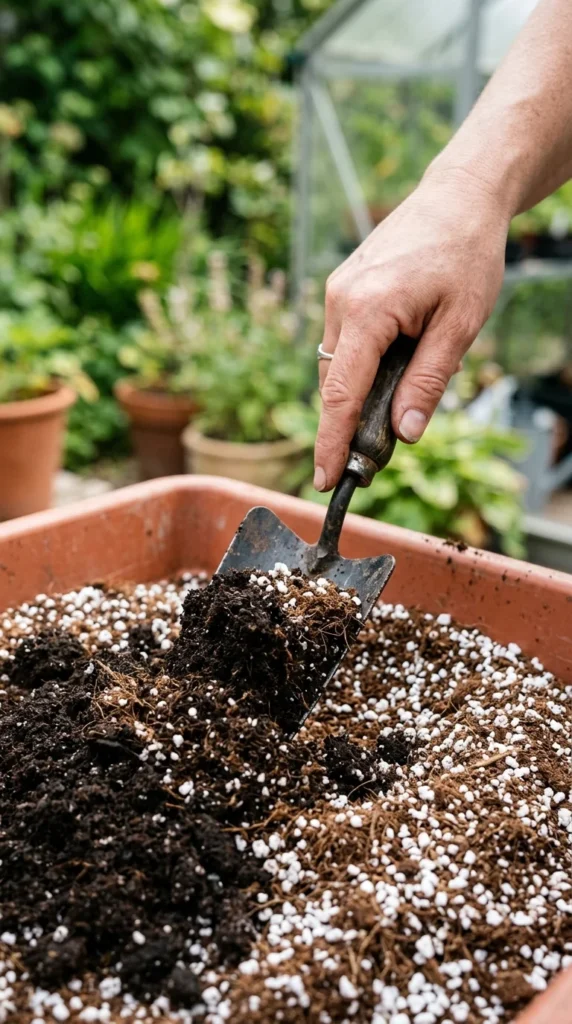
Because vertical garden containers are often small, the plants have limited access to nutrients. You must provide a high-quality growing medium and regular feeding.
- Lightweight Soil: Avoid standard garden soil, which is too heavy and compacts easily. Use a high-quality potting mix blended with perlite or vermiculite to ensure aeration and drainage.
- Organic Fertilizers: Use liquid seaweed or fish emulsion diluted in your watering can. These provide a gentle boost of nutrients without the risk of “burning” the roots with harsh chemicals.
- Slow-Release Pellets: Mixing slow-release fertilizer granules into the soil during planting provides a steady supply of nutrients for several months.
- Compost Tea: For an extra health boost, occasionally water your plants with compost tea to introduce beneficial microbes to the soil ecosystem.
8. Upkeep
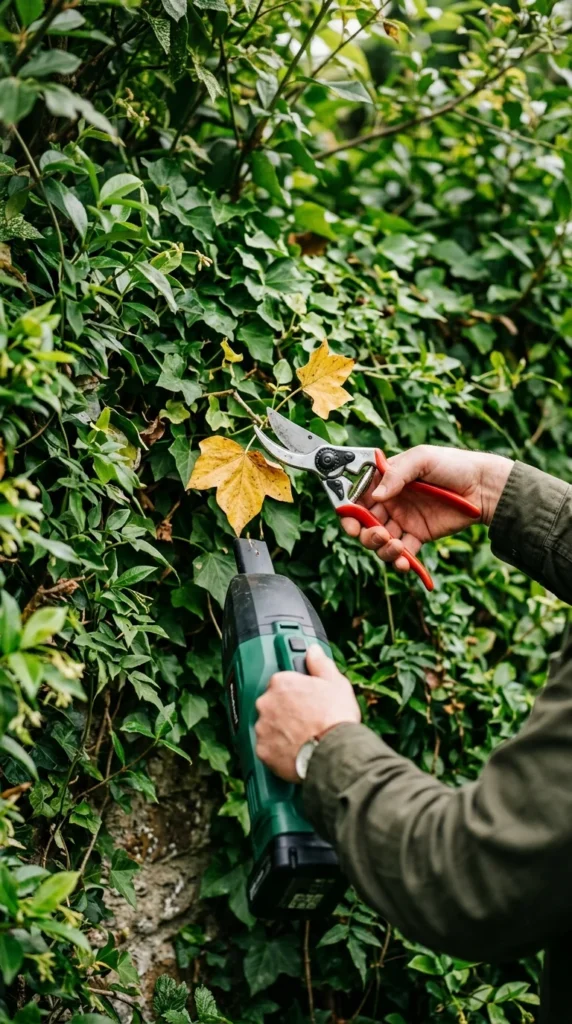
A vertical garden is a living entity that requires consistent care to remain beautiful and healthy.
- Pruning and Deadheading: Regularly remove dead leaves and spent flowers. This not only keeps the garden looking neat but also prevents the onset of fungal diseases and encourages new growth.
- Pest Management: Vertical gardens can be susceptible to aphids, spider mites, and whiteflies. Inspect the undersides of leaves weekly. A simple spray of neem oil or soapy water usually keeps these pests at bay.
- Airflow: In dense vertical walls, air can become stagnant. Occasionally thin out the foliage to ensure air can move between the plants, which reduces the risk of powdery mildew.
- Seasonal Transitions: Depending on your climate, you may need to move your garden indoors during winter or swap out heat-sensitive lettuce for heat-tolerant succulents in the summer.
Vertical gardening is more than just a decorative trend; it is a sustainable lifestyle choice that maximizes the potential of every square inch. By carefully selecting your structure, plants, and maintenance routine, you can create a thriving ecosystem that brings the beauty of the natural world directly into your home.