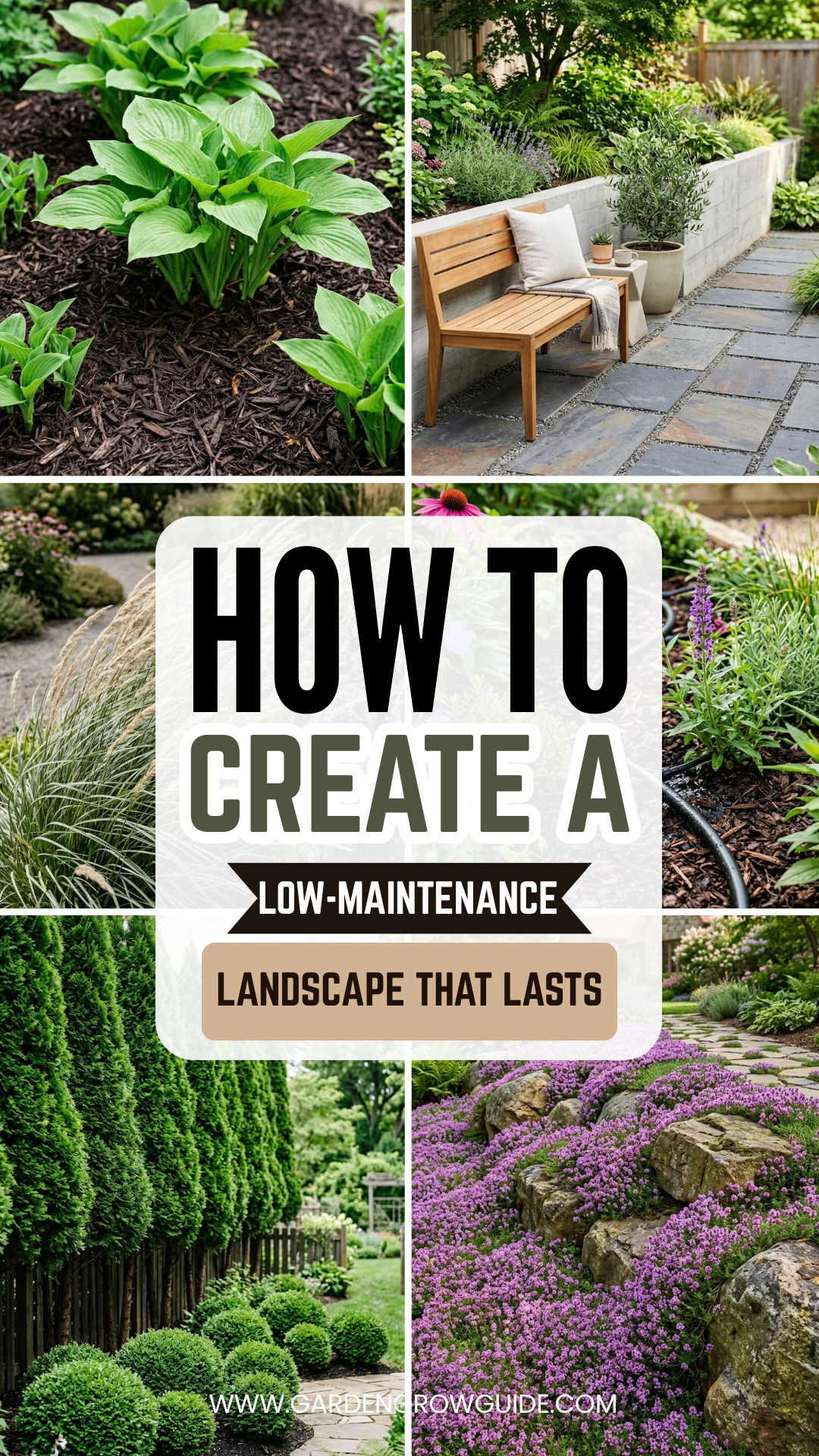
The dream of a lush, beautiful outdoor space often comes with the nightmare of endless weekend chores. From mowing and weeding to constant watering and pruning, traditional gardens can quickly become a second full-time job. However, the modern approach to landscaping focuses on “smart gardening”—creating an environment that thrives with minimal human intervention. A low-maintenance landscape isn’t just about doing less; it’s about designing a sustainable ecosystem that works with nature rather than against it.
By prioritizing durability, plant selection, and structural elements, you can create an outdoor sanctuary that remains stunning year after year. This guide explores the essential components of building a high-impact, low-effort landscape.
1. Hardscaping
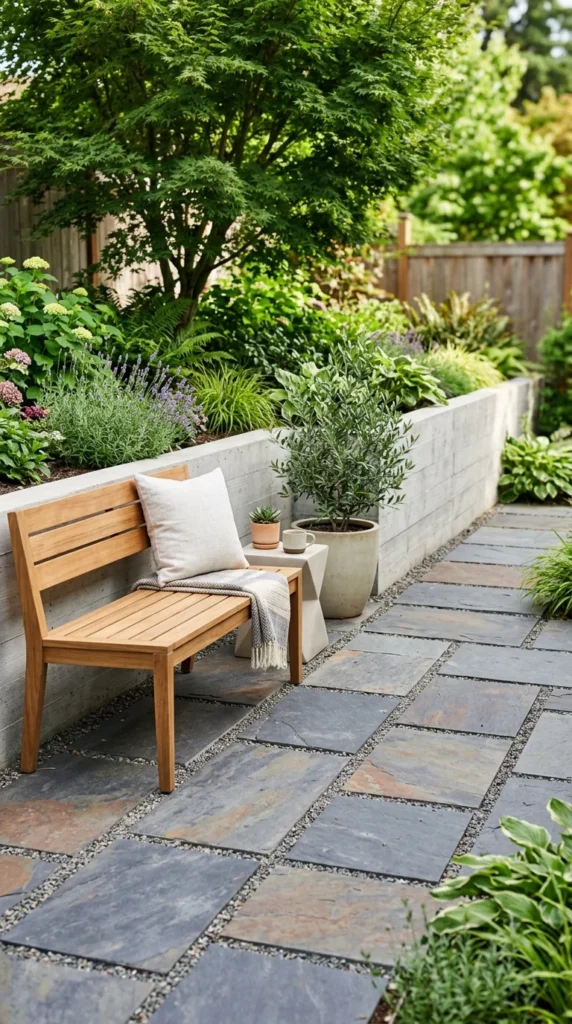
Hardscaping is the backbone of any low-maintenance yard. By replacing large sections of thirsty, high-maintenance grass with non-living elements like stone, brick, or wood, you drastically reduce the need for upkeep. Hardscaped areas do not require water, fertilizer, or mowing, making them the ultimate “set it and forget it” solution.
When planning your hardscape, consider the flow of your outdoor living space. Large patios or decks serve as functional “rooms” for entertaining, while stone pathways can guide traffic and prevent soil compaction. Using permeable pavers or gravel allows rainwater to soak into the ground, reducing runoff and keeping the rest of your garden hydrated. Quality materials, such as natural stone or composite decking, may have a higher upfront cost but offer incredible longevity without the need for frequent repairs or staining.
2. Native Plants
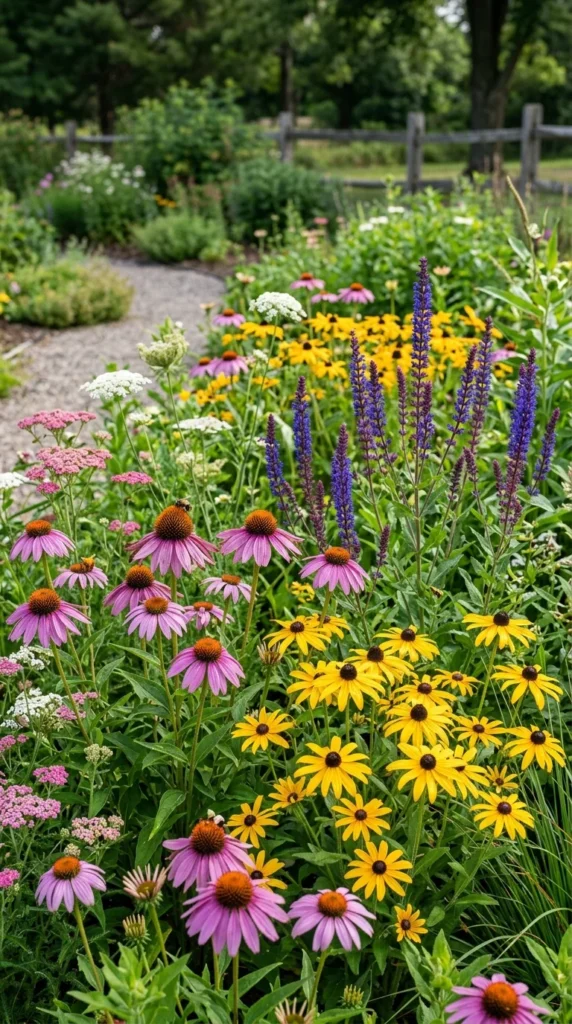
One of the most common mistakes in landscaping is trying to grow plants that aren’t suited for the local climate. Exotic species often require excessive watering, specific soil amendments, and protection from local pests. In contrast, native plants have spent thousands of years adapting to your specific region’s rainfall, soil quality, and temperature fluctuations.
Native plants are inherently more resilient. Once established, they typically require little to no supplemental watering and are naturally resistant to local diseases. Furthermore, they provide essential habitats for local pollinators like bees, butterflies, and birds, which helps maintain a healthy garden ecosystem. To find the best options, research your local “hardiness zone” and look for species that are indigenous to your area.
3. Mulching
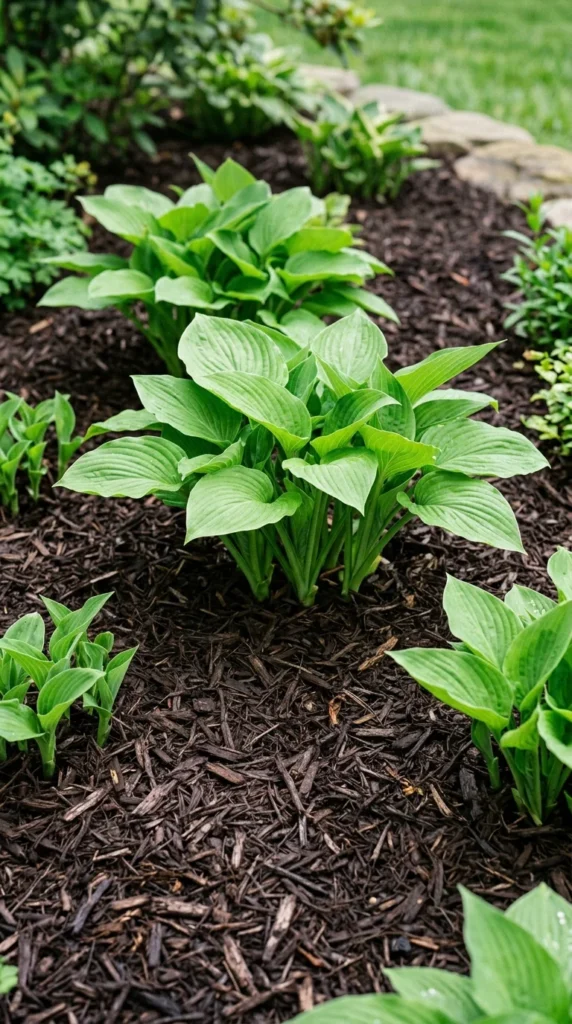
Mulch is the “secret weapon” of the low-maintenance gardener. A thick layer of organic mulch (such as wood chips, bark, or pine needles) serves multiple purposes. First, it acts as a barrier that prevents weed seeds from reaching the soil and germinating, which can reduce your weeding time by up to 90%. Second, it retains moisture in the soil by slowing down evaporation, meaning you won’t need to water your plants as often.
As organic mulch breaks down, it also improves the soil structure and provides nutrients to your plants. For areas where you want a permanent solution, inorganic mulches like river rocks or lava stones are excellent choices. While they don’t nourish the soil, they never need to be replaced and provide a clean, modern aesthetic that lasts for decades.
4. Irrigation
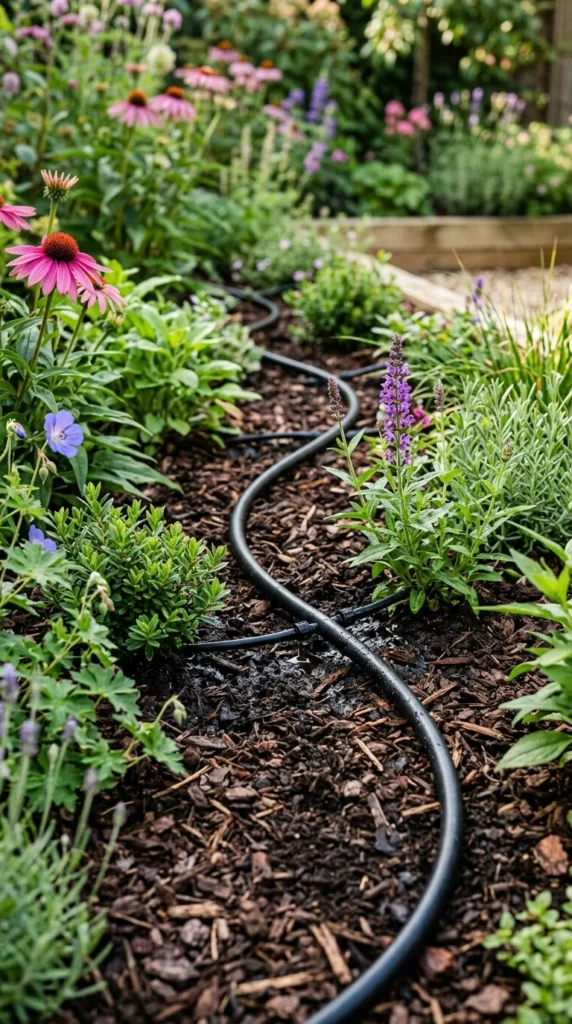
Hand-watering is not only time-consuming but often inefficient, as much of the water evaporates or runs off before it reaches the roots. Installing an automatic irrigation system is one of the best investments for a low-maintenance landscape. Specifically, drip irrigation systems are highly recommended. These systems deliver water directly to the base of each plant, minimizing waste and discouraging weed growth in the dry areas between plants.
Modern smart controllers take this a step further. These devices connect to local weather stations and adjust your watering schedule based on real-time rainfall data and temperature. If it rained yesterday, the system stays off, saving you money on your water bill and preventing overwatering. A well-designed irrigation system ensures your plants stay healthy even when you’re away on vacation.
5. Groundcovers
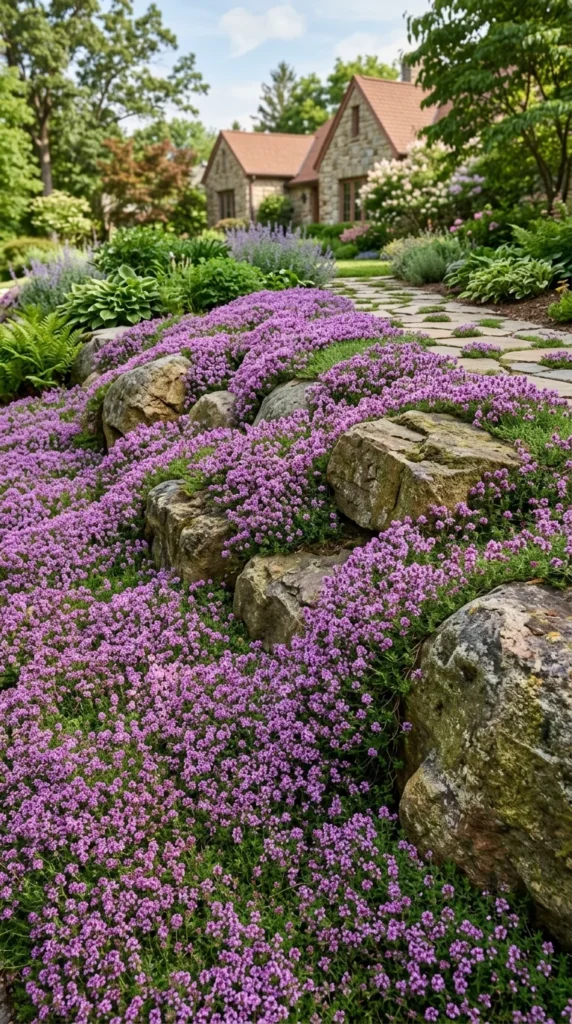
If you find the idea of a completely stone-filled yard too cold, groundcovers offer a soft, green alternative to grass. Traditional turf lawns are high-maintenance “monocultures” that require frequent mowing, edging, and chemical treatments. Groundcovers like creeping thyme, clover, or sedum grow low to the ground and spread horizontally, creating a lush carpet that rarely, if ever, needs mowing.
Many groundcovers are also “stepables,” meaning they can handle light foot traffic. They are excellent for filling in gaps between stepping stones or covering steep slopes where mowing would be difficult or dangerous. By choosing a variety that stays green year-round, you can maintain a vibrant look with a fraction of the effort required for a traditional lawn.
6. Evergreens
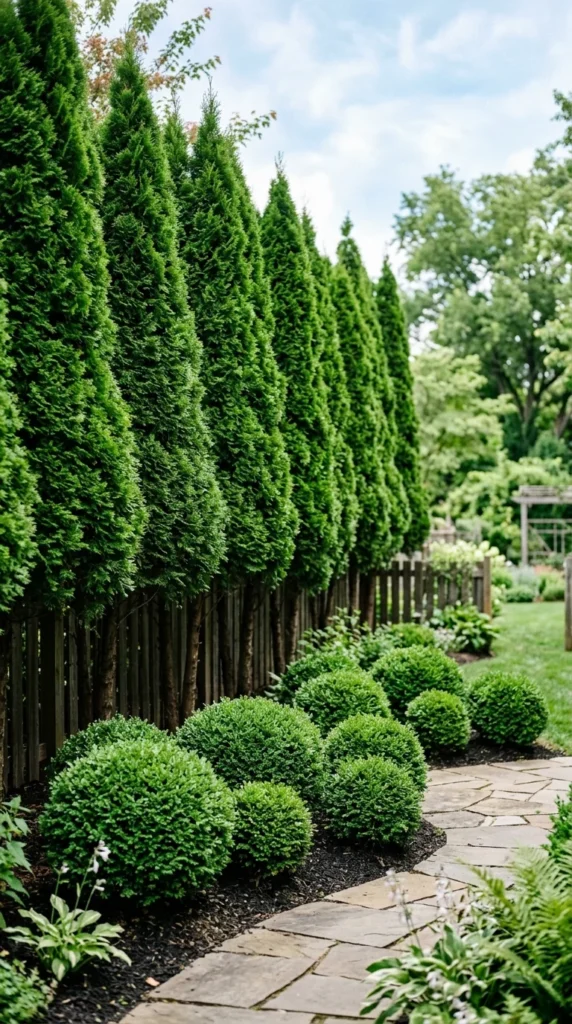
To ensure your landscape looks good in every season, incorporate a variety of evergreen trees and shrubs. Unlike deciduous plants that drop their leaves in the fall—creating a massive cleanup task—evergreens provide structure and color throughout the winter months. They serve as a permanent backdrop for your garden, ensuring it never looks “dead” during the colder seasons.
Dwarf evergreen varieties are particularly useful for low-maintenance designs because they grow very slowly and maintain a compact shape without the need for constant pruning. Boxwoods, junipers, and certain types of pine can be used to create “living walls” or focal points that require only a light trim once a year.
7. Perennials
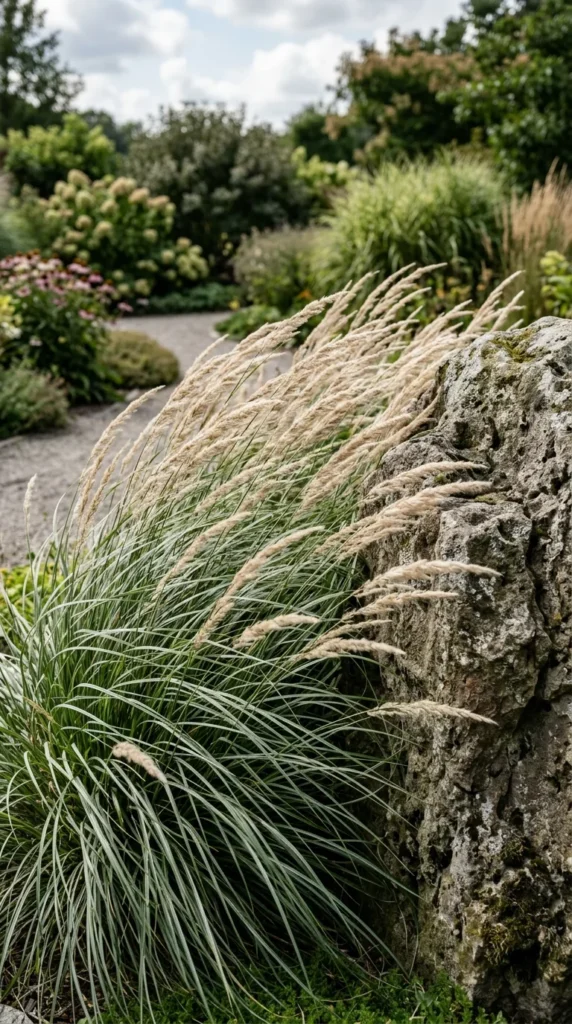
Choosing perennials over annuals is a foundational rule of easy gardening. Annuals must be replanted every single year, requiring fresh soil, labor, and money. Perennials, however, return year after year, often growing larger and more robust with each passing season.
When selecting perennials, look for “tough” varieties that are known for their longevity. Ornamental grasses, lavender, and peonies are famous for their ability to thrive with minimal attention. By grouping plants with similar water and light needs together (a practice known as hydro-zoning), you can streamline your care routine and ensure every plant gets exactly what it needs to flourish without extra effort from you.