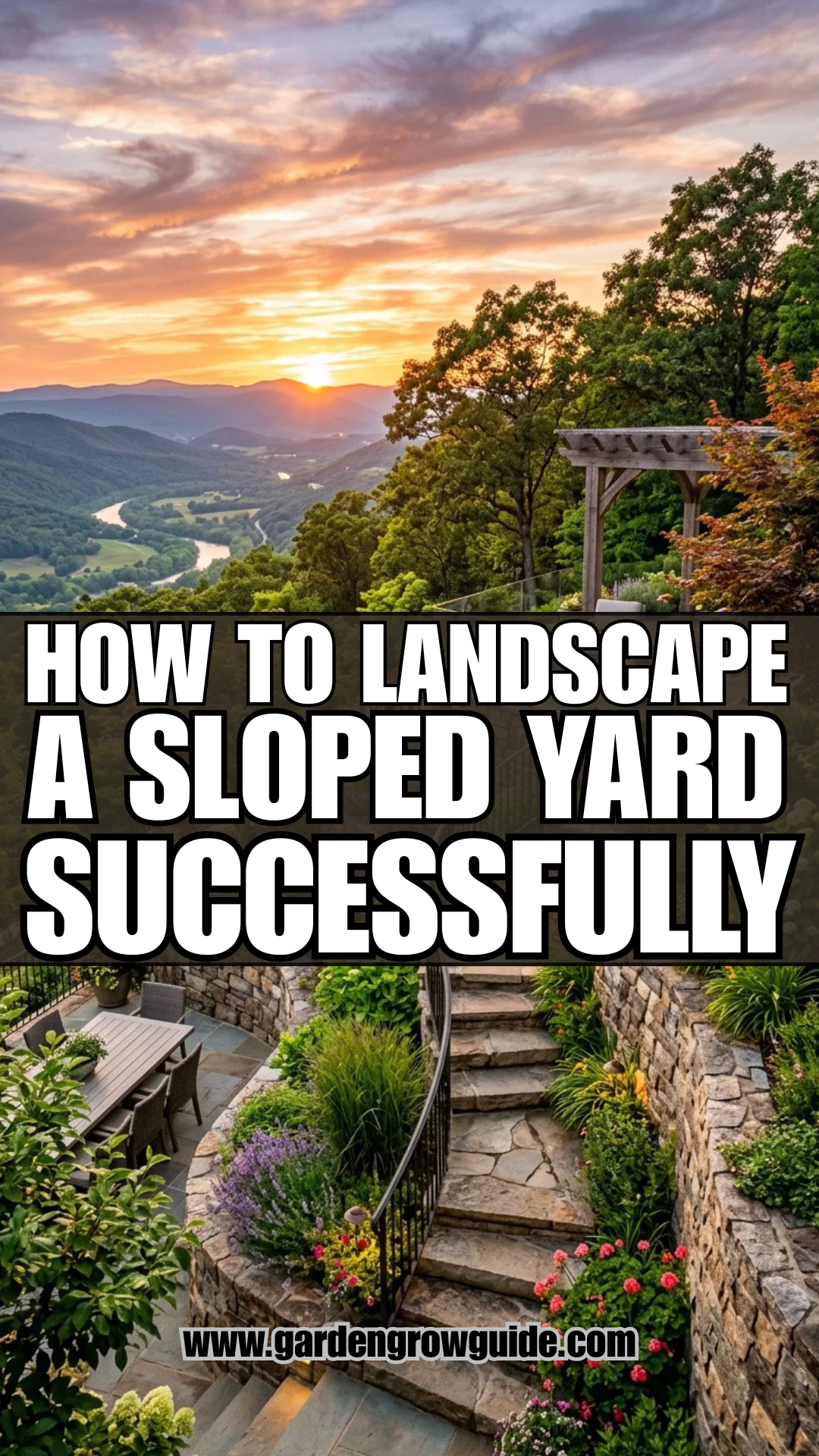
Landscaping a flat lot is relatively straightforward, but a sloped yard presents a unique set of challenges and opportunities. While many homeowners view a steep grade as a liability due to soil erosion, water runoff, and difficult mowing conditions, professional landscapers often see it as a canvas for dramatic design. A well-executed sloped landscape adds vertical interest, creates distinct outdoor “rooms,” and can significantly increase a property’s value.
To landscape a slope successfully, you must balance engineering with aesthetics. You are not just planting flowers; you are managing gravity, water flow, and structural integrity. This guide explores the most effective strategies for transforming a challenging incline into a functional, beautiful masterpiece.
1. Retaining Walls
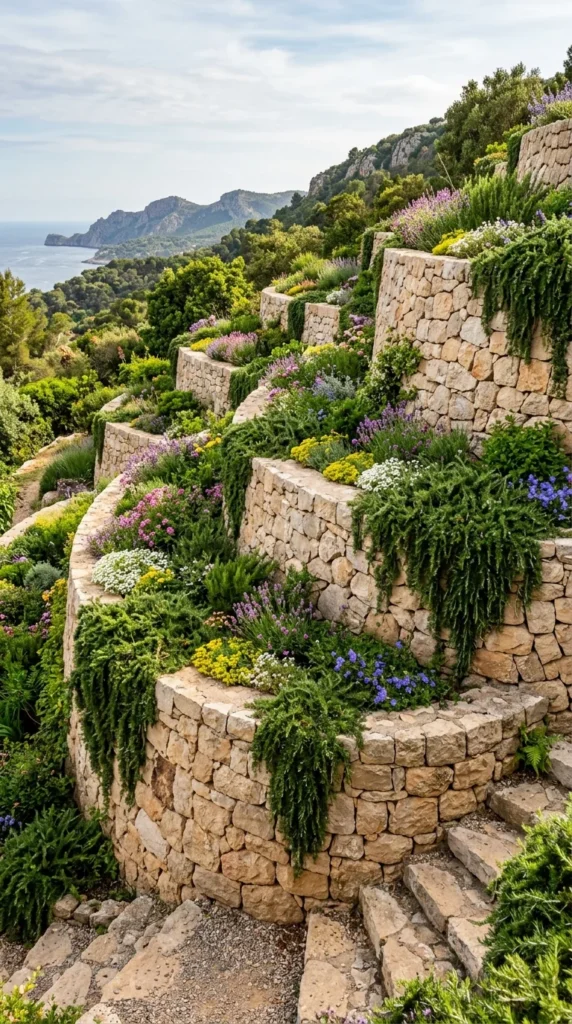
Retaining walls are the backbone of sloped landscaping. Their primary purpose is to hold back soil and create level areas where there were once steep inclines. By breaking a long slope into a series of smaller, manageable “steps,” you prevent the soil from washing away during heavy rains.
When choosing materials for retaining walls, consider both the aesthetic of your home and the height of the wall. Natural stone provides a timeless, organic look that blends into the environment. Timber or pressure-treated wood is often more affordable and suits a rustic or modern aesthetic, though it has a shorter lifespan than masonry. For very steep or tall slopes, interlocking concrete blocks offer superior structural strength. It is crucial to ensure proper drainage behind these walls—usually involving gravel backfill and perforated pipes—to prevent hydrostatic pressure from causing the wall to bulge or collapse.
2. Tiered Gardens
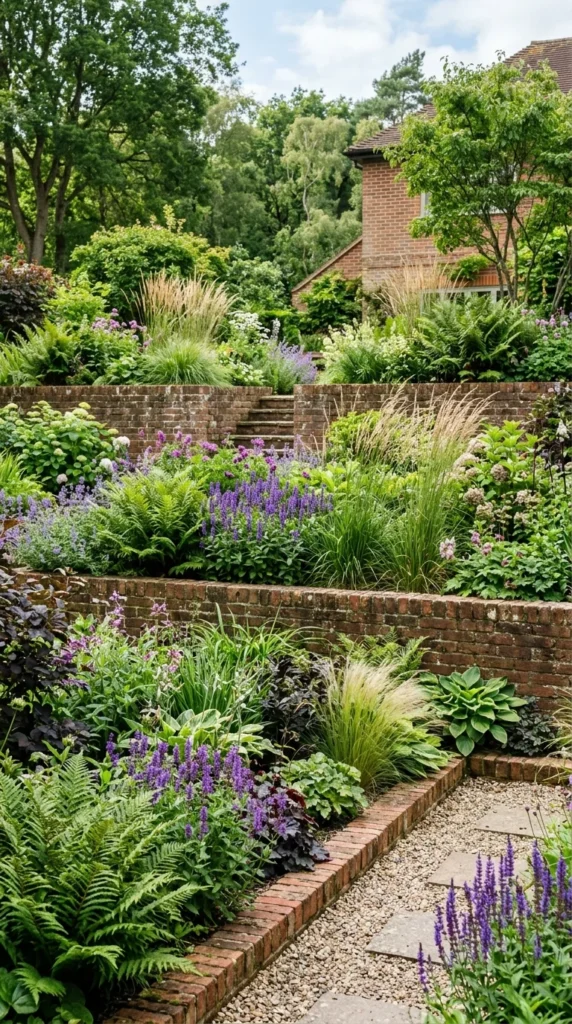
Tiering is the process of creating several flat “shelves” or terraces on a slope. This is perhaps the most effective way to make a hill functional. Instead of one unusable steep bank, you gain multiple levels for planting, lounging, or even outdoor dining.
Tiered gardens allow for high-intensity planting. You can dedicate one level to a kitchen herb garden, another to colorful perennials, and a third to hardy shrubs. This vertical arrangement ensures that every plant is visible from the bottom of the slope, creating a “wall of color” effect that is impossible to achieve on flat ground. When designing tiers, ensure the paths between them are wide enough for maintenance access, allowing you to weed and prune without needing to climb.
3. Stone Stairs
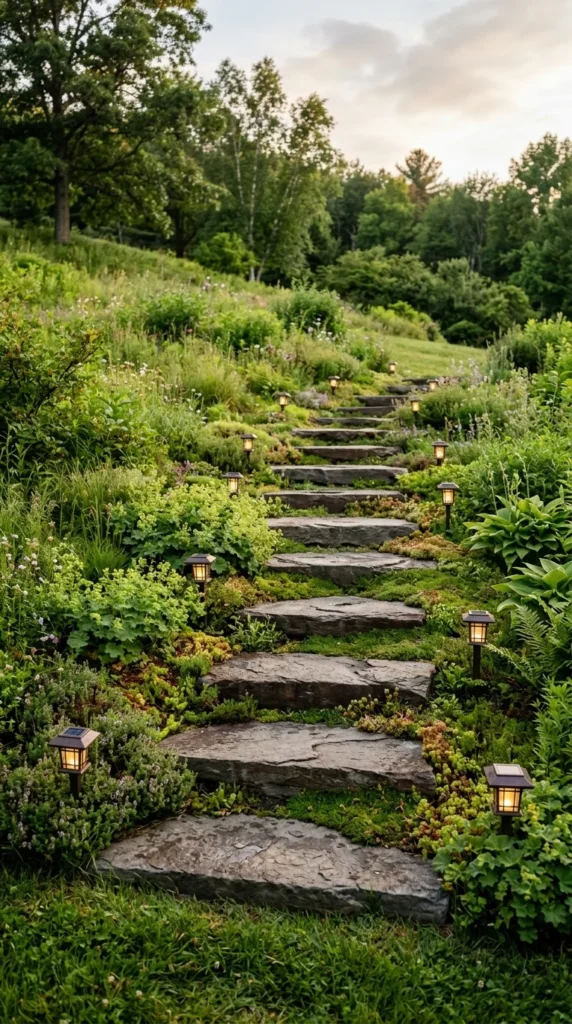
A slope is only useful if you can navigate it safely. Traditional lawn-covered hills are slippery and dangerous when wet. Installing stone or timber stairs provides a clear, stable path from the bottom of the yard to the top.
The key to successful hillside stairs is the “rise and run” ratio. Outdoor stairs should generally have a lower rise (the height of the step) and a longer run (the depth of the tread) than indoor stairs to provide a more relaxed, natural climbing experience. Using “landing” areas on long staircases provides a place to rest and enjoy the view. Integrating the stairs into the surrounding plantings helps them feel like a natural part of the landscape rather than a harsh architectural intrusion.
4. Deep-Rooted Plants
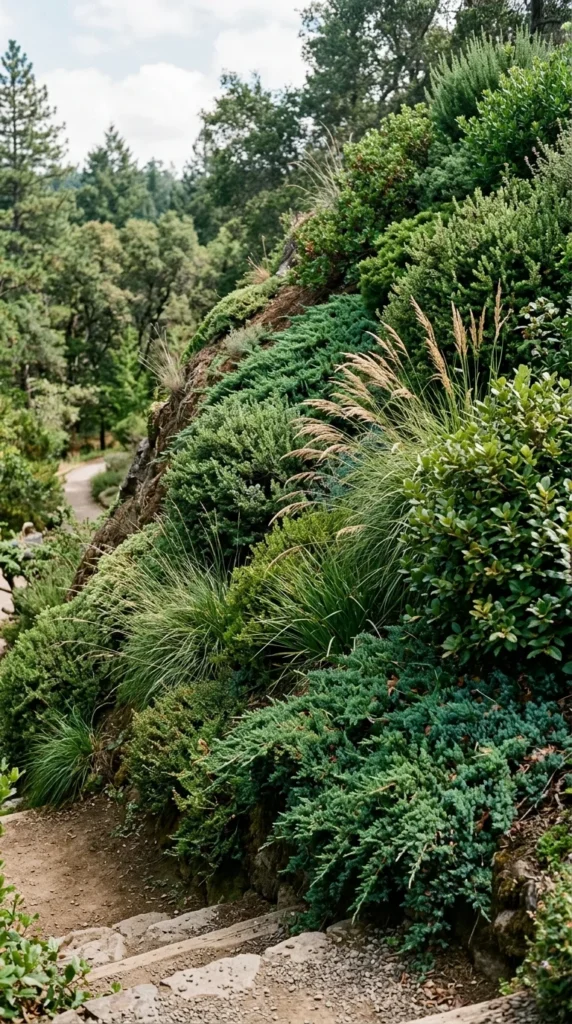
Vegetation is nature’s way of holding the earth together. On a slope, the right plants act as biological anchors. Their root systems weave through the soil, creating a subterranean net that prevents landslides and surface erosion.
For the best results, choose a mix of groundcovers, shrubs, and perennials. Native plants are particularly effective because they are adapted to the local soil and rainfall patterns, requiring less intervention once established. Creeping junipers, Forsythia, and various types of ornamental grasses like Little Bluestem or Switchgrass are excellent choices for slopes. These plants not only stabilize the soil but also reduce the need for mowing, which can be dangerous on steep inclines.
5. Drainage Systems
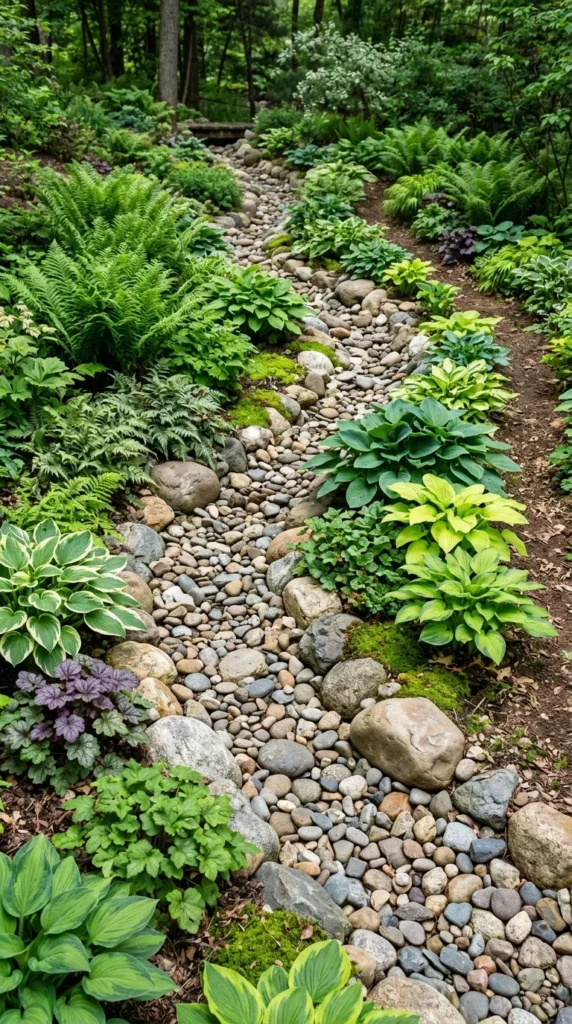
Water is the greatest enemy of a sloped yard. Without intervention, rainwater picks up speed as it moves downhill, carving gullies and washing away mulch and topsoil. A successful landscape design must dictate where the water goes.
One of the most attractive ways to manage runoff is by creating a dry creek bed. By lining a natural drainage path with river rocks and boulders, you create a functional channel that slows down water and directs it away from your home’s foundation. For more severe water issues, French drains or catch basins hidden beneath the surface can move large volumes of water underground. Always ensure that your drainage solutions do not simply dump water onto a neighbor’s property, as this can lead to legal and structural headaches.
6. Level Platforms
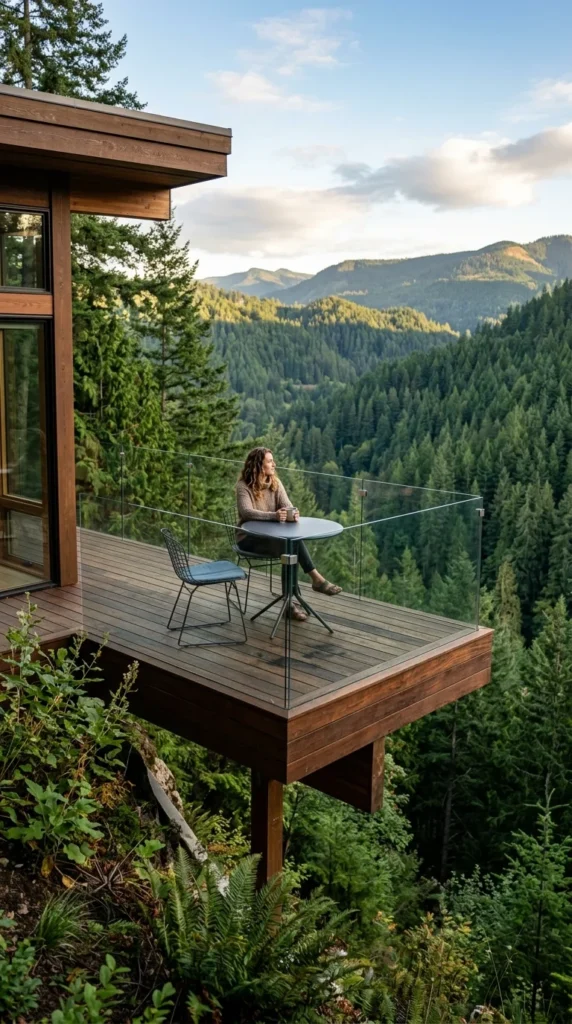
Sometimes the best way to handle a slope is to build over it. Cantilevered decks or raised wooden platforms allow you to create a perfectly level outdoor living space without the need for massive excavation or hundreds of tons of infill dirt.
These platforms provide a unique vantage point, often offering the best views on the property. By elevating the seating area, you can look out over the rest of your landscaped tiers. Beneath the deck, you can use shade-tolerant groundcovers or decorative gravel to maintain a clean look. This approach is particularly useful for yards with “unbuildable” grades where traditional patios would be impossible to install.
7. Erosion Control
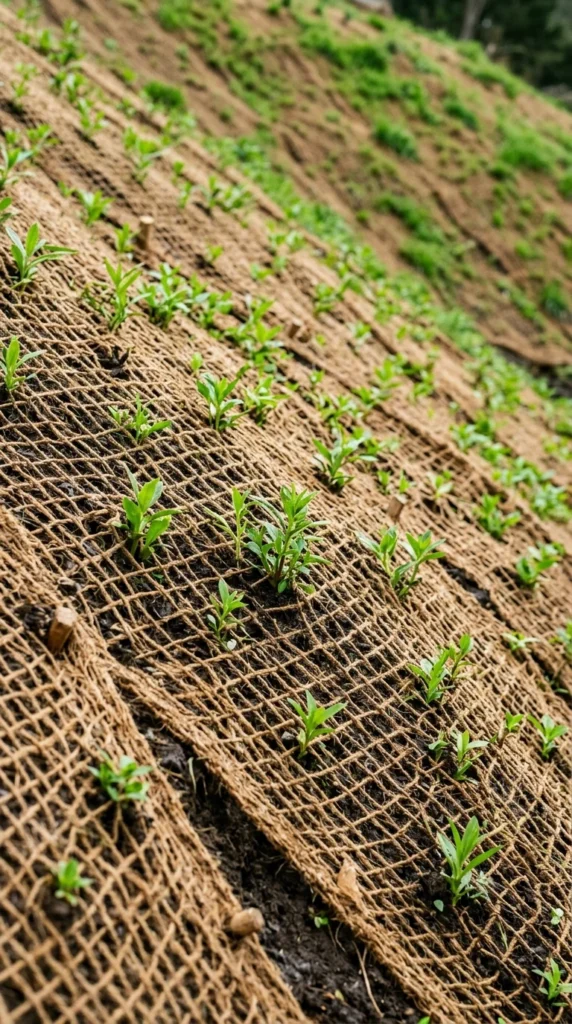
During the initial phases of landscaping, before plants have had time to establish their root systems, the bare soil is highly vulnerable. Erosion control blankets or “geotextiles” are essential tools for the successful transition of a sloped yard.
These mats, often made of biodegradable coconut fiber or jute, are pinned directly onto the soil. They hold the dirt and mulch in place while allowing seeds to germinate and roots to penetrate through the mesh. Over time, the matting decomposes, leaving behind a fully stabilized, vegetated slope. Additionally, using “boulders” tucked into the hillside can act as “speed bumps” for water, further breaking the flow and preventing the “sheets” of water that cause the most damage.
8. Lighting Design
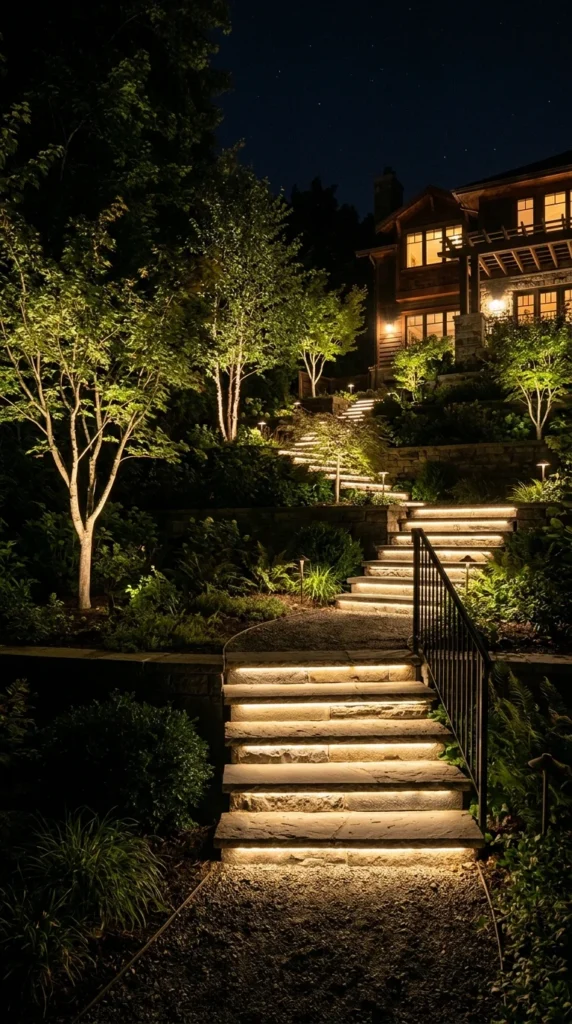
A sloped yard offers incredible opportunities for creative lighting. Because of the vertical nature of the landscape, you can layer light in ways that a flat yard simply cannot accommodate.
Path lighting is a safety necessity for hillside stairs, but aesthetic lighting is where the magic happens. Uplighting trees at different elevations creates a sense of depth and drama. “Moonlighting,” where fixtures are placed high in trees to shine downward, can mimic the soft glow of a full moon across the various levels of the garden. By illuminating the retaining walls and the textures of the plants, you turn a daytime functional space into a stunning evening retreat. Proper lighting also helps define the edges of tiers, preventing accidental trips in the dark.